



Abstract
This study examined the antecedents of teachers’ use of motivational strategies in the classroom using self-determination theory. It was found that teachers’ autonomous causality orientation, perceived job pressure, and perception of student self-determined motivation influenced their need satisfaction. In turn, their need satisfaction had a positive direct impact on autonomous motivation. In addition, teachers’ perception of their students’ self-determined motivation directly predicted teachers’ use of three motivational strategies in the classroom. Finally, their autonomous motivation positively predicted providing instrumental help and support and meaningful rationale, whereas controlled motivation negatively predicted providing instrumental help and support.
Keywords
It is known that students’ motivation is linked to many positive learning effects. Despite its importance, motivation is not a key focus of today’s education system (McKay, 2015). Highly motivated students have been identified with being enthusiastic, interested, engaged, and curious, and they also actively cope with challenges and setbacks (Reeve, 2009; Richmond, 1990; Skinner & Belmont, 1993; Wigfield & Cambria, 2010). When students are more engaged in learning, they tend to perform better academically. These positive outcomes are often the results of teachers’ use of adaptive motivational strategies used in the classroom (Wang et al., 2017). The purpose of the current study was to examine the factors that influence teachers’ use of motivational strategies in the classroom.
The self-determination theory (SDT; Ryan & Deci, 2017) has been widely adopted in understanding as well as predicting motivation in the classroom. SDT is a macro-theory of human motivation that assumes that humans have evolved to be inherently curious, physically active, deeply social beings. They are constantly seeking to master their internal and external environment. SDT posits that intrinsic motivation is linked to personal needs of autonomy (the need to feel ownership of one’s behavior), competence (the need to produce desired outcomes and to experience mastery), and relatedness (the need to feel connected to others) being fulfilled (Ryan & Deci, 2017). These three innate psychological needs, when fulfilled, would lead to intrinsic motivation. However, if these three needs are thwarted or frustrated, intrinsic motivation will be undermined. In the context of education, if teachers create a classroom environment whereby their students experience need satisfaction, that is, the extent in which the three psychological needs are being fulfilled, they are more likely to be intrinsically motivated toward learning a particular subject.
Research on SDT suggests that intrinsic motivation results in higher quality learning and can be attributed to individuals flourishing in contexts that satisfy human needs for autonomy, competence, and relatedness (Ryan & Deci, 2000). The satisfaction of these three needs is associated with psychological well-being, whereas the failure to satisfy these needs is associated with deficits in well-being, and the development of need substitutes. Intrinsic motivation has been found to be predictive of positive behavioral, cognitive, as well as affective outcomes (Vallerand et al., 1993). In the context of education, different forms of motivation were related to variations in educational outcomes such as effort, positive emotions experienced in class, psychological adjustment in school, quality conceptual learning, persistence in school, interest, concentration, and satisfaction (Ryan & Deci, 2017).
There are two main forms of motivation: controlled motivation and autonomous motivation. Controlled motivation derived from external and introjected regulation (Ryan & Deci, 2017). External regulation is the motivation to perform a behavior to satisfy an external form of contingency, such as rewards, threats, or deadlines. Behavior due to external regulation has the least autonomy, and tends to be more controlled. Introjected regulation refers to internalization in which a person accepts a value or regulatory process but does not identify with and accept it as his or her own (Deci, Eghrari, Patrick, & Leone, 1994). An individual with introjected regulation would persist in a behavior because of guilt or shame. However, autonomous motivation derived from identified and intrinsic regulations. Identified regulation occurs when a behavior is performed due to a conscious valuing of a behavioral goal, such that it is accepted or seen as personally important (Ryan & Deci, 2000). It is characterized by feelings of “want” rather than “ought.” Intrinsic motivation occurs when the behavior is done solely for its own sake or enjoyment.
Autonomous motivation was found to be positively related with most adaptive qualities, such as effort, positive emotions, persistence, interest, and satisfaction, whereas controlled motivation negatively correlated with these qualities (Vallerand et al., 1993). Hence, students display adaptive qualities when placed in conditions, which are autonomous, and where focus is on self-improvement (Spray, Wang, Biddle, & Chatzisarantis, 2006). Past research investigating SDT in education has found that students with more autonomous reasons to participate in a physical activity lesson were more inclined to compare themselves against normative standards as opposed to their peers, as well as displayed a greater perceived competence (Spray & Wang, 2001). Furthermore, intentions have been found to be a huge predictor of subsequent action in a physical activity setting when these intentions are autonomous, rather than controlling (Chatzisarantis, Biddle, & Meek, 1997). In sum, there is clear evidence to suggest that need satisfaction is important for promoting intrinsic motivation in learning.
To this end, the issue of intrinsic motivation is an important area of study for educators, as the right motivation could help develop a wellspring of learning, whereas the absence of it could result in the students’ motivation to study being undermined by teachers’ and parents’ practices (Ryan & Deci, 2000). Hence, because intrinsic motivation plays a crucial role in learning, it is essential to identify the factors, which could possibly facilitate or undermine it.
As teachers and educationalists generally agree that intrinsic motivation is essential for quality in learning and underpins the drive for self-directed learning, the next question lies in how intrinsic motivation can be nurtured by these teachers in the classroom setting. Autonomy supportive classroom structures have been found to play an important role in enhancing motivation in secondary students (Kee, Wang, Lim, & Liu, 2012; Reeve, 2016). In another study, Deci, Schwartz, Sheinman, and Ryan (1981) assessed reports from teachers of public elementary schools with regard to their orientations toward supporting students’ autonomy versus controlling their behavior, and showed that students assigned to autonomy-supportive teachers reported increased intrinsic motivation, perceived competence, and self-esteem over time. Several other studies were also conducted with the same conclusion that teachers’ orientations, as well as specific aspects of the learning task that are perceived to be autonomy supportive, helped to increase intrinsic motivation in students (see Niemiec & Ryan, 2009).
However, there is a lack of research from the teachers’ perspective in terms of the antecedents of teachers’ effective use of motivational strategies in the classroom from the SDT framework. One of the few studies conducted was in the physical education (PE) classroom. Papaioannou, Marsh, and Theodorakis (2004) found that positive classroom climate (task-involving climate) created by the PE teachers predicts positive outcomes at a later time. Therefore, teachers’ use of motivational strategies tended to have an impact on students’ motivation.
There are three broad motivational strategies that teachers can use to facilitate the abovementioned three psychological needs (Taylor, Ntoumanis, & Standage, 2008). The first strategy is to gain an understanding of the students by fostering meaningful affiliations, resulting in relatedness. By fostering meaningful affiliations between teachers and students, students can feel a greater sense of belonging in the classroom. The second strategy is to provide students with instrumental help and support, offering support and fostering perceived control. For example, provide step-by-step guided solutions if they are faced with difficulties in answering the questions. This, in turn, helps enable students to be more competent. Research suggests that providing instrumental support also increases the likelihood of successful outcomes, especially in the classroom (Connell & Wellborn, 1991). The final strategy is to provide a meaningful rationale behind tasks. It was discovered that by doing so, it helped to promote positive feelings and engagement by providing a link between the students’ personal goals and their schoolwork, hence enabling students to feel a sense of autonomy. These three strategies are not commonly used in the classroom despite research evidence and theoretical support for its adaptive role (Reeve et al., 2014). Observations have shown that at times, teachers use controlling strategies, rather than autonomy-supporting strategies as their primary motivational tool in the classroom (Newby, 1991).
The psychological need satisfaction of teachers may have an influence on the learning climate they create for their students or the strategies they used. The more teachers’ needs were being fulfilled, the more they tried to gain an understanding of their students, provide them with help, and provide a meaningful rationale and choice to students (Taylor et al., 2008). Therefore, the more self-determined a teacher feels, the more he or she is likely to create a self-determined learning climate for students. Furthermore, teachers with autonomous motivation were found to be more likely to be student centered or utilize productive teaching styles, whereas teachers with nonautonomous motivation were found to be more teacher centered or utilize reproductive teaching styles (Hein et al., 2012). Although the naturally occurring motivational styles of teachers are fairly stable, teachers are still able to learn how to be more autonomy supportive to students (Reeve, 2012, 2016).
Previous studies have found that teachers’ causality orientation, their perception of job pressure, and students’ motivation predicted teachers’ need satisfaction (Taylor et al., 2008). According to SDT, personal disposition is also able to play a key role in predicting teachers’ use of motivational strategies, particularly autonomy support (Taylor et al., 2008). More specifically, Deci and Ryan (1985) stated that individuals have a disposition toward autonomy, termed autonomous causality orientation, which varies among individuals. Causality orientations are motivational orientations that refer to either the way people orient themselves to an environment and regulate their behavior because of this, or the extent to which they are self-determined across various settings. A high autonomous causality orientation would translate into a generalized tendency toward pursuing opportunities for the sake of self-determination. It was found that preservice teachers with a high autonomous causality orientation displayed more autonomy support as compared with preservice teachers with a more controlling disposition (Reeve, Bolt, & Cai, 1999).
Taylor, Ntoumanis, and Smith (2009) interviewed PE teachers to find out how the teaching context influences their attempts to motivate students. The teachers indicated that school-related factors such as the controlling nature of teaching evaluations, time constraint, and pressure from the school administration to conform to certain teaching strategies, all influenced their use of motivational strategies in the PE context. For example, not having enough time for lessons resulted in teachers neglecting students, which can undermine the students’ perceived competence (Ames, 1992).
In addition, teachers also highlighted that their behavior sometimes depends on their students, and how motivated the students are (Taylor et al., 2009). In a study conducted by Pelletier and Vallerand (1996) looking at teacher perceptions of student motivation, they discovered that “teachers” who were told their “students” were intrinsically motivated displayed more autonomy-supportive teaching as compared with “teachers” who were told their “students” were not intrinsically motivated. Moreover, “students” of these autonomy-supportive “teachers” also reported greater intrinsic interest in the experimental task. Therefore, teachers’ perception of their students’ motivation is also able to play a huge role in determining how the teachers structure the teaching and learning environment.
In a sequence theorized by Vallerand and Losier (1999), it was stated that social factors, such as teachers’ behaviors, have a profound impact on individuals’ thought, feelings, and behaviors. In addition, the effects of these social factors on motivation are mediated by perceptions of competence, autonomy, and relatedness, resulting in subsequent outcomes or behaviors. This sequence has also been previously adapted by Taylor et al. (2008), and can be seen in Figure 1. According to the model, three social factors have been identified as antecedents of teachers’ need satisfaction. They are autonomous causality orientation, perceived job pressure, as well as teachers’ perception of student self-determined motivation. When the teachers’ needs are satisfied, they would be self-determined, and this, in turn, would lead to them attempting to gain understanding of their students, providing instrumental help and support, and providing a meaningful rationale to students. These three types of teacher motivational strategies are adapted from the three broad types of motivational strategies derived from the SDT, namely, involvement, structure, and autonomy support (Connell & Wellborn, 1991). Taylor et al. (2008) have shown that the data fit the hypothesized model relatively well, Satorra–Bentler χ2(124) = 183.37, comparative fit index (CFI) = .92, standardized root mean square residual (SRMR) = .08, root mean square error of approximation (RMSEA) = .05.
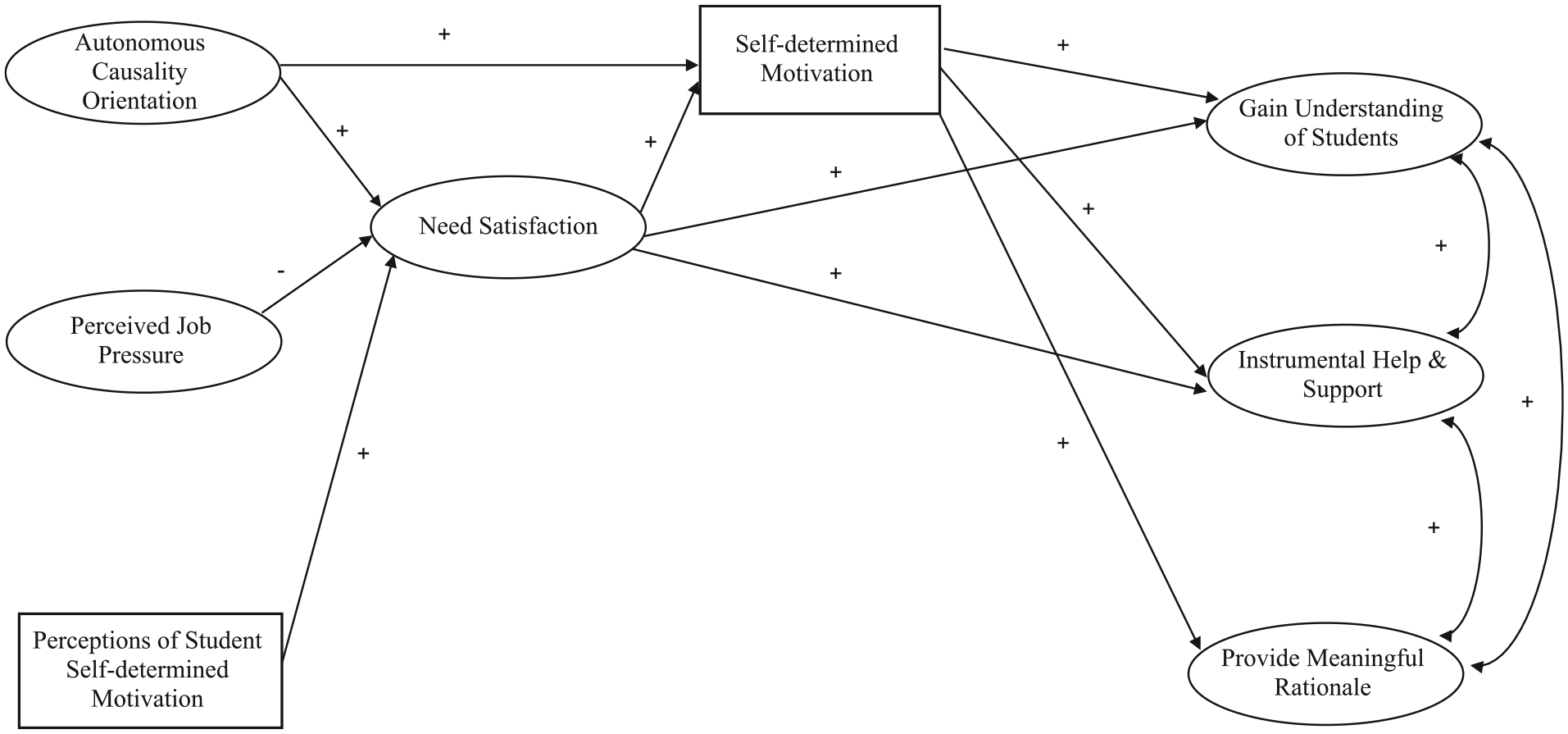
Model of antecedents of teacher motivational strategies in physical education (Taylor, Ntoumanis, & Standage, 2008).
Purposes of the Current Study
Using SDT as a theoretical reference, the current study aims to examine the antecedents that could affect teachers’ need satisfaction and self-determination by replicating previous studies. In turn, this study investigates how teachers’ motivation influences the use of motivational strategies in the classroom.
We adapted the model of antecedents of teachers’ motivation in Taylor et al.’s (2008) work, and seek to investigate the antecedents that influence the use of motivational strategies of teachers in the classroom. Based on the aforementioned research, we tested the revised model of Taylor and his colleagues in the classroom setting. We extended the previous work in three ways. First, instead of having part latent factors and part measured variables in the structural equation modeling, this study used all measured variables with path analysis. In addition, instead of using perceived job pressure as a combined latent factor, this study used all the three factors in perceived job pressure (time constraint, evaluation, and school authority). Finally, this study separated teachers’ self-determined motivation into autonomous (intrinsic and identified) motivation and controlled (introjected and external) motivation. This approach focuses on the interrelationships between the variables.
It is hypothesized that autonomous causality orientation, perceived job pressure (time constraint, evaluation based on students’ performance, and school authority), and teachers’ perceptions of student self-determined motivation directly influence teacher’s need satisfaction, and autonomous causality orientation also has a direct influence on teachers’ autonomous motivation. Teachers’ need satisfaction has a direct and indirect (through teachers’ autonomous and controlled motivation) influence on the use of three motivational strategies in the classroom. This model has not been validated in any other studies or academic context (see Figure 2).
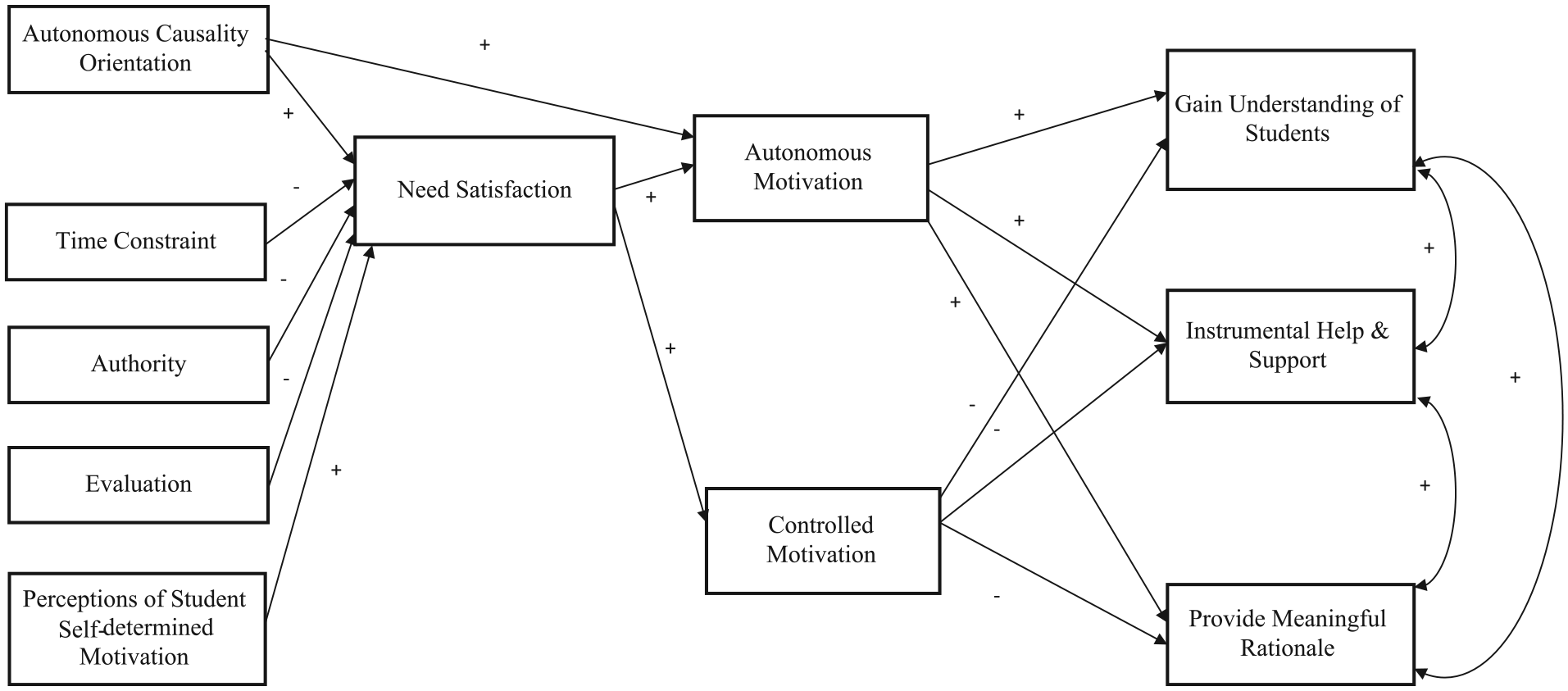
Hypothesized path model of teachers’ use of motivational strategies.
Methods
Participants
A total of 221 teachers from 10 secondary schools in Singapore took part in the study. There were 99 male teachers and 122 female teachers. The teachers’ teaching experience ranged from 1 to 40 years (M years = 9.54, SD = 8.59 years). Majority of the teachers were math and/or science teachers (67%); the rest were teachers of other subjects such as English language, Chinese language, design and technology, arts, humanities, and social studies. All these schools were coeducational government schools in Singapore.
Procedure
Ethical approval was sought from the university ethical review board. Permission to collect data with the teachers was obtained from the Ministry of Education and the principals of the schools. Emails were sent to school principals for their voluntary participation in the study. The researcher then followed up with schools that agreed to participate to arrange for the administration of the questionnaire. The participants took about 20 min to complete the questionnaire. Before responding to the questionnaires, participants were informed about the nature of the research project and that participating in the study was voluntary, and they could withdraw at any time. In addition, the participants were told that their confidentiality would be maintained. Informed consent of the participants was then obtained.
Measures
Perceived job pressure
Ten items were adopted from a previously designed questionnaire used to assess perceived job pressure in PE teachers (Taylor et al., 2008). The original questionnaire was designed to assess three work-related types of pressure (time constraints, school authorities, and evaluation based on students’ performance) that PE teachers have reported as affecting their choice of motivational strategies; however, for the purpose of this study, the questions will be modified to reflect a classroom environment. There were four items measuring time constraints (e.g., “I am sometimes rushing to complete my lessons”), three items measuring evaluation based on students’ performance (e.g., “I am held responsible for student performance standards”), and three items measuring school authorities (e.g., “I wish I could teach in certain ways, but school policy doesn’t allow it”). Responses were reported on a 7-point scale ranging from 1 (not at all true) to 7 (very true).
Autonomous causality orientation
The General Causality Orientations Scale (GCOS; Deci & Ryan, 1985) was used to assess causality orientation in the teachers. The original GCOS consists of 12 vignettes and 36 items. Each vignette describes a typical social or achievement situation, and is followed by three types of responses: autonomous (the extent a person is oriented toward things in the environment, which simulate intrinsic motivation), controlled (the extent an individual feels controlled by external factors), and impersonal (the extent a person experiences behavior as out of his or her control). For the purpose of this study, we followed Taylor et al.’s (2008) study in using the autonomous orientation items from the eight vignettes. Questions are anchored by a 7-point scale ranging from 1 (very unlikely) to 7 (very likely).
Teachers’ perceptions of student self-determination
A questionnaire developed by Goudas, Biddle, and Fox (1994) was adapted to measure the teachers’ perceptions of their students’ motivational regulations. Subscales in the questionnaire will measure intrinsic motivation (three items, e.g., “Because they think the lesson is fun”), identified regulation (three items, e.g., “Because they want to learn something new”), introjected regulation (four items, e.g., “Because they’ll feel bad if they don’t”), external regulation (four items, e.g., “because they will get punished if they don’t”). Responses will be reported on a 7-point scale ranging from 1 (not at all true) to 7 (very true). A relative autonomy index was computed based on the sum of external regulation (−2), introjected regulation (−1), identified regulation (+1), and intrinsic regulation (+2). The index reflects the degree of self-determination on the self-determination continuum.
Psychological need satisfaction
Satisfaction of the three psychological needs of autonomy (three items), competence (three items), and relatedness (three items) of the teachers was measured using the Basic Need Satisfaction at Work Scale (BNSAW; Deci et al., 2001). An example item of competence was “Most days I feel a sense of accomplishment from working,” an example item for autonomy was “I am free to express my ideas and opinions on the job,” and an example for relatedness was “People at work care about me.” Responses are anchored on a 7-point scale ranging from 1 (not at all true) to 7 (very true).
Teachers’ self-determination
The short version of the teachers’ self-determination toward their work was measured using the Work Motivation Inventory (WMI; Blais, Lachance, Vallerand, Brière, & Riddle, 1993). Questions followed the stem, “Why do I teach?” followed by 12 items (three items for each subscale) that measure the types of motivational regulation hypothesized by SDT, namely, intrinsic motivation (e.g., “because I derive much pleasure from learning new things”), identified motivation (e.g., “because it is the type of work I have chosen to attain certain important objectives”), introjected motivation (e.g., “because I want to be very good at teaching, otherwise I would be very disappointed”), and external motivation (e.g., “because it allows me to earn money”). Responses will be reported on a 7-point scale ranging from 1 (does not correspond at all) to 7 (corresponds exactly). We created composite scores for autonomous and controlled motivation by averaging the subscales of intrinsic and identified and introjected and external regulation, respectively (Vansteenkiste, Sierens, Soenens, Luyckx, & Lens, 2009).
Teachers’ use of three motivational strategies
Teachers’ use of the three motivational strategies was measured using a 10-item questionnaire from the teacher version of the Teacher as Social Context Questionnaire (TASCQ; Wellborn, Connell, Skinner, & Pierson, 1988) used in Taylor et al.’s (2008) study. Three of the items measure teachers’ provision of instrumental help and support (e.g., “I show my students different ways to complete tasks”), three items measure their provision of a meaningful rationale (e.g., “I explain to my students why we learn certain things in class”), and the last four items measure their attempts to gain an understanding of students (e.g., “I know my students well”). Responses will be reported on a 7-point scale ranging from 1 (not at all true) to 7 (very true).
Data Analysis
A series of confirmatory factor analysis (CFA) was conducted to examine the factorial validity of all the measures using EQS for Windows 6.3 (Bentler, 2006). The internal consistency coefficients (α) of the scales were also computed. Descriptive statistics and the Pearson product–moment correlations of the main variables were tabulated.
Due to the small sample size used in this study, we used path analysis to test the network of relationships between social factors, teachers’ need satisfaction, motivation regulation, and use of three motivational strategies using EQS for Windows 6.3 with the robust maximum likelihood estimation method. In the evaluation of model fit to the data, the following indices were used: Bentler–Bonett normed fit index (NFI), the CFI, Bollen’s incremental fit index (IFI), and the RMSEA. For the NFI, CFI, and IFI, the conventional cutoff values of close to .90 were used (Hu & Bentler, 1999). For RMSEA, we used the value close to .08 as the cutoff. The chi-square statistic and the degree of freedom are also presented.
Model modifications were investigated through the use of the Wald and Lagrange multiplier (LM) tests after testing the hypothesized model. The LM tests whether any parameters that were set to zero in the model are, in fact, not zero. It tests the effect of adding free parameters to a model (Bentler, 1995; Byrne, 2006). The Wald test assesses whether any free parameters of a model can be restricted without substantial loss of information (Bentler, 1995). Given that this is an exploratory study, information provided by these post hoc modifications could be useful in providing insight to variations of the hypothesized model. However, any variation needs to be justified theoretically.
Results
Descriptive Statistics
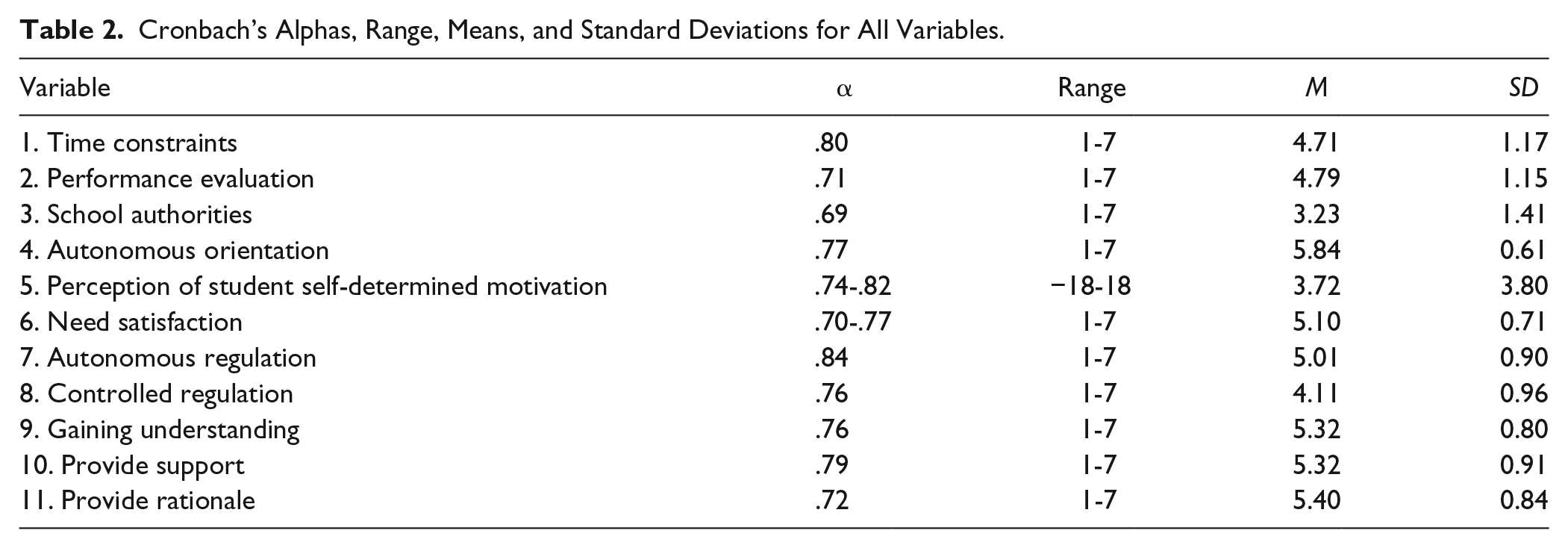
The results of the confirmatory factory analysis (CFA) of all the measures are shown in Table 1. All the measurement models showed acceptable fit. The descriptive statistics including means, standard deviation, range, and internal reliabilities of all the variables are presented in Table 2. The internal consistency of all subscales demonstrated acceptable internal reliability ranging from .69 to .84. The teachers reported moderately high in autonomous orientation, need satisfaction, and autonomous regulation. They also reported high usage of the three motivational strategies in the classroom.
Fit Indices for CFA Models.
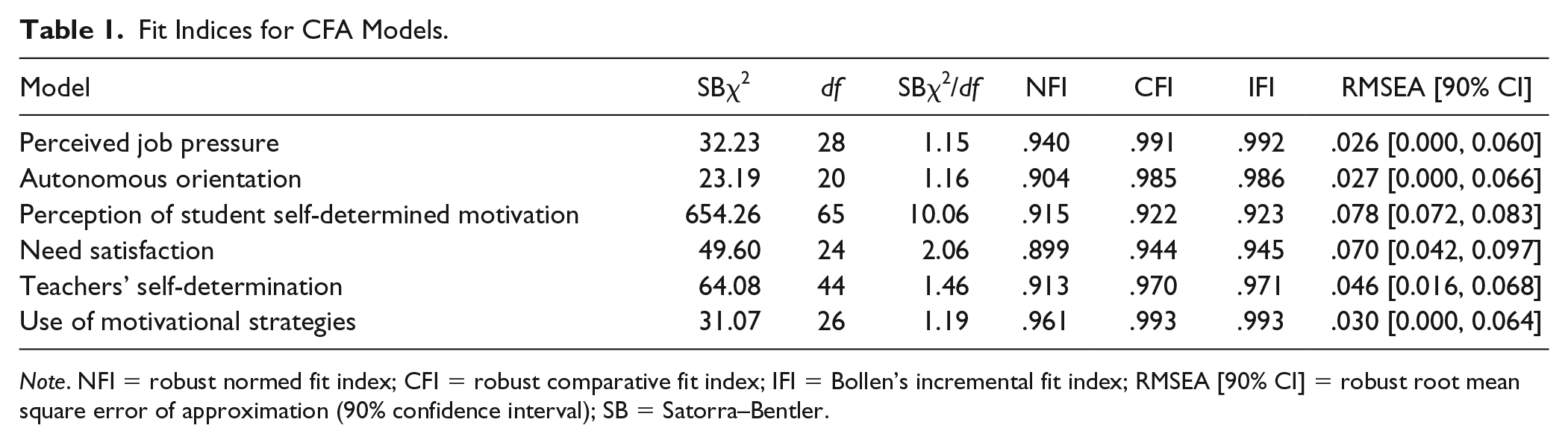
Note. NFI = robust normed fit index; CFI = robust comparative fit index; IFI = Bollen’s incremental fit index; RMSEA [90% CI] = robust root mean square error of approximation (90% confidence interval); SB = Satorra–Bentler.
Cronbach’s Alphas, Range, Means, and Standard Deviations for All Variables.
The zero-order correlations among the key variables are shown in Table 3. In general, teachers’ perceived job pressure negatively correlated with provision of instrumental support to their students. Teachers’ autonomous orientation was positively related to perceived students’ self-determination, need satisfaction, autonomous regulation, and use of motivational strategies. Similarly, perceived students’ self-determination and autonomous regulation were positively associated with need satisfaction, and the use of three motivational strategies.
Zero-Order Correlations Between All Variables of the Overall Sample.
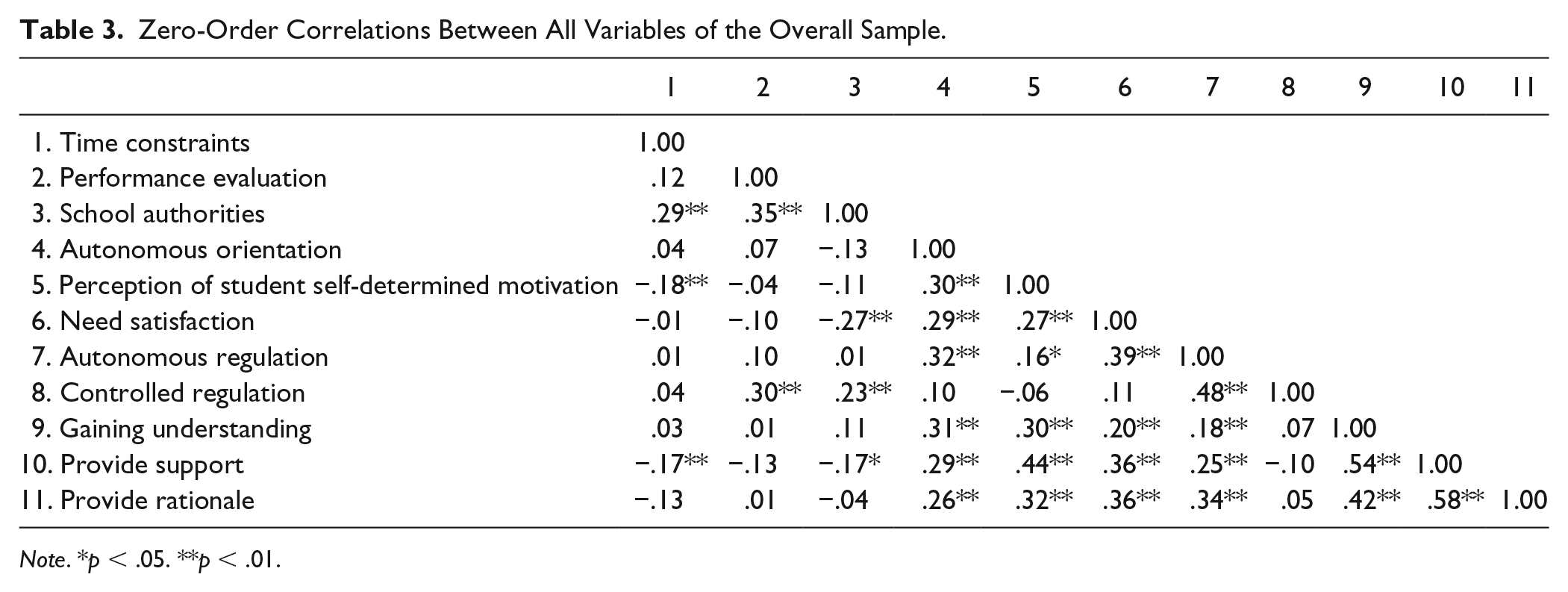
Note. *p < .05. **p < .01.
The results of the path analysis indicated a poor fit of the hypothesized model to the data (χ2 = 114.18, df = 28, NFI = .755, CFI = .790, IFI = .803, and RMSEA = .118 [0.096, 0.141]). The Wald test did not suggest any parameters be dropped for the model but the LM test revealed a few paths to be added. First, teachers’ perception of student self-determined motivation had direct links with the three motivational strategies. Second, two of the job pressure factors (school authority and evaluation based on students’ performance) had positive link with teachers’ controlled motivation. Finally, teachers’ autonomous causality orientation had a direct link with gaining understanding of students. These suggested paths can be justified on theoretical grounds. Adding these paths resulted in a much improved fit statistics (χ2 = 47.47, df = 21, NFI = .922, CFI = .935, IFI = .940, and RMSEA = .076 [0.047, 0.104]). The standardized solutions and error variances of the hypothesized model are shown in Figure 3. The revised model accounted for 13.1% variance in gaining understanding of students, 25.3% in providing instrumental help and support, and 19.5% variance in providing meaningful rationale.
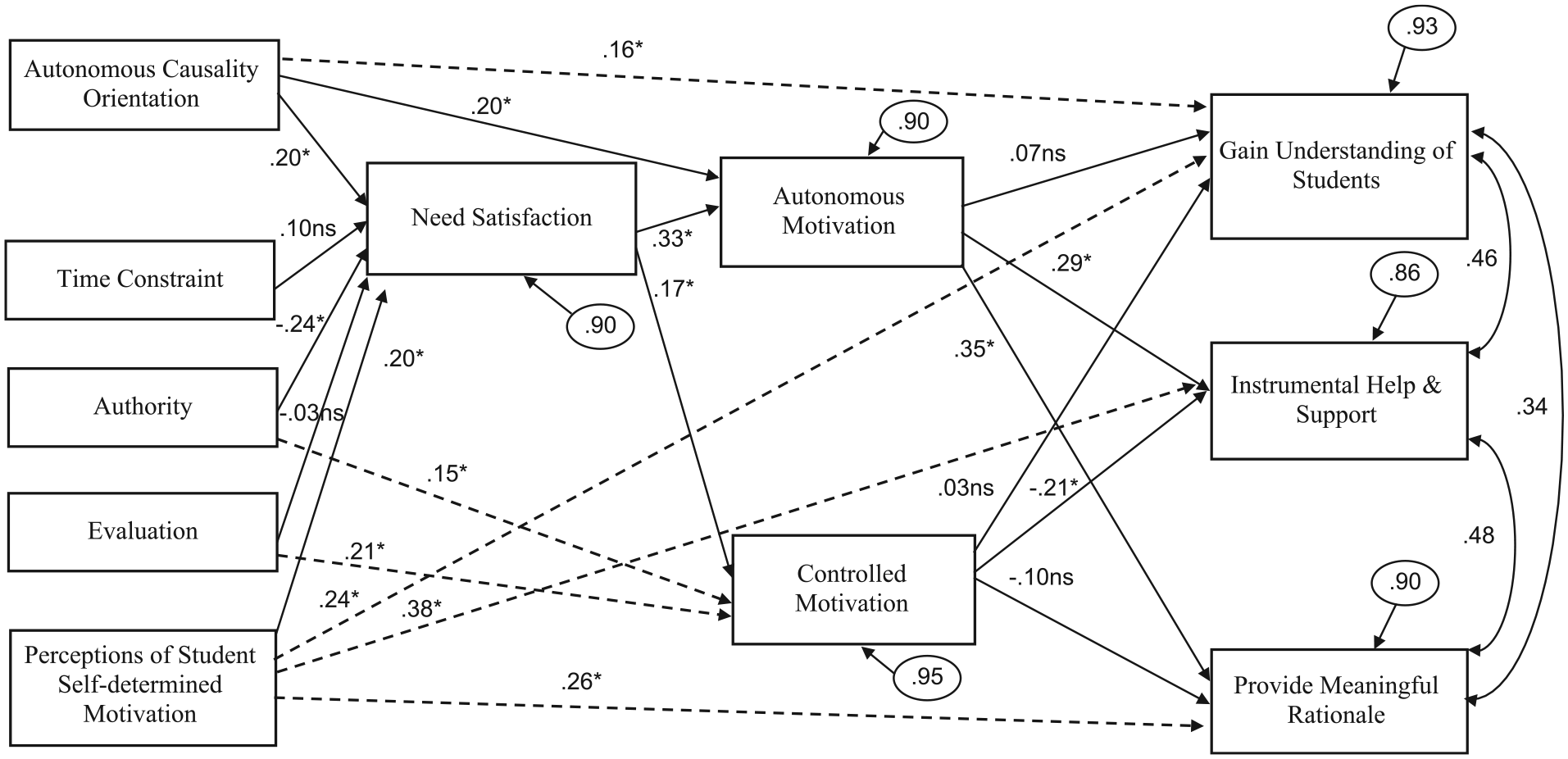
Standardized solutions of the revised path model of teachers’ use of motivational strategies.
Discussion
The aim of this study was to investigate the antecedents of teachers’ use of motivational strategies in the classroom using the SDT framework. Most studies in SDT literature have ignored the need satisfaction and self-determination from the teachers’ perspective. This is one of the few studies that examined the antecedents of teachers’ use of motivating strategies in the classroom context. The current study extends Taylor et al.’s (2008) study by providing insights to the interrelationships between the key variables in a more detailed manner using path analysis.
The descriptive statistics presented a positive outlook of Singapore teachers. It was found that Singapore teachers reported high autonomous causality orientation, need satisfaction, and autonomous regulation. According to SDT (Ryan & Deci, 2017), causality orientations are development outcomes that are influenced over time by social–contextual factors or biological factors that influence the satisfaction of the three psychological needs. Therefore, one interpretation could be that the Singapore education system allows for high degree of autonomy support to teachers in helping teachers to develop strong autonomy orientations.
The results of the path analysis found a few interesting findings. First, autonomous causality orientation, perceived job pressure, and teachers’ perception of student self-determined motivation predicted teachers’ need satisfaction. This is in line with Taylor et al.’s (2008) study. However, this study went a step further by splitting the perceived job pressure into three factors, and found that only perceived pressure from school authority had a negative relationship on teachers’ need satisfaction. Time constraints and performance evaluation are not significant predictors of need satisfaction. This may indicate that teachers may accept time constraint and performance evaluation as part and parcel of their job and not to be influenced by these two factors; however, too much control from the school authority may hamper their needs satisfaction (Ryan & Deci, 2000).
Second, this study also differentiated teachers’ self-determined motivation into autonomous (intrinsic and identified) and controlled (external and introjected) motivation. It was found that autonomous causality orientation had a positive direct effect on autonomous motivation, as well as indirect effect via need satisfaction. Need satisfaction had a small positive relationship with controlled motivation. Two factors of perceived job pressure (school authority and performance evaluation) had positive links with controlled motivation. The current study has extended previous studies in providing clearer relationships between the differentiated motivations. In Taylor et al.’s (2008) study, it was found that need satisfaction and autonomous causality orientation positively predicted teachers’ self-determined motivation.
Third and the most important finding is that teachers’ perception of their students’ self-determined motivation directly predicted teachers’ use of three motivational strategies in the classroom. This was not found in Taylor et al.’s (2008) study. This suggests that if teachers perceived that their students are intrinsically motivated to learn, they are likely to use all the motivational strategies to maintain or increase students’ motivation in their teaching, bypassing teachers’ own need satisfaction and motivation. This is a very powerful finding. In one of the very few previous studies, Skinner and Belmont (1993) found that there were reciprocal effects of students’ motivation on teachers’ behaviors using a qualitative study. This study provides empirical support for the previous finding.
Finally, teachers’ autonomous motivation positively predicted providing instrumental help and support and meaningful rationale, whereas controlled motivation negatively predicted providing instrumental help and support. The finding is in accordance to SDT (Ryan & Deci, 2017). This finding has extended the study of Taylor et al. (2008), in that, this study has differentiated the motivation regulation into autonomous and controlled motivation. Teachers’ self-determined motivation in autonomous form can promote the use of providing instrumental help and support and rationale to their students. However, controlled motivation may influence teachers not to provide instrumental help and support structure to their students. The current finding found that teachers’ motivation to teach directly influences the strategies they use in motivating their students. Implication for school leaders is that teachers’ autonomous motivation should be fostered through satisfaction of the three psychological needs of competence, autonomy, and relatedness. According to SDT, competence could be enhanced by focusing on professional development of teachers, autonomy could be enhanced through giving teachers more choice and freedom to decide on how they teach in the classroom, relatedness could be enhanced through building sense of belonging to the school, department, and with their students.
In summary, the findings of the current study add important dimensions of the influence of teachers’ use of motivational strategies in the classroom. First, if teachers perceived that there is pressure from school authority in the way they teach, their psychological needs of competence, autonomy, and relatedness may be thwarted, and this in turn, may affect their resultant motivation. Second, it is shown that school authority and evaluation based on students’ performance contributed to controlled motivation. Previous research has shown that teachers’ perceived constraints at work negatively predicted their self-determined motivation (Pelletier, Fortier, Vallerand, & Briere, 2001; Taylor et al., 2008). It is important for school leaders to allow reasonable flexibility in the way teachers teach in the classroom.
There are a few limitations of the current study that could be addressed by future studies. First, the study is cross-sectional and thus a causal relationship cannot be inferred. Second, the sample size of the present study may not be big enough to test a full latent model. Future studies could increase the sample size to allow for this. Third, there were no objective measures such as students’ engagement time or frequency and duration of the use of motivational strategies. Fourth, students’ variables could be included in future studies to test for multilevel effects of teachers’ variables on students’ variables as well as the reciprocal effects of these variables. In addition, the use of experimental or intervention studies may add insights into the causal and long-term effects of the factors influencing teachers’ use of motivational strategies in the classroom, as well as testing each factor systematically. Finally, it may be useful for future studies to examine the factors influencing teachers’ use of controlling or maladaptive motivational strategies in the classroom.
Footnotes
Declaration of Conflicting Interests
The author(s) declared no potential conflicts of interest with respect to the research, authorship, and/or publication of this article.
Funding
The author(s) disclosed receipt of the following financial support for the research, authorship, and/or publication of this article: This project is supported by the Educational Research Funding Program funded by Ministry of Education, Singapore (OER 22/15 JW).
