




Abstract
Flexible work arrangements have traditionally been framed in terms of individual choice, where workers are regarded as having the ability to reconcile the demands of family life with those of work. In response to calls for greater workplace flexibility and worker choice, the New Zealand government has recently introduced ‘right to request’ legislation. This research reports on a large-scale survey of women public service workers’ experiences of flexible work arrangements in this legislative context. Against a backdrop of rising workloads and time pressures, it finds that while there is considerable choice in how women do their tasks and take their breaks, there is little voice in the organization and pace of that work. In this context, the burden of implementing flexible work arrangements and managing competing workloads is borne by the individual. This article argues that absent from, but pivotal to, the framing and discourse of workplace flexibility is the role of voice. Implications of this research include a broadening of the legislative framework that supports flexibility outcomes and the inclusion of more varied voice mechanisms into the implementation and management of workplace flexibility.
Introduction
‘Workplace flexibility’ describes both a range of standard working time provisions that typically reside within organizational human resource (HR) policy frameworks, and a variety of flexible work arrangements (FWAs) that allow workers to ‘make choices influencing when, where and for how long they engage in work related tasks’ (Hill et al., 2008: 152). The demand for workplace flexibility is significant and rising due to a growing disparity between the diverse needs of workers and the changing nature of their work (Campbell Clark, 2001; Christensen and Schneider, 2010; Fursman and Zodgekar, 2009). This rising demand can be linked to the shifting representation of women and men in the labour force (particularly within non-standard employment), the changing structures of families, the ageing of populations and the extension of traditional caring responsibilities for workers, in particular women (Campbell Clark, 2001; Todd and Binns, 2011). Consequently, gender inequality at work is a significant aspect that has both driven and shaped the outcomes of workplace flexibility (Collom, 2000; Skinner and Pocock, 2011).
The benefits of workplace flexibility are widely promoted and range from reduced individual inter-role conflict to increased organizational performance and agility in external markets (Christensen and Schneider, 2010; Houseman, 2001; Joyce et al., 2010; Rau and Hyland, 2002). Despite these gains, mounting empirical research points to a number of negative outcomes, including work intensification, job insecurity and a loss of bargaining power (Fenwick, 2004; Giesecke and Gross, 2003; Kelliher and Anderson, 2010). Furthermore, previous research suggests that access to FWAs is frequently ‘lumpy’ and influenced by a range of individual, organizational and wider socio-economic factors (Gregory and Milner, 2009). In response, some governments, like the New Zealand government, have introduced legislation that mandates workers’ ‘right to request’ FWAs. Others, like the European Union (EU), have sought to balance labour market flexibility with employment security – an approach they term flexicurity (Philips and Eamets, 2007).
This article explores the take-up of FWAs and the outcomes they provide for women in the New Zealand public services. The public services are a significant employer of women who represent 59% of that workforce, as compared with 47% of the national labour force (State Services Commission (SSC), 2010a). The article begins with a review of the rise of workplace flexibility agendas and an outline of the New Zealand legislative provision of FWAs. It argues that while the provision of FWAs has traditionally been seen to afford individuals greater ‘choice’, workplace flexibility is also a matter of ‘voice’. Issues of voice are particularly significant for workers who are ‘silent’ (where there is limited or no access to workplace flexibility) and for those workers who are ‘silenced’ (where the accessing of FWAs is ‘actively’ discouraged). In order to explore the role of choice and voice in workplace flexibility, the provision and take-up of FWAs by women in the New Zealand public services is subsequently analysed.
The Case for Workplace Flexibility?
The search for greater flexibility at an organizational level has shifted from workforce towards workplace flexibility. The ascendency of strategic HRM models during the 1990s promoted the idea of performance improvement through internal organizational flexibility and external environmental ‘fit’ (Snell et al., 1996). Originally envisaged as an organizational form that resulted in the segmentation of workforces, the ‘flexible firm’ model established a basis upon which subsequent debate has centred (Atkinson, 1984; Kalleberg, 2001; Pollert, 1991). Today, calls to accommodate workers’ diverse needs have prompted a shift in focus towards the role of workplace flexibility, and the provision of FWAs in particular.
The case for workplace flexibility is strong, with competing discourses alternatively emphasizing the benefit for either organizations or workers (Sheridan and Conway, 2001; Todd and Binns, 2011). One of the more common discourses is the ‘business case’ for workplace flexibility, which rests on the promise of performance and other organizational improvements (Dex and Smith, 2002; Kelliher and Anderson, 2010). However, as critics point out, ‘the business case’ privileges business interests and reframes collective bargaining and employee voice in terms of organizational objectives (Dickens and Hall, 2005). As a result, workplace flexibility initiatives are contingent on demonstrating economic efficiency gains – a basis, that others show, lacks empirical support (De Menezes and Kelliher, 2011; Dickens and Hall, 2005). In short, the rise in employer-driven flexibility is largely due to efficiency and cost-saving strategies, rather than as part of an attempt to enable workers to balance work and family responsibilities (e.g. Hegewisch, 2009; Sheridan and Conway, 2001).
Outside of the ‘business case’, the importance of workplace flexibility for workers is widely supported. Improvements in job satisfaction, increased autonomy, work–life balance and reduced stress are frequently cited as the main benefits of flexible working for employees (Gregory and Milner, 2009; McDonald et al., 2005; Skinner and Pocock, 2011). Greater loyalty and increased effort have also been associated with those employees who believe that their organizations accommodate their needs and provide them with greater control over their work (Kelliher and Anderson, 2008). Again, while the provision of workplace flexibility would seem logically to bring benefits for employees, research paints a more complex picture of worker outcomes (Barnes and Freldes, 2000; Skinner and Pocock, 2011). In particular, while flexible work practices and the ‘exercise of choice’ can lead to higher levels of job satisfaction and commitment, it can also lead to work intensification (Kelliher and Anderson, 2010). In keeping, recent research suggests that these espoused benefits depend upon who exercises the control and choice and what forms of workplace flexibility are taken up (Joyce et al., 2010; Russell et al., 2009).
The provision of FWAs can also lead to a ‘flexibility gap’ within workplaces – that is, a divide between those with and those without access to FWAs (Golden, 2005). In keeping, prior research shows that, ironically, access to FWAs is less likely to be available to those that might best benefit from them. Research by Golden (2008) noted significant differences in the access to FWAs between men and women such that women were 3–5% less likely to have flexible scheduling, and were 2–5% more likely than men to work from home. These findings point to negative implications for women, given that control over flexible scheduling has been associated with more positive effects on health and well-being outcomes (Joyce et al., 2010) and where home-working options have been found to increase, rather than reduce, work pressure and work–life conflict (Russell et al., 2009).
In addition, FWAs are often managed as a reward or perk designed to promote the retention of employees with relatively more leverage in the labour market, including: the highly educated; the highly skilled; white workers; and men (Eurostat, 2007; Golden, 2008; Tomlinson, 2004). Accordingly, FWAs often provide little support for people with children. One European study shows that working parents were in fact less likely to work in jobs with FWAs than those without children (Eurostat, 2007). In short, while FWAs impact on men and women, access to and use of FWAs is often uneven and gendered (Atkinson and Hall, 2009; Baird and Williamson, 2009). Outcomes arising from workplace flexibility are dependent on who has choice and who controls FWAs. Thus, there is a need to explore the context within which FWAs are provided, implemented and taken up.
Mandated Workplace Flexibility
The ‘right to request’ legislation in the United Kingdom, Australia and New Zealand
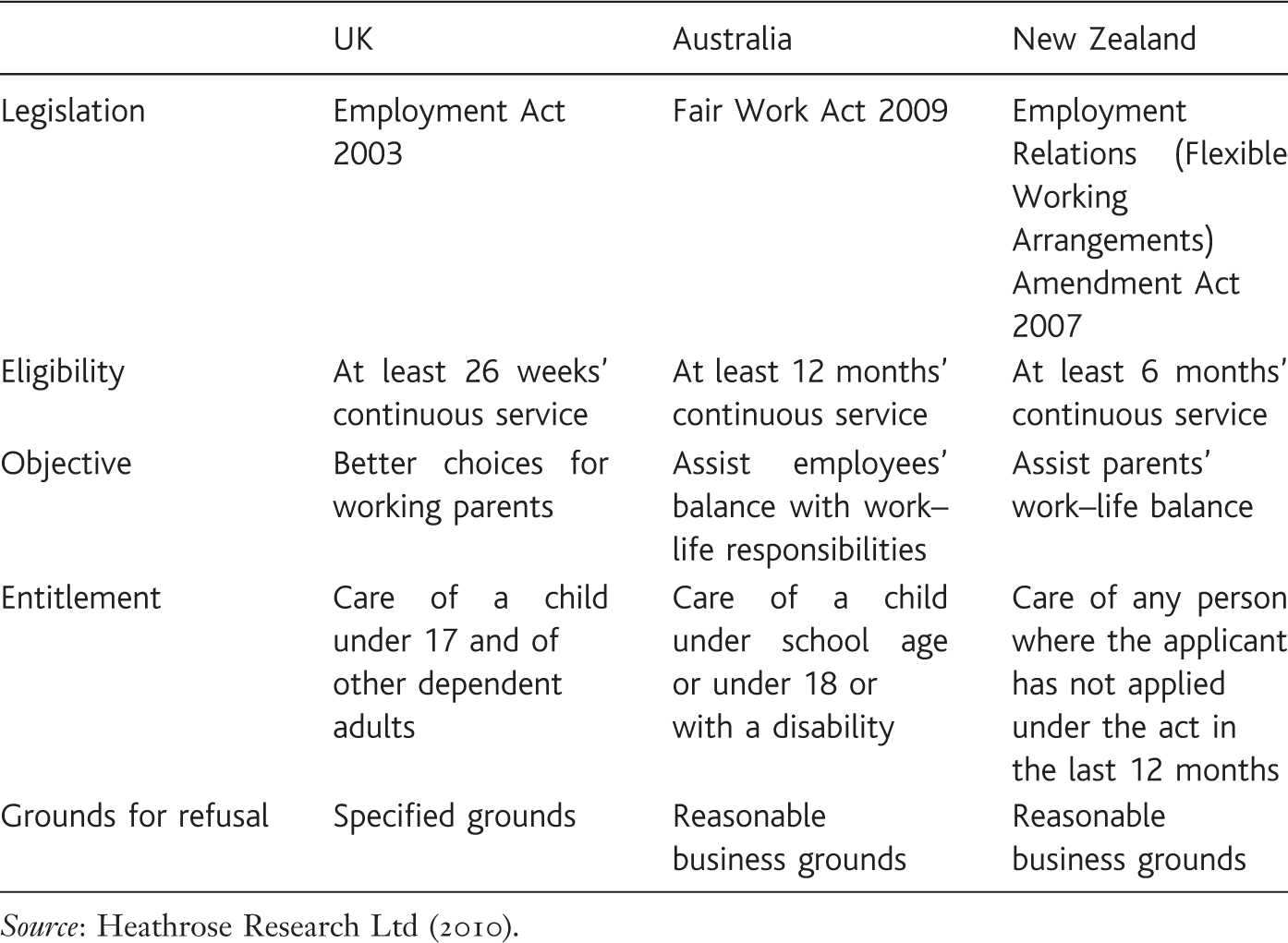
Source: Heathrose Research Ltd (2010).
In New Zealand, workers with caring responsibilities 1 are given the statutory ‘right to request’ FWAs from their employer under Part 6AA of the Employment Relations (Flexible Working Arrangements) Amendment Act 2007. This Act is part of a series of recent legislative changes that seek to reflect shifts in the labour market and improve the working conditions for working parents (Lafferty and Kiely, 2008). In addition to the ‘right to request’ Act, other legislative changes include the Parental Leave and Employment Protection (Paid Parental Leave) Amendment Act 2002 and the Employment Relations (Breaks, Infant Feeding, and Other Matters) Amendment Act 2008.
The New Zealand approach is distinctive in that it mandates for broader provision than other countries by extending the ‘right to request’ FWAs to all workers with caring responsibilities. However, limiting the ‘right to request’ to carers alone has attracted criticism in that it further entrenches divisions between carers and non-carers (Heathrose Research Ltd, 2010; Himmelweit, 2007). In response to calls for fairness of access to all employees, a recent review of the ‘right to request’ Act has recommended the extension of the legislation to all workers, irrespective of their caring responsibilities (Department of Labour (DOL), 2011; Heathrose Research Ltd, 2010).
Rights and responsibilities in the Employment Relations (Flexible Working Arrangements) Amendment Act 2007
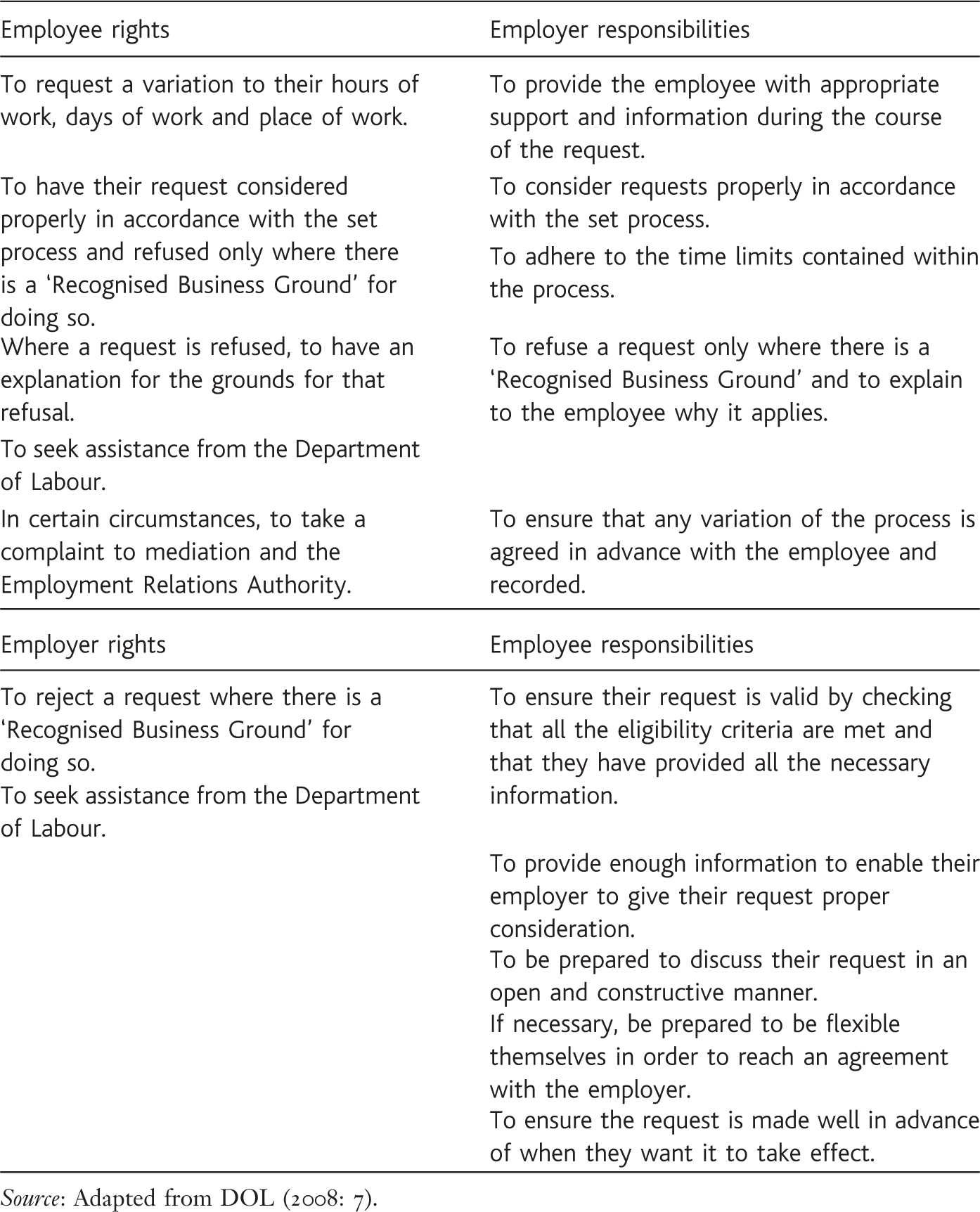
Source: Adapted from DOL (2008: 7).
In the UK, this form of ‘soft law’ has been critiqued on the basis that it legislates for a ‘limited’ right to request, lacks a fair appeals process and has a reportedly low rate of take-up (e.g. Hegewisch, 2009; Himmelweit, 2007). It also, arguably, ‘institutionalizes managerial discretion rather than creating outright rights for employees’ (Kelly and Kalev, 2006: 379). In this context, some have raised concerns that ‘right to request’ legislation may enhance rather than reduce gender divisions (Hegewisch, 2009; Himmelweit, 2007).
Although the emerging picture of worker outcomes is complex, little is known about how ‘flexibility’ is implemented or how implementation affects consequences. The picture is further clouded due to the many forms of FWA provision that exist outside of the legislative framework. FWAs are also provided for within collective employment agreements (CEAs), HR policies and through informal negotiations with managers. Thus, there is a need to consider how managerial structures, behaviours and workplace cultures mediate flexible work outcomes (Croucher and Kelliher, 2005; Kelliher and Anderson, 2010). Central to understanding the management and implementation of FWAs is the relationship of ‘choice’ and ‘voice’ in workplace flexibility.
Flexible Working: A Matter of ‘Choice’ and ‘Voice’
One of the arguments originally put forward for mandating FWAs in New Zealand was to provide workers with ‘more choice about the way they work, including having more input into rosters and shifts, and choosing the number of hours they work’ (DOL, 2006: 1). However, notions of choice, especially for women, are not straightforward (De Menezes and Kelliher, 2011; Tomlinson, 2004). Liberal feminist analyses of women’s participation in the labour force place the notion of ‘choice’ as essential to women’s equality in, entry to and progression within workplaces. The key tenets of such a liberal approach include individualized equal rights and fairness of treatment for all, so all workers, regardless of class, race or gender, may move freely within a competitive and merit-based labour market (Brooks et al., 2000; Jewson and Mason, 1986). Within this frame, women’s entitlement to choose their life and work patterns is seen as central (Baker, 2008; Barns and Preston, 2002). In contrast, radical and post-structuralist feminists have argued that a choice rhetoric needs to be used with caution (Baker, 2008; Todd and Binns, 2011). Radical feminist approaches have questioned the assumed objectivity of evaluations of merit and fairness and highlighted the ways in which ‘choice’ for some workers is constrained by historical disadvantage (Simon-Kumar, 2008). Post-structuralist scholars have further noted that the prioritization of the concept of choice reflects an individualized neo-liberal ideology that obscures disadvantages of class, race, sexuality and gender through the construction of an independent and self-reliant individual (e.g. Baker, 2008).
Taking on board these cautionary analyses of ‘choice’, a mandated ‘right to request’ approach may hide from view the social, political and organizational constraints that workers face when making their work and family responsibility choices (Dwyer and Roberts, 2004). Thus, if ‘right to request’ legislation offers workers more choice, it is crucial to understand the conditions under which that choice is made and how choice is exercised and managed. It is here that the concept of ‘voice’ can usefully inform how FWAs operate and the effects they have.
‘Voice’ refers to mechanisms that provide workers with ‘meaningful inputs’ into organizational decision-making (Budd, 2004). As many have noted, indirect representative forms of voice (typically through trade unions) have given way to direct, non-representative forms of voice in the drift towards the individualization of employment arrangements (Budd et al., 2010; Dundon et al., 2004). Furthermore, research notes that different voice arrangements have different outcomes for workers (Pyman et al., 2006). While research to date has largely focused on patterns of voice within workplaces and the impact of voice patterns on productivity and organizational efficiencies (Bryson et al., 2006; Dundon and Gollan, 2007; Wilkinson and Fay, 2011), less attention has been directed towards the context and structures that afford consultation and participation for workers. The exception to this is the recent work by Hall et al. (2007) and the Advisory, Conciliation and Arbitration Service (ACAS) (2011), who have examined the impact of the Information and Consultation for Employees (ICE) regulations introduced in the UK in 2005. Their findings suggest that where such legislated structures existed, they were often found to be management-led and again framed in the context of organizational efficiencies or productivity gains. Finally, while there has been some recent movement towards understanding the relationship between voice and gender, particularly in relation to ‘non-standard employment’, much of the research in this field suffers from gender-blindness and obscures certain aspects of employment (Holgate et al., 2006; Markey et al., 2001; Wacjman, 2000).
Constraints on the choice of work–life patterns raise questions regarding the role of voice in the management of FWAs. As Hales and Klidas (2008: 89) note, issues of choice and voice are often presented as trade-offs within organizations such that ‘more “choice” over how work is done’ obscures the need for ‘greater “voice” in decisions relating to the organisation as a whole’. These authors question whether initiatives for greater worker choice ‘involve a real transfer of power’ that enables greater worker influence over organizational practices, or rather merely transfer responsibility for work decisions. Research in the US found that the management of FWAs provided managers with ‘formalized discretion’, that is, it afforded managers the choice and voice to accept or deny requests for FWAs (Kelly and Kalev, 2006). Likewise, Todd and Binns (2011) noted that managers tend to manage FWAs in a limited and individualized way, where requests to access FWAs were often seen as being in conflict with operational issues.
Currently, the New Zealand Employment Relations (Flexible Working Arrangements) Amendment Act 2007 provides ‘carers’ with the opportunity to access a direct voice process. It is somewhat surprising, then, that while the rhetoric of choice is dominant, the notion of worker ‘voice’ is almost entirely absent in the promotion and evaluation of this legislation. In summary, the framing of FWAs in New Zealand as a matter of individual choice extends the ‘rights’ and choices of some, but by no means all, workers. By restricting provision to those with caring responsibilities, a large proportion of women are excluded from accessing flexibility – indicating a ‘flexibility gap’ within workplaces. Furthermore, by positioning FWAs outside of a ‘rights and responsibilities’ framework, it remains unclear as to who is responsible for the implementation and management of FWAs. More knowledge about the work context within which FWAs operate is thus needed to evaluate the potential outcomes of such legislation on women’s working lives.
Research Design
This research reports on a large-scale survey of women’s experiences of flexible work in the New Zealand public services. Respondents were drawn from the membership of the largest trade union in New Zealand representing workers in the public services – the Public Service Association (PSA). 2 This survey was devised as part of a broader campaign to develop the women’s network within the PSA and to examine women’s experiences of employment and their union. Invitations to participate were sent to all 33,304 women members of the PSA during June 2010. Significant effort was made to gather the fullest representation of this group through widespread advertising and the use of a number of participation methods (including voluntary, self-administered postal and online survey options).
The survey included both open- and closed-ended questions related to aspects of the respondents’ working lives and the provision, utilization and outcomes of practices associated with workplace flexibility. In examining the extent of voice and influence, questions measured: 1) how working time arrangements were set (and by whom); 2) the ability to set or change the order of tasks, the speed or rate of work, the method of work, overtime, and the allocation of rest and leave arrangements; 3) how teamwork was organized (and by whom); and 4) the level of interaction with direct managers in setting work goals and monitoring performance. Response scales included discrete categorical response options, measurement response options and five-point Likert-type scales. Open questions also invited respondents to provide qualitative comments in regard to experiences of bullying and discrimination and further comments at the conclusion of the survey. The results reported in this article present descriptive statistics and simple statistical tests of relationships (e.g. Chi square analysis).
In total, 7292 valid responses were received, representing a response rate of 21.9%. This response rate was lower than expected, and to test for representativeness (as advised by Baruch (1999) in cases of low response rate), sample demographics were compared with recent statistics regarding women working in the New Zealand state services more broadly (SSC, 2010a, 2010b). As discussed later, the sample demonstrates demographic characteristics similar to female state service workers, thus suggesting a low likelihood of non-response bias.
Respondents
The women who participated in this survey can be characterized as a stable and committed group of workers who, like public servants more broadly, were on average older, more highly educated and higher earners than the national average. In terms of ethnicity, most of the respondents identified themselves as New Zealand European/Pakeha (69.7%), while just over 30% identified with one or more other ethnic minority groups. The proportion of respondents who identified themselves as Māori (15.4%) was comparable to the Māori population of the New Zealand state services more broadly (16.7%) (SSC, 2010a). In line with state service workers generally, the education levels of these women were significantly higher than the national average. Over 70% of those surveyed had a post-high school certificate or higher, while just over four in every 10 respondents had obtained a bachelor degree or higher. This compares to 21% of the New Zealand working population holding a bachelor degree or higher in 2008 (Statistics New Zealand (StatsNZ), 2008). The average age of the respondents was 46 years, although ages ranged from 19 to 80 years. This measure highlights the most notable deviation of the sample from women workers in the New Zealand state service (whose average age is 42.6 years) (SSC, 2010a).
In 2010, the average tenure for New Zealand state service workers was eight-and-a-half years (SSC, 2010a), indicating a relatively stable workforce. Similarly, the majority (76.9%) of women had worked in their organizations for more than three years, while almost a third (28.5%) had worked in that same organization for over 11 years. Employment agreement types varied, with most respondents in full-time work (87%) and the remaining 12.3% in part-time employment. The majority of respondents were also employed under a permanent or ongoing agreement (93.2%), while the remainder were on fixed-term or casual agreements. This is broadly comparable to the almost 92% of female state service workers who were employed on a permanent agreement in 2010 (SSC, 2010b).
In line with their organizational longevity, advanced education and an ageing profile, the women in this survey earned a comparatively high median annual gross salary of between NZD$40,000 and NZD$59,000, as compared to the national average of NZD$32,760 for women in the workforce (StatsNZ, 2009). Nevertheless, this pay level is lower than the average annual earnings for female state service workers of NZD$59,522 (SSC, 2010a). 3
Findings and Discussion
The following sections consider the provision and take-up of workplace flexibility. By exploring the factors that limit the take-up of workplace flexibility – both within and outside of the framework of the ‘right to request’ legislation – the discussion exposes the restricted nature of worker voice and influence in FWA provision, and highlights the need for a much fuller consideration of the management of FWAs.
The Demand for Workplace Flexibility
To assess the demand for workplace flexibility, respondents were asked a series of questions concerning their caring responsibilities. Almost a third of those surveyed (31.4%) have primary caring responsibilities for at least one child under 18 years of age. This is comparable with the national average of approximately 32% of New Zealand women who do the same (Fursman and Callister, 2009). A much smaller percentage (12%) reported primary care responsibilities for at least one dependent pre-school child (under the age of five years).
Previous research has noted that with the ageing of populations, women in particular face an enlargement of their caring responsibilities to include the care of elderly parents (Doress-Worters, 1994; Kramer and Kipnis, 1995). A large group of respondents (8.8%) indicated that they had primary care responsibilities for their own or their spouse’s elderly parents, and 7.2% of the respondents reported having two or more primary caring responsibilities. Of the latter group, 43% carried the dual responsibility of caring for children under 18 years of age and elderly parents. Significant tensions were also reported between paid work and caring responsibilities for these workers, who have previously been described as the ‘sandwich generation’ (Community and Public Sector Union (CPSU), 2010; Zal, 2001). Those with primary caring responsibilities for a child or another adult were more likely to report lower levels of work–life fit than those with no primary caring responsibilities (χ2 (1, N = 7253) = 61.65, p < .001). Thus, the importance of the current New Zealand legislation, which extends the ‘right to request’ FWAs to all carers, is highlighted.
These women also reported active involvement in communities outside of their workplaces. The majority of respondents (77%) reported volunteering in community activities over the previous 12 months and over a third (38%) indicated that they contributed time regularly to, at least, two different areas of the community (including sporting, cultural, educational, environmental, religious/spiritual or social/health care support). These findings indicate that the benefit of workplace flexibility is likely to be shared not just by workers, but by their wider communities. Moreover, the extension of a legislative ‘right to request’ FWAs to all workers would likely have an important impact on how both men and women might choose to organize their paid and unpaid working lives (Skinner and Pocock, 2011). Current discussions regarding the extension of legislation mandating access to FWAs for all employees would thus seem timely.
The Provision and Take-up of Workplace Flexibility
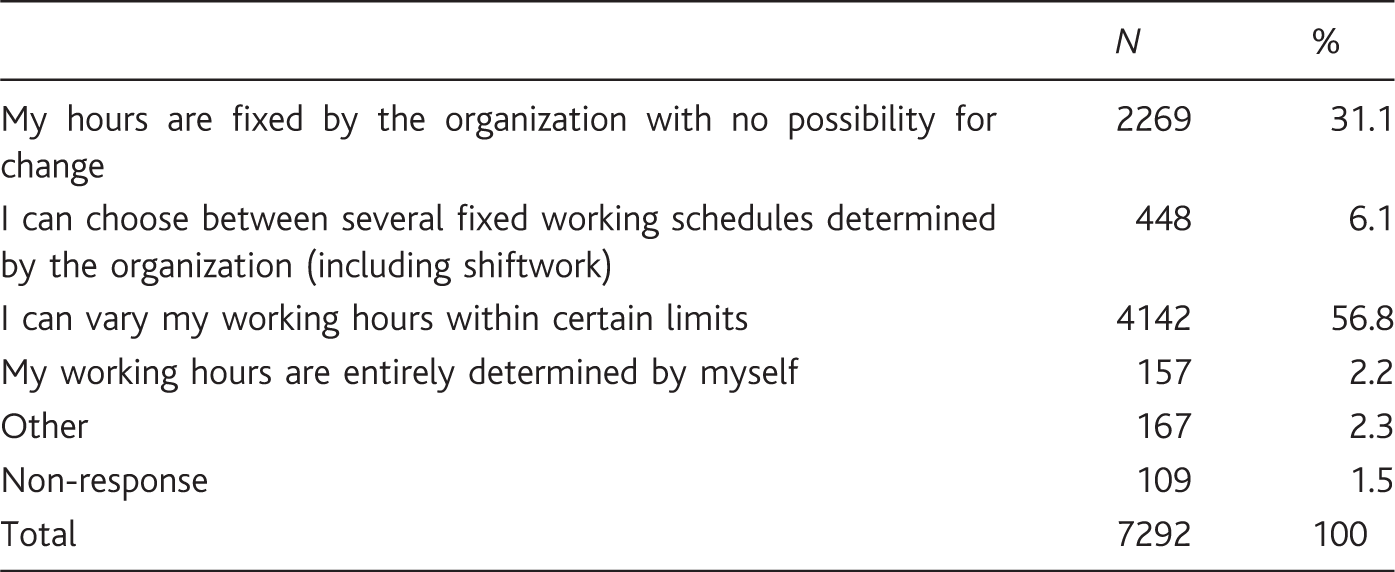
Flexible working hours outcomes
Uptake of leave provisions
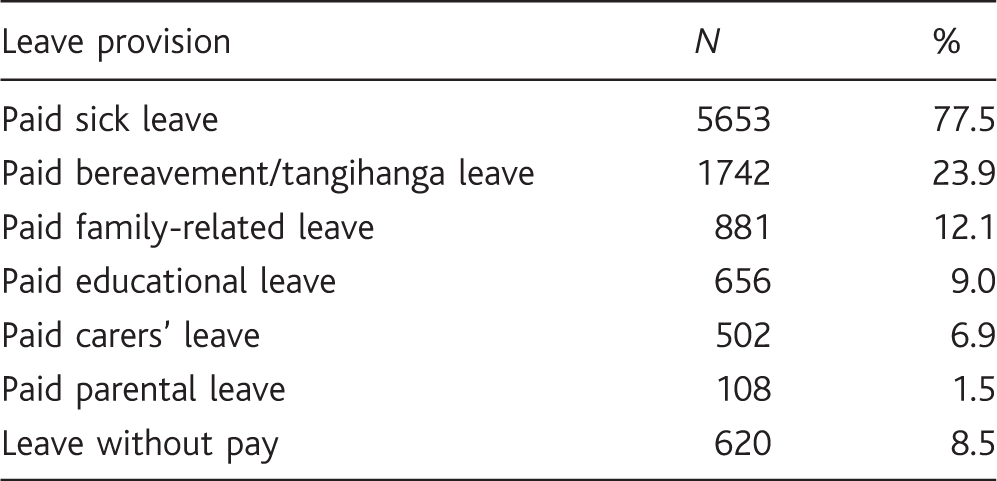
As Table 4 indicates, in addition to sick leave, large numbers of respondents had also taken other forms of paid flexible leave in the previous 12 months, including: bereavement/tangihanga leave, carers’ leave, family-related leave, education leave and paid parental leave. The current findings suggest that workload and time pressure at work may be having an impact on the health of those working in the New Zealand public service.
In keeping with the wider literature, these findings suggest that the availability of varied forms of flexibility play a significant role in meeting workers’ work–life balance needs and influencing intentions to remain with their employer. Respondents who perceived low work–life fit were more likely to be actively applying elsewhere for another job or intending to do so in the future than those perceiving better work–life fit. Conversely, those who indicated that their work fitted well or very well with their other commitments were more likely to want to stay in their current position or apply for a higher level position in the same organization in the future (χ2 (15, N = 7204) = 379.00, p < .001). These findings align with the previous literature, which shows that employees who can shape their work schedules to better fit with their other responsibilities are likely to experience more positive outcomes (Gregory and Milner, 2009).
Legislative and Organizational Frameworks for Flexibility
Respondents were asked about their awareness and usage of the Employment Relations (Flexible Working Arrangements) Amendment Act 2007. Two years after its enactment, most women surveyed (59.3%) remained unfamiliar with the legislation. This is notable given that, as public service workers, they might be expected to be knowledgeable about governmental employment provisions. Only 7.3% of the respondents indicated that they had made a formal request for FWAs under the Act. These findings confirm earlier research findings that a lack of awareness of FWAs is a barrier to take-up (Skinner et al., 2004). Of those who requested FWAs under the Act, the majority (76.4%) were given approval by their employer.
The relatively low proportion of take-up is surprising given that the respondent group were precisely the kind of workers (well-paid, highly educated, full-time and permanent workers) who are predicted to have the greatest opportunity to access FWAs (Golden, 2008; Tomlinson, 2004). This may be partially explained by the existence of FWA provision outside of the FWA legislation (within collective employment agreements and organizational provision). Indeed, despite low familiarity with the legal provisions for FWA requests, respondents indicated that FWAs were often available.
Thus, on the surface, there appears to be significant choice for women in New Zealand public services to balance their work and life demands through mandated, collectively negotiated and organizational forms of workplace flexibility. However, elsewhere, research has found that the ‘implementation gap’ between provision and take-up is undermined by increasing workloads, job insecurity and the changing nature of work – all of which were found to result in longer working hours (Lewis and Den Dulk, 2010). In line with these previous findings, the nature and structure of work were the main barriers to accessing FWAs reported by these women. Specifically, it was workloads and time pressures (53.6%), ‘not wanting to burden work colleagues’ (35.5%) and anxiety over future job security (18.8%) that they noted. For one in 10, it is the culture of their organization or management rejection of their application that prevented them from accessing FWAs (see Figure 1). Interestingly, Lewis and Den Dulk (2010) found that in times of work intensification, workers were reluctant to access FWAs for fear that the work would be passed on to overburdened colleagues. These results are significant in the light of the justifications for FWAs that are assumed in the legislation. In short, the results suggest that for ‘real’ choice to occur, employees need voice and the ability to influence those things that constrain the take-up of FWAs.
Factors preventing access to flexible work arrangements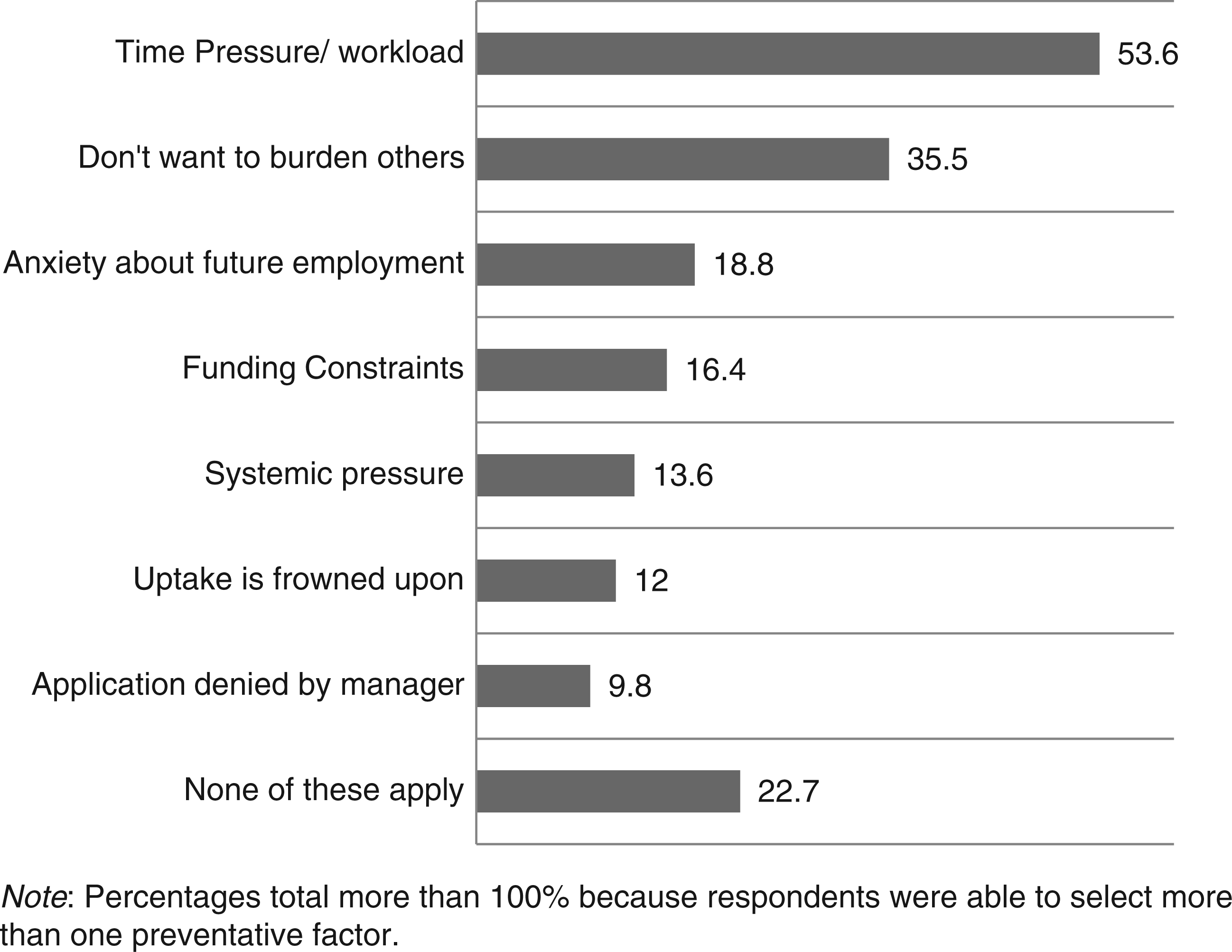
The Role of Voice in Workplace Flexibility
Degree of influence over work
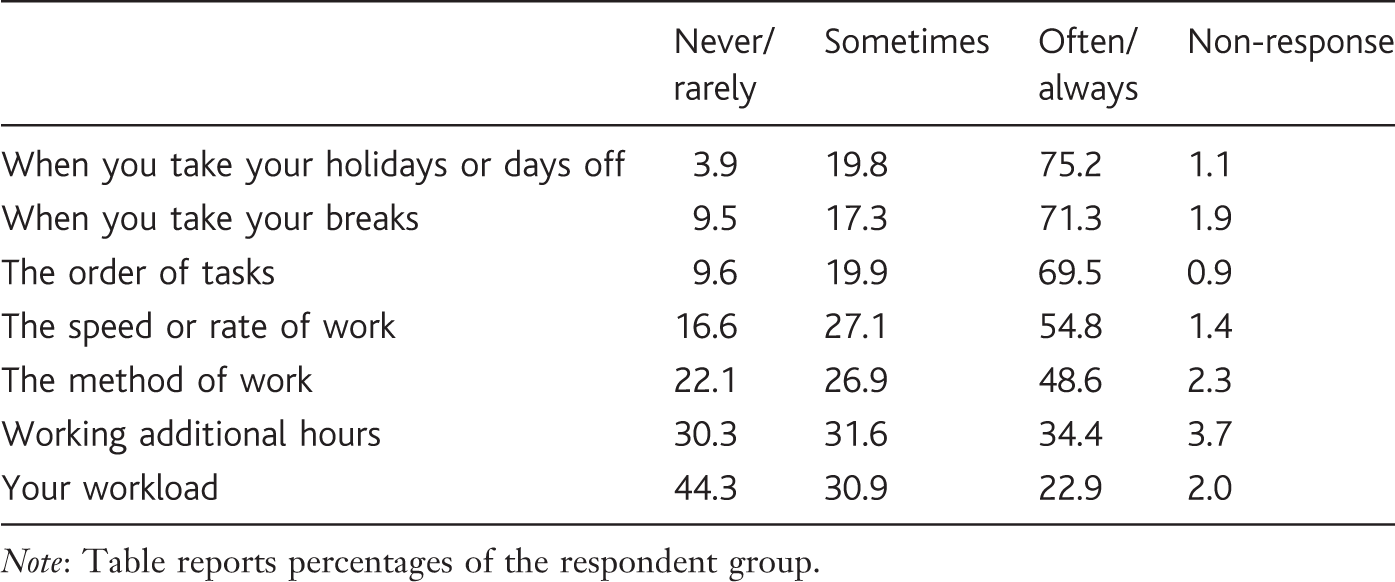
Note: Table reports percentages of the respondent group.
Respondents reported the least amount of voice in relation to their workloads and the working of additional hours (see Table 5). Many (44.3%) reported having little influence over their workload and almost two-thirds (61.9%) noted limited influence over the working of additional hours. Overtime or additional hours are often used by organizations as a means of dealing with increases in workloads. Found to be common in public service workplaces, over half (51.5%) indicated that they work more hours than they are contracted for, with most (84%) receiving no financial compensation. In looking more closely at this group (N = 3161), it was found that 44% also have no opportunity to ‘bank’ the additional time worked. Thus, despite the availability of FWAs, respondents report a culture of working additional hours with no ability to receive compensation, to ‘bank’ overtime work for future flexibility or to input into decisions relating to that overtime work.
Voice that is given expression in the process of requesting FWAs becomes silent on implementation because there is no ‘real transfer of power’ (Hales and Klidas, 2008) to workers to influence issues of workload and the distribution of tasks. Despite this, if an organization agrees to a request for FWAs, the responsibility to facilitate and manage the arrangement is shifted from the organization to the worker. In this context, workers are handed responsibility with no control. As Zeytinoglu and Muteshi (1999: 2) argue, ‘the burden of structural changes in the work environment is borne by women’ and the risk of using FWAs to meet worker and organizational demands is individualized to specific workers.
Conclusion
Confirming previous findings, this research demonstrates that choosing to access FWAs is far from simple (Greenberg and Landry, 2011). Further, these findings reveal that voice has an important role to play in understanding the complex processes and structures that shape workplace flexibility. Clear obstacles remain for women in accessing workplace flexibility within the New Zealand public services. These, in part, reside within organizational structures but are also reinforced by limitations in the current framing of legislation. For most, working in an environment with significant workloads, time pressures and anxiety about job security, and working within a culture where management typically reject requests, limits the take-up of FWAs. An analysis of voice demonstrates that the management of workloads and time pressures are aspects of employment that are subject to managerial discretion, but where women have little influence. There are significant implications of these findings both for organizational provision and the current framing of the legislation.
First, these findings add to calls for greater attention to the management and implementation of workplace flexibility (Croucher and Kelliher, 2005; Kelliher and Anderson, 2010; Todd and Binns, 2011). The question of who is responsible for implementing FWAs remains unanswered in a ‘right to request’ FWA framework. The results highlight that in this context the responsibility to facilitate FWAs is borne by the worker rather than the organization. Thus, while individual choice is promoted as the panacea to resolve work–life conflicts, in practice it is a worker’s responsibility to deal with the consequences of those flexible working choices. Greater definition of not just the rights, but also the responsibilities, under the legislation would ensure that the burden of implementation is shared by both workers and organizations.
In focusing on women’s voice and the distinction between flexible work provision and utilization, this article draws attention to the roles and responsibilities of both employers and employees that are otherwise obscured in the ‘right to request’ legislative approach. If the responsibility of implementation and management of workplace flexibility is to be equally shared between workers and their employers, greater consultation and participation of workers through indirect and direct means is crucial. Collective voice, and the ability to influence organizational decision-making processes, are currently not considered in legislative and organizational approaches to providing the ‘right to request’ FWAs. This research highlights the role of indirect voice mechanisms in balancing the individualization of the flexibility agenda (e.g. worker representation in the negotiation of collective agreements or worker participation in equity monitoring committees). Moreover, in keeping with recent research that highlights the role of middle and front-line managers in the implementation of workplace flexibility initiatives, this research underscores the role of line management in resolving conflicting priorities between operational practices and employees’ flexibility needs (Lewis and Den Dulk, 2010; Todd and Binns, 2011).
Second, while women in this survey were required to manage the process of flexible work, it was found that the setting of workloads is an aspect of work that these workers have the least amount of influence over. Worker voice in the New Zealand public services is restricted to task participation – that is, the ability to shape their immediate work environment – which in the case of public service women does not include the management of workloads. Thus, flexible work outcomes for women in the public services are dependent on the quality of voice mechanisms available to them. These results are notable given that they are gathered from a sample of relatively well-paid, well-educated and, for some, ‘privileged’ workers. If the survey was extended to workers earning lower incomes, in non-governmental jobs and/or in more precarious jobs, it is anticipated that even lower levels of voice would be reported (cf. Golden, 2008; Tomlinson, 2004). Moreover, there is a very real possibility that workloads will significantly increase in this sector due to the further employment retrenchment forecast (SSC, 2010a). In this context, a ‘right to request’ framework offers some choice, but only a very limited form of individualized and direct voice. Unless workers gain greater job control and voice without having to bear the risks of increased workloads for themselves and others (including possible hostile responses from colleagues), choice does not really matter.
Third, under ‘right to request’ legislation, the choice to access FWAs is not equally shared by all workers. This research points to a significant ‘flexibility gap’ in the provision of workplace flexibility in the New Zealand public services. Apart from the noted extension of caring responsibilities to include both child and elder care, the research reveals that this group of women is also actively involved in their communities. The importance of providing the ‘right to request’ FWAs to all irrespective of their caring responsibilities is highlighted. Furthermore, in looking at the role of government in ensuring a balance between employers’ calls for greater labour market or workforce flexibility and workers’ demands for more workplace flexibility, issues of job security are raised. This research found anxiety of future job security to be a factor in the low take-up of FWAs. It is here that European approaches to flexicurity can be borrowed in ensuring flexibility issues are measured alongside employment security concerns. Together, concerns regarding the breadth of access and the balancing of flexibility with security point to a need to develop an inclusive and integrated framework of legislation that supports flexible work outcomes. This broader approach is likely to be crucial to progressing gender equality at work (Himmelweit, 2007).
Finally, this research demonstrates that the framing of workplace flexibility through the rhetoric of choice obscures a network of institutional, organizational and managerial factors that limit the take-up of workplace flexibility opportunities. The restricted scope of women’s influence around workloads, work distribution and working additional hours found in this research sheds light on how choice of FWAs is exercised in the context of the work structures and processes of the New Zealand public service. Building on these findings, future research could usefully explore how different mechanisms of voice afford different levels and quality of workplace flexibility. Furthermore, the reasons why FWAs are taken up, when, by whom and the flexibility outcomes for workers’ jobs and careers need further investigation and elaboration.
In sum, while workplace flexibility may contribute to the betterment of women’s (and men’s) working lives and the communities in which they live, this research reflects the limitations of flexibility policies that are based upon individualized notions of choice, direct forms of voice and a lack of clarity regarding who is responsible for managing the implementation and operation of FWAs. This research highlights the role of indirect representative voice in the development of workplace flexibility and the institutional responsibilities for the management of FWAs within workplaces.
Footnotes
Acknowledgements
We would like to thank the referees and editors for their helpful comments on earlier versions of the article.
Funding
This research was conducted under the auspices of the Industrial Relations Centre, Victoria University of Wellington and with the financial support of the New Zealand Public Service Association.