




Abstract
With projected future demand severely outstripping the current workforce size, it is crucial for the Australian aged care sector to develop strategies to encourage non-traditional workers (such as men) into the sector. Yet despite some recent progress, there is still surprisingly little empirical evidence about how to attract and retain men into gender atypical occupations such as aged care. This article offers an in-depth and innovative investigation into male aged care workers, their experience of the work and future employment plans. Using a mixed methods design, this article combines the findings from an analysis of the Australian National Aged Care Workforce Census and Survey with the findings arising from 51 in-depth interviews conducted with male aged care workers. The integration of these findings allows us to understand the determinants of men’s representation in the aged care sector so that workforce strategies and policies can be generated about how the sector can best attract and retain male workers to meet current and future skill shortages.
Introduction
Aged care providers in Australia are currently experiencing considerable workforce pressures. Presently two-thirds of residential aged care facilities and half of all community aged care services report skill shortages within direct care occupations (Mavromaras et al., 2017). Furthermore, the current aged care workforce is on average considerably older than the Australian workforce as a whole (Department of Jobs and Small Business, 2018). Indeed, as over a quarter of direct care workers in residential aged care and one-third in community settings are aged 55 years or older (Mavromaras et al., 2017), the sector faces serious issues regarding employee retention over the next decade.
These workforce pressures are occurring in an environment in which the numbers of older people requiring care is projected to increase substantially over coming years (Productivity Commission, 2013). As a consequence, it has been predicted that the aged care workforce will need to employ 980,000 workers by 2050 in order to meet the future care needs of older Australians (Productivity Commission, 2011). Recent estimates show that the aged care workforce grew by 4% between 2012 and 2016 and now comprises approximately 366,000 employees (Mavromaras et al., 2017). However, this level of growth is three times lower than the amount needed for the workforce to expand sufficiently (Tune, 2017). In addition, greater competition for workers with other industries is making expansion more challenging. The overall Australian workforce is ageing and, more directly, the roll-out of the National Disability Insurance Scheme – which commenced in 2013 and provides support to Australians with disability – is increasing the demand for workers who have skills similar to those employed in the aged care sector (National Disability Services, 2014; Senate Community Affairs References Committee, 2017). Given the current and anticipated demand for aged care services, specific strategies will need to be developed to encourage non-traditional labour pools into the sector (Hugo, 2007; Tune, 2017).
Male workers are a group of employees currently underutilised within the aged care sector. Although the current workforce remains predominantly female, the share of male workers within the sector has been slowly increasing over time and has the potential to grow further in order to assist the expansion of the aged care workforce (Mavromaras et al., 2017). Indeed, the aged care sector itself has recently recognised the need to engage men more effectively in order to increase the size and capacity of its workforce and ensure the sector can meet current and future workforce demands (Keast, 2016). Moreover, the move to a model of consumer-directed care within the aged care sector means that individual recipients of home-care packages are now encouraged to be actively engaged in choosing what supports they want, how they want them to be provided and by whom (Senate Community Affairs References Committee, 2017). As a consequence, it has been argued that increasing men’s representation in the aged care workforce enables the needs and wants of older men receiving aged care services to be better met (Brown et al., 2009). However, little is known about the factors that enable men to successfully enter and work in aged care.
Most studies of gender-incongruent work have focused on women’s experiences in male-dominated occupations (e.g. Bowman, 2004; Cooper, 2012; Dumbrell et al., 2000; McGregor et al., 2017; Pocock, 2008; Preston and Whitehouse, 2004; Ridgeway and England, 2007; Watts, 2003). From this research we know a great deal about how women are excluded from some kinds of work and how they are crowded into other kinds. Much less attention, however, has been paid to men working in traditionally female occupations. Subsequently, relatively little is known about the factors that enable men to successfully enter occupations such as aged care, which are characterised by gender bias (Hussein and Christensen, 2017).
Using a mixed methods design, this research combined secondary analysis of a representative national dataset with the analysis of qualitative data collected from in-depth interviews with male aged care workers to explore how more males can be attracted into, and retained in, the aged care workforce. The overall aim of this study was to understand men’s representation and their work experiences in the Australian aged care sector. The study sought to address four key research questions:
What is the level of representation of men in the Australian aged care workforce and has this changed over time? Are the characteristics of male aged care workers different from those of female workers? What are the pathways through which men enter the aged care workforce? What are the processes that may restrict male workers from entering or remaining in the aged care workforce?
Men working in female-dominated occupations
There is an existing (albeit small) body of literature looking at men working in gender atypical occupations. This body of research, which has been conducted in industries outside aged care, offers insights into both the experience of men working in female-dominated occupations and the barriers they face in entering and remaining in such jobs. Three main themes can be detected in this literature (Lupton, 2006; Nickson and Korczynski, 2009). The first is that over recent decades there have been distinct patterns of movement by men into female concentrated occupations (Simpson, 2005; Williams and Villemez, 1993). The second is that men take their gender privilege with them into women’s work and thereby gain advantages in their employment (Williams, 1995). The third theme is that masculinity is challenged when men cross gendered work boundaries (Lupton, 2000). All of these themes are likely to be useful in understanding how men may or may not become integrated into the aged care workforce.
Research has shown that there are distinct patterns of movement by men into female-concentrated occupations. Bradley (1993) has identified three circumstances in which men may move into women’s jobs. Male movement into female occupations can occur during periods of general social, economic and political upheaval, as at these times social rules are called into question and new gender norms can emerge. Another precipitating factor is technological change whereby the invention of a new machine or technique can provide a rationale for men to redefine a traditional female occupation as male. And finally, Bradley finds that in periods of recession and unemployment where there is a lack of job opportunities, men may be driven to consider taking jobs previously designated as female-oriented.
Williams and Villemez (1993) profiled men in female-dominated occupations and traced the dynamics of their entry into and exit from these jobs. They differentiate between three broad groups of men: ‘seekers’ (who actively sought female-dominated jobs), ‘finders’ (who were looking for other types of work but ended up in a female-dominated occupation) and ‘leavers’ (who were in ‘female’ jobs and subsequently left them). They found that the majority of men who entered female-concentrated occupations were not there by choice (‘finders’) and that, of those men who had sought a female concentrated job (‘seekers’), many were not successful in securing one. Williams and Villemez suggest that occupational structures operate in a gendered way to restrict individual choices either by blocking men from female-dominated jobs, despite the men’s aspirations, or by escalating men to better jobs after only a brief tenure of employment in female-concentrated areas of work.
Using a similar analytic distinction, Simpson (2004, 2009) interviewed men in four occupational groups (primary school teachers, flight attendants, librarians and nurses) about the experience of working in a female-dominated occupation. In addition to identifying ‘seekers’ and ‘finders’, a third (and smaller) group of interviewees were categorised as ‘settlers’ (men who had tried a variety of different jobs with limited levels of job satisfaction and had subsequently entered a female-concentrated occupation).
There is much evidence to suggest that men who enter female-concentrated occupations benefit from their minority status. Three main benefits have been identified. First, it has been found that men’s minority status affords them a number of career benefits within female-dominated occupations (Simpson, 2004; Williams, 1992, 1995). These include being perceived as favourable jobs applicants, being fast-tracked to more senior positions and being given more opportunities for skill acquisition and increased responsibility. The outplaying of these processes results in men monopolising positions of power (vertical segregation) in female-dominated occupations. Second, men may be channelled into more ‘masculine’ specialities, which are also usually afforded better pay and more prestige. This is what Williams (1992) termed the ‘glass escalator’ effect. Third, it has been shown that men earn more than women in female-concentrated occupations (England and Herbert, 1993).
However, challenges to masculinity may be experienced by men who cross over into a female-dominated occupation, as this movement upsets traditional ideas of appropriate gender behaviour. As a consequence, men may be subjected to prejudice and suspicion by others and have their masculinity challenged. This can range from them being viewed as not a ‘real man’ to suspicion regarding their sexuality and their sexual motivation for undertaking the work (Lupton, 2006; Williams, 1995). The perceived risk to male (heterosexual) masculinity may be so great as to prevent men from even contemplating work in a predominantly female occupation.
Despite the power of these threats to masculinity, the barriers are not impermeable. Researchers have uncovered numerous strategies deployed by men to bring the job in line with dominant notions of masculinity. One such strategy is to emphasise traditional masculine traits, such as ‘pride in one’s work’ and ‘doing a proper job’, to allow men to maintain a sense of masculinity even while undertaking female-typed work (Cross and Bagilhole, 2002). A second strategy is to seek out and identify with more powerful groups within the occupation: for example, male nurses seeking out and associating with male doctors (Lupton, 2006). A third approach is for men to distance themselves from the work (and their colleagues) (Leidner, 1991), even to the extent of keeping the job a secret from friends or not fully disclosing the type of work they do (Simpson, 2009). A fourth strategy is to represent their work as more masculine (Pullen and Simpson, 2009), such as relabelling the job to avoid feminine connotations (Pringle, 1993). Finally, there is evidence that some men actively renegotiate their masculinity so that it is not compromised by working with women or by doing work that is traditionally associated with women (Cross and Bagilhole, 2002; Pullen and Simpson, 2009; Simpson, 2009). This is achieved either by downplaying overtly masculine behaviour or by incorporating aspects of female behaviour into their identities.
Men in care work
A comparatively smaller body of research has been conducted internationally (within Australia, Canada, Ireland, New Zealand and the United Kingdom) to explore the experiences of men working in female-dominated occupations in the social care sector (Baines et al., 2015; Hussein and Christensen, 2017; Hussein et al., 2016; McLean, 2003; Skills for Care, 2010), nursing (Evans, 1997; Loughrey, 2008) and social work (Pease, 2011).
As identified in the broader literature on male pathways into female-dominated occupations (Williams and Villemez, 1993), many men who enter the care workforce do not actively seek out employment. Rather, they are ‘finders’ who come from a wide range of employment backgrounds (Hussein et al., 2016) and often only become aware of the sector through associates working in the industry or in their role as a carer for a family member (Skills for Care, 2010). For newly arrived migrant men, care work may also be attractive as a way of gaining work experience before moving on to other employment opportunities (Hussein et al., 2016).
A ‘glass escalator’ has been shown to operate within the health and social care industries, with male workers disproportionately found in managerial and supervisory roles (Evans, 1997; Hussein et al., 2016; McLean, 2003; Pease, 2011). However, these advantages are not afforded to all men; Hussein and Christensen (2017), comparing the experience of migrant and British-born men in the social care sector, identified that migrant men were more likely to be working in direct care roles. Hence, alongside their gender, factors such as race, socio-economic status, sexuality, disability and age impact upon the benefits men receive as minority workers in female-dominated occupations (Hussein et al., 2016; McLean, 2003).
Studies conducted within the health and social care sectors identify that men are more commonly found in roles and specialisms that emphasise masculine traits such as technical skills, physical strength, control and surveillance (Evans, 1997; Hussein et al., 2016; McLean, 2003). For example, within the social care sector, male workers are more likely to choose to work with children and young people, in mental health and employment services, and with people with severe disability; they are less likely to work with older people or to be found in roles that necessitate direct care tasks (Hussein et al., 2016; McLean, 2003). Similarly, within the nursing profession, male nurses are more likely to choose specialisms such as psychiatry, and intensive and emergency care (Evans, 1997), which are associated with strength and technical ability.
Hence, rather than discarding notions of traditional masculinity when working within the health and care sectors, male workers have been shown to seek to maintain these values in their work (Evans, 1997). Previous research examining the nursing and social work professions and the not-for-profit social care sector has found that male workers typically adopt masculine-oriented strategies in the workplace, including being overtly careerist and seeking opportunities for advancement, distancing themselves socially from female co-workers, emphasising the more masculine aspects of their work, and adopting a task-oriented rather than a people-oriented approach to their daily work (Baines et al., 2015; Evans, 1997; Pease, 2011). Through these strategies, male workers, despite being employed in the female-dominated health and care sectors, are able to maintain traditional gendered roles (Baines et al., 2015).
In summary, the literature on men working in female-dominated occupations (including those in care work) suggests that a variety of factors operate to both facilitate and hinder male employment in these jobs. The benefits accrued to men – faster career progression, increased opportunities for specialisation, and comparatively higher wages – may entice men to enter female-dominated occupations. However, men working in female-oriented jobs are still disadvantaged in terms of financial rewards and status in relation to men working in comparable occupations (England, 2010). Also, the challenges to masculinity faced by men when entering female-dominated jobs may discourage them from entering these occupations or prevent others from considering men for these roles. The literature shows that men deploy strategies to bring female jobs in line with traditional ideas of masculinity, suggesting that some of these barriers can be potentially overcome.
Much of the literature on men working in female-dominated occupations, including those in the health and social care sector, has focused on professional or semi-professional roles (e.g. nurses, teachers, social workers, librarians). The experience of men working in the aged care sector has not previously been examined and, as many of the jobs within this sector are lower-skilled care worker roles, will not necessarily be the same as for males in higher-level female-dominated occupations (such as teachers, nurses, etc.). This research therefore seeks to contribute to this literature by providing a novel understanding of the experiences of men working in the aged care sector. Our research also seeks to understand the processes that affect men’s willingness and ability to enter, and remain a part of, the aged care workforce. The resulting evidence will be both important and timely, given the current and future need for the considerable expansion of this workforce.
Data and method
This study incorporates both quantitative and qualitative methodologies using data drawn from the National Aged Care Workforce Census and Survey (NACWCS). The NACWCS is funded by the Australian Commonwealth Department of Health and has been conducted on four occasions (in 2003, 2007, 2012 and 2016) by the National Institute of Labour Studies, Flinders University. Comprised of three elements – an employer census, an employee survey and qualitative interviews with direct care workers – the NACWCS collects and provides the most comprehensive data available on the Australian aged care workforce. All aged care provider organisations across Australia and a large sample of workers in both the residential and community (also known as home care or domiciliary care) sectors are included in the NACWCS. Ethical approval for the NACWCS was granted by the Flinders University Human Research Ethics Committee. Further detailed information about the NACWCS can be found in the Aged Care Workforce 2016 report (Mavromaras et al., 2017).
Quantitative analyses
The NACWCS employee survey collects data from aged care workers who are in direct care roles (such as nurses, care workers and allied health workers). The survey includes questions relating to socio-demographic characteristics, working conditions, career paths and experiences of working in aged care. All aged care organisations across Australia were sent copies of the questionnaire (the number of questionnaires provided varied according to the size of the organisation) and were asked to distribute these to a random sample of their employees. The questionnaire could be completed either online or by hard copy according to the preference of the worker. Response rates for the employee survey in 2016 were 50% in the residential sector and 42% in the community sector.
Using weighted cross-sectional survey data from the 2007, 2012 and 2016 waves of the NACWCS, we used descriptive analyses to examine changes that have occurred in male employment in the aged care workforce across a 10-year period. Weighted data for residential and community aged care workers (N = 15,909) from the 2016 survey was also used to provide a comprehensive profile of male employees in the sector. Using descriptive statistics, these analyses examined factors such as socio-demographic characteristics, occupational backgrounds, employment status, working conditions, and recruitment and retention issues. These findings were then compared with the characteristics of the female aged care workforce.
Qualitative analyses
In addition, we undertook an analysis of qualitative data collected from interviews conducted with male direct care workers as a part of the 2012 and 2016 NACWCS. Across the course of the 2012 and 2016 NACWCS, semi-structured in-depth interviews were undertaken with 201 aged care workers to explore their experiences of working in the sector. Of these interviews, a total of 51 (n = 33 in 2012 and n = 18 in 2016) were conducted with men. The male workers interviewed worked in both residential and community aged care (n = 32 and n = 19 interviewees, respectively) and came from a range of occupations (n = 33 care workers, n = 16 nurses and n = 2 allied health workers).
Aged care workers who had completed the NACWCS employee survey were able to nominate themselves to participate in a subsequent qualitative interview conducted by telephone. A random sample of potential participants was provided to the NACWCS qualitative research team for recruitment purposes; due to confidentiality constraints it was not possible to link these individuals with their data provided in the worker survey. Potential participants were contacted by telephone to ascertain their willingness to participate in an interview. Those who could not be contacted after three attempts or expressed a desire not to take part in an interview were replaced in the sample. This process continued until the target number of interviews had been reached. Common interview topics across the 2012 and 2016 interviews included reasons for entering the aged care sector, positive and negative aspects of aged care work, training opportunities, the skills required by aged care workers and future work intentions. The qualitative interviews were conducted by members of the NACWCS qualitative research team (including the authors) and were around 30 to 45 minutes in length. With the consent of participants, the interviews were audio-recorded and transcribed verbatim by a professional transcription service.
A secondary analysis of the qualitative data pertaining to the interviews with male workers was conducted using the ‘Framework’ Approach (Ritchie et al., 2003), a form of thematic analysis which is particularly suitable for applied social policy research. Familiarisation with the data occurred through repeated reading of the transcripts. An initial thematic framework of key themes and sub-themes was then developed and agreed upon by the authors. The interview transcripts were coded according to this thematic framework, with the framework being refined throughout the data analysis process to enable further emergent themes to be identified. The transcribed data were entered into NVivo 11 to assist with the management and analysis of the qualitative data. The qualitative analyses explored (1) the factors that influence men’s decisions to enter and stay in the aged care workforce, (2) the factors preventing or restricting their employment in the sector and (3) the role of different actors in determining men’s integration in or segregation from the aged care sector.
Results
Characteristics of the male aged care workforce
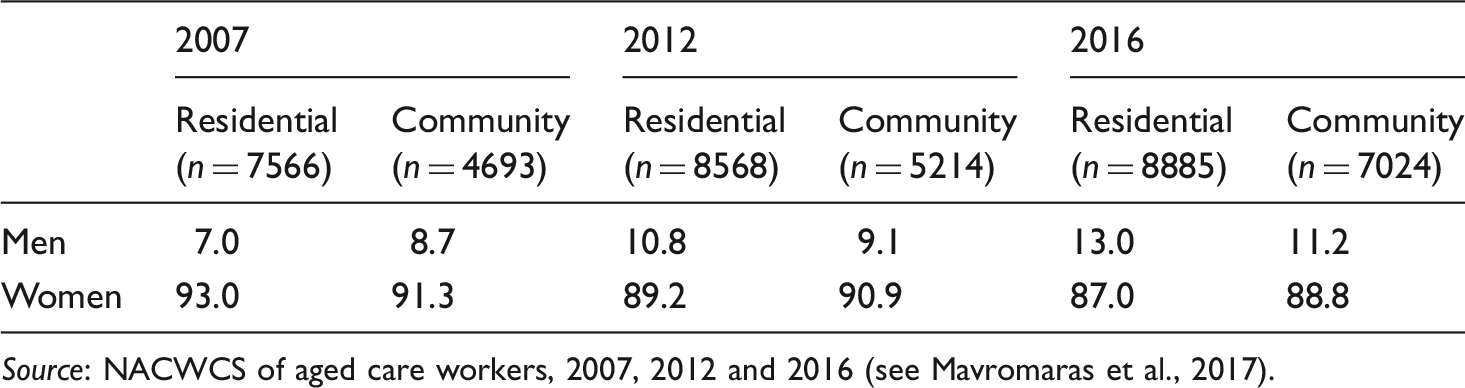
Proportion of males and females in the aged care workforce – 2007, 2012 and 2016 (in percent ages).
Source: NACWCS of aged care workers, 2007, 2012 and 2016 (see Mavromaras et al., 2017).
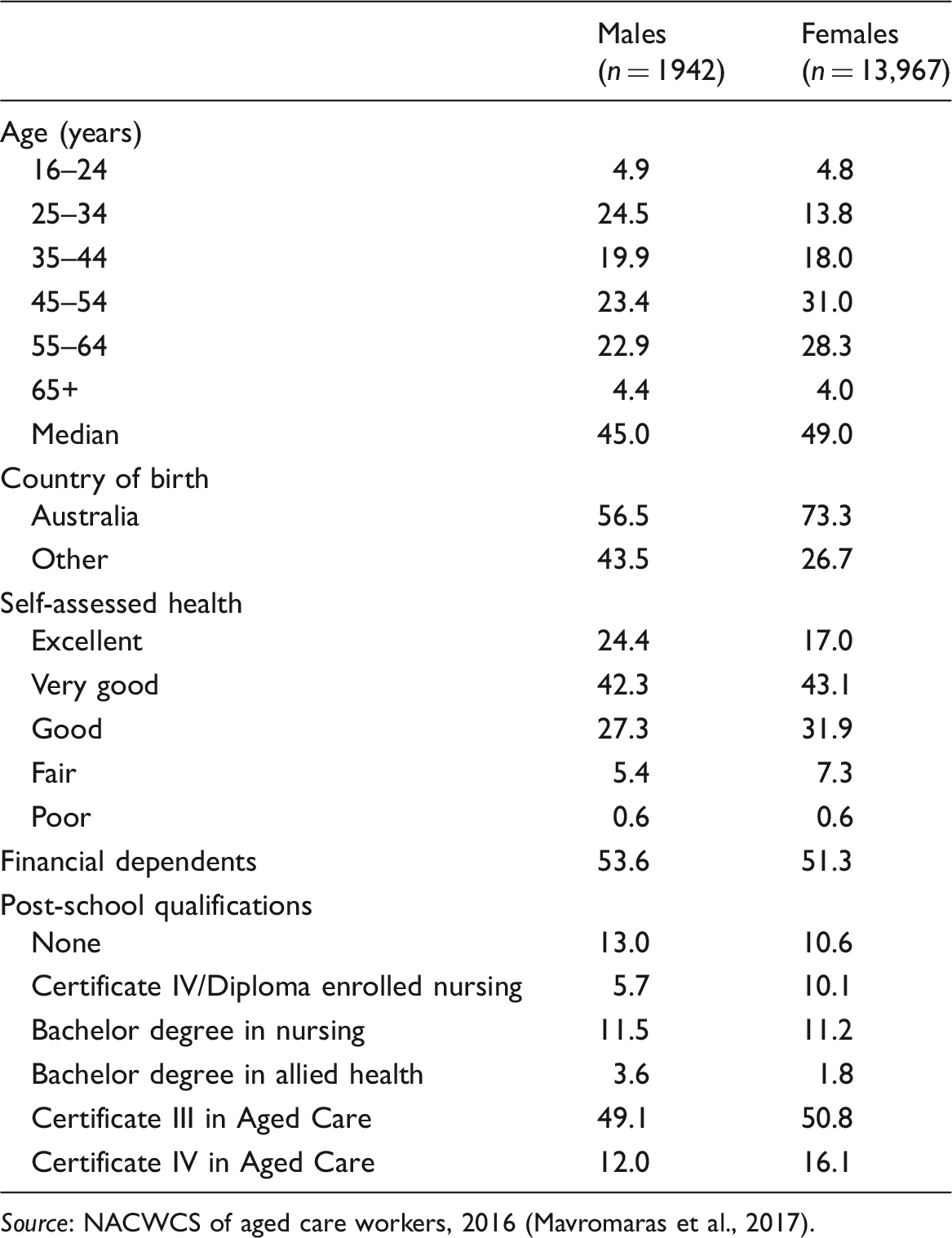
Socio-demographic comparison of male and female workers, 2016 (in percent ages).
Source: NACWCS of aged care workers, 2016 (Mavromaras et al., 2017).
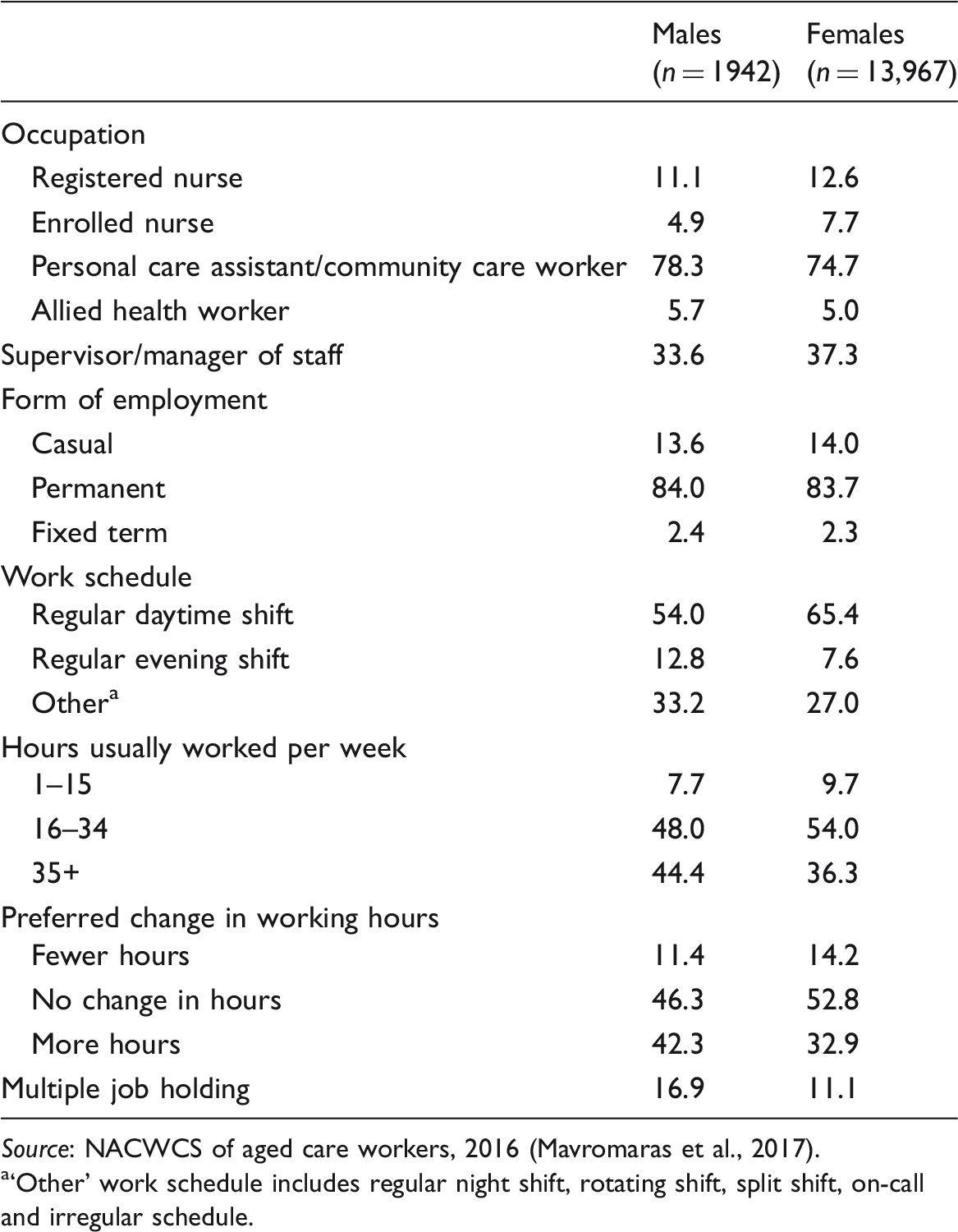
Occupational comparison of male and female workers, 2016 (in percent ages).
Source: NACWCS of aged care workers, 2016 (Mavromaras et al., 2017).
‘Other’ work schedule includes regular night shift, rotating shift, split shift, on-call and irregular schedule.
In summary, our analyses comparing male and female aged care workers indicated some clear differences in both socio-demographic and occupational characteristics. Male workers were more likely to be employed in care worker roles than women, and associated with this, reported fewer managerial responsibilities. They also showed a stronger preference than female workers for full-time employment. One of the strongest findings from our analyses was that considerably more male than female aged care workers are born overseas. This finding aligns with previous research on migrant workers in the aged care workforce (Isherwood and King, 2017) and suggests that employment in the sector may be looked upon more favourably as a career option by overseas-born than Australian-born males.
Pathways into the aged care sector
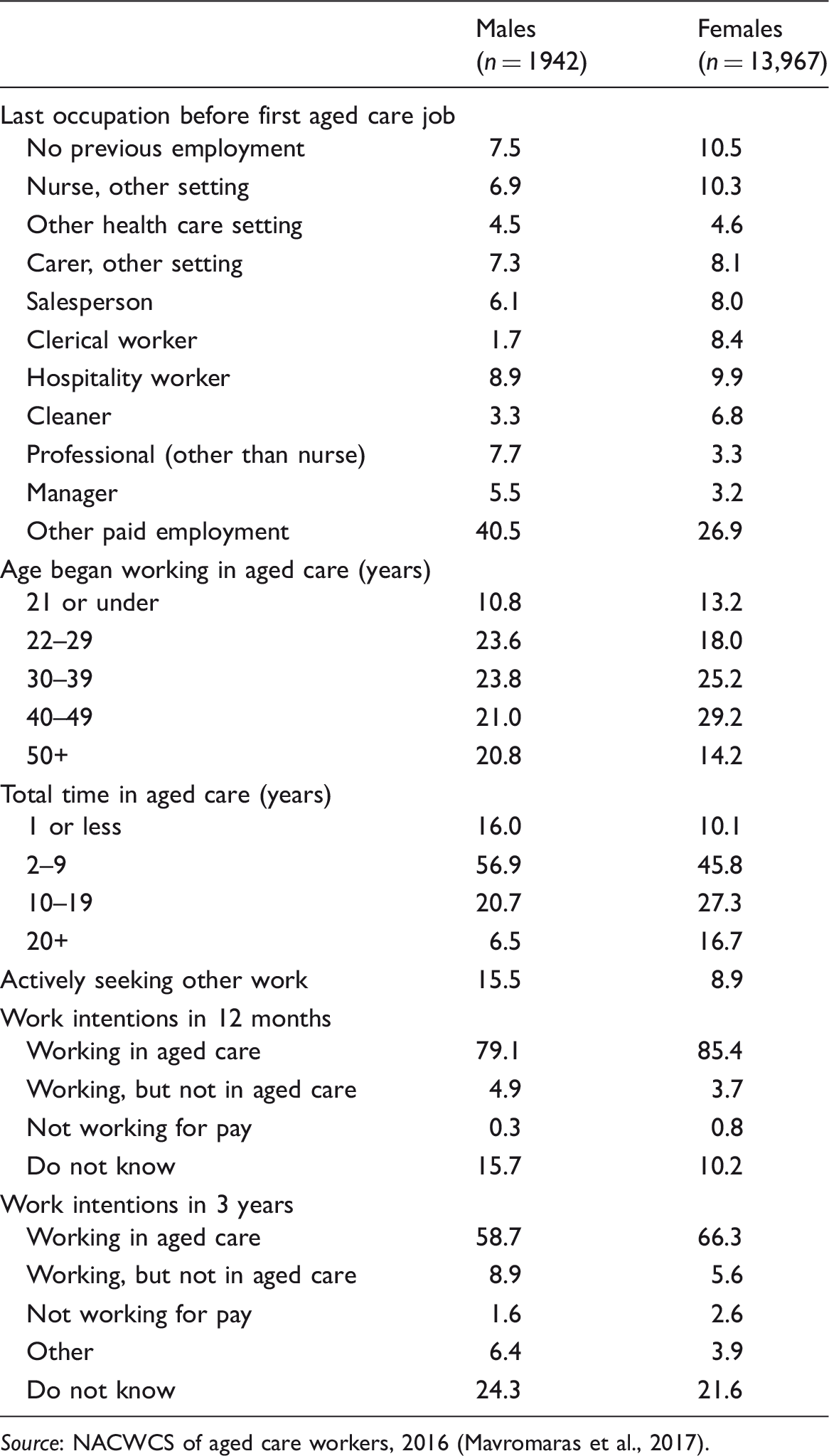
Recruitment and retention – comparison of male and female workers, 2016 (in percent ages).
Source: NACWCS of aged care workers, 2016 (Mavromaras et al., 2017).
The qualitative interviews confirmed that aged care was rarely a first career option for men, with many male respondents recounting a work history dominated by employment in traditional male jobs. These included jobs in the IT industry, sales and public service, as well as skilled, semi-skilled or unskilled jobs in factories and warehouses, the trades or labouring. A quarter of male workers reported previous experience of care work – either paid or unpaid – in the primary health care sector, the disability sector or as carer of a family member: I was a logistics manager for 20-odd years … and my father-in-law who used to live with us got dementia and we went through a torrid time and there wasn’t a lot known about dementia … The lady at the nursing home said ‘You’d be good at it’ … I found myself at the ripe old age of pushing 50 and without a job and so I went back to school and became a carer and then I went and done two years' nursing. (R46_2012) Back in my country I was a health inspector. I did a job in the hospitals and working with the people. When I came here I decided to move, come into aged care, so I thought it’s better to work in something related to it, that's why I chose that job. (R19_2012) It was probably by accident. I’d had a change of career and, while I was deciding what to do next I was working for an agency, and as part of that agency employment I got sent to aged care to do some work, and just being exposed to it through the agency I ended up in this area. So I didn’t seek it out, it was just where I ended up and I liked it. (R47_2016) It was a stepping-stone to get into probably med surg, but I’m actually enjoying it and I may not, at this stage, look to break into another field. (R23_2016)
The patterns of male entry into aged care identified here largely correspond to existing research beyond this sector that has sought to trace the dynamics of men’s entry into gender-atypical work (Hussein et al., 2016; Simpson, 2005; Williams and Villemez, 1993). However, these entry patterns may not be exclusive to men entering female-dominated occupations. Arguably, most people (independent of the occupation in which they are entering and/or their sex) could be grouped into similar analytical categories according to how they came to be in their occupation. Indeed, the predominance of serendipitous entry routes (‘finders’) is not surprising, given that very few people have a clear idea of or map out their career for the rest of the lives. Moreover, the entry patterns tell us very little about why it is that some men enter female-dominated jobs while the majority do not. They provide no understanding of the circumstances under which men are able to take jobs that are normatively regarded as women’s; such understandings are crucial. It is only by understanding the processes that affect men’s willingness and ability to undertake female-dominated jobs, that new ideas about how to better re-engage economically displaced men with jobs in areas of rising employment or to address specific occupational skill shortages are able to be generated.
Male perceptions of aged care work
Our study then examined male workers’ perceptions of aged care work and their future employment intentions. We also explored the processes that facilitate the inclusion and exclusion of male employment in the aged care sector.
Findings from the quantitative analyses raised issues regarding the future retention of male aged care workers (Table 4). Almost twice as many men as women reported that they were actively seeking alternative work (15.5% and 8.9%, respectively). When asked about future work intentions, fewer men than women intended to still be working within the sector in 12 months’ time (79.1% compared to 85.4%), with a further group of men (15.7%) undecided about their future intentions. Findings related to work intentions over the next 3 years showed that 58.7% of men were committed to remaining in aged care compared to 66.3% of women. A further quarter of male workers were unsure about their future employment in the sector. Combined, these findings indicate that over a third of all male workers (in the short term) and two-thirds of men (in the longer term) may be at risk of exiting the aged care sector.
These analyses show that the future retention of male workers may be more uncertain than for female workers in the aged care sector. This suggests that specific factors may be at play which contribute to discouraging some male workers from considering aged care to be a long-term career. The qualitative interviews sought to explore these findings further in order to identify the processes that facilitate and hinder male entry and continued employment in the aged care sector.
Processes that facilitate male participation and retention in aged care
Several processes were identified in the qualitative interviews which facilitate male participation and retention in the aged care sector.
Areas of aged care
The interviews frequently highlighted that there were particular areas of aged care – such as dementia care, diversional therapy and home care – that were considered to be better suited to men’s interests and skills: This is working with people in their homes, not people who have been institutionalised. It really keeps you on your toes and you’ve got to employ a lot of strategies to make it work. Yeah interesting and challenging. (C14_2012) I have got one or two clients who can be aggressive or assertive in the field, so being a male does help … One of the worst things that can happen in aged care [is] groping. If I was a young lady with breasts I could be a target because you’ve got that cheeky old man doing that, but I can get away with it because what are they going to do to me? (C16_2012)
Benefits of being a minority worker
Another set of processes that were found to facilitate men’s entry into aged care work were related to their minority status as workers. The interviews indicated that all male workers received benefits as a result of being a member of a minority group in the sector. These benefits included being perceived as favourable job applicants, receiving additional support, being subject to more relaxed rules and regulations, and receiving overt appreciation from managers and clients: I’m one of the rare male members in the industry and there’s very, very, very few of us. I’m in high demand regarding clients because I’ve got a lot of male clients who prefer to deal with a male, purely from the point of view that, you know, we can sit down and be blokes. They can fart and swear without offending anybody. And when you are dealing with elderly gentlemen who are like say 70, 80 and in their 90s, it’s mateship for them. (C16_2012)
Labour market forces
The final set of processes that were found to contribute to men’s willingness to enter aged care were related to standard labour market forces that attract people to occupations and jobs in general. These included factors such as skill shortages, the occupation’s immunity from economic downturns, difficulty obtaining employment in areas in which they had traditionally worked, and positive identification with aspects of the work (for example, the availability of flexible work arrangements, doing socially important work, feeling valued and having client contact): I certainly see the opportunity to work in aged care … and as Australia's population gets older, there'll always be a strong need for workers in the aged care industry. (C27_2016)
Processes that hinder male participation and retention in aged care
Several processes were identified within the qualitative interviews that contributed to the exclusion of male workers in aged care.
‘Women’s work’
Gender-stereotypical notions of which sex should do what jobs led most male respondents to construct aged care work and the skills required to do it as ‘female appropriate’. The sex typing of aged care as ‘women’s work’ was found to lead a few men to question their competency in undertaking the work or particular work tasks: When I think of nursing staff I see women as a better fit – and I’m in danger of being sexist here but I don’t mean to be – I see women as a better fit and when it was a male nurse I just – I rarely felt that there was that loving demeanour, that caring demeanour … they do that a lot better than I do. Empathise with them, I suppose is the word I’m looking for and it seems to come through in both their demeanour and their communication. (C02_2012)
Gender stereotypes were also found to result in clients preferring to receive care from female workers. Some male workers recounted experiences of clients refusing to have them provide care or particular care tasks due to the client’s belief that it was ‘women’s work’. These client preferences were often perceived to be associated with concerns over men’s sexual motivations for undertaking the work and/or fear of sexual abuse from male workers. This sexualisation of care was especially pertinent in instances where male workers were undertaking intimate care tasks such as showering and toileting. As a consequence, some male workers found that they were excluded from doing certain tasks, particularly those involving personal care: With the older generation, like old ladies, etcetera, they prefer to be showered by females so it can be difficult sometimes. I just swap with female co-workers and do their male patients and they do my female patients. (R16_2012) When I first started, one of the nurses … she was Indian and she goes, ‘You shouldn’t be doing this, this is women’s work not men’s work.’ And I said to her, ‘Well men work in shops, so do women. Women drive trucks, so do men … Men and women are policemen, there’s no gender role anymore.’ Do you know what I mean? (R41_2012)
Negative experiences of working in a female-dominated work environment
All the male workers interviewed reported negative experiences of working in female-dominated workplaces. This was often particularly challenging for men who had previously worked in traditional male occupations. Challenges were related to interactions with female work colleagues, co-worker dynamics, and learning what is and is not acceptable workplace behaviour. Such difficulties posed particular challenges to the transition into gender atypical employment for low-skilled men: I had a background in factory work, which is different when you deal with other machinery, something like that, but you have nothing to do with life. This is different to deal with human beings. (C31_2016) If you have too many ladies they gossip too much whereas guys don't do as much of that so it breaks it up. (R44_2016) So if the room was reversed and it was all men with one woman, some of the things that were discussed the woman would be offended by; the fact that they’re all women and I’m the only bloke it doesn’t seem to matter. I’ll give you a classic example; we had to arrange for some fire training and they were going to arrange some fireman to come and do a talk and all the women go ‘Ooh, I hope they’re good looking, I hope they take their shirts off’ and I went ‘Ladies, excuse me’. There is reverse sexual discrimination. It’s not targeted, it’s not deliberate, but it’s there because it’s a female environment. It just happens. (C16_2012)
Glass escalator for men
Existing research conducted outside the aged care sector has shown that a ‘glass escalator’ operates for men working in female-dominated professions which results in faster progression to more senior positions (Hussein et al., 2016; Pease, 2011; Williams, 1992, 1995). However, in contrast, our research found that for those male workers who sought career mobility within aged care, typically flat organisational structures often hampered their advancement. This meant that some men who wished to progress within the sector were considering leaving the occupation and moving into semi-related professions: One of the problems for carers, is that once you’ve got to be an experienced carer, and you’re recognised by other people as that, that’s as far as you go. There’s nothing beyond that. The management positions are reserved for registered nurses … Anything outside the basic caring requires qualifications … No, there’s no possibility for upward movement. (R18_2012)
Social and interpersonal sanctions associated with gender inappropriate work
All the male workers interviewed reported that their employment in aged care work initiated various negative reactions from others. These reactions ranged from having their commitment to the work questioned, to suspicions regarding their sexuality and/or their sexual motivations for undertaking the work: I’m the only male person working as a personal carer there and all the other ones – there must be about 14 girls so you’ve kind of got to prove yourself. I also do a bit of housework and that type of thing so [I get] ‘what, a man doing the housework?’ (C12_2012) I used to make a joke, I used to say, ‘hang on, I’ll just go to the car and I’ll put a skirt on and I’ll knock on the door again and oh this is Andrea’ and make a joke out of it. (C12_2012)
Working conditions in aged care
The part-time hours and low wages characteristic of aged care work were also found to deter men from entering the sector or contribute to their intention to leave. These labour market characteristics would likely be viewed unfavourably by people in general and not just by men. However, there were gender-specific ways in which adverse working conditions contributed to occupational sex segregation. Male workers often viewed the hours and pay within the sector as restricting their ability to generate adequate income to support a family. These concerns were typically voiced with reference to men’s traditional breadwinning role: Two things are holding aged care back. It’s still seen as an occupation by a lot of people for married women who’ve either got teenage children or older children, or their kids have flown the nest, and they don’t need to subsist, they don’t need to live on the wage. So it’s very difficult to, there’s a reluctance amongst the employers to give you full-time work. And … pay levels. I love the work, don’t get me wrong, but the pay levels on occasions make me think I need to leave and get a decent wage. (R18_2012)
Conclusion
Although aged care remains a female-dominated industry, the proportion of male workers in the sector has been increasing since 2007. With appropriate workforce development strategies, their share of employment has the potential to increase further. However, as a highly gendered workforce, aged care is structured around norms associated with it being women’s work, which has implications for further increasing male representation in the sector.
Our research found that there are integrative and segregative processes that impact on male participation in aged care. Attracting greater numbers of men into aged care will require promoting the integrative factors and addressing the segregative factors. Strategies could include raising awareness of job opportunities within the sector to prospective male workers. However, this will require challenging perceptions that aged care work is women’s work and emphasising aspects of the job which may appeal to men. In addition, strategies would benefit from discussion of the merits of male workers – in terms of their presumed skills and attributes, as well as their ability to meet the care preferences of older men – with potential employers and industry peak bodies to ensure that demand is also encouraged. Other demand-side strategies and policies, such as anti-discrimination campaigns that explicitly focus on men and tackle assumptions of aged care being ‘women’s work’, may also have some positive impact. Such strategies could include provisions that employers take on more than one male worker at a time so that men do not feel isolated in their workplace. Other strategies that could be considered include industrial campaigns promoting the merits of male employment within gender atypical occupations such as aged care. These may not in themselves reduce discriminatory practices, but may stimulate demand-side integrative processes.
The interviews highlighted that there were particular areas of aged care – dementia care, diversional therapy and home care work – that were considered to be better suited to men’s interests and skills. It is these areas within aged care that could provide key entry routes for men. The association of men’s skills and interests with particular client groups and care tasks, however, may lead to the concentration of males in certain areas of aged care work. This has the effect of producing gender segmentation within aged care and re-establishing gender stereotypes that define what is and what is not appropriate work for male aged care workers. However, these areas could be the initial focus of strategies to increase men’s representation within the sector. Men who enter aged care through openings in ‘male areas’ of the occupation may subsequently, over time as their presence is accepted by themselves and others, be able to move into other less ‘male’ areas of aged care. Indeed, this approach could be considered to be a longer-term pathway to increasing men’s representation in aged care.
Employment conditions within aged care are also important factors in any consideration of increasing men’s representation in the workforce. The low wages, short hours and flat organisational structures common within the sector were found to reduce men’s willingness to enter aged care or influence their decisions to leave once there. Improving employment conditions within aged care through the provision of adequate pay, sufficient hours, permanent contracts and opportunities for career advancement would therefore be likely to have a positive effect on both the attraction and retention of male workers. However, improved employment conditions would be likely to be viewed favourably by both male and female workers, so the impact on men’s representation may be muted. While comparable worth policies may be of some assistance by removing unfair pay penalties, leading to men being less averse to doing female-typed work, they may also entrench gender differential roles and jobs by increasing the incentives for women to remain in traditionally female roles.
The findings of this study highlight several areas for future research. The focus of our article was on male workers within the aged care sector. Given that other sectors within the social care workforce – and especially the disability sector – are also experiencing growth and expansion, future research that examines male experiences within these fields (and contrasts these with the aged care sector) would also be beneficial. Our study found that a much greater proportion of male than female aged care workers are born outside of Australia. Previous research from the UK (Hussein et al., 2016; McLean, 2003) has shown that the intersection of gender and migration status (along with other factors such as race, socio-economic status, age and disability) impact upon the advantages that male workers experience within the social care field. It would therefore be beneficial to explore further whether these factors – alongside characteristics such as work setting (residential and community aged care), location (metropolitan, regional and remote) and occupational role (nurse and care worker) – impact upon the experiences of male workers in the aged care sector. This research would enable the identification and development of more targeted strategies to improve the attraction and retention of male workers.
The research reported on here is not without its limitations. Many of the processes that were found to influence men’s representation in aged care could arguably also operate for women. For example, many people, both male and female, would be attracted to the employment security that aged care work provides in terms of current and future labour demand. While our study aimed to provide real depth in understanding the specific experiences of men working in aged care, without interviewing female workers and comparing their perspectives with those of male workers, we cannot be confident that the findings reflect gender differences. As a result, it is possible that some of the processes in determining men’s segregation from, or conversely their integration into, aged care may be overstated. In addition, as we were unable to include male workers who have exited the aged care sector, our research may not have uncovered the complete range of processes that operate to limit men’s representation in aged care. It may also understate the power of the various processes that influence men’s decisions to leave aged care, and overplay those that influence men to remain.
Nonetheless, this study provided an important and innovative investigation of the factors which influence male representation in the aged care workforce. The findings add to the body of literature seeking to understand the experiences of men working in gender atypical occupations, and more specifically, within the health and social care sectors. While our research showed that male pathways into aged care are similar to those found in other female-dominated industries, once working in the sector they may experience fewer benefits (such as career progression and preferred working conditions). This may hamper the attractiveness of aged care work to male workers and discourage further inroads into the sector.
Footnotes
Declaration of conflicting interests
The author(s) declared no potential conflicts of interest with respect to the research, authorship and/or publication of this article.
Funding
The author(s) disclosed receipt of the following financial support for the research, authorship, and/or publication of this article: Financial support for this project was provided by Flinders University (Faculty Research Grant 2017 Scheme).