



Abstract
The present study examines associations between learning difficulties (LD), academic emotions, and academic achievement among 845 Grade 6 adolescents (455 girls, 390 boys). Reading difficulties (RD) and math difficulties (MD) were identified based on tested reading and math skills in the fall semester of Grade 6. At this time, the students also rated their hope, enjoyment, and anxiety regarding literacy and math. Information on students’ achievement in literacy and math, as well as their overall academic achievement, was gathered using questionnaires in both the fall and spring semesters of Grade 6. The results show, first, that students with RD had lower hope and higher anxiety toward reading than those without RD. Also, students with MD reported lower enjoyment, lower hope, and higher anxiety than those without MD. Furthermore, the results show that hope partly played a mediating role between LD and academic achievement in both the literacy and math domains. In addition, enjoyment played a mediating role in the math domain. The present study’s results indicate that subject-specific academic emotions should be taken into account when considering relations between LD and academic achievement.
Keywords
Learning difficulties (LD) can significantly compromise students’ academic learning and motivation (Smart, Prior, Sanson, & Oberklaid, 2001; Willcutt et al., 2013) and even increase the risk of mental-health problems and dropping out of school (Hakkarainen, Holopainen, & Savolainen, 2015; Lindén-Boström & Persson, 2015). Reading and math are the two most central academic skills in primary school (Opetushallitus, 2016). Fluent reading and math skills are essential not only to complete primary school but also to progress through upper-secondary education and cope with everyday issues. LD in reading and math is usually detected during early school years and has been shown to be persistent (e.g., Eklund, Torppa, Aro, Leppänen, & Lyytinen, 2015; Geary, 2011; Landerl & Wimmer, 2008), although in some cases, LD can emerge as late as in adolescence (e.g., Catts, Compton, Tomblin, & Bridges, 2012; Torppa, Eklund, van Bergen, & Lyytinen, 2015).
Although evidence suggests that LD predisposes students to academic failures (e.g., Hakkarainen et al., 2015), less attention has been paid to the possible role of emotions in academic failure among students with LD. In particular, only little is known about the role of LD in academic emotions associated with reading and math. Also, no previous studies have examined the extent to which LD has a detrimental effect on academic achievement through maladaptive emotional reactions. Thus, the present study adds uniquely to extant research by examining the role of LD in reading and math in students’ subject-specific academic emotions (hope, enjoyment, and anxiety) and academic achievement.
LD and Academic Emotions
LD has been found to occur for various reasons among 12% to 30% of students (Westwood, 2004). LD can also manifest as specific learning disorders, such as specific reading disability (dyslexia) or math disability (dyscalculia) (Landerl, Fussenegger, Moll, & Willburger, 2009), that hinder the ability to learn certain academic skills. According to the Diagnostic and Statistical Manual of Mental Disorders (Fifth Edition; American Psychiatric Association, 2013), the prevalence of specific learning disorders (i.e., impairments in reading, writing, and math) varies between 5% and 15% of the school-age population.
The etiology of developmental disorders is multifactorial, and the nature of any disorder is continuous and quantitative rather than discrete and qualitative; therefore, any cutoff criteria are somewhat arbitrary (van Bergen, van der Leij, & de Jong, 2014). Diagnosing an individual with a learning disability usually is based on individually administered standardized tests and strict cutoffs (often the 10th percentile; e.g., Puolakanaho et al., 2007; Willcutt et al., 2013). However, a more lenient cutoff score of −1 standard deviation also is used commonly (e.g., Landerl et al., 2009; Snowling, Callagher, & Frith, 2003; Wise et al., 2008). In this study, the term learning difficulties (LD) is used instead of learning disabilities because we used group testing instead of individually administered tests.
Skilled reading is often paralleled to fluent (i.e., fast and accurate) word identification, which happens with ease and without noticeable effort (see Share, 2008). In turn, difficulties in reading fluency are seen as a bottleneck on reading skills, especially in transparent orthographies (e.g., Landerl & Wimmer, 2008; Share, 2008) where the acquisition of accuracy is fast (Aro & Wimmer, 2003). Likewise, in math, previous research has shown that mathematical-calculation fluency is a fundamental skill, in addition to magnitude processing and using counting strategies, when comparing students with and without math difficulties (e.g., Aunola, Leskinen, Lerkkanen, & Nurmi, 2004; Koponen et al., 2016; Landerl et al., 2009). Therefore, in this study, we used tests that assess students’ fluency in reading and math skills to identify individuals with LD.
Students with LD face frequent struggles with schoolwork (Hakkarainen et al., 2015), which may increase their vulnerability to experiencing more negative and fewer positive emotions associated with academic subjects. The control-value theory of achievement emotions (Pekrun, 2006) suggests that students’ self-experienced control over achievement situations and the subjective value that students attribute to achievement play a significant role in academic emotions. Academic emotions can be defined as emotions that arise in learning and achievement situations and relate to achievement outcomes.
In the present study, we focused on hope, enjoyment, and anxiety, as they have been shown to be fundamentally important academic emotions for students’ academic performance (Orly & Margalit, 2014; Suárez-Pellicioni, Núñez-Peña, & Colomé, 2016). Anxiety has been examined widely in the math domain (Maloney, Ramirez, Gunderson, Levine, & Beilock, 2015; Suárez-Pellicioni et al., 2016), and evidence indicates that it is related to math difficulties (Rubinsten & Tannock, 2010). We also focused on enjoyment, as it has been suggested as a particularly important academic emotion among primary school students (Ahmed, van der Werf, Kuyper, & Minnaert, 2013). In addition, we focused on hope, which can be assumed to be a relevant emotion among students with LD, as struggles often characterize their academic lives (Lackaye, Margalit, Ziv, & Ziman, 2006; Orly & Margalit, 2014; Rosenstreich, Feldman, Davidson, Maza, & Margalit, 2015). Furthermore, as reading and math difficulties have separate profiles (Landerl et al., 2009; Willcutt et al., 2013), and academic emotions have been shown to be domain specific (Goetz, Frenzel, & Pekrun, 2006), we examined both reading difficulties (RD) and math difficulties (MD) and their relationship to subject-specific academic emotions.
Associations Between LD, Academic Emotions, and Academic Achievement
Previous research suggests that LD is related both to lower academic achievement in general (Hakkarainen et al., 2013; Landerl et al., 2009; Willcutt et al., 2013) and specifically in the domain of difficulty (e.g., math; Mazzocco, Murphy, Brown, Rinne, & Herold, 2013). The control-value theory states that learning-related emotions play a significant role in students’ academic achievement (Pekrun, 2006). Yet, no study so far, to our knowledge, has examined academic emotions as possible mediators between LD and academic achievement.
Positive activating emotions, such as hope and enjoyment, can have a positive impact on learning, for example, through increased motivation and benefits for self-regulation and learning strategies (see also Greulich et al., 2014). Previous research has shown that increased enjoyment of learning is associated with higher achievement in math among students in seventh and eighth grades (Ahmed et al., 2013). High enjoyment and hope levels regarding learning also have been found to be related to higher academic achievement and test-performance levels among young adults (Pekrun, Elliot, & Maier, 2009; Pekrun, Goetz, Frenzel, Barchfeld, & Perry, 2011).
Conversely, negative academic emotions (e.g., anxiety and hopelessness) might impact learning through different behavioral mechanisms, such as by deactivating action, by increasing worrying (which detracts resources from the task), and through an increased tendency toward avoiding achievement situations that could trigger negative emotions (Pekrun et al., 2011). Anxiety often has been examined in math studies (Rubinsten & Tannock, 2010; Suárez-Pellicioni et al., 2016) and typically is related to poor learning outcomes (Ahmed et al., 2013; Suárez-Pellicioni et al., 2016). Compared with math, less is known about associations between literacy-related emotions and academic achievement.
According to the control-value theory (Pekrun, 2006), academic emotions are closely linked to students’ motivational and cognitive resources. Hence, it is possible that LD also has a detrimental effect on subsequent academic performance through maladaptive academic emotions (Trigwell, Ellis, & Han, 2012). For example, increased negative academic emotions tend to be related to low perceived control over studies and low subjective importance directed toward learning, which may promote task avoidance in learning and achievement situations, hindering progress in academic skills (Pekrun et al., 2011).
Previous research on the associations among LD, academic emotions, and academic achievement is limited in the following ways: First, research rarely has considered students with LD when viewing associations between academic emotions and achievement. Second, extant studies on academic emotions in the literacy domain are lacking, although reading is a central academic skill. Third, as far as we know, no studies have been conducted on the possible mediating role of academic emotions between LD and academic achievement. All said, the current research adds to earlier research by focusing on the role of LD in academic emotions and achievement in the math and literacy domains.
Research Questions and Hypotheses
We formed a schematic model according to Pekrun’s (2006) control-value theory, which is presented in Figure 1. According to our schematic model, we formed the following two research questions, which were investigated separately in the math and literacy domains (for academic emotions’ domain specificity, see Goetz et al., 2006; Pekrun, 2006):
(1) To what extent do adolescents with and without RD/MD differ regarding their academic emotions (i.e., hope, enjoyment, and anxiety) in literacy/math in the fall semester of Grade 6?
(2) To what extent do adolescents’ academic emotions toward reading/math in the fall semester of Grade 6 mediate the effects of LD on (a) concurrent literacy/math achievement and overall academic achievement in the fall semester of Grade 6 and (b) changes in literacy/math achievement and overall academic achievement from the fall semester of Grade 6 to the spring semester of Grade 6?

Schematic model of the role of learning difficulties (LD) in students’ academic emotions and school grades.
Gender has been shown to be related to LD such that girls have more math-related difficulties than boys, and boys have more literacy-related difficulties than girls (Quinn & Wagner, 2015). Thus, we controlled for the effect of gender in our analyses. Furthermore, as research has shown that some students have difficulties in both math and reading (Landerl et al., 2009; Willcutt et al., 2013), we also controlled for students’ difficulties in the other academic subject, respectively. Finally, as students with LD have been shown to be more vulnerable to mental health problems than their peers (Lindén-Boström & Persson, 2015), we also controlled for depressive symptoms in the analyses to let us draw stronger conclusions about academic subject-specific associations.
Method
Participants and Procedure
The present study is part of the broader longitudinal study, which follows a community sample of Finnish students across the transition from primary school to lower-secondary school. Data were collected during ordinary school days. Trained testers administered all tests and questionnaires. Parental written consent and child assent were required for student participation. The research plan was approved by the local ethics committee.
This study’s sample comprised 845 sixth-grade adolescents in primary school (54% girls; mean age 12.3 years, SD = 4.38). They were studying at 30 different schools in 57 different classes in large, urban (80% of participants) or midsize, semirural (20%) towns in central Finland. For 98% of participants, Finnish was their mother tongue. Most participants lived with both parents in one household (75%), others switched back and forth between separated parents in two households (12%), and 8% lived with only one parent. A total of 4% of the mothers and 8% of the fathers reported no vocational education after comprehensive school; 30% and 42%, respectively, completed lower-secondary school; 40% and 29%, respectively, completed vocational college; and 26% and 21%, respectively, held a master’s degree or higher.
Measures
Reading difficulties (Grade 6, fall semester)
Students’ reading fluency was measured with three tests. First, we standardized students’ scores in all three reading tests, after which we calculated an arithmetic mean across students’ scores in the three tests (α = .87). Using this reading-fluency scale score, the students were then classified into two groups: 0 = without RD, 1 = with RD. Students scoring below the 16th percentile (approximately 1 standard deviation below the mean of the whole sample) were marked as having RD. Commonly, cutoffs in reading research are set to 1 to 1.5 standard deviations below the mean of the population-based sample, being equivalent to 7% to 16% of the sample (e.g., Puolakanaho et al., 2007; Snowling et al., 2003).
The first decoding task, the Word Identification test, contains 100 written words in 25 word chains, with each comprising four different words written without spaces between the words (e.g., tailorbilberryreadyhorse). The students were instructed to identify words within each word chain and draw an upright line between the end and beginning of two consecutive words as fast and as accurately as they could (e.g., tailor|bilberry|ready|horse). The students received 1 point for each correctly drawn line within the time limit of 1 min 30 s (maximum score 100). According to the manual (Holopainen, Kairaluoma, Nevala, Ahonen, & Aro, 2004), this task’s test-retest reliability has been high, at .70 to .84.
In the second decoding task, the Spelling Errors test, the students were instructed to search for spelling errors in 100 words, with a time limit of 3 min 30 s. Three different error types were used: incorrect, extra, or missing letters. Each word included one error that the students had to mark by drawing an upright line in the relevant position (for example, carot: car|ot). The students received 1 point for each correct line (maximum score 100). According to the manual (Holopainen et al., 2004), the task’s test-retest reliability has been .83 to .86.
Third, in the short version of the Salzburg reading fluency test (see also Landerl, Wimmer, & Moser, 1997), the students were asked to read sentences silently one by one and mark whether the meaning of each sentence was true or false (e.g., “To pass a driving test, it is necessary to have good skills in swimming”). A time limit of 1 min 30 s was used, as the test featured only 36 sentences. The students received 1 point for each correct answer (maximum score 36). According to the test manual, the original Salzburg reading fluency test’s test-retest reliability has been .95 for second-grade students and .87 for eighth-grade students (Das Salzburger Lese-Screening 2–9).
Math difficulties (Grade 6, fall semester)
Math fluency was assessed with the Basic Arithmetic test (see also Räsänen, Salminen, Wilson, Aunio, & Dehaene, 2009), which contains tasks on addition, subtraction, multiplication, and division. The test contains 28 tasks (e.g., 527 + 31 = ?; 15 – ? = 9; 12 × 28 = ?), starting with easy ones and becoming more difficult throughout the test. The time limit for completing the test was 3 min. Students received 1 point for each correct answer (maximum score 28; α = .82). The MD variables were formulated based on the results of the tested math skills (0 = without MD, 1 = with MD). The cutoff point for having MD was defined, similarly to reading, as the 16th percentile, close to 1 standard deviation below the mean in a normal distribution (Landerl et al., 2009; Wise et al., 2008). Use of equivalent cutoff scores is necessary to retain comparability of associations among pupils with RD or MD.
Academic emotions (Grade 6, fall semester)
Students’ academic emotions concerning literacy and math were measured with the Finnish version of the Achievement Emotions Questionnaire (AEQ; Pekrun et al., 2011), which was adapted for school-age students (for validity of the AEQ, see Pekrun et al., 2011). The students rated their academic emotions toward learning, classes, and exams on a 5-point Likert-type scale (from 1 = I disagree to 5 = I agree). In this study, the focus was on hope (e.g., “I have an optimistic view toward studying”), enjoyment (e.g., “I enjoy acquiring new knowledge”), and anxiety (e.g., “I get tense and nervous while studying”), which were measured with three questions in both the literacy and math domains. The Cronbach’s alpha reliabilities were adequate: for hope, they were .77 in literacy and .78 in math; for enjoyment, they were .72 in literacy and .76 in math; and for anxiety, they were .62 both in literacy and in math. Correlations between reading-related emotions and math-related emotions ranged from –.46 to .78.
Academic achievement (Grade 6, fall and spring semesters)
Students provided information on their overall academic achievement (as a grade point average) in literacy (grade in literacy) and math (grade in math) achievement in the fall and spring semesters of Grade 6. In Finnish schools, the grades range from 4 to 10, with 5 being the lowest accepted grade and 10 the highest. Self-reported school grades have been shown to correlate .86 with the actual grades from the school registers (Ahonen & Kiuru, 2014).
Analysis Strategy
Analyses were carried out in the following way: Our first aim was to examine whether students with and without LD differ in their academic emotions. This research question was analyzed separately for the literacy and math domains using ANCOVAs (general linear model). In the models for literacy, the variables of hope, enjoyment, and anxiety toward reading were dependent variables, and the RD variable (0 = without RD, 1 = with RD) was an independent variable (fixed factor). In addition, to control for the effects from gender, depressive symptoms, and students’ MD—as well as classroom differences in academic emotions—gender, depressive symptoms, and MD were added as covariates, and classroom identification number was added as a random factor in the models. Next, similar analyses were carried out in the math domain. In these analyses, math-related emotions were dependent variables, MD (0 = without MD, 1 = with MD) was an independent variable (fixed factor), and gender, depressive symptoms, and RD were set as covariates and classroom differences as a random factor.
Second, we run path models separately for literacy and math to test associations between subject-specific LD, subject-specific academic emotions, and their concurrent and longitudinal associations with academic achievement (see Figure 1). In these models, subject-specific academic emotions were predicted by subject-specific difficulties. Overall academic achievement and subject-specific achievement in the fall semester of Grade 6 were also predicted by concurrent academic emotions and LD. In addition, changes in academic achievement from the fall to spring semesters of Grade 6 (after controlling for achievement in the fall semester of Grade 6) were predicted by academic emotions and LD in the fall semester of Grade 6. In both models, gender and depressive symptoms were included as covariates. In addition, the effect of MD was controlled for in the model for literacy, and the effect of RD was controlled for in the model for math. The predictors and the dependent variables’ residuals were allowed to correlate. Finally, the indirect effects from LD on concurrent and later academic achievement through academic emotions were also investigated. The path models were carried out by applying the complex approach (Muthén & Muthén, 1998–2016). This method estimates the models at the level of the whole sample but corrects possible distortions of standard errors caused by the clustering of observations (classroom differences).
For statistical analyses, we used IBM Statistics SPSS 22 software for Research Question 1 and the Mplus statistical package (Version 7.3) for Research Question 2. For Research Question 2, we estimated the models using full-information maximum likelihood estimation with robust standard errors. We also evaluated the model fit by using chi-square values, the comparative fit index (CFI), the root mean square error of approximation (RMSEA), and the standardized root mean square residual (SRMR). A model fits the data well when the p value associated with the chi-square test is insignificant. RMSEA values below .06, SRMR values below .08, and CFI values of close to .95 indicate a relatively good fit between the hypothesized model and the observed data (see also Hu & Bentler, 1999).
Results
Differences in Academic Emotions Between Students With and Without LD
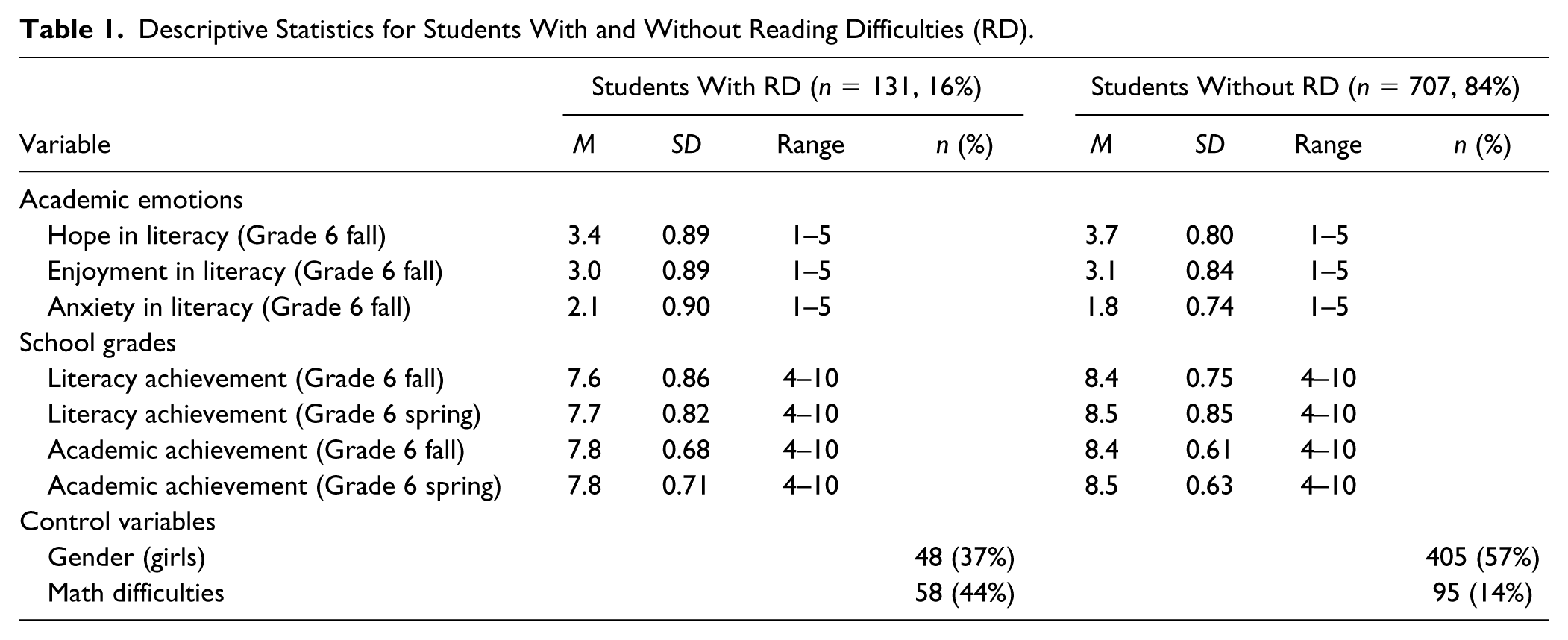
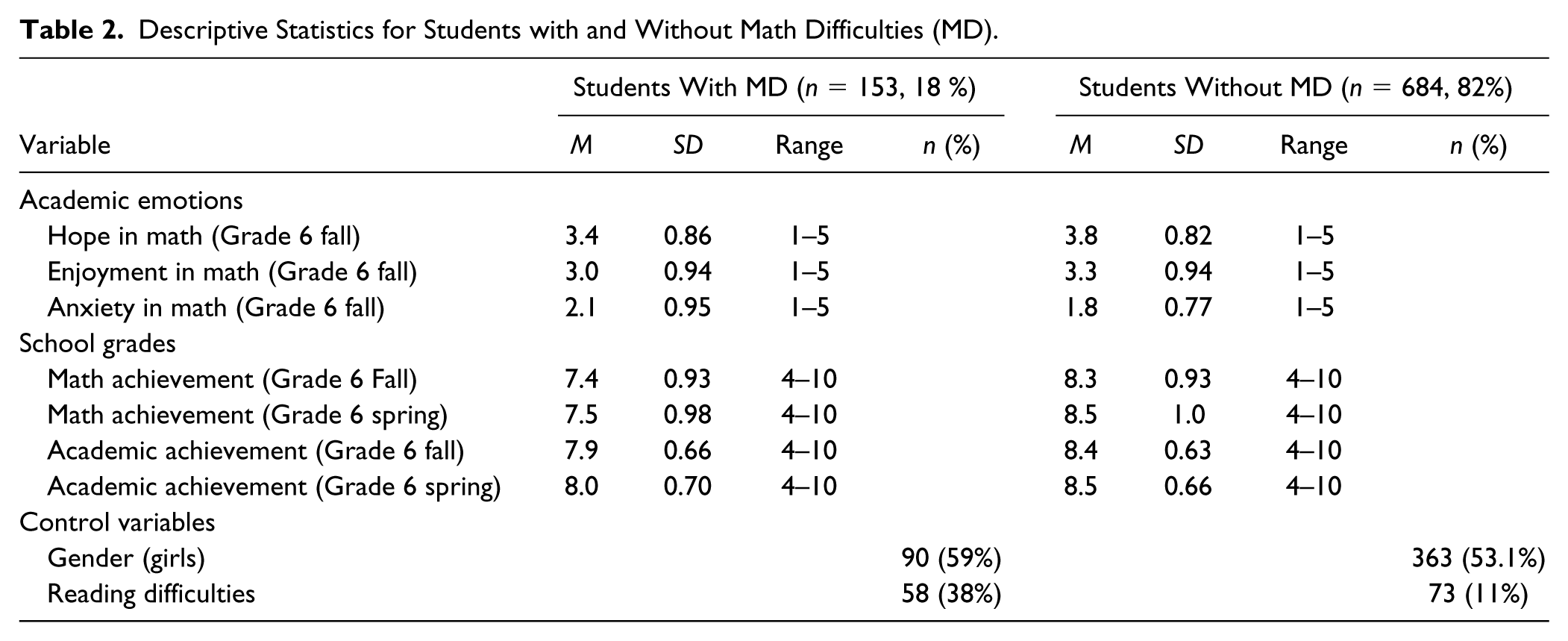
Descriptive statistics are shown in Tables 1 and 2. The first aim of the present study was to investigate whether students both with and without LD differ in subject-specific academic emotions when controlling for students’ gender, difficulties in another academic subject, and classroom differences. These analyses were carried out separately for literacy and math subjects (for means and standard deviations, see Tables 1 and 2).
Descriptive Statistics for Students With and Without Reading Difficulties (RD).
Descriptive Statistics for Students with and Without Math Difficulties (MD).
Literacy
The results of the ANCOVAs for the literacy domain show that, after controlling for students’ gender, depressive symptoms, MD, and classroom differences in academic emotions toward literacy, students with and without RD differed regarding their hope in literacy, F(1, 756) = 3.89, p = .049, partial η² = .01, and anxiety in literacy, F(1, 752) = 14.98, p < .001, partial η² = .02, but not in their enjoyment of literacy, F(1, 758) = 0.92, p = .34, partial η² = .00. The students with RD reported less hope and more anxiety toward literacy than students without RD. The unique associations of RD (after accounting for the control variables) with hope and anxiety were small but statistically significant.
Mathematics
The results of the ANCOVAs for math show that students with and without MD differed in their academic emotions toward math, when controlling for gender, depressive symptoms, RD, and classroom differences. Differences were found in hope, F(1, 743) = 21.74, p < .001, partial η² = .03; enjoyment, F(1, 747) = 14.10, p < .001, partial η² = .02; and anxiety, F(1, 751) = 7.82, p = .005, partial η² = .01. The students with MD reported less hope, less enjoyment, and more anxiety toward math than those without MD. The unique associations of MD (after accounting for the control variables) with hope, enjoyment, and anxiety were small but statistically significant.
Concurrent and Longitudinal Associations Between LD, Academic Emotions, and Achievement
The correlations between the key variables are shown in Table 3. The next research question was whether LD is associated with students’ academic achievements via their academic emotions. In other words, our aim was to examine to what extent RD or MD affects current and subsequent literacy or math achievement, respectively, as well as overall academic achievement, and whether these effects are mediated by academic emotions toward reading or math. The path models, accounting for the control variables, were carried out separately for literacy and math.
Correlation Matrix (Correlations for Literacy-Related Variables Below the Diagonal and Correlations for Math-Related Variables Above the Diagonal).
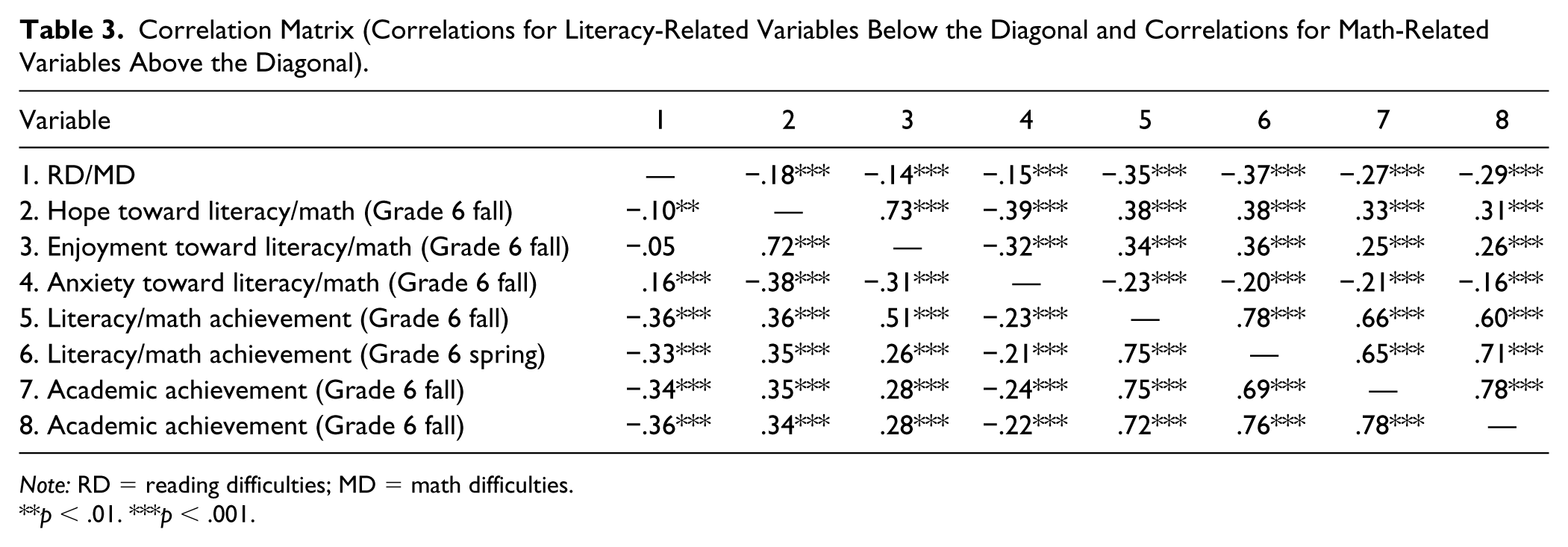
Note: RD = reading difficulties; MD = math difficulties.
p < .01. ***p < .001.
Literacy
First, the path model for literacy, corresponding to the schematic model (see Figure 1), was estimated. The final model for RD, academic emotions toward literacy, and academic achievement—containing statistically significant paths only—fit the data well: χ²(17, N = 839) = 26.62, p = . 06, CFI = 1.00, RMSEA = 0.03, SRMR = 0.03. This model is shown in Figure 2. The results show, first, that the students’ RD predicted lower hope and higher anxiety in literacy. Second, the results show that RD also predicted adolescents’ academic achievement, both concurrently and longitudinally. RD was related to poorer literacy achievement and overall academic achievement in the fall semester of Grade 6. In addition, RD was associated with poorer academic achievement in the spring semester of Grade 6 after controlling for the academic achievement in the fall semester of Grade 6. After controlling for literacy achievement in the fall semester of Grade 6, the students’ RD predicted significantly poorer literacy achievement in the spring semester of Grade 6. Third, among the academic emotions examined, hope was the only emotion related both concurrently and longitudinally to adolescents’ academic achievement. Hope in literacy was associated with achieving both higher academic achievement and higher literacy achievement in the fall and spring semesters of Grade 6.
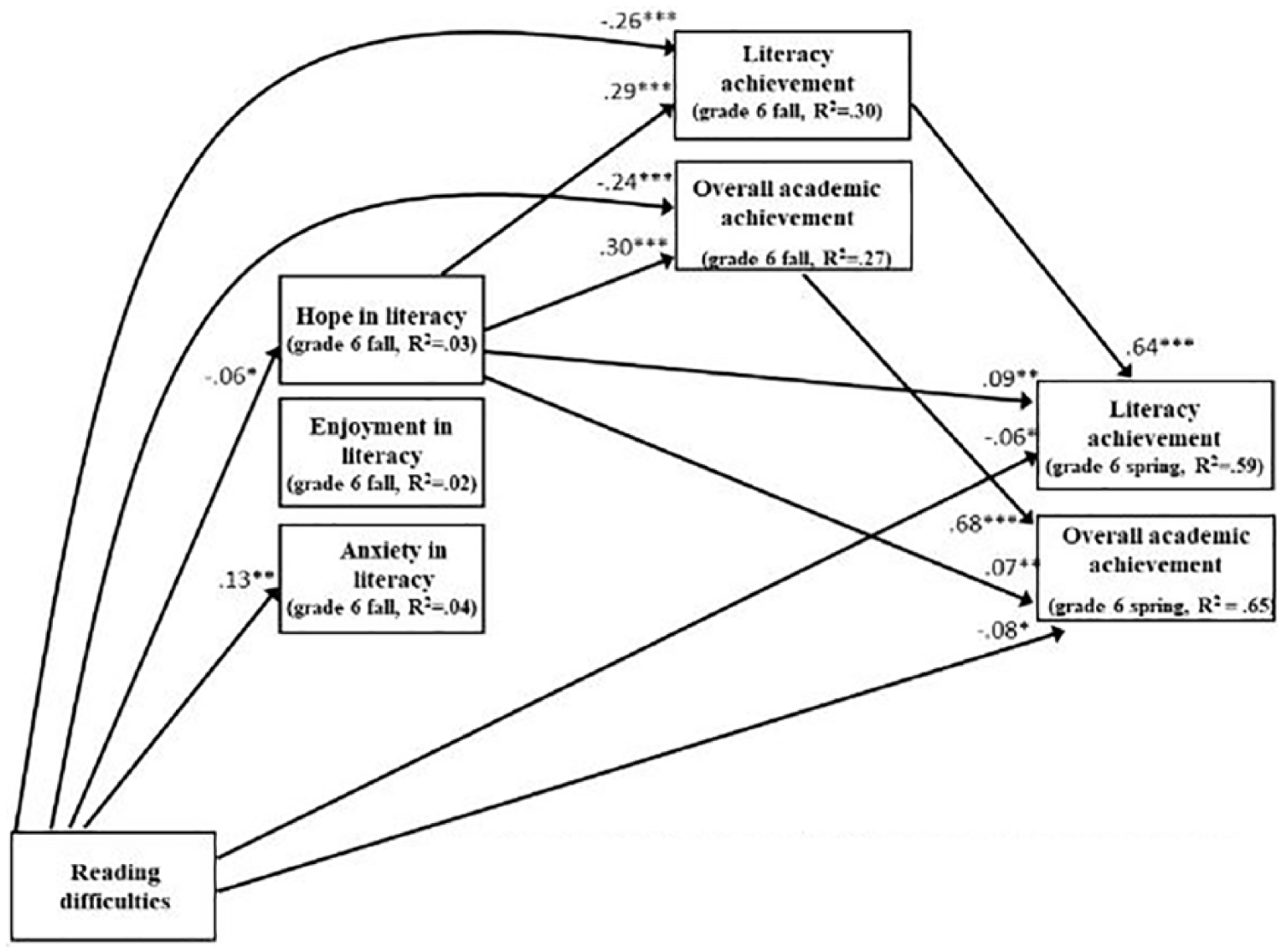
Final model of the role of reading difficulties in students’ academic emotions toward reading, reading grade, and grade point average. The effects of gender and math difficulties are controlled for. Predictors are allowed to correlate and residuals of the predicated variables are allowed to correlate.
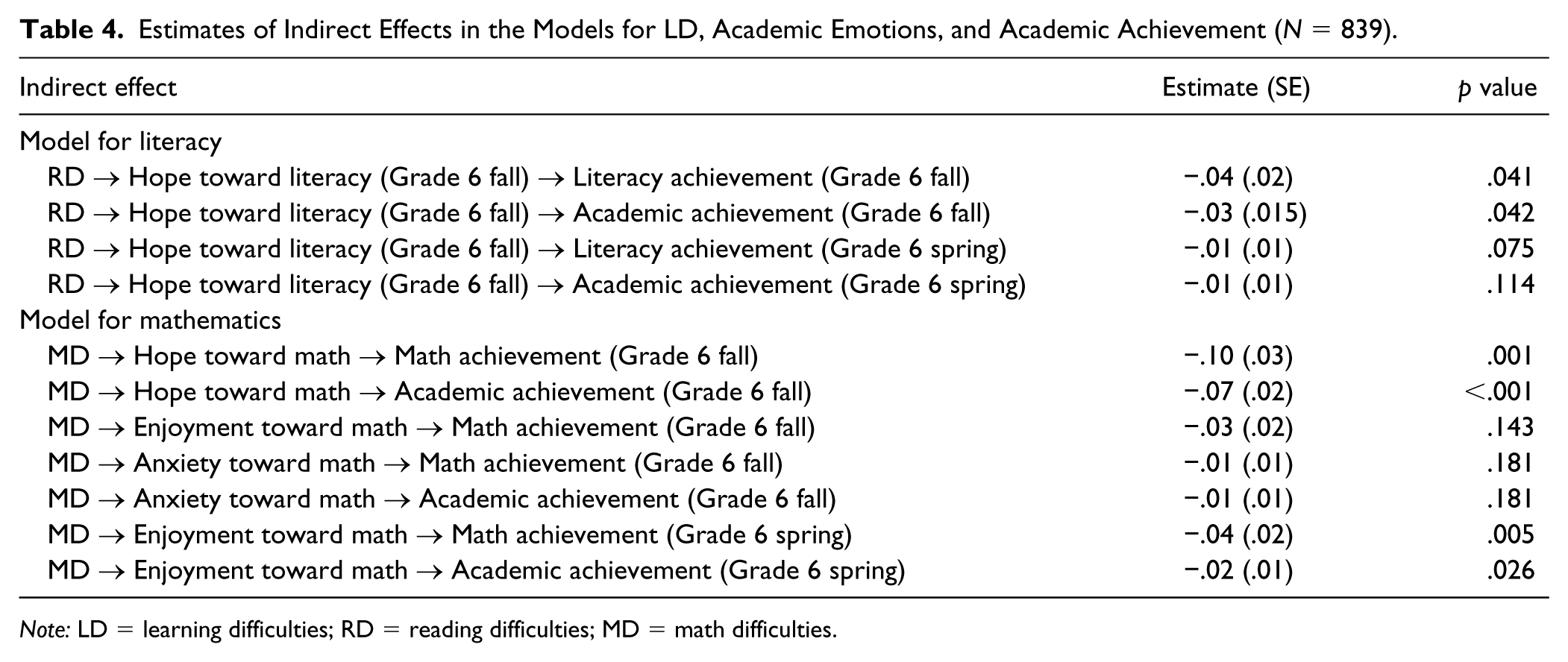
Aside from direct effects, we also tested for indirect effects of students’ RD on academic achievement via academic emotions. Table 4 shows the results regarding indirect effects. The results show that the students with RD had a lower level of hope toward literacy, which in turn predicted significantly lower overall academic achievement and literacy achievement in the fall semester of Grade 6. RD had no significant indirect effects on academic or literacy achievement in the spring semester of Grade 6.
Estimates of Indirect Effects in the Models for LD, Academic Emotions, and Academic Achievement (N = 839).
Note: LD = learning difficulties; RD = reading difficulties; MD = math difficulties.
Mathematics
Next, the path model for math, corresponding to the schematic model (see Figure 1), was estimated. The final model for MD, academic emotions toward literacy, and academic achievement—containing statistically significant paths only—fit the data well: χ²(15, N = 839) = 19.27, p = .20, CFI = 1.00, RMSEA = 0.02, SRMR = 0.02. This model is shown in Figure 3. The results show, first, that the students’ MD was related to lower hope, lower enjoyment, and higher anxiety in math. Second, the results revealed that MD also predicted academic achievement, both concurrently and longitudinally. MD was associated with poorer math achievement and overall academic achievement in the fall semester of Grade 6. In addition, MD predicted poorer math achievement and lower overall academic achievement in the spring semester of Grade 6 after controlling for earlier academic achievement. Third, academic emotions were associated concurrently with academic achievement. The higher the hope in math, the higher the math achievement and overall academic achievement of students in the fall semester of Grade 6. Math enjoyment was related to higher math achievement in the fall semester of Grade 6. Furthermore, enjoyment predicted higher math achievement and higher overall academic achievement in the spring semester of Grade 6 after controlling for earlier achievement. Anxiety, in turn, was related to both poorer overall academic achievement and poorer math achievement in the fall semester of Grade 6.

Final model of the role of math difficulties in students’ academic emotions toward math, math grade, and grade point average. The effects of gender and math difficulties are controlled for. Predictors are allowed to correlate and residuals of the predicated variables are allowed to correlate.
Aside from direct effects, we also tested for indirect effects of students’ MD on academic achievement via math-related emotions. Table 4 shows the results regarding the indirect effects. The results show that MD predicted lower levels of hope in math, which in turn were related to lower overall academic achievement and lower math achievement in the fall semester of Grade 6. Furthermore, MD was connected to lower math enjoyment, which was related to lower overall academic achievement and lower math achievement in the spring semester of Grade 6.
Discussion
In this study, we investigated longitudinal associations between LD, academic emotions, and academic achievement among sixth-grade students. The present study adds uniquely to previous research by showing that the role of LD in students’ academic emotions and achievement is important and needs to be considered when planning educational support for students with LD. One of our study’s novel findings was that hope, in particular, is a crucial academic emotion among students with LD, as hope had a mediating role between LD and achievement. Furthermore, we found that direct and indirect associations between LD and academic achievement were slightly different between the literacy and math domains, supporting previous research on the subject specificity of academic emotions (e.g., Goetz et al., 2006).
The results showed, first, that students with RD had lower hope and higher anxiety toward reading than students without RD after controlling for the effects of gender, depressive symptoms, MD, and classroom differences. Although the effect size was small, this finding adds significantly to previous research, as associations between RD and reading-related emotions have rarely been examined before. RD is usually detected early at Finnish schools, and well-defined methods are available to aid students with RD (see also Eklund et al., 2015; Holopainen, Kiuru, Mäkihonko, & Lerkkanen, 2018). Those who, despite early educational support, are unable to keep up with their peers in reading development presumably struggle more often in their studies, which can predispose them to repeated failure and lead to fewer positive and more negative emotions toward literacy. In this study, lower hope and higher anxiety were typical, particularly for students with RD.
In the math domain, this study is in line with previous research on math anxiety (e.g., Maloney et al., 2015; Rubinsten & Tannock, 2010) by showing the relationship between MD and higher anxiety. It is notable that this study also indicates rarely studied associations between MD and math-related lower hope and lower enjoyment. Thus, students with MD had math-related lower hope, higher anxiety, and lower enjoyment, even after controlling for gender, depressive symptoms, RD, and classroom differences. The effect sizes were small but larger than those for reading. Extant literature on math-related anxiety (Rubinsten & Tannock, 2010; Suárez-Pellicioni et al., 2016) has presumed that math is often found to be a difficult and laborious school subject. It is also possible that some students’ MD is not recognized early enough and that the support given to students is not as regular and systematic as that for RD, predisposing students to maladaptive academic emotions in math.
Subject-specific lower hope and higher anxiety were typical in both MD and RD. However, lower enjoyment was related only to MD. This may be due to the difference between reading and math as school subjects. Those who struggle with reading usually achieve moderate skills in word- and text-reading accuracy, giving these students a sufficient base for reading comprehension (Eklund et al., 2015). Math differs from literacy because in math, adoption of new mathematical concepts is required continuously across one’s study years (Aunola et al., 2004; Purpura, Baroody, & Lonigan, 2013), which is why math typically is considered to be a difficult and laborious school subject (e.g., Suárez-Pellicioni et al., 2016). Students with MD early on may end up having severe problems understanding mathematical concepts later in more advanced classes, making them vulnerable to lower math-related enjoyment (see also Pekrun et al., 2011).
In line with the control-value theory (Pekrun, 2006), we also tested the assumption that LD would predispose students to poorer academic achievement through increased negative and decreased positive academic emotions. The results revealed a significant indirect effect from RD on academic achievement through literacy-related hope: RD was associated with lower literacy-related hope, which was related to lower current academic achievement. MD, in turn, was associated with lower math hope and lower math enjoyment, which were both related to lower academic achievement. Lower hope was related to current achievement, and lower enjoyment was related to subsequent achievement. Low hope and enjoyment are also known to relate to lower perceived control over studies and lower subjective importance on learning (Pekrun, 2006; Pekrun et al., 2011), which may be related to students’ higher failure expectations, greater task avoidance, and other ineffective learning strategies (see also Greulich et al., 2014). It is possible that some of the indirect effects from LD on subsequent achievement through lower levels of positive emotions are mediated also through these factors.
Interestingly, we found that in the math domain, indirect associations were stronger than in the literacy domain. This may be explained by students’ fairly good control over literacy studies despite their RD (e.g., Eklund et al., 2015) and by the considerable amount of educational support in literacy studies in early school years (Holopainen et al., 2018), both factors of which could have protected students from maladaptive academic emotions. Another possible explanation is that math skills develop in a more cumulative manner than those of literacy in the Finnish language (see also Aunola et al., 2004; Purpura et al., 2013), which may lead to detrimental cumulative cycles between less adaptive academic emotions and skill development, particularly in the math domain. In the end, it is notable that although the results supported the tested theory, the effect sizes of indirect effects were small. This may be due to multiple factors besides academic emotions affecting the academic achievement of students with LD.
Overall, the results clearly suggest that hope, in particular, is an important academic emotion for students with LD. Lower hope has been related to lower self-esteem as a learner (Lackaye et al., 2006) as well as to failure expectations and task avoidance behavior (Nurmi, Aunola, Salmela-Aro, & Lindroos, 2003; Pekrun et al., 2009), which can compromise learning results. The results indicate that teachers should be aware of the association between maladaptive academic emotions and students’ LD. Special education’s role is essential for students with LD to ensure positive learning experiences and to support the development of effective learning strategies and students’ self-efficacy, which all are likely to maintain students’ hopeful thinking in learning and achievement situations (Lackaye et al., 2006; Pekrun et al., 2011). Such educational support could increase students’ experienced control over studies and their sense of subjective importance toward studies, thereby cultivating more positive academic emotions (see Pekrun, 2006). This means developing a new kind of approach to LD in which it is crucial that students not only practice their compromised skills but also receive support to cope with their negative emotions toward learning and developing more adaptive behavior in learning situations.
All said, the reader should also be aware of the limitations of this study. First, the students self-reported their academic emotions. In the future, it would be wise to complement self-reports with information from other sources, for example, by investigating facial expressions or physiological responses. Students also reported their own school grades, though they were based on numerical grades on actual school achievement and, thus, were unlikely to be biased. Furthermore, the reader should keep in mind that the tests used in this study to identify students with and without LD assessed fluency in reading and math skills. These tests were chosen as previous research has shown that fluency is the main characteristic of reading disability in transparent orthographies (e.g., Landerl & Wimmer, 2008; Share, 2008) as well as math disabilities (Aunola et al., 2004; Koponen et al., 2016). However, choosing fluency as our main target when identifying individuals with LD limits our opportunities to generalize our results to all students who have different kinds of difficulties in reading and math domains (e.g., reading comprehension problems or deficits in number fact knowledge). In addition, it is possible that associations would have been stronger if we had had students with diagnosed learning disabilities as our participants, but that remains an open question for future studies. Readers also should take note that in this study, we considered comorbidity of MD and RD by controlling for students’ difficulties in the other academic subject. A future challenge to research could be to examine domain specificity and cross-domain effects of LD in academic emotions in the same study. Finally, it is notable that although the results supported our study hypotheses even after accounting for the effects of gender, depressive symptoms, LD in the other subject domain, and classroom differences, the effect sizes were small.
Similarly, despite the cross-lagged design (in which controlling for the effect of earlier academic achievement may reduce effect sizes on changes in academic achievement), the present study was correlational, which inhibits confident assertions on causality. Our design also comprised only two time points, precluding us from investigating longer mediator chains. For example, it remains a future challenge to examine empirically through which specific behavioral processes (e.g., effort, task-focused behavior, and self-regulation) adolescents’ LD and academic emotions might exert an effect on subsequent academic achievement. It is also evident that future studies should attempt to disentangle different emotional and motivational variables’ unique effects on adolescents’ academic achievement. All in all, our study adds to previous research by demonstrating that subject-specific academic emotions are one more aspect to consider when examining LD and its consequences for academic achievement. We found that LD increases students’ vulnerability to experiencing more negative and fewer positive emotions toward learning school subjects in which difficulties were faced. Besides enjoyment and anxiety, which have been well examined as academic emotions in extant research, we also found hope to be a significant academic emotion in both the literacy and math domains. Associating fewer positive and more negative academic emotions with LD is crucial when considering LD’s negative consequences, not only for students’ short-term learning outcomes but also throughout their later educational tracks and even into their working lives. Future research directions concerning the role of LD in academic emotions would do well to consider subject-specific academic emotions’ constancy during adolescence. It is also important to find out whether protective factors exist that may modify learning-related emotions to be more adaptive for students with LD.
Footnotes
Declaration of Conflicting Interests
The author(s) declared no potential conflicts of interest with respect to the research, authorship, and/or publication of this article.
Funding
The author(s) disclosed receipt of the following financial support for the research, authorship, and/or publication of this article: The present study’s research forms part of the ongoing, overarching study “STAIRWAY: From Primary to Secondary School” (Ahonen & Kiuru, 2014). The study was funded by a grant from the Academy of Finland (No. 266851).