



Abstract
Leaders and leadership changes are found to influence states’ foreign policy decisions, in particular with respect to war and peace between states. Although this issue is also addressed in the qualitative literature on intrastate wars, the influence of leadership turnovers in civil war has received limited systematic attention. One reason for this is the scarcity of quantitative data on rebel group leaderships. To fill this gap, we present a comprehensive dataset on leadership changes in rebel groups, 1946–2010, organized by rebel-month. The effects of leadership changes among parties engaged in civil war are argued to be more complex than those found in interstate disputes. In this article we present our theoretical argument followed by presentation of the variables in the dataset and descriptive statistics. To demonstrate the potential research value of the dataset we examine the impact of leader shifts on civil war settlement in Africa. We conclude with avenues for future research which might benefit from this dataset.
Introduction
Civil wars are distinct from interstate wars, not only in the methods of warfare employed, but also in the issues in dispute and the types of actors involved. Thus, the emergence of civil wars as the predominant type of conflict in the 21st century has prompted scholars to revisit many of the questions treated in the interstate conflict literature. One such question concerns the impact of leadership changes on war and peace policy decisions. In interstate disputes, the coming to power of new leaders is suggested under certain conditions to render conflicts more conducive to negotiated settlements (Bercovitch & Lutmar, 2010; McGillivray & Smith, 2008; Quiroz Flores, 2012). Whereas the influence of leadership turnovers among parties involved in civil war has been addressed extensively in descriptive case studies (e.g. Golan, 2014; Stedman, 1991) we do not see similar treatment in the quantitative literature on civil war. 1 A key reason for this is the scarcity of systematic data on the leaders of non-state actors. To fill this gap, we present a new dataset on rebel group leader changes, 1946–2010. Focusing on the subnational actors involved in intrastate conflict, the dataset provides information on rebel groups, leadership shifts, and factors associated with leader shifts over a period of six decades.
To demonstrate a potential use of the dataset, we discuss the impact of leader change – on either the government or rebel side – on the likelihood of civil war settlement. We argue that the relationship between leader shifts and conflict settlement is more complex within the context of intrastate disputes than it is in interstate disputes due to the characteristics of rebel group and civil conflict, such as multiplicity of groups with competing interests, legitimacy issues, and revolutionary goals. We suggest that leader overturns in rebel groups might lead to more, rather than less, hardline conflict positions, at least in the short term.
We begin by discussing the need for systematic data on rebel group leaderships organized by rebel-month. Drawing on the extant interstate conflict literature, we discuss the relationship between leadership changes and peaceful settlement of civil wars. We then describe the dataset variables and present descriptive statistics, followed by demonstration of the research value of the data by examining the impact of rebel leadership changes on peaceful conflict resolution in Africa. We conclude with avenues for future research.
A need for rebel group leadership data
In recent years, a growing number of international relations scholars have shifted their focus from states to leaders as the main unit of analysis. This has led to more systematic theorizing on leaders
Whereas research on leaderships in the context of interstate relations has flourished, a similar shift to leader-specific research is not apparent in the quantitative intrastate war scholarship. Extensive research focuses on the onset, severity, and duration of intrastate disputes (e.g. Fearon, 2004; Fearon & Laitin, 2003; Hegre et al., 2001; Metternich, 2011; Regan, 2002; Sambanis, 2001; Walter, 2015). A similarly formidable body of literature focuses on the conditions for civil war settlement (e.g. Badran, 2014; DeRouen, Lea & Wallensteen, 2009; Doyle & Sambanis, 2000; Fortna, 2004a; Greig & Regan, 2008; Hartzell & Hoddie, 2003; Licklider, 1995; Walter, 1997, 2002). However, the role of leaders and leadership shifts in these intrastate processes has drawn limited systematic attention. A pioneering exception is Tiernay (2015), which systematically explores rebel leader shifts, 1989–2003. Another project under way on rebel leaders is Cunningham & Sawyer (2014).
Because of the dearth of systematic data on rebel group leaders, where attention is given to the impact of leadership change on civil war, the focus is largely on the government side. Zartman & Faure (2011) note that it often takes a government change to accept negotiations with extreme rebel groups/terrorists. Rwanda
The data introduced here fill the gap on rebel leadership changes. The data span six decades, covering the Cold War and post-Cold War eras. Organized by rebel-month, the data can be joined with other intrastate war datasets dating back to 1945 and other non-state actor datasets such as Cunningham, Gleditsch & Salehyan (2013).
A key reason for the need for a comprehensive dataset on rebel groups and leadership changes is that due to the unique characteristics of rebel groups and civil wars, there is a need to revisit – within the intrastate context – many of the theoretical arguments presented in the interstate conflict literature. While initially one might expect leadership changes in intrastate conflict to have effects similar to those found in interstate conflicts, a closer look at civil conflict attributes and actor-specific data raises questions about whether leadership changes in civil wars might trigger distinct dynamics and processes.
Civil wars and rebel leaderships
A key motivation for researching conflict processes is to gain better understanding of conditions that promote de-escalation. Within this context, intrastate conflicts pose considerable challenges. They often concur with revolutionary struggles involving parties who place principles over interests, thus rendering compromises particularly difficult to negotiate (Stedman, 1991; Olson & Pearson, 2002). This leads to conflicts that tend to be more intractable than interstate wars, entailing particularly high negotiation costs and risks.
Often spawning multiple groups, alliances, and subgroups, some of the challenges entailed in ending civil conflicts are linked to the number of groups involved and their competing interests. New rebel leaders might seek to bolster support by emphasizing intransigent, rather than flexible, positions vis-à-vis both the government and competing groups. When groups constitute splinter groups or spoilers, new leaders are even more unlikely to shift to positions allowing for compromise. Thus, we expect leadership changes among rebel groups to lead to greater inflexibility, at least in the short term. Another factor that may impinge on a leadership change’s pacifying effect are personal profits rebel leaders often gain from conflict (Collier & Hoeffler, 2004). This implies that neither current nor succeeding leaders would be motivated to reach a settlement. While governments may benefit from conflict too, such benefits are typically in the realm of public support (a rally-around-the-flag effect), do not last long, and are not likely to survive leadership shifts.
The above suggests that in civil wars, the leadership change–conflict settlement relationship – particularly when the leader change is on the side of the rebels – might be less straightforward and pronounced than in interstate conflicts. Even where new rebel leaders perceive an interest in ending conflict peacefully, they might find it more politically risky to change course than new government leaders. For new rebel leaders often lack the necessary legitimacy-base, political apparatus, and resources that new government leaderships – both in democratic and non-democratic regimes – possess and that are needed to implement policy shifts without destabilizing themselves.
Clearly a deeper exploration into the different types and circumstances of rebel leadership changes is necessary to shed light on the conditions under which such changes might prompt negotiations or, conversely, conflict escalation. For example, leadership changes may be caused by a variety of – violent or peaceful – triggers: the inclination of new leaders to shift strategies might be influenced by whether the leader turnover was achieved by force; rebel goals and timing issues may also play significant roles in policy shifts after leadership changes.
The data introduced here will serve as a valuable source for the advancement of academic research on intrastate conflict processes. Such studies will carry important policy implications as well. A better understanding of the roles of leaders in civil wars and of the effects of leadership changes will provide important information for parties engaged in civil wars. The findings will also inform third parties considering triggering or supporting a leadership change in order to prompt negotiations or obtain certain foreign policy objectives.
Conflict disaggregation
In contrast to macro approaches that treat conflict as the unit of analysis as is reflected in much of the work based on the UCDP civil war data (e.g. Sambanis, 2001, 2002), we were motivated in this data project by the belief that to understand intrastate conflict behavior, greater information is needed on within-country variation. Consequently, the dataset focuses on conflict parties at the subnational level, representing a disaggregated perspective on conflict. This is in line with Kalyvas’s (2008) ‘micro dynamics of civil war’ and with Cunningham, Gleditsch & Salehyan (2013). 4
The dataset provides systematic data on civil war actors at the rebel-month level. We recorded leadership changes of rebel groups involved in civil wars between 1946 and 2010, based on the Regan (2002) civil war dataset. Civil wars involve a recognized government actor and a non-state actor operating within its territory. Regan’s civil war definition includes conflicts that entailed at least 200 fatalities. This definition is more restrictive than the Armed Conflict Database (ACD), which includes armed conflicts resulting in a minimum of 25 battle-related deaths (Gleditsch et al., 2008). To allow for cross-references between our dataset and other civil war datasets, we recorded, for every observation, the Number of conflicts by number of groups involved – 1945-2010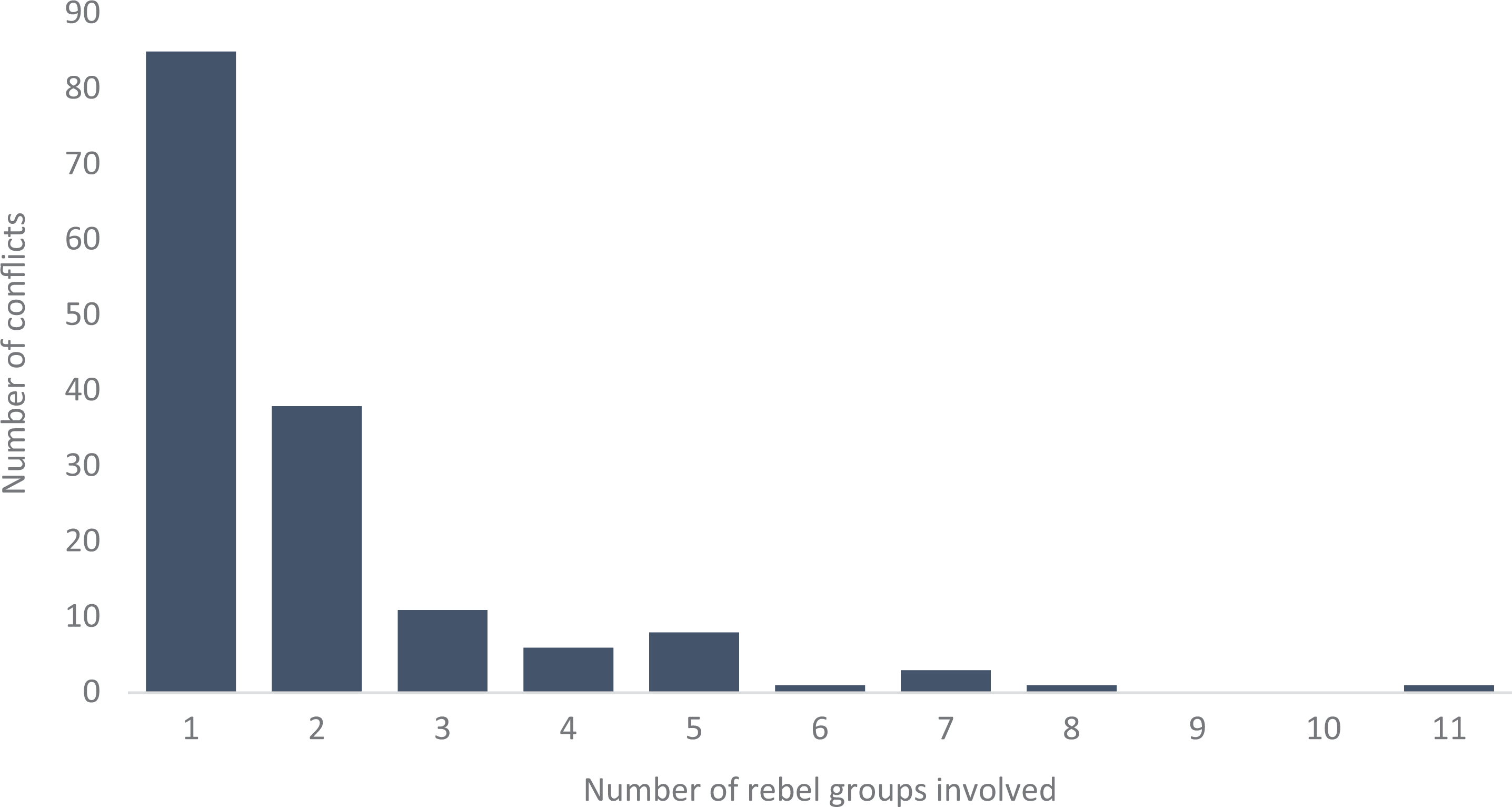
For each rebel group (for the years it existed) we recorded data for each of the 36 months prior to the outbreak of war, for each of the conflict months, and for each of the 36 months following the war. This allowed us to organize the data within the context of conflict, yet at the same time, avoid focusing only on conflict years. Hence, by defining the rebel-month as the unit of analysis we were able to look at the impact of leader shifts on conflict processes not only during the actual conflict-months but also during months where conflict could, but did not (yet) occur, and after hostilities ended.
Data sources
Our data collection relied on open sources. Keyword searches pertaining to rebel leaders and leadership change were conducted in Keesings and LexisNexis on the wars listed in the dataset. The advantage of these sources is their provision of continuous coverage from a wide variety of international sources. When necessary, we consulted other reliable reference sources such as DeRouen & Heo’s Civil Wars of the World (2007) and Beary’s Separatist Movements (2011) as well as state-specific scholarly sources and history books. Coding data on rebel groups, on which the information available is sometimes inconsistent, was a challenging task. To deal with questions that arose, we conducted periodical meetings to discuss dilemmas and reach agreed-upon decisions.
Data description
Relying on Regan’s (2002) definition for civil war, our dataset codes 284 rebel groups associated with 154 intrastate wars, between 1946 and 2010. Figure 1 presents the number of rebel groups per conflict. While the majority of cases involved one rebel group, many others involved multiple groups. The conflicts in India along the years involved 11 different rebel groups, the conflicts in Burma/Myanmar over 30. The data also show that the number of groups involved in a conflict against the government of a single state often fluctuated. In Burma/Myanmar, for example, numerous separate conflicts took place, involving over time more than 30 rebel groups, with the number shifting as new groups were established/dissolved, or as groups merged/splintered. One vein of conflict in Burma/Myanmar entailed the dispute between the government and Shan, Burma’s largest state, which began with one rebel group, Noom Suik Harn (Young Warriors), when the government reneged on its promise to Shan to secede. The number of groups increased to three when two splinter groups broke away from the Young Warriors in 1960: the SSIA and SNUF. Then in 1964, the SSIA and SNUF merged into one group, together with the Kokang Revolutionary Front, creating the SSA, which later turned into two groups again when members broke away and established the SURA. In a different vein of conflict in Myanmar, which involved the communist insurgency, the number of rebel groups fluctuated in a similar fashion. Following the expulsion of Thakin Soe from the CPB, Soe formed the splinter group Red Flag and both waged war against the government. In 1989, the CPB dissolved after China’s decision to withdraw its support from the group (Cook & Lounsbery, 2017; Funston, 2001). These are two examples illustrating the fluidity of rebel groups; there are many more. A multitude of rebel parties (often with diverse goals) and instability in their number and identity are likely to render conflict management particularly challenging.
Variables
Leadership change
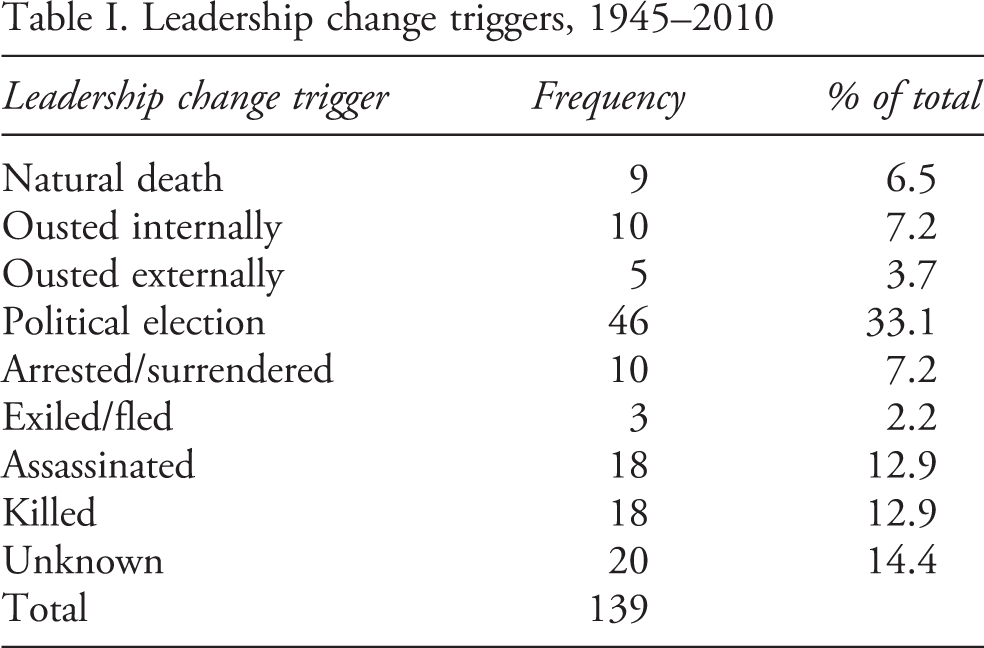
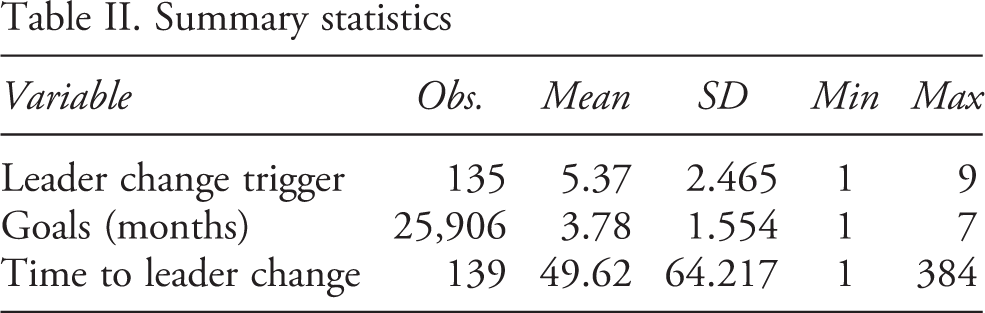
Leadership change is coded 1 when the group leader was replaced by another; 0 otherwise. The data show that leadership change is a relatively rare event, occurring only 139 times during the period covered. However, in groups where leadership changes did take place, the average time between leader shifts in a single group was not excessively long, approximately four years (49.62 months).
Leadership change trigger
Leadership changes may be triggered by a variety of – violent or peaceful – events that impact the new leader’s policies. The variable Leadership change trigger depicts the cause for the leadership change: 0 = no change; 1 = natural death; 2 = ousted internally; 3 = ousted externally; 4 = political election; 5 = arrested/surrendered; 6 = exiled/fled; 7 = assassinated; 8 = killed; 9 = unknown. We define category 2 (ousted internally) as the leader being thrown out of her/his position by forces from within the rebel group, whereas category 3 (ousted externally) means that an external force played a direct role in removing the rebel leader. These categories differ from category 6 (exiled/fled) which includes cases wherein the former leader left the country. 5 Categories 2 and 3 imply that the leader is still in-country. Category 5 (arrested/surrendered) refers to cases wherein the rebel leader has been arrested or surrendered to local authorities. Table I presents the frequencies of the categories.
In 46 instances, rebel leaders were replaced through internal elections, comprising the largest single leader-change-trigger category (33.1%). The prominence of this category might account, at least partially, for the overall four-year average we found between leader turnovers. The second largest categories are leader change of the most violent types, assassination (12.9%), and killed (12.9%).
Leadership change triggers, 1945–2010
Rebel group goals
Rebels with different objectives may be more – or less – inclined to pursue certain policies. The variable Rebel group goals includes seven categories: 1 = secessionism; 2 = irredentism; 3 = autonomy; 4 = greater political power/rights; 5 = government overthrow; 6 = unknown/undecided; 7 = colonial independence
Figure 2 shows that revolutionary struggles, wherein rebels seek to gain control of the government, was by far the most frequent goal-type pursued (58.56%). Groups seeking to increase political power/rights accounted for 15.59% of the rebel groups, followed by those seeking to secede from the state (10.27%). Autonomy and irredentist struggles accounted for only 6.84% and 5.32% of the groups, respectively. By merging group goals into two broader categories (territorial and political), we find that 74% of the rebel groups were motivated by political goals within the state, whereas 22% of the groups sought to break away from the state to lesser (autonomy) or greater (secession and irredentism) degrees. Nine conflicts received the value 6 (unknown/undecided). This category largely includes cases where the groups themselves were unclear about their goals. For example, the objective of ONLF in Ethiopia was defined by its leader Mohamed Omar Osman simultaneously as an independent state (secessionism), joining Somalia (irredentism), and autonomy within Ethiopia. Focusing on the number of months each goal-category was the focus of war, we see that while the majority of groups pursued revolutionary goals, revolutionary wars tended to be shortest, with an average length of 84 months. Irredentist struggles tended to be the longest struggles, averaging 157 months.
While goals often varied across different rebel groups struggling against a single government, in some cases, goals within the group changed over time. Reasons for shifts in group goals may be linked to the group’s
Rebel groups by goals – 1945-2010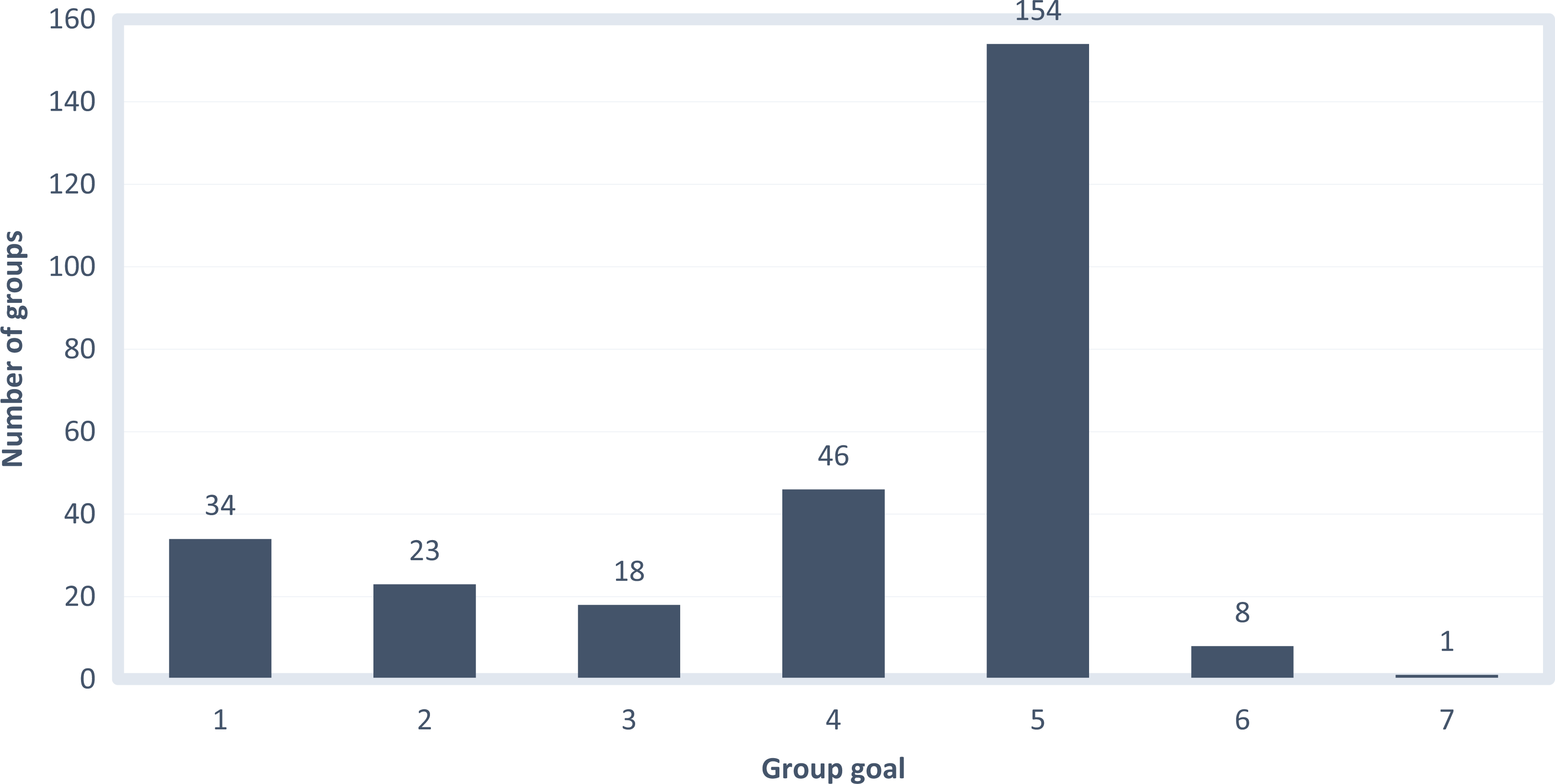
Group change
Changes may occur at the group level rather than (or in addition to) the leader’s level. We refer here to structural changes: group mergers or the splintering of a group. Group change is a binary variable (1 = group change; 0 = otherwise). It is possible that an event will include both a leader and group change.
Group change trigger
Where Group change is coded 1, the Group change trigger variable specifies whether the change was the result of a merging of groups or the splintering of a group. Keeping with group splinter/merger definitions in the literature (Lounsbery, 2016; Lounsbery & Cook, 2011), a splinter occurs when a new group is established by members breaking away from an existing group; mergers occur when groups join together to form one entity. 0 = no change; 1 = group merger; 2 = group splinter. Table II presents summary statistics for three key leader-specific variables: Leader change trigger, Goals, and Time (in months) to leader change.
To demonstrate the potential value of the dataset, we explore below the impact of leadership shifts on the prospects for civil war peace settlements in Africa.
Summary statistics
Leadership change and peace agreements in Africa
To illustrate a potential research avenue provided by the new data, we look at the impact of leadership change on dispute settlement in a subset of the data – civil wars in Africa, 1975–2007. The settlement data are taken from the UCDP peace settlement database, which covers civil war settlements from 1975 to 2007, and which includes variables such as the agreement’s date of signing, parties to the agreement, third-party involvement, agreement provisions, and agreement duration.
Our subset contains 57 civil wars in Africa. During the period covered, 90 full peace agreements were reached, suggesting the recurrence of war in some cases, followed by subsequent agreements. To capture both short- and longer-term influence, using the rebel-group-month as the unit of analysis we look at the impact of leadership changes at three time-points: peace agreements reached within six months of the leader change, within 12 months, and within 18 months. Rebel group leaders changed 39 times as compared to 59 leadership shifts on the government side. A table of the civil wars in this subset, the leader changes, and the leader change trigger in each case appears in the Online appendix.
A look at the data suggests that as expected, the impact of leadership change on civil war settlement is not dominant. During the first six months following a leadership change on either the government or rebel side, five full peace agreements were reached, and five more were signed in the subsequent six months. In the last six months examined one additional settlement was reached. Thus, 11 peace agreements were reached within 18 months of a leadership change on either one or both sides, which is 12.2% of the total peace agreements reached. The majority of civil war settlements (87.8%) were reached more than 18 months after a leadership change. Of the peace settlements reached, 79 were not preceded by a leadership change in the 18 months leading up to the settlement. When we look at the impact of leadership changes on the rebel side only, this trend is even more pronounced. Whereas government leadership changes prompted the signing of five peace agreements within six months of the leader change, rebel leader changes did not prompt peace agreements at all in the short term: no settlements were reached within six months of a leadership change on the rebel side. This lends support to our claim that rebel leader changes might lead to less flexible strategies, at least in the short term.
To further explore this line of thinking, using the conflict-year as the unit of analysis, we ran a logistic regression to test the impact of leadership change on the likelihood of peaceful civil war settlement. Drawing on data from the UCDP, the dependent variable has two values: 0 = no agreement; 1 = agreement (ceasefire or full agreement). We collapsed the data to the conflict year; in instances of multiple agreements in a single conflict year, the highest-ranking agreement was coded. Control variables include GDP, conflict type (political/territorial), regime type (W score), 6 previous peace agreement, and the occurrence of mediation. Table III presents the results.
Peace agreements by leadership change, logistic regression, Africa 1975–2010
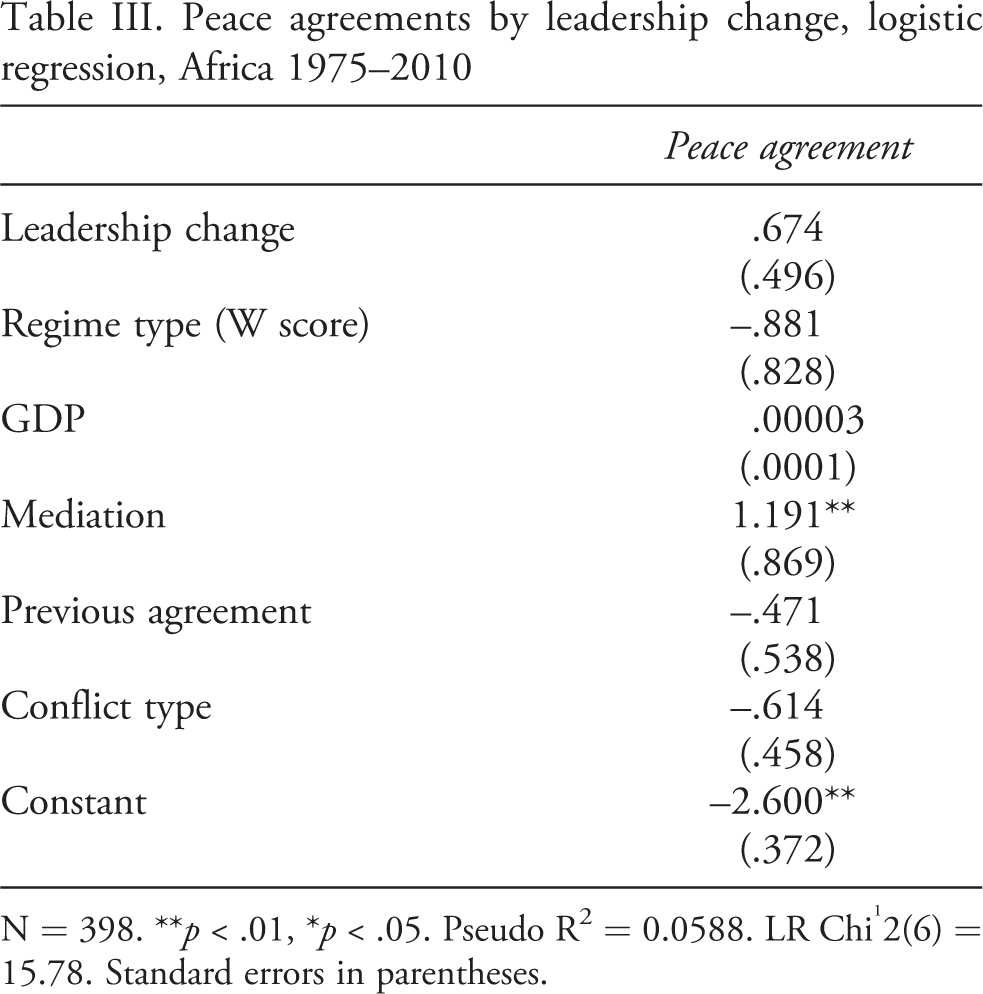
N = 398. **p < .01, *p < .05. Pseudo R2 = 0.0588. LR Chi 2 (6) = 15.78. Standard errors in parentheses.
To gain a more nuanced picture of the leadership change–civil war termination relationship, we unpacked the dependent variable of peaceful war termination to distinguish among ceasefires, ceasefires with regulation, and full peace agreements. Table IV presents the results of the multinomial logit model.
Agreement type by leadership change, multinomial logistic regression, Africa 1975–2010
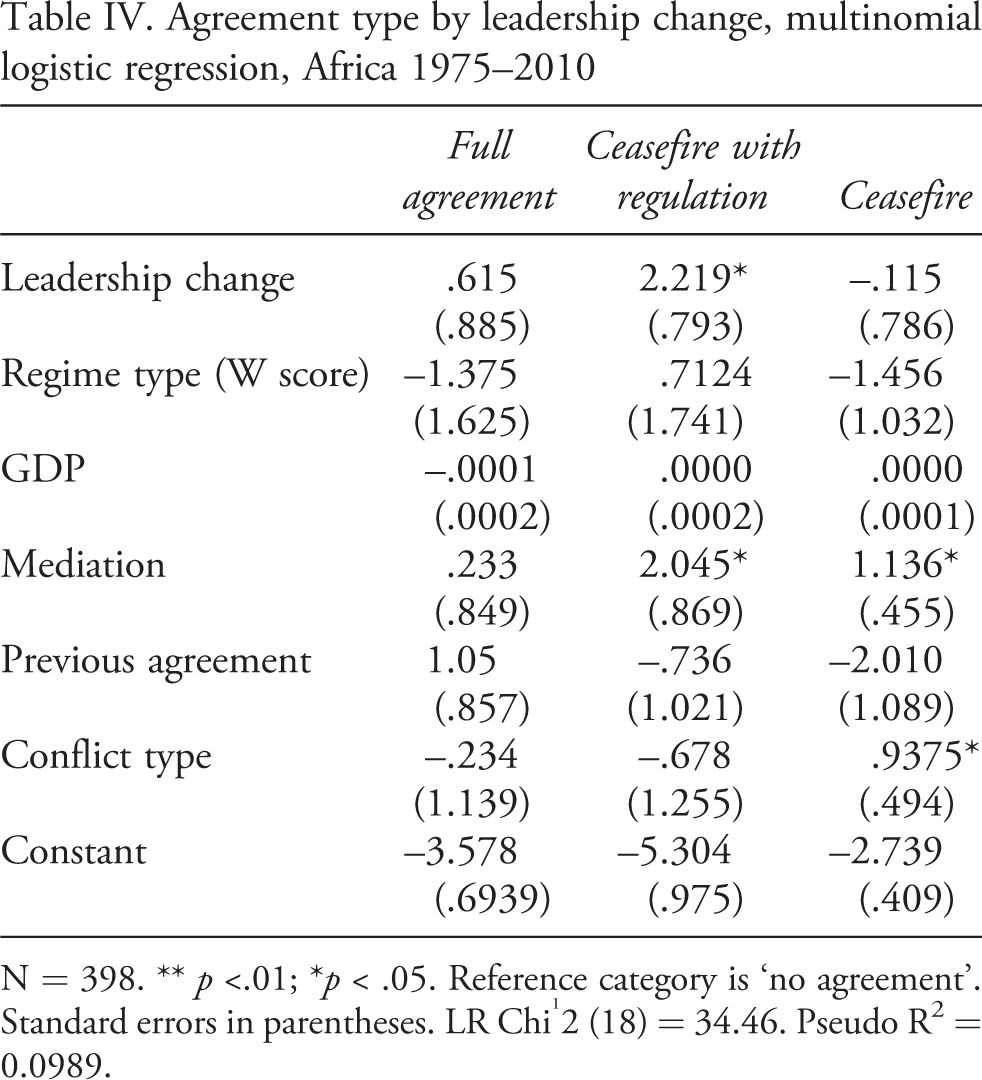
N = 398. ** p <.01; *p < .05. Reference category is ‘no agreement’. Standard errors in parentheses. LR Chi 2 (18) = 34.46. Pseudo R2 = 0.0989.
Marginal effects

Marginal effects performed on Table III provide a clearer look at the relationship between the independent variables and peaceful civil war termination. Table V reports this analysis. The baseline condition, with all variables set to mean, predicts a probability of civil war settlement at 12.25%. If we set mediation to 1, this probability jumps to 26%. The predicted probability plummets to 9.82% when mediation is set at 0. A regime score (W) of 1 (full democracy), lowers the predicted probability of peaceful settlement from the baseline by 4.15 to 8.1%. Yet, a W score of .25 (low democracy level) increases the predicted probability to 14.24%. If we set conflict type at 0 (political conflict), the predicted probability of peaceful settlement is close to the baseline at 12.64%. It jumps to 20.64% when the conflict type is set at 1 (territorial conflict). Whereas a previous agreement decreases the predicted probability of peaceful settlement by 2.14 to 10.11%, no previous agreement increases the probability by almost the same degree (2.66) to 14.91%.
Conclusion
This article presents a new dataset on leadership changes in rebel groups between 1946 and 2010. The dataset fills a gap in the civil war literature, opening the door for further research. The preliminary findings confirm our thinking that rebel leadership changes, as opposed to changes on the government side, may lead at least initially, to more astringent, rather than moderate, conflict positions. Deeper examination of the factors involved in rebel leader changes may shed further light on this process. One issue worthy of investigation is the trigger for leader change. It would also be interesting to more deeply investigate the impact of shifts in the goals of rebel groups, as such shifts may affect the prospects for negotiated settlements. These initial intuitions suggest a wealth of opportunities for future research.
