



Abstract
The purpose of this study was to examine elementary music teachers’ perceptions of factors impacting their music programs and teaching positions as well as the actions these teachers take in response to those factors. The following research questions guided the study: (1) What factors are perceived to impact music programs and teaching positions? (2) What is the nature of these factors? (3) How and within what socioecological levels do teachers act on behalf of their programs or positions? (4) To what degree are specific actions, people, and/or groups thought effective in impacting music programs? U.S. music teachers (N = 432) responded to a survey designed to answer these questions. A socioecological framework was used in the design of the survey and analysis of the data. Results suggest that teachers perceive micro-level factors (school) to have a substantial impact on their programs. Teachers’ actions were mostly focused on the micro level although many teachers considered meso-level (school district) engagement to be vital for maintaining or improving music programs in a given school district. Besides music-specific policies, macro-level issues (state and national) were not viewed as impacting programs in substantive ways. The further removed a factor from the micro level, the less impact was felt and the fewer actions were taken.
On the surface, music education in U.S. elementary schools appears to be in a general state of good health. During the 2009–2010 school year, 94% of elementary schools offered instruction in music, and 91% of those schools employed a music specialist (National Center for Education Statistics [NCES], 2012). Opinions regarding the arts and music in schools remain positive. The general public and education professionals are overwhelmingly supportive of music in schools for its perceived social, psychological, and intrinsic value (Abril, 2009; Gerrity, 2007; Major, 2013). Even national policies, such as the No Child Left Behind Act (NCLB), and declarations from the U.S. Department of Education have both implicitly and explicitly articulated the value and central position of the arts in our schools. These facts and opinions seem reassuring given the media portrayals of school music’s precipitous decline (Education Commission of the States, 2005).
Drill deeper, however, and a different picture emerges. In a study on the relative importance of various school subjects, only 5% of the U.S. general public surveyed considered music to be something that should “definitely” be included in the K–12 curriculum, and it ranked among the four lowest subjects (Marzano, Kendall, & Cicchinelli, 1998). In a survey of Ohio principals, 93% indicated favorable attitudes toward music education, yet 71% of those principals ranked music lowest when compared to other subjects (Gerrity, 2007). The status of and attitude toward music education in the school community is an ongoing concern of music teachers (Madsen & Hancock, 2002). NCLB and its accompanying policies also have been identified as having a deleterious effect on music and arts programs across the country and may explain decreases in arts course offerings, participation, instructional time, and personnel (Abril & Gault, 2008; Ellerson, 2010; Elpus, 2014; Elpus & Abril, 2011; Woodworth, Gallagher, & Guha 2007).
Some schools are faring better than others in their ability to offer and maintain music programs, especially given the confluence of budgetary constraints and the need to meet academic improvement goals (Major, 2013). Inequalities in resources for music programs are often related to socioeconomic variables. For example, schools with a low socioeconomic status (SES) were less likely to have a dedicated space for music instruction and to offer music instruction than their higher-SES school counterparts (NCES, 2012). Those schools with higher percentages of minority students and schools identified as needing improvement were more likely to report a reduction in instructional time spent on the arts than other schools, which might be explained by the increased pressure to raise achievement in tested subjects (U.S. Government Accountability Office [USGAO], 2009).
Researchers increasingly seek to understand the intersections between current policy trends and music education in regard to standardized testing (Heffner, 2007), NCLB (Gerrity, 2007), and local education policies (Kos, 2007). Previous studies have examined the perceptions of music education programs from the perspective of principals (Abril & Gault, 2006, 2008; Gerrity, 2007), classroom teachers (Abril & Gault, 2005; Allen, 2011; Kos, 2007), and arts supervisors (Heffner, 2007). No national study to date has situated socioecologically music teachers’ perspectives on the factors impacting their programs and the actions taken on behalf of said programs. Situating impact and action factors within a socioecological framework might help to better understand relationships among these factors within the educational ecology.
Conceptual Framework
A socioecological model recognizes the inextricable relationships that exist between people and various levels of the environment (Bronfenbrenner, 1994). Factors impacting teachers in the classroom, as well as actions they take from within, can be viewed and examined on three socioecological levels: (a) micro, (b) meso, and (c) macro (Johnson, 2008). The micro level comprises factors that directly impact teachers’ day-to-day work in schools. This level involves “human agency and choice . . . and small-scale social systems of various types” (Johnson, 2008, p. vi) as well as contextual factors that impact social interactions in schools. Micro-level factors have the most impact on programs and positions, both positive and negative. Hancock (2008) found that micro-level factors were essential to retention of music teachers because those who were being supported by individuals at the school level (i.e., administrators and parents) were less likely to be at high risk for attrition than those who were not. Miksza (2013) found that arts teachers who were able to enlist the support of members of their school community were more likely to have thriving programs. Administrators and teachers perceive challenges to reside at this level (Allen, 2011), although they often emanate from and may need to be addressed on much broader levels.
At the other extreme is the macro level, which includes the large-scale social systems that are most distant from the school and teachers’ everyday work. While factors from the macro level certainly impact the classroom, they may not be as obvious or visible to teachers because of all the levels through which they must filter before directly impacting the micro system. Examples include national education bodies that create policies or societal attitudes toward the arts. One study showed that the emphasis of high-stakes state tests (a macro-level factor) negatively impacted music programs in the form of decreased instructional contact time and the requirement for music teachers to teach outside of their subject area (Heffner, 2007). In another study, principals noted that the macro-level factors most negatively impacting music programs were NCLB and state-imposed standardized exams (Abril & Gault, 2006).
The meso level is somewhere between macro and micro in that it is outside of the school level and does not include regular interactions among its agents, yet interactions are occasional and possible. Major (2013) studied meso-level decision-making processes of one school district to find out how they were able to support and sustain music education in schools despite changes in educational priorities from the state and national levels as well as economic challenges. The values of district administrators, bolstered by community support, quality teaching, and creative financing, were considered critical factors in the sustained support of music education in schools. Miksza (2013) found that principals who reported having a district-level arts administrator/coordinator also reported having adequate resources (e.g., time, personnel, funding) for the arts.
Music teachers are closer than ever to those who make decisions about the role of arts education in their students’ lives. Decentralized decision making in many districts has provided principals, teachers, and community stakeholders with mechanisms with which to set the course for their local school within the micro system (Leithwood & Menzies, 1998). These trends in decision-making structure have contributed to the creation of districts with tremendous amounts of variation in the amount of arts instruction provided to students (USGAO, 2009). As agents of educational systems, teachers may influence policy, both in its implementation in their classrooms and at more distant levels. With decentralized management models, arts education funded through discretionary resources, and district-level arts coordinators scant (NCES, 2002), music teachers have been called upon to take increasingly proactive stances toward protecting and improving their programs (Jones, 2009). Some suggest music teachers need to develop new skills in communication, leadership, and collaboration (Undercofler, 1997) as well as to gain understandings of policy to inform actions (Jones, 2009). The National Association for Music Education (NAfME) also has encouraged music teachers to become active in advocacy efforts by providing members with brochures, presentations, information, and toolkits (NAfME, 2011).
Amid the many recommendations made to music teachers on how to promote, advocate, and protect their programs, information about how far-reaching the actions music teachers currently take is scarce. Research into music teachers’ present efforts to impact their programs positively and the efficacy of these actions is needed. In the current study, we seek to expand understanding of the forces impacting music teachers and their programs and to examine ways teachers can act as change agents. It also seeks to situate these factors and actions within a socioecological framework as a way to understand how far policy thinking and actions extend beyond the classroom. This information could inform conversations about the best way to support, maintain, and improve music programs in the current policy climate. It also could be helpful to music teachers, arts administrators, and teacher educators in forging a proactive approach to maintaining or improving conditions.
The purpose of this study was to examine elementary general music teachers’ perceptions of the factors currently impacting their music programs and teaching positions as well as what actions they have taken on behalf of their programs and positions. The following research questions guided the study: (1) What factors are perceived to impact music programs and teaching positions? (2) What is the nature of these factors? (3) How and within what socioecological levels do teachers act on behalf of their programs or positions? (4) To what degree are specific actions, people, and/or groups thought effective in impacting music programs?
Method
The researchers developed a survey instrument to measure music teachers’ perceptions regarding their music programs and their teaching positions. The construction of the survey was informed by prior research (Abril & Gault, 2006, 2008; Gerrity, 2007; Madsen & Hancock, 2002), a focus group of general music teachers, and informal conversations with music teachers. 1 Three general music teachers and a researcher reviewed and offered feedback on a draft of the survey instrument. Information gleaned from these individuals was used to revise the survey.
The final survey was divided into five sections. Part 1 was used to collect demographic information. Part 2 consisted of a list of 19 factors that might impact the music program or music teaching position. Factors included examples from the micro level (e.g., facilities, school administrators), meso level (e.g., district arts coordinators, school board), and macro level (e.g., national education policies, national standards). Teachers were asked to use a Likert-type scale (1 = strongly negative, 5 = strongly positive) to indicate the quality of and degree to which these factors impacted their music programs or positions in the 2010–2011 school year. A Cronbach’s alpha coefficient was run to measure internal consistency of the items in this section of the survey (α = .86). Part 3 was designed to determine the degree to which specific actions impacted teachers’ programs or positions (1 = none, 5 = high; α = .81) in 2010–2011. Part 4 was used to determine the degree to which certain individuals (e.g., parents) or groups (e.g., teacher union) were perceived to exert an influence on music programs and positions (1 = none, 5 = high; α = .83) in 2010–2011. Part 5 included two open-ended items: (a) Describe the greatest obstacles you have faced in regard to your music program or position? and (b) Who or what has been critical to maintaining or improving your program? Open-ended responses were read multiple times and then were coded first based on the socioecological level of the response followed by the specific nature of each response (e.g., the factor or actor). Each discreet response was counted only one time per person. For example, if a respondent wrote about budget, money, and funding, it was counted as only one response that fit within the code “budget/funding.” If a respondent listed multiple actors or factors, such as a principal, parents, and other teachers, each of these was counted separately. 2
Music Teachers and School Climate
A simple random sample of 1,000 teachers was drawn from a target population of approximately 30,000 active elementary general music teachers enrolled as members of NAfME. Teachers were asked to complete and return the survey anonymously. An initial mailing yielded 292 responses. A second mailing and reminder e-mail to those who did not respond yielded another 140 responses. 3 Fifty-eight responses were eliminated from the sample because the teachers did not work primarily as a general music teacher, resulting in a total of 374 usable surveys.
Teachers who responded to the survey taught in suburban (45%), urban (29%), and rural (26%) schools. Percentages of free and reduced-price lunches (FRL) were as follows: 10% or less (25%), 11% to 25% (16%), 26% to 50% (17%), 51% to 75% (22%), and 76% or more (19%). 4
Teachers were mostly female (86%). Years of teaching experience were as follows: 21 or more years (48%), 13 to 20 years (22%), 6 to 12 years (18%), and 0 to 5 years (12%). The highest college degree attainment was as follows: bachelor’s (35%), master’s (62%), and doctorate (3%). Many teachers had pursued professional development certifications and programs, such as Orff and/or Kodaly (50%), National Board Certification (9%), and other (16%). A total of 64% of teachers participated in some form of self-initiated professional development that was music specific.
The majority taught general music exclusively (n = 335), while a handful indicated choral (n = 10), instrumental (n = 17), or choral and instrumental (n = 12) as additional assignments. 5 Thirty-eight percent of the teachers taught subjects other than music during the school day. The average percentage of teaching load dedicated to subjects other than music ranged from 0.5% to 51%, with a median of 10%. The majority was employed full-time (91%) and taught an average of 507 students, with student loads ranging from a low of 110 to a high of 1,500. Full-time teachers in the sample taught an average of 34.24 periods per week. When broken down by school assignment, results showed that teachers who were assigned to only one school taught fewer periods per week (M = 33.41, SD = 9.63) than those who were assigned to more than one (M = 36.52, SD = 9.96).
Eighty-one percent reported having a budget for their music program. Budgets ranged from $50 to $30,000, with a median of $600. Of those programs reporting budgets, a quarter received funding exclusively from the school/principal, and a quarter received funds exclusively from the school district level. A small number of music programs received funds exclusively from parent-teacher organizations (6%) or exclusively from grants/community organizations (3%). The remaining programs received funding from various combinations of these sources (41%). Programs receiving funds from schools/principals and/or the school district had a median budget of $500. The median budget for those who received funds from combinations of school/principal and school district and parent-teacher organizations was $650. The median budget for teachers whose resources included community and/or grant sources was $1,000.
Results
Impacting Factors
Teachers were asked to indicate what impact specific factors had on their programs or positions. See Table 1 for the frequency distribution. The factors that were reported to have some impact, positive or negative, included scheduling (91%), school facilities (89%), school administration (86%), instructional time (84%), and budget (79%). Aside from budget, where teachers were divided almost equally, all other items were positively skewed. In other words, most said these variables had a positive impact on their programs or positions. Variables that were thought to have a positive or strongly positive impact by the majority of teachers (over 50%) were school administrators, scheduling, parents, national/state music standards, and school facilities. Factors that were thought to have no effect by over 45% of teachers included voters (63%), district arts/music coordinator (55%), evidence-based assessment (51%), school board (51%), national education policies (48%), and standardized testing (47%). 6 It is interesting to note the shift that occurs beyond the micro level, which suggests teachers do not see matters beyond the school level as having much impact on their programs or positions.
Frequency Distribution for the Degree of Impact of Specific Variables.
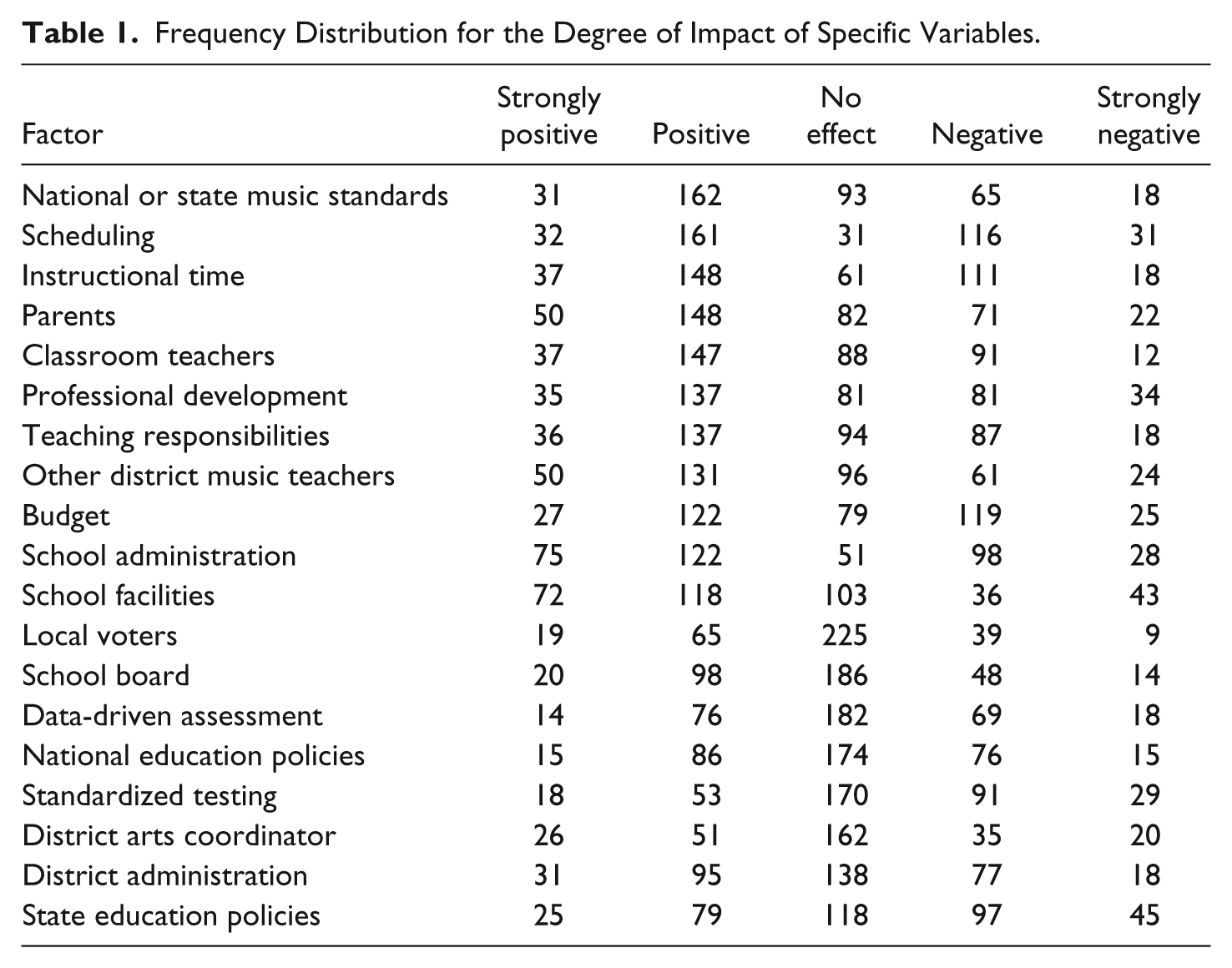
Almost half of the teachers indicated that national education policies had no impact (48%), and the remaining teachers were divided (24% negative; 28% positive). Similar results were found for standardized tests and data-driven assessment. A greater number of teachers felt an impact from state than from national education policy. State education policies were considered to have a negative impact by 39% of teachers, while 32% felt no impact from state policies. National or state music standards were perceived to have a positive impact by just over half of general music teachers (52%), with the remaining teachers divided between no impact (25%) and negative impact (23%).
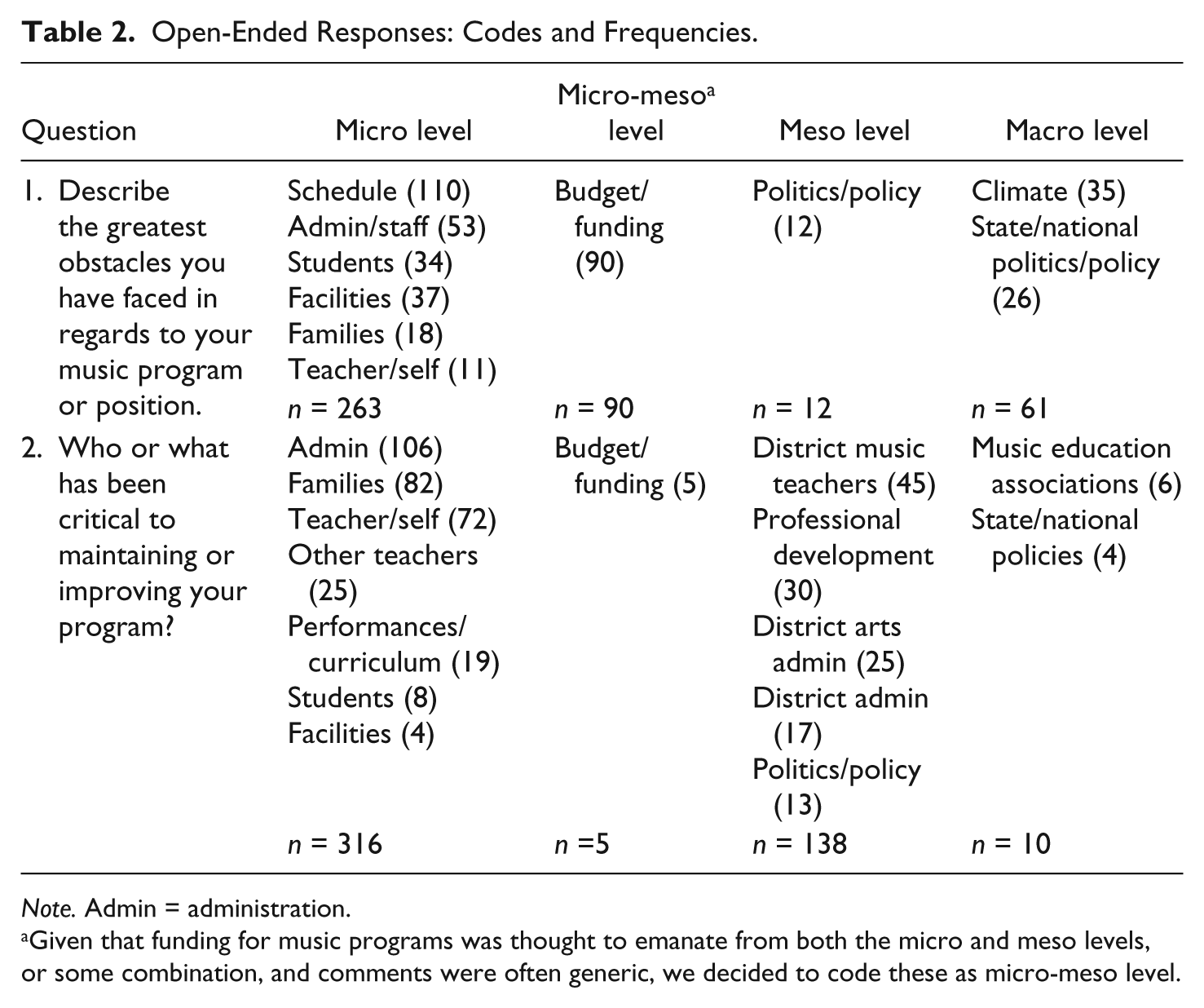
Open-ended responses were meant to reveal the nature of these factors (both negative and positive; see Table 2). The great majority of these responses, to factors negatively (n = 263) and positively (n = 316) impacting music programs and positions, were at the micro level. To determine the most prominent negative factors, teachers were asked to describe the greatest obstacles they faced in regard to their programs or positions. Scheduling/time was the most often reported factor. Some teachers discussed being given extended duties and less planning time; others described losses in contact time with their students because of students’ being pulled out for remedial work in tested subject areas and reductions in instructional contact time. Support from and attitudes of administrators and other teachers was another theme (e.g., “negative attitude toward music education among my classroom teacher colleagues. Sometimes they treat me like I am just there to provide them with plan time and what I teach has little value”). 7 Increased numbers of students in classes (e.g., “increase in class sizes to accommodate common planning time for classroom teachers”) and teaching space (e.g., “severe classroom environmental issue, which impacted my health has impacted my teaching”) were other concerns of teachers.
Open-Ended Responses: Codes and Frequencies.
Note. Admin = administration.
Given that funding for music programs was thought to emanate from both the micro and meso levels, or some combination, and comments were often generic, we decided to code these as micro-meso level.
To determine the most positive factors, teachers were also asked who or what was critical to maintaining or improving their programs/positions. The school administrator was the most prevalent factor (n = 106). Themes related to school administrators’ support of music programs included funding, facilities, scheduling, growth and innovation (e.g., “[the principal] willing to allow change to occur has allowed our music programs to grow”), professional autonomy (e.g., “I have had the good fortune to build this program as I see fit”), and valuing music programs and music teachers. Parents, parent groups, and community members (n = 82) also impacted music programs in terms of fund-raising, program maintenance (e.g., “positive and encouraging words keep the district from cutting us further”), volunteerism, and advocacy. Teachers cited themselves (n = 72) as critical in maintaining or improving their programs. Music teachers impacted their programs in terms of program development and quality, funding (e.g., “all equipment purchased in the last five years is the result of my effort in applying for grants”), community relations (e.g., “music in my school has become appreciated largely due to my communication with stakeholders”), pursuing professional development, and personal commitment and effort (e.g., “enthusiastic and energetic teaching is all I can count on”) (see Table 2).
Budgets were reported to come from both micro and meso levels (or some combination); comments were often generic, so a micro-meso category was created during coding of the open-ended responses. Budgetary issues were seen as a prominent obstacle for many (n = 90); it was a positive factor for few (n = 5). In contrast, more positive factors (n = 138) than negative factors (n = 12) were described at the meso level. Negative factors included those related to district policies/attitudes (e.g., “lack of district support for program”) and local politics (e.g., “levy failed”). Positive factors included other music teachers in the district, professional development, district arts administrators, district administrators, local media, and teacher unions. Other teachers were thought to provide opportunities for collaboration, curriculum development (e.g. “the music teachers in my district meet and discuss methods, resources, and assessments regularly”), mentorship, and collective advocacy. Professional development (n = 30) impacted programs by improving student achievement, providing sources of innovation and instructional improvement, and providing motivation. District arts administrators (n = 25) impacted music programs by maintaining and improving programs (in terms of scheduling, funding, curriculum development), advocacy (e.g., communication with stakeholders), and providing professional development in music.
The macro level was thought to be least critical in impacting programs. Reponses at the macro level (n = 10) indicated music educators associations and state/national policies as impactful. Macro-level themes included the national climate/attitude (e.g., “due to negative representation of all teachers in cartoon and TV shows, this creates an us vs. them mentality”) and politics/policies (e.g., “state . . . considering making music [education] a ‘best practice’ instead of required. Does not want to include music [education] in state assessments or requirements”).
Teacher Actions
Teachers were asked to indicate whether or not they had taken each action to impact their programs or positions. If they had taken the action, teachers were asked to rate their perception of the effectiveness of this action on a 5-point scale, from no impact = 1 to high impact = 5 (see Table 3). Of the possible 17 actions listed in the survey, including a write-in option, general music teachers in the sample took an average of 12 actions, or 70% of the total possible actions. The efforts made by over 90% of general music teachers in the sample included using performances or other music events to showcase student learning in music, communicating with school administrators, coordinating/collaborating with teachers in their school, participating in school meetings, and sharing information about the music program with the school community. Of these five efforts, all but participating in school meetings, which received a mean rating of 2.7, were rated among the most effective in positively impacting music programs or positions (3.8 or higher). In general, the actions most often taken by teachers were those deemed most effective in positively impacting their programs. An exception was the action “coordinating/collaborating with music teachers in your district,” which was rated highly effective by the music teachers who took this action (M = 3.8), yet it was taken by slightly fewer teachers than the top five actions.
Actions Taken by Teachers and Impact Rating.
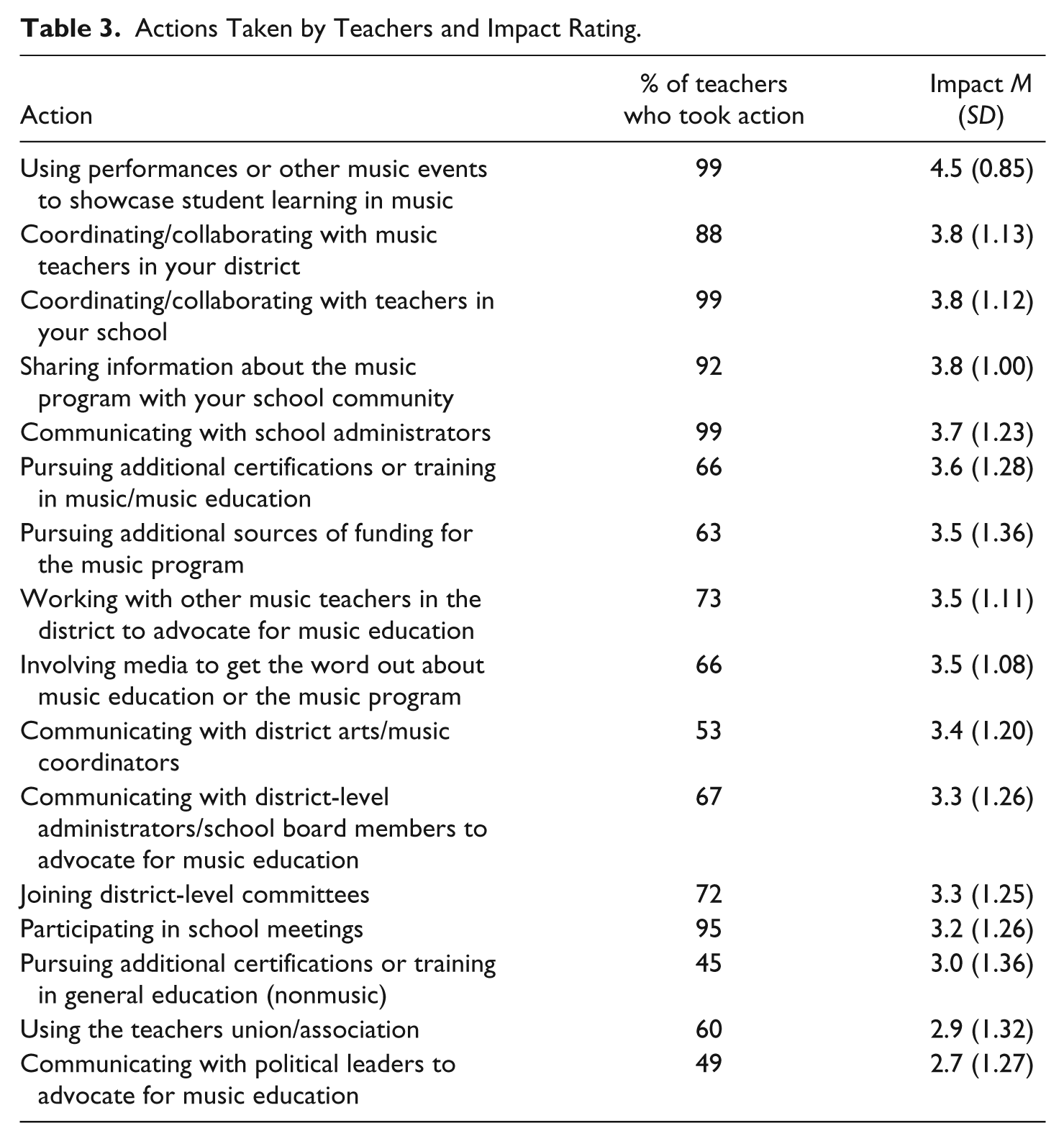
Four efforts were rated substantially effective, ranging from 3.5 to 3.6, yet were taken by fewer music teachers. These include pursuing additional training/certification in music or music education (66%), working with other music teachers in the district to advocate for music education (73%), pursuing additional sources of funding for the music program (63%), and involving media to get the word out about music education (66%).
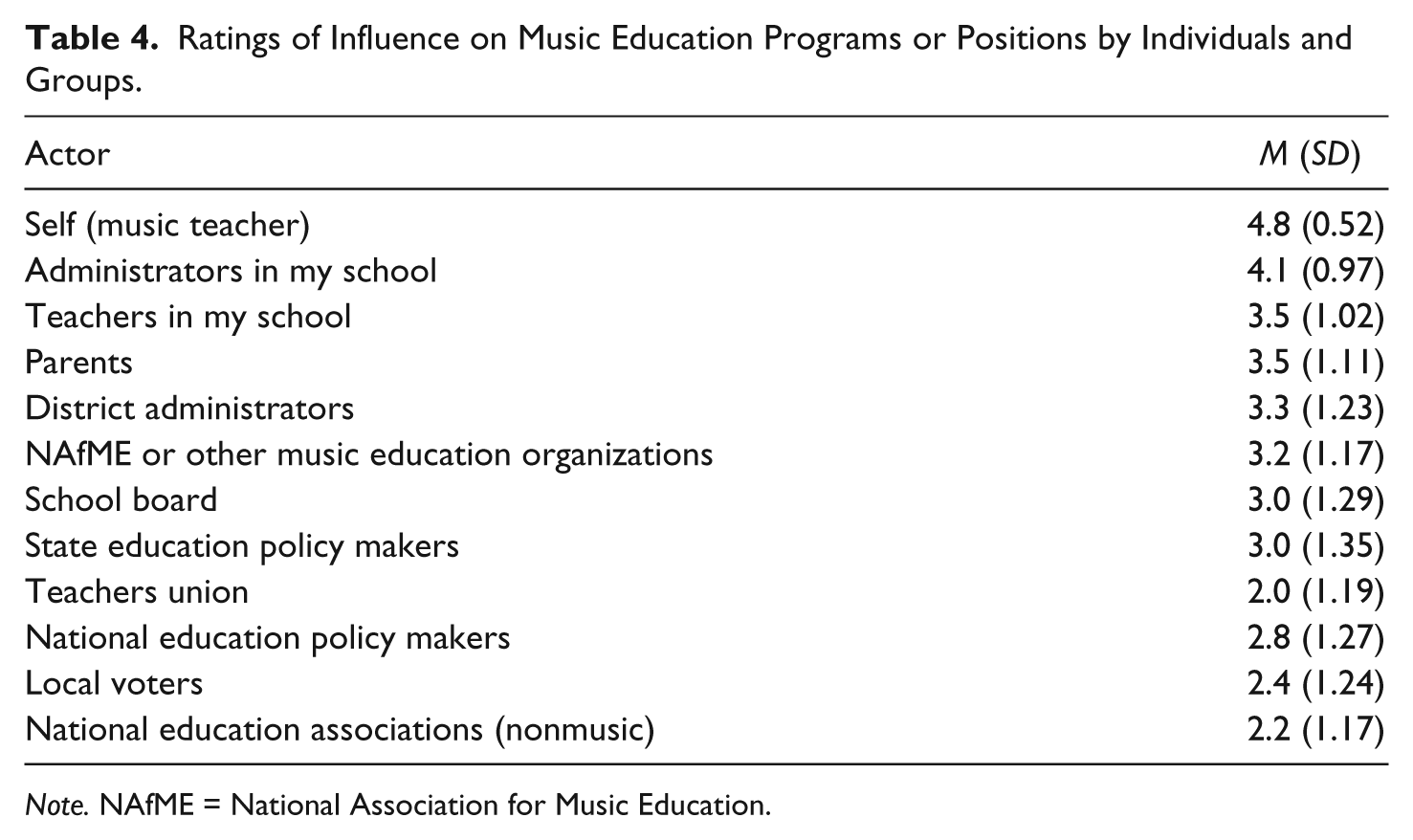
Finally, teachers were asked to rank the influence of individuals and groups on their music programs and teaching positions on a scale from 1 to 5, where 1 = no impact and 5 = high impact (see Table 4). General music teachers overwhelmingly rated themselves as most influential, followed by school administrators, teachers in their school, and parents. The influence of music education organizations on these teachers’ professional lives was evident, although the sample was selected from active members of a music education organization, which may have skewed the results for this particular factor.
Ratings of Influence on Music Education Programs or Positions by Individuals and Groups.
Note. NAfME = National Association for Music Education.
Discussion
Micro Level: The School Community
General music teachers sampled indicated their programs and positions were impacted most greatly by factors at the micro level. Micro-level actors, people with whom music teachers have personal, regular contact, included school administration, parents, and other teachers within the school (e.g., “the support from my principal, fellow teachers, parents, and parent teacher council has been a great motivator for me to do better”). A common concern among some teachers was that music was perceived to be a frill by people at this level, which is consistent with prior findings (Madsen & Hancock, 2002). Not surprisingly, micro-level factors, such as scheduling, school facilities, and instructional time, were also deemed as having substantial impact and were closely intertwined with qualitative comments about school administrators and other teachers.
Teachers overwhelmingly considered themselves the most influential individual or group positively affecting the music program, which also aligns with principals’ perceptions (Abril & Gault, 2006, 2008). Some teachers indicated they feel solely responsible for their music program. One teacher wrote, “I feel ultimately that I am responsible for the success (or demise) of my program.” This belief was evidenced by the number of actions teachers reported taking during one school year; it was also reaffirmed in their open-ended responses. As might be expected, teachers’ actions on behalf of their programs occurred most frequently at the school level and most frequently included performances/showcases of student learning, communication with the school community, collaborations with teachers and administration in the school, and participation in school meetings. In contrast to a prior study that showed teachers’ perceived instructional skills to be one of the greatest challenges facing their programs (Allen, 2011), very few teachers (three open-ended comments) considered their teaching skills to be an obstacle. This might be explained by the fact that the sample was skewed toward highly experienced and educated teachers who were already confident in their teaching skills.
Not all teacher actions at the micro level were perceived to result in positively impacting programs and positions. For example, almost all general music teachers participated in school meetings, but this action was not rated highly effective. Prior studies have found that music teachers are less likely than classroom teachers to participate in site-based management or school improvement teams (NCES, 2002). Only 18% of music teachers indicated participation at least once a month in these types of meetings versus 40% of classroom teachers and 23% of visual arts teachers (NCES, 2002). Participating in school meetings in general, often a requirement of all teachers in a school, may not be the most effective means of positively impacting music programs or teaching positions because they are more informational and may provide teachers little to no space for discussions or decision making in regard to school policies. General music teachers may feel excluded or deliberately may exclude themselves from dealing with the implementation of policies at their schools (Kos, 2007). However, participating in particular kinds of meetings, such as site leadership teams or school transformation committees, may have resulted in higher effectiveness ratings in terms of positively impacting the music program or position. For example, some teachers wrote of the impact of the school leadership team (e.g., “[the] school improvement/leadership team, they write my schedule [which] has been good and really bad”), while another wrote of the impact of participating in these processes (e.g., “[most impactful has been] the full elementary team-collaboration-curriculum building. Both of my principals have been very supportive, and at one school the administration has made me a team lead in many areas and includes me and the program in all decisions”).
Meso to Macro Level: The District and Beyond
Findings from this study suggest that interconnection between the micro level of the school and the meso level of the district via coordinating with other local music teachers provided a way to positively impact music teachers’ programs and positions. General music teachers indicated two factors originating beyond their face-to-face interactions in school buildings as impacting substantially and positively their professional lives. These two factors were the network of other music teachers in their district and the state and/or national music standards.
Reflecting upon the importance of other music teachers in the music program, one teacher wrote, “I think our music staff for our district has had the biggest impact on our music programs. We work together and work hard to give our students the best opportunities/instruction we can with limited resources, budgets, and time.” The tenor of this comment was echoed by other teachers in their open-ended responses and in the high rating of effectiveness given to efforts to coordinate with other music teachers in the district. Describing the activities in these districtwide interactions in open-ended responses, general music teachers mentioned receiving curricular and instructional support from interacting with their music colleagues within the district. A few teachers reported that these meetings provided subject-relevant professional development that was lacking at the school level, provided opportunities for curricular alignment, and supported districtwide communication and coordination in districts both with and without arts/music supervisors.
In addition to these benefits, teachers mentioned the importance of district-level coordination when music programs came under risk of reductions in staffing or instructional time. One teacher wrote, “All the music teachers in my district have banded together to save the music program . . . and our superintendent saved the music program last year, instead of losing 10, we lost only 2 [teaching positions].” Creating opportunities for face-to-face interactions with colleagues at the district level emerged as an effective course of action for curriculum and instruction benefits but also for program maintenance and advocacy. District-level coordination creates another layer of organization for music teachers, one in which they may create community based on shared values and interests and also pursue goals collectively. The burden on individual music teachers to maintain their programs in the face of reductions may be somewhat alleviated through coordinated action. One teacher called for the forming of strong teams of “colleagues (music and classroom teachers), parents, administrators, and students. . . . We must educate others so they also see and know the value of what music education can do for students that other subjects/curricular areas just can’t provide.” Music or arts coordinators were considered to be important in providing important information, facilitating collaboration, and ensuring visibility of music programs.
Another source of professional organization comes in the form of music education organizations, in one of which all music teachers in the sample were active members. A slight majority of general music teachers indicated state and national music standards positively impacted their programs and/or teaching positions. The guidance these standards provide may assist teachers who find the great flexibility in general music curriculum and instruction to be overwhelming (Conway & Garlock, 2002). The national and/or state standards for music are directed toward the music classroom and therefore may provide the curricular guidance teachers seek. Music teachers may perceive state and/or national music standards to be closely connected with their work at the classroom level in terms of curriculum and instruction. The positive impact of standards on teachers’ programs suggests that they perceive the impact of policies directed at their subject more acutely than policies that are more generic or nonspecific to the arts.
There was no clear consensus among teachers in the sample as to the kind of impact standardized testing, data-driven assessment, and national or state education policies have had on their music programs and positions. However, open-ended statements from many teachers described how the priorities in schools have shifted toward tested subjects, adversely impacting the music program in the form of doubled classes (to ensure classroom teachers can have common planning), extended duties to teach nonmusic classes (to tutor or supply extra assistance to students in reading or math), and a general attitude that the arts are not as important because they are not being tested. While extant research has suggested that testing and data-driven assessment has impacted arts programs negatively, the majority of teachers perceived them to wield no impact.
Implications
Elementary school music teachers report acting mostly and most effectively within systems at the micro level, with those people and structures with which they have or easily may foster face-to-face interaction. Factors at the meso level—the level of community organizations, associations, and district leadership—also have been shown to hold potential for positive, impactful action on the part of music teachers. Specifically, working in coordination with other music teachers may support music teachers who feel isolated, disconnected, or lacking power in school-level decisions. Music teacher education programs might serve as leaders in offering local music teachers a meso-level space in which to collaborate, discuss important issues, and support one another. Other meso-level actions, such as advocating for music education with district colleagues, pursuing additional sources of funding, and involving media to communicate about the music program, were also rated as effective. That these actions were considered effective, but taken by fewer music teachers, suggests some music teachers are able to access local resources for support better than others. Acting locally in the current school organization climate of site-based management in fact may be the most effective place to act. Even national and state policies take shape at the local level based on local decisions and priorities—not all schools have made reductions in staffing, instructional time, and funding for music education in response to NCLB and/or in the face of budget constraints (Elpus, 2014; Major, 2013).
Understanding the music program’s value and relevance within its school community is within the purview of the music teacher. Face-to-face interactions are possible at the micro level and with organizations and associations at the meso level in order to discover how the program can best meet the needs of its students, families, and community. In a case study of two elementary schools, it was the music teacher whose program was valued and understood for its unique contribution to the particular students at the school that proved crucial in its maintenance in the face of budgetary pressure (Kos, 2007). Kos (2007) suggested music educators advocate “based on local needs and characteristics” instead of broad generalizations about music (p. 211). Teacher educators might consider ways to help students navigate the inevitable factors that will impact arts programs, learn to understand and respond to the school community, and be proactive in connecting with other teachers, administrators, and policymakers across levels.
How to best support and maintain quality music education programs and positions in times of financial hardship and low policy priority are ongoing questions in the field. The findings of this study suggest that music teachers have many resources with which they can act to impact their programs positively. Some of the most important people and groups included the music teachers themselves, music colleagues both within the school and across the district, school administrators, arts coordinators, and professional organizations. One music teacher used the metaphor of a chain to highlight the variety of agents who interact to influence music programs and positions. These links in the chain across socioecological levels offer resources that may assist music teachers when interacting with decisions related to policies from the macro level of the nation and state as they are implemented locally. Not all actions taken by teachers were thought to be equally effective. Knowing which steps have been shown to be the most effective in positively impacting music programs and teaching positions is necessary for the careful use of teacher resources in terms of time, energy, and expertise. However, these steps cannot be prescribed, for they will take shape based on the strengths and needs of the individuals and groups in diverse contexts.
We considered impacting factors and teacher actions in the broadest of strokes. Qualitative research could shed light on how these efforts work in specific contexts to support music education programs. Authors of further research might explore specific cases of success in districtwide and/or schoolwide collaborations for the maintenance and/or improvement of music education in a wide range of contexts. Others might examine more closely the nature of meso-level engagements among arts teachers and arts coordinators/administrators.
The work of arts teachers clearly is impacted by myriad forces within and across a wide range of socioecological levels. In environments and times when the arts are forced to take a backseat to other domains of knowledge, and when arts teachers feel ignored by or removed from educational initiatives and policies, arts teachers can continue to act with agency to maintain or improve their programs and the general state of arts education. There are many opportunities for action and potential assets within the direct purview of teachers as well as those who stretch them beyond their typical patterns of action. We suggest that it might be important for teachers to make connections between socioecological levels when acting to impact arts programs positively, from curriculum to funding to program advocacy.
Footnotes
Declaration of Conflicting Interests
The authors declared no potential conflicts of interest with respect to the research, authorship, and/or publication of this article.
Funding
The authors received no financial support for the research, authorship, and/or publication of this article.