




Abstract
An adapted alternating treatments design was used to compare the expressive use of thematic vocabulary by three preschool children with developmental delays during Dialogic Reading, a shared book reading intervention, and Activity-Based Intervention, a naturalistic play-based teaching method. The design was replicated across two early childhood themes. For each theme, five vocabulary words were randomly assigned to Dialogic Reading, Activity-Based Intervention, or a control condition. Intervention was delivered 2 times per day for 5 days across 2 weeks. Results suggest both methods increased children’s use of target vocabulary and were similarly effective for increasing expressive use of thematic vocabulary by preschoolers with disabilities.
Reading proficiency is critical as it is the foundation for academic success (Lonigan, Purpura, Wilson, Walker, & Clancy-Menchetti, 2013); however, a significant number of students are not gaining the necessary skills to become successful readers (Lonigan et al., 2013). The National Assessment of Educational Progress indicates 33% of fourth-grade students and 26% of 12th-grade students scored below the basic level in reading (National Center for Education Statistics, 2010, 2011). Students with disabilities and those with low-income backgrounds are especially susceptible to reading disparities (Lonigan et al., 2013; Marulis & Neuman, 2010).
Strong correlations exist between early and later reading skills (Duncan et al., 2007), and efforts to improve reading achievement must begin early (Lonigan et al., 2013). The National Early Literacy Panel (NELP) identified print knowledge, phonological processing, phonological awareness, rapid automatized naming, and oral language as predictors of later literacy outcomes (Lonigan, Schatschneider, & Westberg, 2008). Vocabulary, a component of oral language, is an important predictor of reading comprehension (Carlson, Jenkins, Li, & Brownell, 2013). Children enter school with significant vocabulary differences (Pollard-Durodola et al., 2011), and these differences are more apparent for children living in poverty (Hart & Risley, 2003; Lonigan et al., 2013). Therefore, children from lower socioeconomic conditions entering preschool are at greater risk of significant gaps in reading and later academic achievement (Burchinal et al., 2011; Diamond & Baroody, 2013). As time passes, it becomes increasingly difficult to close the achievement gap between children with reading challenges and proficient readers (Ortiz et al., 2012).
Identifying interventions to enhance early vocabulary acquisition is especially critical for young children with disabilities who are known to have significant delays in vocabulary compared with their typically developing peers (Blackorby et al., 2010). Thus, young children with disabilities who live in impoverished conditions present both developmental and environmental challenges, which put them at increased risk of school failure.
In early childhood settings, storybook reading is the most common context for teaching vocabulary (Biemiller & Boote, 2006; Marulis & Neuman, 2010); however, explicit vocabulary instruction is rarely observed in preschool settings (Biemiller & Boote, 2006; Neuman, 2011). Although not frequently used, routines such as play are central teaching contexts in early childhood settings, and thus opportunities for vocabulary instruction (National Association for the Education of Young Children, 2009). Storybook reading and play vocabulary intervention packages have been examined by researchers (e.g., Roskos & Burstein, 2011; Stanton-Chapman, Kaiser, Vijay, & Chapman, 2008; Wasik, Bond, & Hindman, 2006). These studies demonstrate promising outcomes; however, it is difficult to determine whether storybook reading, play, or storybook reading in conjunction with play is most influential in helping children acquire new vocabulary. Therefore, researchers suggest examining both storybook reading and play to identify how each uniquely influences vocabulary learning (Justice, Meier, & Walpole, 2005; Stanton-Chapman et al., 2008). Only one study, however, has compared vocabulary acquisition within storybook reading and play (Rahn, 2015).
Dialogic Reading (DR)
One storybook reading intervention with positive effects on young children’s expressive vocabulary is Dialogic Reading (DR; Lonigan et al., 2013; Mol, Bus, de Jong, & Smeets, 2008; NELP, 2008; U.S. Department of Education, Institute of Education Sciences, National Center for Education Evaluation and Regional Assistance, What Works Clearinghouse, 2007). In DR, the reader focuses on pictures within the book and asks completion, recall, open-ended, wh-, and distancing questions (Flynn, 2011). The reader moves through a sequence of three levels. In Level 1, the reader asks wh- questions to teach target vocabulary (Flynn, 2011). In Levels 2 and 3, the reader asks open-ended questions and distancing questions to relate the events in the pictures to children’s personal experiences (Flynn, 2011).
Activity-Based Intervention (ABI)
ABI is a naturalistic, play-based intervention with evidence of effectiveness in teaching a range of skills including vocabulary. In ABI, the teacher provides embedded learning opportunities (ELOs) during routines, teacher-led activities, and child-initiated activities (Johnson, Rahn, & Bricker, 2015; Macy, 2007). ELOs are short, child-focused instructional events implemented across typical classroom routines (Horn & Banerjee, 2009). Teachers use logically occurring antecedents and consequences to develop functional and generalizable skills (Johnson et al., 2015). ABI has been found to be effective in enhancing a variety of skills (Grisham-Brown, Schuster, Hemmeter, & Collins, 2000; Kurt & Tekin-Iftar, 2008; VanDerHeyden, Snyder, Smith, Sevin, & Longwell, 2005). In one study specifically examining vocabulary acquisition, Losardo and Bricker (1994) compared ABI with a direct instruction approach and found that direct instruction was more effective in teaching object labeling; however, generalization was stronger in the ABI approach. Another study (Rahn, 2013) compared vocabulary acquisition during DR and ABI for three children at risk due to poverty. Results suggested both interventions were similarly effective.
ABI and DR, however, have not been compared for children with multiple risk factors (e.g., poverty and identified disabilities). The purpose of this study, therefore, was to determine whether ABI or DR is more effective in enhancing vocabulary of children with multiple risk factors. Research questions included the following:
Method
Participants
Participants were three children who attended pre-kindergarten in two public schools in a small Mid-Atlantic city. All children received special education services and were eligible for free or reduced lunch. Jill was a 3-year-old Caucasian female with a communication delay. Jill received standard scores of 88 on the Peabody Picture Vocabulary Test, 4th Edition (PPVT-4; Dunn & Dunn, 2007) and 101 on the Expressive Vocabulary Test (EVT-2; Williams, 2007). Koby was a 4-year-old African American male with a communication delay and attention deficit hyperactivity disorder. Koby did not receive a score on the PPVT-4 because he did not respond correctly to sample items. He received a standard score of 81 on the EVT-2. Chelsea was a 4-year-old Caucasian female with cleft palette. She received standard scores of 93 on the PPVT-4 and 90 on the EVT-2.
Settings and Materials
All sessions were completed in a hallway or in a teacher’s lounge by a graduate assistant (GA). During DR sessions, the child sat on the floor next to the GA or on the GA’s lap; ABI sessions took place on the floor with the toys between the child and GA. Materials included books and toys for three themes (doctor’s office, grocery store, and firehouse). Books included Going to the Doctor (Civardi, 2005), Edwin Speaks Up (Stevens, 2011), and A Trip to the Firehouse (Lewison, 1998). Books were chosen based on recommendations for selecting books for DR from an online professional development module (Buysse, Winton, Rous, Epstein, & Cavanaugh, 2011). For example, based on the recommendations, we chose books that were appropriate for young children in length and content, provided opportunities for asking a variety of questions, and offered opportunities for teaching vocabulary words that may not be learned through exposure alone. In addition, books were chosen to align with pretend play themes so that vocabulary targeted in the study could be randomly assigned and taught in either intervention condition. ABI sessions included typical developmentally appropriate toys that would be found in the pretend play area of a preschool classroom. These included a doctor’s kit, a stroller, and a baby doll for doctor’s office; a shopping cart, cash register, and pretend food for grocery store; and a firefighter jacket, helmet, and flashlight for firehouse. A timer was used to keep sessions at about 5 min. A video camera was used to record all sessions. An iPad was used as a reward after all sessions.
Measures
Prior to intervention, we administered the PPVT-4 (Dunn & Dunn, 2007) and EVT-2 (Williams, 2007) to measure participants’ receptive and expressive vocabulary. Before each theme, we administered a researcher-developed pretest to assess children’s ability to name potential vocabulary. The pretest consisted of asking the child to label pictures and objects for 19 to 23 vocabulary words for each theme. For the pretest, the research team selected likely unknown vocabulary words that were pictured in the book and available as a toy or object in the play materials. For example, in the DR condition, the fire station book included a photo of a Dalmatian, and we were able to include a stuffed Dalmatian toy in our materials for the ABI condition. The number of words assessed in this phase of the study was based on the quality and quantity of vocabulary available within each theme as opposed to congruency across themes. The primary dependent measure was the number of times participants used targeted thematic vocabulary per minute, which was coded from video following each session.
Experimental Design
We used a single-case adapted alternating treatments design (Wolery, Gast, & Hammond, 2010) to examine the effect of DR and ABI on children’s rate of expressive use of target vocabulary. We randomly assigned vocabulary items to conditions (DR, ABI, and control) to ensure the target behaviors taught in both conditions were of equal difficulty.
Procedure
For each child, we randomly assigned the order of the three themes; however, only two themes were completed due to time constraints. The sequence below was repeated for each theme.
Pretesting
The first author administered the PPVT-4 and EVT-2 individually with each child on two separate days. The GA then administered the pretest with each child in two randomly ordered sessions on two separate days, assessing the child’s ability to name toys on one day and pictures on the other. The GA held up each toy or pointed to each picture in random order, asked a question (e.g., “What is this?”), and recorded the child’s response as correct (child named vocabulary item) or incorrect (child gave no response or an incorrect response). We randomly selected 15 unknown vocabulary items (i.e., child answered incorrectly for both the toy and book) and randomly assigned five words to each condition (see Table 1).
Random Assignment of Vocabulary to Conditions for Each Participant.
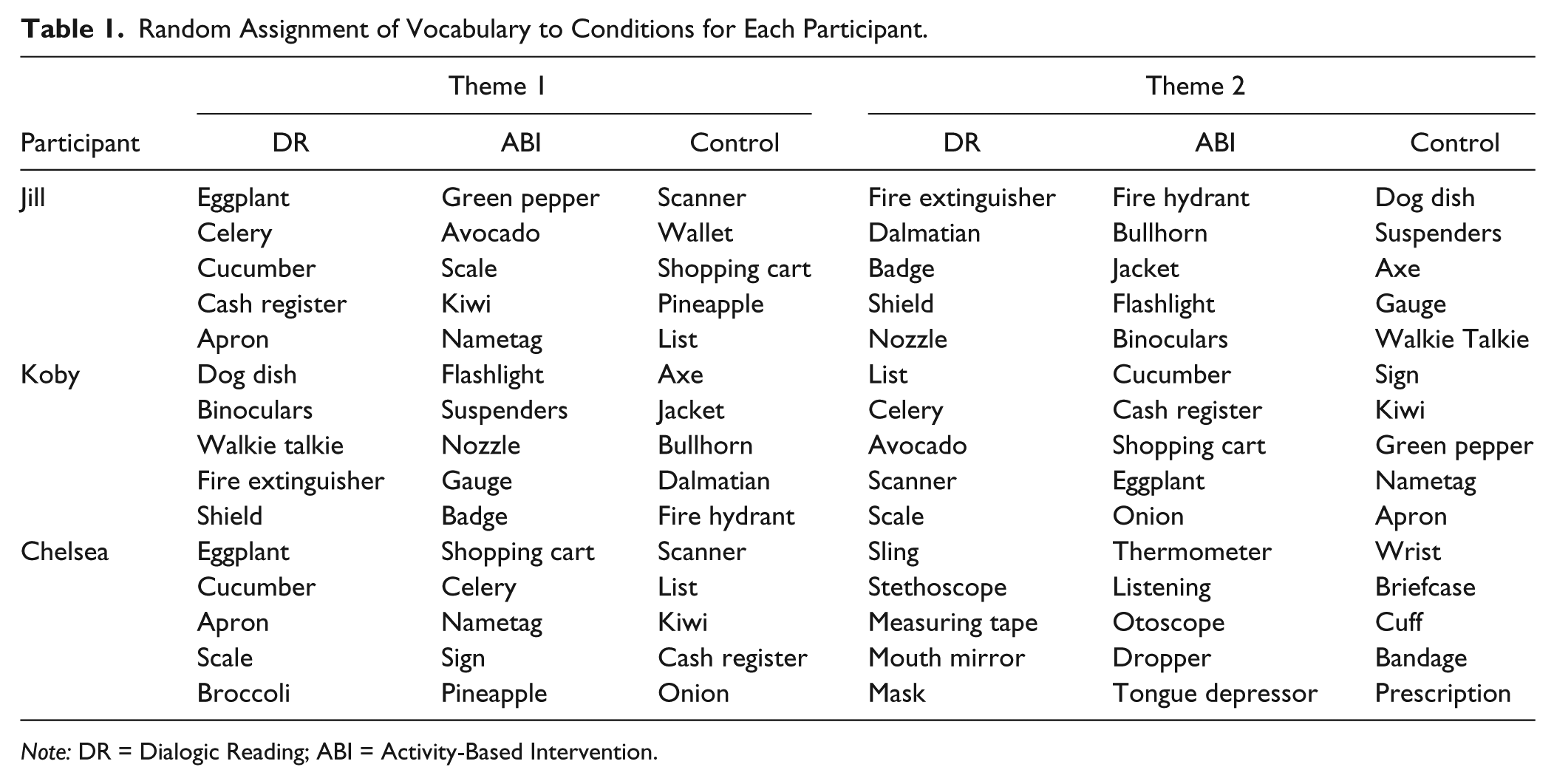
Note: DR = Dialogic Reading; ABI = Activity-Based Intervention.
Baseline
During baseline sessions, the GA asked the child to label vocabulary items assigned to all conditions in random order. To eliminate order effects, we randomly alternated whether sessions began with DR or ABI vocabulary; control vocabulary items were probed in random sessions throughout the study, interspersed with either ABI or DR vocabulary. When starting with the book, the GA pointed to each picture and asked a question (e.g., “What is this?”) for all vocabulary in the order they appeared in the book. The GA then invited the child to play with the toys, followed the child’s lead, and administered a question (e.g., “What is this?”) when the child showed interest in each toy. If after several minutes all vocabulary had not been assessed, the GA picked up the toy and delivered the question. The child was given no feedback for correct or incorrect responses.
DR intervention
During DR sessions, the GA introduced the title and author of the book and asked a question (e.g., “What do you think this book is going to be about?”) to stimulate interest in the book. The GA read the entire book in the first session and a shortened version in subsequent sessions. During book reading, she administered a total of five questions, one per vocabulary item assigned to the DR condition (e.g., “What is this?” or “What are these?”). The questions were specific to those vocabulary randomized to the DR condition for that child. All questions were consistent across children so that if two children were assigned the same vocabulary item, they received the same questions and follow-up responses. If the child responded correctly, the GA expanded the response (e.g., “Yes, these are tweezers”). If the child responded incorrectly, the GA modeled the word and asked the child to repeat it (e.g., “These are tweezers, say tweezers”). Then, the GA provided information about the meaning or function of the word (e.g., “When you pinch tweezers, you grab things that might be stuck. These are the doctor’s tweezers”). During each session, the child heard or said the word approximately 5 times.
ABI intervention
During ABI sessions, when the child showed interest in a target object (e.g., tweezers), the GA administered a question (e.g., “What are these?”). The GA then implemented one of the following ELOs: expansions (when child said the word, the GA said the word in a longer phrase or sentence), model (the GA used the word in a phrase or sentence), definition (the GA provided a child friendly definition of the word), prompted imitation (the GA asked the child to say or repeat the word), directions (the GA asked the child to do something to demonstrate understanding of the word), mand (the GA asked a question that required the child to say the word), and question (the GA asked the child about a time when she encountered the object in real life). ELOs were selected based on the naturalistic language intervention strategies literature (Coogle, Floyd, Hanline, & Kellner-Hiczewski, 2013). The GA delivered about five ELOs per vocabulary item (e.g., “Can you find the tweezers in the doctor’s bag?” [ELO: directions]) and tallied each ELO to maintain consistency across sessions and participants. The GA was directed to choose ELOs that were natural within the context of play and to use an approximately equal number of passive and active strategies within each session. Passive strategies were those in which the child heard the word but was not required to say or do anything in response (i.e., expansions, model, definition). Active strategies were those in which the child was required to say the word or do something with the object (i.e., prompted imitation, mand, directions, question). When a child responded correctly to an ELO, the GA confirmed and expanded on the child’s response (e.g., “That’s right, those are tweezers [ELO: expansion]. Where else have you seen tweezers before [ELO: question]?”). When a child responded incorrectly, the GA modeled the correct response (e.g., “These are tweezers.”) and sometimes asked the child to repeat the word (e.g., “You try it. Tweezers.”). The child was not asked to repeat the word each time to maintain a natural communication exchange during play. These steps were repeated for the remaining four vocabulary items.
Maintenance and generalization
Following intervention, we assessed maintenance and generalization in five sessions, with the order determined by the same randomized schedule established for baseline. Maintenance and generalization sessions differed from intervention sessions in that no direct teaching of vocabulary (e.g., modeling use of the vocabulary, expanding on child’s use of the vocabulary, correcting errors, etc.) took place; the GA only provided the materials and asked the child to name the items 1 time. To examine maintenance, the GA asked the child to name the item using the same materials used during intervention (e.g., if pineapple was a DR vocabulary item, the GA asked the child to name the pineapple in the book). To examine generalization, the GA asked the child to name the item using the materials that were not introduced during intervention (e.g., if pineapple was a DR vocabulary item, generalization was assessed using a toy pineapple). For control vocabulary, we only assessed maintenance, using the same randomized schedule as was used in baseline. The GA gave no indication as to whether the child’s responses were correct or incorrect. After each session, the GA coded all instances of the child’s use of vocabulary using the same scoring criteria as were used in previous sessions.
Fidelity of Implementation
An undergraduate student naive to the study scored researcher-developed fidelity checklists from video for 20% of randomly selected sessions for each participant and each intervention condition. For DR, the checklist included whether or not the GA delivered a question for each vocabulary item, the appropriate response based on whether or not the child answered the question correctly, and the function or meaning of the vocabulary item. For ABI, the checklist included whether or not the GA used ELOs for each word, provided a model when the child was incorrect and an expansion when the child was correct, and followed the child’s lead during play. Fidelity of implementation was 99.3% (range = 94%–100%) for DR and 100% for ABI.
Interobserver Agreement (IOA)
The same undergraduate student coded the same 20% of sessions for IOA. IOA, calculated using the total agreement method (Kennedy, 2005), was 98.3% (range = 93%–100%) in baseline, 96.3% (range = 87%–100%) for DR intervention sessions, 95.9% (range = 80%–100%) for ABI intervention sessions, 94.3% (range = 87%–100%) for maintenance, and 90% (range = 80%–100%) for generalization.
Data Analysis
After each session, the GA coded how many times the child used the target vocabulary correctly in each condition from video. To account for differences in session length, we calculated use of target vocabulary per minute. We examined graphs using visual analysis and calculated the effect size Tau-U (Parker, Vannest, Davis, & Sauber, 2011) using an online calculator (Vannest, Parker, & Gonen, 2011).
Results
Results are reported for each participant and for DR and ABI conditions across all participants. Averages are reported across themes.
Jill
Jill’s data in baseline were zero-celerating in each condition (see Figure 1). Data in the control condition were also zero-celerating throughout intervention and maintenance.
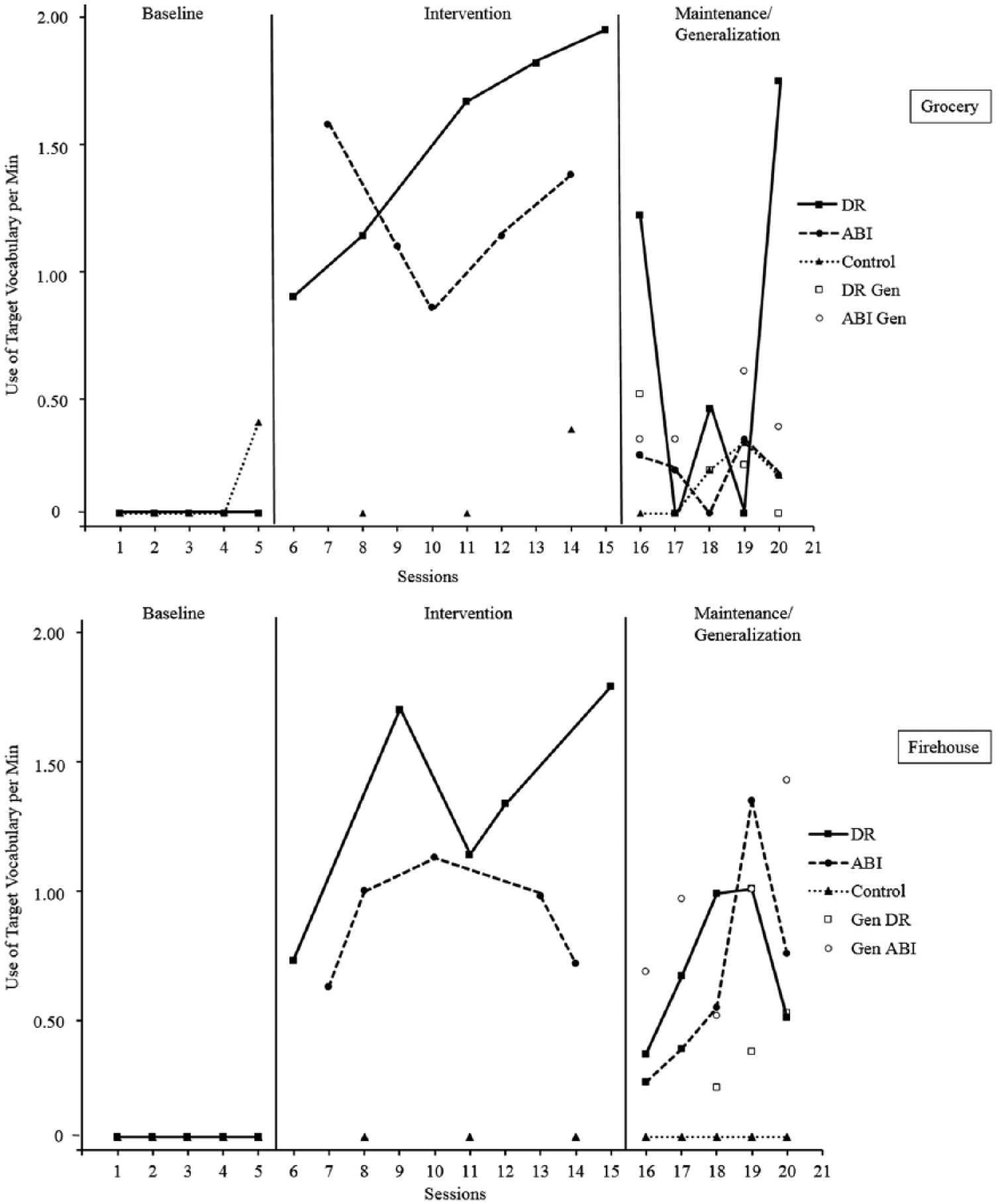
Jill’s use of target vocabulary per min in Themes 1 and 2.
DR
Jill used an average of 1.29 (range = 0.68–1.90) target vocabulary per min in the DR condition. Visual analysis revealed an immediate change in level and an accelerating and therapeutic trend during intervention with more variability in Theme 2. Tau-U between baseline and intervention averaged 1.00, indicating 100% non-overlap. Maintenance data averaged 0.66 target vocabulary per min (range = 0–1.70). Generalization data averaged 0.24 target vocabulary per min (range = 0–0.48).
ABI
Jill used an average of 0.84 (range = 0.58–1.53) target vocabulary per min in the ABI condition. In Theme 1, visual analysis revealed an immediate change in level and an initially decelerating, contra-therapeutic trend followed by an accelerating, therapeutic trend. In contrast, data in Theme 2 demonstrated an immediate change in level and an initially accelerating and therapeutic trend followed by a decelerating contra-therapeutic trend. Tau-U between baseline and intervention was 1.00, indicating 100% non-overlap of data. Maintenance data averaged 0.39 target vocabulary per min (range = 0–1.30). Generalization data averaged 0.63 target vocabulary per min (range = 0.29–1.38).
Koby
Koby’s baseline data were zero-celerating in each condition (see Figure 2). Data in the control condition were also zero-celerating throughout intervention and maintenance.
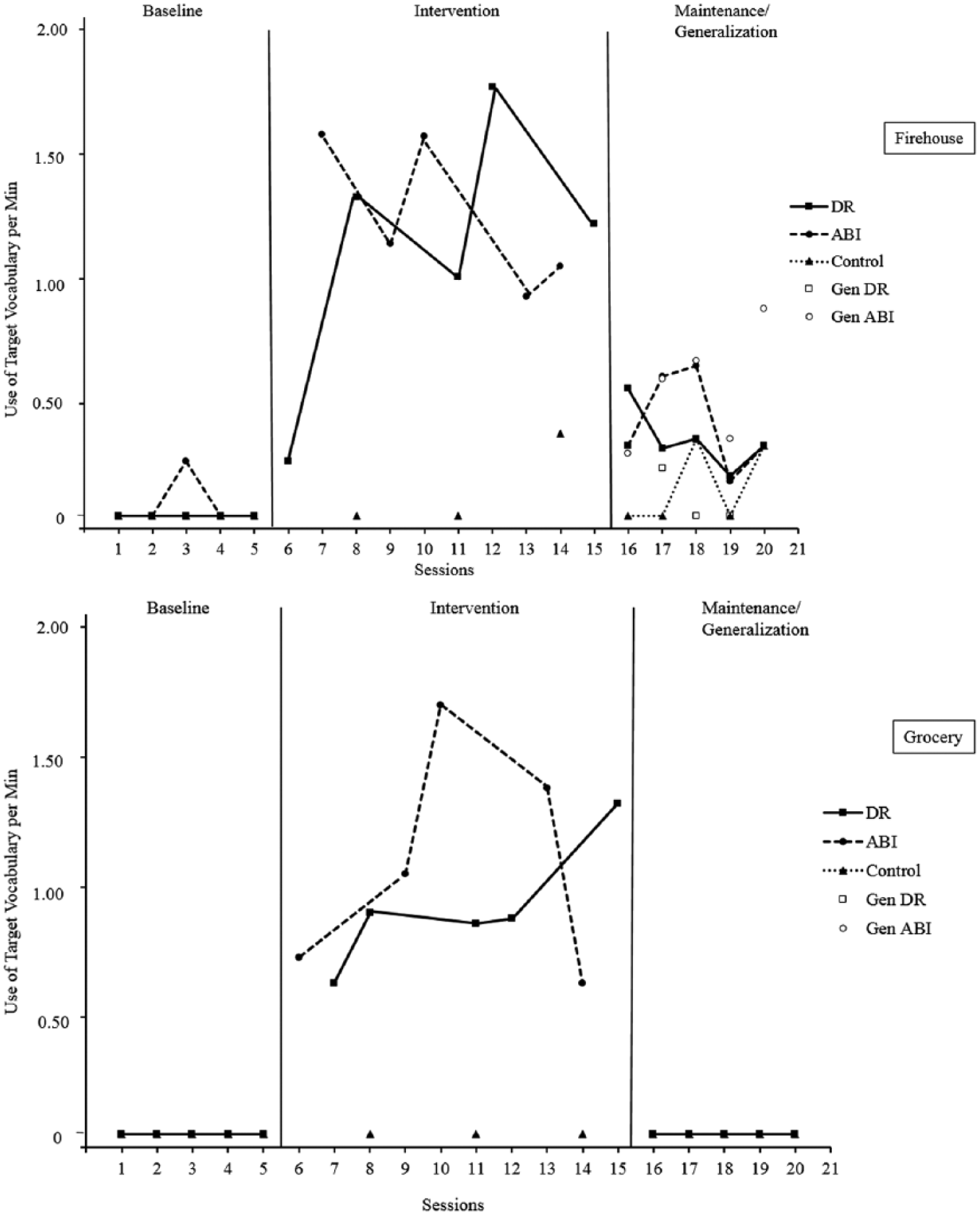
Koby’s use of target vocabulary per min in Themes 1 and 2.
DR
Koby used an average of 0.97 (range = 0.22–1.72) target vocabulary per min in the DR condition. In both themes, visual analysis revealed an immediate change in level and an accelerating therapeutic trend during intervention. Tau-U between baseline and intervention was 1.00, indicating 100% non-overlap of data. Maintenance data averaged 0.15 target vocabulary per min (range = 0–0.51). Generalization data averaged 0.08 target vocabulary per min (range = 0–0.28).
ABI
Koby used an average of 1.13 (range = 0.58–1.65) target vocabulary per min in the ABI condition. In Theme 1, Koby’s data showed an immediate change in level and a decelerating, contra-therapeutic trend. In Theme 2, Koby’s data revealed an immediate change in level and an initially accelerating, therapeutic trend followed by a decelerating contra-therapeutic trend. Tau-U between baseline and intervention was 1.00, indicating 100% non-overlap. Maintenance data averaged 0.19 target vocabulary per min (range = 0–0.60). Generalization data averaged 0.26 target vocabulary per min (range = 0–0.83).
Chelsea
Chelsea’s data in baseline were zero-celerating in each condition (see Figure 3). Data in the control condition were zero-celerating for the duration of the intervention and during maintenance.
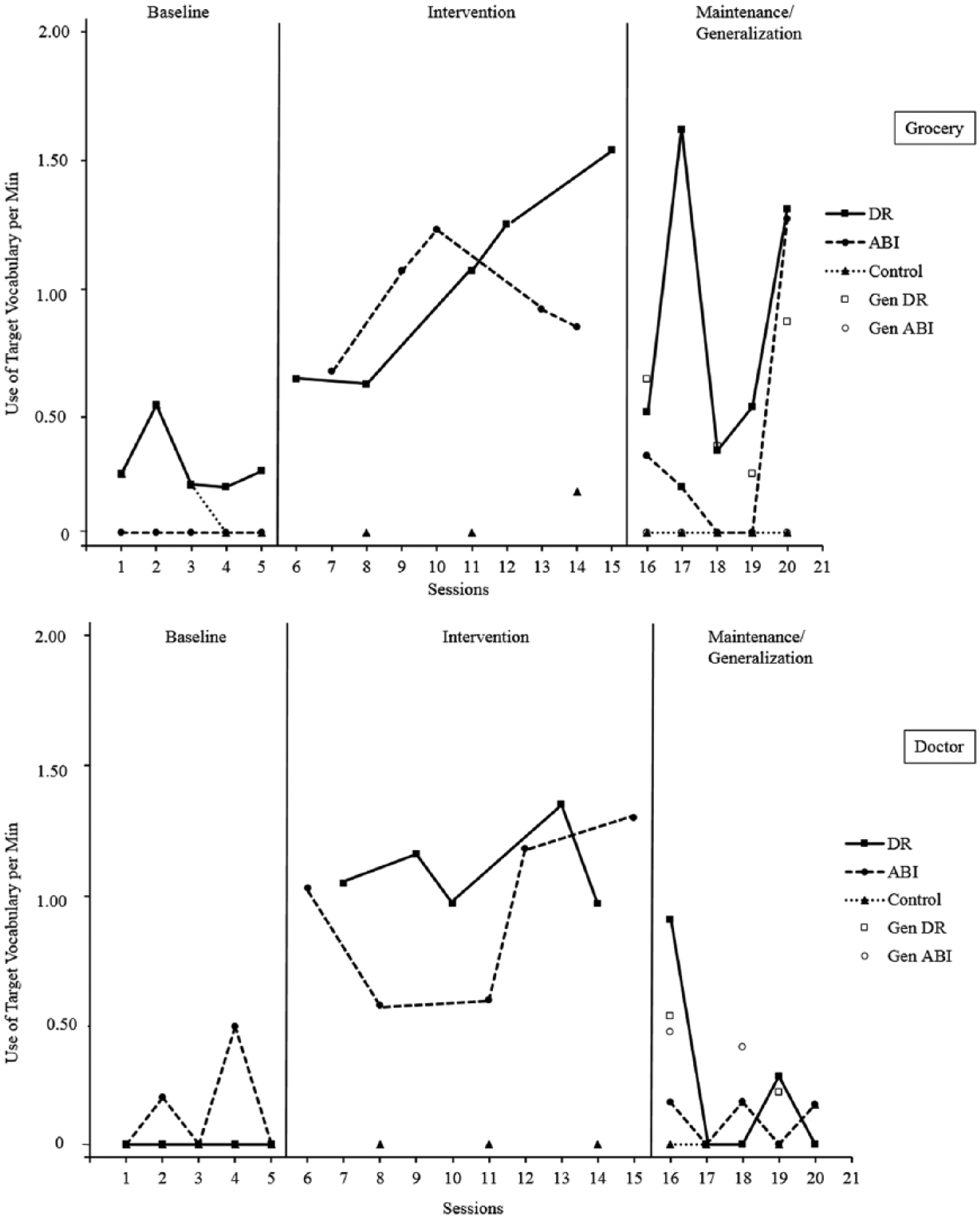
Chelsea’s use of target vocabulary per min in Themes 1 and 2.
DR
Chelsea used an average of 1.01 (range = 0.58–1.49) target vocabulary per min in the DR condition. In Theme 1, visual analysis revealed an immediate change in level and an accelerating and therapeutic trend during intervention. In Theme 2, Chelsea’s data showed a similar immediate change in level and a variable, zero-celerating trend. Tau-U between baseline and intervention averaged 1.00, indicating 100% non-overlap. Maintenance data averaged 0.52 target vocabulary per min (range = 0–1.57). Generalization data averaged 0.29 target vocabulary per min (range = 0–0.82).
ABI
Chelsea used an average of 0.89 (range = 0.53–1.25) target vocabulary per min in the ABI condition. In Theme 1, visual analysis revealed an immediate change in level and an initially accelerating, therapeutic trend followed by a decelerating, contra-therapeutic trend. In contrast, Chelsea’s Theme 2 data demonstrated an immediate change in level and an initially decelerating contra-therapeutic trend followed by an accelerating and therapeutic trend. Tau-U between baseline and intervention was 1.00, indicating a 100% improvement trend or 100% non-overlap of data (Parker et al., 2011). Maintenance data averaged 0.22 target vocabulary per min (range = 0–1.22). Generalization data averaged 0.14 target vocabulary per min (range = 0–0.43).
Results Between DR and ABI Conditions
Visual inspection of all but one graph (Chelsea’s graph from Theme 2) shows accelerating, therapeutic trends in the DR condition. In contrast, ABI condition data show more variability in trend, with initial accelerating or decelerating trends followed by trends in the opposite direction. Maintenance data for Jill and Chelsea were higher on average in DR than in the ABI condition. Generalization data were higher, on average, for Jill and Koby for target vocabulary taught in the ABI condition. For Jill, Tau-U between DR and ABI was −0.62, indicating 62% non-overlap, with the direction of the effect suggesting DR was more effective than ABI. For Koby and Chelsea, tau-U between DR and ABI was 0.14, indicating 14% non-overlap of data, suggesting no effect. Omnibus tau-U across all participants and themes was 0.21 suggesting no difference between the two interventions.
Discussion
Children with multiple risk factors, including disabilities and poverty, are at increased risk of vocabulary deficits and later reading difficulties (Lonigan et al., 2013; Marulis & Neuman, 2010). This study is unique in that it is the first to compare DR and ABI for children with identified disabilities who are also living in poverty. The study provides evidence that both DR and ABI can be used to increase the rate of expressive use of thematic vocabulary for young children with multiple risk factors, namely, poverty and developmental delays.
A Comparison of DR and ABI
Koby and Chelsea showed similar rates of use of target vocabulary and small effect sizes in both intervention conditions suggesting comparable effects for both DR and ABI vocabulary interventions. However, effect sizes suggest that for Jill, DR was more effective than ABI. The results from this study support previous research (Rahn, 2013) suggesting that both methods increased children’s use of vocabulary and that there is some variability in individual children’s responses to each intervention. Our findings are also consistent with the NELP report, which suggested that language-enhancing interventions are similarly effective when delivered in play-based versus non-play-based activities (Fischel & Landry, 2008).
For all three children, although there were decreases in maintenance data as compared with intervention data, results suggest that children maintained their use of vocabulary better in the DR condition and generalized their use of vocabulary learned in the ABI condition more readily than those learned in the DR condition. Losardo and Bricker (1994) found that children generalized vocabulary learned through ABI more readily than through direct instruction. However, our study is the first that we are aware of to compare generalization between vocabulary learned in ABI and DR conditions; more studies will be needed to further examine generalization of vocabulary learned using these two instructional methods.
Measuring Target Vocabulary Use
In addition to measuring generalization, to our knowledge, this study is the first to measure children’s rate of vocabulary use during thematic vocabulary intervention within the contexts of play and storybook reading. Assessing vocabulary acquisition in early childhood is particularly challenging (Christ & Wang, 2011; Hoffman, Teale, & Paciga, 2014). This study adds to the vocabulary assessment literature in two ways. First, we measured children’s responses within the context of the activities themselves (i.e., during play and storybook reading) rather than separately (e.g., by asking the child to name pictures after each intervention session). We did this because it was less intrusive for participants and because researcher-developed vocabulary measures (e.g., measures in which the researcher asks the child to choose the correct picture from a choice of four pictures) can have serious threats to reliability and validity (Hoffman et al., 2014). Second, rather than reporting whether or not children could name the items, we reported children’s use of the vocabulary within the activities rather than in separate, less natural contexts. A disadvantage of measuring vocabulary in this way is that we may have inadvertently introduced more variability into the data due to the natural context within which data were collected. In addition, we may have seen stronger results if we had measured vocabulary in some other way (e.g., by asking children to name objects or pictures). However, because of the potential for threats to reliability and validity described above and concern for participant fatigue, we measured vocabulary through observation within the context of the intervention activities. Despite these considerations, the current study demonstrates that rate of use of vocabulary during classroom activities can be used to measure child outcomes for vocabulary-specific interventions with young children who have disabilities, which may help researchers to measure vocabulary in future studies that include children with disabilities.
Limitations
There were several limitations that should be considered when interpreting the results of this study. First, Koby and Chelsea were both absent for extended periods of time, which may have affected results. Koby missed approximately 4 weeks of school while his family changed living environments and did not have access to transportation. Chelsea missed approximately 6 weeks of school while her family moved homes. She was sent to a temporary school before moving to her new school. During this time, the first author was required to seek Institutional Review Board (IRB) and school approval to continue the research in a new location. Second, sessions took place in areas of the school that presented distractions. Third, Jill was exposed to similar interventions during a pilot study. To our knowledge, the other two participants were not exposed to other DR or ABI interventions prior to this study.
Implications for Research and Practice
Given the variability in the data and the modest effect sizes observed between the two intervention conditions, we would recommend that in future studies, researchers find ways to minimize the limitations we experienced in carrying out this study. For example, we may have obtained stronger results had intervention been provided to all children daily and if distractions in the environment had been kept to a minimum. In addition, researchers should explore with whom and under what conditions each intervention is most effective. Researchers may also want to consider adding a measure of definitional knowledge (Coyne, McCoach, & Kapp, 2007) in future studies. For example, researchers might ask questions (e.g., “Tell me everything you know about the word fire hydrant.”) during the last baseline and last intervention sessions to provide information about what children know about the meaning of targeted vocabulary. Finally, given the decreases seen in children’s maintenance data, it may be that systematic fading of the intervention or additional sessions would be beneficial to maintain intervention gains.
Despite these ways in which results may be strengthened in the future, this study provides initial evidence that children with multiple risk factors can be taught to use novel thematic vocabulary within both play and shared book reading activities. Although results were similar across participants, DR appeared to be more effective than ABI for Jill in particular. Researchers should consider whether there are child-level factors (e.g., child preference) or intervention factors (e.g., choice of book, toys) that may increase the effectiveness of these interventions. In addition, given that both ABI and DR appear similarly effective and results are consistent with previous research (Rahn, 2013), it may be beneficial to compare the effects of teaching thematic vocabulary to children with disabilities using DR alone, ABI alone, and DR and ABI combined. Given that both methods were similarly effective, we recommend that teachers working with young children who have multiple risk factors use both methods. For example, using DR, early childhood educators can teach thematic vocabulary by asking questions to engage children in conversation during large group and one-on-one reading. In addition, educators can introduce the same vocabulary using ABI through ELOs during pretend play, meals, and other classroom activities.
Young children with developmental delays who are living in poverty are at increased risk of delays in emergent literacy skills, including significantly reduced vocabulary acquisition as compared with their peers who have typical development and are not living in poverty (Lonigan et al., 2013; Marulis & Neuman, 2010). These differences in vocabulary acquisition put young children at substantial risk of difficulties in later reading comprehension and academic achievement (Carlson et al., 2013; Duncan et al., 2007). Therefore, as we continue to see stark differences in reading and academic achievement for children with disabilities and children living in poverty, it is critical that we identify and implement those interventions that are most effective in reducing these differences.
Footnotes
Authors’ Note
Naomi L. Rahn is co-author of an Activity-Based Approach to Early Intervention.
Declaration of Conflicting Interests
The author(s) declared no potential conflicts of interest with respect to the research, authorship, and/or publication of this article.
Funding
The author(s) disclosed receipt of the following financial support for the research, authorship, and/or publication of this article: This study was supported by a grant from West Virginia University’s Senate Research Grant program.