




Abstract
We examined the effect of a modified dialogic reading intervention on levels of verbal participation and vocabulary growth in nine preschool children with autism spectrum disorder (ASD) using single-case design methodology. Baseline book reading resulted in consistently low levels of verbal participation followed by an immediate increase in verbal participation during dialogic book reading sessions for all children. Dialogic reading also resulted in greater gains in book-specific vocabulary for all children, as compared with baseline book reading sessions. The improvement in verbal participation was characterized by more frequent responses to the adults’ question prompts during reading. No improvements in children’s independent initiations of comments or questions during the book reading activity were observed.
Keywords
Emergent literacy skills—alphabet knowledge, phonological awareness, oral language skills, and concepts about print—are foundational to reading and writing progress in elementary school (National Early Literacy Panel [NELP], 2008). Accordingly, all children, including those with disabilities, should be given opportunities to engage in activities that can support the acquisition of these key skills. Many children with disabilities, however, are not provided access to emergent literacy opportunities that have become standard practice in high-quality early learning programs (van Kleeck & Vander Woude, 2003). The research on conventional literacy skills in children with autism spectrum disorder (ASD) is growing (see Chiang & Lin, 2007, for a review), but there remains a relative lack of knowledge regarding what early literacy instruction and skill development look like for students with ASD and other severe disabilities.
The interactive-to-independent literacy model (Kaderavek & Rabidoux, 2004) provides a conceptual framework for emergent literacy development in children with atypical development or severe levels of communication impairments. The first level of the model focuses on giving children opportunities and support to help them develop and maintain a joint focus of attention to a literacy event, such as books or other written material. The second level concerns the development and maintenance of interactive and communicative routines within a balanced exchange between the emergent reader and their literacy partner. The literacy partner (e.g., parent, teacher) builds on the child’s communicative actions during literacy activities, whether via physical actions such as pointing or through vocalizations and/or verbalizations. The role of the adult is to follow and expand on the child’s initiations. Children at this level are developing a number of skills, including interacting with their literacy partner within a shared literacy activity, initiating communication during a literacy interaction, and demonstrating a range of practical communication skills (e.g., describing, requesting, responding) during a literacy interaction. This model emphasizes the importance of engagement and participation in literacy activities rather than focusing solely on the cognitive or symbolic nature of written language. That makes it particularly applicable to students with disabilities who are in the early stages of reading development.
The core characteristics that define ASD—social–communication deficits and the presence of restricted, repetitive behaviors and interests—make it difficult for many young children with ASD to respond to interventions that have been demonstrated to teach literacy and other school-readiness skills to children who are typically developing or those at risk for disabilities (Lloyd, Irwin, & Hertzman, 2009). These behavioral characteristics are known to impede children’s ability to actively participate in, and learn from, traditional learning activities. A traditional early learning activity that is highly valued by early childhood professionals and parents is reading aloud to children. Shared book reading between a caregiver and child early in life has been associated with numerous benefits for young learners, including improved oral language skills (NELP, 2008) and reading comprehension later in life (Wells, 1985). Given that these are areas of difficulty commonly experienced by individuals with ASD, it is especially concerning that caregivers of young children with ASD report that their children are less likely to request or enjoy shared reading compared with their language-matched peers (Lanter, Freeman, & Dove, 2013). When children with ASD participate in shared reading, they attend to the activity for less time as compared with their peers (Watson, Andrews, & Orovitz, 1996). This may be due to the social and communicative demands of the activity. Shared book reading requires children to maintain social focus and interact with the reader by responding to questions, posing their own questions, and making comments about the book. This can be challenging for children with ASD, as they tend to struggle with joint attention and generally lack many of the communication skills necessary to engage in reciprocal social interactions associated with book reading (Mundy, Sigman, & Kasari, 1990; Tager-Flusberg, Paul, & Lord, 2005). Children who lack basic skills in these areas will have difficulty fully participating in shared reading without instructional support.
Shared Book Reading Interventions
Shared book reading interventions are a particularly well-studied approach to bringing about literacy change in young children, specifically in the area of oral language development (What Works Clearinghouse [WWC], 2015). The manner in which adults read with children affects the child’s engagement during book readings and, consequently, what they take away from the experience (Wasik & Bond, 2001). Children and adolescents with ASD have been able to participate successfully in shared story reading activities when adults make adaptations to the book or provide additional instructional supports that encourage children’s engagement. Researchers have been able to improve engagement for preschool children with ASD by making simple adaptations to books, including adding visual cues (Mucchetti, 2013) or music (Carnahan, Musti-Rao, & Bailey, 2009). Others have incorporated scaffolding strategies into the reading, such as cloze procedures, binary choices, wh-questions, and expansions (Bellon, Ogletree, & Harn, 2000). Shared story reading has also been successfully adapted for older students with ASD by simplifying text (Browder, Trela, & Jimenez, 2007), using explicit prompting procedures, and rereading key portion of texts combined with rules to help students answer questions (Mims, Hudson, & Browder, 2012). These researchers demonstrate that shared book reading, when appropriately adapted to support the needs of individuals with ASD, results in positive outcomes in participation. These range from basic improvements in on-task behavior (Carnahan et al., 2009) and decreased echoics (Bellon et al., 2000) to greater frequency of response to questions and improved story comprehension (Browder et al., 2007; Mims et al., 2012; Mucchetti, 2013).
Dialogic Reading Intervention
Dialogic reading (Lonigan & Whitehurst, 1998; Whitehurst et al., 1988) is a method of shared story reading in which the adult uses question prompts to encourage children to talk during book readings. Once the child responds to the adult’s question, the adult evaluates the accuracy of that response and expands on the child’s utterance. Last, the adult repeats the prompt. Consistent with the research on shared reading, the efficacy of dialogic reading on oral language has been repeatedly documented across studies and it has been identified by the WWC (2007) as an intervention strategy that works for young children. The studies included in the WWC review primarily focused on children from low-income communities (Lonigan & Whitehurst, 1998; Wasik & Bond, 2001; Whitehurst et al., 1994), and a few of the studies included children with language delays (Crain-Thoreson & Dale, 1999; Hargrave & Sénéchal, 2000).
The research base for the use of dialogic reading with children on the autism spectrum is relatively more limited, but preliminary studies using this reading technique show promise for improving engagement in book reading for this population. Fleury, Herriott-Miramontez, Hudson, and Schwartz (2014) demonstrated the effectiveness of dialogic reading intervention on book reading participation for three preschool boys with ASD. Baseline book reading sessions involved a member of the research team reading the text as written. Despite being “on-task” (e.g., sitting upright, looking at the book and/or adult reader), all children demonstrated low rates of verbal participation during baseline book readings. When the adult employed dialogic reading strategies while reading, an immediate increase in rates of verbal participation was observed for all three children. In addition to improved rates of verbal participation, children also engaged with the books for longer durations during dialogic reading sessions than during baseline book reading sessions. A study conducted by Whalon, Martinez, Shannon, Butcher, and Hanline (2015) reported similar findings, thereby providing additional support for the use of a modified dialogic reading with this population. Whalon and colleagues adapted dialogic reading by embedding systematic instructional procedures and supports, specifically a prompting hierarchy and visual supports, which are techniques known to facilitate the learning of children with ASD. As a result of the intervention, the children improved their ability to respond to a variety of questions about the story. Children were able recall factual information presented in the text as well as draw inferences about the story. These preliminary findings indicate the superior effectiveness of dialogic reading techniques in supporting children with ASD to actively engage in book reading. The collateral benefit of improved active engagement on oral language development, however, was not ascertained in either of these studies.
Focus of the Present Study
The focus of this study is to replicate findings from previous dialogic reading research on children with ASD and extend the analysis to include measures of oral language. The primary research questions that we address in this study are as follows:
Method
Participants
Adult participants
Five paraeducators were responsible for implementing baseline and intervention reading sessions. These paraeducators were familiar with the child participants, having worked with them in their extended-day classrooms since the start of the school year. The average age of paraeducators involved in the study was 34.5 years (range = 22–62), with an average of 4.8 years of experience working with children with disabilities (range = 1–10+ years). The majority of paraeducators held a bachelor’s degree (n = 4), and one paraeducator was educated through high school. All paraeducators were female and self-reported their ethnicity as White.
Child participants
We recruited children to participate in the study who met the following criteria: (a) clinical diagnosis of an ASD using Diagnostic and Statistical Manual of Mental Disorders (4th ed., text rev; DSM-IV-TR; American Psychiatric Association [APA], 2000) criteria or educational determination of autism; (b) age range of between 3 years 0 months and 5 years 11 months at the start of the study; (c) age-equivalent score of at least 2 years on standardized receptive and expressive assessments; (d) English as their primary language; and (e) parent/caregiver consent to participate in the intervention. A total of nine children (seven male, two female) participated in the study. All children attended a half-day integrated preschool program 4 days per week. In addition, the children participated in extended-day classes where they received individualized instruction on their educational goals. Information about all study participants is summarized in Table 1.
Information on Child and Adult Study Participants.
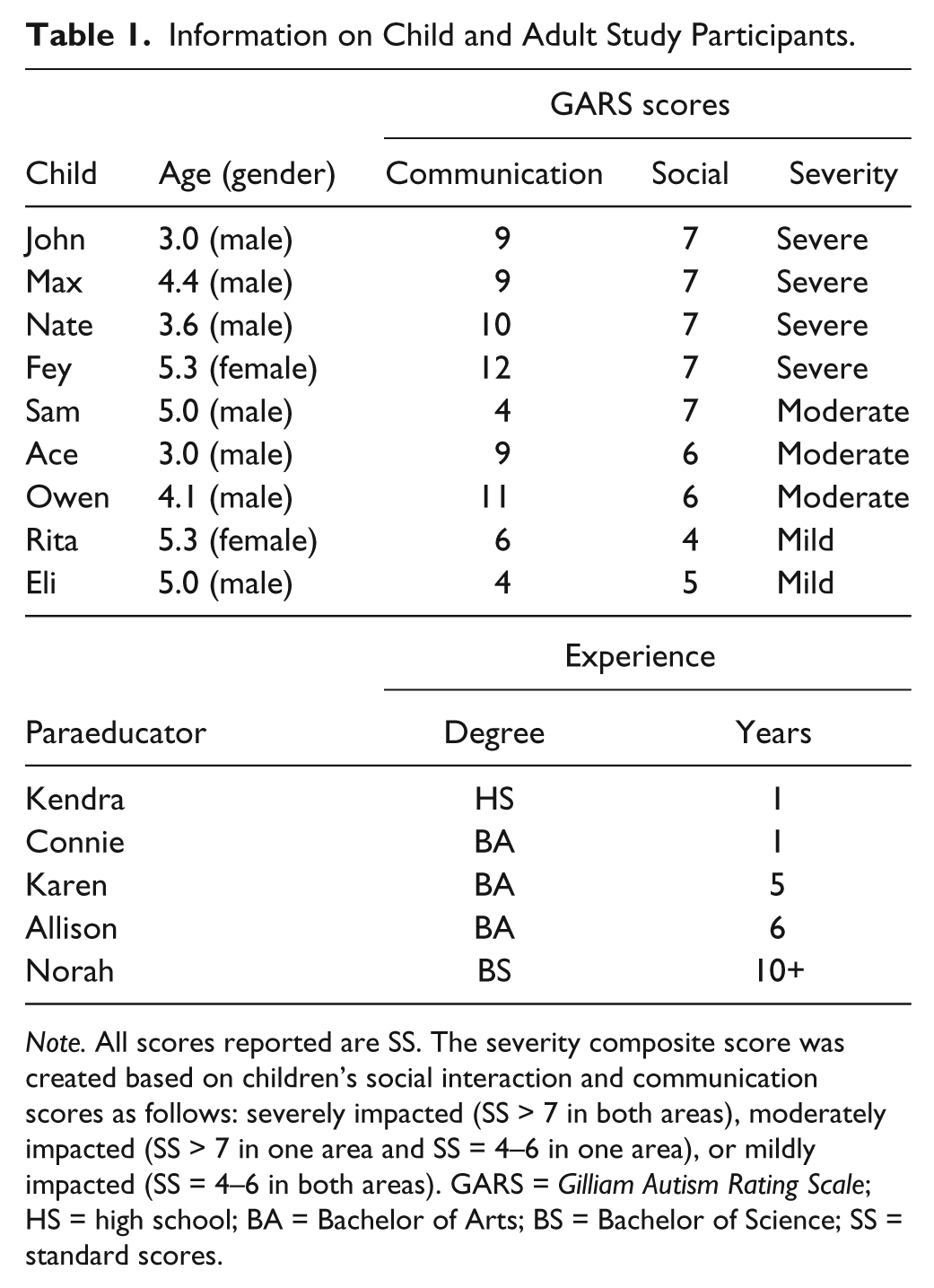
Note. All scores reported are SS. The severity composite score was created based on children’s social interaction and communication scores as follows: severely impacted (SS > 7 in both areas), moderately impacted (SS > 7 in one area and SS = 4–6 in one area), or mildly impacted (SS = 4–6 in both areas). GARS = Gilliam Autism Rating Scale; HS = high school; BA = Bachelor of Arts; BS = Bachelor of Science; SS = standard scores.
Initial child assessments
Formal language measures were administered prior to the study to determine eligibility. The Peabody Picture Vocabulary Test, Fourth Edition (PPVT-4; Dunn & Dunn, 2007) and the Expressive One-Word Picture Vocabulary Test, Revised (EOWPVT-R; Gardner, 1990) were used to assess children’s receptive and expressive language abilities, respectively. Both assessments are untimed, norm-referenced instruments that yield age-based standard scores (SS). As noted, children were required to score an age equivalent of at least 2 years on both measures to be eligible to participate in the intervention. All children who were assessed in the preintervention screening went on to participate in the study.
As to diagnosis, we chose to accommodate the great heterogeneity ASD represents by administering the Gilliam Autism Rating Scale (GARS; Gilliam, 2006) to gather additional information to further characterize the study population. This information was used to better describe the sample and was not used to exclude participants. The instrument is comprised of three subscales—Stereotyped Behaviors, Communication, and Social Interaction—each consisting of 14 items. The child’s preschool classroom teacher evaluated the frequency to which the child engaged in specific behaviors that are commonly associated with ASD. Scores were calculated for each subscale with higher scores being indicative of more frequent observation of symptoms. Because we predict that level of social interaction and communication ability will have the greatest impact on ability to participate during book reading, we created a composite score of ASD severity derived from performance on the Social Interaction and Communication subscales. We characterized children as being severely impacted (SS > 7 in both areas), moderately impacted (SS > 7 in one area and SS = 4–6 in one area), or mildly impacted (SS = 4–6 in both areas).
Design
We used a variation of a multiple baseline design (Kazdin, 2010) across groups of children to examine the relationship of dialogic reading and participation during book reading. Although it is conventional to introduce subsequent phases based on an individual’s time-series data (once their baseline data are stable), we introduced the intervention phase at the classroom level due to a number of constraints of the children’s classrooms. First, the same paraeducator could potentially read to multiple child participants. Second, book reading took place in the children’s classrooms, which meant that an untrained paraeducator’s reading behavior could have been influenced by observing a trained paraeducator read with a child. For these reasons, the investigators assigned adult–child dyads to groups based on their classroom placement and provided training in the intervention procedures in classroom groups rather than individually. For students in Group 1 (n = 5 dyads), baseline book reading was conducted for 4 weeks. After 4 weeks, paraeducators in Group 1 participated in a dialogic reading training and implemented the intervention for 5 weeks. Concurrently, baseline procedures were conducted for adult–child dyads in Group 2 (n = 4 dyads) for 7 weeks, followed by a group training and 5 weeks of intervention. This study design allowed us to collect time-series behavioral data on children’s levels of engagement across different book reading phases. The addition of informal assessments conducted twice weekly enabled us to evaluate growth in children’s vocabulary.
Procedure
Read Together, Talk Together (Pearson Early Learning, 2002) is a book set created to assist educators in the use of dialogic reading techniques. Books from the toddler kit (ages 2–3) and preschool/kindergarten kit (ages 4–5) were used in the study. The researcher randomly selected 10 books from the kits to serve as baseline books and 10 books to serve as dialogic reading books. All book readings took place in the children’s extended-day classroom.
Baseline: Standard book reading
Children were read to individually 3 to 4 times per week. At the beginning of every week, the paraeducator presented three new books and asked the child to choose one. The selected book was read during all sessions that week. Children were not permitted to select a book they had read previously in the study. During baseline reading sessions, paraeducators were instructed to “read as you normally would.” They were not given any specific directions on how they should read with children.
Paraeducator training
In the week prior to intervention, all paraeducators attended a 2-hr training conducted by the lead researcher. The initial training consisted of watching videos of adults modeling the intervention procedures and a live demonstration of the procedures modeled by the lead investigator. The training concluded with paraeducators practicing the procedures on each other with feedback from the investigator. In addition to this initial training, all paraeducators received feedback and coaching on their use of the intervention techniques at least 3 times during the intervention phase. During coaching sessions, a member of the research team observed the paraeducator reading with a child. The research team member provided oral feedback and also used a written evaluation form. This form summarized the extent to which the paraeducator adhered to the study procedures and recommendations for strategies to improve upon in future reading sessions.
Intervention: Dialogic prompts
Paraeducators read to individual children 4 times per week for 5 weeks. Book selection occurred the same way as in baseline, with children selecting one new book to read each week. Approximately every two to three pages during each book reading, the paraeducator prompted the child to participate in the reading by asking a variety of questions about the story. The paraeducator would evaluate the child’s response and provide feedback to reinforce correct responding (i.e., “yes, that is the cow”) or asked a follow-up special prompt if the child responded incorrectly or failed to respond. Specifically, paraeducators asked the following types of questions consistent with the conventional dialogic reading approach (Lonigan & Whitehurst, 1998; Whitehurst et al., 1988):
Completion: The adult reads the initial part of a repetitive phrase and allows the child to finish the phrase (e.g., “Run, run, as fast as you can. You can’t catch me . . .”).
Recall: Adult asks questions about the characters or previous events in the story (e.g., “What food did the hungry caterpillar eat?”).
Open-ended: Adult encourages the child to explain what is happening in a picture (e.g., “What do you see?”). These questions have multiple correct answers.
Wh-questions: The adult asks “wh-questions” (what, where, who) about a picture (e.g., “What is that?”). Wh-questions target specific vocabulary, and the adult expects one specific response.
Distancing: Questions are posed that relate elements of the story to the child’s personal experiences (e.g., “The bear ate all the porridge. What do you like to eat for breakfast?”).
“Special” prompts
In the event that a child was unable to respond to one of the traditional prompts, the adult asked a follow-up question to help the child answer the original question. These prompts were delivered consistent with a least-to-most prompting hierarchy (Nietzel & Wolery, 2009). Paraeducators were instructed to initially use relatively less intrusive verbal prompts and gradually introduce more intrusive question prompts if needed. The special prompts are listed as follows, from least to most intrusive: (a) providing a choice of binary options that include the target response (e.g., “Is it a cow or a horse?”), (b) requesting the child to respond “yes/no” to a question (e.g., “Is it a cow?”), (c) asking the child to repeat a target word (e.g., “say cow”), and (d) requesting the child to point to the correct image (e.g., “point to the cow”). In the event the child failed to respond to the final prompt in the hierarchy (request to point), the adult would physically prompt the child to point to the correct response. Special prompts are not part of the original CROWD (Completion, Recall, Open-ended, Wh-questions, Distancing) prompts but were added to adapt the dialogic reading intervention to the unique needs of children with ASD based on the recommendation of previous researchers (Fleury et al., 2014).
Procedural fidelity
The extent to which the paraeducators adhered to intervention procedures was assessed through direct observation. Fidelity measures were collected a minimum of 3 times during the intervention phase for every reader/student dyad using a checklist developed by the research team. Procedural fidelity estimates were calculated by dividing the number of correct paraeducator behaviors by the total number of items, and multiplying by 100. Estimates of procedural fidelity are as follows: 95% for dyads in Group 1 (range = 78%–100%) and 95% for dyads in Group 2 (range = 76%–100%). Interobserver agreement on procedural fidelity assessments was assessed in 33% of the reliability observations (M = 90%; range = 78%–100%).
Dependent Measures
Children’s verbal participation
Children’s verbal participation during book reading was assessed from videos that were recorded 2 times every week, during first book reading and during final book reading. Instances of children’s verbal participation were categorized as either (a) responses to adult questions, defined as independently answering a question with either the correct response or an incorrect response that is on-topic, or (b) independent initiations in which the child poses his or her own question or makes a comment about the story. Only child verbalizations that were on-topic and nonechoic were counted.
Interobserver agreement
Two graduate students who were trained by the lead researcher conducted all video coding. Initial training in the observational codes and definitions continued until all researchers achieved a minimum of 80% agreement in adult’s use of question prompts, child responses, and child initiations across three videos. Reliability estimates were conducted for 25% of videos in each adult–child dyad in the study using the point-by-point method in which the number of agreements was divided by total (agreements plus disagreements) and multiplied by 100. Average interobserver agreement for children’s verbal participation during baseline reading sessions was 100% for Group 1 and 90% (range = 85%–100%) for Group 2. Reliability estimates for intervention reading sessions also reached acceptable levels (Hartmann, Barrios, & Wood, 2004) at 88% for Group 1 (range = 71%–100%) and 95% (range = 75%–100%) for Group 2.
Book-specific vocabulary
Children’s knowledge of vocabulary specific to the weekly book was assessed 2 times per week. The publishers of Read Together, Talk Together published a list of target vocabulary words for every book in the kit. A researcher-developed expressive vocabulary measure was created for each book based on this list. At the start of each week (prior to book reading) and at the end of the week (after three to four book readings), a member of the research team showed the student 10 illustrations in the book representing vocabulary targeted for the weekly book and asked him or her to provide the name that best describes each illustration. Student responses were scored as either correct or incorrect. These assessments were conducted without the paraeducator present. Paraeducators were not instructed to target specific vocabulary words and were blind to the vocabulary words being assessed by the research team.
Results
The amount of time adult–child dyads spent reading together varied across sessions, but was, on average, twice as long during the intervention. Baseline reading sessions lasted an average of 258 s (4.3 min; range = 101–707 s); and dialogic reading intervention sessions lasted an average of 499 s (8.3 min; range = 214–841 s). We calculated an overall rate of each behavior per session to compare participants’ behaviors across book reading sessions that differed in duration.
Paraeducators’ Use of Dialogic Prompts
Consistent with intervention procedures, paraeducators increased the number of questions they posed to children during intervention sessions compared with baseline sessions. The most common type of questions posed to children was wh-questions, followed by special prompts. This pattern was observed across all of the adult–child dyads, regardless of the child’s ASD severity grouping. The rate of adult questioning by prompt type is shown in Figure 1.
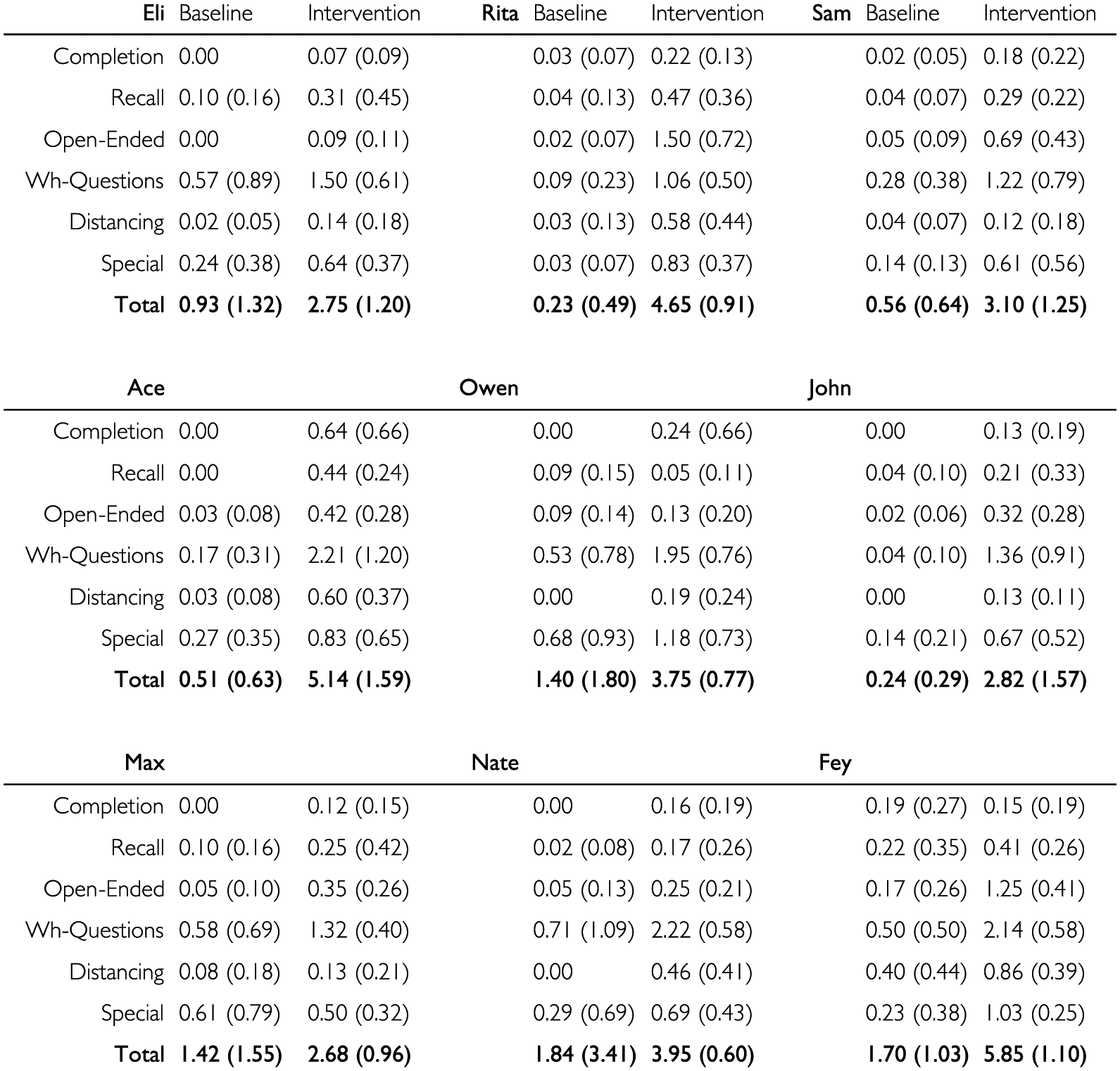
Average rate of adult questioning by prompt type across baseline and intervention phases.
Children’s Verbal Participation During Book Reading
The sole use of traditional visual analysis techniques has previously been criticized due to its subjective nature, which leads to difficulties in establishing interrater reliability (Brossart, Parker, Olson, & Mahadevan, 2006). Experts currently recommend that calculations of effect size be used as a supplement to traditional visual analysis, to interpret intervention effects in single-case design studies (Kratochwill et al., 2013; Ross & Begeny, 2014). Consistent with this recommendation, we used both traditional visual analysis techniques (Kazdin, 2010) and a statistical measure of effect size, Tau-U statistic (Parker, Vannest, & Davis, 2011), to evaluate the effect of the dialogic reading intervention on children’s verbal participation. Tau-U is a nonparametric approach to analyzing effect size data that is based on pairwise comparisons of time-series data, which results in an overall percentage of nonoverlap minus overlap pairs (Parker et al., 2011). The following guidelines can be used to interpret Tau-U effect size calculations: a 0.20 improvement may be considered a small change, 0.20 to 0.60 a moderate change, 0.60 to 0.80 a large change, and above 0.80 a large to very large change depending on the context (Vannest & Ninci, 2015). An additional advantage of this calculation is that we are able to control for any undesirable upward baseline trend, which was necessary for some children. For the purposes of this study, we applied the Tau-U statistic for phase contrasts at the individual level as well as at the aggregate group level.
Individual child data
It is conventional in single-case design to report findings by individual participants. However, given the large number of participants in this study and given that all children consistently demonstrated similar performances between phases, we will report general behavioral patterns and highlight any individual patterns that differed from the general pattern. Individual graphs are provided in Figure 2.
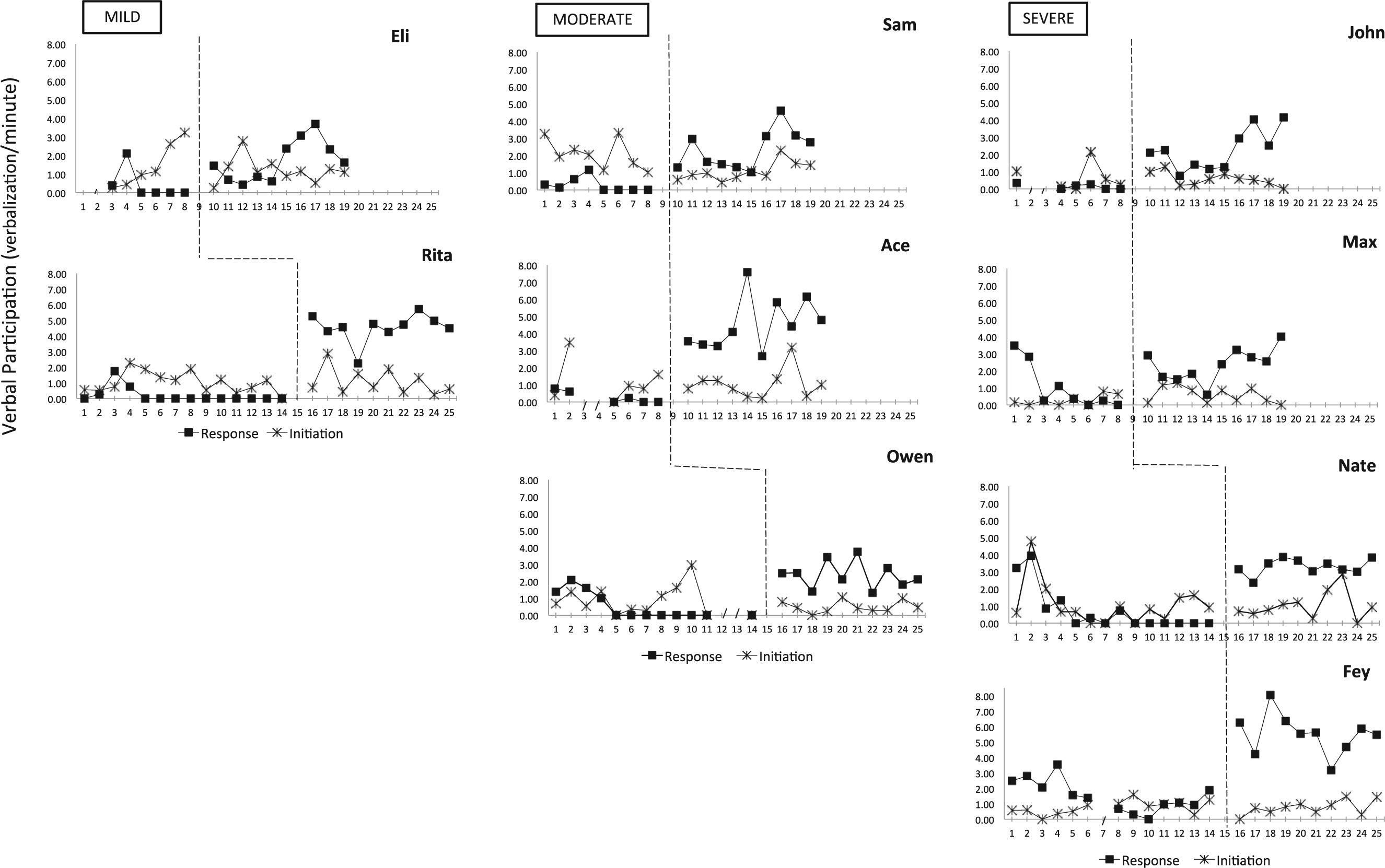
Children’s verbal participation during book reading.
Verbal participation: Responding to adults
The most consistent effect of the intervention on children’s responses was a change in level. All nine children demonstrated a similar pattern—few instances of responding to questions during baseline followed by an increase in responding during intervention sessions. Eli exhibited the smallest mean level difference of 1.3 responses per minute (baseline M = 0.41 responses/minute to intervention M = 1.71 responses/minute). Rita exhibited the largest mean level difference of 4.35 responses per minute (baseline M = 0.19 responses/minute to intervention M = 4.54 responses/minute). The improvement in rates of responding was observed immediately upon the introduction of the intervention phase for all children. There were no consistent patterns identified for either trend of variability of behavior.
We also applied a Tau-U statistic (Parker et al., 2011) for each dyad to provide a robust measure of behavioral differences observed between phases. These calculations indicate, for all children in the study, a large to very large behavioral changes related to the intervention (Tau-U = 0.80–1.25, p < .01), providing further confirmation of the results derived from the visual analyses. Refer to Table 2 for a summary of Tau-U calculations for each participant.
Effect Size Calculations.
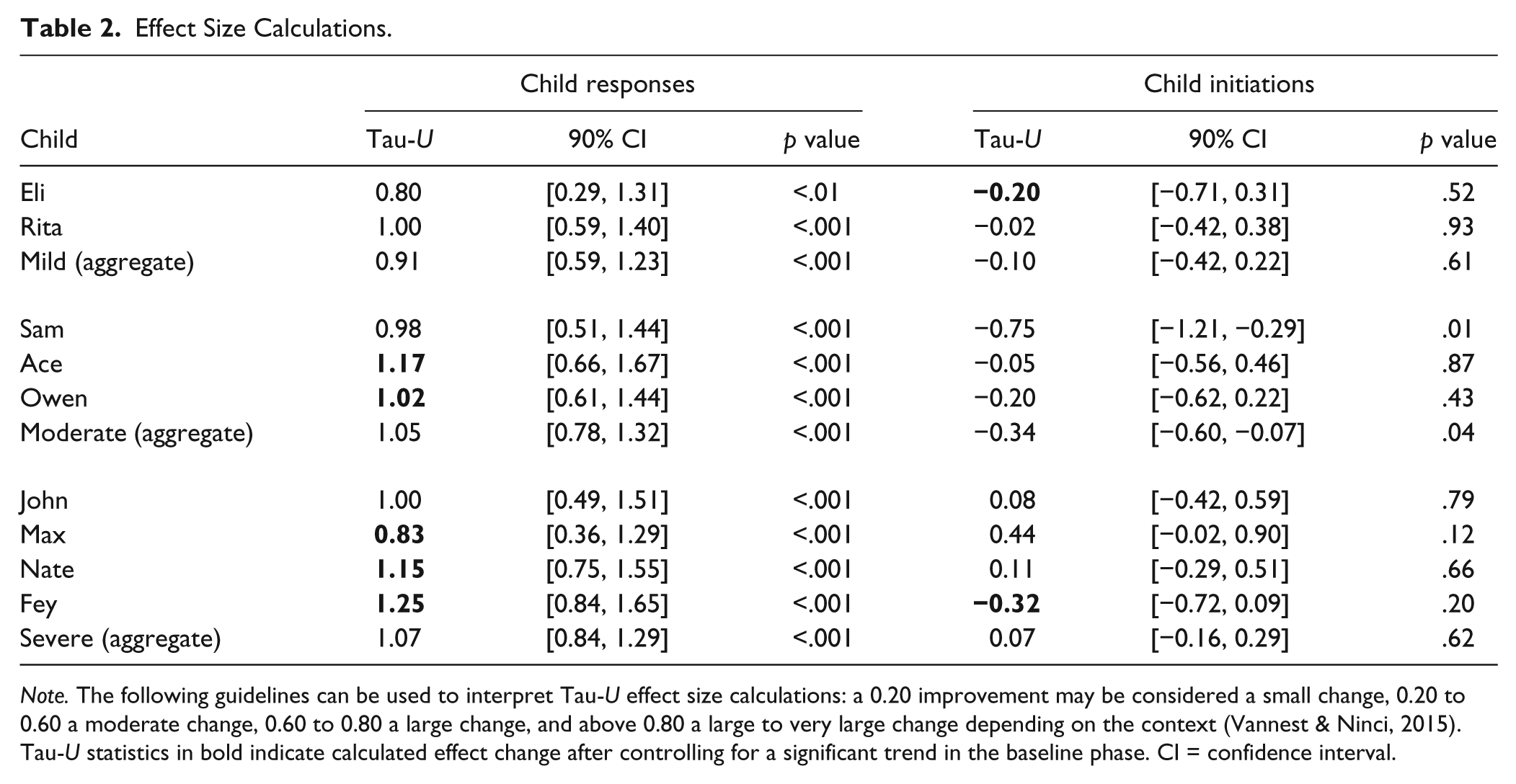
Note. The following guidelines can be used to interpret Tau-U effect size calculations: a 0.20 improvement may be considered a small change, 0.20 to 0.60 a moderate change, 0.60 to 0.80 a large change, and above 0.80 a large to very large change depending on the context (Vannest & Ninci, 2015). Tau-U statistics in bold indicate calculated effect change after controlling for a significant trend in the baseline phase. CI = confidence interval.
Verbal participation: Initiating independent comments and questions
The intervention did not have an impact on children’s participation during reading in terms of initiating comments or posing their own questions. There was no systematic relationship of the intervention on children’s initiations in terms of level, trend, or variability of behavior for the majority of the participants. Tau-U calculations for phase contrasts at the individual level confirmed that there were minimal to small changes in initiation rates related to the intervention for the majority of the children (Tau-U = −0.20 to 0.32) with the exception of one child, Sam. Sam exhibited the highest level of verbal initiations of all participants during the baseline phase (M = 2.08 initiations per minute; range = 1.02–3.31), which decreased during intervention (M = 1.09 initiations per minute; range = 0.6–2.3) based on our visual analysis of the data. Tau-U calculations confirm a moderate decrease in Sam’s rates of initiations during the intervention phase compared with the baseline phase (Tau-U = −0.75; p ≤ .01).
Group data by severity
We aggregated the individual time-series data by severity groups to examine the influence of ASD symptom severity on reading participation. All children across all severity groups demonstrated increased rates of verbal participation in the form of responses to adult prompts in the intervention phase. We calculated an aggregate value of Tau-U for each severity group, which indicated that the intervention resulted in large to very large changes in children’s verbal response rate across all severity groups (mild: Tau-U = 0.91, p < .01; moderate: Tau-U = 1.0, p < .01; severe: Tau-U = 1.0, p < .01). The intervention did not influence the rate at which children initiated comments or questions for the mild (Tau-U = −0.10, ns) and severe groups (Tau-U = 0.06, ns) and resulted in a moderate decrease for children in the moderate group (Tau-U = −0.33, p = .04).
Knowledge of Book-Specific Vocabulary
Children learned more book-specific vocabulary items during the intervention phase than they did during the baseline condition. A Wilcoxon’s signed-rank test was applied to test for differences in children’s knowledge of book-specific vocabulary between baseline and dialogic reading sessions. For an alpha level of .05, the rank sums (45 for positive differences and 0 for the negative differences) were found to be significantly different, N = 9, T = 0, p = .008. After reading the same book for 1 week, children learned an average of 0.5 new words (mode = 0) during baseline book reading compared with an average of 1.7 new words (mode = 1) during dialogic book reading sessions. This pattern is consistent across all child groupings, suggesting that ASD severity did not differentially impact children’s ability to learn new vocabulary during book reading sessions. Figure 3 shows the rate of vocabulary growth across ASD severity groups.
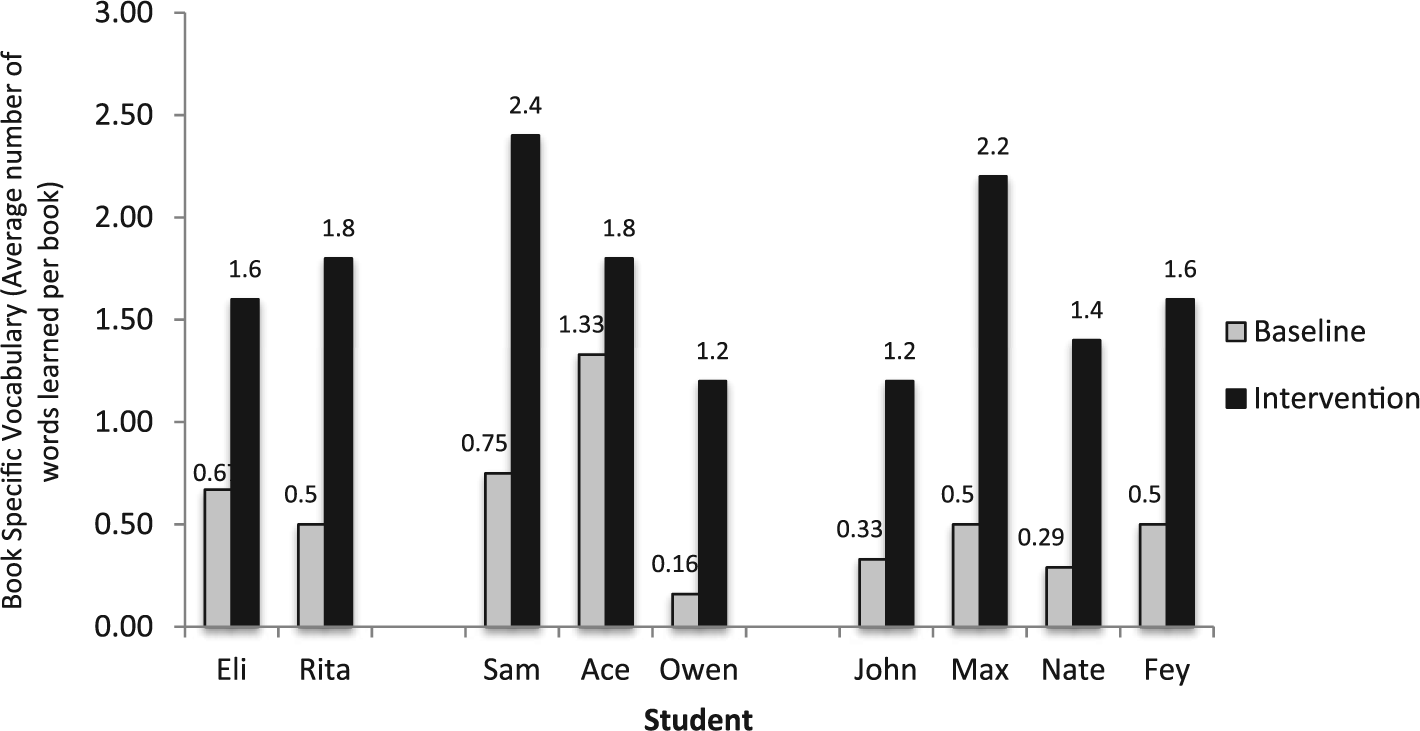
Average number of book-specific vocabulary learned per book.
Social Validity
A researcher-developed social validity questionnaire was distributed at the conclusion of the study to assess the acceptability and feasibility of the intervention procedures and child outcomes. Paraeducators rated the extent to which they agreed to 11 statements using a 7-point scale (1= strongly disagree, 7 = strongly agree). The questionnaire also contained open-ended questions that allowed participants to share any difficulties they experienced during book reading sessions as well as their suggestions for improving the intervention. All five of the questionnaires were returned.
A full range of responses was represented in the paraeducators’ feedback about their students’ experiences, with an overall impression that children benefited from the dialogic prompting intervention. Paraeducators reported that children talked more during intervention sessions compared with baseline book reading (mode = 6) and that they learned some new vocabulary (mode = 6), which is consistent with the data. However, paraeducators also reported lower levels of agreement regarding statements pertaining to the effectiveness of dialogic prompting in improving students’ attention (mode = 5), enjoyment of reading (mode = 5), and interest in reading (mode = 4).
Paraeducators were also asked to reflect on their own experiences as interventionists. Their responses represented overall favorable impressions regarding their training and ability to use dialogic prompting strategies. The majority of respondents reported that they enjoyed reading to students during intervention sessions (mode = 6); dialogic prompting strategies were easy to incorporate into book readings (mode = 7); they believed that reading dialogically should be included as part of students’ academic programs (mode = 7); and they will continue to use dialogic prompting strategies in the future (mode = 7). Paraeducators’ responses to open-ended questions reveal that they encountered some challenges during the study. The most commonly cited challenges included working with students who engaged in challenging behaviors and finding time to read with children due to the highly structured nature of their educational programming. They also reported that some students were not interested in reading books from the limited selection provided by the research team.
Discussion
Book reading is a highly valued, developmentally appropriate activity in which adults can use strategies to foster early language and literacy skills; however, educators will need guidance in how to target these skills during book reading with young children with ASD given social–communication deficits that are characteristic of the disorder. The results of this study demonstrate that, when presented with a dialogic reading intervention, children with ASD, regardless of their severity level, learned vocabulary more efficiently, stayed engaged with book reading activities for longer periods of time, and responded to adult questions and comments about the book. Furthermore, this study demonstrates that paraprofessionals can be trained to incorporate dialogic reading prompts in daily book reading and that they perceive the intervention to be acceptable across many dimensions.
The overall increase response rates during intervention book reading sessions may not be surprising given that the intervention required adults to ask questions during book reading. Because adults asked more questions during the intervention phase, they gave children more opportunities to actively participate during book readings. From this perspective, it may be more appropriate to present this intervention as one that primarily targets the reading behavior of adults. By changing the adult’s reading behavior, we were able to change children’s behavior. The children in this study did not need to be taught how to respond to adult questions, they simply needed the opportunity and occasionally additional prompting to respond to questions. The observed improvements in children’s rates of active participation—despite being limited to verbal responses—corresponded to improvements in children’s book-specific vocabulary knowledge. It is especially noteworthy that all children in this study, regardless of autism severity, demonstrated improvements in both participation and vocabulary during the intervention.
While a fundamental goal of early book reading is to create a balanced exchange between the child and adult reader (Kaderavek & Rabidoux, 2004), in this study the intervention resulted in an unbalanced interaction in which the adult primarily directed the child during reading by asking questions. The improvements observed during the intervention were the result of improved verbal responses to adult questions. The reciprocal quality of the social interaction was compromised because the intervention did not impact children’s rates of verbal initiations during book reading, which limited the adult reader’s ability to build upon and expand on the child’s contributions. The ability to initiate social interaction, such as asking questions and posing comments, is a well-documented difficulty for individuals with ASD (APA, 2000; Mundy et al., 1990; Tager-Flusberg & Joseph, 2003; Tager-Flusberg et al., 2005). Our findings suggest that children with ASD may require additional direct instruction to learn how to make appropriate comments and pose questions within the context of shared book reading.
We should also consider whether children with ASD had ample opportunities to make such initiations during intervention phases. The paraeducators who served as interventionists in the present study were instructed to include a variety of dialogic reading prompts when reading with children with ASD. Our data on the fidelity of intervention suggest that the paraeducators were able to learn this technique and apply this strategy in their daily book readings. It is possible, however, that the paraeducators may have overused this prompting strategy, which would compromise the number of opportunities that children had to initiate their own comments and/or questions. Fey’s data provide an extreme example of this phenomenon. During intervention book reading sessions, the paraeducator who read with Fey asked an average of six questions per minute, which equates to one question every 10 s. A high rate of questioning encourages ample opportunities to verbally respond to questions, but it would leave little opportunity for Fey to verbally initiate during the reading. It is unclear in this study whether the children’s limited verbal initiations resulted from a lack of opportunity or whether children required direct instruction on how to pose questions and make comments during book reading.
Study Limitations
The design of this study deviated from conventional multiple baseline design standards, which calls for a staggering of intervention phases a minimum 3 times across participants (Kratochwill et al., 2010). We were not able to meet this standard in the current study because children were nested within two classrooms and the adult readers often read to more than one child in the classroom. Because of these constraints, the adult readers were trained within their classroom teams which means that the intervention phase was only staggered across 2 points in time rather than 3 points. Although the design of the current study was inconsistent with conventional standards, this variation seems acceptable for demonstrating experimental control given the number of replications and the consistency of treatment effects.
A collateral benefit of improving children’s participation in book reading, albeit limited to responding to adult questions, was an improvement in vocabulary presented in the weekly book reading. Although the improvement in vocabulary was found to be statistically significant, it is not apparent whether this improvement translates to educationally significant results because no follow-up data collection was obtained to evaluate the extent to which children maintained or generalized the learned vocabulary knowledge to activities outside of book reading. Furthermore, the adult readers were not given a list of targeted vocabulary words and we did not explicitly instruct them to target specific vocabulary words. Although it is possible that the adults nonetheless targeted these vocabulary words with their question prompts, we are not able to ascertain the effect that targeted vocabulary words have on children’s vocabulary growth.
We must also emphasize that oral language skills are just one facet of emergent literacy. Other areas of emergent literacy (i.e., concepts about print, phonological awareness, and alphabet knowledge) were not measured in this study, nor would we expect to find change in these skills based on previous research on dialogic reading (WWC, 2007). Because shared book reading interventions, such as a modified dialogic reading, primarily target oral language skills, this intervention should be considered as just one component of a comprehensive early literacy curriculum.
Implications for Practice
The applied nature of this research allows us to draw direct implications for its use in early childhood school settings. First, school personnel were able to successfully learn and implement dialogic reading prompts within daily book reading after attending a 2-hr in-service training and receiving periodic coaching from members of the research team. Second, the modified dialogic reading strategy can be used with any children’s book, including those that are commercially available and already in use in many early childhood classrooms and homes. Third, the length of intervention for each child was 5 weeks in the present study. Although the length of the intervention phase was relatively short, the intervention was intensive in that adult–child dyads read every day. It is quite remarkable that improvements in children’s levels of engagement and vocabulary were generated given the relatively short duration of the study. Previous dialogic reading studies on other populations ranged in duration from 6 (Lonigan & Whitehurst, 1998; Wasik & Bond, 2001; Whitehurst et al., 1994) to 30 (Crain-Thoreson & Dale, 1999; Zevenbergen & Whitehurst, 2003) weeks. All of these points suggest that this is an affordable intervention that could be readily implemented in special education classrooms.
Issues for Theory and Directions for Future Research
Because we lack information regarding the predictive value of early literacy skills for children with ASD, we are left to draw inferences based on what we know about literacy development for typically developing children and those with other disabilities such as language impairments. Our knowledge of typical literacy development indicates that the literacy and language skills children develop early in life—particularly oral language skills, print and letter knowledge, and phonological awareness—relate to later reading achievement (NELP, 2008). Unfortunately, we do not know whether these skills have similarly strong predictive relationships to conventional reading for children with ASD. Longitudinal research is needed to follow children with ASD from preschool through elementary school to determine the extent to which emergent literacy skills relate to reading achievement. Having a better understanding of precursory skills that support literacy development for children with ASD would enable educators and researchers to focus intervention and instruction on the skills that are most likely to lead to later success in reading.
There is a growing awareness that interventions targeting early literacy skills should be included in preschool curricula for young children who are at risk for reading problems, such as children with disabilities (Dickenson, McCabe, & Essex, 2006). Given the ubiquity of both the practice and recommendation for adult–child shared reading in early childhood settings, it is reassuring that some of the benefits associated with dialogic reading were replicated for children with ASD. Although improvements in early literacy were limited to the area of oral language—specifically, verbal responding and book-specific vocabulary—the results of the current study suggest that dialogic reading may be a promising practice for this population.
Footnotes
Acknowledgements
We wish to express our appreciation for participating teachers, schools, and families who supported this project. In addition, assistance from Shawna Harbin, Aiden Fortunati, Barbara Matlock, and Lauren Thompson is gratefully acknowledged.
Declaration of Conflicting Interests
The author(s) declared no potential conflicts of interest with respect to the research, authorship, and/or publication of this article.
Funding
The author(s) disclosed receipt of the following financial support for the research, authorship, and/or publication of this article: This research was conducted in part through financial support from the Organization for Autism Research.