



Abstract
Although teacher education is the formal means by which novices are prepared for teaching, they come having already had significant experience in schools. Preservice teachers have formed habits of “teaching” which influence their learning to teach. This article reports a study of the specific knowledge of and skills with teaching practice that novices bring to teacher education with respect to one teaching practice, eliciting student thinking in elementary mathematics, and describes the use of a standardized teaching simulation to learn about novices’ skills. The findings reveal details about preservice teachers’ skills and habits of practice at the point that they enter formal teacher preparation. Preservice teachers’ ways of carrying out this particular practice are categorized into three distinct categories: (a) skills that need to be learned, (b) skills that can be built on, and (c) approaches that need to be unlearned.
Keywords
Taylor is an undergraduate student who is about to start her first term in the teacher education program at her university. She is spending the morning observing in a third-grade classroom. The students are working on an addition lesson and are independently solving a set of problems. Taylor circulates about the classroom and observes as students work on the problems. Peering at a student’s paper (see Figure 1), she looks puzzled. The classroom teacher asks what Taylor is noticing. She says, “Brett has the wrong answer for 147 + 328 + 269, but I don’t know whether he just solved the problem too fast or something else is going on.” The classroom teacher suggests that Taylor ask Brett some questions to see whether she can figure out how he solved the problem as well as what he understands about the process and the underlying mathematical ideas.
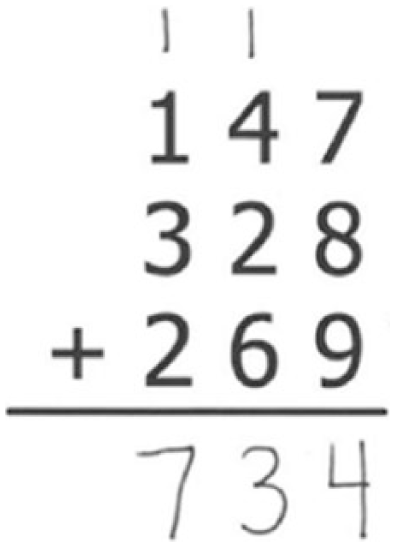
A student’s work on an addition problem.
Taylor pulls up a chair and begins to ask Brett a series of questions:
How did you start off this problem? What did you do first?
Oh seven plus eight plus nine.
What did you get when you added them?
Twenty-four.
I see that you put the four down there from the twenty-four. Why did you carry a one up to the top?
Oh, I had to carry a one.
Oh, okay. So then you went on to the next column?
Yep.
So what did you add together there?
Oh, I added these numbers up [points to the digits in the tens column].
So you added the six plus the two plus the four and the one?
Uh huh.
And what did that get you?
Thirteen.
Okay and so you brought the one up from the thirteen to the top I see and then what did you do next?
I added up these numbers and got seven.
Okay so your full answer was seven-eighty-four.
In this interaction, Taylor asks a series of questions that are focused on the process Brett used to solve the problem. The student tells her the sequence of steps that he took. Several times Taylor states what she thinks Brett has done, and asks whether she is right. She discovers that Brett has not made an error in the adding of the digits in the ones column, but that, instead, the error had to do with how he recorded the sum. But Taylor’s approach does not lead her to find out why Brett believes that he needs to “carry,” nor why he has carried a “one.” She also does not learn what he thinks the “one” that he is carrying means.
Taylor is able to elicit some information about Brett’s thinking; however, it is also clear that she is not yet skilled at probing children’s thinking. She needs ways to elicit Brett’s understanding, so that subsequent instruction can be designed in ways that connect with Brett’s current understandings.
A major challenge for Taylor, and other preservice teachers, in learning to teach is the familiarity of the work. Teaching can seem natural, and many choose teaching because they feel they have an affinity for it. Lortie (1975) explained this pattern as the power of the “apprenticeship of observation,” the experience that preservice teachers have had with teaching as students. This “apprenticeship” gives them the sense that they already understand the work and they should do what they have seen their teachers do.
Lortie’s analysis highlights the importance of recognizing the knowledge and assumptions that novices bring to teacher education programs. Researchers have investigated many facets of this, focusing primarily on content knowledge and beliefs (Ball, 1988). However, although teacher education seeks to influence what beginning teachers do, not just what they think, studies have not probed what sorts of skills with specific practices of teaching novices bring to teacher education. Such studies seem foundational for the purposeful design of teacher education.
This article focuses on this pressing problem. We begin by articulating the need to identify the skills with core practices of teaching that novices are bringing to teacher education. As a means to investigate this problem, we use the case of one teaching practice, eliciting student thinking, in the context of particular subject matter, elementary mathematics. We describe a method to learn about the skills that novices bring to teacher education. Then, we report on the findings from such an investigation with a group of novice teachers from one teacher education program, including what such findings reveal about the skills of this group of novices and the implications of those findings for teacher education more generally. Although the article focuses on elementary mathematics, the larger point is the importance of learning about skills with teaching practices that novices bring and the potential of such knowledge to affect the design and enactment of teacher education.
The Need to Identify the Skills With Teaching Practice That Novices Bring to Teacher Education
Although supports for teachers’ learning across their careers are key, there is no denying the importance of having teachers enter the teaching force ready to be responsible for students’ learning. The call to enhance the classroom readiness of preservice teachers has spurred important changes in both the design and implementation of teacher education. For example, in some teacher education programs, course content has shifted to the teaching of specific “high-leverage practices” (Ball & Forzani, 2009; Ball, Sleep, Boerst, & Bass, 2009; Davis & Boerst, 2014; McDonald, Kazemi, & Kavanagh, 2013; Teacher Education Initiative, 2009). Teacher education pedagogy is also shifting, in particular, to incorporate “pedagogies of enactment” (Grossman et al., 2009), which include “approximations of practice” such as coached rehearsals (Kazemi, Ghousseini, Cunard, & Turrou, 2015; Lampert et al., 2013; Lampert & Graziani, 2009; Schutz, 2011) and teaching highly scaffolded minilessons or parts of lessons (Davis & Nelson, 2011). This shift in the focus of teacher education to the learning of practice results in a fundamental shift in the content of teacher education. That is, the content to be learned in teacher education is changing to focus on learning to enact particular core practices of teaching.
This shift in the content of teacher education creates the need for new knowledge about the knowledge and skills that novices are bringing to teacher education. The work of teaching, at any level, entails interactions with students and content in learning environments (Cohen, Raudenbush, & Ball, 2003). In this view, teachers must integrate simultaneous and flexible attention to content and to students as they engage with that content in contexts that influence the nature of the work. In practice-based teacher education, that is, teacher education focused on learning the work of teaching, the content is teaching practices such as eliciting student thinking, leading a whole class discussion, or setting up and managing small-group work. Instruction at any level is most likely to be effective when it is designed with awareness of what learners bring to instruction as learners’ interactions with the content will be influenced by the relevant knowledge and skills that they bring to instruction.
In practice-based teacher education, learning goals are tied to developing proficiency with core practices of teaching (the content of teacher education), and instruction must be designed to address these learning goals in ways that are responsive to the existing knowledge and skills of preservice teachers—who are the learners in this context. Extant research provides knowledge of the orientations and assumptions that preservice teachers bring to initial teacher education (e.g., Richardson, 1996) and their knowledge of subject-matter content (e.g., Ball, 1990; Ma, 1999). Research on particular teaching practices varies. When research does exist, it tends to focus on core strategies and techniques for accomplishing particular teaching practices (e.g., Smith & Stein, 2011) and challenges in learning to enacting particular teaching practices. Yet, this knowledge is insufficient for practice-based teacher education. To design teacher education curriculum which build upon the knowledge of the skill with practices of teaching that preservice teachers bring to instruction, the field needs ways of learning about the skills with teaching practices that novices are bringing and to further understand the ways in which such patterns may be generalizable. This study focuses on one teaching practice in elementary mathematics teaching, eliciting student thinking, and seeks to illustrate how knowledge of skills with eliciting student thinking can be gathered at the outset of participation in teacher education, what such findings reveal, and the implications of those findings for teacher education more generally.
The Practice of Eliciting Student Thinking
Eliciting student thinking is a core teaching practice that is useful in many contexts and content areas. Because effective teaching involves engaging students’ preconceptions and building on their existing knowledge, instructional practices that make these ideas available to the teacher are essential to the success of the enterprise (Bransford, Brown, & Cocking, 2000; Fuson, Kalchman, & Bransford, 2005; Kilpatrick, Swafford, & Findell, 2001). The combination of eliciting and interpreting underpins work, such as formative assessment, that has been shown to substantially affect student learning (Black & Wiliam, 1998; Wiliam, 2010). In teaching, “Teachers pose questions or tasks that provoke or allow students to share their thinking about specific academic content in order to evaluate student understanding, guide instructional decisions, and surface ideas that will benefit other students” (TeachingWorks, 2011). Teachers must be cognizant of the different modalities in which children may be able to express their thinking, and that the thinking that children express may not fully encompass the ways in which they understand or think about the content.
In this study, we focus on the case of eliciting student’s thinking in elementary mathematics. By focusing on the practice within a particular subject area, it is possible to focus on the use of the practice in subject-specific ways. For example, a fundamental diagnostic problem of mathematics teaching is that children use an array of methods that often stretch beyond those that teachers prefer or even understand themselves. Teaching requires a learner-centered orientation where teachers actively seek information about student skill and understanding, especially in situations where the approach is unfamiliar. In mathematics teaching, this is particularly demanding for new teachers who are likely to know less about nonstandard approaches to solving mathematics problems.
In actual practice, eliciting student thinking is often done simultaneously with interpreting and responding to student thinking. These three practices—eliciting, responding, and interpreting—are interactive rather than linear in the context of classroom teaching. As teachers elicit ideas from children in classroom teaching, they make sense of those ideas (i.e., interpret them) both to ask additional questions to learn more about student thinking and to respond to ways to support student learning. This work is complex. Jacobs, Lamb, and Philipp (2010) conceptualized the professional noticing of children’s mathematical thinking as having three main components: (a) attending to student’s strategies, (b) interpreting children’s understandings, and (c) deciding how to respond on the basis of children’s understandings. As responding unfolds, teachers continue to engage in eliciting and interpreting to learn about the ways in which children are making sense of and taking up the instruction. However, the contingent nature of these practices creates assessment challenges. For instance, what a teacher elicits, and how the teacher elicits, will influence what is available for interpretation and also the information available to influence the response. As different responses are enacted, the contexts for subsequent eliciting quickly become very diverse, making it more difficult to assess the quality of the eliciting, and especially difficult to do so in a way that will support insight into the practice that is useful across teachers. Hence, there are practical reasons for focusing on eliciting, while keeping in mind the ways in which the practice is combined with other practices in classroom teaching.
Early attention in initial teacher preparation to skill with eliciting student thinking is crucial. First, caring about what students think is foundational to teaching. Skilled teaching builds on, and is responsive to, students’ understandings. Second, because this practice is foundational to many other teaching practices it is fitting for it to be an early focus in teacher education. For example, leading a whole class mathematics discussion requires one to be able to elicit mathematical ideas from students that can then be discussed in the class. Similarly, having a relationship-building conversation with a student requires a teacher to be able to pose and respond to questions that are likely to get a student to reveal something that can be capitalized on by the teacher in subsequent interactions.
Given the crucial nature of the practice and the need to teach novices to do this work, it is necessary to specify what is involved in eliciting student thinking. From our perspective, the practice of eliciting student thinking in mathematics includes initiating the interaction in a way that invites the student to share initial thinking, following up on what the student says and does, and probing key aspects of what the student says and does, such as mathematics processes/strategies, understandings, and solutions. It is also crucial to attend to the tone and manner in which a teacher enacts these practices. We use “skill with eliciting student thinking” to refer to the degree to which preservice teachers are able to engage in these areas of work. As we have noted elsewhere (Boerst, Sleep, Ball, & Bass, 2011), it is possible to further specify the practice by naming moves that are examples of work in each area. Enacting particular moves serves as a means to demonstrate skill with the practice.
Studying Skill With Eliciting Student Thinking
Studying preservice teachers’ skill with eliciting student thinking is challenging. Because the teaching practice of eliciting student thinking is interactive, we focused our assessment efforts on methods that would allow us to see novices’ skills with the interactive work. That is, their skills at being able to pose a question to a student, listen to and make sense of a student’s response, and pose follow-up questions that are responsive to what students have said and done and targeted important ideas that the students have raised and/or not yet raised in the interaction. Others in the field have developed tools which focus on teachers’ reasoning about teaching to prompt discussion about teaching practice (e.g., Harrington, 1995; Herbst & Chazan, 2015; Stein, Smith, Henningsen, & Silver, 2009) or their skill at analyzing teaching as a means to assess their teaching knowledge (Kersting, 2008), but these foci do not enable teacher educators to see what novices are able to do to elicit student thinking.
Often, field-based assessments are used to learn about eliciting skills. But the situated nature of field-based assessments implies that contextual factors differentially shape preservice teachers’ performances. Each field setting is unique making it difficult for teacher educators to obtain reliable estimates of their preservice teachers’ teaching capabilities. For example, our teacher preparation program, like many, used interviews conducted in field placements to assess preservice teachers’ skill with eliciting. Preservice teachers probed children about their mathematical thinking, and then they analyzed the interviews to make claims about the children’s understandings (Sleep & Boerst, 2012). Using video records, instructors were able to see and provide feedback on the types of questions posed, how well they attended to and used children’s mathematical ideas, as well their manner with the children. However, issues of fairness arose because some children were less forthcoming with their thinking than others and required different sorts of probing questions to elicit their thinking. Furthermore, because instructors did not themselves know the children, they could not determine whether the preservice teachers were accurately or thoroughly uncovering children’s thinking. As a result, it was challenging to discern and interpret patterns in preservice teachers’ skills overall within the program.
Since 2011, along with colleagues, we have been developing simulations that place authentic teaching demands on a participant while suspending or standardizing some elements of the situation to assess preservice teachers’ skills with eliciting student thinking (Shaughnessy, Sleep, Boerst, & Ball, 2011). We began by developing a simulation assessment to use at the midpoint of our program to complement field-based assessments, but soon found that such an assessment could be productive for assessing skills upon entry to our program because it allows for assessment of skills without consequence to children and can be done without prior instruction. Simulations are used in many other professional fields. In many medical schools, doctors in training engage in simulations of physical examinations, patient counseling, and medical history taking by interacting with “standardized patients,” adults who are trained to act as patients who have specified characteristics (e.g., traits, ailments, preferences, interactional styles; Barrows, 1971). Evaluation of medical students’ interactions with standardized patients makes possible common appraisal of candidates’ knowledge and skills. There has been growing interest in the field of education in the use of simulations for learning opportunities (e.g., Dotger, 2015) and assessment (Shaughnessy, Boerst, & Ball, 2015; Shaughnessy, Boerst, & Farmer, 2016). We next turn to describing the assessment that we developed and used for this study.
Our assessment focuses on assessing novices’ skills with eliciting student thinking 1 by having each novice interact with a person whose actions and statements are guided by carefully articulated protocol with rules for reasoning and responding, including scripted responses to questions that are commonly asked, that are grounded in a student’s way of thinking about a mathematics problem. Adopting conventions used by those who develop and use simulations, we refer to the person following the protocol as a standardized student. The preservice teacher interacts with one standardized student for about 5 min around a sample of student work (see Figure 2). Prior to the simulation, the standardized student is trained in the student’s profile (see Figure 3).

A student’s work on a multidigit addition problem.
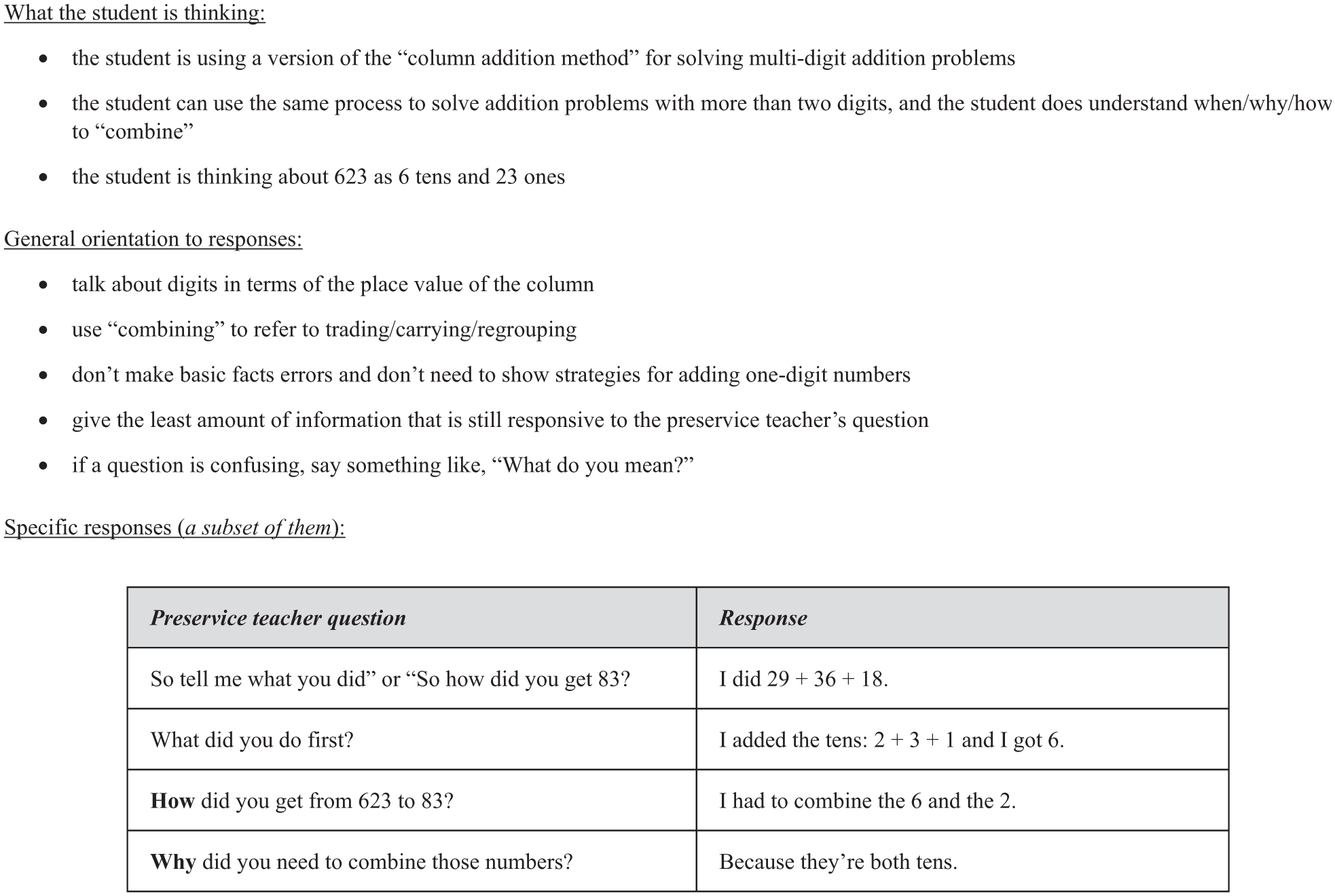
An excerpt from the standardized student profile.
Preparation for an interaction with one standardized student
Preservice teachers are provided with a student’s work on one problem (see Figure 2) and given 10 min to prepare for an interaction with one standardized student. Preservice teachers are told that the goal of the interaction is to elicit what the “student” did to solve the given problem, and to probe what the student understands about the process used and the mathematical ideas underlying that process. In this particular scenario, the student produces an apparently correct answer but with an unusual process. A fundamental diagnostic problem of teaching is that children use an array of methods that often stretch beyond those that teachers prefer or even understand themselves. Teaching requires learning about student skill and understanding, and this work is particularly important for new teachers who often know less about nonstandard approaches and may be distrustful of those approaches even when they produce correct results. The student work is designed explicitly to present the test taker with this fundamental problem of teaching.
Interaction with the standardized student
In the next part, preservice teachers engage in a simulation to elicit and probe a standardized student’s thinking to understand the steps she took, why she performed particular steps, and her understanding of the key mathematical ideas involved. This student has used a procedure, sometimes known as the “column addition method,” to solve the problem. The student adds the digits in each column. The student interprets the 623 in the written work as 6 “tens” and 23 “ones.” The student knows that 23 ones can also be thought of as 2 tens and 3 ones. Then, the student combines the 6 tens and the 2 tens (from the 23 ones). This yields the final answer of 83. The student can explain why the 6 and the 2 must be combined. Preservice teachers have five minutes to interact with the standardized student, and the interaction is video recorded.
Study of the Initial Skill of Preservice Teachers With Eliciting Student Thinking
This study seeks to illustrate how information about skill with eliciting student thinking can be gathered at the outset of a teacher education program through a simulation assessment, what such assessments reveal about the skills of groups of novices, and the implications of those findings for teacher education more generally.
Method
Sample
All students (n = 47) enrolled in an undergraduate university-based elementary teacher education in the United States participated. All but three were women between the ages of 19 and 23, and 17% identified as people of color. The students were predominately middle class, with a few first-generation college students. 2
Procedures
The assessment was one in a series of assessments that were administered as a part of the program’s orientation activities, prior to the start of coursework and fieldwork. All enrolled preservice teachers participated in this assessment and consented to have their data used for research purposes. The assessment was video recorded, and written artifacts were collected.
Appraising Performances
We developed an observational checklist specifying core components of the practice. Some of these components are quite obvious, but others we have developed over time by tracking on the range of things that preservice teachers do when eliciting student thinking and still others emerged from analysis of the data for this specific eliciting task. The four core components that we assessed included the following: (a) eliciting the student’s process, (b) probing the student’s understanding of key mathematical ideas, (c) attending to the student’s ideas, and (d) deploying other moves that support learning about student thinking. For each of these components, we identified specific “moves” for which it would be possible to track on the presence or absence of that move in the performance. By “moves,” we refer to specific steps of talk that teachers take as they interact with students (Chapin, O’Connor, & Anderson, 2013) or particular actions (e.g., facing the student when posing a question). These moves are identified in Table 1, and an exemplar is included to illustrate the move. Each performance was appraised by two members of the research team. Disagreements were resolved through review of the data and remediating differences of interpretation.
Observational Checklist for Appraising Performance.
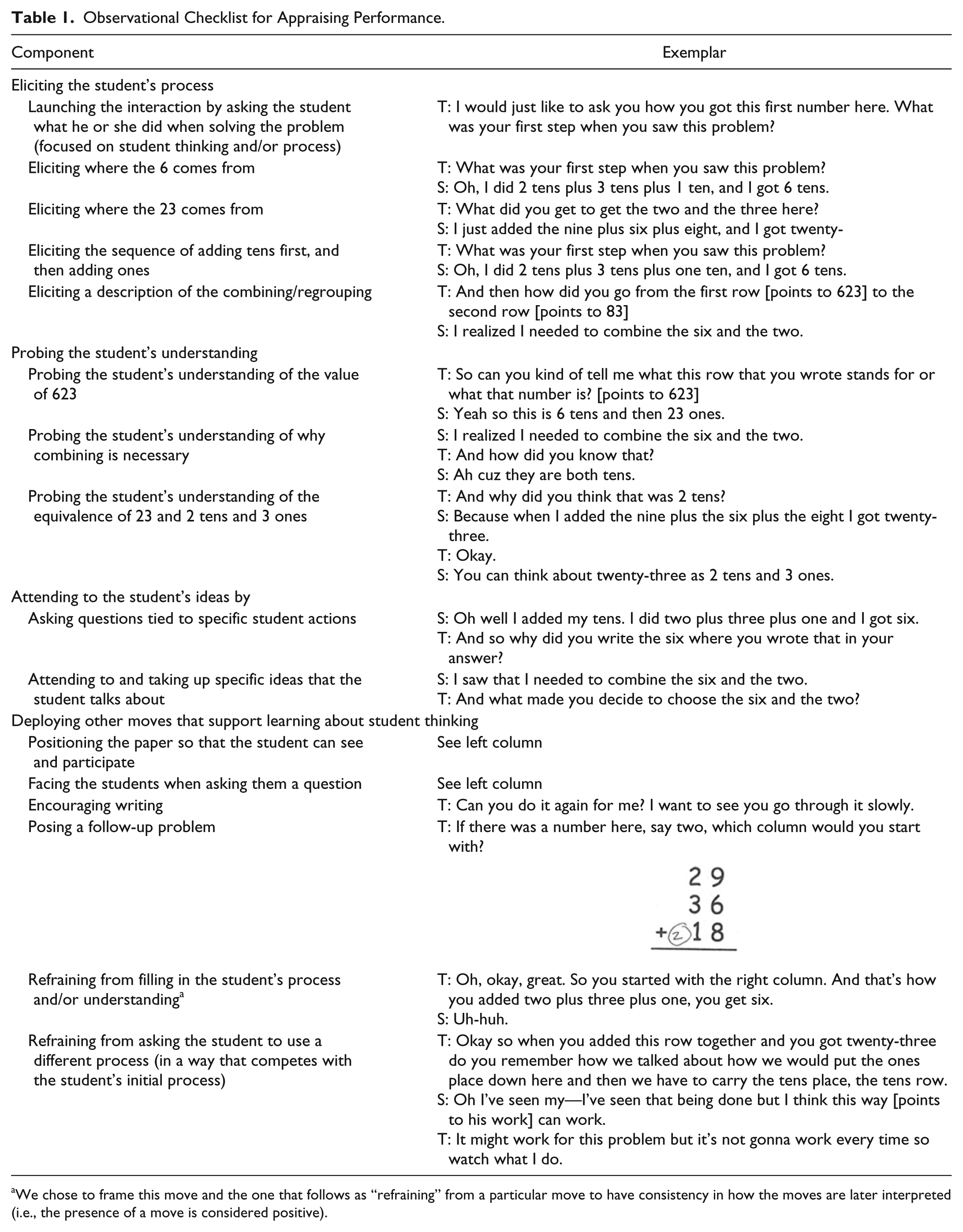
We chose to frame this move and the one that follows as “refraining” from a particular move to have consistency in how the moves are later interpreted (i.e., the presence of a move is considered positive).
Analysis
We first examined the eliciting moves that the preservice teachers used, organized by component. We then examined the percentage of preservice teachers enacting each move to see whether there were any patterns.
What Moves Did Preservice Teachers Make When Eliciting Student Thinking?
The results are organized into the key components of the practice: (a) eliciting the student’s process, (b) probing the student’s understanding of key mathematical ideas, (c) attending to the student’s ideas, and (d) deploying other moves that support learning about student thinking. For each component, we indicate the percentage of preservice teachers who employed each of the moves and name the patterns that emerged. We close by considering which moves occurred most frequently and which moves occurred less frequently.
Eliciting the Student’s Process
Figure 4 indicates the percentage of preservice teachers who employed each of the moves that were identified for eliciting the student’s process, including posing an initial question focused on the student’s thinking.
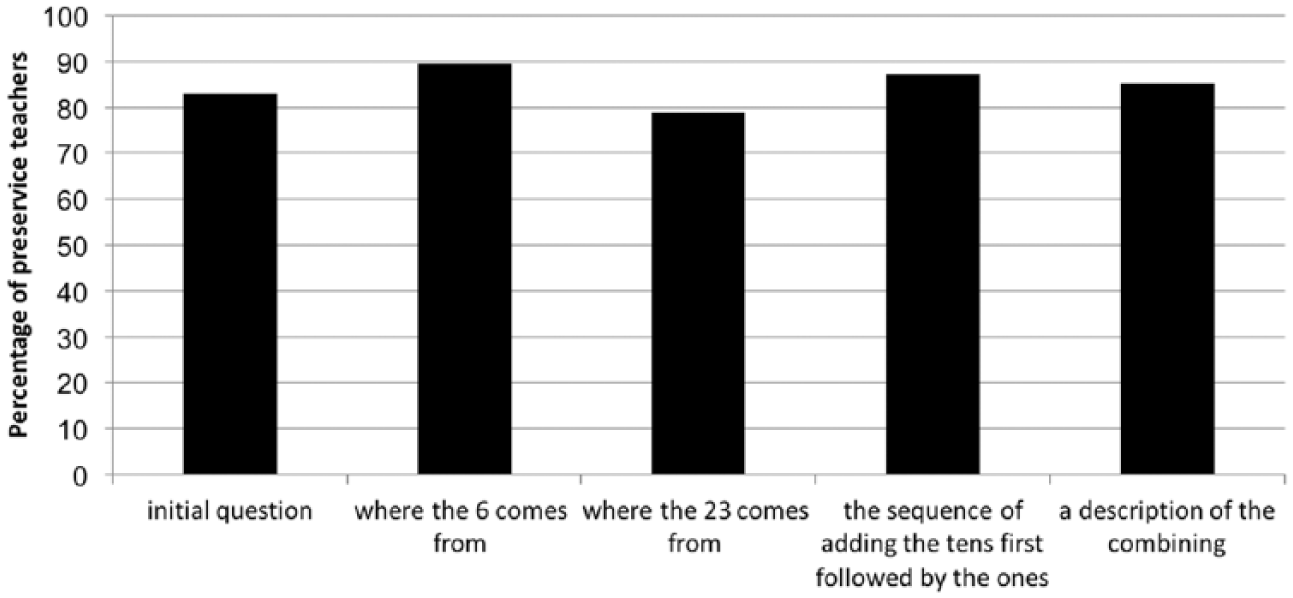
Eliciting the student’s process.
Launching the interaction with an initial question
Preservice teachers generally launched the interaction in ways that focused on student thinking and posed questions to learn about the student’s process for solving the problem. Thirty-nine of the 47 preservice teachers (83%) began by posing an initial question focused on the student’s process or the student’s understanding of the key mathematical ideas. This is indicated by the initial question bar in Figure 4. We examined the specific types of initial questions used, and found that preservice teachers had different approaches to launching the interaction. Twenty four of the preservice teachers (51%) posed a question focused on the student’s first step for solving the problem (e.g., “What is the first thing that you did?”). Another 13 preservice teachers (28%) posed an open-ended question such as “Show me how you solved this problem?” Finally, two preservice teachers (4%) targeted their initial question to a particular element of the process or the student’s understanding (e.g., “So do you mind showing me or circling with a blue marker where you think the ones digit column is?”).
Seven of the preservice teachers (17%), however, did not launch the interaction by focusing on the student’s process for solving the problem or the student’s understanding of the mathematics. For example, one preservice teacher began by telling the student that her final answer was correct but that she was confused about where the student got the “six hundred and twenty-three.”
So it looks like you got the correct final answer, but I’m a little bit confused as to how you got six hundred and twenty-three.
That’s not six hundred and twenty-three.
That’s what’s written there so let’s look at this. Alright? So what’s nine plus six plus eight ’cause we want to add up the one value, the one values first.
Oh, that’s twenty-three.
Twenty-three, right? So we put twenty-three here, right?
Uh-huh.
Well, that’s not quite right ’cause what you have written here is six hundred and twenty-three.
But that’s not six hundred and twenty-three.
Well, that’s how you have it written.
This sequence of questions did not focus on the student’s process or understanding. It was evaluative and did not reveal what the student understood “623” to represent.
Another preservice teacher launched interaction in a way that seemed to suggest that she already knew what the student had done to solve the problem:
So you started out by adding the ones correctly and you got-
Yeah, actually I started with the tens.
You started with the tens? Okay.
The preservice teacher then made a statement about the student’s process which was responsive to what the student had said. Across instances in which preservice teachers posed initial questions that directed the focus away from the student’s thinking, a common theme was that the preservice teachers eventually posed questions that resulted in eliciting parts of the student’s process or understanding.
Eliciting the steps in the student’s process
Preservice teachers appeared to be focused on eliciting the student’s process for solving the problem. The student’s process had three main steps: adding the digits in the tens place, adding the digits in the ones place, and combining the tens. In addition, the student had a specific sequence in which she carried out these steps—that is, that this student added the digits in the tens place before adding the digits in the ones place. Forty-two of the 47 preservice teachers (89%) elicited the process to add the digits in the tens place, 37 (79%) elicited the process to add the digits in the ones place, 41 (87%) elicited a description of the combining, and 40 (85%) elicited the sequence of the process. We also examined the extent to which individual preservice teachers elicited all of these steps/sequence, and found that 30 preservice teachers (64%) elicited all three steps and the sequence, and 40 (85%) elicited three or more of the steps/sequence.
Probing the Student’s Understanding of Key Mathematical Ideas
As indicated in Figure 5, some preservice teachers probed the student’s understanding of key components of the process. Thirty-two of the preservice teachers (68%) probed the student’s understanding of why combining the six and the two in 623 was necessary, 17 (36%) probed the student’s understanding of the value of 623, and eight (17%) probed the student’s understanding of the equivalence of “23” and “2 tens and 3 ones.”
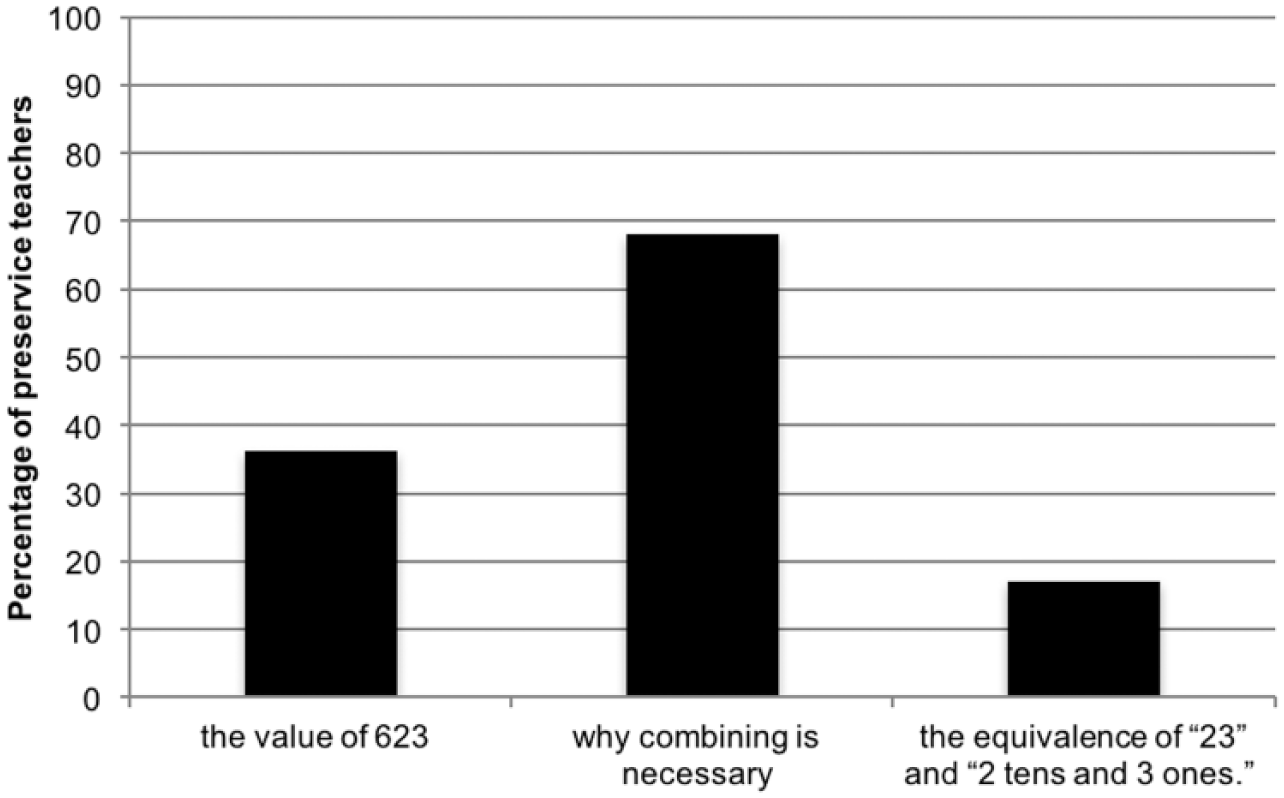
Probing the student’s understanding of the process and the key mathematical ideas.
Typical of preservice teachers who probed for understanding, one preservice teacher began by posing a series of questions that elicited the student’s process. After eliciting that the student had combined the six and the two, she asked a question that elicited why the student believed that she needed to combine the six and the two.
So when you first saw the problem what was your first step in solving it?
Uh, the first thing I did was add my tens so I did two plus three plus one and got six.
Okay, sure. And so what was the second step?
Then I added the nine plus six plus eight and got twenty-three.
Okay. So once you got to the six twenty-three how did you get to the eighty-three then?
Oh, I realized I had to combine.
Okay, so what made you realize that?
Well, I had tens written in two places, so-
Okay, sure. So the reason that you knew that the answer wasn’t six twenty-three was because you had two tens columns.
Right.
Okay, so I think I understand the process.
At this point, the preservice teacher had elicited the student’s understanding of one key component of the process, the combining of the six and the two. She did not press on the student’s understanding of the value of 623, nor did she elicit the student’s understanding of the equivalence of “23” and “2 tens and 3 ones.”
Thirty-four of the 47 preservice teachers (72%) probed the student’s understanding of at least one of these three ideas, but the remaining 13 preservice teachers did not probe the student’s understanding. These preservice teachers frequently focused on eliciting the student’s process without asking questions that would lead to gaining insights about the student’s understanding. For example, consider an interaction that was typical of the cases in which a preservice teacher did not probe the student’s understanding of the process:
So I have this problem here that you worked on earlier and I was going to rewrite it and see if you could teach me how to do it.
Okay.
So can you teach me how you would do that?

Sure.
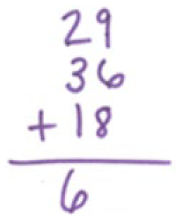
So why did you do that? Can you tell me how you decided that it was six?
Yeah. So I just knew to add my tens together and it was two plus three plus one and that was six.
Okay. And then-
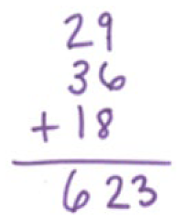
Okay, and how did you decide to do that?
So I was adding my ones so nine plus six plus eight adds up to twenty-three.
Okay.
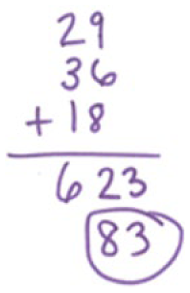
Alright. And how did you get that?
So I realized that I needed to combine the six and the two.
Okay. Thank you.
This preservice teacher elicited all three steps of the student’s process and the sequence in which the student worked on the problem, but her questioning did not result eliciting the student’s understanding of the process (e.g., Why did the student combine the six and the two?). Even when the student’s language signaled that there might be more to ask about, such as when the student said, “I realized that I needed to combine the six and the two,” the preservice teacher did not probe.
Attending to the Student’s Ideas
Across the board, the preservice teachers in this study attended to the student’s ideas when posing questions. All of the preservice teachers asked at least one question which was tied to the student’s written work, and all but one of the preservice teachers (98%) asked questions that were explicitly tied to specific things that the student said during the interaction. For example, one preservice teacher followed up on a student response in the following way:
I saw that I had to combine the six and the two.
The six and the two, okay and what made you combine the six and the two and not the three?
Here, the preservice teacher revoices the student’s response (the six and the two), and then asks a question about why the student has combined them. There was variation in the extent to which preservice teachers made use of student’s responses in follow-up questions, but with the exception of one preservice teacher all of the preservice teachers in this study made use of the student’s talk in at least one follow-up question.
Deploying Other Moves That Support Learning About Student Thinking
Preservice teachers’ use of other moves that support learning about student thinking varied. These moves included facing the student when asking questions, positioning papers so that the student could see and participate, encouraging the student to write, posing follow-up problems, refraining from having the student use a different process, and refraining from filling in student thinking. The distribution of each of these moves is indicated in Figure 6.
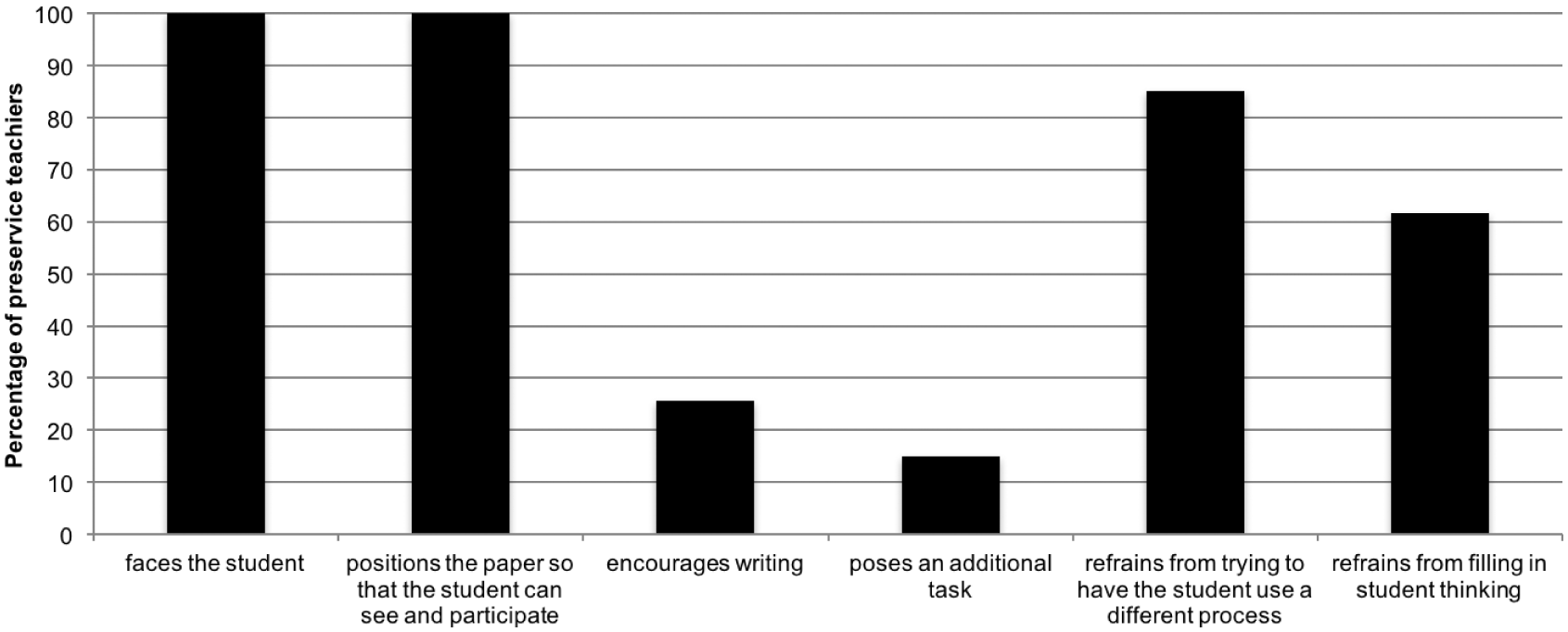
Deploying other moves that support learning about student thinking.
Facing the student and positioning the paper
In earlier work, we sometimes saw preservice teachers who oriented the paper toward themselves or did not face the student when asking him or her questions. However, all of the preservice teachers in this study faced the student when asking questions and positioned the sample of student work, such that the student could see it and participate in the interaction.
Encouraging writing
Twelve of the 47 preservice teachers (26%) encouraged the student to write during the interaction by asking the student to write. There were three different ways in which preservice teachers encouraged the student to write. Five of the preservice teachers (11%) asked the student to solve the problem again, and asked the student to talk as he or she worked through the problem and/or asked the student questions about what he or she had done following the completion of the problem a second time. Three of the preservice teachers (6%) posed a different mathematics task and asked the student to complete the task; however, none of these preservice teachers asked the student to explain his or her process or understanding on this task. Four preservice teachers (9%) asked the student to write to highlight a component of the process that was being used. For example, after eliciting that one student started by adding the tens, a preservice teacher asked the student to circle the tens. In this case and other similar cases, the writing appeared to serve as a means to highlight part of the student’s process or understanding.
Posing an additional problem
Seven of the 47 preservice teachers (15%) posed at least one additional problem to the student. These problems are shown in Figure 7. These problems varied in their usefulness to learn about the student’s process for solving addition problems involving regrouping. Preservice teachers varied in how they made use of these problems. Some asked the student to solve the problem. Others posed the problem and appeared to focus on whether the student would start with the leftmost column if the task involved hundreds and did not have the student work through the entire process. Still others recorded the problem, they solved it using the student’s method, and asked the student to confirm that the steps were the ones that the student would use.
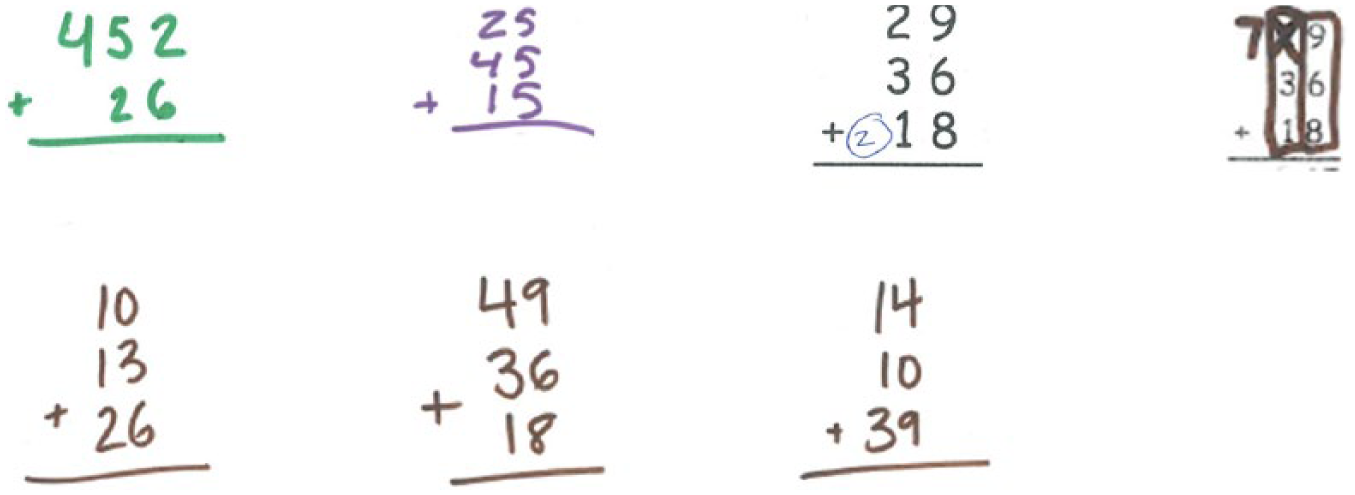
Follow-up problems posed by preservice teachers.
Refraining from asking the student to use a different process
Forty of the 47 preservice teachers (85%) refrained from trying to have the student use a different process to solve the problem in a way that competed with learning about the student’s process. However, seven of the preservice teachers (15%) tried to get the student to use a different process (the standard algorithm for addition). For example, one preservice teacher started by eliciting the student’s first step in solving the problem:
Can you help me solve nine plus six plus eight. Show me what you did when you first started on this column.
When I added these numbers up, I added the nine plus the six and then I added the eight to get twenty-three.
She then asked why the student had not completed the “carrying” step in the standard algorithm.
Yeah, perfect, so that’s exactly what you are going to do but can you tell me why you put twenty-three down here, and you didn’t carry the two to the tens place?
Well, I mean if when I wrote the twenty-three here this is the ones place [points to twenty-three] and this is the tens place [points to six] right so this is 2 tens and this is 3 ones.
The preservice teacher then continued to ask about the steps in the student’s process.
Okay. What did you do when you added this row? [refers to the tens column]
I added the rest of these tens so 2 tens three and one to get 6 tens.
Okay, and then what was your last step when you did that?
Well, I had to combine the six and the two.
Okay, so why did you do the six and the two and not the two and the three?
Oh, okay. Well, you can’t leave it like it is because that would be a crazy answer, it’s not, it could not be that number, so had you to combine the ones that were the same place value.
Okay.
So this is 6 tens but like we were talking about before this is twenty-three, so this is 3 ones and this is 2 tens so you have to put the tens together.
You have to put the tens together? Okay but do you know that this might be a hundreds place and this is a tens and then this is the ones place?
Well, this was just part of the work I was doing. That wasn’t the answer
That wasn’t the answer?
So it was just like part of the process.
At this point, the preservice teacher began to explain to the student what he “should have done.”
Okay, so when you added this row together and you got twenty-three do you remember how we talked about we would put the ones place down here and then we have to carry the tens place to the tens row which is going to be this row right here?
Oh I’ve seen my, I’ve seen that done but I think this way can work.
It might work for this problem but it’s not gonna work every time so watch what I do.
In this interaction, the preservice teacher elicited the student’s process but at the same time appeared to be using a line of questioning which was directing the student to use a different process for solving the problem.
Refraining from filling in student thinking
Twenty-nine of the 47 preservice teachers (62%) refrained from filling in the student’s thinking, that is, stating steps in the student’s process or stating the student’s understanding without first eliciting the step or the understanding from the student. But 18 preservice teachers (38%) filled in thinking at least once during the interaction. Twelve of these preservice teachers (26%) filled in parts of the student’s process. For example, one preservice teacher begins the interaction by stating what she believed that the student had done to arrive at the 623 which was recorded on the paper.
So I noticed that you did a good job of separating the ones column sum with the tens column sum.
Umm hmm.
Correct. So you got nine plus six. Fifteen plus eight is twenty-three.
Umm hmm.
And then two plus three plus one is six.
Yep.
But you kept the twenty-three down here?
Umm hmm.
In this interaction, the preservice teacher gets the student to agree that she added the digits in the tens column to arrive at the 6, and that she added the digits in the ones column to arrive at the 23. These ideas, however, are not elicited from the student. Instead, the preservice teacher appears to assume that this was the student’s process, and asks for her agreement.
Eight preservice teachers (17%) filled in parts of the student’s understanding. For example, one preservice teacher elicited that the student saw that she needed to combine the six and the two, but then stated the student’s understanding of why:
I saw that I needed to combine the six and the two.
Okay, and that’s because they’re both tens from your tens column?
They’re both tens.
Here, the student indicates that she agrees with what has been stated by the preservice teacher, but the understanding was not elicited from the student.
What Can Be Learned From the Skills That Novices Bring?
The analysis focused on the question, What can be learned for knowing about the skills that novices bring to teacher education? To do this, the study examined the skills of a specific group of preservice teachers at the point that they entered a teacher education program. The findings show that these preservice teachers—at the very beginning of their engagement in teacher preparation—made use of particular moves that are productive for eliciting student thinking. But the degree to which they made use of these moves varied both by move and by preservice teacher. Furthermore, preservice teachers made use of some moves that were less productive for learning about student thinking (e.g., filling in student thinking or trying to force a student to use a different approach for solving a problem).
In some ways, these findings are not surprising. Everyday interactions with others often involve listening to others and trying to find out what they mean by asking questions. In many professions that are focused on helping others such as social work and medicine, novices bring moves that they use in everyday life to initial preparation. But a common theme across helping professions is that moves from everyday life may need to be employed in different ways in the context of professional work. For example, in everyday life, it is common to not ask questions to which we already know the answer. But in teaching, teachers need to ask questions to confirm that their interpretations of student thinking are accurate. Looking from this perspective, we believe that the moves can be clustered into three categories that have implications for the design and conduct of teacher education, namely (a) moves that require new learning, (b) moves that can be built upon, and (c) moves that may require unlearning. The categories are distinct and have different implications for the design of teacher education.
Moves That Require New Learning
The preservice teachers in this study have much to learn about eliciting students’ mathematical thinking. For example, they rarely asked the student to write to illustrate his or her process to solve the problem, a move that can illuminate the sequence of work undertaken by the student. Similarly, they rarely posed an additional problem to learn more about the student’s thinking, including problems to confirm their interpretation of the student’s thinking. Yet, another example is that they inconsistently probed the student’s understanding of the process used and the key mathematical ideas underlying the process (e.g., asking the student why he or she needed to combine the 6 and the 2). Probing moves are among the least prevalent in the teaching of the study participants.
Although it is clear that these preservice teachers have much to learn with respect to eliciting student thinking, it is not clear whether preservice teachers do not know specific moves, do not know how to focus them within a particular context, or they have skill with such moves, but are not in the habit of using them in the context of eliciting student thinking. In either case, it appears that there is new learning required for these preservice teachers to incorporate such moves into their repertoire for eliciting student thinking. What it would take for a teacher education program to support the development of such skills is an important question. It seems plausible that the work required may vary by the specific move, and that approaches such as coaching, modeling, and developing mathematical knowledge for teaching could be useful. For instance, learning to probe students’ mathematical understandings has mathematical knowledge dimensions, whereby teachers must unpack the mathematics that is in play to determine the understandings that should be probed. In such cases, developing mathematical knowledge for teaching may help teachers to better probe student thinking. Learning to ask students to write, on the contrary, may have different demands. Unpacking the mathematics content may not be the crucial work that needs to be done in the context of teacher education to encourage this move; rather, the move might be encouraged through modeling or coaching, whereby preservice teachers would have the opportunity to see the affordances of the move in action, and then could be encouraged to try out the move independently.
Moves That Can Be Built Upon
Not unexpectedly, we saw that preservice teachers need to learn particular aspects of the work of eliciting student thinking, but what was interesting is that we also found that these preservice teachers were bringing skills that can be leveraged and built upon in teacher education. Specifically, in this study, preservice teachers consistently faced the student when asking questions and positioned the student’s work, so that the student could see his or her work and participate in the interaction. This might seem obvious but is not to be taken for granted. In the past few years, we have seen preservice teachers who do not employ such moves at the start of their teacher education program, perhaps signally that they have not yet developed a teacher’s need to focus on a student “audience.” Another example is that these preservice teachers consistently asked questions that elicited the student’s process for solving the problem, such as “What did you do first” and “What did you do next.” All preservice teachers elicited many of the steps; however, they varied with respect to whether they asked about all of the student’s steps. A third example is that in their interactions with the standardized student, there was consistent evidence that these preservice teachers were attending to the student’s ideas when they posed questions. For example, they asked questions about specific student actions and specific student talk; however, similar to asking questions to elicit the student’s process, there was variation in the consistency and the degree to which the preservice teachers attended to the student’s ideas.
This suggests that novices bring skills to teacher education that are relevant to the work of teaching and that, when they are known, can be leveraged in a teacher preparation program. That is not to say that there is not more fine-tuning to be done with these moves in teacher education. For example, most of the preservice teachers elicited all of the steps of the student’s process for solving the problem; however, these questions were often not particularly clear or targeted. A common question that these preservice teachers used when launching the interaction was, “So when you first saw the problem what was your first step in solving it?” This is a question that conveys that the preservice teacher is trying to learn about the student’s first step. But the wording could be clearer and more concise (e.g., What was your first step when you solved this problem?). Yet, another example is that preservice teachers appeared to be attending to student’s ideas, but they did not always make use of the student’s talk when posing a follow-up question. For example, some preservice teachers asked questions such as “Why did you do that?” instead of specifically naming the step of the process named by the student (e.g., “Why did you add the six and the two?”).
Moves That May Require Unlearning
Other moves employed by preservice teachers suggest that some of the skills brought to teacher preparation by novices may undermine to the work that teachers need to do. For instance, almost half of these preservice teachers “filled in” the student’s process or understanding during the interaction. That is, they stated the student’s step in the process, or an understanding of the student without first eliciting and probing the student’s thinking to learn what the student had done or what the student understood about the idea. Although it was much less common, an even more striking move was to influence the student to solve the problem using a particular process. Generally, it appeared to be an algorithm that was the preservice teacher’s preferred method. This happened before the preservice teacher learned about the student’s process for solving the problem and his or her understanding of the mathematical ideas underlying that process. Such a move is antithetical to the stated purpose of determining what a student is thinking and could lead to a situation where teachers are less able to teach responsively.
This signals that preservice teachers may be bringing skills and habits to teacher education that might be at odds with professional practice. These moves may be ones that could be productive and useful in everyday life. But, to be a teacher, one must be focused on the thinking of others and need to seek out, be interested in, and do not assume what students know and are able to do. The study results indicate that these preservice teachers were not consistently orienting toward understanding the student’s thinking at the point that they entered a teacher education program. These preservice teachers need opportunities to learn the hazards associated with the use of these moves, to practice restraint from using them, and to learn alternatives that will provide them moves they can use as they extinguish counterproductive moves. This study does not shed light on the degree to which it is challenging for novices to learn to use different moves rather than these moves. Furthermore, it is not obvious whether it will be possible to “build upon” these skills. These preservice teachers may, in fact, have to “unlearn” using these moves in the context of teaching. This work may not be easy for novices to do, and the field will need to further consider ways in which to help novices unlearn “unproductive” moves that they may be bringing from prior experiences.
Conclusion
Responsible instruction builds on the knowledge and skills that learners bring to instruction. The shift to practice-based teacher education requires that the field develop new ways of learning about the knowledge and skills relevant to practices of teaching that novices are bringing to teacher preparation. To study novices’ knowledge and skills and the ways in which such information could inform teacher education, one needs to pick particular teaching practices and content. As Cohen (2011) argued, “To teach is always to teach something” (p. 45), and we argue using the case of one teaching practice with particular content can contribute to learning how to gather information about the knowledge and skills that novices bring to teacher education. Specifically, we illustrate how knowledge of the skill with eliciting student thinking in elementary mathematics can be gathered, and connect such findings to the work required in a teacher education program. We next turn to considering the empirical and conceptual contributions of the study, and then close by raising questions for further investigation.
The study has both empirical and conceptual contributions. The empirical contributions are relevant to one specific teacher preparation program. The data indicate the moves relevant to eliciting student’s mathematical thinking brought to teacher education by one group of preservice teachers. Such data provide a portrait of this group of novice teachers, which can be taken and used by the teacher educators working with these novices. While the findings may “ring true” to others based on novices they have observed, the data cannot be generalized beyond this particular group. However, it is significant accomplishment to have data that can be interpreted in this way and at this juncture in the development of a novice teacher. The simulation can be used at the outset of teacher preparation, whereas it is far more difficult to envision a practical and responsible Day 1 enactment of this teaching practice with real students in a field-based context. Furthermore, the simulation assessment, if employed well, standardizes a context of practice and establishes “knowns” where there were “unknowns” that previously impeded analysis and interpretation of the performance of novice teachers.
At the same time, the study provides a conceptual contribution to gathering information about the knowledge and skills of core practices of teaching that novices bring to teacher education. That is, for this teaching practice, preservice teachers’ skills with the practice can be viewed in three distinct categories: (a) moves that need to be learned, (b) moves that can be built on in the context of teacher education, and (c) moves that need to be unlearned. The exact moves that fall into each of these categories might vary based on the specific group of novices; however, it is highly plausible that novices bring skills that fall into each of these categories. Gathering such information could orient teacher education to be responsive to the knowledge and skills that beginners are bringing.
There are many productive questions that could be explored in future work. One question is the degree to which the empirical data are generalizable. It is an open question as to whether the patterns in these data are generalizable across different groups of novices. It seems highly likely that a different group of novices, with different prior experiences, might bring different skills to their teacher education program. For example, all of the preservice teachers in this study were in their early twenties. One could hypothesize that a different group of preservice teachers who might have had different opportunities to work with children (e.g., prior work as a paraprofessional or as a caregiver/parent of children) might have different skills. Further investigation could reveal whether the patterns are generalizable and if not, it is possible that such studies could reveal resources that are brought to teacher education by particular groups of novices which may not be recognized by traditional application processes to teacher education.
A second question is the degree to which the three categories generalize across different teaching practices and subject matters. That is, if one investigates the knowledge and skills that novices bring relevant to leading a whole class discussion or communicating about a student with a parent or guardian, will the skills cluster into the same three categories of skills that need to be learned, can be built on, and need to be unlearned? Furthermore, would the skills cluster in the same three categories for eliciting student thinking in science? It seems plausible that this might be the case, and that the three categories could be a useful organization as a teacher education program investigates the knowledge and skills that novices are bringing to teacher education. The specific moves within these three categories might vary, but the notion of the three categories is likely to remain constant.
A third question is related to the nesting of eliciting student thinking within the larger practice of eliciting, interpreting, and responding. Obviously, asking questions and eliciting thinking from students do not necessarily mean that a teacher understands a student’s thinking or is positioned to respond to student thinking. Interpretation is crucial because the kind of meaning making involved connects what students say and do to teacher actions that often affect students’ subsequent learning opportunities. There are many interpretive frames and tools that teachers use to accomplish this work (McMillan, 2011). Undoubtedly, novices both enter teacher preparation with existing interpretive frames and need to learn to use new frames and tools that support their interpretation. The degree to which the novices in this study understood the thinking that they elicited is unclear. Further exploration of interpretation could happen in relation to a simulation such as the one described in this study. For instance, when a preservice teacher asks questions which resulted in the student stating his or her process, it would be possible to interview the preservice teacher to determine how they are making sense of what was elicited.
By addressing the issues named above, teacher education programs and professionals will be better positioned to address the critical challenge of designing teacher education experiences for novices that are responsive to the knowledge and capabilities that novices bring to teacher education. But assessing novices’ capabilities at the onset of teacher education is challenging as real consequences exist for children (and preservice teachers) when inexperienced teachers are charged with providing instruction for students. We believe that simulations may offer a means to assess interactive practices of teaching that cannot be easily assessed prior to beginning formal preparation in ways that are responsible both to children and their families as well as the novices themselves.
Footnotes
Acknowledgements
The authors gratefully acknowledge the contributions of Deborah Loewenberg Ball, Merrie Blunk, and Susanna Owens Farmer to this work.
Authors’ Note
Any opinions, findings, and recommendations expressed are those of the authors and do not reflect the views of the National Science Foundation.
Declaration of Conflicting Interests
The author(s) declared no potential conflicts of interest with respect to the research, authorship, and/or publication of this article.
Funding
The author(s) disclosed receipt of the following financial support for the research, authorship, and/or publication of this article: The research reported here was supported by the National Science Foundation under DRK-12 Award No. 1316571 and No. 1502711.