



Abstract
Objective
Medico-legal autopsy is conducted routinely in some countries and selectively in others in hospital deaths. This study was conducted to evaluate the views of the forensic medicine experts regarding this matter.
Methods
A questionnaire pro forma was sent to sixty-five forensic medicine experts practicing in different medical institutions all around India. Designations and experiences of the participants were noted by requests in the same questionnaire. Their specific experience in conducting medico-legal autopsy in hospital deaths was also requested for. Responses were charted in frequency distribution tables and analyzed using SPSS, version 17.0.
Results
One-third of the participants felt that a medico-legal autopsy was necessary in all the hospital death cases as defined in the present study. Ten percent of the participants opined that a medico-legal autopsy was unnecessary in hospital deaths. The majority of the experts mentioned finding the cause of death, followed by finding the manner of death and collecting the evidentiary materials, as the reasons for medico-legal autopsy in hospital deaths. Twenty percent of the participants felt that internal findings at autopsy poorly matched with the case records. All the experts agreed that external autopsy findings matched with the hospital case records. Nearly two-third of the participants felt that it was difficult in some cases to interpret the autopsy findings without case records from the hospital where the deceased was treated.
Conclusion
Our findings suggest that the exercise of carrying out medico-legal autopsy routinely in every hospital death as evident in the Indian framework is often unnecessary as per the experts’ opinion. Autopsy findings in hospital deaths often correlate with hospital case records.
Introduction
Medico-legal autopsy is an important exercise carried out to ascertain key information such as the cause of death. In some nations like the United States, the Coroner investigates the cause and the circumstances surrounding deaths from accident, injury or unexpected events. This is in contrast to the Indian framework of inquest performed mostly by the police or magistrates with a focus on ascertaining whether the death had been caused by the conduct of a criminal act. In cases of hospital death, it is plausible to conduct a medico-legal autopsy if a victim dies on arrival at the hospital or dies during the hospital care and an allegation of medical negligence is made. However, in the Indian framework of inquest of a medico-legal case of death, even when the precise cause of death, the identity of the person, the manner and moment of death are known, a medico-legal autopsy is carried out routinely because it simply counts as a medico-legal case. 1 The exercise of carrying out a medico-legal autopsy is often futile in such cases. Therefore, this study has been designed with an objective to evaluate the views of the forensic medicine experts working in India regarding this matter.
Materials and methods
Questionnaire pro forma for the survey.
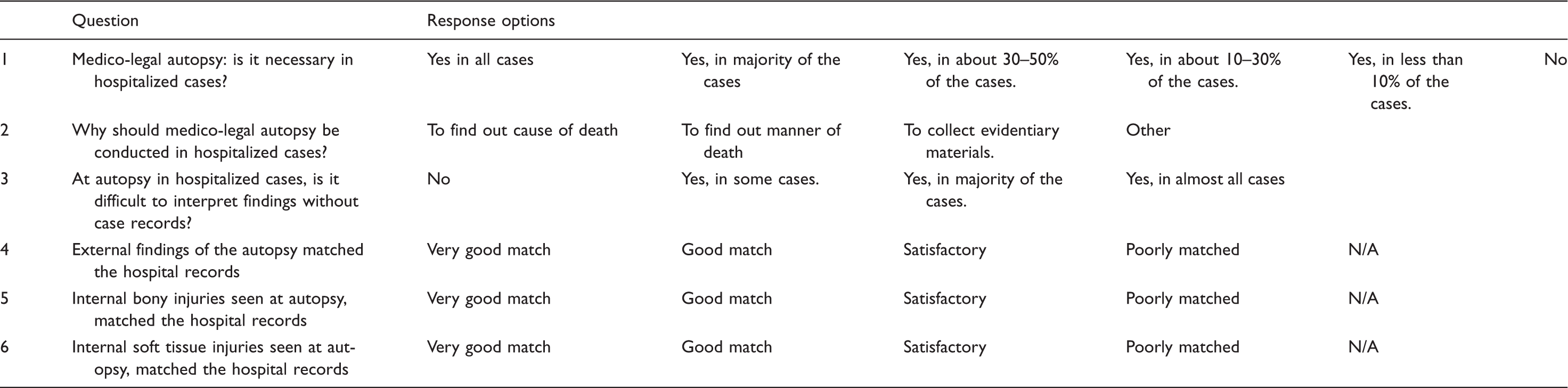
The designations and experiences of the participants were noted by requests in the same questionnaire. Their specific experience in conducting medico-legal autopsy in hospital deaths was also requested for. The authenticity of responses was checked by personal contact. The responses were charted in frequency distribution tables. Those responses that could not be cross checked by contact were excluded from the study. Analysis was conducted using SPSS, version 17.0, statistical analysis programme (SPSS, Inc., Chicago, IL).
Results
Forty-seven experts with designations ranging from ‘professor’ (n = 11) in forensic medicine up to the lowest designation of ‘tutor’ (n = 8) in forensic medicine, from various medical colleges of India, responded to this survey. The response rate was 72%, and at 95% CI the error level at this response rate was found to be 7.5%. Except for two participants, all others had experience in conducting medico-legal autopsies on hospital deaths as defined in the methodology in more than 10 cases.
Thirty percent of the participants felt that a medico-legal autopsy was necessary in all the cases. Ten percent of the participants opined that a medico-legal autopsy was unnecessary in hospital deaths (Figure 1).
Medico-legal autopsy: Is it necessary in hospital deaths?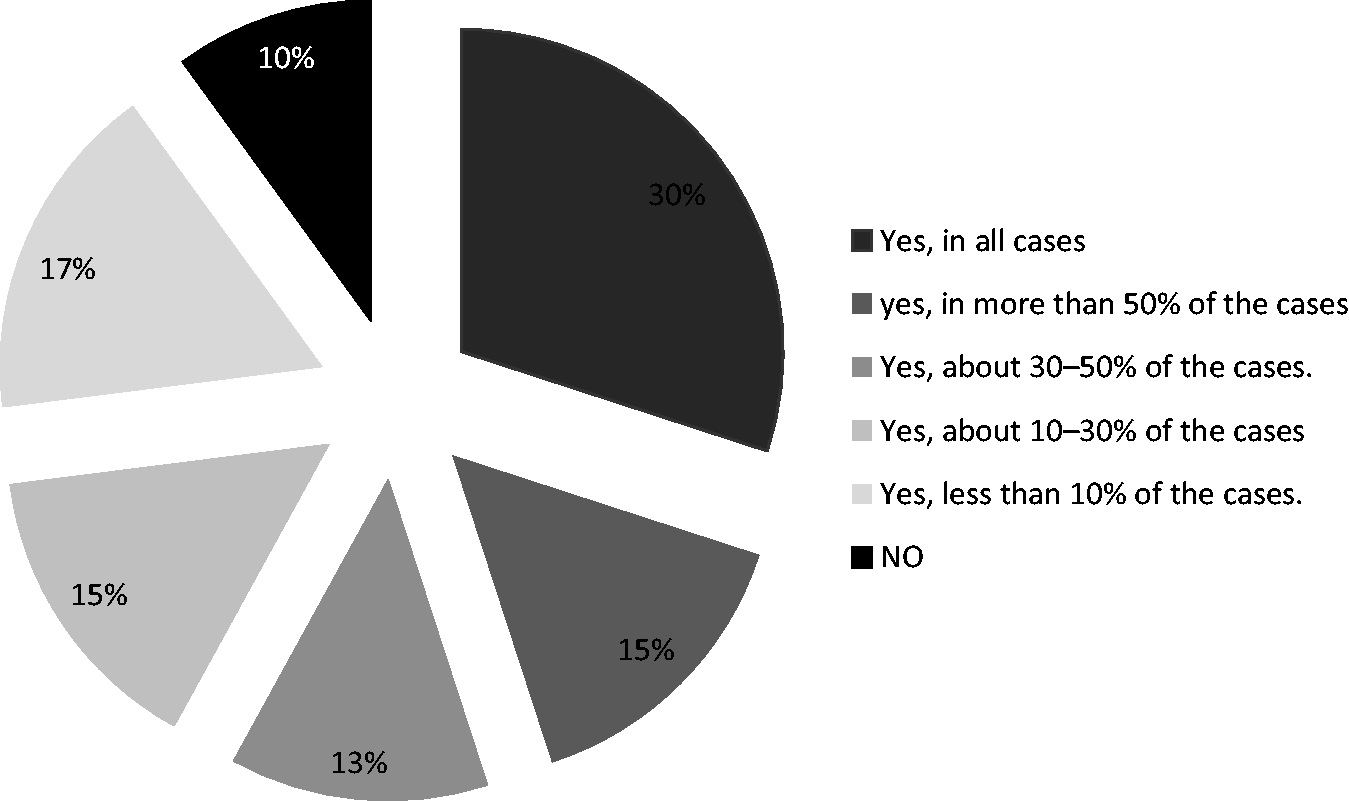
Ninety-two percent of the participants felt that finding the cause of death was a reason for a medico-legal autopsy in hospital deaths. Finding the manner of death and collecting the evidentiary materials were other reasons for a medico-legal autopsy, even in hospital deaths, was a view accepted by majority of the participants (Figure 2). The participants expressed other reasons for a medico-legal autopsy, which were similar for a clinical autopsy and in cases of alleged medical negligence.
Reason for medico-legal autopsy in hospital deaths.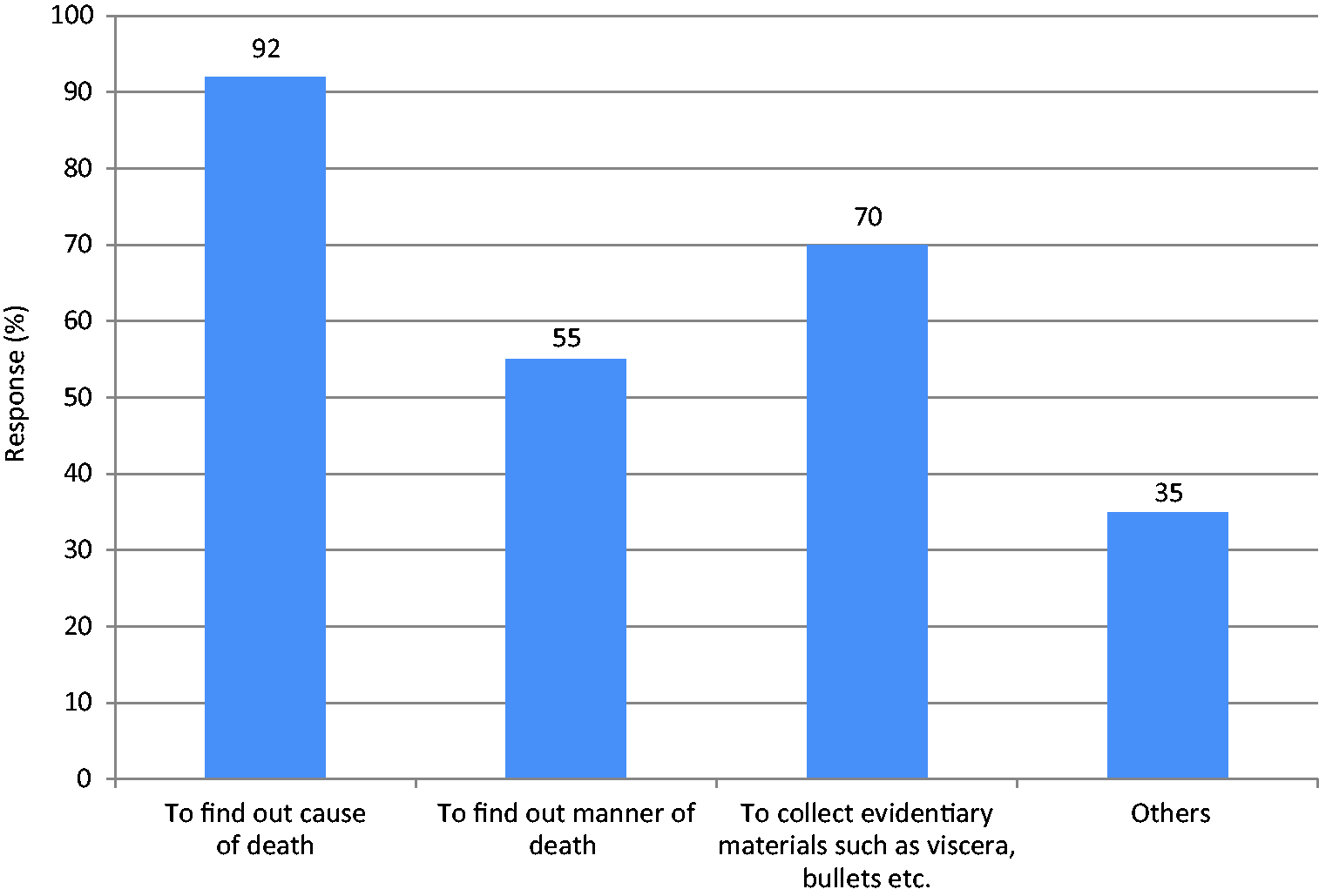
Fifty-seven percent of the participants felt that it was difficult in some cases to interpret the autopsy findings without case records from the hospital where the deceased was treated (Figure 3).
Difficulty to interpret autopsy findings without case records.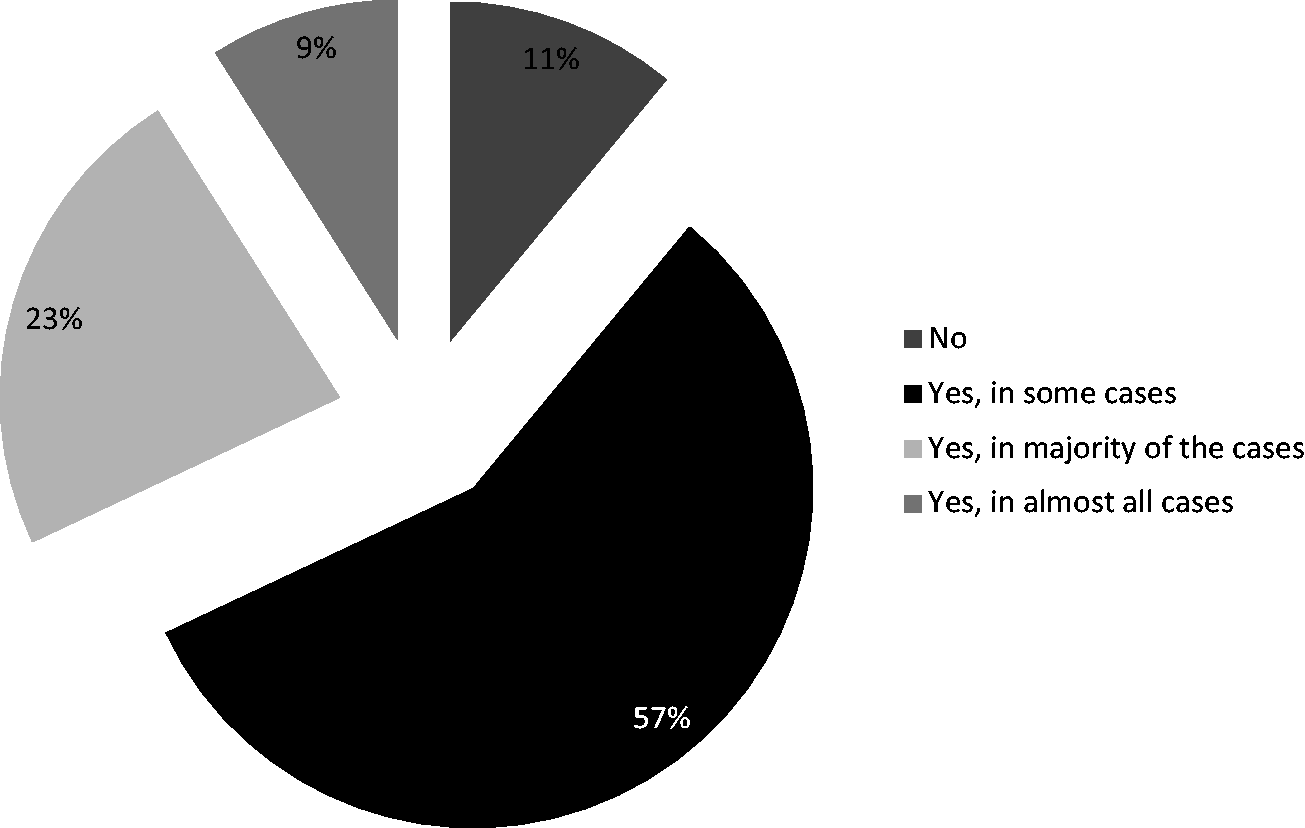
When asked about their views towards autopsy findings and their match with the hospital case records, none of the participants reported poor match of external findings at autopsy with case records. Twenty percent of the participants felt that internal findings at autopsy were poorly matched with the case records (Figure 4).
Medico-legal autopsy findings matching hospital case records.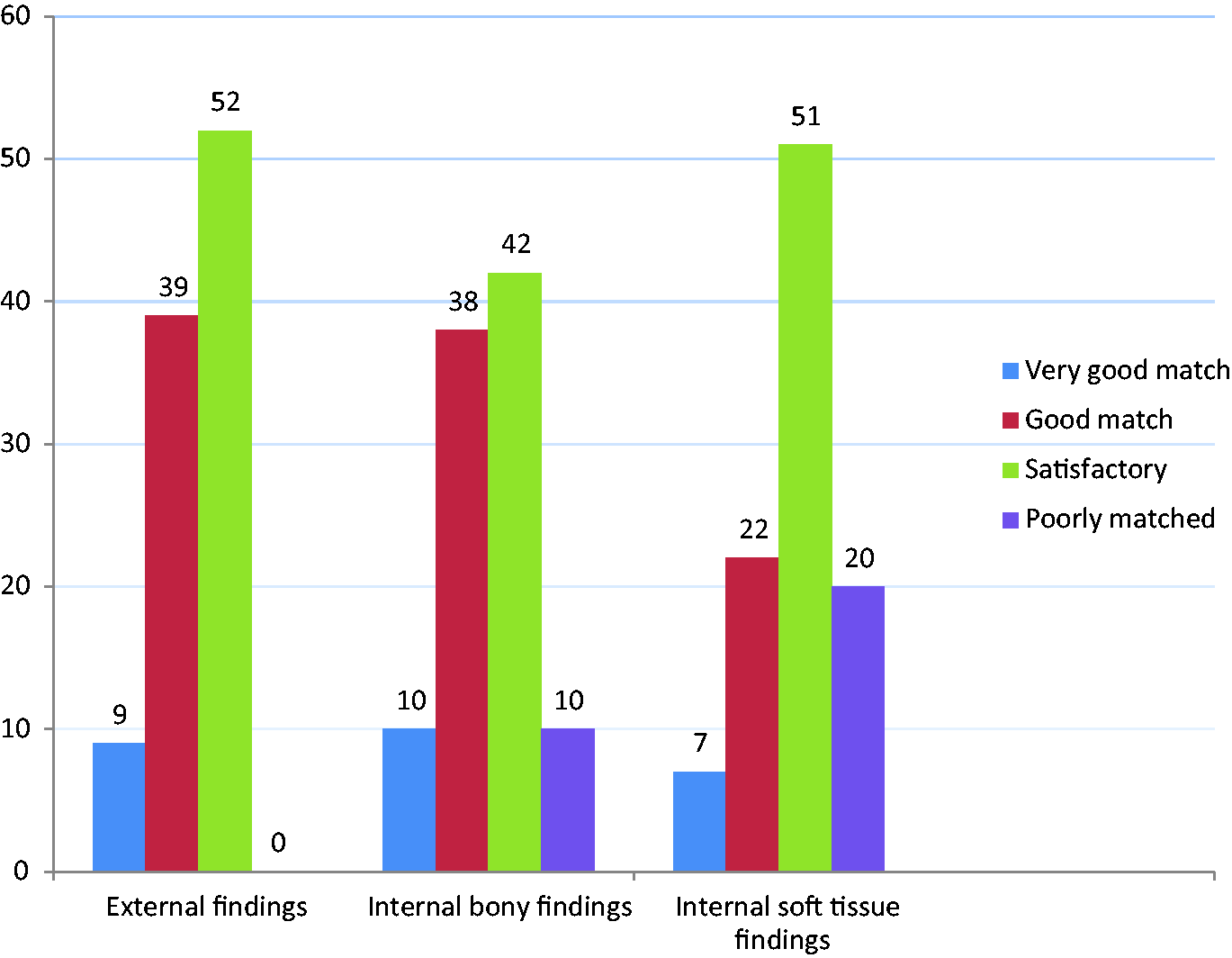
Other views expressed were that both minor and major surgical procedures, medical treatment and investigations were not properly documented in hospital case records. The visceral bleeds in the abdomen, fracture of the skull and intracranial haemorrhages were more likely to be missed by the clinicians, and the CT scan findings could be different from visual post-mortem findings.
Discussion
‘Medico-legal autopsy in hospitalized cases’ refers to medico-legal autopsies wherein autopsy was done after the patient died in a hospital and clearly excludes all pathological or clinical autopsies that do not have a medico-legal or forensic bearing. These cases would have received medical attention to various degrees and the minutiae are expected to be documented in the hospital case records. In the Indian framework, medico-legal autopsies are being conducted in hospital deaths that are registered as medico-legal cases, at times without any justification. As the hospital death cases have already received some attention by the treating doctors, the need for medico-legal autopsies is discussed.
There is a lack of consensus about the need for medico-legal autopsies in such hospital deaths. Only a small proportion of the experts had a general feeling that they are not necessary. This reflects on their working atmosphere, where there could be better diagnostic rates of such hospital deaths, when compared to other hospitals where diagnosis may be uncertain for admitted cases. The cause of death was found to be the most important reason for conducting a medico-legal autopsy. Its importance may be subdued in hospital deaths, as it may have been already established by the treating doctors.
In the present study, most of the experts agreed to a general view that the cause of death, collecting evidentiary materials, finding the manner of death, may be the reasons for medico-legal autopsies in hospital deaths. The cause of death determined in hospital deaths with short stay may be inaccurate. In such cases, the diagnosis is based on the occurrence of typical clinical symptoms. 2 In a selected group of sudden unexpected deaths, in which there was often a question about ascertaining the cause of death, the rate of initial death certificate accuracy was only about 50%. 3 The cause of death is not difficult to ascertain with the increasing time interval between hospitalization and death, due to availability of sufficient time for examination and investigations. Misdiagnoses may be found in hospital death cases. 2 Even with a clear picture of events leading to death, death certificates completed even by consultants may not be accurate and may underestimate the contribution of injury to the mortality. 4 Clinical diagnoses are functionally oriented, while autopsies are pathomorphologically oriented, and this is another reason for conducting autopsies. 5
Collecting materials at autopsy, such as viscera and body fluids, is relevant only in those cases where these materials could be helpful as evidence. Prolonged hospitalization is likely to destroy the evidentiary value of such materials collected from the dead body at autopsy. The majority of the experts found it difficult in some cases, to interpret the autopsy findings in hospital deaths without hospital case records of history and treatment details. This view is due to the fact that hospitalization could alter or introduce new findings, compared to the state of pre-admission in that hospital. When hospital case records are available for scrutiny, the autopsy surgeons find it easy to interpret. This will give a limited scope for confusion, especially with the inexperienced autopsy surgeons.
Most of the experts had at least a satisfactory match of autopsy findings with documented clinical findings. The internal soft tissue findings were matching least with the hospital case records compared with the other type of findings at autopsy. The reason for this is that the radiological investigations are generally not done early and a clinical examination could miss an internal finding such as a bleed. The reason for higher ‘satisfactory’ but not ‘very good’ documentation of medico-legally significant findings is the priority given for other observations, the lack of knowledge/negligent attitude about its legal importance, overburdened workload on the casualty medical officers etc.
Footnotes
Limitations
The views expressed are from a small proportion of medico-legal experts performing medico-legal autopsies on hospital deaths. Hence, the small sample size is the primary limitation of the study. Similarly, convenient sampling was done with regard to selection of the participants for the study because the survey was conducted using online questionnaire system and we anticipated not many senior experts to be familiar with the online survey system. Hence, the survey was sent to only those experts whose web ID was already in our database and could be reached via email for further correspondence.
Funding
This research received no specific grant from any funding agency in the public, commercial, or not-for-profit sectors.
Guarantor
DHD
Contributorship
All the authors conceived the study and researched the literature. DHD was instrumental in data collection and wrote the first draft of the manuscript. SP and RGM critically revised the manuscript for intellectual content. All the authors analyzed, read and approved the final draft of the manuscript.
Declaration of conflicting interest
The authors declare that there is no conflict of interest.