




Abstract
Although the increasing popularity of tattoos has challenged the previous associations with criminality and psychiatric illness, particular subsets of tattooed individuals may still have an association with unnatural deaths in a forensic context. A retrospective review of the autopsy database at Forensic Science South Australia was undertaken over a 23-year period from 1997 to 2019 for cases with swastika tattoos. Twenty-six cases (23 males and 3 females) were identified, ranging in age from 19 to 67 years (Mage = 36 years). The cases comprised seven (27%) suicides, seven (27%) accidents (including five vehicle crashes), five (19%) drug-related deaths (toxicity/overdose), four (15.4%) natural deaths and three (11.5%) homicides. There were significantly more unnatural deaths in the group with swastika tattoos compared to tattooed controls (p < 0.01). Multiple swastikas, expletives and white supremacist sentiments were also present in a number of cases. However, in one Asian male, the presence of a sacred Buddhist tattoo suggested that the swastika tattoo instead had religious rather than antisocial/racist significance. This study shows that in the population of individuals undergoing forensic autopsies, subgroups may be identified by their tattoos who have a predisposition to violent and unnatural death. Evaluation of this risk has to be tempered by considering the cultural/religious background of a decedent, as the symbol may have completely different connotations for certain religious groups such as Jains, Hindus and Buddhists.
Introduction
Tattooing refers to the process of creating images in the skin by introducing coloured dyes through needle pricks. 1 The history of tattooing goes back tens of thousands of years to the Upper Palaeolithic era, with tattoos discernible on the remains of Ötzi the Iceman from the Bronze Age who was found in the Tyrolean Alps at the end of the last century. 2 , 3 Tattooing has been found in many societies with quite different motivations for such markings. For example, tattooing was used in the South Pacific to signify warriors of upper class, in Japan to mark members of the Yakuza, a criminal organisation, and in the UK in the eighteenth century to identify military deserters. 1
Over the past century or two, particularly in the West, tattoos have been associated with psychological illness and high-risk behaviour, with statements that the ‘worst and most bestial’ of convicts could be identified by the obscene nature of their tattoos. 4 With the increasing popularity of tattoos in more recent years, however, it appears that this stereotype may be changing. 5 As there is evidence that this may not apply to particular subsets of tattooed individuals, such as those with tattoos signifying gang membership, 6 the following study was undertaken to evaluate the significance of swastika tattoos in individuals presenting for medico-legal autopsy.
Methods
A retrospective study was undertaken of the autopsy database at Forensic Science SA in Adelaide which serves the population of South Australia, Australia. The database was searched for all cases where a tattoo of a swastika had been documented. The age, sex and cause and manner of death were recorded, in addition to any other antisocial tattoo messages. Comparison was made to a previously established control population of 100 consecutive decedents with tattoos presenting for medico-legal autopsy in the same institution 5 using Fisher’s exact test.
Results
Twenty-six cases were identified over the 23-year period of the search from 1997 to 2019. There were 23 males and three females (M:F = 7.6:1), ranging in age from 19 to 67 years (Mage = 36 years). In assessing the manner of death, there were seven (27%) suicides, seven (27%) accidents (including five vehicle crashes), five (19%) drug-related deaths (toxicity/overdose), four (15.4%) natural deaths and three (11.5%) homicides.
The tattoos ranged from small and extremely rudimentary (Figure 1) to quite large and complex with the incorporation of other designs such as a Waffen-SS logo on the front of the chest (Figure 2). Three decedents had two separate swastika tattoos, and one had three. White supremacist tattoos were present in four cases: (a) ‘Aryan brotherhood’, ‘Seigheil’ and ‘Hitler’s helper’; (b) a Waffen-SS symbol (Figure 2), a Ku Klux Clan image and ‘Heil Hitler’; and (c) and (d) ‘white power’ (Figure 3). Five cases had expletive tattoos with three consisting of ‘F.T.W.’; two others had tattoos with the word ‘hate’. Two of the decedents were from Asia, one of whom also had a sacred Buddhist tattoo (‘9 Peaks San Sent’), suggesting that the swastika may have instead represented a religious symbol.
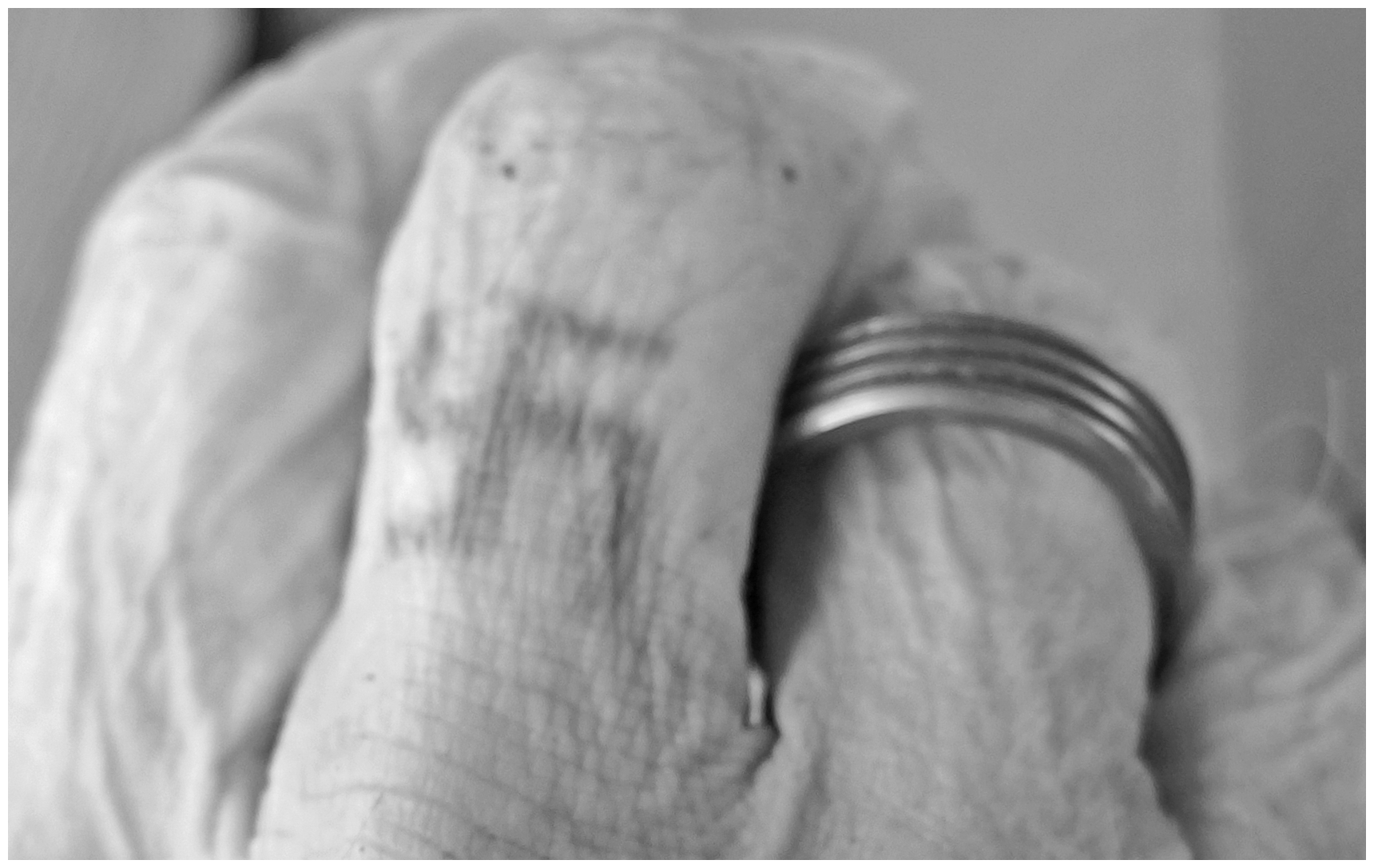
A rudimentary swastika on the left middle finger of a 67-year-old man who died of hypothermia complicating ischaemic heart and chronic obstructive airways disease.
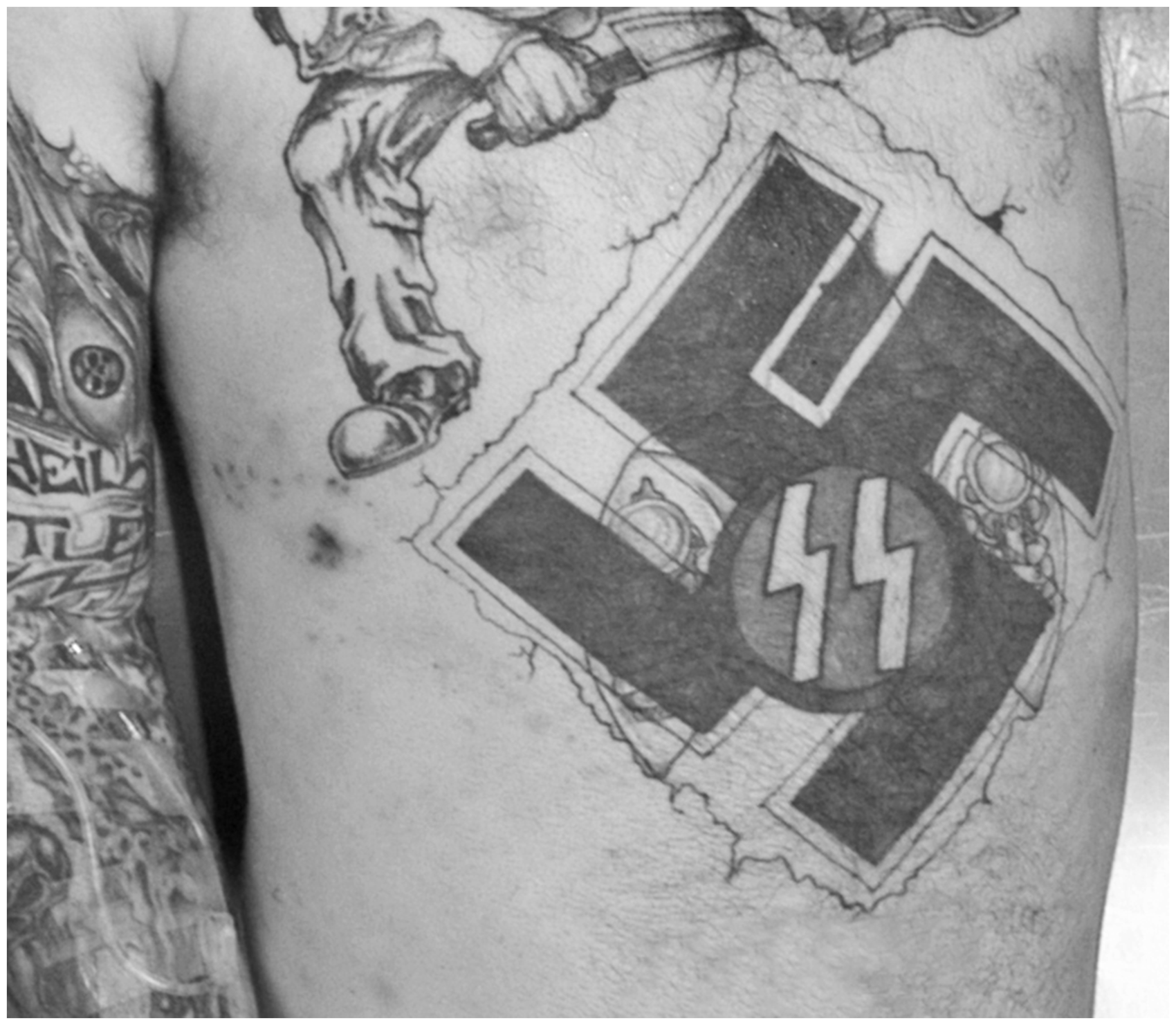
A large design incorporating the lightning bolt logo of the Waffen-SS, a symbol commonly used by white supremacists. The decedent was a 26-year-old man who died at the scene when his motorcycle collided with a telegraph pole. The tattoo has covered up an existing design depicting a figure with pistols.
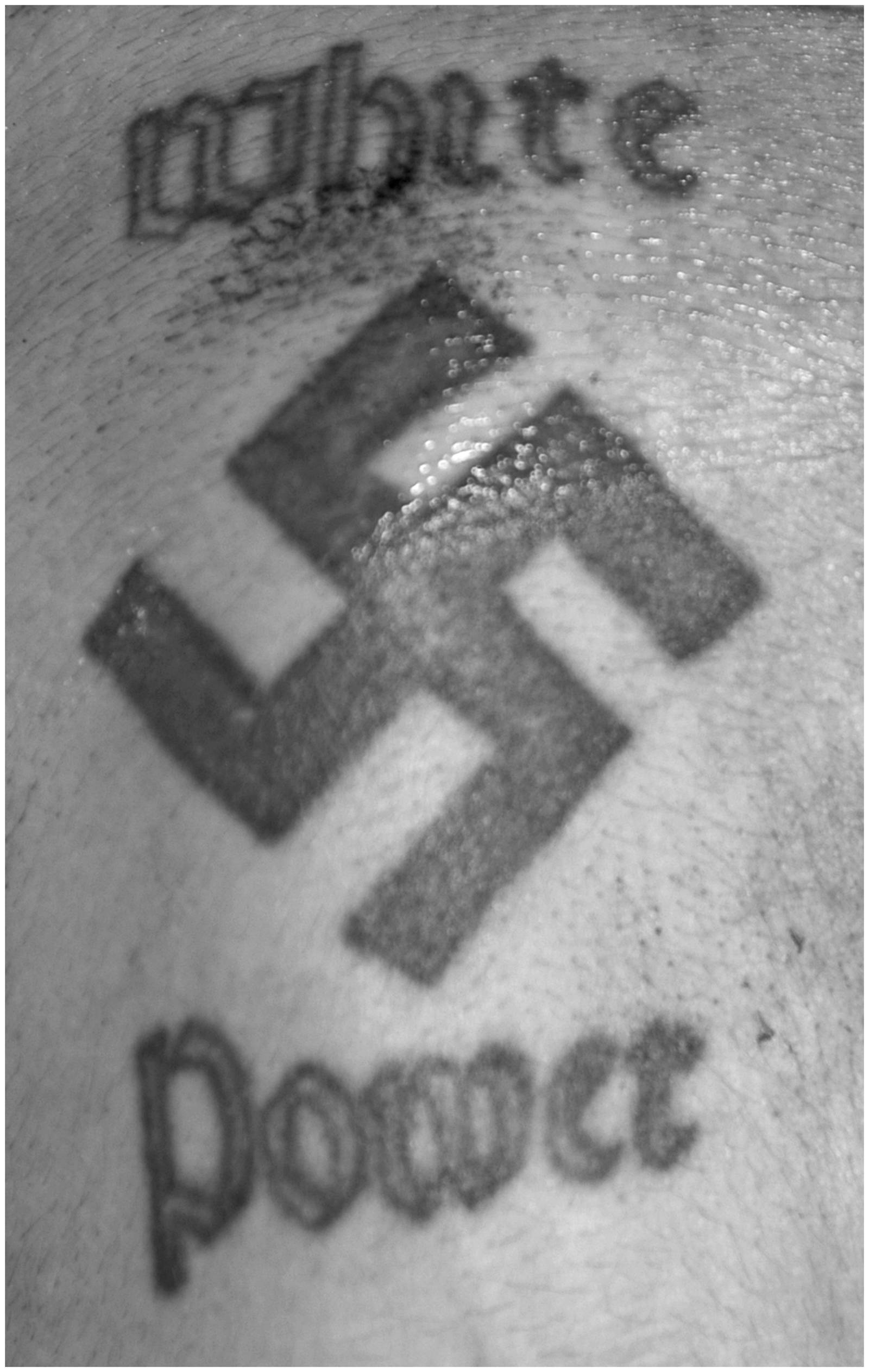
A tattoo of a swastika with ‘white power’ on the shoulder of a 22-year-old man who committed suicide by shooting himself through the soft palate with a .22 rifle.
In the 100 cases in the control group, there were 56 unnatural and 44 natural deaths. No statistical significance was demonstrated between the specific subgroups (i.e. suicide, accidents, drug-related and homicide – quite likely because the numbers for each cell were quite small). However, once the figures were accrued, there were significantly more unnatural deaths in the group with swastika tattoos (p < 0.01).
Discussion
Despite the popularity of tattoos in recent years broadening the demographic background of individuals who choose to mark themselves in this manner, it is apparent that particular subsets of tattoos identified in a forensic setting may still be associated with unnatural deaths. 7 , 8 Almost 30% of people living in the USA now have tattoos. 9 In an Australian context, tattoos depicting the nineteenth-century outlaw or ‘bushranger’ Ned Kelly are often chosen because of his anti-authoritarian actions. Analysis of cases with such tattoos presenting to medico-legal autopsy, however, has revealed that 85% of the deaths were unnatural, including 40% which were due to suicides and 10% which were due to homicides. 7 A similar study was subsequently undertaken examining the association of tattoos that contained text with common expletives with unnatural deaths, again demonstrating a significantly increased number of non-natural deaths in this cohort. 8
The swastika is an ancient symbol that has been used in a variety of settings for almost 7000 years, and remains a sacred symbol in religions such as Jainism, Buddhism and Hinduism (Figure 4). The name derives from svastika which is Sanskrit for ‘all is well’ or ‘good fortune’. 10 In the twentieth century, the swastika or hakenkreuz (‘hooked cross’) became associated with the racist and ideological tenets of the Nazi party in Germany, and was formally adopted as the symbol of the party in 1920. 10 Since that time, the swastika has been associated with extreme right-wing and white supremacist ideologies. 11

Swastika symbols are frequently found in Hindu and Buddhist temples throughout Asia. This decorated gate is part of the Sree Sree Dhakeshwari National Temple in Dhaka, Bangladesh.
Given its contemporary political associations, a swastika tattoo is often regarded as an antisocial statement in Western communities. In support of this was the presence of multiple swastikas, expletives and white supremacist sentiments and statements in a number of the studied cases. Alternatively, in certain Asian cultures, the swastika may represent a religious symbol, as was likely with the decedent who also had a sacred Buddhist tattoo.
The current study shows that antisocial messaging in tattoos, in this case represented by swastikas, has a significant association with unnatural deaths in cases that are presented to forensic institutes for autopsy. This is in line with reports of increased percentages of suicides, accidents and homicides in individuals with expletive or certain other rebellious messages at forensic institutes. 7 , 8 However, given that 47% of the millennial population in the USA now have tattoos, 9 it is clear that the study group represents a highly selected population. The significance of this study is that in the population of individuals undergoing forensic autopsies subgroups may be identified by their tattoos who have a predisposition to violent and unnatural death. Assessment of this risk has to be tempered by consideration of the cultural/religious background of a decedent, as the symbol may have an entirely different meaning for certain religious groups such as Jains, Hindus and Buddhists.
Footnotes
Declaration of conflicting interests
The author declared no potential conflicts of interest with respect to the research, authorship, and/or publication of this article.
Funding
The author received no financial support for the research, authorship and/or publication of this article.
