



Abstract
The face is the most essential part of the human body, and because of its distinctive traits, it is crucial for recognizing people. Facial recognition technology (FRT) is one of the most successful and fascinating technologies of the modern times. The world is moving towards contactless FRT after the COVID-19 pandemic. Due to its contactless biometric characteristics, FRT is becoming quite popular worldwide. Businesses are replacing conventional fingerprint scanners with artificial intelligence—based FRT, opening up enormous commercial prospects. Security and surveillance, authentication/access control systems, digital healthcare, photo retrieval, etc., are some sectors where its use has become essential. In the present communication, we presented the global adoption of FRT, its rising trend in the market, utilization of the technology in various sectors, its challenges and rising concerns with special reference to India and worldwide.
Keywords
Introduction
In the modern world, when everyone is talking about artificial intelligence (AI), there are hardly a few people who remained unnoticed about the wonders of AI. One such wonder of AI is the facial recognition technology (FRT) adopted by almost every domain nowadays, such as office controls, border crossing, institutions, security and surveillance, etc. Facial recognition is one of the most efficient biometric approaches for identifying and verifying individuals as compared to the other means of identification such as voice, iris, gait, retina scan, ear, and hand geometry. FRT has gained the attention of researchers due to its application in several domains, such as surveillance, border security, law enforcement, access control, etc. Nowadays, facial identification has become a subject of multidisciplinary interest. Many other applications have been incorporated into facial recognition systems, such as neural networks, computer graphics, psychology, 1 image feature recognition, and information processing.
Facial recognition is the process of comparing images taken by a camera with facial images recorded in a database using the necessary computer algorithms to analyze and extract useful identification feature information. 2 The field of facial imaging utilizes visual face data to aid in identification process, including forensic facial identification. Forensic facial identification is a methodology to link suspected people to criminal activities by analyzing photographic or video data. Moreover, the rising number of criminal occurrences captured in videos and photographs has gradually made it more critical for investigators and judges to compare faces. Forensic facial comparison can be performed either manually or by automatic biometric system. 3 The data generated from various CCTV surveillance systems are often relevant for facial analysis, general surveillance, and criminal activity monitoring. The requirement for facial identification has increased manifolds due to the installation of CCTV systems and increase in rate of crime. The rising availability of photographic and video evidence from sources like CCTV data, mobile phones, etc. has directly contributed to growth of FRT. 4 This study discusses the areas where FRT is functioning, recently launched, and its present status of utilization. We all know that the main aim of any research is to fill the existing gap and introduce more new advanced techniques to overcome the drawbacks and ease the work. Numerous studies have been performed on FRT and many are still in the pipeline. Therefore, what exactly is the scenario of FRT in India and at the global level, is this really helpful, what are the challenges and further requirements, and what is its actual demand in the worldwide market in this particular domain? In this communication, all these aspects have been discussed in detail to represent the global adoption of FRT with respect to its current status, projects, and implementation in India.
History and development of facial identification
In 1963, for the very first time, a paper appeared in Nature on biometrics related to automatic fingerprint identification systems. Whereas the first work on automatic facial recognition was done by Woodrow W. Bledsoe in 1964. In his initial method, Bledsoe manually marked the mouth, the eye centers, and other facial markers, to calculate the goodness-of-fit, distances between landmarks and distance ratios which could be automatically generated and compared between photographs. He continued his research in 1965 and tried automating the process of recognizing a missing person. 5 The brief history and development of FRT is presented in Figure 1.
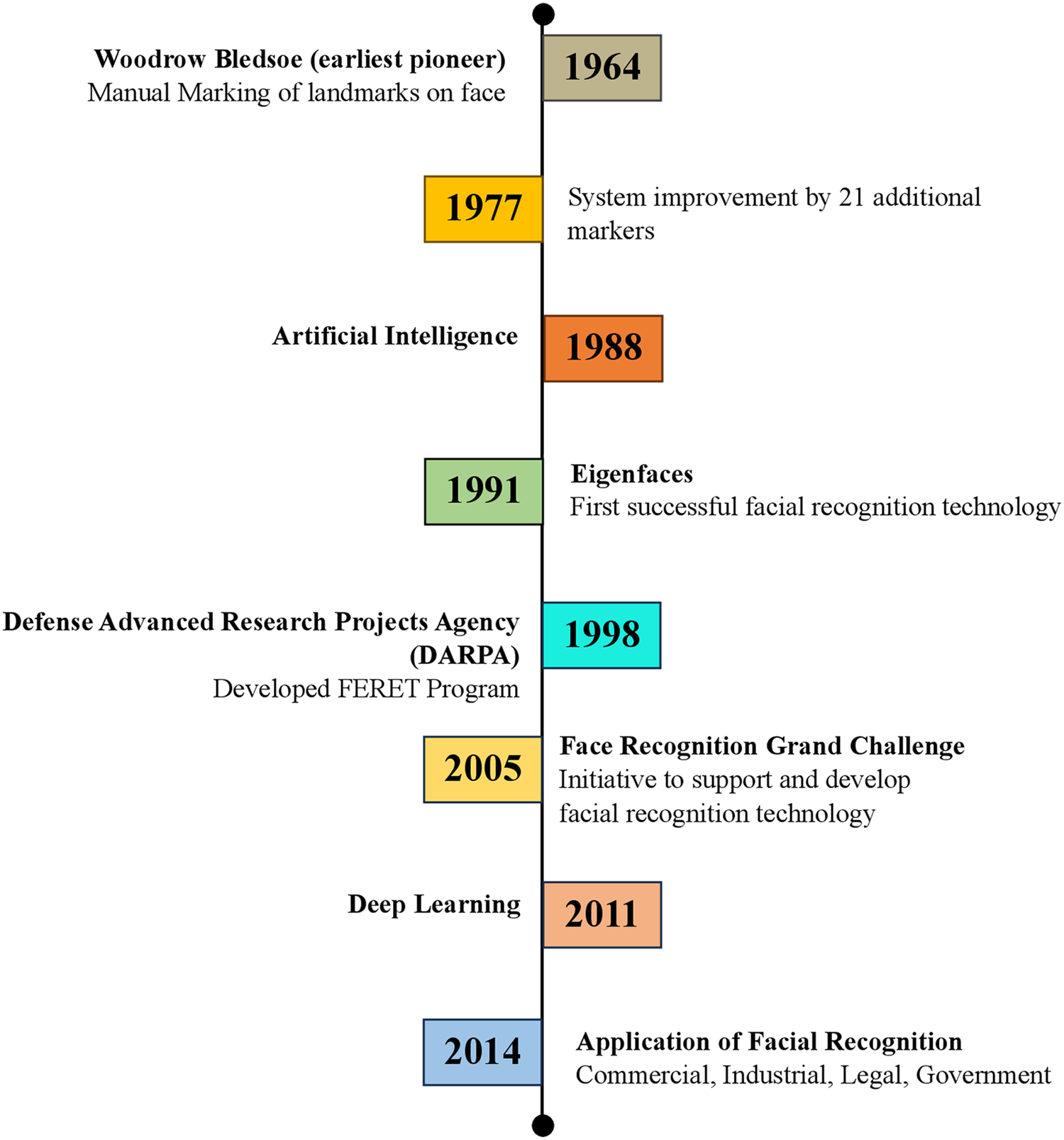
History and development of facial recognition technology.
Face recognition is one of the most popular methods explored for biometric purposes. It has a lot of endearing characteristics, such as universality, acceptance, semi-permanence, and collectability. 6 A set of recognizable and verifiable data particular to that person is used in biometrics to identify and authenticate that person. To the exclusion of all others, face identification seeks to establish if the person being questioned is the same person as the known. Usually, two terms, i.e. “face identification” and “face recognition,” are misunderstood. This can be better illustrated in Figure 2. Human face is associated with the auditory, olfactory, visual, and gustatory senses. Indeed, it is the most effective and dynamic social communication tool. A person's face is also suggestive of age, race, ethnicity, emotions, personality, attractiveness, etc. Human facial diversity demonstrates the natural world's degree of variety and originality. 7 Existing facial recognition systems have matured to some extent, but their performance is still constrained by real-world use. For instance, there are still a number of challenges when identifying facial photographs captured in an uncontrolled setting such as variations in lighting, posture, facial expression, partial occlusion, disguises, camera movement, etc. 8 FRT extracts data points from our faces using algorithms to generate a digital signature of our faces. This signature is subsequently matched to an existing database to identify potential matches. Multiple face recognition projects are being created and utilized worldwide, resulting in a progressive increase in the use of this technology. 8
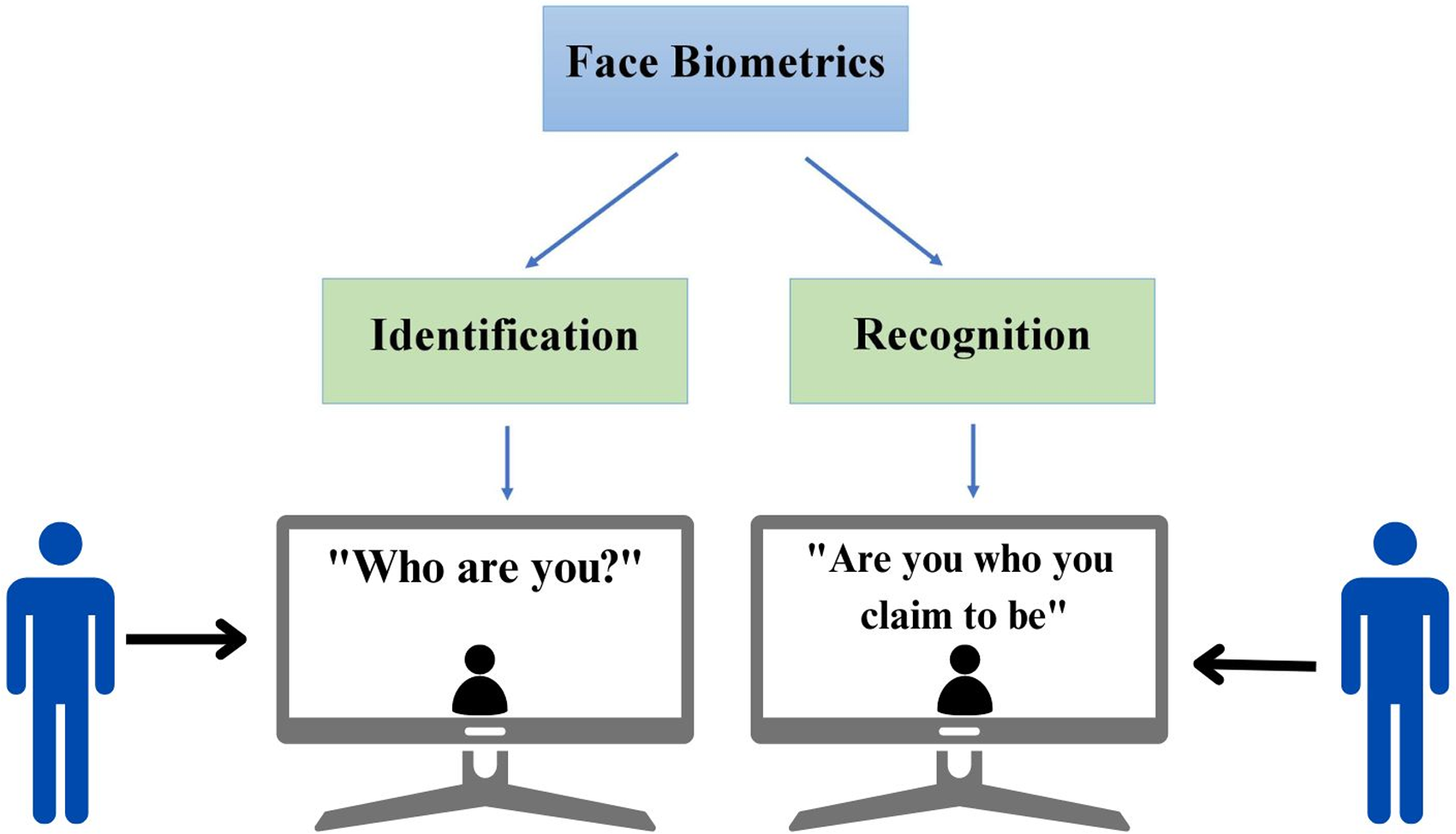
Illustration of “Identification” and “Recognition” in face biometrics.
Applications of facial recognition technology
Face recognition technology in forensic science
Human face is considered as a biometric feature for personal identification and authentication in forensic science due to its uniqueness and distinctiveness. 9 In the domain of forensic science, the FRT is being used to analyze the images involved in various forensic case scenarios such as personal identification, witness images, surveillance footages, authentication of official documents, etc. 3 In the analytical phase of the examination, the characteristics employed in face comparisons can be divided into two groups: “class characteristics” and “individual characteristics.” Class characteristics may include the color of the hair, the general form of the face, the existence of facial hair, the shape of the nose, the presence of freckles, etc. Individual traits are those that are specific to the individual and/or enable an individual to be identified. These particular traits include the amount and position of moles and blemishes on the face, as well as scars, tattoos, cracked teeth, lip creases, wrinkles, other individualistic marks, etc. 10
Face recognition in CCTV surveillance
The primary goal of forensic facial identification is to authenticate a target's identity and potential affiliation with a criminal event using photographic or video evidence of the target's face. 11 CCTV footage is utilized in crime prevention and law enforcement to safeguard and improve public security. 12 Images of offenders captured in surveillance are considered evidence in the court of the law. The findings and opinion of a forensic expert are generally used as supporting evidence. However, crucial questions may originate relating to the probability that the identification decision is accurate or not. The findings of a study by Norell et al. stated that untrained persons had more false positives and negatives than experts, which can lead to a conviction of an innocent person. 13 The extensive use of CCTV surveillance has become a standard tool for recognizing offenders. However, the quality of the equipment is often overlooked and undermined. Furthermore, it becomes tricky for the jury to decide whether the person in the CCTV footage is the offender or not. However, the experts in the field of facial comparison have a vast rule in the courtroom. Hence, importance should be given to the expert witnesses in the trial process. An expert gets the chance to carefully review the video frame by frame without feeling rushed, increasing their chance of noticing something crucial that will help with identification. 14
Impact of CCTV on crime
CCTV is considered not only as a measure of crime prevention but also for safeguarding and identification purposes. In addition, implementing CCTV and other surveillance means has also gained researchers’ attention in forensic gait analysis and its possible use in personal identification. 15 It is generally accepted that CCTV cameras can reduce crime, but only for certain types of crimes and on specific sites. The positive impact of CCTV seems in reducing crime in residential areas, spaces, and parking lots, but not in other places. Piza et al. reported that CCTV installation resulted in a significant decrease in the crime rate. The ongoing requirement for CCTV to be specifically targeted on vehicle and property crimes and not be used as a “stand-alone” crime prevention measure. 16 Due to the implementation of traffic surveillance camera systems in major cities of the world, the investigation of the road-traffic accidents has become quite easy for the traffic police; the traffic violations such as over speeding, red-light jumping, not following proper rules while driving has been significantly reduced.
Disaster victim identification/ examination of unidentified bodies
In mass fatality cases, identifying victims or decreased persons and reuniting them with their families is the primary concern of responders. The science behind disaster victim identification includes forensic odontology, DNA analysis, etc. Photographs of the victims are frequently used to locate and reunite them with their families. Due to the availability of powerful facial recognition software, it is possible that commercially accessible technologies can assist disaster responders in successfully reuniting victims with their families by minimizing the number of photos that need to be manually reviewed. This could save time and money while sparing victims and first responders from the traumatic experience of looking through numerous victim images in search of a “match.” 17 According to Frank Hersey's report on biometric update, FRT has been proven helpful for rescuing children from the rubble of the recent earthquake in the southern region of Turkey. 18 The report mentioned that around 144 children have been identified. 19 The authorities used the “DerinGORU” software created by the IISATRC (Informatics and Information Security Advanced Technologies Research Center) at TUBITAK to do biometric matching. The software has previously been employed by police personnel. Australian Department of Defence 20 is now planning to initiate a project on face recognition using AI to identify deceased persons by creating an extensive database from driver's licenses, passports and other IDs. VIFM (Victorian Institute of Forensic Medicine) is also working on another project that aims to design an algorithm capable of facial reconstruction on an unknown skull in support of DNA matching to build the color of hair and eyes and some other supporting features. 20
Face recognition in the banking sector and challenges
Nowadays, bank security systems are facing many challenges, such as password/pin code hacking, misplacing of passwords, phishing, credit/debit card fraud, etc. Therefore, new technologies, such as biometric technologies in the banking sector, are emerging to combat these issues to enhance the security system. 21 In the modern world, it is evident that people trust banks more than their family members worldwide. Nowadays, the banking sectors with poor security systems are highly vulnerable to big scams and hacking threats. So, there is a need for a robust security system for bank lockers. By implementing a facial recognition system, only authorized users may have access to open the bank locker in his/her presence after the two-factor authentication system, even during any bank robbery. 22 The face recognition system is gaining attention in modern biometrics with the advent of AI. Nowadays, the banking sector is incorporating face recognition in the authentication process. Caixa Bank in Spain is allowing its customers to withdraw cash more securely and quickly based on face recognition technology. 23 OCBC Bank in Singapore is the first bank in South-East Asia to implement face recognition technology for ATM transactions. 24 Moreover, the system is embedded with enhanced features of a face anti-morphing approach that prohibits using photographs, videos, or masks during the authentication process. Therefore, FRT-based transaction is a more convenient alternative to physical ATM cards, which can be stolen or skimmed. 24 Reportedly, the Indian government has also allowed facial recognition and iris scans in the banking sector. To prevent fraud and tax evasion, the Indian government is allowing banks to use facial recognition and, in some situations, an iris scan to validate individual transactions that exceed a specific annual limit.25,26
Despite several benefits of face recognition biometrics in banking and financial services, there are some challenges and drawbacks also. There is a need for a vast dataset to train the algorithms for the implementation of face recognition biometrics in banking. The dataset is also quite challenging to acquire and store. Furthermore, that dataset may be prone to cyber-attacks and data breaches etc. Moreover, the poor-quality dataset may induce biases and provide false positives, further putting innocent ones at risk. 27
Facial recognition technology for attendance monitoring
Defence Research and Development Organization of India has developed an AI-based face recognition system based on a muti-task convolutional neural network to mark contactless attendance just by waving the hand in front of the monitor screen.28,29 The constantly evolving AI environment has led to substantial advancements in automatic face recognition technologies. 30 Recently, various systems have been designed to monitor attendance in schools, offices, institutions, etc. Khan et al. developed a real-time automatic attendance system for face recognition. Their system has proven to provide 100% accurate results for almost cases (such as seating arrangement, lighting conditions and environment). Even in instances where students are portrayed in different facial expressions, spectacles, hairstyles, beards etc. The study claims that this attendance system is cost-effective, fast, secure and reliable to replace the manual attendance marking system. 31 Rohini et al. designed an attendance monitoring system using the Haarcascade classifier and LBPH algorithm to overcome the difficulty of manual or traditional attendance systems. The study reported 94.5% accuracy in face detection whereas 98.5% in face recognition. 32 All these studies claim to be an efficient system for attendance monitoring to reduce the chances of proxies and fake attendance. The Indian Government is also considering facial recognition-based attendance monitoring for school teachers, students, all government offices, etc.33–35
Face recognition in traveling
Ministry of Civil Aviation of India and Digi Yatra Foundation have developed “DigiYatra” to streamline the airport traveler experience. FRT will be used to autonomously process passengers at checkpoints, including entry point inspections and airplane boarding. Additionally, this initiative will be helpful to recognize passengers and recalling, self-Bag Drop, and making check-in simpler. Digi Yatra will enable paperless travel and eliminate repeated identity checks. 36 The benefits associated with DigiYatra have been shown in Figure 3. The places where DigiYatra was initially implemented include the Indira Gandhi International Airport in New Delhi, the Lal Bahadur Shastri International Airport in Varanasi, and the Kempegowda International Airport in Bengaluru. 37 Later, it was introduced in Kolkata, Hyderabad, Pune, and Vijayawada airports in April 2023. Similarly, the airline of Canada recently announced the launch of FRT from Vancouver International Airport to Winnipeg in Canada. Soon, the technology will be employed across all the airports in the country. 38 Dubai has also introduced a new biometric system at Dubai International Airport. Now, travelers can depart without a passport or boarding permit from the emirate. 39
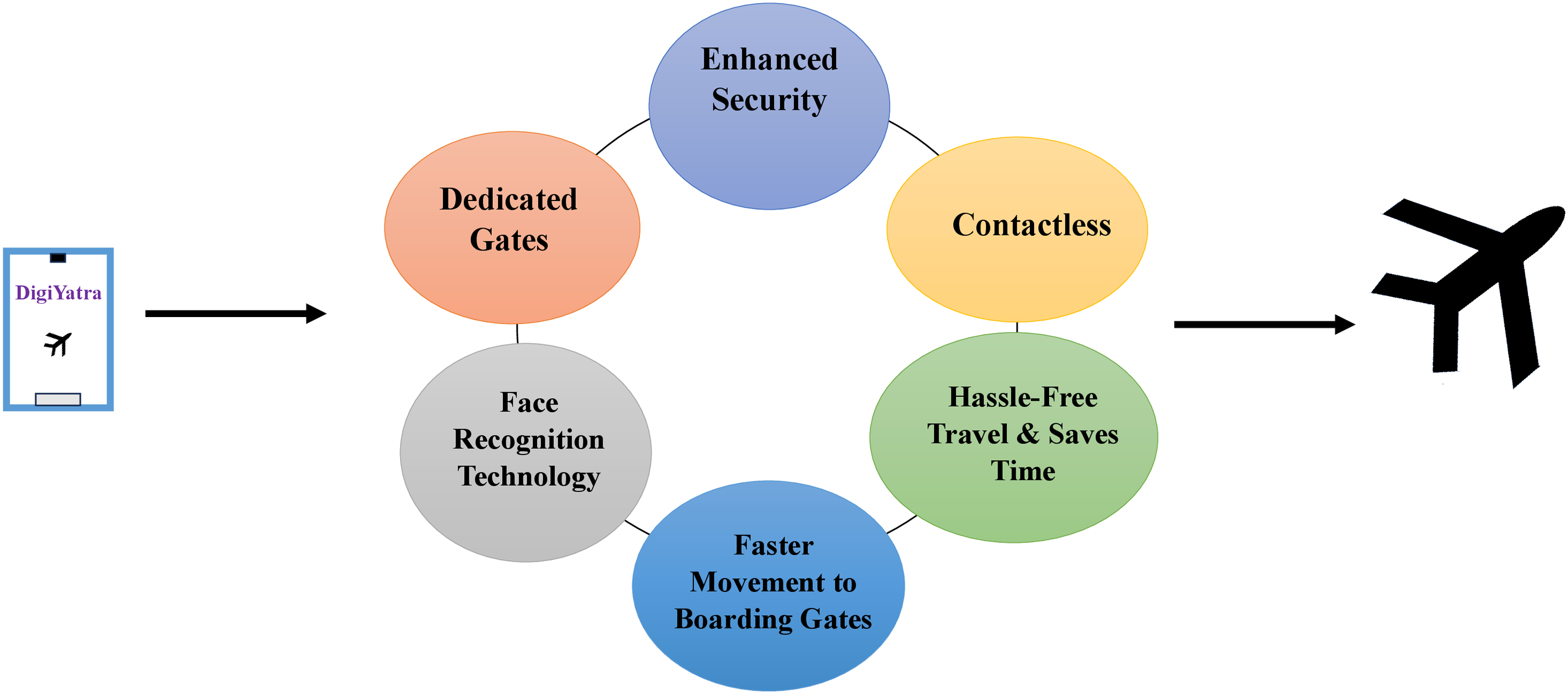
Benefits associated with DigiYatra facility.
Face recognition technology in defence services
Air Force of the United States is all set to equip FRT in autonomous drones. They have merged AI, robotics, drones, facial recognition, and sensors in a single project. This will be helpful to target and identify specific people.40–42 A US-based Agency, i.e. IARPA (Intelligence Advanced Research Projects Activity), is working on a project entitled “BRIAR- Biometric Recognition and Identification at Altitude and Range” which began in November 2021. The BRIAR Program's research outputs are meant to aid in counterterrorism efforts, transportation facility and infrastructure protection, military force protection, and border security missions, among other objectives. 43 According to a report, an Israeli company is developing a drone that uses AI to determine the ideal facial recognition angles. 40
Implementation of CCTV/ video surveillances in India
A German Scientist, Sir Walter Bruch first invented CCTV (closed circuit television) to monitor rocket launches. But the technology is now globally spread by transforming into a prevalent surveillance system. 44 In India, a sufficient number of CCTVs have been installed in every city. According to a report, there are 1.54 million CCTV cameras in the top 15 cities of India. New Delhi (551.5 K), Hyderabad (375 K), Chennai (280 K), and Indore (200.6 K) are the cities with the maximum number of CCTV cameras in the country. New Delhi ranks first with 1490.19 cameras per square mile among the top 10 most surveilled cities in the world. Three cities of India ranked in the list of 10 most surveilled cities in the world based on the number of cameras per 1000 people i.e. Hyderabad at 2nd (83.32 cameras), Indore at 3rd (60.57 cameras), and New Delhi at 4th (19.96 cameras). 45 Moreover, the details of currently ongoing central FRT projects in India as per the information updated by the Panoptic-FRT tracker 46 have been mentioned in Table 1.
List of central-level face recognition technology projects in India.
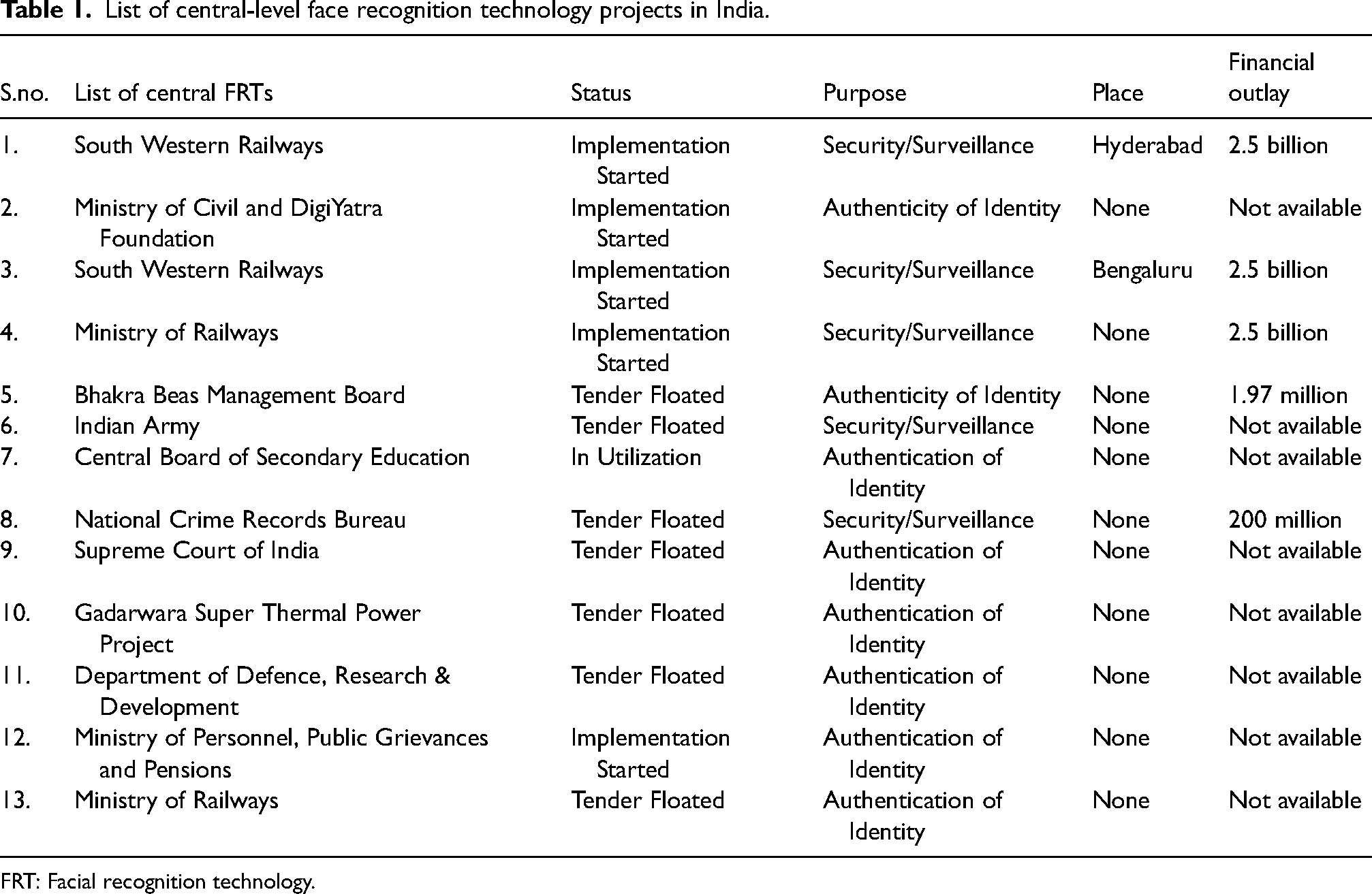
FRT: Facial recognition technology.
Status of FRT projects in States/Union Territories in India
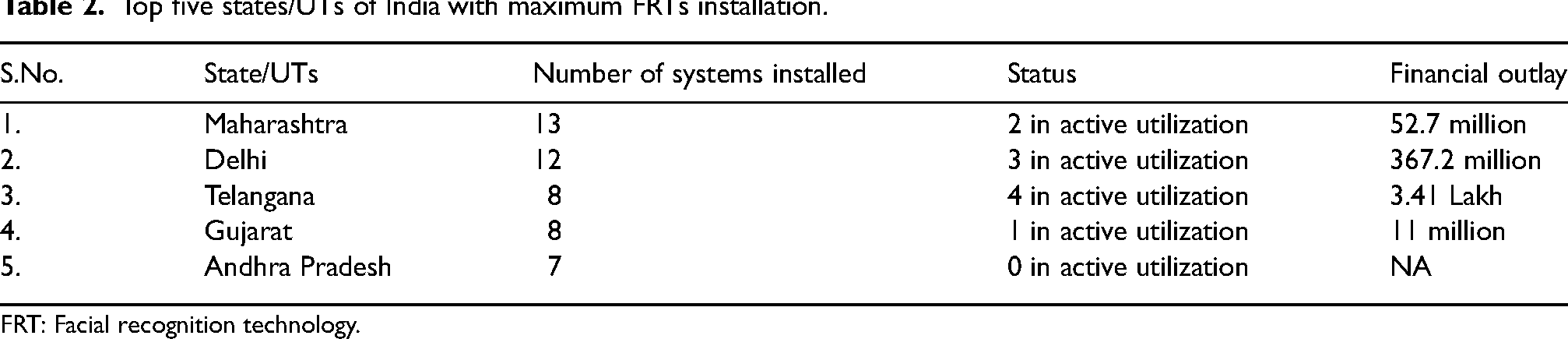
FRT projects have been installed, implemented and utilized in top places nationwide. However, among all the 28 states and 9 Union Territories (UTs) of India, there are few states and UTs, where no record of FRTs installation has been found till now. The present status of Face Recognition Technology installed in the states and UTs of India 46 has been presented in Table 2.
Top five states/UTs of India with maximum FRTs installation.
FRT: Facial recognition technology.
Demerits of facial recognition technology
FRT measures an individual's facial features mathematically and stores in the database as a faceprint. Faceprint is further used for the comparison with other faces captured from various images and video data. The software uses deep learning algorithms in order to verify an individual's face by comparing with the faceprint stored in the database.47,48 There is no doubt that AI has revolutionized the various industries, helping in decision making and analyzing the data using machine learning and deep learning algorithms. But there are some demerits of this technology. Let's take an example of a recent case, when an 8-month pregnant woman was falsely accused and arrested due to false facial recognition match. According to the report published in New York Times, it was the third case when facial recognition match led to wrongful conviction. Earlier, all black men were wrongfully arrested, but this time a black woman was misidentified.49,50 According to a source, facial recognition softwares have records of misidentifying people with their dark skin. 51 There were similar cases happened when an innocent was suspected, arrested and convicted on the basis of false facial recognition match. 52 So, we also highly recommend that a face match from a FRT cannot be considered solely as evidence for someone's conviction because it may put an innocent into jail.
Discussion
Facial identification is an active area of research and one of the most efficient biometric approaches in the modern era. In the present communication, the global adoption of FRT has been discussed in detail, from the history and development of facial identification to its demand and adoption in India and worldwide. Apart from the above-discussed domains, facial identification technology is also being adopted at sporting events and sacred places. In stadiums, the safety of staff, athletes, and spectators is the primary concern of the authorities. It is essential to improve stadiums’ security system to ensure the smooth running of various events. Tian et al. proposed a framework of face recognition technology in the stadium to successfully complete every badminton match. 53 According to a report by Parmy Olson, the Los Angeles football club is planning to shift everything to face, whereas New York Mets have already started testing systems on staff and athletes. 54 Moreover, the FRT is considered a more robust approach providing a contactless experience than fingerprint scanning systems. Vishnuvardhan and Ravi also reported that FRT has more potential applications in finance and banking services than in other domains. 55 Chowdhury et al. introduced CNN-based emotion-based recognition methods for transactions in ATM booths. The “Happy” faces of the persons will permit the transactions to proceed. The method was proposed to ease human efforts in some instances, such as when a person forgets his authentication details. 56
Whereas, the world-famous Tirumala Tirupati Devastahanams (TTD) Hindu temple in Andhra Pradesh (South India), already announced the FRT on a pilot project from March 2023 onwards for devotees. So, the TTD authorities mentioned that the introduction of face recognition technology in the temple would be helpful to combat the difficulties in providing accommodation, visiting the shrine and procure multiple tokens.57,58 Similarly, a Colorado-based Fire-tech company has manufactured smart guns based on FRT to avoid the misuse of guns, accidental firing by children, declined suicide cases, gun-grabbing from police, stolen cases of guns, etc.59,60 Along with this, the Maharashtra government in India also announced installing a facial recognition system in the Mantralaya to maintain the record of the frequent visitors and the purpose of their visit. 35 The paper discussed various scenarios where face recognition technology is being implemented. From this, we realized that with the development of face recognition technology, its demand is also increasing in the market. FRT is growing at an alarming speed and also getting utilized in various domains. With rising concerns for secure authentication to achieve better security measures, facial recognition is being employed as a secure authentication method. Since it offers advantages like non-intrusiveness, convenience, and accuracy, it is ideal for applications like identity verification, access control, and transaction authorization. The development of FRT, which has led to advances in accuracy, processing speed, flexibility is driving the adoption of this technology in financial services. Face recognition software is now available to financial firms for several uses, including fraud detection, customer onboarding, and KYC compliance. The financial industry's global facial recognition market was earlier estimated to be worth USD 2.8 billion in 2022 and is anticipated to increase significantly to USD 12.3 billion by 2032, with a predicted compound annual growth rate (CAGR) of almost 24 percent. 61 New data from Future Market Insights Global and Consulting Pvt predicts that the global commercial value for human identification will reach $1.2 billion in value in 2023. A recent firm analysis showed that this market is anticipated to reach $3 billion by 2033 while expanding at a 9.6 per cent CAGR over the following ten years. 20
Conclusion and recommendations
FRT is still at the phase of ongoing development and near the maturing stage. Future research and development will continue to address the limitations of the existing technology. FRT has ubiquitous challenges such as occlusion, expressions, low resolution, and ageing. Alongside these familiar challenges, novel issues such as face morphing, masked face, 62 and an emerging criminal trend of drug-facilitated robberies arising via FRT in New York, i.e. “roofie victims.” In this criminal trend, a person is incapacitated with date rape drugs, after which their facial recognition-enabled phones are exploited to access their bank information through FRT. 63 As technological advancements progress, challenges grow concurrently with developments. Robust data security measures should be implemented to protect the facial data from the unauthorized access or misuse or breaches. Facial recognition databases should be encrypted, having strict access controls. Moreover, Government organizations and educational institutions should invest in public awareness campaigns, educational programs and platforms for public engagement to encourage understanding and informed discourse surrounding about the FRT. The present communication also recommends that legal authorities should not completely rely upon facial recognition AI technology to convict a person. Government bodies and legal authorities need to look into this matter because many facial recognition systems can be biased. Otherwise, these biased systems will lead to misidentification and may put an innocent behind the bars.
Footnotes
Acknowledgements
The principal author (AG) is thankful to Department of Science and Technology (DST), Government of India, for awarding INSPIRE Fellowship under grant number IF190719 for pursuing PhD. Kewal Krishan is supported by UGC Centre of Advanced Study (CAS II), awarded to the Department of Anthropology, Panjab University, Chandigarh, India.
Authors’ contributions
Ankita Guleria: conceptualization, writing original draft, review & editing, and final approval. Kewal Krishan: writing, review & editing, final approval, and supervising the work. Vishal Sharma: writing, review & editing, final approval, and supervising the work. Tanuj Kanchan: writing, review & editing, final approval, and supervising the work.
Declaration of conflicting interests
The authors declared no potential conflicts of interest with respect to the research, authorship, and/or publication of this article.
Funding
The authors received no financial support for the research, authorship, and/or publication of this article.
