



Abstract
One-punch deaths draw considerable legal and media attention due to the nature of catastrophic events and their impact on victims and families. Empirical research on the sentencing outcomes and offence categories faced by the perpetrators is non-existent. This Australian study examined judicial sentencing reviews to unpack perpetrator characteristics, offence patterns and sentencing outcomes for one-punch fatalities over a 30-year period. Two hundred and eighty-seven perpetrator convictions were reported by various parameters such as median sentencing length, injury mechanism and maximum sentencing categories. Secondary outcomes were details of concentrations of alcohol and illicit drug usage and usage of one-punch specific laws, hitherto unelucidated for one-punch assaults. Nearly all perpetrators were male with a median age of 26 years, with 61% charged in New South Wales and Victoria alone. The median sentence length of imprisonment was 3.8–11.5 years for a manslaughter conviction. Median sentence length when categorized by injury mechanism demonstrated variation in both life sentence and one-punch offence categories. About 40% of Australian perpetrators were convicted under one-punch laws in states where these were introduced. The study will increase knowledge and public awareness regarding the impact of one-punch violence and outcomes.
Introduction
One-punch violence is associated with a significant cost to society.1,2 One-punch assaults are characterized by a punch to the face, neck or head, often resulting in the victim falling with a subsequent head strike to the ground or another rigid surface. The resulting head injuries may be due to the punch, the fall or a combination of both, which can cause permanent mental and physical disability or death. 3 In some instances, neuropathologic damage may occur due to the initial impact (punch) rather than the subsequent contact with the ground. In such cases, the catastrophic injury is identified as traumatic basal subarachnoid haemorrhage due to vertebrobasilar artery/branch laceration.4,5 Although one-punch violence has been reported in Australia since the early 1900s, identical incidents have also been reported in other Western countries (United Kingdom, Ireland, United States, New Zealand).6–8 In New Zealand for example, one-punch violence led to the introduction of specific legislation known as the Crimes Amendment Bill, 2020 (Coward Punch Causing Death), whereby a perpetrator of a one-punch assault is liable for in imprisonment of up to 20 years. 9
In legal terms, ‘one-punch’ is used by judges and lawmakers in Australia to encapsulate the idea of violence that involves single or even multiple punches/impacts to the head. Irrespective of the extent of punches delivered or multiple kicking/stomping to the head, similar language has been used in the legal literature to denote the violent act between men, occurring at licenced liquor venues at night with triggers such as alcohol or drugs. In judicial sentencing reviews, such an offence is often described as ‘mindless street violence’, ‘cowardly’, ‘vicious and cowardly’, ‘brawl and throwing a haymaker's punch’.10–12 For example, a perpetrator was charged with unlawful strike causing death (a one-punch offence), although the victim was punched multiple times and then kicked. 13 The study title makes use of the colloquial term one-punch violence, guided by legal trends in Australian courts, and previous empirical research on Australian one-punch fatalities. 4
One-punch assaults were reported to occur within broader violence in and around licenced liquor venues in Australia. 14 In Australia, a range of public health campaigns, liquor policies (e.g. Safe Night Out Legislation Amendment Act Queensland 2014 and Liquor Control Amendment (Protected Entertainment Precincts) Act Western Australia 2022 15 ) and one-punch laws have been introduced around Australia to counteract increasing social violence, including one-punch assaults, since 2014. Legal responses to one-punch deaths demonstrate variations throughout the country. Supplemental File Table A describes the sentencing ranges detailed in one-punch laws in Australia.16–24 Law specifically addressing these assaults causing death was first introduced in Western Australia (WA) in 2008, followed by the Northern Territory (NT) in 2012 and with Victoria (VIC), Queensland (QLD) and New South Wales (NSW) following in 2014. Comparable laws do not currently exist in South Australia (SA), 25 the Australian Capital Territory (ACT) 26 or Tasmania (TAS). 27
Consensus is divided over the suitability and effectiveness of legislative reforms in relation to one-punch violence. The establishment of one-punch legislation in Australia was reportedly as much a political and public statement as it was a legal one to create social awareness. 28 Several state law reform commissions and academic opinions advised against one-punch laws due to lack of evidence regarding their effectiveness and concerns of misuse in family violence homicide.28,29 It is noteworthy that concurrent to one-punch legislation, social behaviour was influenced by liquor laws and public health awareness campaigns around one-punch harm (e.g. ‘Matthew Stanley Foundation’, ‘Stop One Punch Can Kill’, ‘Step Back Think’). The QLD government launched a public education campaign called ‘one-punch can kill’ which limited a perpetrator's ability to make out the defence of accident due to a lack of foreseeability about the possible harms of using such violence. 30
According to emergency department data in 140 NSW hospitals, the 2014 liquor legislation was associated with a significant decrease in the number of alcohol-related seriously injured patients during the high alcohol time (6 pm Friday to 6 am Sunday), pre- and post-2014, relative reduction of 24.8%, p < 0.05. 31 A systematic review of alcohol restriction policies and rates of alcohol-related harms in remote Australian Aboriginal and Torres Strait Islander communities indicated that after an initial reduction in rates, indicators of violence and serious injury appear to have risen in most localities. 32 Alcohol restrictions in the NT were described by police statistics and community-based groups to exert a positive impact, as there was a 35% drop in assaults since its first introduction in January 2023. 33 A 2017 Victorian study based on time series analyses of emergency departments and police data on assaults in two regional and two metropolitan sites in VIC (Geelong and Shepparton; Melbourne and Frankston) reported that the assault rates (2000–2015) have held stable over the years despite liquor accords. 34 These accords tended to be voluntary in enforcement, educational in nature and directed at controlling patron behaviour once intoxicated. According to a 2010 QLD legislative assembly report on alcohol and related legal interventions, judicial data failed to disaggregate a conviction for a violent offence such that it was not possible to quantify the precise level and consequence of injury and crime, and its overlap with issues such as alcohol consumption. 35
There is very sparse global evidence on the manner of these violent acts causing deaths, injury outcomes and the subsequent legal response (e.g. sentencing length, offence type, matter proceeded to trial/plea). There is no specific data on the outcomes of one-punch assaults due to insufficient disaggregation of assault data in United Kingdom administrative sources. 36 In the United Kingdom, where the initial punch is followed up by subsequent blows to head, counterintuitively, punch in legal usage includes acts such as kicks inflicted to the head. 37 In 2019, of 13,927 murder victims in Uniform Crime Reporting Data, United States, 600 deaths (4.3%) were recorded as assaults by ‘hands, feet, fists, and pushed’, 38 which is somewhat indicative of the mechanism of injury in one-punch violence (application of bodily force) and the proportion of one-punch homicides in that region. Interestingly, ‘hands, fists, feet and pushed’ were classified as ‘personal weapons’ which signifies the global variations in the usage of terms of reference for mechanism of injury. In Australia, research approaches include mixed methods or closed-circuit television-based studies, news item analysis of fatal assaults and Australian coronial data-based studies.39–41 Regardless of whether the reports and scholarly articles are victim- or perpetrator- or incident-based, information on the mechanism and nature of injuries is very rare.
Violence prevention is a complex issue that warrants a multi-faceted interdisciplinary approach. 42 Using a public policy approach rooted in behavioural economics 43 and the National Crime Prevention Framework, Australia, 44 this national study, as a first, examined data from a legal data source (Lexis Advance Australia) through a forensic lens for a scoping analysis of fatal one-punch offences and outcomes for perpetrators. By examining perpetrator characteristics, the series of actions constituting the respective offence was examined. As direct address of violent behaviour plays a substantial role in achieving perpetrator accountability in other forms of interpersonal violence, 45 the approach adopted in this perpetrator study is justified. The study’s purpose was to inform key stakeholders and raise awareness in Australian communities of the judicial outcomes for individuals involved in violent acts. The nature of the violent act is exemplified by the underlying mechanism of injury or manner by which the fatal injury was inflicted. The mechanism of injury (behaviour type), cause of death and intent are determined and certified in death certificates by reliable and objective assessment (medicolegal/forensic and police investigations) under the auspices of the Australian criminal justice system. The study formed part of a broader research project on the fatalities, perpetrators and survivors of one-punch violence in Australia.
Although one-punch violence has not been extensively researched outside of Australia, it remains a relevant global issue. Social and community spaces where people gather for leisure, such as bars, clubs and recreational venues, are often prone to interpersonal violence. The combination of alcohol consumption, social interaction and crowded settings can lead to heightened emotions, conflicts and aggression. Australia’s approach, which includes stricter legal penalties, public awareness campaigns and regulations on alcohol service in licenced venues, highlights key strategies for addressing violent incidents. By analysing the effectiveness of these measures, other nations can adopt similar checks and measures to promote safer community spaces.
The study aims were to (a) estimate the size of the perpetrator population convicted of a one-punch related fatality, (b) apply a novel case classification system for comprehensive description of the patterns of perpetrator characteristics, offence and sentencing outcomes and (3) inform anti-one-punch legislative and public health measures.
Methods
Study design and data source
The study was retrospective and observational in design. Lexis Advance was used to gather case information from trials heard in Australian state Supreme Courts and Courts of Appeal, the High Court of Australia, District and County Courts, Magistrates’ Courts and the Administrative Appeals Tribunal. Lexis Advance Australia, a search platform/software of LexisNexis legal database, uses the connector searches, namely, ‘or’, proximity connector, ‘and’ and ‘and not’ and use of asterisk or exclamation for variations in root word. The search term map functionality permits a graphical view of search term distribution in each search hit and allows the user to switch through search terms in context without leaving the search result. 46 After trialling several search strings, the keyword combination or search strategy (Supplemental File Table B) that yielded the maximum number of trials listed in the gold standard publications was selected. Since the study is based on public domain data, Lexis Advance, the scope of the study is exploratory only.
Eligibility criteria
Eligibility criteria were based on a forensic approach, i.e. while the circumstances and clinical consequences of the one-punch incident governed eligibility, elements of the crime were not described. Due to the study's interdisciplinary approach, those cases were included where the one punch was the mechanism causing death, but the assault also involved subsequent kicks, knees or punches to other bodily regions. These cases were only included where it was clear from the documented cause of death that the fatal injury was caused by the punch to the head region rather than a larger assault.
Two types of violent behaviour or injury mechanisms were included: type (1) where the perpetrator punched the victim's head/face and the head made subsequent contact with a static object and type (2) extended one-punch incidents where the perpetrator punched the victim to the ground and followed up with subsequent blows to the head. This differentiation in mechanism aligns to existing concepts of violence; however, it also addresses potential ambiguity.
A perpetrator case was included only if the incident resulted in at least one fatality. Incidents involving multiple victims were included where the one-punch fatality was the most serious crime for which the perpetrator was sentenced. The mechanism of injury was described as blunt force by bodily application, including punching, kneeing, kicking, elbowing, headbutting or stomping. Eligible time period was 1 January 1990 to 31 December 2020, and incidents in all Australian jurisdictions were considered.
Exclusion
Incidents involving concomitant use of objects such as knuckle duster, wood, chair, animal or human bite, strangling, thermal mechanisms, sexual assault, sharp force (knife, gunshot, broken glass) and fall from heights were excluded. Incidents resulting in only non-fatal injuries were excluded. Only those perpetrators were included who were charged with criminal charges that reflected their direct participation in the violent act such as affray, assault and grievous bodily harm. Perpetrators charged under complicity and/or accessory provisions were excluded. Complicity is broadly defined as the act of aiding, abetting, counselling or procuring the commission of an offence by another person. 47 Assaults involving multiple strikes to other body regions in addition to the head, where the cause of death was not primarily precipitated by head and or neck injury or where the account of specific injury causing death was ambiguous, were excluded.
Legal data and National Coronial Information System study cross-match
Additional perpetrator cases were identified by searching National Coronial Information System (NCIS) unit records (coronial reports, police narrative of circumstances) of one-punch fatalities during 2012–2018. 4 A separate fatalities study was conducted prior to the current study as part of broader project and identified one-punch fatalities in NCIS for the notification period 1 January 2012 to 31 December 2018. 4 The eligibility criteria for case selection in the fatalities study were identical to that used in the current study. Since all incidents pertain to fatal incidents only in both data sources (Lexis/NCIS), the risk of selection bias is negligible. Only aggregated and de-identified data was reported in the pooled analyses. Inclusion of NCIS cases serves to mitigate any risk of underestimating case numbers or missing cases, which is often a limitation with the use of public data sources.
The methodological approach for gathering perpetrator-specific data by combining Lexis Advance with NCIS records is novel. Sentencing remarks have been previously used to identify victim-specific data in intimate partner homicide research, utilizing the Australasian Legal Information Institute website. 48 The NCIS is an online repository for fatalities reported to coroners in Australia and New Zealand, including one-punch deaths. 49 The matching was based on identifiers such as jurisdiction, name and age of the victims and perpetrators. Most coronial findings have case circumstances of the deceased persons. Noting that information about perpetrator outcomes is not routinely collected in the coronial reports and to the extent available, a Lexis and NCIS data cross-match was performed to enhance the case capture accuracy.
Variables
Supplemental File Table C describes the variables and their format in the study. The variables were classified as perpetrator and incident characteristics. Examples of perpetrator characteristics were demographics, relationship with the victim/victims, substance use (alcohol or other drugs) immediately prior to the assault, violent behaviour type, type of offence or charge laid (five categories: murder, manslaughter, injury or assault, one-punch specific, case dismissed), sentencing outcome (four categories: imprisonment, procedural or community-based orders, combined, case dismissed) and maximum sentencing category (three categories: ≤15 years, 16–25 years, life).
There may be a variety of potential sentences as an outcome of a criminal charge, many of which do not involve prison or a conviction. For example, the court may sentence an individual to a community corrections order with compulsory addiction treatment or community service.
Data analysis
Offence and sentencing outcome/jurisdiction. The offence/charges used in each jurisdiction were mapped to the maximum sentencing categories for the perpetrator cohort. Jurisdictional breakdown per sentencing outcome was described.
Sentencing and offence patterns per behaviour/mechanism of injury type. The type of mechanism of injury (behaviour type) for each perpetrator was allocated as per the most relevant sentence. In complex cases with multiple victims/incidents, the relevant sentence and charge was that applicable for the perpetrator's fatal victim. In the event of multiple fatal victims or multiple charges for the fatal victim, the most recent or the most serious of charges (and its sentence) was selected.
Jurisdictional use of one-punch law since 2008, 2012 and 2014. The number of perpetrators was reported for 2008–2020 for WA, 2012–2020 for the NT and 2014–2020 for VIC, NSW and QLD for determining specific usage of one-punch legislation in jurisdictions since their inception.
Ethics approval
The project was approved by the Victorian Institute of Forensic Medicine's Ethics Committee ID 1138/June 2022 and the Justice Human Research Ethics Committee at the Department of Justice and Community Safety Victoria ID M0464/2021, CF/20/17578 and M0464-A2.
Results
Of 470 one-punch-related trials, 177 records were selected after applying the eligibility criteria. NCIS cases contributed to an additional 57 perpetrator cases (see Figure 1). The NCIS-Lexis overlap was found in 25 cases. After deduplication, there were 287 perpetrators in 234 one-punch incidents. The proportion of single perpetrator-single victim trials was 71.3% whereas 28.7% of the trials described multiple incidents and or victims.
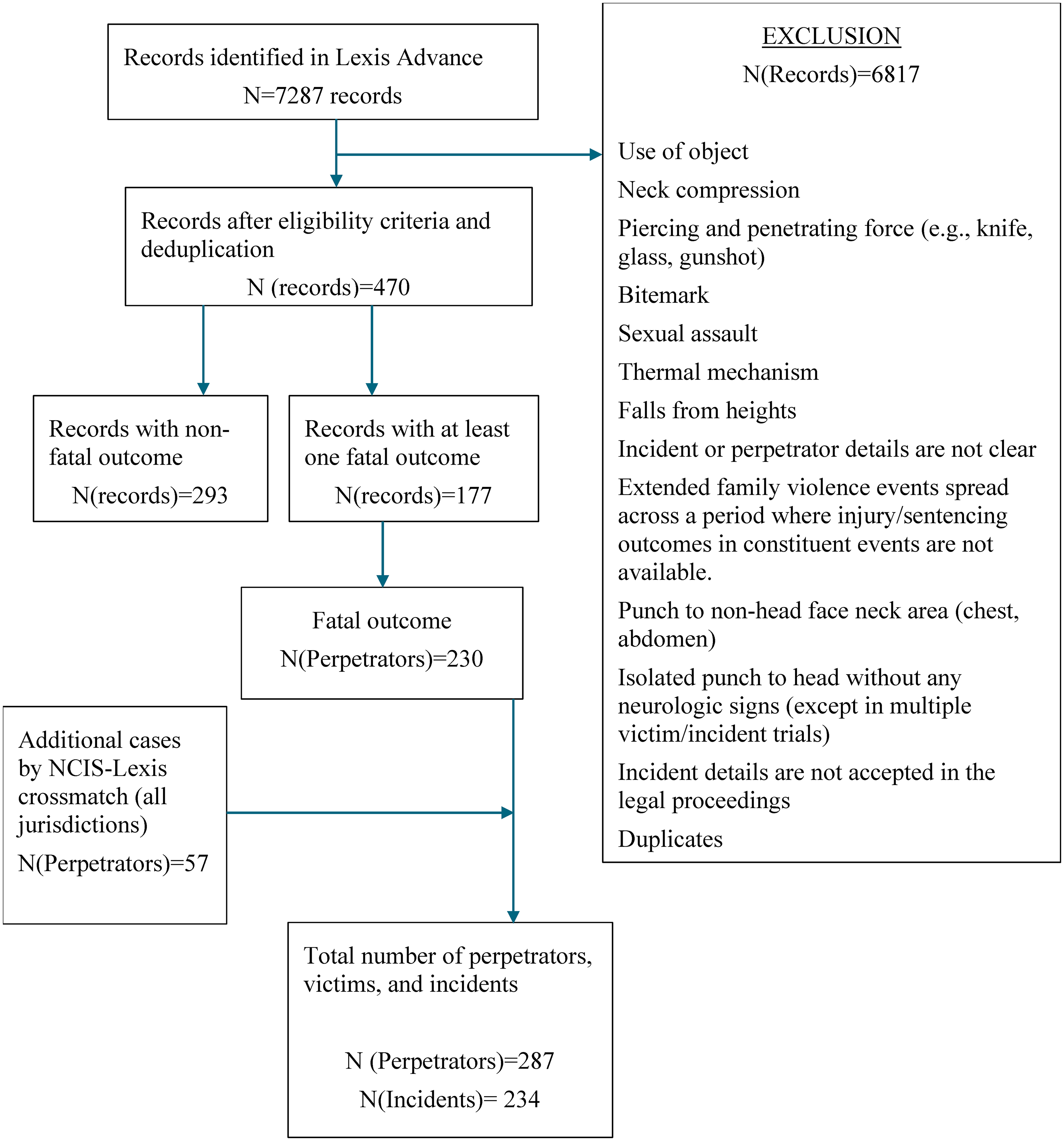
Case selection flowchart.
Case characteristics
Perpetrator and incident characteristics are described in Table 1.
Perpetrator and incident characteristics.
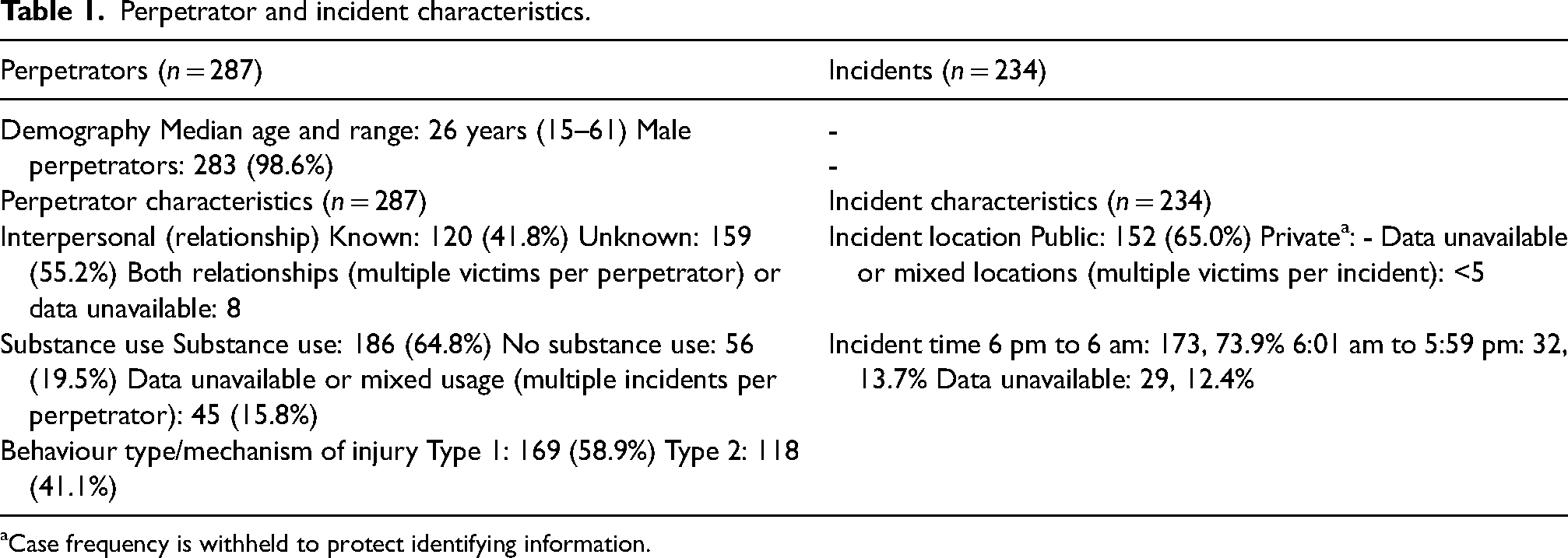
Case frequency is withheld to protect identifying information.
Substance use
Overall, substance use was identified in 186 (64.8%) of 287 perpetrators. Specifically, alcohol usage was reported in 113, both alcohol and illicit drugs in 18 and illicit drugs only in <5 cases. Substance usage was reported but unspecified in 51 cases.
Blood alcohol concentration (BAC) was available in <5 cases (0.15–0.22 g/100 mL). Illicit drugs were heroin (n ≤ 5), cannabis/marijuana (n = 7) and amphetamine type stimulants, including methylamphetamine and 3,4-methylenedioxymethamphetamine (n = 5); poly-drug abuse (n ≤ 5), unspecified drug (n = 5). Poly-drug use involved a combination of multiple illicit and or prescription drugs. Given the low numbers, these findings have limited application.
Offence and sentencing outcome/jurisdiction
The type of offence or charge applied in the perpetrator cases was mapped to maximum sentencing categories in each jurisdiction (see Supplemental File Table D). Sentencing outcome per jurisdiction is reported in Table 2.
Jurisdictional distribution and sentencing outcome for perpetrators.
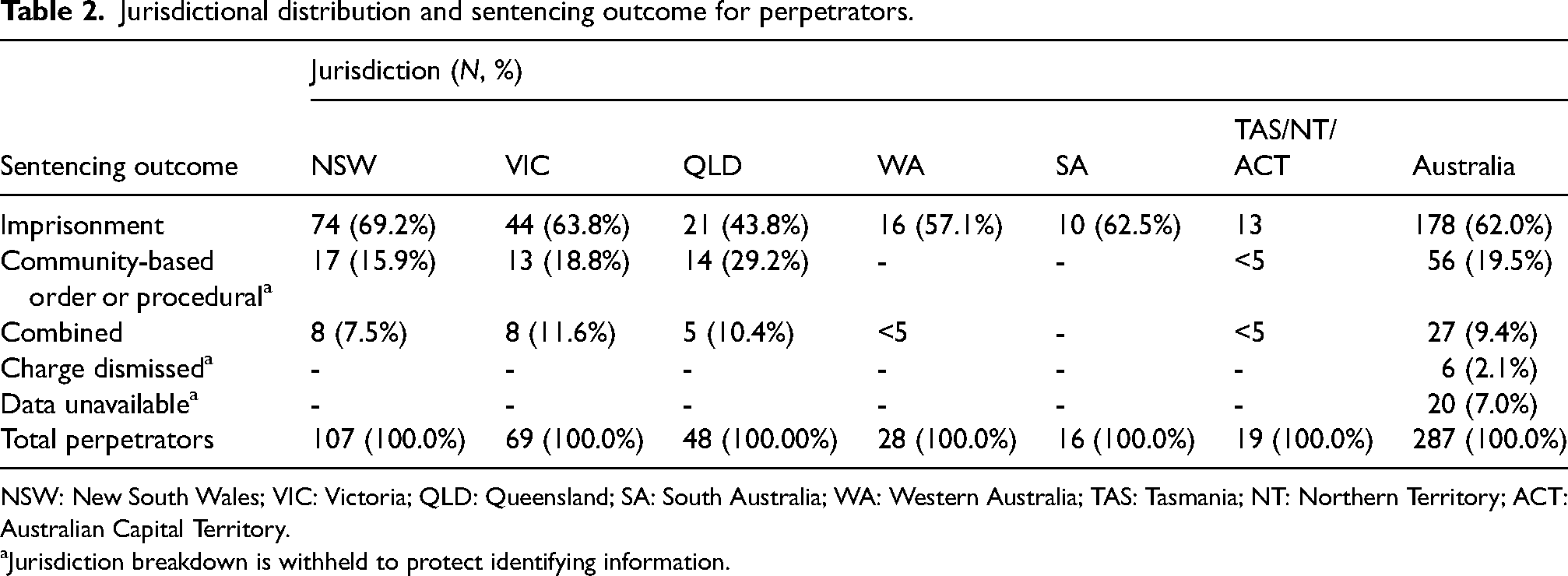
NSW: New South Wales; VIC: Victoria; QLD: Queensland; SA: South Australia; WA: Western Australia; TAS: Tasmania; NT: Northern Territory; ACT: Australian Capital Territory.
Jurisdiction breakdown is withheld to protect identifying information.
Sixty-one per cent of perpetrators were from NSW and VIC combined, and the dominant sentencing outcome was imprisonment (62.0%). Proof of self-defence led to an outcome of charge dismissed in 2.1% of perpetrators. A small subset of cases was sentenced to community orders. This included cases where (a) the perpetrator was <18 years of age; (b) the unique incident was more akin to simple assault with catastrophic unforeseen consequences due to existent co-morbidities; and (c) the perpetrator pleaded guilty to a second charge (e.g., first charge manslaughter, alternate charge; assault occasioning body harm) and the Court accepted their plea in discharge of the indictment.
Sentencing patterns per behaviour/mechanism of injury type
The law seldom imposed the maximum penalty, and the sentencing period varied on a case-by-case basis. Overall, median sentence length (MSL) in Australia for ≤15 years maximum sentencing group was 2.0 years (range 1.7–2.8); 16–25-year group, 6.2 years (2.3–7.0); and life sentence group, 10.0 years (7.5–20.0). Type 1- and type 2-specific MSL and frequency for each maximum sentencing category are depicted in Figure 2.
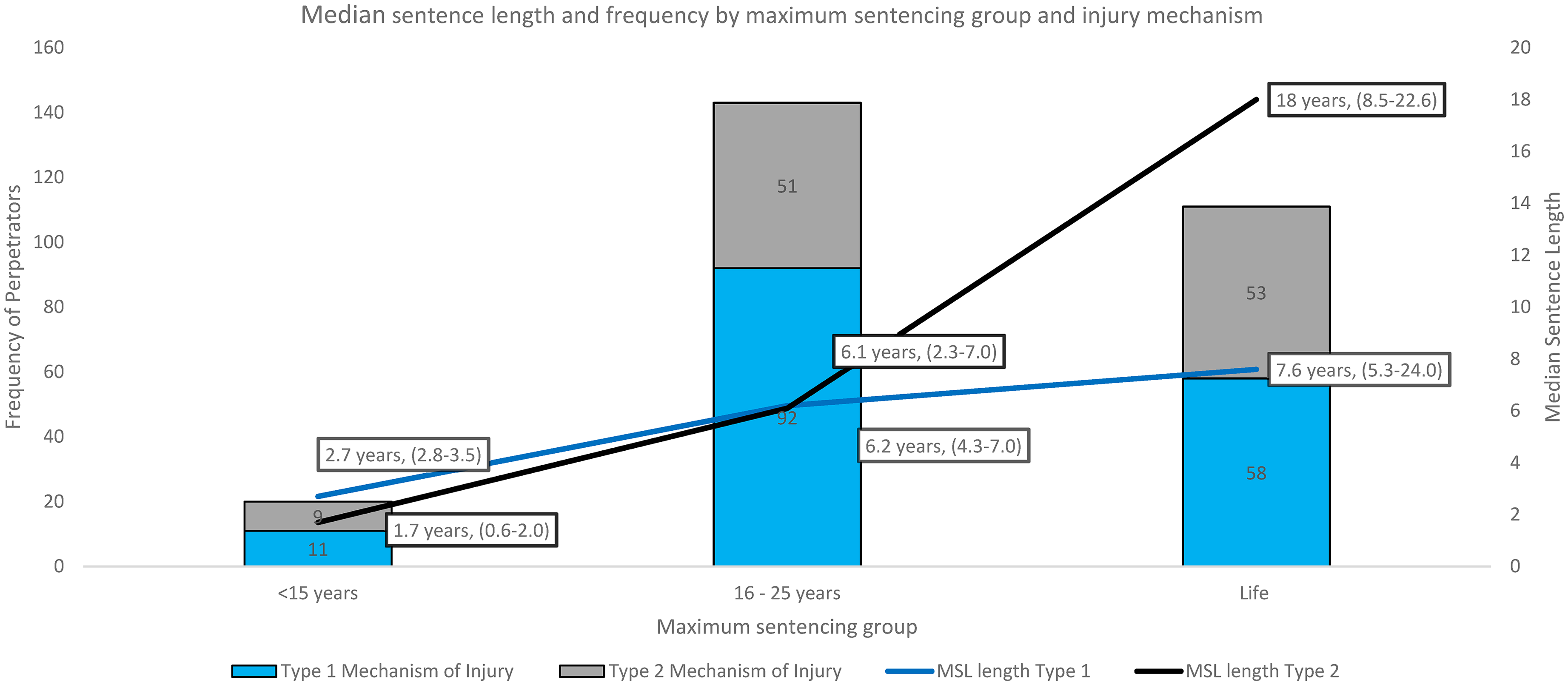
Median sentence length (MSL) in maximum sentencing groups and number of perpetrators per mechanism of injury type. Analysis excluded charge dismissed, and data unavailable data cases (N = 13).
Charge/offence patterns per behaviour/mechanism of injury type
Overall, MSL in Australia for one-punch specific offence was 6.2 years (4.3–9.0); murder, 18.0 years (17.3–20.0); manslaughter, 7.0 years (3.8–8.0); and for injury or assault, 2 years (1.7–2.3). Type 1- and type 2-specific MSL for each offence type is indicated in Figure 3.
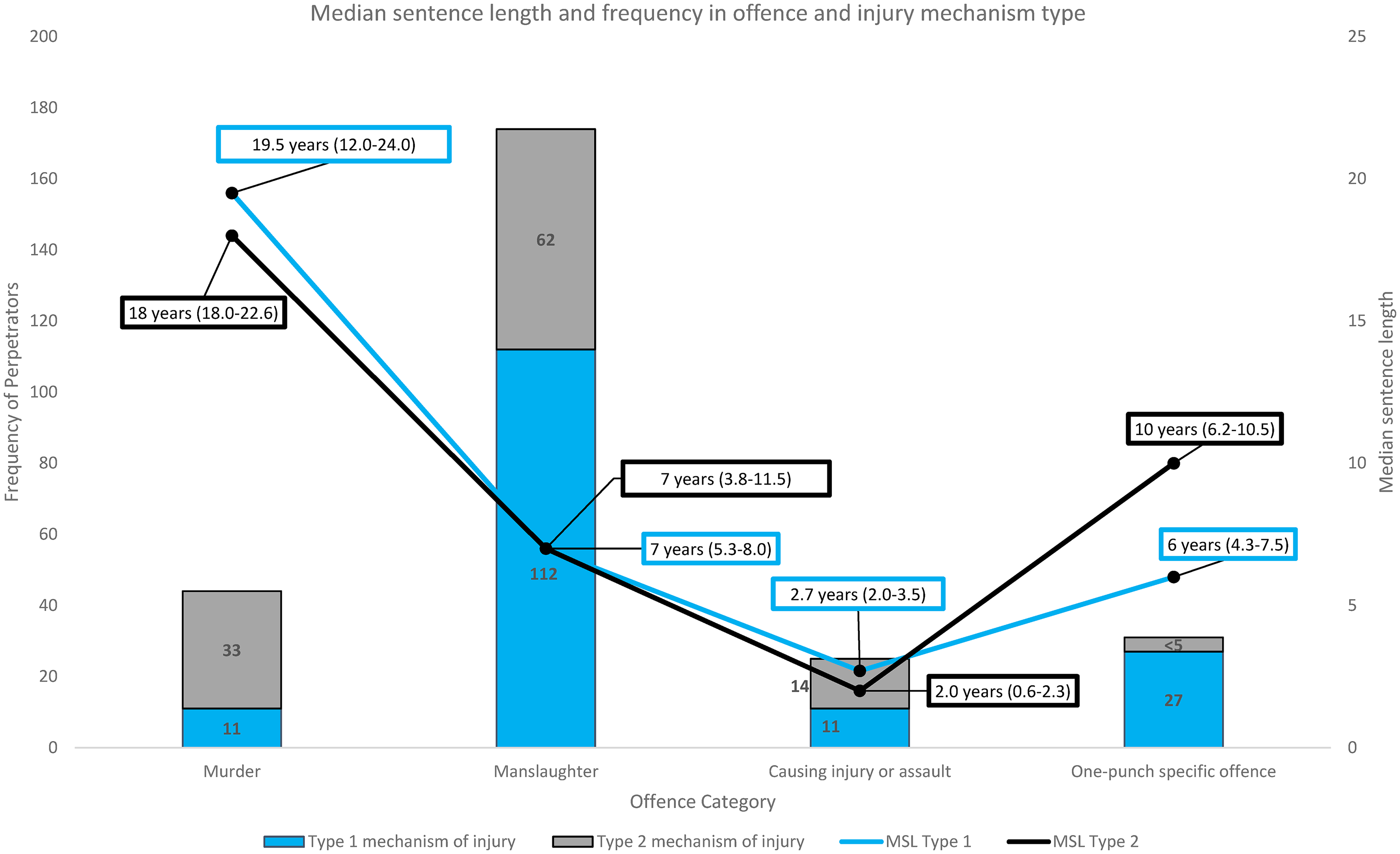
Median sentence length (MSL) in offence categories and number of perpetrators by mechanism of injury type. Analysis excluded charge dismissed, and data unavailable cases (N = 13).
Jurisdictional use of one-punch law since 2008
Table 3 describes the convictions that used one-punch specific laws. There was variation in state use of one-punch offence (23.8%–54.5%). Overall, 31 of 79 (39.2%) convictions in 5 Australian states with one-punch specific laws were charged under that legislation.
Use of one-punch laws and relevant case numbers in Australian jurisdictions.
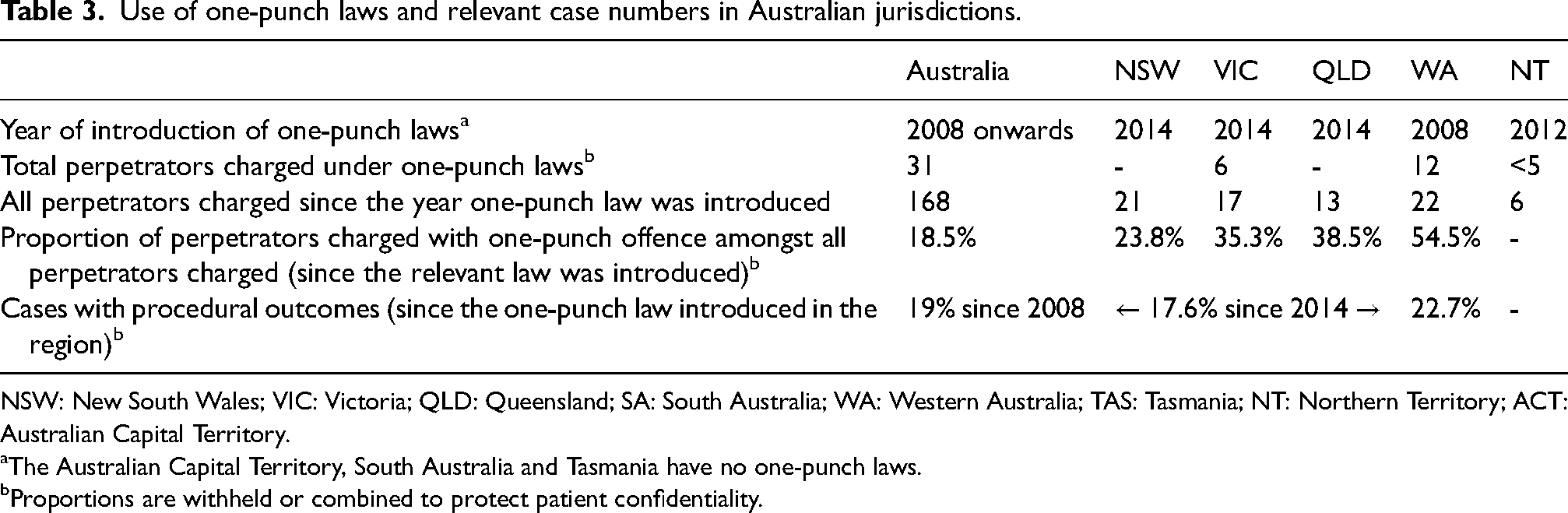
NSW: New South Wales; VIC: Victoria; QLD: Queensland; SA: South Australia; WA: Western Australia; TAS: Tasmania; NT: Northern Territory; ACT: Australian Capital Territory.
The Australian Capital Territory, South Australia and Tasmania have no one-punch laws.
Proportions are withheld or combined to protect patient confidentiality.
Discussion
For the first time in Australia and globally, this study reported one-punch perpetrator characteristics, offence patterns and sentencing outcomes over a 30-year period, using the Lexis Advance database cross referenced with NCIS fatality data. Our study found that at least 287 perpetrators were convicted in Australia, between 1990 and 2020 of offence involving one-punch fatalities. The median perpetrator age was 26 years (range: 15–61). Most perpetrators were charged in NSW and VIC, with substance use reported in 64.8% of cases. The study's unique interdisciplinary approach enabled comprehensive description of the problem size, including those perpetrators who inflicted head injuries by repeated bodily impacts extending beyond the typical one-punch attack (extended trauma: 118, 41%; one-punch: 170, 59%). It is noteworthy that the existing literature identifies a gap in relation to the burden of one-punch case work involving extended injury mechanism in VIC. 50
Quantitative studies describing sentencing outcomes for one-punch perpetrators are sparse in the global literature, making this study a unique contribution to the Australian evidence base. Furthermore, a novel case classification system established MSL by injury mechanism (types 1 and 2) in offence and maximum sentencing categories. The median sentence for most cases was 7 years when charged with manslaughter, irrespective of mechanism type. MSL was lesser in type 1 as compared to that in type 2 in the one-punch offence categories (type 1: 6 years; type 2: 10 years) and life sentence (type 1: 7.6 years; type 2: 18 years).
While the details on concentrations and level of intoxication relating to alcohol and other drugs are limited, this is a novel finding and is indicative of the potential of treatment of drug use disorders as part of one-punch violence prevention. Although results should be interpreted cautiously, the BAC range (0.15–0.22 g/100 mL) reported in this study is similar to that seen in 1260 prison inmates in the United States (n = 18,000) who participated in a nationwide survey in 1997 (response rate 90% and above) and were at slightly higher odds of being convicted of homicide. 51 Interestingly, in homicide convictions, alcohol had a significant association even when consumed in what was considered moderate levels. However, that study did not disaggregate data as per the nature of injury mechanism and being survey dependent; it was prone to recall bias. A systematic review and meta-analysis based on 18 studies reporting data from 591,411 persons from 5 countries (United States, Denmark, New Zealand, Netherlands, Turkey) with drug use disorders reported an odds ratio for violence ranging from 0.8 to 25.0 for single- and poly-drug users. 52
The role of self-induced intoxication as a sentencing factor in Australia is complex, with approaches varying by jurisdiction. Three states have amended their sentencing laws to prohibit consideration of self-induced intoxication as a mitigating factor: QLD and NSW in 201418,22 and TAS in 2020. 53 The remaining jurisdictions rely on a combination of common law principles and legislation. Intoxication may be relevant to the one-punch mandatory minimum sentence in VIC if it helps in establishing whether the perpetrator knew the victim was not expecting a punch. VIC and all remaining jurisdictions (NT, ACT, WA and SA) recognize that intoxication will not mitigate the seriousness of an offence or excuse it.54–59 While intoxication may be mitigatory if it proves an offender has acted out of character, this exception is rarely applied in Australia.55,57 More commonly, intoxication explains why an offender has acted out of character. Research contend this explanation may lead to an implied reduction in culpability. 55 Intoxication may reduce the mitigatory effect of other factors. For example, in VIC, self-induced intoxication can reduce the mitigatory effects of limited cognitive functioning. 60 Intoxication may also act as an indirect mitigating factor when linked to broader social and economic disadvantage, specifically Aboriginal disadvantage. Intoxication can be an aggravating factor if the perpetrator had foreknowledge of the effect alcohol or drugs may have on them,54,55,61 or in instances of random street violence where there is a greater need for specific and general deterrence. 57
The study makes a vital contribution towards enhancing knowledge regarding the situational and behavioural dynamics of perpetrators convicted of one-punch homicide in Australia. Perpetrator characteristics reported in this study will inform services engaged in ensuring that anti-violence education and awareness to guide targeted interventions for high-risk individuals. Perpetrator types were described by age and substance use and disaggregated by manner of violent act. This aligns with violence prevention and the behavioural economics approach 43 and the Australian Crime Prevention Framework. 44 The study objectively highlights the life-altering consequences of engaging in one-punch violence by means of a pooled analysis of sentencing lengths cross-tabulated to behaviour type (type 1 vs. type 2).
There is immense variation in the interpretation and implementation of one-punch laws across Australia, as evidenced by their low usage since 2008. While not limited to only individual or interpersonal factors, subsequent discussions will improve the understanding of both the institutional response across jurisdictions and the challenges associated with criminalization of the violent act.
The offence of murder requires the perpetrator to have intentionally killed the victim, while manslaughter requires the death to be foreseeable. Courts therefore face ambiguity as, in most instances, one-punch assaults are not premeditated. 62 However, the general perception is that these offences are too serious to be charged as common assault. 62 The parliamentary intention of introducing the law was to ‘target male-to-male violence’ where the law was to bring perpetrators to account where the defence of accident or foreseeability may have resulted in an acquittal. 29 States introduced these laws to impose tough sanctions for perpetrators, usually following highly publicized one-punch assaults and public protest. Regardless, one-punch laws seem relatively underutilized, with perpetrators more often convicted under manslaughter, murder or causing injury/assault offences. Indeed, three quarters (76%) of convictions were tried under the manslaughter or murder offence categories. There is existing concern that one-punch legislation may be misused in prosecuting family violence homicide in some states, with the mandatory sentence for one-punch assaults being comparably less than family violence homicide.28,30,63 While our study reported a similar MSL in convictions using the one-punch offence compared with manslaughter, one-punch laws were used in substantially fewer cases, about one-third, when compared with manslaughter (see Figure 3). However, the results must be interpreted cautiously as the legislative changes are relatively recent in some states (2014), with 17.6% of cases in these jurisdictions in interim stages of decision-making (i.e. procedural outcome). This is consistent with results from a Victorian mixed methods study 63 analysing the legal response to 22 one-punch homicides between 2000 and 2015, by trial analysis and in-depth interviews with stakeholders.
State variations in one-punch legislation may account for varied usage. 39 For instance, in VIC, the relevant one-punch offence is an extension of the manslaughter by unlawful and dangerous act offence. To impose the 10-year mandatory minimum non-parole period on the perpetrator's sentence, the prosecution must prove beyond reasonable doubt the perpetrator intended to punch the victim's head or neck, the perpetrator knew the victim was not expecting the punch and that the punch caused the victim's death. 16 This may explain the low usage in the state (35.3%) since the law was introduced in comparison to corresponding WA trends. The bargaining power provided to prosecutors by one-punch laws may further explain this usage trend. 64 In exchange for not pursuing a one-punch charge and the 10-year mandatory minimum sentence, prosecutors may negotiate with perpetrators to plead guilty to manslaughter or another charge. This allows the perpetrator to avoid a mandatory 10-year sentence and the prosecution to expedite the matter, avoiding the risk of acquittal.
In contrast, the NSW one-punch law, assault causing death (ACD) or ACD while intoxicated, has eliminated the need to establish foreseeability and only requires the perpetrator to have intended to hit the victim. Further, the offences only require the perpetrator to have hit the victim with any part of their body. 19 This means their one-punch offence captures a broad range of conduct of varying seriousness and fault. It is unclear what circumstances justify the use of the offence as opposed to a manslaughter or alternative assault offence. The fact that ACD while intoxicated has an 8-year mandatory minimum whereas manslaughter does not have a mandatory minimum further confuses the seriousness of the one-punch offence.29,65 This uncertainty may explain the low usage of one-punch laws in NSW (23.8%).
The one-punch offence in WA is broader than that of NSW, and its position in the culpability hierarchy is clearer, which may explain its higher usage (54.5%). The one-punch law in WA not only dispenses with foreseeability but also intention. The offence only requires an assault, defined as a person who strikes, touches, moves or otherwise applies force of any kind to another directly or indirectly.24,29 The scope of conduct that can be covered by the definition of assault in WA is vast and beyond the scope of conduct covered by NSW. Further, while law in NSW states that the assault must cause the death of the victim, WA states that the victim must die as a direct or indirect result of the assault, meaning WA's law includes perpetrators who may indirectly cause their victim's deaths. 24 However, unlike NSW, WA's one-punch offence does not have a mandatory minimum, and the WA Supreme Court has stated that the offence sits below manslaughter in the culpability hierarchy, 66 making clearer what circumstances may justify its usage. These factors may explain the relatively higher usage of the one-punch offence in WA.
In QLD, the one-punch offence does not require proof of foreseeability and intention. Further, unlike NSW and WA which, as aforementioned, cover a vast range of conduct, QLD legislation requires a strike to the head or neck of the victim causing their death, indicating that their one-punch offence covers a narrower scope of conduct. 21 The NT one-punch law also does not require proof of foreseeability or intention and requires the perpetrator directly apply force of a violent nature to a person which narrows the scope of conduct covered.23,29,65 However, the QLD and the NT cases were relatively low in proportion compared to other states, precluding conclusive reasoning as to the usage of one-punch legislation.
Strengths
The study has several strengths. This observational study offers a first-time scoping analysis on perpetrators using a dual forensic and legal approach. The study had a strong methodological design. The legal database searching was systematized due to Lexis Advance functionalities and the use of additional database (NCIS) to determine the problem size and harmonize case numbers. The paper succinctly reviewed all one-punch laws in Australia and mapped the related offence patterns as per their specific usage in the trials included in the current study. While the method was labour intensive with prolonged manual screening and dual observers, the study provided a comprehensive documentation framework and scoping analysis for various facets of sentencing patterns that enhanced knowledge about one-punch deaths in Australia. This study will expand public awareness in Australian communities of the deleterious outcomes of using violence. Evidence indicates that a decline in violent crime is facilitated by shifts in social attitudes and adopting a public-centred approach.1,30,63
Limitations
The study was not without limitations. The total perpetrator number is likely an underestimate. The functionality of Lexis was such that some trials in the gold standard literature1,63 that were ‘unreported’ could not be located in the Lexis database. Similarly, Lexis database did not yield any trials that reported perpetrator acquittals. The NCIS-Lexis case matching may not have identified the under-aged perpetrators who were unnamed in Lexis trials. There were a limited number of cases from the NT, the ACT and TAS in Lexis dataset. The NCIS coronial data from 2000 to 2012 was not available for the case matching exercise adopted for the period 2012–2020.
The cultural significance of one-punch violence has been attributed in the literature to a range of causes, ranging from a lack of positive role models and emotional maturity 67 to a complex series of adverse personal experiences of perpetrators 8 and sensitivity to insults in men from diverse socioeconomic settings. 29 A detailed discourse on cultural elements is beyond the scope of this paper.
Determination of the true legislative impact on one-punch violence was not attempted, especially since these laws likely impact not only the fatalities but also non-fatal incidents. Additionally, there is considerable overlap between one-punch and alcohol restriction legislations which makes it difficult to isolate the impact of one from another. The one-punch legislative provisions in some states were introduced concurrently with other measures, for example in NSW where ‘lockout restrictions’ in Central Business Districts were introduced by the Liquor Amendment Act 2014. 68 This required licenced premises to stop serving alcohol at 3 am, introduced lockout rules and banned takeaway liquor sales after 10 pm.1,31,69 Moreover, not all legislative measures were reported to be working in favour of case reduction. 70 For example, a July 2017 law which enforced ID scanners at licenced venue entry in 15 night-time entertainment districts (NEDs) was associated with a paradoxical spike in violent offences. Similarly, cultural trends showed a growing number of people preloading alcohol before entering Brisbane NEDs, 71 which increased substantially (79% of 3039 Queenslanders with mean BAC of 0.071) following the suite of alcohol laws introduced in QLD NEDs on 1 July 2016.71,72
Statistical correlations and jurisdictional disaggregation of data were not attempted due to low case numbers in certain jurisdictions and/or offence/sentencing categories. Substance usage data (i.e. drug and alcohol use) in perpetrators was not consistently determined due to unavailable data. A detailed commentary on the elements of the crime was beyond the current scope of the study. Although the data collection period extended to 2020, the impact of the corona virus pandemic was not explored due to it being outside of the study's remit.
Future legal research can examine how the sentencing outcomes differ by one-punch perpetrator characteristics. An analysis could compare perpetrator characteristics and sentencing outcome between one-punch homicide and other homicide to determine potentially predictive elements of perpetrator behaviour. Given the male predominance in perpetrators, the role of masculinity in one-punch offences may be pursued in future research. Perpetrator trials with non-fatal outcomes may be the topic of a future injury study on the health, economic and community impacts of one-punch violence in Australia. Preliminary data by the authors indicates that non-fatal one-punch assaults are at least as common as fatal one-punch assaults.
Conclusion
A national study was undertaken to identify perpetrator and incident characteristics of fatal one-punch assaults in Australia. For the first time in Australia, this study described the sentencing outcomes for perpetrators of one-punch fatalities utilizing a unique medicolegal approach and case classification system. Two hundred eighty-seven perpetrators have been convicted for 234 fatal one-punch incidents in Australia since 1990. Adopting a perpetrator-centred approach, the study will enhance legislative and judicial measures of violence prevention and increase public awareness of one-punch violence in Australia.
Supplemental Material
sj-docx-1-msl-10.1177_00258024251316669 - Supplemental material for An analysis of offence patterns and legal response to one-punch fatalities in Australia
Supplemental material, sj-docx-1-msl-10.1177_00258024251316669 for An analysis of offence patterns and legal response to one-punch fatalities in Australia by Reena Sarkar, Hayley Duncan, Richard Bassed and Olaf H Drummer, Abbie Roodenburg, Jennifer Schumann in Medicine, Science and the Law
Footnotes
Acknowledgements
We thank Victorian Institute of Forensic Medicine's physicians, Dr Jo-Ann Parkin and Dr Nicola Cunningham, for refining the clinical criteria, and interns, Alana McCool, Beverly Chee and Hope Calvert, for their contribution towards preliminary data extraction. We also thank staff from the National Coronial Information System and the Department of Justice and Community Safety for their data.
Author contributions
Reena Sarkar: conceptualization, data curation, formal analysis, investigation, methodology, supervision, writing – original draft, writing – review & editing. Hayley Duncan: formal analysis, writing – original draft, writing – review & editing. Richard Bassed: writing – review & editing, resources. Olaf H. Drummer: data analysis, writing – review & editing. Abbie Roodenburg: writing – review & editing, concept building. Jennifer Schumann: funding acquisition, project administration, conceptualization, writing – original draft, writing – review & editing.
Declaration of conflicting interests
The authors declared no potential conflicts of interest with respect to the research, authorship, and/or publication of this article. Associate Professor Jennifer Schumann is a board member of the Coward Punch Limited, an Australian Charity (funding body) since December 2023. Professor Schumann was not a board member when the research was completed.
Funding
The authors disclosed receipt of the following financial support for the research, authorship, and/or publication of this article: This project was funded by the Coward Punch Limited (an Australian charity). The funding organization was not involved in any aspect of the study design, collection, analysis and data interpretation.
Ethics approval
The project was approved by the Victorian Institute of Forensic Medicine's Ethics Committee ID 1138/June 2022 and the Justice Human Research Ethics Committee at the Department of Justice and Community Safety Victoria ID M0464/2021, CF/20/17578 and M0464-A2.

Supplemental material
Supplemental material for this article is available online.
References
Supplementary Material
Please find the following supplemental material available below.
For Open Access articles published under a Creative Commons License, all supplemental material carries the same license as the article it is associated with.
For non-Open Access articles published, all supplemental material carries a non-exclusive license, and permission requests for re-use of supplemental material or any part of supplemental material shall be sent directly to the copyright owner as specified in the copyright notice associated with the article.
