



Abstract
The microbiome has been at the center of a cross-section of disciplines with a wide range of applications and research methodologies, the impact of which is also reflected in forensic science. The skin microbiome is considered a “microbial fingerprint” due to its highly personalized characteristics and can be used for forensic individual identification. This narrative review systematically combs through the literature on skin microbiome and forensic applications, focusing on the characteristics, current applications, challenges, and future prospects of the skin microbiome in the field of forensic individual identification. It first explores host specificity, temporal stability, and marker characteristics. Then, by linking individuals with objects, individuals, and the environment, it analyzes the applications in forensic scenarios. It also introduces two commonly used main analytical techniques and their respective advantages and disadvantages. With the development of technology, machine learning has gradually been applied to forensic work. However, there are still four major challenges in practical application, namely ethical, technical, database and biological challenges. In this context, we provide a standardized process through a hypothetical case and propose a multi-omics collaborative analysis framework for the first time, combining metagenomics, metabolomics, and non-omics data (such as geographical information, image records) to illustrate its enhanced effects in scenarios such as sexual assault and disaster victim identification. Overall, despite the challenges, the application of skin microbiome in forensic science is promising and is expected to play an important role in the future of forensic practice.
Keywords
Introduction
One aspect of forensic science that is critically important is identification, as it is necessary for identifying or excluding suspects, identifying unknown corpses and making identifications in large-scale catastrophic situations, such as earthquakes, bomb blasts, and floods. 1 However, traditional methods (such as DNA analysis and fingerprinting) still have limitations in certain complex cases. For example, in some cases, DNA samples at the crime scene may be unusable due to degradation or contamination, and fingerprints may be unobtainable due to poor surface conditions or deliberate destruction. Against this backdrop, with the rapid development of microbiome research in recent years, the use of the skin microbiome for individual identification has gradually attracted the attention of the forensic community.
Human skin contains a wide variety of microbiota that, together with their genetic information and host interactions, constitutes the human skin microbiome. This complex group of microbiota consists of bacteria, fungi, viruses, microeukaryotes (mites), archaea, and phages. 2 Past studies have indicated that by analyzing the structure and abundance of the skin microbiome, it is possible to infer information about an individual's health status, lifestyle, environment and so on. In addition, the host specificity and temporal stability of the skin microbiome allow it to play an important role in the analysis of physical evidence at crime scenes. These microbiomes leave unique traces when they come in contact with other objects, individuals, and the environment, and forensic experts can link skin microbial traces from the human body and the crime scene through sequencing methods in order to effectively solve crimes.
In summary, the human skin microbiome shows great potential and unique application value in forensic science. However, skin microbiome still faces many challenges in forensic application scenarios. This review aims to critically evaluate the forensic utility of skin microbiome, focusing on its characteristics, analytical techniques, challenges, and practical integration into workflows. We will also integrate multi-omics and non-omics data in the identification of skin microbiome individuals for the first time and propose a standardized operating framework to provide a reference for related research.
Material and methods
This study employs a narrative review method, aiming to provide a comprehensive overview of the emerging field, detailing the background and current status of the application of skin microbiome in forensic individual identification systems, and sorting out the core challenges and progress in this field. The research questions include the forensic characteristics of the skin microbiome, application scenarios, and detection techniques. We selected articles based on their titles and abstracts using the keywords: forensic science, skin, microbiome, microbiota, individual identification, personal identification, ethics, machine learning, multi-omics to conduct a literature search in the most popular electronic databases (PubMed, Web of Science). The search scope was narrowed down to articles published between 2015 and 2025. Priority was given to literature directly related to the skin microbiome and forensic individual identification, as well as case applications in forensic scenarios, excluding articles not in full-text English. The reference lists of the selected articles were reviewed to include additional relevant articles.
Microbial characterization of forensic skin
Host specificity
Individual differences in the skin microbiome are mainly shaped by a combination of intrinsic and extrinsic factors (Figure 1). Intrinsic factors include age, gender, and ethnicity, among which age is one of the main factors influencing the diversity of the skin microbiome. The skin microbiome becomes more diverse with age. Similarly, the abundance of some genera showed differences in gender. 3 A previous study indicated that women have higher levels of bacterial diversity on their hands than men, which may be related to differences in sex hormone levels.4,5 In addition, the skin microbiome exhibits significant differences between races. 6 However, there may be differences in skin microbiome even among people of the same race living in the same country or region. 7 This suggests that extrinsic factors such as lifestyle, hygiene practices, environmental factors (including geographic location, humidity, season, and climate) and history of previous antibiotic treatment, 2 alcohol consumption, and outdoor exercise 8 significantly influence the composition of an individual's skin microbiome. 9 Together, these factors confer a unique skin microbiome signature on each individual, pointing the way to detection for inferring host-related personal information.
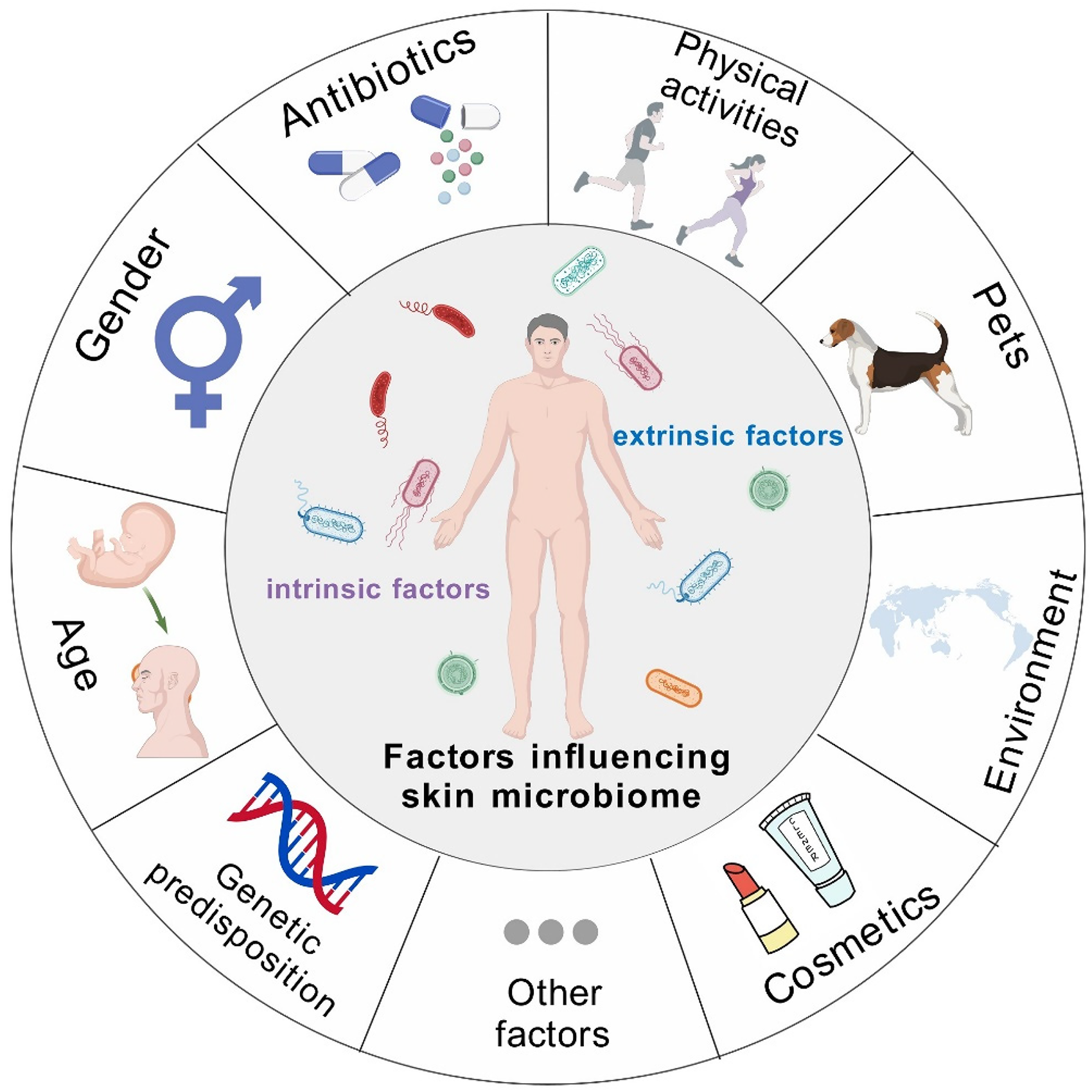
Intrinsic and extrinsic factors influencing the human skin microbiome (This figure is created with BioGDP 10 ).
Site specificity
Based on physiological characteristics such as pH, humidity, sebum content, oxygenation and temperature, the skin is divided into three main zones: the sebaceous zone (including the head, neck and trunk, etc.); the moist zone (including the armpits, perineum, interphalangeal space, etc.); and the dry zone (including the skin of the extremities, etc.). Perez et al. analyzed the bacterial communities of three representative skin sites (forearms, armpits, and scalp) and confirmed that different skin areas have different microbial diversity. 11 The microbial community in the thigh region, for example, can be used to determine sex. 8 In addition, the skin samples enable us to learn about skin-related diseases that the individual suffers from, thus making suspect identification more precise. 12 This site specificity provides more robust evidence for forensic investigations, especially when dealing with crimes involving physical contact.
Temporal stability
Temporal stability of the microbiome is a key factor in the forensic field. Oh et al. suggest that healthy adults can maintain their skin communities stably for up to two years. 13 Among them, both bacterial and fungal communities in the sebaceous gland area show the highest stability and are more suitable for forensic physical evidence retention. 13 Skin bacteria show strong resistance to environmental factors (i.e., UV light, humidity, and temperature), and thus these skin bacteria may persist on surfaces or objects that come into contact in order to infer a link between the individual and the physical evidence at the scene. 14 Even though there are differences in the temporal stability of the shed skin microbiome for different objects, overall, the temporal stability characteristics of the human skin microbiome are reliable when applied to forensic individual identification.
Microbial markers
In order to develop and assess the potential for human identification, a core stable skin microbiome should be the main target of research. Bacteria were the most dominant group in the skin microbiome, dominated by the phylum Firmicutes (51.1%), followed by Actinobacteria (29.1%), Ascomycetes (10.6%) and Anaplasma (5.2%). 15 Propionibacterium acnes and Staphylococcus epidermidis spp. are highly correlated with individuals and are considered valuable resources for forensic applications using the skin microbiome.16,17 Heterococcus spp. were instead proposed as potential biomarkers for gender (64% accuracy, indicating male donors) and race (56% accuracy, indicating Caucasian and mixed race donors). 18 Propionibacterium spp, Corynebacterium spp, and Staphylococcus spp are the major bacterial species on human skin, nevertheless, secondary taxa play a key role in enhancing the accuracy of individual identification. The method developed by Watanabe et al. classified individuals with 85% accuracy. 19 In total, 59 putative markers were identified in an in-depth study of the dermatovirus microbiome, capable of serving as a complete set of markers for the construction of human identity profiles, seven of which were stable and present in all subjects with the potential to serve as targets for future studies of SNPs and intraviral genetic variation. 20 These findings provide a scientific basis for utilizing the skin microbiome for forensic individual identification and point to directions for future research.
Applications in forensic scenarios
Individual-object linkage
Skin microbiome can be transferred to other surfaces through direct and frequent contact, leaving unique microbial “fingerprints” that link various objects (including mice, keyboards, cell phones, clothing, etc.) to their respective owners. Those objects which most frequently touched by the occupants can provide compelling evidence for the identification of individuals in criminal cases. Several studies have confirmed this, as can be shown in Table 1.
Association between skin microbiome and objects.
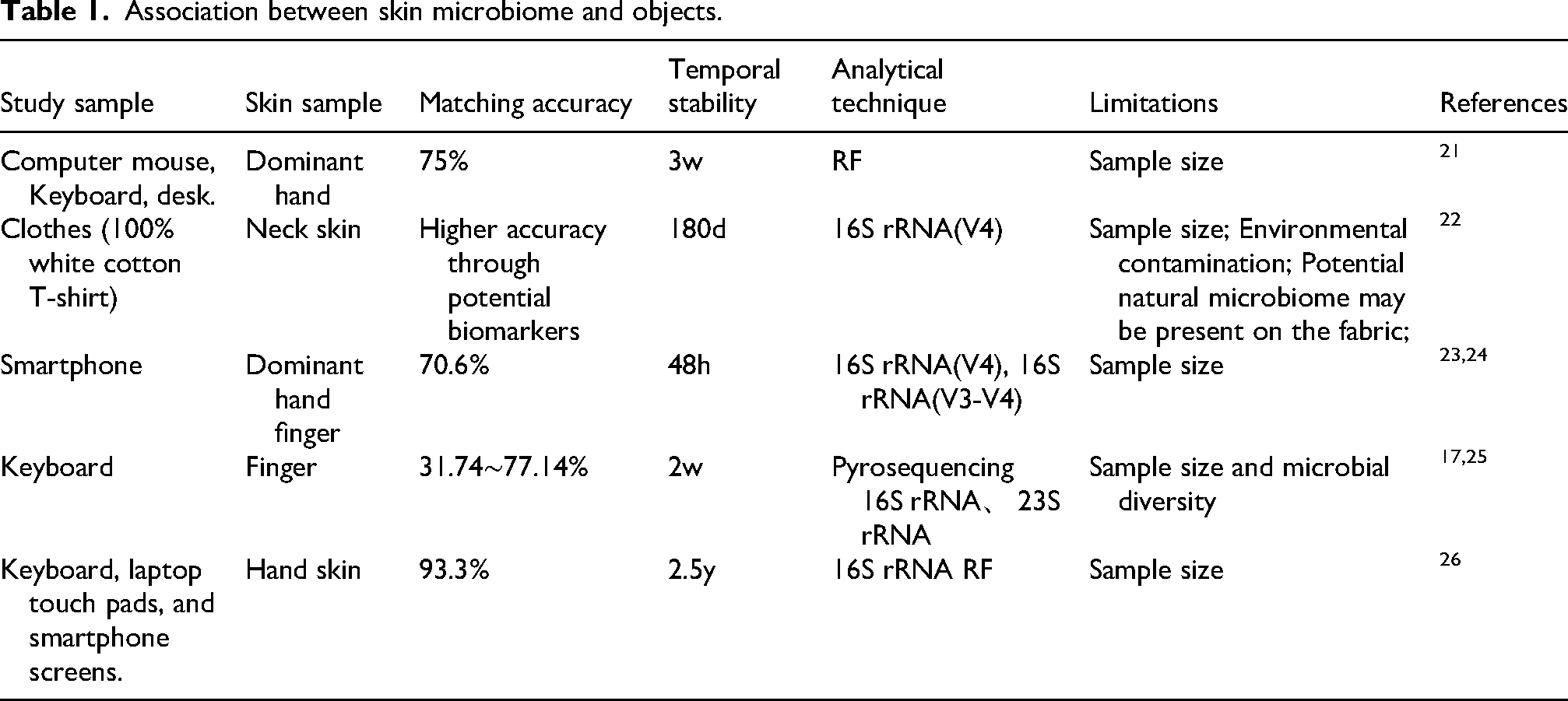
Fierer et al. showed that the bacterial communities found on personal items were more similar to the skin bacterial communities of their owners. 25 The microbiome of cell phones, as a personal item that is often carried around, is more similar to that of the non-dominant hand, and the cell phone microbiome accurately identifies its owners, even though microbial associations between the skin of the index finger and the cell phone vary between gender groups. 23 Similarly, the interaction between skin and fabric through friction and pressure, and depending on factors such as textile material, shirts are more often used as “discarded” items by criminals after the commission of a crime than socks or undergarments, which opens up new possibilities for forensic work. 22 According to Yang et al., the combination of Propionibacterium acnes NRT compositions with the skin microbiome increased the accuracy of individual identification to 93.3% and was able to overcome daily bacterial contamination. 26 In addition, even the postmortem skin microbiome was able to be associated with personal items with a high degree of accuracy and remained stable for up to 60 h after death, similar to the living skin microbiome. 27 Clearly, this method has the potential to be a powerful identification tool for identifying unknown bodies, finding evidence in cases, etc.
Since skin microbial traces on different object surfaces have different temporal stability, if the objects are associated with other people after a long period of time, the association may be weakened, posing limitations for forensic work. In future studies, it is recommended to expand the sample size and microbial diversity, and to explore in depth the specific characteristics of the traces left by the skin of different body parts after contact with an object in order to improve the accuracy of individual identification.
Individual-to-individual contact
Family members tend to have similar levels of bacterial diversity, sharing more among cohabiting partners than adults from different families. 28 And can identify cohabiting partners in 86% of cases. 8 In addition, the canine skin microbiome shares to some extent the human skin microbiome. 29 Microbial links between pets and suspects or victims may provide new clues for forensic individual identification.
Neckovic et al. suggested that direct and indirect transfer of the human skin microbiome among non-cohabitating individuals could be considered as a trace evidence, and interestingly, direct skin contact-mediated transfer of microbial communities may also influence the microbial composition profiles of specific body sites of individuals. 30 According to Ross et al., the feet, eyelids, and back have the most similar microbial communities among heterosexual couples, especially the feet, which can be attributed to the direct contact of the feet with household surfaces and future skin microbiome studies should include same-sex couples. 8 These analyses mean that the results of microbial community analyses taken from victims can reveal associations between cases and potential suspects, such as in cases of sexual assault.
Williams et al. collected microbiome samples from pubic region to identify individuals, the accuracy of classifying individuals or couples through random forest modeling was over 90% and stable over six months, demonstrating its importance for forensic investigations, although >10% of the microbiome had to be from another in order to detect a transfer and the detection of microbial transfers in a one-time exposure (e.g., rape) event is unlikely to identify suspects, the likelihood of microbiome similarity increases with large population sample sizes and more in-depth study, valuable information for forensic work will be provided in the future. 31 The impact of microbiome transferred between individuals, mechanisms of transfer, persistence, and skin microbial associations between different populations, body sites and other individuals need to be addressed in future research.
Individual-environment linkages
Several studies admitted that skin microbiome represents a significant proportion of microbial sources in the built environment. Table 2 has shown that the interaction of skin microbial communities with their surroundings becomes an important source of information for forensic individual identification. 32 These microbiome are capable of transferring to indoor surfaces following direct contact, or being directly airborne through the shedding of skin cells and their fragments as well as deposition on floors and other surfaces, followed by fragmentation and resuspension, thus having an impact on indoor air microbial concentrations.33,34
Association between skin microbiome and environment.
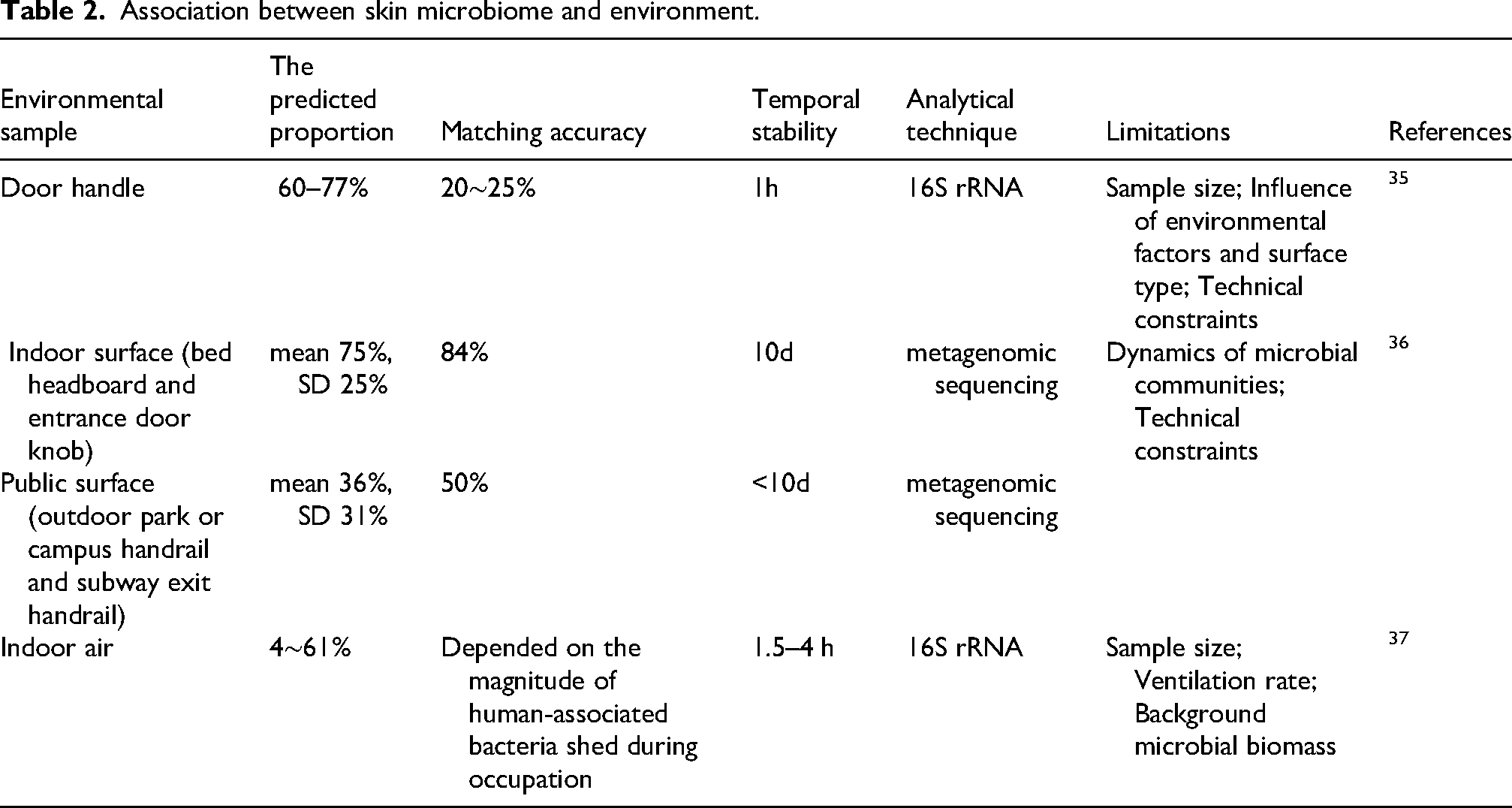
A previous study, by simulating multiple burglary scenarios, found that the intruder's unique microbial fingerprints showed temporal stability even when other occupants incidentally used the surfaces, and interestingly, that microbiome dislodged from the burglar's body was more likely to be deposited on the floor as the burglar moved through the home. 35 This opens up the possibility of shoes or other footwear as microbial sampling tools. 38 In addition, skin samples taken from public spaces were 80% accurate in predicting the sex of the occupants. 39
The study by Meadow et al. demonstrated for the first time that personal microbial clouds are capable of detecting the past presence of individuals in indoor spaces, that settled particles reveal individual characteristics of occupants, and that particle concentrations tend to correlate with the proportion of human-related taxa and individual identifiability, the individuals who emit the greatest number of particles usually being the most easily identified. 37
Differences in the accuracy and temporal stability of individual identifications as well as the effects of lighting, ventilation, temperature and humidity on the traces of microbiome in the built environment increase the difficulty of forensic work. In the future, each surface will need to be meticulously sampled and examined. 40 Increasing sample size and continually improve technology to more accurately extract personal microbiological information. Overall, this method plays crucial role in future forensic investigations, providing a more accurate tool for individual identification and crime scene reconstruction.
The most commonly used analytical techniques today
16S rRNA amplicon sequencing methods
The 16S amplicon method is widely used to analyze bacterial microbiome and provides rapid, accurate and valuable information about individual identification compared to traditional methods. This method is suitable for human or host DNA backgrounds (e.g., skin swabs) because the 16S rRNA primers amplify only bacterial and archaeal structural domains. 7 Most programs will select specific locations appropriate to the microbiome type which are called hypervariable zones (V1-V9). 41 It has several important advantages: 1) it is inexpensive and cost-effective, 2) data analysis can be carried out through an established process, and 3) a large amount of archived data is available for reference, however, the main limitation of the 16S amplicon method is that it can sequence only a single region of the bacterial genome. 42 Individual identification is susceptible to interference over time and is limited by differences in relative abundance measured by bacterial community sequencing compared to true relative abundance and primers used for amplification may not match the target regions of some species, making it difficult to achieve high-resolution identifications. 7 This type of sequencing has great potential, so it is critical to collect enough data to determine the general applicability and accuracy of this method for individual identification and inference, and to continually improve the technology for analysis. 43
Metagenomic birdshot sequencing
Metagenomic birdshot sequencing may be more suitable for forensic analysis, despite its higher cost and time-consuming nature. 35 And it's highly suitable for skin microbiome studies. Firstly, the metagenomic birdshot method provides deeper levels of complexity, secondly, it allows for the resolution of complete DNA profiles of samples, obtaining multi-boundary genomic and metagenomic signatures, lastly, it provides higher phylogenetic resolution. 41 However, its potential as a forensic tool remains limited at this time. Gupta et al. argue that birdshot metagenomics requires higher sequencing costs and random effects, producing a large number of uninformative reads that are not variable between taxa, resulting in wasted sequencing efforts. 7 Combining this sequencing approach with other analytical techniques may lead to a more comprehensive understanding. Metagenomic CRISPR typing proposed by Toyomane et al. can be used as a new method of typing personal microbiomes, achieving 95.2% accuracy in personal classification, which provides a new perspective on the study of the skin microbiome. 44
Machine learning
With the inevitable development of new technologies, Artificial Intelligence (AI) has emerged and could be a key part of driving forensic microbiology in the future. Machines can be used to identify individuals by matching biometric patterns placed in front of the machine with the individual's biometric data stored within the machine. 1 A variety of machine learning (ML) methods, including Random Forest (RF), Support Vector Machines (SVM), Linear Regression, Logistic Regression (LR), etc., play a vital role in this field, and Deep Learning (DL) is a subfield that includes Artificial Neural Networks (ANN), Multi-Layer Perceptron (MLP) networks, and Convolutional Neural Networks (CNN). 45 Table 3 demonstrates the potential of ML for applications in individual recognition. RF has become a widely used ML method as an ideal framework for consistently identifying “true effects” in complex and heterogeneous data (multiple feature types; numerical or categorical) and has demonstrated good performance in classification and regression tasks, especially when dealing with low sample sizes, which facilitates the application of RF in biology, this is favorable for biological applications. 46 SVM can be considered as a special kind of neural network that acts as a supervised learning method. Its decision functions are capable of employing different kernel functions. Kernel methods aim at converting the original problem into a linearly solvable problem, using the kernel method, the data to be solved is transformed into the kernel space by a nonlinear transformation. 47 Linear regression and logistic regression are widely used statistical methods in medical research to assess associations between variables. 48
Application of ML to the identification of individuals in the skin microbiome.
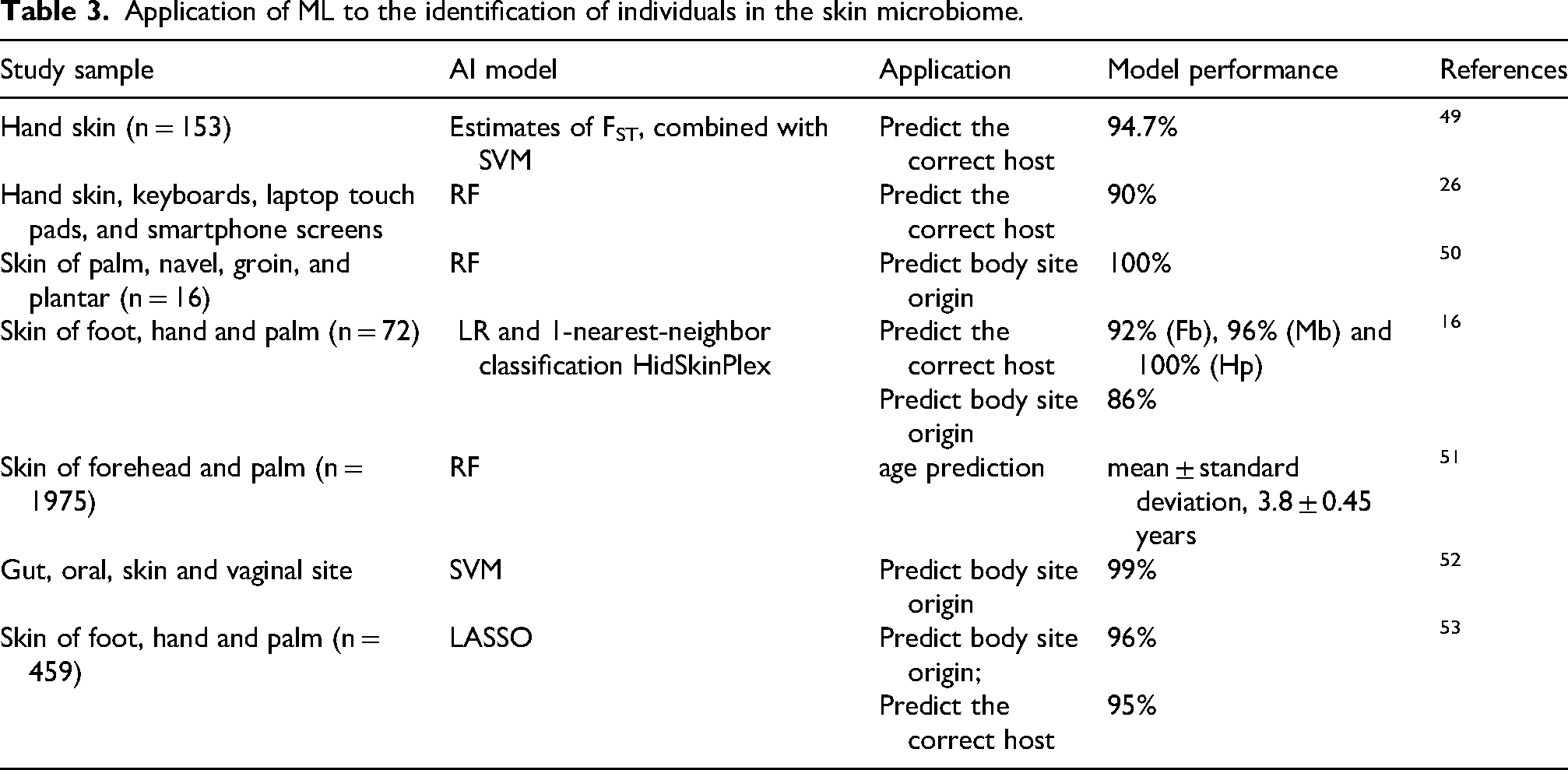
Compared with traditional techniques, ML shows significant advantages in being able to acutely capture subtle changes in microbial structure and identify key bacterial taxa, which is of great value in capturing environmental responses, disease diagnosis, ecological monitoring, etc. Its core advantage is that it does not require complex data conversion and preprocessing steps which is particularly important when dealing with molecular data, therefore, ML provides a more flexible and powerful tool for microbial community analysis. 54
ML in forensic individual identification still faces a number of challenges. Forensic experts need to articulate the accuracy and reliability of the machine analysis results to their clients (i.e., the judiciary and investigative agencies) and invest a great deal of effort in training the machines and updating the data, the question of whether poorer countries can afford the costs of infrastructure and the testing process should be taken into account due to the high costs of these costs. 1 Issues such as limited sample size, model accuracy and impractical environmental settings need to be further addressed. 55 In the future, we expect to expand the collection of human samples and conduct more in-depth research using ML algorithms to facilitate their application in forensic practice. 43
Challenges
Ethical challenges
The introduction of any new technology into the field of forensic science requires the adaptation of laws and standards to regulate its collection and use, and human microbiome research is no exception due to the multiple complexities of laws and regulations governing the management of evidence arising from the possible uses for identifying and phenotyping individuals. The human skin microbiome can reveal information about an individual's origins, ethnic background, historical exposures, and countries or geographic locations visited in the past. 56 It also exposes details of an individual's health, illness, lifestyle, and occupation, and therefore needs to take into account the protection of privacy. 57 Tozzo et al. recommend that human microbiome research samples should be handled by a biospecimen repository with the same protections for privacy and confidentiality as any other human tissue sample or source of identifying information. 58 As we examine privacy and confidentiality from the perspective of microbiome research, it is important to consider what information should be protected and why. 59
Technical challenges
Because microbiomes are ubiquitous, it is critical to elucidate the potential contamination risks associated with microbiological analyses and the potential for indirect transfer of the human microbiome to affect the integrity of evidence cannot be ignored in the forensic setting, particularly during crime scene investigations and evidence recovery. 30 Even the evidence packaging itself may be a further source of microbial contamination, with varying effects on the results. 60 Future research should investigate the effects of UV disinfection of forensic laboratories, equipment, and mock exhibits on exhibits as well as the effects of using artificial or mimic microbial communities on exhibits. 61 Forensic scientists are challenged to develop new techniques and standard operating procedures for collecting, storing and extracting microbiome samples, and to evaluate the results with the utmost care. 60 Cleanroom suits, masks, hairnets and disposable gloves are recommended. 62 Future research may involve comparing DNA extractions obtained from a variety of sampling methods, from swabs to adhesive patches to alternative devices, and may even develop techniques that allow these devices to analyze samples in real time. 63 As technology continues to evolve, there is a need for significant investment in the training and empowerment of forensic practitioners, and that assessment through competency testing to ensure that forensic practitioners are reliable, these measures will help to prevent potential errors from occurring. 60 We expect that future applications of skin microbiome in forensic individual identification will be more sophisticated and accurate, bringing new understanding within this complex field.
Database challenges
That it is a highly valuable endeavor to construct a comprehensive and reliable microbiome biodata (covering individual metadata such as geographic background, ethnicity, dietary habits, etc.) dedicated to forensic human identification databases that can be used in a forensic setting and to use microbiome as complementary evidence in different criminal cases. 64 It also identifies serial criminals by linking multiple cases, which greatly increases the evidentiary value of forensic data. 65 To overcome barriers in microbiome data standards, we encourage a culture of sharing microbiome data, understanding and reducing barriers to data submission, 66 and standardizing microbiome sample nomenclature to improve database construction. 67 Due to the complexity of sample types, locations, environmental factors and autopsy variations, the combination of microbiome data from laboratory animals, human samples and certain materials from crime scenes could also be considered for the creation of a forensic microbiology database and multicenter collaboration. 68
Biological challenges
Despite the identifiability of microbial traces left by individuals on the surface of an object for up to two weeks, these microbial traces may change unpredictably and uncontrollably due to the passage of time or environmental changes in actual case investigations, which poses a challenge in analyzing the microbiome of the host and the surface of the crime scene. For example, skin and surface samples collected in different seasons can be significantly less accurate, especially when surface samples are taken much later. 69 Samples collected at different times of the day and night also showed differences, with relative abundance usually higher in the morning or evening and the greatest difference in relative abundance between morning and evening, suggesting that the use of microbiome analysis in forensic individual identification is not simply a matter of comparing “fingerprints”. 36 In summary, it is important that we delve into the dynamic system of microbial transmission to better understand the behavior of microbial communities under different conditions and thus improve the accuracy of forensic individual identification.
Practical integration into forensic workflows
Operational impact on forensic routines
Skin microbial traces play an indispensable role in forensic analysis of physical evidence and identifying key individuals. As research on skin microbiome gradually increases, its impact on routine forensic work has gradually attracted attention. The human microbiome serves as a promising alternative source of DNA, enabling forensic practitioners to use skin microbiome samples found at crime scenes to identify suspects and victims when DNA sources are insufficient. 49 This has positively impacted routine forensic investigations.
In some long-standing unsolved cases, due to the prolonged exposure of physical evidence at the crime scene, surface DNA may have degraded or even completely disappeared, while the more stable skin microbiome can play a key role. Similarly, in large-scale disasters (e.g., earthquakes, floods, air crashes, etc.), a large number of unknown bodies appear. The remains may be exposed to harsh environments for long periods of time, rendering traditional identification methods unusable. The practice of detecting microbiome on the bodies or clothing of victims and then comparing them with personal items provided by family members not only accelerates the identification of victims, but also potentially alleviates the negative psychological feelings of family members. In addition, since skin microbiome can be directly and indirectly transferred between individuals, there has been new progress in sexual assault cases. When human male DNA is absent, these microbial signatures may help identify the perpetrator. 70 By analyzing the distribution and abundance of these microorganisms, it is possible to infer the contact behavior between individuals and even the time of occurrence, thus serving as strong evidence for determining sexual assault.
Step-by-Step operation case
There is currently no complete standard operating guide. By combining the research methods from previous literature, we provide a step-by-step procedure for individual identification involving skin microbiome in daily forensic work (Figure 2). Establishing unified standards for sampling, analysis, and reporting can minimize errors caused by procedural variations and enhance the reproducibility of science. This is crucial for the scientific rigor, standardization, and efficiency of future forensic work. To facilitate understanding, we present a hypothetical case scenario: A suspect wore gloves during the crime, leaving no usable fingerprint or DNA evidence at the scene. Forensic experts discovered suspicious microbial traces on the inner side of a doorknob and needed to establish a connection between the suspect and the crime scene through skin microbiome analysis.
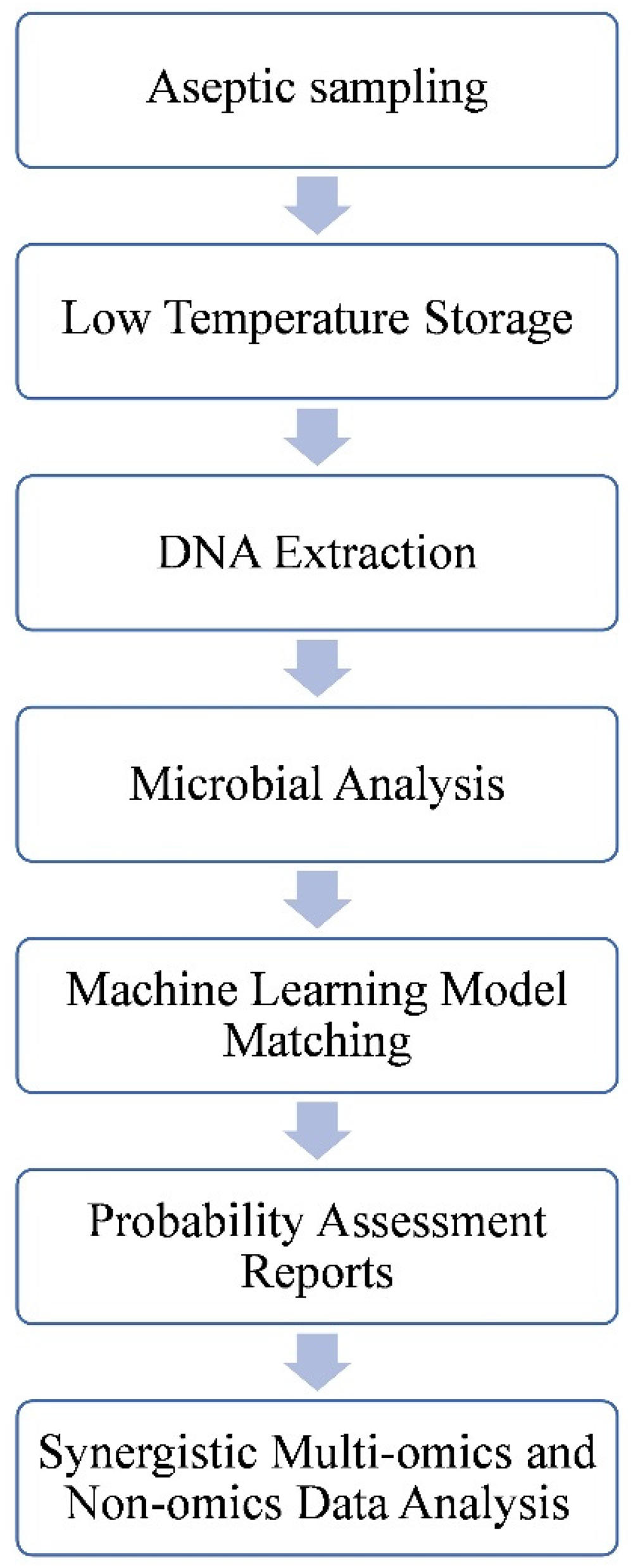
A concise step-by-step procedure for individual identification of the skin microbiome.
Sample processing
Firstly, we use sterile swabs to sample each doorknob surface. It is worth noting that skin microbiome sampling methods currently also include tape-stripping, scraping and punch biopsy. 71 Swabbing and tape stripping methods show similar results in skin microbiome analysis, and the tape stripping method collects more viable bacteria than the swabbing method. 72 Punch biopsy is commonly used in cases involving deep skin samples, such as those related to skin wounds. 71 The appropriate method for sample collection can be chosen based on the requirements of the actual case. Nearing et al. 73 recommend 1) Collect biological and technical replicates when possible; 2) Use the same collection device and manufacturer; 3) When possible, use the same collection personnel; 4) Use aseptic techniques during sample collection; 5) Make note of any variations during sample collection and include them in downstream analysis.
In a simulated burglary case, Hampton-Marcell et al. 35 used sterile cotton BD-Swube applicators to wipe the surfaces that had been touched, and then transferred the samples to a −80°C freezer within 3 h for storage until processing. In other contact evidence association analyses, Wilkins et al. 36 used moistened swabs to uniformly wipe human skin, indoor surfaces, and public surfaces for 20 s. Immediately after sampling, the swabs were immersed in Shield reagent and stored at −20°C to track the suspect's range of activities. As another forensic investigation tool, Procopio et al. 22 froze the samples collected from clothing at −20 °C until processing. This is consistent with the methodology of Neckovic et al. 61 In sexual assault cases, Williams et al. 31 used swabs to collect microbial samples from the pubic area and stored the samples at −4°C until DNA extraction. It can be inferred that most skin microbial samples are currently stored at low temperatures. In addition, Klymiuk et al. 74 systematically evaluated the impact of long-term storage (up to 1 year) at −80°C on skin microbiome swab samples for the first time. The results indicated that the overall structure of the skin microbiome and the relative abundance of major taxa remained stable in most cases. This study has important guiding significance for evidence samples that require long-term storage. Nearing et al. 73 recommend 1) When possible freeze samples at −80°C immediately upon collection; 2) Exposure of samples to room temperature conditions should be minimized; 3) Preservatives should be used only when freezing of samples is infeasible (e.g., self-collected human samples); 4) if used, all samples should be stored in the same preservative; 5) Length of sample storage should be noted and included in downstream analysis. 73
Since the application of the skin microbiome in forensic science is still in the exploratory phase, the differences in sample processing methods between different cases still need to be further explored. Moreover, the sampling step may involve ethical issues. For instance, in cases of sexual assault, we need to pay attention to the privacy rights of individuals. In contrast, other biological markers (such as DNA profiling and RNA extraction) have already established mature standardized procedures that can serve as references for the study of skin microbiome. In the future, we need more comprehensive thinking to provide forensic experts with a standardized operating guide for joint learning and application. This will help to reliably present such evidence in legal cases.
DNA extraction, sequencing and data analysis
The next step after sample collection and storage is DNA extraction, which provides the basis for subsequent to study the types, quantities, and gene functions of microorganisms. We chose to use the Mo BIO UltraClean kit to prepare the samples, performed PCR amplification targeting the V4 hypervariable region of the 16S rRNA gene, and sequenced using Illumina MiSeq. 35
Bioinformatics analyses were next performed using the QIIME2 platform. First, quality control was performed by DADA2 to generate amplicon sequence variants (ASVs), and then α-diversity and β-diversity analyses were performed to assess the microbial composition and variation of the samples. 38 Differential bacterial populations were identified using LEfSe analyses (LDA score >3.0).
Nearing et al. 73 made several recommendations for the DNA extraction step: 1) Extractions should be done using validated extraction kits or validated protocols such as those presented by the Earth Microbiome project or International Human Microbiome Standards; 2) All samples must be extracted with the same protocol; 3) Extraction batches should be noted and used as covariates in downstream analysis; 4) Extraction should include a mechanical lysis step (e.g., bead-beating); 5) Extraction should be done using aseptic techniques and a biological safety cabinet to reduce the amount of possible contamination; 6) A small pool of samples should be extracted during each extraction batch and sequenced to determine technical variation; 7) Blanks should be carried through extraction to sequencing (critical for low-biomass samples).
Suspect identification
The microbial composition data from the crime scene samples and suspect samples were integrated into one dataset. A random forest method was implemented using the random Forest package in the R language to classify microbial taxa by species and abundance. In each test, 50,000 decision trees were generated. The data was split into a training dataset (70% of the total samples) and a test dataset (30% of the total samples). 50 Model accuracy was calculated based on the out-of-bag (OBB) error rate. 26 In cross-validation, a 5-fold cross-validation was used, whereby the dataset was split into 5 parts each time, with each subset rotating as the test set and the remaining 4 parts used for training. This is repeated several times and the average of the accuracy rates is calculated to ensure the stability and reliability of the model. Finally, the skin microbiome samples of the suspects were predicted using the trained Random Forest model to assess their match with the crime scene samples. A probability score (0–100%) was generated, with ≥80% being a strong association and 60–79% requiring synergistic application of multi-omics and non-omics data as supporting evidence.
Synergistic application of multi-omics and non-omics data
In practical forensic routine work, sometimes relying on the skin microbiome alone may not provide sufficient evidence. The availability of microbiome data has increased as microbiome research has shifted to a synergistic approach of applying multi-omics and non-omics data. 75 In the future, this approach is expected to be more widely applied in the skin microbiome, giving us a more comprehensive understanding of the skin microbiome.
Multi-omics involves combining data from many biological fields, including genomics, transcriptomics, and metabolomics, to provide a thorough understanding of biological systems. 76 The genome is typically composed of DNA. In forensic science, DNA analysis is the gold standard for individual identification. However, the analysis of DNA samples is often challenging and a single technique is often difficult to interpret in complex cases. Since the skin microbiome can provide a broader sample of evidence about an individual's lifestyle, health, environment, etc., and is easily obtained from crime scenes, synergistic analysis of the two will provide more information. 60 Transcriptomics is the study of expressed RNAs, including both protein-coding RNAs and non-coding RNAs. 77 RNA analysis can provide information about gene expression in microbial communities. Dysregulated gene expression profiles can help infer an individual's health status and wound age. Moreover, due to the short half-life of RNA, transcriptomics analyses have a certain ability to differentiate between live or dead microbiome and capture a more dynamic profile of the community. 41 This information will help narrow down suspects and infer the time of the case, thereby increasing the accuracy of individual identification. Metabolomics is also an important tool. Metabolites include amino acids, fatty acids, carbohydrates, and other compounds. A recent study found a strong correlation between circulating metabolite abundance and psychiatric disorders. 78 It follows that combining metabolomics can tell us about an individual's lifestyle habits and make inferences about a suspect's mental state. The study by Kuehne et al. 79 illustrates the overall metabolic adaptations of the epidermal skin during the ageing process and their potential impact on skin function. Therefore, understanding metabolic changes may also help with age inference-related understanding.
Non-omics data such as clinical data, imaging records, and environmental traces can provide additional contextual information. Soil traces, for example, can be used to find clues to the origin of unknown samples or the relationship between the crime scene and the suspect. 80 Since perpetrators are prone to leaving traces of microorganisms related to the geography and environment they have been in contact with, when these environmental microorganisms are analyzed together, they can infer the suspect's range of activities and contact environment. Image records, such as surveillance footage, can record key information about the suspect's appearance, behavior, clothing and time of commission. For example, if microbial traces on discarded clothing match those of the perpetrator, and surveillance shows that the perpetrator was wearing the same clothing, a sufficient evidence chain can be formed.
In summary, the integrated application of multi-omics and non-omics data can increase the accuracy of verifying the identity of criminals and linking individuals to the crime scene, thus providing valuable confirmatory evidence for cases. 81
Challenging breakthroughs and future advantages
Skin microbiome analysis technology, as an emerging means of individual identification, currently faces challenges in ethics, technology, database, and biology. With the emergence of new methods, these difficulties will be gradually overcome, and the advantages of skin microbiome in forensic individual identification will gradually emerge.
Since the human microbiome is affected by a variety of intrinsic and extrinsic factors, existing databases need to be continuously updated and optimized in order to build a comprehensive and reliable microbiome biological database that covers individual information such as different ethnicities, geographical backgrounds, diets and ages. As the data collection process inevitably involves ethical issues, relevant laws and regulations should be formulated in the future. Protocols should be implemented on the basis of protecting the rights and interests of individuals to ensure data integrity, accessibility, and prevention of data loss. 81 Forensic experts can compare samples with database information to gain a comprehensive understanding of an individual's background, allowing them to quickly target their investigations. It is also able to identify serial offenders by linking multiple cases, which greatly increases the evidentiary value of forensic data. 65 On the other hand, a comprehensive database can support more sophisticated machine learning applications. By training machine learning algorithms with the large amount of sample data in the database, more accurate individual identification models are developed, enhancing the accuracy and reliability of individual identification.
Technical limitations are another challenge that needs to be urgently addressed, particularly in low microbial biomass environments, where the relative scarcity of microorganisms makes it challenging to accurately determine community composition. 82 A toolbox of techniques will reduce the bias that arises from each technique and enhance the reliability of the evidence. 77 The emergence of standardized workflow will make skin microbiome evidence more persuasive in court. Meanwhile, effective contamination control and validation techniques are also gradually being developed and perfected. For example, Karstens et al. 82 proposed the use of dilution series of simulated microbial communities to identify contaminants from low microbial biomass samples and found that the decontam frequency method is the best choice for identifying and removing contaminants in low microbial biomass samples. These methods will ensure that the skin microbiome data obtained are authentic and reliable, thereby enhancing its credibility as forensic evidence.
The emergence of ML algorithms has elevated forensic science to a higher level. However, the issues between technology and law are becoming increasingly prominent. The transparency and interpretability of ML algorithms are crucial for judicial decision-making. The opacity mainly stems from the complexity of the algorithms themselves, which makes it difficult for non-experts to understand the computational processes, thereby causing distrust in the results and potentially leading to misjudgments. 83 Moreover, when the algorithm is wrong, the attribution of responsibility is still unclear. Therefore, in the future, it is not only necessary to develop more accurate ML models but also to explain them and make the model's decision-making process visual. Training ML models with data from Trusted Research Environments (TRE) can ensure the credibility of the results while protecting privacy. 84 At the same time, it is necessary to further improve relevant laws and regulations, such as formulating unified standards for algorithm transparency and clarifying the framework for attributing responsibility. This ensures that the use of ML models meets ethical and legal requirements and enhances their actual judicial acceptance.
Overall, the technique of skin microbiome analysis has a promising application in forensic individual identification. As new methods and practical applications become more refined, the technique is expected to become a routine tool in the future, and we expect that more complex forensic cases will be solved.
Conclusion
The skin microbiome has shown great promise in the field of forensic individual identification. The in-depth study of the skin microbiome has provided new ideas for forensic practice. Despite ethical, technical, database construction and biological challenges, these obstacles are expected to be gradually overcome as technology continues to advance and a standardized operational framework is established. Skin microbiome research requires more interdisciplinary collaboration, including experts in the fields of microbiology, forensic science and data analysis, to build better databases, improve the accuracy and reliability of analytical techniques, and explore more ways to utilize the skin microbiome for individual identification. The operational framework proposed in this paper is intended to provide a reference for initial practice. Its practical application still needs to keep pace with technological advancements and be further verified in combination with the characteristics of specific cases. In the future, the skin microbiome is expected to play a more important role in forensic science, provide new ideas and methods for the detection of complex cases, and provide more solid scientific support for justice.
Footnotes

Compliance with Ethical Standards
This article does not contain any studies with human participants or animals.
Authors’ contributions
Yuxin Pan and Yehui Lv were involved in the study design. Yuxin Pan mainly collected the statistical analyses. Yuxin Pan wrote the first draft of the manuscript. LYH guided the writing and revised the manuscript. All authors read and approved the final manuscript.
Funding
The authors disclosed receipt of the following financial support for the research, authorship, and/or publication of this article: This work was supported by the research scholarships from the International Committee of the Red Cross, Shanghai Sailing Plan [21YF1418800] and construction project of high-level local universities, Shanghai University of Medicine and Health Sciences [E1-2601-23-201006].
Declaration of Conflicting Interests
The authors declared no potential conflicts of interest with respect to the research, authorship, and/or publication of this article.