




Abstract

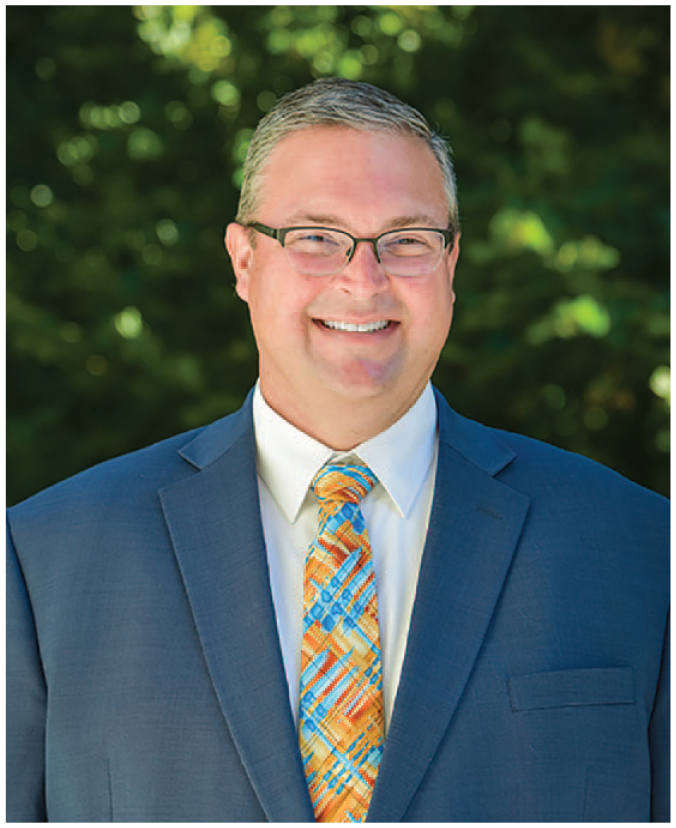
Photo of Scott Sheehan courtesy of the author
I have always loved the quote by Maya Angelou, “Do the best you can until you know better. Then, when you know better, do better.” This sentiment has been foundational in my approach to teaching, leadership, and building relationships. It is with these words in mind that I offer some observations about the future of our profession from my experiences as the NAfME President.
I have had the honor and privilege to serve music education at the national level in several capacities for over a decade. Throughout the many conferences, concerts, workshops, symposia, webinars, town halls, and meetings I have attended, it is easily observed that each year, literally thousands of music educators across the country share their expertise, musicianship, and creative ideas so others can benefit from their experience. I have also observed that many schools, universities, and organizations, including NAfME and our family of state associations, have developed numerous programs, research initiatives, coalitions, task forces, and projects all intended to move our profession forward toward various goals. This has been especially true during the past few years as we emerged from the pandemic and learned that performing music in tiny boxes on a screen pales in comparison to the significance that live performance brings to the performers and audience members alike.
One of the primary purposes of our professional programs, gatherings, and performances is to share individual and collaborative ideas, lived experiences, scholarly inquiry, performance practices, literature, technological advancements, and more. We have a constant need to remain relevant as perpetual challenges impact our educational institutions at all levels and societal pressures and political divisiveness continue to create unrest both in and out of school systems. Although the challenges are many, I believe we strive to best meet the ever-evolving needs of today’s students and practitioners.
Furthermore, I believe the status of music education in the United States is strong. Although there is room to grow, according to data from the Arts Education Data Project, most school-age children, nearly 92 percent, have access to music education in school. This statistic alone points to the fact that the majority of students across the country have numerous opportunities to create, perform, respond, and connect to and through music. These experiences may not all look or sound the same in schools across the country, and the average national participation rate in music classes is much lower (just under 50 percent in K–12). I believe there is a need to further study root causes of barriers and inequities that exist in many education systems. However, during my travels, I have seen initiatives in PK–12 and higher education music programs promoting more inclusive and more representative practices centering people from all types of backgrounds. I have also observed that more music is being studied and performed from a myriad of styles, cultures, and genres from all over the world. Many conferences are highlighting works of musicians, educators, and scholars who have been historically marginalized, and several publishing companies are intentionally promoting the music of composers who are underrepresented. Books are being published about reimagining music curricula in an era of social reform, along with topics concerning the desire to expand our definitions of terms such as musical literacy, quality, excellence, and tradition. In addition, priority is being placed on student-centered teaching practices and social and emotional well-being in many music programs. These are just some of the highlights of the work being done to advance the profession.
During the past two years, I have also seen consideration placed on other topics, such as the potential impact of generative artificial intelligence, intentional inclusion of students with differences and disabilities, emphasizing the importance of music education in small schools, (re)building ensembles and related pedagogies, diversifying repertoire and ensemble offerings, developing culturally responsive instructional practices, and advocating effectively to grow music education for all students. Additionally, NAfME and other organizations and partners in the profession are working to address the critical need to recruit and retain music educators in the field. I encourage everyone to read A Blueprint for Strengthening the Music Teacher Profession on NAfME’s website and visit www.teachmusic.org to learn more about what we can do to encourage students to consider a career in music education. It is everyone’s responsibility to examine systemic challenges to equitable access into the profession and to support opportunities that intentionally promote a more diverse music teacher workforce.
Most readers will likely surmise that much of what I have written is evidence of positive progress for the music education profession, and I agree. Schools, professional associations, communities, industry partners, and legislative bodies are doing what they feel is appropriate to realistically tackle the many issues music educators and students are facing. However, I also believe something is missing that could better position our profession among the competing priorities, and often dollars, to which school administrators and governing bodies choose to direct their attention. Before I share what I see as a necessary action to advance music education, it is important to recognize that the music education ecosystem is large and disparate, and in many cases, various constituencies within the profession have differing needs and priorities. Even though each entity has its unique objectives, I believe there is space for everyone regardless of our demographic backgrounds, the level or genre we teach, or whether we adhere to a certain methodology or approach to teaching music. Our profession is a place for those who are in preservice programs, just starting out, veteran teachers with many years of experience, and those who are retired; those who direct large ensembles and those who prefer chamber music, modern band, or music technology and production classes; those who teach elementary students and those who teach at middle and high schools, community colleges, and universities; those who embrace new technologies and those who are more comfortable with a piano, rhythm sticks, or a trumpet; and those who value collaborative learning environments and those who prefer to work or make music alone. These are just a few ways our profession divides itself, and I am sure we can all think of many, many more. This is the reality of my observations—as much as we say we desire to work collaboratively, we continue to sort, separate, and isolate ourselves, and with that come value judgments, criticisms, and hierarchies of whose approach is perceivably better. In order to increase the importance of music education in schools, we must embrace the differences that each component of our complex and sometimes fractured profession offers and focus on building unity by investing in sustainable relationships and community.
Five years ago, during the 2019 NAfME National Assembly, I offered these words during my speech as a candidate for National President:
We cannot tackle all of these challenges alone. We need strategic partners to help us revolutionize the message of music education’s value, and we need to bring together the collective and diverse insights of all who value music in schools. Over the past few years, I have observed that there are many silos under the music education umbrella. All of these associations and companies are certainly well intentioned, and most offer a very similar message—music education for all children. However, I believe we can greatly expand our combined reach if we work together. It’s time to open the floodgates for music education because when the tide goes up, all boats rise! To do this, we need to synthesize the collective power of the music industry, publishing companies, instrument manufacturers, the Grammy and CMA Foundations, NAMM, VH1 Save the Music, ACDA, ASTA, NBA, and all who value music education. We need to recognize what these other organizations do well, and maybe even better than us, and focus our efforts on how we can support each other. We must speak with one united voice to compete with the challenges of education reform. It’s time to start building bigger bridges and moving more mountains. We can’t just keep throwing snowballs at an iceberg! I believe there is power in numbers, and there is power in relationships, and we must work together toward our common goals.
Those words ring even louder today. Since 2019, a lot has happened in the world. Inflation has exploded. Wars rage across the globe. Violent crimes, mental health concerns, and drug abuse abound. A global pandemic turned everything we knew upside down, and I believe we are in the middle of another civil rights movement. This is the new normal, and today is as good as it ever will be unless we dig deep into the foundational systems that are the bedrock of our profession and our associations. If we are ever going to truly make a transformative difference in music education across the country, it will only happen through a large, cooperative effort. We must build consensus by recognizing the strengths that each segment of the profession contributes and not allow self-interests to hinder our collective progress.
I had the distinct honor of visiting the Florida Music Education Association Conference in January 2023. Dr. Shelby Chipman, Director of Bands at Florida A&M University and now Immediate Past President of the Florida Music Education Association, chose ‘Unity in Music Education: Building Communities One Note at a Time’ as the theme for this conference, and unity was also the theme throughout his presidency. It was apparent that unity was not just something that Dr. Chipman and FMEA wanted to highlight. It was intentionally woven into every aspect of each event at the conference and permeates their association. Presenters, performing groups, research, and session topics represented a diversity of backgrounds and experiences, and each person in attendance could feel a sense of appreciation for their contributions to the profession. Dr. Chipman, along with the entire FMEA leadership team, intentionally visited college and high school students, new and returning members, industry partners, parents, and visitors to genuinely include them in the conversations about what music means to them and how everyone can work together to build community “one note at a time.” This visit showed me that in a state that is dealing with many political pressures, building unity is possible, and it begins with embracing and valuing the uniqueness each of us brings to the profession.
A key component to building unity is understanding that no one person can truly represent anyone else. Our individuality and confluence of experiences are the foundation for contributing to our profession and to society. Each of us bears the traits from a multitude of cultures, and we have our own lived experiences, beliefs, values, and musical identities. We are a living tapestry of all that has been poured into us and what we have absorbed in life, musically and otherwise. The intersectionality of all that comprises our conscious and subconscious selves, drives our decision making, influences our biases (known or not), and permeates our character. Every interaction gives us an opportunity to learn something new and share a part of ourselves. This concept is paralleled in music. Making music in its purest form is about realizing that consonances and dissonances are equally necessary, and finding resolution at the end of a phrase offers a sense of resolve and purpose. Just as no two pitches are the same, neither are humans, yet notes find a way to create beautiful harmonies, even when there are occasional or even intentional clashes. Unfortunately, the same is not always true for humans. At times, the ego becomes more important than what is best for the greater good.
To create unity, we must begin by examining our predispositions about the very essence of why music should be taught in schools, who should receive a music education, who should teach music, and what music and musical experiences are worthy of our students’ time and effort. Unity can only be built by listening with the intention to learn and recognizing there is value in divergent ways of thinking. Unity can also be achieved by seeking to understand someone else’s background and musical identity before trying to be understood (Thank you, Steven Covey!). The choice is up to each of us!
In conclusion, it has truly been my honor to serve as the President for the National Association for Music Education. I realize very few individuals will ever have the privilege to represent our profession in this capacity, and I am incredibly thankful to everyone who has offered their support, especially my family, my NEB colleagues, and our amazing NAfME staff. I have done my best to put Maya Angelou’s words into action by trying to see the inequities and barriers that exist in our profession and taking actions to create change. I recognize we have a long way to go to truly achieving consensus and unity nationally. However, I am hopeful that my efforts have helped to create wider pathways and that we have opened a few more doors toward achieving NAfME’s mission of being a collaborative community. I believe in the power that music has to bring people together, and I look forward to the day when every school and community knows and values the essential role that music plays in the lives of every human. Until then, the work continues . . .