



Abstract
Climate smart villages (CSVs) are new and promising approaches to tackle the negative repercussions of climate change and to tackle the food insecurity that affects close to one billion people globally. CSVs are envisaged to result into empowerment of participating farmers; however, given the novelty of this concept in different geographical spheres, limited literature exists. This review paper therefore conducted a systematic analysis of some previous studies around this concept and assessed their contribution to understanding empowerment of farmers regarding intrinsic, instrumental, and collective agency. From the results, these studies assessed empowerment majorly in-line with the female gender; some focused on both. Results lacked focus on empowerment in the intrinsic, instrumental, or collective agency realms, though possibility of using proxy concepts can’t be dismissed. However, at the heart of any agricultural extension model, a clearly outlined gender-inclusive farmer empowerment pathway should be a fundamental cornerstone for sustainability.
Introduction
The current global climate crisis has resulted into differentiated effects onto men, girls, women and boys because of their gendered roles and relations that shape human societies right from their social settings (Jost et al., 2016; McKinley et al., 2016). The 2022 Gender Index report has reported that to date, women, girls, and others who experience often-intersecting forms of social marginalization still suffer the worst consequences of climate change (CC) and natural disasters (EM2030, 2022). A UN Women report of (2019) showed that climate-related disasters such as rising temperatures and biodiversity loss were affecting more women than men. In this regard therefore, Lipper et al. (2014) argue that if the approach to planning and investment in agricultural growth and development is not changed, human and financial resources may be misallocated, thus creating agricultural systems that are unable to ensure food security but rather become more vulnerable to CC and variability (Shukla et al., 2019). Besides, unless strategies are in place to empower farmers with information, resources, and knowledge of coping with the current environmental pressures, attainment of sustainable livelihoods in the domain of SDGs may not come easily (EM2030, 2022). Recent findings (Katz, 2020) have indicated that men and women have gender-differentiated roles, preferences, needs and challenges that are very crucial to factor in the design of gender-responsive interventions to build resilience and adaptation strategies to CC.
Against this backdrop, for farmers to continue with agricultural production, a new domain must be taken up to enhance their resilience and general livelihoods-and this is-climate smart agriculture (CSA). Lipper, et al. (2014) defined CSA as an approach for transformation and reorientation of agricultural systems to support food security in the light of the new realities of climate change. CSA promotes three objectives: sustainably increasing productivity, building the resilience of farming systems, and reducing greenhouse gas emissions (Aggarwal et al., 2018; Campbell et al. 2016). To ensure climate-smartness among the farming communities, previous researchers (Aggarwal, et al. 2018; World Bank, 2009) have documented five components i.e water-smart technologies; weather-smart technologies; seed/race-smart technologies; carbon/nutrients-smart technologies as well as institutional/market-smart technologies. These components were used by Aggarwal et al. (2013) under the Consultative Group for International Agricultural Research (CGIAR) to guide the development of climate smart villages.
The climate-smart village approach
The CSV model is a global approach to the development of agriculture research (AR4D) designed to test the methods, technological and institutional capabilities involved in tackling climate change in agriculture (Lipper et al. 2014). CSVs are sites of participatory testing and evaluation where researchers, local organizations and farmers work together to generate local evidence and draw out lessons to scale out and up CSA technical interventions (e.g. practice or services) and institutional interventions (Aggarwal et al. 2018). Built on the CSA concept, it aims to gather local evidence of what constitutes climate smart agriculture (CSA), best option to generate empirical evidence for policy makers, development practitioners in the agricultural sector, and as well as local and global investors (Aggarwal et al., 2018). Besides increasing productivity and profitability, CSA is meant to raise awareness to climate change among the agrarian community and how it affects agriculture (Campbell et al., 2016). This in turn shall empower them to develop and adapt to projected climate change and risks through creating links with climate experts, informed decision-making on appropriate interventions, engagement in farmer collectivities among others (Jit, 2017).
As shown in Figure 1, it is envisaged that farmers who engage in CSVs get empowered through: (i) exposure to CSA practices and technologies; (ii) partnerships among local and national private and public institutions; (iii) support to farmers through climate and agricultural development finance; (iv) getting climate information services and insurance; (v) knowledge enhancement via training and finally, (vi) enacting national and sub-national plans and policies (Aggarwal et al., 2018). Because there are no particular intervention packages, the options taken by the farmers vary based on the CSV site, its agro-ecological characteristics, level of development as well as their capacity and interest of the lower-level governance structures. The results of the CSV approach are usually a portfolio of CSA options and the institutional as well as financial mechanisms that allow to be successfully applied. Promising innovations can then be extended to the national and sub-national governments, non-government organizations and private sectors in regions with the same agro ecological conditions. This arrangement could result into empowerment among participating farming households. Evidence (Mehar et al., 2016; Huyer, 2016) has shown that the CSV can enhance uptake of technologies and practices for climate change on condition that both men and women are equally aware, participated and are empowered to adopt those technologies. One of the tenets of the CSV approach is inclusion which offers recognition of the differential effects of CC on women and men. This is envisaged to result into identification of more appropriate CSA responses and outcomes, based on the gendered differences of women and men, their knowledge, and beliefs of their environment, as well as their respective needs, and constraints in the access and control of productive resources (Barbon et al., 2021). CSA can be a supporting condition for empowerment (Farnsworth et al., 2017) especially if the farmers take advantage of the practices and technologies being promoted (Jost et al., 2016). This is in addition to decision-making as well as access to inputs and resources.
Nonetheless, despite the theoretical narrative of the capability of CSVs to enhance empowerment among the farmers, evidence to support this notion is rather patchy and scattered (Barnard et al., 2015) especially as a direct effect of the interventions at community levels. Yet the process of integrating gender issues into debates of policymaking around environment, climate change, agriculture and development has existed for quite some good time (Huyer et al., 2020). As FAO et al. (2019) reported, this has partly been attributed to disproportionate focus on addressing ‘gender symptom’ instead of the causes of gender inequalities. Moreover, even most gender research has focused primarily on barriers to adaptation for women (Davidson, 2016). Relatedly, Djoudi et al. (2016) and Mungai et al. (2017) argued that “gender” research in CSA has focused more on the men-women dichotomy which ignores power and socio-political relations being fueled by gender, class, religion, ethnicity among others. Equal participation of men and women in the social, economic, political, and agricultural spheres have been low thus resulting into differential impacts on their empowerment and contributions to personal and societal transformation due to restricted decision-making (Mittal, 2016; Mehar et al., 2016). The question of how to sustainably bring equitable and gender inclusive development in the wake of CC to date has not received any concrete answers. And moreover, strategies on how to implement CSA programs effectively to promote gender equality and empowerment are still in the limping phase.
Exploring the meaning of empowerment
Despite the many definitions of empowerment fronted for over 4 decades, no single exhaustive and conclusive definition of empowerment exists as it is differently understood, defined, and interpreted by many schools of thought. Similarly, the concept of empowerment has been feminized i.e. used to refer to women; men’s empowerment is rarely given special attention in most empowerment literature (Schipper & Langston, 2014); and moreover, the meaning of empowerment has no clear line or boundary. Empowerment has been often used to mean women’s: decision-making power (Quisumbing & de la Briere 2000), independence (Kabeer, 2001), gender equality (World Bank, 2011); patriarchy (Malhotra and Mather, 1997), agency as well as status (Kumar, 2011), land rights (Quisumbing et al., 1999), control over their resources (Verma, 2009), household financial strengths (Handy, et al. 2004) and power (Agarwal, 1997). Empowerment is a complex concept taking on social, economic, environmental, political, and psychological paradigms (Boley & McGehee, 2014; Ramos & Prideaux, 2014) whose comprehension requires critical examination of all those paradigms. The societal gender inequalities evident between men and women are addressed by the social paradigm (Srivstav, 2001). Giving women ‘breading-winning’ status so as to generate revenues from enterprises and fight financial incapacitation is best addressed in the economic paradigm (Elliot, 2008); the political aspirations of women are best addressed and catered for in the political paradigm (Rajput, 2001; Tiwari, 2001). Increasing the motivation of women, their morale and interest to participate in national programs such as health issues, agricultural issues, politics, and development programs is catered for in the psychological paradigm (Rajput, 2001; Tiwari, 2001).
More often than not, gender equality has been interchangeably used to mean empowerment, of which UNICEF (2008) defines the former as a means of equalizing the conditions of participation of both men and women so that both exercise their talents in a balanced manner in a given space. It addresses women’s equality in terms of opportunities and the removal of barriers to their full participation in education, politics, trade, and culture. Morrison and Biehl (2007) have defined gender equality as better access of women to property such as land, services such as credit, markets, and job opportunities. Kishor (1997) reported that economic growth of women is jeopardized once they have no access to productive resources. Rahman (2000) has argued that unbalanced power relationships existent in societies result into the observed gender inequalities, and these have been pronounced in least developed economies of Asia, Latin America, and Africa (Dollar and Gatti, 1999).
Much of the scholarly work on empowerment has been based on the definition of Kabeer (1999). To this author, empowerment is ‘the expansion in people’s ability to make strategic life choices, in a context where this ability was previously denied to them”. This definition explores the choice dimension in a triadic format i.e. a). resources (current access to and future claims of possession to humans, material, and social resources), agency (negotiation, manipulation, decision-making), and achievements (results from well-being). In this line of thinking, recent scholars such as Malapit et al. (2019) have postulated that empowerment can be more measured directly using the agency dimension compared to both resources and achievements. This is because these two (resources and achievements) can exist even in situations of extreme disempowerment of the women (Malapit et al., 2019). This review paper thus will explore empowerment in the context of agency.
Malapit et al. (2020) have studied and characterized agency into three dimensions i.e. power within, power to and power with.
a). Power within (intrinsic agency)
b). Power to (instrumental agency)
c). Power with (collective agency): This is based on the assumption that “I cannot, but we can” (Wong, 2003); the powerless exercise power through acting together (Chambers, 2006) to overcome common problems and achieve objectives (Wong, 2003). VeneKlasen and Miller (2002) explained that ‘power with’ reinforces personal talents and knowledge through collaboration, mutual support, or solidarity. Luttrell et al. (2009) highlighted that there is a great likelihood of increment in empowerment of other actors when one actor has been empowered and this can be achieved with ‘power with’ but not ‘power over’. Therefore, power with suggests that the powerless should utilize groups or networks and collaborate with others to challenge and transform existing power relations.
Attainment of intrinsic, instrumental, and collective agency have been linked to access of information through training (education) on how CSA technologies are used or manipulated, access to input resources/technologies, membership in farmer groups, and a larger network of actors (Malapit et al., 2019; Kabeer, 1999). As Tenywa et al. (2011) suggests, these are all features of innovation platforms (IPs) which by definition are a tool to bring together a wide range of stakeholder in the development, planning and implementation or application of new ideas, practices, services resulting from interaction, creativity, knowledge and empowerment. Indeed, there is a certain degree of empowerment realized through training on various capacity gaps of the platform members for instance: participatory market research, developing business plans, value addition and management of market dynamics training on agricultural research for development, bench-mark visits among others (Tenywa et al., 2011). Warner (2006) revealed that IPs can be very instrumental in paving strategies for resolution of disputes, participatory governance of natural resources, democratic control of policies as well as empowerment.
The climate-smart village model and empowerment
Climate-Smart villages are composed of farmers, farmer group representatives, traders, researchers, district/local government leaders, development partners and national program implementation teams. As an opportunity for multi stakeholder partnerships between different actors, including men and women, the CSV model provides an opportunity for exploration of whether this inter-gender collaboration can result into empowerment of both men and women in the communities. However, there are limited studies that have combined empowerment and climate smart villages (Barnard et al., 2015). Existing studies (such as Schipper & Langston, 2014) have cited lack of empirical evidence for discourse of practical steps for incorporating gender issues in several projects tackling climate change and ended up broadly opting for incorporation of gender in development projects. Available studies have also tended to use quantitative measures of empowerment which according to Kabeer (1999) tend to overshadow crucial nuances in women's exposures, behaviors, decisions, and belief systems that often depend on the context where they reside. Kabeer equally argues that perspectives on statistical decision-making only provide a snapshot to a wide array of processes behind the scenes and relays a brief picture of decision-making dynamics, but they say very little about the negotiation that is existent between women and men in their personal lives’. Kabeer (1999) argues further that these statistical perspectives tend to underestimate the agency and extent to which women engage in the informal decision-making. For instance, if women participate in activities which are traditionally meant to be executed by them, this cannot be an indicator of empowerment in decision-making but rather accomplishment of rules/roles that were previously enacted in the society (Kabeer, 1999).
Therefore, the aim of this systematic review paper is to assess the likelihood of attainment of empowerment by farmers participation in climate smart villages.
The next section of this article presents the study selection methodology, an overview of the results, their discussions and conclusion.
Methodology
The DFID (2013) defines systematic review as a rigorous approach to establishing an impartial evidence base as well as assessing and summarizing the quality of evidence.
Literature search
Using the PRISMA guidelines as shown in Figure 2 (Moher et al., 2009), relevant documents were sought with the objective of systematically reviewing original studies that analyzed agricultural development programs focusing on climate smart villages and how they influence farmer empowerment in developing countries. This analysis was done on all peer reviewed documents containing scholarly work as well as information from grey literature. The review followed transparent and best practice criteria for systematic reviews and meta-analyses as advised by Stanley et al. (2013), following PICOS (Population, Intervention, Comparator, Outcomes, and Settings) criteria (Smith et al., 2011). Identification of study inclusion was done through keyword searches in the Google Scholar, Springer, science direct, AgEcon Search and Scopus. Reference lists of important documents found were also scanned. It was necessary to conduct a broad and thorough search so as to maximize insights and to reduce/avoid bias. As DeLuca et al. (2008) argue, studies of this nature require citing only peer-reviewed and widely cited studies. Emphasis for this review was put on only published literature in as much as the aim was to cover as many sources as possible. The following clearly marked steps were taken in this review: a). hunt for information in online databases and journals; b). snow-balling techniques of referenced work in the journal articles read; c). reliance on websites of global research institutions such as IFPRI, FAO, CGIAR and World Bank. These articles were later saved in Mendeley database from which further scrutiny was done; those which had variables of interest, that is, climate smart villages and farmer empowerment were selected. Originally, we used key words ‘climate smart villages and empowerment’ and these yielded thousands of articles but with narrowing to a combination of climate-smart villages + empowerment, this drastically reduced the search results. This is an indication that not much work exists that encompasses both climate-smart villages and empowerment studied at the same time.
Previous studies had used complex search terms, a technique this study evaded. This ensured that as much information for review would be available as possible. The following were the main search terms used in this review:
Date of publication > 2000 Target words: “Agricultural” OR “extension” OR “farmer” OR “empowerment” OR “farmer empowerment” AND NOT “gender” OR “violence”, in the title, abstract or key word.
Using this criterion, after thorough identification and scrutiny of the content, 4 journals were included in this systematic review exercise (see attached PRISM chart). Three of these studies had been published in peer-reviewed journals. The following attributes of a journal article guided the inclusion criteria: a). the study having investigated both climate smart farming and farmer empowerment; b). a reasonable sample size as these result into statistically significant results and as well as qualifying for publication in credible academic journals (Schmucker et al., 2017).
Findings and discussions
The findings in this review are based on Kabeer’s (2001) triadic definitions and components of agency i.e., intrinsic, instrumental, and collective agency to refer to empowerment. These studies used/selected in this review were assessed basing on how they contributed to farmer empowerment.
A). Intrinsic agency
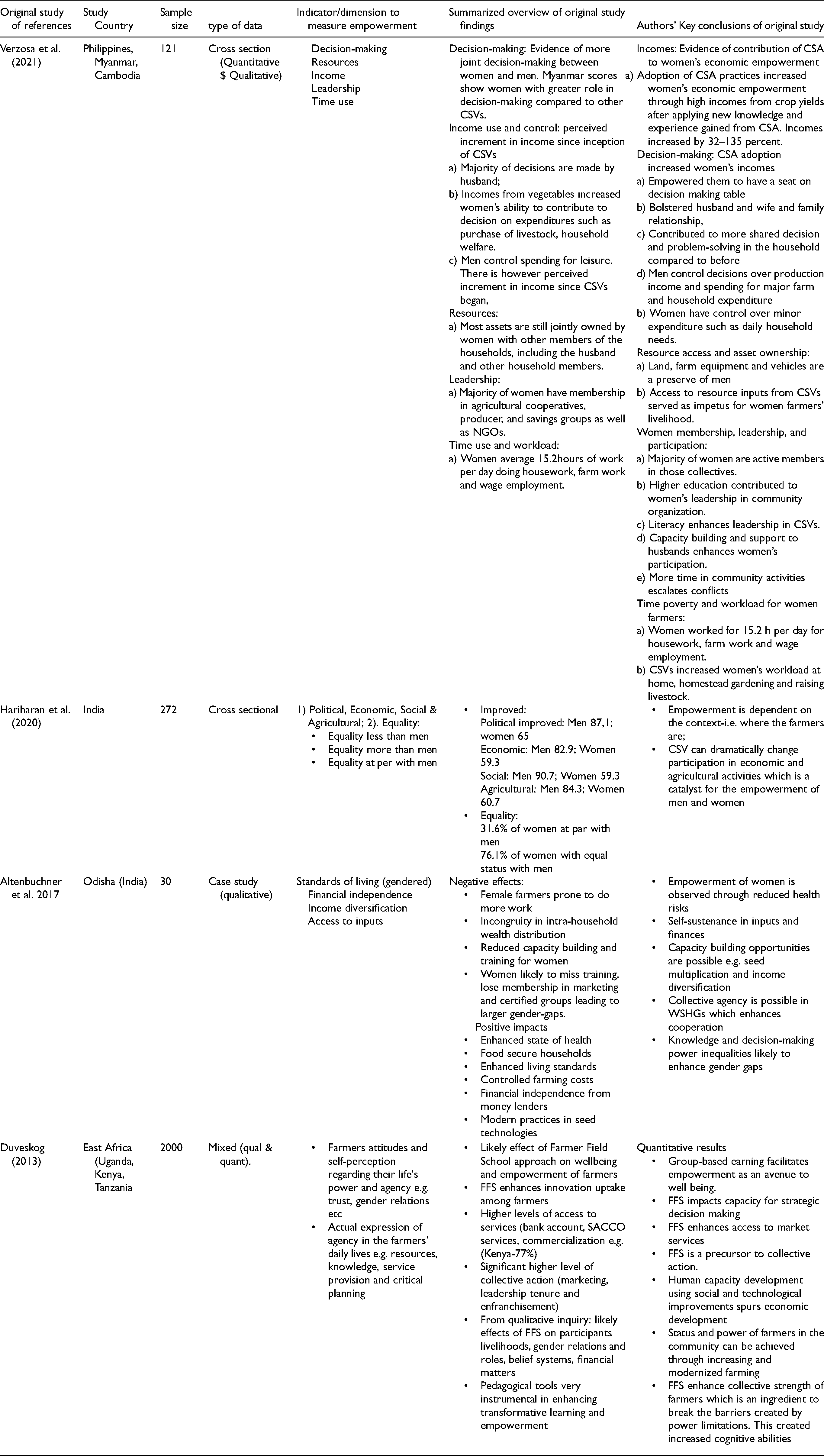
This component is measured by autonomy of both men and women in income; self-sufficiency (attitude and perception towards violence of the female gender) and social relations towards household members. Two out of the four studies indicated the likelihood of economic empowerment through participation in controlling financial proceeds from the farm products. Altenbuchner et al. (2017) cited empowerment in seedbank activities such as training on seed multiplication and diversification of income sources. One critical point about Alutenbuchner’s paper is that the study findings applied to only females but left out men. This therefore leaves some loophole about the extent to which men are empowered if they engage in organic farming trainings. Contrary however, the study (Hariharan et al., 2020) on CSVs in India indicated that the CSV led to a distinguishable shift in level of engagement in both agricultural and economic activities. This has been observed as a driver for the empowerment of both men and women farmers thus bringing about equal gender relations at household level. Specifically, close to 83% of men and about 60% of women indicated improved rates of empowerment in economic dimension by participating in the CSV. There is therefore evidence that men and women can be empowered to have autonomy in their incomes if they are engaged in climate-smart villages. Regarding attitude and perceptions on gender-relations at household level (which Hariharan et al., (2020) regarded as equality), results showed that 31.6% of women were at par with men, while about 76.1% of the women had equal status with men in the CSV sites. From the CSVs of Philippines, Myanmar, and Cambodia, Verzosa et al. (2021) showed that with adoption of improved technologies for vegetable production coupled with application of new knowledge and experiences gained from CSA, yields increased tremendously. This saw a shift in women’s incomes from 32%-135%. The CSVs also empowered women to have a seat on decision making table which helped to bolster husband and wife the entire family relationship. Likewise, the engagements in CSVs saw a marked increase in shared decision-making and problem solving in the households compared to before enrolment.
B). Instrumental agency
This was measured in terms of input in productive decisions; asset ownership, access to financial services; decisions on income uses; workload as well as visiting important locations. Reviewed studies have mixed findings about empowerment. Specifically, these studies cited: less dependence of farmers on lenders’ money, reduced farming expenditures, improved standards of living, improved health conditions of women (Altenbuchner et al., 2017). This same study also found that even when the farmers participate in the CSVs, there is a likelihood of reduction in empowerment. For instance, the authors reveal that once females engage in organic farming programs, there is increased workloads, i.e., their activities in the groups/extension programs increase yet their home chores are also demanding at the same time. Alkire et al. (2013) have termed this condition known as time poverty. It has been argued that CSA impacts are not uniformly distributed and shared equally between the different gender categories in terms empowerment, economic costs, and benefits as well as labour requirements. There is minimal empirical evidence exploring gender-based effects of CSA on labour. Nonetheless, Alkire et al. (2013) has highlighted that CSA has a significant effect on the time investment that women spend in agriculture. Regarding financial decisions, Duveskog’s (2013) study revealed improved access to monetary services (such as bank account, SACCO services, commercialization) e.g., Kenya-77% as well as 60% in Uganda among women and men. This was linked to changes in everyday life of participants, increase in household economic development. However, one particular concern with Duveskog’s results is that there is no linkage of one aspect of empowerment to a particular gender of the participants. The findings are not pertinent to whether it is a woman or man, yet it is important to understand the extent to which males and female were affected by the program/project design. One major challenge with Hariharan et al. (2020) is the inclusion of all decisions related to spending money on (e.g. on agriculture, home expenses, child education and health), access to insurance, mobile phone and access to credit/bank in one category under the social dimension of empowerment. Yet all decisions related to money, whether spent in the household or outside in the community, would be under financial domain of empowerment which this review paper considers as access and decision-making on financial matters. Regarding the agriculture dimension, Hariharan reported that 84.3% of men compared to 60.7% of women both of which participated in the CSV, showed empowerment. While this is a good percentage, and even though it shows a clear extent and difference between empowerment of men and women, the sub-dimensions mentioned seemed to be combined with other elements which would be fitting in the other dimensions of empowerment. While the current review focuses on contribution to decisions regarding production; land ownership and participation in efficient utilization of household incomes, this study does not provide individual measurements for each sub-dimension but rather, all are aggregated into one dimension of agriculture. This does not give a clear indication of how much each individual was empowered in each (sub)-dimension as the instrumental agency component of empowerment would wish to showcase otherwise.
The findings from Verzosa et al. (2021) seem to reinforce what other articles put forward though with some minimal divergence. For instance, it was found that decisions regarding land, farm equipment and vehicles are a preserve of men even though access to resource inputs from CSVs would serve as an impetus for women farmers’ livelihood. Women’s input in decisions are higher in food crop farming for household consumption and selling of surplus homestead gardens to the market. In terms of workload, women worked for 15.2 h per day for housework, farm work and wage employment. This made it tricky for them execute the workload for both housework, homestead gardening and raising livestock. Regarding access to credit in these CSVs, women are the main borrowers in agricultural households as they have greater access to microcredit and are under strong pressure to bridge resource gaps. This led to excessive indebtedness in situations of climate-induced crop failures. In as much as incomes of these households increased, there are some clear demarcations on what women and men should use money for. For instance, incomes from vegetables increased women’s ability to contribute to decision on expenditures such as purchase of livestock, household welfare such as being able to take children to school. Whereas men exerted controlled decisions over production income and spending for major farm and household expenditure as well as controlling spending for leisure.
C). Collective agency
This is measured on a continuum of two dimensions i.e., participation in groups but also being a member in influential groups. Among the reviewed studies, only three (Verzosa et al. 2021; Hariharan et al., 2020; Duveskog, 2013) have shown increment of collective agency. For instance, Duveskog (2013) has shown differences in the levels of empowerment between those farmers who were part of the FFS and the control group in terms of collective actions. Regarding involvement in collective markets 14% of FFS participants compared to only 5% of the control groups while in terms of leadership positions, 63% of FFS participants compared to only 40% of the control group were empowered. On the other hand, Hariharan et al. (2020) reported increased empowerment in political aspects in the areas of independence to vote and participation in village level decision-making; about 87% of men and 65% of women reported increment in political empowerment as a result of participation in the CSVs of India. However, even when there are expected benefits from empowerment in CSV related activities, there is also evidence that some gender may not benefit equally. Altenbuchner et al. (2017) reported discrepancies in training and capacity building for women as some were excluded from training. This is likely to reinforce classical gender roles and empowers men more than women because of differential access to knowledge. There were also reported gender gaps in participation in certified groups and marketing activities. This has a large bearing on participation in collective actions.
Nonetheless, Verzosa et al. (2021) presents a different dimension with which results were interpreted. The findings here focus on frequency and level of visibility of the women in public gatherings. For instance, in terms of impact on community participation, together with more knowledge about the CSA technologies, women were found to be more actively participating in trainings and becoming more vocal during meetings. This is something that did not exist before women started participating in the CSVs. Having more income also contributed to women’s active participation and involvement in social and religious activities in the community. It was also found that higher education contributed to women’s leadership in community organization; but also, literacy levels were found to enhance leadership potentials of women in those CSVs. Education has had innumerable mentions and citations over the years for its effect in enabling marginalized communities to show expression. For instance, Jejeebhoy (1995) found that access to education can bring about changes in cognitive ability, which is essential to women's capacity to question, to reflect on, and to act on the conditions of their lives and to gain access to knowledge, information, and new ideas that will help them to do so. Nonetheless, male counterparts were not secure every time women participated in leadership roles, and this contributed to escalation of conflicts at household levels.
Conclusions
The review assessed the extent to which previous CSV projects contributed to empowerment in the context of intrinsic, instrumental, and collective agency in their implementation approaches. Indicators of intrinsic agency included autonomy in income, attitudes about gender-based violence, and respect among household members. Indicators of instrumental agency included input in productive decisions, ownership of land and other assets, control over use of income, access to and decisions on financial services, as well as work balance. Indicators of collective agency included group membership and membership in influential groups.
Regarding intrinsic agency (empowerment), there was a steady increase in incomes of both men and women through adoption of CSA technologies. For instance, women’s incomes were doubled as a result of employing CSA technologies in vegetable production. Women were able to obtain a seat on the decision table with their husbands which solidified family relations as a result of getting extra incomes. Skills in multiplying income sources were also obtained by the women and men but also, there was empowerment through participation in controlling financial proceeds. For instance, financial expenses for the household welfare were left in the hands of women but also, there was more bond between household, wife and the entire family realized through women sharing their views on major household decisions.
In terms of instrumental agency, there was a marked increment in empowerment obtained through earning commendable incomes, access to credit, reduced farmers expenses as a result of proper financial skilling, improved standards of living and heath. Major decisions on some particular decisions for instance on purchase and stewardship of items such as farm machinery and other assets however still belonged to the male gender. However, in as much as the CSV model brings about empowerment, there are a lot of lessons and gaps noted that need critical discussions. First of all, there is disempowerment because of the nature of the practices and technologies being promoted. For instance, too much work burden as a result of these technologies could lead to withdrawal of women from applying them because of being labour-intensive. As Beuchelt and Badstue (2013) noted, the tendency to allocate new labor-intensive activities to women can mean they will be hesitant to adopt new adaptive practices in agriculture out of concern that their workload will increase.
Finally, in terms of collective agency, CSV participants were more likely to engage in collective marketing, leadership positions, independence to vote for their favorite candidates, village level decision making. However, participation in trainings was mixed as there existed differential submission of women i.e., in some areas they were allowed to attend while in others, they were completely excluded. Income, education and literacy levels of women greatly dictated their participation in leadership positions in their local organizations. Women’s active participation in leadership did not auger well with their husbands as it escalated inter-partners conflicts at household levels. This is a hinderance to women’s empowerment to manage community affairs.
This study offers practical implications for future organizers of CSVs. Articles reviewed investigated empowerment in regard to female gender which is not appropriate because this concept applies to everyone in society. What we are seeing are a myriad of policies and practices that focus on only women’s strategic needs (Tacoli and Satterthwaite, 2013) yet it would be crucial that a thorough exploration of a wider scope of gender relations and strategic needs and interests of all partners is carried out (Moser and Levy, 1986). Overall, there are still existing inequalities in terms of empowerment in communities that are hosting the CSVs which calls for identification, design, and implementation of CSA-sensitive practices in a way that considers the local, existing inequalities and differences between men and women in a bid to enhance promotion of gender equality. This may suggest a reorientation of these practices/technologies so that they cater for the gender-related roles that women have in their communities. As Ampaire et al. (2020) suggest, this will be the first step towards having effective initiatives with tangible results to achieving gender equality and empowerment regarding CC. Moreover, the increasing threats from CC and global environmental degradation from the global level to rural communities will require more effective approaches that not only focus on increasing adaptation but also factor in easy uptake by all gender categories. Inter-partner conflicts arising out of women participation in leadership at community level calls for regular capacity building and support to husbands so as to allow and approve their women’s participation in such community programs. CSA/CSV are still new concepts which need more detailed analyses and therefore, more time and resources ought to be devoted to studying their contribution to empowerment especially in the domains of intrinsic, instrumental, and collective agency among the participants. To increase women’s active participation in the leadership structure of CSV program, adult literacy programs and arrangements for illiterate women is very critical. It is very important however that these are done with full knowledge and consent of their male counterparts (husbands) as failure to do this may be a recipe for more disastrous consequences in their households.

The main components of the CSV AR4D model.
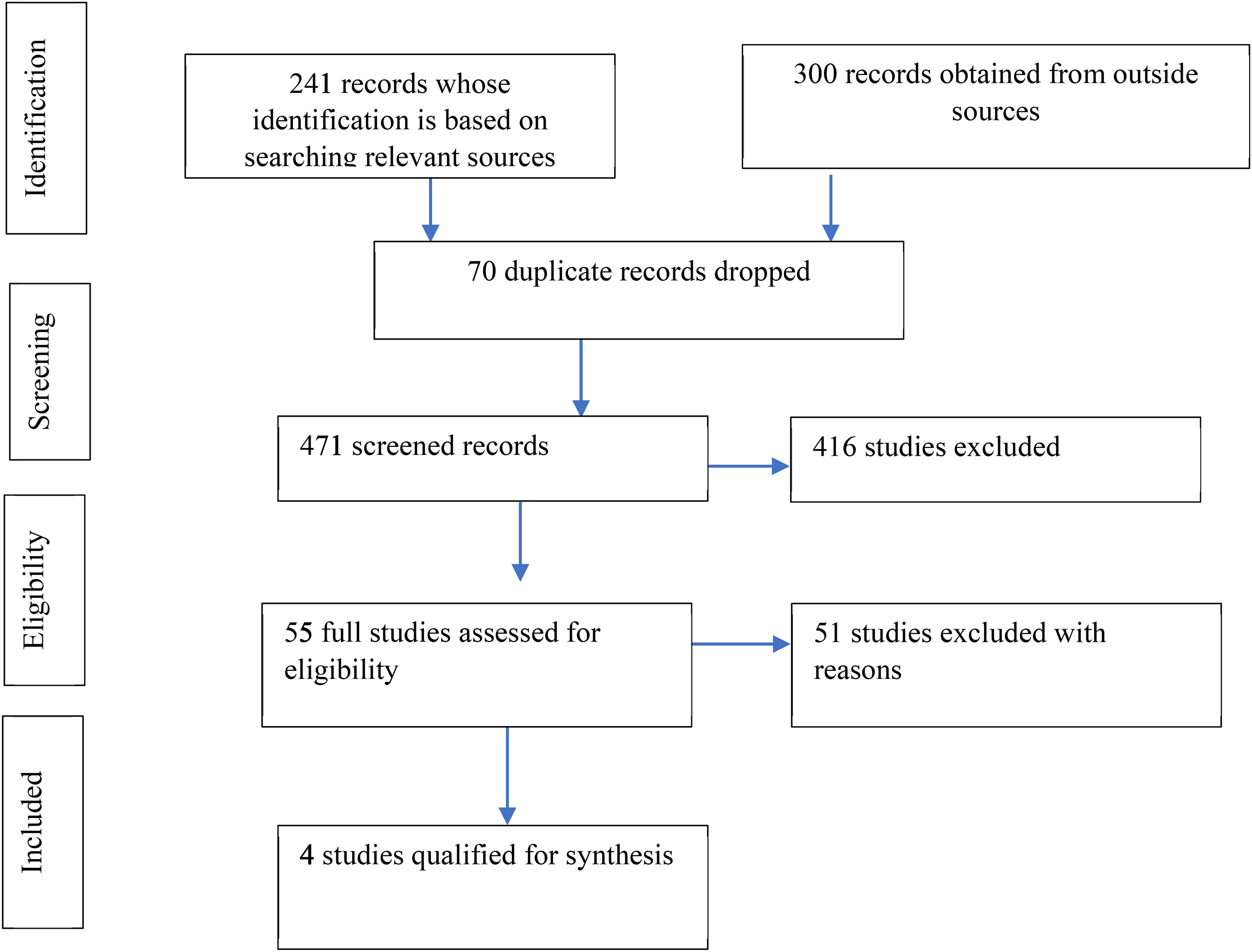
Flow chart of PRISMA guiding the systematic review process.
Snapshot of studies used in systematic review, key findings, and conclusions (chronologically arranged).
Footnotes
Acknowledgement
Special thanks for to The Rural Universities Forum for Capacity Building in Agriculture (RUFORUM) for funding my PhD journey at Makerere University. The mentorship in academic writing is immensely appreciated.
Declaration of conflicting interests
The author(s) declared no potential conflicts of interest with respect to the research, authorship, and/or publication of this article.
Funding
The author(s) disclosed receipt of the following financial support for the research, authorship, and/or publication of this article: This work was supported by the Rural Universities Forum for Capacity Building in Agriculture (RUFORUM), (grant number NA).

Supplemental material
Supplemental material for this article is available online.