




Abstract
Despite strong support for democratic ideals, citizens are often not democratically active, a situation Dahl described as the ‘Democratic Paradox’. This paradox remains relevant, as many express a desire for more citizen involvement in decision-making processes, yet actual participation falls short of ideals. Understanding the gap between citizens’ democratic ideals and their actual participation is essential to addressing declining civic engagement. This paper examines the discrepancy between citizens’ decision-making preferences and their actual and intended participation in democratic innovations by analysing survey data from over 27,000 European respondents. The findings reveal that, while citizens generally support the notion of greater civic influence, those who favour direct democracy are not the most participatory. Instead, clusters with technocratic or politician-averse views demonstrate higher engagement levels. These findings highlight a paradox where people who normatively endorse greater influence by ordinary citizens simultaneously show limited willingness to exercise such influence, posing significant democratic challenges.
Introduction
Twenty-five years ago, Robert Dahl (2000: 35) opened an article with the following: ‘In many of the oldest and most stable democratic countries, citizens possess little confidence in some key democratic institutions. Yet most citizens continue to believe in the desirability of democracy’. This contradictory situation was titled A Democratic Paradox. After Dahl’s work, it became more clear that democracies across the globe are facing peculiar democratic challenges aside from the range of threats to them (Somer and McCoy, 2019).
Until recently, until around 2010, the number of democracies was slowly increasing but in recent years it has been decreasing (Herre et al., 2024). At the same time, the pattern that generally citizens are supportive of democracies (Anderson et al., 2021) while simultaneously being more critical of democracies’ performance is registered broadly (Della Porta, 2013). Since Dahl’s paper others have found that some Europeans are democratic in name only and coining concepts like ‘democratic fatigue’ (Wuttke et al, 2022). Some citizens increasingly express resentment towards politics (Celis et al., 2021), leading to what authors call the crisis of representative democracy.
Understanding the many challenges to democracy is a multifaceted endeavour. There are scholars who focus on democracy resilience (Croissant and Lott, 2024) while others are examining the role of populism, polarization, anti-establishment views, the deliberate dismantling of democracy, and a host of other factors (Akkerman et al., 2014; Hay, 2007; Norris and Inglehart, 2019; Zaslove and Meijers, 2024). To some, the democratic challenges are caused by groups of citizens who feel left behind (Droste, 2021), uncivil political environments (Dryzek et al., 2019), elite overproduction (Turchin, 2023), or a new propaganda war by anti-democratic regimes (Applebaum, 2024).
In many established democracies, as a remedy to democratic challenges, citizens are given a deeper democratic experience to reinvigorate their support for democratic institutions, procedures and life (Elstub and Escobar, 2019; Theuwis et al., 2025). More active participation in any democratic activity can be transformative for citizens and make them more public-spirited (Habermas, 1991; Warren, 2001). Democratic innovations, like citizens’ assemblies or participatory budgeting, are ways to give ordinary citizens these democratic experiences (Curato et al., 2017; Fung and Wright, 2001; Karlsson et al., 2021) and simultaneously more influence on public matters outside elections. These innovations require citizens to be involved, be active, and listen to one another. When citizens participate in these acts of deliberation, spill-over effects into political arenas are possible, according to some scholars (Curato and Böker, 2016; Lafont, 2019). When citizens engage in these innovations, they not only practice deliberation (Bächtiger et al., 2018) but also develop stronger support for the idea of self-governance (Fehr and Charness, 2025; Sandel, 1998; Warren, 2001; Wuttke et al., 2022). Self-governance is not just about individuals wanting to govern themselves; it is also about the desire to shape public life in relation to oneself. It requires citizens to be actively engaged and involved in the affairs of their communities.
Citizens’ willingness to be engaged in democratic innovations and their willingness to practice self-governance can be an important part of understanding the paradoxes and dilemmas mentioned above. This paper revisits the Democratic Paradox by looking, on the one hand, at citizens’ preferred division of decision-making (see also Haesevoets et al., 2025). Should citizens, politicians, or experts have the lion’s share of influence on decisions? On the other hand, I look at citizens’ past participation and intentions to get involved – in general, and in specific democratic innovations like participatory budgeting, local referendums and citizens’ assemblies.
In short, this paper questions whether there is a participation paradox where people think it is important that citizens have a (greater) say in decision-making, while their actual behaviour and intent are not in line with their viewpoints.
It should come as no surprise that stated preferences and intentions differ from actual self-governance and involvement in democratic innovations. Dahl (2000) highlighted this difference, and more recently Trüdinger and Bächtiger (2023) showed a difference between sympathy towards direct-democratic instruments and truly participating in them, and argue that participation may widen the representation gap instead of closing it. Moreover, given the paradoxes mentioned above, it should not be surprising that there is a gap between, for example, citizens’ preferences for decision-making and their actual participation or intentions to participate. The purpose of this research, however, is to show whether there is also a paradox for participatory preferences and intentions – as opposed to democratic preferences and voting behaviour or trust in politicians. The presence of the gap helps to understand the strength of the argument that democratic innovations and public participation are answers to democratic dilemmas, democratic fatigue, and democratic crises. Even the size of a possible gap is crucial for understanding a possible paradox and possible courses of action. Democracy, self-governance, and the role of citizens are ultimately constructed by the ideas and expectations that citizens have about these concepts. These ideas are often important determinants for decisions to get involved (see Brady et al., 1995: 271; Lowndes et al., 2006). The larger the gap between ideas and the reality of behaviour, the harder it is to solve the democratic challenges.
This article is structured as follows: first, I discuss the role of ideas and expectations for democracy and show how the discourse is pointing towards greater citizen involvement. The methodology of this study and the results are next. Finally, I draw conclusions on revisiting the democratic paradox and discuss the findings from a broader point of view.
Ideas and Expectations About Democracy
Democracy is not one thing. It is common in the literature on democracy to highlight, on the one hand, the ideals of democracy – the desired values, properties and benefits of a democracy. On the other hand, democracy is also a reality in the sense that it can be ‘measured’, tracked, made, and broken (such measurements lead to data that says there are a number of democracies in the world, from South Korea to Denmark). In his book, The Theory of Democracy Revisited, the political scientist Giovanni Sartori (1987: 8) sharply describes this tension: We must keep in mind that (a) the democratic ideal does not define the democratic reality and, vice versa, a real democracy is not, and cannot be, the same as an ideal one; and that (b) democracy results from, and is shaped by, the interactions between its ideals and its reality the pull of an ought and the resistance of an is.
Therefore, a democracy, at least in part, exists by means of its ideals. The visions, hopes and expectations of a democracy shape the concept of democracy and, likely, also peoples’ attitudes about it. Dahl (2000) argued that just the practical dimension of ‘participation and exercising one’s democratic rights’ is not the only dimension of democracy. The ideals of democracy, together with the presence of institutions that embody those ideals, are the other dimension. He showed that generally when people say they support democracy, they support the latter dimension. Ideals and expectations, as such, are an intrinsic part of the concept of democracy.
Expectations of democracy are closely tied to citizens’ preferences and emotional orientations, including both frustration and hope (Anduiza et al., 2019; Bächtiger et al., 2018; Celis et al., 2021; Hibbing and Theiss-Morse, 2002). While some expectations may be easily met, cautious hope reflects a deeper, more complex emotional engagement with democratic systems. In Celis et al. (2021: 242) focus groups, participants expressed both anger and hope towards democracy. For instance, respondents were hopeful about improving representative systems, with one participant optimistically noting, ‘Some politicians do have a heart’.
This mix of hope and frustration suggests a persistent belief in the potential of democracy, even in the midst of disappointment. Neblo et al. (2010) found that ‘non-traditional actors’ such as younger people, racial minorities and those with lower incomes are especially interested in deliberative opportunities. Citizens with populist attitudes often show support for referendums (Zaslove and Meijers, 2024: 1150), in other words: they have some hope for democratic innovations as well. Bowler and Donovan (2019) also found support for referendums by those who are politically disaffected, but disappointment with its actual use. Political efficacy further conditions these expectations. Prior work shows that beliefs about one’s own competence to participate – internal efficacy – and beliefs about institutional responsiveness – external efficacy – are crucial for explaining engagement (Lowndes et al., 2006; Niemi et al., 1991). One must feel capable of participating in, for example, a citizens’ assembly, but also trust that authorities will listen. Democratic innovations can strengthen both sides of this equation: they may enhance citizens’ sense of influence over their immediate public environment (Elstub and Escobar, 2019; Van Dalfsen et al., 2021) and increase the perceived legitimacy of democratic institutions (Boulianne, 2019).
Democracies around the world are trying to improve their democratic realities and fulfil democratic ideals, often by introducing participatory or deliberative practices (Fung and Wright, 2001; Karlsson et al., 2021). Many authors have argued that these practices, often embodied in democratic innovations, are ways to get close to the ideals of democracy like self-governance, involved citizenry and consensus (see Bächtiger et al., 2018; Bryson et al., 2013; Fung and Wright, 2001). In the German state of Baden-Württemberg, the state government has decided to hold citizen forums on important bills (Baden-Württemberg, 2022). The Dutch Senate passed a law in 2024 – called the Act on strengthening participation at the decentralized level – that increases citizens’ participatory rights at the local level (Parliamentary Papers, 2022/23). As of January 2018, Poland’s larger cities 1 are required by law to have a participatory budgeting process in which citizens have a say on at least 0.5% of the municipality’s total budget (see also Binda and Niedziela, 2021).
In addition to these specific policies or laws, the discourse of politicians and administrators also sets high expectations for democracy. Examples of such discourses can be found, for example, in the British Big Society and the Dutch Participation Society (Corbett and Walker, 2012; Kisby, 2010; Van de Wijdeven, 2012). These discourses often tell a story about the relationship between citizens and their governments; what went wrong in these relationships and how to fix them: We will promote decentralization and democratic engagement, and we will end the era of top-down government by giving new powers to local councils, communities, neighbourhoods and individuals (Cabinet Office, 2010a in Verhoeven and Tonkens, 2013: 420).
Such discourses are used to describe a certain democratic relationship between citizens and governments. However, they are also prescriptive (Blok, 2024) and set expectations and shape ideals about how citizens should behave in a democracy.
At the European level as well, hope and expectations for democracy are hard to miss. For example, A new push for European democracy is one of the strategic priorities of the European Commission (n.d.-a). In 2022, the Conference on the Future of Europe was held; this ‘was part of President von der Leyen’s pledge to give Europeans a greater say on what the EU does and how it works for them. All Europeans – whoever they are and wherever they are – could take part’ (European Commission, n.d.-b). The European Committee of the Regions (2020) published their political priorities: Bringing Europe closer to people. The document emphasizes both the protection of existing democratic institutions and the development of new participatory mechanisms, including commitments to:
‘Strengthening and protecting democracy’ (The European CoR, 2020: 9).
‘Make citizens the cornerstone of European democracy. For that we would need to develop lasting mechanisms to consult people locally while also strengthening subsidiarity in the EU’ (The European CoR, 2020: 31).
‘Strengthening local democracy, both in terms of citizen participation, via digital tools, and in terms of the quality of local democracy’ (The European CoR, 2020: 35).
Finally, academia has also called for more participatory and deliberative democracy, often to fulfil democratic ideals (Bächtiger et al., 2018; Bobbio, 2019; Bryson et al., 2013; Dryzek et al., 2019; Reuchamps et al., 2023). Such calls invoke various arguments such as that participation is more authentic in a democratic sense than voting on representatives (Elstub, 2018), participation adds strong ‘value dimension’ to decision-making as a counterweight to technocracy; or that participation leads to more legitimate decision-making (Fiorino, 1990). Aside from these few, non-exhaustive examples, many more can be found in various kinds of publications.
In sum, democracy is shaped both by its reality – how it is practised – and by its ideals. The ideals, and in particular the attainment of those ideals, are the subject of many demands and initiatives. There are European aspirations for democracy, concrete laws and policies in different countries, discourses on how democratic citizens and governments should relate, and scholars arguing for deliberative and participatory democracy. The various examples that have been presented generally illustrate that it is seen as important and desirable that citizens have a (greater) say in decision-making, and there is also evidence that participation in democratic innovations has positive effects that benefit democracy more broadly (Boulianne, 2019; Curato et al., 2017; Pilet et al., 2023; Theuwis et al., 2025: 962). 2 The question that remains is whether this tendency holds up to peoples’ intent to actually participate and, more importantly, their actual participation.
Research Approach and Methodology
Data for this paper come from the Horizon 2020 project DEMOTEC. 3 One of the main objectives of the project was to determine whether participatory budgeting, as a specific democratic innovation, could lead to greater and more informed citizen participation. One of the research activities of the project was conducting a large survey with representative samples from 10 European countries. The survey was conducted using ‘Cint panels’. 4 A total of just over 27,500 respondents – around 3000 for each country except for Cyprus – were asked various survey questions about democracy and democratic innovations.
A specific part of the survey examined citizens’ preferences for different models of decision-making at the local level. Respondents were presented with three 11-point bipolar scales that asked, ‘Who would you like to be making decisions at the local level’, with each scale juxtaposing two actor types:
Citizens (at the 0 end of the scale) versus politicians (10).
Citizens (0) versus Experts (10).
Politicians (0) versus Experts (10).
This format required respondents to express a trade-off between actors rather than independently rating each actor. In doing so, it avoided the ambiguity found in unipolar measurement formats, where respondents may approve of all actor types simultaneously without indicating relative priorities. For instance, one might agree with three separate statements like ‘I support citizens/politicians/experts making important decisions’, but such responses – while possibly sincere – do not clarify which actor should be more influential when choices must be made. The approach here, similar in spirit to others (Haesevoets et al., 2023; Pilet et al., 2020), was designed to surface preference structures under constraint, making explicit which trade-offs respondents are willing to make between democratic actors.
By combining patterns of responses to all three questions simultaneously via cluster analysis (a fuzzy clustering algorithm in this case), 5 it is possible to examine preferences for different types of democratic decision-making. For example, preferring citizens over all others (and politicians over experts) clearly indicates a preference for direct democracy. Conversely, preferring experts over all others suggests a preference for a pure technocracy. While the method applied here required respondents to make trade-offs between actors, it did not preclude blended preferences or meaningful hybrid results. To cluster these data, the value of ‘12’ was dropped because it indicated ‘Prefer not to say’. See Figure 1 for a frequency distribution of scores on the three juxtapositions.
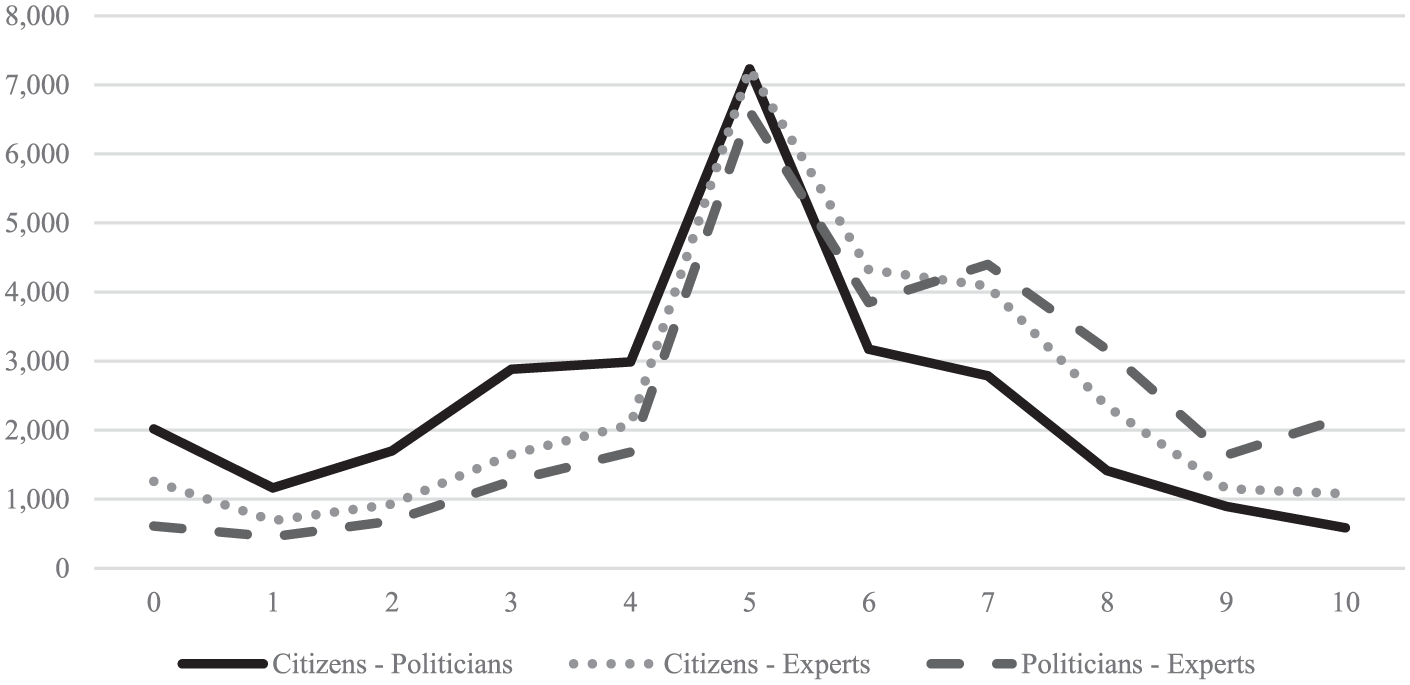
Frequence Distribution of Scores for the Three Decision-Making Questions.
In the tail ends of Figure 1 are the respondents with the most black-and-white preferences. Slightly more than 2000 people (out of 27,500) prefer that only citizens make decisions at the local level, compared with 586 who want only politicians to do so. When comparing citizens and experts, around 1250 respondents prefer decisions to be made only by citizens, while 1080 prefer only experts. Finally, just over 600 respondents favour only politicians over experts, whereas almost 2200 prefer only experts when these actors are set against politicians.
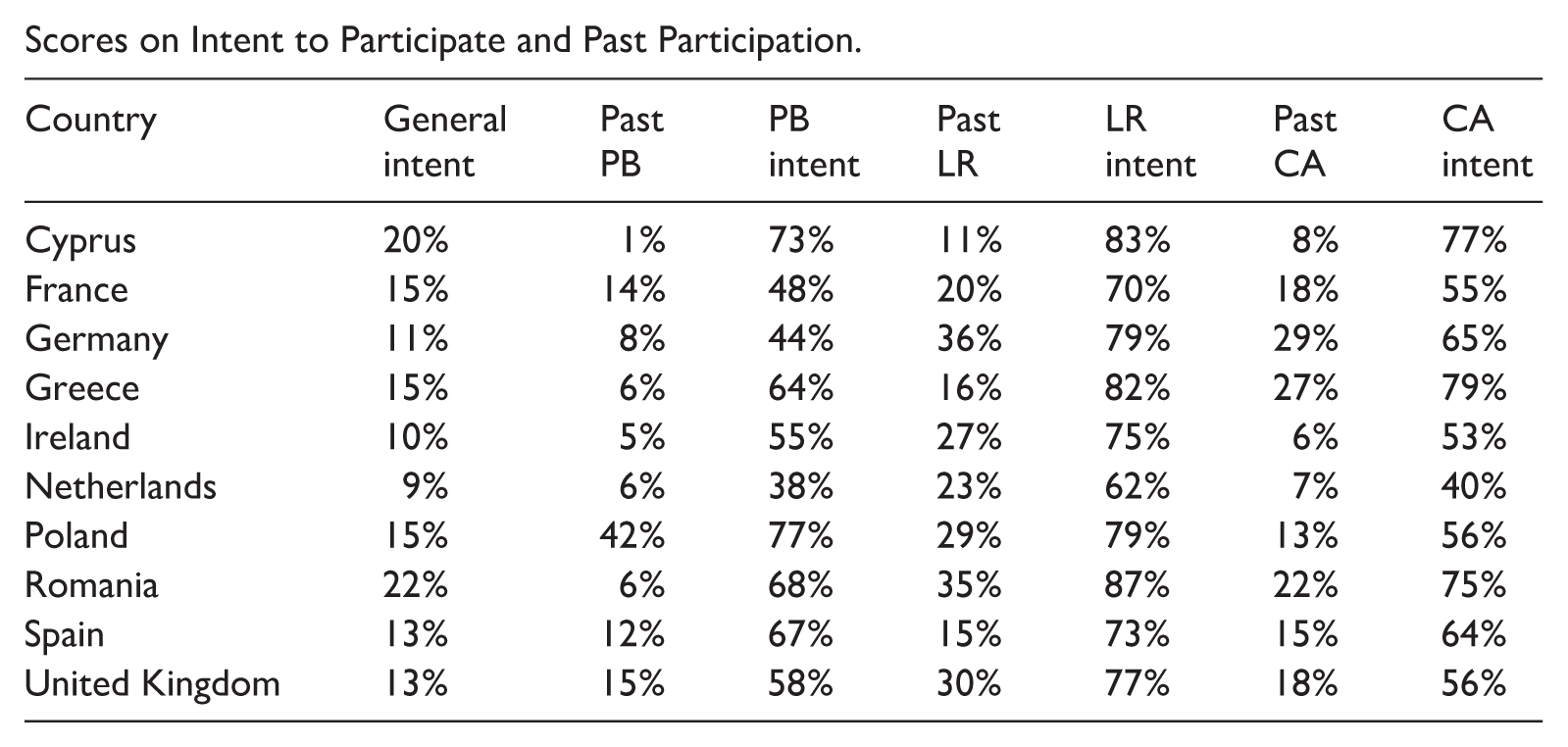
The intent ‘to get involved in general’ was measured with the question: To what extent would you like to be involved in decision-making in the locality where you live? Answer options were fourfold: were ‘not willing at all’, ‘a little willing’, ‘fairly willing’ and ‘very willing’. Then, concerning democratic innovations, the survey in particular asked multiple questions about participatory budgeting, but also about citizens’ assemblies and local referendums. Respondents were asked about their awareness of the democratic innovation, past participation in it and whether or not they were open to participating in it in the future. Respondents could answer ‘yes’ or ‘no’ to these questions. An overview of the used definitions for the three democratic innovations and of the descriptive results on past participation and intent to participate are given in Appendices 1 and 2.
Results
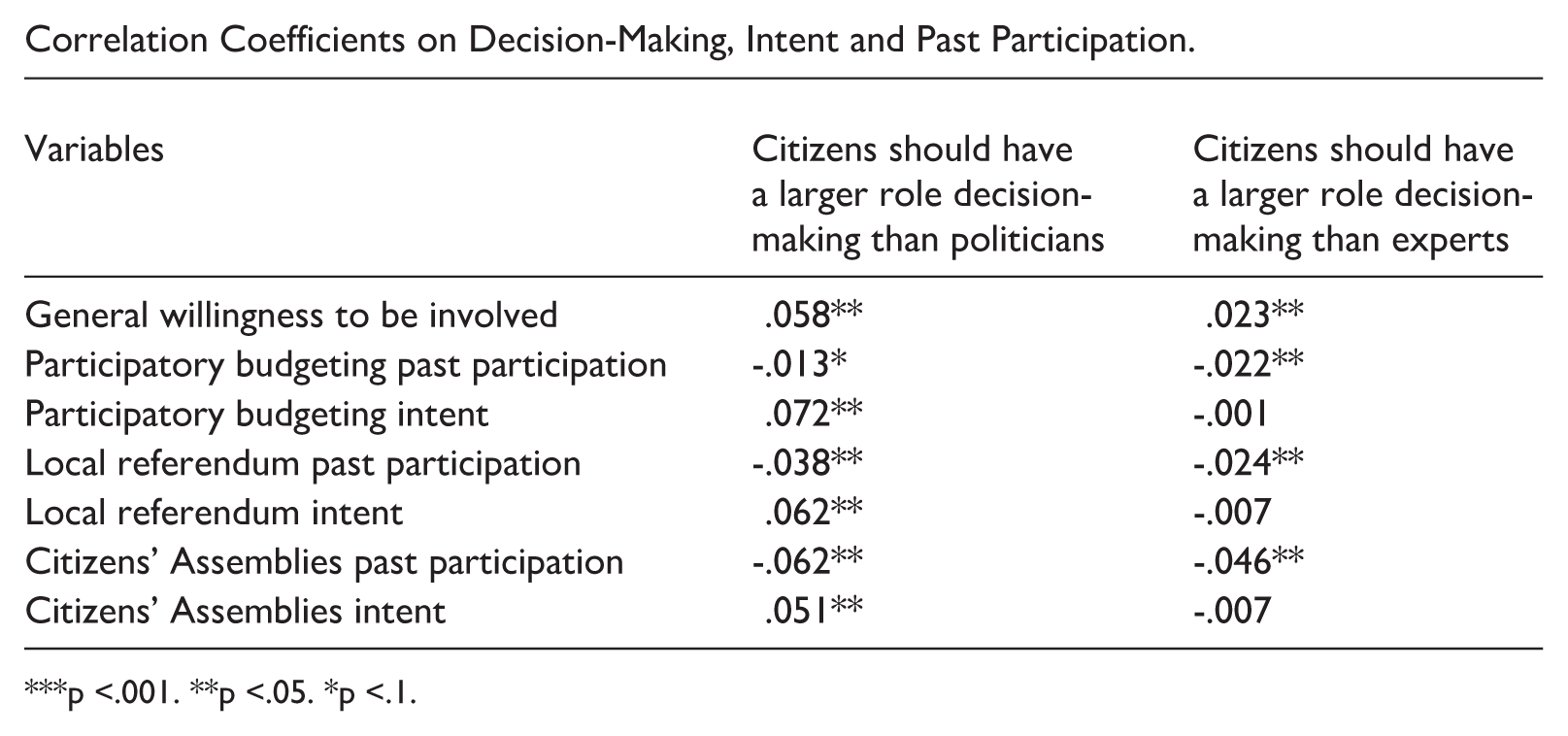
First, as a stepping stone, I correlated the variables of interest – preference in decision-making, past participation and intent to participate – in Appendix 3. From these more exploratory analyses, three preliminary results arise: First, most correlations are significant, likely due to the large sample size. Second, most correlations are small in size (all below 0.1). Finally, concerning past participation, the direction of the relation is negative; meaning that respondents who think that citizens should have a larger role in decision-making are negatively associated with past participation in all three democratic innovations.
Next, I used the cluster analysis on the three questions about ‘Who would you like to be making decisions at the local level’. From this analysis, four distinctive clusters were obtained and shown in Table 1 and Figure 2:
The first cluster was a preference for a
The second cluster represented the preference for a form of
The third cluster had an
The final cluster had a preference for
Correlation Coefficient Between Respondents and Factors.
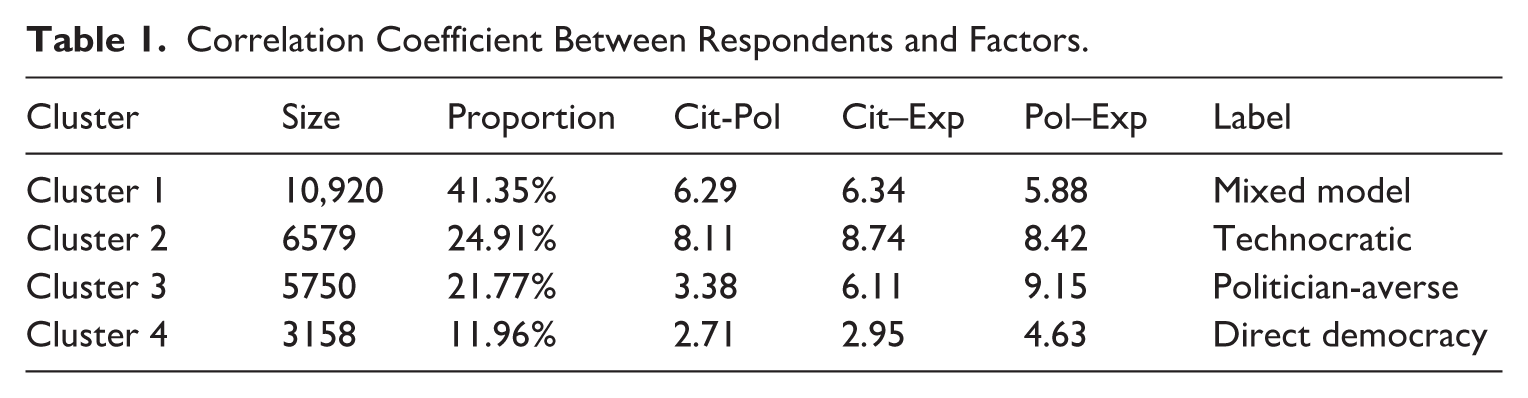

Graphical Overview of the Clusters.
These four clusters align with patterns found in previous research. Pilet et al. (2020) identified seven latent profiles among Belgian citizens, with the largest group (44.6%) labelled ‘median citizens’: respondents who held slightly positive views of citizens and independent experts, and slightly negative views of elected politicians. This is consistent with Haesevoets et al. (2023), who show that most people prefer some form of hybrid model that combines representative and direct democracy. Pilet and colleagues also identified several groups that expressed political aversion, while their smallest group – similar to the smallest cluster in this study – were the ‘participatory democrats’’, who evaluated citizens more positively than politicians and experts. Bertsou and Caramani (2022), in their paper tellingly titled People Haven’t Had Enough of Experts, identified a ‘technocratic class’ of about 12% across six latent classes ranging from technocrats to populists. Their 12% is lower than the technocratic cluster found in this study, but their class represented a more ‘pure’ form of technocracy: this group consistently favoured expert rule above all other decision-making actors. By contrast, the technocratic cluster in this study prefers expert decision-making over alternatives, but – due to the design of the questionnaire – still evaluates political decision-making more favourably than direct citizen influence.
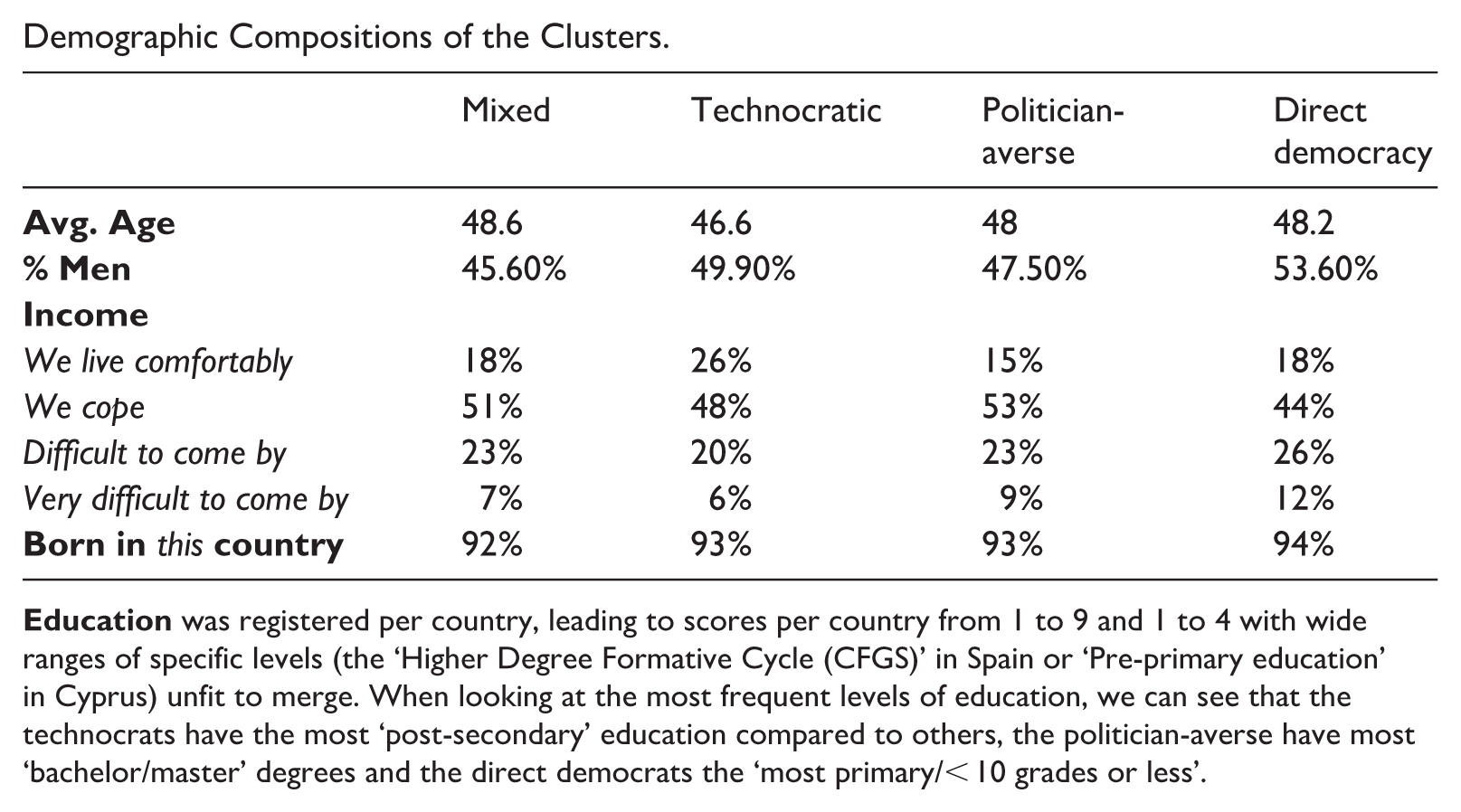
Overall, the clusters were demographically similar (see Appendix 4), with only modest differences. The mixed cluster included a slightly higher share of women (54.4%), whereas men were somewhat more represented in the direct democracy cluster (53.6%). The technocratic cluster contained the highest proportion of respondents who reported living comfortably on their household income (26%), compared with 15% in the politician-averse cluster. Educational differences were harder to compare because the survey used country-specific educational categories rather than standardized years of education. Even so, some patterns emerged: the direct democrats contained the highest share of respondents with an educational level of ‘primary/< 10 grades or less’, the technocrats included the most respondents with post-secondary education, and the politician-averse group included the highest proportion of respondents with bachelor’s or master’s degrees.
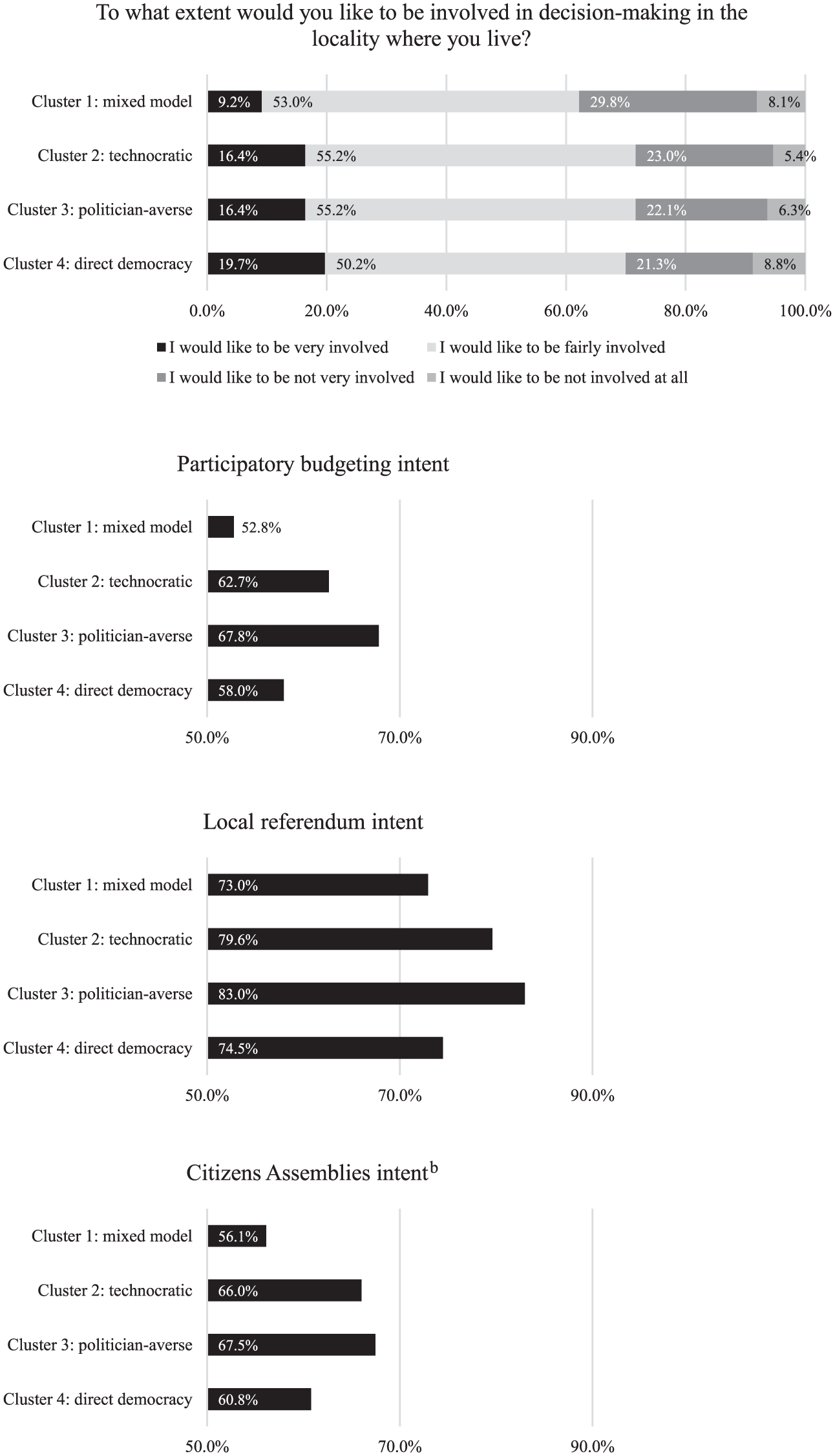
Finally, I cross-tabulated each of the clusters for both past participation and intent to participate. The results for past participation are presented first in Figure 3 followed by intent to participate in Figure 4, For each democratic innovation, I report a chi-square (χ²) test to assess whether cluster membership is associated with participation patterns. A significant chi-square statistic indicates that the variables are related rather than independent, meaning the clusters capture meaningful differences in participation behaviour.

Past Participation in Participatory Budgeting, Local Referendums and Citizens’ Assemblies.
Intent to Participate in General, Participatory Budgeting, Local Referendums and Citizens’ Assemblies.
The chi-squared values for past participation show the following:
Significant association between the clusters and past participation in participatory budgeting, χ2(3, N = 26,407) = 278.88, p < .001.
Significant association between the clusters and past participation in local referendums, χ2(3, N = 26,407) = 105.11, p < .001.
Significant association between the clusters and past participation in citizens’ assemblies, χ2(3, N = 13,275) = 213.52, p < .001.
These show that the clusters capture meaningful differences for all three democratic innovations.
The analyses show that for all three democratic innovations, the technocratic cluster is most active, participatory-wise. From the technocratic cluster, 17% of the people participated in a participatory budget, 31% in a local referendum and 25% in a citizens’ assembly. These proportions are opposed to 13%, 25% and 19% for the direct democracy cluster. The past participation of the mixed model cluster is the lowest in all three democratic innovations.
The chi-squared values for intent to participate show the following:
Significant association between the clusters and intent to participate in general, χ2(9, N = 26,407) = 528.40, p < .001.
Significant association between the clusters and intent to participate in participatory budgeting, χ2(3, N = 26,407) = 398.59, p < .001
Significant association between the clusters and intent to participate in local referendums, χ2(3, N = 26,407) = 253.66, p < .001.
Significant association between the clusters and intent to participate in citizens’ assemblies χ2(3, N = 13,275) = 213.52, p < .001.
These indicate that all the clusters capture a meaningful difference in intent to participate.
With regard to participatory intent, a different pattern emerges from that of past participation. The technocratic cluster showed the most past participation, but the intent for the three democratic innovations is mostly shown by the politician-averse cluster. Sixty-eight percent of the politician-averse cluster says they are willing to participate in a participatory budget, 83% in a local referendum and 68% in a citizens’ assembly. Again, the mixed model cluster seems least interested in participating in the three democratic innovations: their intent was 53% for a participatory budget, 73% for a local referendum and 56% for a citizens’ assembly.
The general willingness variable allows for a more sophisticated look at the willingness of the four clusters. Consistent with their preferences, the direct democracy cluster shows the highest proportion of people who ‘would like to be very involved’ (20%). Less consistent, they also have the highest proportion of people who ‘would like to be not involved at all’ (9%). Looking at the total of positive responses (‘very involved’ and ‘fairly involved’), the technocratic cluster seems to be most willing, but only by a margin—71.66% versus 71.64% for the politician-averse cluster.
Taking past participation and intent to participate together, the technocratic cluster seems to be most participatory active and relatively willing to participate in future events as well. This finding is somewhat surprising but aligns with explanations offered by Talukder and Pilet (2023: 318). They claim that one approach to explaining support is to look at the role of social trust or the evaluation of the competence of fellow citizens. The technocratic cluster favours decision-making by experts and may consequently not trust their fellow citizens to make decisions about public issues. They feel motivated to show up, explaining their high proportions of past participation and high proportions of intent.
Previous research has shown education is associated with alignment with technocratic ideals (Bertsou and Caramani, 2022; Chiru and Enyedi, 2022). The technocratic cluster might be a proxy for higher social-economic status, perhaps more institutional-trusting people. Appendix 4 shows that the technocratic cluster has the highest share saying they ‘live comfortably on their household income’ and the lowest indicating that it is ‘very difficult to come by’. Together with the politician-averse cluster, they also share higher education than the other two clusters. People like this usually have more opportunity to participate (Brady et al., 1995; Deveaux, 2018), have more confidence to get politically involved (i.e., high internal efficacy), and are generally more willing to partake in democratic innovations as well (Elstub, 2018; Visser et al., 2023; Warren, 1999: 11).
A final explanation might be that technocratic ideals are still widely shared (Bertsou and Caramani, 2022), possibly by a group that is publicly engaged as well. While technocracy certainly has received much critical evaluation as a political pathology (Gunnell, 1982), there are still supporters. Earlier research has shown that support for technocracy is associated with a distrust of politicians and representative institutions (Bertsou and Pastorella, 2017). While expertise and knowledge might be associated with ‘knowledge elites’, these elites might still be evaluated more positively than representatives and the ‘political elites’. Previous research has shown strong associations between support for technocracy and dissatisfaction with politicians (Chiru and Enyedi, 2022). Hibbing and Theiss-Morse (2002) too have shown that people are strongly dissatisfied and disdained with party politics and might prefer a stealth democracy: apolitical and efficient decision-making, even by non-elected experts. It might just be the case that this technocratic cluster feels like regular or party politics has let them down (Mair, 2008), but still have high support for democracy (see also Anderson et al., 2021).
That the politician-averse cluster shows high intent to participate, is in line with the ‘enraged’ explanation (Bowler et al., 2007). This explanation is based on the argument that people who are distrustful of their government feel like they need to keep an eye on it. Dissatisfaction with politicians and the political system might motivate the intent to participate (Talukder and Pilet, 2023: 321). This cluster has a composition that is not less educated than the others, but it has the relative highest share of respondents saying they find it ‘very difficult to come by on their income’. The politician-averse cluster might represent dissatisfaction with politicians and therefore support for – in this case multiple – democratic innovations (see also Pilet et al., 2023).
Conclusion and Discussion
Democracies nowadays are facing many threats (Akkerman et al., 2014; Applebaum, 2024; Hay, 2007; Norris and Inglehart, 2019) and many challenges (Celis et al., 2021; Wuttke et al., 2022). The value of democracy is – at least partially – rooted in the beliefs and expectations in it. Citizens need to believe that their democracy is valuable and that their participation in it matters. And democracy certainly is valuable, as Gerring et al. (2022: 373) put it, ‘In plain words, democratically governed countries appear to be better governed overall than autocratically governed countries’ on a range of metrics (see also Frey and Stutzer (2010); and Bollyky et al. (2019) for the health benefits of democracy).
In the face of threats and challenges, many officials, politicians and scholars call for the resilience, revival and restrengthening of democracy (e.g. Croissant and Lott, 2024). These calls all require citizens to be involved and active to some extent. They require citizens to practice self-governance. This manuscript took a closer look at the involvement and activity of citizens using their preferences for decision-making. I wondered whether there is a participation paradox where people think it is important that citizens have a (greater) say in decision-making while their past participation and their intent to participate are not in line with their viewpoint.
First, and more generally, in the sample of 27,500 Europeans, there are substantive proportions of citizens who are open to participating in participatory budgeting, local referendums and citizens’ assemblies. Around 70% want to be involved in general, and depending on the preferences for decision-making, between 53% and 83% are open to participating in any of the three democratic innovations.
Preferences for who should have a larger say in decision-making – citizens, politicians or experts – led to four clusters with a ‘profile’ of preferences. The approach forced prioritization on preferences, but didn’t block the possibility of pluralism and blended preference models, as shown by the results. The clusters were: a mixed model with participation by all three entities; technocrats who had a clear preference for a type of democracy where citizens do not directly make decisions; a cluster with an aversion to politicians; and a cluster with a preference for direct democracy, consisting of individuals with clear preferences for citizens over politicians and experts.
These clusters represented different patterns of past participation and intent to participate. People from the technocratic cluster had participated most in any of the democratic innovations, and those from the politician-averse cluster showed the most intent to participate. In neither instance was the direct democracy cluster – who prefer a larger say for citizens in decision-making – most participatory. There are several explanations for these paradoxical findings. First, as discussed, there are a couple of explanations for these findings based on arguments of distrust. The high proportions of intent to participate among the politician-averse cluster is in line with the enraged explanation (Bowler et al., 2007; Frey and Stutzer, 2010: 126; Neblo et al., 2010): people distrust their government and want to keep an eye on them. Also disaffected citizens (those who might even have low political efficacy) are generally more open to democratic innovations (Goldberg and Bächtiger, 2023). The relatively high levels of past participation and future intent in the technocratic cluster may stem from their low trust in other citizens (Talukder and Pilet, 2023) or from a heightened sense of being let down by politicians (Bertsou and Pastorella, 2017; Chiru and Enyedi, 2022; Hibbing and Theiss-Morse, 2002; Mair, 2008), while still supporting the civil service and participatory institutions. Second, the technocratic cluster might represent higher educated citizens (Bertsou and Caramani, 2022) who experience more political efficacy (Brady et al., 1995), who generally trust their institutions (Warren, 1999) and could be considered ‘usual suspects’ who participate more (see Nabatchi, 2012).
The technocratic cluster and politician-averse cluster being more supportive of democratic innovations, either in actual behaviour or intent, can be considered slightly paradoxical. The mixed model cluster was generally least open to participate, which makes sense because they don’t have strong preferences about decision-making. But the past participation and future intent of the direct democracy cluster are inconsistent with their preferences for decision-making; this is more paradoxical. The discrepancy in this study might be similar to the gaps that Trüdinger and Bächtiger (2023) or Bowler and Donovan (2019) point out. The former also observed a gap between preferences and participation in direct democratic instruments. Bowler and Donovan coined the term ‘Referendum Disappointment Gap’ to describe the difference between belief in referendums and disappointment in their practical use and execution. The coexistence observed here – of people who normatively prefer greater popular influence but simultaneously express limited willingness to exercise it – echoes earlier findings. Although various gaps appear across multiple studies, the inconsistency remains notable.
The discourse on democracy revolves around creating a larger say for citizens. Scholars, local and national governments, and European officials all repeat the same message: citizens should have a larger say in decision-making. And while it is important to present the democratic ideals – to provide a north star of democracy – at the same time, there is a risk of constantly highlighting the talk, without acknowledging the reality of the walk. Sartori (1987: 126) noted that ‘Processes of opinion formation do not start from the people, they pass through them. Even when opinion tides do occur, the triggering factor can hardly be said to reside in the people as a whole’. It seems that our politicians and governments keep repeating that citizens should be brought into decision-making, passing these messages through us. People start to subscribe to this message; perhaps rightfully so. But the ‘resistance of an is’ (Sartori, 1987: 8), of democracy in this case, is that ordinary people have more nuanced preferences about bringing citizens into decision-making. Second, the people who most want more citizens to have a say, or more say for citizens, are less likely to actually walk their talk. The direct democrats cluster is thwarting their own ideals and preferences for democracy.
This study had several limitations. First, the main interest used variables that measured peoples’ preferences and intent. Both do not necessarily reflect real-life behaviour. The ‘past participation variable’ was in that sense more robust – and naturally, it did show much lower proportions than intent to participate. Another limitation is peoples’ knowledge and image of participatory budgets, local referendums and citizens’ assemblies. The description in the survey was relatively modest, and respondents’ interpretations could vary. Third, I used the full 27,500 respondents across European countries, ignoring all context-dependent factors that could be present on national, regional and local scales. Fourth, I used fuzzy clustering, which gives more nuanced results compared to discrete clusters. Although respondents were assigned to their dominant cluster for analysis, many could have overlapping membership in multiple clusters. Finally, this study also did not account for the design of specific democratic innovations, while this is known to matter (Lowndes et al., 2006; Van Dalfsen et al., 2021). Acknowledging these limitations, I believe this work still made a contribution to the ongoing debate about democratic innovations and the understanding of the curious relationship between democratic ideals, preferences and actions by citizens.
The argument that repeated messages across actors create the participation paradox sets the stage for future research. Illustrations of these messages were given, and they are arguably an important ingredient in today’s discourse. Follow-up research could uncover whether opinions on decision-making power by citizens have shifted recently. Other avenues for further research could be to inquire about preferences and democratic attitudes of those who do, demonstrably, participate or refuse to participate. The effect of participating in democratic innovation on decision-making preferences is, finally, a relatively unknown terrain.
Engaged and active citizens are important for a democracy. The notion of self-governance, where people want to shape public life around them, requires them to practice democratic skills and develop social norms. Such cooperative norms are important building blocks for democracies, and their effects can stretch for quite some time (Rustagi, 2022). But the key to self-governance or the art of association is its – often repeated – activity, not only the preference for it. The value of self-governance or civil society can be contested as well, notwithstanding the broad support for it (see Blok et al., 2023). Preferences about decision-making, democracy and democratic innovation are not enough on their own, because democracy emerges from the interaction between its ideals and realities. The willingness to participate – and, more importantly, actual behaviour – should ideally align with those ideals and preferences. As Dahl (2000: 37) reminds us, ‘democratic ideals are too demanding to be fully achieved in the actual world of human society’, although deliberative democracy and its innovations can truly be realistic (see Curato et al., 2017: 29), a discourse that urges citizens to hold ever stronger preferences in decision-making while leaving the material practice behind only deepens the paradox.
Footnotes
Appendix 1
Appendix 2
Scores on Intent to Participate and Past Participation.
| Country | General intent | Past PB | PB intent | Past LR | LR intent | Past CA | CA intent |
|---|---|---|---|---|---|---|---|
| Cyprus | 20% | 1% | 73% | 11% | 83% | 8% | 77% |
| France | 15% | 14% | 48% | 20% | 70% | 18% | 55% |
| Germany | 11% | 8% | 44% | 36% | 79% | 29% | 65% |
| Greece | 15% | 6% | 64% | 16% | 82% | 27% | 79% |
| Ireland | 10% | 5% | 55% | 27% | 75% | 6% | 53% |
| Netherlands | 9% | 6% | 38% | 23% | 62% | 7% | 40% |
| Poland | 15% | 42% | 77% | 29% | 79% | 13% | 56% |
| Romania | 22% | 6% | 68% | 35% | 87% | 22% | 75% |
| Spain | 13% | 12% | 67% | 15% | 73% | 15% | 64% |
| United Kingdom | 13% | 15% | 58% | 30% | 77% | 18% | 56% |
Appendix 3
Correlation Coefficients on Decision-Making, Intent and Past Participation.
| Variables | Citizens should have a larger role decision-making than politicians | Citizens should have a larger role decision-making than experts |
|---|---|---|
| General willingness to be involved | .058** | .023** |
| Participatory budgeting past participation | -.013* | -.022** |
| Participatory budgeting intent | .072** | -.001 |
| Local referendum past participation | -.038** | -.024** |
| Local referendum intent | .062** | -.007 |
| Citizens’ Assemblies past participation | -.062** | -.046** |
| Citizens’ Assemblies intent | .051** | -.007 |
p <.001. **p <.05. *p <.1.
Appendix 4
Demographic Compositions of the Clusters.
| Mixed | Technocratic | Politician-averse | Direct democracy | |
|---|---|---|---|---|
|
|
48.6 | 46.6 | 48 | 48.2 |
|
|
45.60% | 49.90% | 47.50% | 53.60% |
|
|
||||
| We live comfortably | 18% | 26% | 15% | 18% |
| We cope | 51% | 48% | 53% | 44% |
| Difficult to come by | 23% | 20% | 23% | 26% |
| Very difficult to come by | 7% | 6% | 9% | 12% |
|
|
92% | 93% | 93% | 94% |
Appendix 5
Distribution of the Clusters by Country.

| Country | Mixed | Technocratic | Politician-averse | Direct democracy |
|---|---|---|---|---|
| Cyprus | 1.8% | 2.2% | 1.6% | 1.1% |
| France | 12.6% | 9.3% | 6.0% | 15.0% |
| Germany | 10.8% | 10.1% | 10.7% | 11.8% |
| Greece | 9.8% | 14.4% | 9.4% | 10.5% |
| Ireland | 13.2% | 8.3% | 10.3% | 10.3% |
| Netherlands | 13.7% | 10.8% | 6.6% | 8.5% |
| Poland | 7.0% | 7.4% | 21.1% | 13.5% |
| Romania | 8.4% | 13.4% | 14.6% | 7.8% |
| Spain | 11.0% | 11.4% | 11.2% | 10.3% |
| United Kingdom | 11.7% | 12.7% | 8.4% | 11.1% |
Acknowledgements
The author thanks Wubbo Wierenga, Sofie Dreef, Henk Wesseling and the anonymous reviewers for their comments on earlier versions of the manuscript.

Declaration of Conflicting Interests
The author declared no potential conflicts of interest with respect to the research, authorship, and/or publication of this article.
Funding
The author disclosed receipt of the following financial support for the research, authorship, and/or publication of this article: This work was supported by the European Union’s Horizon 2020 research and innovation programme under Grant Agreement No. 962553.
Ethical approval
This project has received funding from the European Union’s Horizon 2020 research and innovation programme under Grant Agreement No. 962553. An Ethics Expert (EE) was appointed to ensure that ethical standards and guidelines of H2020 was applied to the project implementation.