




Abstract
Background
A sizeable literature highlighted that negative affectivity and craving are both known to be implicated in relapses.
Objectives
The present study synthetized the existing litterature to determine strength of the interaction between negative affectivity and craving for substance-related disorders including illicit drugs, alcohol and tobacco.
Methods
We conducted a systematic review in accordance with PRISMA guidelines followed by a meta-analysis. Online computer databases PubMed, PsycINFO and Web of Science were searched systematically and thoroughly. Jamovi 1.8.1 Current version was used to conduct meta-analysis.
Results
Thirty studies were included in the review, and 14 of these, including 2257 subjects, were used for meta-analysis. The raw correlation ranged from 0.17 to 0.58, which indicated weak to moderate association between negative affects and craving. In total, approximately 90% of the selection revealed a positive correlation between negative affects and craving. Alcohol and tobacco use disorders have received the most attention. Additionally, negative affectivity was often defined as a transient state rather than a stable personality trait.
Conclusions
In both of our meta-analyses and in the narratively reported studies, we found that negative affectivity is an important component related to craving, but individual differences in craving reactivity existed.
Highlights
• The current evidence based points towards association between negative affectivity and withdrawal-based craving but has methodological limitations. • Direct and indirect effect of negative affectivity on craving reactivity have been confirmed. • Individual’s differences in craving reactivity among substances dependant people with negative affectivity were highlighted. • The specific effect of negative affect as a stable variable on craving remains unclear because of the limited number of studies.
Introduction
The prevalence of substance-related disorders in the general adult population is a major public health concern. An epidemiologic study has recently shown that 29.1% of U.S adults and 9.9% have met the criteria for alcohol use disorder and drug use disorder (e.g., opioid, cocaine, or marijuana use disorder) over the course of their entire life (Grant et al., 2016). The current view is that addiction processes is quite similar for all substances and for non-substance addictive behaviors in the context of DSM-5 (American Psychiatric Association). Among individuals with substance use disorders attempting to quit, craving plays an important causal role in various relapse models (e.g., Franken, 2003). It has been defined in the fifth version of the DSM (2013) (American Psychiatric Association) as a strong desire or urge to use a substance. Craving is a largely studied concept because of its interference with abstinence (Tiffany & Wray, 2012). An increasing body of literature focuses on the factors that contribute to craving such as negative affect, drug-related stimuli and substance motives. Nowadays, there is no consensus on the effective treatment of craving, nor is there a specific study of craving related to specific substances.
Affectivity has been well documented as a mechanism underlying the maintenance of drug consumption (e.g., Cheetham et al., 2010). On the one hand, negative affect is generally defined as the feeling of subjective emotional distress encompassing a variety of unpleasant transient internal states such as anger, sadness, anxiety, fear, guilt, irritability, and shame (Scherer, 1984). On the other hand, negative affectivity is a stable tendency to experience aversive mood states (Watson & Clark., 1984). It is also called negative emotionality, measured by characteristics such as neuroticism (Costa & McCrae, 1995). Cognition might be influenced by the degree of this individual trait of negative affect even though a stressor is not present (Hairston, 2015). According to the Hierarchical Model of Affect, negative affectivity is largely independent from positive affectivity (Watson & Tellegen, 1985). In fact, negative affectivity is conceptualized as both a dimensional trait and state experiences.
The finding that negative affective states can provoke craving is consistent with the Affective Processing Model of Negative Reinforcement and the Negative Affect Regulation Model (Baker et al., 2004). Indeed, consumption can be used as a coping mechanism to avoid emotional distress. A high tendency to experience negative affective states or increased and dysregulated negative affects has been shown to be positively associated with elevated stress levels (e.g., Dua, 1993) and depressive symptoms (e.g., Young & Dietrich., 2015). Furthermore, some research has found that depressive and anxious symptoms are linked to tobacco craving even among people without an active mood disorder (Leventhal et al., 2008). Research has also highlighted that personality traits such as impulsivity, negative emotionality or novelty-seeking is related to craving (Zilberman et al., 2003). Meta-analytic results of Kotov et al. (2010) revealed a link between negative affect traits and craving for alcohol.
Additionally, several laboratory studies have shown that stress, as a type of negative transient affective state, is related to craving (e.g., Sinha, 2009). Two recent meta-analyses documented how negative affect states can elicit craving in an experimental setting (see for review Heckman et al., 2013; Bresin et al., 2018). The main conclusion of these reviews is that conflicting results on the relationships between affectivity and craving may be due to the heterogeneity of methods and instruments used. Cue-based craving in comparison to withdrawal-based craving poses the question of the ecological value of such a link observed under experimental conditions (Wray et al., 2013). However, experimental studies confirmed that experiencing negative affect states can be both a proximal and distal risk factor for triggering craving (e.g., Tiffany & Drobes., 1990; Sinha et al., 2003).
Based on previous findings on direct relationships between negative affectivity and craving, a growing interest focuses on identifying potential indirect relationships (mediators or moderators). Studies testing this approach have shown that there are risk and/or protective factors in the relationship between affectivity and craving. Few studies have tested whether gender moderates the relationship between affectivity and craving. Self-awareness is another moderator of the relationship between depression and craving in alcoholics (de Timary et al., 2013). It has been noteworthy that when self-awareness score is high, craving increases as a function of the subject’s negative mood state. In another study, smokers with high levels of depressive symptoms experienced more negative affect leading to craving and decreased feelings of self-efficacy (Brodbeck et al., 2014). Furthermore, it would be of great interest to identify potential other moderators and mediators on the negative affectivity-craving relationship.
The aim of the present study was to conduct the first systematic review and meta-analysis investigating the link between negative affectivity and withdrawal-based craving. In this review, the term “negative affectivity” encompasses both dimensional trait and state experiences (negative affect-related states; negative affect-related depression, and negative affect-related anxiety). Although there are data addressing an association between greater negative affectivity and craving, the way in which these variables relate to each other remains unclear. We sought to identify whether negative affectivity, as a dispositional tendency or a fluctuating symptomatology (transient states, depressive, and/or anxious mood), influences craving. Furthermore, we aim to determine the direction and the magnitude of this effect according to the types of substances used. The secondary objective of this study was to identify potential mediators of this relationship.
Material and Methods
The study followed the PRISMA principle for systematic reviews and meta-analysis (Moher et al., 2015). The protocol was submitted to Openscience (osf.io/7p4dt).
Search strategy and study selection
Based on the Cochrane methodology, studies were identified by searching the following electronic databases: PsyMed/MEDLINE, PsycINFO, and Web of Science. The research was conducted in December 2020. The following terms were systematically cross-referenced in the three databases: (“state negative affect " OR “negative emotions” OR “negative mood” OR “emotional distress” OR “negative affectivity” OR “negative emotionality”) AND (“craving” OR “urge”). Related references of papers already selected for the review were also examined. In practice, ratings of craving and urges are closely associated (Rosenberg & Mazzola., 2007). The term “desire” did not yield any relevant additional articles, so it was discarded in the final search. The research focused on articles published between 1980 and 2020. Studies were included according to the following criteria: (a) reported in English and published in a peer-reviewed journal; (b) including in-patient, out-patient or participants ≥18 years old in which substance-related disorders were determined by a formal diagnosis (DSM-IV or DSM-V); (c) reported quantitative data of empirical review with statistical analysis and psychological outcomes.
There were additional exclusion criteria. First, we excluded studies including a measure of craving as an outcome. Articles reporting results on cue-based craving using a cue-exposure paradigm were excluded from analysis. Furthermore, studies which assessed positive affectivity as a reversed indicator of negative affectivity (e.g., anhedonia) as well as ones with negative affect disturbances (e.g., major depression, and anxiety disorders) were not retained. If, besides the treatment effect, no other independent effect of negative affectivity was mentioned, the studies were excluded. Studies were also required to provide unique datasets, even if they had overlapping samples with other articles. Duplicate studies were removed before screening for inclusion criteria.
Study screening and selection
The title and abstract of all papers retrieved during the electronic follow-up search process were examined by two authors (LB; VB) based on the aforementioned inclusion criteria. The two authors reviewed independently and simultaneously and resolved any disagreements with the main author (LC). The disagreements between the authors involved the evaluation of craving which was assessed either as a dependent variable or as an independent variable depending on the study. Another disagreement concerned the precise nature of negative affectivity, sometimes evaluated as an affective disturbance (e.g., major depression, and anxiety disorders) depending on the study. The authors were able to reach a consensus after sharing their opinions and arrived to a common decision. The first author screened all articles by titles and abstracts and examined the full texts of relevant papers based on the inclusion criteria. During the review process, studies undergoing the review were anonymized to limit information-bias effect.
Data extraction and quality assessment
The following data from the included articles were extracted and classified according to population characteristics, methodology and their final conclusions (PICOTS).
The mentioned negative affects measured were codified in terms of either traits or negative states experiences (Watson & Clark, 1984) and depressive or anxious symptoms. The measures of craving were specified as well as features from the current definition of craving: frequency, intensity, duration, and salience (Kavanagh et al., 2013). If the craving intensity was assessed by a withdrawal scale, it was noted.
Risk of bias (RoB) was assessed using the NHLBI Risk of Bias Tool. The 30 papers accessed for the systematic review using a grading system developed by Uloko et al. (2018) for the NHLBI tool to evaluate the quality Risk of bias (RoB) was assessed using the NHLBI Risk of Bias Tool. The 30 papers accessed using a grading system developed by Uloko et al. (2018) for the NHLBI tool to evaluate the quality grading: the quality considered as “good” if the rating was 70%, “fair” if 50% and “poor” if rating was less than 50%
Statistical analysis
The JAMOVI module “Major” based on the R package “Metafor” by Wilfgang Viechtbauer allows us to run a meta-analysis. The main outcomes of interest were the correlation between negative affect-related states, negative affect-related depression, and negative affect-related anxiety with craving. For each study, correlation was then aggregated using the fixed or random effect model-based on the absence or presence of heterogeneity to estimate the summary effect. Despite some heterogeneity in studies, fourteen studies were included for a quantitative analysis. Pooled correlation estimates were calculated from the results of (a) ten studies that report correlations between negative affect-related states and craving (b) six studies, that reported correlations between depression and craving and (c) three studies that reported correlations between negative affect-related anxiety and craving. Some studies have reported several results due to cross-sectional and prospective approach (Cordovil et al., 2010) and several measures of negative affectivity (Fiabane et al., 2017; Pombo et al., 2016; Tavares et al., 2005; Luminet et al., 2016). For each category, we calculated an overall pooled estimate of the true weighted mean correlations between negative affectivity (total score) and craving (total score), with the assumption of random effects due to some heterogeneity in the study populations and methods across included studies (Ades et al., 2005). We applied Hunter and Schmidt method of estimating the pooled correlation along with 95% CI. Hunter and Schmidt method adjusts the sampling variances and assign weight based on the sample size (Hunter & Schmidt, 2014). To allow analysis and interpretation of some studies, we converted β regression into correlation coefficient by the formula (β×0.98) + 0.05 (Peterson & Brown, 2005), thereby achieving substantially similar interpretations for all correlations considered. Heterogeneity across included trials was assessed using I2 and Q statistics, and significant heterogeneity was defined as I2 > 50.0% or p < .10 (Deeks et al., 2008). Moderator analysis to control some factors was conducted for age (as a continuous variable), type of craving assessment (craving measure or withdrawal measure), the type of design (cross-sectional or prospective), the type of substance (alcohol, tobacco, or others), the type of patient (in-patient or out-patient), the duration of abstinence (as a continuous variable), presence of treatment (yes or no), and the study quality (poor or fair/good). The difference between subgroups was analyzed using p-test for interaction (Altman & Bland, 2003). Publication bias was assessed qualitatively using funnel plot and quantitatively using the Kendalls and Begg’s tests (Egger et al., 1997). The inspection level was two-sided, and p < .05 was considered as significant.
Results
Search results
From a total of 2538 retrieved articles (839 from Pubmed/MEDLINE, 842 from PsycINFO, 857 from Web of Science), 1354 titles and abstracts were identified as potentially relevant. Out of all 261 full-length articles assessed for eligibility, 231 articles were excluded. In total, 30 articles met the inclusion criteria and were included for review (see Figure 1). Flowchart of search strategy.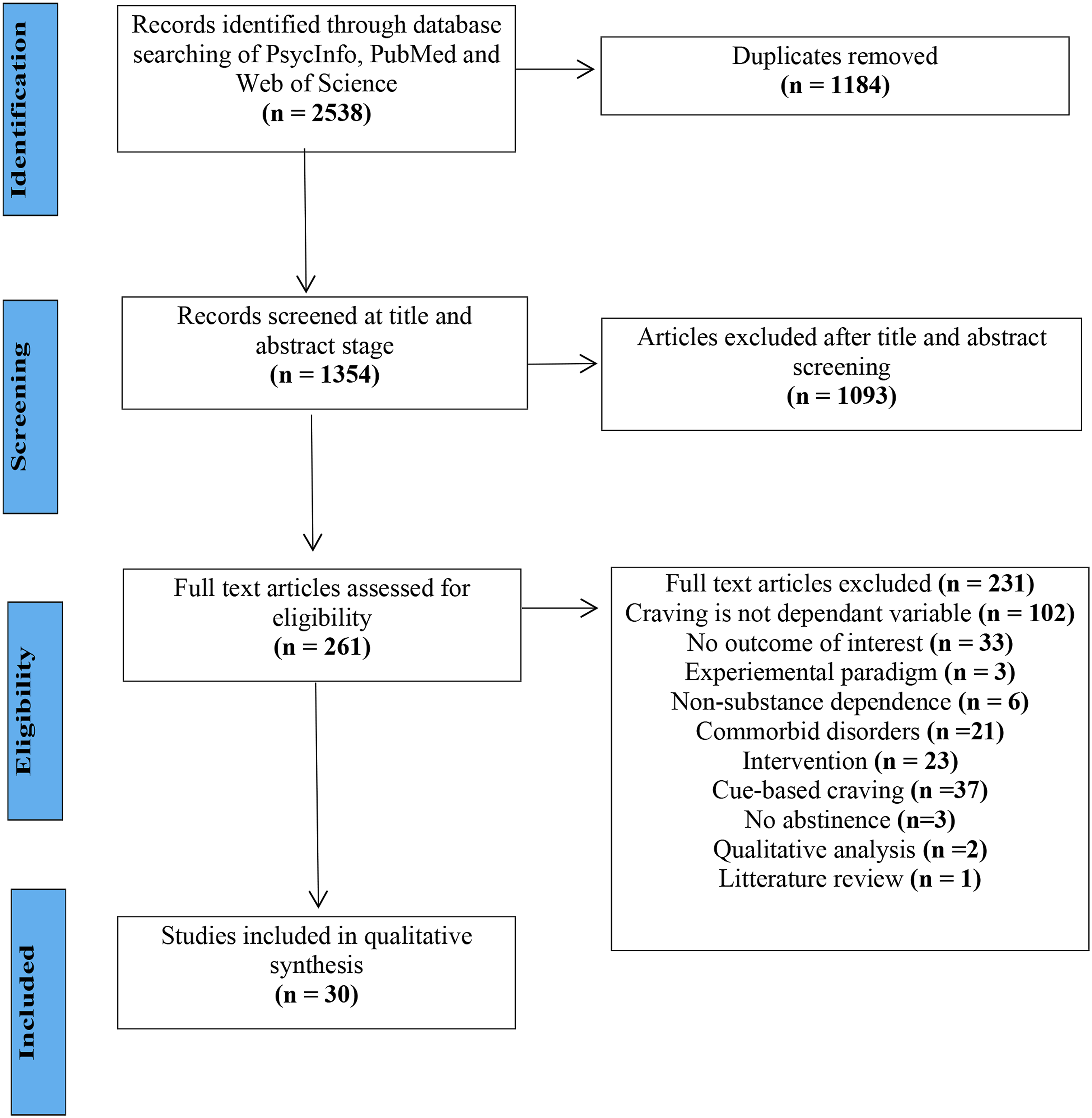
Characteristics of included studies (30 studies)
Characteristics of studies included.
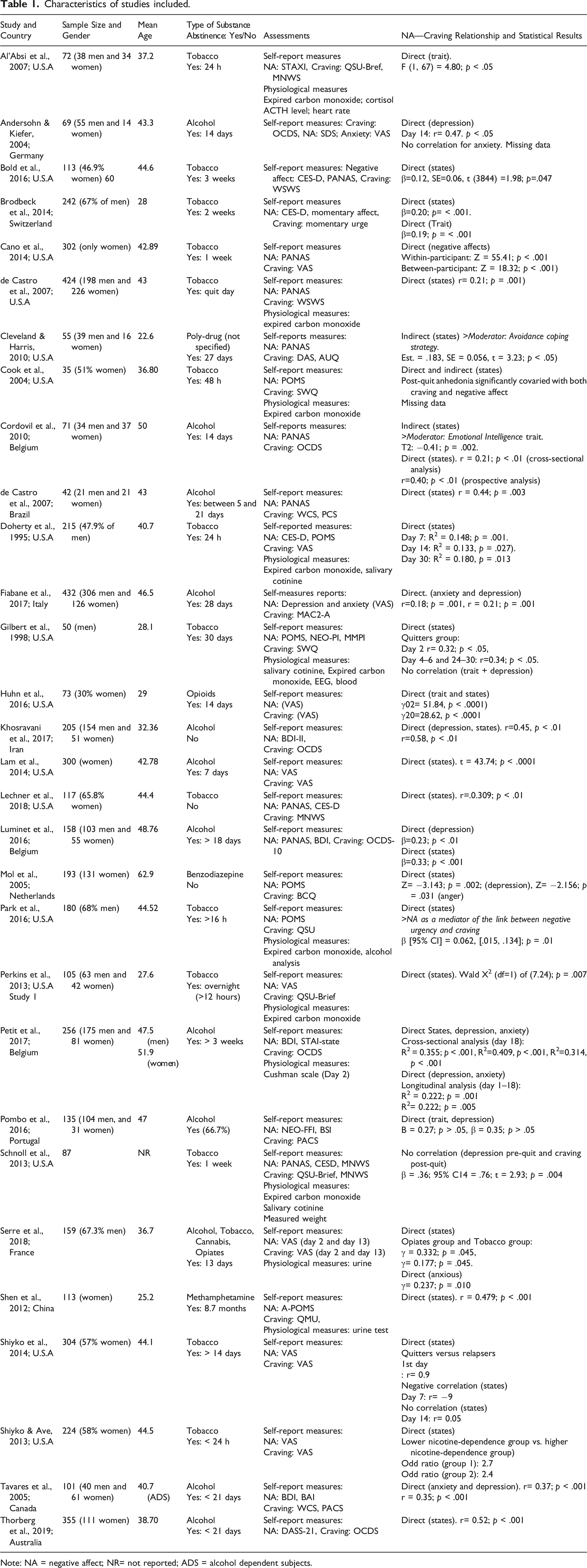
Note: NA = negative affect; NR= not reported; ADS = alcohol dependent subjects.
Most of the work was published in the last 7 years (n = 22). Thirteen studies used cross-sectional analyses and 17 were longitudinal, with four quasi-experimental studies using a control group (Park et al., 2016; Perkins et al., 2013; Schnoll et al., 2013; Gilbert et al., 1998; Cordovil et al., 2010). The bulk of the studies used US samples (n = 16), with the remainder largely coming from European countries. Out of the 4203 participants in the selection, 58% of subjects were men. Overall, the average age was 43 years old (ranging from 22.6 to 71 years old). Samples were generally medium-sized, with a range of 35–432 participants. The duration of follow-up assessments lasted up to 1 month. Two studies involved only men and three included only women; other studies included both genders but were comprised of mostly males (n = 20). One study included as many men as women (de Castro et al., 2007).
Quality assessment
Assessment tools
Characteristics of measures.

All quantitative studies used well-validated self-reported scales for data collection. However, no consensual measures emerged across the 30 studies. Among measures for affectivity, the Positive and Negative Affect Schedule (PANAS; Watson & Tellegen, 1985) and the Profile of Mood States (POMS; McNair et al., 1971) were the most frequently used assessment tools (n = 13) while six studies used a visual analog scale (VAS). For negative affects related to depressive and anxious symptoms, the Beck Depression Inventory II (BDI-II; Beck et al., 1996) and the Center for Epidemiologic Studies Depression Scale (CES-D; Radloff, 1977) were largely used (n = 6). Regarding negative affect-related-traits, two studies assessed neuroticism with the NEO-Personality Inventory (NEO-PI & NEO-FFI; Costa & McCrae, 1995), one evaluated trait anger with the State-Trait Anger Expression Inventory (STAXI; Spielberger et al., 1996) and one used a visual analog scale. To evaluate craving, 10 studies used a visual analog scale. Tobacco and alcohol cravings were mainly assessed using the brief Questionnaire of Smoking Urges (QSU-brief; Cox et al., 2001) and the Obsessive-Compulsive Drinking Scale (OCDS; Anton et al., 1995). Five studies on tobacco did not report craving with a specific scale but used the “craving” subscale of several withdrawal scales. Overall, most scales used for assessing craving showed the presence of extraneous phenomena such as self-efficacy, intentions, and arousal, which can interfere with the predictive value of craving. Lastly, several versions of the same scales were used, as well as different data collection methods (Ecological Momentary Surveys, phone surveys, and interviews).
Risk of bias
Quality assessment scores according to The NHLBI Quality Assessment Tool for Observational Cohort and Cross-Sectional Studies.
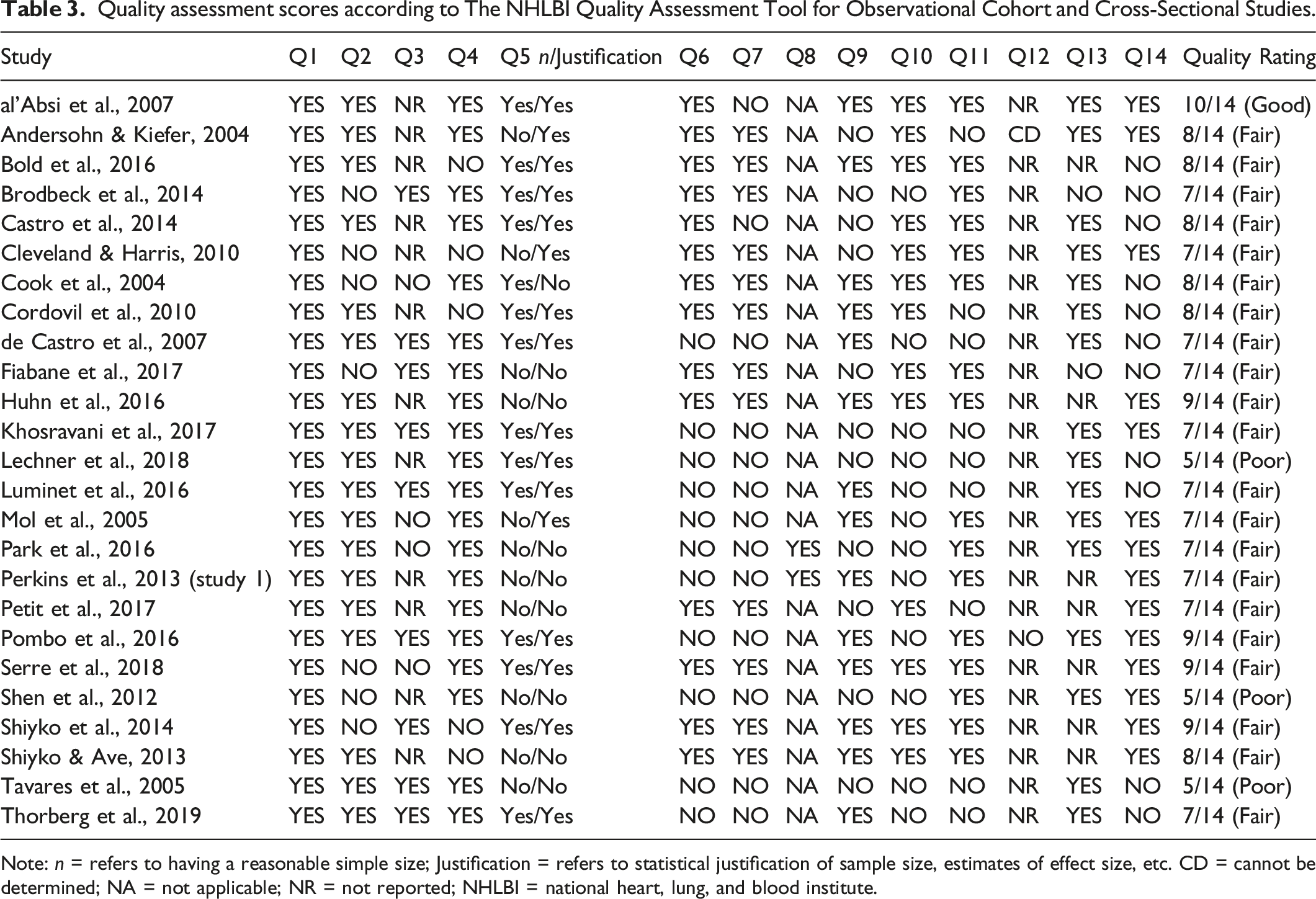
Note: n = refers to having a reasonable simple size; Justification = refers to statistical justification of sample size, estimates of effect size, etc. CD = cannot be determined; NA = not applicable; NR = not reported; NHLBI = national heart, lung, and blood institute.
Quality assessment scores according to the NHLBI Quality Assessment Tool for Controlled Intervention Studies.
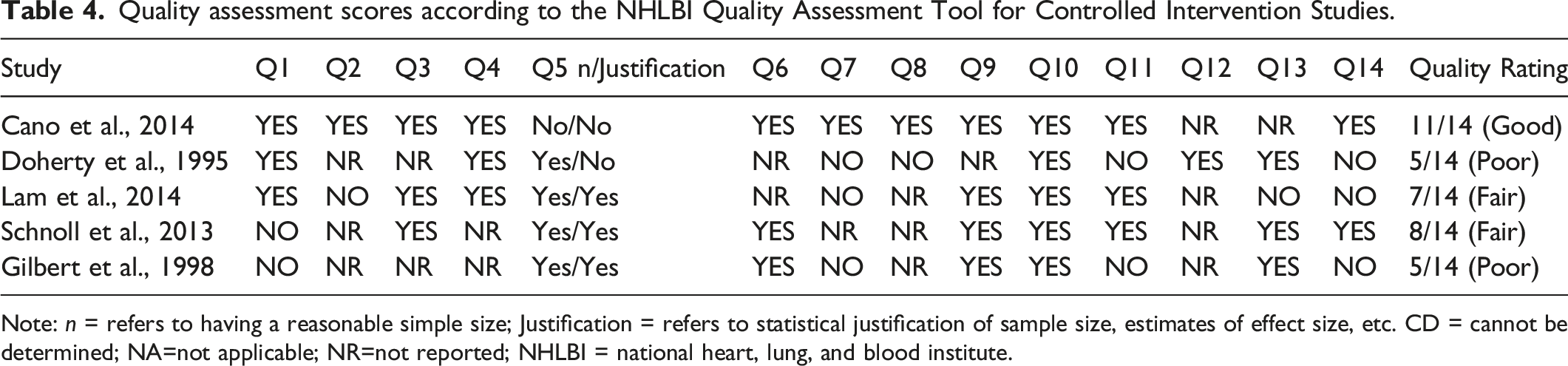
Note: n = refers to having a reasonable simple size; Justification = refers to statistical justification of sample size, estimates of effect size, etc. CD = cannot be determined; NA=not applicable; NR=not reported; NHLBI = national heart, lung, and blood institute.
Qualitative data synthesis (30 studies)
Negative affectivity and craving for tobacco
The relationship between negative affectivity and tobacco craving was reported in 15 studies (Table 1). Among them, three with a longitudinal did not find any significant correlations. The level of depressive symptoms (Schnoll et al., 2013) or neuroticism (Gilbert et al., 1998) measured at baseline did not correlate with craving in the post-quit period. The third study showed that a decrease in positive affects states was positively correlated with craving but not an increase in negative affects states. This effect was explained by a reduction of hedonic capacities (Cook et al., 2004). Conversely, the results of Castro et al., (2014) highlighted that negative affects and craving were positively correlated to each other and negatively correlated to positive affects.
In terms of negative affect-related-states, nine studies provided evidence of a direct link between negative affectivity and craving for smoking. The results of seven studies which compared groups showed that negative affects have a significant correlation with craving over the time for both individuals still smoking or in abstinence (Bold et al., 2016) and for both men and women who continue to smoke (Study 1 of Perkins et al., 2013). Two studies demonstrated that negative affects and craving were higher for individuals with high substance-dependence levels as compared to ones with low substance-dependence levels (Shiyko & Ave, 2013; Lechner et al., 2018). Two studies highlighted the role of some specific negative emotions involved in craving such as agitation and distress (Bold et al., 2016), or tension (Gilbert et al., 1998). The results of two studies showed that the quit period lead to a faster reduction of negative affects’ influence on craving (Doherty et al., 1995; Shiyko et al., 2014) whereas two studies showed that recent abstinence induced negative affects, which in turn influenced craving (Study 1 of Perkins et al., 2013; Park et al., 2016). Interestingly, the results of Park et al. (2016) showed that negative affects partially mediated the relationship between negative urgency and craving: indeed, the higher the level of negative urgency, the higher the level of negative affect, which in turn lead to craving to alleviate negative feelings. A study including exclusively women showed that the strength of the association between negative affects and craving was higher when combined with alcohol consumption and in presence of other persons smoking. Surprisingly, the results of a study suggested that the effect of negative affects on lapse was stronger for participants experiencing weaker urges (Lam et al., 2014).
In terms of negative affect-related-traits, a between-group comparison study outlined that subjects with high trait anger tended to report a greater increase in smoking craving during a period of 24 hours of abstinence as compared to smokers low in trait anger (Al’Absi et al., 2007).
In addition, two studies showed an indirect relation between negative affect and craving. One shed light on a mediational pathway of positive outcomes expectancies (Cano et al., 2014). Indeed, for the authors, the higher the level of negative affect, the higher the expectation that smoking would improve mood which in turn increased later craving. The second study demonstrated that smokers with high levels of depressive symptoms experienced more negative affects leading to craving and decreasing self-efficacy (Brodbeck et al., 2014).
Negative affectivity and craving for alcohol
All 10 studies examining negative affects and craving for alcohol revealed a positive association. Among them, eight provided a direct link and two showed an indirect link.
Only one study evaluated the relation between negative affect-related-states and craving. Between-group analysis underlined that craving for alcohol was directly correlated with negative states whereas craving for gambling was inversely correlated with positive states. In addition, results showed that only fear and not sadness was related to alcohol craving because it was related to the highest arousal feeling (de Castro et al., 2007).
Six studies provided evidence of a positive relationship between negative affect-related-depressive and/or anxious symptoms and craving for alcohol. One study showed a positive correlation for both anxiety and depression and craving reported retrospectively (Fiabane et al., 2017), whereas this association remained positive only for depressive mood (Andersohn & Kiefer., 2004; Petit et al., 2017; Luminet et al., 2016) or conversely for anxiety (Tavares et al., 2005). Two studies demonstrated that a depressive mood contributes to alcohol craving among alexithymic subjects (Thorberg et al., 2019; Luminet et al., 2016). The results of two studies using between-group comparisons indicated differences between men and women when it comes the link between depression and craving. The first study showed that increased depressed symptoms was related to increased craving for women only (Petit et al., 2017). The study by Luminet et al. (2016) indicated that alexithymia moderates the association between depressive mood and craving, but this effect varies according to gender. Indeed, for men, a high score in External Oriented Thinking tended to reduce the link between depression and craving whereas a high score in Difficulties Describing Feelings for women strengthened the link between depression and craving (Luminet et al., 2016).
In term of negative affect-related-traits, one between-group comparison study showed that for active drinker groups as well as for sober groups, the dimensions of neuroticism, depressive symptoms and hostility were significant predictors of craving but not anxiety (Pombo et al., 2016).
Two studies provided evidence of an indirect relationship between negative affect and craving. The first study showed that Emotional Intelligence levels moderate the relation between negative states and craving. Indeed, negative mood at the first assessment predicted craving among individuals with low Emotional Intelligence scores (Cordovil et al., 2010). The second study demonstrated that increased negative affects and decreased positive affects indirectly influenced craving due to impoverished emotional regulation strategies (Khosravani et al., 2017). It is worth mentioning that this study included a sample of non-abstinent patients.
Negative affectivity and other substances
A total of five studies investigated the relationship between negative affectivity and substance-related disorders. The substances whose influence was investigated were benzodiazepines, opioids, and cannabis; alcohol and tobacco were only included as concomitants in a few studies. All studies demonstrated positive direct relationships.
Three studies revealed a positive correlation between negative affect states and craving with a sample of methamphetamine (Shen et al., 2012), benzodiazepine (Mol et al., 2005) and poly-drug users (Cleveland & Harris, 2010). Specific negative affects such as depression, anger, fatigue, and tension were involved in craving for benzodiazepines (Mol et al., 2005). One study showed that an individual’s levels of avoidance moderated the association between negative states and craving for poly-drug users: the higher the level of avoidance, the stronger the relation between negative affects and craving (Cleveland & Harris, 2010).
In terms of negative affect-related depressive and anxious symptoms, the findings of Serre et al. (2018) indicate no association between the intensity of sad moods and later craving intensity for alcohol, tobacco, and opiates whereas anxious mood was predictive of later tobacco craving.
Regarding negative affect-related-traits, the last study included a sample of opioid-dependent patients. Results showed that negative affective traits and negative affective states were positively correlated to craving but had independent effects (Huhn et al., 2016).
Quantitative data synthesis (14 studies)
Numerical meta-analysis
Fourteen studies were included in our meta-analysis (n = 2257). 16 studies did not meet the criteria for the quantitative assessment for three reasons. First, 12 studies did not use correlations as effect-size estimate (Serre et al., 2018; Perkins et al., 2013; Mol et al., 2005; Lam et al., 2014; Huhn et al., 2016; Cano et al., 2014; Petit et al., 2017; Cleveland & Harris, 2010; Shiyko et al., 2014; Shiyko & Ave, 2013; Park et al., 2016; Doherty et al., 1995), which did not allow them to be included in the meta-analysis. Second, two studies had missing data on correlations (Schnoll et al., 2013; Cook et al., 2004). Third, only two studies examined the level of negative affectivity as a personality trait, which is insufficient to conduct statistical analysis (Gilbert et al., 1998; al’Absi et al., 2007). We realized three subgroups according to the type of affectivity involved in craving. For the details regarding included studies, see Table 1.
The subgroup one was composed of 10 studies (Bold et al., 2016; Brodbeck et al., 2014; de Castro et al., 2007; Cordovil et al., 2010; Khosravani et al., 2017; Lechner et al., 2018; Luminet et al., 2016; Shen et al., 2012; Thorberg et al., 2019) examining negative affect-related states and craving (n = 1810). Five studies (n = 801) reported correlations between negative affect-related states and craving for alcohol, four studies (n = 896) for tobacco and one study (n = 113) for methamphetamine. One study provided two results because of both cross-sectional and prospective approach (Cordovil et al., 2010). Significant clinical heterogeneity was observed between the 11 results (I2 = 70.50%; p < .001). Indeed, two studies (Cordovil et al., 2010; de Castro et al., 2007) included a small sample (n ≤ 42). Random-effects computations showed statistically significant rate of negative affect-related states (ES = 0.38; CI: [0.28, 0.47], p < .001).
Six studies (Andersohn & Kiefer, 2004; Fiabane et al., 2017; Khosravani et al., 2017; Luminet et al., 2016; Pombo et al., 2016; Tavares et al., 2005) reported estimates for correlations between negative affect-related depression and craving for alcohol (n = 1097). Low heterogeneity between the included studies (I2= 49.8%; p = .070) existed. Therefore, random-effects model computations indicated statistically significant association between negative affect-related depression with craving (ES = 0.34; CI: [0.24, 0.43] p < .001).
The third subgroup was composed of three studies Fiabane et al., 2017; Pombo et al., 2016; Tavares et al., 2005) examining negative affect-related anxiety and craving for alcohol (n = 668). Low heterogeneity between the included studies (I2 = 31.67%; p = .241) existed. Therefore, random-effects model computations indicated statistically significant negative affect-related anxiety association with craving (ES = 0.24; CI: [0.14, 0.34] p < .001).
The forest plot in Figure 2 shows the correlation coefficients for the individuals’ studies as well as the weighted estimates for the three subgroups and the overall correlation between negative affectivity and craving for alcohol, tobacco and methamphetamine. The raw correlation coefficients ranged from 0.17 to 0.58, indicating weak to moderate correlations between negative affectivity and craving. The synthesized correlation coefficients (ES = 0.34; CI: [0.28, 0.40] p < .001) indicated statistically significant negative affectivity association with craving. However, correlations are highly unlikely to be due to random variation. Indeed, there was a significant heterogeneity (I2 = 65.85%; p < .001) which is in part due to the differences between samples that are evident from the type of negative affectivity evaluated as well as clinical heterogeneity, notably due to small sample size of two studies evaluated negative affect-related states (Cordovil et al., 2010; de Castro et al., 2007). Forest plot.
Moderator analysis
Because there was a significant heterogeneity, we conducted moderator analysis to explore the determinants of the dispersion of true effect sizes. Only the factor “Craving assessment” did not give significant heterogeneity (I2 = 18.41%; p < .338). Indeed, a significant heterogeneity existed (I2≥ 56.66%; p = < .001) for others factors (“Age,” “Type of patient,” “Type of substance,” “Type of design,” “Duration of abstinence,” “Presence of treatment,” and “Study quality").
Publication bias
Figure 3 indicates the funnel plot for all studies by Rosenthal approach. The Kendalls (p = .126) and Begg’s test (p = .142) suggested no evidence of publication bias among included trials. Funnel plot.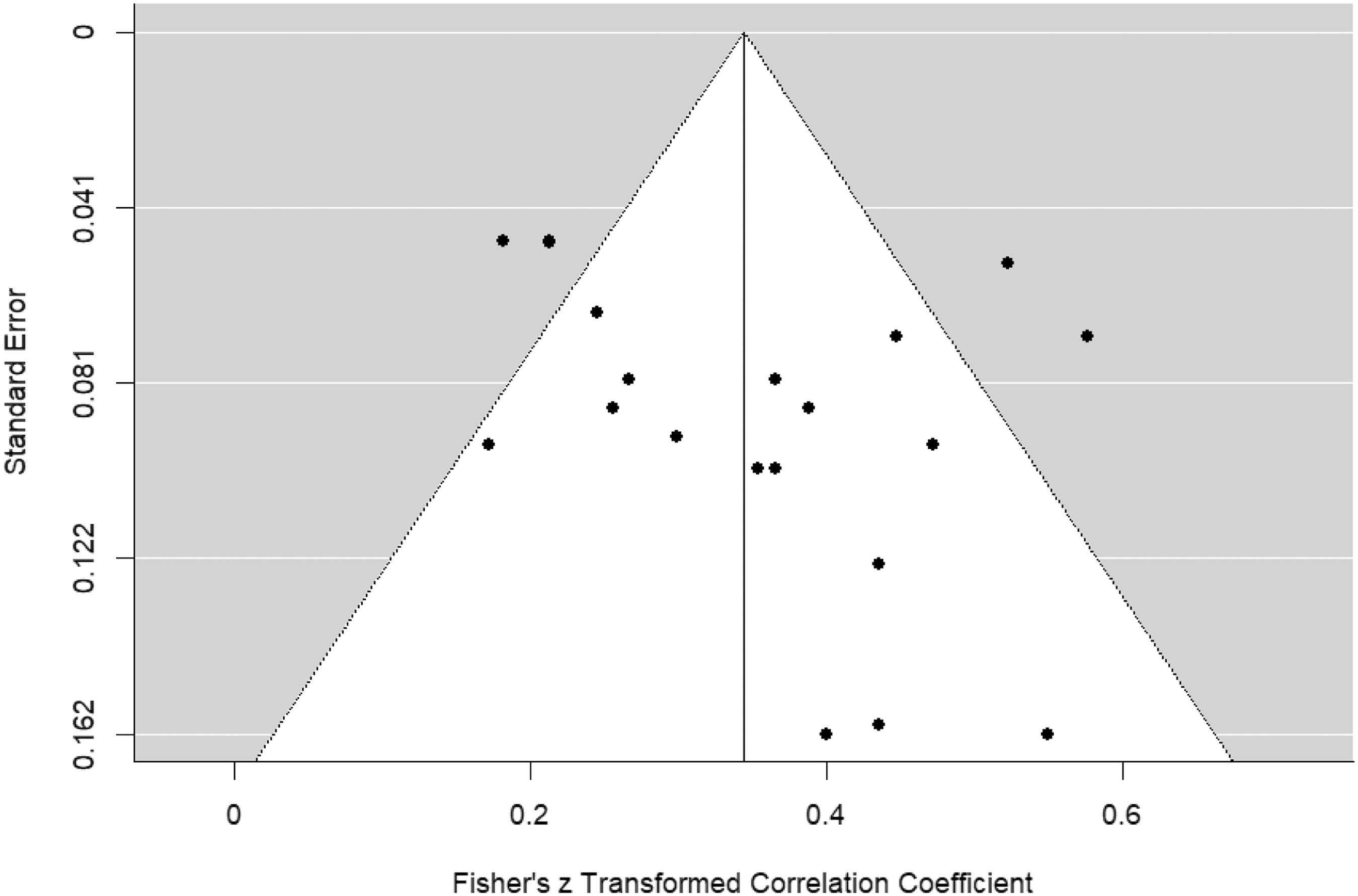
Discussion
The aim of this study was to identify empirical evidence supporting the relation between negative affectivity and craving across different substances. To this end, a thorough systematic review and meta-analysis was conducted based on the published literature.
Thirty studies were included in this review. Of these, fourteen studies (n = 2257) were included in a meta-analysis. Thus, studies examining trait negative affect and craving associations were excluded in the quantitative analysis due to the few clinical studies currently available. The raw correlation coefficients ranged from .17 to .58, which is indicative of weak to moderate effect sizes for negative affectivity and craving relationships. Most of the studies from the systematic review found that high level in negative affectivity (negative affect-related states, negative affect-related depression, and negative affect-related anxiety) were associated with craving reactivity regardless of the great variety in sample characteristics. These results give supports to the negative reinforcement model of drug addiction (Baker et al., 2004) which proposes that the escape and avoidance of negative affect is the prepotent motive for addictive drug use. This is in line with the results of a recent systematic and meta-analysis review that highlights that negative affect and stress are relevant parameters in craving models for alcohol (van Lier et al., 2017). But there is a need for clarity regarding the type of substance object of the craving (Auriacombe et al., 2018), as well as regarding the role of specific subtypes of negative emotions (Zuo et al., 2017).
To our knowledge, no broad systematic review nor meta-analysis on negative affectivity in withdrawal-based craving has been conducted recently. Previous research demonstrated how drug and environmental-specific cues triggered craving by highlighting that unpleasant feelings only occur in circumscribed environments (e.g., Heckman et al., 2013; Bresin et al., 2018). The originality and the richness of this review came from its focus on internal cues and on individual differences in negative affective cues: some facets of negative affectivity may relate more strongly to craving than others. Although this point was only briefly mentioned in previous reviews (e.g., Serre et al., 2015), our results clearly showed a significant heterogeneity regardless of the type of substance used and the type of negative affectivity involved.
Results gave a timely update of this relationship covering 24 years of research. In our selection, alcohol and tobacco use disorders have received the most attention. Additionally, negative affectivity was often defined as a transient state rather than a stable personality trait. This review provides support for the conclusions of previous studies which stated that negative affects could increase in the absence of other cues (Tiffany & Drobes, 1990; Maud–Griffin & Tiffany, 1996). In total, approximately 90% of the studies selected revealed a positive correlation between negative affectivity and craving with individuals’ differences in the craving experience. A recent neurocognitive conceptualization of substance-related disorders, the triadic model, considers craving as a multidimensional phenomenon encompassing three systems (affective/automatic, reflective, and interoceptive) which represent three different types of craving experiences (automatic craving, cognitive craving, and physiological craving) (Noël et al., 2013). This conceptual framework highlighted the need for personalized clinical model-based interventions in addiction treatments.
Through our meta-analysis, we found that there was a significant level of negative affectivity associated with craving among alcohol, tobacco and methamphetamine dependent, demonstrated by a large effect size and correlations of reported negative affectivity in the studies. Our results also indicated significant depressive and anxious mood as well as negative affects states involved. The pooled conclusion for the link between negative affect-related anxiety and depression was more robust than negative affect-related states regarding heterogeneity across studies. We are aware that general heterogeneity across the fourteen studies in meta-analysis can be partially due to the sample size. This clinical heterogeneity suggests that more well-researched and good methodologies are needed to make strong conclusions. Despite the high heterogeneity found across studies included in the meta-analysis, moderator analysis showed that scales used to evaluate craving did not have an influence on the dispersion of true effect sizes.
Among the 13 studies selected for this systematic review, six studies failed to support a positive association between negative affectivity and craving for tobacco. Among them, three showed a significant correlation between positive affects rather than negative affects in tobacco, alcohol, and cannabis cravings (Cook et al., 2004; Khosravani et al., 2017; Serre et al., 2018). Our research also uncovered conflicting reports when it comes to the relation between positive affect and craving (e.g., Mason, Light, Escher & Drobes., 2008; Zinser et al., 1992). Our results are also consistent with previous studies reporting that this relationship was largely concordant across substances (Auriacombe et al., 2018). In the qualitative analysis, negative affect states were the most linked to craving for tobacco, whereas depressive and anxious symptoms significantly correlated with craving for alcohol. Nevertheless, results were less clear regarding the link between anxiety and craving for alcohol (Pombo et al., 2016; Andersohn & Kiefer., 2004). Regarding the effect of specific emotions, high-arousal ratings for fear, anger, and tension yielded stronger craving responses, specifically for methamphetamines, benzodiazepines, and alcohol (Shen et al., 2012; Mol et al., 2005; de Castro et al., 2007; Serre et al., 2018). Overall, the association between negative affectivity and craving was shown to remain strong over time despite a few studies highlighting an interrelation between negative affectivity as a stable variable and craving levels (Al’Absi et al., 2007; Pombo et al., 2016; Huhn et al., 2016). A theoretical framework supports the evidence that negative affect traits are associated with drug and alcohol craving (e.g., Kotov et al., 2010). Only one study showed that the association between craving for tobacco and negative states decreased as over time (Doherty et al., 1995). Recent evidence showed that the influence of mood and stress on craving may vary over time (Shiyko et al., 2014).
Despite previous studies reporting that negative affectivity in substance-dependent subjects lead to experience more craving, between-group comparison results indicate that gender is an important modulating factor for craving. Specifically, depression is a stronger predictor of craving among women (Petit et al., 2017; Luminet et al., 2016). Environmental cues (Shiyko et al., 2014; Lam et al., 2014) and levels of dependency (Shiyko & Ave, 2013; Lam et al., 2014) can also increase the frequency of craving. The association between negative affectivity and craving was shown to be stronger when combined with other moderators such as alexithymia (Thorberg et al., 2019; Luminet et al., 2016), emotional intelligence (Cordovil et al., 2010), positive outcomes expectancies (Cano et al., 2014), self-efficacy (Brodbeck et al., 2014) negative urgency (Park et al., 2016) and hedonic capacity (Cook et al., 2004). A relationship between affective dysregulation and craving has also been shown and could be explained by a limited access to emotion regulation strategies (Khosravani et al., 2017) and using emotional avoidance strategies (Cleveland & Harris, 2010).
Limitations and Futures Directions
Despite the interesting findings reported to-date, study limitations for our systematic review and meta-analysis must be considered. First, the studies produced results from assessments that varied significantly from one study to the other. Moreover, most of the studies did not refer to the same theoretical paradigm explaining affectivity and craving which makes comparisons difficult. Our decision was to clarify this point by splitting the studies into three groups before conducting the meta-analysis according to specific negative affectivity domain. Second, the quality of the studies varied with many methodological biases. Third, approximately half of the studies selected had a cross-sectional design, from which causal relations cannot be established. Fourth, participants were mostly patients who had undergone a substance treatment program, which may compromise the ecological validity of the results. Likewise, a possible bias due to the uncontrolled effects of medication and therapy in some studies should be considered when interpreting the results. Furthermore, a control group was used in only three studies. Another point is that the review included studies from different countries, even though drug use is culturally specific. However, this international interest for the concept of craving and affectivity lead to the definition of a common criterion for subjective distress in the field of addiction. Moreover, craving was not controlled at the stage of withdrawal across studies, which prevents us from drawing any conclusions about the nature of negative affects. Indeed, a previous study showed that negative affects may be due to the feeling of distress involved in craving itself (Kavanagh et al., 2005). Only one study controlled craving with a statistical adjustment (Serre et al., 2018). Additionally, psychiatric comorbidities and abstinence were not systematically specified among samples. Around 33% of the studies used physiological measures to control for abstinence.
Accordingly, the exact relationship remains unclear, and caution is therefore required. Nevertheless, altogether our results gave perspectives for future research aiming at characterizing affective mechanisms involved in craving and the magnitude of these effects. In this regard, therapeutic interventions targeting negative affectivity in substance-related disorders appear as a relevant perspective for relapses prevention (e.g., Cavicchioli et al., 2018).
This systematic review and meta-analysis confirms previous research and gives support for the study of the dynamic aspects of symptomatic affectivity involved in craving for licit and illicit substances. However, the dimensional aspect of affectivity is still underestimated, and further investigations are needed. Longitudinal assessments are necessary to determine causal relationship and to distinguish if negative affects reported stem from the effect of withdrawal-related negative affect or an overall tendency to experience various affects. For example, negative affects related to smoking withdrawal have been shown to take over 67 days to resolve (Gilbert et al., 2019).
A deep analysis of the general disposition toward negative emotion as a personality trait could have important potential for scientific and clinical purposes. Indeed, because negative affectivity has many chronic individual attributes, it has good predictive and explanatory power. An analysis of withdrawal-based craving must be replicated to properly assess emotional strategies used when individuals attempt to quit. It might be harder to avoid than exogenous sources. At last, future larger-scale randomized studies including control groups are needed to limit biases and to clarify the impact of different variables as well as the role of socio-demographic variables.
Last but not least, it is also interesting to note that no study has explored craving for cocaine. These results highlighted the need to examine the relationship between personality variables and affective dysregulation involved in craving for various psychoactive substances. Although there is an established link between self-regulation issues in substance-related disorders (or high level of impulsivity) and emotional regulation (Whiteside & Lynam, 2003; Lane et al., 2003), it could be interesting to model it for cocaine use disorders which, nowadays, have been much less explored in comparison to other substances. Recent data from the European Drug Report (EMCDDA, 2020) and the World Drug Report (UNODC, 2019) showed that cocaine’s role in world’s drug problem is increasing.
Conclusion
In summary, this systematic and meta-analysis review helps to better identify affective processes implicated in craving by systematically reviewing and describing the results of different studies. This review underscored evidence of individual differences in affective responses to drug abstinence and confirmed that negative affectivity is an important component related to craving in abstinence periods. Partial results challenged the conclusions from previous studies about the directional relation of negative affects and craving. Caution is therefore required when extrapolating from the results and potential underlying factors that account for this relationship must be specified. The predisposition to experience negative affective experiences as determinants of strong craving responses has received less empirical support. Some of the conflicting reports in this review may be due to variations in the type of negative affect assessed. This systematic review and meta-analysis highlights that chronic negative affect and potentially transient peaks of negative symptoms both lead to an increased risk of craving. It also has a significant effect on craving intensity depending on the substance used. Longitudinal studies are needed to provide more insights into this relationship and to further determine relapse risk and protective factors.
Footnotes
Declaration of Conflicting Interests
The author(s) declared no potential conflicts of interest with respect to the research, authorship, and/or publication of this article.
Funding
The author(s) received no financial support for the research, authorship, and/or publication of this article.
