



Abstract
The present study aimed to investigate mother–teacher discrepancies in reports of preschoolers’ behavior problems and to examine whether maternal attribution to behavior problems, perception of parenting, and behavior management strategies predicted the discrepancies. The mothers and teachers of 384 preschoolers aged 3–6 years from 16 preschools of Seoul, South Korea, completed the Child Behavior Checklist and the Caregiver–Teacher Report Form. Based on their ratings, they were classified into three groups: (a) mother–teacher Agreement Group, (b) Disagreement Group with Mother only reporting at Risk (Disagreement Group-MR), and (c) Disagreement Group with Mother only reporting No Risk (Disagreement Group-MNR). The results showed marginal similarities between mothers’ and teachers’ reports of behavior problems, indicating both low correlations and differences in percentages of at-risk children. Multinomial logistic regressions revealed that maternal attribution and maternal perception of parenting difficulties predicted group membership regarding mother–teacher discrepancies. For both internalizing and externalizing problems, mothers who attributed environmental factors as primary causes of children’s behavior problems were more likely to be in the Agreement Group than the Disagreement Group-MNR. With regard to externalizing problems, the more the mothers perceived parenting difficulties, the more likely they were to belong to either of the Disagreement Groups. The outcomes suggest the importance of considering that mothers’ reports of children’s behavior and mother–teacher discrepancies partly mirror mothers’ beliefs and perceptions regarding children’s behavior and parenting. Professionals need to be aware that information from mother–teacher discrepancies can be of help in understanding mothers as well as children in practice.
Keywords
Introduction
A national survey by the Health Resources and Services Administration’s Maternal and Child Health Bureau of children aged 0–17 years in the United States reported that 17.4% of children aged 2–8 years had at least one mental, behavioral, or developmental disorder (Cree et al., 2018). Other studies have also shown a high rate of possible mental health problems in young children under 6 years of age (Bergold et al., 2019; Rescorla et al., 2019). With such a trend of behavioral difficulties among young children, greater emphasis has been placed on the early identification and assessment of emotional and behavioral problems during early childhood. However, it is challenging to obtain reliable and accurate measures of preschoolers’ behavior problems for several reasons, including early developmental characteristics. Young children have limited language abilities and are unable to provide valid self-report on their own behaviors. Their behaviors also tend to be heavily influenced by contexts and settings (Bergold et al., 2019; De Los Reyes, 2011). For these reasons, external agents of the children’s environment, including parents and teachers, are major sources for evaluating preschoolers’ behavior problems (De Los Reyes et al., 2013).
Evaluating Infants’ Behavior Problems by Multiple Informants
Most researchers agree that the use of multiple sources and informants for behavior evaluation is necessary to determine whether children have behavior problems, and that there is inconsistency among different informants’ reports (De Los Reyes, 2011; Korsch & Petermann, 2014). Since Achenbach et al. (1987) meta-analyzed 119 studies and reported a quite moderate correlation (r = .27) between parent and teacher ratings of children’s behavior problems, researchers have emphasized the importance of identifying possible causes of informant discrepancies in assessment of childhood psychopathology (De Los Reyes & Kazdin, 2005). However, there have been relatively few studies examining the factors affecting agreement or disagreement on reports by different informants of young children.
“Informant discrepancies,” which refers to inconsistencies among multiple informants’ reports, are observed even when informants complete parallel or identical measures, and do not simply indicate that one of the informants is more accurate (De Los Reyes, 2011; Laird & De Los Reyes, 2013). As Richters (1992) suggested, there is “no gold standard,” and disagreement among informant reports of children’s behaviors cannot be treated as merely measurement error because it provides meaningful information on the behaviors being evaluated. It is important to investigate how to interpret informant discrepancies in order to determine whether children have behavioral difficulties and to provide appropriate interventions based on the assessment outcomes.
Laird and De Los Reyes (2013) described various approaches to understanding informant discrepancies. One approach emphasizes that informant discrepancies may occur due to the differences in the contexts where behaviors are being observed. Research showed that the lack of informant agreement could be the results of children’s behavior that varies according to contexts such as home versus school (Achenbach, 2011; De Los Reyes, 2011). Another approach assumes that characteristics of the informants largely account for informant discrepancies. For instance, Laird and De Los Reyes (2013) stated that parents and teachers may have different “decision thresholds” for rating children’s behavior problems. Parents tended to report children’s behaviors as more problematic than teachers because they only see their own child and do not have a reference for comparison (Rescorla et al., 2014). Teachers were likely to be more objective because they are professionally trained and have interacted with numbers of children in a given developmental stage, and therefore have a standard that parents lack. In contrast, as Berg-Nielsen et al. (2012) pointed out, some clinicians have argued that parents might be better informants, as they have opportunities to observe their child across various contexts. There is also a possibility that parents and teachers elicit different behaviors from children. Based on these explanations, low to moderate cross-informant agreement between parents’ and teachers’ evaluations of children’s behaviors may reflect the setting-specific and informant-specific characteristics of behavior problems.
Predictors of Mother–Teacher Discrepancies in Behavior Ratings
Overall, prior research reported that parents tended to view children’s behavior as more problematic than teachers. Rescorla et al. (2014) investigated parent–teacher agreement on behavior problems of young children using the Child Behavior Checklist (CBCL) and Teacher’s Report Form (TRF) across 21 societies. They demonstrated that in most cultures, parents rated children’s behavior problems higher than did teachers despite societal variation in the magnitude of informant discrepancies. Other researchers have also shown that the prevalence of problem behaviors was higher in parent reports than in teacher reports (Santos et al., 2020). The mean prevalence rate of children identified as having problems was approximately 30% by parent reports and 15–20% by teacher reports (Cai et al., 2004). Cai et al. (2004) suggested a few possible explanations to interpret parents rating their child’s behaviors more problematic than teachers. Parents may report more behavior problems, as they tend to hope for more from their children and thus have lower tolerance of children’s misconduct. Another explanation is that as parents spend more time with their children, they might have more opportunities to observe children’s behavior problems than teachers.
However, as an exception, the reverse pattern was found for Thailand in Rescorla et al.’s (2014) study: the CBCL scores were lower than the TRF scores. Interestingly, although Korean data were not included in Rescorla et al., Korean studies have reported similar results to Thailand data (Kang & Cho, 2008; Yu & Cho, 2019). Korean mothers perceived their children as having fewer behavior problems and were less likely to rate their children as being at risk of behavior problems (i.e., clinical or borderline clinical range) than were teachers. Such patterns of mother–teacher discrepancies raise the question: What leads some mothers to rate their children’s behavior problems as more severe or milder than teachers?
Kraemer et al. (2003) presented an equation that could provide some plausible answers to this question. They explained that the constructs of an informant’s report are the sum of the trait that the informers are reporting on, context variables, the informer’s perspectives (i.e., bias), and measurement error. Similarly, the Attribution Bias Context model suggested by De Los Reyes and Kazdin (2005) proposes that discrepancies between different informants basically result from systematic differences in informants’ characteristics: what they consider as the cause of behavior being observed (i.e., attribution), decision thresholds to determine if a given behavior problem requires an intervention (i.e., bias), and variations of the circumstances in which informants observe behaviors (i.e., context). Supporting the notions of Kraemer et al. (2003), De Los Reyes and Kazdin (2005) reviewed the parental characteristics that influence the rating of parents on their children: parental depression, anxiety, stress, and socio-economic status (SES).
As explained in the depression-distortion hypothesis (Richters, 1992), many studies have found that parental psychological symptoms and parental stress are important predictors explaining parents’ negative evaluation of children’s behavior (Bajeux et al., 2018; Najman et al., 2001). In a study of discrepant parent–teacher reports on 4-year-olds, Berg-Nielsen et al. (2012) reported that parental stress was a significant predictor of parent–teacher discrepancies. Distressed mothers perceived their child’s behavior as more negative and problematic than teachers or other informants (Rothen et al., 2009). Since mothers’ ratings of their children could be biased and influenced by factors beyond maternal distress or psychological symptoms, it is necessary to explore various aspects of parenting that may reflect parental beliefs and behaviors to better understand possible contributors related to parent–teacher discrepancies on children’s behavior. In addition, previous research on socio-economic influences on maternal ratings of children’s behavior has found that indicators of SES such as mother’s age, education level, and family income are related to parental expectation and understanding of children’s behavior, and thus might affect parent reports on children’s behavior (Stone et al., 2013). Mothers with higher education and income have more knowledge of child development and tend to be more sensitive and responsive to their children than those with lower education and income (Huang et al., 2005; September et al., 2016). Huang et al. (2005) specifically found that mothers who had higher education, income, and more experience with children and were older showed more accuracy in estimating child development than younger and poorer mothers, who tended to overestimate their child’s ability. In addition, Wang et al. (2013) reported that mother’s education level was related to maternal attribution of child’s misbehavior. Mothers with lower education levels tended to consider children’s misbehavior to be intentional rather than situational.
These findings suggest that socio-economic factors are associated with some specific parenting aspects that may contribute to maternal reports on children’s behavior problems and thus mother–teacher discrepancies. It is possible that mothers who are younger and have lower income and education are likely to lack knowledge on the causes and intentions of children’s behavior and therefore over- or under-report their children’s behavior problems. Further, mother’s young age and low socio-economic status may exacerbate difficulties of parenting, in that parental knowledge of child development has a negative relation to parental stress (Choi et al., 2013). This might in turn engender mother–teacher disagreement in reports of children’s behavior. Those mothers may also not have sufficient opportunities to learn how to respond to children’s problematic behaviors. Mothers who do not use appropriate strategies to manage children’s behavior problems are likely to report their children’s behavior problems inaccurately because they may find it difficult to determine if a given behavior is problematic or not. Also, it is plausible that mothers who use strategies to prevent or reduce their child’s behavior problems may report fewer behavior problems due to their efforts to manage them, resulting in mother–teacher discrepancies.
Some empirical evidence has been reported supporting the possibility that parenting attribution, perception of parenting difficulties, and behavior management strategies may influence mother–teacher discrepancies (Cai et al., 2004; Munzer et al., 2018). According to Nelson et al. (2013), parents develop their own belief system regarding children’s behavior. Some parents regard behavior problems as situation-specific and out of the child’s control, while others believe they are controllable. Nelson et al. (2013) emphasized that parental attributions and perceptions are important, as parents interpret and respond to their children’s actions based on what they attribute children’s behavior to. Their results demonstrated that parents who attributed their child’s misbehaviors to negative intention and motivation reported that their child exhibited more externalizing behavior problems. It may be that those who believe that behavior problems are not easily modified and changeable by their own efforts may tend to rate their child’s behavior problems as more serious and challenging. In addition, Munzer et al. (2018) found that parents who had greater self-efficacy in parenting reported fewer children’s behavior problems than did teachers, suggesting that parents’ beliefs regarding their ability to deal with children’s behavioral difficulties can affect parent–teacher discrepancies.
Although earlier research has made a considerable contribution to our understanding of the predictors of mother–teacher discrepancies, these studies show some limitations. Stone et al. (2013) argued that the extent to which scores from different informants vary is generally greater in non-clinical samples than in clinical samples, and that the factors that explain informant discrepancies in behavior ratings may differ in these two populations. However, relatively few studies (e.g., Korsch & Petermann, 2014) have examined mother–teacher discrepancies in behavior ratings using non-clinical community samples, particularly focusing on preschoolers. Further, Laird and De Los Reyes (2013) pointed out that difference scores cannot be used as a valid measure of informant discrepancies when examining relations between the difference scores (either as an independent or a dependent variable) and other constructs. To be specific, they explained that in examining the relationships between difference scores and other variables, the correlation between a difference score and a given variable is strongly influenced by the variances of the two component scores from different informants and the correlations of each component score with the variable. Thus, the difference scores cannot be correlated with the variable when the variances of the two scores are equal. Another problem is that using a directional difference score places mathematical constraints on the association between the component scores and the given variable. That is, a directional difference score calculated from two informants may indicate that one score is positively related to the variable whereas the other has a negative associated with it. However, even when informants do not agree, the two scores can have a positive correlation (see Laird & De Los Reyes, 2013 for details). Despite the lack of validity of difference scores, many previous studies have obtained informant discrepancy measures by simply subtracting one informant’s score from the other informant’s. To avoid the interpretative challenges inherent in difference scores, the present study defined informant discrepancy as one informant rating the child in the clinical range and the other rating them in the non-clinical range, as suggested by Stone et al. (2013).
The Present Study
This study aimed to investigate discrepancies in the ratings of preschoolers’ behavior problems among Korean mothers and teachers and to verify which characteristics of parents contributed to discrepancies in rating children’s behavior problems. Specifically, children were classified by their mothers and teachers as in a normal range (i.e., CBCL/TRF score lower than 59), or in an at-risk range (i.e., CBCL/TRF score 60 or higher). Usually, CBCL/TRF scores of 64 or higher are classified as clinically problematic, and those from 60 to 63 as borderline clinical. Since this study aimed to investigate the discrepancies among mothers and teachers, children were rated as either “normal” or “at risk” by mothers and teachers, thus yielding three groups: (a) the mother–teacher Agreement Group, in which both agreed in rating the child either as normal or at risk, (b) the mother–teacher disagreement group in which mothers reported their child at risk, teachers as normal (Disagreement Group-Mother only reporting at Risk [MR]), and (c) another mother–teacher disagreement group in which mothers reported their child as normal, teachers as at risk (Disagreement Group-Mother only reporting No Risk [MNR]).
This study addressed the following questions. Question 1: Do maternal ratings of preschooler’s behavior problems in the Korean sample differ from teachers’ ratings? Question 2: Do parental attributions of behavior problems, perceptions of parenting, and behavior management strategies predict membership of the following three groups: mother–teacher Agreement Group, Disagreement Group with Mother only reporting at Risk (Disagreement Group-MR), and Disagreement Group with Mother only reporting No Risk (Disagreement Group-MNR)?
Methods
Participants
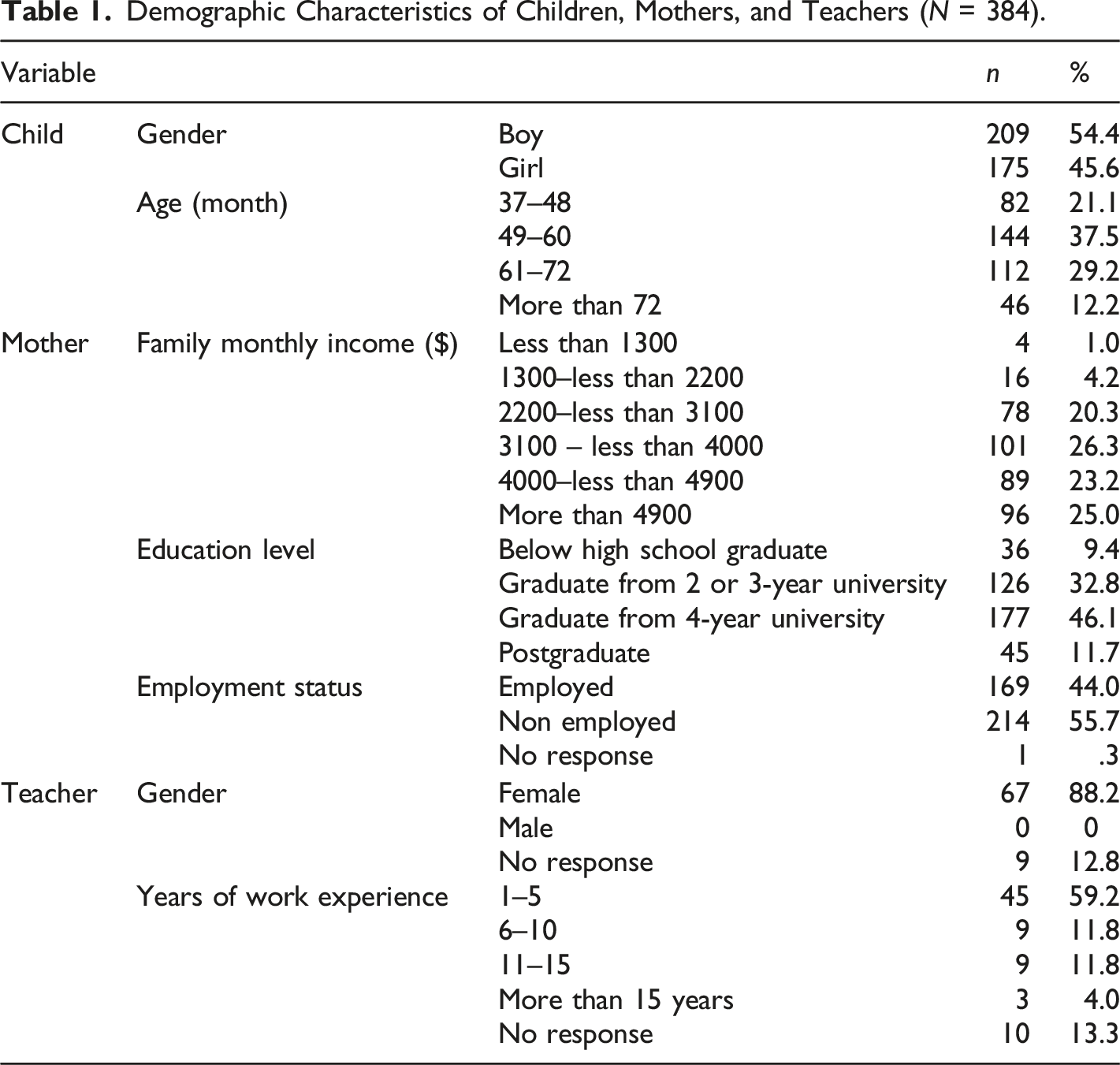
The data for the present study come from a large project which was designed to identify children who required clinical services to address behavior problems in 2016. The project participants (N = 839) were recruited using a non-probability sampling method, who were enrolled in 16 daycare centers located in Seoul and its suburbs, South Korea. Among those who participated in the project, 384 children (209 boys, 54.4%) met the inclusion criteria for this study: (a) ratings on the CBCL 1.5–5 and the C-TRF were both available, (b) mothers reported themselves as primary caregivers, and (c) teachers had at least 1 year of teaching experience. Those who did not meet the inclusion criteria were excluded from our study sample. Informed consent was obtained from the mothers and the teachers for study participation. Our sample size exceeds the minimum number of participants for multinomial logistic regression analysis suggested by Long (1997).
Demographic Characteristics of Children, Mothers, and Teachers (N = 384).
Measures
Children’s Behavior Problems
The Korean version of the Child Behavior Checklist 1.5–5 (CBCL 1.5–5; Oh & Kim, 2008) and the Korean version of the Caregiver–Teacher Report Form (C-TRF; Oh & Kim, 2009) were used to assess children’s behavior problems. Both the CBCL 1.5–5 and the C-TRF have been widely used with Korean children, and their reliability and validity are well established (Kim et al., 2011; Oh & Kim, 2008). Both Korean version instruments consist of 100 items that ask parents and teachers to indicate how well each statement describes their child’s behavior now and within the past 2 months on a three-point Likert scale (0 = not true, 1 = sometimes true, 2 = very true or often true). The mothers and the teachers were asked to respond to the CBCL 1.5–5 and the C-TRF in the same periods of time. For each instrument, two broadband scale scores were converted to T scores with a mean of 50 and standard deviation of 10: internalizing problems (emotionally reactive, anxious/depressive, somatic complaints, and withdrawn/depressive subscales) and externalizing problems (attention problems and aggressive behavior subscales). Item examples of the CBCL 1.5–5 and the C-TRF include ‘cries a lot’ and ‘hits others.’ Regarding internal consistency, for the CBCL 1.5–5, Cronbach’s α had the values of .85 for internalizing behaviors and .89 for externalizing behaviors in our sample, while for the C-TRF, the values were .83 for internalizing behaviors and .95 for externalizing behaviors.
Maternal Attributions of Behavior Problems
To measure maternal attributions of children’s behavior problems, the short version of the Challenging Behavior Attribution Scale (CHABA; Hastings & Brown, 2002) was administered. The short form of the CHABA was developed to assess what an adult attributes children’s behavior problems to (e.g., learned behavior, stimulation, and physical conditions). Each item asked how much respondents agree with the cause of the child’s behavior problems. A few examples of the items are ‘Because she/he wants something,’ ‘Because she/he is bored,’ and ‘Because her/his house is too crowded with people.’ Responses for each causal statement were rated using a five-point Likert scale from very unlikely (1) to very likely (5). A total score was calculated from the 20 items for mother’s behavioral causal beliefs of their child’s behavior problems. The higher the total score, the more the mother attributed the child’s behavior problem to causal factors external to the child (i.e., the social and physical environment). The possible score range was 20–100. Cronbach’s α of the CHABA was .94.
Maternal Perceptions of Parenting
Mother’s perception on parenting was measured using the Maternal Perception on Parenting Scale (Rhee et al., 2006). The mothers completed 12 items regarding their perception on parenting, which include seven items on satisfaction with parenting (e.g., “It is natural for me to be a parent.” and “Being a parent is not as satisfying as I thought (reverse coding).”) and five items on parenting difficulties (e.g., “I find it difficult to discipline my child” and “My child is difficult to control.”). Respondents rated each item on a five-point Likert scale from never (1) to very often (5). The possible score ranges of satisfaction with parenting and parenting difficulties were 7–35 and 5 to 25, respectively. A high score on satisfaction with parenting indicates that mothers are satisfied with childrearing, while a higher score on parenting difficulties means they find parenting stressful. Cronbach’s α = .82 for satisfaction with parenting and .85 for parenting difficulty.
Maternal Behavior Management Strategies
The Korean version of the Teachers Strategy Questionnaire (KTSQ; Kim, 2007) was modified and used to measure mothers’ strategies to manage their children’s behavior problems. The mothers were asked to answer 33 items involving strategies for addressing behaviors problems, including 18 items of positive proactive strategies, nine items of positive reactive strategies, and six items of negative reactive strategies. The subscale of negative reaction strategies originally consisted of seven items, but as one item (When the child shows problem behavior, I give my child verbal attention) was found to considerably reduce the internal consistency of the scale, it was excluded from data analysis. Positive proactive strategies refer to preventive ones that reorganize environments before behavior problems occur (e.g., “I make my child’s daily routine predictable and consistent.” and “I improve the environmental conditions that may cause behavior problem of my child.”), while positive reactive strategies mean guiding strategies that teach appropriate behavior after an undesirable behavior occurs to help children acquire desirable behaviors (e.g., “I teach my child to act appropriately when my child shows behavior problems.” and “I immediately pay positive attention to my child when he/she shows desirable behavior.”). Negative reaction strategies indicate using aversive stimuli such as scolding to immediately stop the children’s behavior problems (e.g., “I send my child to sit in a chair or corner to think when he/she shows behavior problems.’ and ‘I do not allow my child to do what he/she likes when my child engages in behavior problems.”). The participants responded on a five-point Likert scale from very unlikely (1) to very likely (5). The possible score range of each subscale was 18–90 for positive proactive strategies, 9 to 45 for positive reactive strategies, and 7 to 35 for negative reactive strategies. With the present data, Cronbach’s αs had the values .88 for positive proactive strategies, .78 for positive reactive strategies, and .62 for negative reactive strategies.
Data Analysis
First, measures of central tendency were used to describe mothers’ and teachers’ reporting on internalizing problems and externalizing problems. To examine the differences between mothers’ and teachers’ ratings, the following methods were used. Nonparametric tests were conducted, since Kolmogorov–Smirnov tests revealed deviations from the normal distribution for the CBCL and C-TRF scores. Spearman’s rank correlation test was conducted to calculate the correlation between mothers’ and teachers’ reports of children’s behavior problems. Wilcoxon signed-rank tests were then used to compare mother–teacher ratings within groups, since a mother and a teacher rated the same child (dependent testing). Discrepancy was defined and calculated as one rater scoring the child’s behavior problems (internalizing problems, and externalizing problems) in the at-risk range (≥ 60) and the other rater scoring the child in the normal range (< 60). When a child received discrepant scores, the discrepancy was classified as Disagreement Group-MR (i.e., child score ≥ 60 based on maternal report and < 60 based on teacher report) or Disagreement Group-MNR (i.e., child score < 60 based on maternal report and ≥ 60 based on teacher report), separately for internalizing and externalizing problems. Agreement groups were classified as Agreement Group-No Risk and Agreement Group-At Risk. After dividing the agreement groups and disagreement groups, descriptive statistics were calculated to examine the ratio of each group. Before conducting main analysis, the two agreement groups were combined into one Agreement Group, as the main goal of this study focuses on mother–teacher discrepancies and to verify the maternal parenting variables that influence the mothers’ ratings of children’s problem behavior higher or lower than that of teachers. Lastly, multinomial logistic analyses were used to determine which variable predicts the group membership, with maternal attribution, perceptions on parenting, and behavior management strategies as independent variables and mother’s age, education level, employment status, monthly income, child’s age (months), gender, and time spent at the institution (hours) as covariates. Estimated Adjusted Odd Ratios (ORs) were calculated with the Agreement Group (i.e., both mother and teacher scored < 60 or both scored ≥ 60) as the reference group. All analyses were performed using SPSS 25.0.
Results
Preliminary Analyses
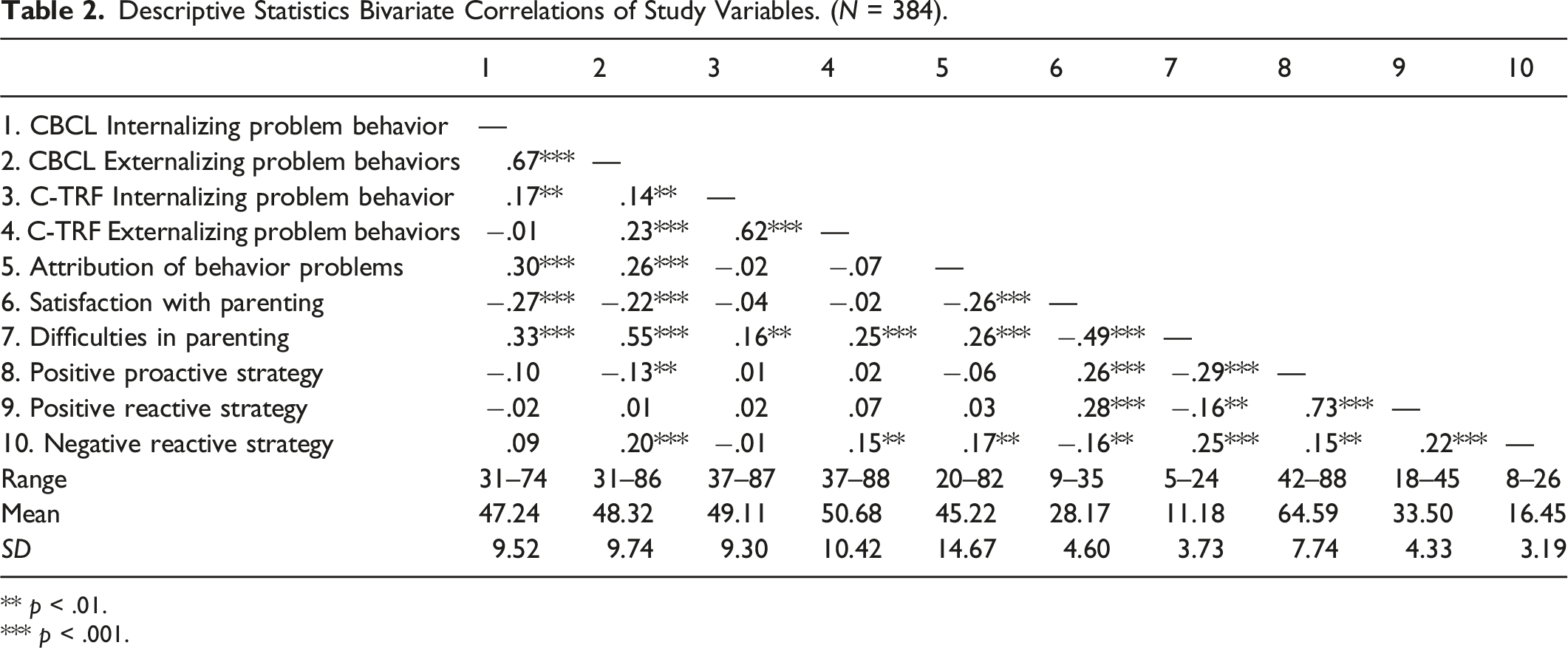
Descriptive Statistics Bivariate Correlations of Study Variables. (N = 384).
** p < .01.
*** p < .001.
Differences in Mothers’ and Teachers’ Ratings
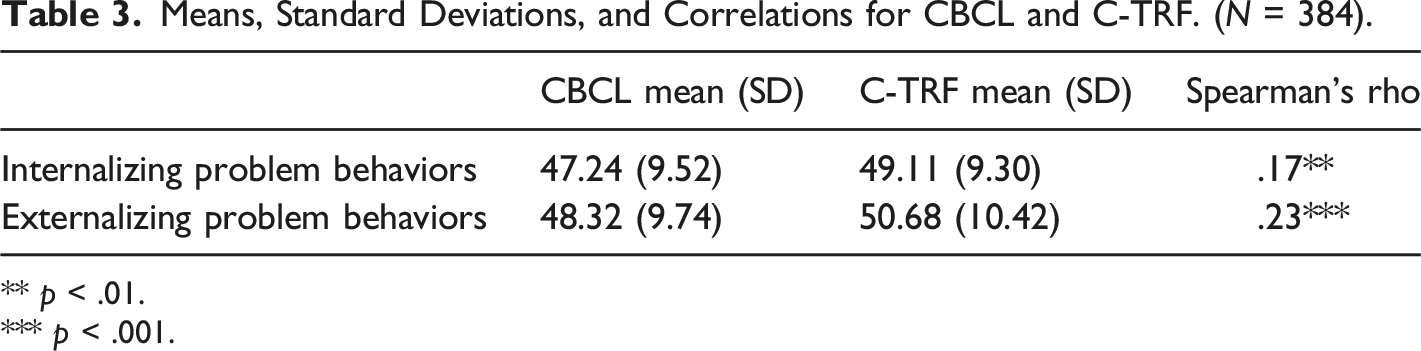
Means, Standard Deviations, and Correlations for CBCL and C-TRF. (N = 384).
** p < .01.
*** p < .001.
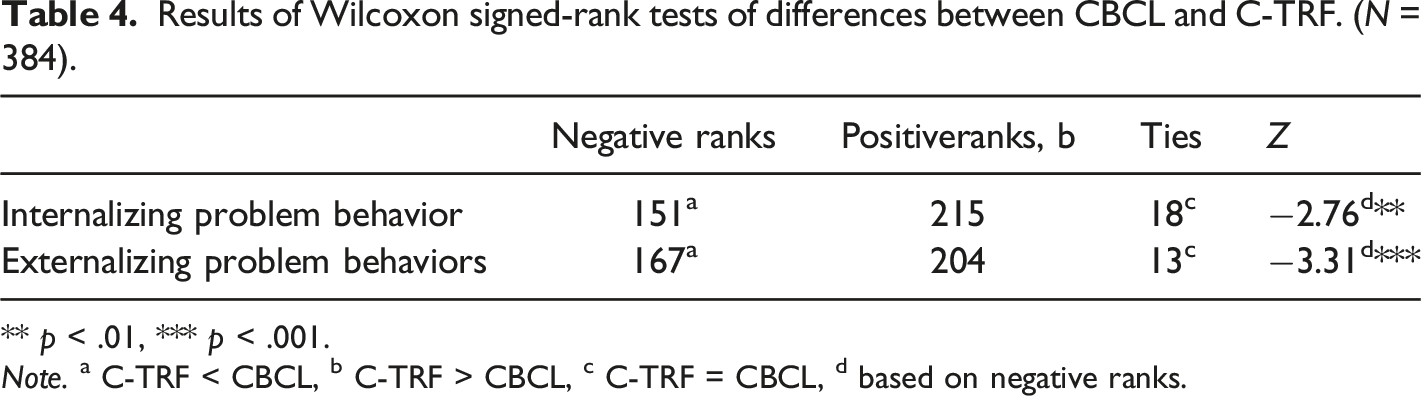
Results of Wilcoxon signed-rank tests of differences between CBCL and C-TRF. (N = 384).
** p < .01, *** p < .001.
Note. a C-TRF < CBCL, b C-TRF > CBCL, c C-TRF = CBCL, d based on negative ranks.
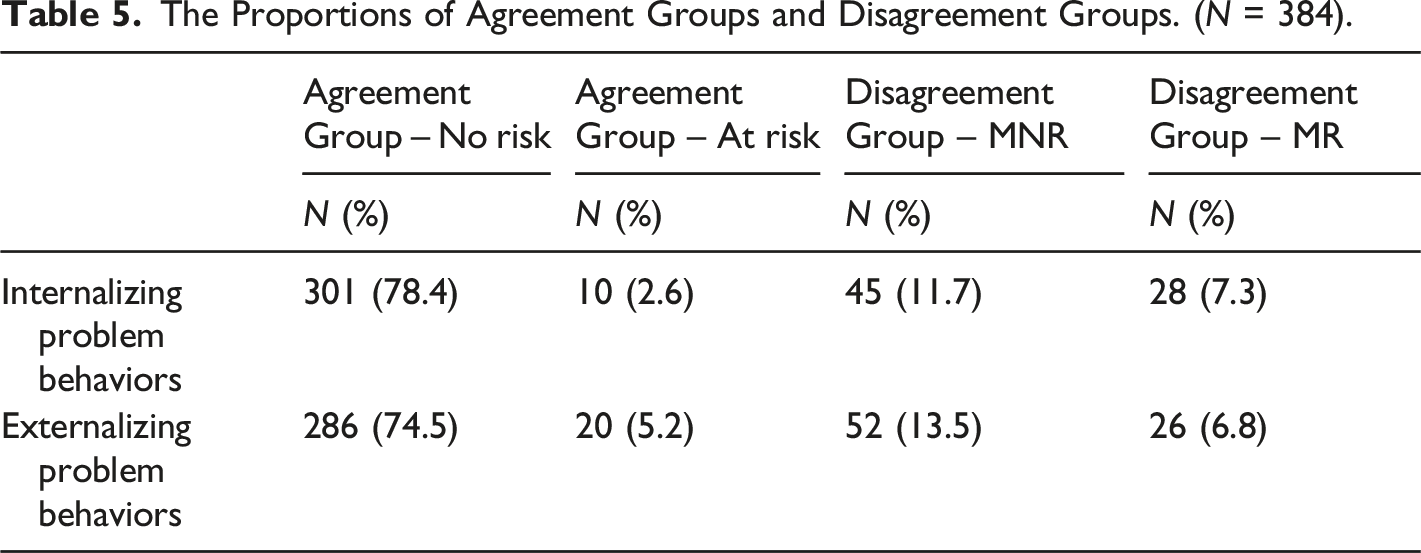
The Proportions of Agreement Groups and Disagreement Groups. (N = 384).
Maternal Parenting Variables and Mother–Teacher Discrepancies
Results From Multinomial Logistic Regression Predicting Group Membership for Internalizing Behavior Problems (N = 384).
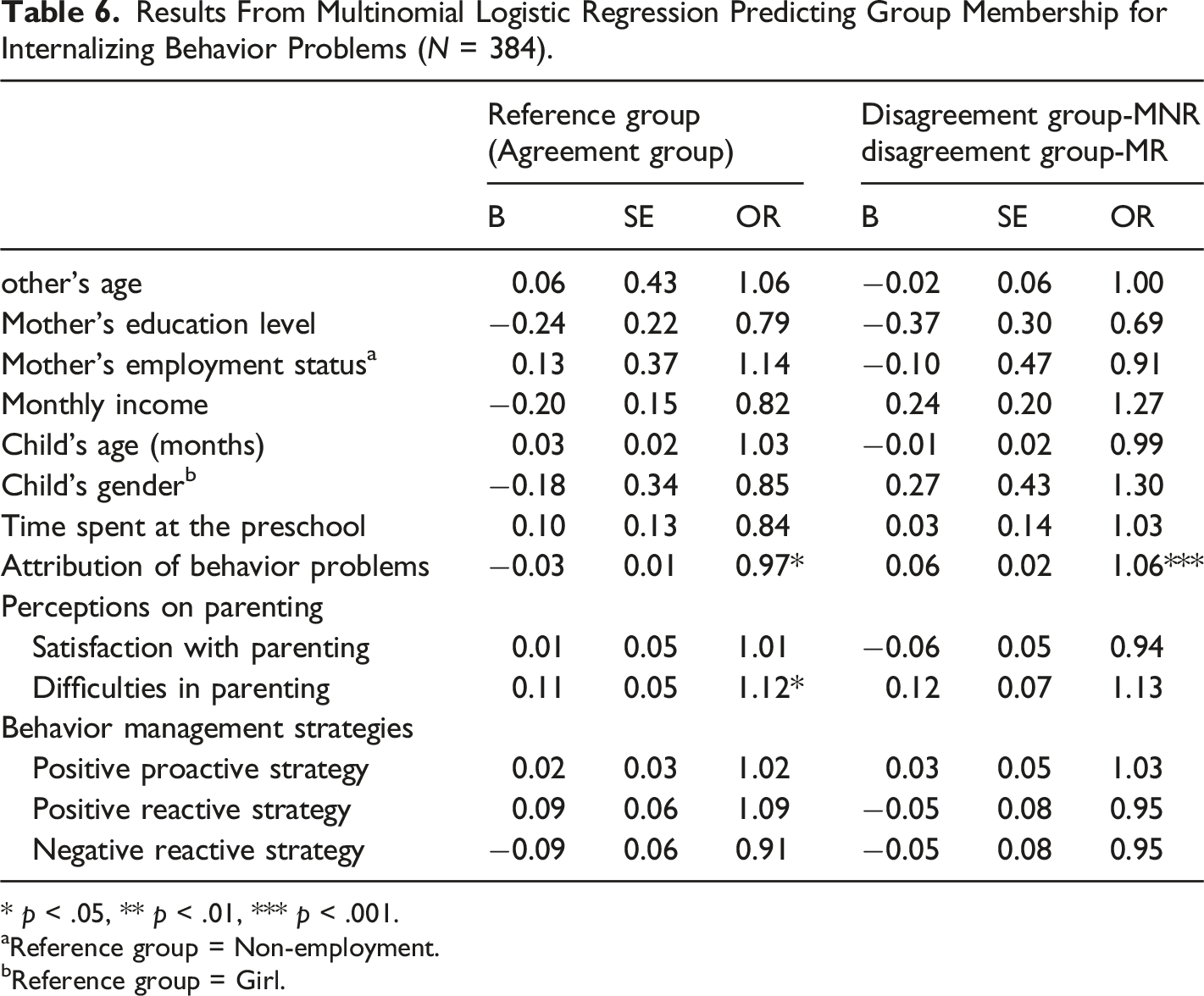
* p < .05, ** p < .01, *** p < .001.
aReference group = Non-employment.
bReference group = Girl.
Results From Multinomial Logistic Regression Predicting Group Membership for Externalizing Behavior Problems (N = 384).
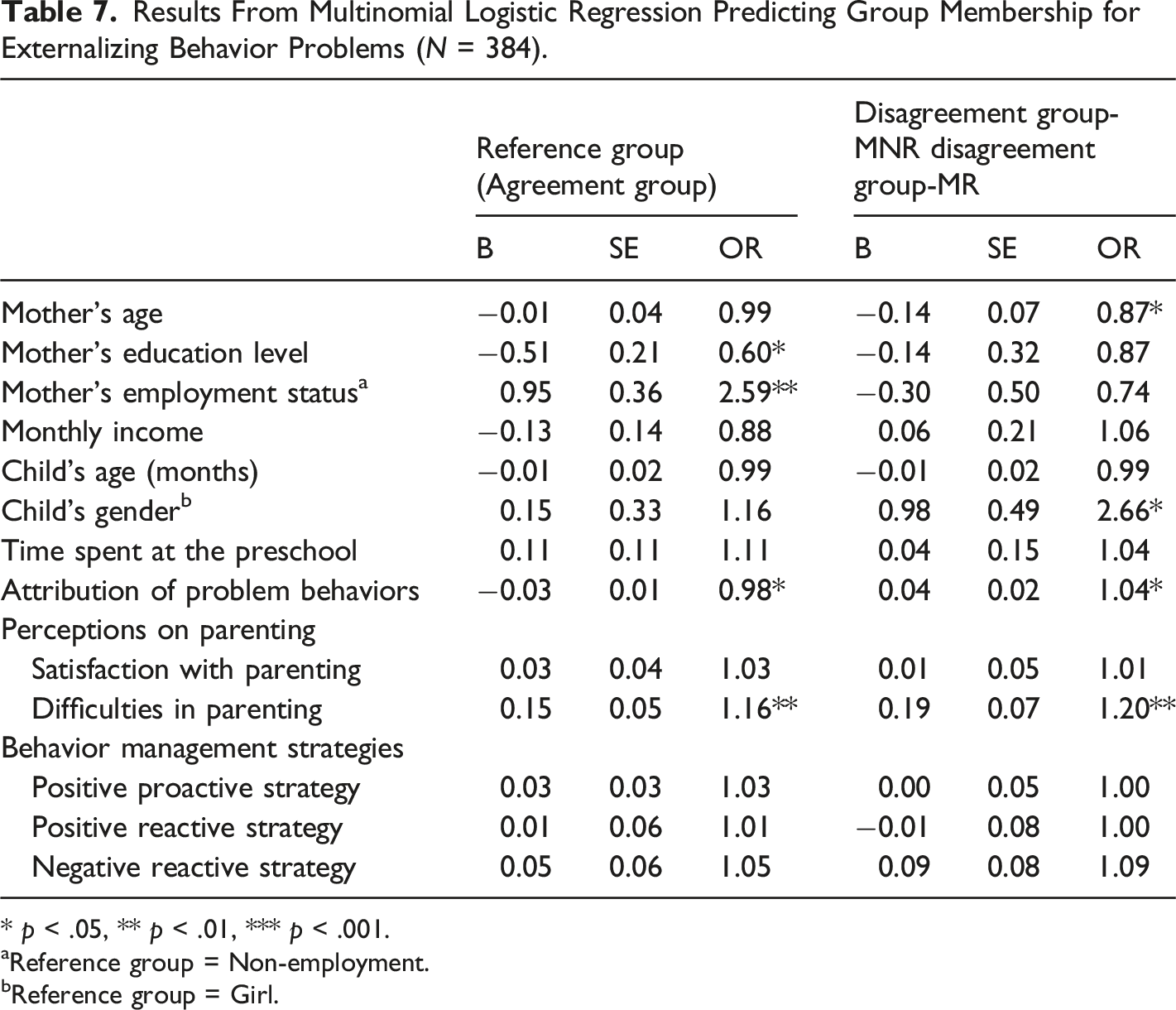
* p < .05, ** p < .01, *** p < .001.
Reference group = Non-employment.
bReference group = Girl.
With regard to externalizing behavior problems, maternal attribution and the perceptions of parenting difficulties were found to be significant predictors of group membership. The more the mothers attributed the children’s behavior problems to external causes, the higher the odds of belonging to the Agreement Group than the Disagreement Group-MNR, and the higher the odds of belonging to the Disagreement Group-MR than the Agreement Group. The more the mother perceived difficulties in parenting, the more likely they were to belong to the Disagreement Group-MNR or the Disagreement Group-MR than the Agreement Group.
Among the covariates, mother’s age, education level, employment status, and child’s gender significantly predicted group membership. The lower the mother’s education level and when mother was employed, the higher the odds of belonging to the Disagreement Group-MNR compared to the Agreement Group. When the child was a boy, the mother was more likely to report him as being in the at-risk group. The older the mother, the higher the probability of belonging to the Agreement Group rather than to the Disagreement Group-MR.
Discussion
The present study aimed to investigate mother–teacher discrepancies in reports of preschoolers’ behavior problems in a Korean sample and to examine whether the maternal attribution of behavior problems, perception of satisfaction and difficulties regarding parenting, and behavior management strategies predict the discrepancies.
Our outcomes showed a lack of agreement between mothers’ and teachers’ reports of behavior problems indicated both by low correlations and by differences in percentages of children who were classified as being at risk (i.e., in a borderline clinical or a clinical range). The ratings of behavior problems in children by mothers and teachers differed with marginal similarities, supporting prior research (Rescorla et al. 2014; Santos et al., 2020). These results confirm the previous studies reporting low to moderate parent–teacher agreement on children’s behavioral problems (r = 0.13–0.35; Berg-Nielsen et al., 2012; Korsch & Petermann, 2014) and the most cited cross-informant correlation of 0.28 from a large meta-analysis by Achenbach et al. (1987). However, as opposed to most past studies mentioned above, our outcomes demonstrated that mothers reported lower levels of internalizing and externalizing behavior problems than teachers. Similarly, the percentages of children who were rated as being at risk by mothers were smaller than those by teachers in both internalizing and externalizing problem behaviors. These are consistent with the outcomes for Thailand in Rescorla et al. (2014) and most Korean studies (Kang & Cho, 2008; Park & Park, 2013; Yu & Cho, 2019). Park and Park (2013) explained that Korean parents might be influenced by the traditional childrearing beliefs that challenging behaviors in young children gradually disappear as they mature, which might have led parents not to regard behavioral difficulties in early childhood as serious. Another explanation for Korean mothers reporting less problematic behavior than teachers could be that Korean parents have high aspirations for their child’s success and are reluctant to accept the fact that their child has difficulties, including behavior problems (Yu & Cho, 2019). Thus, they may have rated their child’s behaviors as less problematic than teachers did, while teachers have experienced and observed many children and are trained to evaluate behavior objectively based on the child’s developmental stage (Kang & Cho, 2008). This possibility might be further accounted for by cross-cultural studies of Korean parents of children with clinical problems (Chung et al., 2013). Researchers suggest that there may be a greater tendency for Korean parents to under-report their children’s problem behaviors because negative social reactions and stigma related to raising children with disabilities are greater in Korea than in the U.S. Rescorla et al. (2007) also pointed out that Asian societies appeared to be more concerned with “saving face” than Western societies, which possibly led parents to under-report their children’s problems.
Further, our outcomes revealed that maternal attribution to children’s behavior problems and maternal perception of difficulties in parenting significantly predicted group membership for both internalizing and externalizing behavior problems, whereas maternal parenting satisfaction and behavior management strategies did not. Mothers who thought of environmental factors (e.g., noises, stimuli, temperature) as primary causes of behavior problems were more likely to agree with teachers in rating their child’s behavior problems rather than disagreeing with teachers by reporting their child’s behavior as not problematic (i.e., Disagreement Group-MNR). To better interpret these results, it is necessary to carefully examine our data. In the Agreement Group (n = 311 for internalizing behavior problems, n = 306 for externalizing behavior problems), only a few mothers and teachers (3% for internalizing and 5% for externalizing problems) agreed that their children were problematic (i.e., either in the borderline clinical or clinical ranges), while a majority of the Agreement Group agreed on their children’s behaviors as being in the normal range. Thus, it is reasonable to assume that the Agreement Group mainly represented the mother–teacher agreement group of children in the normal range. Considering this sample characteristic, the result can be interpreted as indicating that children whose mothers believed that their behavior problems were caused by various social or physical environmental conditions were more likely to be classified as normal by both mothers and teachers rather than to be rated as at risk only by mothers. It is plausible that mothers who regarded environmental conditions as the causes of behavior problems would be keen to protect children from environmental risk factors that might evoke behavior problems. Consequently, children were less likely to display behavior problems that would lead to mother–teacher agreement in the normal range. Nevertheless, prediction of maternal attribution of children’s behavior problems on mother–teacher discrepancies could be different depending on the Disagreement Group. When the Disagreement Group-MR was compared with the Agreement Group (i.e., reference group), the more mothers attributed their children’s behavior problems to environmental causes, the more likely it was that they disagreed with the teachers by rating their child’s behavior problems as at risk. A possible explanation of this result is that those mothers who believed that environmental conditions trigger behavior problems might also have thought that behaviors are likely to be modified by environmental factors. Consequently, they may have been motivated to observe and analyze their child’s behaviors, in turn leading them to sensitively detect problems in their children.
Maternal perception of parenting difficulties also predicted mother–teacher discrepancies. For internalizing problems, mothers who perceived high levels of difficulties in parenting were likely to disagree with teachers’ rating and report their children to be in the normal range. This contradicts the outcomes of prior research that show positive relations between parental stress and reporting of children’s behavior problems (Hastings & Brown, 2002; Moens et al., 2018). In previous literature, mothers with high parenting stress (i.e., difficulties in parenting) perceive their children negatively and rate them as having higher levels of internalizing and externalizing behavior problems. As explained by the depression-distortion hypothesis (Richters, 1992), it may be that when mothers perceive parenting as stressful, psychological difficulties may distort their perceptions, thereby leading them to evaluate their child’s behaviors as negative. Our result that was inconsistent with such a hypothesis seems partly due to the items used to assess parenting difficulties, most of which are related to externalizing behavior problems such as difficulties in controlling children’s behavior. Unlike externalizing behavior problems, internalizing behavior problems are harder to recognize and require greater sensitivity to be detected (Bergold et al., 2019). It may be that mothers who perceived difficulties in parenting focused more on externalizing problems and paid less attention to internalizing problems that did not show outwardly. As a result, mothers whose scores on parenting difficulties were high may not have reported that their child had internalizing behavior problems, thereby disagreeing with teachers, which resulted in mother–teacher discrepancies in internalizing behavior problems.
With regard to externalizing problems, the more mothers perceived parenting difficulties, the more likely they were to belong to the disagreement groups, either Disagreement Group-MNR or MR. As perceived difficulties in parenting may make mothers emotionally overwhelmed, they are apt to feel exhausted, causing them to fail to monitor their children’s behavior and provide sufficient efforts to communicate and cooperate with teachers to manage their children’s behavioral difficulties. As a result, these mothers would be less likely to have accurate information and knowledge about their children’s behavior and more likely to be in the disagreement groups than in the mother–teacher agreement group.
In addition, some of the control variables were found to significantly predict the group memberships of the mother–teacher discrepancies in children’s externalizing behavior problems: mother’s age, education level, employment status, and child’s gender. The lower the mother’s education level, the more likely mother–teacher discrepancies were to occur; mothers reported that their children had no behavior problems while teachers rated them as being at risk. This is consistent with Chung and Koo (2009), who showed that mothers’ education level was related to their ability to understand and to monitor children’s behavior. They also showed that mothers with lower education levels did not recognize children’s behavior difficulties. Based on such results, our outcome could be explained as reflecting that less educated mothers showed limited knowledge and understanding of children’s development and would therefore not notice children’s behavior problems sensitively, thus leading to disagreement with teachers on reports of behavior problems.
It was also found that employed mothers were more likely than unemployed mothers not to report behavior problems in their children while teachers did. This might be because working mothers spend less time with their children than non-working mothers and have fewer opportunities to observe their children’s behavior problems. Therefore, working mothers may tend to consider their children to have no clinical problems, leading to discrepancies with teachers. This result supports the finding of the recent study by Santos et al. (2020) that more contacts with a child increases the awareness of problems. Older mothers were likely to agree with teachers in rating behavior problems of their children. As mentioned above, this means that older mothers and teachers both rated their children as normal. A possible explanation of this result would be that as mothers get older, they tend to become more generous and to accept others’ weaknesses, and thus worries and anxiousness about children’s behavior problems would decrease and they would show a higher acceptance of children’s behavior (Chung & Koo, 2009). Finally, mothers with boys were more likely to report their children to have externalizing behavior problems than mothers with girls while teachers rated the boys as normal. It is plausible that unlike teachers, who acknowledge the energetic behaviors of boys based on their professional experience, mothers with boys were disturbed by externalizing behaviors and rated their externalizing behavior problems as more serious.
In summary, our results confirmed and extended the outcomes of prior research that found low parent–teacher agreement in behavior ratings and identified the contribution of informant-specific characteristics by demonstrating that maternal attributions of children’s behavior problems and perceptions of difficulties in parenting influenced mothers’ ratings and the discrepancies between mothers and teachers in behavior assessment. These findings have meaningful implications for the assessment of behavior problems in young children and the use of information available from mother and teacher reports. First, the low level of agreement between mothers and teachers in this study suggests that it is necessary to collect and use information from both mothers and teachers when making important decisions on significant behavior difficulties of young children and subsequent clinical interventions, because neither of them can be regarded as accurate ratings or a gold standard. Second, the outcomes also emphasize the need to consider that mothers’ reports of children’s behavior and mother–teacher discrepancies partly mirror mothers’ beliefs and perceptions regarding children’s behavior and parenting. This implies that some mothers may over- or under-report their children’s behavior problems compared to teachers, not because mothers are less accurate when evaluating children’s behavior than teachers but because they have their own perspectives on children’s development and unique parenting experiences with their children. Thus, clinicians should be aware that information from mother–teacher discrepancies can be of help in understanding mothers as well as children in practice.
There are some limitations to the current study that should be considered when interpreting our findings and suggestions for future research. Using the definition by Stone et al. (2013), we defined the mother–teacher discrepancy as a child receiving a score in a normal range (< 64) by one rater but another score either in a borderline clinical or in a clinical range by the other rater (≥ 64) to avoid the limitations of the use of difference scores between two informers’ ratings (Laird & De Los Reyes, 2013). Although this made informant discrepancies more distinct conceptually based on the prevalence of problem behaviors in mother and teacher reports, it yielded smaller sample sizes for the two disagreement groups than the agreement group, which might have resulted in insufficient statistical power. Future research with larger sample sizes for disagreement groups will be able to better clarify the predictors of mother–teacher discrepancies in rating children’s behavior problems. Alternative approaches to defining a discrepancy between informants’ ratings could also be taken into consideration in future studies, including the polynomial regression analyses suggested by Laird and De Los Reyes (2013). Also, our results showed that mothers reported lower levels of behavior problems than teachers, which is the opposite of outcomes from the most Western cultures (Rescorla et al., 2014). We have discussed and explained these results in the context of Korean specific culture such as the traditional childrearing beliefs and parental high aspirations for their child’s success. It would be necessary to investigate in future studies whether our outcomes could be generalized to other cultures where parents perceived children’s behavior problems higher than did teachers. Further, sample characteristics may limit the generalizability of the findings. Although the average family monthly income and employment rate of our study participants were not significantly different from the Korean national average, the maternal education level was obviously higher than the national statistics. Thus, caution should be taken in generalizing the results to the Korean population.
In addition, as the primary aim of this study was to investigate maternal characteristics associated with mother–teacher discrepancies in their assessment, we focused on maternal parenting aspects, including attribution of behavior problems, parental satisfaction and difficulties, and behavior management strategies. However, it should be noted that discrepancies among informants’ reports can be caused by the characteristics of both informants who rate children’s behavior (Achenbach et al., 1987; De Los Reyes & Kazdin, 2005). In particular, Berg-Nielsen et al. (2012) reported that negative child-teacher interactions could lower parent–teacher agreement on children’s behavior problems. Future research needs to further address possible contributions of teachers to mother–teacher discrepancies, which will enhance the understanding of sources of parent–teacher disagreement in assessment. Finally, our analysis was cross-sectional, which made it difficult to exclude the possibility that bidirectional influence may exist between maternal characteristics and their rating of children’s behavior. For instance, not only may mothers’ perception regarding parenting difficulties affect their assessment of children’s behavior problems, but they may also be caused by the child’s behavior. To better determine the direction of the causal relationships among the research variables, a longitudinal analysis is warranted in future research.
Footnotes
Declaration of conflicting interests
The author(s) declared no potential conflicts of interest with respect to the research, authorship, and/or publication of this article.
Funding
The author(s) received no financial support for the research, authorship, and/or publication of this article.
