



Abstract
The recent trend of university internationalization has seen a rapid increase of English as medium of instruction (EMI) courses in Taiwanese tertiary education. Yet, few large-scale studies have been conducted to investigate student learning in EMI courses. This study surveyed 476 students from 25 EMI courses at six universities in Taiwan to probe their learning experiences and general attitudes towards EMI courses. Results revealed that the instructor exerted an important influence on students’ course selection, while seeking English improvement was the second highest-rated reason for enrolling in EMI courses. Students generally reported their learning in EMI courses as satisfactory, though some of them attributed their learning difficulties to their own insufficient English competence. To compensate for comprehension problems, students tended to adopt cognitive learning strategies such as concentrating and taking notes in class. Finally, the survey of student attitudes towards EMI suggested that students generally agreed with its broadly touted benefits, such as boosting English ability, facilitating students’ employability and further studies, and enhancing the competitive edge of Taiwan. Analysis into students’ affective responses also indicated their fairly positive attitudes towards EMI courses. Three implications are drawn based on the findings.
Keywords
University internationalization has been a recent trend both in international and Taiwanese settings. Among the many conditions of internationalization, offering English-medium courses is usually regarded as one of the most essential. Research has shown that English is increasingly used as a language of university teaching in European countries (Ferguson, 2007). Even in countries with ‘big’ languages (i.e. those with many mother tongue and/or second language speakers), such as France and Germany, it is often felt that introducing English as medium of instruction (EMI) in tertiary education is necessary (Ammon and McConnell, 2002). This Englishization trend has also been followed by Asian countries. In Malaysia, a former British colony, for example, the government has instituted English as medium of instruction for science and mathematics in higher education 1 for the reason that Malaysia needs to remain competitive at an international level (Gill, 2003). It is with this background that the Taiwanese government started to promote English in higher education at the beginning of the 21st century (Ministry of Education, 2006). A major reason for introducing EMI is to attract and cater to foreign students in today’s globalizing educational markets. Yet another common argument to promote EMI in regions where English is not the first language is that domestic students can benefit from more exposure to a language that they may encounter in future careers, particularly in the sciences. But can encouraging or even mandating English use automatically enhance students’ English ability? Furthermore, a more pressing concern is: would disciplinary learning be compromised when students are not yet sufficiently prepared for English-medium instruction? A statistic shows that the number of English-medium courses offered in Taiwanese universities has grown to 4,099, an increase of 103.63% within five years (2005-2009) (Lin, 2010). Yet as to the present time, few large-scale studies have been conducted to investigate students’ learning in subject courses through the medium of English. Using a sample of 476 student survey responses from 25 EMI classes at six universities, the current study aimed to explore students’ learning experiences and general attitudes towards English-medium courses in an attempt to understand the impact of EMI on domestic students’ learning.
Literature Review
This section will first discuss reasons for introducing EMI in tertiary education. It will then explore the advantages and problems of its implementation, followed by a review of the previous research on students’ perceptions of EMI teaching and learning.
Reasons for Introducing EMI
Coleman (2006) identified seven reasons for the Englishization of European universities: content and language integrated learning, internationalization, student exchanges, teaching and research materials, staff mobility, graduate employability, and the market in international students. Other case studies pointed to similar reasons for introducing English-medium programs. For example, Wilkinson (2012) summarized the results of a large-scale European study conducted by the Academic Cooperation Association and pinpointed the three most important reasons: to attract international students, to make domestic students fit for the global market, and to sharpen the profile of the institution in comparison to others in the country. Wilkinson’s other studies (2005, 2008, as cited in Wilkinson, 2012) identified five groups of motives for establishing EMI programs: practical (e.g. to recruit international and exchange students), survival (e.g. to expand the small or already saturated home market), financial (e.g. to increase income from foreign students’ tuition fees), idealist (e.g. to promote internationalization-at-home, as local students would learn alongside students from other countries and cultures), and educational (e.g. to establish new educational programs). From this myriad of motives, one can observe that universities appear to introduce EMI programs mostly from administration perspectives; in other words, universities seek to ensure survival, boost income, enhance international reputation, and improve world rankings, eventually to compete in the global educational market.
Benefit or Problem?
Perhaps the most frequently cited argument concerning student benefit in EMI is ‘the double benefit of subject knowledge and improved target language proficiency’ (Coleman, 2006: 4-5). However, achieving this benefit arguably hinges on a good comprehension of lectures. From students’ perspectives, comprehending lectures in a second language has consistently been a tremendous challenge. In a survey conducted in an Australian university (Mulligan and Kirkpatrick, 2000), for example, fewer than 1 in 10 non-native English speaking students reported good lecture comprehension, while nearly 25% of them did not understand much of the lectures. In addition to a lack of general English proficiency, research has identified possible factors affecting lecture comprehension including speech rate (Flowerdew and Miller, 1992), accent (Bilbow, 1989), and cultural references (Mason, 1994). Factors such as the use of discourse structures and metaphor use have also been found to cause various degrees of difficulty in lecture comprehension (Allison and Tauroza, 1995; Littlemore, 2001).
In consideration of these difficulties, it is plausible to reason that students’ poor or incomplete comprehension of lectures may negatively impact their learning of subject knowledge. Indeed, this worry about reduced subject learning in English-medium classes due either to students’ incomplete understanding of course content or to teachers’ tendency to simplify content in anticipation of students’ limited language proficiency has been frequently voiced (Dalton-Puffer, 2011). Referring to the Chinese context, Hu (2009) reported a similar concern about the ‘craze for English-medium education’ at the expense of subject learning. These concerns appear to be supported by empirical research. After comparing three approaches—English medium instruction, English aided instruction, and Turkish medium instruction—in three Turkish universities, Sert (2008) concluded that EMI failed to communicate academic content effectively. Similarly, a Korean study characterized instructors’ expression in the target language as ineffective, resulting in a compromise in the quality of learning (Byun et al., 2011). The above review indicates that EMI does not always deliver the promised benefit, particularly in terms of disciplinary learning, either because universities do not take active measures to support students who are still struggling with English or because EMI teaching staffs are not provided with professional development opportunities which might help them to deliver lessons in the target language effectively.
Student Perceptions of EMI
Research has been conducted in English-as-a-second-language environments to explore students’ perceptions of EMI. In a Turkish context, Akünal (1992) found that a majority of the 186 surveyed students perceived improvement in receptive skills such as understanding and taking notes on lectures, but not in English communication skills such as participating in class discussions and presenting oral reports. Another Turkish study, Sert (2008), reported that students acknowledged the benefit of EMI in terms of language acquisition, but they expressed an uncertainty about their ability to grasp the academic content.
Flowerdew and Miller (1992) surveyed 30 Hong Kong undergraduates, asking them about their problems and strategies in English-medium courses. Results showed that the primary difficulties in comprehending English lectures included speed of delivery, new terminology and concepts, and students’ ability to concentrate. In order to cope, students adopted various strategies to tackle their own comprehension problems, such as reading before or after the lecture, asking peers for help, seeking clarification from the lecturer or in tutorials, and trying to concentrate harder. Also undertaken in the Hong Kong context, Li, Leung, and Kember’s (2001) study focused on students’ perceived English improvement after taking EMI courses. The student participants reported more improvement in listening and speaking than in reading and writing. The researchers noted that those reporting worse writing skills were those attending courses requiring little writing, mostly in sciences and applied sciences.
In Taiwan, student perspectives of EMI practices have also received attention. Through a small-scale study involving 28 graduate students in one private university, Wu (2006) may be the first in Taiwan to investigate student learning in EMI courses. Two major issues addressed in Wu’s study included the amount of English students used in EMI courses and the perceived advantages and problems of EMI. His study suggested that students’ English use in these courses was limited, but a majority of the surveyed students agreed that more EMI courses should be offered, citing advantages such as providing more opportunities to improve their English and express themselves in English and facilitating reading English textbooks and reference materials. However, students also reported that EMI posed an obstacle to comprehension of course content, expression of ideas, and interaction between professors and students.
Involving a smaller number of participants, Huang’s (2009) interview study asked 10 undergraduate students about their learning in EMI programs. Her study found that students noticed an improvement in their English, particularly in listening and vocabulary, from English-only instruction. In addition, they also reported an increased confidence or interest in English learning. However, they appeared to worry about potential loss of professional knowledge resulting from a slower speed of course delivery. Furthermore, some students appeared dissatisfied with their instructors’ English and expressed a preference for English-native-speaking instructors or teachers with better English pronunciation.
Using a much larger student sample (N = 370), Chang (2010) found rather favorable attitudes among students at the same university toward EMI, even though they acknowledged an incomplete understanding of lectures. The survey respondents recognized the role of English instruction in their acquisition of both academic content and language proficiency, and a majority attributed their learning difficulties not to academic content itself but to their English ability. Among various language problems, limited vocabulary was reported to cause the most serious comprehension difficulties. It was thus suggested that more academic and specialized English courses be offered or restrictions be imposed on students eligible to take EMI courses.
While the previous research provides a foundational understanding of students’ perceptions of English-medium courses, most of the studies conducted in the Taiwanese context involved either a limited number of students (N < 30) or students from one single university. Larger scale research is therefore needed to shed more light on students’ learning in English-medium courses. Aiming to fill the gap, the current study recruited 476 students to complete a questionnaire in order to explore students’ experiences and attitudes towards English-medium courses. The research questions addressed in the study are as follows:
What are Taiwanese university students’ motivations for taking EMI courses?
How do they react to EMI? How do they perceive the influence of EMI on their English improvement and disciplinary learning?
What do students perceive as sources of difficulty in EMI courses? What learning strategies do they adopt to tackle comprehension problems?
What are students’ general attitudes towards EMI courses?
Methodology
In order to address the above research questions, a questionnaire was designed to explore students’ perceptions of EMI courses. The questionnaire, written in Chinese, consisted of five parts. The first part of the questionnaire collected information about students’ background, self-rated English listening ability, and prior experience with EMI. Part Two focused on students’ learning experiences in the English-medium courses that they were taking. In addition to eliciting students’ reasons for enrolling in the course, this part contained 11 Likert-scale questions in order to explore students’ perceptions of the course. Parts Three and Four examined, respectively, sources of difficulty and learning strategies used in EMI courses. In Part Five, student attitudes towards EMI policy and current practices were examined using 14 Likert-scale questions. The survey was pre-tested and revised before it was administered to the study participants.
In order to target student respondents, several universities in different regions of Taiwan were selected. A list of EMI courses was compiled, from which some 50 classes were randomly chosen. These course instructors were invited to assist in the survey. Care was taken to include a wide variety of courses in terms of school type, course type, discipline, and levels of study. Since the questionnaire was completed on a voluntary basis, it must be acknowledged that this sample still can not claim to be representative of the tertiary-level population in Taiwan. For example, invitations for participation sent to EMI instructors teaching in private institutions received no response. The current sample therefore contains only students from public institutions.
A total of 25 classes were recruited for this research. Questionnaires were mailed to the participating instructors with an accompanying instruction sheet for questionnaire administration. The instructors could thus administer the questionnaire at their own convenience before returning the completed responses. A total of 476 valid responses were eventually obtained.
Results and Discussion
Respondents and Course Profile
As shown in Table 1, the majority of respondents were male students (68%) and studied in science and technology disciplines (77%). In terms of level of study, nearly three fifths (58%) were undergraduates, and over one third (35%) were studying in a master’s program. The students generally reported good English listening proficiency, with 18% rating themselves as excellent and another 58% proclaiming a good listening ability. In terms of prior EMI experience, over half of the students (54%) reported that they had never taken English-medium courses before. As to the EMI courses under investigation, a majority (76%) were elective courses. In a majority of these courses, the instructors’ Chinese use was very limited (69% reported that their professors used Chinese from 5 – 25% of the time).
Respondents and Course Profile.

Motivations for Enrolling in EMI Courses
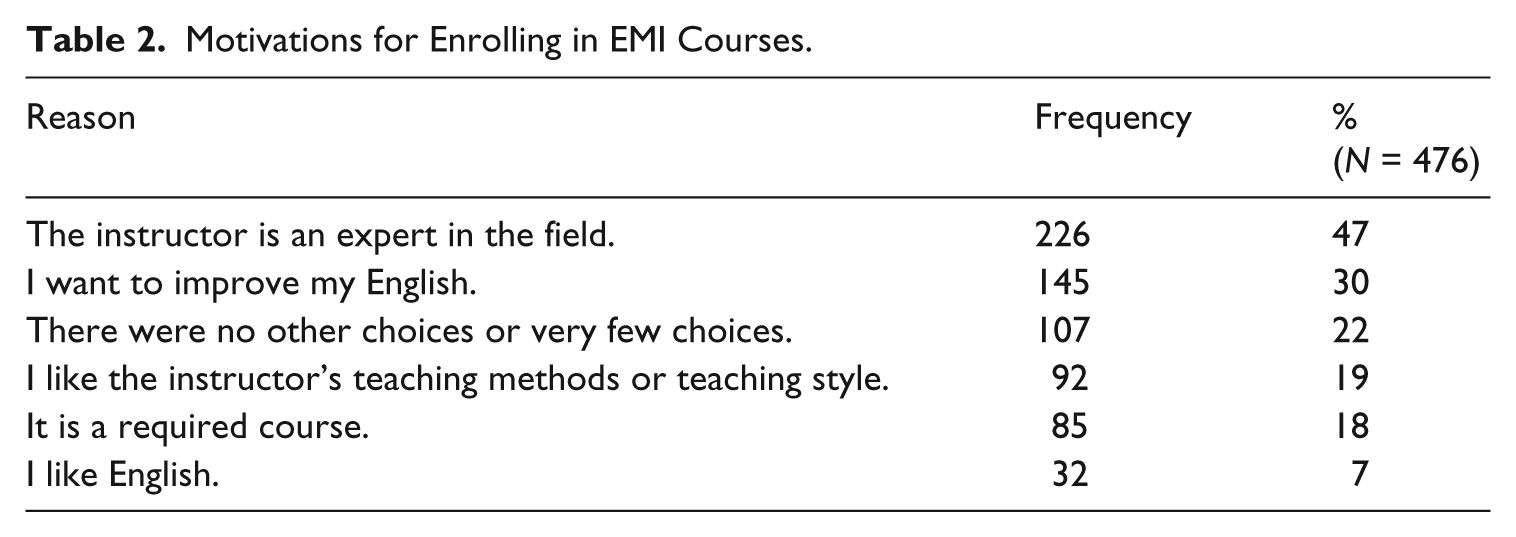
Table 2 presents, in descending order of frequency, students’ reported reasons for taking EMI courses. The most frequently selected reason (47%) was the instructor’s expertise in the subject matter, and another 19% cited the instructor’s teaching methods or teaching style, suggesting that the instructor exerted an important influence on students’ course selection. After the instructor’s expertise, English improvement (30%) was cited as the next major reason for taking EMI courses, a finding echoing the results of Yeh’s (2010) teacher survey study in which over half of the respondents (55%) reported ‘improving students’ English’ as one of the main reasons for offering EMI courses. However, two fifths of students attended EMI courses either because they were required to or because there were few or no other choices.
Motivations for Enrolling in EMI Courses.
Student Reactions to EMI
Four items on the questionnaire probed students’ reactions to EMI. As summarized in Table 3, which conflates points 1 and 2 (‘strongly disagree’ and ‘disagree’) and 4 and 5 (‘agree’ and ‘strongly agree’) on the scale, more than three fourths of students (79%) understood lectures delivered in English, a percentage very close to students’ self-reported listening proficiency (78% rated themselves as excellent or good). On the other hand, only about one third of students (38%) disagreed with the negative statement that EMI hampers willingness to express opinions in class, while 23% agreed with the statement. This finding may suggest that although students had a fairly good understanding of lecture content, the medium of instruction might have, to some extent, affected their class participation negatively. Still, these students’ experience with EMI was largely positive and satisfactory, as indicated by a favorable opinion overall of the instructor’s English ability (75%) and the teaching aids used in class (85%).
Student Reactions to EMI.

Perceived Influence of EMI
Table 4 presents the findings concerning the perceived influence of EMI on students’ English improvement, English learning motivation, and disciplinary learning. Results suggested that slightly over three fourths of respondents (77%) acknowledged the positive influence of EMI on their listening improvement. In addition, around half of the subjects claimed that EMI helped improve their English reading (51%) and speaking (47%) abilities. On the other hand, only about one fourth of respondents (27%) reported EMI as contributing to their writing improvement. This may be due to the relatively infrequent use of writing skills in some courses, particularly in science and technology disciplines (Li et al., 2001).
Influence of EMI on English Improvement and Disciplinary Learning.

Related to students’ English improvement, as many as 50% of respondents acknowledged the influence of EMI on their English learning motivation. If we compare this number with the percentage of students who claimed to enroll in EMI courses to improve English (30%, as indicated in Table 2), it appears that EMI increased students’ English learning motivation, even when they initially enrolled for reasons other than English improvement. Finally, about half of the students (51%) reported that EMI contributed to their acquisition of professional knowledge, although 33% remained neutral. Overall, students seemed to believe that EMI had a positive impact on their learning, including English skills, English learning motivation, and learning of professional knowledge.
Sources of Difficulty in EMI Courses
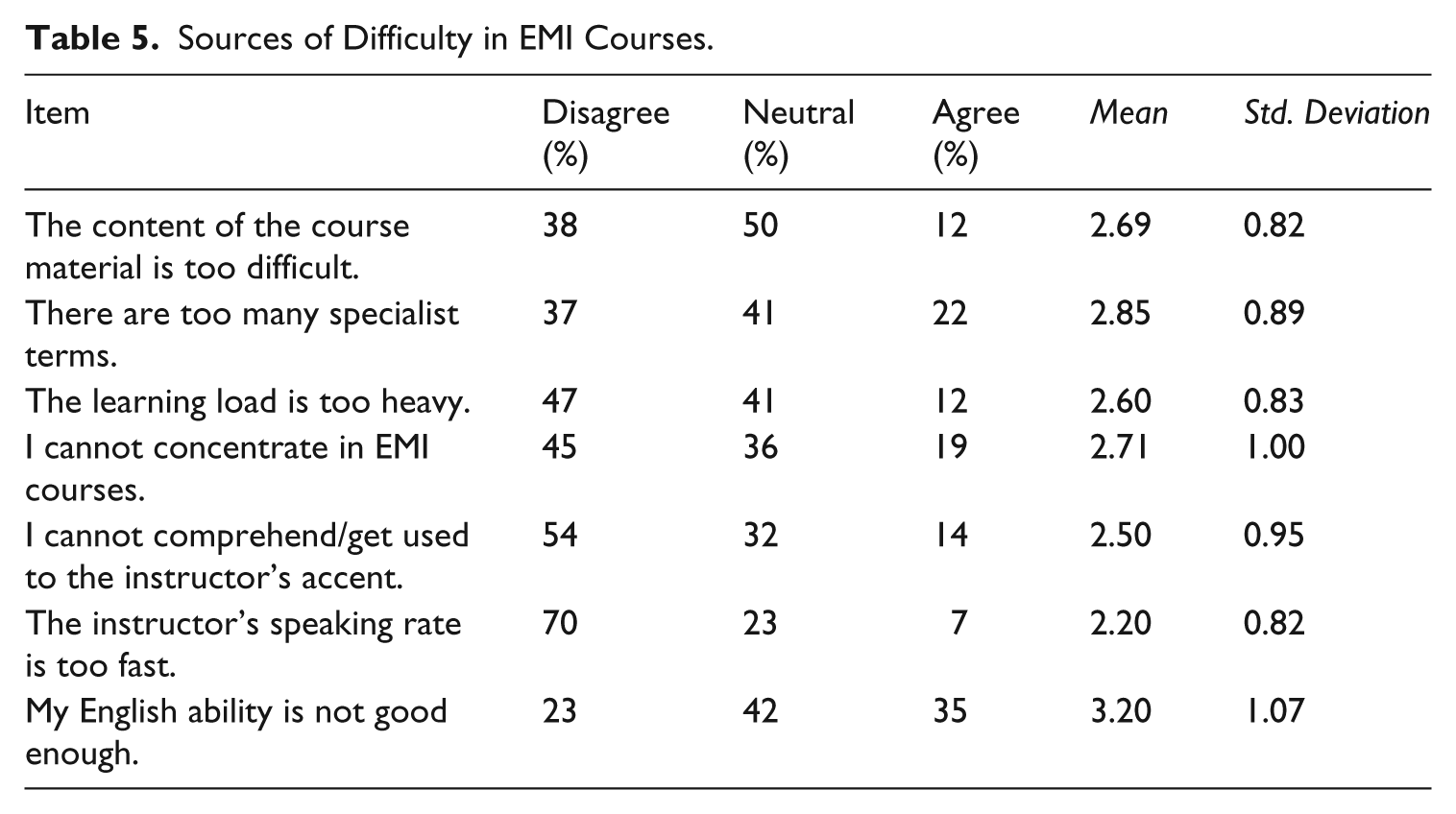
Table 5 presents students’ perceived difficulties with EMI. Results showed that a minority of respondents indicated agreement with the statements in the subscale. Many remained neutral, particularly in regards to the statements involving content difficulty (50%), specialist terms (41%), and heavy learning load (41%). Furthermore, students indicated rather strong disagreement with the statements involving lecture delivery rates (70%) and instructor’s accent (54%). One exception was insufficient English ability, which slightly over a third of respondents (35%) acknowledged as a major source of difficulty in EMI learning. It thus appeared that these students tended to attribute their learning difficulty to internal factors, such as their English ability, rather than external factors (for example, course content and lecturer factors).
Sources of Difficulty in EMI Courses.
Learning Strategies Used in EMI Courses
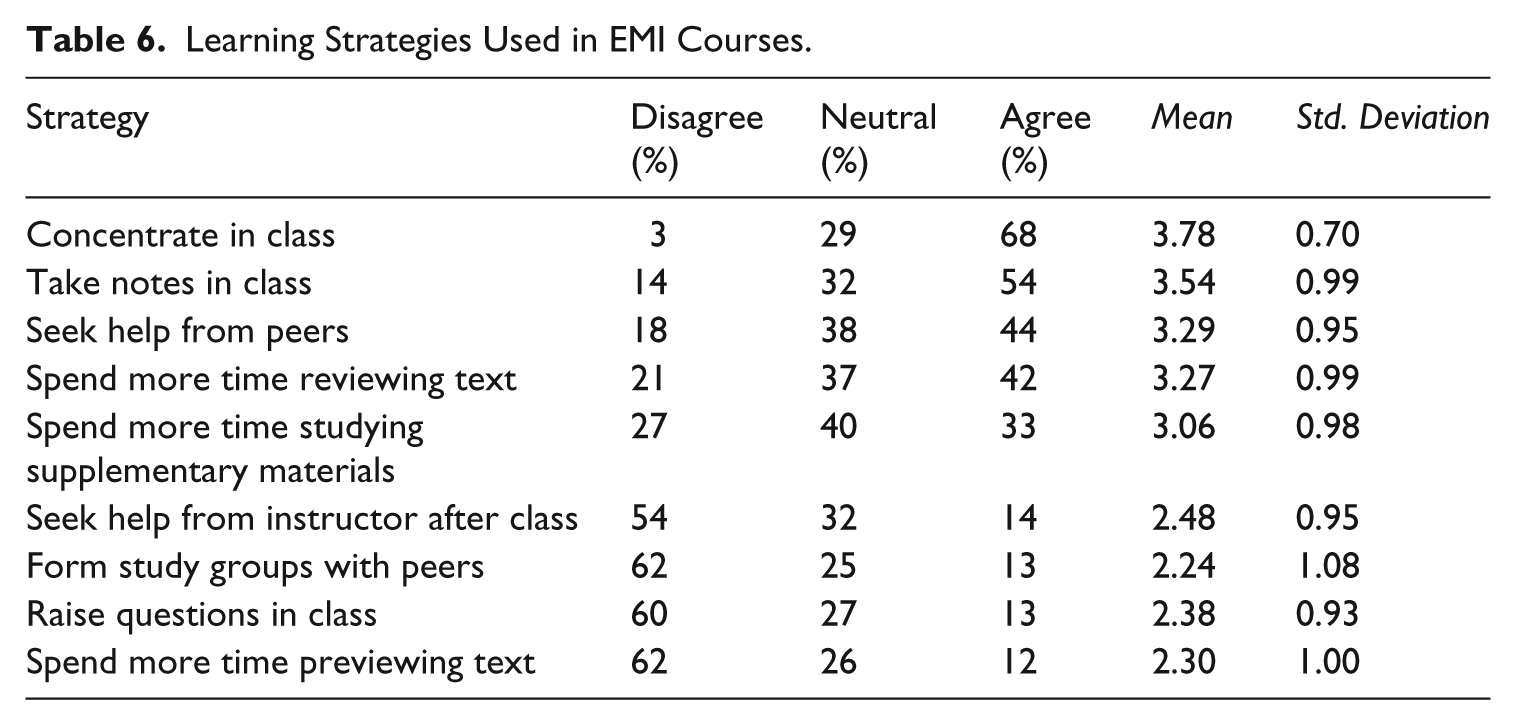
As can be seen in Table 6, which summarizes in descending order of frequency students’ reported use of learning strategies to compensate for comprehension problems, the strategy most frequently adopted was to concentrate in class (68%). Next in order of frequency was taking notes in class (54%), seeking help from peers (44%), and spending more time reviewing texts (42%). Overall, these students seemed to prefer cognitive learning strategies, particularly those that can be readily employed during class time, such as concentrating and taking notes in class. The only affective strategy used more frequently by students was asking for help from peers. As to strategies often seen as indicators of active learning, such as forming study groups, raising questions in class, and previewing text, they were used by just over one tenth of study participants.
Learning Strategies Used in EMI Courses.
Student Attitudes towards EMI
The final part of the questionnaire probed students’ attitudes towards EMI. Statements in this part can be further classified into three aspects: students’ beliefs about EMI policy, their affective responses, and attitudes towards EMI practices. Table 7 presents the results about student beliefs concerning the frequently quoted reasons for and against EMI. In regards to the four widely touted benefits, slightly over three fourths of students (76%) indicated their agreement with the statement that EMI can boost English ability. In addition, more than half agreed that EMI can enhance Taiwan’s competitive edge (60%) and facilitate students’ employability and further studies (53%). Alongside these three ‘practical’ benefits, a more ‘idealistic’ benefit—broadening horizons—was also acknowledged by nearly half of the respondents (48%). These favorable opinions of EMI among students are consistent with what was observed in Wu’s (2006) previous Taiwanese study.
Beliefs about EMI Policy.
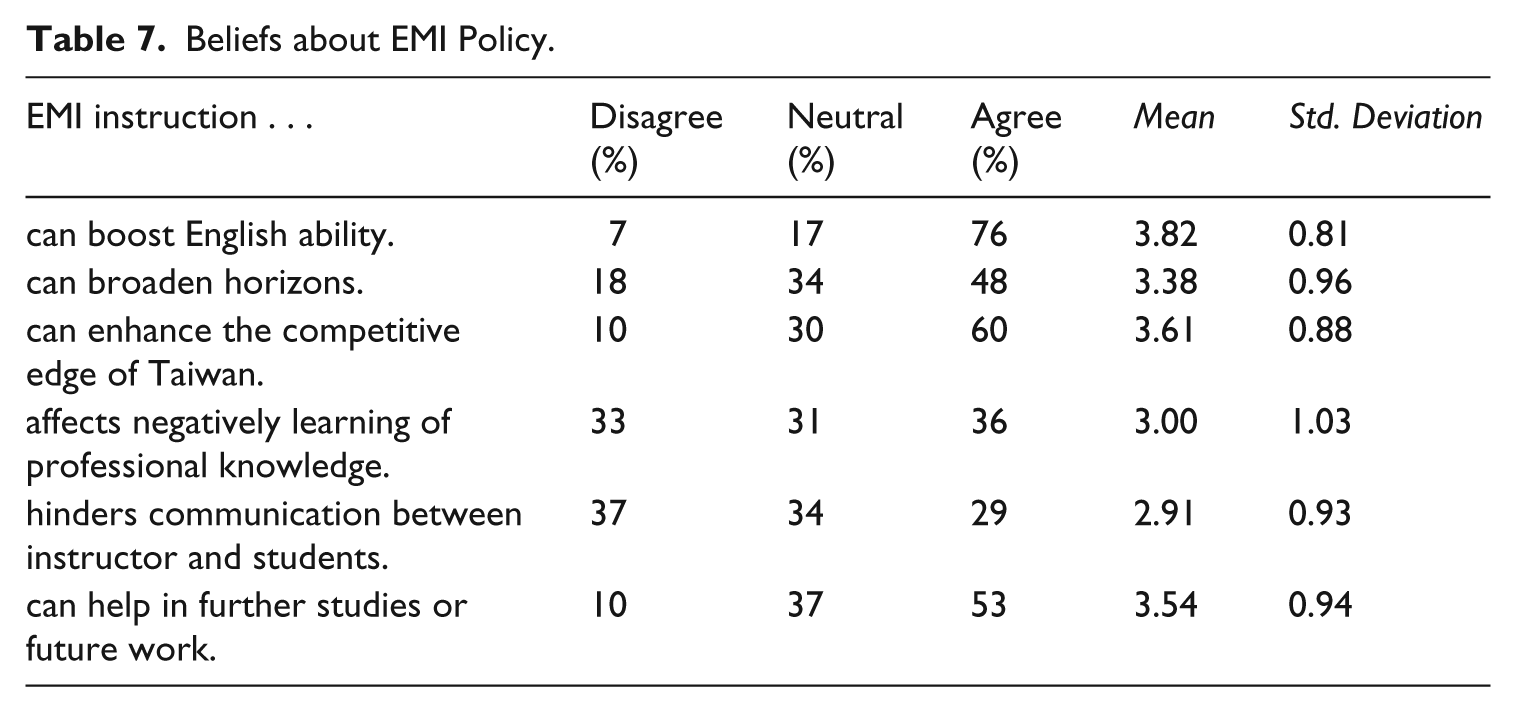
On the other hand, responses to the two often-voiced concerns about EMI present a somewhat more complicated pattern. As can be seen in Table 7, slightly more respondents agreed than disagreed with the statement that EMI negatively affects learning of professional knowledge (36% v. 33%), while more students indicated their disagreement than agreement that EMI hinders communication between instructor and students (37% v. 29%). These results may indicate that some students were more worried about the detrimental impact of EMI on their learning of professional knowledge, but less concerned about communication between teacher and students. The latter may be accounted for by availability of alternative channels of teacher-student communication. For example, if students have difficulty understanding English-medium lectures, they can seek help or consultation from the instructor after class, during which the instructor may opt to use the students’ mother tongue, Chinese, as the language of communication.
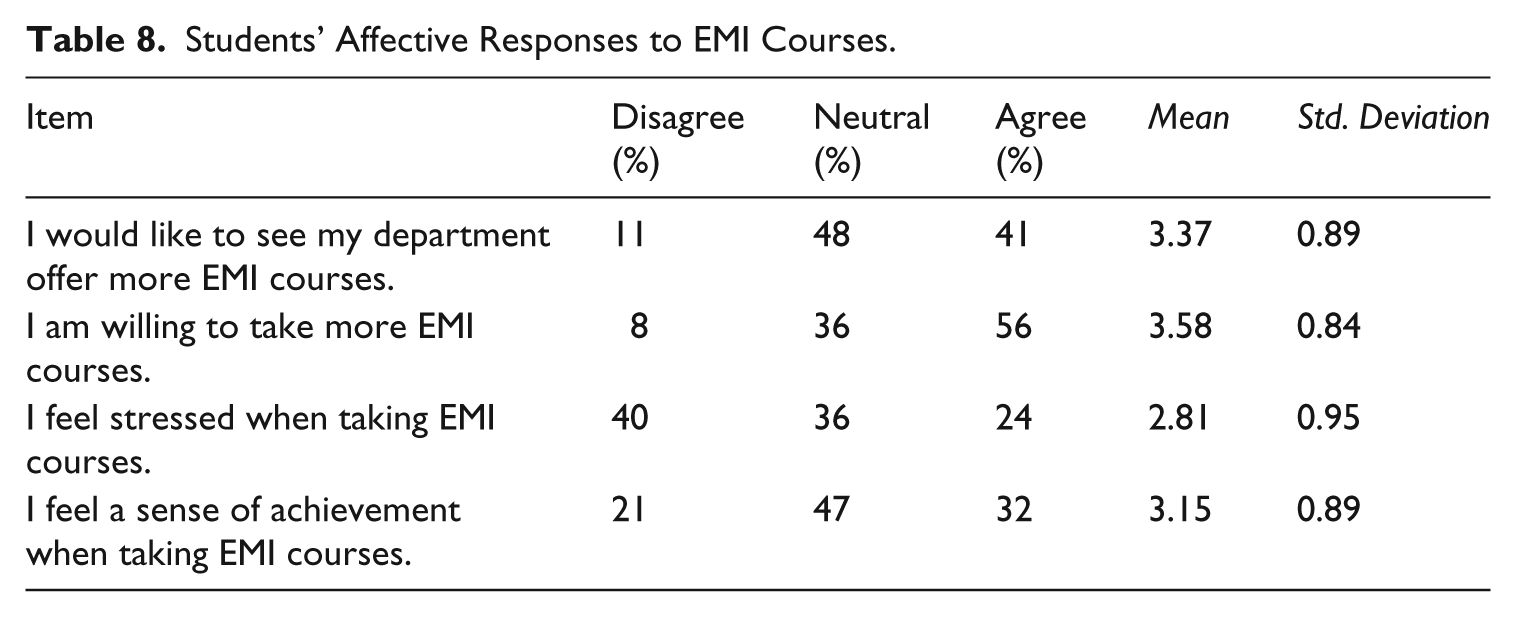
Four items on the questionnaire probed students’ affective responses to EMI courses (Table 8). Results showed that more than half of the students (56%) expressed their willingness to take more EMI courses and 41% were happy to see more EMI courses offered in their department. In addition, more students felt a sense of achievement (32%) than stress (24%) when taking EMI courses. Although many remained neutral, the pattern emerging here is that these students tended to have positive feelings towards EMI and that most did not seem overwhelmed by the learning tasks required of them.
Students’ Affective Responses to EMI Courses.
Finally, we turn our discussion to students’ attitudes towards EMI practices. Skeptics have argued that EMI can hamper learning of professional knowledge and that it should not be offered at lower levels of undergraduate study, where disciplinary foundation courses are offered to acculturate students into respective academic disciplines. Another criticism is that EMI does not suit students of all proficiency levels and therefore should be offered only as elective courses. The first two items of Table 9 examined students’ perspectives on these two arguments. Results showed that although about a third of students remained neutral on these two issues, more students disagreed than agreed with the two statements (40% v. 28% and 36% v. 24% respectively). In other words, it appeared that students were slightly more inclined to believe that EMI should be implemented more universally, instead of being limited to elective courses or to more advanced levels of study. This finding suggests that in general students saw EMI as beneficial and necessary, a finding supported by their largely favorable attitudes towards EMI (see Table 7).
Student Attitudes towards EMI Practices.
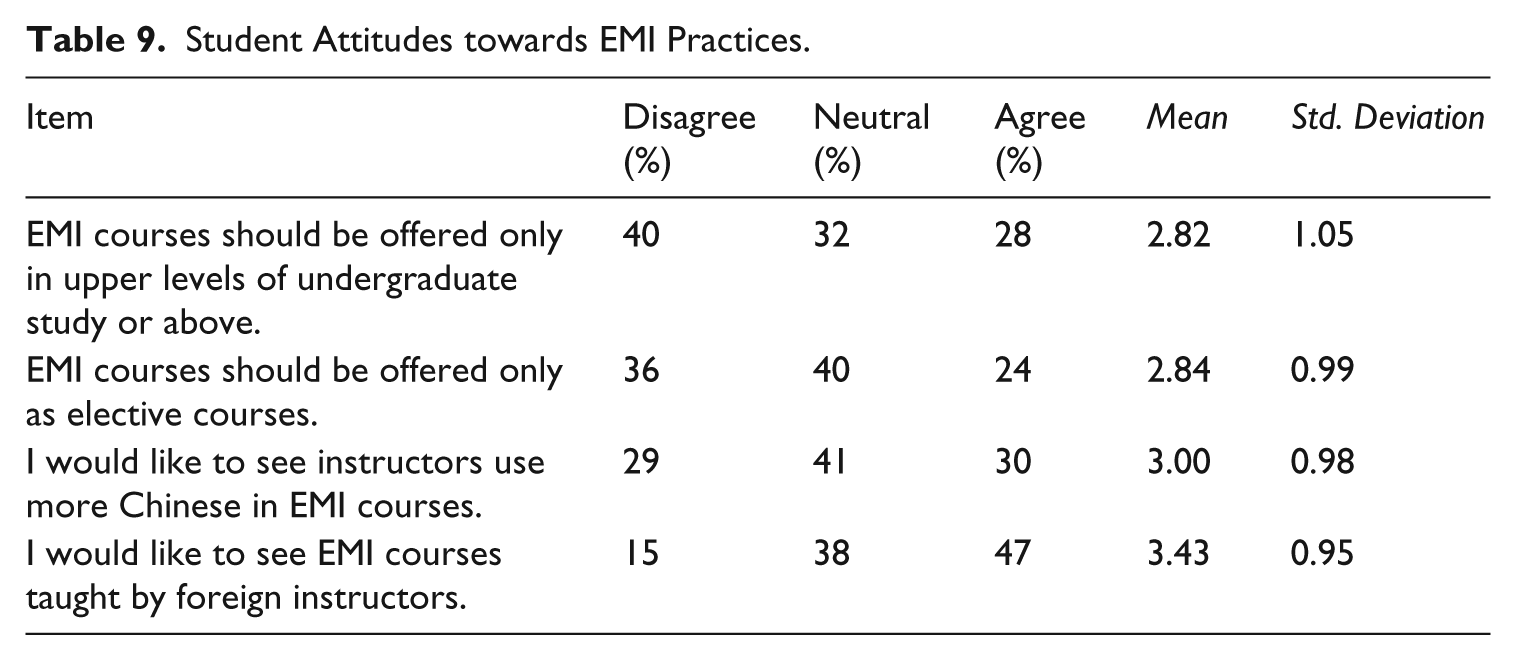
The last two items of Table 9 examined students’ attitudes towards foreign instructors and code switching in EMI classrooms. Results revealed that nearly half of the students (47%) would like to see EMI courses taught by foreign instructors, while 30% expressed the desire that instructors use more Chinese in EMI courses. These two apparently contradictory findings seemed to reveal the respondents’ mixed feelings towards EMI. On the one hand, although students were generally satisfied with the instructors’ English ability (as indicated in Table 3), they may find it unnatural to take English-medium courses from lecturers sharing the same first language and therefore preferred to take such courses from foreign instructors. On the other hand, they may still consider English an extra burden on lecture comprehension and professional learning and thus hoped for more Chinese use in class to facilitate learning.
Conclusion
This study surveyed 476 university students attending EMI courses to probe their learning experiences and general attitudes towards EMI courses. Results revealed that the instructor exerted an important influence on students’ course selection, while seeking English improvement was the second highest-rated reason for enrolling in EMI courses. These students generally reported their learning in EMI courses as satisfactory, while some of them attributed their learning difficulties to their own insufficient English competence. To compensate for comprehension problems, they tended to adopt cognitive learning strategies such as concentrating and taking notes in class. Finally, the investigation of student attitudes indicated their fairly positive attitudes towards EMI courses.
Although findings from this study revealed overall positive student views, we may want to consider whether they obtained the oft-claimed ‘double benefit of subject knowledge and improved target language proficiency’ (Coleman, 2006: 4–5). In line with the findings reported in previous studies conducted in both Asian and European contexts (Akünal, 1992; Chang, 2010; Huang, 2009; Li et al., 2001; Paseka, 2000; Sert, 2008), the majority of the students perceived an improvement in their English proficiency after taking English-medium courses. This improvement was particularly evident in receptive skills such as listening but less so in writing ability, a finding similarly reported in Li et al. (2001).
While EMI seemed to contribute positively to English development, students’ subject learning presents a fuzzier picture. On the one hand, a sizable majority of respondents reported good lecture comprehension; on the other hand, only half of them acknowledged the positive influence of EMI on their disciplinary learning, a finding corroborating the results obtained in Sert (2008). Considering the characteristics of English-medium courses, we may identify two reasons for such a discrepancy in students’ perceptions of lecture comprehension and subject learning. First, their instructors may have simplified the lecture content or covered less material in anticipation of comprehension difficulties, resulting in reduced disciplinary learning (Byun et al., 2011). Second, even though they encountered no apparent difficulty in lecture understanding, students may have had only a superficial grasp of academic content and therefore were uncertain about their acquisition of professional knowledge.
Overall, students reported satisfaction with EMI, a finding congruent with Chang’s (2010) study, which was also conducted in the Taiwanese context. Nevertheless, a closer examination of these two studies revealed several interesting differences. First, the two groups of students reported different degrees of lecture comprehension. In the current study, over three fourths of students (79%) found few or no problems in comprehending lectures, while in Chang’s study, less than one fourth of respondents reported a comprehension level of 75% or above, implying a much lower listening ability and, perhaps, overall English proficiency in the sample population. This ability difference could be explained by the rather distinct characteristics of the two groups of EMI students. Students in the current study were all from public universities, two fifths of them postgraduate students, and the majority enrolled in EMI courses by choice. Such students tend to be more academically-oriented and have a higher English proficiency. In particular, it can be assumed that those who opt to take EMI courses tend to have a stronger confidence in and, at the same time, a better command of their English ability, resulting in a generally better comprehension of English-medium lectures. A second difference lies in the possible factors contributing to students’ overall satisfaction with EMI. Chang explained the seeming contradiction between students’ low lecture comprehension and high course satisfaction by observing that the instructors used a rather high percentage of Chinese in EMI courses. This reason, however, can not explain the high student satisfaction found in the current study in which the majority of respondents reported limited Chinese use in class. Rather, based on the questionnaire data, students’ satisfaction may more reasonably be attributed to a rather high level of lecture comprehension, a general satisfaction with the teaching, and a favorable disposition towards EMI courses.
Findings from this study need to be treated with caution because this sample included only students from public institutions, mostly higher-ranking universities in Taiwan. These students may have a better foundation in English and content knowledge as well as a higher motivation to master professional knowledge and/or to improve English. Such participants are likely to be more receptive to instruction in a foreign language. However, it seems that if a more flexible approach is adopted and English-medium courses are offered as elective courses, students aiming to increase their own employability in this globalizing world will benefit more from this option. Nevertheless, this entails a careful evaluation of student ability before deciding whether to implement EMI in individual settings.
Another implication of this study is that universities implementing EMI should consider providing English for academic purposes (EAP) courses to foster students’ increased English learning motivation and to support their skill advancement. Such EAP courses may employ the theoretical framework developed to achieve both content and language objectives, which prioritizes a deliberated consideration of ‘language of learning’ (language needed to obtain basic concepts and skills related to the subject matter), ‘language for learning’ (language needed to operate in the target language environment), and ‘language through learning’ (language required to develop new meanings for a deeper level of learning) (Coyle et al., 2010: 37).
A third implication concerns creating opportunities for teacher development. As argued above, instructors seem to have a significant impact on student uptake of EMI learning as well as their satisfaction with EMI. To extend the instructor’s influence, it may be beneficial to develop teacher pedagogy courses (c.f. Ball and Lindsay, 2013). Such courses could focus instructors on their existing EMI practices with the aim of encouraging reflection and raising awareness of the relationship between learning and teaching. If formal courses are not desired, themed workshops or even informal faculty meetings could be held to share experience and to discuss issues that often surface in EMI situations. For example, should code switching between English and students’ mother tongue be adopted? If yes, what role should code-switching play and what factors need to be considered? Another possible area to be addressed in teacher workshops may be effective teaching strategies or scaffolding practices. In addition, ways to facilitate students’ learning in EMI should also be placed on the agenda. As indicated in this study, students tended to use only cognitive strategies, particularly those that can be readily employed during class time. How to foster active learning by, for example, encouraging previewing course materials, asking questions in class, and seeking help from instructors or trained teaching assistants may be a worthy topic in teacher pedagogy courses or workshops.
Finally, it should be noted that although the implementation and expansion of EMI in higher education institutions may be ‘an inevitable process that is likely to continue well into the future’ (Byun et al., 2011: 447), its educational effectiveness will have to be achieved with clear and long-term language policies, both at the national and institutional levels. In particular, due to the differences among universities in available financial resources as well as students’ and teachers’ ability and motivation in adopting English as the medium of learning and teaching, a sound institutional language policy is required for success in EMI programs. The recommendations made above may thus be more valuable because of their focus on the unique sociolinguistic realities found on individual campuses.
As this is a survey study of students’ perceptions of EMI learning, research employing different methodologies is needed to verify participants’ self-reports. Further studies using observation and stimulated recall methodology could provide us with a clearer picture of students’ experiences in EMI courses.
Footnotes
Funding
This work was supported by the National Science Council, Taiwan [grant number NSC97-2410-H-194-070-MY2].