




Abstract

Keywords
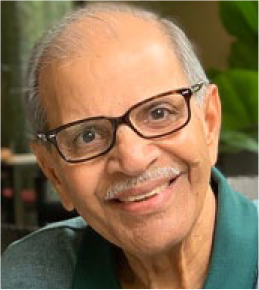
Vijay Kumar Bhatia retired from his role as a professor at the City University of Hong Kong and is now Visiting Professor at the Hellenic American University in Athens, and Adjunct Professor at the Chinese University of Hong Kong. He has extensive experience of teaching at undergraduate and postgraduate levels over a period exceeding 50 years in various universities. He has supervised more than 50 research dissertations, including PhD, M Phil. and MA dissertations in areas as diverse as Applied Linguistics, Teaching of English, Professional Communication, Discourse and Genre Analysis, Law and language, Advertising, Acquisition of Professional Competence in the Workplace, Cross-cultural and Intercultural Discourses.
Professor Bhatia publishes widely in areas of Genre Analysis of Academic and Professional Discourses, English for Specific Purposes (ESP) and Professional Communication, Simplification of Legal and Other Public documents. Three of his books, Analyzing Genre: Language Use in Professional Settings (1993), Worlds of Written Discourse: A Genre-based View (2004), and Critical Genre Analysis: Investigating Interdiscursive Performance in Professional Communication (2017) are widely referenced in genre theory and professional communication studies.
Professor Bhatia, thank you for agreeing to be interviewed. We are delighted to feature you as our Expert for this issue of RELC Journal.
Thank you for inviting me to share my personal reflections on ESP and Critical Genre Theory.
You are well known for the research you have done on Language for Specific Purposes and genre analysis, especially in the professional context. Can you tell us about how you became interested in these areas?
My interest in ESP goes back to 1965 when I got my first job as Lecturer in English in India. I thought I was lucky to get a job in the university, but soon I discovered that with my background in English Literature I was in the wrong profession because I was asked to teach two courses in English, one to law and the other to Engineering students. It was a tough task for a new lecturer with no qualification or training in teaching English, and certainly not to students with diverse disciplinary backgrounds. I started my search for a suitably relevant model with no success at all. ESP was almost non-existent at that time anywhere in the academic world, at least I was not aware of any developments in the field. It was an uphill struggle for me with little help from published research and practically no teaching materials available in India for teaching ESP courses. A few years later, I went to the Central Institute of English and Foreign Languages, which specialized in English language teaching and training. Even there, the struggle for research in ESP continued with some support from available resources from the British Council. It was then that I completed my first, although very modest, study on designing ESP teaching materials for law students. The following year I continued with my effort to complete a full-length Master of Letters thesis on English for Law. There was no stopping then with my interest in ESP.
In 1978, I went to the University of Lancaster in the UK to pursue my Masters Degree in Applied Linguistics and a year later I continued for my doctoral degree at the University of Aston in Birmingham with John Swales as my supervisor. Although it was initially a difficult decision to continue my love affair with legal English when no researcher or teacher was interested in English for law, I decided to pursue my interest in the analysis of British legislative writing as genre and how to make it more accessible to learners and other practitioners in the Commonwealth. I continued exploring the field of legal linguistics, developing my earlier work further to study the nature and function of legislative discourse, which led me to complete my PhD thesis in 1982. After that it was just a matter of continuing and developing my interest in genre-based analyses of many other academic and professional discourses, with a focus on their application to ESP.
What are some major developments in our knowledge about genres and approaches to doing genre analysis?
In recent years, genre scholars have identified three rather distinct traditions in genre analysis; the Australian Systemic Functional Linguistics tradition, the American rhetorical tradition and the British ESP tradition, and literature is full of publications dealing with each of these approaches.
I would like to focus on only one of these approaches, which is popularly known as the British ESP approach, centrally relevant to our discussion here. If you look at the historical development of this approach, you can identify three or maybe four distinct stages of development. I call them stages because every succeeding stage is a development on the preceding one, rather than self-sufficient on its own. The first stage largely focussed on textualization (linguistic description) in genre construction, investigating primarily form-function correlations in somewhat standardized aspects of genres. The second stage developed it further to include the rhetorical structure of academic and professional genres, which was and still is popularly known as move-structure, paying considerable attention to the conventions of, and the context in which, a specific genre is embedded. One can particularly regard this development as analysis of discourse structure or organization. More recently, there has been extensive and detailed attention paid to the contextualization of genres, more centrally focussing on the role of contextual (text-external) resources in the construction and interpretation of genres in academic and professional practices.
Let me illustrate these developments on the basis of my own academic engagement with genre analysis in the past almost 40 years of my engagement with genre. Considering some of the major developments in genre theory and their application to ESP and Professional Communication from my own perspective, I would like to begin with my 1993 monograph entitled, Analysing Genre: Language Use in Professional Settings, which offered a hands-on approach to put genre theory into practice, with a focus on how to do genre analysis. The analysis was intended to be applicable as a model for ESP teaching and learning, both in academic as well as professional contexts. To my surprise, it became popular with researchers, teachers and teacher trainers, and even after more than 35 years still continues to be quite widely used in genre studies, especially ESP.
As I continued my academic interest in exploring genre further, I soon realized that with our concern to make analyses pedagogically applicable to ESP, we were focussing on examples of genre with easily identifiable generic integrity, although from diverse disciplinary fields. As a result, we were often willing to undermine the existing complexities in genres. Of course, the model has served remarkably well for a number of years, but often we were challenged by real examples of genres from the world of work, which appeared to be different from those idealized ones used in ESP classrooms. Many of them were not only complex in their production, but also quite dynamic in their interpretation, use, and exploitation in the real world of work. It was this realization about the pervasive complexity of professional genres that encouraged me to look beyond the classroom to search for a more comprehensive model to analyse and account for such complexities in genres, which required a more multidimensional analytical view of a number of contextual aspects of genre; in particular, the notion and function of contextualization to account for hybridity across genres and the contexts in which these genres typically function. This led me to an interersting and insightful engagement with intertextuality and interdiscursivity in genre construction and interpretation, encouraging me to consider hybridity in terms of mixing, embedding and bending of generic norms in professional contexts. I also realized that the analysis of this level of complexity in genres required a more comprehensive analytical framework that was multi-perspective as well as multi-dimensional that can account for, and demystify, such complexities. So the next stage of development in genre for me was realized in the form of my (2004) monograph, Worlds of Written Discourse: A Genre-Based View.
This work also encouraged me to look at professional discourses in various contexts, which made it possible for me to initiate a number of interesting projects, especially those investigaing Corporate Disclosure Practices, International Commercial Arbitration Practices, and Colonisation of Arbitration Practice by Litigation Practices. These investigations revealed a number of interesting and significant insights, some of which were the following:
(a) Analysis of textual genres constitutes a necessary and useful activity, but it is not an end in itself; more importantly, it is interesting to analyse professional practice in which such genres are used. Hence the need to consider the role of Professional Practice, in addition to the genre, that we often begin with.
(b) Genres and even professional practices, in this increasingly complex professional world, are inceasingly becoming more hybrid, and hence interdiscursivity is a very powerful and useful device that can demystify appropriation of discursive resources across genres, practices, and even reveal the mindsets of professionals, as part of the disciplinary cultures.
(c) In order to explore (a) and (b), one may need a more serious engagement with multiperspective framework that can offer deeply grounded and comprehensive analysis of genres and professional practices, integrating multiple methods to enlighten our understanding of why the professionals use the language the way they do, and how they exploit interdiscursive resources to achieve their everyday professional objectives.
These concerns led me to the next phase of my academic career, which is illustrated in my third monograph, Critical Genre Analysis:Investigating Interdiscursive Performance in Professional Practice (2017).
In this recent work, you have developed a framework called ‘Critical Genre Analysis’. Can you tell us about how this framework differs from traditional genre theories?
Critical Genre Analysis (CGA) is an attempt to develop genre theory (without in any way undermining its value) beyond the analyses of textualization and rhetorical organization in order to understand, clarify and account for professional practices or actions in academic and professional contexts. I would like to clarify here that in spite of apparent similarities, CGA is meant to be different from Critical Discourse Analysis (CDA). CDA draws on critical theory as cultural critique, and focusses on social relations of domination, grounded in class relations, including race and gender, specifically commenting on their oppressive aspects. It tends to analyse social structures in recognition of domination, and sometimes even encouraging action against such practices. It thus examines social structures and relations in such a way that the analyses focus on power and domination in society.
CGA, on the other hand, focusses on demystification of professional practice through the medium of genre. An interesting aspect of this analysis is that it focusses as much on genres, as on professional practices; as much on what is explicitly or implicitly said in genres, as on what is not said; and as much on socially recognized communicative purposes, as on ‘private intentions’ that professional writers tend to express through their actions to achieve their everyday objectives. Thus CGA, with its focus on professional practice, considers individual members of professional organizations, although bound by their common goals and objectives, as still having enough flexibility to incorporate ‘private intentions’ within the notions of professionally shared values, genre conventions, and professional cultures.
A notion of practice thus describes the relation between shared values and flexibility as dynamically complex, in that institutional and organizational ideologies, and constraints are often conventionalized and standardized, but not always static or inflexible. Besides, in professional communication in today’s digital environment, CGA also considers its overwhelming power and influence in professional life. It makes a commitment, not only to describe, but also to explain, clarify, and ‘demystify’ professional practice, without in any way offering critique, of any kind.
Critical Genre Theory is thus a significant development on conventional genre analysis, at the very least, in three key aspects:
It attempts to account for the interdiscursive aspects of professional genres by defining and developing further the notion of ‘interdiscursivity’ in genre studies.
It develops the nature and function of discursive practices of professionals by integrating them with professional practices, in particular focussing on the role of language in achieving their professional objectives in everyday practice.
It employs a theoretical framework which is essentially multi-perspective and multidimensional requiring integration of various perspectives on, and methods available for, the study of discursive and professional practices, especially those used in disciplinary and professional contexts.
To summarize, genre theory in its traditional version has been too deeply concerned with the surface of discursive form, and how it realizes the conceptual and rhetorical structures, modes of thought and action of members of specific discourse communities. It is an attempt to relate discursive actions to modes of thinking and action in professional contexts. In addition, critical genre theory helps us to account for how genres focus on professional actions embedded in disciplinary, professional, and other institutional cultures. In short, it is an attempt to analyse and account for the interdiscursive performance of professionals in the achievement of their everyday professional objectives.
In the Critical Genre Analysis framework, you highlight a multi-perspectiveand multi-dimensional framework for doing genre analysis so that a researcher can gain an in-depth understanding of the relevant professional practice and professional culture. But since some genre analysts are language researchers who have limited experience or network in professional fields, can you give them some suggestions on how to investigate contextualization in that case?
As I mentioned earlier, there are three key aspects of CGA that I have identified for a comprehensive critical analysis of genre: focus on professional practice, in addition to discursive practice; investigation of interdiscursive performance of professionals in disciplinary contexts; and accounts of generic hybridity and contestations in identity construction and management. In order to analyse these key aspects comprehensively, there is a need for an integrated multidimensional and multi-perspective framework, which implies an integration of diverse methods depending on the objective and focus of the analytical exercise.
A multidimensional and multi-perspective approach in CGA therefore tends to draw on several types of analytical resources, which may include textual data to study genre as a reflection of discursive practices; ethnographic data to observe genres in action; and narratives of experience of expert members of professional communities to seek expert reactions for the validation of analytical insights. It also draws on socio-cognitive and institutional data to seek historically and structurally grounded accounts of the conditions under which genres are constructed, interpreted, used and exploited by expert members of disciplinary cultures in order to better appreciate their everyday professional activities.
It is important to understand that genre conventions are often implicitly understood and unconsciously followed by the people taking part in the communicative situation in which the genre in question is used. However, quite a lot of such information on these conventions can be accessed from guidebooks, manuals, practitioner advice and discussions of the social structure, interactions, history, beliefs and goals of the community etc. documented in published literature. Moreover, studies, accounts, or discussions of corporate structure and interactions, goals of disciplinary cultures, audience reception, etc. also provide useful background knowledge against which analyses of genres and practices can be grounded for explanatory or clarificatory insights. All these aspects of multi-perspective and multidimensional framework do not require any specialized knowledge or expertise, except a certain degree of willingness and interest in interdisciplinary work.
Understanding interdiscursive performance thus requires interest not only in the discursive and professional practice in interdiscursive contexts, but also in the recipient’s uptake in real life professional contexts, which essentially adds to a multi-perspective view of genre. Critical Genre Analysis, with a focus on interdiscursivity in professional practice, thus allows more attention to contextualization in addition to textualization of professional genres, and hence is essentially viewed as interdiscursive performance.
Digital media have clearly exerted significant influence on communication and generic practice. Can you describe some of the key changes you think genre researchers need to consider when performing genre analysis in the digital era?
Digital media in recent years have certainly introduced a new dimension to the way interdiscursive performance is realized and revealed in most professional contexts. One may also notice that professionals’ tasks are increasingly getting innovative as well as dynamic. The influence of electronically mediated communication on everyday professional practices is rapidly becoming a norm, rather than an add-on resource. E-mail has made interpersonal communication informal, personalized and efficient in most professional contexts. Blogging, texting, tweeting are being considered authentic writing in business, and therefore digital literacy has become an indispensible requirement in all forms of professional practice, making workplaces interdiscursively complex, often integrating multiple voices and conversations. Social networking has become an attractive resource to connect with people, which is being increasingly exploited in diverse forms of customer services, including advertising and marketing. However, the impact of digital media on professional genres is unlikely to change drastically the essential nature of genre so long as we continue to identify genre on the basis of its communicative purpose. Of course, the introduction of new media will make some aspects of genres more informal, and at the same time, will introduce new media genres that need to be identified, analysed and accounted for. However, it is a little too early to have a definitive profile of some of these new genres, as they are not yet sufficiently conventionalized and standardized, although they are being used in practice, posing a key challenge to genre theory.
To what extent can the ideas in Critical Genre Analysis be adopted in the analysis of digitally mediated genres?
So far as the CGA is concerned, there are adequate resources already in place in the form of interdiscursivity, which will take care of hybridity in genres, including the role of media, and the use of multi-method framework, which will account for any additional framework requirements, especially the integration of multimodality, wherever necessary. So the current practice may not require any major changes, except consolidation and integration of already available resources.
What directions do you think genre analysis will take in the future?
In the light of the rapidly changing professional environment, I think some the following developments are likely to attract the attention of genre researchers and ESP practitioners.
Firstly, as I mentioned earlier, the identification and analysis of novel and innovative hybrid and multimodal genres, particularly those that frequently exploit the digital media, and the applications of the insights so gained from such initiatives in applied linguistic contexts are likely to be the key issues and challenges in the coming years. It is an interesting time for genre researchers and language practitioners. Similarly, the use of digital media, multimodality, interdiscursivity, and above all, large-scale use of digital resources in ESP, professional communication, and also in other forms of language teaching and learning are becoming increasingly possible with practitioners to exploit electronic resources to motivate learners, on the one hand, and bridging the gap between the classroom and the realities of the world, on the other. It underpins two exciting developments in ESP, one is the undermining of value of the textbook, which is a welcome step, as this is encouraging self-designed materials by teachers, thus encouraging integration of research and teaching, which has been long overdue in ESP. Moreover, this is also making teaching more closely relevant to the needs of individual learners.
Secondly, new media is increasingly being used in English as a Second Language and English as a foreign language teaching as well, which adds to the self-confidence of teachers and motivates learners immensely. Genre-based analyses of discourse are used in all forms of language teaching now, which explodes the long-established myth that genre analysis is relevant to ESP only.
Thirdly, applied linguistics, which for a long time considered linguistic form, i.e. grammar, as the main focus in English language teaching, has now started focussing more interestingly on discourse as use of language as well.
You have been a very productive scholar. What advice would you give to novice academics in terms of academic publishing?
Research article is a genre of writing and like any other genre, it also has its typical conventions that must be followed in order to get recognition as a valid genre by editors or reviewers, who share such expectations as members of the academic research community. The genre of journal article therefore needs to be distinguished from a thesis, a research proposal, a term paper, or a research blog. However good the theoretical background, research methodology, or even the findings one may have in the manuscript, the conventions of journal articles are invariably imposed by editors and reviewers.
Some of these conventions are:
It must be an original piece of research in terms of the norms of inquiry in a field or discipline.
It needs to be stand-alone and complete in itself, clearly indicating the kind of research undertaken, how it was done, what was the outcome, or findings, and conclude by claiming a certain value of the findings.
In addition, it is often situated within the relevant academic research tradition.
So far as the choice of the journal is concerned, one should be clear about the mission of the target journal, as to whether it is theoretical, i.e. research-focussed, or applied i.e. pedagogy-centred. One must keep in mind the relevance of one’s research for the journal, clear evidence-based arguments, convincing and persuasive presentation and the value of the findings. It is always an advantage to do some homework to make sure that the information and insights are accurate in the light of current thinking. If one is a new author, it is always good to test one’s research first by presenting it at a conference.
One must also follow the journal’s guidelines, failing which it may be sent back by the editor without them seeking the opinion of the journal’s external reviewers. Moreover, one should be prepared to accept negative reviews and be prepared to revise and resubmit. Oftentimes one may be tempted to withdraw one’s manuscript as soon as one receives a letter from the editor that gives detailed recommendations for its revision. Sometimes such letters are seen as a rejection, which in reality may not be the case. It is rare that a manuscript is accepted without any revision. Besides, rejection may be because of the wrong choice of journal for the topic of submission, or an odd reviewer may be too harsh in his or her review. It is never the end of the road. If one believes in one’s idea and the treatment one has given it in the paper, one should never give up. We have to accept that competition these days is getting tougher as there are very few good journals relevant to any specific field, and there are many more submissions than in the past.
Over and above all, something that has helped me to publish without much struggle has been my persistent focus on careful and clear thinking about the issues that we experience and identify in our everyday academic engagements not only as researchers but also as teaching practitioners. If we have an idea that we think is worth investigating or researching, or maybe a possible solution, clarification, or explanation of an issue, or a topic for investigation we would like to initiate, then it is always valuable to pursue and discuss it, and once we have confidence about its significance, then take it to conclusion with conviction, persistence and an open mind. Finally, one must not hesitate to undertake a number of drafts until one is convinced about its quality. I often end up revising my drafts a dozen times before completing the manuscript for submission. But in the end, what counts is one’s belief in one’s work, having self-confidence, continuing hard work, and above all accepting and balancing other voices.Thank you very much for this opportunity. I hope readers will find it useful.
Thank you very much for answering these questions. I am certain that our readers will find your responses insightful and useful in developing research in areas of ESP and genre studies in an era when innovations and changes are rappidly taking place.
