



Abstract
Rehabilitation counselors and practitioners are under increased pressure to adopt and pursue evidenced-based practices, and the rehabilitation counseling literature has been criticized for a lack of empirical work providing support for individual-level interventions. The purpose of this literature review was to examine the last 25 years of rehabilitation research with specific attention to empirical studies related to active employment-focused interventions and present models of best practices that already exist within the literature. Findings indicated that 35 empirical studies met the search criteria of presenting services or models with initial evidence of supporting employment outcomes. In the review process, studies were classified into seven categories based on topic, including interagency collaboration, counselor education and customer outcomes, services to a targeted group, supported employment and evidence-based practice (EBP), empowerment and customer self-concept, essential elements of service delivery, and miscellaneous vocational rehabilitation services and outcomes. A review and synthesis of studies within these topical areas are presented, along with implications within the context of the critical need for EBPs in rehabilitation counseling.
Keywords
The state–federal vocational rehabilitation (VR) program is one of the most important vocational service programs in the United States, with a strong commitment to serving people with the widest range of disabilities (Saunders, 2005; U.S. Government Accountability Office [GAO], 2005). According to data gathered by the Rehabilitation Services Administration (RSA) for fiscal year 2005, a total of 1,402,291 individuals with disabilities were served by the VR program in the United States and U.S. territories. The total number of individuals with disabilities closed successfully earning at or above the federal minimum wage were 197,661 or 14% of the total served (RSA, 2005). Nationwide, approximately 55.8% of individuals who exit the VR program after receiving services go to work (RSA, 2005). Originating with passage of the Smith-Fess Act in 1920 and authorized by the Rehabilitation Act of 1973 as amended in 1998, the state–federal VR program provides grants to states to support a wide range of services designed to help individuals with disabilities prepare for and engage in gainful employment consistent with their strengths, resources, priorities, concerns, abilities, capabilities, interests, and utilizing informed choice.
Although the effectiveness of the VR counseling has been empirically demonstrated (Pruett, Swett, Chan, & Rosenthal, 2008), there is a serious lack of evidence-based practices (EBPs) that accurately define what specific VR service(s) and interventions produce employment outcomes for individuals with disabilities who participate in the state VR program (Leahy & Arokiasamy, 2010). Little is known about the type of services that might contribute differentially to improve employment rates of subpopulations with low employment outcomes. In addition, we still do not have an answer to the question raised by Paul (1967), “What treatment, by whom, is most effective for this individual with that specific problem, and under which set of circumstances?” (p. 111). Answers to this question will provide VR counselors with information regarding what services and interventions have a high probability of predicting successful outcomes for VR customers.
In addition to determining which approach works best for whom, how, and under what conditions, there are internal and external pressures for rehabilitation counselors in VR programs to demonstrate that they are using an array of evidence-based interventions in their practice to improve employment outcomes for customers with significant disabilities (Rubin, Chan, & Thomas, 2003). For example, the Work Incentives Improvement Act of 1999 and the Workforce Investment Act of 1998 require the state–federal VR program to demonstrate service efficacy to maintain and expand program funding and services (Koscuilek, 2004). Given current budget deficits at the national and state levels, along with increasing health care costs and shrinking public funding, budget-minded employers and government agencies are asking hard questions about expected outcomes of rehabilitation methods and demanding objective evidence to justify their support of rehabilitation services (Chan, Rosenthal, & Pruett, 2008). The public rehabilitation program is at a crossroads and must now develop EBPs that demonstrate the effectiveness of the VR services provided to individuals with disabilities leading to competitive employment outcomes.
The VR process typically involves a range of personal and environmental processes and the interactions thereof. This makes determining the relationship between specific aspects of service delivery and the outcome very complex (Saunders, Leahy, McGlynn, & Estrada-Hernández, 2006). There is considerable variation in VR agency outcomes that can be attributed to individual differences at the customer level, environmental and economic characteristics of the state, and differences in performance of the VR agencies themselves (Chan, Wang, Muller, & Fitzgerald, 2011; GAO, 2005, 2007). Although it is impossible to isolate all of the reasons for the variation, it is useful to examine different practices and approaches that appear in the literature. These findings can provide direction for future research, specifically, highlighting existing practices that are considered promising or effective over time that can be replicated, expanded, and evaluated to the point where they may be considered evidence based.
The purpose of this integrative review is to examine the literature to select studies describing best VR service practices by state VR agencies. The following section of this review provides background on EBP and its relevance to rehabilitation research and service provision. Following this background, the methodology for the literature review is presented along with a discussion of articles describing best service practices in the VR setting.
EBP and Rehabilitation Counseling
EBP in medicine and health care is not a new concept. The need for EBP originated in the medical and allied health disciplines in the 1950s when physicians argued for randomized controlled trials to improve health care services. A hierarchy of evidence obtained from empirical study has been established, with the highest levels of evidence coming from a systematic review of several randomized controlled trials of an intervention to lower levels of evidence obtained from expert opinion (Pruett, Rosenthal, Swett, Lee, & Chan, 2008). The EBP model requires the practitioner pose important and relevant questions regarding the provision of service and to use research to answer them, resulting in effective service provision based on sound evidence (Chan et al., 2008; Chan et al., 2011). Although the medical and other health care fields such as psychology have embraced EBP models of practice, the field of rehabilitation counseling has yet to fully adopt EBP in rehabilitation counseling education programs, field practice, or research (Tarvydas, Addy, & Fleming, 2010).
Multiple barriers to adopting EBP in rehabilitation counseling have been identified in the literature (Chan et al., 2011; Johnston et al., 2009; Leahy & Arokiasamy, 2010; Tarvydas et al., 2010). One of the major barriers to EBP implementation in rehabilitation counseling is the challenge of training practitioners to utilize research and results appropriately in practice (Chan et al., 2008). In addition, rehabilitation counselors work in many different practice environments (e.g., State–federal VR program, private, community rehabilitation organizations, and school systems), with many different roles, responsibilities, and customers to serve. The spread of rehabilitation counseling in multiple service settings has lead to not only specialty areas of rehabilitation counseling practice, such as transition, but has made rehabilitation research very complex. Additional barriers are inherent in the nature of rehabilitation research, as explained by Johnston et al. (2009), including the emphasis on empowering people with disabilities, small sample sizes, difficulty achieving internal and external controlled conditions, ethical challenges to including a control group, funding, and the need to include multiple social and environmental factors (Tarvydas et al., 2010). As Bellini and Rumrill (1999) observed, as rehabilitation research focuses on more complex phenomena, investigating interactions among multiple independent and dependent variables, research models must become more complex as well. In addition, as rehabilitation programs experience increased pressure to provide services that are supported by best scientific evidence, rehabilitation researchers must become increasingly concerned with the need to provide data that clearly documents that consumer gains can be attributed to rehabilitation interventions (Chan et al., 2011; Rubin et al., 2003).
Although barriers to implementing EBP in rehabilitation counseling have been well documented, there continues to be a call for research with a focus on how to develop empirically based EBP models that examine and demonstrate the effectiveness of VR services provided to individuals with disabilities. Developing EBP has been recently been emphasized by the National Institute of Disability and Rehabilitation Research (NIDRR) in all research projects publicly funded through NIDRR (Brannon, 2010). As Leahy, Thielsen, Millington, Austin, and Fleming (2009) stated, the emphasis in the future will be on the meaning of research findings to practitioners and consumers in improving services and employment outcomes, and translating and disseminating EBPs so they affect and inform practice and policy.
NIDRR and RSA, as the major funding sources of rehabilitation research, are working to close the gap between practice and EBP. Specifically, RSA is concerned about developing EBP that will provide evidence of effectiveness or efficacy of a practice that will potentially increase the likelihood of its adoption by practitioners, improving its chances of impacting employment outcomes of individuals with disabilities. In a resource-limited environment, the evidence of efficacy and effectiveness can help make programmatic funding decisions more rational and, hopefully, more equitable (Brannon, 2010). It is quite clear that RSA and NIDRR are calling for researchers to develop proven EBPs to enhance VR customer employment outcomes and provide data supporting the effectiveness of the VR program.
Given the emphasis by NIDRR and RSA to develop, implement, and disseminate EBPs in rehabilitation counseling, researchers have taken steps to address the need for EBP within the rehabilitation counseling profession. Authors have suggested methods for practitioners, educators, and researchers to adopt, engage with, and implement EBP in rehabilitation counseling (Hergenrather, Geishecker, McGuire-Kuletz, Gitlin, & Rhodes, 2010; Kosciulek, 2010; Leahy & Arokiasamy, 2010; Strauser & Wong, 2010). Contextually, Tarvydas et al. (2010) addressed the challenges EBP presents to the rehabilitation counseling field in the areas of rehabilitation philosophy, ethics, and the relationship between research and practice. Chan et al. (2011) presented EBP as an opportunity for rehabilitation counselors to use empirically validated interventions to ensure that their customers are getting the best possible services. As is pointed out by the authors, the continually low rates of employment for persons with disabilities, the changing demographics of the United States, and our increased understanding of the experience and impact of disability provide practitioners with multiple challenges that they must address through services, and they may do so more effectively and efficiently when practice is supported with research-based evidence.
Literature Review Overview and Method
To carry out this integrative review, the article selection criteria focused on identifying “active VR services” at the state VR agency level published in the last 25 years. “Active services” was defined as actual state VR agency services delivery practices that are considered “best practices” leading to competitive employment outcomes for individuals with disabilities, receiving VR services through the state VR agency. The exclusive emphasis on “active services” led to a decision not to include articles where the research methodology relied solely on using the RSA 911 or other secondary database. To locate relevant articles, the research team consulted other efforts to review literature pertinent to practices in the public VR program (e.g., Institute for Community Inclusion, 2010) and searched independently for additional articles published during the time period 1986–2011. The research team located a total of 561 articles during this search. Reviewers independently read the articles and evaluated them for appropriateness for inclusion in the sample, based on whether the article was an empirical evaluation of an active service related to the VR setting.
Of the 561 articles reviewed by the research team, 35 articles that matched the selection criteria were identified as “active service” examples of best practices in state VR agencies. As part of the review process, the 35 articles were classified into seven categories based on the content review. Articles were thematically analyzed and sorted by the research team based on the purpose, goals, and intended audience of the intervention, and categorized according to best fit. This was accomplished through an iterative group process of reading articles for content, suggesting possible themes, and then reaching a final decision based on group discussion until agreement was reached. Although some articles could have been classified into multiple categories, we decided to make the categories mutually exclusive. The categories were as follows:
Interagency collaboration (n = 10),
Counselor education and customer outcomes (n = 5),
Services to a targeted group (n = 5),
Supported employment and EBP (n = 5),
Empowerment and customer self-concept (n = 3),
Essential elements of service delivery (n = 3), and
Miscellaneous VR services and outcomes (n = 4).
The following is a discussion of the findings of the integrative literature review by category.
Interagency Collaboration
Interagency collaboration articles focused on intera gency agreements involving one-stop centers, supported employment/customized employment, VR and mental health agencies, and community colleges and universities (see Table 1). These studies included a variety of methodologies, such as a case study methodology to examine practices in one-stop career centers designed to engage employers and develop jobs for customers with disabilities (Timmons, Boeltzig, Hall, Hamner, & Fesko, 2006). Other studies within this category focused on interagency collaboration for services to individuals with developmental disabilities and psychiatric disabilities (Borgeson & Cusick, 1994) and a seamless transition model (Certo et al., 2003). Specifically, Cohen, Butterworth, Gilmore, and Metzel (2003) outlined seven themes that highlighted “high performing” states that included interagency collaboration, and Metzel, Foley, and Butterworth (2005) identified crucial characteristics that resulted in agency collaborations and successful employment outcomes for supported employment programs. Several studies in this category explored collaboration between community colleges, universities, and VR agencies as a “best practice.” Flannery, Yovanoff, Benz, and McGrath Kato (2008) noted that collaboration between a community college and VR for short-term training programs improved employment outcomes. Balcazar, Keys, Davis, Lardon, and Jones (2005) examined an intervention designed to promote goal attainment as part of a university–VR agency collaboration leading to increased goal achievement. The remaining studies examined formal agreements and procedures between VR and a mental health agency (Rogers, Anthony, & Danley, 1989), a multisite transition grant program (Brewer et al., 2011), and a “customized employment” program, the Tennessee Customized Employment Partnership (TCEP), designed to assist individuals who require intensive support into employment (Luecking & Luecking, 2006).
Interagency Collaboration.
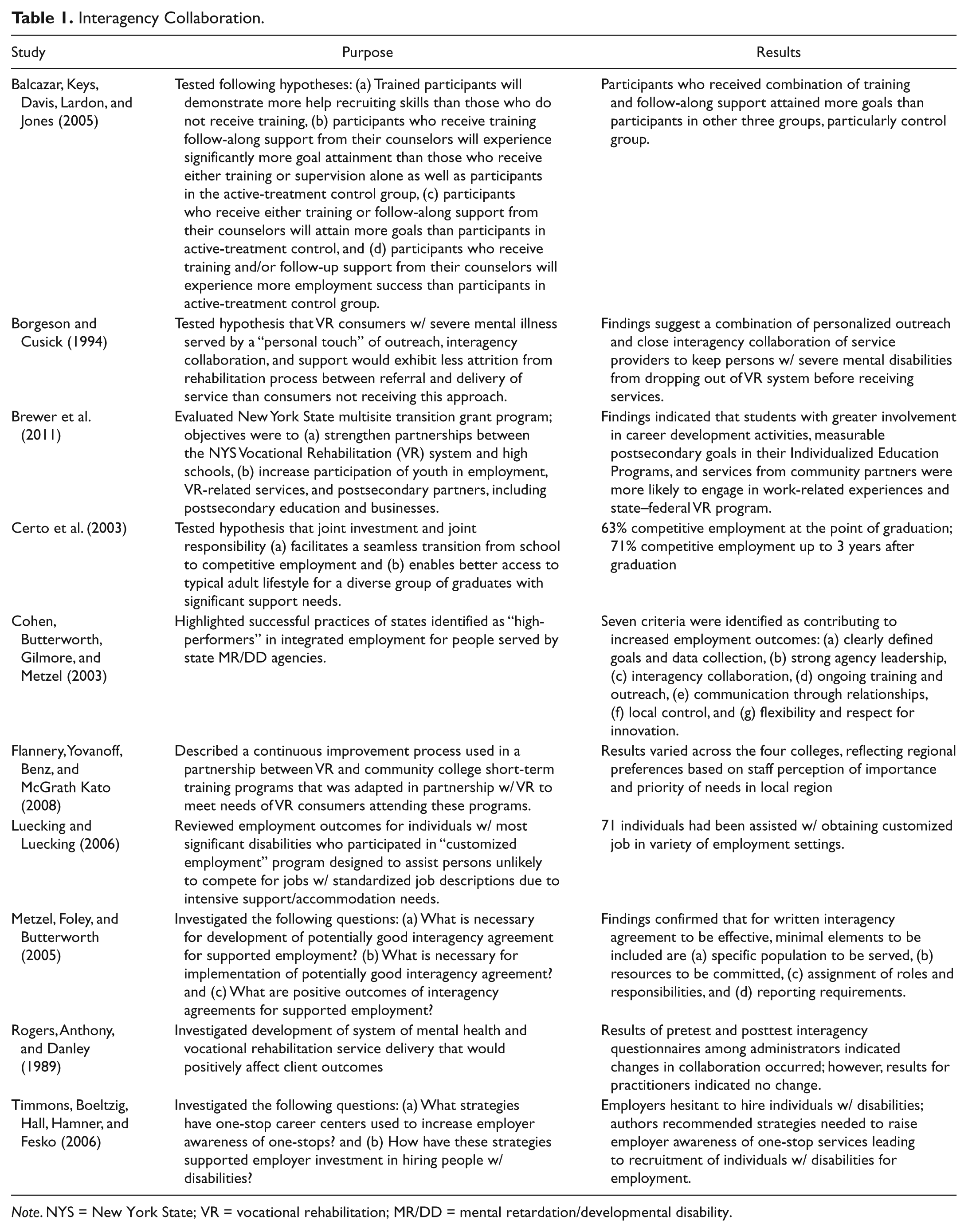
Note. NYS = New York State; VR = vocational rehabilitation; MR/DD = mental retardation/developmental disability.
The interagency collaboration studies were the most numerous among “best practices” in VR service delivery. The “best practices” described in these works included strategies to engage employers in the job-seeking process at one-stop service centers and interagency agreements for services to specific populations in the form of supported employment services and partners involving VR agencies, community colleges, and universities that result in positive outcomes for customers. As noted by the authors, the advantage of interagency collaborations is the pooling of funding sources, sharing of staff expertise, and coordination of service delivery to targeted populations. On a systems-level, interagency collaborations offer a consistent service delivery method leading to employment outcomes. On the practitioner level, interagency collaborations provide access to resources and services that might not be available without an interagency agreement. For customers, interagency collaborations offer choice in training and employment options for VR plan development.
Impact of Counselor Education on Customer Outcomes
Studies related to counselor education and customer outcomes took two different approaches to investigating the relationship (see Table 2). In a series of four studies, Szymanski and Parker (1989a, 1989b), Szymanski (1991), and Szymanski and Danek (1992) utilized case data and information on counselor preparation and education to determine whether there was a relationship between type of education (e.g., bachelor’s degree, master’s degree) and rehabilitation-specific training and employment outcomes of customers. Researchers evaluated effectiveness and cost-efficiency with customers with severe and nonsevere disabilities. Across studies, authors found that counselors with a master’s degree in rehabilitation counseling performed significantly better with clients with severe disabilities than counselors who had a bachelor’s degree or an unrelated master’s degree; however, no differences were found in success with customers with nonsevere disabilities. When time in position was also included, results indicated that the differences in performance were not found among counselors with more than 6 years of experience.
Impact of Counselor Education and Customer Outcomes.
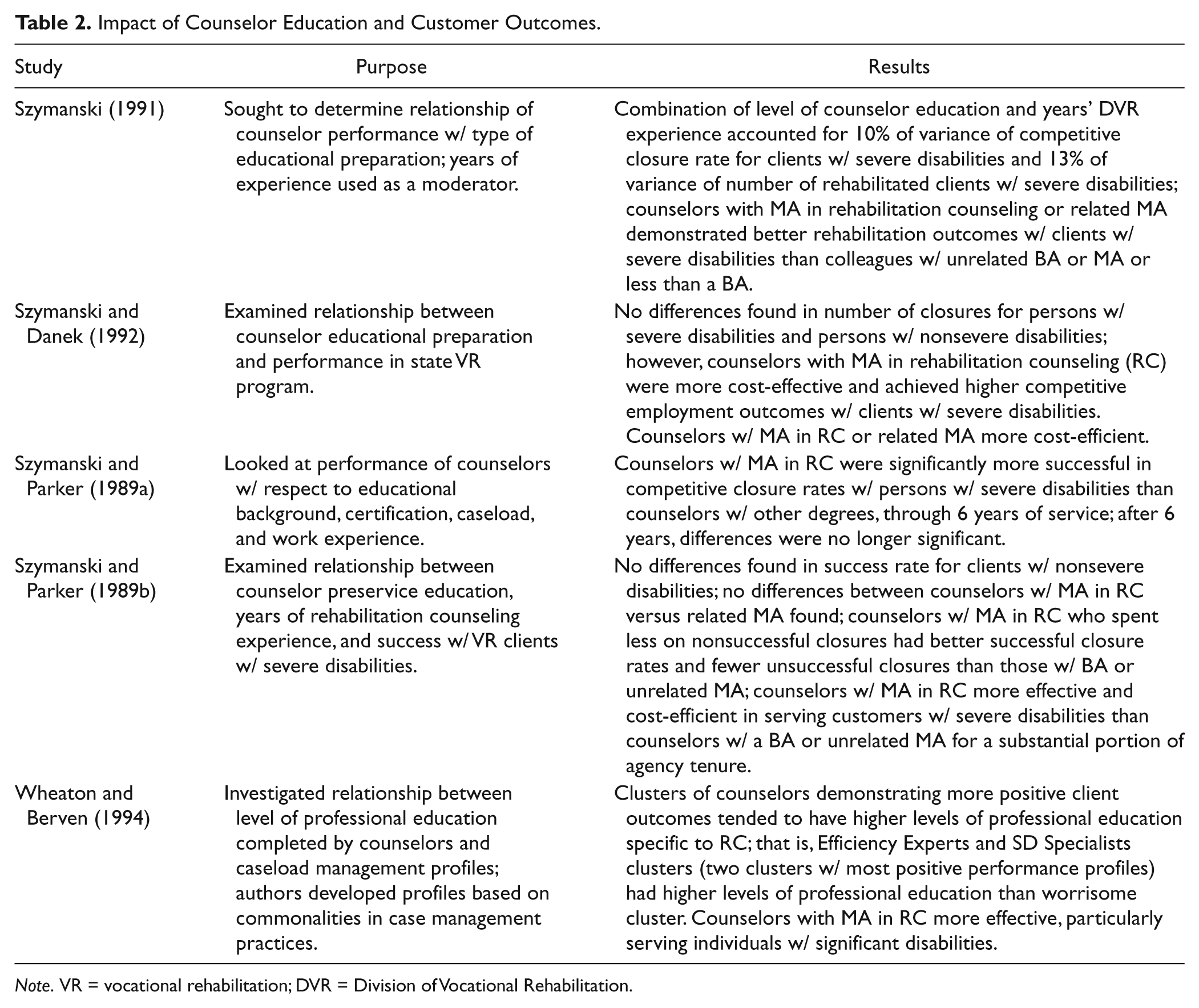
Note. VR = vocational rehabilitation; DVR = Division of Vocational Rehabilitation.
Using a different approach, Wheaton and Berven (1994) used case performance data to rate counselors in case management performance and then performed a cluster analysis to determine distinct types of case management practice. Six distinct clusters were created, and correlations were calculated between cluster, customer outcomes, and level of education (MA in rehab counseling, MA in related field, MA in unrelated field or BA). Results indicated that clusters of counselors demonstrating more positive client outcomes tended to have higher levels of professional education in rehabilitation counseling. Findings from the studies within this category provide empirical evidence that could affect agency-hiring practices, particularly concerning service to and performance with individuals with significant disabilities.
Services to a Target Group
Studies in this category reflect efforts to find what services are most important for people within a particular target groups (e.g., racial/ethnic group, age, disability type) given some common barriers to work (see Table 3). Findings indicate that a few models of service exist (e.g., the Program for Assertive Community Treatment [PACT] team approach, an employment readiness training) for which there is initial evidence of effectiveness with their target population (Becker, Meisler, Stormer, & Brondino, 1999; Spence, 2000). Becker et al. (1999) provided evaluation data from a psychosocial vocational program modeled after PACT that improved customer participation in services. Spence (2000) provided evaluation data for a community rehabilitation program focused on adults with mental disabilities. Results demonstrated that a specific service offered in a vocational preparation program was a significant predictor of successful employment.
Services to a Target Group.
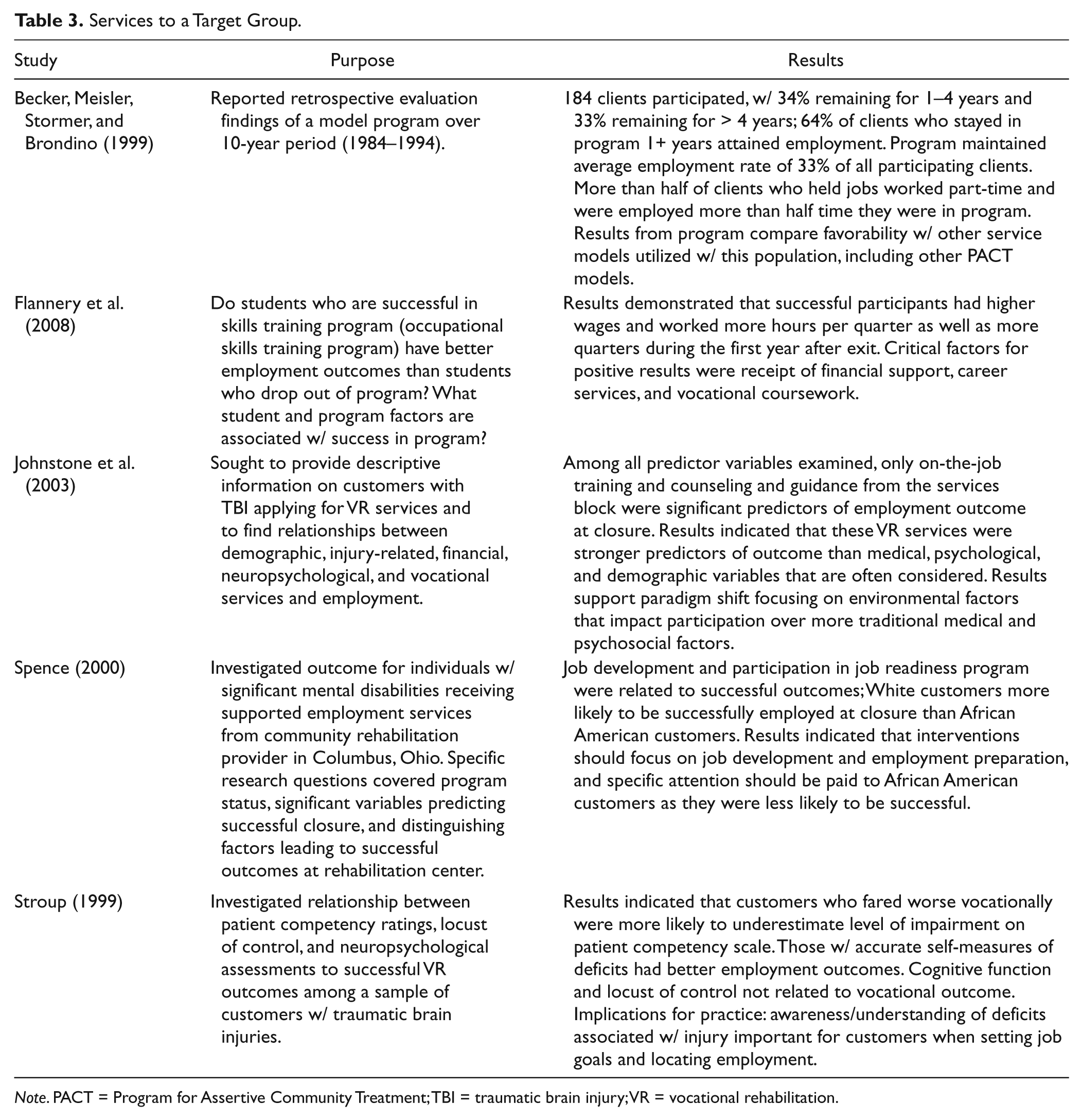
Note. PACT = Program for Assertive Community Treatment; TBI = traumatic brain injury; VR = vocational rehabilitation.
For customers with traumatic brain injury (TBI), Johnstone et al. (2003) compared VR services for demographics, medical, financial, and neuropsychological impairment information with respect to employment outcomes using secondary data analysis. Findings indicated that VR services—specifically, counseling and guidance and on the job training—were better predictors of employment than the other factors. Another investigation of outcomes for VR customers with TBI explored the relationship between customer self-rated competency, locus of control, and performance on neuropsychological tests and employment outcomes (Stroup, 1999). The results indicate those who had more accurate self-measures fared better in terms of employment than those who underestimated their level of impairment.
Findings based on VR services indicate that several services are related to successful outcomes, including counseling to increase customer awareness of deficits, assessment, comprehensive approaches to providing community-based services, vocational preparation, counseling and guidance, and job placement. These initial results should be explored in more detail to determine specific aspects of services that are related to employment success for the particular population of interest.
Supported Employment and EBP
Supported employment provides individuals with the most significant disabilities an opportunity to engage in integrated employment through interagency collaborations and long-term supports needed to maintain employment. Several studies in the sample described supported employment and other evidence-based employment practices that have been empirically supported in the psychiatric rehabilitation literature (see Table 4). Bond (1998) introduced the effectiveness of the Individual Placement and Support model (IPS) of supported employment through comparing the traditional approaches in VR services. The IPS principles resonate with a larger body of research suggesting that direct methods of intervention are better than traditional VR service stepwise methods, that integrated approaches are better than a brokered purchasing of services approach, and that assisting people to adapt to specific environments, rather than providing generic training, is more effective. In addition, Bond and Campbell (2008) identified the effectiveness of a variety of strategies, including supported employment to attain EBP by introducing the Substance Abuse and Mental Health Services Administration (SAMHSA) National EBP project and the Texas Blazing New Trails Conference. Larson (2008) suggested that practitioners need to utilize Evidence-Based Supported Employment and Motivational Interviewing to improve employment outcomes. Larson also emphasized that financial support, professional training, and agency support are needed to effectively implement this service package. Rhodes and Drum (1989) offered several “best practices” related to hiring for public jobs that improve the ability of service organizations to successfully implement supported employment programs through job restructuring. Revell, West, and Cheng (1998) found vendors funding methods that incorporate negotiated rates at the individual provider level have significantly more positive response than statewide fixed rates for all vendors in terms of supported employment funding methods.
Supported Employment and Evidence-Based Practice.
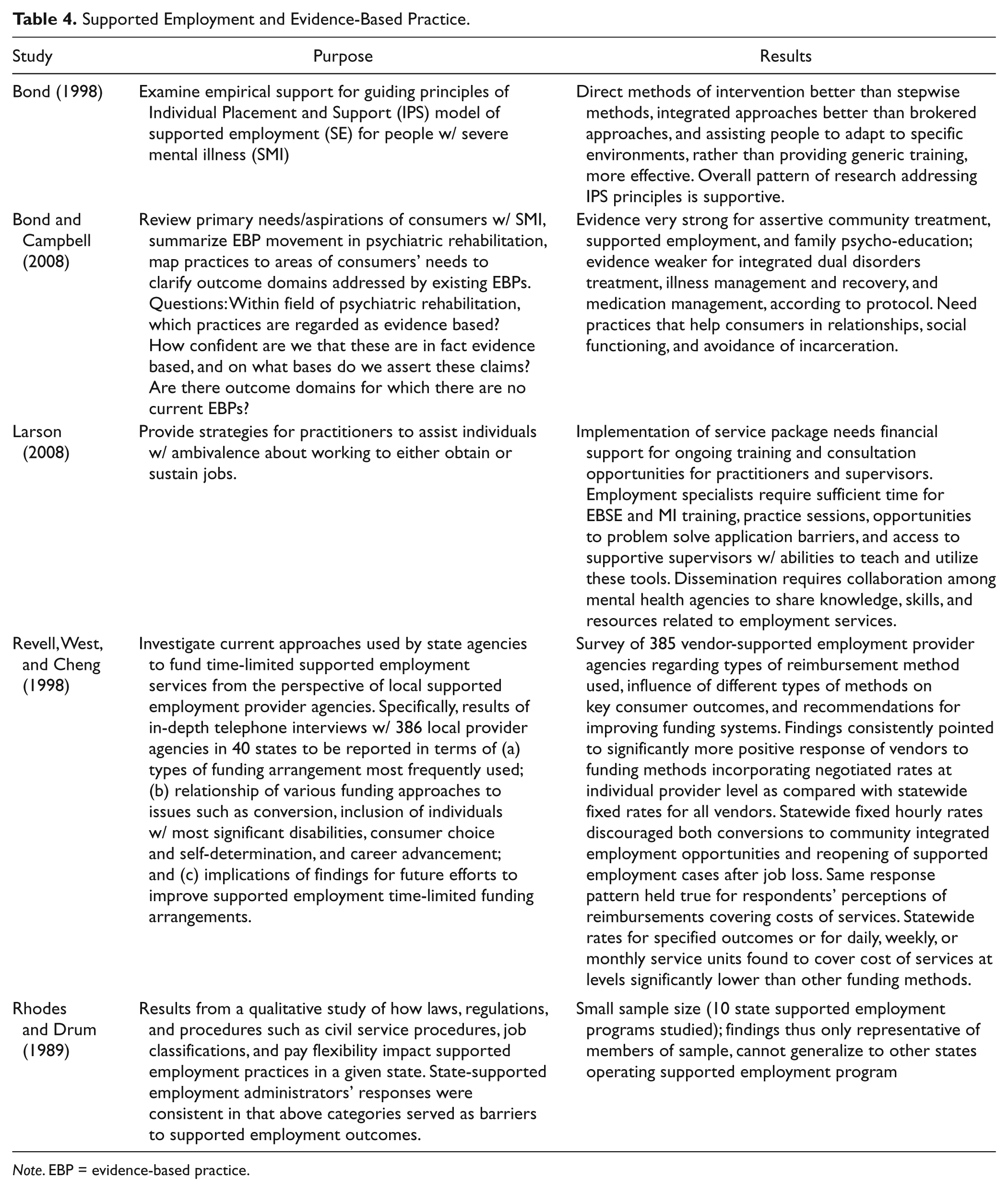
Note. EBP = evidence-based practice.
The research suggests that supported employment and EBPs lead to competitive employment outcomes for individuals with severe, persistent mental illness by providing a range of intense supports developed around an individual’s unique employment needs.
Empowerment and Customer Self-Concept
Within the empowerment and customer self-concept category (see Table 5), studies indicated a positive relationship among empowerment, self-concept (Saunders, Leahy, & Frank, 2000), self-esteem (Ferris, 1999), consumer involvement, service satisfaction (Ferris, 1999), employment outcomes (Ferris, 1999; Saunders et al., 2000), community integration (Kosciulek, 2005), and quality of life (QOL; Kosciulek, 2005). Saunders et al. (2000) demonstrated that self-concept may be the most effective predictor of employment outcomes using a quasi-experimental design and a psycho-educational intervention in VR program. Ferris (1999) found that empowerment training increased consumer involvement and satisfaction with services. Finally, Kosciulek (2005) presented the Consumer-Directed Theory of Empowerment (CDTE) model to develop and evaluate disability policy and rehabilitation services and examined the direct relations among consumer direction, community integration, empowerment, and QOL using the Longitudinal Study of the Vocational Rehabilitation Services Program database.
Empowerment and Customer Self-Concept.

Note. MJC/RS = Michigan Jobs Commission/Rehabilitation Services; QOL = quality of life.
The findings from the empowerment and self-concept studies provide empirical evidence that could impact VR service delivery practices, particularly that services addressing empowerment and self-concept increased consumer involved and satisfaction with services leading to enhanced employment outcomes.
Essential Elements of Service Delivery
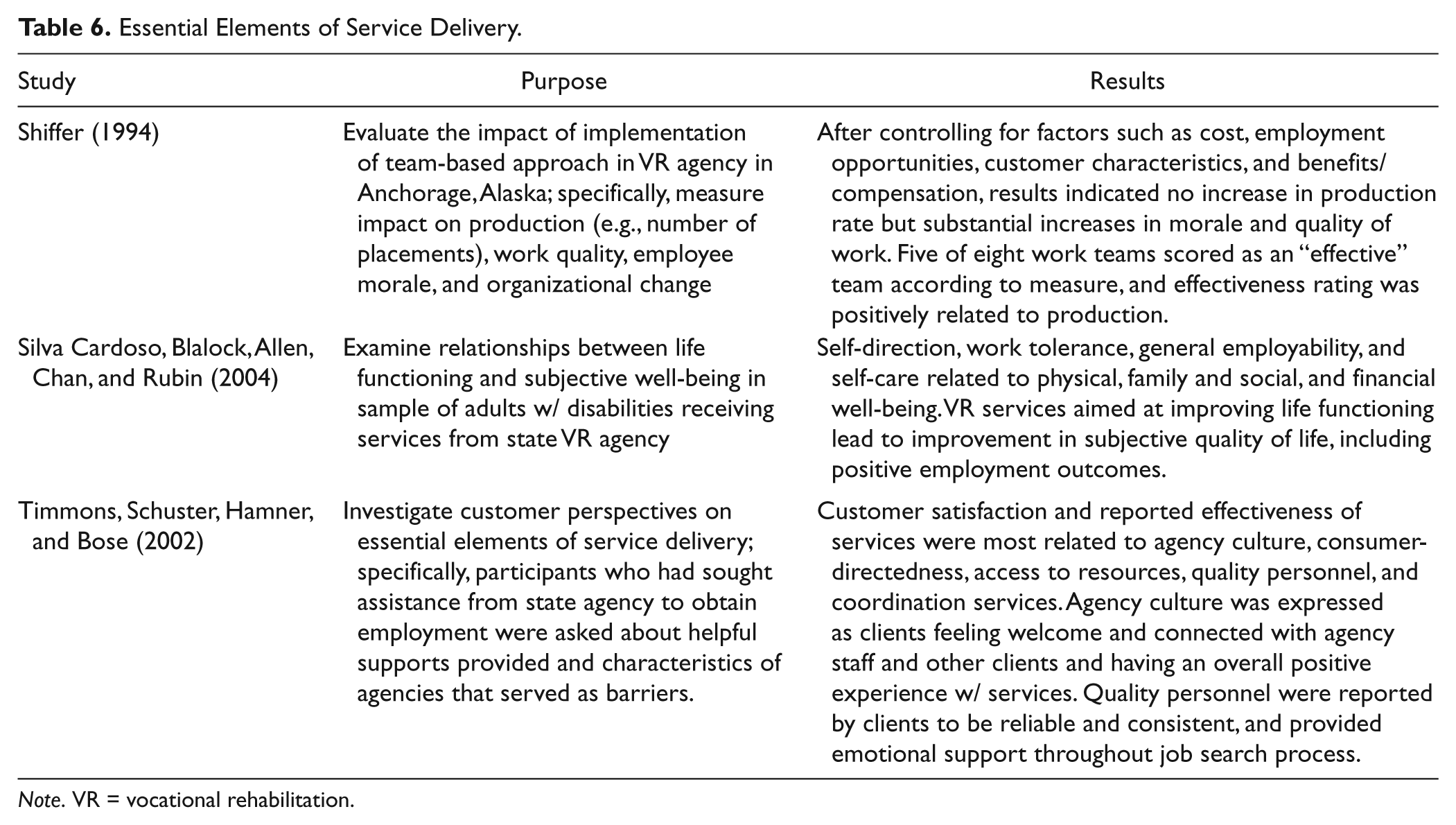
Several studies in the sample related to essential elements of service delivery, and approached the topic using different conceptual frameworks and methodologies (see Table 6). Timmons, Schuster, Hamner, and Bose (2002) sought the view of adults with disabilities who had utilized state agency services to obtain employment. Participants indicated that the most effective aspects of agency services were related to feeling welcome and making a connection with agency staff. Shiffer (1994) explored aspects of agency culture and the impact on services, by analyzing the impact of a team-based approach in a VR agency. Findings indicated effective teamwork accounted for a higher proportion of placements. Silva Cardoso, Blalock, Allen, Chan, and Rubin (2004) explored elements of service delivery from the standpoint of the relationship between services targeted at improving functioning and well-being. Findings indicated that there was a moderate correlation between measured levels of functioning in self-direction, work tolerance, general employability, and self-care and physical, family and social, and financial well-being. In terms of implications for best practices, this finding can be applied to service selection; there is some initial evidence that improving function in those areas may also affect well-being. Considered together, findings from these three studies provide important information for service provision; the targets of the interventions (e.g., life skills) and the way the services are provided (e.g., teamwork, customer, and staff connection) appear critical to successful outcomes.
Essential Elements of Service Delivery.
Note. VR = vocational rehabilitation.
Miscellaneous VR Services and Customer Outcomes
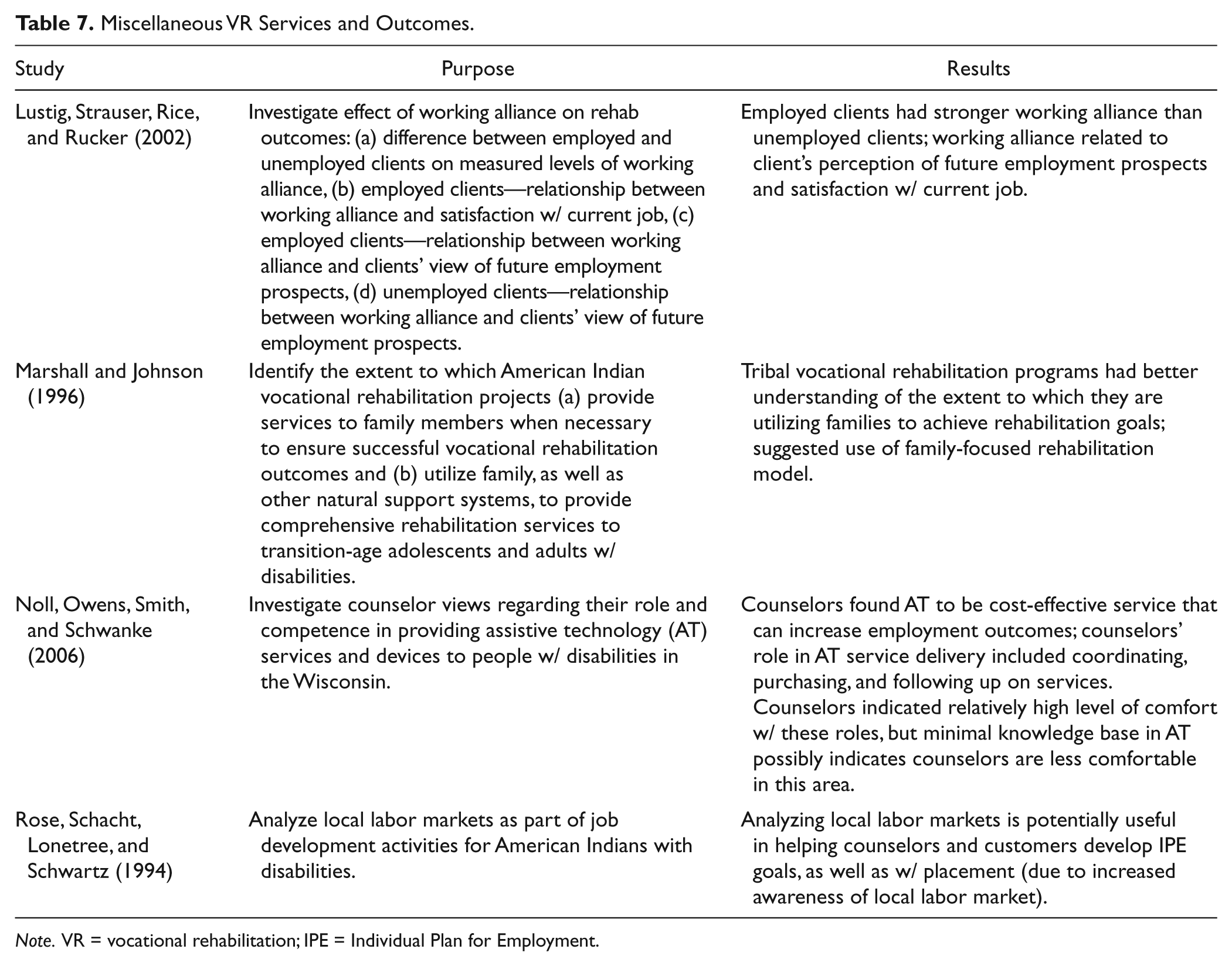
Several studies found in the review pertained to aspects of services that are shown to have a relationship with improved outcomes in VR agencies. These studies investigated a variety of topics, including the working alliance (Lustig, Strauser, Rice, & Rucker, 2002), assistive technology (Noll, Owens, Smith, & Schwanke, 2006), family-focused services (Marshall & Johnson, 1996), and labor market analysis (Rose, Schacht, Lonetree, & Schwartz, 1994) as selected aspects of service provision within the VR setting (see Table 7). Findings of these studies demonstrate that particular aspects of VR services have the potential to positively affect customer outcomes. The relationship between the counselor and customer (Lustig et al., 2002) is related to not only better employment outcomes but also customer outlook on employment and job satisfaction. Noll et al. (2006) found that although assistive technology is an effective and cost-efficient service, counselors would benefit from additional training and preparation in this key area. Marshall and Johnson (1996) proposed a model of service to rehabilitation customers inclusive of family, which researchers suggest will lead to better outcomes. Finally, Rose et al. (1994) investigated the use of labor market analysis as a tool for developing employment plans and finding positions that match up with what is available in the customer’s geographic area, increasing the likelihood of preparing for a job that is attainable in the community. These studies provide initial support for services or approaches that are often available within VR agencies that may be beneficial to customers.
Miscellaneous VR Services and Outcomes.
Note. VR = vocational rehabilitation; IPE = Individual Plan for Employment.
Summary
The purpose of this integrative review was to identify and summarize research in the rehabilitation counseling literature that highlighted effective practices within VR service delivery. As is consistent with previous reviews and literature synthesis, the results noted a few areas of strength and limitations of the current published knowledge base related to services that increase customer employment outcomes in VR agencies (Institute for Community Inclusion, 2010; Saunders et al., 2006).
Although there are several implications of this review on practice and future research efforts, the findings must be presented within the context of some study limitations. For one, although an exhaustive effort was made to locate all relevant articles, the research team may not have found every possible study that met the inclusion criteria. In addition, as the goal of the review was to highlight practices with some initial evidence of effectiveness, no effort was made to evaluate the quality or the rigor of the research. Authors have provided tables with the original citation and basic study details so that readers may make independent evaluations.
There are several published studies that present novel service models and provide initial evidence of effectiveness; however, many studies are still published using administrative data that only provide a broad view of practice. EBPs, although existing in specific areas of rehabilitation counseling and VR services delivery, are still not a common practice at the system or practitioner level, are inconsistent in application and scope, and lack a formal methodological approach on how to design, implement, and analyze results. Although not as well developed as other disciplines, for example, psychiatric rehabilitation, the literature does reflect attempts to develop and apply EBP at the system and practitioner level. These efforts are noted within several areas, with interagency collaborations and supported employment services being the most widely referenced “best practices” in the field. However, for a counselor or an agency who wants to be able to utilize research findings to guide day-to-day interventions, we still lack a substantive answer to the question of what services are most appropriate when, and under what circumstances (Paul, 1967).
The findings from this review provide a few areas where practices have been proposed and evaluated for initial effectiveness, as well as research methods and practices that deserve further attention. Consistent with other reviews (e.g., Saunders et al., 2006), authors observed that there were few efforts to replicate and expand on similar research efforts identified in this search. The series of studies by a common lead researcher (Szymanski, 1991; Szymanski & Danek, 1992; Szymanski & Parker, 1989a, 1989b) was the only example of studies that utilized similar methods and sources of information to ask a question across several samples. With few examples of these efforts in the literature, it is difficult to ascertain as a user of research whether the findings can be generalized beyond the sample and whether there is practical utility. A related criticism of rehabilitation research is that it is often not theory driven; at least one instance of a researcher proposing a theoretical model and then empirically testing it was identified in this review (Kosciulek, 1999, 2005); this level of empirical rigor and good research practice should be expanded. Future research should focus on replicating and expanding these initial findings, as well as developing quantitative and qualitative EBP methodologies that can be applied at multiple levels of VR service allowing for thorough analysis of results and dissemination of results to the field. Results could also be used to inform program administrators, field-level practitioners, and legislators as to what VR service delivery practice is effective in promoting employment outcomes for individuals with disabilities.
Footnotes
Authors’ Note
The contents of this article do not necessarily represent the policy of the Department of Education, and endorsement by the Federal Government should not be assumed
Declaration of Conflicting Interests
The author(s) declared no potential conflicts of interest with respect to the research, authorship, and/or publication of this article.
Funding
The author(s) disclosed receipt of the following financial support for the research, authorship, and/or publication of this article: The contents of this article were developed with support through the Rehabilitation Research and Training Center on Effective Vocational Rehabilitation Service Delivery Practices (EBP-VR-RRTC) established at both the University of Wisconsin–Madison and the University of Wisconsin–Stout under a grant from the Department of Education, National Institute on Disability and Rehabilitation Research (NIDRR) Grant Number PR# H133B100034.