



Abstract
The purpose of this study was to investigate ethical dilemmas faced by certified rehabilitation counselors. Using a mixed-method survey approach, both quantitative and qualitative data were collected and analyzed. Thematic analysis was used to identify common themes among responses including the ethically challenging incident, additional resources to clarify the situation or reach resolution, projecting future ethical issues, approach to resolution for current ethical issues, and additional issues to address or consider in the code of ethics. Results indicated that participants most frequently encountered ethical dilemmas related to Section B. Confidentiality, Privileged Communication and Privacy of the Commission on Rehabilitation Counselor (CRC) Certification Code of Professional Ethics, followed by Section A. The Counseling Relationship. When addressing recognized ethical dilemmas, participants also identified consideration of the counseling relationship and maintaining confidentiality, privileged communication and privacy as the most important sections of the code to consider. Implications include topics identifying current and projected ethical dilemmas faced by CRCs, as well as the need for a variety of topics to be addressed or considered in the new revisions of the CRC Code of Ethics.
Professional ethics generally refers to those behaviors seen as acceptable within a certain profession (Cottone & Tarvydas, 2016, p. 5). A well-written code is an essential element in the professionalization of a specific field (Cruess et al., 2004) and helps to clarify the standards of professional conduct (Ethics & Compliance Initiative, 2021). Codes of ethics are often the basis for revocation of licensure/certification by credentialing bodies, or expulsion from a professional association. However, due to constant changes in social expectations, advancements in research, and technological advancements, codes of ethics tend to be reactive in nature (Messikomer & Cirka, 2010). Despite this, ethical codes guide professions by informing decision-making processes, and outlining standards and values (Jamnik, 2011). Established codes of ethics and ethical decision-making models can aid in the resolution of ethical dilemmas. For this article, the specific code of ethics referenced is the Commission on Rehabilitation Counselor Certification (CRCC) code of ethics for rehabilitation counselors.
A code of ethics exists as a tool to assist professionals to address ethical dilemmas (Hartley & Cartwright, 2016). Additionally, a code of ethics raises awareness about and supports professional values and societal values (Barros-Bailey, 2015). It establishes a set of professional standards, helps define the profession, guides practitioners, and safeguards the field of counseling (Hartley & Cartwright, 2016; Jamnik, 2011; Tarvydas & Cottone, 2000). These codes provide standards for practitioners, protect clients, promote client welfare, and unite practitioners (Hartley & Cartwright, 2016; Tarvydas & Cottone, 2000).
To understand the changes and updates to the codes, and to understand ethical dilemmas that certified rehabilitation counselors currently face and may face in the future, it is important to understand the history of the CRCC codes, how those codes have been revised and updated over time, as well as decision-making models that can be used to navigate those ethical dilemmas that arise in practice.
History of CRCC Codes and Revisions
The first Code of Professional Ethics for Rehabilitation Counselors was developed in 1987 by the American Rehabilitation Counseling Association, the CRCC, the National Council on Rehabilitation Education, and the National Rehabilitation Counseling Association (Tarvydas & Pape, 1988). The CRCC adopted the previous code in September 2016 and became effective in January 2017. The CRCC Code consists of ethical rules and standards that are meant to address ethical dilemmas as well as assure the public that the rehabilitation counseling profession accepts its responsibility to provide caring service to individuals with disabilities. All CRCs/CCRCs (Canadian certified rehabilitation counselors) are bound to act in accordance with the Code. Key components of the code include the counseling relationship; confidentiality, privileged communication, and privacy; advocacy and accessibility; professional responsibility; relationships with other professionals; forensic and indirect services; evaluation, assessment, and interpretation; teaching, supervision, and training; research and publication; technology and distance counseling; business practices; and resolving ethical issues (CRCC, 2017). As with other code revisions, factors present in the world of work during the time of Code development necessitated changes, and these evolutions resulted in a Code with more focus on technology, distance counseling, and diversity factors.
Decision-Making Models
Codes of Ethics are used to assist counselors in resolving ethical dilemmas. Researchers have developed many different ethical decision-making models (Corey et al., 2014; Cottone, 2001; Garcia et al., 2003; Herlihy & Watson, 2007; Tarvydas & Hartley, 2018). There is no one “right” model when engaging in ethical decision-making (Allen, 2012; Forester-Miller & Davis, 1996). Ethical decision-making models help counselors navigate and evaluate situations by considering professional values, ethical principles, and ethical standards (Allen, 2012; Forester-Miller & Davis, 1996). Each model outlines the steps for ethical decision-making, and one essential step in most models is to consult the appropriate code of ethics (Forester-Miller & Davis, 1996; Remley & Herlihy, 2016). Utilizing ethical decision-making models assist counselors when codes of ethics do not provide enough guidance. Counselors may use critical thinking, engage in additional supervision, or consult with colleagues (Barros-Bailey, 2015).
Dilemmas
Codes of ethics and ethical decision-making models are utilized to address ethical dilemmas. An ethical dilemma is a situation that requires a counselor to engage in ethical decision-making due to conflict with ethical principles or values (Cottone & Tarvydas, 2007; Forester-Miller & Davis, 2016). Although there are no perfect solutions, ethical dilemmas require that the individual determines the best course of action. This can be done in a number of ways: seeking supervision or consultation with a trusted colleague or supervisor; consulting the CRCC Code of Ethics for guidance related to the ethical dilemma; seeking an advisory opinion from CRCC; and using one’s best ethical judgment. When faced with an ethical dilemma, counselors are guided by ethical decision-making models as well as their code of ethics. Examples of ethical decision-making models can be found here https://crccertification.com/code-of-ethics-4/decision-making-models/. The best course of action is determined using standards guiding one’s profession (Allen, 2012) along with a systematic process of decision-making, critical thinking, and consultation/supervision as needed.
Counselors regularly face a multitude of ethical dilemmas in their work. Researchers have written on topics such as the counseling relationship (Kocet & Herlihy, 2014; Lustig et al., 2002; Roberts et al., 2002); confidentiality, privileged communication, and privacy (Barros-Bailey, 2015; Glosoff & Pate, 2002); advocacy and accessibility (Waldmann & Blackwell, 2010); professional responsibility (Ponton & Duba, 2009); relationships with other professionals (Hartley & Cartwright, 2016); forensic and indirect services (Barros-Bailey et al., 2010); evaluation, assessment, and interpretation (Hays, 2013); teaching, supervision, and training (Blackwell et al., 2002; Glosoff & Cottone, 2010; Glosoff & Matrone, 2010; Kundu et al., 2011; Lund & Schultz, 2015; Tarvydas & Tarvydas, 1995); research and publication (Wester, 2011); technology and distance counseling (Barros-Bailey & Saunders, 2010; Holmes & Reid, 2018; Ipsen & Goe, 2018; Lund & Schultz, 2015); business practices (Hartley & Cartwright, 2016); and resolving ethical issues (Forester-Miller & Davis, 2016).
Ethical dilemmas vary with time as the profession continues to evolve. For example, the 2017 Code recognizes that in some states, assisted suicide is legal (CRCC, Section A.9.b), which is reflective of an overall societal evolution of thought on this topic and shows that counselors working in these states need to be cognizant of these issues. Additionally, the 2017 Code posited that there are some levels of boundary extensions that may be acceptable when consultation is sought and it is determined to be in the best interest of the client and it is appropriately documented (CRCC, Section A.5.g-h). These are just two examples of how ethical reasoning and judgment change over time and codes of ethics need to be revised to meet emerging trends and dilemmas (Tarvydas et al., 2010).
Method
This study was designed to investigate the current ethical dilemmas encountered by certified rehabilitation counselors providing services who are bound to act in accordance with the 2017 CRCC Code. An internet-based survey using Survey Monkey was conducted in order to assist in the identification of contemporary dilemmas faced by rehabilitation counselors. A survey composed of 25 questions (12 demographic, 8 open-ended, and 5 multiple choice) was sent out in April 2019. The survey was sent to all emails housed in the CRCC listserv (n =13,017 CRCs); 689 responses were received, a response rate of 5.3%. Of those 689 responses, 309 fully completed the survey (completion rate of 44.8%). Partial responses were included in all levels of analysis, so the number of participant responses varies from item to item. Responses to the quantitative questions are reported first, followed by the qualitative analysis of the responses to the open-ended questions.
Quantitative Analysis
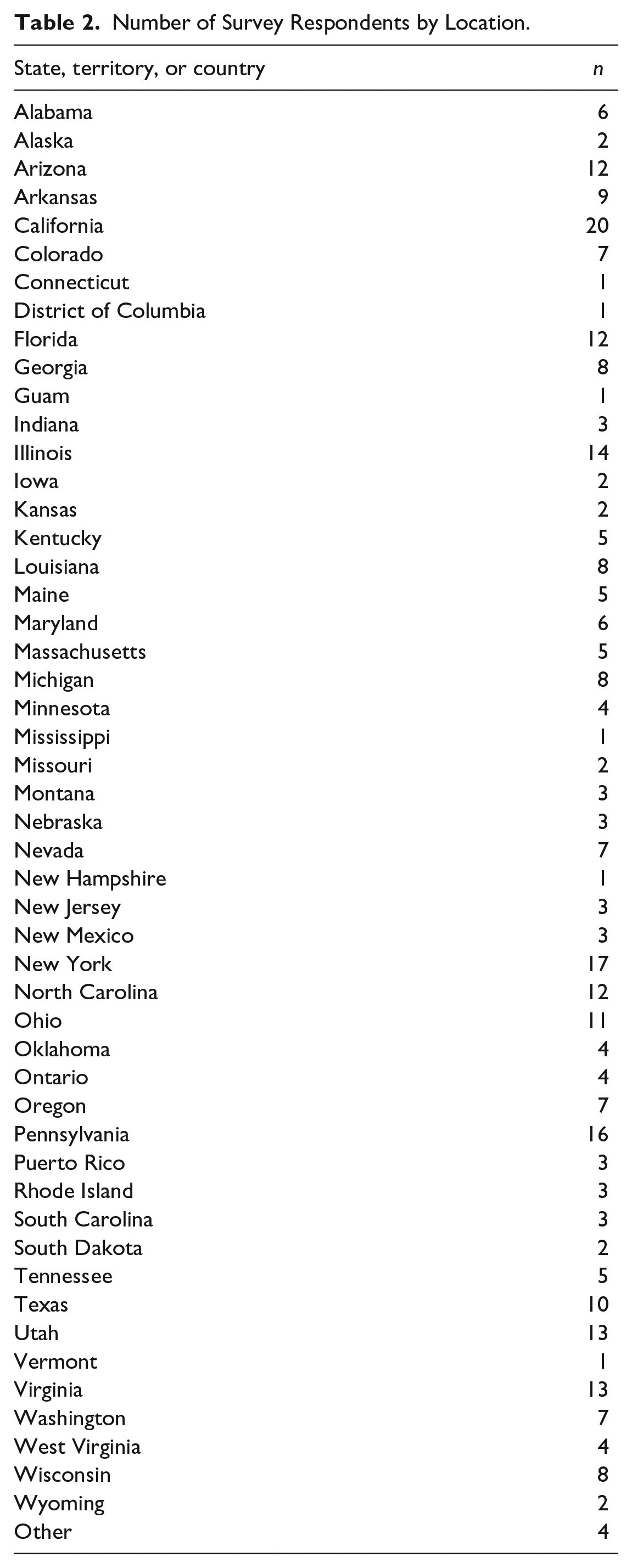
Quantitative analysis was conducted using SPSS 26 for Mac (IBM Corp, 2019). Demographic questions were presented at the end of the study, and not all participants reported their demographic information (Missing n = 380). The participants who did provide demographic responses were primarily female (n = 227, 73.5%), White/Caucasian (n = 241, 81.7%), reported having worked as a rehabilitation counselor for 11 years or more (n = 194, 62.2%), and were 50 years of age or older (n = 252, 81.6%). These demographic trends align with other studies using CRCs as the population of interest (Landon et al., 2021; Leahy et al., 2019). A further breakdown of the participants is outlined in Table 1. Additionally, the geographic location of participants can be found in Table 2.
Demographics of the Certified Rehabilitation Counselor Survey Respondents.

Number of Survey Respondents by Location.
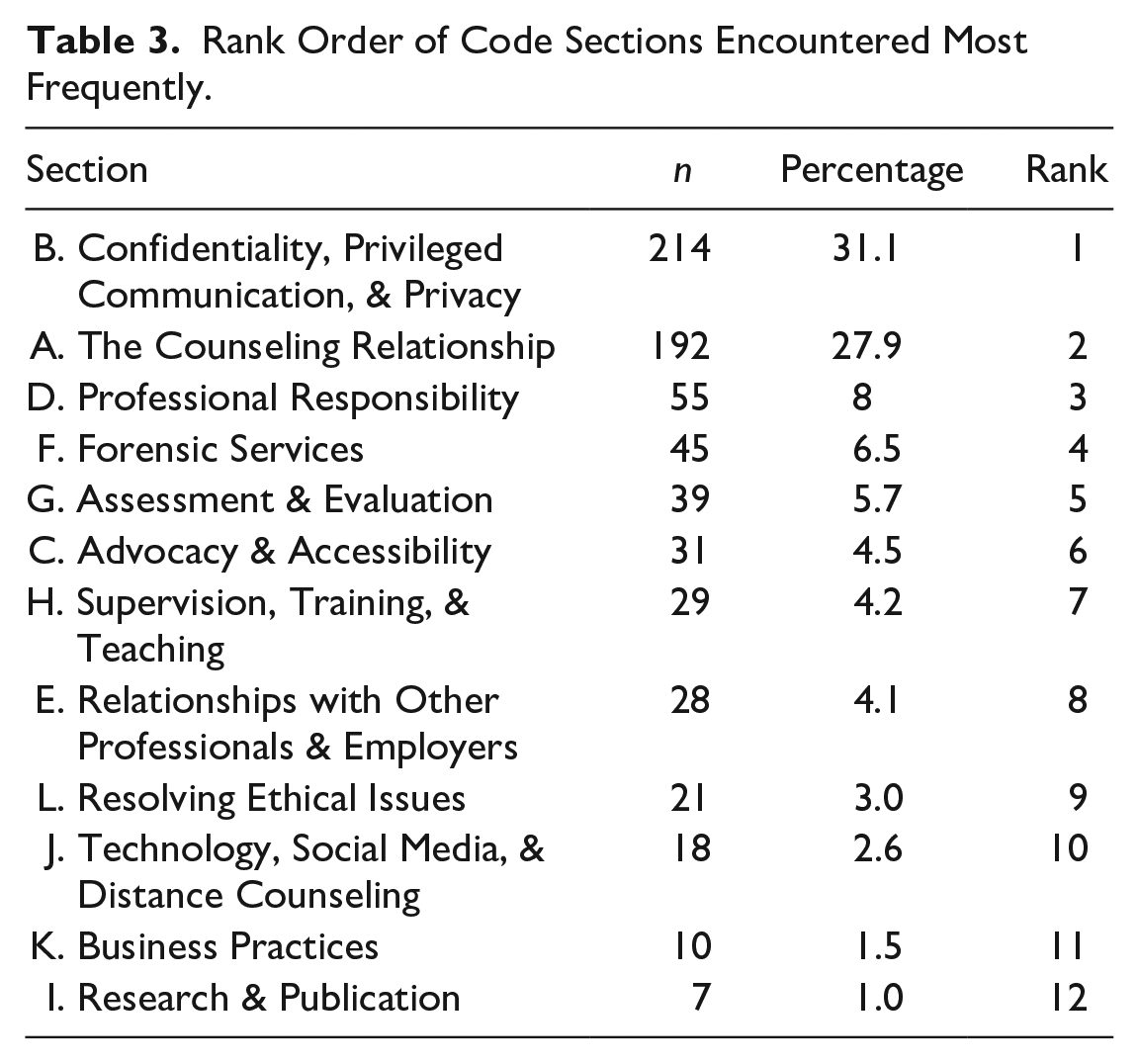
Participants were presented with each of the respective sections of the 2017 CRCC Code of Professional Ethics and asked to rank and order the sections based on the frequency with which they encountered ethical dilemmas specific to that section. The two categories identified by participants as being encountered most frequently were Section B. Confidentiality, Privileged Communication and Privacy (n = 214, 31.1%), and Section A. The Counseling Relationship (n = 192, 27.9%). Table 3 shows the entire rank order process based on frequency.
Rank Order of Code Sections Encountered Most Frequently.
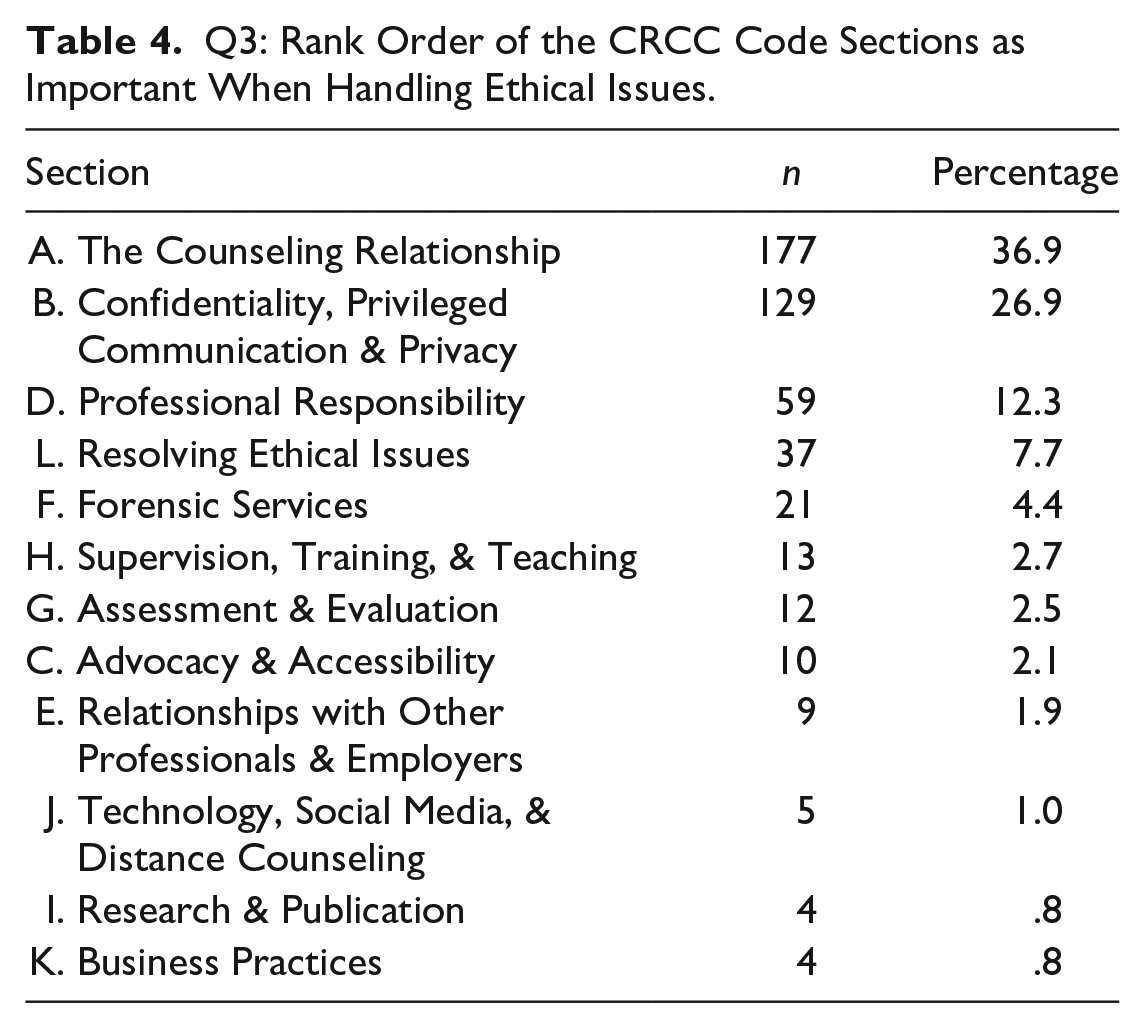
Participants were also asked to identify the section of the CRCC Code of Professional Ethics that they felt was most important to use as a reference or guide in handling ethical issues as they arise. Participants again indicated a strong deference to both Section A. The Counseling Relationship (n = 177, 36.9%) and Section B. Confidentiality, Privileged Communication, and Privacy (n = 129, 26.9%). Table 4 outlines the sections identified as important in the handling of ethical issues.
Q3: Rank Order of the CRCC Code Sections as Important When Handling Ethical Issues.
Frequency counts were calculated for three questions from the survey. Participants were asked to describe an ethically challenging incident (see qualitative analysis for results). For those that chose to answer this question, participants were then presented three follow-up questions specific to the challenging incident described. The first question related to the comprehensiveness of the CRCC Code of Professional Ethics and reads: Was the issue [ethical issue or dilemma described in the open-ended question] addressed by the Code of Professional Ethics for Rehabilitation Counselors? Of the responses given, 188 respondents answered yes (50.7%), 96 respondents answered no (25.9%), and 87 respondents answered don’t know (23.5%). The second follow-up question focused on the resolution of the identified dilemma/issue and reads: Was the issue resolved? Of the responses given, 262 answered yes, and 109 answered no.
The final follow-up question focused on the successful resolution and allowed for the selection of multiple answers based on the provided responses. The third question was: Which of the following led to a resolution of the ethical issue? Participants were presented with the following options: (a) discussed with a supervisor, (b) discussed with a peer(s), (c) discussed with client, (d) reviewed the CRCC Code of Ethics, (e) reviewing agency policy, (f) discontinued services and referred client to another professional, (g) requested an advisory opinion from the CRCC Ethics Committee, and (h) an open ended “Other” response option. Of the responses given, 163 respondents said they consulted with their supervisor, 128 indicated they consulted with their peers, 114 said discussed the situation directly with the client, 106 said they reviewed the CRCC Code of Ethics for guidance, 91 said they reviewed their agency policy manual, 20 said they chose to discontinue services, 4 requested advisory opinion from CRCC, and 47 said other.
Qualitative Responses
The qualitative responses to the open-ended questions were analyzed using thematic analysis. To better control for interpretative validity, the responses were independently reviewed and coded by two members of the research team who then met to review their findings (Altheide & Johnson, 1994). To strengthen the qualitative analysis of the data completed by the first two members of the research team, a third member of the research team provided an independent peer review and check of the analysis in a modified form of analyst triangulation (Patton, 2015). The results of the qualitative thematic analysis will be explained next.
Results
Describe an Ethically Challenging Incident That You or a Colleague Faced?
For this survey question (n = 366 responses), there were 10 themes that emerged from the responses. The themes are: (1) confidentiality (n = 60), (2) unprofessional behavior (n = 37), (3) boundaries (n = 29), (4) client autonomy (n = 28), (5) professional relationships (n = 25), (6) dual relationships (n = 23), (7) issues with outside agencies (n = 22), (8) limitations of the agency (n = 22), (9) dual professional relationships (n = 12), and (10) client preparation for services (n = 11). The themes are discussed below.
Theme 1: Confidentiality
Issues related to confidentiality were the number one ethically challenging incident reported on this question from the survey. There were a variety of confidentiality issues reported. Some of the issues included a lack of a private place to meet with clients; knowing how much information about a client can be discussed with co-workers that share clients; counselors having to break confidentiality to report breaches of program rules; confidentiality breaches by co-workers and supervisors; confidentiality when working with couples, family members, and clients that know each other; disclosing information to parents when working with minors; and having to share information with co-workers or other staff when it feels unethical to do so. Additional concerns included having to share information about clients with people outside the agency; running into clients outside of work and the client wanting to discuss their case; mandated reporter and sexual assault reporting concerns; and knowing what is covered by release of information. More concerns include interacting with clients when seeing them outside of work; knowing what can or cannot be communicated with a client via text or email; clients sending sensitive information in an unsecure manner of communication; how to store documents and records to ensure confidentiality; and confidentiality in digital platforms.
Theme 2: Unprofessional Behavior
The next type of ethically challenging incident faced by respondents was unprofessional behavior from colleagues, co-workers, supervisors, and other professionals. Some of the issues included lack of appropriate counseling skills; lack of case management skills; inappropriate relationships with clients; offering continuing education credits when unearned; and turning away clients because of a language barrier. Additional issues include falsifying records; showing preferential treatment for certain staff; rude behavior; drinking alcohol with underage clients; knowing when to report the unethical behavior of another professional; discriminatory behavior toward LGBTQ+ clients and certain disability types. More concerns include embezzlement; attacking another colleague’s character; colleagues failing to report abuse; colleagues not following the ethical standards of the profession; and plagiarism of testing reports.
Theme 3: Boundaries
The next type of ethical issue concerned boundaries. The types of boundaries included boundaries between two clients, boundaries between counselor and client, boundaries between professionals, and social media boundaries. Some of the issues included inappropriate social media use; lack of a policy around social media use; current and former clients wanting to be friends with professionals on social media; boundaries in distance counseling; and being asked to use social media to research clients. These issues with social media were mentioned by several respondents. Additional issues include clients wanting friendship from counselor; understanding boundaries when sharing clients across organizations; being invited to client events outside of work (weddings, graduations); clients requesting counselor’s personal cell phone numbers; and buying products from current or former clients who started their own business.
Theme 4: Client Autonomy
The next ethical issue reported by survey respondents was regarding client autonomy. Some of the issues reported included trying to help a client that was self-sabotaging their benefits; minors wanting to receive services, but parents would not consent; minors or other clients not wanting to sign a release so the counselor can talk to parents or other family members; family members wanting to talk to counselor about the client or clients withholding information from family that they need to know; and parents not respecting the wishes of minor clients. Other issues included clients asking for copies of reports; balancing what the client wants vs what the counselor feels is appropriate; and respecting the client’s desire to work in a certain field that may not work for them with their disability or not work for other reasons. Additional issues include whether to mandate counseling services for a client with severe mental illness; deciding to close a case when the client will not respond to the counselor, even though the client is working; working with clients with felonies who want training in an area unlikely to hire them.
Theme 5: Professional Relationships
Another ethical issue faced by respondents had to do with relationships with other professionals in the field. Some of the issues related to this concern included disagreeing with a colleague’s professional opinion in a forensic setting; having to address problematic behaviors in the workplace; knowing about ethical violations from supervisors/administration and not feeling able to report it; and feeling overwhelmed by caseload assigned by supervisor. Additional issues included negative comments about one’s reports to another; unresponsive/unsupportive supervisors; supervisors without rehabilitation counseling knowledge; advocating for clients while maintaining professional relationships with other organizations; and rude/disrespectful colleagues.
Theme 6: Dual Relationships
Another ethical concern reported by respondents surrounds dual relationships with clients. Some of the issues related to this concern included maintaining professional boundaries with former clients; friendships with former clients; providing services to a neighbor; co-workers/colleagues needing services from the same agency; having relatives or friends as clients as the counselor’s place of work; living in a small community and knowing clients outside of work, and purchasing products or goods from former clients.
Theme 7: Issues With Outside Agencies
The next ethical concern reported had to do with issues when working with outside agencies. Some of the issues related to this concern included problems working with insurance companies and paying for services; outside agencies not fulfilling contracted obligations; successfully coordinating services with multiple agencies; continuing education credits not being provided equally; how to appropriately work with consultants; having to work with the state to authorize and pay for services; having to remind businesses about legal accessibility requirements; and working with attorneys.
Theme 8: Limitations of the Agency
Another ethical concern revolved around respondents feeling like there were limitations to the work they were able to do and services they were able to provide due to their agency. Some of the issues reported included conflict between what the client needs and what the agency will allow; not being able to answer client questions as a vocational expert for Social Security; having limited resources for dealing with behavioral incidents; feeling like counselors need to meet a quota rather than provide quality services; and lack of policies around how to handle suicidal clients. More issues included working as a mobile provider; not being able to approve services and having to justify these services to upper management, which adds long wait times; and counselors feeling pressure to make decisions for the client rather than with the client. Additional issues include corporate policies conflicting with professional code of ethics; lack of policies to deal with crises; using outdated testing; agencies not providing materials in an accessible format; and lack of funding.
Theme 9: Dual Professional Relationships
The next type of ethical issue reported in the survey concerned dual professional relationships. This issue involves working with clients in more than one professional setting or with multiple clients from the same family. Some of these issues included being asked to work two different sides (plaintiff and defense) of the same forensic case; first working with a client in one setting and then working with the same client in a different setting after changing jobs; multiple clients from the same family; working for a vocational rehabilitation (VR) agency and also contributing to creating a curriculum used by providers for a training; providing forensic services and rehabilitation counseling services at the same time; and a VR client who is also a vendor.
Theme 10: Client Preparation for Services
Another issue reported in the survey deals with client preparation for services. This issue involves the degree to which clients are prepared to engage in the rehabilitation counseling process. Some of these issues included older adults with little to no work and educational history wanting to work; clients feeling entitled to services they are not qualified or eligible for; working with clients currently using illegal substances; behavioral outbursts during session; and clients aging out of youth services and not being prepared to live independently or receive adult services. Additional issues included clients trying to go above the counselor to get things they do not actually need, in the counselor’s view, to reach their goal; clients being dishonest about their medical history; and clients preferring to text as a method of communication.
If the Issue Was not Resolved, What Additional Resources Would Help to Clarify the Situation or Reach a Resolution?
For this survey question (n = 103 responses), there were four themes that emerged from the responses. The themes are: (1) guidance from leadership (n = 30), (2) consultation (n = 19), (3) support from CRCC (n = 15), and (4) code of ethics (n = 12). The themes pertaining to this question are explained below.
Theme 1: Guidance from Leadership
The first additional resource reported to help clarify ethical issues on the job was seeking guidance from leadership at the agency/organization. The counselor noticed ethical issues happening in the workplace (as explained in the previous survey question themes) and attempted to address them with their supervisor or management. However, some ran into problems because supervisors or management do not have a background in rehabilitation counseling, making those supervisors unfamiliar with the CRCC Code of Ethics. Some attempts to seek guidance from leadership were met with negative reactions from supervisors or management. Some of the ways counselors attempted to address ethical issues with leadership included filing a formal whistleblower complaint; asking for continuing education/training to be provided on the topic; asking management to get involved in the situation; contacting human resources; asking for CRCs to be in supervisory positions; and asking for clearer policies or updated policies.
Theme 2: Consultation
The second additional resource used to try to resolve ethical issues was seeking consultation. This usually comes from someone outside the agency or organization, but can also be other members of a team. In some cases, it was necessary to get an attorney involved in the consultation.
Theme 3: Support from CRCC
The third additional resource used to attempt to resolve ethical issues was seeking support from CRCC. This could mean that the individual submits a request for an advisory opinion from the CRCC Ethics Committee or wants CRCC to clarify or add certain guidance to the Code of Ethics. Counselors also wanted to know how to report ethics violations to the CRCC and requested that CRCC provide more free training and resources on the Code of Ethics, and asked that CRCC identify an ethical decision-making model that they endorse, like the American Counseling Association has done. One respondent requested that CRCC provide more statements reinforcing the “no harm” component of the ethical code and another respondent requested that CRCC be more visible and active in advocacy so that the public has more awareness of the specialty and skills of the rehabilitation counseling profession.
Theme 4: Code of Ethics
The fourth additional resource used to try to resolve ethical issues was consulting the CRCC Code of Ethics. The survey also asked about the area of the Code that needs clarification or areas that need to be addressed by the Code (addressed later in this article). The next revision of the Code of Ethics is coming up and these recommendations will be taken under advisement.
What Do You Project May Become an Ethical Issue for Rehabilitation Counseling Professionals?
This question asked respondents to predict what may become an ethical concern or a greater ethical concern than it already is in the future. For this survey question (n = 318 responses), there were 10 themes that emerged from the responses. The themes are: (1) social media/technology (n = 121), (2) distance counseling (n = 41), (3) privacy/confidentiality (n = 38), (4) scope of practice (n = 25), (5) issues with leadership/supervisors/co-workers (n = 20), (6) client services (n = 16), (7) cultural diversity (n = 16), (8) outside agencies (n = 14), (9) funding (n = 13), and (10) dual relationships (n = 11).
Theme 1: Social Media/Technology
The number one projected ethical issue discussed on the survey was social media and technology. Some of the issues related to social media and technology included artificial intelligence algorithms being used in VR; the use of social media; being contacted by potential, current, and former clients via social media; professional boundaries on social media; clients posting about suicidal ideation on social media appropriate use of technology in practice; and privacy issues related to technology. Additional concerns included the use of cell phones with clients, including texting; use of email with clients; email encryption; electronic records; the availability of client information on the internet; data breaches; the security of online communication; use of client photos on counselor website; and use of electronic signatures.
Theme 2: Distance Counseling
The second most projected ethical issue was distance counseling/telehealth. Some of the issues included how to ethically conduct distance counseling/telehealth; how to handle distance counseling across state lines; telephone counseling across state lines; ensuring privacy, security, and confidentiality in distance counseling; forensic testimony via telephone or video conference; and screening for suicidal or homicidal ideation in online counseling/telephone counseling.
Theme 3: Privacy/Confidentiality
The third projected ethical issue concerns privacy and confidentiality. Some of these issues included privacy and confidentiality in an online counseling environment; gathering information for the Workforce Investment and Opportunity Act (WIOA) and sharing appropriately with partner organizations; knowing what information can be released to other members of an interdisciplinary team; confidentiality when emailing records; confidentiality in email; and handling violations of privacy and confidentiality. Additional concerns included Health Insurance Portability and Accountability Act (HIPAA) and confidentiality; knowing when to disclose mental health issues to a third party; handing data breaches; social media and confidentiality; sharing client information with referral source; privacy from insurance companies; confidentiality with spouses of clients and divorce proceedings; privacy with electronic records and file storage.
Theme 4: Scope of Practice
The fourth projected ethical issue concerns understanding what is and is not within the scope of practice for a rehabilitation counselor in different settings. Some of these concerns included forensic rehabilitation and understanding assessment and disclosure requirements; understanding job tasks; rehabilitation counselor qualifications for specialized services and populations; understanding rehabilitation counselor competencies; and online counseling. Additional concerns included counselors practicing with only a bachelor’s degree or without a background in rehabilitation; decreased emphasis on counseling skills in VR agencies; counselors practicing outside of the scope of their training; credentialing and licensing issues; lack of professional identity; dual licensure or credentialing (ex: Licensed Professional Counselor (LPC) and CRC); and dealing with demands of WIOA.
Theme 5: Issues With Leadership/Supervisors/Co-Workers
The fifth projected ethical concern includes issues with leaderships, supervisors, and co-workers. Some of the issues included feeling a lack of support from state commissioners (RSA); leadership without a background in rehabilitation; and counselors having to take responsibility for the actions of co-workers. Additional issues included perceived corruption in leadership; supervisors pushing goals and case closures over guidance and counseling; and leadership lowering standards for what is considered employed to increase successful numbers. More issues included new state legislation being proposed without input from the professionals impacted; having to confront ethical violations from co-workers; unclear boundaries between the state and the RSA commission; and handing pressures from RSA that feel unethical.
Theme 6: Client Services
The sixth projected ethical issue concerns providing services to clients. Some of the issues included not doing what is in the best interest of the client; proper placement of clients in the workplace; navigating agency politics to provide necessary services; and conflict between best clinical practices and the standardization of business practices. Additional issues included balancing the client’s goals and desires for school and employment with the feasibility of these goals; remaining objective when assisting clients; and maintaining responsibility to the client first. More issues included consumers wanting items purchased for them without actively engaging in the individualized plan for employment process; false certification of service or emotional support animals; handling rude clients; working with clients who are unsure of their ability to make decisions; and clients legal right to services.
Theme 7: Cultural Diversity
The seventh projected ethical issue centers around cultural diversity. Some of these issues included how appropriately navigate a situation when a colleague makes insensitive remarks around culture; understanding and working with the LGBTQIA+ population, especially those who are transgender; respecting the gender identity of clients; understanding and working with clients from different religious backgrounds; understanding and working with clients from other countries, including those here on Deferred Action for Childhood Arrivals and illegal immigrants.
Theme 8: Outside Agencies
The eighth projected ethical issue is working with outside agencies. Some of these issues included working with insurance companies; Medicare reimbursement; working with vendors; working with government systems; working with referral sources; working with businesses; and working with medical systems.
Theme 9: Funding
The ninth projected ethical issue concerns funding. Some of these issues included reduction of funding for certain services due to legislation; order of selection; client informed choice for vocational goals being impacted by allocation of funds; overall reduction of VR funding; and low salary for VR counselors.
Theme 10: Dual Relationships
The tenth projected ethical issue relates to dual relationships. Many respondents simply wrote dual relationships. Some of the specific issues included living and working in small towns/rural areas; being a part of the community served by counselors such as the Deaf community; working with clients that have previous personal or professional relationships with the counselor; and working with a small incidence population.
How Would You Resolve This Issue?
For this survey question (n = 318 responses), there were seven themes that emerged from the responses. The themes are: (1) new policy/enforcement of existing policy (n = 92), (2) social media rules/technology rules/improvement (n = 53), (3) consultation (n = 47), (4) code of ethics (n = 42), (5) client preparation (n = 39), (6) boundaries (n = 26), (7) leadership (n = 21).
Theme 1: New Policy/Enforcement of Existing Policy
The proposed creation of a new policy or the enforcement of an existing policy was the number one response for resolving the ethical issue. This included reviewing and reiterating an already established policy as it related to the current issue. The enforcement of existing policies that were reported included the counselor being suspended without pay for 3 days, not approving a request, allowing HR to handle the discipline, an one on one meeting to discuss the issue, reviewed fees with referral source, payment was not provided, followed specific states policies, worked with community partners to address the issue, reviewed the policy for minors, a statement was sent throughout the agency addressing the issue, established part time employment for consumer, documentation justifying the decision with policy citied, discussed policy and procedures with consumers, kept consistent fee schedule regardless of the client, provided the best services possible with available resources, explained that the sex assigned at birth had to be used for demographics, developed a remediation plan, implemented the current law, discussed with referral sources the counselor’s ethical responsibilities, and reviewed current policy to make necessary changes. This theme also displayed the need for a new policy to be created to address a particular issue and provide further protection to the client and counselor. Participants reported a need for clearer policies, a central state portal for ease of communication and transfer of services, development of expectations and guidance for vocational planning and goals, further training for staff, counselors, and supervisors, and further clarification on admission standards, roles, and abilities based on training, certification, and education.
Theme 2: Social Media Rules/Technology Rules/Improvement
Utilizing social media rules, technology rules or improving these rules were the next response provided for resolving the ethical issue. Participants reported wanted further training and guidance around utilizing technology, social media, and engaging in distance counseling. Participants also reported the importance of improving technology to maintain confidentiality when communicating with other professionals and clients and storing data. Participant also shared the importance of the code of ethics and legislation considering advancements of technology when addressing clients with disabilities and ethical issues. Accessibility and HIPAA compliant platforms are also technological aspects to consider.
Theme 3: Consultation
The next approach reported to resolve the ethical issue was seeking consultation. Participants reported seeking consultation from their rehabilitation team, supervisor, colleagues, professional relationships, ethical advisor, research and consultation team, quality assurance, legal counsel, management/administration, past professional experience, human resources, medical professionals, and referring agency. The consultation received assisted in addressing the ethical issue.
Theme 4: Code of Ethics
The code of ethics was the fourth response provided for resolving the ethical issue. Participant reported reviewing and referring to the code of ethics to address ethical issues. The code of ethics was used as a resource and a source of training individuals to engage in ethical practices. It was also reported that the code of ethics was used to inform policy and guide discussion making regarding current concerns.
Theme 5: Client Preparation
The fifth topic identified as a possible approach to resolving the ethical issue was client preparation. Participants reported working with clients to assist them in understanding the counseling process and expectations for receiving services. Participants reported discussing with clients their informed consent, limits to confidentiality, needs for a release to disclose information, working to empower clients and encourage personal choice. Discussing limitations and impact of disability as well as appropriate behaviors with clients were also reported by participants. Client advocacy, assessing suicide risk, and collaboration with school and parents were also shared as aspects of client preparation.
Theme 6: Boundaries
Boundaries were the next approach reported to resolve the ethical issue. Participants shared not engaging with clients outside of a professional relationship, referring a client to a co-worker if there was a previous personal relationship, discussing boundaries and their importance with clients, not engaging (friending, liking posts, etc.) on social media, not providing personal contact information and limiting contact outside of a professional setting. Participants also reported wanting further training and guidance on developing healthy professional relationships with clients.
Theme 7: Leadership
Leadership was the final approach identified in resolving the ethical issue. Participants expressed wanting more support from their administration and supervisors when issues arise without fear of retaliation. Participants also expressed a desire for more training for supervisors and administration as it related to current trends, ethical codes, mental health concerns, substance abuse, HIPAA and social media, the rehabilitation counseling profession, leadership approaches, policies and procedures, and providing services. Lastly, participants expressed wanting further advocacy for the professional and last pressure to meet the numbers and more focus on providing effective services to clients.
What Additional Issue(s) Would You Like to See Addressed or Clarified by the Code?
For this survey question (n = 296 responses), there were five themes that emerged from the responses. The themes are: (1) counselor preparation (n = 28), (2) technology/distance counseling (n = 19), (3) social media (n = 18), (4) professional relationships/interactions (n = 16), and (5) client preparation (n = 10).
Theme 1: Counselor Preparation
Counselor preparation was the number one topic participants asked to be addressed or clarified by the ethical codes. Educational requirements, academic/student issues, minimum qualifications for all VR counselors in all states, required certifications and licensures, CRCs being grandfathered in or accepted as LPCs, CRCs advancement within the profession, and training were aspects participants wanted to be addressed and clarified in the code of ethics. Clarification on working with non-CRC counselors, professional advocacy in government systems, professional self-advocacy, professional liability issues, mandated reporting when confidentiality is breached, consistency of services, using interpreters to provide services to immigrants and refugees were also requested. Further clarification on client-centered rehabilitation, counselor self-care, counselor burn-out, wellness training, case scenarios with possible answers, counselor protection, and accountability for counselors violating the code of ethics was also reported by participants. Participants requested further clarification in addressing topics of diversity such as microaggressions, unconscious bias, respecting diversity, agency and supervisor responsibility to address discriminatory/racist behavior, and cultural competence.
Theme 2: Technology/Distance Counseling
Further clarification on distance counseling, distance counseling procedures, addressing technology in releases and informed consents, counselor liability in regards to distance counseling, providing virtual services, using technology (internet, secure emails), technology-related issues (confidentiality, sharing information), continual updates for the evolving technology related issues, addressing issues such as hacking, address an employer or state agency failing to provide confidential emails and a secure case management system, guidance for proctoring a psychometric assessment through a distance platform (e.g., Zoom). Another aspect of technology and distance counseling needing to be addressed is the emphasis placed on utilizing software systems for case management of large caseloads that hinder the counseling process.
Theme 3: Social Media
Participants requested further clarification on using social media, engaging with former clients and former client’s family members over social media, engaging with clients with intellectual disabilities and other impairments on social media, the need to identify how long a counselor must wait after case closure to engage with a former client on social media, addressing HIPAA and social media, the use of LinkedIn, addressing social media in disclosure, and using social media in a responsible manner for professionals holding CRC.
Theme 4: Professional Relationships/Interactions
Further information provided by the ethical codes regarding specific aspects of professional relationships and interactions included how to interact while marketing, proper treatment of employees, employer’s right to psychological information that does not impact a client’s employability, appropriate behaviors between colleagues and supervisors who once were colleagues, working with health insurance assessment and recommendations, addressing managed care influence on the types of evidence-based treatment and practices that are used, interaction with attorneys, legal counsel, and medical professionals, addressing conflicting of medical opinions between providers, confidentiality among service providers and counselors, professional roles/responsibilities and working with other professionals in coordinating services, and addressing accrediting bodies discrepancies of professional conduct.
Theme 5: Client Preparation
This topic included needing further clarification from the ethical codes regarding engaging parents when working with minors, advocating for minors, empowering clients without making the client dependent or entitled, addressing drug use by a client when it is not the primary topic of the relationship, levels of conservatorship, allowing client self-determination when the client has a substance abuse issue, intellectual, or psychiatric limitations, addressing and handling customer abuse of the VR staff, and having advanced directives for a private practice in the event of the unforeseen death of a therapist. Another aspect of client preparation needing clarification from the ethical codes includes bracketing counselors’ personal beliefs in the professional environment and counselors’ authority to defer, interrupt, and/or terminate services if an individual is suspected of inappropriate behavior(s) or actions and being able to involve the authorities, if necessary, even if it means disclosing confidential information.
Discussion
Many important issues were brought up in the analysis of the qualitative data. Some of those issues will be discussed here. One overarching concept that seemed to come from the themes was that CRC’s are seeking more guidance from those in positions of power, such as CRCC, supervisors, leadership, and others. Two separate themes: Guidance from Leadership and Consultation, both speak to this. Guidance from Leadership refers to seeking advice or support from leadership in the agency in which CRC’s work. Depending on the agency, these leaders may or may not be familiar with rehabilitation counseling and the CRCC Code of Ethics, but are familiar with agency policies and procedures, and can provide guidance on these matters. Consultation would be sought from a person that is a CRC and is familiar with the CRCC Code of Ethics and rehabilitation counseling matters. One ethical dilemma that was brought up by CRCs in the survey was what to do when agency policies and procedures are in conflict with or do not align with the CRCC Code of Ethics. This is a challenging situation and one that is not easily resolved, but can be resolved through consultation, the use of ethical decision-making models, and when needed, advisory opinions from CRCC.
Additionally, survey respondents expressed concerns around what to do when agency policies contradict or seem in conflict with the CRCC Code of Ethics. Section M.2.f titled Organization Conflicts states “If the demands of organizations with which CRCs/CCRCs are affiliated pose a conflict with the Code, CRCs/CCRCs specify the nature of such conflicts and express their commitment to the Code to appropriate responsible officials. When possible, CRCs/CCRCs work to create change within organizations to allow full adherence to the Code. If the conflict cannot be resolved, CRCs/CCRCs evaluate the risks and benefits of continued affiliation with the organization.” (CRCC, 2023). We realize this is easier said than done, but CRCs should be advocating for our profession and our professional code of ethics and helping those in charge of agencies understand why we believe and do what we do.
Implications for Practice
The concepts of ethics, ethical decision-making, and ethical dilemmas are ever evolving. Rehabilitation counselors must remain current with changing times and the demands of the profession, as does the Code of Ethics that guides the profession. The events of 2020 and 2021 (the COVID-19 pandemic, race-related events and protests, political divides, unrest, and protests, and the Black Lives Matter movement, among other events) have impacted the rehabilitation counseling profession in a variety of ways, including how services are delivered and showed the necessity of multicultural counseling competencies. The CRCC Code of Ethics has been revised, with a new Code to be introduced and go into effect in January 2023. Some of the significant areas needing additional clarification and guidance in the next revision include social media, technology, distance counseling, working with LGBTQIA+ clients, especially transgender clients, working with minors, and client preparation.
As stated previously, there was an expressed desire for a pathway to be created for counselors to report conflicts between the code of ethics and organization-specific practices. This could potentially be done in collaboration with CRCC and the ethics committee. Another suggestion from a respondent on the survey was the creation of a more robust venue for practicing counselors to post ethical issues online (specifics obscured for confidentiality purposes) with guidance by experienced professionals to lead the discussion to clarify the principles involved and discuss possible outcomes and resolution. This could also be potentially facilitated through CRCC.
Future Research
There remains ongoing research and data needed to strengthen the area of ethics for practicing rehabilitation counselors and counselors-in-training. We echo the call by Hartley and Cartwright (2016) for additional in-depth research to be conducted on practitioners’ experiences navigating ethical dilemmas in practice. Another area of research that could benefit from additional research is the ethical use of social media and technology by rehabilitation professionals. Social media is an ever-growing tool and has the potential to be used responsibly and ethically. Further research in this area could also inform the Code of Ethics on this topic. Conducting another version of the present study would be interesting to see if Technology, Social Media, and Distance Counseling section ranked higher on the section encountered most frequently post-COVID-19 shutdowns in agencies. Additionally, using the present data or conducting a different study to look ethical dilemmas faced in different professional roles such as supervisor, counselor, administrator, etc. It would also be interesting to look at ethical dilemmas and ethical perceptions based on type of job and/or type of agency (State VR, community rehabilitation provider, private/forensic rehab, etc.).
Limitations
As with all studies, this one has its limitations. Although the demographics of the survey respondents were generally representative of the overall CRCC membership, participants did self-select to answer the survey. Hence, this could have impacted the answers and results. All qualitative research has elements of subjectivity, and the thematic analysis of the open-ended question responses could have yielded different results if conducted by different researchers. Additionally, this survey was conducted in 2019, and had it been given in 2020 or 2021, the results could have been different. Despite these limitations, the results of the survey do provide a window into the current and anticipated ethical dilemmas faced by CRCs and provide guidance on the next Code of Ethics revision.
Conclusion
As the profession and society continue to evolve it is important to continue the exploration of ethical dilemmas faces by CRCs and work to inform the next Code of Ethics. As such, this study examined the current and anticipated ethical dilemmas encountered by CRCs, who provide services with guidance of 2017 CRCC Code. The discovered themes and expressed topics needing to be addressed should be given consideration for future revisions of the Code of Ethics.
Footnotes
Declaration of Conflicting Interests
The author(s) declared no potential conflicts of interest with respect to the research, authorship, and/or publication of this article.
Funding
The author(s) received no financial support for the research, authorship, and/or publication of this article.
