




Abstract
Christian nationalism (CN) has emerged as a significant concept in discussions concerning politics and religion in the United States. While the relevance of the concept has been much discussed in American sociology of religion, its applicability to other contexts remains unexplored. We aim to address this gap by examining the transferability of CN to European contexts. Using a representative survey from Finland, we refine the measurement proposed in the American discussions of CN. We explore the relationship between CN and attitudes towards religious pluralism and show that while CN cannot be applied to the Finnish context unmodified, it nonetheless has explanatory value. We identify two forms of CN: state and identity-oriented CN (SICN), and culturally diffuse CN (CDCN). CDCN is associated with positive attitudes towards religious diversity, whereas SICN correlates with negative attitudes towards non-Christians. We argue that in European contexts, CN takes at least these two forms.
Introduction
The 2008 economic crisis created a ‘populist moment’ (Mouffe, 2018) around the world, channelling disaffected citizens’ votes to parties that promised to take care of their ‘own’ by disavowing diversity and equality, whether racial, gender, sexual, or religious. Anti-immigrant sentiment and anti-progressive politics were mobilized to narrow the meaning of citizenship and belonging in the Americas, Europe, and Asia, for example. One component of this exclusionary type of politics is religion – in the European context anti-Muslim sentiment in particular. Most visible in the far right of the political spectrum, anti-Muslim politics is, however, a much more pervasive phenomenon, sustained by the idea of incompatibility of Muslim culture with ‘Western’, and hence Christian, culture (Brubaker, 2017; Schwörer and Romero-Vidal, 2020).
In the United States, ‘Christian Nationalism’ (CN) has recently become a popular term to describe this type of exclusionary politics (e.g. Goldberg, 2006; Gorski, 2019; McDaniel et al., 2011; Perry et al., 2021; Whitehead and Perry, 2020). It is not a synonym for conservative Christianity but more a ‘cultural framework’, which ‘includes assumptions of nativism, white supremacy, patriarchy, and heteronormativity, along with divine sanction for authoritarian control and militarism’ (Whitehead and Perry, 2020: 10). Since Christianity has played a notable role in the European ‘populist moment’, the US-originated concept of CN might also have explanatory value in Europe. Accordingly, in this article, we ask: Is Christian Nationalism, as a theoretical concept, transferable to the European context, and if so, to what extent?
In Europe, the relationship between Christianity and right-wing populism or radical right-wing parties is complicated (Marcinkiewicz and Dassonneville, 2023). As mentioned, Christianity is often invoked to exclude Muslims from European citizenship and belonging (Peker, 2022; Schwörer and Romero-Vidal, 2020). However, in Europe, an appeal to Christianity is much more an appeal to cultural heritage than to a living religious tradition. Relatedly, some have emphasized the ‘culturalization’ of religion, where forms of cultural identification and religion as heritage are favoured instead of attachments to religious institutions, practice, and dogma (Astor and Mayrl, 2020).
Our task as sociologists is not to assess the authenticity of political leaders’ religious gestures. We can say, however, that the embrace of Christian symbolism by such populist leaders as Italy’s Matteo Salvini or Hungary’s Viktor Orbán is not universally lauded among the trans-European far right. This is partly because of an often-strained relationship between established national churches and far-right parties. This animosity can be related to, for example, an active secularist political culture (as in France; Morieson, 2021) or the churches’ defence of universal human rights (as in Finland; Äystö, 2017). Another key fact is that in European multi-party democracies, where ‘Christianity’ is often identified with the main national church, or churches, no one political party can claim ‘ownership’ of the established church. To call exclusionary European nationalisms ‘Christian’ thus requires rethinking some of the assumptions of the American-made concept.
We utilize a threefold strategy using data from the Religious and Societal Attitudes survey (n = 1563). In the exploratory and descriptive parts of the analysis, we test how the survey module for measuring CN (Whitehead and Perry, 2020) functions in a secularized multiparty context, where several conservative centre-right parties have occupied key positions as intermediaries between the state and Christian segments of the electorate (Lövheim et al., 2018; Peker, 2022). In our main explanatory analyses, we dissect how respondents’ attitudes related to CN and identification with the Finnish parliamentary parties are connected to perceptions of religious communities’ proper place in public life. This way, we can trace how exclusionary (and inclusionary) attitudes map with political cleavages, enabling us to better assess the framework’s applicability in more secularized European multi-party contexts.
What emerges from the analysis is a proposal to rethink CN along two separate lines: State and identity-oriented CN and culturally diffuse CN. The former maps with the exclusionary type, whereas the latter is a more inclusive way of incorporating religion into public life. We further show how these types associate with different types of parties in the Finnish context. Since our approach is primarily exploratory, we do not present any specific hypotheses. In conclusion, we discuss the representativeness of the Finnish case and, more broadly, the applicability of CN as a framework for analysing religion and exclusionary politics in the European context. We also discuss how CN is applicable to European contexts and how it has a potential to draw attention to Christian aspects of European nationalism better than the parallel concepts used in European discussion. Before going to empirical analyses, we dissect the differences between American and European conceptual framings of the intersection of religion and politics (Section ‘Christian nationalism and parallel concepts’) and discuss the contextual (Section ‘Finland: a protestant and secular European multiparty system’) differences between the United States and Europe, with a focus on Finland.
Christian nationalism and parallel concepts
While scholars on both sides of the Atlantic have discovered similar value-political connections between Christianity and right-wing populism, they emphasize the role of religion differently. Generally speaking, prior research has revealed a complex relationship between religion and exclusionist attitudes. This association has been linked to negative views regarding immigration and the legitimacy of minority groups (Kanol, 2021). Yet, recent findings indicate a dual impact: while Christian faith and practice can diminish support for right-wing populism, they can also conversely enhance such support (Inglehart, 2021; Marcinkiewicz and Dassonneville, 2023). This apparent contradiction highlights the need for a more precise examination of the inclusive and exclusionary components of Christianity, which is what CN attempts to capture.
In brief, Whitehead and Perry (2020: 10) define CN as ‘a collection of myths, traditions, symbols, narratives, and value systems – that idealizes and advocates a fusion of Christianity with American civic life’, including an ideological ‘belief system about the role of the government’ (Lewis, 2021). Instead of functioning as an indicator of Christian belief, CN is a ‘cultural framework’ based on ethnoreligious nationalism that sets out markers for who is legitimately American by exclusively defining boundaries of who is in and who is out (see Lewis, 2021). Later research (Li and Froese, 2023) has refined the concept to include two parallel dimensions: ‘Christian Statism’ and ‘Religious Traditionalism’. The first refers to a state-centric and nativist CN, and the second to a society-centric and socially inclusive CN (see also Davis, 2023).
Similar dimensions are captured, we argue, by the parallel concepts of ethnonationalism and culturalized religion. In European scholarly discussions the exclusionary aspects of CN have been described with a variety of concepts, such as ethnonationalism (Strijbis, 2018), nativism (Rosenberg, 2022; Kešić and Duyvendak, 2019), and ethno-tradition nationalism (Bonikowski, 2017). Overall, similar to CN, all these concepts comprise the value-based perception of who rightfully belongs to the people based on their ethnic background, race, religion, and language.
The concept of culturalized religion, in turn, aims to capture the broader social role of religion beyond mere beliefs and dogmas, particularly in secularized societies. Culturalized religion manifests as an established culture and cultural identity (Astor and Mayrl, 2020: 214). During the process of culturalization, the dominant religion often gains renewed and publicly acknowledged legitimacy, being designated as ‘cultural heritage’, for example. In contrast, foreign traditions are frequently relegated to the sphere of ‘religious practices’, which are perceived as more problematic (Taira and Beaman, 2022). Thus, CN, while overtly exclusionary and ethnonationalist in some respects, also operates more subtly by emphasizing a unified cultural identity, often without explicit exclusionary overtones.
Overall, while the United States and Europe share visible parallels, differences emerge in how Christianity is used for both inclusion and exclusion. As the literature on CN argues, in the United States Christianity is more integral to ‘being American’. In contrast, as argued by many, European ethnonationalism opposes Islam but less frequently emphasizes its Christian dimensions (Brubaker, 2017; Lähdesmäki, 2019; Strijbis, 2018). Relatedly, DeHanas (2023) has conceptualized the relationship between religion and right-wing populism through the notions of Christian traditionalist populism and liberal anti-Muslim populism from which the former emphasizes the importance of traditional Christian values in society, while the latter focuses on the perceived societal threats posed by Islam. Accordingly, it seems that especially for European radical right-wing parties, Christianity can serve as a tool against immigration, justifying exclusivity and something that shapes, or more often, has shaped national or civilizational identity, but less as a living belief and practice.
Finland: a protestant and secular European multiparty system
Throughout Western countries, Christianity, populism, and nativism have intertwined within hybrid media systems, creating new and significant tensions in political arenas (DeHanas, 2023; Valaskivi et al., 2023). However, assessing the applicability of CN to the Finnish context requires an understanding of the social, political, and cultural landscape before proceeding with the analysis. In our view, the differences between the United States and Finland – as well as other European multiparty systems – in terms of religion and politics can be summarized in four key areas: secularization, state-church relations, religious pluralism, and political pluralism.
First, compared to the United States, many European nations are more secularized according to conventional measurements, including belief in the existence of God or self-identification as a religious person (Inglehart, 2021). Among European nations, Finland is among the most secularized. Millennials, generation Z, and people living in urban areas often define themselves as nonreligious (Taira et al., 2023). This in turn influences Finnish political culture.
Second, Finland is similar to many other European countries, where one church – or, in the Finnish case, two churches – have a privileged position vis-à-vis the state. The Evangelical Lutheran Church of Finland (ELCF) has many state church qualities, such as a state-collected church tax, special mentions in the Constitution and other laws, and financial support from the state (Sandberg and Doe, 2007). The ELCF itself favours the designation ‘folk church’, which does two things rhetorically: It distances the church from the state and emphasizes the importance of the church to national identity (Hjelm, 2014, 2019). The Orthodox Church of Finland, with a 1% membership share, enjoys some of the same privileges as the ELCF, including a commonly held perception of the church as part of the Finnish cultural fabric. Thus, unlike the strict de jure separation of church and state in the United States, in Finland, the ELCF and the Orthodox Church have maintained their special bonds with the Finnish state.
Third, Finland is religiously (and ethnically) relatively homogeneous. Despite the declining membership rate of the ELCF (85.1% of the population in 2000; 65.1% in 2023), the Finnish religious field and discourse is still clearly dominated by the church. The ELCF enjoys ‘cultural privileges’, including a more sympathetic media image compared to conservative Christians, Muslims, or Atheists (Taira and Kyyrö, 2021). In this discourse, the ELCF is often considered a public utility, courtesy of their social welfare work, for example.
The fourth crucial difference between the United States and Finland is related to distinctions between the political systems. The Finnish political system is a multiparty democracy based on an open-list proportional representation. Traditionally, Finnish parties have formed stable majority governments through coalitions. Up until 2011, the Finnish system was dominated by the ‘old establishment’: the right-wing National Coalition (NCP), the centre-right Centre Party (CPF), and the centre-left Social Democrats (SDP). After a landslide victory in 2011, the populist and radical right Finns Party (FP) gradually replaced the CPF among the ‘big three’. In addition to the CPF, the mid-tier consists of liberal Green League (GL) and the left-liberal Left Alliance (LA), with support of roughly 10% each. The smaller parliamentary parties with maximum 5% support are the right-liberal Swedish People’s Party (SPP), conservative Christian Democrats (CDP), and right-wing Movement Now (MN).
Overall, unlike in the United States and following a general Nordic pattern (Lövheim et al., 2018), religion is not usually considered a significant determinant in Finnish political voter behaviour (Mykkänen, 2012). With the exception of the CDP, religion plays only a small role in these parties’ programmes and policies, although there are differences between those emphasizing Lutheranism as part of Finnish cultural heritage and national identity, and those foregrounding the equality of worldviews, including non-religious ones (Kyyrö, 2020). Remarkably, all Finnish parties seem to exhibit a unanimous stance in not having interest in rocking the boat of the state–church relations outlined earlier (Äystö and Hjelm, 2024).
Nevertheless, in the last three decades, significant changes have taken place in the intersection of religion and politics, manifesting in two crucial aspects: the mobilization of Christian revival movements within the political sphere and the strategic exploitation of anti-Islam sentiment for political gains.
Historically, there are several conservative Christian revival movements within the ELCF (their membership amounts to about 10% of church members), some of which have close ties to political parties. For example, the conservative Laestadian movement has had close connections with the agrarian CPF (Mykkänen, 2012). The 1960s saw the emergence of a Neo-Pietist revivalism in opposition to the more mainstream folk-church ideology, and later found its political expression in the Christian League, which was renamed the CDP in 2001. The Christian Democrats have also attracted members of non-ELCF affiliated Christian communities, such as Pentecostals.
The number of Muslims in Finland is small in European comparison, but their status as largest non-Christian religious minority makes them visible in public discourse and a target of steadily increasing anti-immigration sentiment, which found expression from the 2010s onward in the Finns Party (DeHanas, 2023; Lähdesmäki, 2019). Especially since the success in the 2011 parliamentary elections, the FP – like their many European counterparts – have represented Muslims as the constitutive ‘other’, to be distinguished from the core ‘people’.
Although Finland lags behind many of its close neighbours, religious diversification and accelerating secularization have resulted in the questioning of some taken for granted roles traditionally reserved for the ELCF. Celebrating Christian holidays, singing hymns in schools, or organizing school events in churches are now regularly debated in the public media, with the Finns Party and the Christian Democrats particularly feeling that not only Christianity but also Finnishness is being threatened by the changing religious composition (Kyyrö, 2020: 209–210; Taira and Beaman, 2022). Due to this, religion still seems to have contextual importance, as it does play a part among certain voter blocks, parties, and discussions regarding deeply held moral values (Äystö, 2020).
Data and methods
Our empirical analyses are based on the Religious and Societal Attitudes survey (n = 1563), collected by us during October and November of 2022. Invitations to respond were distributed by mail to a simple random sample of 18- to 74-year-old Finnish speakers. The Digital and Population Data Services Agency of Finland, which operates the official data registry, assigned the initial sample (6000) from the Finnish population. We obtained 1563 responses, amounting to a 26% response rate. According to descriptive analyses, the final sample was slightly biased in terms of age and area of residence (see Hjelm et al., 2023). Thus, we corrected the data to meet the population criteria with the post-stratified weights by controlling the bias related to age, gender, and territory of residence distribution. We weighted the sample’s demographic distribution to correspond with the official population distribution of Finnish citizens according to Official Statistics of Finland. In the following, we present our main analytical components.
Response variables: attitudes towards religious groups
Our main dependent variables consist of respondents’ attitudes towards different religious groups, namely the Lutherans, Orthodox, Catholics, Christian revival movements, 1 Muslims, Jews, East Asian religions, 2 and Nones, namely those who do not identify with any religion. We draw this measure from the literature regarding affective polarization, where the level of political polarization usually is measured by inquiring respondents’ affective attitudes towards political organizations and their supporters (see Druckman and Levendusky, 2019). We made use of similar survey items, but instead of inquiring about respondents’ affections towards political groups and organizations, we asked the respondents to report their attitudes towards various religious groups. More information about the formation of all measures is provided in the online appendix. 3
Explanatory variables: Christian nationalism
Our main independent variable is the level of CN. To measure CN, Whitehead and Perry (2020, 7–8) use composite measures built on six survey questions, to which the respondents were asked to agree or disagree on a five-step scale (see Table 1). Due to considerable contextual differences between the United States and Finland, as described above, we modified the elements of the original survey module to be more suitable for the Finnish context. The original module presented by Whitehead and Perry (2020) and the modified module utilized in this study are presented in Table 1.
The original, modified, and added survey items for measuring CN.
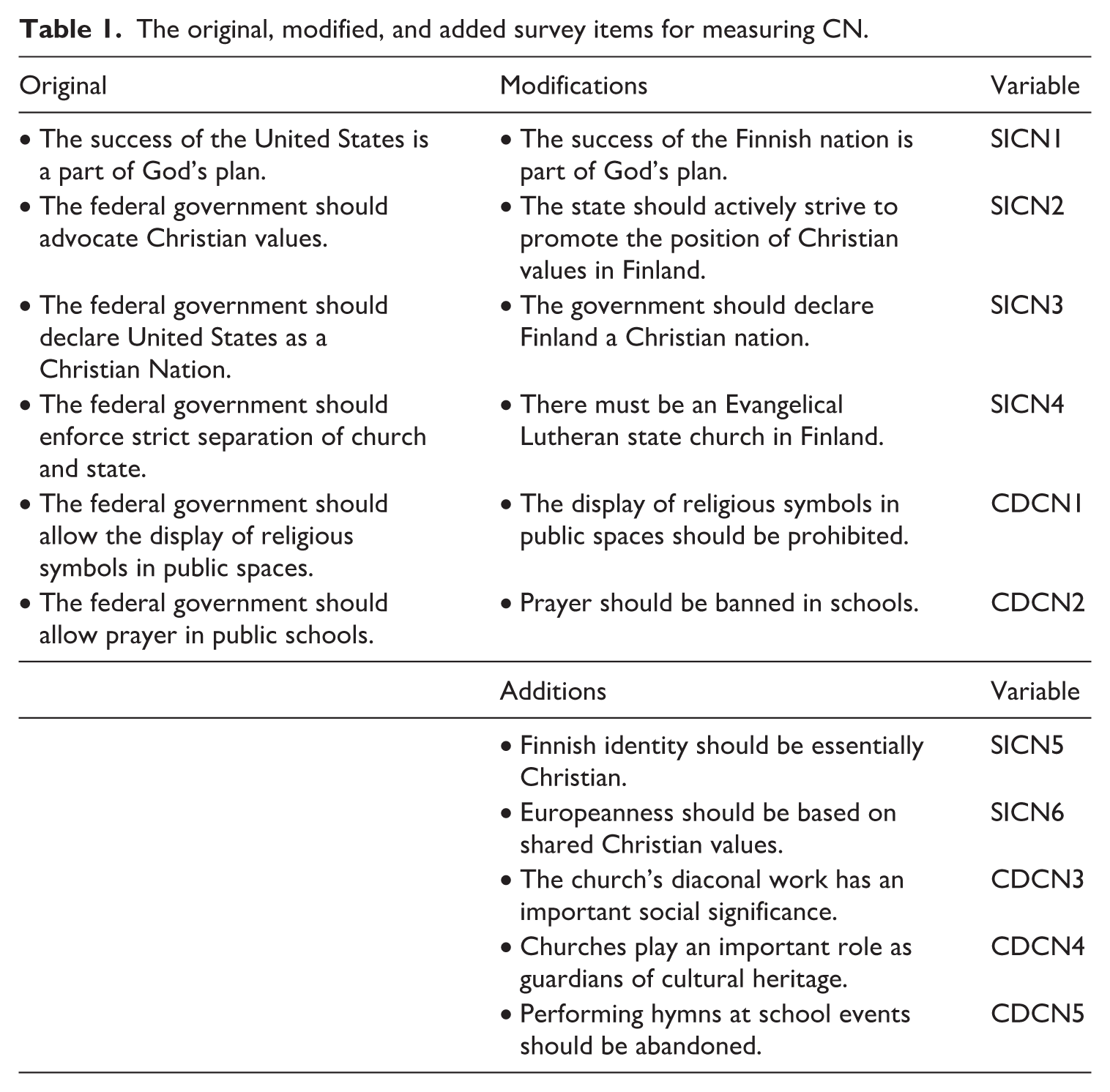
In modifying the module to fit the Finnish context, we aimed to maintain it as equivalent as possible to the original propositions. However, some modifications were necessary in order to test the measurement in the Finnish context (see Table 1 and the online appendix). In addition, to improve the suitability of the measures, we also added variant proposals that might correlate with the original items in the Finnish context. The final version contained five additions that made claims of European and, more specifically, Finnish identities as essentially Christian or based on Christian values and the importance of Christianity as part of Finnish cultural heritage. The formation of the CN measures is presented in the first analysis section, where we test the religio-political dimensions of the Finnish public to which the propositions are connected.
Moderating variable: political orientation
We defined respondents’ political orientation with the aid of a variable measuring respondents’ party identification. Initially, we inquired which party best matched the respondents’ political preferences. In the original question, respondents were allowed to choose the closest party from nine parliamentary parties in Finland. In addition, respondents were able to answer non-parliamentary parties by typing the party in the open answer field or choosing the ‘none of the parties’ option. Due to the lack of cases, we gathered the parties into four categories measuring respondents’ party-political orientation, namely (1) Liberal-Left (SDP, GL, LA), (2) Conservative-Right (FP, CDP, MN), (3) Centre-Right (NCP, CPF, SPP), and (4) No preference. For those respondents who did not prefer any of the listed parliamentary parties, we grouped in the ‘No preference’ category.
Control variables
Our sociodemographic controls consist of gender, age, education level, and area of residence. In addition, we moderate the differences related to religion by including a variable measuring respondents’ relation to Christianity. In the case of gender, respondents could choose their answer from three categories, namely ‘Female’, ‘Male’, and ‘Other’. Due to the small number of respondents in the third category, we concentrate on comparing the differences between the first two. We inquired about the respondents’ age with the aid of an open question in which the respondents reported their year of birth. We categorized the respondents’ education following the International Standard Classification of Education (ISCED). Respondents’ area of residence was defined based on their postal code, which was deleted after the data collection was completed due to privacy reasons.
The respondents’ relationship with Christianity is measured with a composite variable that has six categories, namely Definite Christian, Indefinite Christian, Register Christian, Identity Christian, Indefinite non-Christian, and Definite non-Christian. The composite variable is based on whether the respondent belongs to a Christian church, whether she identifies as a Christian, and to what extent the respondent agrees with Christian beliefs. More information related to the variables and descriptive statistics of utilized variables is provided in the online appendix (Tables A1–A4).
Explorative analysis: the dimensions of Christian nationalism in Finland
As our primary aim is to test the theoretical applicability of CN in a secular European multiparty context, we begin examining the relations of the survey components with a principal component analysis (PCA). Here, PCA is a method for analysing the dimensions in the data by assessing the correlations between a variety of measures. Our aim with PCA is twofold. First, we aim to better comprehend the relations between the survey items in the Finnish context. Second, we seek to form standardized linear measures for CN by producing factor score coefficients with the regression method. Because our aim is to utilize these measures as independent variables in regression analyses and, thus, minimize the correlation between the measures, we used Varimax rotation with Kaiser normalization.
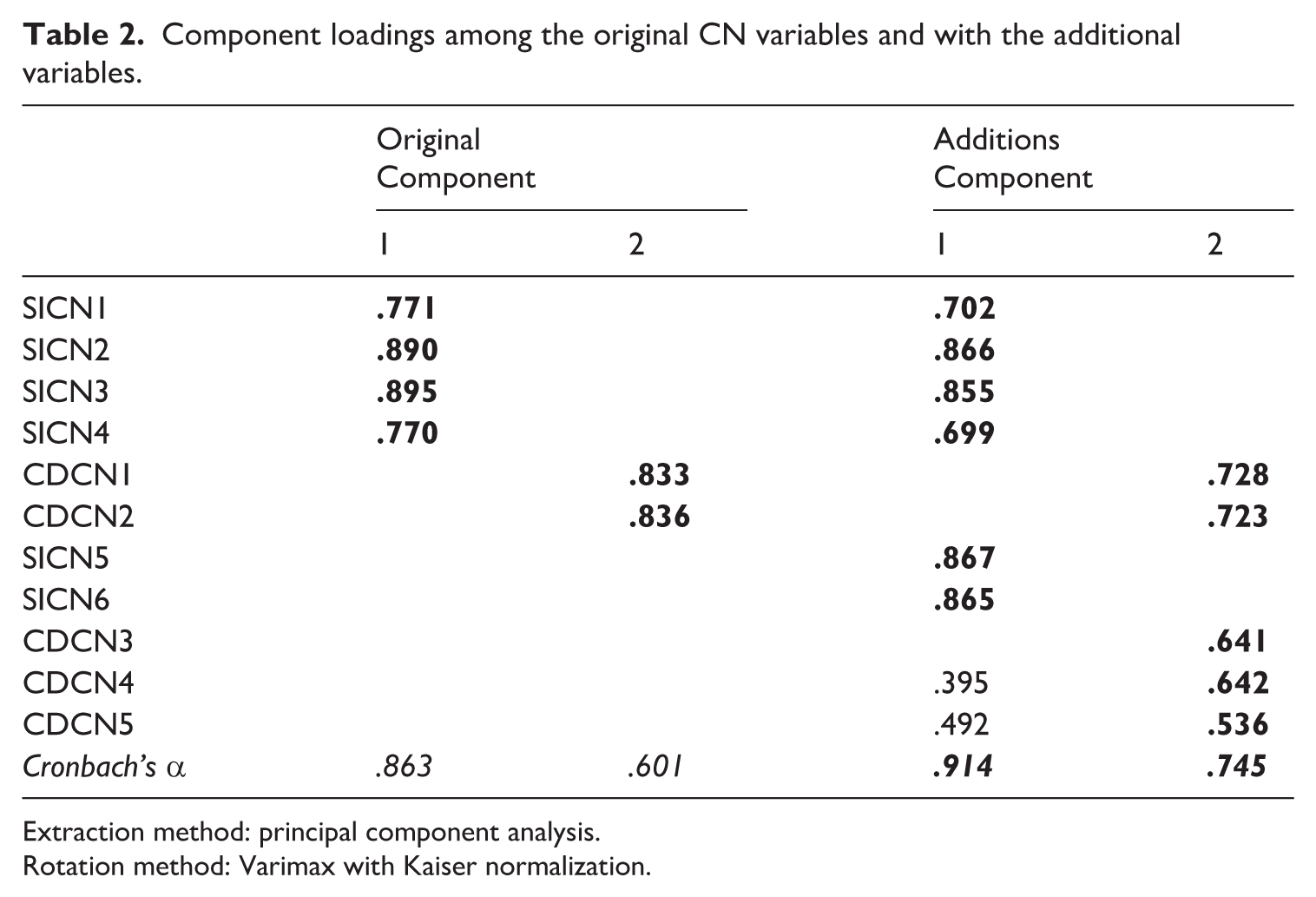
PCA presented in Table 2 shows that items used in the CN measurement by Whitehead and Perry (2020) load to two different components in the Finnish context (see Davis, 2023; Li and Froese, 2023). Among the original six survey propositions from Whitehead and Perry (2020), four items regarding Christianity and the state correlate strongly with each other. However, two items having to do with the public displays of religion do not correlate with these, but they correlate strongly with each other. These results suggest that it is necessary to distinguish two separate forms of CN in Finland.
Component loadings among the original CN variables and with the additional variables.
Extraction method: principal component analysis.
Rotation method: Varimax with Kaiser normalization.
To tease out further characteristics of these components or potentially two different forms of CN, we utilized five more items from the data that dealt with the issues of religion and its public presence, as well as identity. As Li and Froese (2023) argue, there is a need for additional items especially for measuring Religious Traditionalism, the society-centric and socially inclusive dimension of CN. The additional survey items mainly load to either one of these two components. In the case of two items, the correlations with both components exceed the level of .30. When constructing the final variables, we added these items to the component on which the loading was stronger.
Importantly, these two different components can be interpreted in a meaningful way, and they denote different kinds of societal concerns. We named these two components state and identity-oriented Christian nationalism and culturally diffuse Christian nationalism.
State and identity-oriented Christian nationalism (SICN) has to do with viewing Finland as a Christian nation, where proper Christian identity and values should be upheld. The success of Finland is often viewed as part of God’s plan. Furthermore, the identity of Europe and Finland are thought of as Christian. This is a much more radical position of the two and is politically advanced by few Members of the Finnish parliament. However, there is some support for it among the Finnish population.
In Culturally diffuse Christian nationalism (CDCN) positive freedom of religion, visibility of religion in public life, and the historical, cultural, and welfare-related roles of the national Lutheran church are viewed favourably. We are calling this form of CN ‘culturally diffuse’ because it does not map on to a particular ideological object (e.g. state). Instead, it is viewed as part of the cultural fabric and is also much more mainstream as a political position. In CDCN, Christianity and the Lutheran church are thought of as aspects of cultural history, and thus something that should be held in high regard, but they should not be what primarily defines Finland and Finnishness. 4
Connections between Christian nationalism, political orientation, and attitudes towards religious groups
In this section, our aim is to examine the interplay between forms of CN and political orientation concerning attitudes towards religious groups. First, we visually depict the relationships between the CN measures and predicted attitudes towards various religious groups, including Lutherans, Orthodox Christians, Catholics, Christian revival movements, Jews, Muslims, East-Asian religions, and Nones. Regarding the categorical measure of political orientation, we present estimated marginal (EM) means with associated confidence intervals for each party-political group.
The parameters shown in the figures are derived from Generalized Linear Model (GLM) regressions. We employ GLM analyses to assess the individual connections of each independent variable to attitudes towards religious groups. Furthermore, we construct models with control variables, namely respondents’ age, gender, place of residence, education level, political orientation, and their relationship with Christianity. In the online appendix, we provide regression results with uncontrolled and controlled parameter estimates, along with Wald chi-square tests to assess the significance of each variable (see Tables A5–A12). In the same appendix section, we also illustrate the average positions of groups based on political orientation on both CN scales.
The analysis reveals that the forms of CN function distinctively as predictors for how respondents perceive and relate to religious groups, as depicted in Figures 1 and 2 and in Table 3. These figures represent the correlations between CN measures and attitudes towards religious groups. First, in the controlled models SICN displays a positive correlation with respondents’ opinions concerning Christian groups, specifically Lutherans (B = 4.65, p < .001), Orthodox Christians (B = 2.93, p < .001), Catholics (B = 1.79, p = .026), and individuals associated with Christian revival movements (B = 5.65, p < .001). In contrast, SICN has a significant negative correlation with the attitudes towards Muslims (B = −3.93, p < .001), East-Asian religions (B = −2.56, p < .001) and Non-believers (B = −5.70, p < .001). In essence, the findings suggest that SICN operates as a type of exclusionary CN, which notably emphasizes the significance of Lutheranism and Christian revival movements while also raising concerns about the standing of non-Christian religions.
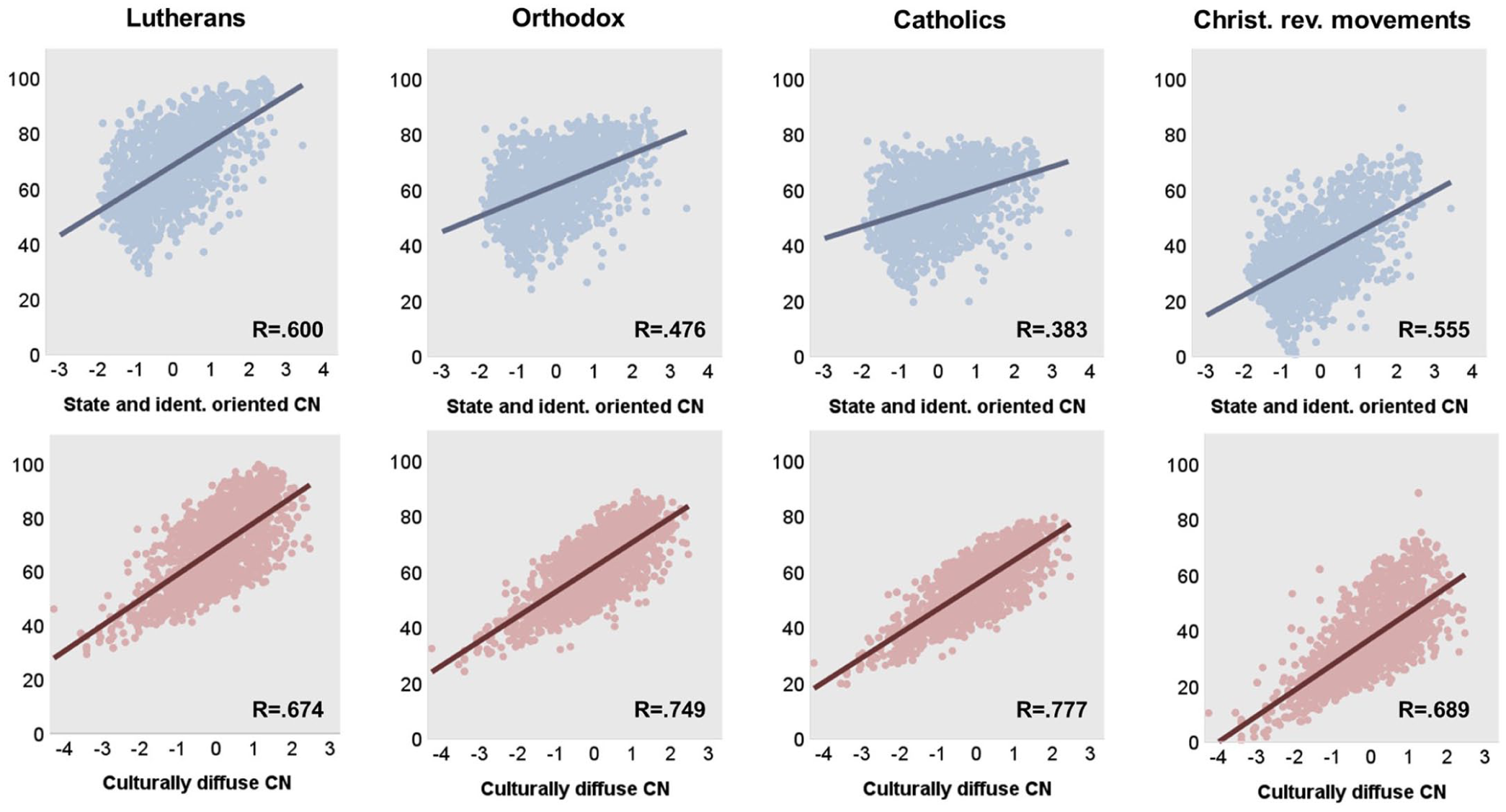
Correlations between the types of CN and predicted attitudes towards Christian religions.
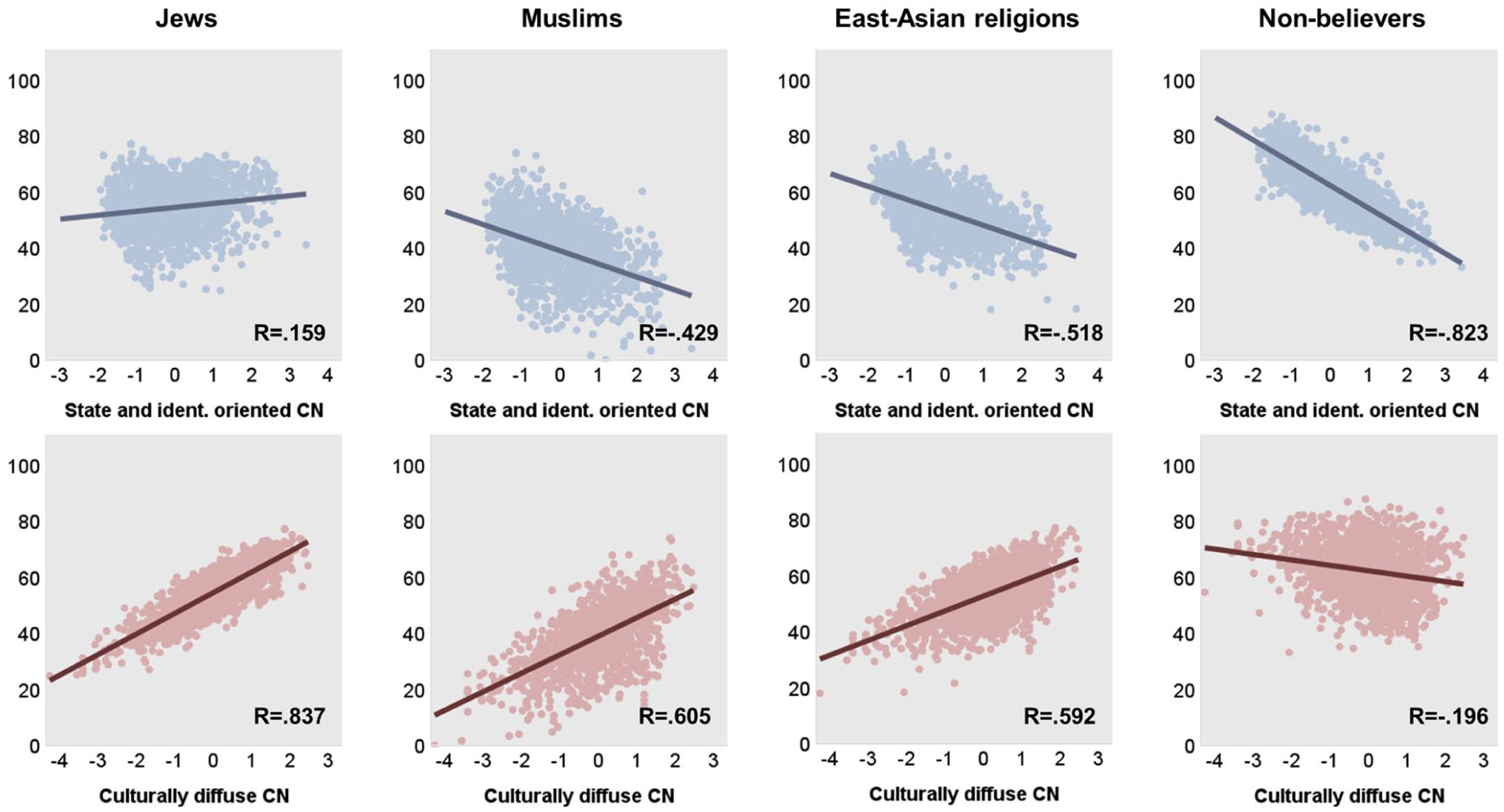
Correlations between the types of CN and predicted attitudes towards non-Christian religions.
Regression models for predicting attitudes towards religious groups.
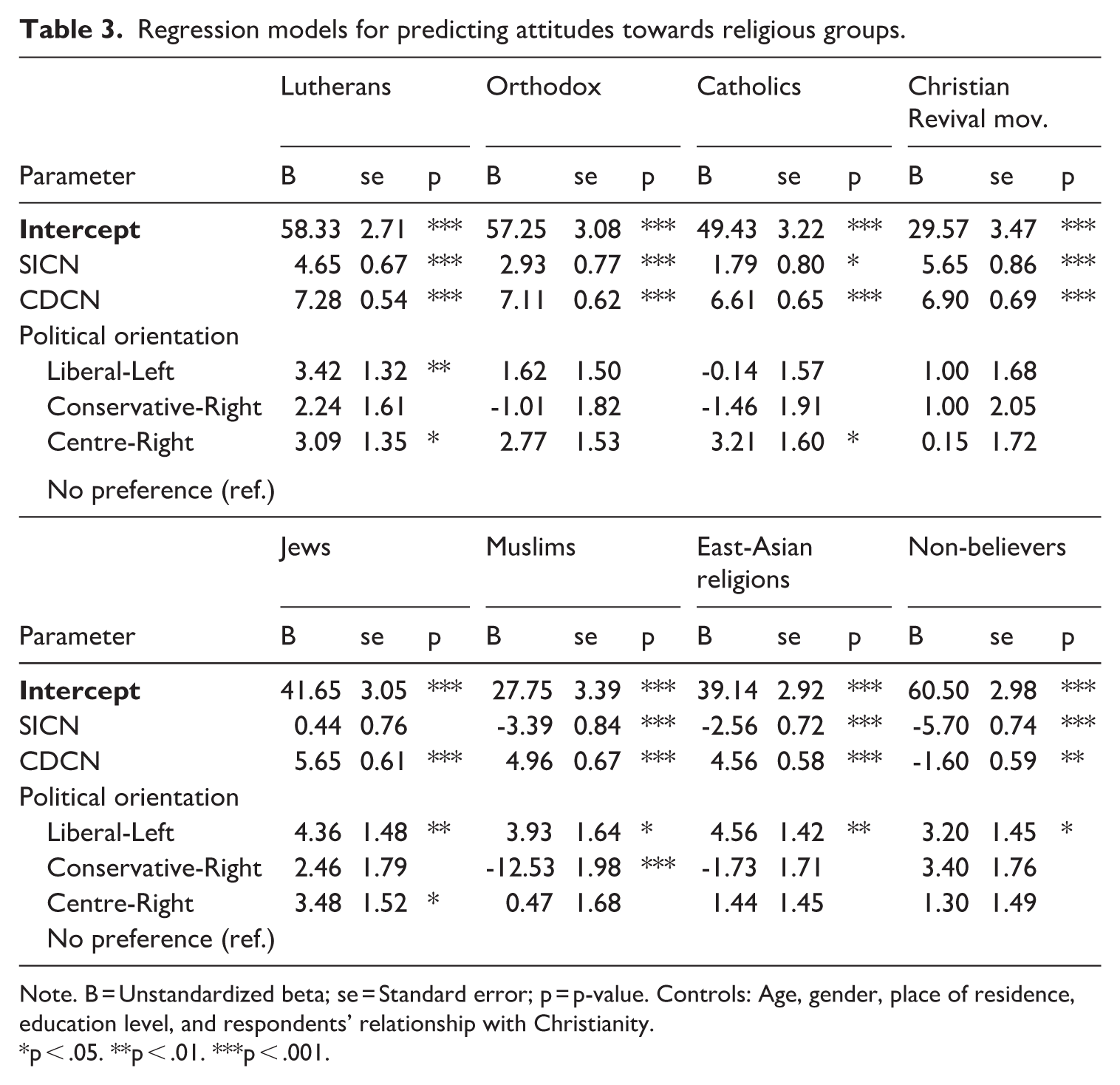
Note. B = Unstandardized beta; se = Standard error; p = p-value. Controls: Age, gender, place of residence, education level, and respondents’ relationship with Christianity.
p < .05. **p < .01. ***p < .001.
When assessing the relations between CDCN and attitudes towards religious groups, the analyses show that CDCN correlates positively with respondents’ attitudes towards every religion – Christian and non-Christian – in our inquiry (Lutherans B = 7.28, p < .001; Orthodox B = 7.11, p < .001; Catholics B = 6.61, p < .001; Christian Revival movements B = 6.90, p < .001; Jews B = 5.65, p < .001; Muslims B = 4.96, p < .001; East-Asian religions B = 4.56, p < .001). The relationship between CDCN and attitudes towards Nones is negative (B = −1.60, p = .007). Overall, it seems that the SICN and CDCN are differently connected to respondents’ attitudes towards religious groups CDCN seems to highlight the positive forms of religious freedom by supporting all forms of religiosity in Finnish society. SICN, in turn, functions as an exclusionary religio-political dimension that strengthens the legitimacy of Christianity.
Analyses examining disparities in the attitudes of political groups towards religious communities distinctly reveal varying perceptions among different political orientations. For comparing party-political groups’ attitudes towards religious groups, we calculated uncontrolled and controlled EM means for party-political groups (see Figure 3 and Table A11–A12) that are based on the regression analyses presented in Tables A5–A8. First, as Figure 3 shows, all groups relate rather positively to the ELCF. Interestingly, according to the analyses, the differences between the political groups are not statistically significant in the controlled model. However, parameters in the regression table still indicate the statistically significant differences between the reference group and the Liberal-Left (B = 3.42, p = .01) as well as the reference group and the Centre-Right (B = 3.09, p = .022).
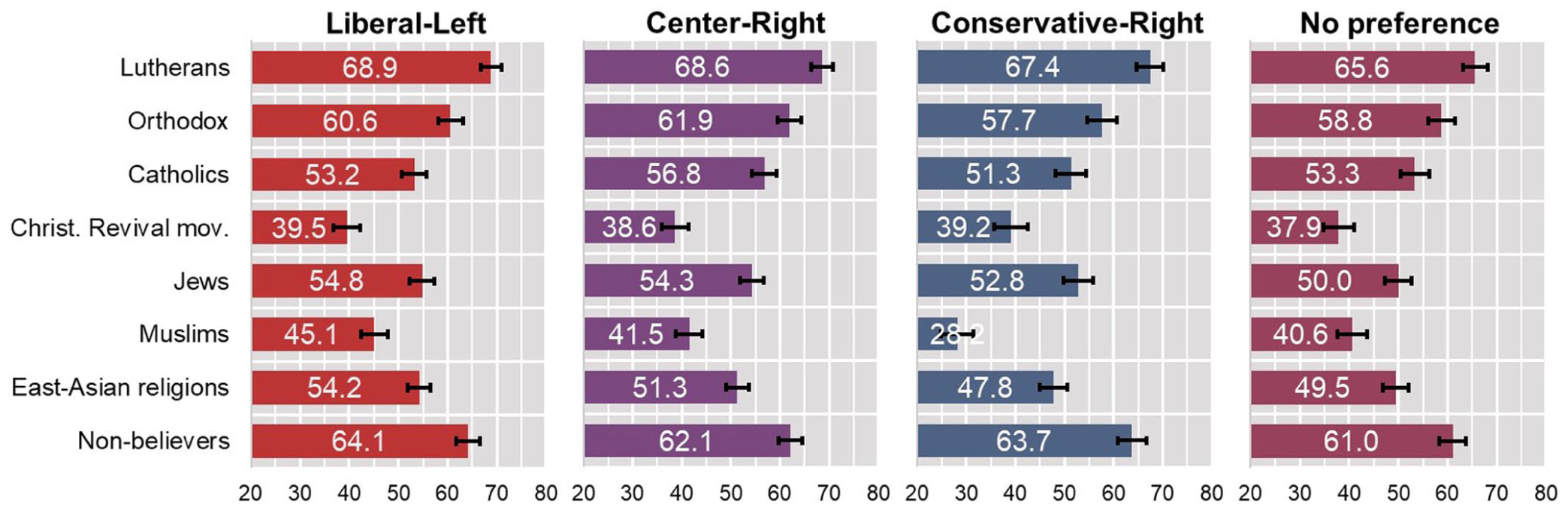
Attitudes towards religious groups by political orientation, estimated marginal means and 95% confidence intervals.
Similarly, political groups also differ in their views regarding other Christian groups. First, among the Centre-Right group, the Orthodox and Catholics are treated the most positively, and according to the confidence intervals, the difference to other groups is statistically significant. In the case of the Christian Revival communities, the Conservative-Right and the Centre-Right groups relate more positively than the Liberal-Left and No Preference groups. The difference remains significant after controlling for the other variables.
In the case of non-Christian religions, the affective stances between the groups are opposite, as the Liberal-Left has the most positive attitudes towards the non-Christian minority religions. Attitudes towards Muslims have the most significant variation between the political groups. The most positive attitudes are among the Liberal-Left group, and the most negative among the Conservative-Right. In addition, statistically significant differences appear between the Centre-Right and the Conservative-Right, and the No Preference group and the Conservative-Right. In the case of the East-Asian religions, the Conservative-Right has the most negative attitudes. Yet, as the figure indicates, in the controlled models, the Conservative-Right group has statistically significant differences only with the Liberal-Left group.
Overall, there are differences but also similarities in how political groups relate to religious groups. The most controversial attitudes seem to form concerning Lutherans, Christian Revival movements, Muslims, and East-Asian religions. It seems, then, that the manifestation of religious pluralism and its background within the pluralistic political context requires more detailed inquiry.
The interaction effects between Christian nationalism and political orientation on attitudes towards religious groups
In this section, we investigate whether respondents’ political attitudes moderate the effect between the forms of CN and attitudes towards various religious groups by testing how the forms of CN and the party-political orientation together explain respondents’ perceptions towards the religious groups (see Tables 4 and 5). This helps us to more precisely dissect the political standings in which the effects of CN are emphasized. To model the interplay between the CN measures and political orientation, we added interaction terms between the types of CN and political orientation into the regression models. The analyses reveal that the relationships between the forms of CN and attitudes towards religious groups do not differ much between the political groups. The interaction analysis between party orientation and the forms of CN shows that statistically significant interactions occur mainly among those in the Conservative-Right group. Interestingly, it seems that the SICN is more prone to interactions between political groups than the CDCN.
Regressions for predicting effects of the interaction between SICN and political orientation on respondents’ attitudes towards religious groups.
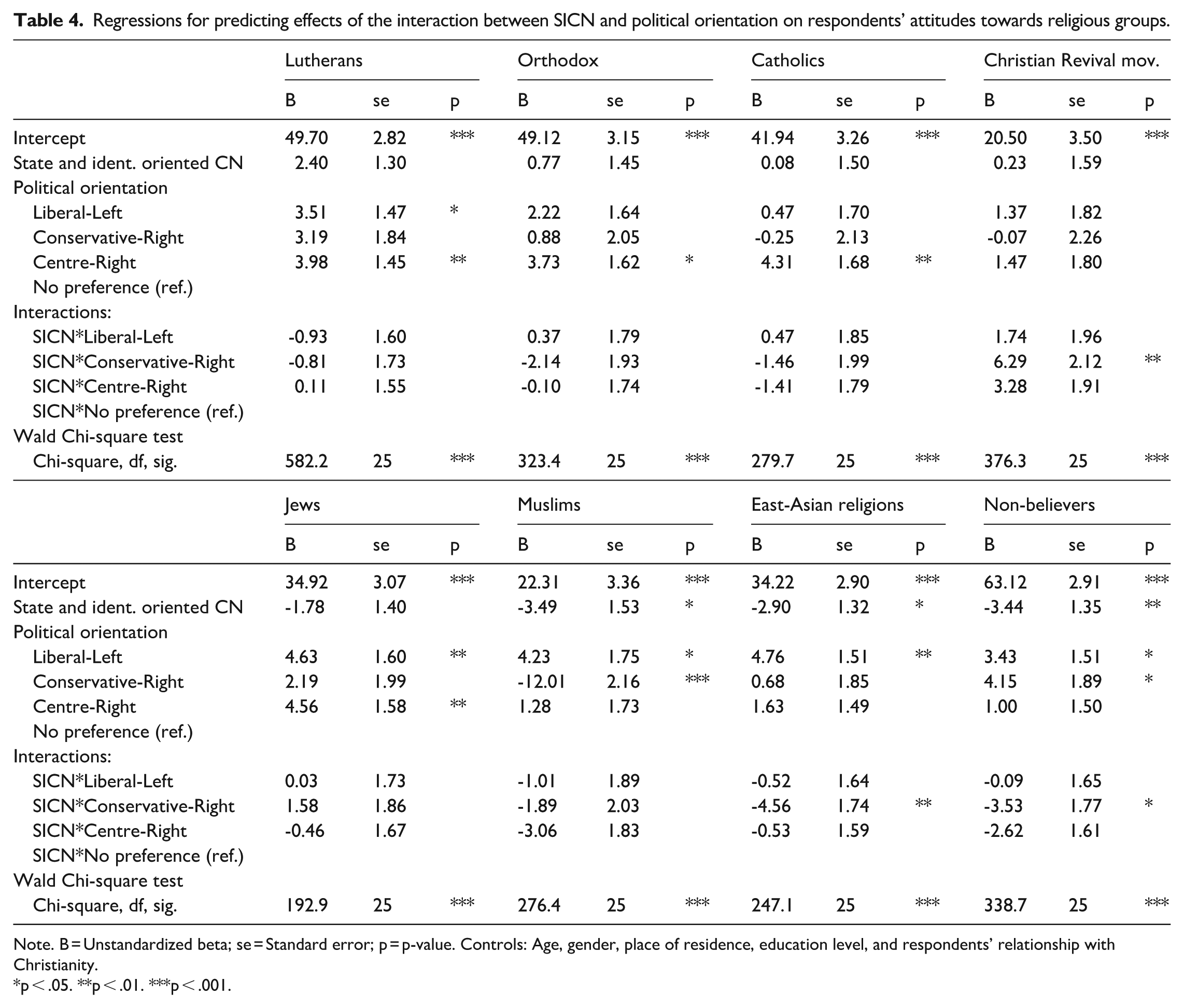
Note. B = Unstandardized beta; se = Standard error; p = p-value. Controls: Age, gender, place of residence, education level, and respondents’ relationship with Christianity.
p < .05. **p < .01. ***p < .001.
Regression models for predicting effects of the interaction between CDCN and political orientation on respondents’ attitudes towards religious groups.
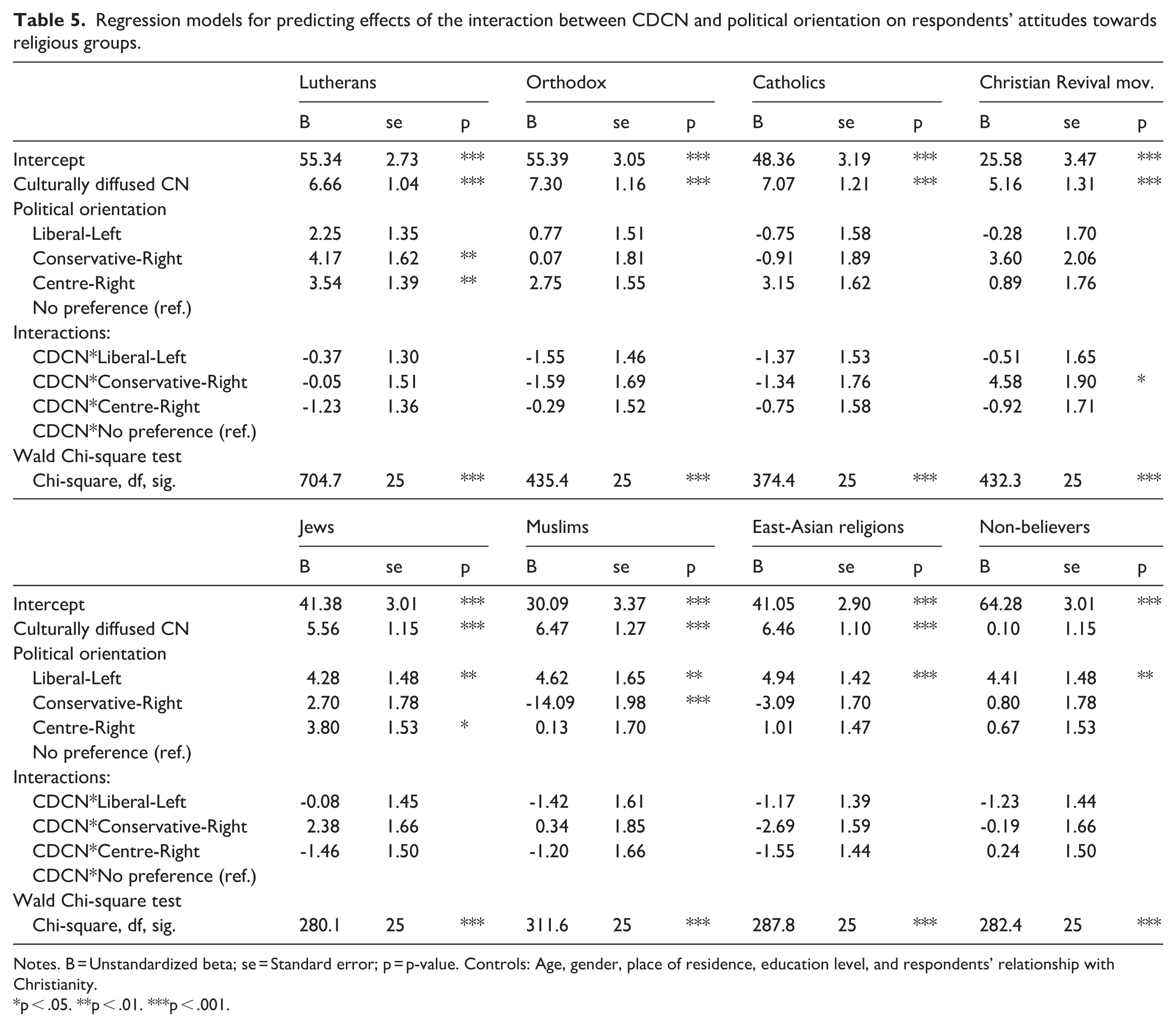
Notes. B = Unstandardized beta; se = Standard error; p = p-value. Controls: Age, gender, place of residence, education level, and respondents’ relationship with Christianity.
p < .05. **p < .01. ***p < .001.
The results indicate that SICN plays a stronger role within the Conservative-Right group, where its exclusionist function is particularly pronounced. First, when compared to the No-preference group, SICN has a stronger positive correlation with attitudes towards Christian revival movements among the Conservative-Right (B = 6.29, p = .003). Second, among the Conservative-Right group, the exclusionist function of SICN is also amplified. The analysis reveals that a negative correlation between SICN and attitudes towards East-Asian religions is stronger among those respondents belonging to the Conservative-Right group (B = −4.56, p = .009). Similarly, SICN and attitudes towards Nones have a stronger negative correlation among the Conservative-Right group (B = −3.535, p = .046).
As in the case of SICN, the positive correlation between the CDCN and attitudes towards Christian revival movements is also stronger among the Conservative-Right group (B = 4.579, p = .016). There is also a statistically significant difference in how strongly the CDCN functions between the Conservative-Right and the Centre-Right groups when predicting the attitudes towards Jews, as the pairwise comparisons between the political groups shows a significantly more positive association with attitudes towards Jews in the Conservative-Right group compared to the Centre-Right group (B = 3.84, p = .014).
Overall, the interaction analyses reveal the interplay between CN and political divisions in Finland. In our analysis, it appears that different forms of CN serve various purposes among respondents with diverse political leanings. Especially, it seems that the exclusive forms of CN are particularly pronounced among those on the Conservative-Right end of the political spectrum: Among conservatives, the exclusionary function of SICN appears to be emphasized, while the inclusive function of CDCN was diminished.
Conclusion
When we planned our study on how the measure on CN works in a European context, our working hypothesis was that the measure would not have similar explanatory power, because of a different religio-political context. Using dimension reduction methods, we found that the measure splits into two dimensions, namely state and identity-oriented CN (SICN) and culturally diffuse CN (CDCN). But there is a twist to this story: the splitting of the measure does not seem to result solely from the different national context (Li and Froese, 2023). Considering our findings, as well as the discussion on CN and related concepts, there are three main takeaways from this. The first one is methodological and concerns the development of the CN-measure. The second point is theoretical and concerns the relation of CN to other partly overlapping concepts. Finally, the third takeaway concerns CN’s connection to political preferences.
First, our findings, along with Li and Froese (2023), point towards the importance of better planning of the CN measure, especially when it is tested in various national contexts (Davis, 2023). Country specific issues should be taken into account when localizing the variables to make the questions comprehensible for the respondents. In our case, the most significant differences between the American and Finnish contexts are: (a) the difference between the North American denominational system and the Finnish single national church (with some state church qualities), (b) different degrees of secularization, and (c) the difference between two-party and multi-party democracies. Furthermore, paying attention to the possibility of various dimensions of the measure is important. We found out that the measure does split into two dimensions. Furthermore, we added other country-specific survey statements to our measure that increased its reliability. We think that this is recommendable to tease out the national specificities of CN.
Second, the splitting of the measure does not have to lead to discarding the concept or the measure of CN altogether. Conversely, as we show above, the two dimensions of CN do have explanatory power in European multiparty contexts. Taking note of these dimensions may lead to more nuanced analyses of the relation between religion and nationalism in North America, Europe and beyond. Our analyses showed that the first dimension, SICN, is especially related to exclusionary views connecting Christianity with the Finnish nation-state. In contrast, CDCN revolves around promoting the constructive exercise of religious freedom, enabling the presence of religion within public sphere. The division observed in the CN-related values can be attributed to the coexistence of two parallel interpretations regarding the significance of Christianity.
In Europe, ethnonationalism has often been the term of choice regarding the type of exclusionary attitudes correlated with SICN here (Bonikowski, 2017; Lähdesmäki, 2019). As noted, however, European discussions on ethnonationalism often relegate religion to a marginal role. Previous research shows that Christianity’s relationship with contemporary Nordic nationalism is dual: Christian cultural identity is often very important, yet there is animosity between hard-line nationalists and the national churches. As proposed by some scholars (e.g. Brubaker, 2017; DeHanas, 2023; Lähdesmäki, 2019; Strijbis, 2018), among the European radical right-wing parties, Christianity is predominantly perceived as a cultural characteristic that shapes the notion of legitimate citizenship. However, CDCN provides a different perspective that highlights the importance of religion irrespective of specific religious affiliation. From this, a critical division emerges between those with religious identification and Nones, a distinction that may be particularly emphasized in highly secularized settings like Finland. It can be concluded that further research on CN, cultural religion and ethno-nationalism on both sides of the Atlantic would benefit from discussing how these concepts relate to each other.
Third, regarding CN’s relation to political preferences, our findings suggest that among conservative and populist groups the exclusive function of SICN was emphasized, while the inclusive function of CDCN was diminished. This indicates that the conservative-populist faction within the Finnish electorate could potentially form a subset where fundamental CN values align, reflecting a shared dimension. Consequently, future studies should examine how CN measures correlate across different political leanings to gain a comprehensive understanding of the phenomenon in various religio-political contexts (see Smith and Adler, 2022).
The answer, then, to our original question is the elusive ‘yes and no’. CN does help us discern and understand some aspects of European exclusionary nationalism better than alternative concepts in which religion barely features. However, as we also show, European CN also has an inclusive side. It is worth discussing whether this kind of ‘Culturally Diffuse Christian Nationalism’ should be considered nationalist at all, and whether ‘Christian Nationalism’ as a concept gets its utility from focusing on the exclusionary function of religion.
Supplemental Material
sj-docx-1-scp-10.1177_00377686261421044 – Supplemental material for Christian nationalism divided: Exploring the transferability of an American concept to a secularized Nordic multi-party democracy
Supplemental material, sj-docx-1-scp-10.1177_00377686261421044 for Christian nationalism divided: Exploring the transferability of an American concept to a secularized Nordic multi-party democracy by Ilkka KOIRANEN, Tuomas ÄYSTÖ, Jere KYYRÖ, Talvikki AHONEN and Titus HJELM in Social Compass
Footnotes
Declaration of conflicting interests
The authors declared no potential conflicts of interest with respect to the research, authorship, and/or publication of this article.
Funding
The authors disclosed receipt of the following financial support for the research, authorship, and/or publication of this article: This research was supported by the Research Council of Finland (Research Council for Culture and Society; Grant: 334157) and by the Finnish Cultural Foundation (Grant 00242676).
Ethical approval and informed consent statements
Ethical approval for this study was obtained from the Research Ethics Committee at the University of Helsinki.

Data availability statement
The data used in this study will be made publicly available on the Finnish Social Science Data Archive in 2026.
Supplemental material
Supplemental material for this article is available online.
Notes
Author biographies
Address: Department of Social Research, University of Turku, Assistentinkatu 4, 20500, Turku, Finland.
Email:
Address: Department of Cultures, University of Helsinki, Unioninkatu 38, 00170, Helsinki, Finland.
Email:
Address: Department of Study of Cultures, Arcanuminkuja 1, 20500 Turku, Finland.
Email:
Address: The Unit of Theology and Study of Religions, Tehtaankatu 2, 20500, Turku, Finland.
Email:
Address: Department of Cultures, University of Helsinki, Unioninkatu 38, 00170, Helsinki, Finland
Email:
References
Supplementary Material
Please find the following supplemental material available below.
For Open Access articles published under a Creative Commons License, all supplemental material carries the same license as the article it is associated with.
For non-Open Access articles published, all supplemental material carries a non-exclusive license, and permission requests for re-use of supplemental material or any part of supplemental material shall be sent directly to the copyright owner as specified in the copyright notice associated with the article.
