




Abstract
Sulfur dyes are applied on cotton to produce deep shades at low cost; they provide excellent color fastness, except against chlorinating agents. Sodium sulfide used as a reducing and solubilizing agent in this dyeing process is highly toxic and produces unhygienic hydrogen sulfide. In this study, alkaline protease was used in place of sodium sulfide to see if the latter could be substituted with the former, because of its hydrolytic and reducing nature in an alkaline bath. The study revealed that alkaline protease was quite effective in this regard and capable of substituting sodium sulfide with comparable dye strength of dyed cotton along with promising color fastness.
While dyeing cotton with sulfur dyes, it has been of commercial importance to produce deep shades, such as black, navy blue, khaki and green, with all-round color fastness, except to chlorine, at relatively low cost. 1 Sulfur dyes are insoluble in water; they necessitate reduction and solubilization with sodium sulfide at boil to develop affinity for cotton;2–5 the latter is dyed at boil for a specific time, thoroughly washed to remove excess alkali and is then oxidized at 50–60℃ for 15–20 minutes, preferably with acidic potassium dichromate, to restore parent dye in the cotton with subsequent soaping and washing to remove superficial dyes. The application of sodium sulfide is under global debate on eco-environmental grounds, as it corrodes discharge concrete pipes and produces hydrogen sulfide, thus developing an unhygienic shop-floor atmosphere and related air pollution; the waste water problem is increased many folds too.6–8 Alternatives to sodium sulfide, such as glucose, 9 hydroxyacetone, 1 electro-chemical reduction, 10 molasses-NaOH combination, 11 iron salt along with alkali,12,13 etc., do not show equivalent dyeing performance because of inherent drawbacks associated with each of these formulations, leading to drastic reduction in the use of these dyes globally.14,15
In recent times, enzymes have received widespread attention in various textile processes with a view to making them eco-friendly and less toxic.15,16 The effectiveness of enzymes, especially those belonging to oxidoreductase and hydrolase classes, is of utmost importance in this context. Protease from the hydrolase class with nomenclature EC-3.4.x accounts for approximately 40% of the total enzyme consumption in various industrial sectors,17,18 such as detergent,19,20 food,18,20 leather,20,21 waste management, 21 silver recovery 22 and textiles.15–17,23–25 It is available in three types, viz. alkaline, neutral and acid proteases; amino acids present in the side chain of the alkaline protease usually take part in all catalytic reactions.18,26
In the side chains of amino acids in alkaline protease (EC-3.4.2.3.6), a number of nucleophilic groups are present to exhibit catalysis (Figure 1).
27
These include catalytic triad serine-histidine-asparate and cysteine consisting of R-OH, R-NH2, R-S− and histidyl.15,20 These groups attack the electrophilic parts of the substrates to form a covalent bond between the substrate and the enzyme, thus forming a reaction intermediate.
15
They work on various target bonds, such as -C-S-R, R-S-S-R, C-X, S-N, etc.
20
Three-dimensional structure of alkaline protease.
27

Cysteine (Cys), the sulfur-containing side chain of amino acid, is hydrophobic and is highly reactive; it is capable of reacting with another cysteine to form a disulfide bond. The side chain of histidine (His) can be either positively charged (protonated) or uncharged at neutral pH. Serine (Ser) is a polar amino acid due to the reactive hydroxyl group in the side chain, and can also participate in hydrogen bonding. 27
Serine and histidine carry out a nucleophilic attack on the substrate. At first, the electronegative oxygen atom of serine carries out a nucleophilic attack on the electropositive carbon of the carbonyl function (C = O) of the substrate, cleaving the disulfide bonds so as to bring the imidazole ring of the histidine residue nearer to serine. This is accompanied by removal of a proton from serine, which is donated to the nitrogen atom of the cleaved substrate and the enzyme then covalently binds with the substrate.26,27 This is followed by displacement of the acyl group from the enzyme by the electronegative oxygen atom of the water molecule, setting the enzyme free. Histidine also plays a role in proton transfer and donates to the serine residues. Most of the enzymatic activities are reversible and capable of catalyzing forward/backward transformations.15,26,28 The catalytic activity of alkaline protease is governed by a catalytic triad consisting of Ser-His-Asp; the addition of it increases the nucleophilicity or electron density of water resulting in alkaline protease catalyzed mechanisms generally occurring at much higher pH.
The alkaline protease under study belongs to the hydrolase class and possesses many characteristic features; for example, it possesses stability at high temperature,21,29 in alkaline pH (9–12)15,21,27,30 and in association with chelating agents.15,20 Alkaline protease is commercially applied in bating of hides (i.e. removal of hairs) in the leather industry and can markedly reduce adsorbable organohalogen (AOX) content in effluents.15,16,20,21,30 It possesses reducing power in alkaline medium and may be capable enough to cleave the bi- and polysulfide bonds with greater ease, thus enabling sulfur dyes to be reduced under alkaline conditions, a phenomenon similar to the action showed by sodium sulfide during reduction of dye.16,28,30–35 The catalytic reducing activity exhibited by alkaline protease seems to possess a close match to that with other reducing agents. Alkaline protease has not been tried earlier for the reduction of sulfur dyes and obviously no evidences are available on its effectiveness. Protease belongs to the hydrolytic enzyme category; the presence of higher alkalinity synergizes its hydrolytic activity, thus splitting a molecule through hydrolytic/reducing action followed by solubilization similar to that which occurs during reduction and solubilization of sulfur dyes using sodium sulfide.
In the present work, the effectiveness of alkaline protease was studied on the reduction and solubilization of sulfur dyes, thus attempting to substitute sodium sulfide in the sulfur dyeing formulation to make the process environmentally friendly. The reduction potential and dye strength, as well as stability of sulfide and alkaline protease-based dyebaths, were studied; color fastness of dyeing was also evaluated and compared.
Experimental details
Thoroughly pretreated and mercerized cotton fabric was used (epi: 92, ppi: 72, warp: 20 s, weft: 30 s and gsm 156). Alkaline protease (Palkodehair) was procured from Maps Enzymes Ltd, Ahmedabad, India. Analytical grade – sodium sulfide flakes (55–60%), sodium chloride (99.5%), sodium hydroxide (96%), acetic acid (99.8%) and potassium dichromate (99.8%) (S D Fine Chemicals, Mumbai, India) were used – except T R oil and non-ionic detergent (commercial grade). Ten different sulfur dyes of commercial grade, viz. Black (Sulphur Black 5, CI 53 205), Navy Blue (Sulphur Blue 4, CI 53 235), Military Green (Sulphur Green 1, CI 53 166), Red Brown (Sulphur Red 10, CI 53 228), Yellow (Sulphur Yellow 9, CI 53 010), Brown (Sulphur Brown 8, CI 53 020), Royal Blue (Sulphur Blue 7, CI 53 440), Green (Sulphur Green 22, CI 53 451), Olive Green (Sulphur Green 12, 53 045) and Khaki (Sulphur Green 8) were used in this study. These dyes were supplied by Sulfast, Mumbai, India. Dye strength (K/S) and CIELab values were assessed using Computer Color Match (Datacolor Check, Datacolor International, US); the color fastness of dyed cotton was assessed according to American Association of Textile Chemists and Colorists (AATCC) Test Methods 16-2004 (light), 61-2007 (wash), 8-2007 (rubbing) using an ATIRA light fastness tester (Paresh Engineering Works, Ahmedabad, India), a wash fastness tester (RBC Electronics, Mumbai, India) and a crockmeter (Paramount, Delhi, India), respectively. Dyebath pH and redox potential were assessed using a digital pH meter and digital combined oxidation reduction potential (ORP) meter (Century Instruments, Chandigarh, India), respectively; the redox potential was assessed at reduction/dyeing temperature using the reference electrode Ag/AgCl and the combined electrode Pt-Ag/AgCl filled up with saturated KCl solution.
Dyeing of cotton with sulfur dye in sodium sulfide system
The required amount of sulfur dye (5% shade) was pasted with T R oil and water was added to it. The mixture was heated up to boil (90–95℃), after which sodium sulfide (0.5–5 times, based on weight of dye) was added and stirred well until reduction and solubilization of dye took place in the next 15–20 minutes. The cotton fabric sample (∼5 g) was dyed in this bath for 30 minutes at 90–95℃, after which salt (sodium chloride, 20 g/l) was added and the sample was further dyed for 90 minutes at this temperature. The bath was dropped; the dyed cotton was cold washed and oxidized with acetic acid and potassium dichromate (1 g/l each) at 50–60℃ for 30 minutes followed by soaping at boil and a final wash. Dyeing and after treatments were carried out with a liquor ratio of 1:20 for all treatments separately, except washing.
Dyeing of cotton with sulfur dye in alkaline protease system
Preparation of the dyebath, dyeing of cotton, oxidation of dyeing, etc., were carried out in the same way as in the sulfide system, with the only difference being the replacement of sodium sulfide with alkaline protease (0.05–1.5 times of dye) along with sodium hydroxide to develop the same pH that was in the sulfide-based baths.
Preparation of reduction baths to study their stability
To study the stability of baths in the absence of dye, reduction baths were prepared separately with sulfide and alkaline protease. The change in pH and reduction potential were noted down after storing for a specific time; thereafter dye (Green 1, 1%) was added in each bath. Cotton fabric was dyed in these baths as mentioned earlier and dye strength was assessed. In practice, fresh dyebaths meant for dyeing are not used immediately in some cases and time lapse occurs due to various reasons; even exhausted dyebaths are sometimes not drained out and rather are fortified for spent chemicals and dye for reuse of the bath. To study the potential of stored dyebaths towards successful dyeing, reduction baths were prepared in sulfide and alkaline protease systems followed by the addition of dye and storage for up to 24 hours.
Evaluation of dyebath and dyed samples
Samples dyed from both the sulfide and alkaline protease-based dyebaths were evaluated for dye strength and colorfastness properties, while reduction baths were evaluated for the reduction potential as well as pH at various stages of dyeing, that is, in a blank reduction bath, after reduction of dye and at the end of dyeing.
Results and discussion
Dyeing of cotton with sulfur dye using sodium sulfide
Influence of sodium sulfide on dyebath status (Sulphur Green 1)
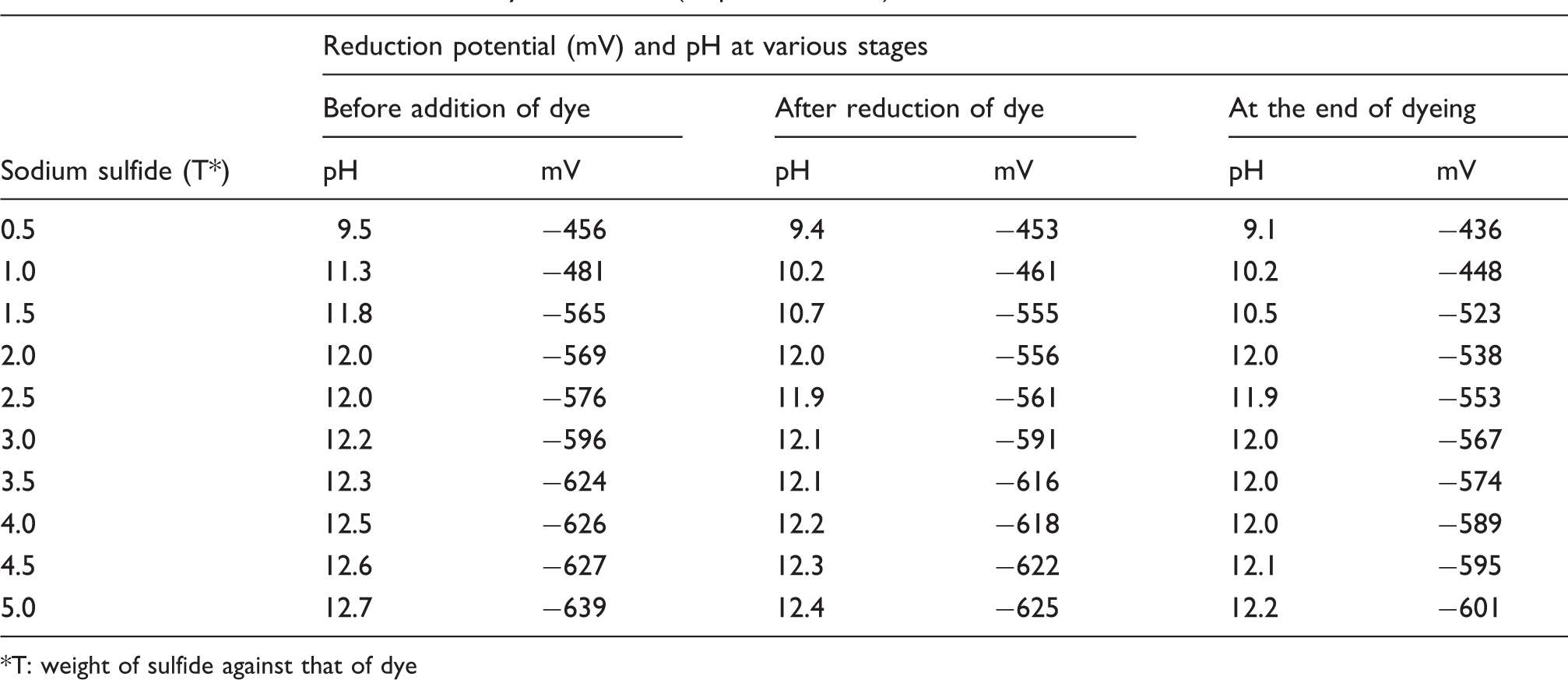
T: weight of sulfide against that of dye
The reduction potential and pH of the bath were directly influenced by the concentration of sodium sulfide (Table 1). The addition of dye caused a drop in reduction potential and pH, indicating reduction and solubilization of the dye. At the end of dyeing, a further drop in reduction potential and pH was evident. The optimum concentration of sodium sulfide was at 2 T (2 times the dye concentration), indicated by optimum color strength (Figure 2). High levels of sodium sulfide caused fabric yellowing and sub-optimal levels caused a reduction in color strength.
Influence of sodium sulfide concentration on color strength of cotton (T: weight of sulfide against that of dye).
Reduction with alkaline protease
Dye bath status and dye yield in alkaline protease-based dyebaths
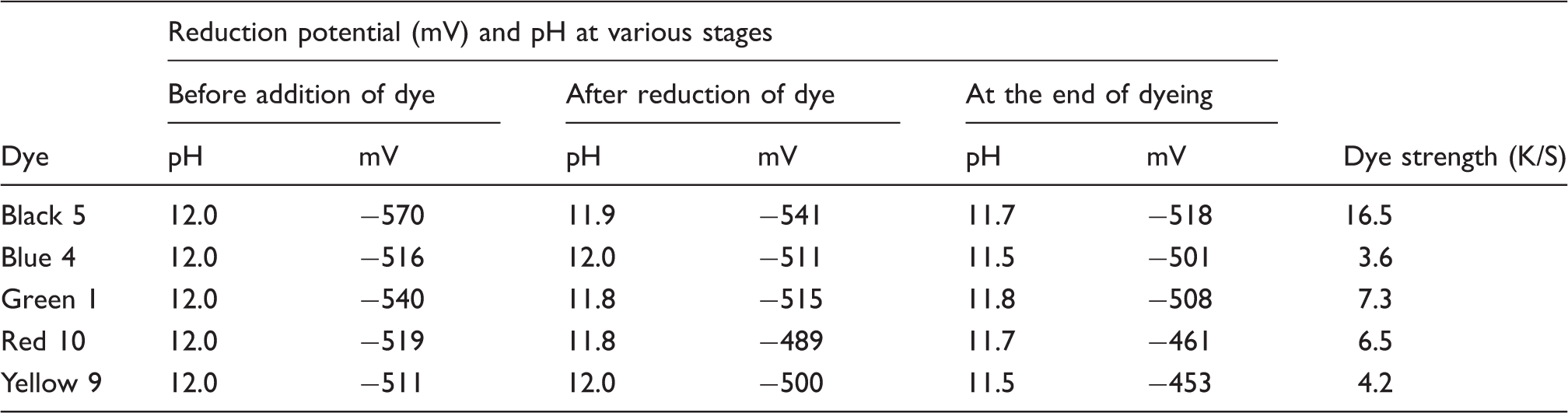
Optimization of dyeing parameters with alkaline protease
Optimization of dyeing parameters, such as pH, concentration of alkaline protease (T, with respect to dye), temperature, concentration of salt and time of dyeing, showed remarkable improvement in dye bath status as well as dye strength on cotton. Five sulfur dyes – Black 5, Blue 4, Green 1, Red 10 and Yellow 9 – were selected for study.
A small increase in pH from 10–10.5 showed a remarkable increase in dye strength succeeded by very little increase between pH 10.5 and 12 and another increase was observed beyond pH 12 with Black 5; the final dye strength was significantly higher than that obtained at pH 12 in the sulfide system. The remaining four dyes under study showed practically no increase in dye strength, even increasing pH up to 11.0, but beyond this a small increase was observed. Finally, Blue 4 and Green 1 resulted in a little less dye strength, but Red 10 and Yellow 9 reported dye strength comparable to those obtained in the sulfide system. A pH nearer to 12, which is generally developed in sulfide-based reduction baths, was found to be the optimum in alkaline protease systems too (Figure 3). For this study, the concentration of alkaline protease was kept same as that of dye (1 T) in the bath.
Influence of pH on color strength (protease concentration: 1 T with respect to dye).
Alkaline protease concentration, as little as one-fourth of weight of dye (0.25 T) was found to be adequate to give comparable dye strength with those obtained in the sulfide system, as shown in Figures 4 and 2, respectively. The generalized dye strength values were supportive of alkaline protease concentration of 0.25 T. Further attempts to reduce concentration of alkaline protease (0.05–0.25 T) resulted in lower dye strength (Figure 5). There was substantial fall in the reduction potential of baths throughout the reduction and dyeing process.
Influence of protease concentration on color strength (T: weight of sulfide as number of times against that of dye). Influence of protease on dye strength at lower concentrations (≤0.25 T).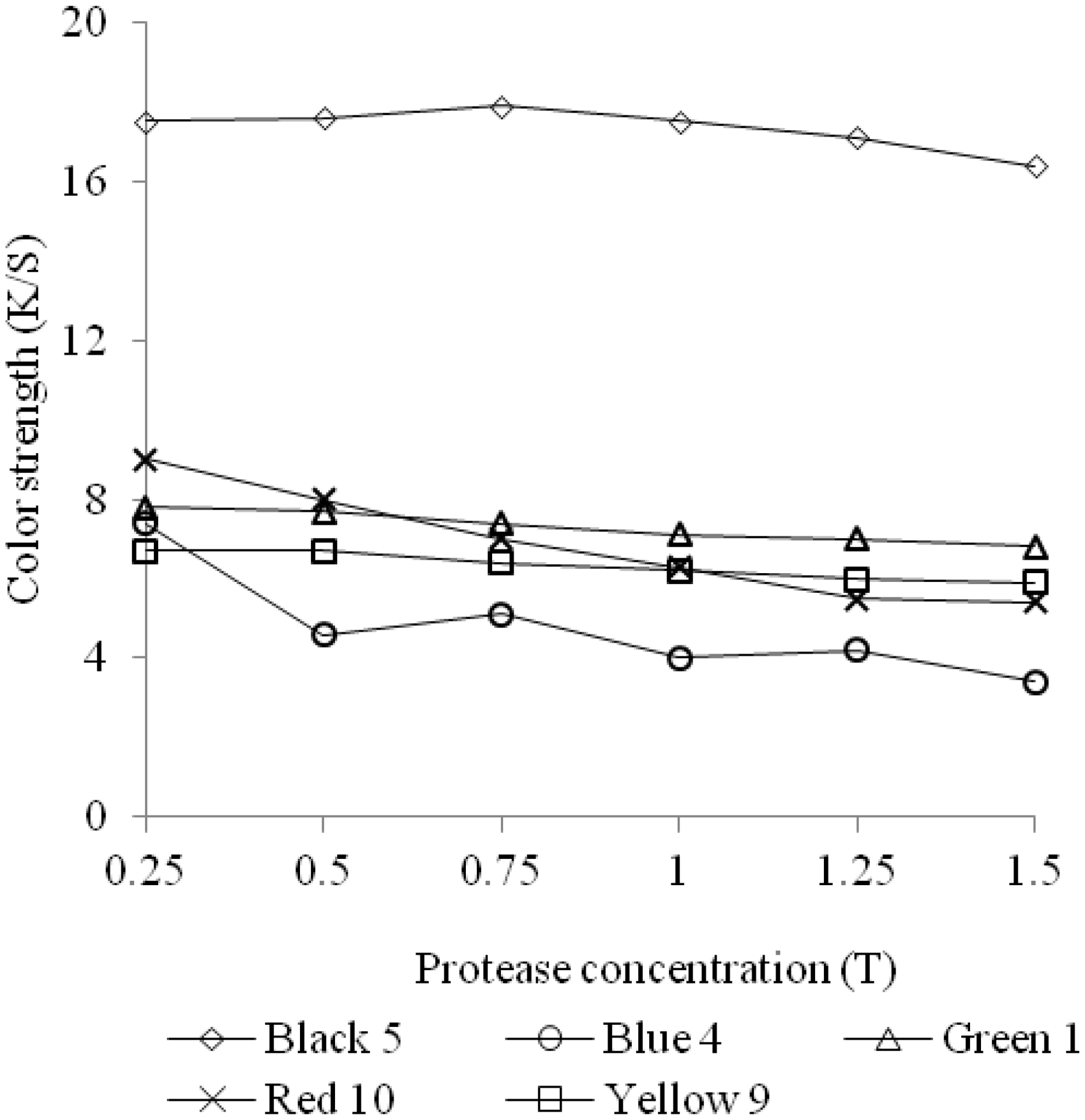

The temperature of dyeing showed a typical effect on dye strength (Figure 6). There was a sharp increase in dye strength for Black 5 from 30 to 50℃, followed by a very slow increase beyond that, but at 90℃ the dye strength was found to be comparable with that obtained in the sulfide system. The other four dyes showed very poor dye strength up to 50℃, beyond which gradual improvement in dye strength was observed up to 90℃. The final dye strength for Blue 4 and Green 1 were on the low side, but Red 10 and Yellow 9 showed quite high dye strength compared to those obtained from the sulfide system (2 T) for respective dyes (Figure 2).
Influence of temperature on color strength.
No significant influence of salt was observed on dye strength for all the five dyes under study (Figure 7). Black 5 reported remarkable increase in dye strength up to a salt concentration of 10 g/l with little increase beyond that up to 20 g/l; the final dye strength was slightly less than that obtained in sulfide system. There was no substantial increase in dye strength with increase in concentration of salt for the remaining four dyes, but at a salt concentration of 20 g/l, a small increase was found. At a salt concentration of 20 g/l, Blue 4 showed remarkably less dye strength and Green 1 and Red 10 showed exactly comparable dye strength, while Yellow 9 showed almost double dye strength compared with those obtained in the sulfide system. Beyond a salt concentration of 20 g/l, there was a gradual fall in dye strength for all five dyes.
Influence of salt concentration on color strength.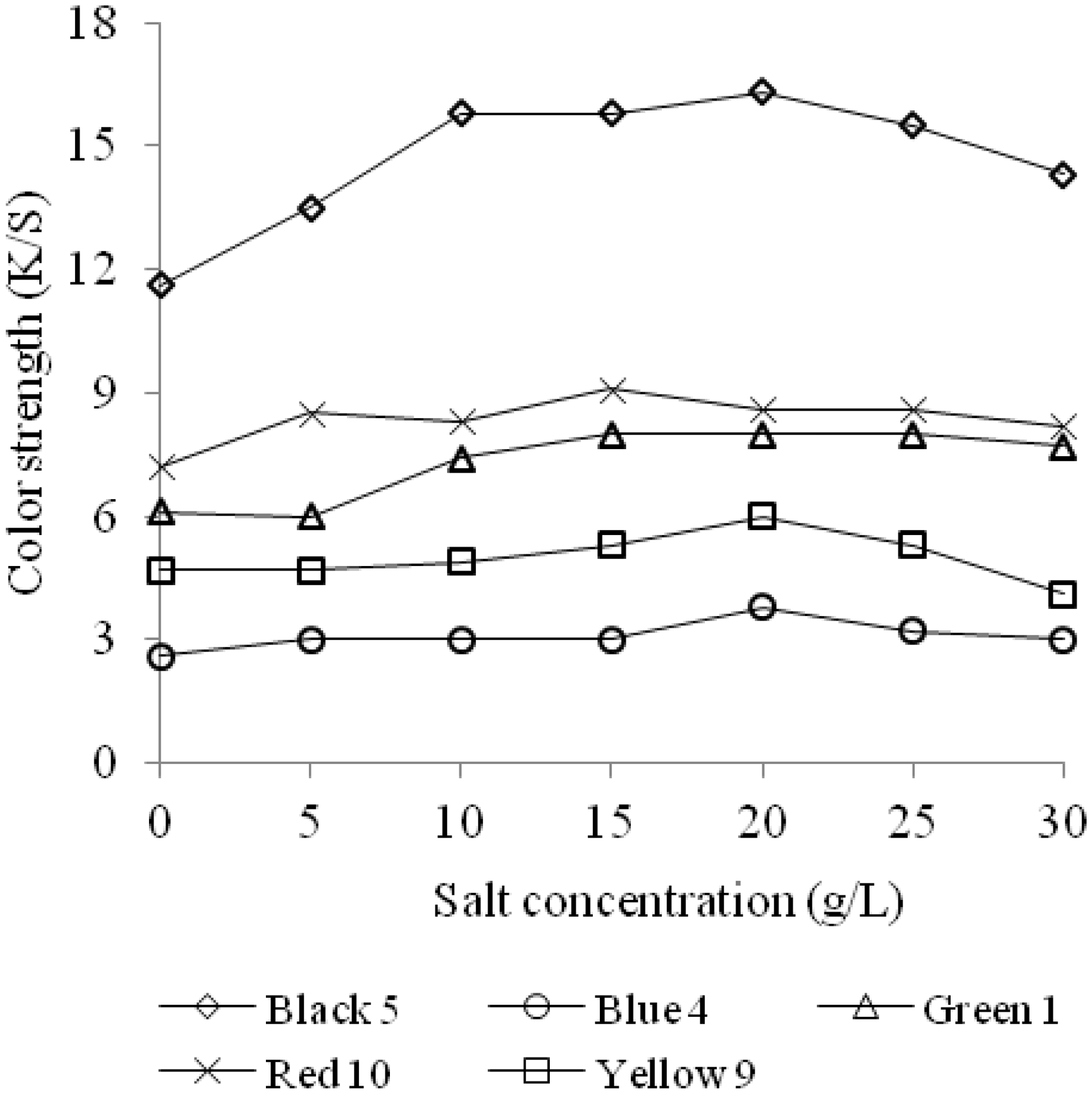
An increase in the time of dyeing showed an increase in dye strength proportionately for up to two hours, beyond which a fall in the same was observed, probably due to stripping out of dye from dyed cotton (Figure 8).
Influence of dyeing time on color strength.
At the end of this optimization process, the dyeing parameters to achieve optimum dye strength for all five dyes were summarized as follows: alkaline protease concentration (0.25 T, wrd), pH (12), temperature of dyeing (90℃), salt (20 g/l) and time of dyeing (2 h).
Finally, cotton was dyed with alkaline protease under all the optimized dyeing parameters with all 10 selected sulfur dyes. The dye strength values thus obtained for individual dyes were compared with those obtained in the sulfide system and are reported in Figure 9. Black 5, Green 1 and Green 12 and Brown 8 showed comparable dye strength in both systems; Blue 4, Blue 7, Green 22 and Green 8 showed a little less dye strength; Red 10 and Yellow 9 showed higher dye strength in the alkaline protease system.
Comparison of color strength on cotton obtained in sulfide- and protease-based dyebaths.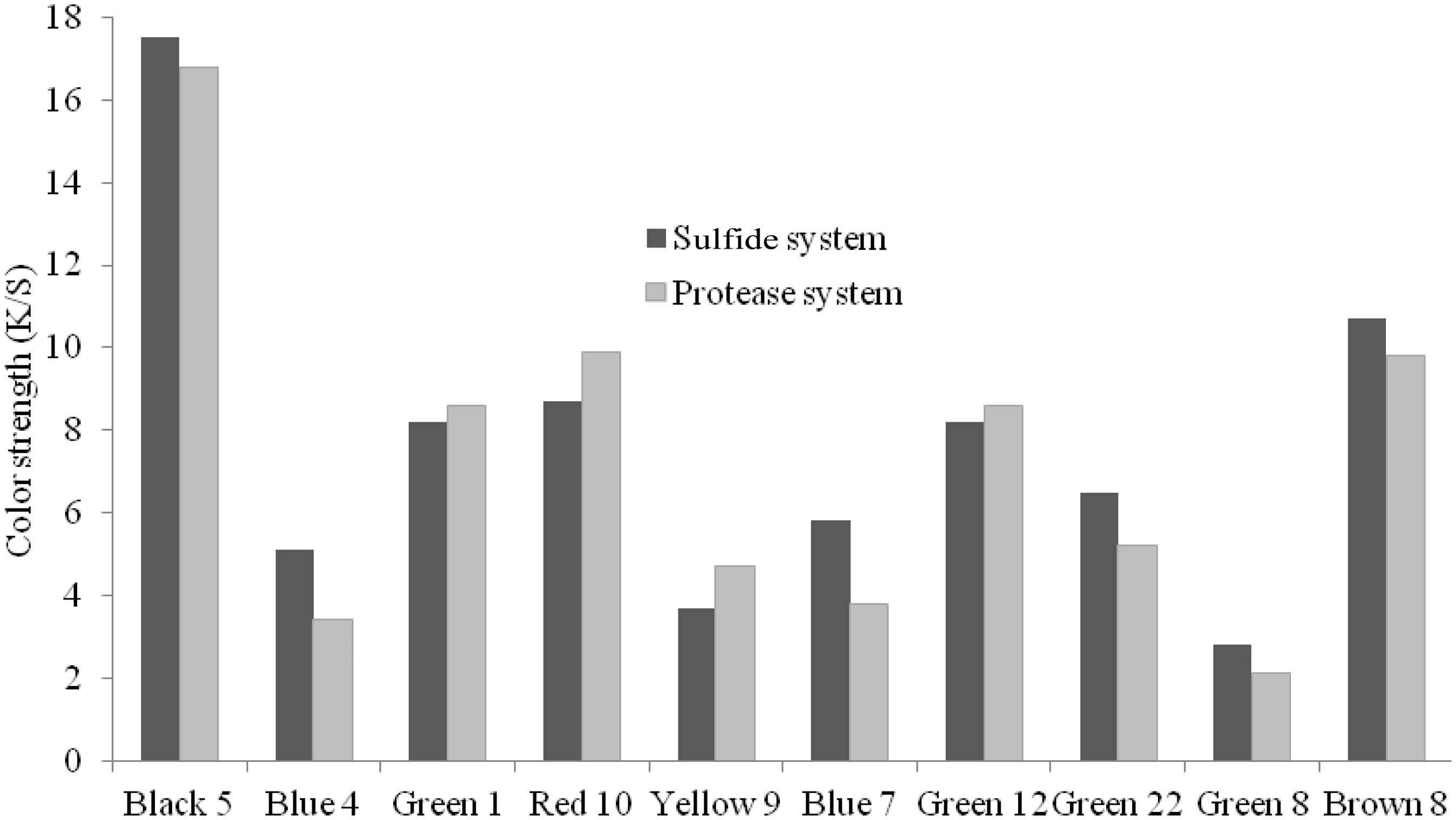
Stability of reduction baths
In the absence of dye
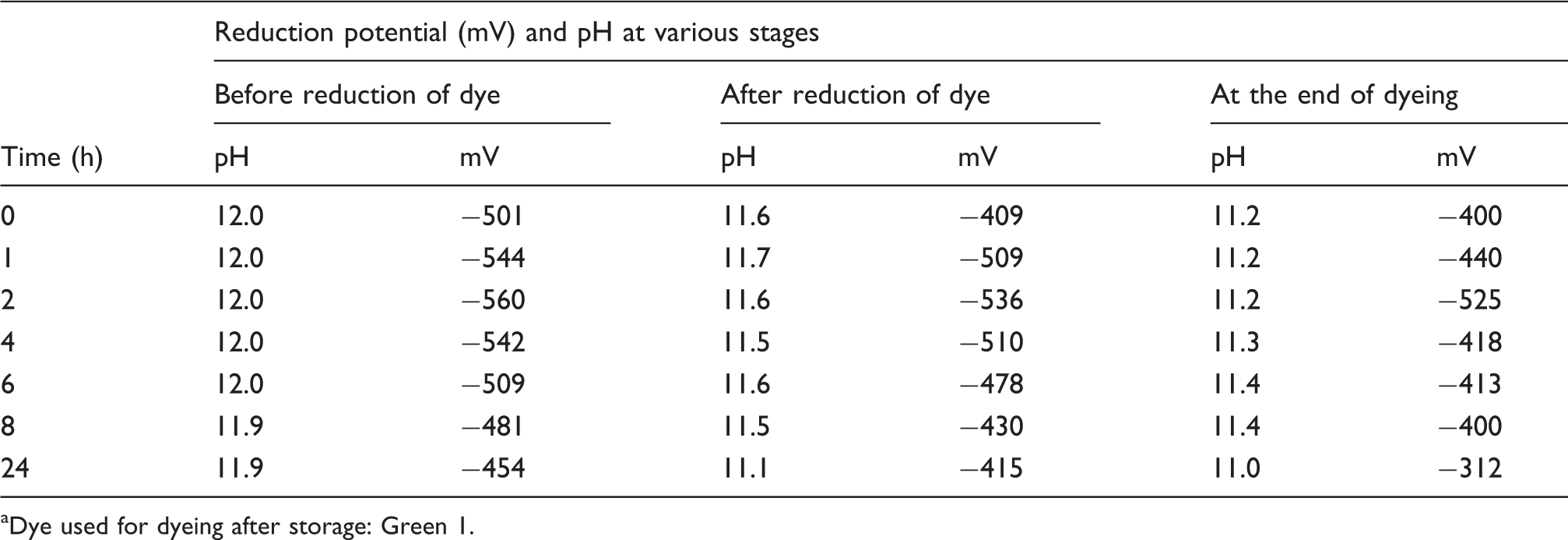
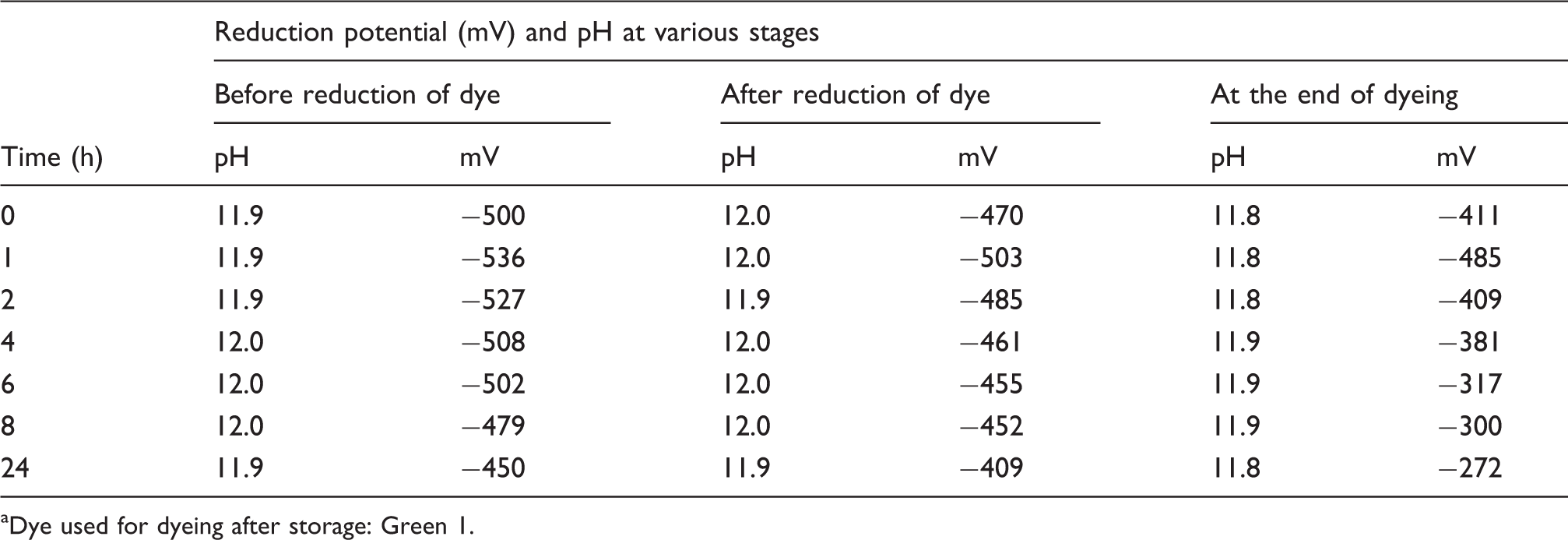
The stability of reduction baths prepared with sulfide and alkaline protease separately was studied. Both sulfide and alkaline protease-based reduction baths retained their reducing capability in terms of reduction potential and pH during 24 hours of storage (Table 3). For sulfide-based baths, there was a more negative potential up to two hours of storage, but thereafter it gradually fell. The potential values of baths remained quite effective for the reduction of dye up to a storage time of six hours, although the reduced status could not be maintained until the end of dyeing. Only the bath stored for two hours showed effectiveness to completely reduce the dye and retained the reduced status until the end of dyeing, as marked by dye strength values. However, alkaline protease-based baths showed stability up to one hour and then went on to gradually fall until 24 hours, although the pH remained as high as 12 for all storage times. The optimum effectiveness of stored baths towards reduction of dye and maintaining reduced form until the end of dyeing was found to occur after just one hour of storage (Table 4). The dye strength of cotton from all the stored baths can be seen in Figure 10.
Color strength of cotton dyed from stored reduction baths in sulfide and protease systems (dye: Green 1). Stability of sulfide-based dye bath in the absence of dye
a
Dye used for dyeing after storage: Green 1. Stability of alkaline protease-based dye bath in absence of dye
a
Dye used for dyeing after storage: Green 1.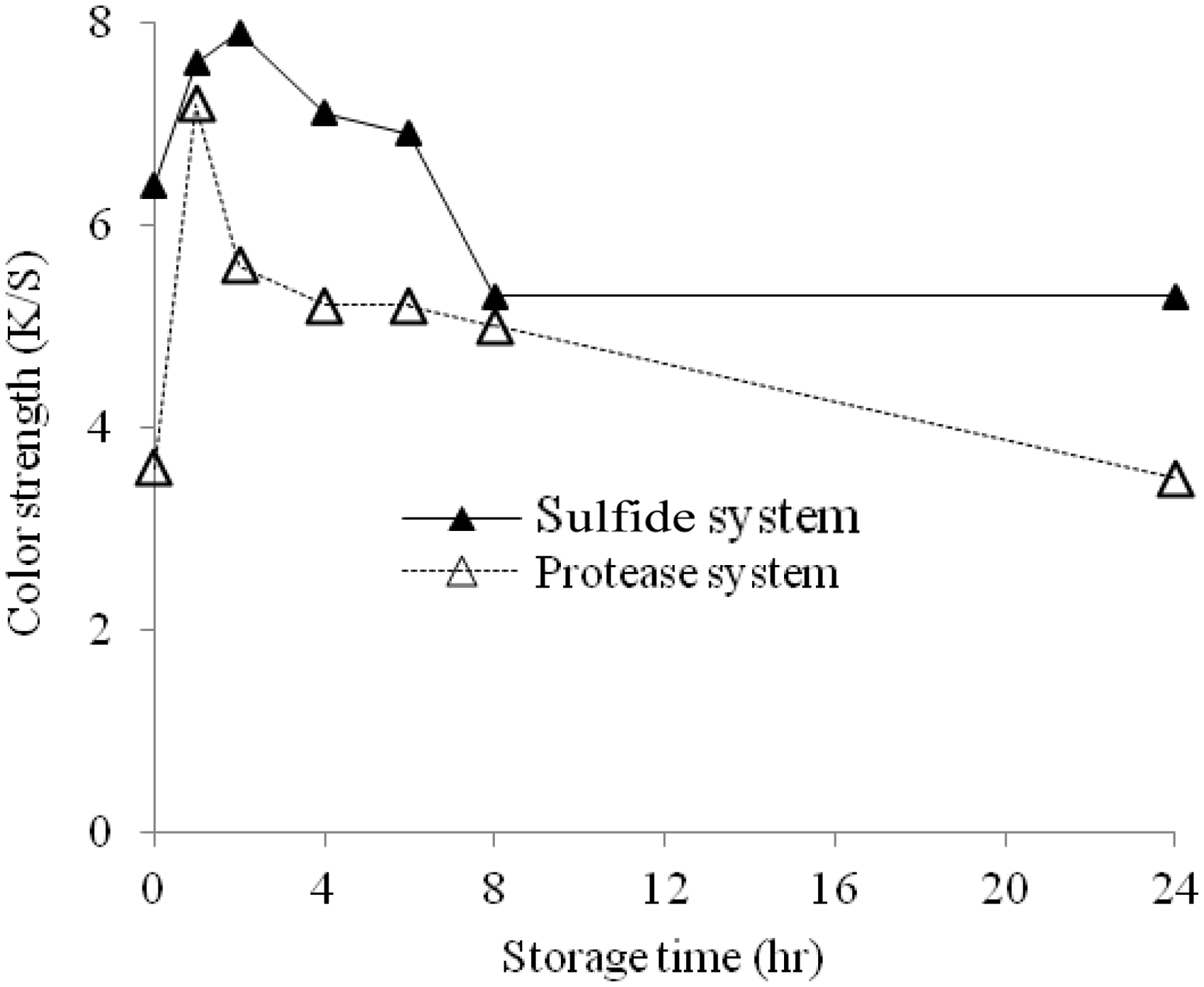
In the presence of dye
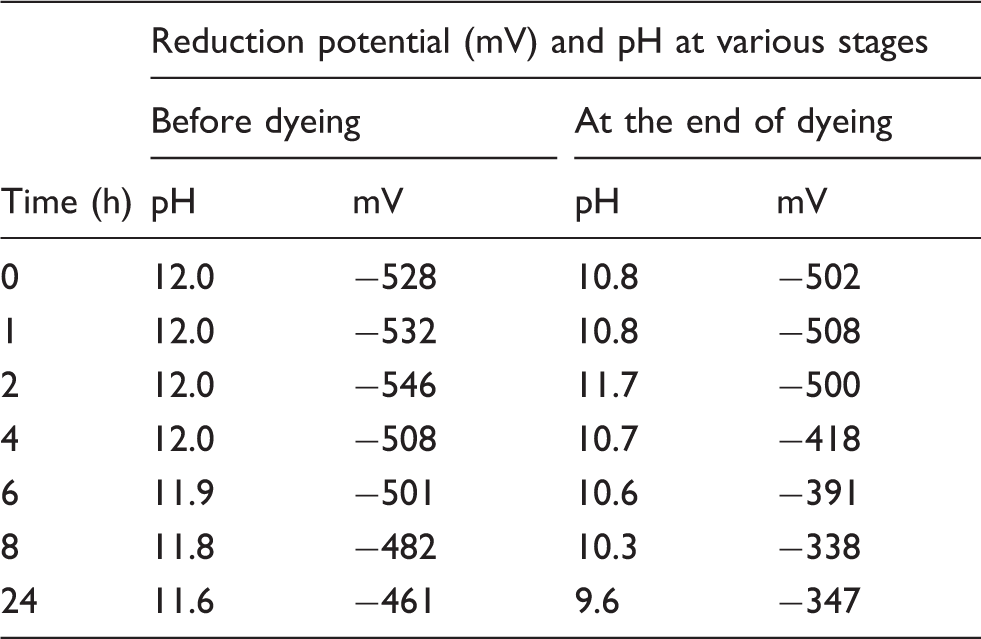
Stability of dye sulfide-based reduction bath in the presence of dye (Green 1)
Stability of alkaline protease-based reduction bath in the presence of dye (Green 1)
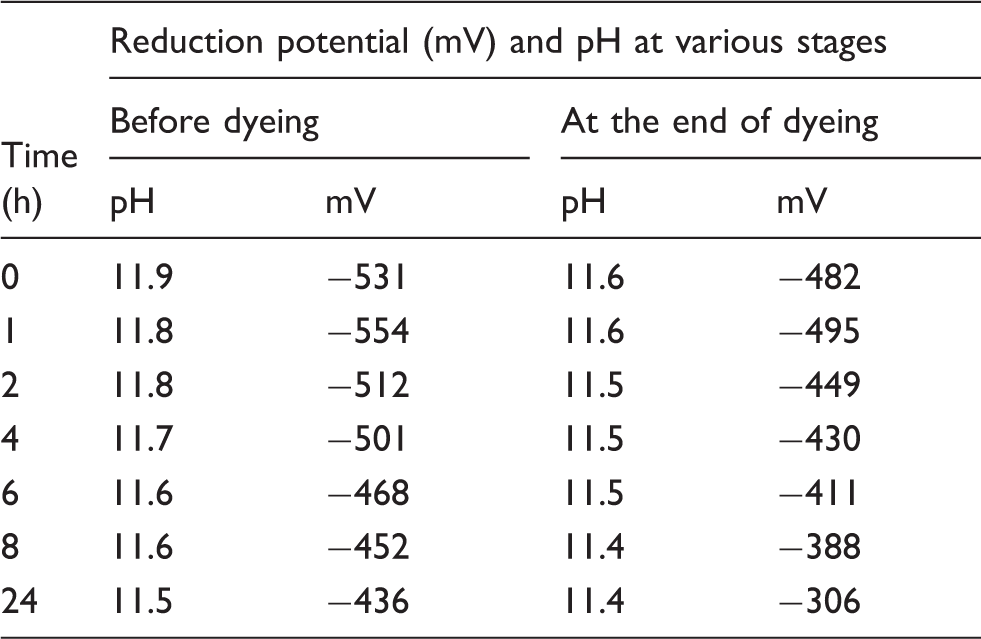
In contrast, alkaline protease-based reduction baths showed less stability. The baths showed good potential up to a storage time of eight hours, but the effectiveness of the baths was only for a storage time of one hour throughout dyeing. Baths stored beyond one hour showed substantial fall in reduction potential at the end of dyeing, due to which dyeing was stopped before completion of two hours of dyeing time (Table 6). This is supported by Figure 10, showing the dye strength of cotton dyed from both types of dyebaths after storage for specific times.
Fastness performance
Color fastness of cotton dyed in sulfide and alkaline protease systems

Conclusion
Cotton dyed with sulfur dyes showed comparable dyebath potential in both the sulfide and alkaline protease-based reduction systems. Dye strength values showed mixed results, that is, for a few dyes the dye strengths were very good and they were even better than those obtained in the sulfide system, but for some dyes the result was the opposite. The stability of reduction baths in the presence and absence of dye showed the same pattern, that is, fair stability for two hours in the sulfide system and one hour in the alkaline protease system, although the overall stability remained a little better in the presence of dye. The colorfastness of dyed cotton was found to be excellent and quite comparable using both reducing systems. It is possible to formulate alkaline protease-based reducing baths to achieve almost the same dyebath features, namely a high dye strength of cotton with excellent colorfastness.
Footnotes
Funding
This research received no specific grant from any funding agency in the public, commercial or not-for-profit sectors.