




Abstract
Ceramic fiber products form a class of excellent refractory insulation materials. The increasing usage of fibrous materials has given further impetus for research into their heat transfer characteristics. In order to obtain more accurate estimations of effective thermal conductivity, this paper proposes a numerical model with a random structure to estimate the effective thermal conductivity of ceramic fiberboard under various bulk densities and temperatures. The present model is able to sort out individual contributions of conduction and radiation heat transfer mechanisms in these materials. The numerical simulation results are in good agreement with measured values obtained by a guarded hot plate (GHP) apparatus, indicating that the adopted modeling approach can be extended to other insulation systems.
In recent years, energy saving and emission reduction have remained very difficult tasks. To meet the requirements of the current energy situation, insulating media have been increasingly used. The most widely used categories of insulating materials are inorganic fibrous and organic foamy products. Organic foamy materials cannot be used in high temperature conditions, due to their poor resistance to high temperatures and the increased hazards in case of fire. As a result, only fibrous materials are considered in this paper. Among the fibrous materials, ceramic fiberboards have received special attention due to their excellent properties, such as light weight, high temperature resistance, low thermal capacity, good heat insulation performance, nontoxicity, etc. Because of these merits, ceramic fiberboard can not only be used as thermal and acoustic insulation but also for fire protection. The thermal performance of ceramic fiberboard is based on the air trapped between fibers, resulting in its low thermal conductivity. Therefore, ceramic fiberboard is better than insulation brick and other traditional refractories in energy saving, which means it has been widely used in various fields.
The increasing usage of fibrous materials has given further impetus for research into their heat transfer characteristics. Early studies reported the relative magnitudes of the different modes of heat transfer in planar fibrous materials.1–3 Many investigations have focused on the behavior and modeling of heat transfer in fibrous materials, for example, radiative heat transfer through porous insulations, 4 radiation properties in fibrous insulations,5–7 semi-empirical modeling of heat transfer in dry mineral fiber insulations, 8 heat and mass transfer in fibrous insulations, 9 numerical modeling of radiative transfer in fibrous media, 10 approximate formulation for coupled conduction and radiation through a medium with arbitrary optical thickness, 11 and combined radiation and conduction heat transfer in high temperature fiber thermal insulation. 12 More recently, a number of investigations have been carried out for modeling heat transfer in fibrous materials.13–19
However, most of the reported methods are only based on a regular arrangement of the fibers in different shapes (such as arrays of spheres, cylinders, or disks) of fibrous materials. In fact, fibrous materials have a very special irregular microstructure. For example, a single fiber can be vertically or parallel oriented on the surface of the plate. In both cases, some of them are independent of each other, and some are mixed together at different angles. As a result, the known studies are inapplicable to fibrous materials. In this paper, we will propose a random structure model for the first time to obtain more accurate estimations of the effective thermal conductivity of ceramic fiberboard.
For a certain heat insulation material under certain conditions, its chemical composition, organization, and microscopic structure are determined. In this case, the thermal conductivity factor is mainly influenced by the bulk density and temperature at constant atmospheric pressure. From the view of practical application, the variation of heat conduction should be investigated within an atmosphere. 20 Herein, we establish a new theoretical model to predict the effective thermal conductivity of ceramic fiberboard under various bulk densities and temperatures. The chemical composition and random structure of ceramic fiberboard are discussed, followed by the basic parameters necessary for determining the thermal conductivity factor. The numerical simulation results are compared to experimental values in order to verify the validity of the proposed approach.
Simulation process
There are three modes of heat transfer in ceramic fiberboard: conduction through the solid phase, i.e. the fibers and the gas phase that is trapped between the fibers; convection due to the air flow in the space between the fibers; radiation interchange between fibers and air. Previous results showed that conduction and thermal radiation are the two dominant modes of heat transfer for fibrous materials with a high porosity.5,8,21,22
Convection is caused by the movements of air molecules. The length of fibers can reach several millimeters, while the diameter of the fibers is at the micrometer scale. According to Woodside,
21
the effect of convection becomes significant for particles with diameters larger than 1 cm. Because the dimensions of the spaces between fibers are very small, air movement between the fibers is practically negligible, i.e. the heat transfer through convection is minimal. In ceramic fiberboard, the aspect ratio (ratio of the height to thickness) is large, resulting in a small Rayleigh number, and the convection can therefore be ignored.
22
Thus, the conduction and radiation were considered during the construction of the effective thermal conductivity in the present paper, which is shown as follows:

Conductive thermal conductivity
Conductive thermal conductivity for ceramic fiberboard includes three parts: thermal conductivity by means of the solid medium Flow chart of the numerical modeling.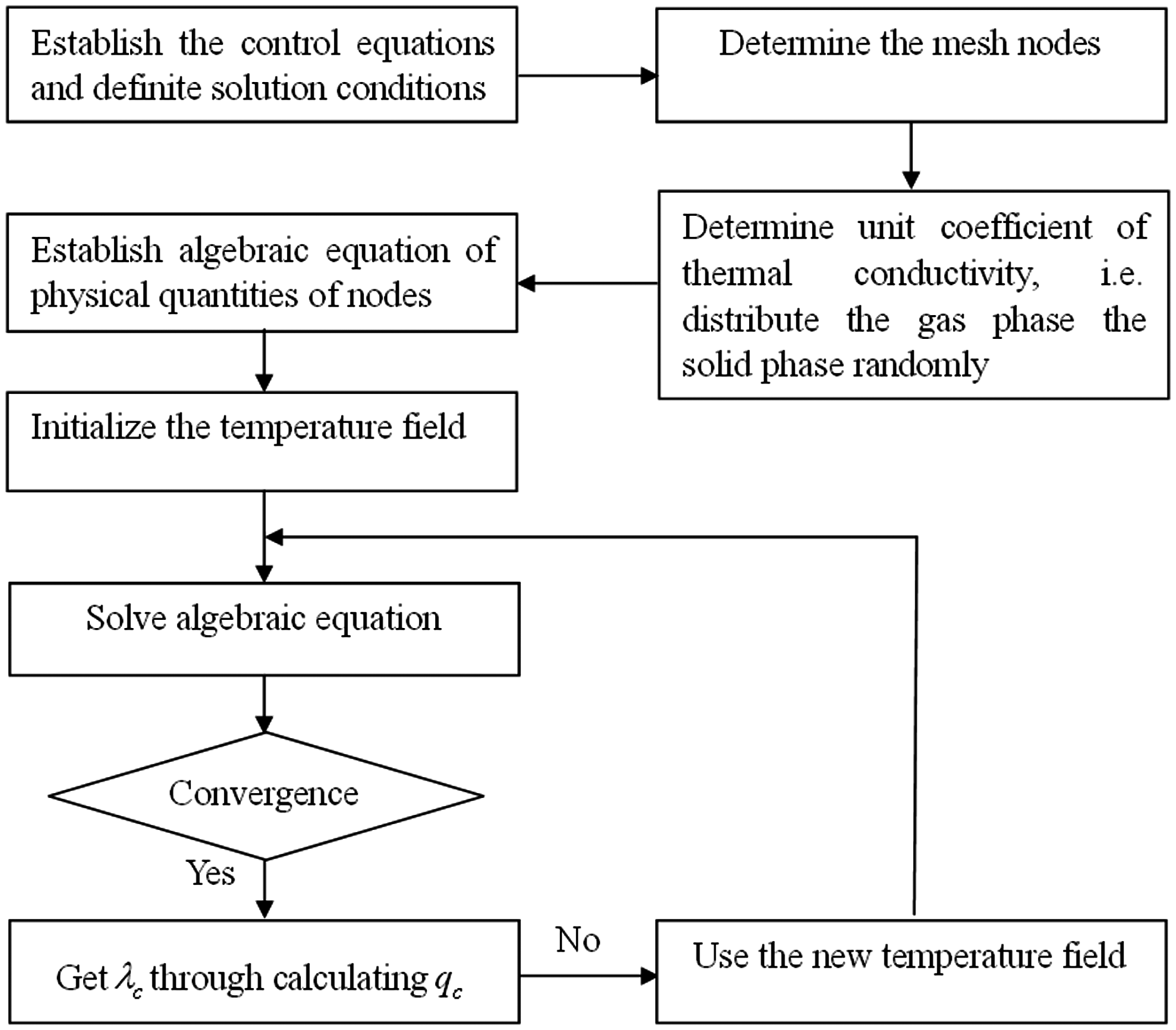
The energy equation for three-dimensional heat transfer is given by:

Since the thermal process is steady and there is no inner heat source in the experiment, for each calculation unit a three-dimensional steady heat conduction model without inner heat source is developed. The steady state energy equation for three-dimensional heat transfer is given by:

The boundary conditions comply with the law of interaction between material surface and the surrounding medium. For the first class boundary condition, the temperature of the material surface is a known function:

For the second class boundary condition:

λ = the thermal conductivity of material, in
In this research, the fiberboard is modeled as rectangular plates, as shown in Figure 2. By trying several grids and comparing the results, we chose a grid of 200,000 nodes for this case study. The grid numbers for the model are X = 100, Y = 20, Z = 100 and the size of every square unit is 1 mm, i.e. dx = 1 mm, dy = 1 mm, dz = 1 mm.
Rectangular plates model for ceramic fiberboard.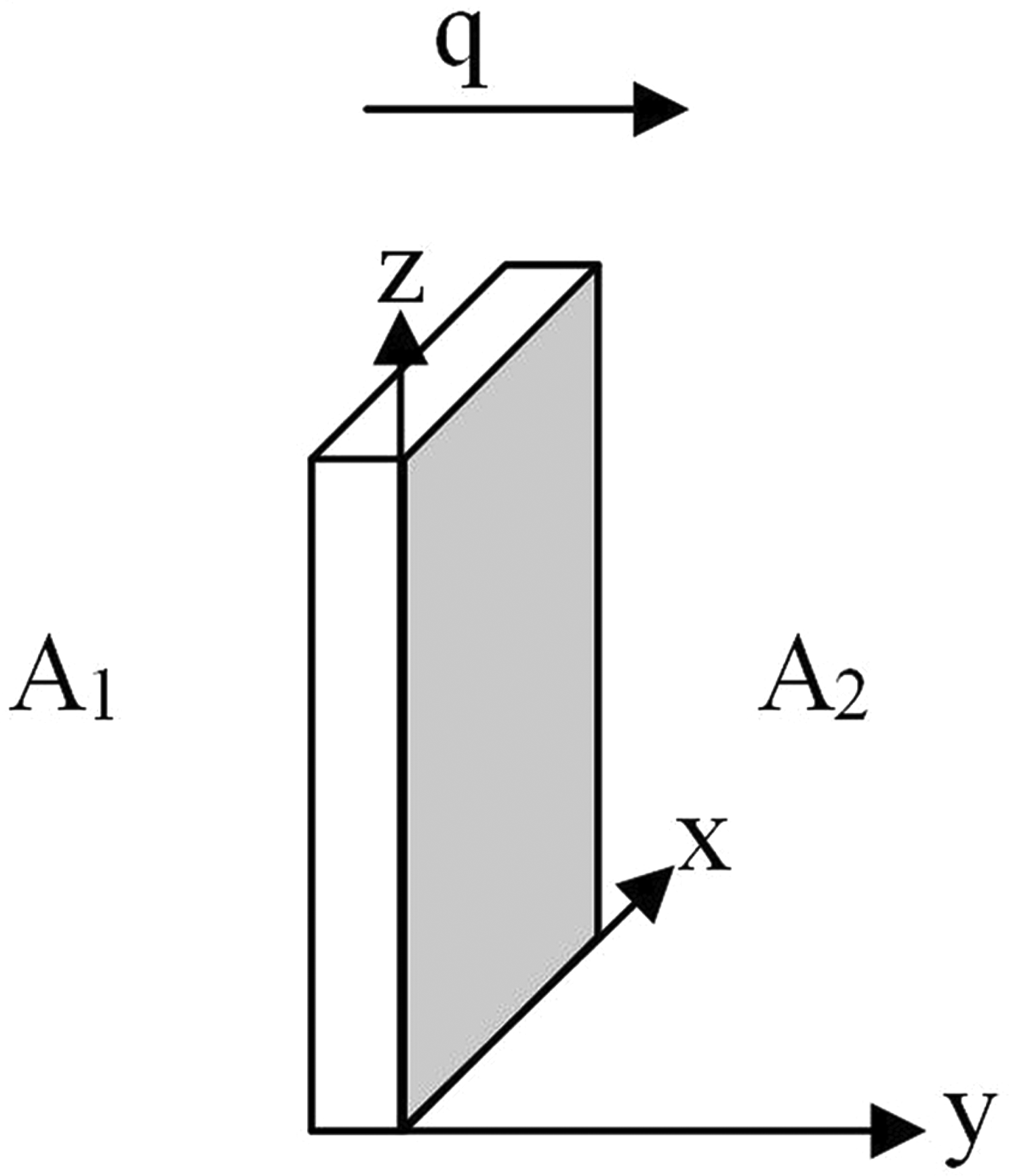
Solution conditions are defined by using the temperature field matrix: T = ones (X, Y, Z). Two surfaces of the ceramic fiberboard (A1 and A2) are perpendicular to the direction of the heat flux (q). The boundary condition of two surfaces A1 and A2 is the first class boundary condition, i.e. the temperature for the surface A1 is T(i,1,k) = TA1 and the temperature for the surface A2 is T(i,Y,k) = TA2, where TA1 is a known temperature for the surface A1 and TA2 is also a known temperature for the surface A2.
The borders of four surfaces parallel to the heat flux direction are assumed to be thermal insulation. The boundary conditions can be obtained through the following equations:
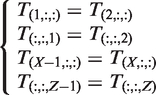
In the fiberboard, the fiber is freely distributed. Some of the fibers are independent, while others are mixed together at different angles. There is no specific law that can be followed. In order to make the model close to the real fiberboard, the fiber and the gas are freely distributed by using the thermal conductivity field matrix: TC = ones (X, Y, Z). First, the porosity of the fiberboard can be worked out by using its bulk density and true density. Then an arbitrary number C is generated for each unit through MATLAB. For unit (i, j, k), if C is less than the porosity, it is endowed with the coefficient of thermal conductivity of the gas. Otherwise it is endowed with the coefficient of thermal conductivity of the fiber. So for unit (i, j, k), a random distribution of both the gas phase and the solid phase can be realized. The random distribution model enables the simulation and experimental results to be more consistent.
The mean value of the true density for common ceramic fiber is 2700 kg/m3, and the coefficient of thermal conductivity of the fiber

According to equation (3), the energy conservation equation for each calculation unit can be obtained. For unit (i, j, k), the energy conservation equation is

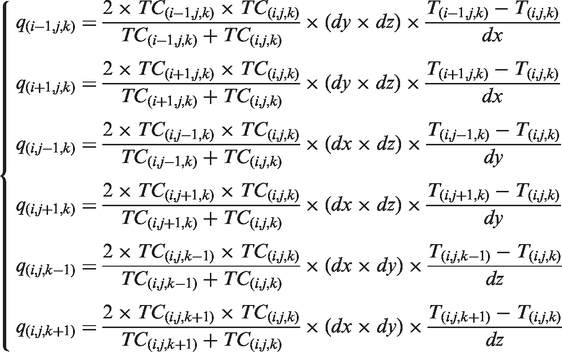
So, the algebraic equation of physical quantities of nodes can be shown as the following equation:


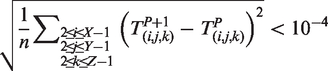
The iterations were continued until convergence of the iterative procedure tends to the steady state. The convergence criterion is based on the root mean square of the difference between temperatures of two subsequent iterations, and it can be defined as:
Radiation conductivity
For a porous insulation material, radiant transfer occurs not only by direct transmission through the space between the fibers, but also by scattering and by absorption and re-radiation. For fibrous materials, scattering occurs at the surface of the fibers when electromagnetic waves encounter a discontinuity in refractive index, and absorption occurs primarily during transmission through the fibers. 4
Even though the factors that influence radiation are almost wholly undefined and complicated, it can be summarized that there are basically two approaches in calculating the radiant heat flux. The first is to model the radiative heat transfer in ceramic fiberboard as a conductive process and to develop the thermal conductivity expressions due to radiation. The second is to consider the equation of transfer governing the intensity of radiation in an absorbing and scattering medium.
The first method is widely used because it is mathematically simple. In this paper, this simple model is used to predict the performance of ceramic fiberboard, in which the parameters are interpreted theoretically and evaluated experimentally. The Larkin formula for the radiation contribution is

σ = Stefan–Boltzmann constant,
Tm = the mean temperature of two surfaces A1 and A2, equal to
ɛ = emissivity of boundary surfaces, equal to 0.9 for lambda measuring instruments;
ρ = the fibrous material’s bulk density, in kg/m3;
Through the following equation, we can understand the meaning of the specific extinction coefficient:

The extinction coefficient (N) is a function of temperature, chemical composition of the material, and wavelength of the incident radiation, etc. N increases with an increase in the ceramic fiberboard’s bulk density, so
Experimental study of the ceramic fiberboard
Sample characteristics
The raw materials mainly consist of flint clay and some additives. Initially, the raw materials must be carefully weighed in exact quantities and thoroughly mixed together (called batching). Once the batch is prepared, the primary mixture is fed into a furnace where it is heated, with electricity, to a high temperature. At this temperature, the clay melts and a lava form is obtained. Then it enters a cylindrical rotating tank, with a rotation speed of approximately 6200–6800 rev/min. Therefore, the melted mixture is centrifuged and escapes from the tank’s surface through microscopic holes. As it escapes to the ambient temperature, it cools down and becomes formless quantities of ceramic fiber. Softener is injected to the formless fiber, and it is compressed in order to obtain its usual shape of rectangular plates. Finally, it is fed into a furnace at a temperature of 650–800℃ for the preliminary crystallization of ceramic fiberboard.
Chemical composition of ceramic fiberboard

The average diameter of the fibers was studied using scanning electron microscopy (SEM), as shown in Figure 3. It can be seen that the average diameter is about 4.4 µm.
(a) Scanning electron microscope image of ceramic fiberboard. (b) Determining the diameter of ceramic fiber via SEM.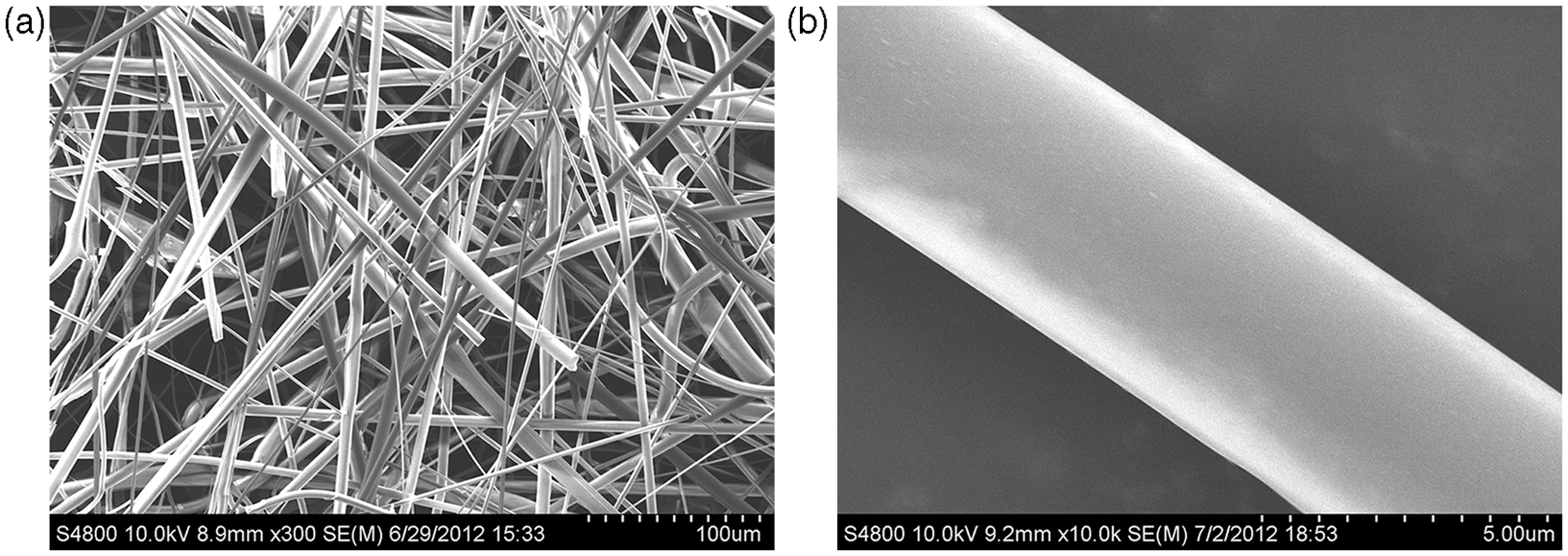
The samples were also studied by powder X-ray diffraction (XRD) (Figure 4). There were no obvious characteristic peaks for the samples, indicating that they are amorphous.
XRD pattern of the sample.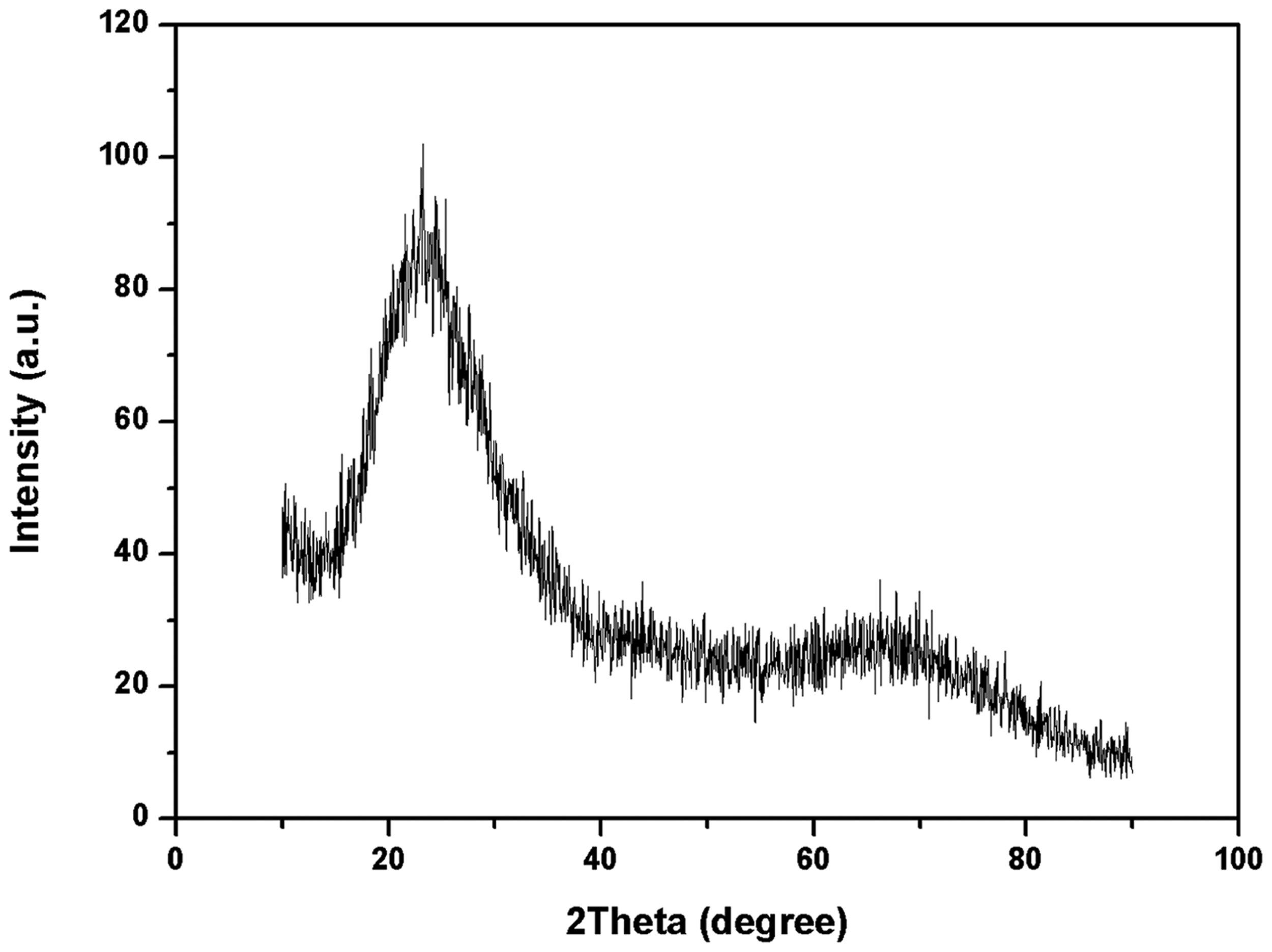
Measurement of the effective thermal conductivity
The effective thermal conductivities of the ceramic fiberboard were measured using a guarded hot plate apparatus (GHP, IMDRY3001-IV) in the temperature range 15–85℃. The density of the ceramic fiberboard was controlled to be from 30 to 200 kg/m3. The samples were dried in a ventilated oven and then brought into equilibrium with laboratory air temperature at atmospheric pressure. To prevent moisture from migrating to the specimens during the test, specimens were enclosed in a vapor-tight envelope. The experimental repeatability was found such that the error of the GHP can be controlled within 1%.
Discussion
Numerical simulation results
Numerical simulation results at different temperatures
In this research, the relationship between the effective thermal conductivity and temperature was calculated through the present proposed method. The results of the effective thermal conductivity, Numerical simulation results of the effective thermal conductivity, conductive thermal conductivity. and radiation conductivity for ceramic fiberboard at different temperatures with a bulk density of 211.50 kg/m3.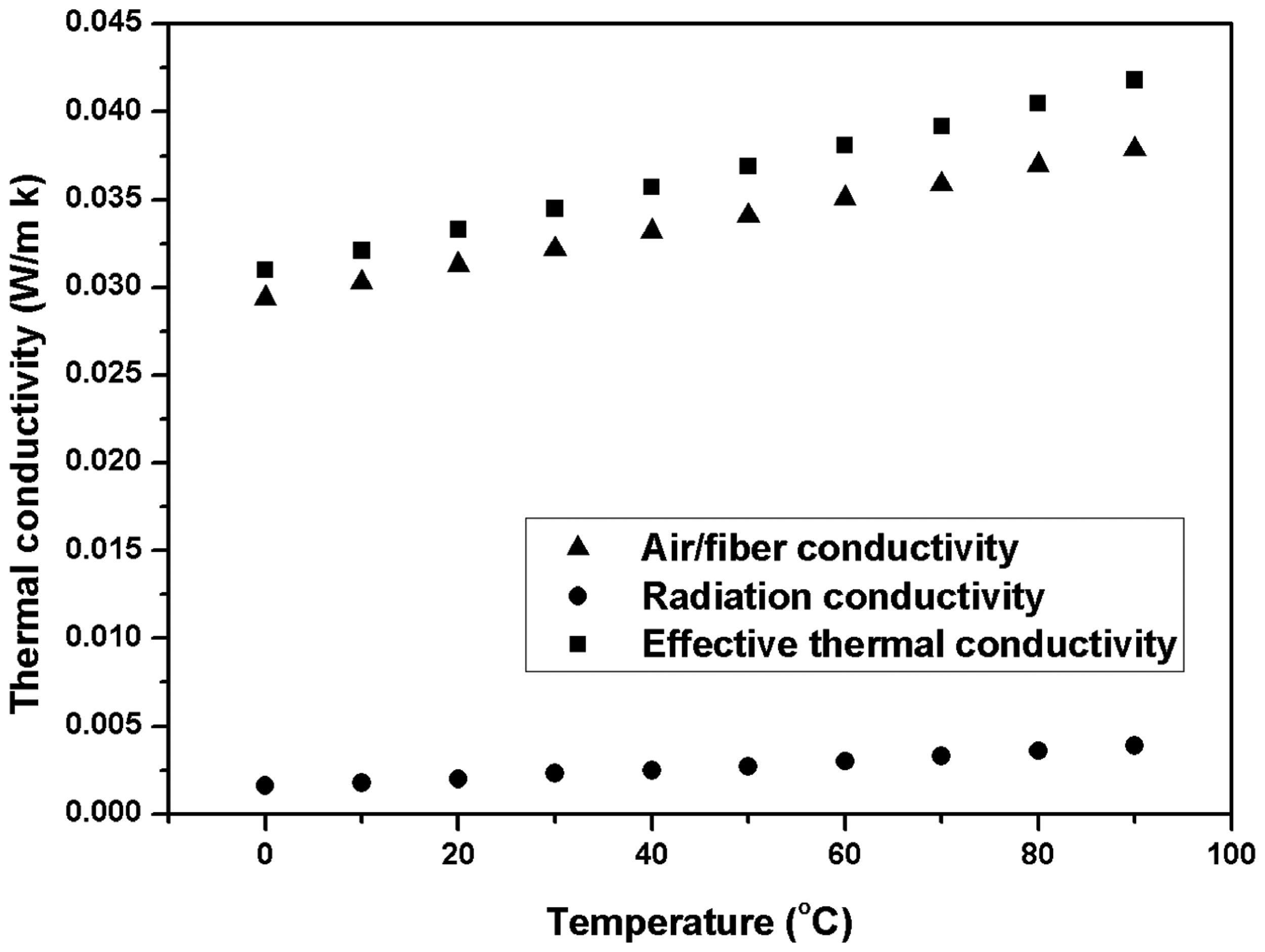
It can be seen that both
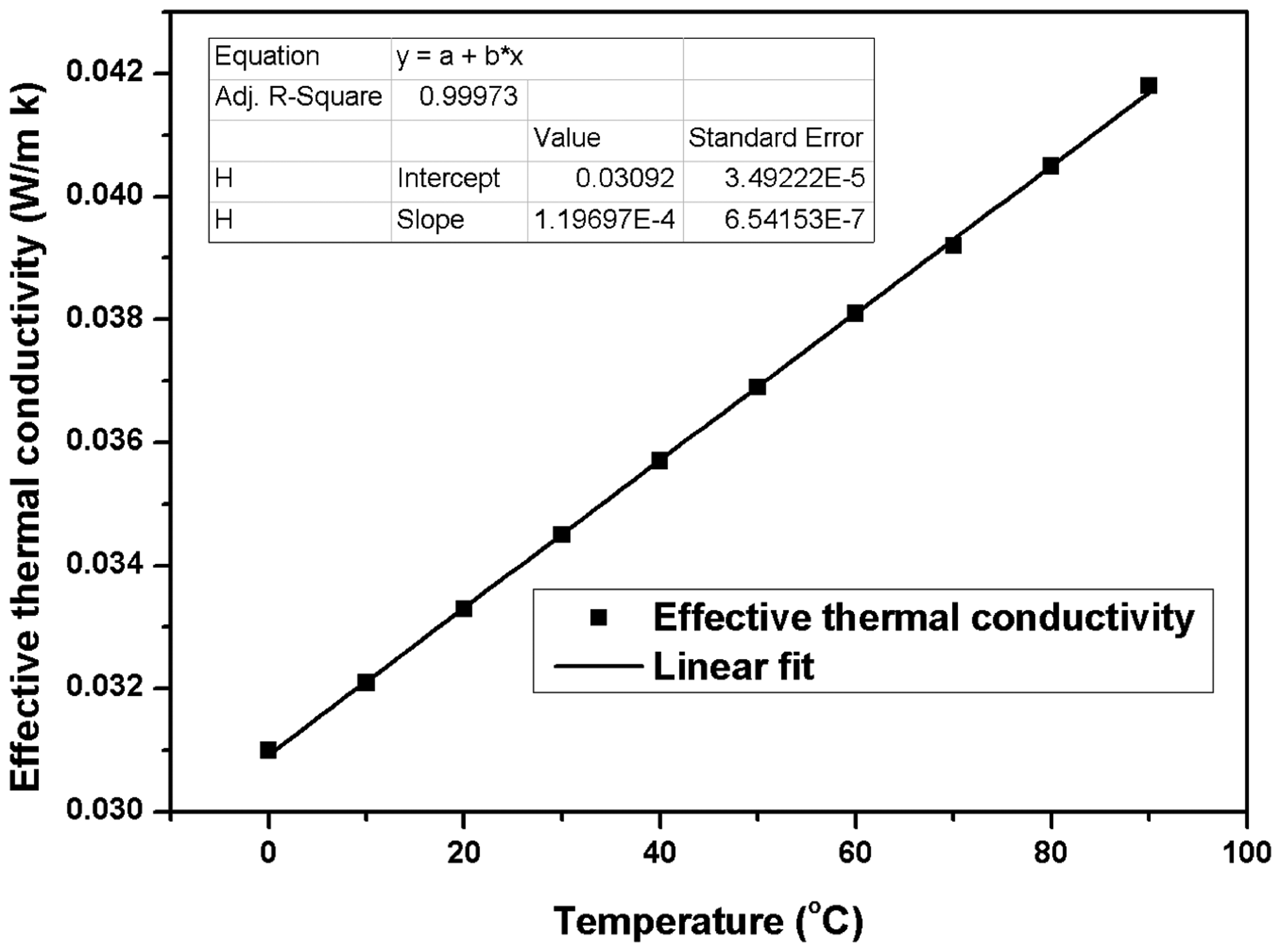
Figure 6 shows the numerical simulation results of the effective thermal conductivities at different temperatures. It can be seen that The linear fit for numerical simulation results of the effective thermal conductivity at different temperatures with a bulk density of 211.50 kg/m3.
Numerical simulation results for different bulk densities
The relationship between the effective thermal conductivity and the bulk density can also be obtained through the present proposed method. The results of the effective thermal conductivity, Numerical simulation results of the effective thermal conductivity, conductive thermal conductivity, and radiation conductivity for ceramic fiberboard at different bulk densities at a mean temperature of 25℃.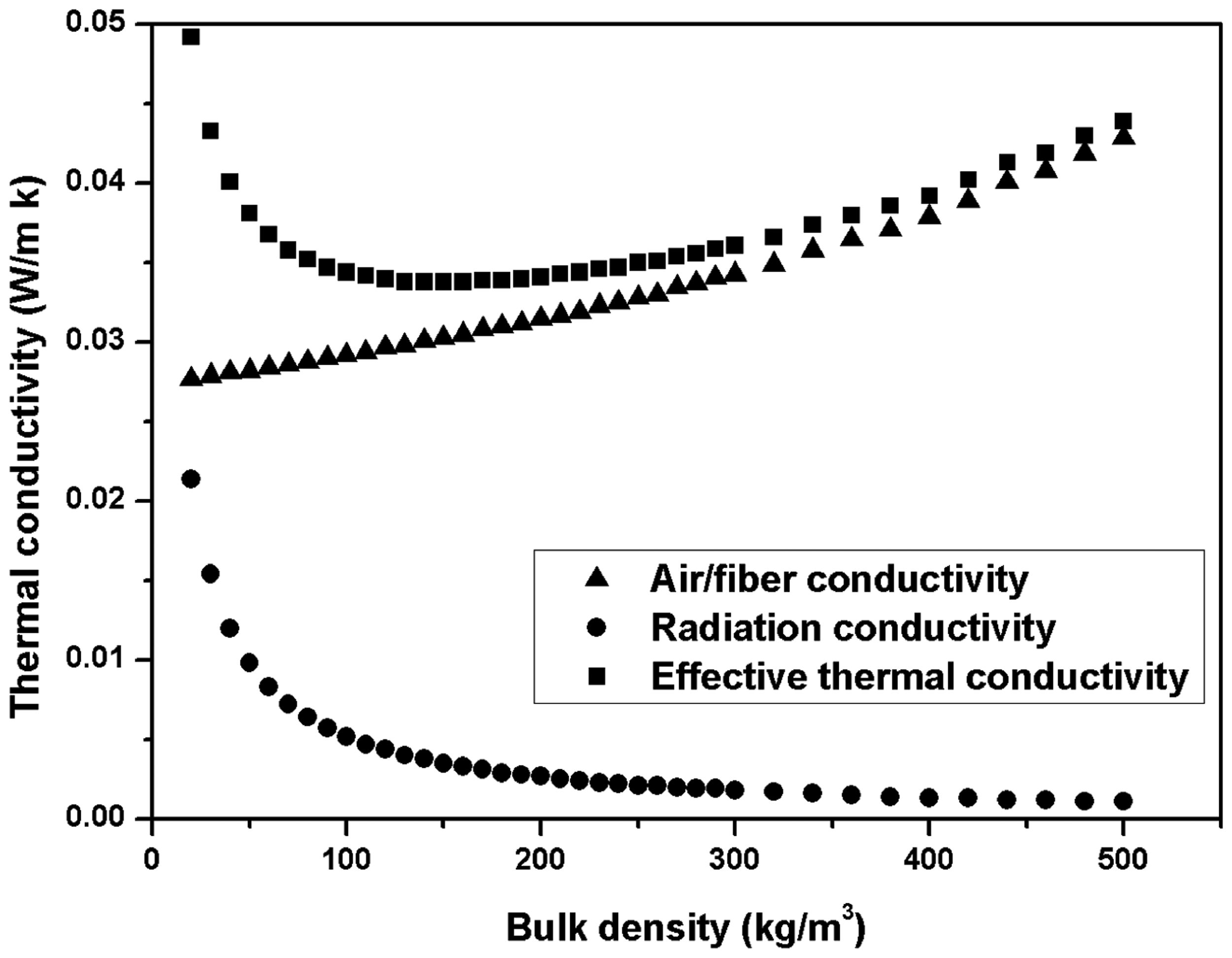
From Figure 7, it can be seen that
In low density areas of ceramic fiberboard, the heat transfer of gas phase radiation is enhanced, which leads to the effective thermal conductivity reducing exponentially with the density increase. From Figure 8, we can obtain the following relationship between the effective thermal conductivity, Exponential curve fitting for numerical simulation results of the effective thermal conductivity for different bulk densities at a mean temperature of 25℃.
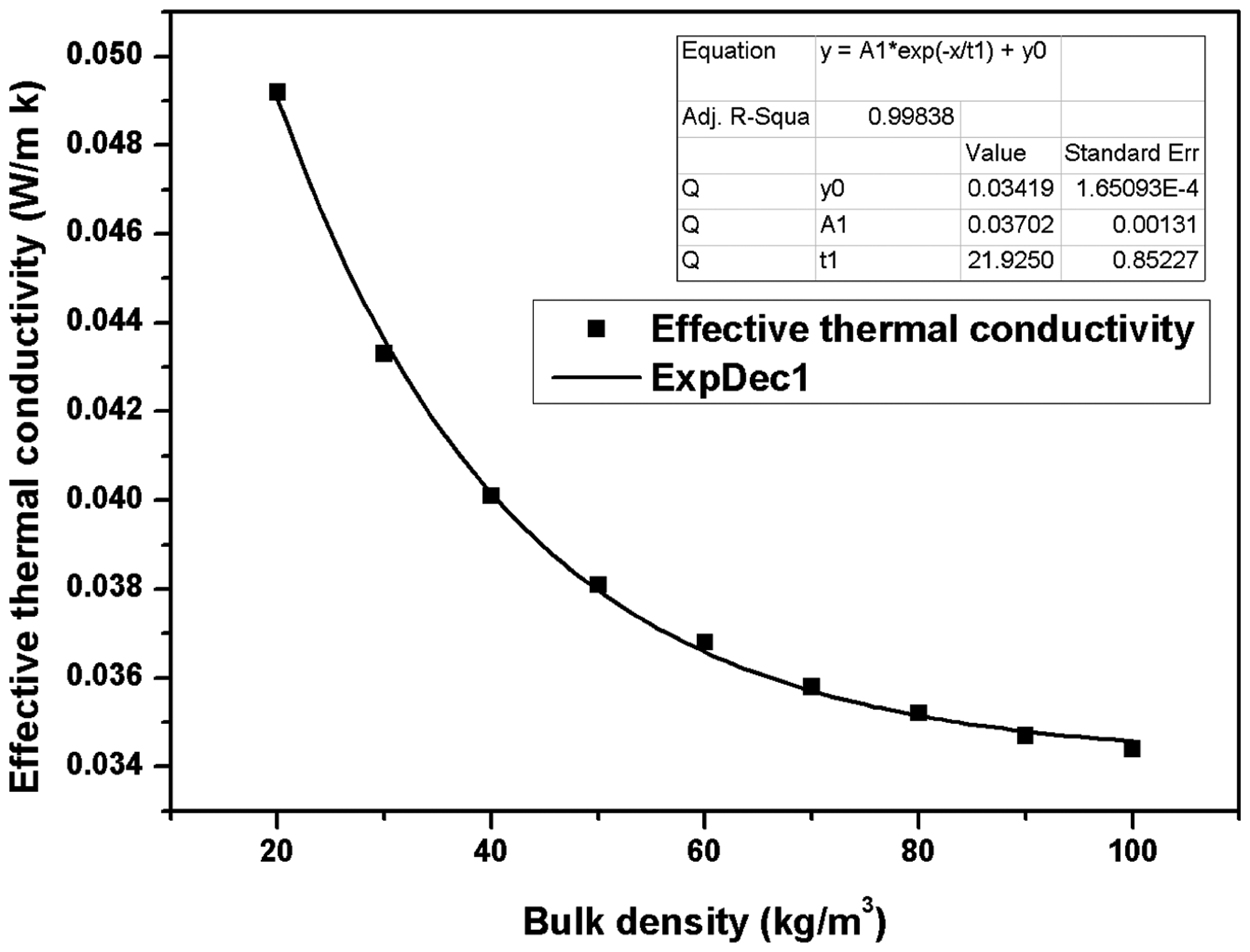
When the bulk density is increased to a certain level, the effective thermal conductivity shows an increasing trend with the increase of the bulk density. This is mainly because, at this high bulk density, the heat conduction contribution of the internal solid phase is becoming larger and larger, and the contact points between different fibers increase.
For a wide range of densities, the participation of each heat transfer mode in the total heat transfer is presented in Figure 9. From this figure it is obvious that at mean temperature (Tm = 25℃), conduction is the primary heat transfer mode and thermal radiation takes the second place. For ceramic fiberboard, conduction accounts for 54% to the total heat transfer at a density of 15 kg/m3, while it grows to 98% as the density increases to 500 kg/m3.
Participation of each heat transfer mechanism to the total.
Comparison of the numerical simulation results and the measured values
Temperature dependence of the effective thermal conductivity of ceramic fiberboard
The effective thermal conductivity of ceramic fiberboard with a density of 211.50 kg/m3 was measured using a GHP at various temperatures. Figure 10 shows a comparison of the numerical simulation results and the measured values. It can be seen that the rate of change of Comparison between the numerical simulation results and the measured values of the effective thermal conductivity as a function of mean temperature with a bulk density of 211.50 kg/m3.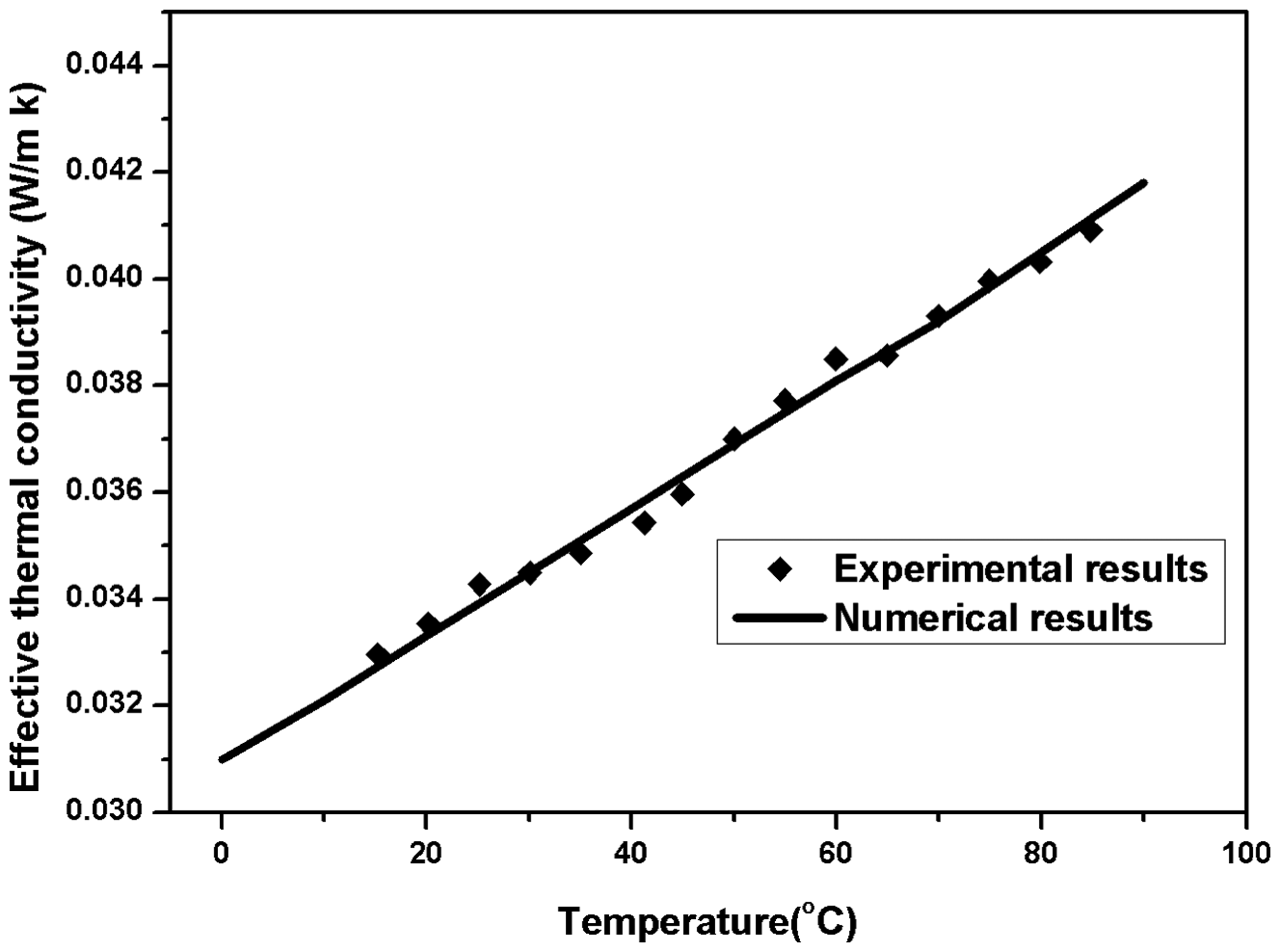
Bulk density dependence of the effective thermal conductivity of ceramic fiberboard
The effective thermal conductivity of ceramic fiberboard with various bulk densities was measured by GHP at 25℃. For different bulk densities, a comparison is shown in Figure 11 of Comparison between the numerical simulation results and the experimentally measured values of the effective thermal conductivity as a function of bulk density at a mean temperature of 25℃.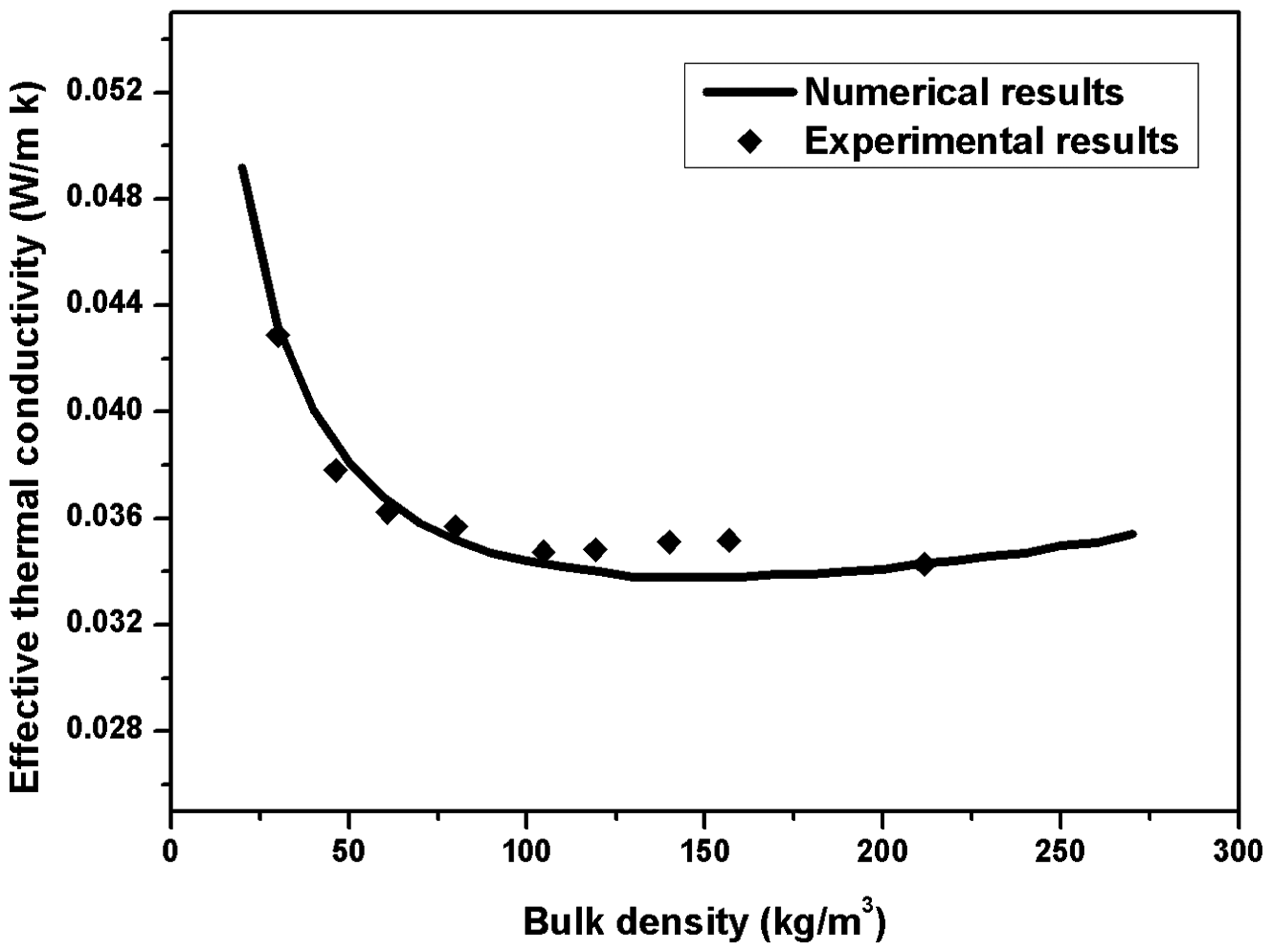
Because of the existing noise in the measurement data, the deviation of the results is acceptable. The numerical simulation results obtained by the present proposed method agree quite well with the experimentally measured values obtained with GHP apparatus.
Conclusion
This paper proposes a new numerical modeling technique which combines radiation with conduction in a ceramic fiberboard for the prediction of the effective thermal conductivity, and it can be extended to any other fibrous medium. The numerical model was validated by comparison with experimental values of the effective thermal conductivity at different bulk densities and temperatures. Our model is able to sort out individual contributions of conduction and radiation heat transfer mechanisms in these materials. Generally, the effective thermal conductivity increases with an increase in mean temperature. In low density regions
Footnotes
Funding
This work was supported by the Common Development Fund of Beijing and the National Natural Science Foundation of China (grant numbers 51172001, 51074009, 50902003, and 51172003), the National High Technology Research and Development Program of China (863 Program, grant number 2012AA06A114), and the Key Projects in the National Science & Technology Pillar Program (grant numbers 2011BAB03B02 and 2011BAB02B05).