




Abstract
In this paper, we measured the thermal and moisture management properties of six different types of polyester knitted fabrics that are used in the production of summer cycling clothes. The test samples were selected from the most commonly used fabric structures according to the results of a survey on a cycling team in Bursa. The fabrics were compared to determine which fabrics were more convenient for cyclists. Thus, we carried out objective fabric tests to determine the thermal resistance, water vapor resistance, air permeability and moisture management properties. Good moisture comfort, low water vapor resistance and good moisture management properties were preferred, especially in summer clothes. In the final evaluations of the fabrics, it was found that Type 6 Warp knitted raschel fabric was more convenient for summer cycling clothing because of its good air permeability, low thermal resistance, low water vapor resistance and good moisture management properties.
With increased emphasis on healthy living and saving time, men and women are paying more and more attention to sporting activities. People want to spend their leisure time in sport halls, gymnasiums or engaged in other sporting activities. Cycling is one of the most popular sports. Cycling can be performed in many different weather conditions; thus, the expectations that people have from athletic apparel has increased. Athletic apparel must prevent excessive heat loss in cold weather and enable the release of sweat from the surface of the skin in hot weather. 1
Thermal resistance, air permeability, water vapor permeability and liquid water permeability have been suggested as critical properties for the thermal comfort of the clothed body. 2
Any level of physical activity will produce the need to release excessive heat to maintain a stable body temperature. 3 Heat release from the skin can be divided into dry heat loss and evaporation. 4 There are various test methods for measuring the mass diffusivity of fiber assemblies. 5 The sweating hot plate instrument best simulates the conditions under which the clothing is worn, proving test results that relate to the thermophysiological responses of people wearing clothes. 6
The fabric liquid moisture transport properties in multi-dimensions can describe the moisture management properties and the influence of the human perception of moisture and comfort. 7 To evaluate the moisture management capacity of porous polymeric materials, such as fabrics, a new test method and an instrument called the moisture management tester (MMT) have been developed. 8
Over the years, many studies on clothing comfort have been carried out. Fanger showed that the conditions for thermal comfort are dependent on the activity level, the thermal resistance of the clothing, the air temperature, the mean radiant temperature, the relative air velocity and the vapor pressure of the ambient air. 9 D’Silva et al. demonstrated that polyester-fiber fabrics treated with hydrophilic finishes are more efficient at sweat distribution. 10 Wong et al. conducted a series of wear trials with 22 subjects wearing four different types of garments while cycling in a controlled climatic chamber. A linear predictable model to overall comfort was developed using 3- and 5-factor models. 11 Oğlakçıoğlu and Marmaralı investigated the thermal properties of cotton and polyester-based knitted fabrics in a single jersey with a 1 × 1 rib and interlock. The results in this study implied that single jersey fabrics had remarkably lower thermal conductivity and thermal resistance values. 12 Bedek et al. analyzed the textile properties and thermal comfort properties of six types of knitted underwear, revealing correlations between the vapor resistance and the fabric thickness, moisture retention and drying time, but not the thermal resistance. 13 Çil described additional fabric characteristics that influence water-vapor transport and permeability, including thickness, air permeability and moisture retention related to the fiber composition, yarn type and other fabric variables. 14 Yanılmaz and Kalaoğlu investigated relationship between different knitted structures and some thermophysiological comfort parameters. They declared that the effect of the knitted structure was significant for wicking height, wicking weight, contact angle values, transfer wicking ratios and WER values. 15
This study aims to determine the thermophysiological comfort properties of several polyester knitted fabrics used in cycling clothes, by obtaining measurements with a sweating hot plate, air permeability and MMT test device. According to these test device measurements, the thermal resistance, water vapor resistance, air permeability and overall moisture management capacity of the fabrics are evaluated.
Experimental details
A survey was conducted on a cycling team in Bursa to determine their expectations from cycling clothing and the comfort sensations they experience with their clothes. We selected different fabrics used in the production of cycling clothes based on the survey results and compared them to investigate which fabrics were more convenient for the production of cycling clothes. These fabrics were tested with a sweating hot plate, SDL Atlas air permeability and MMT test devices. The fabrics were selected from among the polyester microfiber and filament yarn fabrics because athletes prefer polyester fabrics. Five of the samples were weft knitted fabrics and one sample was a warp knitted fabric. Before the fabrics were used in the test, they were placed in a controlled room for 24 h for conditioning.
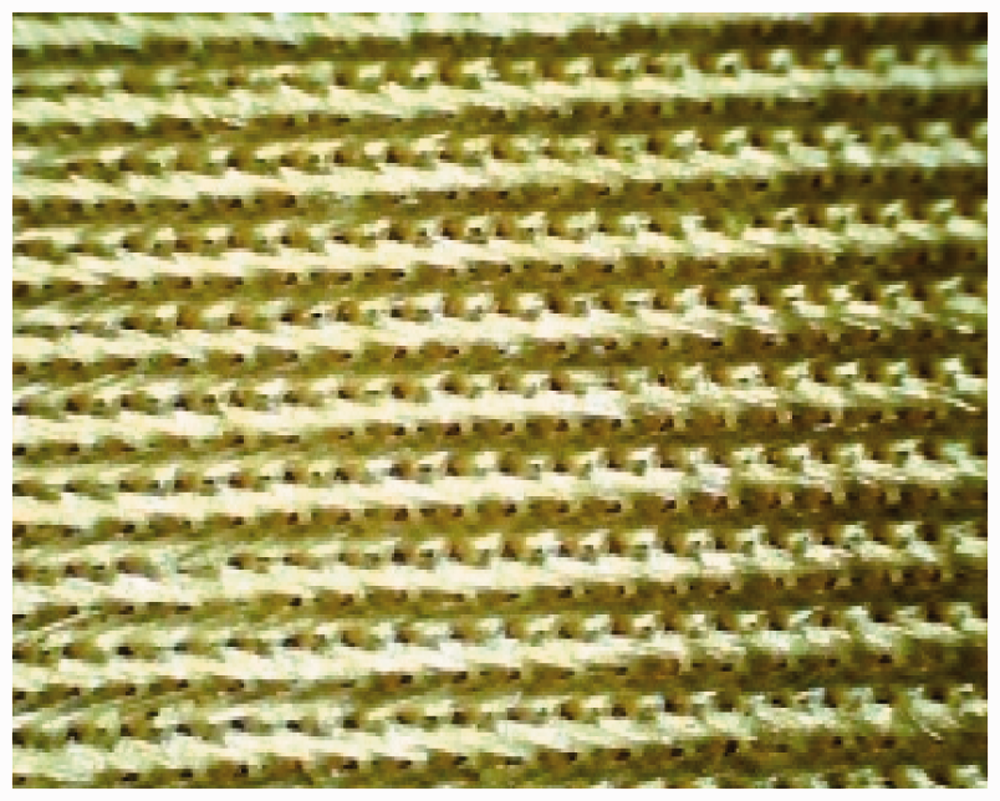
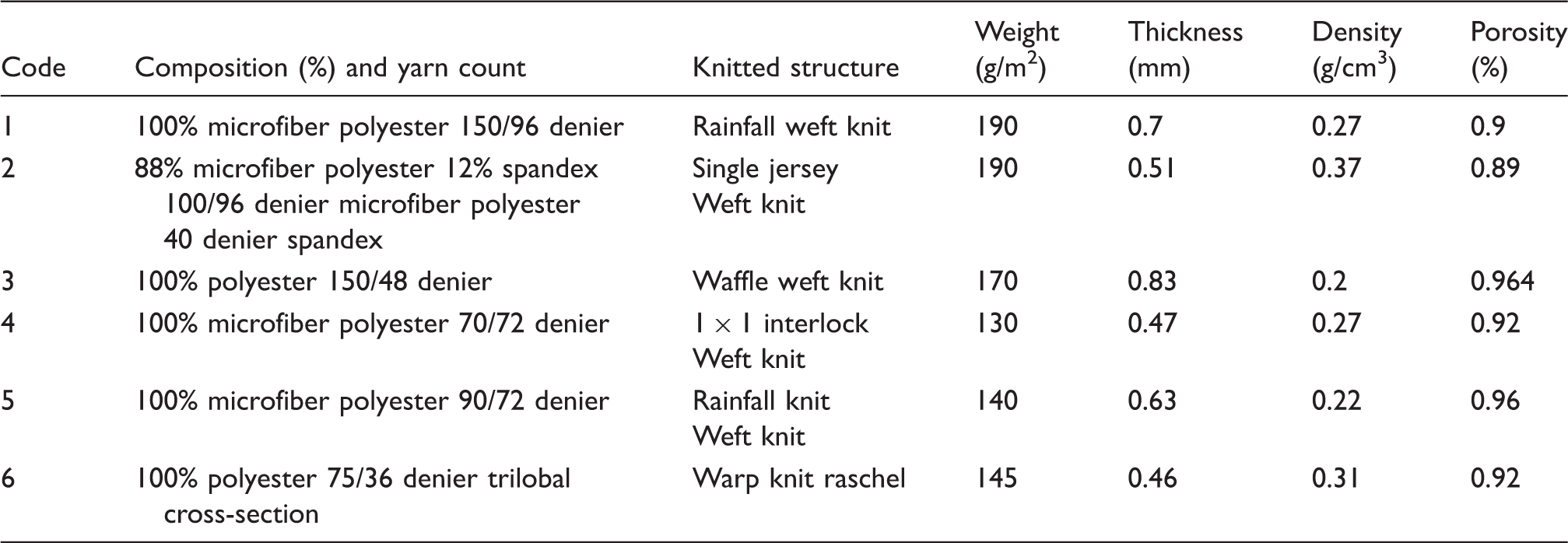
The needle configurations of the weft knitted fabrics are given in Figure 1 and a photograph of the Type 6 warp knitted fabric is given in Figure 2. The properties of the fabrics were measured by standard methods, as described in Table 1.
Needle configurations of the fabrics. (a) Type 3 waffle named weft knitted fabric; (b) Type 1 and Type 5 rainfall named weft knitted fabric; (c) Type 2 single jersey weft knitted fabric and (d) 1x1 interlock weft knitted fabric. Photograph of Type 6 warp knit raschel. Fabric properties used in the experiment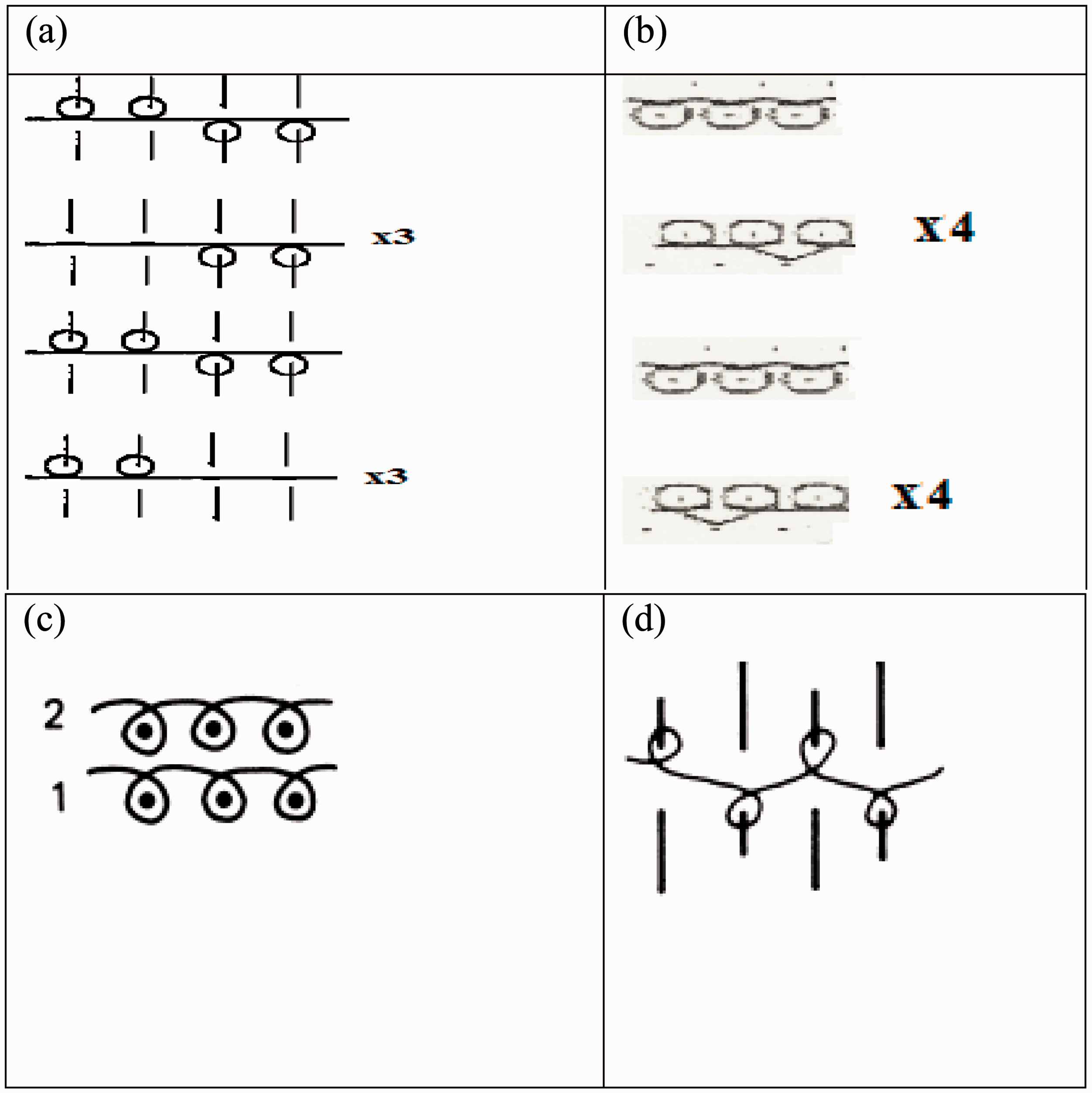
Single factor variance (ANOVA) analyses were used to determine the statistical significance of the variations. The fabrics used in the experiment were not produced in a controlled chamber. To deduce whether the parameters were significant or not, the p values were examined. İf the p value of a parameter was greater than 0.05 (p > 0.05), the parameter was not investigated further.
The thickness measurements of the fabrics were measured according to ASTM D1777 using a James H. Heal R&B cloth thickness tester.
The air permeability of the textile fabrics was determined by the rate of air flow passing perpendicularly through a given area of fabric measured at a given pressure over a given time period. The air permeability properties of the fabrics were measured using a SDL Atlas air permeability instrument according to the EN ISO 9237 standard with a 100 Pa air pressure and a 20 mm2 test area.
The thermal resistance and water vapor resistance properties of the fabrics were measured using a SDL Atlas sweating hot plate instrument according to the EN 31092 and ISO 11092 standards with a plate surface temperature of 35℃. The thermal resistance measurements were collected in a controlled room at a temperature of 20℃ and a humidity of 65%. The water vapor resistance measurements were collected at a temperature of 20℃ and a humidity of 40%.
A moisture management instrument (MMT) was used to measure the dynamic liquid transport properties of the knitted and woven fabrics in three dimensions. The top surface refers to the surface in contact with the skin. The bottom surface refers to the surface exposed to the atmosphere in the MMT test device. The moisture management properties were evaluated using a moisture management tester according to AATCC 195-2009.
There are a series of indexes used for determining the moisture management properties of fabrics, including the wetting time (WTT and WTB), absorption rate (TAR (top surface) and BAR (bottom surface)), maximum wetted radius (MWRtop and MWRbottom), top and bottom spreading speed (SSt and SSb) and accumulative one-way transport (OWTC) indexes. The overall moisture management capacity (OMMC) can be calculated according to

The porosity values of fabrics were calculated according to

Results and discussion
Air permeability
The air permeability values of the fabrics are compared in Figure 3.The air permeability value of the waffle knitted fabric was greater than the other fabrics due to the structure of waffle knit because waffle knit has a porous surface (0.964) and increasing fabric porosity increases the air permeability of fabric. The lowest air permeability value was observed for the single jersey fabric. Also this fabric has the lowest porosity value (0.89). The Type 1 and 5 fabrics had the same knit structure and yarn type, but their air permeability values were different because of their different yarn counts and filament numbers. The yarn count of the fabric influences the weight and thickness of the fabric. As a result, the air permeability of the knitted fabrics can decrease with an increased yarn count and thickness.
Air permeability values of the fabrics measured at 100 Pa pressure.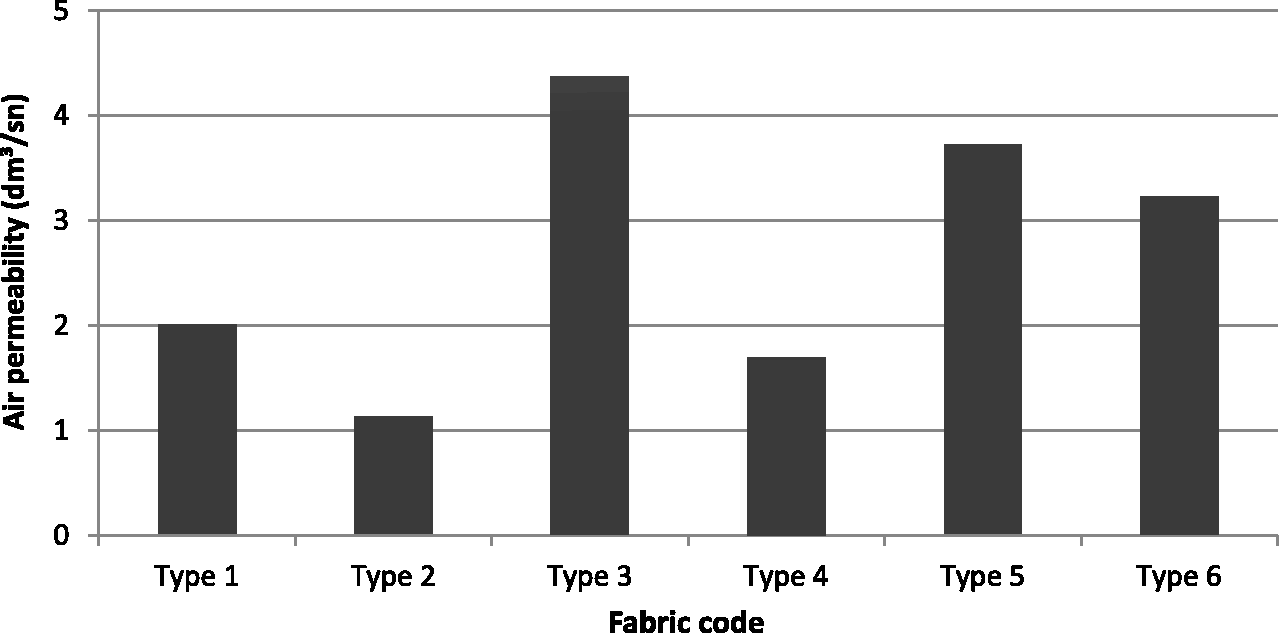
The ANOVA results showed that the differences in fabric construction significantly affected the air permeability. 26
It can be concluded that fabrics that have high air permeability values are preferred for cycling sports. Athletes sweat during physical activity and need to release excess heat to feel comfortable. In this respect, Type 3, 5 and 6 fabrics can be used for cycling clothes because of their high air permeability values. 27
Comparison of the thermal resistance of the fabrics
The thermal resistance is related to the fabric thickness. There is an inverse relationship between the thermal conductivity and the thermal resistance. For idealized conditions, R = h/λ, where R is the thermal resistance, 28 h is the thickness and λ is the thermal conductivity. 18
The thermal resistance values of fabrics are compared in Figure 4.
29
The highest thermal resistance value was observed for the Type 3 fabric. The lowest thermal resistance value was observed for the Type 6 fabric. It is important to note that the Type 3 fabric had the highest thickness value and that the Type 6 fabric had the lowest thickness value.
Thermal resistance values of the fabrics.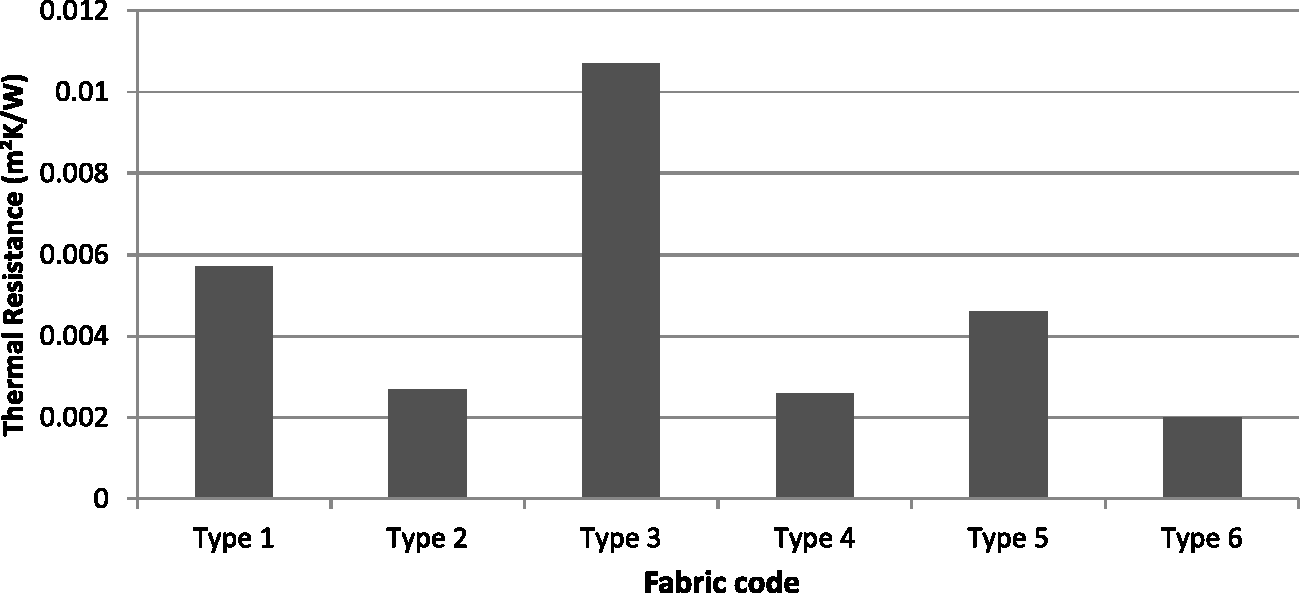
The ANOVA results showed that the differences for the different types of fabric construction were significant in terms of the thermal resistance.
The strong association between thermal resistance and thickness is shown in Figure 5. The regression coefficient was 0.932. As a result, the thermal resistance varies in proportion to the thickness of the fabric. This supports previous studies that the thermal resistance of the fabrics depends on the thickness of fabrics.
19
Relationship between thickness and thermal resistance of fabrics.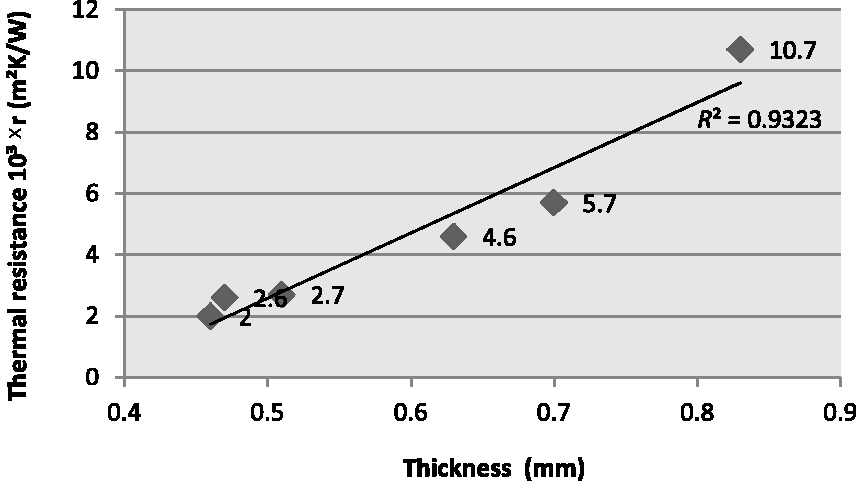
The fabric density was obtained by dividing the weight by the thickness. The fabric samples were produced from polyester yarn, so the density of the fabrics helped us to understand the effect of the knit type and yarn count on the thermal properties of the fabrics, in conjunction with the weight and the thickness. The effect of the fabric density on the thermal resistance is shown in Figure 6. There was an inverse relationship between the fabric density and the thermal resistance. Thus, if the fabric density increases, the thermal resistance will decrease.
20
Relationship between the fabric density and the thermal resistance.
There was a strong relationship between the thickness and the thermal resistance of the fabric. The most important factor affecting the thermal resistance was the thickness of the fabric. Additionally, there was an inverse relationship between the thermal resistance and the density of the fabric. This supports Shoshani and Shaltiel’s study, in which the thermal insulation increased with decreasing fabric density. 21 The thermal resistance of air is relatively high compared to the textile fibers. As the fabric density becomes lower, the air gaps between the fibers increase. As a result, the heat transfer of the fabric decreases, increasing the thermal resistance of the fabric will reduce the heat transfer.
Comparison of the water vapor resistance
The water vapor permeability is the product of the water vapor permeability and the textile thickness. On the other hand, the water vapor resistance represents the water vapor pressure difference between the two sides of the specimen divided by the resultant evaporative heat flux per unit area in the direction of the gradient in units of (m2.Pa/W). The water vapor resistance is calculated according to

The water vapor resistance values of the fabrics are compared in Figure 7. The Type 1 rainfall knit fabric and Type 3 waffle knit fabric structures had higher water vapor resistance values than the other fabrics because the thickness and weight of these fabrics were higher than the other fabrics. The Type 4 fabric had the lowest water vapor permeability value because of its low thickness.
Water vapor resistance of the fabrics.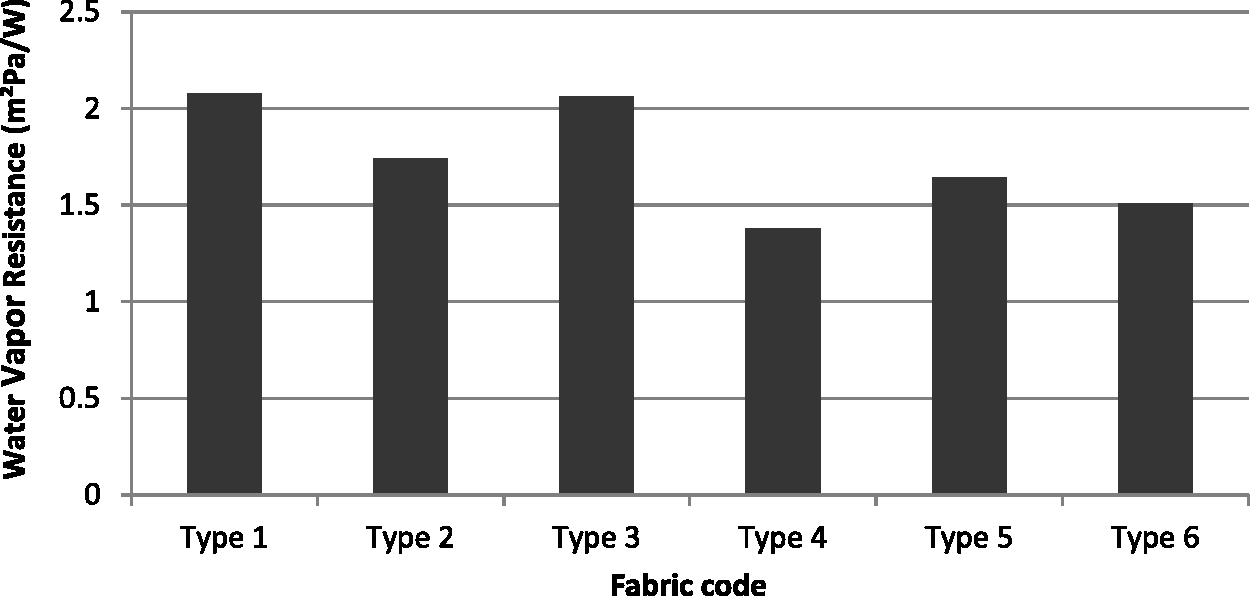
The ANOVA results showed that the different fabric constructions had significantly different water vapor resistance values.
The effect of the thickness on the water vapor permeability is shown in Figure 8. The regression coefficient was 0.771. There was a relationship between the water vapor resistance and the thickness of the fabric. The fabric becomes uncomfortable with increasing thickness and water vapor resistance. One of the most important factors affecting the properties of water vapor resistance is the thickness of the fabric. The water vapor resistance increases with increasing material thickness and air entrapment.
23
Relationship between water vapor resistance and thickness.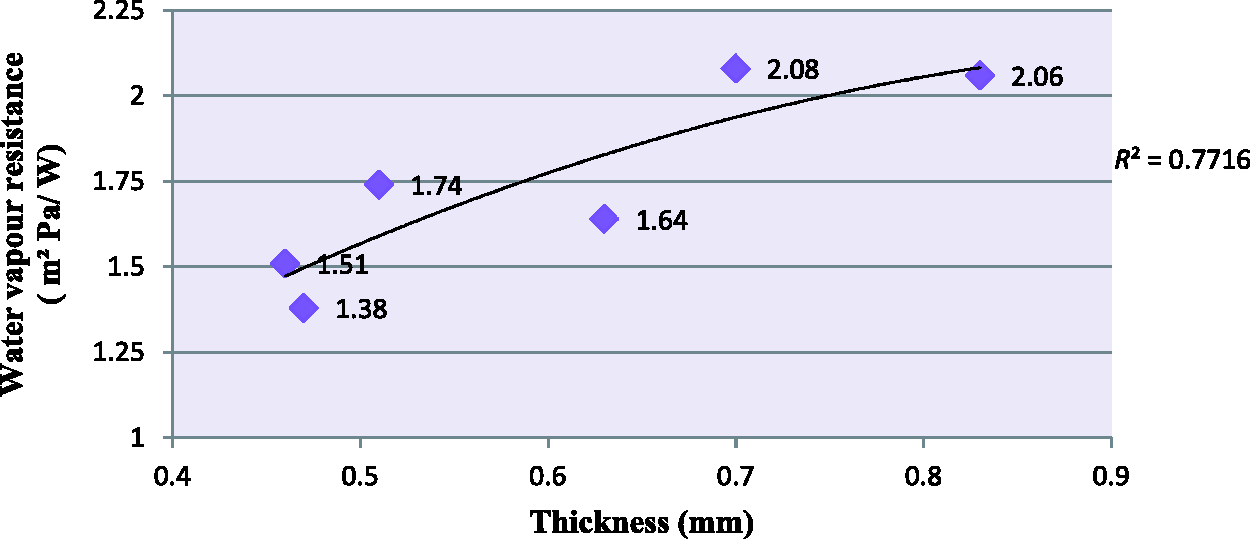
The relationship between the weight and the water vapor resistance of the fabrics is shown in Figure 9. The regression coefficient was 0.75, indicating a relationship between the water vapor resistance and the weight of the fabric. The fabric water vapor resistance increases with increasing weight of the fabric. As a result, it can be difficult to release sweat from the body in the form of water vapor, as the water vapor resistance is high. For this reason, the fabrics used in sports wear must have low water vapor resistance values.
Relationship between the weight and water vapor resistance.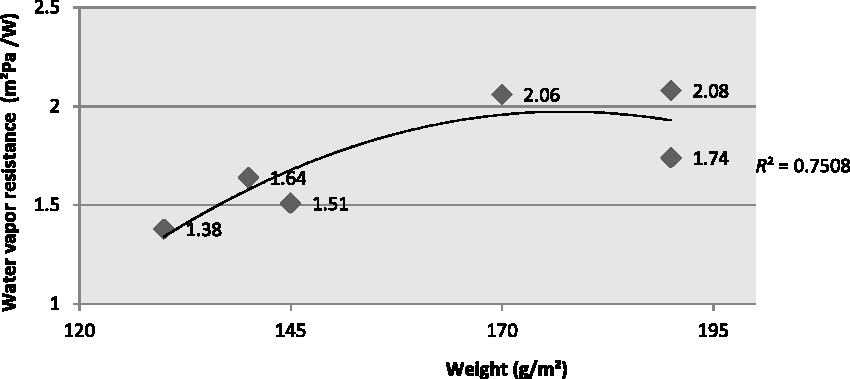
The increased water vapor transmission of these fabrics resulted in high fabric breathability. During periods of high activity that cause increased sweating, the increased permeability of the water vapor provides better comfort. Thus, Type 4 and 6 fabrics are more suitable for cycling due to their low water vapor resistance values.
MMT test device measurements
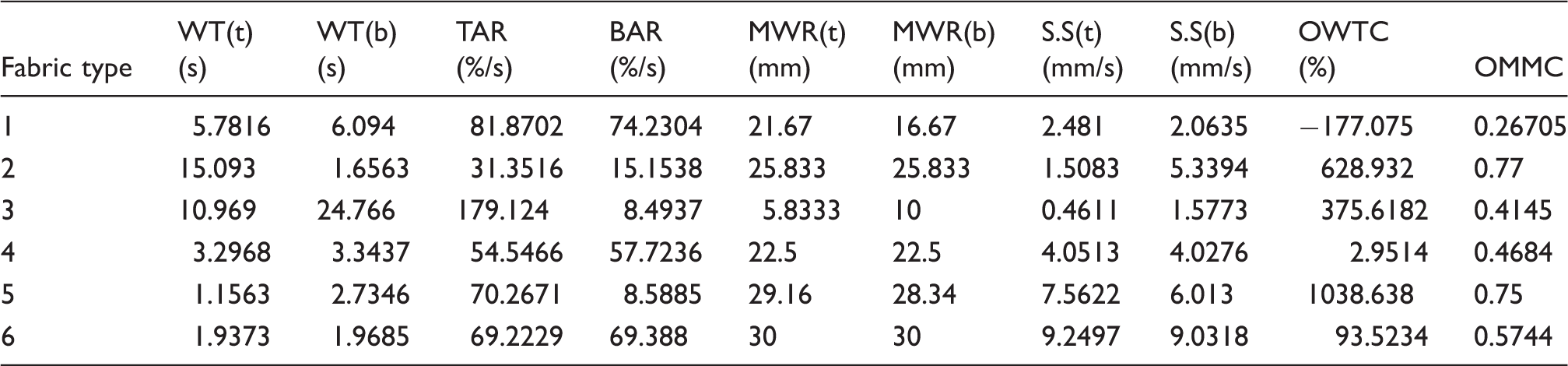
MMT test results.
Wetting time
Grading scale for the OMMC and OWTC values

In the Type 4 interlock weave pattern, the top and bottom wetting times were similar, indicating that the water from the top surface of the fabric is quickly transferred to the bottom surface. The Type 6 fabric is an example of a quick wetting and quick drying fabric. Water is quickly transferred from the top surface of this fabric to the bottom surface.
Absorption rate, spreading speed and maximum wetted radius
It can be observed from Table 2 that the absorption rate is proportional to the wetting time and changes with the yarn count of the fabric. A finer yarn count produces a thinner fabric with a faster drying time.
The top absorption rates were faster than the bottom absorption rates (except for fabric Type 4), indicating that sweat will be absorbed by the fabric where it is in contact with the skin and transmitted to the surface of fabric by diffusion. If sweat collects at the bottom surface of the fabric, it will disturb the wearer, as is the case for the Type 3 waffle weave fabric. If only a little sweat is transferred to the outer surface of a fabric, it still causes the collection of sweat on the skin surface, and disturbs the wearer.
In general, the drying time decreases with an increased maximum wetted radius of the fabric. The maximum wetting radius of the top and bottom surfaces were similar for the Type 4, 5 and 6 fabrics, indicating that sweat was quickly transferred to the top surface and spread from the bottom surface with the same radius. These fabrics are quick absorbing and quick drying, making them comfortable to wear.
OMMC and OWTC Measurements of Fabrics
Figure 10 shows the OWTC values of fabrics. The one-way transfer index value of the Type 1 fabric was very low; thus, there was no one-way transport in this fabric (Table 4). The Type 4 fabric had a weak one-way transfer index (Table 3). The Type 3 fabric had a good one way transfer index value. The Type 5 and 2 fabrics had perfect one-way transfer index values.
One-way transport index of the fabrics.
The overall moisture management capacity (OMMC) values of the fabrics are shown in Figure 11. A larger OMMC indicates a higher overall moisture management capability of the fabric.
25
As can be observed from Figure 11, the highest OMMC values were obtained for the Type 2 and 5 fabrics. These fabrics had very good moisture management properties. The moisture management properties of the Type 3, 4 and 6 fabrics were good (Table 3). The Type 3 fabric had poor moisture management.
Overall moisture management properties of the fabrics.
Conclusions
In this study, the thermophysiological comfort features of summer cycling clothing were screened and compared in terms of their thermal resistance, air permeability, water vapor resistance and moisture management. Test results indicate that some of the fabric characteristics were more effective for imparting thermal resistance than others (e.g. the thickness and density) and there is an inverse relationship between the fabric density and the thermal resistance. Also the air permeability of fabrics affected the porosity of fabrics. High moisture absorbing fabrics are preferred for sporting apparel because they quickly release perspiration from the skin to keep the wearer dry. Lower wetting times indicate quick absorption of sweat by the fabric and changes with yarn count of fabric. The moisture comfort properties of clothes are also affected by the spreading speed of the fabrics. The maximum wetting radius of a fabric affects the spreading area of sweat on the fabric surface. Thus, increasing the maximum wetted radius decreases the drying time of the fabric.
Generally, microfiber polyester knitted fabrics showed good moisture management properties like Type 2 single jersey and Type 5 rainfall. On the other hand, Type 3 waffle knitted polyester fabric showed good air permeability value.
It can be concluded that the Type 6 warp knitted raschel fabric is a better summer cycling material because of its good air permeability, low thermal resistance and water vapor resistance values and good moisture management properties. This fabric enables the release of excess heat during activity. Moreover, because of its good moisture management properties, it keeps the wearer dry. This makes the material more comfortable than the other fabrics.
Footnotes
Funding
This work was supported by Uludag University (project number HDP(M):2012/46).