



Abstract
Ramie, which is one of the most important natural fibers, possesses distinctive characteristics and excellent properties. In this study, the chemical compositions of hemicelluloses in ramie fibers were thoroughly investigated. The effect of NaOH treatment on polysaccharides in hemicelluloses and the effect of polysaccharides on fiber properties were systematically explored. It was found that the components of galactoglucomannan, glucomannan, and xylan accounted for about 79.0% of total weight in ramie hemicelluloses. Galactoglucomannan was more easily soluble than glucomannan in 1% (w/w) NaOH solution. Xylan possessed the lowest solubility in the same concentration of NaOH solution compared to the other two. Furthermore, with an increase of galactoglucomannan, glucomannan, and xylan contents, the fiber linear density and unseparated fiber percentage showed an increasing trend, while the fiber tenacity exhibited a decreasing trend under the same conditions. In addition, it was demonstrated that the contents of these three components have an insignificant effect on friction coefficient, breaking elongation, modulus, and resilience of ramie fibers. This study could provide useful information in understanding the nature of hemicelluloses and polysaccharides within natural fibers, as well as theoretically guiding the degumming process of ramie fibers.
Ingredients of raw ramie fibers

In addition, hemicelluloses are a mixture of various kinds of polysaccharide. Each polysaccharide is made up of one or several forms of monosaccharide. 7 The effects of different kinds of polysaccharides on fiber properties are likely to be different. It is helpful and instructive to analyze and find out which residual polysaccharides have larger negative effects on fiber properties. A study of polysaccharides (mainly galactoglucomannan, glucomannan, and xylan) contents in ramie and their effects on fiber properties (tenacity, breaking elongation) can provide useful information on selectively or reasonably removing the gummy substances. However, such kind of research has seldom been reported in previous literature so far.
In order to investigate the effects of polysaccharides in ramie hemicelluloses on fiber properties, the contents of polysaccharide in ramie first have to be determined. The determination of the sugar components in hemicelluloses have generally been carried by the following steps. 8 Hemicelluloses were extracted from the plant fiber, which was then hydrolyzed in appropriate solutions such as sulfuric acid solution. After that, the monosaccharide contents in hemicelluloses were analyzed using the chromatograph analysis method. This kind of method is widely used in many fields to analyze the sugar components of hemicelluloses in different plants, such as wood, 9 bagasse, 10 bamboo, 11 and so on. Gas chromatography (GC) analysis was also utilized by some researchers to study the sugar component of hemicelluloses in ramie. 12
It should be noted that one certain kind of monosaccharide may exist separately in two different kinds of polysaccharide. For example, mannose exists separately in galactoglucomannan and glucomannan. 13 Therefore, the content of polysaccharides in ramie hemicelluloses cannot be directly measured by the GC analysis method. In order to precisely study the polysaccharides in hemicelluloses, chemical methods should be used in advance to separate polysaccharides in hemicelluloses based on their different chemical properties. Zhang et al. separated the glucomannan from ramie with a step-by-step extraction method. 14 However, this kind of extraction method has its own limitations due to the fact that only one kind of polysaccharide in ramie can be fully extracted. Cheng and Yu reported that xylan, glucomannan, and galactoglucomannan can be successfully separated and extracted from the red wood with high alkali concentration methods. 15 In this research, we also adopted the same chemical method to determine the contents of polysaccharides in ramie fibers.
In this investigation, the sugar component of ramie hemicelluloses was characterized by GC analysis. 12 Xylan, glucomannan, and galactoglucomannan were separated in order and respectively analyzed by chemical methods. Based on these analysis and testing results, the effect of NaOH treatment on polysaccharides in ramie hemicelluloses and the effect of polysaccharides on ramie fiber properties were systematically discussed. This presented work could offer substantial information about better control of degummed fiber properties and promote advancement in the current industrial field of natural fiber degumming.
Experimental details
Materials
The raw ramie used in this study was grown in Yuanjiang, Hunan province, China. All chemicals used for this study were supplied by Sinoharm Chemical Reagent Co. Ltd, Shanghai, China.
Extraction of wax, water-soluble substances, and pectin
According to the China national standard GB5889-86 (method of quantitative analysis of ramie chemical components), 16 the sample (5 g) of raw ramie was first extracted with a mixed solution of ethanol absolute and benzene (1:2 v/v) for 3 h to remove wax. Then it was processed under boiling hot water (150 mL, 100℃) for 3 h, so that the water-soluble substances were removed from the ramie. After that, the residue of the sample was used for further extraction with 0.5% (w/w) ammonium oxalate solution (150 mL, 100℃) for 3 h. Therefore, the wax, water-soluble, and pectin components were all removed separately from the ramie.
Sequential extraction of hemicelluloses
After wax, water solubles, and pectin substances had been removed, the hemicelluloses were further extracted gradually from the residue. Extraction was repeated three times with solution of 24% (w/w) KOH, then repeated another three times with a mixed solution of 17.5% (w/w) NaOH and 4% (w/w) H3BO3 at 25℃ for 48 h. The extracted solution was acidified with glacial acetic acid to a pH value of 5. Then, hemicelluloses were precipitated with ethanol absolute and freeze-dried for acid hydrolysis.
Acid hydrolysis of hemicelluloses
Samples of hemicelluloses were immersed in 77% (w/w) H2SO4 for 24 h at 25℃. Then the solution mixture was diluted to 3% (w/w) with distilled water and boiled at 100℃ for 6 h. Subsequently, the pH value of the hydrolysis solution was adjusted to 5.5 with a saturated solution of barium hydroxide. Then the barium sulfate precipitation was finally removed by filtration and the filtrate was freeze-dried for the following GC analysis.
Gas phase color spectrum analysis
The sample (5 mg) after acid hydrolysis was dissolved by 0.6 mL pyridine. 16 g/L hydroxylamine hydrochloride in pyridine solution (0.4 mL) and muscle alcohol (0.1 mL) were added into the solution. The resultant solution mixture was heated at 90℃ for 30 min, and then cooled to room temperature. After that 0.5 mL acetic anhydride was added to the solution, and the solution was again heated at 90℃ for 30 min. 1 µL solution was taken into a HP 6890 (Plus) GC instrument for analysis, which used a FID detector and HP-Innowax (30 m × 0.25 mm × 0.25 µm) color spectrum column.
Separation of polysaccharides in hemicelluloses
Xylan, glucomannan, and galactoglucomannan were separated and extracted from ramie using the methods proposed by Chen and Yu.
15
Separation processes of polysaccharides in hemicelluloses are shown schematically in Figure 1.
Separation processes of polysaccharides in hemicelluloses.
The detailed process was carried out as follows. After the wax, water-soluble substances, and pectin had been removed according to the methods described previously, the ramie fiber was extracted gradually by treating it three times with a solution of 24% (w/w) KOH at 25℃ for 48 h. Subsequently, the mixture of xylan and galactoglucomannan was successfully extracted from ramie. The extracted solutions were acidified with glacial acetic acid to a pH value of 5.0. The mixture of xylan and galactoglucomannan was precipitated again in absolute ethanol solvent and then freeze-dried.
The residue was extracted completely by treating it three times with a mixed solution of 17.5% (w/w) NaOH and 4% (w/w) H3BO3 at 25℃ for 48 h. The extracted solutions were acidified with glacial acetic acid to a pH value of 5.0. The crude glucomannan was precipitated with ethanol absolute and then freeze-dried. For purification, the crude glucomannan was dissolved in a mixed solution of 17.5% (w/w) NaOH and 4% (w/w) H3BO3. Then 5% (w/w) barium hydroxide solution was added and the precipitation was separated through a filtration process. The precipitate was then dissolved in 50% (w/w) acetic acid solution. The resultant glucomannan was precipitated again in absolute ethanol solvent and then freeze-dried.
The mixture of xylan and galactoglucomannan was separated and transformed to be a fraction of galactoglucomannan and a mixture of polysaccharides, which were processed as follows. The mixture of xylan and galactoglucomannan was dissolved in a solution of 24% (w/w) KOH. Then 5% (w/w) barium hydroxide solution was added to the solution to precipitate the component of galactoglucomannan. The solution was precipitated and separated and then the supernatant was removed. After that, the precipitate was dissolved again in 50% (w/w) acetic acid solution. This fraction of galactoglucomannan was precipitated in absolute ethanol solvent and then freeze-dried. Excess glacial acetic acid and ethanol absolute were added to the supernatant. The mixture of polysaccharides was finally precipitated and then freeze-dried. Likewise, the mixture of polysaccharides was separated and transformed to the component of xylan and another fraction of galactoglucomannan using the same method.
Ramie degumming in NaOH solution
In order to obtain diverse samples with different polysaccharide contents in ramie fibers, raw ramie fibers were degummed in NaOH solutions under different concentrations of 0.2%, 0.4%, 0.6%, 0.8%, and 1.0% (w/w) at 100℃ for 3 h with a liquor-to-fiber ratio of 10:1. After degumming, the treated fibers were washed thoroughly with distilled water and then dried in an oven.
Fiber properties test
The constant speed tensile testing method was performed to determine the tenacity, breaking elongation, and modulus of the raw and degummed fibers. 17 The tenacity, breaking elongation, and modulus of ramie fibers were measured using an XQ-2 electronic strength tester. The gauge length and drawing speed were kept at 20 mm and 10 mm/min, respectively. Average values were obtained using results from 50 specimens. Fiber resilience is defined to be the ratio of the elastic deformation to the total elongation. The elastic deformation is the summation of the instant elastic deformation and slow elastic deformation. The constant elongation of one time tensile method was employed to measure the resilience of the raw and degummed ramie fiber. The resilience of ramie fiber was measured by the same XQ-2 electronic strength tester. The gauge length was set at 20 mm. The tested fiber was first extended to a predetermined applied strain (2%) at a rate of 5 mm/min. Then the fiber was held at constant strain (2%) for the next 30 s. Subsequently, the load was taken off at a rate of 5 mm/min. The fiber was held for next 30 s after the load was completely taken off. Finally, the fiber was extended to a predetermined applied strain (2%) at a rate of 5 mm/min. Average values were obtained using results from 30 specimens.
The linear density of ramie fiber was measured by a gravimetric method. Ramie fibers were first cut to a length of 40 mm. The tested fibers were divided into several groups. Each group of fibers was measured and controlled within 4.0–10.0 mg. Then the number of individual fibers in each group was respectively counted. The fiber linear density was finally obtained after calculation. To measure the unseparated fiber percentage, fiber samples (about 5 g) were first opened and combed by an AS181A carding machine. Then the gross mass of the fiber samples was determined. After the opening and combing process, there were separated single fibers and unseparated fibers in the fiber samples. Unseparated fibers are a feature in which the individual fibers are still covered by some gummy materials and not completely separated from each other. Unseparated fibers were picked out by a tweezer and then weighed. The unseparated fiber percentage is the ratio of unseparated fibers weight to the total weight of fiber samples. Fiber friction properties were tested by a Y151 fiber friction coefficient tester. The capstan method was used to measure the static and dynamic friction coefficients of the fibers. Rotational speed was set at 30 r/min during the dynamic friction coefficient testing process.
Results and discussion
Chemical composition of ramie hemicelluloses
Hemicelluloses are very important components in ramie fibers. The chemical composition of raw ramie fibers was tested according to China national standard GB5889-86 (method of quantitative analysis of ramie chemical components).
16
The mean and standard deviations of three replicate determinations were shown as following: wax 1.02 ± 0.19%, water-soluble substance 5.16 ± 0.33%, pectin 5.42 ± 0.22%, hemicellulose 14.33 ± 0.63%, lignin 1.62 ± 0.33%, and celluloses 72.45 ± 0.78%. Hemicelluloses in ramie are a category of sugar polymers including the six-carbon sugars, such as mannose, galactose, and glucose, and the five-carbon sugars, such as xylose, arabinose, and rhamnose.
18
Hemicelluloses are condensation polymers with a molecule of water removed from every linkage. The monosaccharides, which make up the hemicellulose, have the Gas chromatograms of ramie hemicelluloses (rhamnose 9.693, arabinose10.905, xylose 11.285, mannose14.285, glucose14.983, galactose15.970). Sugar components of ramie hemicelluloses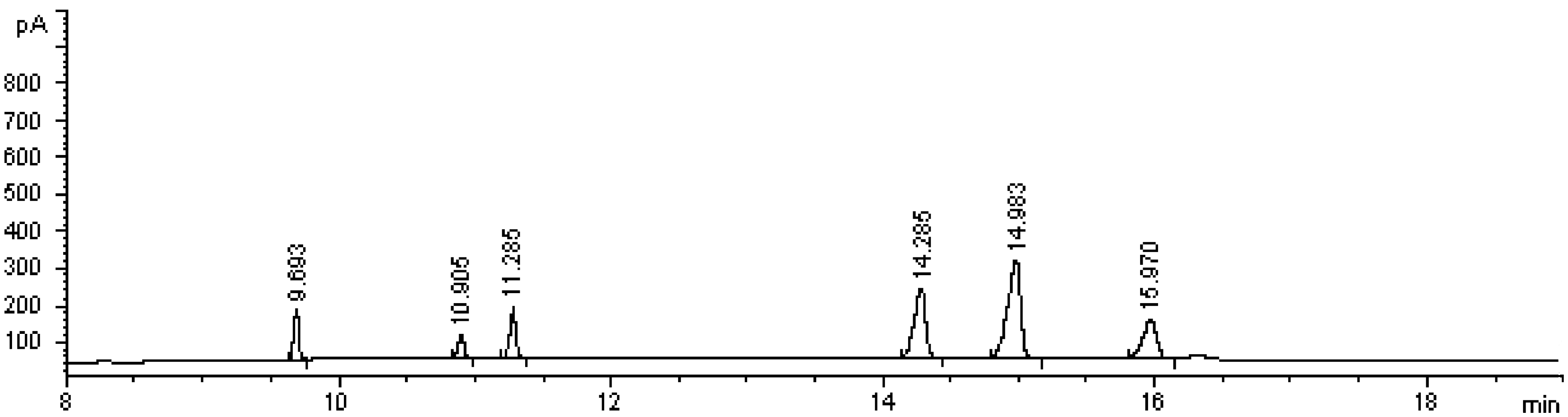

Yield of polysaccharide in ramie

It can be seen from Table 3 that the total yield of separated glucomannan, xylan, and galactoglucomannan components from raw ramie accounts for about 79.0% of the ramie hemicelluloses by weight. Thus glucomannan, xylan, and galactoglucomannan were the main components in the ramie hemicelluloses. Among these three polysaccharides, it should be noted that the component of galactoglucomannan possessed the most amount, while xylan exhibited the least amount. Furthermore, xylan was mainly made up from xylose. The content of xylan that was analyzed by chemical separation was close to the content of xylose that was analyzed by GC. Glucomannan was made up from mannose and glucose. Galactoglucomannan was made up from galactose, mannose, and glucose. The yield of galactoglucomannan and glucomannan that were separated from raw ramie accounts for 70.0% of the yield of hemicelluloses. This data was also close to the total content of galactose, mannose, and glucose in ramie hemicelluloses that was analyzed by GC.
Effect of NaOH treatment on polysaccharides in ramie hemicelluloses
A previous investigation showed that glucomannan is hardly soluble in NaOH solution at 25℃.
11
In this research, the influence of NaOH treatment on polysaccharides in ramie hemicelluloses at 100℃ was explored. The removal rate was used to indicate the influence of NaOH treatment on polysaccharides in ramie hemicelluloses. Removal rate can be calculated as follows:

Figure 3 demonstrates the dependence of the polysaccharide removal rate on NaOH concentration. As can be seen, the removal rate of glucomannan, galactoglucomannan, and xylan all gradually increased with the increase of NaOH concentration. Most of the polysaccharide can be removed by 1% (w/w) NaOH solution at 100℃. Although glucomannan was hardly soluble in NaOH solution at room temperature, it was soluble in 1% (w/w) NaOH solution at 100℃. Interestingly, the results also showed some different removal trends for glucomannan, galactoglucomannan, and xylan in NaOH solution. Compared to glucomannan and galactoglucomannan, xylan possessed the lowest solubility in NaOH solution. The removal rate of galactoglucomannan solution was higher than that of glucomannan, which means that galactoglucomannan was more easily soluble than glucomannan. This observation may be due to the existence of hydrophilic galactosyl groups in galactoglucomannan, which promotes the solubility in the alkaline solution.
Dependence of the polysaccharide removal rate on NaOH concentration. The treatment time is 3 h.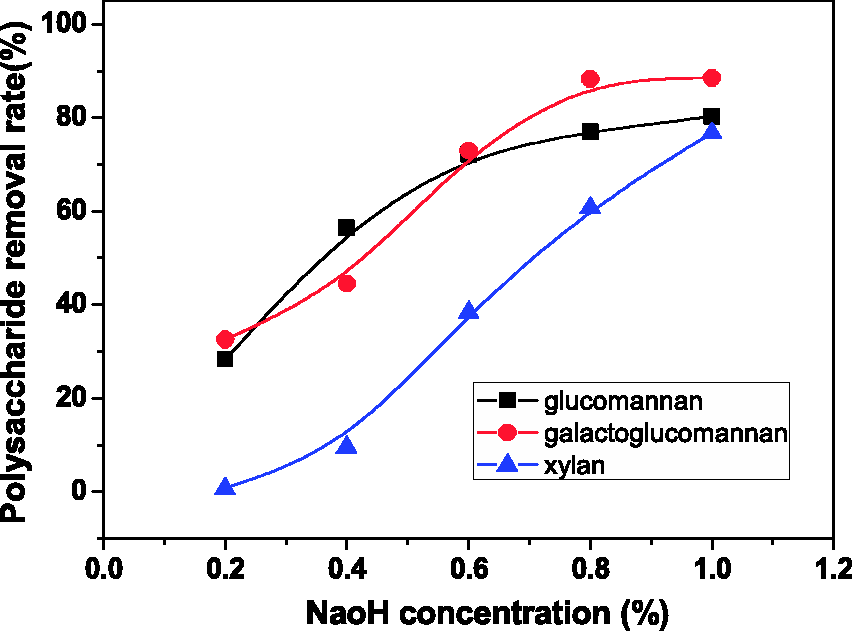
Effect of polysaccharides in ramie hemicelluloses on fiber properties
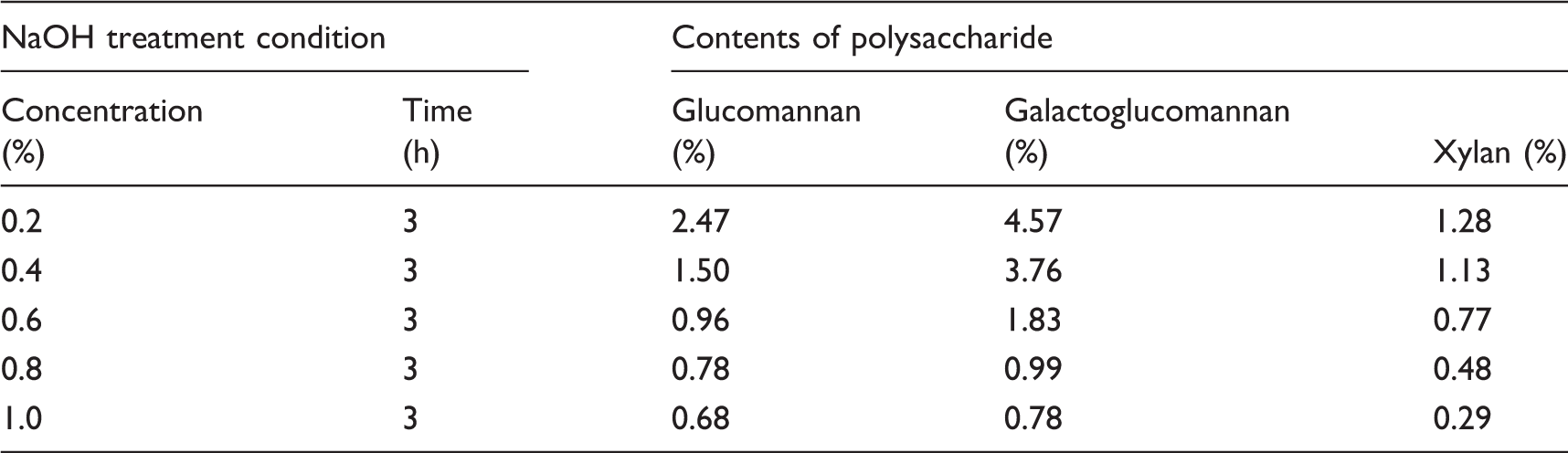
The polysaccharide contents in treated ramie fibers
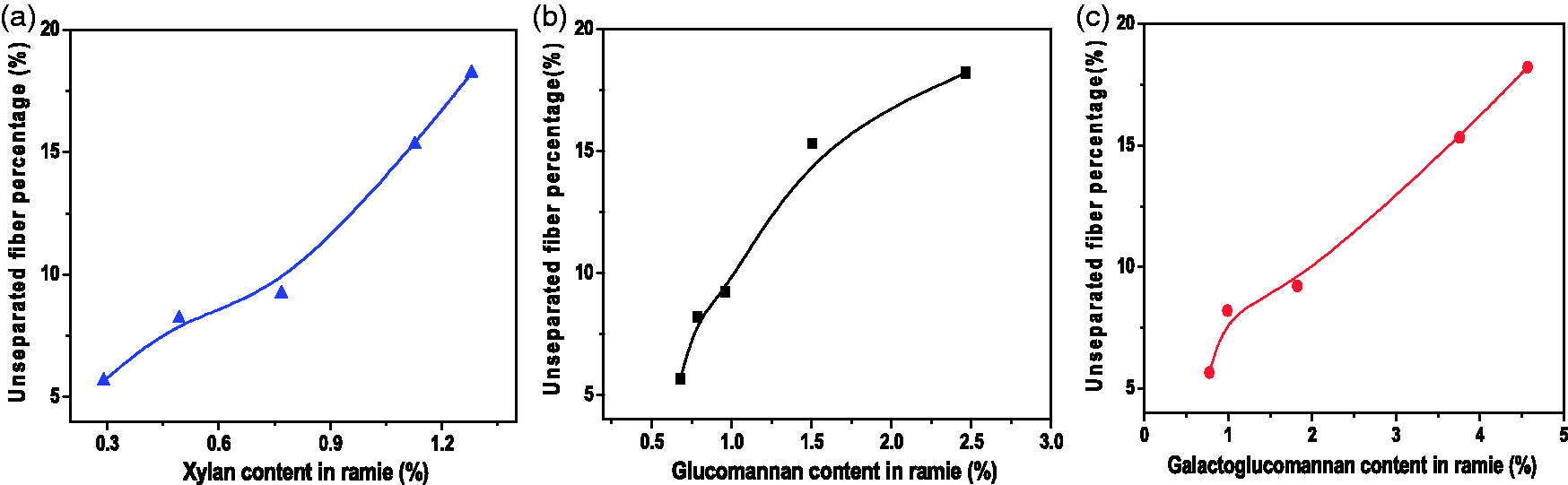
Dependence of unseparated fiber percentage on polysaccharides content.
The coefficient of variation (CV) values of fiber tensile properties
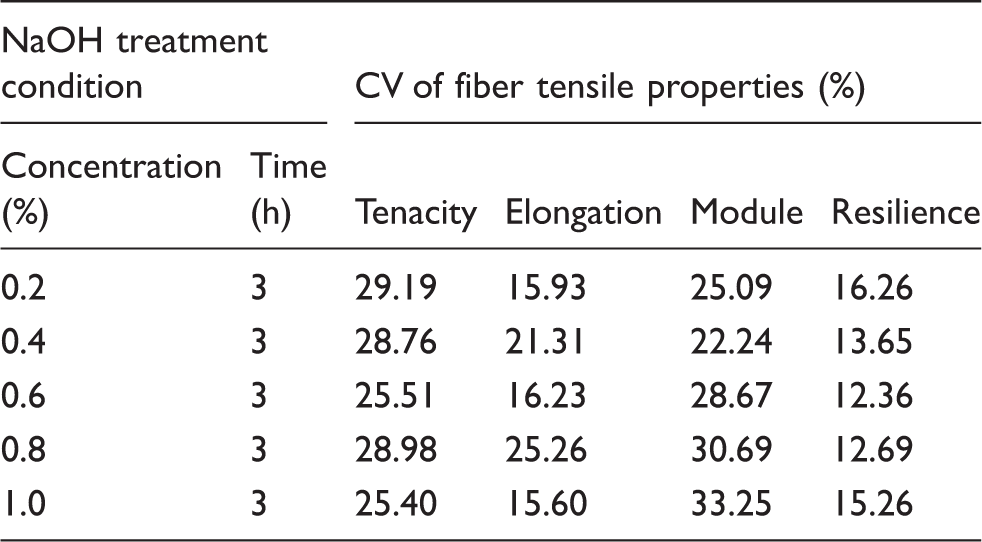
An important aim of degumming is to separate the bound fibers. Unseparated fiber percentage was used to indicate the fiber separation degree. Figure 4 shows the dependence of unseparated fiber percentage on polysaccharides content. It is clearly demonstrated that unseparated fiber percentage increases as the contents of glucomannan, galactoglucomannan, and xylan increase. Glucomannan, galactoglucomannan, and xylan components in ramie can largely hinder the separation process of individual fibers. If these components are removed by physical or chemical method, the fibers will be completely disconnected, and therefore lead to a decrease of unseparated fibers. This means that removal of glucomannan, galactoglucomannan, and xylan components can greatly facilitate the separation degree of raw ramie fibers.
Figure 5 displays the dependence of linear density on polysaccharides content. It is observed that fiber linear density shows increase trend with the increase of glucomannan, galactoglucomannan, and xylan contents. This means that removal of glucomannan, galactoglucomannan, and xylan can reduce the values of fiber linear density. The higher the linear density is, the poorer fiber properties are. A lower linear density of degummed fibers is the desired property and is usually considered as an important factor to indicate high quality fiber. Compare to other natural fibers, ramie fiber is much coarser, which is the limitation for its further spinning process. With the increase of glucomannan, galactoglucomannan, and xylan contents, the weight of fiber increase, and this results in the increase of linear density of fibers.
Dependence of linear density on polysaccharides content.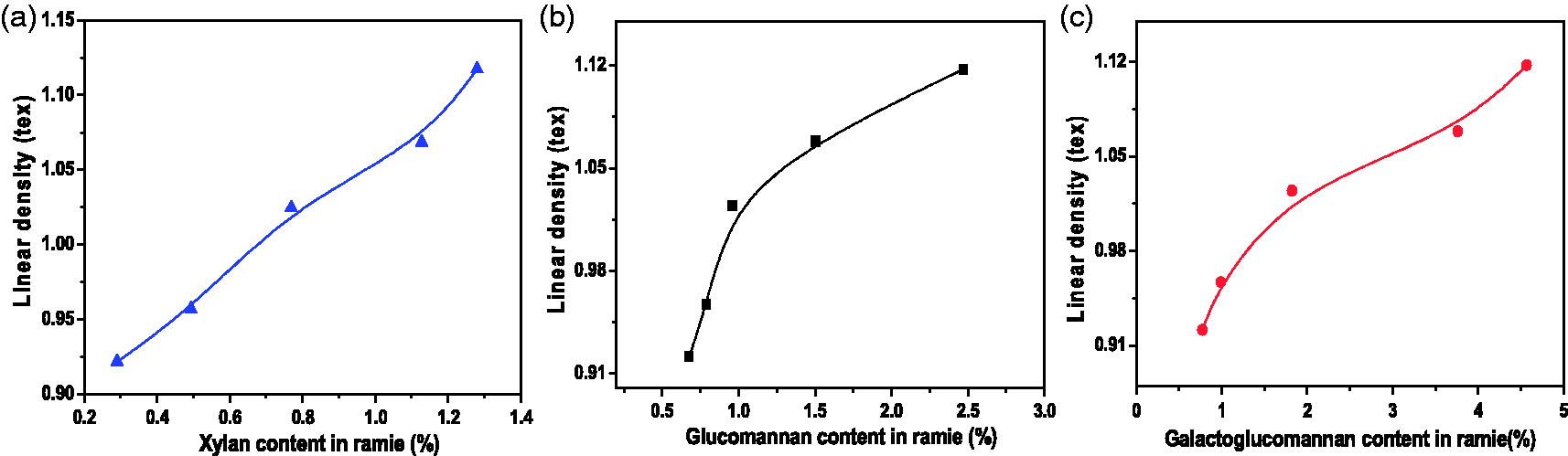
Figure 6 shows the dependence of tenacity on polysaccharides content. It can be seen that fiber tenacity increases as the contents of galactoglucomannan, glucomannan, and xylan decrease. This means that the removal of glucomannan, galactoglucomannan, and xylan can improve the fiber tenacity. These three kinds of noncellulosic components in fibers may bind fibrils within a single fiber. Contents of these polysaccharides may affect the strength of fibers due to different bonding forces between fibrils.
Dependence of tenacity on polysaccharides content.
Figure 7 demonstrates the dependence of breaking elongation on polysaccharides content. It can be seen that the contents of galactoglucomannan, glucomannan, and xylan have insignificant effects on breaking elongation. Figures 8 and 9, respectively, indicate the dependence of modulus and resilience on polysaccharides content. As can be seen, with the increase of galactoglucomannan, glucomannan, and xylan contents, both modulus and fiber resilience experienced a slight change, which proved that the contents of these three components have insignificant effects on the modulus and resilience of ramie fibers.
Dependence of breaking elongation on polysaccharides content. Dependence of modulus on polysaccharides content. Dependence of resilience on polysaccharides content. Dependence of static/dynamic friction coefficient on polysaccharides content.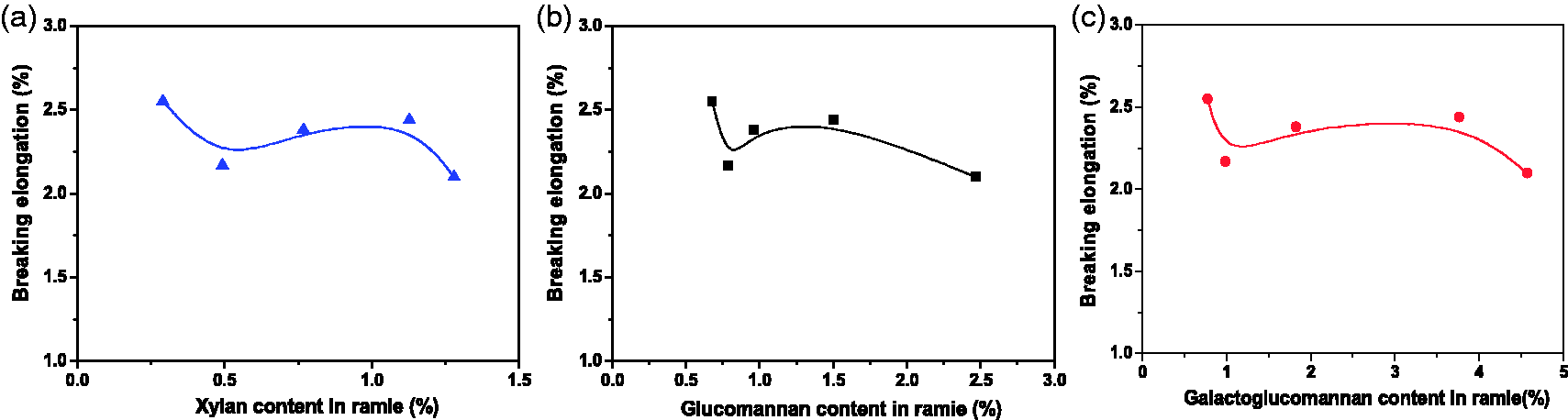
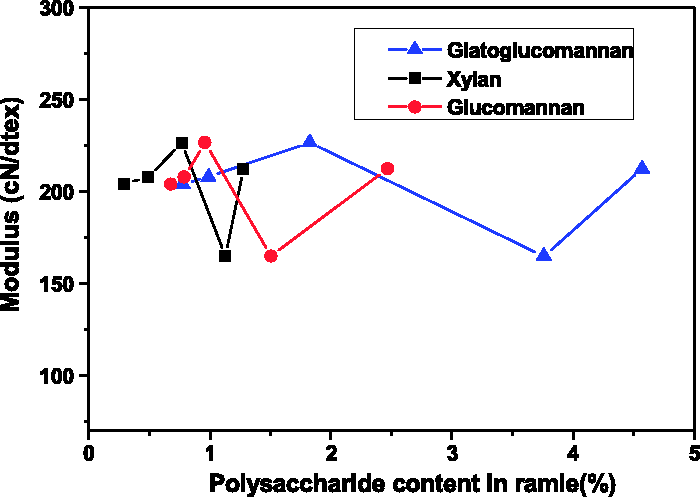
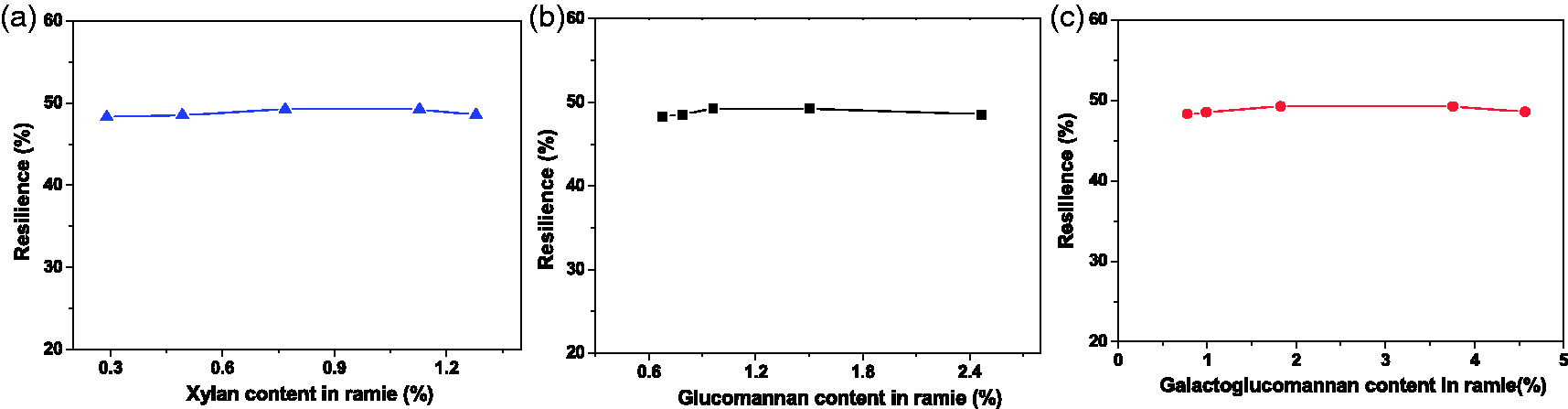

Figure 10 demonstrates the dependence of static/dynamic friction coefficient on polysaccharides content. As shown, the friction coefficient underwent an unapparent change as the content of galactoglucomannan, glucomannan, and xylan increased. This was due to the fact that these three components mostly exist in the inner of ramie fibers, rather than on the outer surface of fibers. Therefore, though galactoglucomannan, glucomannan, and xylan had been removed, the outer surface of the fibers was not likely to be affected, and thus the static/dynamic friction coefficient remained nearly constant.
Conclusions
In this research, the chemical compositions of ramie hemicelluloses were thoroughly studied. The effect of NaOH treatment on polysaccharides in hemicelluloses and the effect of polysaccharides on fiber properties were systematically explored. It can be concluded that the hemicelluloses in raw ramie contain the components of galactose, mannose, glucose, xylose, arabinose, and rhamnose. Among them, galactose, mannose, and glucose were the major sugar monomers in ramie hemicelluloses, which possessed the proportion of 25.30%, 21.17%, and 25.79%, respectively. The components of galactoglucomannan, glucomannan, and xylan accounted for about 79.0% of total weight in ramie hemicelluloses. Besides, galactoglucomannan was more easily soluble than glucomannan in 1% (w/w) NaOH solution. Xylan exhibited the lowest solubility in the same concentration of NaOH solution compared to the other two. Furthermore, with an increase of galactoglucomannan, glucomannan, and xylan contents, the fiber linear density and unseparated fiber percentage showed an increasing trend, while the fiber tenacity exhibited a decreasing trend under the same conditions. Additionally, it was demonstrated that the contents of these three components have insignificant effects on the friction coefficient, breaking elongation, modulus, and resilience of ramie fibers. This study could provide useful information in understanding the nature of hemicelluloses and polysaccharides within natural fibers as well as selectively or reasonably removing the gummy substances from ramie fibers.
Footnotes
Funding
This work was supported by the earmarked fund for Modern Agro-industry Technology Research System for Bast and Leaf Fiber Crops (grant number CARS-19-E25), a China Postdoctoral Science Foundation funded project (grant number 2014M561386), and the Fundamental Research Funds for the Central Universities (grant number 15D110144).