




Abstract
Woven fabric is composed of two yarns system, known as the weft and warp yarns. Each yarn system has an effect on the physical, performance, and optical properties of fabric. Any change in one or both yarn systems greatly alters the fabric properties. The solar and luminous properties of fabrics are also affected by altering the weft yarn or both yarn systems. This study investigates the effect of altering the weft yarn system on the solar and luminous properties of fabrics. The differences in the weft yarn in the fabrics were based on the weft yarn structure, including the yarn linear density, amount of twist on the yarn, yarn evenness, hairiness, spinning method, fiber composition of the yarn, and weft density of the fabric. The fabric luminous and solar properties were measured according to EN 14500 using an ultraviolet-visible-near-infrared (UV/VIS/NIR) test device and calculated from the EN 410 standard test method. According to a variance analysis, the weft density factor is shown to have an effect on the solar properties of the fabric, especially the UV transmittance properties of the fabric. Although non-parametric test results with a 95% confidence level show that the yarn structure does not influence the solar characteristics of the fabric, we show from the test results that the yarn structure influences the solar properties of the fabric. Yarn hairiness was the dominant factor for the IR and visible portions of the solar radiation spectra. In the UV region, the fiber composition factor was found to be important. The effect of the yarn linear density was similar to the effect of the weft density factor. The solar transmittance decreases and the reflectance increases when the number of weft yarns per unit length is increased and the yarn linear density in the Ne numbered system is decreased. Increasing the yarn hairiness decreases the transmittance in the IR portion of the solar spectra. The degree of influence that the yarn structure has on the solar properties (with the exception of the UV portion) of the fabric was dominated by the number of weft yarns per unit length. The transmittance properties of the fabric were more affected by altering the yarn structure than the reflectance and absorbance properties.
Keywords
Although the Sun emits a great deal of radiation, only three main components of solar radiation reach the Earth. These are visible light radiation (light), ultraviolet (UV) radiation, and infrared (IR) radiation (Figure 1).
Electromagnetic spectrum.
18

During the last several decades, the awareness of the consequences of exposure to UV radiation, which has become even more damaging (and can cause different degrees of skin damage, including skin cancer) due to the thinning of the ozone layer, has led to an increased number and better quality of studies focusing on protection against UV rays. 1 The studies carried out in this area have proven that the protective efficiency of such clothing depends on several factors, such as the type of fibers, the construction parameters of the textile material, and the color of the material or fibers, as well as certain mechanical parameters, including elasticity, moisture content, and post-treatments and treatment of the fabric with UV absorbent materials. 2
There are several possible pathways for solar light distribution when it reaches textiles. Electromagnetic radiation can be reflected, absorbed, and/or transmitted by the fabric. Part of the radiation is absorbed by the fibers and converted to a different energy form. Another part of the radiation passes directly through the fabric via gaps between the fibers and yarns, which is referred to as transmission. Some radiation is reflected or scattered by the fibers. 3
The visible light portion of the sun is visible to the human eye, whereas the IR portion of the sun is not visible and can be detected via the thermal properties of IR radiation. Thermal radiation is generally known as IR radiation. The main benefit from UV radiation is the promotion of synthesis of vitamin D from precursors in the skin. Visible light radiation from the wavelengths of 320–400 nm represents the UVA region. UVB radiation is in the range from 290 to 320 nm. The region below 290–200 nm is denoted UVC radiation, which is extremely dangerous. Fortunately, UVC and some UVB radiation (100–290 nm) do not reach Earth’s surface due to absorption by stratospheric ozone in the atmosphere. 4
Several factors determine the effectiveness of clothing at reducing UV exposure. In addition to clothing design, 5 the fabric properties affecting UV transmission through the clothing include composition (fiber type), construction (tightness of weave), weight, and thickness.6–9 Fabric open porosity, which may be defined by a variety of terms, including the cover factor, fabric tightness or fabric openness, and the physico-chemical characteristics of the fiber are the key parameters influencing UV protection abilities.10,11 Long wavelength radiation (IR light) transmittance is also affected by the opening of the fabric structure. Increasing the cover factor of the fabric decreases long wavelength radiation transmission. 12
Fibers containing conjugated aromatic systems of polymer chains, such as polyester, are more effective at UV absorption. Cellulose fibers (cotton, flax, viscose) have no double bonds in their chemical structure and therefore have a low intrinsic UV absorption capacity, providing relatively low UV protection properties.7,13
However, the natural pigments, pectin, and waxes in natural cellulose fibers act as UV absorbers and have a favorable effect on the ultraviolet protection factor (UPF) of gray-state fabrics. Hustvedt and Cox Crews 14 first reported a high UPF for naturally pigmented cotton fabrics.
According to other findings, the majority of UV transmission through textile fabrics occurs through the open spaces between yarns. This has been demonstrated by a reduction of the total area of the pores between yarns in the fabric after washing and a subsequent reduction in the UV transmission, that is, an increase in the UPF measurements.15–17
The effect of the twist and hairiness of the yarn on the UV protection properties of gray-state cotton knitted fabric was studied by Stankovic et al. 3 According to their results, increasing the twist amount and decreasing the hairiness of the yarn increases the UV transmission, thereby decreasing the UV protection capabilities of the fabric. In addition, the UV-absorbing natural pigments and other impurities in gray cotton fiber also reduce the UV transmission ratio via absorbing some radiation. These results show that there is a linear relation between air permeability and UV transmission. Both are transferred thorough the fabric at open sites. The hairiness factor more strongly affects UV transmission than air transmission due to the momentum of the airflow in the fibers. The hairiness of the yarn results from protruding fibers from the yarn surface. Because of this, hairiness on the fabric covers the fabric pores and blocks UV light passage. For air permeability, the airflow can bend away these protruding fibers, so that the fibers do not hinder airflow. 3
The effects of the yarn systems (weft and/or warp yarn) on the fabric performance, comfort, and physical properties have been studied by several researchers. The solar characteristics of fabrics have not been as studied as the other properties of fabrics have. Some researchers have only investigated the UV protection capacity of fabrics. The effects of fabric structure on the reflectance, transmittance, and absorbance in the visible and IR portions of solar radiation have not been investigated, as has occurred for window glass.
This study includes an investigation of the effects that the weft yarn linear density, weft yarn fiber composition, twist amount on the weft yarn, yarn spinning method, yarn structure, and number of weft yarns per unit length (weft density) in a fabric have on the solar properties of the fabric. The solar properties of the fabrics were measured according to EN 14500 using an ultraviolet-visible-near-infrared (UV/VIS/NIR) test device and calculated using the EN 410 standard test method. For solar properties, the light transmittance (Tv), light reflectance (Rv), solar transmittance (Ts), solar reflectance (Rs), solar absorption (As), and UV transmittance (Tuv) properties of the fabric were measured as stated in the EN 410 standard test method. Compact, ring, and VORTEX spun yarns were used in this study with eight different fiber compositions and four different yarn linear densities. Three different weft yarn densities were also used.
Materials and methods
The weft yarn and weft direction for the fabric structural properties

PET: polyethylene terephthalate.
An UV/VIS/NIR Shimadzu UV-3600 device (Shimadzu, Japan) was used for measuring the solar properties of the fabrics. This instrument was equipped with a double beam optical system and two detectors, a photomultiplier tube (PMT) detector used for the UV and visible region and a low-temperature sulfide lead (PbS) detector used for the NIR region. The two detectors were connected to an integrating sphere unit (60 mm inner diameter) with an interior barium-sulfate coating, which is able to evaluate the total spectral reflectance and transmittance of the scattering material. Light, solar and UV transmission, reflection, and absorption parameters were calculated according to the EN 410:1997 standard. 19 Transmission and reflection were measured, and absorption was calculated according to Equation (5) in the EN 410 standard. By using a spectrophotometer, the percent transmission, both direct and diffuse, was measured at wavelength intervals of 5 nm or less in the 282.5–2500 nm spectral range. The light (380–780 nm), solar (300–2500 nm) and UV (282.5–377.5 nm) regions of the electromagnetic spectrum should be measured according to the TS EN 14500-part B standard test method. 20 The standard test method excluded the UVC part, as this radiation does not reach Earth’s surface due to the ozone layer. Since the UVB, visible, and IR parts of sunlight have thermal and visual efficiency, solar radiation includes these. The visible portion is responsible for visual comfort, whereas the IR portion is related to thermal comfort. The UV part is taken into consideration in two ways. One is the destructive effect of UV on organic matter, and the other is the promotion of the synthesis of vitamin D. This measurement should also be made in the transmission and reflection modes. The absorption properties may be calculated using the equation in the EN 410 standard test method. The precision of the measurement is different for the three light components. The precision is 10 nm for light, 5 nm for UV, and 20 nm for solar radiation between 300 and 800 nm and 50 nm for solar radiation between 800 and 2500 nm.
The IBM SPSS statistics 23 program was used for the statistical evaluation of the data. One-way analysis of variance (ANOVA) and Student–Newman–Keuls (SNK) testing were applied to examine the effect of weft density as the independent variable on the solar characteristics of the fabric. Non-parametric testing was applied to analyze the influence of the weft yarn properties on the fabric solar characteristics. Independent samples using the Kruskal–Wallis test were applied as a non-parametric test.
Results and discussion






Solar properties of the woven fabric

Tv: light transmittance; Rv: light reflectance; Ts: solar transmittance; Rs: solar reflectance; As: solar absorption; Tuv ultraviolet transmittance.
The openness of the fabric structure is known to be a governing factor influencing the fabric transport properties, such as water and air permeability, heat transfer properties, and electromagnetic radiation transmittance, such as light. 3
The macro-porosity values of the fabrics were calculated according to Equation (7).
21
The fabric macro-porosity depends on the fiber volume fraction (Vf) values, and Vf values depend on the fiber density

The density of the fiber fraction was calculated according to Equation (8) for the fabric, which was produced using blended yarn

Physical properties of fabrics

PET: polyethylene terephthalate.
One-way analysis of variance results

The significances level is 0.05.
df: degrees of freedom; F: F-test result; Sig: significance level; UV: ultraviolet.
Student–Newman–Keuls results

The significances level is 0.05.
It is generally accepted that the majority of UV transmission through fabrics occurs in the spaces between yarns, and macro-porosity is considered to be the most important factor influencing UV protection properties. The assumption that yarns do not transmit is often made by researchers,24,25 but some authors 7 have suggested that transmittance may occur through yarns. According to their results, Davis et al. 7 concluded that “some light transmission must have occurred through the yarns”.
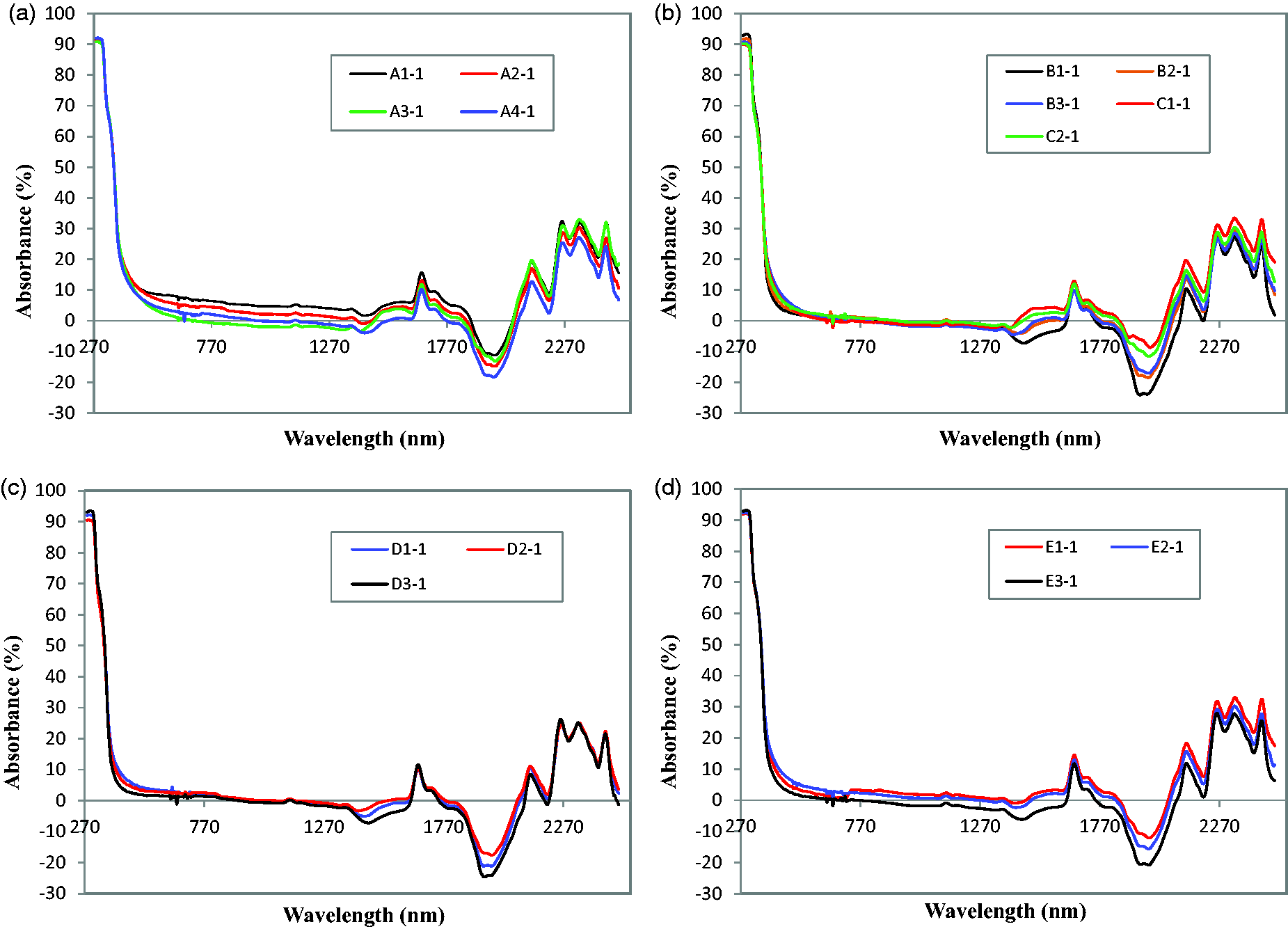
According to our results, macro-porosity is the dominant factor in UV transmittance. However, the yarn structure has an effect on the UV transmittance ratio as well. All fabrics absorb more radiation in the UV region (Figure 2 and 3). Therefore, the As properties of fabrics are mostly related to the UV component of radiation. Increasing the gray cotton fiber content may increase As and decrease Tuv, as there is an inverse relation between Tuv and As. There was a difference between the UV transmittance properties of the fabrics that were produced from the E and B coded yarns. E2 and B2 are the same yarn with respect to the spinning method, yarn hairiness, and evenness. The only differences between them are in the twist amount and fiber composition. It is known that increasing the twist amount increases the compactness and tightness of the yarn due to the removal of porosity.
26
Unlike the As of the B2 and E2 coded fabrics, the Tuv of the fabric produced from the B2 coded yarn was higher than that of the fabric produced from the E2 coded yarn. However, the Tuv of the fabric produced from the E1 coded yarn was lower than that of the fabric produced from the E3 coded yarn. Unlike the twist amount, the cotton fiber content of the E1 yarn was higher than that of the E3 coded yarn. Although the E3 yarn had a high twist amount, the Tuv of this fabric was higher than that of the fabric produced from the E1 yarn. If UV radiation can transfer through the yarn, this situation cannot occur because more twist compacts the yarn structure, hindering the transfer of the light through the yarn. The data obtained for the As and Tuv values of B2 and E2 and E1 and E3 imply that UV radiation cannot transfer through the yarn. The fiber composition parameter had a greater effect on Tuv than the twist amount in terms of absorbing UV radiation.
Absorbance curves for fabrics with different numbers of weft yarns per unit length as functions of the wavelength. Absorbance curves for fabrics with different weft yarns as functions of the wavelength.
Kruskal–Wallis test results

The asymptotic significance level is 0.05.
UV: ultraviolet.
The yarn linear density had an effect on the solar reflectance and absorbance characteristics of the fabric, as shown in Figure 4. As a result of the increased yarn linear density (finer), for all the weft yarns, the reflectances (Rv and Rs) decreased, and the absorbance (As) increased (the yarn linear density changed only for the A and C coded yarns). The variation in the transmittance properties of the fabric were nonlinear across the weft yarn properties if ranked according to weft yarn linear density for only the A coded yarn (Table 1). The Tv, Ts, and Tuv transmittance values varied in an oscillating fashion, increase–decrease–increase, resulting in changes in the weft yarn properties. The reason for the nonlinear variation in the A coded yarns may be the differences in the twist amount, hairiness, and evenness. The change in the transmittance was as expected between the fabrics produced from the A1 and A2 yarns. This is because a higher linear density (thinner yarn) results in more porosity, which causes higher light transmittance. The gap between the transmittance values of the fabrics was closed in the case of Ts. It is assumed that the reason for this was the hairiness factor of the yarns. The A2 coded yarn had more hairiness than the A1 yarn. Increasing hairiness leads to decreases in the transmission of solar radiation, especially for longer wavelengths.
Kruskal–Wallis test.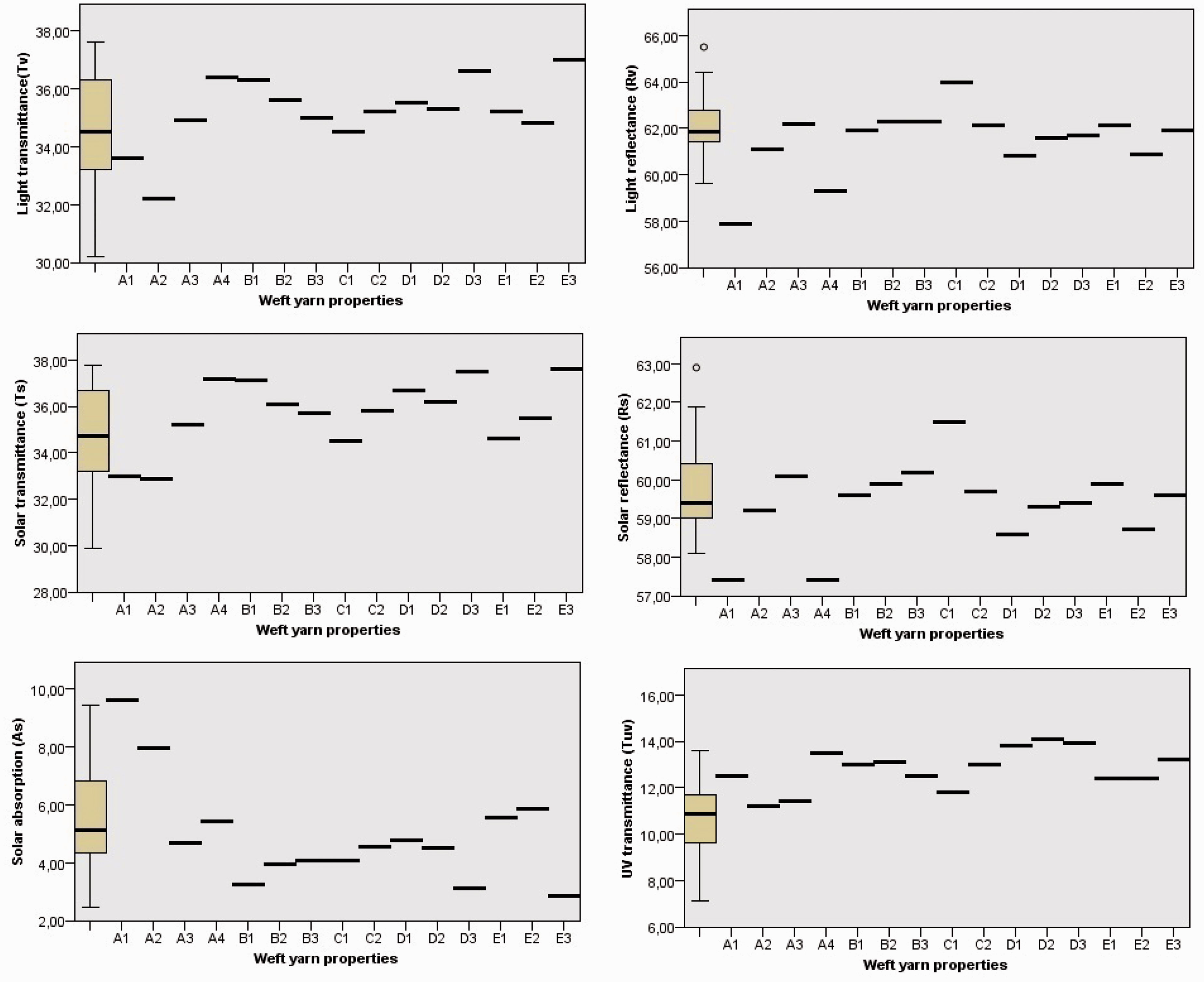
Although the A2 yarn was thinner than the A3 yarn, the transmittance was higher in the fabric produced from the A3 coded yarn than the fabric produced from the A2 coded yarn. For the thinner yarn, the fabric included more porosity than the thick yarn in the same fabric structure due to the lower covering factor of the fabric. The greater the fabric porosity was, the greater the fabric transmittance. This contradiction arises from the effect of other yarn parameters, such as hairiness, twist amount, and evenness. The same contrast is observed between fabrics produced from the A1 and A4 yarns. This contrast shows us that the hairiness, twist amount, and evenness properties of yarn have effects on the solar characteristics of fabric. The contradiction may be the result of weft density differences from the nominal values (Table 1). Apart from the 20 and 26 w/cm weft densities, the measured values changed similarly in all the A coded fabrics, with the 30 w/cm weft densities significantly altered. The weft density in all the A coded fabrics changed from the nominal values to the measured values: 20 to 22 w/cm and 26 to 28 w/cm. In the case of the 30 w/cm nominal weft densities, the change was from 30 to 34 w/cm for the A1 and A2 coded fabrics, 30 to 30 w/cm for the A3 coded fabric and 30 to 32 w/cm for the A4 coded fabric. The measured weft density was changed so much in the A2 coded fabric that the transmittance properties of the A3 coded fabric were higher in spite of using coarser weft yarns. Similar situations may be concluded to exist for the A1 and A4 coded fabrics.
According to the C coded yarn, variations in the transmittance were linear, and Tv, Ts, and Tuv increased as the weft yarn thinned, as expected. A decrease in the hairiness of the C coded yarns also increased the transmittance.
The fabric produced from the VORTEX yarn (coded D3), which has less hairiness than the ring yarn (coded D1), exhibited higher Rv, Rs, Tv, Tuv, and Ts values and a lower As value than the fabric produced from the ring yarn (Figure 4). Generally, VORTEX yarn is less hairy than ring yarn, and the yarn evenness is lower in the ring yarn. 27 This means that for similar fabric structures, yarn linear densities, and yarn evenness, the VORTEX yarn transmits and reflects more radiation and absorbs less radiation than the ring yarn. The VORTEX yarn surface is more smooth and compact than the surface of ring yarn. This is why the fabric produced from VORTEX yarn reflected more radiation than the fabric produced from the ring yarn. The lower hairiness of the vortex yarn was the reason for the higher radiation transmittance of the fabric. The difference between the B1 and B3 fabrics is the fiber composition. Increasing the cotton fiber content increased the solar absorption and decreased the UV transmittance. This is a result of the absorption characteristics of the pigment in the gray-state cotton fiber, as stated by Stankovic et al. 3 The hairiness effect was observed for the case of the B coded fabric. The B3 yarn had more hairiness than the B1 coded yarn. This condition caused decreases in the Tv, Ts, and Tuv radiation transmittance of the fabric.
The fabric produced from the E coded yarn provided good information on the influence that the twist and hairiness factors have on the solar characteristics of fabric. In terms of twist amount, the yarns were ranked in the following order: E1, E2, and E3. For the hairiness parameter, the ranking was E3, E1, and E2. The orders for the solar properties of the fabrics were E2, E3, and E1 for Rv and Rs, E2, E1, and E3 for Tv and Tuv, E1, E2, and E3 for Ts, and E3, E1, and E2 for As. The value of Ts increased with decreases in the yarn hairiness. The influence of the hairiness was not as pronounced for Ts compared to that for Tuv. Although there was a large hairiness difference between the E1 and E2 coded yarns, the Tuv values of these fabrics were about same. There was a difference in the Tuv values of the E2 and E3 coded fabrics for the same hairiness difference as that between the E2 and E3 coded fabrics. This contradiction resulted from fiber content differences. The difference was dependent on the cotton fiber content and not the hairiness factor. The hairiness was more dominant for longer wavelength radiation than for UV radiation. Higher hairiness in the E2 yarn prevented visible light transmittance through the fabric. A higher twist amount, lower cotton fiber content, and lower hairiness provided the E3 coded fabric with higher UV transmittance and lower absorption properties.
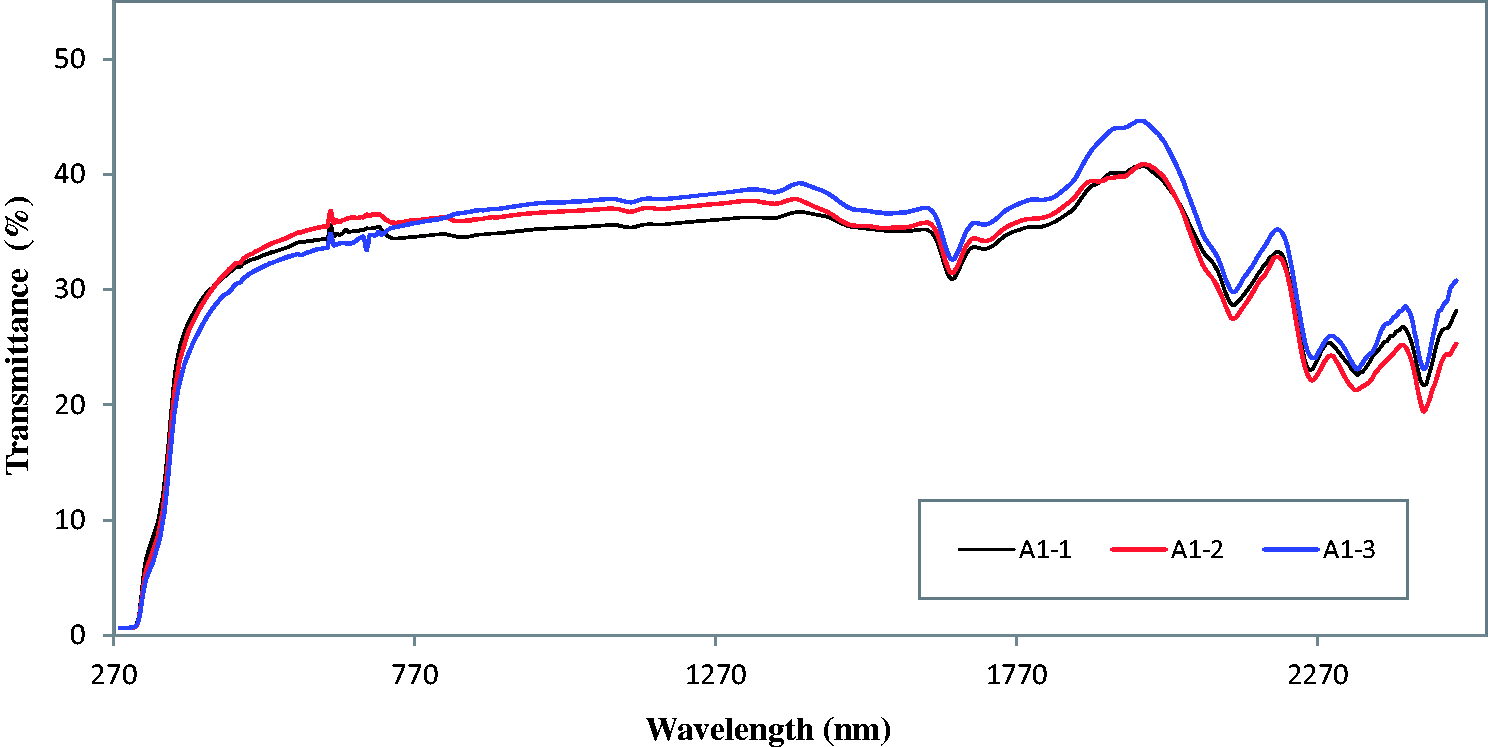
If we examine wavelength variations between 280 and 2500 nm, although there is no difference between the fabrics based on the reflection of UV radiation, small variances appear based on the transmission of UV radiation as a function of the number of weft yarns per unit length, as seen in Figures 5 and 6. In the solar radiation region, the reflectance, transmittance, and absorbance properties of the fabrics were altered by changing the number of weft yarns per unit length (Figures 2, 5, and 6). Both the reflective and transmission properties of the fabrics changed with the wavelength in the regions from 500 to 280 nm and 2500 to 1400 nm. However, there were no changes in the 1400–550 nm region. This implies that the interactions of the fabrics with radiation between 1400 and 550 nm were the same. Apart from this region, the interactions of the fabrics with solar radiation were changed. In the 500–280 nm region, the change in both the reflection and transmittance were linear. However, in the 2500–1400 nm region, the changes were nonlinear. Absorbance increased, and transmittance and reflectance decreased as the wavelength decreased in the 450–280 nm region. This range is related to UV radiation.
28
Reflectance curves for fabrics with different numbers of weft yarns per unit length as functions of the wavelength. Transmittance curves for fabrics with different numbers of weft yarns per unit length as functions of the wavelength.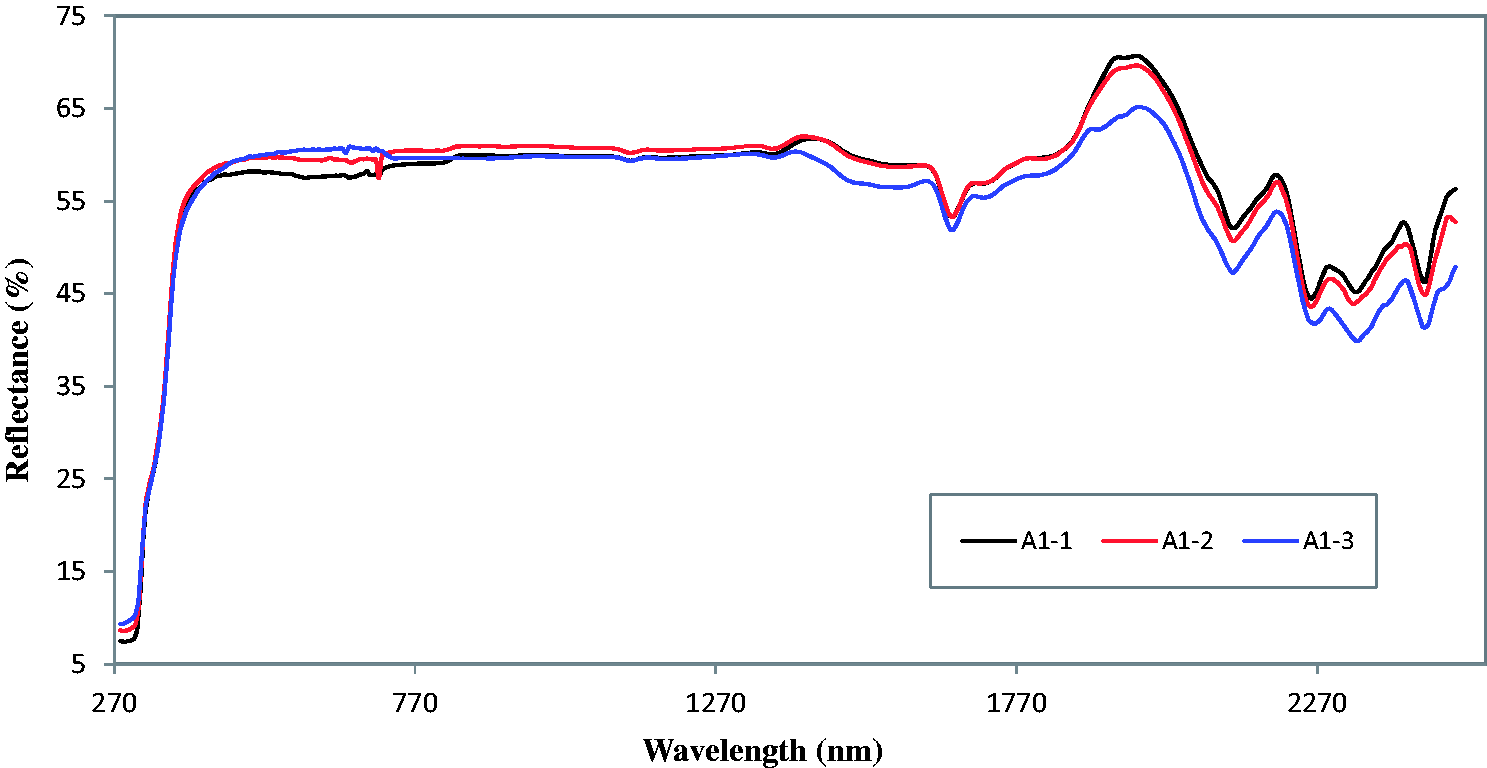
The absorbance values of the fabrics dropped in the 1870–2050 nm region. This region is related to the IR component of sunlight. Despite the absorption values of the materials not decreasing to zero, this decrease still occurred. The reason for this phenomenon is that the fabric behaves as a black panel. The fabric temperature was increased by absorbing the IR portion of the sunlight. It is known that all heaters emit IR radiation. This newly generated radiation was compared to a standard light beam produced by an UV/VIS/NIR device and was shown to interact with the fabric as standard light. This excess light was also reflected and transmitted by the fabric. Contrary to the transmittance and reflectance, the absorbance was not measured. The excess radiation produced is the negative value of the absorbance. The emittance property of a fabric at long wavelengths changes with the fabric openness. Increasing the openness causes decreases in the emittance properties of the fabric. 12
Apart from the UV portion, the influence of the yarn structure on the reflectance, transmittance, and absorbance is shown in Figures 3, 7, and 8. Particularly in the 1600–400 nm region, this affect is more pronounced for the reflectance. This part of the radiation is related to visible light and a portion of the IR, which is located near the visible light portion of the spectrum. The transmittance properties are significantly influenced in the 400–2500 nm range, which is related to NIR and visible light. The degree of influence of the yarn structure on the solar properties (with the exception of the UV part) of the fabric with respect to wavelength variations was greater than that of the number of weft yarns per unit length. The transmittance properties of the fabrics were more affected by altering the yarn structure than the reflectance and absorbance properties (Figures 6 and 7).
Reflectance curves for the fabric with different weft yarns as functions of the wavelength. Transmittance curves for the fabric with different weft yarns as functions of the wavelength.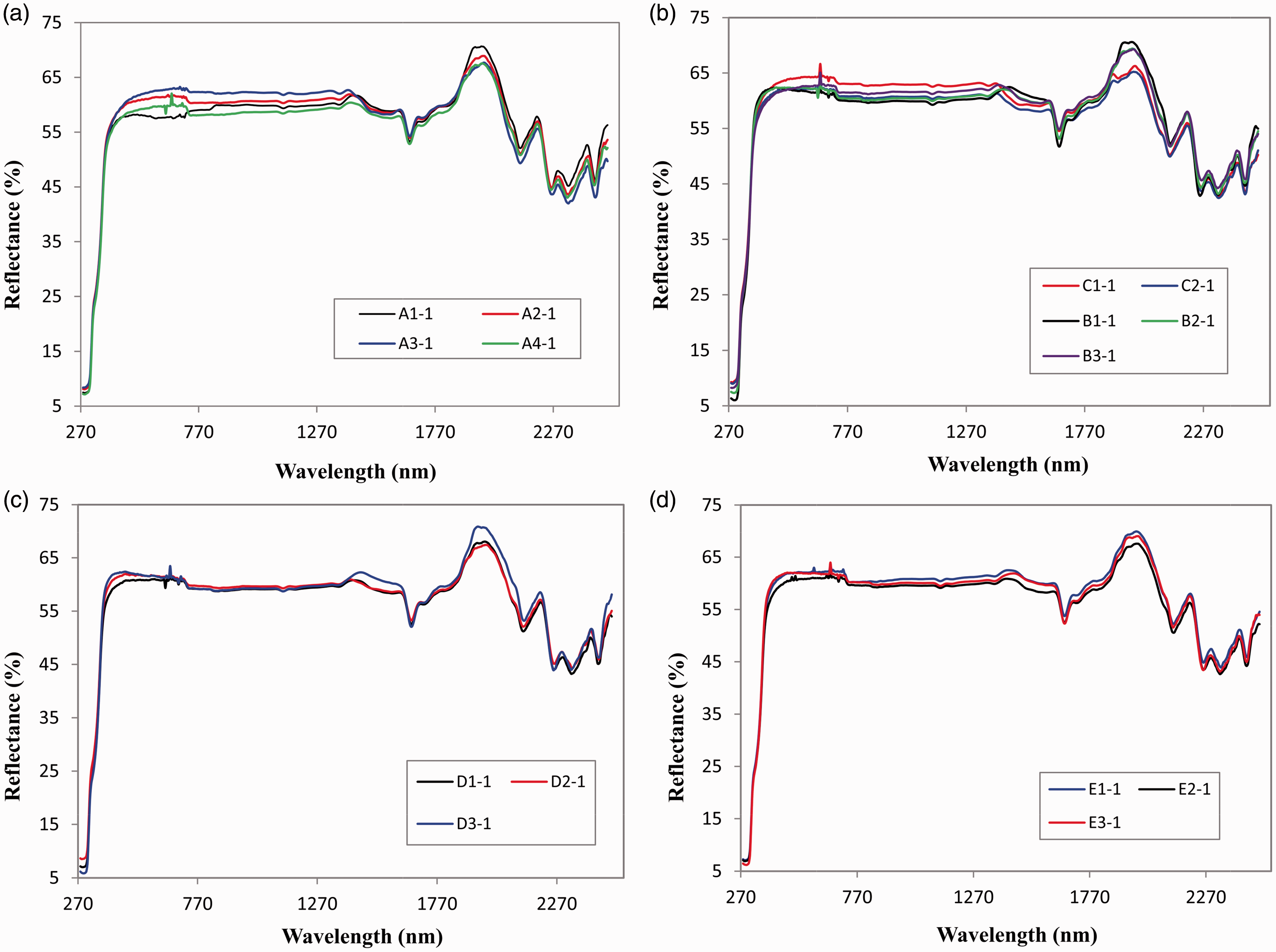

Conclusions
In this research, the solar properties of gray-state plain woven fabrics are presented. The measurements and calculations of the solar properties of the fabric were performed in the 380–2500 nm range of the electromagnetic spectrum. The weft density was shown to have an effect on the solar characteristics of fabrics. The effect of this factor was not important within a 95% confidence interval, except for Tuv. With an increase in the weft density, the values for As, Rv, and Rs increased, and those for Ts, Tv, and Tuv decreased. The sum of the weft yarn properties (yarn linear density + twist amount + fiber composition + spinning method + hairiness) did not significantly influence the solar characteristics of fabrics. However, there was evidence that the yarn structure affected the fabric solar properties when the datasets were examined individually. Unlike fiber composition, which had an effect in the UV portion of the spectrum, the hairiness of the yarn influences the solar properties of the fabric, especially at long wavelengths. Increasing the gray cotton fiber content decreased the UV transmittance and increased the UV absorbance. Increasing the hairiness decreased the transmittance properties of the fabric. Yarn linear density is defined as the number of yarns per unit length. As the yarn gets finer, the transmittance of the fabric increases and the reflectance of the fabric decreases. The degree of influence of the yarn structure on the solar properties (with the exception of UV radiation) of the fabric was greater than that of the number of weft yarns per unit length. The transmittance properties of the fabrics were more affected by altering the yarn structure than the reflectance and absorbance properties. According to our results, the best structure of a fabric with respect to both the yarn structure and fabric physical properties for UV protection is a fabric composed of 20/1 Ne, 580 T/m, 7.8 U%, and 4.7 hairiness cotton compact yarn with a 30 weft/cm structure.
Footnotes
Declaration of conflicting interests
The authors declared no potential conflicts of interest with respect to the research, authorship, and/or publication of this article.
Funding
The authors received no financial support for the research, authorship, and/or publication of this article.