




Abstract
Bio-signal-sensing clothing has been actively developed worldwide. However, motion artifacts caused by a wearer’s motion degrade the bio-signal quality. A significant amount of work has been aimed at resolving this problem, but such work mainly focused on the application, rather than on the comfort, fashion, or function of the clothing. This study investigated the feasibility of reducing motion artifacts in the garment design by improving the garment function modules. To achieve this, the study comprised two parts: observation of the effect of the bodice module and that of the sleeve module. We found that the bodice module reduces motion artifacts and obtains stable signals of heart activity. Further, we found that the sleeve module reduces motion artifacts but not as significantly as the bodice module. These results suggest fundamental guidelines for applying apparel design techniques to heart-activity-sensing clothing based on the magnetic-induced sensing method.
Keywords
In the field of wearable technology, bio-signal-sensing clothing refers to a digitally functional garment that continuously collects information pertaining to the physical state of the wearer when the device is worn in ambient environments.
With the rapid increase in the number of patients with chronic diseases, as well as the aging population worldwide, the burden of medical expenses has increased. This issue has resulted in increased attention to healthcare-related matters. Paradiso et al. 1 argued that, when providing continuous measurement, it should be ensured that neither daily activities are hindered nor any inconvenience is caused, suggesting that sensors, electrodes, and sensor bus structures made from textile materials must be integrated into the clothing.
Many global companies and research and development (R&D) institutes are developing a wide range of bio-signal-sensing smart clothing,2–6 which is a type of apparel that enables the continuous sensing of various vital signals from a wearer’s body without the need to carry a separate device. In addition, it can be covered, so that it is unseen by others. 7 Therefore, many studies have been conducted on the measurement of bio-signals using clothing-type devices.7–12
As the clothing is worn on the body, it keeps moving with the body. For most bio-signal-sensing clothing, the relocation of the electrode triggered by the wearer’s motion causes a severe motion artifact, degrading the signal quality.8,10,13–15 To resolve this problem, the positions of electrodes in conventional bio-signal-sensing smart clothing have been stabilized by forming an excessively tight-fitted bodice design to ensure stable contact between the electrode and body surface.8,16–18 Furthermore, most of the bio-signal-sensing smart clothing is sleeveless-type clothing, because sleeves indirectly cause the relocation of the electrode positioned in the chest during arm movement, which has a negative impact on the heart-activity-signal quality.
Although the “function” is one of the important factors in smart clothing, the basic purposes of clothing, such as aesthetics and comfort, should still be satisfied by smart clothing. It is difficult to stabilize the positions of the electrodes solely by increasing the tightness while the wearer is moving. Therefore, more factors related to clothing design should be considered to reduce motion artifacts in smart clothing. Recently, many experts have emphasized the need to incorporate all the basic roles of clothing – fashion, style, tactile comfort, and mobility – with the functions (technical performance and technology) of smart clothing. Because wearable devices are seen by others, the importance of synchronizing them with fashionable elements and our daily lives has been stressed, rather than focusing solely on functionality and specifications.
In this study, we investigated the effectiveness of garment design in reducing motion artifacts while balancing innovative functions and the basic roles of clothing. We introduced the garment function module in this study to improve the quality of the heart-activity-sensing (HAS) function as well as the aspects of comfort and aesthetics.
We conducted two experiments: experiment 1 was conducted to observe the effect of the garment function module of the bodice, while experiment 2 was conducted to analyze the effect of the garment function module of the sleeve. Based on the experimental results, an optimal design of HAS clothing with improved comfort, fashion, and function is proposed.
Method
First, experiment 1 was conducted to observe the effect of the bodice module. After verifying the results of experiment 1, a sleeve module was designed on the bodice from experiment 1 to analyze its effect in experiment 2. For the comparison of results, the experimental conditions and the analysis methods of experiments 1 and 2 are unified.
Garment design and garment function module
A garment is normally composed of various individual modules, such as the bodice, sleeve, collar, and pocket, and each module has its own role. Among the various modules, the bodice and sleeve play important roles in HAS clothing in terms of function and fashion. The bodice and sleeve are fundamental elements that influence motion artifacts, since they are directly worn on the torso, where the electrode is placed. Further, they are fundamental elements in clothing design since they are the largest parts of the garment and affect the aesthetic appearance and comfort. In this study, we introduced the “garment function module” to improve the quality of the HAS function, as well as comfort and aesthetic aspects, while reducing motion artifacts. Therefore, the garment function module was applied to the bodice part in experiment 1 (see Figure 8) and the sleeve part in experiment 2 (see Figure 10). The garments are designed for a comfortable fit by using stretchable material.
Textile-based inductive coil sensor
In this study, a spiral-shaped textile electrode using a coated conductive thread was devised (Figure 1). A conductive thread is comprised of nine strands of silver–polyester hybrid yarn, which has an electrical resistance of 0.23 Ω/m. The material used for the yarn coating was thermoplastic polyurethane (TPU) with medium hardness. Figure 2 shows the details of the textile-based inductive coil sensor.
Details of the textile-based inductive coil sensor. Electrode position for the two types of heart-activity-sensing clothing.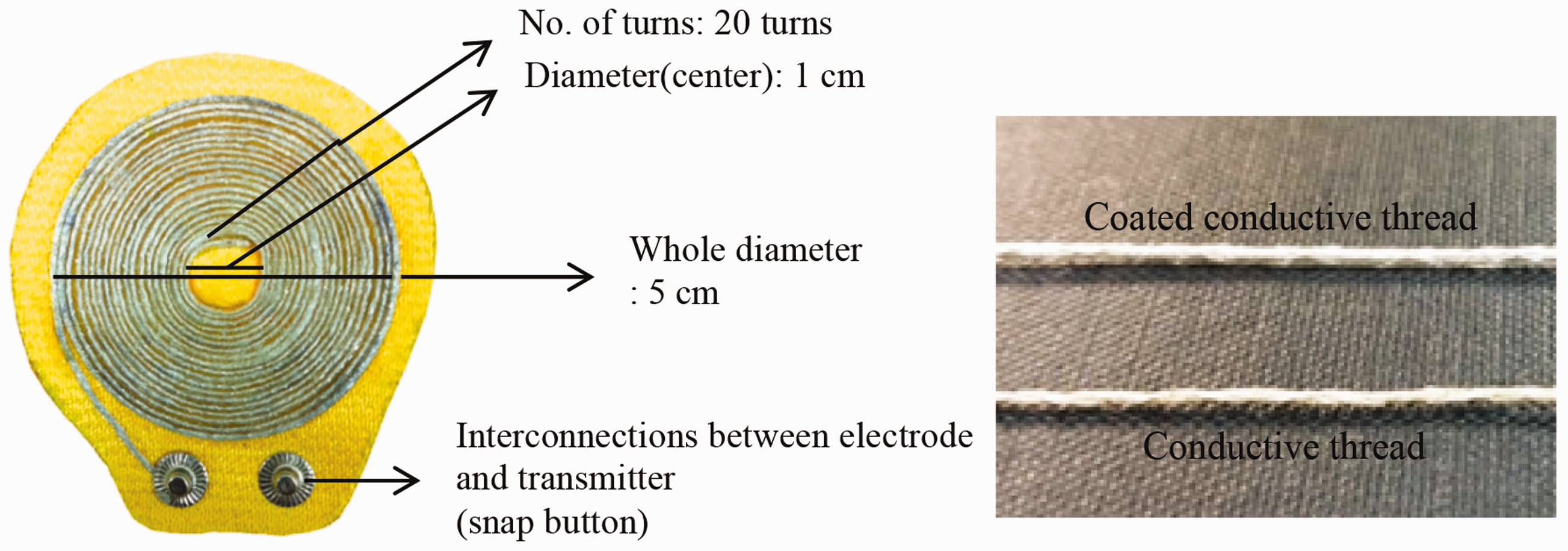
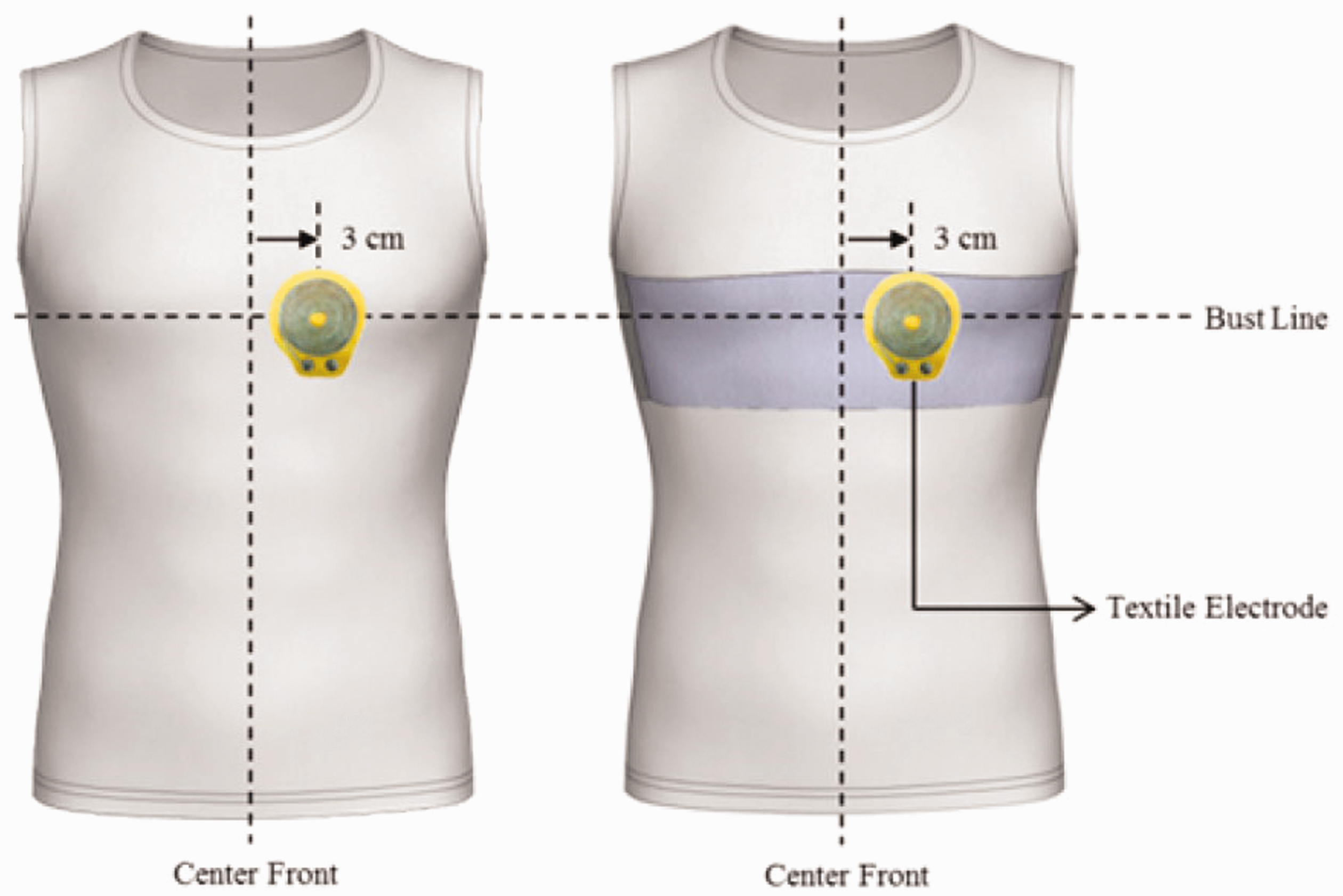
Position of the electrode on heart-activity-sensing clothing
Koo et al. 19 investigated the effect of inductive coil sensor positions on heart-rate monitoring. They selected the most optimal position for the coil sensor based on the magnetic-induced conductivity principle. In this paper, the inductive coil sensor is located at the same position. The position of the electrode is located 3 cm away from the front-center at the bust line (Figure 2).
Experimental setup
The experimental setup in this study consists of HAS clothing, a textile electrode, and hardware including a sensing module, a transmission unit, a battery, and snap-type interconnections (Figure 3). An electrocardiogram (ECG) signal (Lead II) was measured simultaneously with experimental measurements for use as a reference signal to compare the R-peak in the ECG (Lead II) with the signals acquired from the HAS clothing.
Experimental setup.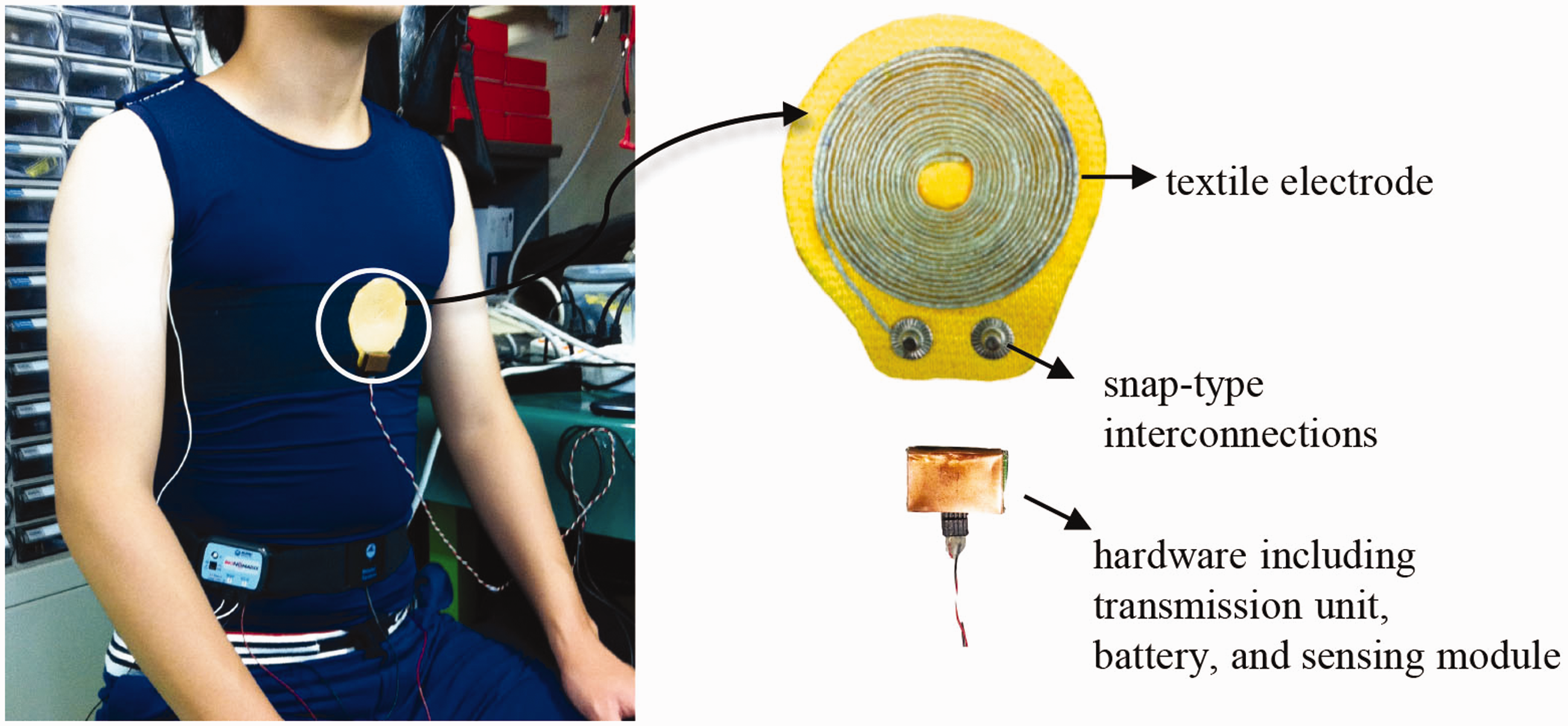
Subjects and experimental task
Characteristics of the six subjects

BMI: body mass index.
The subjects were asked to perform a series of motion protocols comprising the four types of motions frequently performed during daily activities: “standing in one place” followed by “slowly walking back and forth,” which was followed by “twisting the body to the left/right” and finally “raising both arms.” The “‘walking” state represents motion in the z-direction, the “twisting” state represents motion in the x-direction, and the “raising arms” state represents motion in the y-direction. Each state lasted 20 s, and there was an interval of 10 s after each state. The motion protocol was filmed and replayed in every experiment for the subject to follow in order to reduce differences in the motions of subjects. A standard ECG signal (Lead II) was measured simultaneously with the experimental measurements as a reference signal.
Analysis methods
To evaluate the effect of the garment function module, we performed quantitative and qualitative assessment. The signal quality from HAS clothing was evaluated using a motion-quality index and morphological inspection. The stability of the electrode position was evaluated by measuring the physical displacement of the electrode.
Quantitative analysis method of the motion-quality index based on power spectral density
To assess the quality of signals acquired from HAS clothing in motion, a motion-quality index based on power spectral density (PSD; MQIS) was used in previous research. 20 Various bio-signals can be obtained from the human body, all of which can reflect both the time and frequency components of the activity of the heart and movement of the body itself. Depending on the moment of signal measurement, the results of heart activity and body movement may vary. In this study, to assess the quality of measured signals in terms of how much the movement of the body degrades the measurement of the heart activity signal, a frequency-domain analysis based on PSD comparison was used.
To determine the MQIS values, signals acquired from HAS clothing were assumed to consist of the heart activity signal and motion artifacts caused by the wearer’s motion. A Savitzky–Golay filter, which is based on local least-squares polynomial approximation, 21 is applied to smoothen the data, thereby increasing the signal-to-noise ratio (SNR) without significantly distorting the original signal. The remaining components after Savitzky–Golay filtering, which is a low-pass filtering procedure, represent the signal related with the heart activity. The heart activity signals were measured in a static state, and the frequency band from sitting was estimated as the dominant frequency. The band of the dominant frequency was classified as a heart activity component, whereas the spectral components outside the dominant frequency band were considered as components of motion artifacts.
Because the dominant frequency band of heart activity signals might differ slightly among individuals, the heart activity signals of six subjects in the static state were averaged to obtain the fundamental frequency of the heart activity signals. Figure 4 shows the heart activity signals and the averaged spectral density.
20
Averaged spectral density of the heart activity signals from the coil sensor in the static state. ECG: electrocardiogram.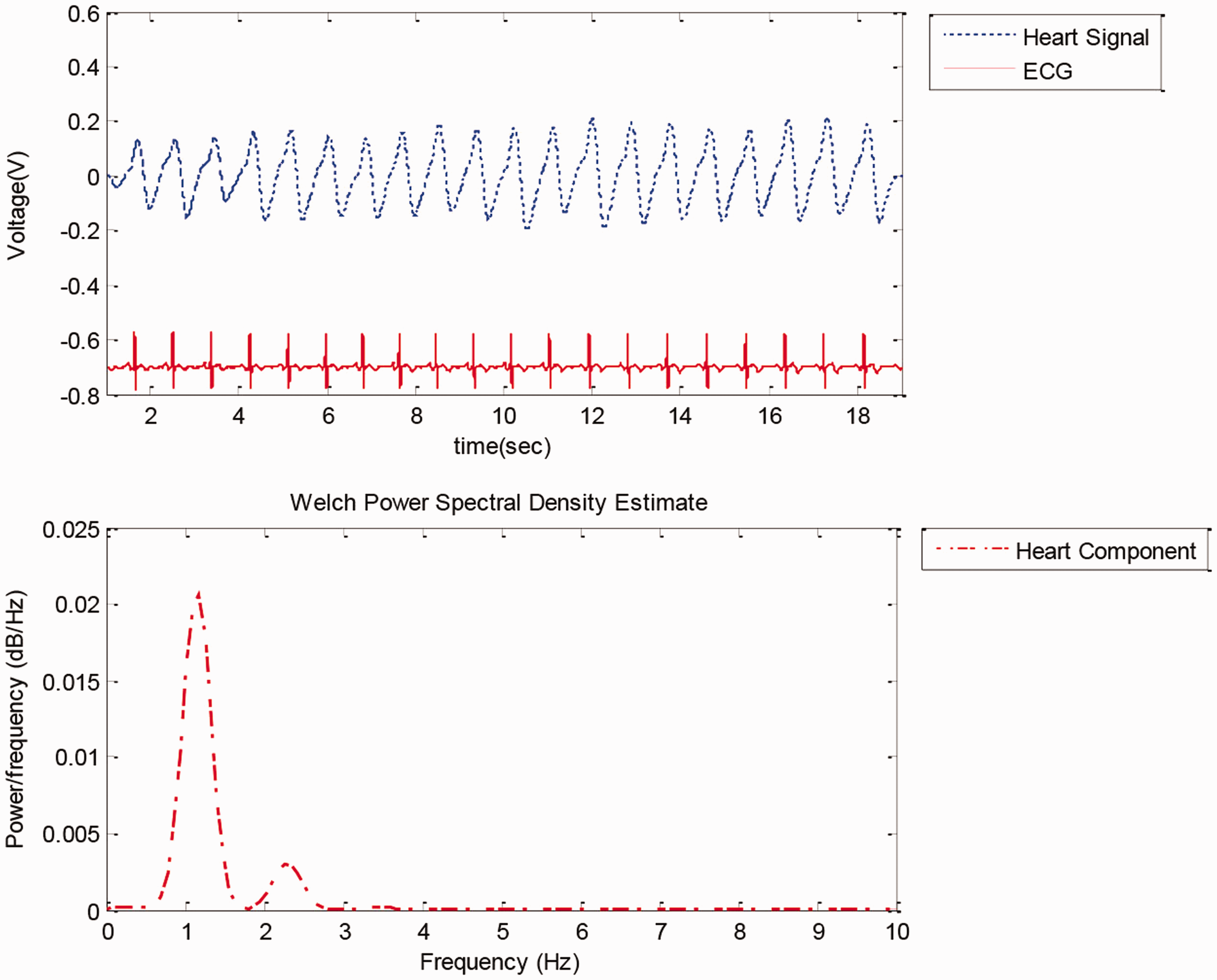
The raw measured signals for the static and motion states were converted to PSD using Welch’s method, as shown in Figure 5.
20
The power of the heart activity component is greater than that of the motion component in the static state, which is the “standing” state. However, the power of the motion component is greater than that of the heart activity component in the dynamic states, which are “walking,” “twisting,” and “raising arms.”
Welch power spectral density in the four dynamic states.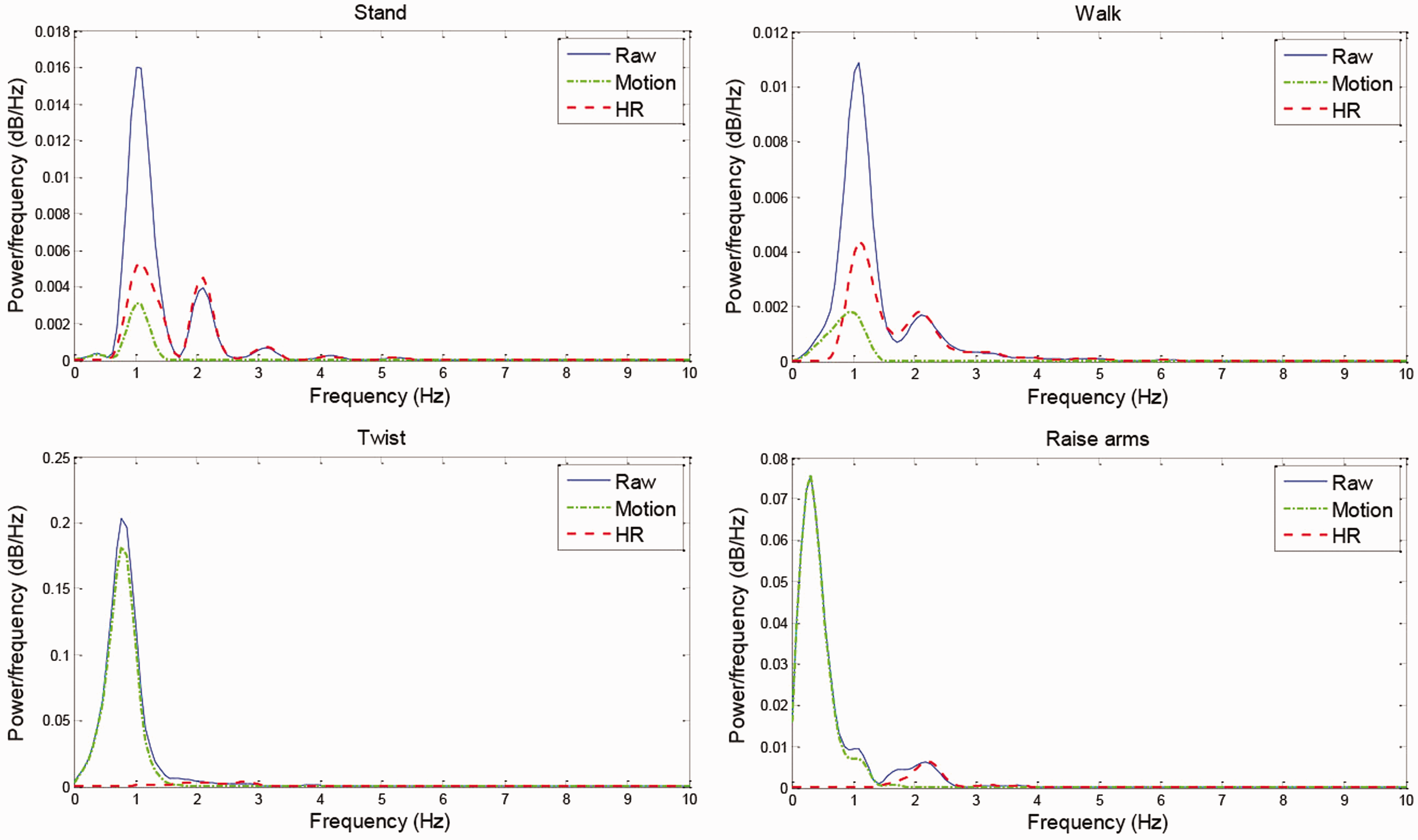
Equation (1) represents the ratio of the heart activity power density to the motion power density, where  MQIS = {{\int_{f_{hs} }^{f_{he} } {PSD_{heart} } } \over {\int_{f_{ms} }^{f_{me} } {PSD_{motion} } }}
Qualitative analysis through morphological inspection
To assess the quality of signals measured from HAS clothing during motion, the morphology of the signals is visually compared to that of the reference ECG signal (Lead II). The relationship between the peak components of the signals from HAS clothing and the R-peak of ECG Lead II was derived.
Quantitative analysis of physical displacement of electrodes using an optical flow sensor
To assess the effect of the garment function module on the stability of the electrode position, we performed measurements of physical displacement of the electrode depending on the design of the function garment module. Based on the results of a previous study 19 that investigated the possibility of using an optical flow sensor to examine the displacement of the electrode in HAS clothing, the measurements were made with an optical flow sensor (ADNS3080). The theoretical principle of the measurement method is as follows: by using light-emitting diodes (LEDs) as a light source, the light reflection from the skin can be detected as an image on a small-sized camera in the sensor to establish the optical structure.
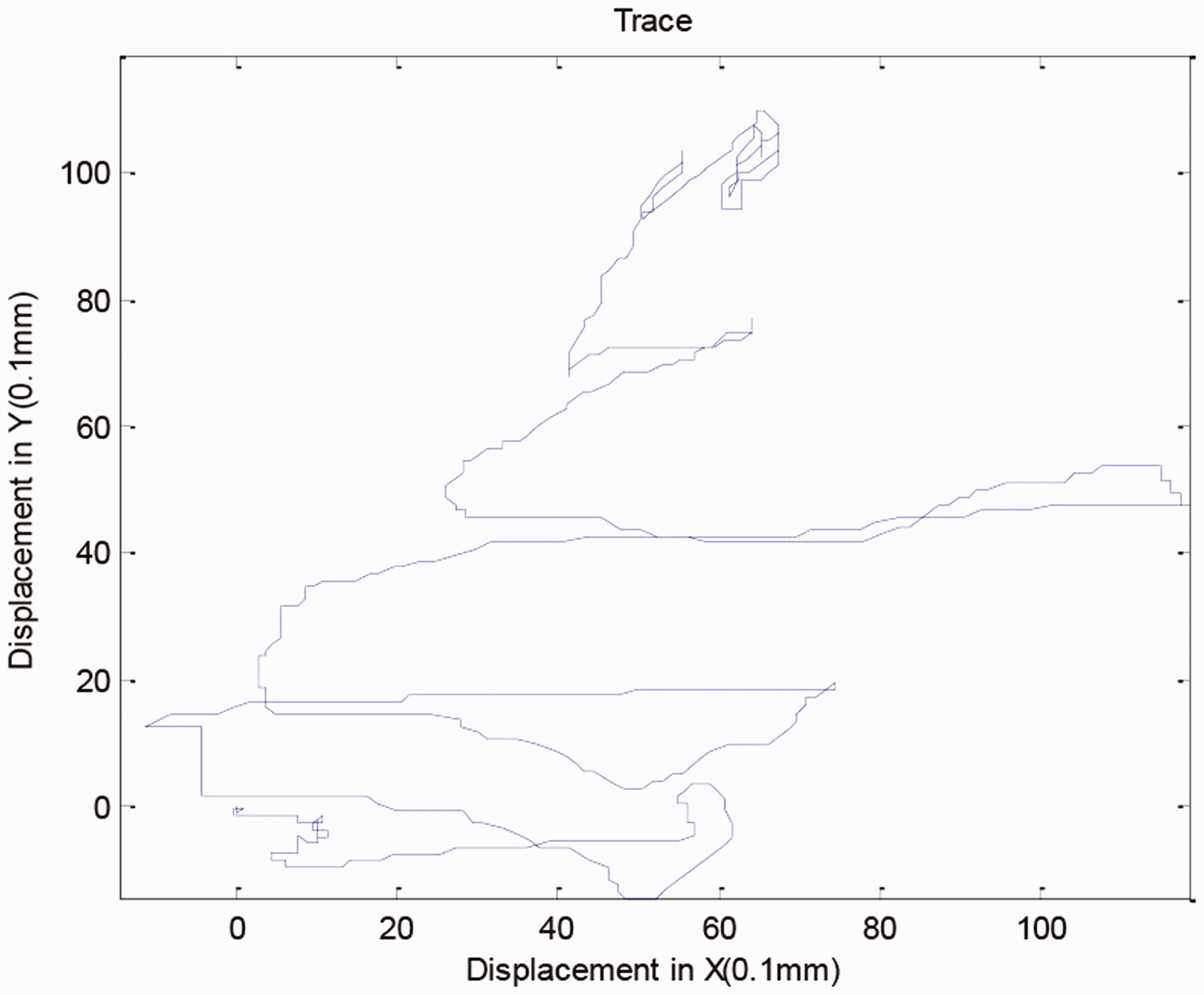
To reflect the light on the skin, the clothing was prepared with a 1 cm × 3 cm hole at the same position as the textile sensor, and the sensor was placed on top of it (Figure 6). By comparing the two-dimensional (2D) images from a camera against a previous image, an analysis was conducted by measuring the electrode location on the x- and y-axes, which can be transferred to a computer for data storage. A sensor with a resolution of 1 digit/0.1 mm was used to detect the differences on the clothing. A case of the electrode displacement measured by the optical flow sensor is shown in Figure 7.
Schematic diagram of the optical flow sensor (ADNS3080). A case of the measured displacement of the electrode.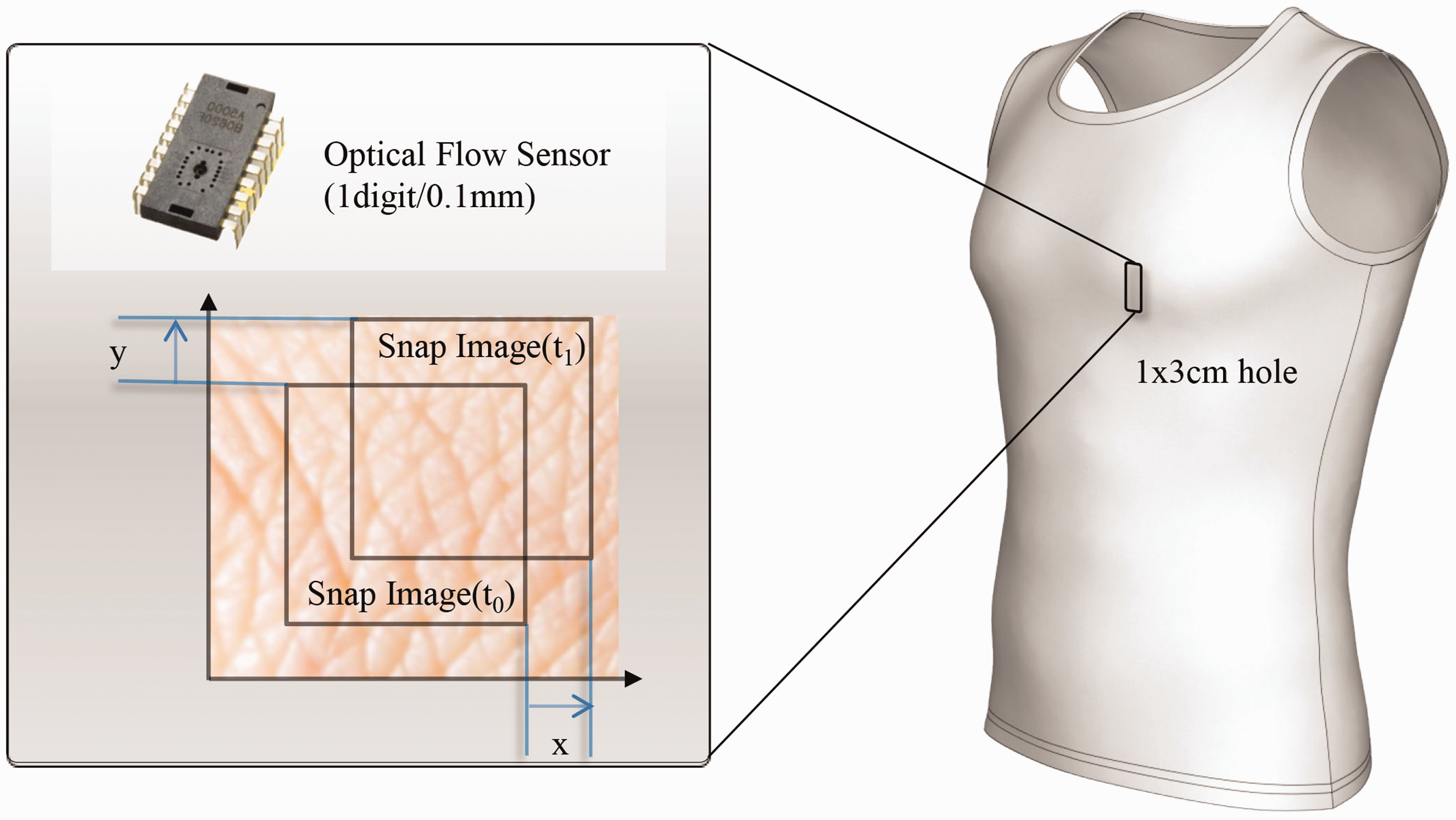
Experiment 1: observation of the effect of bodice module
Design of garment function module in the bodice for HAS clothing
The garment function module in the bodice (abbreviated as the “bodice module”) for HAS clothing was investigated in experiment 1 to observe its effect on motion artifacts. The bodice module was designed for the stabilization of the electrode position in HAS clothing. In this study, a horizontal module (x-direction) was used to hold the electrode position by adequately pressing in the horizontal direction (y-direction), while the vertical module at the side seams was used to hold the electrode position by pressing in the vertical direction. HAS clothing with a single horizontal function module and vertical function modules at the side seams is abbreviated as “SHVS.” In order to obtain relative insight into the effect of the function modules, a cut-and-sew knit garment without a function module was used as a reference garment and an identical method was employed for it. HAS clothing without a function module is abbreviated as “WO.” The specifications of the two types of HAS clothing are shown in Figure 8. A knit jersey made of 92% polyester and 8% polyurethane (220 g), which is commonly used for sportswear, was used for both garments. For the horizontal module, a woven 96% cotton, 4% polyurethane (120 g) cloth was used for a good fit. For the vertical module, a cloth made of spandex 20D/nylon 70D was used.
Results of experiment 1
Evaluation of quality of heart activity signals in MQIS
Normalized MQIS values of heart-activity-sensing (HAS) clothing by motion state in experiment 1

WO: HAS clothing without a function module; SHVS: HAS clothing with a single horizontal function module and vertical function modules at the side seams.
Note: the values are averages of three measurements
Results of the t-test on normalized MQIS values of heart-activity-sensing clothing by motion state

p < .05.
Morphological assessment of heart activity signals from HAS clothing
As shown in Figure 9, the heart activity signals from the two types of HAS clothing and ECG Lead II were compared for subject 1. The “standing” state for both garments exhibited a high correlation between the heart activity signal in the HAS clothing and the R-peaks in the ECG (Figures 9(a) and (b)). From these data, it was deduced that the “standing” state is rarely affected by motion artifacts. In the case of SHVS, the association between the heart activity signal in the HAS clothing and the R-peaks in the ECG is higher than that of WO more often than not. Particularly in the case of WO, the “twisting” and “raising arms” states exhibit the weakest morphological association between the heart activity signal and the R-peaks in the ECG (Figures 9(e) and (g)).
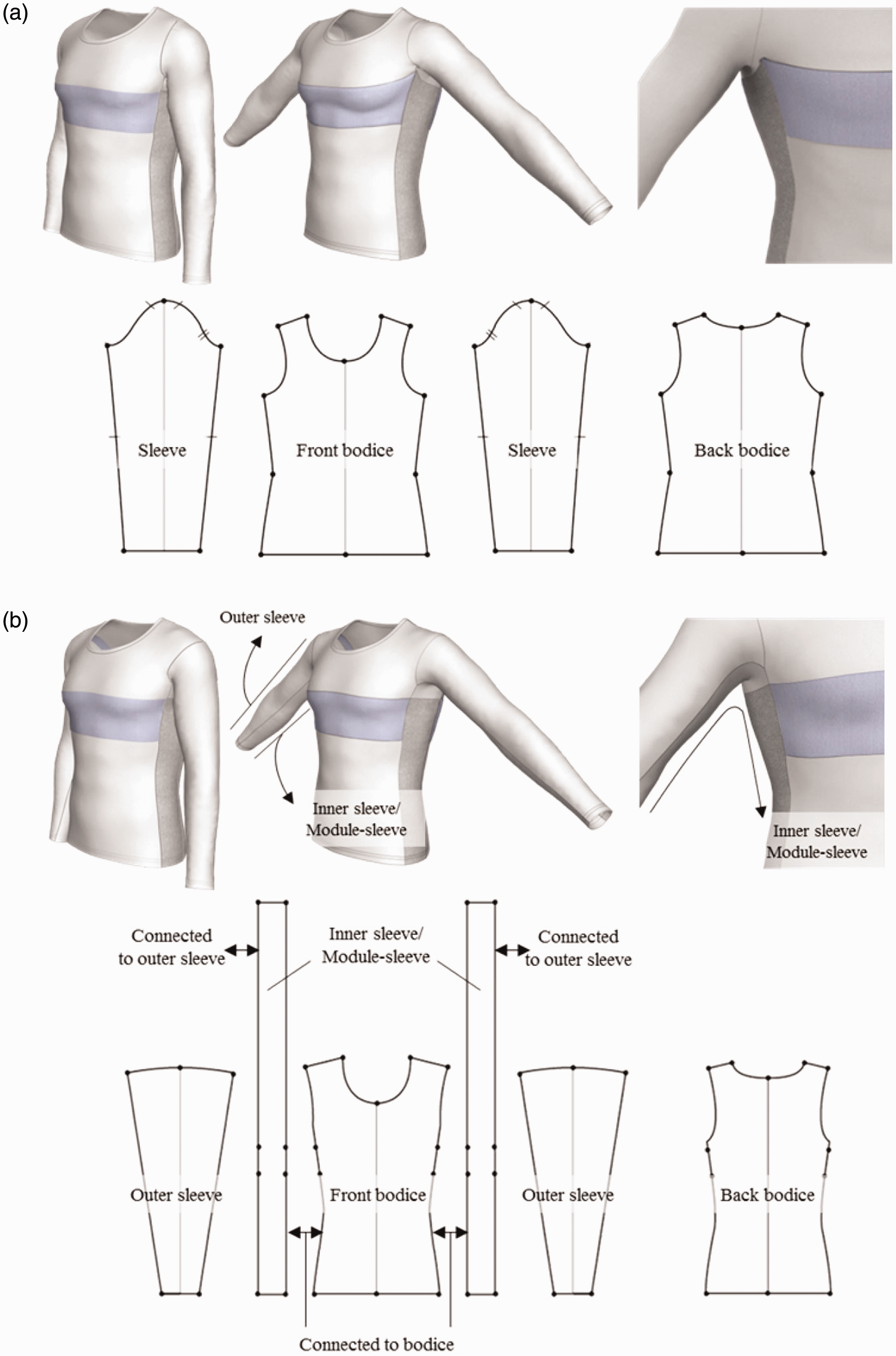
The two types of heart-activity-sensing (HAS) clothing in experiment 1. WO: HAS clothing without a function module; SHVS: HAS clothing with a single horizontal function module and vertical function modules at the side seams. Comparison of the heart activity signal between WO and SHVS for subject 1. WO: heart-activity-sensing (HAS) clothing without a function module; SHVS: HAS clothing with a single horizontal function module and vertical function modules at the side seams; ECG: electrocardiogram. a) WO_walking, b) SHVS_standing, c) WO_walking, d) SHVS_walking, e) WO_twisting, f) SHVS_ twisting, g) WO_raising arms and h) SHVS_raising arms. Heart-activity-sensing (HAS) clothing in experiment 2. SHVS: HAS clothing with a single horizontal function module and vertical function modules at the side seams; set-in sleeve: HAS clothing without a sleeve garment module; module-sleeve: HAS clothing with a sleeve garment module.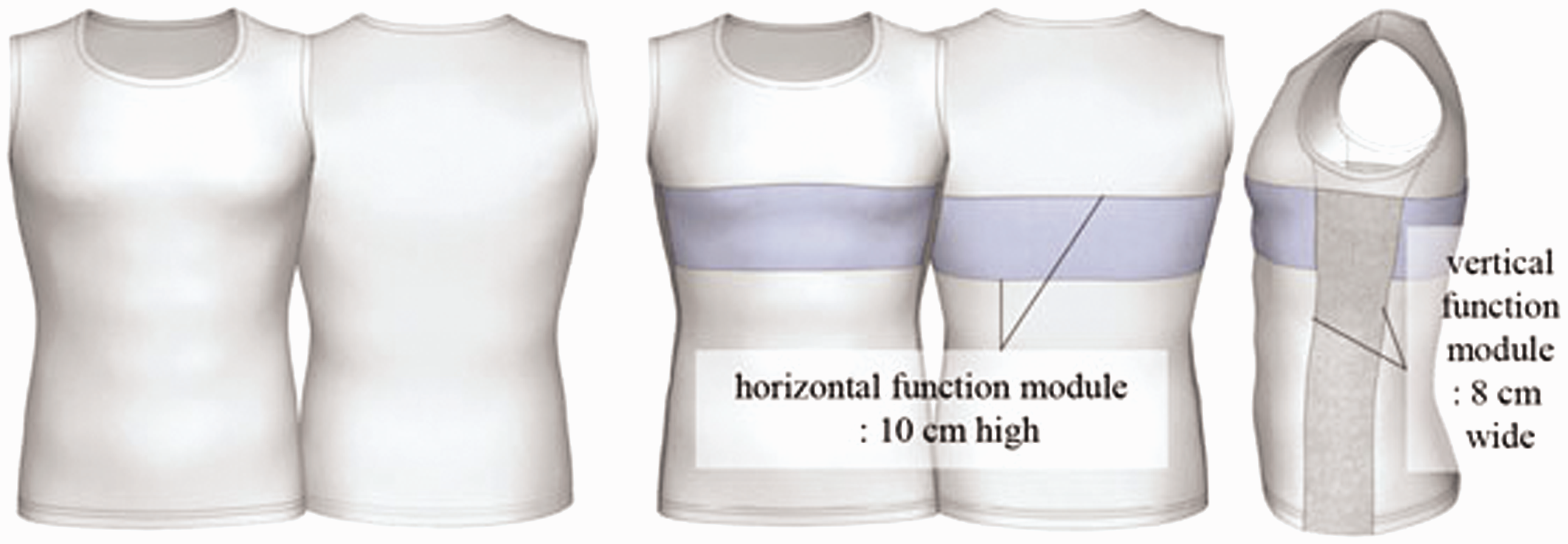
Evaluation of the displacement of the electrode using the optical flow sensor
Displacement of the electrode by motion in experiment 1

WO: heart-activity-sensing (HAS) clothing without a function module; SHVS: HAS clothing with a single horizontal function module and vertical function modules at the side seams.
Note: the values are averages of three measurements.
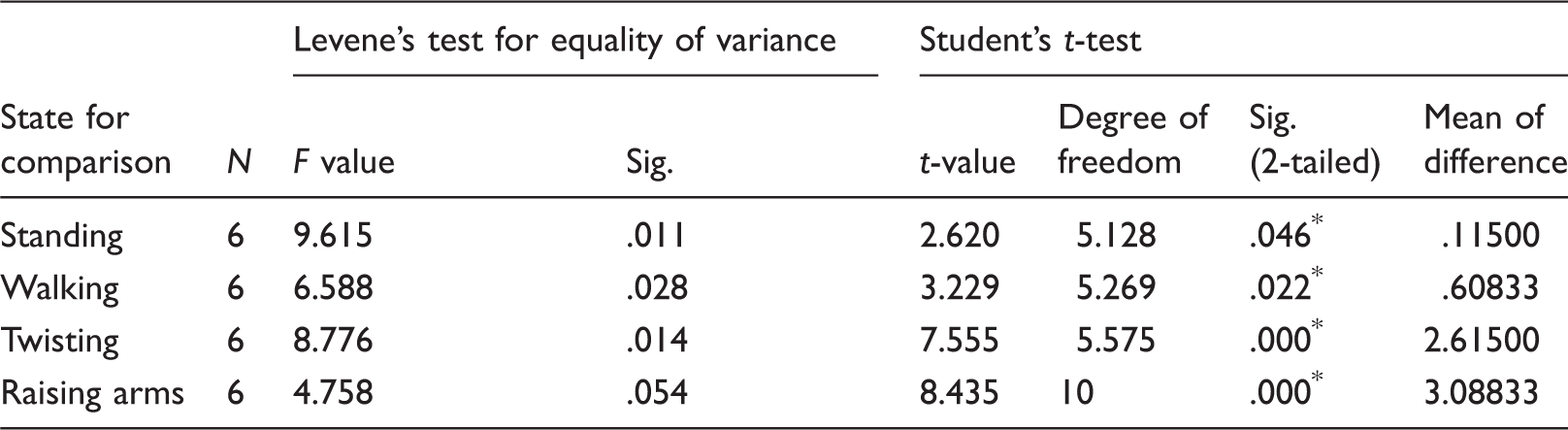
Results of the t-test on the displacement of the electrode by motion state
p < .05.
Experiment 2: analysis of the effect of the sleeve module
Design of the garment function module in a sleeve for HAS clothing
To analyze the effect of the sleeve module, the feasibility of a garment function module for the sleeve part (abbreviated as “module-sleeve”) for reducing motion artifacts was examined in experiment 2. For this purpose, a module-sleeve design was created and assembled with the bodice of SHVS in experiment 1, which was evaluated to be effective in reducing the occurrence of motion artifacts. When lifting arms to the side or front, the deltoid muscle is the primary muscle that aids movement. In addition, the pectoralis major and latissimus dorsi are involved in the movement, because those muscles are connected at the shoulder. 22 Therefore, as the electrode position in the HAS clothing is on a part of the pectoralis major, lifting of the arms results in the displacement of the electrode. A sleeve was devised based on ergonomic principles to reduce the impact of arm movements on the chest muscles. This module-sleeve is comprised of two parts: an outer arm sleeve and an inner sleeve (Figure 10(b)). The inner sleeve is designed as a part of the module-sleeve. For the feasibility of module-sleeve design, HAS clothing with normal set-in sleeves, as in T-shirts and dress shirts, was used as a reference.
Results of experiment 2
Evaluation of the quality of heart activity signals in MQIS
Normalized MQIS values of SHVS with two types of sleeve designs in experiment 2
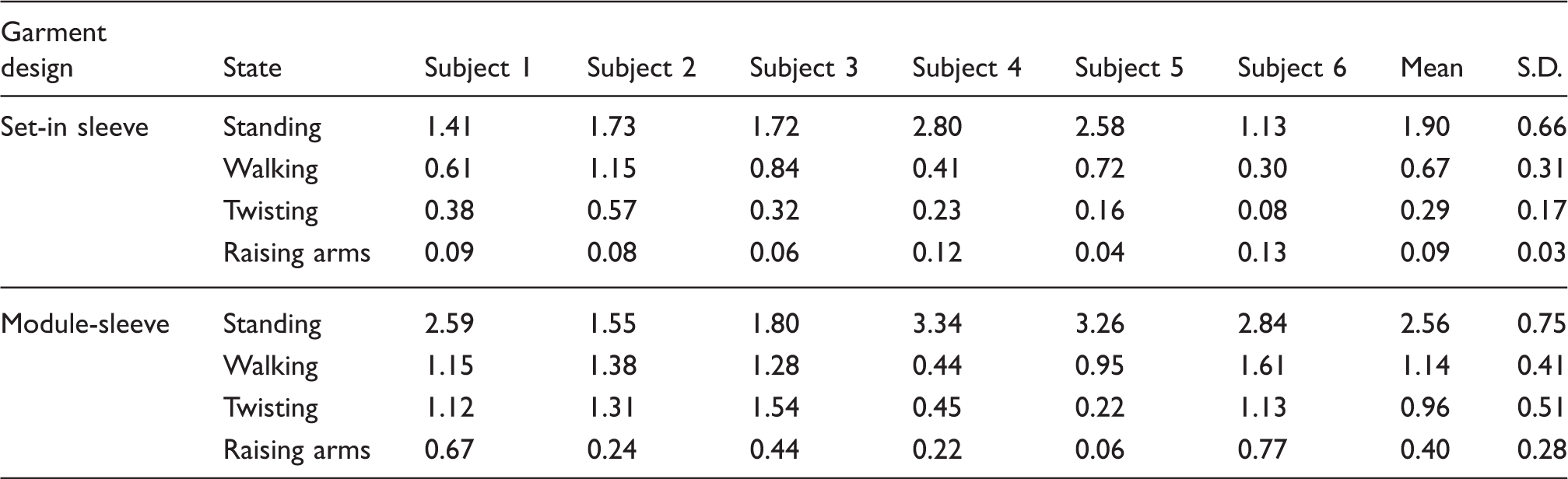
Set-in sleeve: heart-activity-sensing (HAS) clothing without a sleeve garment module; module-sleeve: HAS clothing with a sleeve garment module; SHVS: HAS clothing with a single horizontal function module and vertical function modules at the side seams.
Note: the values are averages of three measurements.
Results of the t-test on normalized MQIS values of SHVS with two types of sleeve design in experiment 2 by motion state
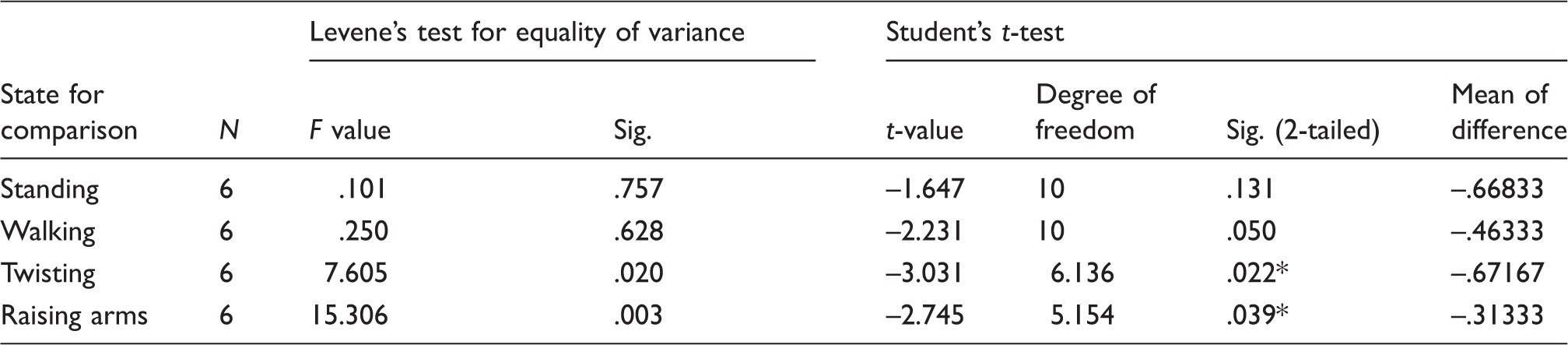
p < .05.
SHVS: heart-activity-sensing clothing with a single horizontal function module and vertical function modules at the side seams.
Morphological assessment of heart activity signals from HAS clothing
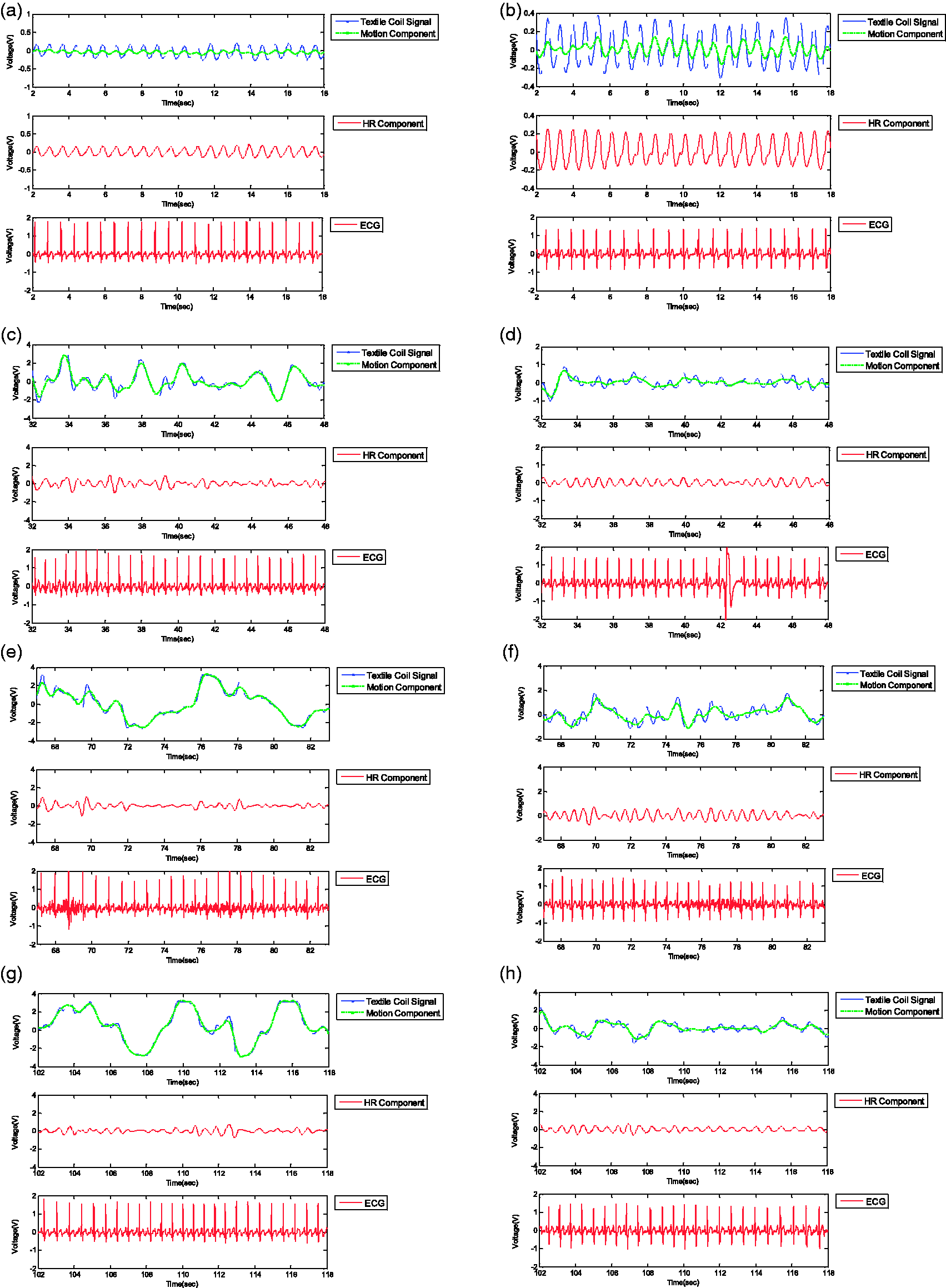
Using the case of subject 3 as an example, the heart activity signals from the HAS clothing with two types of sleeve designs and ECG Lead II were compared, as shown in Figure 11.
Comparison of the heart activity signal between SHVS with a module-sleeve and with the set-in sleeve. Set-in sleeve: heart-activity-sensing (HAS) clothing without a sleeve garment module; module-sleeve: HAS clothing with a sleeve garment module; ECG: electrocardiogram. a) Module-sleeve_standing, b) Set-in sleeve_standing, c) Module-sleeve_walking, d) Set-in sleeve_walking, e) Module-sleeve_twisting, f) Set-in sleeve_ twisting, g) Module-sleeve_raising arms and h) Set-in sleeve_ raising arms.
The “standing” state exhibited a higher association between the heart activity signal and the ECG R-peak for both SHVS with the module-sleeve and that with the set-in sleeve (Figures 11(a) and (b)). From these data, it was deduced that the “standing” state is rarely affected by motion artifacts. In most cases of SHVS with the set-in sleeve, the overall morphology of the signal was small and less uniform. In most cases of SHVS with the module-sleeve, the morphology was improved and showed relatively more uniform signals, especially in the “walking” and “raising arms” states (Figures 11(c) and (g)). This indicates that the module-sleeve effectively reduces the motion artifacts in dynamic states.
Evaluation of the displacement of the electrode using the optical flow sensor
Displacement of the sensor in experiment 2
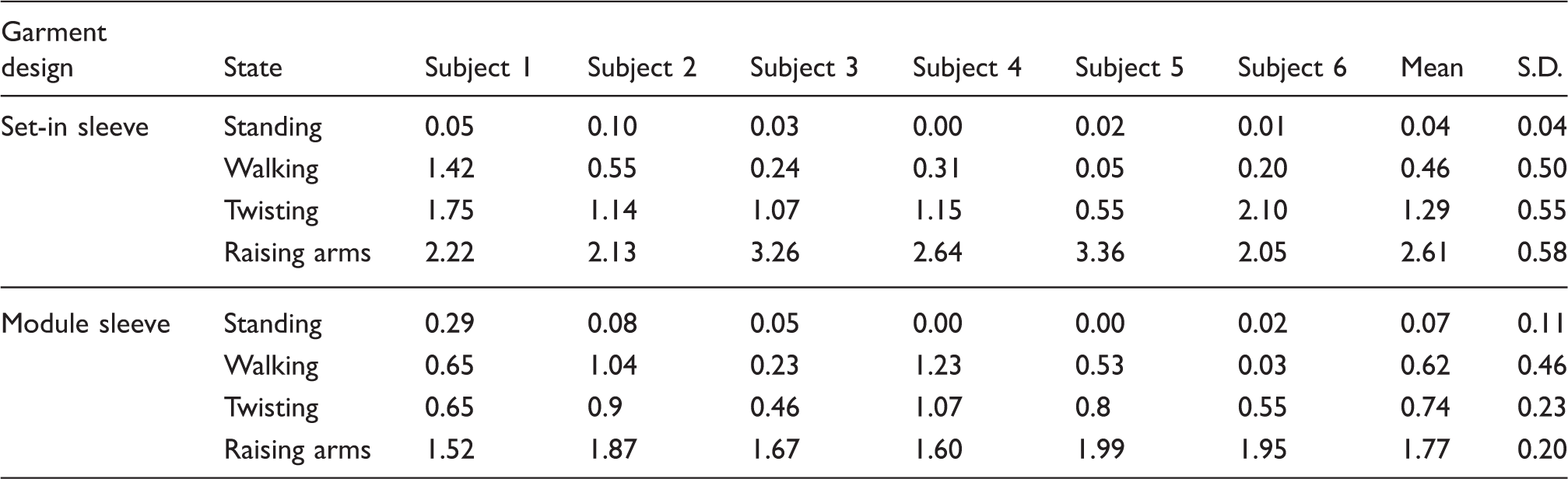
Set-in sleeve: heart-activity-sensing (HAS) clothing without a sleeve garment module; module sleeve: HAS clothing with a sleeve garment module.
Note: the values are averages of three measurements.
Results of the t-test on the displacement of the electrode by the motion state
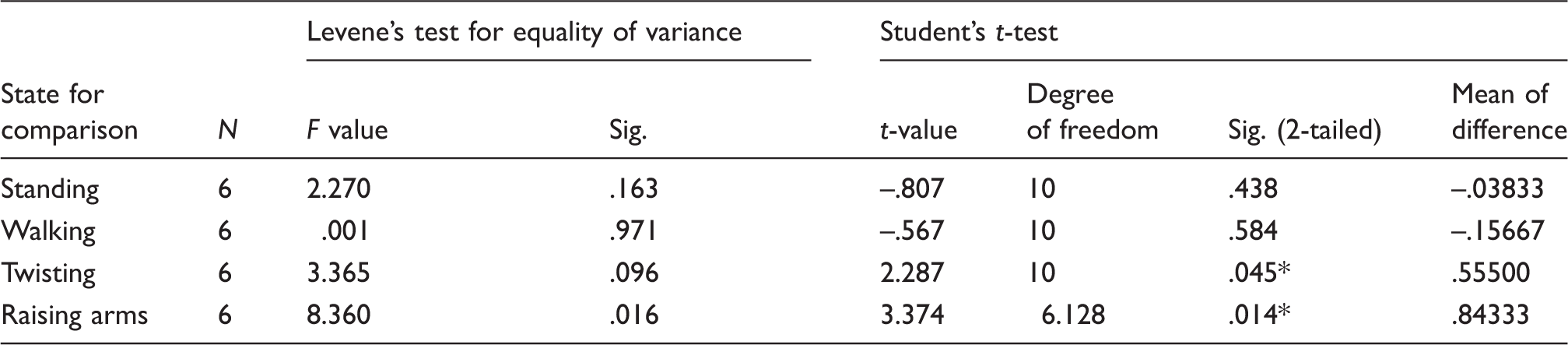
p < .05.
Combined results of experiments 1 and 2
Combined results

WO: heart-activity-sensing (HAS) clothing without a function module; SHVS: HAS clothing with a single horizontal function module and vertical function modules at the side seams; set-in sleeve: HAS clothing without a sleeve garment module; odule sleeve: HAS clothing with a sleeve garment module.
Note: The values are averages for six subjects.

Graphs of the averaged normalized MQIS values and electrode displacements. The values are averages for six subjects. WO: heart-activity-sensing (HAS) clothing without a function module; SHVS: HAS clothing with a single horizontal function module and vertical function modules at the side seams.
Overall, sleeveless-type clothing is superior to sleeve-type clothing. With sleeveless-type clothing, SHVS is superior to WO. Within sleeve-type clothing, a module-sleeve assembled with SHVS is superior to a set-sleeve assembled with SHVS.
Conclusion
In this study, we investigated the effect of the garment function module in apparel design on the motion artifacts in HAS based on the magnetic-induced sensing method. To assess the effect of the garment function module, the MQIS values, morphological quality, and electrode displacements were evaluated. To determine the effect of the garment function module, we developed function modules for the bodice and sleeve. For the application, we designed two types of HAS clothing in experiment 1: HAS clothing without a bodice module and HAS clothing with a bodice module (i.e., SHVS: single horizontal function module). In experiment 1, the MQIS values of the HAS clothing with a bodice module were higher than those of the HAS clothing without a bodice module in most cases. The electrode displacements of the HAS clothing without a bodice module were greater than those of the HAS clothing with a bodice module in dynamic states. From these results, it is speculated that the bodice module is effective in stabilizing the electrode position in dynamic states.
In experiment 2, we examined the effect of the garment function module in the sleeve. We designed two types of SHVS: one with a set-in sleeve and the other with a module-sleeve. In experiment 2, the MQIS values of SHVS with the module-sleeve were higher than those of SHVS with the set-in sleeve. The electrode displacements of SHVS with the module-sleeve were less than those of SHVS with the set-in sleeve in the states involving arm movement, which are the “twisting” and “raising arms” states. Therefore, we concluded that the module-sleeve has a supportive effect in stabilizing the electrode position and obtaining better heart activity signals in states with arm movement. The effect of the module-sleeve was contingent on the degree of arm movement in each dynamic state.
In experiments 1 and 2, it is verified that the garment function module positively contributes to the reduction of motion artifacts in HAS and in the acquisition of more stable signals. When comparing the bodice module and the sleeve module, the effect of the bodice module appears to be dominant. However, the effect of the module-sleeve is meaningful because sleeves are very crucial components in clothing design. To vary the design of bio-signal-sensing clothing, the design of the module-sleeve needs to be developed further.
This study suggests fundamental guidelines for designing non-contact type HAS clothing based on the magnetic-induced sensing method.
Footnotes
Acknowledgement
This article is a part of Hye Ran Koo’s dissertation submitted in 2015.
Declaration of conflicting interests
The authors declared no potential conflicts of interest with respect to the research, authorship, and/or publication of this article.
Funding
The authors disclosed receipt of the following financial support for the research, authorship, and/or publication of this article: This work was supported by the National Research Foundation of Korea (NRF) grant funded by the Korea government (Ministry of Science, ICT & Future Planning) (NRF-2016R1C1B1016042) and the Brain Korea 21 Plus Project of the Department of Clothing and Textiles, Yonsei University in 2017.