




Abstract
This work aimed at effective chemical recycling of waste poly(ethylene terephthalate) (PET) fabrics into water-soluble polyester (WSP). For this, PET fabric waste was depolymerized using excess ethylene glycol (EG) in the presence of zinc acetate as catalyst. The glycolysis product of PET, bis(2-hydroxyethyl) terephthalate (BHET) was then used to synthesize WSP by a three-step method, that is, transesterification, esterification and polycondensation. The structures of BHET and WSP were identified by Fourier transform infrared spectra. Sizing performances of WSP were studied, and it was found that the surface tension of WSP size (57 mN/m, 22℃, 0.5% of weight) was lower than common sizes, the viscosity of WSP size was 1–2 mPa·S (95℃, 6% of weight) and the viscosity stability was larger than 90% at this temperature. The mixture of WSP and starch showed stronger adhesion to polyester–cotton roving and polyester roving than onefold starch. K/S values of fibers before sizing and after desizing showed a slightly difference, which indicated that WSP would not influence the color of yarns when used as the sizing agent.
Keywords
Poly(ethylene terephthalate) (PET) is semi-crystalline thermoplastic polyester that is widely used in the production of industrial products, such as apparel fabrics, disposable plastic bottles and photographic films,1–3 and it has shown a tremendous increase of use year on year. As PET is a non-degradable polymer in the natural environment, the used PET products can cause environmental pollution when they are discarded.
4
As a result, PET waste management with the upcycling concept has become an important social issue. The recycling of PET waste has been divided into four main approaches, namely primary recycling, mechanical recycling, chemical recycling and energy recovery. Raw materials (monomers) can be acquired from chemical recycling, from which the polymer is made,
5
and it is the most widely used method that can be divided as follows: (i) glycolysis; (ii) methanolysis; (iii) hydrolysis; and (iv) other processes, such as aminolysis or ammonolysis.6–9 Glycolysis can be described as a molecular depolymerization process by transesterification between PET ester groups and a diol, usually with ethylene glycol (EG) in excess and zinc acetate as the catalyst to obtain the monomer bis(2-hydroxyethyl) terephthalate (BHET) according to the reaction formula in Scheme 1. This reaction has been verified in our previous researches and some other papers.10–13 Glycolysis of PET fabrics.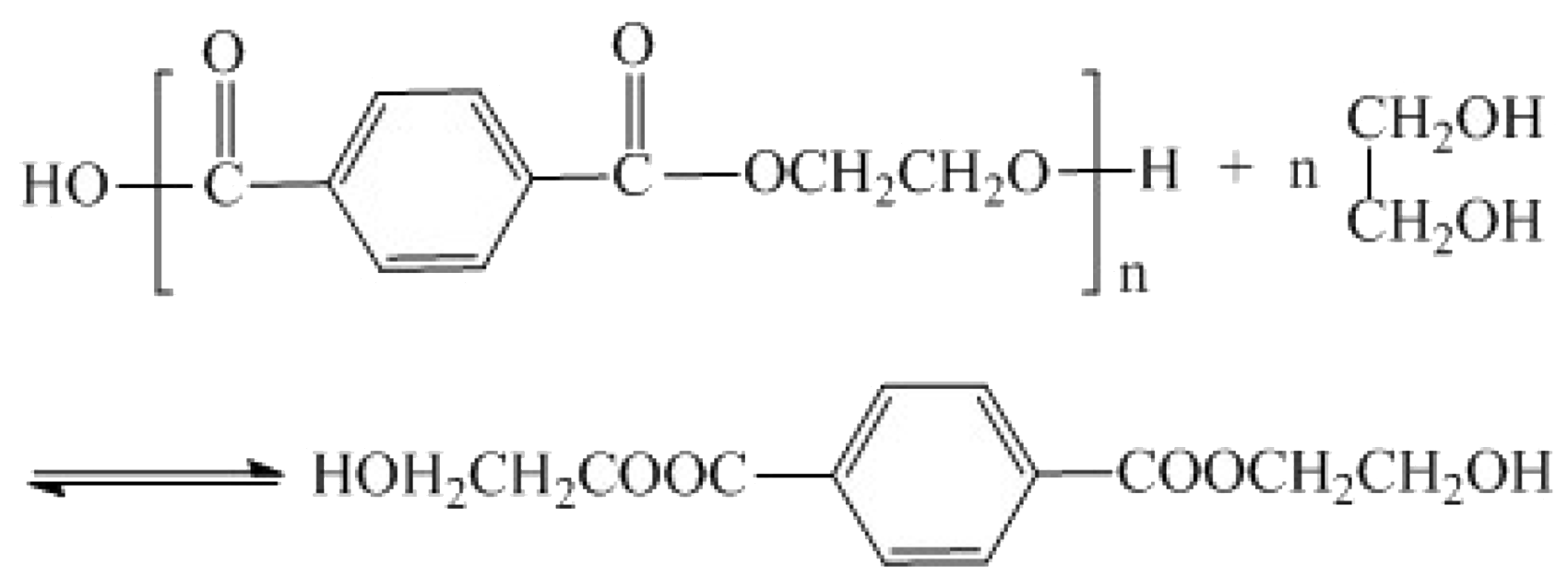
Since PET waste can be depolymerized into oligomers, how to use these monomers effectively is another important research topic in the field of recycling PET waste. The literature indicates that the depolymerized products of PET waste can used in various applications, 14 such as hydrophobic textile dyestuffs, 15 polyurethane foam, 16 alkyd resins, 17 polydiacetylene, 18 etc. We have reported the synthesis of azo disperse dyestuffs and flame-retardant rigid polyurethane foams from BHET obtained through glycolysis of PET waste.10–12
Water-soluble polyester (WSP) is usually prepared from dicarboxylic acid and diol, and it has been widely applied in the paint industry. 19 Polyester is hydrophobic due to its high degree of orientation and crystallization; the absence of a polar group also contributes to its hydrophobicity and makes it difficult to be bonded with common sizes. To solve this problem, WSP was first applied in the textile field as sizes in the 1960s. 20 In general, a polar–nonpolar pair never forms strong adhesion, so strong adhesion can be obtained only when sizing agents and fibers are either polar or nonpolar. With the existence of similar groups to polyester, WSP can bond well with polyester fibers and thus improve its adhesion to polyester. Since WSP has better sizing performance for polyester than other normal sizes, such as starch, polyvinyl alcohol and polyacrylic,21,22 synthesis of WSP has been the focus of research in relevant fields. Making a survey of the synthetic methods at home and abroad,22–27 it is found that the main reactants to create WSP include dicarboxylic acid, poly(ethylene glycol) and monomer components substituted with the sulfonate metal salt group, so it is reasonably to think that the glycolysis product of PET, that is, BHET, can be used to produce WSP. The specific way to produce copolyester was by using a conventional two-step polymerization technique.22,28
In this paper, we provided a method to synthesis WSP using the glycolysis product (BHET) of PET. The synthetic WSP could be used for the sizing agent of polyester fibers, and the sizing performances of it were described with surface tension, viscosity and viscosity stability, adhesion to fibers and K/S values of the sized and desized fibers.
Experimental details
Materials
PET fabric waste was obtained from Bosideng Downwear, Ltd (Jiangsu, China), which was cut into pieces with the surface area of 1 × 5 mm2. To remove the impurity, the cut fabric was washed with distilled water and acetone successively, and then dried at 80℃ until the weight of the cut fabric was invariable.
Commercial native cornstarch with a viscosity of 623 mPa·s (determined at a concentration of 6% slurry at 95℃) was supplied by Fengyuan Textile Auxiliaries Co. Ltd (Jiangsu, China). EG, zinc acetate dihydrate (ZnAC2), 5-sodium dihydrogen 5-sulfoisophthalate (SIPA), antimony trioxide (Sb2O3) and sodium hydroxide (NaOH) were all analytical reagent grades and diethylene glycol (DEG) was a chemically pure reagent; all of the reagents were purchased from Sinopharm Chemical Reagent, Ltd (Shanghai, China).
Glycolysis of PET
The glycolysis of waste PET fabrics was carried out by the method reported previously. 12 Using 0.2% (weight to PET) zinc acetate as the catalyst, the PET:EG ratio was 1: 2 and the glycolysis was carried out at 196–200℃ under a nitrogen atmosphere for 3 h to get the glycolysis product, then the product was purified through repeated filtration and crystallization to finally get BHET.
Synthesis of WSP
BHET, SIPA and EG were the main reactants to produce WSP, with Sb2O3 and ZnAC2 as catalysts. WSP was synthesized by a three-step method, that is, transesterification, esterification and polycondensation, which are respectively shown in Schemes 2–4. Esterification of SIPA and DEG. Transesterification of BHET and DEG. Polycondensation of the reaction products generated in esterification and transesterification.


The first part of reaction was transesterification and esterification. All of the reactants were put into a four-necked round-bottom glass flask equipped with a heating jacket, a thermometer and a reflux condenser. The reflux condenser was connected with a small round-bottom flask to gather the distillate. The mixture began dissolving at 80℃; while the temperature rose to 120℃, no solid could be seen in the mixture. As the temperature increased continuously, bubbles began emitting from the mixture at 200℃, and the distillate was gathered into the small flask at the same time. After that, the reaction was kept at 230℃ for 3 h and the reactant mixture became thicker and darker during this process. The whole process of transesterification and esterification was carried out under a nitrogen atmosphere, and this part of reaction come to an end when no bubbles were seen and no distillate was gathered. The second part of the reaction was polycondensation, which was usually carried out under high temperature and high pressure. During this process, the intensity of pressure of the whole reaction system was about 0.02–0.045 MPa and the reaction temperature was 250℃. It was observed that the mixture bubbled again but the rate was slow, and this reaction last for about 1 h and lead to the end of the whole reaction; after that, the reaction mixture was poured out and cooled down to get WSP.
Proportion of raw materials
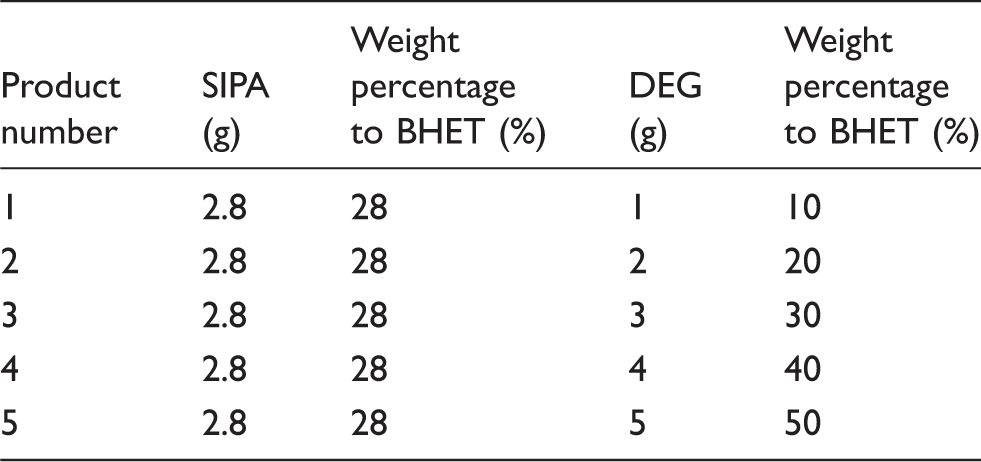
SIPA: 5-sodium dihydrogen 5-sulfoisophthalate; BHET: bis(2-hydroxyethyl terephthalate); DEG: diethylene glycol.
Characterization of WSP
Fourier transform infrared spectroscopy
The Fourier transform infrared (FTIR) spectra of BHET and WSP were obtained on a Nicolet Nexus-470 IR spectrometer (USA) with KBr as a reference material. The scanning range was 4000–650 cm–1 and the resolution was 1 cm–1.
Viscosity and viscosity stability
The viscosity and viscosity stability of WSP water solution (6% of weight, 95℃) was measured by an SNB-1 viscometer (Shanghai Fangrui Instrument Co. Ltd), and 0 rotor was selected with the rotate speed of 60 r/min. The solution was kept in a water bath at 95℃ during the whole test, and the viscosity was measured every half hour for six times; the first value that showed on the viscometer was usually regarded as the viscosity of the solution, and the viscosity stability was calculated by Equations (1) and (2).


where χ is the first value of viscosity and max|χ1| is the range of the other five values of viscosity.
Surface tension
The surface tension of WSP water solution (0.5% of weight) was measured using the Wilhelmy plate method by a Full Automatic Surface/Interface Tensiometer (Kono Industrial Co. Ltd).
Adhesion
The method to determine the adhesion by the roving method was as follows: 22 g blended size sample was dispersed in 2200 ml distilled water, then the mixture was heated to 95℃ with mechanical stirring. After an hour, the paste was poured into a stainless steel container that was immersed in a water bath of 95℃. The roving that had been carefully wound onto a stainless steel reel was impregnated with the paste for 5 min at 95℃. After that, the impregnated roving was dried in a drying oven and then collected. 26
The tensile strength and work-to-break of the roving were measured on an electronic universal material testing machine (AGS-X, Shimadzu, Japan) after the roving had been conditioned for at least 24 h under 65% relative humidity and 20℃. The strength value was the average of 20 tests in each case. To compare the sizing performance of WSP and starch, the WSP size was blended with corn starch in different ratios and the adhesion of the mixture was tested.
K/S value
The dyeing depth is one of the most important assessment criteria to evaluate the dyeing performance of dyes. In the dye depth equation, K represents the absorption coefficient, S represents the scattering coefficient of the observed object, C represents the concentration of colored matter and there is functional relation among the three parameters. Generally, the larger the K/S value, the higher the concentration of colored matter. As the synthetic WSP was yellowish-brown, using it as a size agent may affect the color of yarns, so related K/S values were tested. To be more specific, the K/S values of roving before and after being soaked in WSP solution for 5 min were measured, and the same test was done after desizing the roving in a solution of sodium hydroxide. All the K/S values were measured on a Datacolor 650 reflection spectrophotometer (Datacolor Ltd, USA).
Results and discussion
Characterization of BHET and WSP
The synthesized WSP was yellowish-brown solid with brittleness; when BHET with different colors was used, the WSP showed same color. As for the solubility, WSP could dissolve completely in hot water of 95℃ while it was almost insoluble in water at room temperature.
Figure 1 shows the FTIR spectra of BHET and WSP. The peaks at around 3400 cm–1 were due to the stretching vibration of -OH in BHET and WSP, the adsorption bands due to -C=O in ester groups was shown at 1726 and 1629 cm–1, respectively, and peaks at 2900–2700 cm–1 indicated the presence of -C-H attached to the benzene ring; these results verified that WSP has a benzene ring and ester group, which were also included in PET. The adsorption in the 1275–1024 cm–1 range showed the existence of -S=O in WSP, which could be regarded as the presence of -SO3Na, which could improve the water solubility of WSP and contribute to its better performance in sizing.
Fourier transform infrared spectra of bis(2-hydroxyethyl terephthalate) (a) and water-soluble polyester (b).
Sizing performances of WSP
Viscosity and viscosity stability
The viscosity and viscosity stability of the synthesized WSPs are shown in Figure 2. It can be seen that the viscosity of WSPs were all lower than 2.5 mPa·S. This can be explained by the presence of a para-benzene ring and sulfonic acid group in WSP. On the one hand, para-benzene destroyed the structural regularity of polyester, which resulted in the increase of the amorphous region and the decrease of crystallinity of WSP, which made it easy for water to penetrate into WSP. On the other hand, the strong polarity of sulfonic acid contributed greatly to the good dissolvability of WSP. For these two reasons, WSP could dissolve in water easily and thus showed low viscosity. Low viscosity could make WSP enter into fibers easily, thus improving the sizing percentage of yarns. In addition, WSP 1–5 presented good stability with the fluctuation of viscosity within ±1 mPa·S during 3 h, and the viscosity stabilities of WSP 2, 3 and 5 were over 90%, which was good for the sizing homogeneity of warp. Thus, both the viscosity and the viscosity stability of WSP satisfied the requirements for sizing paste.
Viscosity variation in 3 h of water-soluble polyester (WSP) 1–5.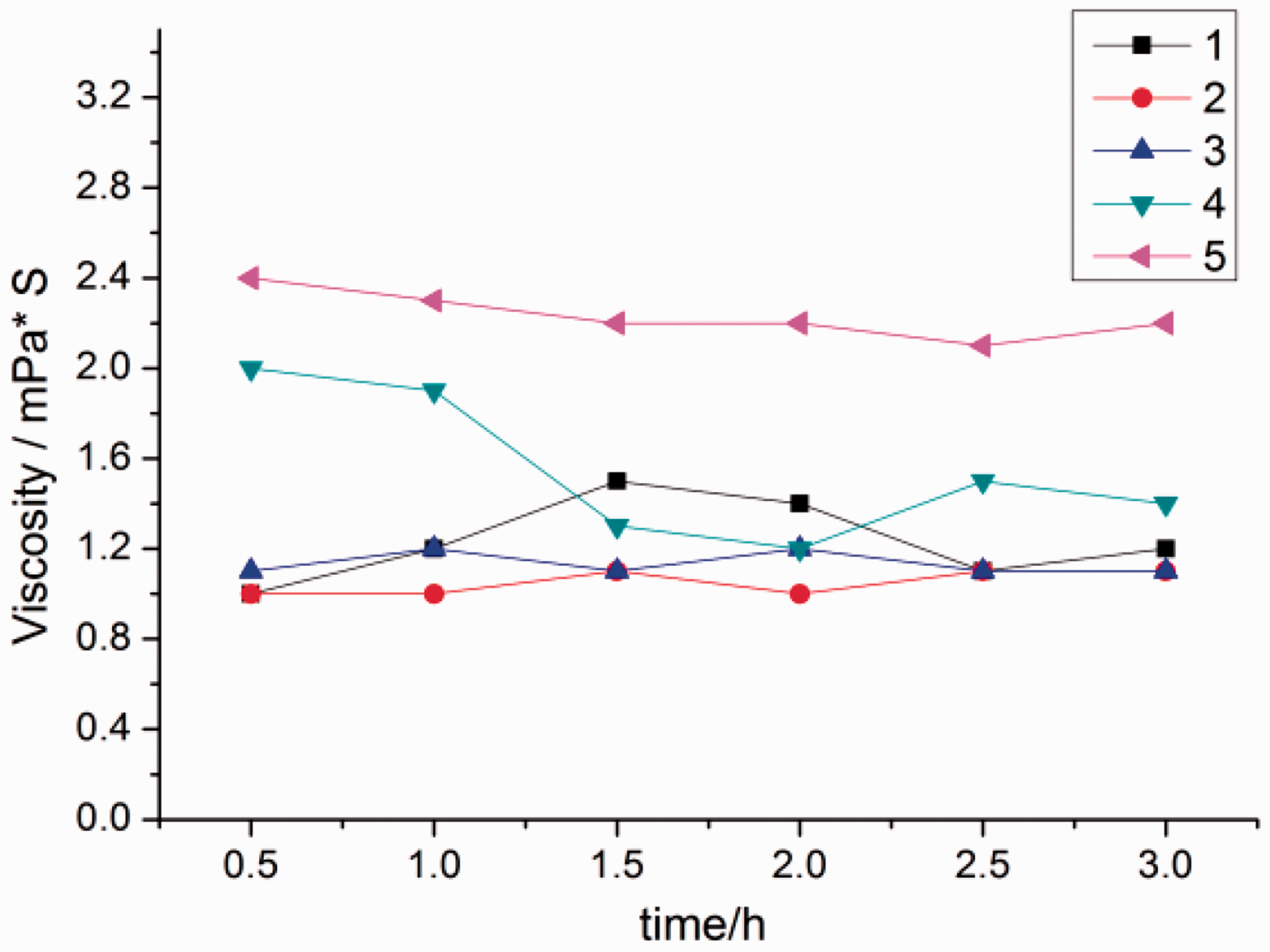
Surface tension
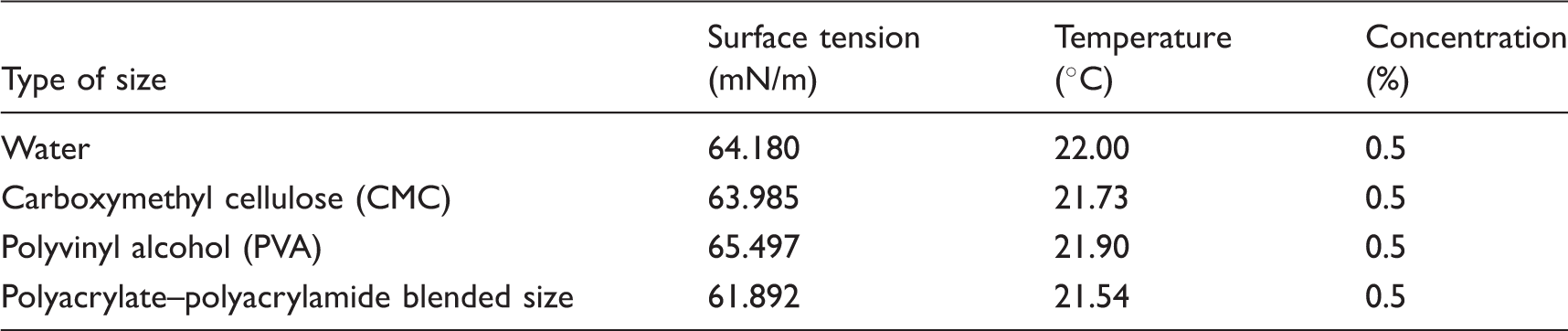
The surface tension of water-soluble polyester water solution

Surface tension of several common sizes
Adhesion
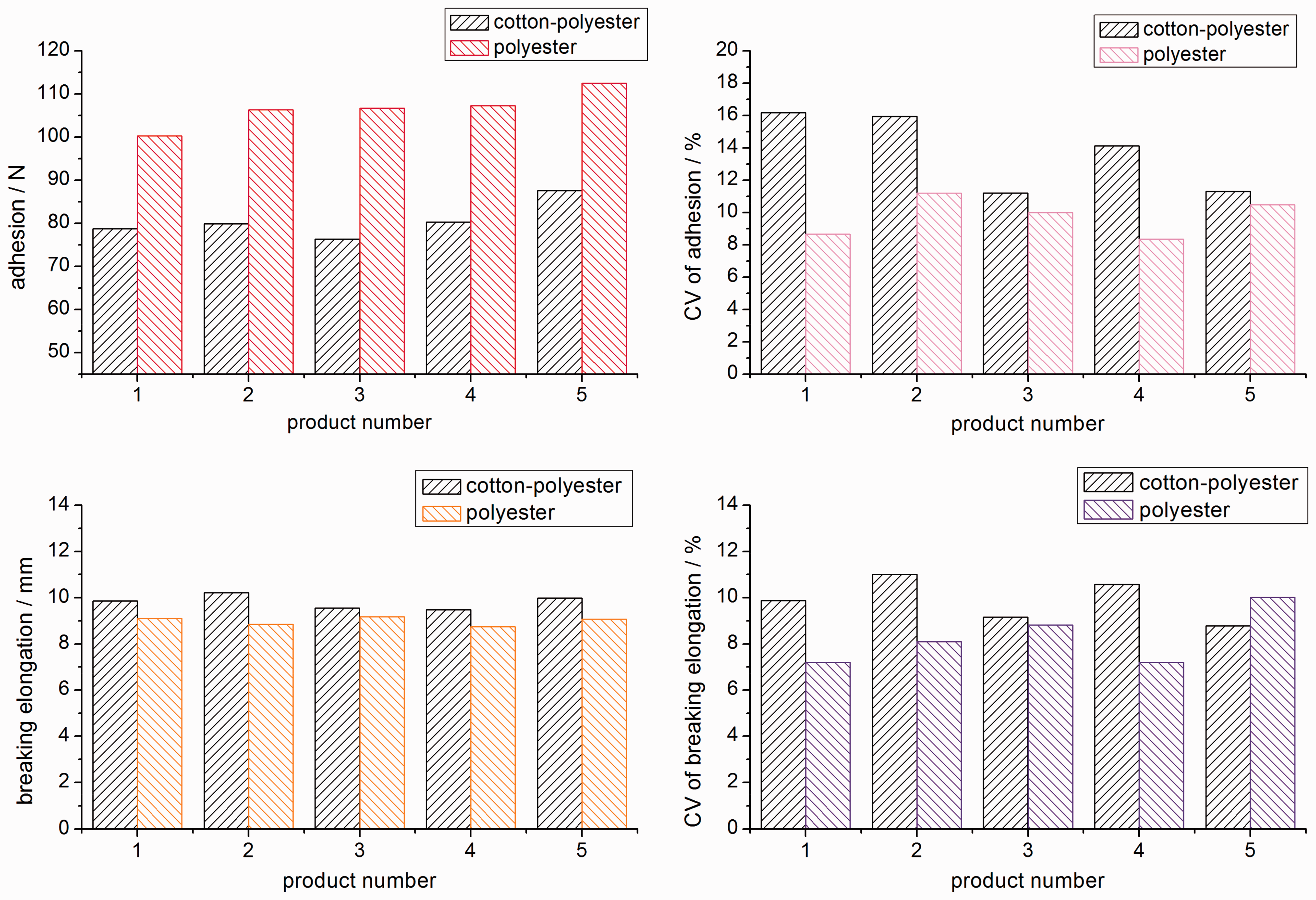
The basis to judge the miscibility of two solutions is whether the mixture can stay homogeneous and stable. In this paper, WSP solution and starch size solutions were mixed, and the mixture stayed clear without delamination and condensation for 24 h, which confirmed that WSP solution can mix well with starch size. The adhesion and breaking elongation of the WSP and starch blended size paste to the roving are shown in Figures 3 and 4.
Adhesive force and breaking elongation of sized roving (cotton–polyester) with different weight ratios of water-soluble polyester (WSP) and starch. Adhesive force and breaking elongation of sized cotton–polyester/polyester roving with different mixtures of water-soluble polyester and starch in the ratio of 1:9.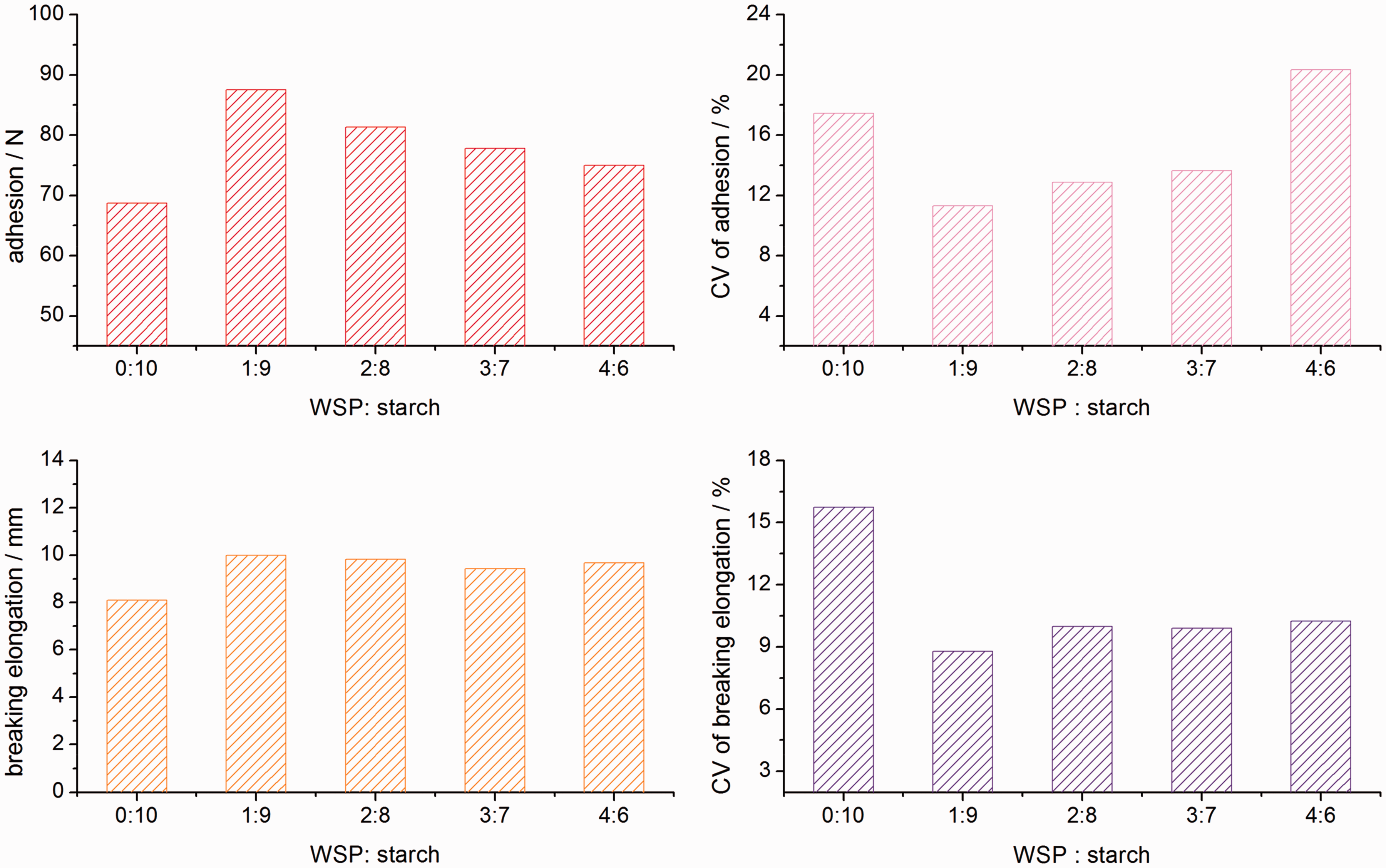
The adhesion to fibers is one of the most important characteristics of sizing and it influences physical and mechanical properties of sized yarn, such as breaking strength, elongation, abrasive resistance and hairiness. 29 Figure 3 shows how the mixtures of WSP 5 and starch performed in different mixed ratios; it was found that the mixed size showed larger adhesion to cotton–polyester blended roving than onefold starch (0:10 of WSP 5:starch), which met with the expectation that WSP could bond better with polyester fibers than common sizes. It could be explained by the principle of ‘like dissolves like’, which means that solute has a similar structure to the solution, and thus the solute and solution are compatible with each other. To be more specific, WSP had a benzene ring and hydroxy, which were also included in polyester, so they could bond firmly with each other, and thus attained greater adhesion than starch.
Comparing the results shown by mixtures of WSP 5 and starch in different ratios, the highest adhesion was at 1:9, which increased 27% in comparison to onefold starch. Furthermore, the mixture in the ratio of 1:9 showed the lowest CV values of adhesion, which indicated that the stability of adhesion was the best of all. As the mixing ratio of WSP and starch was 1:9, the breaking elongation was longest and the breaking elongation CV was smallest. Therefore, 1:9 was the optimum ratio of WSP and starch blended size for cotton–polyester yarns. To sum up, when WSP 5:starch was 1:9, the best sizing performance for cotton–polyester blended yarns was obtained.
Figure 4 shows the testing results where WSP 1–5 and starch were blended in the ratio of 1:9; this time, cotton–polyester blended roving and polyester roving were used. Among the five kinds of WSPs, WSP 5 showed the highest adhesion and the lowest CV, which was because DEG content in WSP 5 was maximum among WSP 1–5, and the existence of DEG resulted in better water solubility of WSP; thus, WSP 5 had the best permeability to polyester fibers, which is why WSP 5 performed better than the other synthesized WSPs. As for breaking elongation values and its CV, WSP 5 showed the second largest breaking elongation and the smallest CV, which were also preferable compared with the other four products.
Being similar to the results for cotton–polyester roving, WSP 5 showed the best performance in adhesion for polyester roving, but the CV of adhesion of it ranked second, which was not so good. As for breaking properties, the results of five kinds of WSP showed no obvious regularity; to be more specific, WSP 5, WSP 1 and WSP 3 had similar breaking elongations, which were much higher than the other two. WSP 5 showed the highest CV and this result was not good for sizing.
K/S values
K/S values of roving before and after sizing

Conclusions
By using EG as the depolymerizing agent, waste PET fabrics were depolymerized into BHET. Then BHET was synthesized into WSP by the processes of transesterification, esterification and polycondensation successively. Although the synthesized WSP showed a deep dark color, the color effect could be basically eliminated by desizing. The synthesized WSP showed excellent performances with viscosity between 1 and 2 mPa·S and viscosity stability of more than 90%. The surface tension of WSP paste was lower than other common sizes, which made it easy to permeate into polyester fibers.
Footnotes
Declaration of conflicting interests
The authors declared no potential conflicts of interest with respect to the research, authorship and/or publication of this article.
Funding
The authors disclosed receipt of the following financial support for the research, authorship, and/or publication of this article: This work was financially supported by the National key Research and Development Program of China (2016YFB0302900), Fundamental Research Funds for the Central Universities (JUSRP51723B), China Scholarship Council (201706795025) and National Natural Science Foundation of China (No.51503083).