



Abstract
The paper proposes a new approach to selecting cold-protective gloves for workers by evaluating the effects of simulated pressure of wood, plastic, and metal materials on the thermal insulation of gloves of various designs. Thermal insulation tests involved three models of gloves offering stable thermal insulation at various temperatures. The tests were carried out on a thermal hand model according to EN 511:2006. In the study, three variants of contact surface were used: metal, plastic, and wood. It was found that the thermal insulation of protective gloves under pressure decreases and depends on the glove construction, surface type, ambient temperature, and pressure variant. The application of pressure decreased the mean thermal insulation of the tested mitts (variant 1) by 30.46% for metal, 21.32% for wood, and 23.04% for plastic at an ambient temperature of –10℃; by 23.12% for metal, 21.79% for wood, and 19.39% for plastic at 0℃; and by 29.88% for metal, 23.80% for wood, and 19.28% for plastic at 10℃. The smallest relative decline in glove thermal insulation for the wooden pressure-simulating element at –10℃ and for the plastic element at 10℃ and 0℃ was found. Therefore, when choosing gloves for manual work in a cold environment, this change in performance level should be taken into account.
A cold environment is defined as one in which ambient air temperature is equal to or lower than 10℃, whether for indoor or outdoor work activities. Indoor work conditions are typically stable, being determined by the production process. On the other hand, outdoor conditions are highly variable, being largely dependent on atmospheric factors and the season of the year. A cold environment may lead to generalized hypothermia or to the cooling of individual parts of the body, such as foot and hand skin, especially upon contact with cold surfaces. A local exposure to cold temperature reduces blood flow in the affected body part, potentially resulting in hypoxia and frostbite. Individuals working at low ambient temperatures also exhibit impaired dexterity of the upper and lower extremities, which may result in decreased productivity and a higher risk of work accidents. 1 In practice, in order to prevent the adverse consequences of exposure to cold, workers use personal protective devices, such as protective gloves with enhanced thermal insulation. Such products (multi-layer textile or rubber gloves) should be selected depending on the conditions of cold exposure to guarantee good thermal comfort. Glove selection is a non-trivial issue, as many variables need to be taken into account. In a physical sense, thermal insulation is the process of preventing heat from transferring between materials that are in thermal contact. 2 In the case of protective gloves, it can be defined as resistance to dry heat loss, which includes the resistance provided by the glove and the air layer. Under real-life conditions, thermal insulation is additionally influenced by factors such as contact with cold surfaces 3 or exposure to atmospheric conditions, such as wind or high humidity.
According to the literature data, contact with cold surfaces (e.g., aluminum, steel, nylon, wood) affects finger cooling, 4 which largely depends on the thermal conductivity of those surfaces. The thermal conductivity coefficient (λ) under medium humidity conditions, expressed in W/(m*K), ranges from 17.00–370.00 for metal, to 0.16–0.40 for wood (depending on fiber orientation), to as little as 0.17–0.50 for synthetic fibers. While different types of materials have been shown to have differential effects on hand cooling, there is insufficient evidence about their influence on the thermal insulation of gloves. Therefore, research on the protective properties of gloves should also consider the effects of contact with cold surfaces. Moreover, of importance are contact duration and the pressure acting on the hand. It has been found that hand contact with a metal surface will result in a greater heat loss than contact with a wooden surface, all other conditions being equal. 5
It is known that gloves used for the protection of workers against heat loss should be characterized by appropriate insulation properties (thermal insulation), which depend on glove design, including the type and number of layers of material used. Typically, gloves are made from textile assemblies, but they may also incorporate waterproof leather or materials coated with poly(vinyl chloride), nitrile rubber, or polyurethane. Thermal insulation may be enhanced by the application of additional inserts or linings. The effects of textile products on heat exchange between man and his environment depend on many factors, including ambient air temperature, air movement, and humidity. Another important variable is the clothing material, whether woven or knitted, as well as its micro- and macro-structure. 6 It has been reported that the thermal resistance of a two-layer textile assembly is similar to the sum of thermal resistances of its constituent layers, while the thermal resistance of multi-layer assemblies is significantly lower than the sum of thermal resistances of their constituents, with the difference increasing with the number of layers. 7 Moreover, the thermal conductivity of a two-layer textile assembly roughly equals the weighted average thermal conductivity of its constituents, with the weights reflecting layer thickness. In the case of assemblies containing more than two layers, the equivalent thermal conductivity differs significantly from the weighted average calculated for the constituent layers.
In summary, it should be remembered that the thermal comfort of workers' hands in cold environments is affected by numerous factors associated both with glove design and the objects handled. This is corroborated by the authors' previous experiments on the process of hand cooling and occupational sources of exposure to low temperatures. 8 In designing cold-protective gloves, one should consider the type of hand–surface contact, the nature of the work, and the kind of performed manual tasks to account for the thermal conductivity of the handled surfaces and for changes in the amount of air trapped between the various layers of the protective gloves.
The objective of the present work was to analyze the influence of simulated pressure of wood, plastic, and metal materials on the thermal insulation of different cold-protective glove designs. Most of the existing research in this area concerns safety criteria for the temperature of hand and finger skin in contact with various surfaces, but without investigating the effects of those surfaces on the thermal insulation of protective gloves. Based on the current findings, the authors have developed guidelines for selecting optimum glove variants for workers depending on the type of occupational exposure of the hands to low temperature.
Materials and methods
Experimental gloves and their structural components
Construction of the tested cold-protective gloves
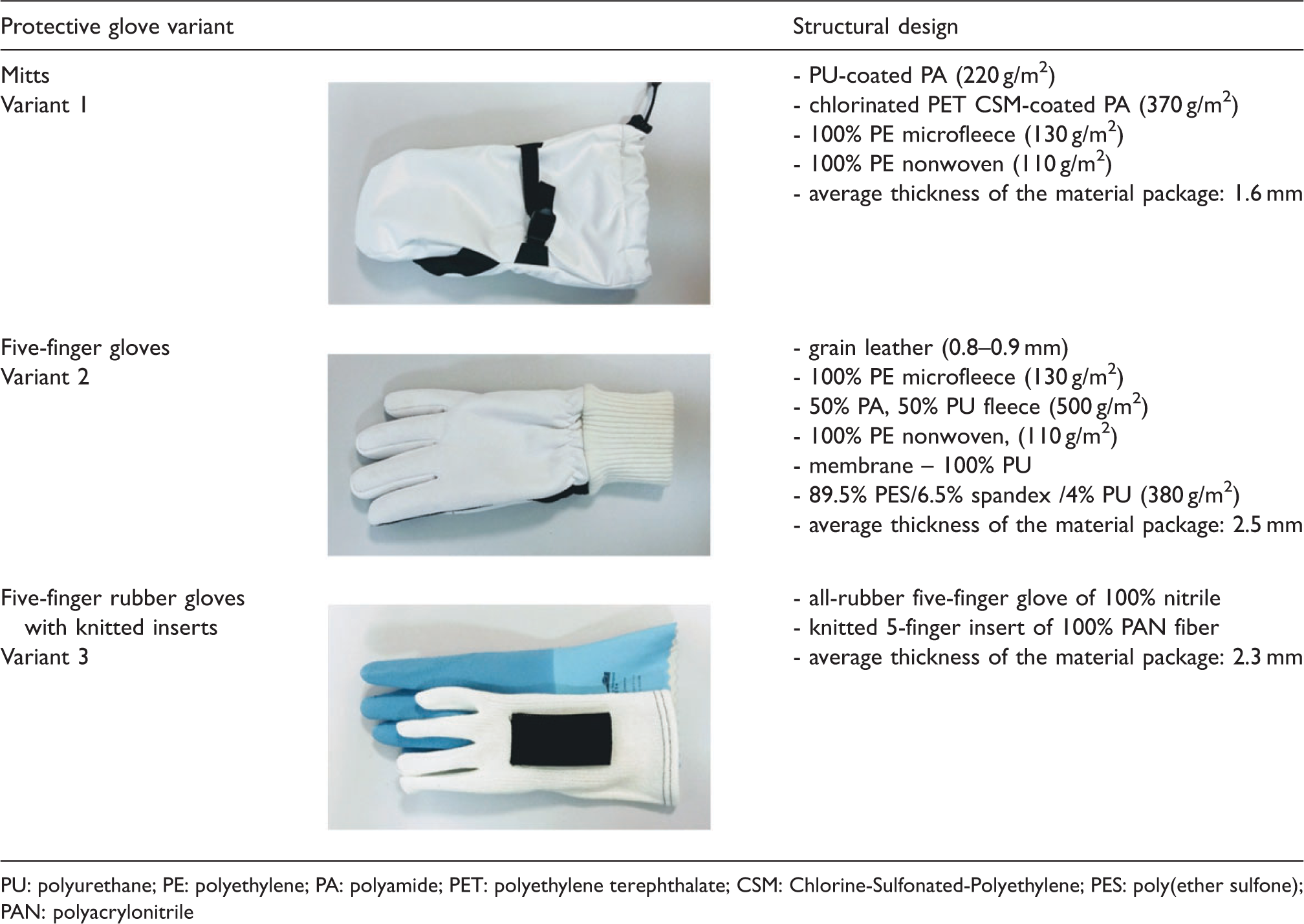
PU: polyurethane; PE: polyethylene; PA: polyamide; PET: polyethylene terephthalate; CSM: Chlorine-Sulfonated-Polyethylene; PES: poly(ether sulfone); PAN: polyacrylonitrile
Methodology
Testing the thermal insulation of protective gloves
Performance levels based on the thermal insulation of gloves (EN 511:2006)
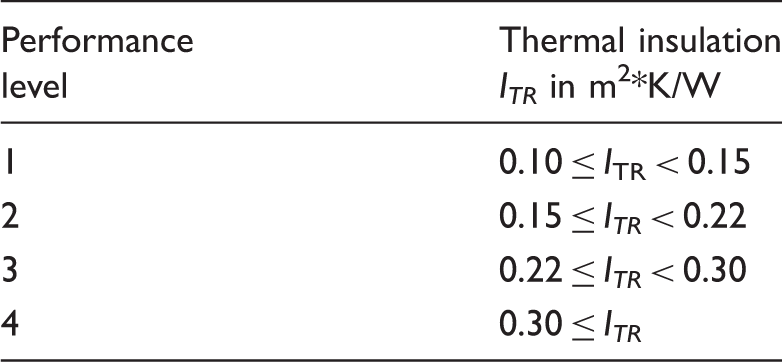
The thermal insulation of gloves, which determines their thermal effectiveness or performance level, was determined from the formula

The tests were conducted for relative air humidity (50%) and ambient temperatures of 10℃, 0℃, and –10℃, which occur in real-life cold work environments, as described in detail in another paper by the authors. 8 Measurements were recorded after the thermal stabilization of the hand model and climatic chamber.
Testing the effects of simulated pressure of wood, plastic, and metal materials on the thermal insulation of protective gloves
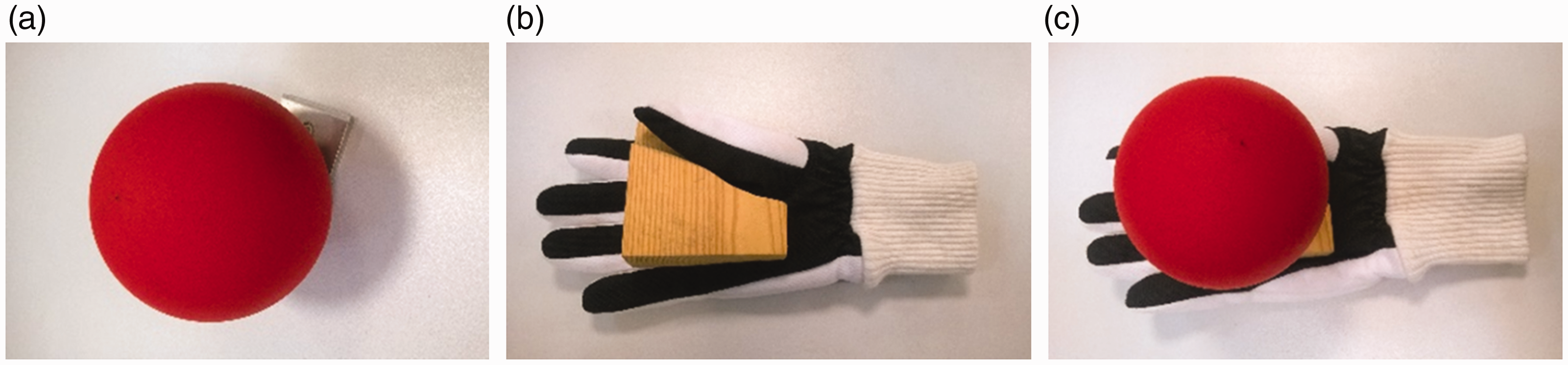
The tests employed three elements for pressure simulation; they were made of metal, plastic, and wood (Figure 1). The selected surface types are encountered in real-world cold work environments and are described in detail in another paper by the present authors.
8
The positioning, weight (3 kg), and shape (sphere) of the loading element were adopted based on previous studies by the authors.
10
The exact manner of applying pressure to gloves is given in Figure 2.
Elements used for pressure simulation: (a) metal; (b) wood; (c) plastic. Pressure simulation during tests: (a) spherical loading element (3 kg); (b) pressure-simulating element (wood); (c) experimental setup consisting of the loading element, a pressure-simulating element (wood), and a five-finger protective glove (variant 2).
The scheme of the measurement conditions is presented in Figure 3.
Scheme of measurement conditions during the experiment.
The general procedure for tests involving simulated pressure of materials was as follows. The temperature of the thermal hand model was set to 33℃ and the climatic chamber was set to 50% relative humidity (RH) and an appropriate temperature: 10℃, 0℃, or 10℃. A protective glove was placed on the thermal hand model, and a pressure-simulating element and a loading element were positioned on its palmar aspect. These two elements applied an overall pressure of 6.9 kPa. After reaching steady-state conditions in the chamber, thermal insulation changes were recorded after 10 and 20 min, and then at 1 h intervals over 6 h. Thermal insulation measurements were carried out for three pressure variants (with metal, wooden, and plastic elements), and reference measurements were conducted without pressure in order to provide a baseline against which insulation differences were evaluated. In the standard EN 511:2006, measurements are carried out at 10℃ without a pressure element.
The test duration (corresponding to a 6 h work cycle in thermal protective gloves) and temperature range were selected based on a previous study conducted by the authors as part of a research project in connection with performing work in cold environments. 8
Statistical analysis
Test results were analyzed statistically in the SPSS Statistics 23.0 package using analysis of variance (ANOVA) with a posteriori bootstrapping (1000 repeats). Post-hoc comparisons were made using the Bonferroni test. Statistical significance was adopted at p < 0.05. Normal distribution of results was confirmed by skewness and kurtosis analysis (within the range < –2; 2>).
Results
Statistical analysis of the thermal insulation of three protective glove variants depending on simulated pressure type and temperature
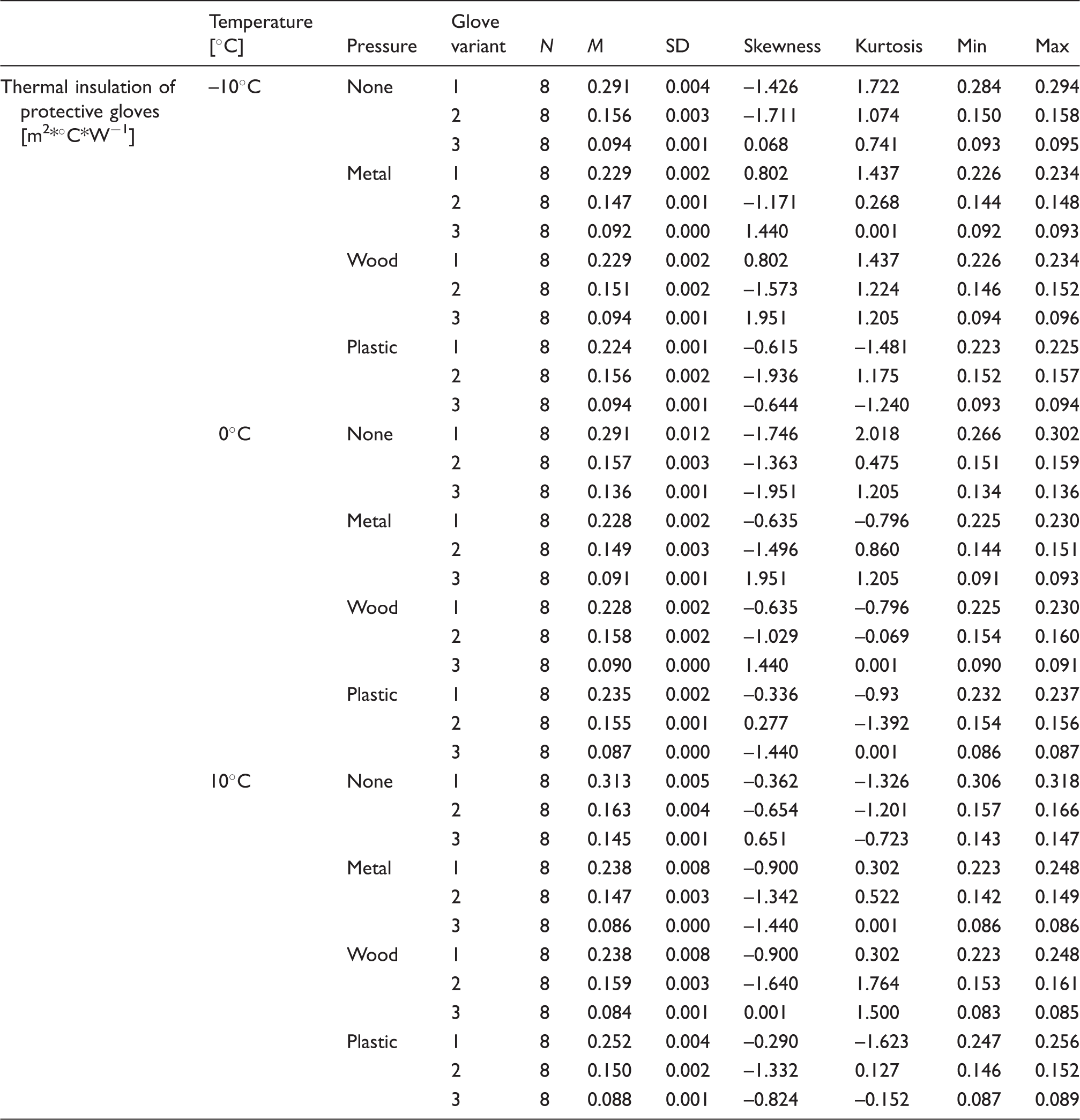
Descriptive statistics for the thermal insulation of three protective glove variants depending on simulated pressure type (none, wood, metal, plastic) and temperature (–10℃, 0℃, 10℃)
Analysis of variance statistics for evaluation of the effects of protective glove variants on thermal insulation depending on simulated pressure type (none, wood, metal, plastic)
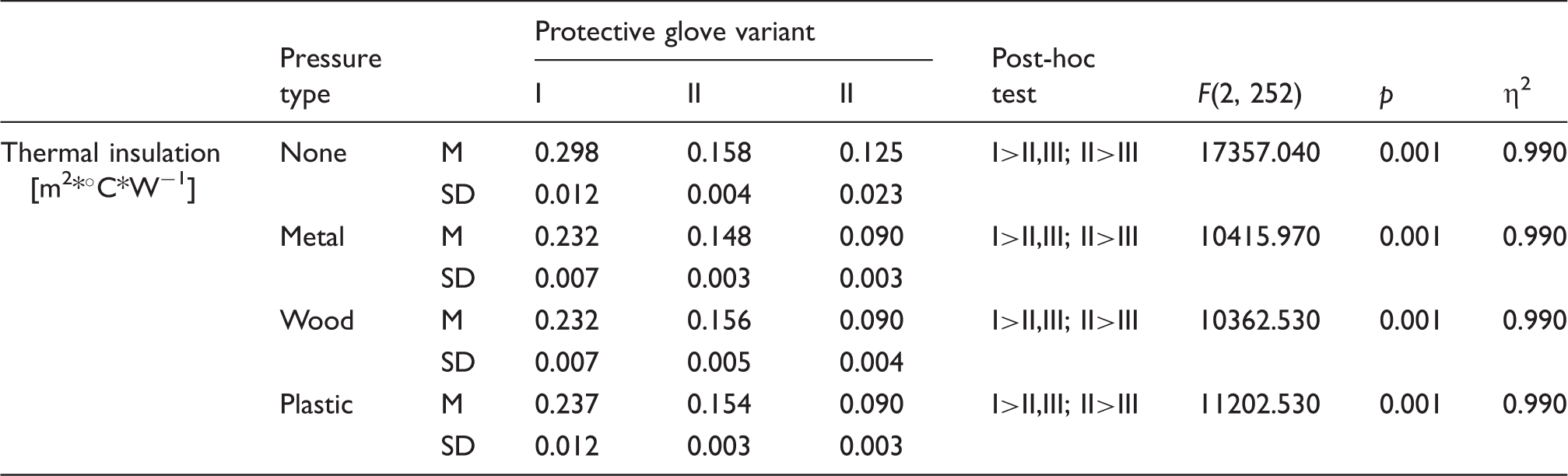
Analysis of variance statistics for evaluation of the effects of protective glove variants on thermal insulation depending on temperature (–10℃, 0℃, 10℃)
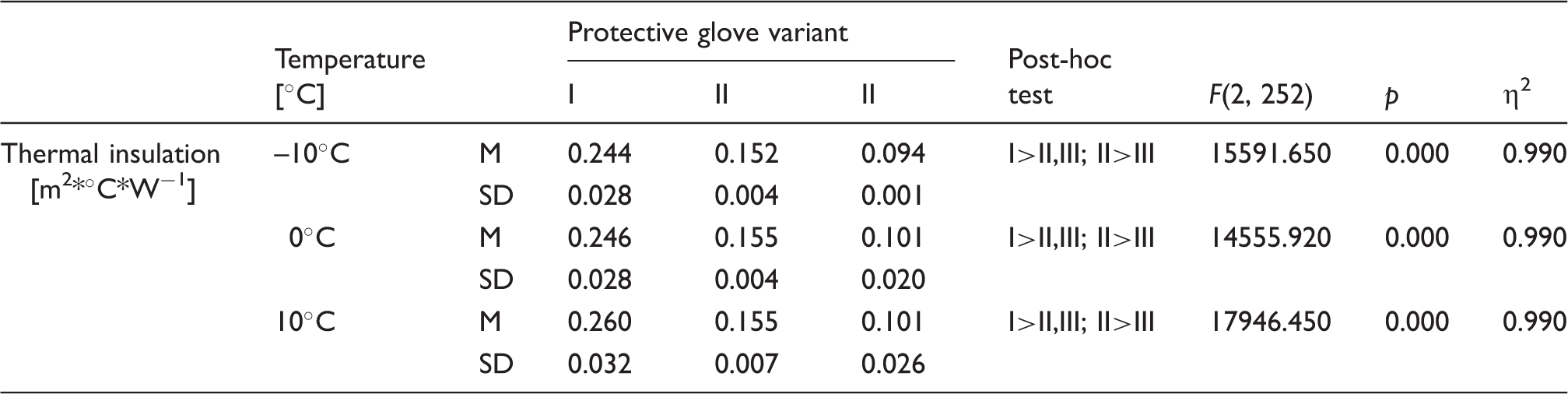
Analysis of variance statistics for evaluation of the effects of protective glove variant on thermal insulation depending on simulated pressure type (none, wood, metal, plastic) and temperature (–10℃, 0℃, 10℃)
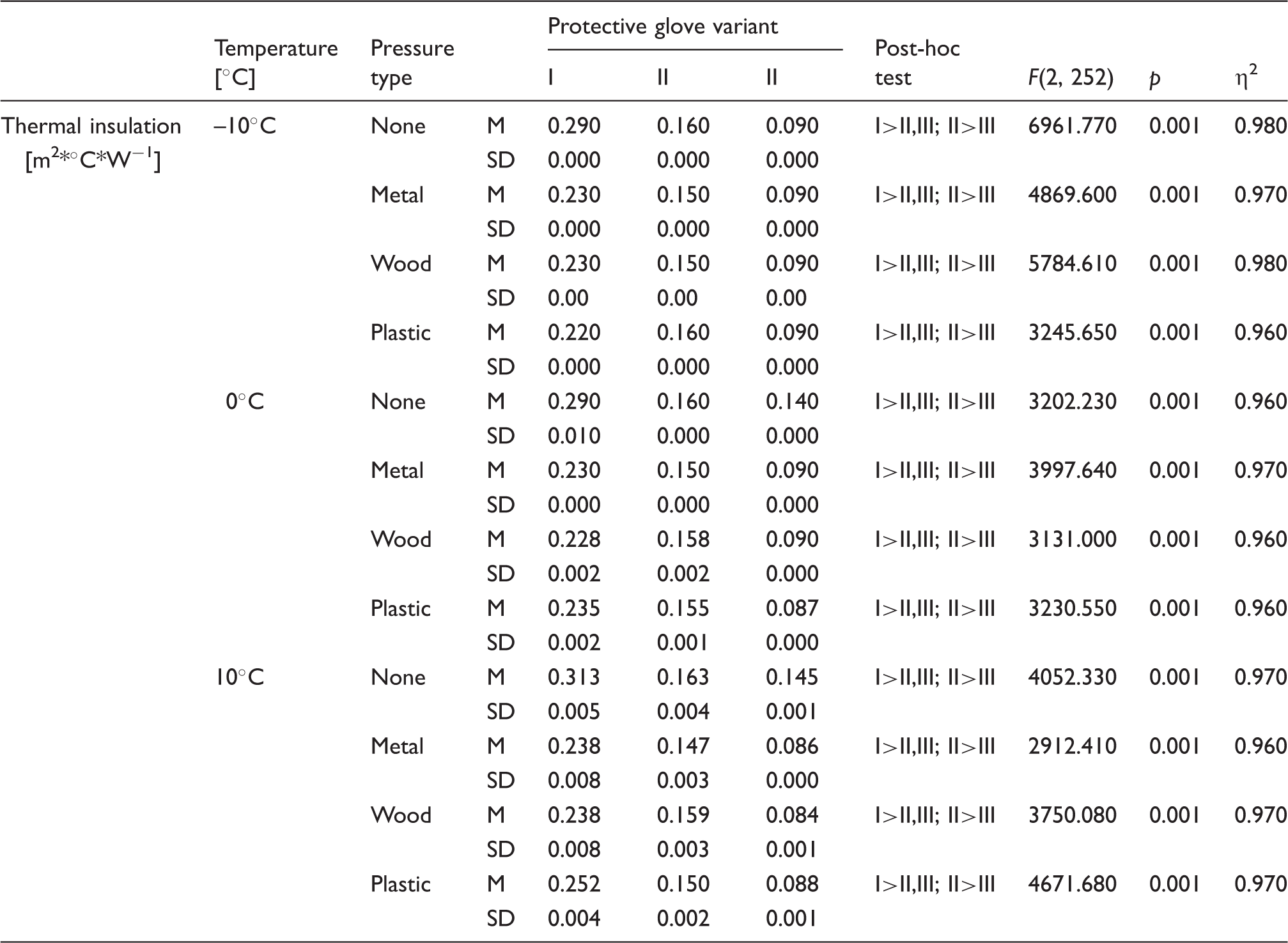
Results for thermal insulation of protective gloves exposed to different types of pressure and temperature during a simulated work cycle
Results for thermal insulation of protective gloves (variants 1, 2, and 3) from experiments conducted on a thermal hand model using three types of simulated pressure (metal, wood, plastic) and three temperatures (–10℃, 0℃, 10℃) are shown in Figures 3–5.
Results for the effects of pressure on the thermal insulation of protective gloves during a simulated work cycle
Figures 4–6 present mean thermal insulation values for protective gloves (variants 1, 2, and 3) in experiments with and without simulated pressure.
Mean thermal insulation values for protective glove variant 1 tested without and with the simulated pressure of metal, wooden, and plastic materials at 10℃, 0℃, and –10℃. Mean thermal insulation values for protective glove variant 2 tested without and with the simulated pressure of metal, wooden, and plastic materials at 10℃, 0℃, and –10℃. Mean thermal insulation values for protective glove variant 3 tested without and with the simulated pressure of metal, wooden, and plastic materials at 10℃, 0℃, and –10℃.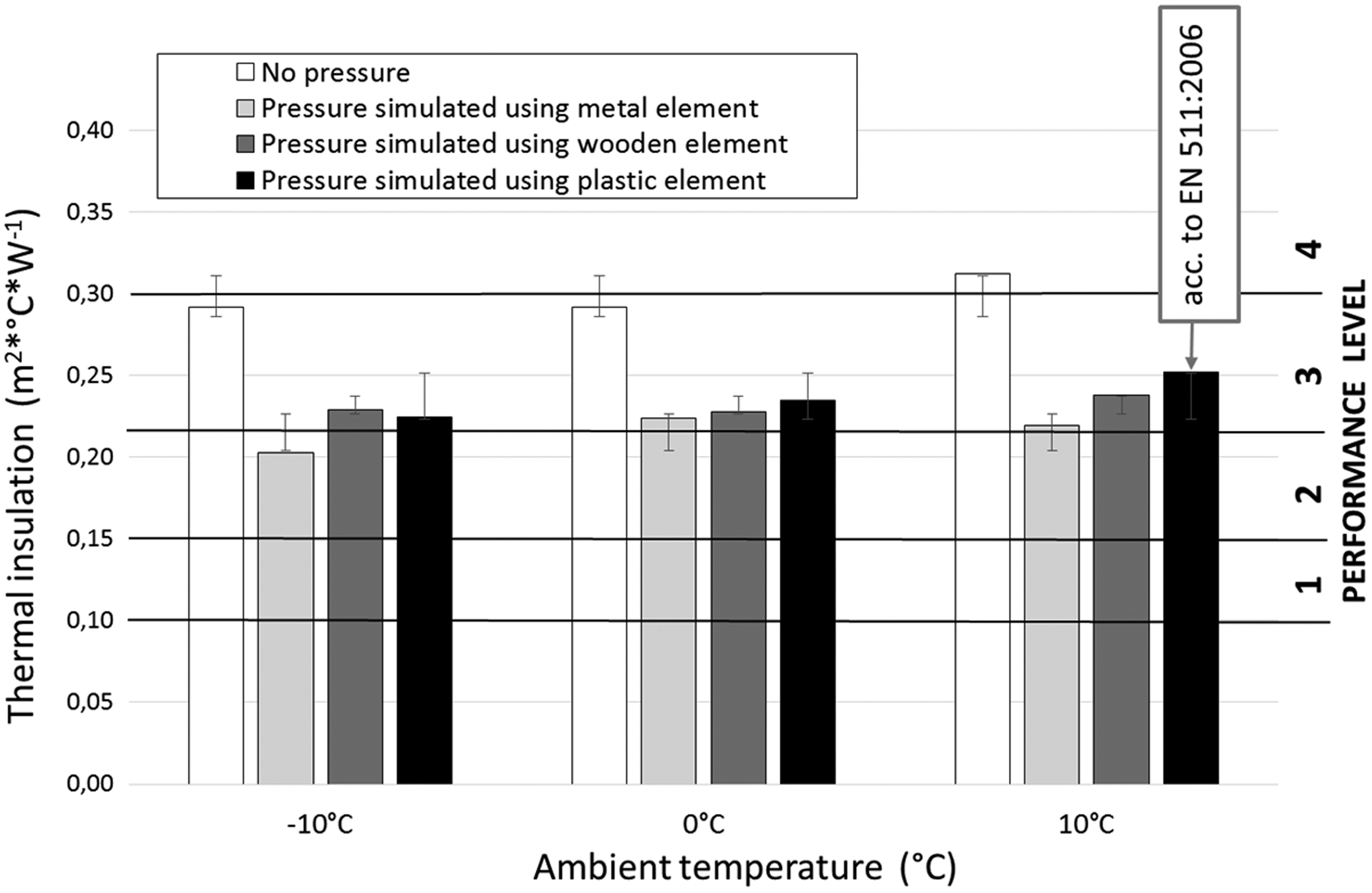


Discussion
Based on the literature data and previous studies conducted by the present authors, three representative types of surfaces with different heat transfer coefficients were selected to simulate the pressure exerted on the gloved hand by the objects handled in the workplace. 11 It should be noted that such analysis requires evaluation of more parameters than just finger temperature change, and so the authors investigated the influence of the selected surfaces on the thermal insulation of protective gloves.
In the case of laboratory studies involving a thermal hand model and aimed at reflecting workplace conditions, one needs to take into account the thermal insulation of gloves and its stability over time, the types of glove materials and their arrangement within the glove structure, and the kind of simulated pressure. The current study used different variants of protective gloves (Table 1) made of assemblies of synthetic materials, such as polyethylene, polyamide, polyester, and poly(ethylene terephthalate). These materials generally exhibit similar thermal insulation effectiveness due to their similar characteristics in terms of porosity, fiber linear density, and surface density, which have been shown to affect insulation properties.12–15 Natural leather is an exception, as it displays superior thermal insulation, as reported by several authors.16–18 Research efforts have been undertaken to evaluate the overall thermal insulation of textile assemblies and identify correlations between that parameter and the number of layers in those assemblies. Matusiak and Kowalczyk 6 and Matusiak 19 analyzed the thermal insulation of single- and multi-layer textile materials, including cotton fabrics, synthetic textiles, and assemblies thereof. It was found that the thermal resistance of a two-layer textile assembly was similar to the sum of resistances measured for its constituent layers separately, while the thermal resistance of multi-layer assemblies was lower than the sum of their constituents. Importantly, the discrepancy between the overall thermal resistance of textile assemblies and the sum of resistances of their constituents increased with the number of layers.
An Alambeta device was used to measure the amount of heat flowing through samples placed between a hot plate set to 32℃ and a cold plate maintained at the ambient temperature of the experiment. It would seem that the studied five-finger gloves (variant 2) should be characterized by much higher thermal insulation than the mitts (variant 1) taking into consideration the difference in the number of layers (six and four, respectively). However, our measurements showed that this was not the case. The studies quoted above did not account for the air trapped between the layers. Indeed, several authors have reported that while textile fibers do differ in thermal conductivity, the thermal properties of textile products are mostly affected not by them, but by pockets of trapped air. 20 The greater the ratio of trapped air to the surface density of the material, the higher its thermal insulation. This explains the excellent thermal insulation effectiveness of woven and knitted fabrics made from open-ended yarns with very large specific surface areas (such as the microfleece used in one of the tested glove designs or a polyester nonwoven). Such an approach to the thermal insulation of textile assemblies was also presented by Das et al., 7 who developed a mathematical model for predicting heat transfer through multi-layer textiles that accounted for the air trapped between the layers using general equations for heat transfer through porous media. The assumption was that the studied textiles have cellular geometry in which conductive heat transfer takes place through yarns/fibers, the fabric assembly is cuboid and comprised of infinite cylindrical fibers, and all fabric assemblies can be modified into a simple geometry of air pores and fibers. In this case, conductive heat transfer was considered to be analogous to a serial circuit of thermal resistances. The model also accounted for radiant heat transfer through yarns as well as air pores. The mathematical predictions were found to correspond to the obtained experimental results very well. This shows that the method of measuring thermal insulation with a thermal hand model proposed in the present study is a solution that not only reflects the workplace conditions, but also allows one to evaluate the effects of pressure on the insulation properties of the finished product rather than isolated material layers.
Based on the insulation measurements, the authors calculated percentage changes in the thermal insulation of protective gloves subjected to simulated pressure as compared to gloves not subjected to pressure.
The application of pressure decreased the mean thermal insulation of the tested mitts (variant 1) by 30.46% for metal, 21.32% for wood, and 23.04% for plastic at an ambient temperature of –10℃; by 23.12% for metal, 21.79% for wood, and 19.39% for plastic at 0℃; and by 29.88% for metal, 23.80% for wood, and 19.28% for plastic at 10℃. As can be seen, the smallest relative decline in glove thermal insulation was found for the wooden pressure-simulating element at –10℃, and for the plastic element at 10℃ and 0℃. These results confirm the influence of the thermal conductivity coefficient (λ) of different surfaces on thermal insulation. The highest loss of thermal properties was observed for the metal element.
The corresponding percentage values were much lower for the five-finger gloves (variant 2): 5.77% for metal, 3.21% for wood, and 0.00% for plastic at an ambient temperature of –10℃; 5.10% for metal, –0.64% for wood, and 1.27% for plastic at 0℃; and 9.82% for metal, 2.25% for wood, and 7.89% for plastic at 10℃. The decline in thermal insulation was dependent on the type of pressure-simulating element and ambient temperature, with the wooden element causing the smallest decrease as compared to the reference measurements without applied pressure.
In the case of five-finger rubber gloves (variant 3), their mean thermal insulation declined for all types of pressure-simulating elements: by 1.73% for metal, 0.53% for wood, and 0.27% for plastic at an ambient temperature of –10℃; by 32.63% for metal, 33.46% for wood, and 36.04% for plastic at 0℃; and by 40.64% for metal, 42.02% for wood, and 39.00% for plastic at 10℃.
It should be noted that the application of simulated pressure affected to the greatest extent the thermal insulation of the mitts due to the high content of trapped air, ensuring high thermal resistance under no-pressure conditions. Five-finger gloves were less susceptible to contact with cold objects, as in their case changes in the amount of air trapped between the layers of material did not significantly affect their insulation properties.
Five-finger rubber gloves with knitted inserts exhibited very low insulation effectiveness. At –10℃ they did not meet the minimum requirements of the standard EN 511:2006, failing to reach the first performance level. While at higher temperatures they did satisfy the minimum standard requirements, they failed again upon contact with any object. The applied pressure adversely affected the thermal insulation of the gloves, bringing them down by one performance level at 0℃ and 10℃.
The observed changes in the thermal insulation properties of gloves under the influence of pressure exerted by different types of materials are closely associated with the thermal conductivity (λ) of the latter under medium humidity conditions. Wood and plastic had the lowest, and metal the highest, effects on the thermal insulation of the studied gloves.
Moreover, the glove variant also had a statistically significant effect on thermal insulation levels [m2*℃*W−1], whether in the absence or presence of simulated pressure. In the case of all four pressure options, the highest thermal insulation was found for variant I, and the lowest for variant III (see Tables 3 and 4).
Given the above, it should be noted that pressure application exerted the greatest effect on the thermal insulation of those glove designs where it most significantly decreased the amount of air trapped between the material layers, thus impairing their cold protection effectiveness. In addition, it can be inferred from the results that while gloves with more trapped air between layers (mitts) are characterized by superior thermal insulation properties, they are also more susceptible to a decline in those properties upon contact with cold objects. This is consistent with the findings of Morris, 21 who reported the effect of trapped air on the thermal insulation of textile fabrics and assemblies. Indeed, Morris found close correlations between thermal insulation properties, fabric layer thickness, and air volume per unit area of the fabric.
The authors suggest that the effect of glove design on changes in thermal insulation should be taken into account in the process of selecting cold-protective gloves for workers. In the presented experiments, this effect was found to be statistically significant at all the tested ambient temperatures (–10℃, 0℃, and 10℃), with glove variant 1 always exhibiting the highest thermal insulation and variant 3 the lowest insulation (see Figure 2). The implications of these findings for the selection of cold-protective gloves are given in Figure 7.
Scheme showing the recommended selection protocol for different glove designs based on performance levels and cold work environment conditions.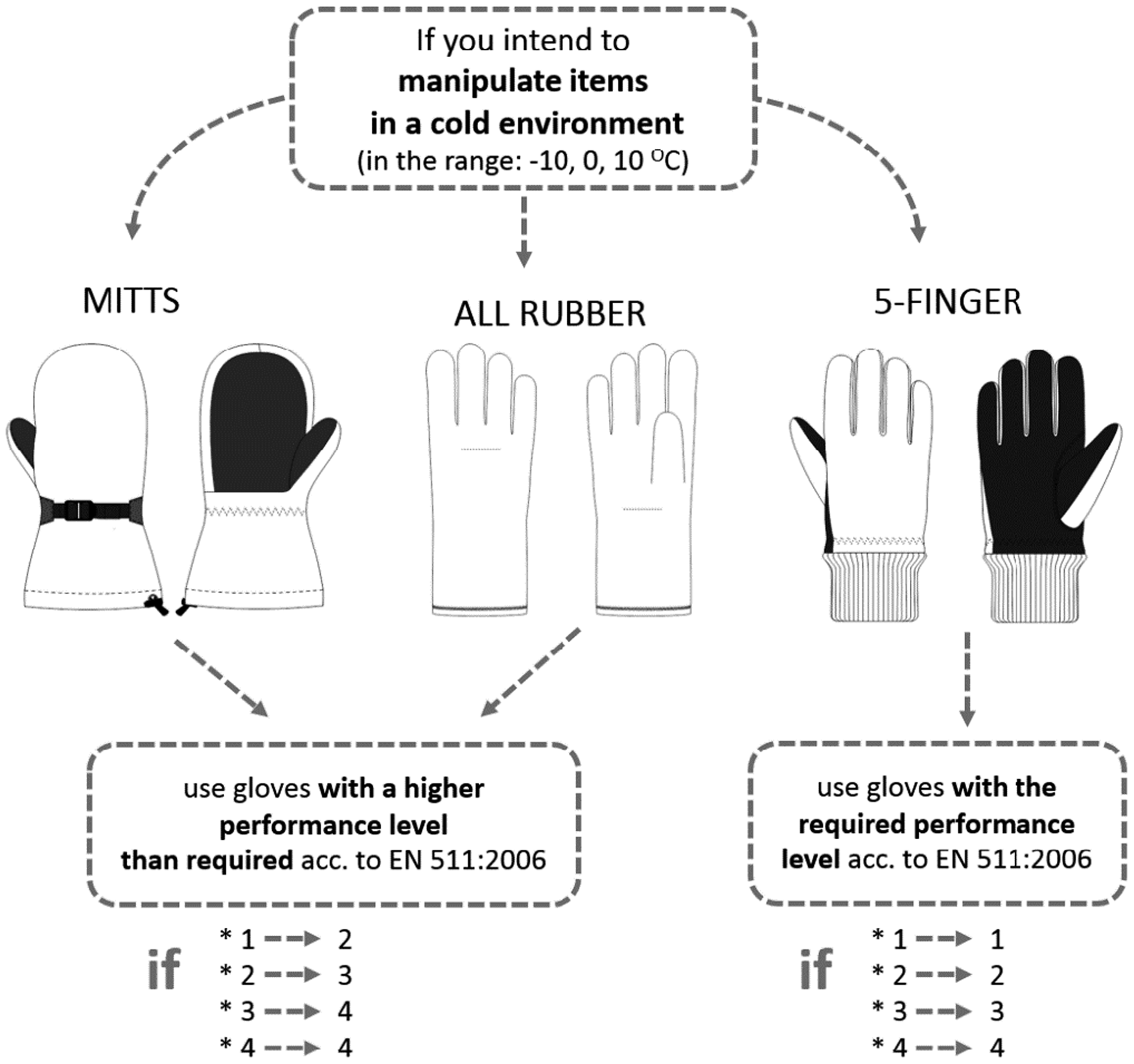
Conclusions
The crucial findings from the study can be summarized as follows:
the thermal insulation of protective gloves decreases as a result of applied pressure; the effects of pressure on the thermal insulation of protective gloves depend on ambient temperature, glove design, and the pressure-simulating element (surface type); since the thermal insulation of protective gloves is adversely impacted by pressure applied to them, allowance should be made for decreased performance levels when selecting gloves for manual work in cold environments.
Footnotes
Declaration of conflicting interests
The authors declared no potential conflicts of interest with respect to the research, authorship, and/or publication of this article.
Funding
The authors disclosed receipt of the following financial support for the research, authorship, and/or publication of this article: The paper is based on the results of the COLDPRO project: ‘The use of active ecological mineral compounds in the production of cold-protective gloves and footwear’ funded in the years 2015–2018 by the National Centre for Research and Development in Poland.