




Abstract
This study presents a cost-effective method of enhancing the electrical conductivity and washing durability of bacterial cellulose (BC)-polyaniline (PANI) membrane by the addition of metal salt. In this study, two types of metal salts were tested: copper (II) sulfate and iron (II) sulfate. The optimal condition to produce BC-PANI-metal salt membranes was 0.05% (w/v) of copper (II) sulfate (copper salt). X-ray diffraction analysis showed that the crystallinity of BC-PANI increased after adding copper salt. According to the increased degree of crystallinity, the polymer chain structure of BC-PANI-copper salt (BC-PANI-Cu) was more organized than that of BC-PANI, as confirmed by scanning electron microscopy. In addition, this ordered structure of BC-PANI-Cu indicated enhanced electrical conductivity. Moreover, the addition of copper salt improved the electrical conductivity of BC-PANI to a level about 3.8 times higher than that of BC-PANI produced without metal salt, and it retained about 40% of its original electrical conductivity after three washing cycles. From the results, the addition of copper salt improved both the electrical conductivity and washing durability of the BC-PANI membrane.
Keywords
Conductive textiles are electrically functionalized materials manufactured by embroidering, knitting, weaving, or coating chemically synthesized polymers onto the textile structure.1,2 Among these, chemical synthesis and conductive polymer coating are the methods that are most widely used to produce conductive textiles because: (i) conductive materials can be simply fabricated without weaving or knitting,3,4 (ii) the electrical conductivity of conductive materials can be adjusted by varying the type of dopant acids involved in the polymerization process, 5 and (iii) the mechanical properties of textile materials are not affected by chemical treatment. 6 Conductive polymers exhibit extended π-electron delocalization along their conjugate backbone consisting of alternating single and double bonds,7,8 and hence they are lightweight and corrosion-resistant. 9 Among these polymers, polyaniline (PANI) is easy to synthesize, cost-effective due to the low cost of monomer, and it shows good electrical conductivity and high chemical stability.10,11
Bacterial cellulose (BC) is a pure cellulose material produced by Acetobacter or Gluconacetobacter bacteria 12 and possesses excellent flexibility, high crystallinity, high porosity, three-dimensional nanostructure, good mechanical properties, and high water-holding capacity.13–15 Due to these characteristics, conductive polymers can be effectively polymerized inside the BC nanostructure. Hence, conductive BC membranes were produced by incorporating PANI into BC with an in-situ synthesis method and the BC polymerized with PANI was named BC-PANI. Several studies have reported the production of conductive BC-PANI membranes. However, the electrical conductivity of BC-PANI membranes produced in previous studies is 1.61 × 10⁻⁴ ∼ 5.2 × 10⁻³ S/cm, which is not high enough to be used as a conductive textile.16,17 A conductive textile requires good flexibility and durability in order to be worn. It must also maintain its electrical conductivity even after washing; however, there is no study to evaluate the washing durability of BC-PANI. Thus, simple and cost-effective methods to improve the electrical conductivity and to maintain the washing durability of BC-PANI are required.
This study aims to improve the electrical conductivity of BC-PANI and to impart washing durability to it by employing additives. The electrical conductivity of PANI can be enhanced by using additives such as carbon nanotubes, 18 graphene, 19 and metal salts. 20 In particular, metal salts are inexpensive and easy to handle during the polymerization of PANI. Moreover, using metal salts improves the mechanical properties of PANI.21,22 Despite these advantages, few studies have been conducted to synthesize PANI with metal salts.23–25 Thus, in this study, two metal salts – copper (II) sulfate and iron (II) sulfate – were used. The conductive BC-PANI produced with the metal salts was denominated as BC-PANI-metal salt. Two types of BC-PANI-metal salt membranes were produced and the effects of the metal salts on the electrical conductivity of BC-PANI were investigated. The polymerization conditions for the BC-PANI-metal salt membranes were optimized by measuring their electrical conductivity using the four-point probe method. The polymerization of PANI was assessed by ultraviolet-visible (UV-Vis) spectroscopy and matrix-assisted laser desorption/ionization-time of flight (MALDI-TOF) analyses. The chemical and physical characteristics of the BC-PANI-metal salt membrane produced under the optimized conditions were evaluated by Fourier-transform infrared (FT-IR) spectroscopy, X-ray diffraction (XRD), field-emission scanning electron microscopy (FE-SEM), and washing durability analysis.
Experimental details
Materials
Yeast extract and peptone were purchased from BD Biosciences (San Jose, CA, USA). Glucose, hydrogen peroxide (34.5%), sodium hydroxide, and acetic acid were obtained from Duksan Pure Chemical Co., Ltd. (Seoul, Korea). Dodecylbenzene sulfonic acid (DBSA) was obtained from Sigma-Aldrich (St. Louis, MO, USA). Aniline was obtained from Junsei Chemical Co., Ltd. (Tokyo, Japan). Ammonium persulfate (APS) was obtained from Kanto Chemical Co., Inc. (Tokyo, Japan). Ethyl alcohol (99.9%) and iron (II) sulfate (FeSO4·7H2O) were obtained from Duksan Pure Chemical Co., Ltd. (Seoul, Korea), whereas copper (II) sulfate (CuSO4·5H2O) was purchased from Shinyo Pure Chemicals Co., Ltd. (Osaka, Japan). All the chemical reagents were used as-received without further purification.
Methods
The BC-PANI-metal salt membranes were prepared using an in-situ synthesis method. BC was produced according to the procedure reported by Han et al.
26
and was then pre-treated by washing, bleaching, and swelling according to previously reported procedures.26,27 Figure 1 illustrates the synthesis of the BC-PANI-metal salt membranes. First, pre-treated BC (2 cm × 2 cm), aniline (2.5 mM), and the two types of metal salts (copper (II) sulfate and iron (II) sulfate) were added to a DBSA solution (2.5 mM) with a pH of 2.5. The resulting solution was magnetically stirred for 30 min. Next, an APS solution (2.5 mM) was added to the reaction mixture to initiate the polymerization process. The resulting solution was polymerized for 24 h at 20℃. Finally, BC-PANI-metal salt membranes were obtained and dried in a drying oven for 4 h at 20℃.
Schematic illustration of the in-situ synthesis of the BC-PANI-metal salt membranes.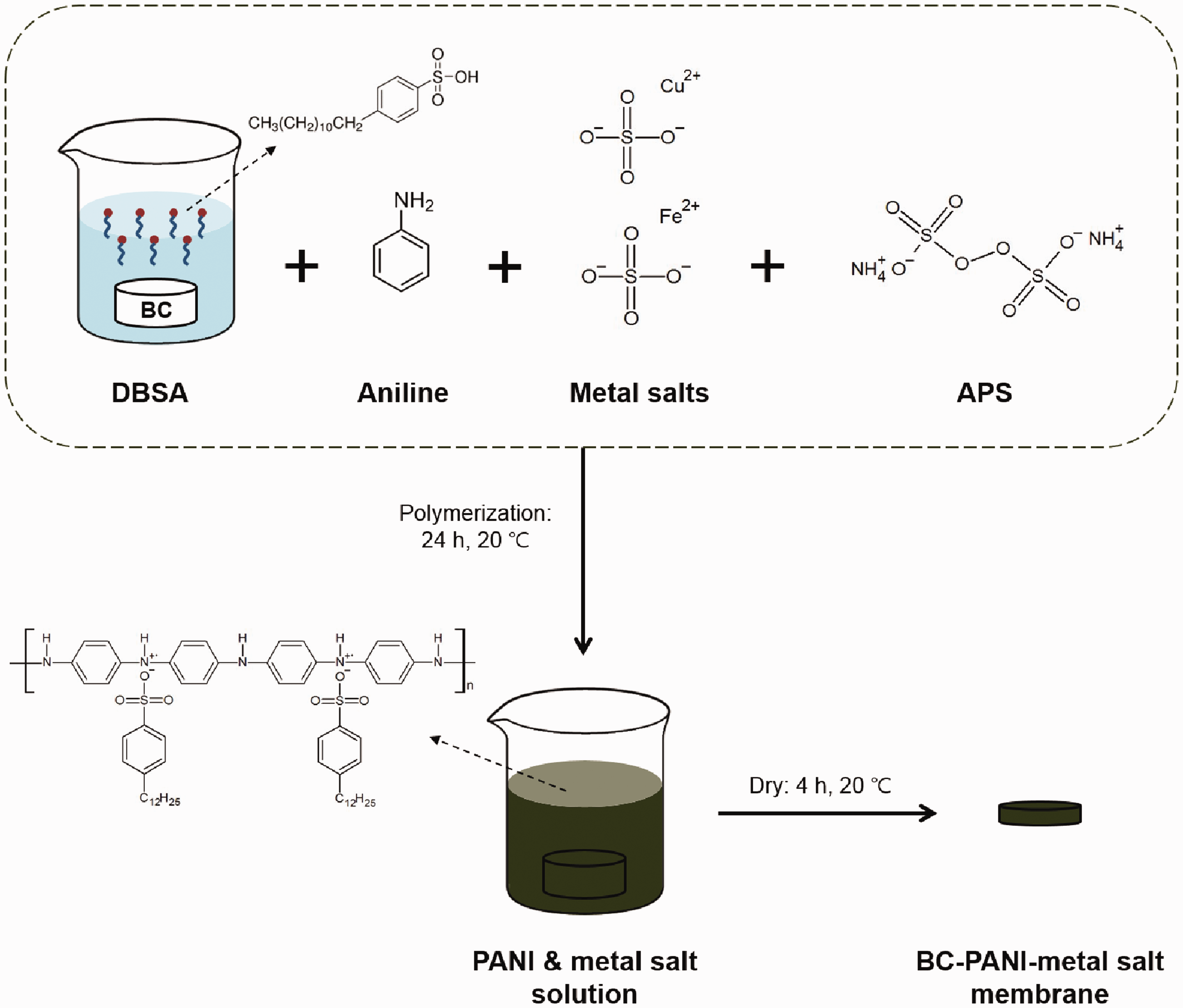
Characterization
Electrical conductivity
Electrical conductivity measurements were carried out to optimize the polymerization conditions of BC-PANI-metal salt. The electrical resistivity of the BC-PANI-metal salt membranes was measured using the four-point probe method (CMT-SR1000N, Chang Min Tech Co., Ltd., Korea). The electrical resistivity of each sample was measured at five different points and the average value of these measurements was reported. The electrical conductivity of the samples was then calculated using Equation (1):

UV-Vis spectroscopy
To confirm the polymerization of PANI, the UV-Vis spectra of the BC-PANI-metal salt polymerization solutions were obtained using a 96-quartz microplate reader (SynergyMx, Shimadzu, Japan). The UV-Vis spectra were recorded over the wavelength range of 300–800 nm.
MALDI-TOF mass spectrometry
The degree of polymerization (DP) of PANI was analyzed by MALDI-TOF mass spectrometry using α-cyano-4-hydroxycinnamic acid (CHCA) as the matrix. The mass spectra of the samples were obtained using an Ultra-flex MALDI-TOF mass spectrophotometer (Bruker Daltonics GmbH, Bremen, Germany) equipped with a 337 nm nitrogen laser in the linear positive mode. All the samples were dissolved in a TA30 (30% acetonitrile/70% trifluoracetic acid) solution, and to the resulting solutions, a saturated solution of CHCA was added. A sample (5 µL) of the resulting solution was then dropped on a ground steel plate (Bruker part n. 209519) and dried.
FT-IR spectroscopy
A Nicolet IS50 (Thermo Fisher Scientific, Waltham, MA, USA) FT-IR spectrophotometer was used to examine the chemical structure of the BC-PANI-metal salt membrane prepared under the optimized conditions. The FT-IR spectra of the samples were recorded over the wavenumber range of 650–4,000 cm−1 at a resolution of 4 cm−1. For each spectrum, baseline normalization was carried out using OMNIC software (Thermo Fisher Scientific, Waltham, MA, USA).
XRD
The crystalline structure of the BC-PANI-metal salt membrane obtained under the optimized conditions was examined using a D8 Advance diffractometer (Bruker AXS Inc., Karlsruhe, Germany) over the 2θ range of 0°–40°. XRD measurements were carried out with a Cu-Kα radiation source (λ = 1.5406 nm) at 40 kV and 40 mA.
Surface morphology
The surface morphology of the BC-PANI-metal salt membrane prepared under the optimized conditions was examined by FE-SEM (JSM-7600F, JEOL Ltd., Tokyo, Japan). All the samples were sputter-coated with platinum using a magnetron sputter coater (108auto, Cressington Scientific Instruments, Watford, UK).
Washing durability
Washing durability tests were carried out in three sequential washing steps. Each step was performed in a shaking water bath (BS-21, JEIO TECH Co., Daejeon, Korea) at a rotating speed of 110 rpm at 25℃ for 120 min. After each step, the samples were dried for 1 h at 25℃. The electrical conductivity of each of the samples was evaluated after each washing step and the relative change in the electrical conductivity was calculated using Equation (2):

Results and discussion
PANI was polymerized in-situ with BC to prepare conductive BC-PANI membranes. Copper (II) sulfate and iron (II) sulfate were added to improve the electrical conductivity of BC-PANI. The BC-PANI samples polymerized with copper (II) sulfate and iron (II) sulfate were labeled as BC-PANI-Cu and BC-PANI-Fe, respectively. The electrical conductivity and degrees of polymerization of the two membranes were evaluated and compared.
Electrical conductivity
Electrical conductivity of BC-PANI and BC-PANI-metal salt membranes (polymerization conditions: pH of the DBSA solution = 2.5, DBSA:aniline:APS = 1:1:1, 20℃, 24 h)

Polymerization of PANI
Figure 2 shows the UV-Vis spectra of the polymerization solutions of BC-PANI, BC-PANI-Cu, and BC-PANI-Fe with the highest electrical conductivity. The BC-PANI and BC-PANI-Cu polymerization solutions showed similar characteristic bands with three noticeable peaks at around 360, 440, and 770 nm. These peaks indicate that PANI exists in the conductive emeraldine salt state.
31
In particular, the peak at around 360 nm corresponds to the π–π* electronic transition along the PANI backbone, while that at 440 nm corresponds to the exciton transition caused by the doping of PANI.
32
The absorption bands at around 600–700 nm and 700–800 nm can be attributed to the formation of polarons.
33
However, the polymerization solution of BC-PANI-Fe showed no peak corresponding to PANI. This indicates that the addition of the iron salt inhibited the polymerization of PANI.
UV-Vis spectra of the polymerization solutions of (a) BC-PANI, (b) BC-PANI-Cu, and (c) BC-PANI-Fe (polymerization conditions: 0.05% (w/v) of metal salts, pH of the DBSA solution = 2.5, DBSA:aniline:APS = 1:1:1, 20℃, 24 h).
The MALDI-TOF mass spectra of the membranes were examined to determine the degrees of polymerization of PANI. Figure 3 shows the MALDI-TOF mass spectra of BC-PANI, BC-PANI-Cu, and BC-PANI-Fe. The mass spectrum of BC-PANI showed peaks at 98, 189, 270, 372, 465, and 557 m/z (mass-to-charge ratio). Since the m/z value of the monomer unit of PANI (C6NH5) is 91,34–36 the peaks at 98, 189, 270, and 372 m/z can be attributed to aniline monomers, dimers, trimers, and tetramers, respectively. The peak at 372 m/z (Figure 3) corresponds to PANI, since the smallest repeat unit of the PANI emeraldine state is the aniline tetramer.
37
The peak corresponding to the aniline tetramer was also observed in the mass spectrum of BC-PANI-Cu, confirming the polymerization of PANI. In addition, as can be observed from Table 2, BC-PANI-Cu exhibited the highest DP of PANI. In the case of BC-PANI-Fe, the polymerization of PANI could not be confirmed because the peak intensities were very low and the peak corresponding to the monomer was not detected. This can be attributed to the use of the iron salt as the reducing agent in this case.
30
Thus, the MALDI-TOF results showed that the addition of the copper salt promoted the polymerization of PANI.
(1) MALDI-TOF mass spectra of (a) BC-PANI, (b) BC-PANI-Cu, and (c) BC-PANI-Fe. (2) Enlarged view of the MALDI-TOF mass spectra of (a) BC-PANI and (b) BC-PANI-Cu over the 350–1,000 m/z range (polymerization conditions: 0.05% (w/v) of metal salts, pH of the DBSA solution = 2.5, DBSA:aniline:APS = 1:1:1, 20℃, 24 h). DP, molecular weight, and polydispersity index of BC-PANI and BC-PANI-Cu (polymerization conditions: 0.05% (w/v) of metal salts, pH of the DBSA solution = 2.5, DBSA:aniline:APS = 1:1:1, 20℃, 24 h) Notes: *Molecular weight. **Polydispersity index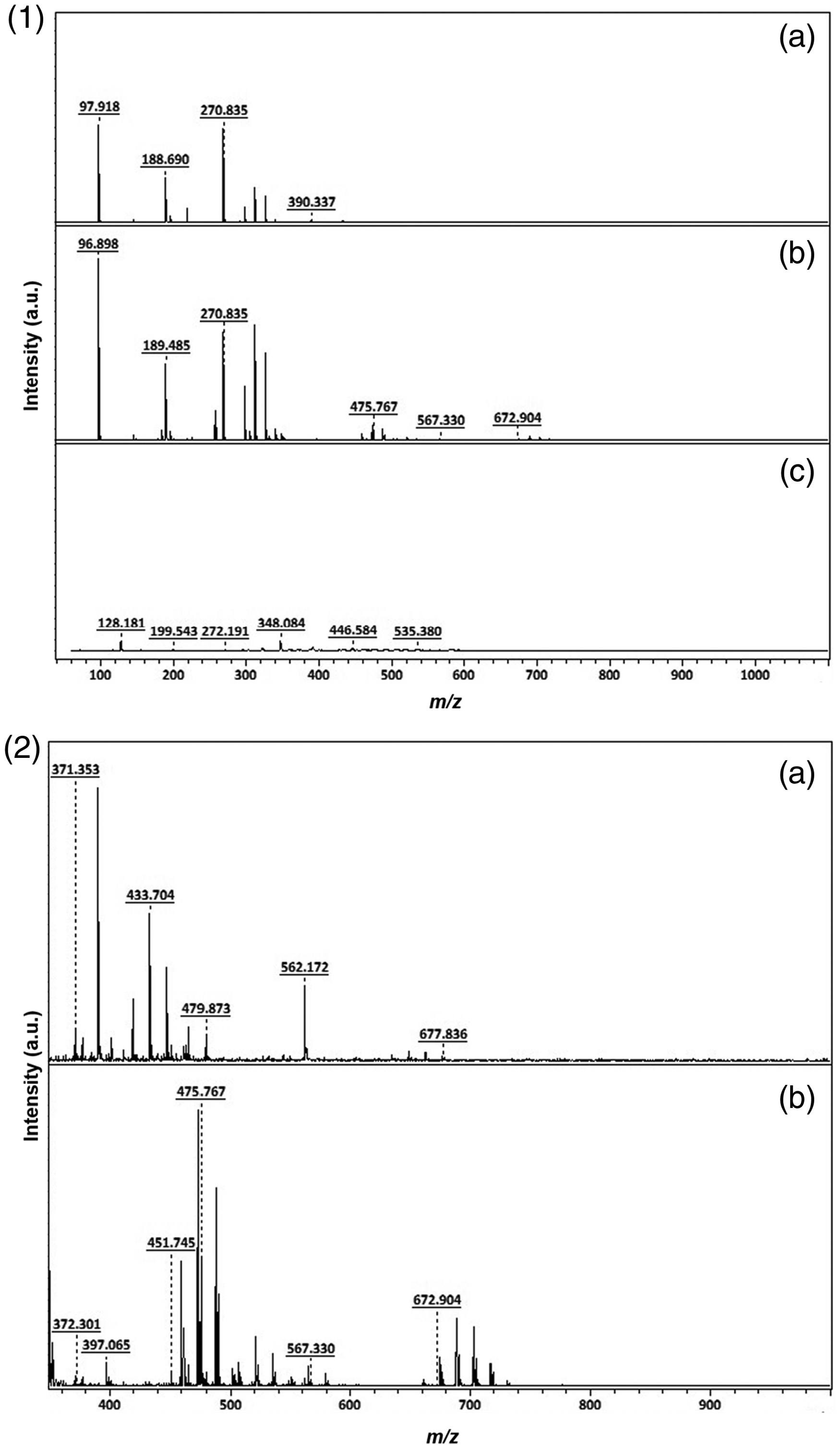

Characterization of BC-PANI-Cu
The chemical structure of BC-PANI-Cu was examined by FT-IR spectroscopy. As can be observed from Figure 4, in the case of BC-PANI and BC-PANI-Cu, the intensities of the peaks at 3550–3230 cm−1 corresponding to the –OH vibration of hydrogen bonds in cellulose decreased.
38
This suggests that the –OH functional groups in BC reacted with PANI during the polymerization process.
39
BC-PANI and BC-PANI-Cu showed the characteristic peaks of PANI (Table 3). The peaks corresponding to PANI shifted slightly in the case of BC-PANI-Cu because of the chemical reaction between the copper salt and the reaction sites (amine and imine groups) of PANI.
40
The absorption peaks at 1612, 1611, 1425, and 1422 cm−1 correspond to the amine and imine groups in BC-PANI and BC-PANI-Cu.41–44 The peaks at 1313 and 1290 cm−1 correspond to the protonated state of PANI,45,46 while the peaks at 861 and 864 cm−1 can be attributed to the head-to-tail coupling of the aniline monomers.47,48 Thus, the FT-IR analysis confirmed the presence of PANI in the BC-PANI-Cu membrane.
FT-IR spectra of (a) untreated BC, (b) BC-PANI, and (c) BC-PANI-Cu (polymerization conditions: 0.05% (w/v) of copper (II) sulfate, pH of the DBSA solution = 2.5, DBSA:aniline:APS = 1:1:1, 20℃, 24 h). Characteristic peaks of PANI in the FT-IR spectra of BC-PANI and BC-PANI-Cu (polymerization conditions: 0.05% (w/v) of copper (II) sulfate, pH of the DBSA solution = 2.5, DBSA:aniline:APS = 1:1:1, 20℃, 24 h)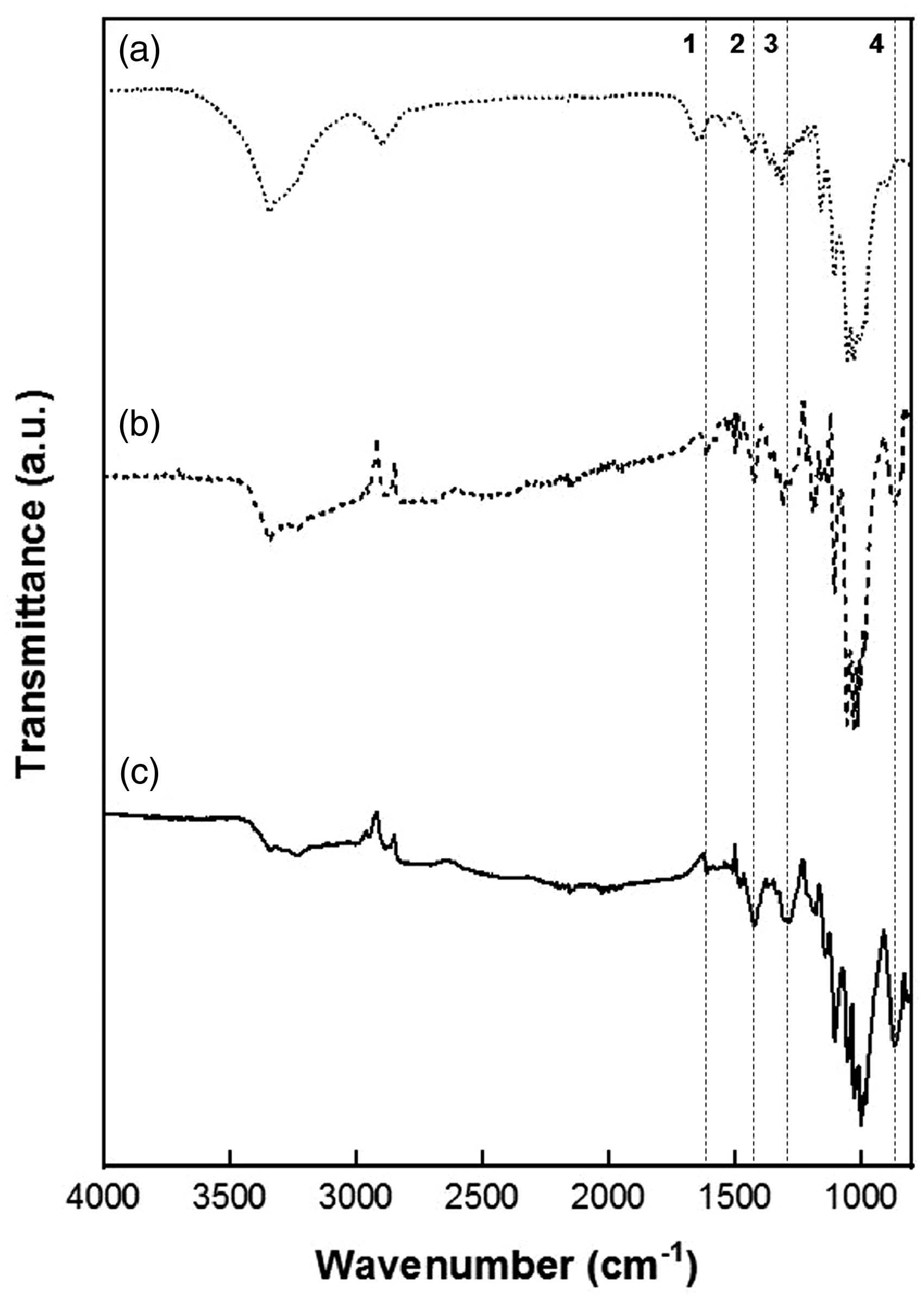

Figure 5 shows the XRD patterns of untreated BC, BC-PANI, and BC-PANI-Cu membranes. All the samples showed diffraction peaks at 2θ = 14.7° and 22.8°, indicating the presence of the cellulosic structure.
15
This suggests that the cellulose structure of BC was retained when the polymerization was carried out in the presence of copper. The diffraction peak at 2θ = 25° in the XRD pattern of BC-PANI confirms the formation of PANI.
49
In the case of BC-PANI-Cu, the diffraction peak of PANI shifted slightly to 24.2°.
50
This can be attributed to the effect of the copper salt on the polymerization of PANI. The narrow peak at 2θ = 18.7° in the diffraction pattern of BC-PANI-Cu can be attributed to the presence of copper.
51
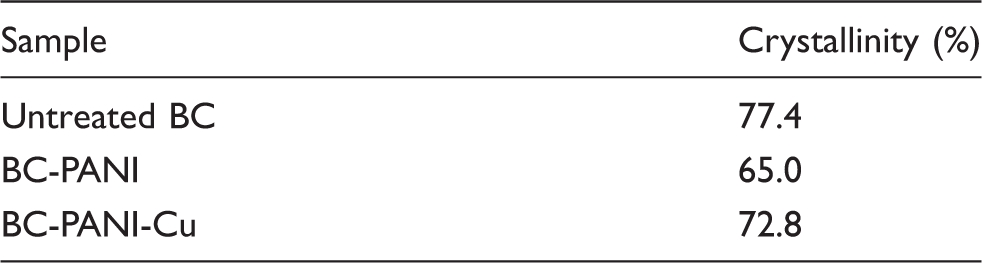
As in Table 4, the degree of crystallinity of BC-PANI was decreased. It was then increased after adding copper salt. This can be attributed to the reaction of the –OH functional groups of BC with the copper salt, leading to an ordered arrangement of the polymer chains.
52
This is consistent with the results reported previously that the structural ordering of BC improves its electrical conductivity.12,53 The XRD results showed that the copper salt improved the degree of crystallinity of the BC-PANI membrane.
XRD patterns of (a) untreated BC, (b) BC-PANI, and (c) BC-PANI-Cu (polymerization conditions: 0.05% (w/v) of copper (II) sulfate, pH of the DBSA solution = 2.5, DBSA:aniline:APS = 1:1:1, 20℃, 24 h). Degrees of crystallinity of untreated BC, BC-PANI, and BC-PANI-Cu (polymerization conditions: 0.05% (w/v) of copper (II) sulfate, pH of the DBSA solution = 2.5, DBSA:aniline:APS = 1:1:1, 20℃, 24 h)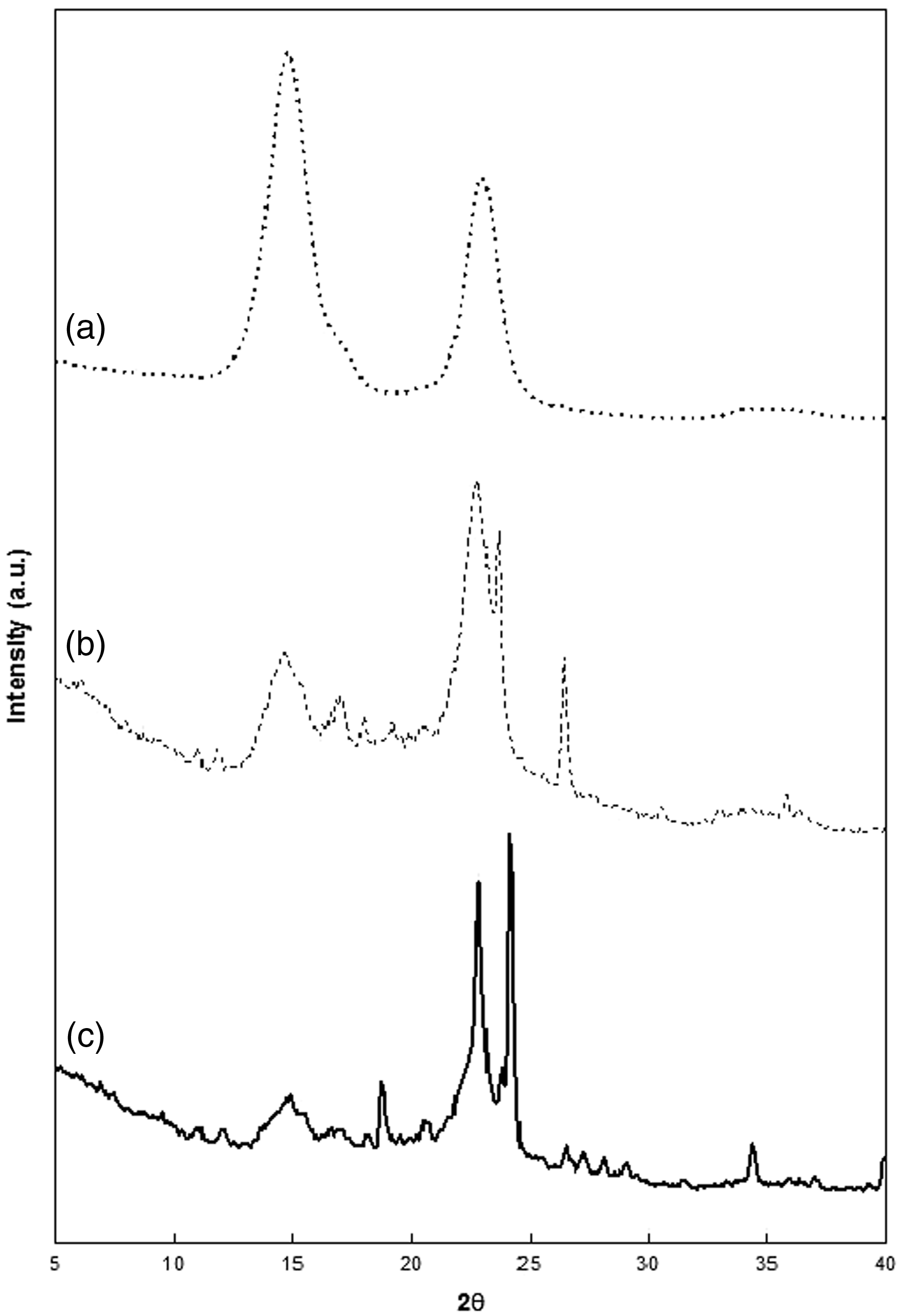
The surface morphology of BC-PANI-Cu was examined by SEM (Figure 6). The thickness of the untreated BC (Figure 6(a)) fibers increased with their treatment with PANI. This is because the fibers bundled together with the polymerization of PANI.17,54 Moreover, the structure of BC-PANI-Cu (Figure 6(c)) was more organized than that of BC-PANI (Figure 6(b)). This can be attributed to the increased degree of crystallinity of BC-PANI with the addition of the copper salt, thus facilitating the polymer chain arrangement.
52
SEM images of (a) untreated BC, (b) BC-PANI, and (c) BC-PANI-Cu at 1,000 and 10,000 X magnification with a scale bar of 1 µm (polymerization conditions: 0.05% (w/v) of copper (II) sulfate, pH of the DBSA solution = 2.5, DBSA:aniline:APS = 1:1:1, 20℃, 24 h).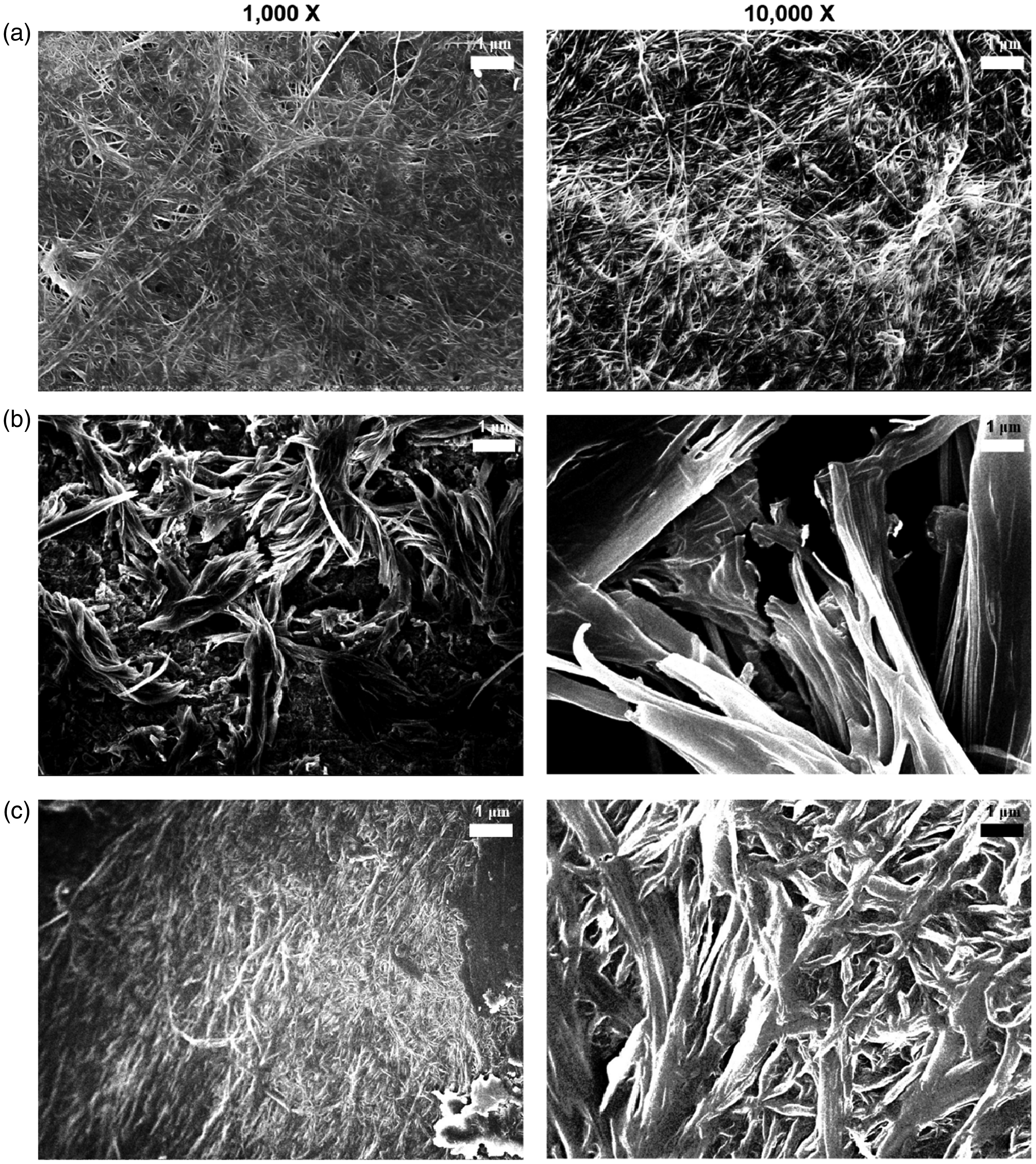
Washing durability tests were carried out to examine the changes in the electrical conductivity of BC-PANI and BC-PANI-Cu after washing. As can be observed from Figure 7, the electrical conductivity of BC-PANI-Cu decreased by 41%, while that of BC-PANI decreased by 83% after the first washing. After three washing steps, BC-PANI-Cu retained its original electrical conductivity over 40% while that of BC-PANI was maintained by 1.4%. This indicates that the copper salt strengthened the bond between the BC fibers and PANI.
55
Thus, it was confirmed that the addition of the copper salt increased the washing durability of the BC-PANI membrane.
Changes in the relative electrical conductivity of BC-PANI and BC-PANI-Cu after different washing steps.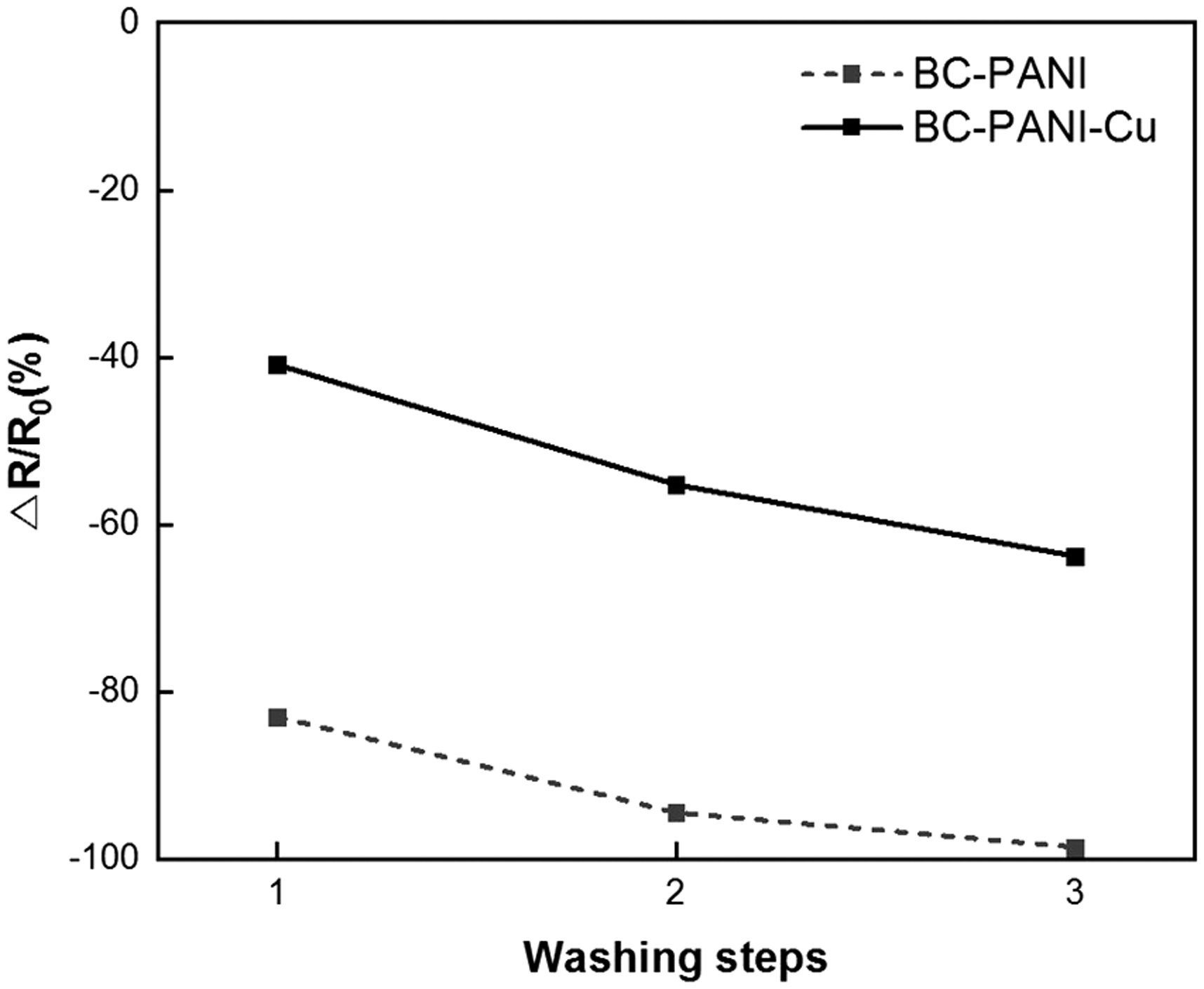
Conclusions
The aim of this work was to improve the electrical conductivity and to impart washing durability to BC-PANI by employing inexpensive additives. To achieve this, a conductive BC-PANI was prepared by incorporating PANI polymer in BC membranes by the in-situ synthesis method. The polymerization conditions of PANI were evaluated on the basis of the electrical conductivity of the BC-PANI-metal salt membranes. The addition of 0.05% (w/v) of copper (II) sulfate was found to be optimum for the preparation of the BC-PANI-metal salt membranes. The electrical conductivity of BC-PANI-Cu was 7.54 × 10⁻² S/cm, which was 3.8 times greater than that of BC-PANI. It was also more than 14.5 times greater than that of BC-PANI from previous studies. The UV-Vis results showed that PANI existed in the emeraldine state in BC-PANI-Cu. The MALDI-TOF results explained that BC-PANI-Cu exhibited a higher degree of PANI polymerization than the other membranes, confirming that the addition of copper improved the polymerization degree of PANI. The BC-PANI-Cu membrane prepared under the optimum polymerization conditions was characterized by FT-IR, XRD, SEM, and washing durability tests. The FT-IR spectrum of BC-PANI-Cu showed characteristic peaks of PANI. The XRD results showed that the addition of copper improved the degree of crystallinity of the BC-PANI membrane. The SEM images of the membranes identified that BC-PANI-Cu exhibited a more ordered structural arrangement of BC fibers than BC-PANI. The washing durability of BC-PANI was improved by the addition of copper salt. After washing, the conductivity of BC-PANI with copper salt retained over 40% of the original electrical conductivity while that of BC-PANI was reduced to 1.4%. This study provided a cost-effective approach for enhancing the electrical conductivity and washing durability of BC-PANI by employing copper salts.
Footnotes
Declaration of conflicting interests
The authors declared no potential conflicts of interest with respect to the research, authorship, and/or publication of this article.
Funding
The authors disclosed receipt of the following financial support for the research, authorship, and/or publication of this article: This work was supported by the National Research Foundation of Korea (NRF) grant funded by the Korean government (MSIT) (No. NRF-2019R1A2C1009217).
