




Abstract
Silk fabrics have poor resistance to ultraviolet (UV) light and to wrinkles. To improve these properties, we propose a finishing method of coating the silk fabric surface with nano-silica (nano-SiO2). The results show that the UV protective factor (UPF) value could reach a maximum of 84.52 after finishing in 10 g/L nano-SiO2 and 20 g/L silane coupling agent (KH570) solution at 80℃. Moreover, the treated silk fabrics showed improved wrinkle resistance and hydrophobicity. The surface morphology and crosslink action of the treated silk fabrics were characterized by scanning electron microscope, energy dispersive spectrometer and Fourier transform infrared spectroscopy, which proved that nano-SiO2 particles were grafted on to the silk fabric. There was no apparent difference in color between untreated and treated silk fabrics. Thermal stability and cytotoxicity tests showed that the treated silk fabrics had good thermostability and cytocompatibility. The UPF value could be maintained at 77.31 after washing 20 times, which demonstrated that the treated silk fabrics had laundry resistance. Multifunctional silk fabrics with good hydrophobic properties and excellent UV and wrinkle resistance were developed, showing good prospects for their application in self-cleaning, protective and non-ironing clothes.
Silk fabrics are prized textiles since they are soft, smooth, lustrous and comfortable to wear. However, ultraviolet (UV) light may accelerate yellowing and cause untidy stains which spoil the fine appearance of silk fabric. Irradiation by UV rays causes photochemical degradation of certain amino acids in silk proteins, such as glycine, tyrosine, serine, etc., and then forms a color-developing conjugated system, which eventually yellows silk fabrics and affects their appearance.1–3 In addition, silk fabrics have poor resistance to UV light which can easily penetrate the fabric, thus leading to skin damage for wearers.4–6 Therefore, it is of importance to improve the resistance of silk fabrics to UV radiation, both for the protection of the human body and for the appearance of the fabric.
Finishing is a method generally used to improve the UV resistance of fabrics. The methods for anti-UV finishing can be classified as either organic UV block (UV absorb) or inorganic UV block (UV reflect). Organic UV blockers absorb UV radiation and convert it to harmless low energy or heat. Organic UV screening agents, however, often have poor light stability, weak antioxidant capacity, and potential side-effects such as inflammation and allergy to the skin. An inorganic UV blocker mainly reflects or scatters UV to achieve a shielding effect. 7 Most inorganic UV screening agents are oxide nanoparticles including TiO2, 8 Al2O3, 9 CeO210 and ZnO. 11 These are attracting increasing attention because of their excellent heat resistance, durability and odorlessness. 12 At present, a variety of these oxide nanoparticles are used to finish fabrics.
In a study by Wang et al., nano-TiO2 sols were coated onto cotton fabrics to obtain multifunctional fabrics by a dip-pad-steam process.
13
The prepared cotton fabrics had excellent self-cleaning and UV resistance properties. Their transmittance rate of UVB was almost zero, but the transmittance rate of UVA approached 10, indicating the finished fabrics could not block the whole band of UV radiation. Similarly, the UV resistance property of polyester fabrics could be improved by forming TiO2 nano coating on the surface.
14
The UPF value increased from 7.09 to 40.24 after the immersion process. The relatively low UPF value indicated that a simple impregnation method did not effectively improve UV resistance. Moreover, the utilization of nano-TiO2 can easily generate massive oxidizing radicals (ċOH and O
In addition, silk fabrics are easily creased after washing. Wrinkles caused by weak intermolecular hydrogen bonds detract from the beauty of silk garments and increase the expense of their maintenance. The weak intermolecular hydrogen bonds in silk fiber are easily broken under external forces. The molecular chain then moves and reforms new hydrogen bonds, making silk fabrics crease, and it is difficult to recover their smoothness due to the energy loss and new hydrogen bonds barrier. To solve this problem, two theories for anti-wrinkle finishing of silk fabrics have been proposed: the deposition theory and the crosslinking theory. Many issues of anti-wrinkle finishing can be explained by the crosslinking theory. Additional covalent bonds formed between finishing agents and fiber molecules can connect the adjacent molecular chains within the fibers, which limits the relative slip among macromolecules so that the wrinkle resistance is improved. For example, vinyltrimethoxysilane (VTMSi) was grafted onto silk fibers to increase wrinkle recovery angle (WRA) by 17.4% in wet condition. 19 There have also been significant improvements in anti-wrinkle finishing of silk fabrics by using commercial crosslinkers. Through a comparison of three commercial crosslinkers, a hydrophobic-cum-crease-resistant woven silk fabric based on low formaldehyde content was developed. 20 The best increment ratio of WRA was about 60.6%, but the crosslinkers still contained some uncombined formaldehyde. Thus, a simple and effective finishing method with an eco-friendly finishing agent and process must be developed.
Among various nanofillers, nano-SiO2 particles are considered as promising materials because of their high specific surface area, chemical inertness, good mechanical properties and thermal stability. Nano-SiO2 possesses very low photocatalytic activity and high UV shielding ability. In addition, there are many hydroxyl groups on the surface of nano-SiO2, which can easily form hydrogen bonds potentially enhancing the wrinkle resistance of silk fabrics. SiO2 and nano-SiO2 are widely used in the functional finishing of fabrics for different purposes. Polyester and silk fabrics with structure color were prepared by self-assembled and gravity deposition SiO2 colloidal microspheres, respectively. 21 Superhydrophobic and superoleophobic coatings for the protection of silk textiles were obtained by spraying a water soluble siloxane emulsion with mixed silica nanoparticles (7 nm) onto silk. 22 The superhydrophobic cotton fabrics were prepared by using hybrid photoreactive silica nanoparticles (denoted as silica-N3) together with hexadecyltrimethoxysilane, 23 or by coating silica nanoparticles modified with siloxane. 24 Moreover, nano-SiO2 particles may be blended with other nanoparticles for preparing a finishing agent to enhance self-cleaning 25 or UV resistance. 26 The use of nano-SiO2 for finishing silk fabrics to improve their anti-ultraviolet properties has rarely been reported, however.
In this study, to improve UV resistance and wrinkle resistance, nano-SiO2 was used to finish silk fabrics. 27 As nanoparticles have poor dispersion and weak ability to bond to silk protein, the silane coupling agent KH570 was introduced to obtain a uniform and stable finishing solvent, and to form a ‘bridge’ (chemical bond) between nano-SiO2 and silk fabric. The finished fabrics were observed by scanning electron microscope, and their properties were characterized further.
Experiment
Materials
In this work, silk fabric (plain woven fabric, with thickness = 0.27 mm and weight = 129 g/m2) was purchased from Hangzhou Wushuang Silk Co. Ltd (Hangzhou, China). Nano-silica and 3-(Trimethoxysilyl) propyl methacrylate (KH570) were purchased from Shanghai Aladdin Biochemical Technology Co. Ltd (Shanghai, China).
Preparation of finishing fluid
The nano-SiO2 particles were uniformly dispersed in deionized water by the ultrasonic dispersion method for 15 minutes. KH570 was then added into the nano-SiO2 aqueous dispersion and treated via ultrasound for 15 minutes, during which time the solution was frequently taken out and stirred to obtain stably dispersed finishing solution (SiO2@KH570 solution).
Fabric finishing
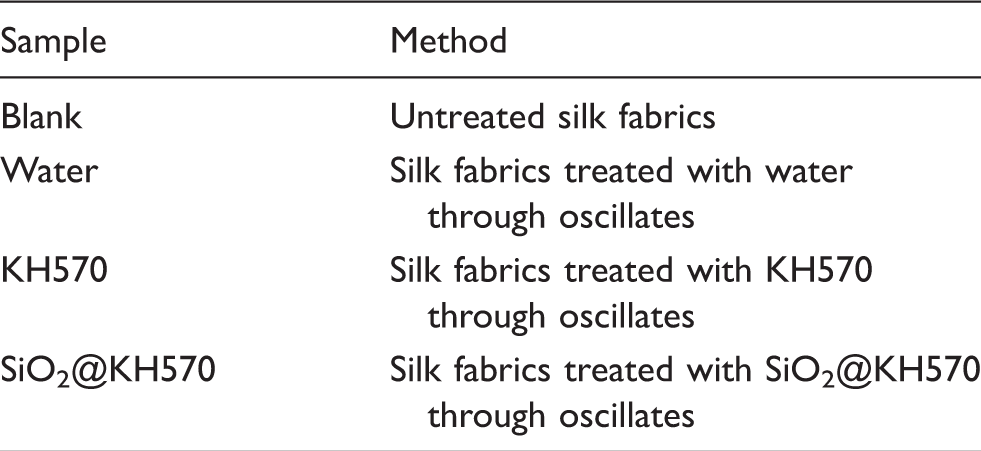
Clean silk fabrics (6 cm× 6 cm) were immersed in different concentration of finishing solution, which were put in a water bath thermostat oscillator (SHA-C) at different temperatures. The liquor ratio of fabric to finishing solution was 1 to 100. The oscillation lasted for 30 minutes at 100 r/min to allow more nano-SiO2 particles to adhere to the surface of the silk fabrics directly. The silk fabrics were then flushed by deionized water to wipe off nano-SiO2 floating on the silk fabric surface, and dried in an oven at 80℃ for five minutes to obtain silk fabrics coated with nano-SiO2. In order to coat as much as nano-SiO2 on the silk fabric surface as possible to improve its anti-UV property, the cycle of dipping and oscillating process was repeated five times. The whole process is shown in Figure 1. All samples and corresponding finishing methods are shown in Table 1.
Diagram of the procedure of coating nano-SiO2 on the silk fabric surface. Sample and finishing method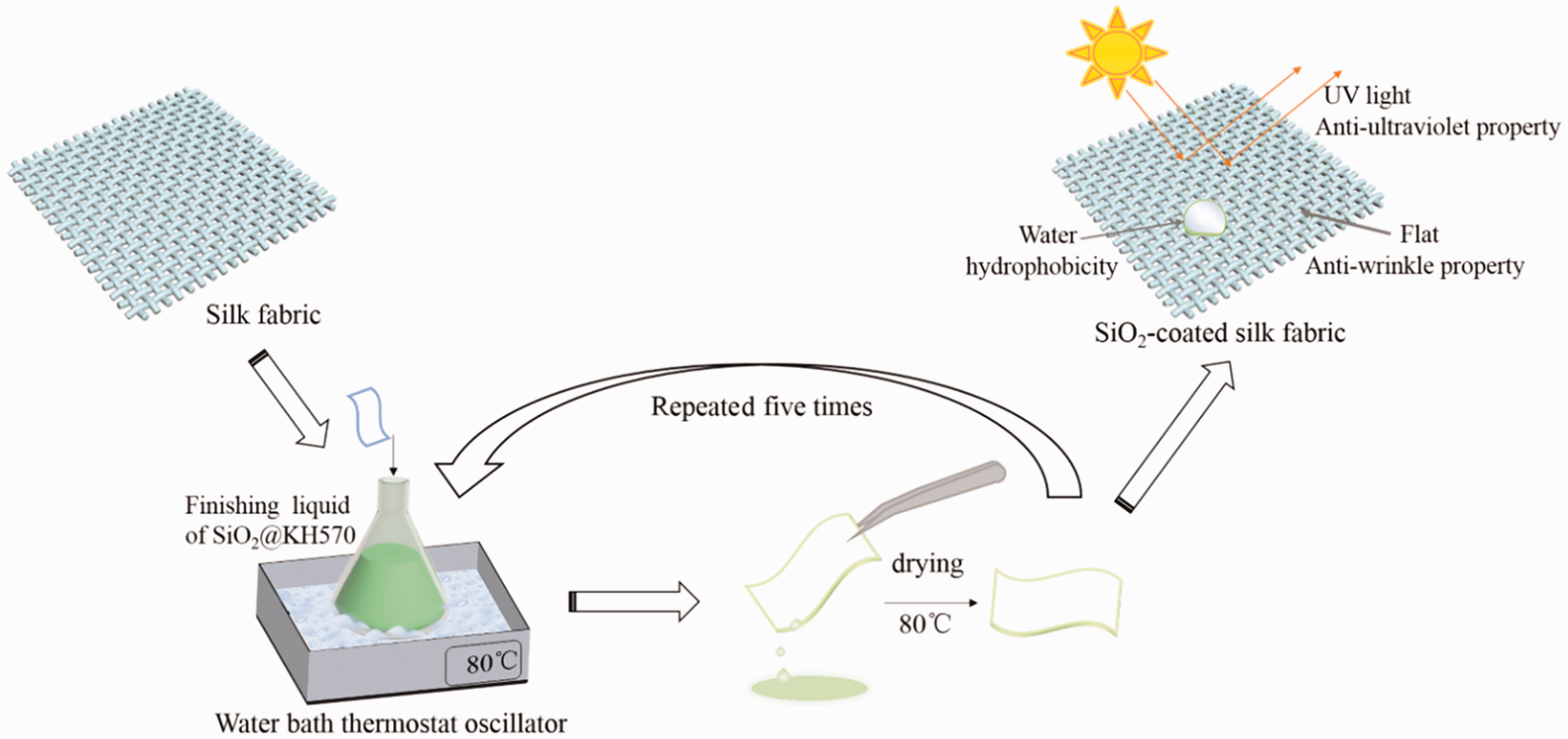
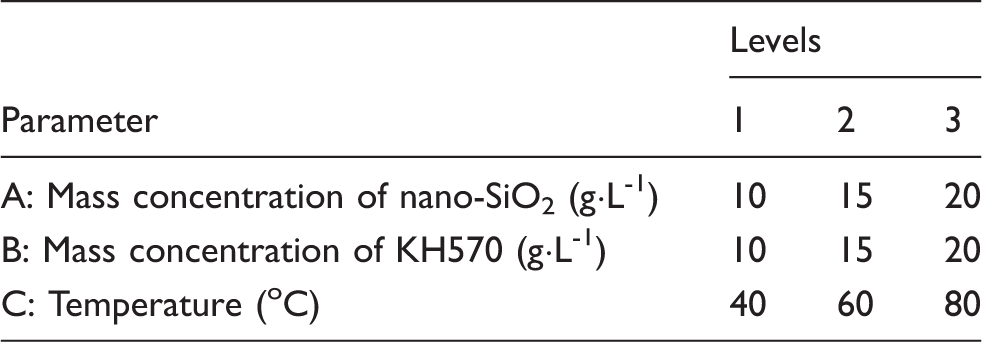
Orthogonal experimental design
Assigned factors and levels of experiments on the preparation of the sample
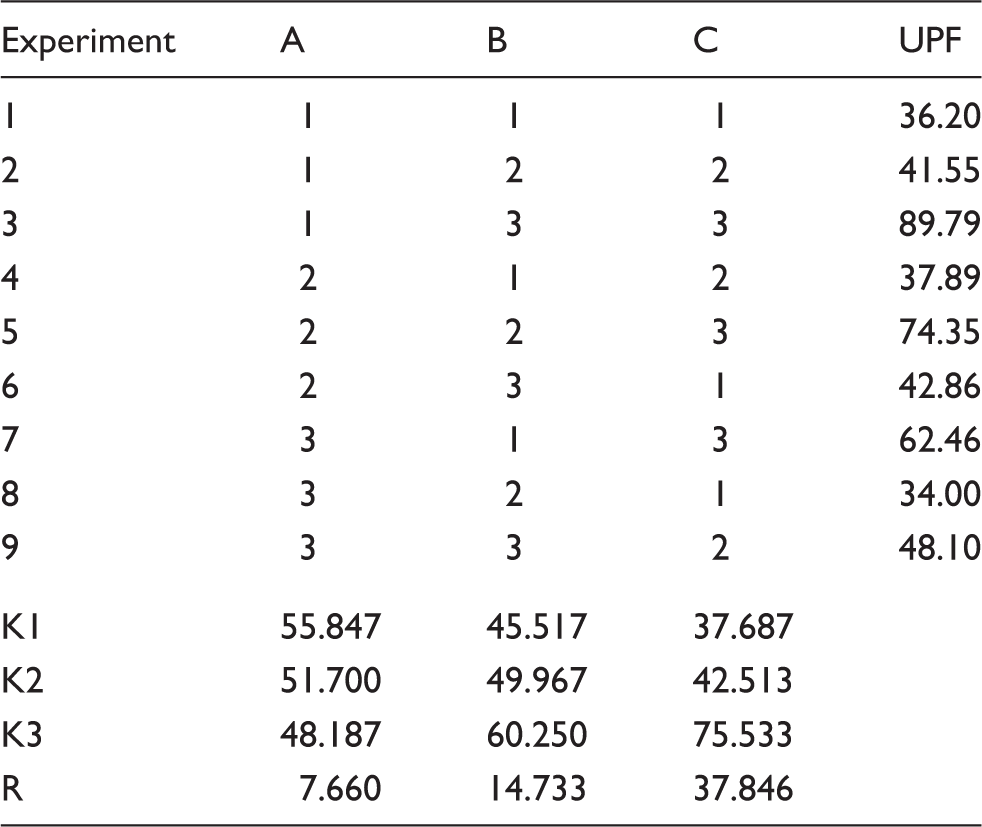
L9 (33) orthogonal experiments and corresponding results
Characterization and measurements
Color parameters of untreated and treated fabrics
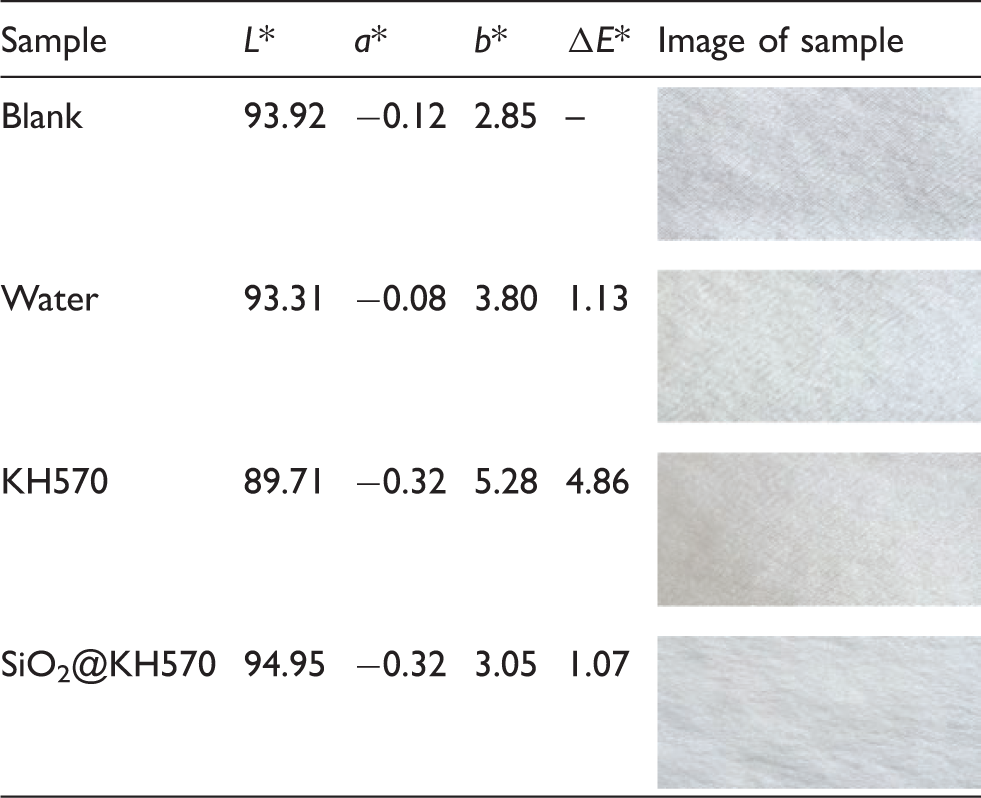
The whiteness index and color values of untreated and treated silk fabrics were calculated from the diffuse reflectance measured with a spectrophotometer (Datacolor 650, USA). Color coordinates were determined in the CIELab color space (L*, a*, b*) for the 10o standard observer and D65 standard illuminant, and all color measurements were repeated five times for their different positions. L* corresponds to the brightness (0 = black, 100 = white), a* is the red-green coordinate (–ve = green, + ve = red), and b* is the yellow-blue coordinate (–ve = blue, + ve = yellow) [28]. ΔE* is the CIELab color difference between untreated and treated samples, which can be calculated using the following equation:

Note that ΔL*, Δa* and Δb* are the L*, a* and b* difference values between untreated and treated samples, respectively.
Morphological investigation and elemental analysis
Surface morphologies of the untreated and treated silk fabrics were investigated by using scanning electron microscope (SEM) (JSM-5610), and energy dispersive spectroscopy (EDS) was used to investigate elements on the surface.
Fourier transform infrared spectroscopy (FTIR)
FTIR spectra were recorded over a range from 4000 to 400 cm–1 by the accumulation of 256 scans at a resolution of 4 cm–1, using a FTIR spectrometer (ALPHA, Bruker Corporation, German) with KBr pellets.
UV resistance test
The UV transmittance and UPF of the sample were measured at a test wavelength of 290–400 nm, according to GB/T18830–2009 ‘Assessment of UV Protection Performance of Textiles’.
Washing durability test
The durability and stability of the sample were evaluated after 5, 10 and 20 repeated standard washing cycles, based on procedures of appendix C of FZ/T73023-2006 ‘Antibacterial Knitwear’.
Wrinkle resistance test
The WRA of the samples was tested according to GB/T 3819-1997 ‘Determination of crease recovery of textile fabrics’.
Contact angle measurement
The contact angle of the silk fabrics was measured using the OCA15EC instrument (Dataphysics, Germany). The volumes of water droplets were 5 µL. Contact angle values were recorded after 10 sec when the water drop began to be still on the silk matrix.
Thermal stability test
The thermogravimetric (TG) curves of untreated and treated silk fabric samples were recorded by scanning with a TG analyzer (Q5000, TA instruments, America), at the heating rate of 20℃/min from 40℃ to 800℃. The atmosphere was pure nitrogen stream at a flowing rate of 50 mL/min.
Cytotoxicity test
The MTS assay method was used to assess the in-vitro cytotoxicity of the sample, in accordance with ISO 10993-5. First, all fabric samples were sterilized by UV radiation for two hours before extraction. Then they were dipped in a cell culture medium for leached substances (DMEM with 10% FBS, extraction condition: 0.1 g/ml, 37℃, 24 h later). Meanwhile, L929 mouse fibroblasts were seeded in 96 and 24 well plates with minimum essential medium (MEM) and incubated at 37℃ and 95% relative humidity for 24 hours to form confluent monolayers. Subsequently, the MEM was replaced by liquid extracts from fabrics and continued to incubate for another 24 hours. The cells incubated in MEM (without extraction liquid) served as negative controls. Finally, the MTS reagent (20 µL) was added to each well and the plates were placed in the dark at 37℃ for two hours. The absorbance of each well at 570 nm was measured by a microplate reader. In order to observe the proliferation ability of the cells directly, the dead and living ones were stained by kit (Calcein AM, Ethm-1) and photographs were taken by fluorescence microscopy.
Results and analysis
Statistical analysis for influence of various factors on anti-UV property of silk fabric
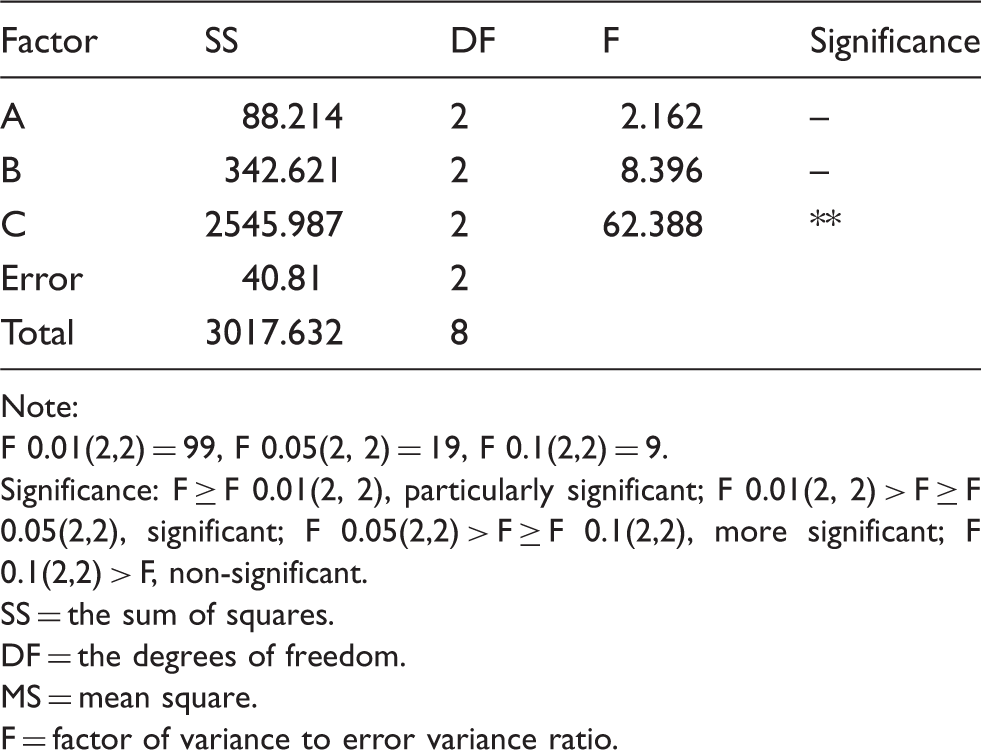
The UPF values of all the treated samples and the mean values of three factors at three levels (K1, K2 and K3) and range (R) are listed in Table 3. The larger the mean values, the higher the level, and the relationship of the range and effect significance is the same too. According to the results, the optimum conditions for finishing silk fabrics are A1-B3-C3 (10 g/L nano-SiO2, 20 g/L KH570, 80℃) (Figure 2). In addition, single factor analysis of variance was used to obtain the quantitative information of each factor. The sum of squares (SS), the degrees of freedom (DF), mean square (MS) and factor of variance to error variance ratio (F) are summarized in Table 4. The result shows factor C (temperature) has significant influence on the anti-UV property of silk fabrics, which might be because higher temperature makes silanol more energetic and able to react with hydroxyl groups on the surface of the fibers. Thus, compared with lower temperature finishing, the increase of temperature is very important.13, 14,
29
Line chart of relationship between factor levels and K values. Single factor analysis of variance for UPF value of silk fabrics Note: F 0.01(2,2) = 99, F 0.05(2, 2) = 19, F 0.1(2,2) = 9. Significance: F ≥ F 0.01(2, 2), particularly significant; F 0.01(2, 2) > F ≥ F 0.05(2,2), significant; F 0.05(2,2) > F ≥ F 0.1(2,2), more significant; F 0.1(2,2) > F, non-significant. SS = the sum of squares. DF = the degrees of freedom. MS = mean square. F = factor of variance to error variance ratio.
Surface form and structure analysis of silk fabrics
Color coordinates
As shown in Figure 3, compared with the smooth surface of the Blank and Water samples, the surface of SiO2@KH570 sample is a little rougher, possibly because of bonding with nanoparticles. For KH570, some adjacent silk fibers were aggregated together through the cohesive action of KH570, while this phenomenon was not observed for SiO2@KH570, where the nano-SiO2 on the fiber surface hinders the adhesion between silk fibers. Further, silicon on the surface of each sample (Figure 3(c) and (d)) was detected by EDS, showing that the Si content on the surface of SiO2@KH570 (4.79%) is higher than that on the surface of KH570 (1.54%) and other samples (0%). This result indicates that nano-SiO2 particles have been grafted onto the surface of silk fabrics.
SEM photographs and EDS analysis of untreated and treated silk fabrics. (a) Blank, (b) Water, (c) KH570, (d) SiO2@KH570.
The FTIR spectrum of samples is shown in Figure 4. In this way, the crosslink effects among water, KH570 and nano-SiO2 on silk fiber were detected. The spectra of Blank (spectrum a) and Water (spectrum b) are similar, exhibiting a broad bending vibration adsorption peak of water (3295.8 cm–1),
30
and conformation peaks at 1648.7 cm–1 (amide I) and 1527.9 cm–1 (amide II)
31
are assigned to random coils and β-sheets. These two conformation peaks are also seen in the spectrum of SiO2@KH570 (spectrum c), which indicates that the basic secondary structure of the silk fabrics were not changed by nano-SiO2 treatment. Observably, new peaks appear at 1105.7 cm–1 and 1119.4 cm–1 in the spectrum of SiO2@KH570 and KH750 represented the stretching vibrational adsorption of the Si-O-Si bond.
32
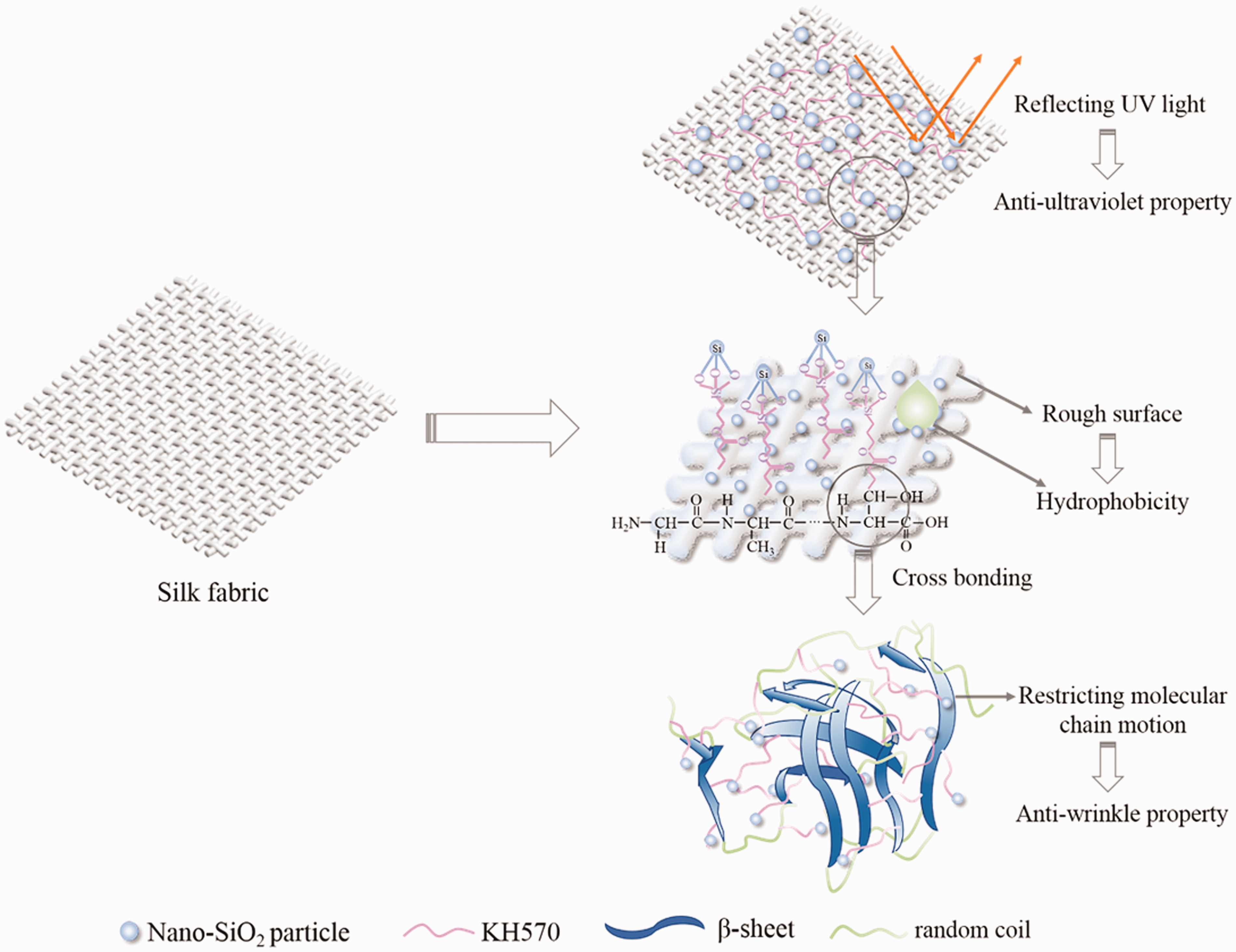
Formation of the Si-O-Si bond may be attributed to hydrogen bonding between Si-OH functional groups which are generated from Si-CH3 hydrolysis in KH570 and surface hydroxyl groups of silica. Moreover, the other two new peaks at 1300.7 cm–1 (spectrum c and spectrum d) and 1722.1 cm–1 (spectrum d), represented adsorption peak of C-O-C and the stretching vibration peak of C = O.33,34 These results illustrate that the strong chemical bonds between silk fiber and nano-SiO2 were formed. And this ‘bridging’ effect of KH570 is helpful for grafting silica nanoparticles on to the surface of silk fiber. Therefore, a rough surface was constructed to endow the silk fabrics with hydrophobicity (Figure 5).
FTIR spectra of untreated and treated silk fabrics. a. Blank, b. Water, c. SiO2@KH570, d. KH570, e. pure nano-SiO2. The bonding mechanism of nano-SiO2, KH570 and silk fiber, with schematic diagram of anti-UV light and anti-wrinkle properties of silk fabrics.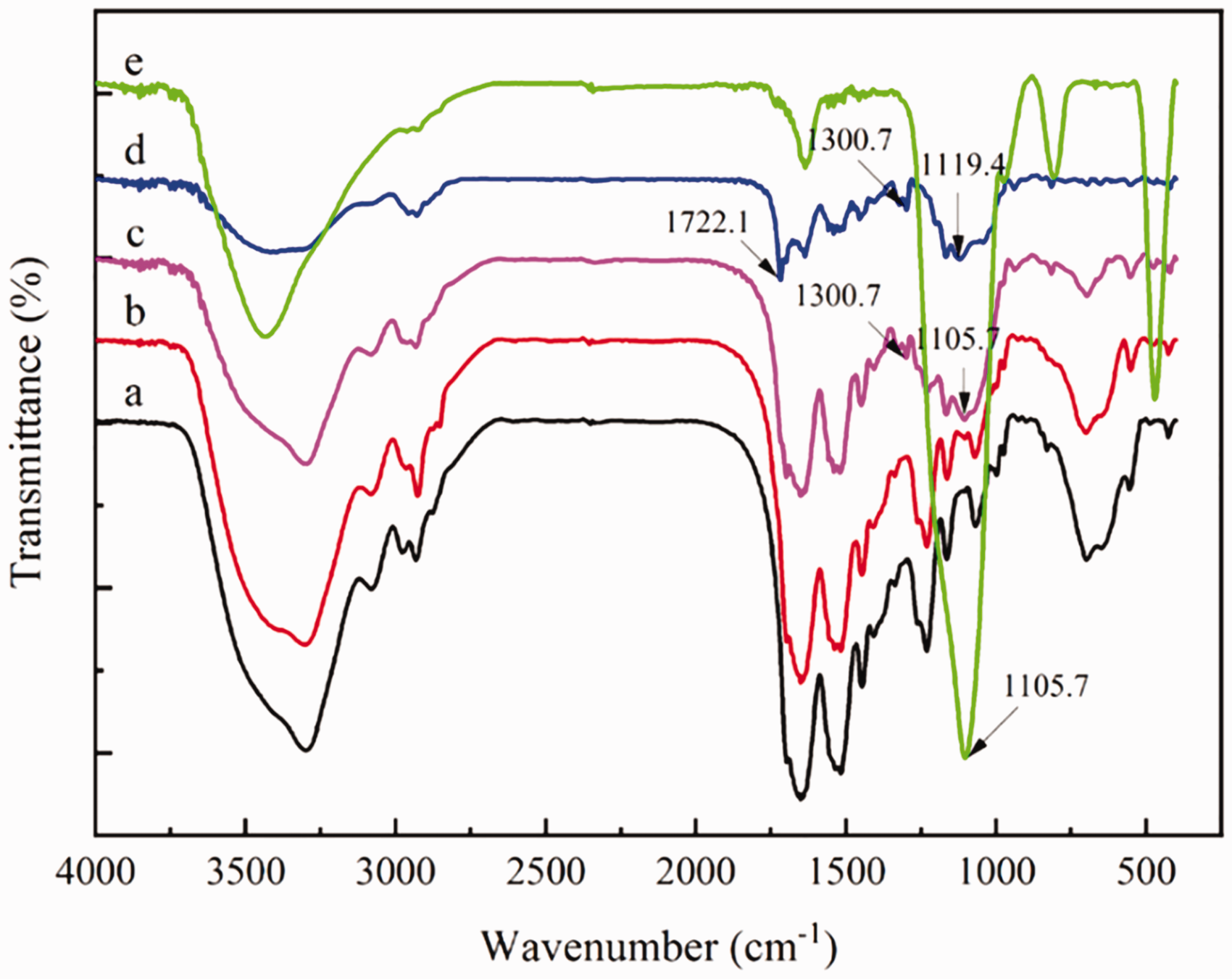
UV resistance property of silk fabrics
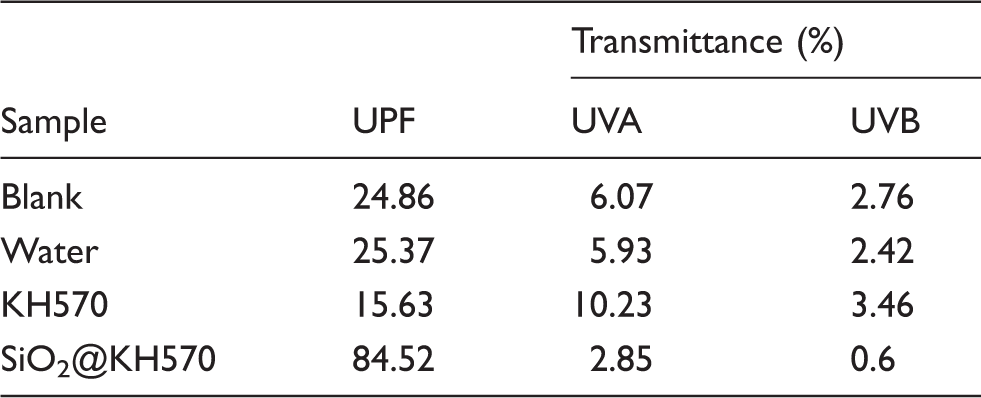
UPF value and transmittance of untreated and treated samples
Anti-UV finishing agents for textiles
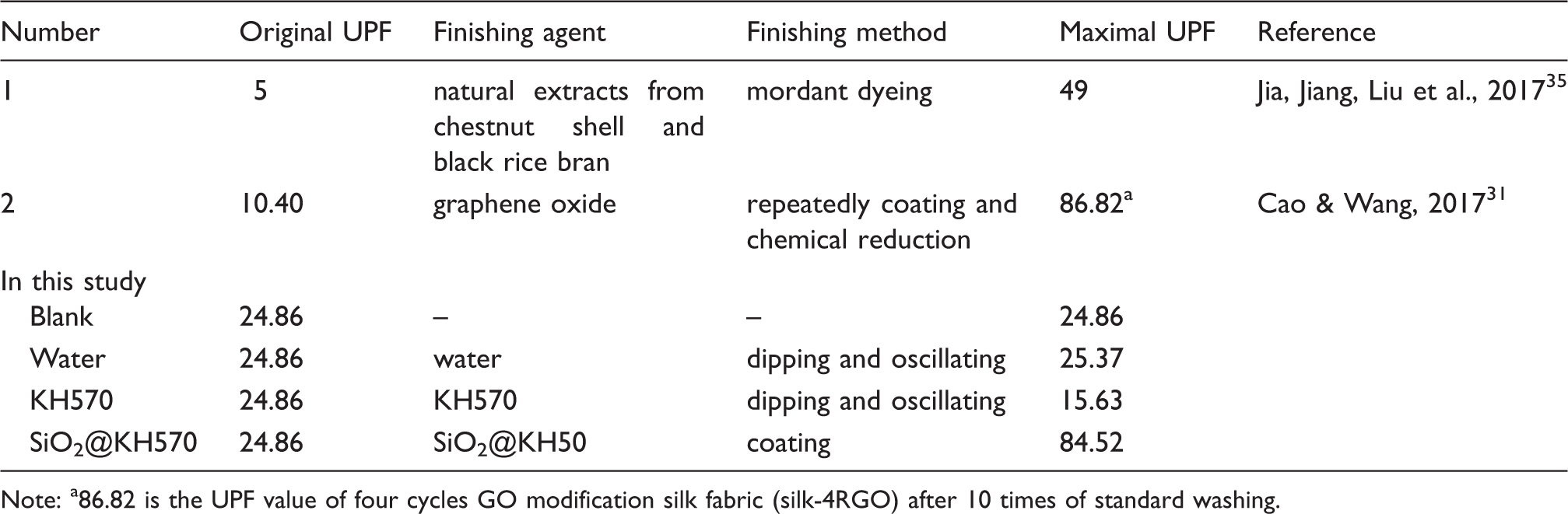
Note: a86.82 is the UPF value of four cycles GO modification silk fabric (silk-4RGO) after 10 times of standard washing.
Washing fastness of anti-UV coating on silk fabrics
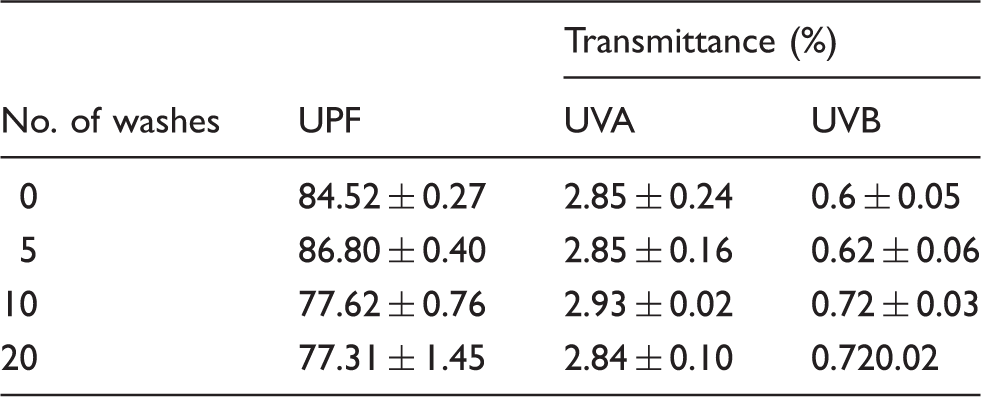
UPF value of silk fabrics treated with nano-SiO2 after repeated washing
Anti-wrinkle performance of silk fabrics
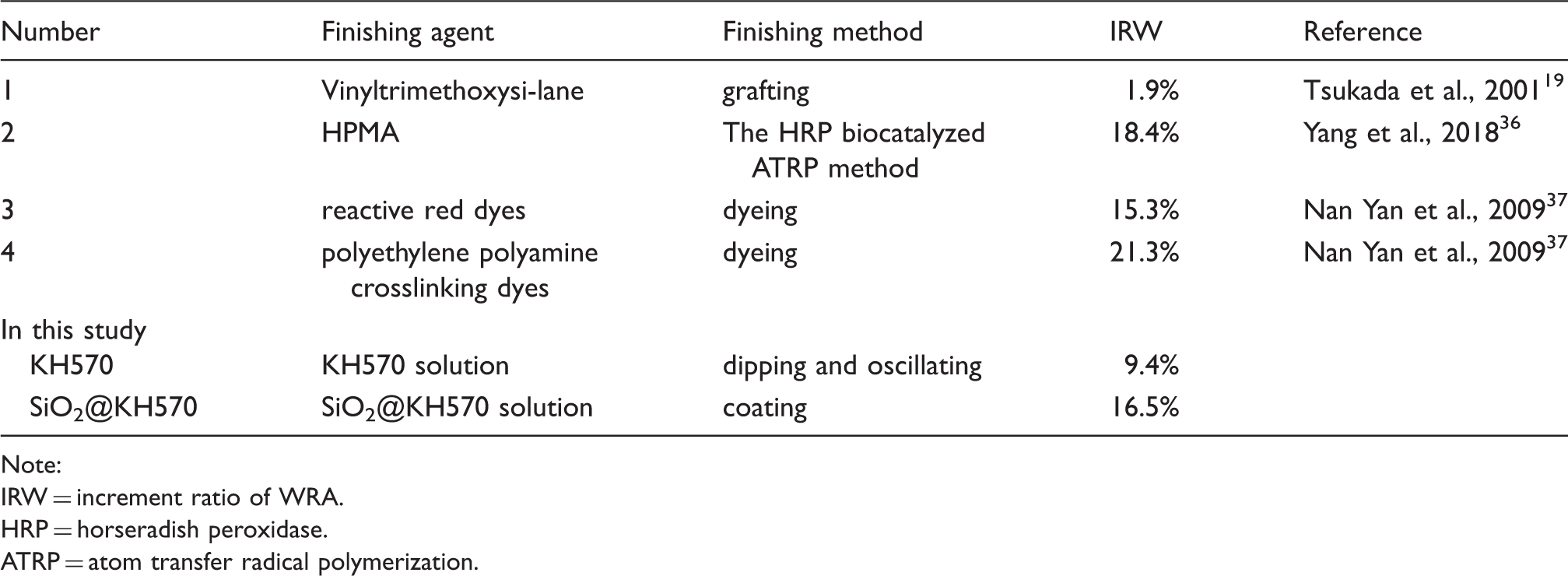
The anti-wrinkle performance of the modified silk fabrics was evaluated by WRA, and the results are shown in Figure 6. The WRA of SiO2@KH570 is 270.6o, which increased by 16.5% in comparison with that of the water treated sample, indicating SiO2@KH570 has enhanced anti-wrinkle property. The crosslinking between silk fibers and nano-SiO2 particles may restrict the relative movement of adjacent silk molecular chains which contributed to improving the anti-wrinkle property of silk fabrics, as shown in Figure 5. So far, crosslinking method has been widely used for finishing silk fabrics to improve wrinkle resistance (Table 9). Vinyltrimethoxysilane,
19
2-hydroxypropyl methacrylate (HPMA),
36
and reactive and crosslinking dyes
37
have been grafted onto silk fabric surface to improve anti-wrinkle property. It was found that HPMA and crosslinking dyes can improve anti-wrinkle property remarkably, while the effect of vinyltrimethoxysilane was not so good. In this study, SiO2@KH570 with coated nano-SiO2 has shown good wrinkle resistance. The simple finishing process with low chemical pollution means this method has a good prospect of industrial application.
WRA of untreated and treated silk fabrics. *P ≤ 0.05, **P ≤ 0.01, ***P ≤ 0.001; WRA (W + F) = WRA values of the samples in warp (W) and fill (F) directions. Anti-wrinkle finishing for silk fabrics Note: IRW = increment ratio of WRA. HRP = horseradish peroxidase. ATRP = atom transfer radical polymerization.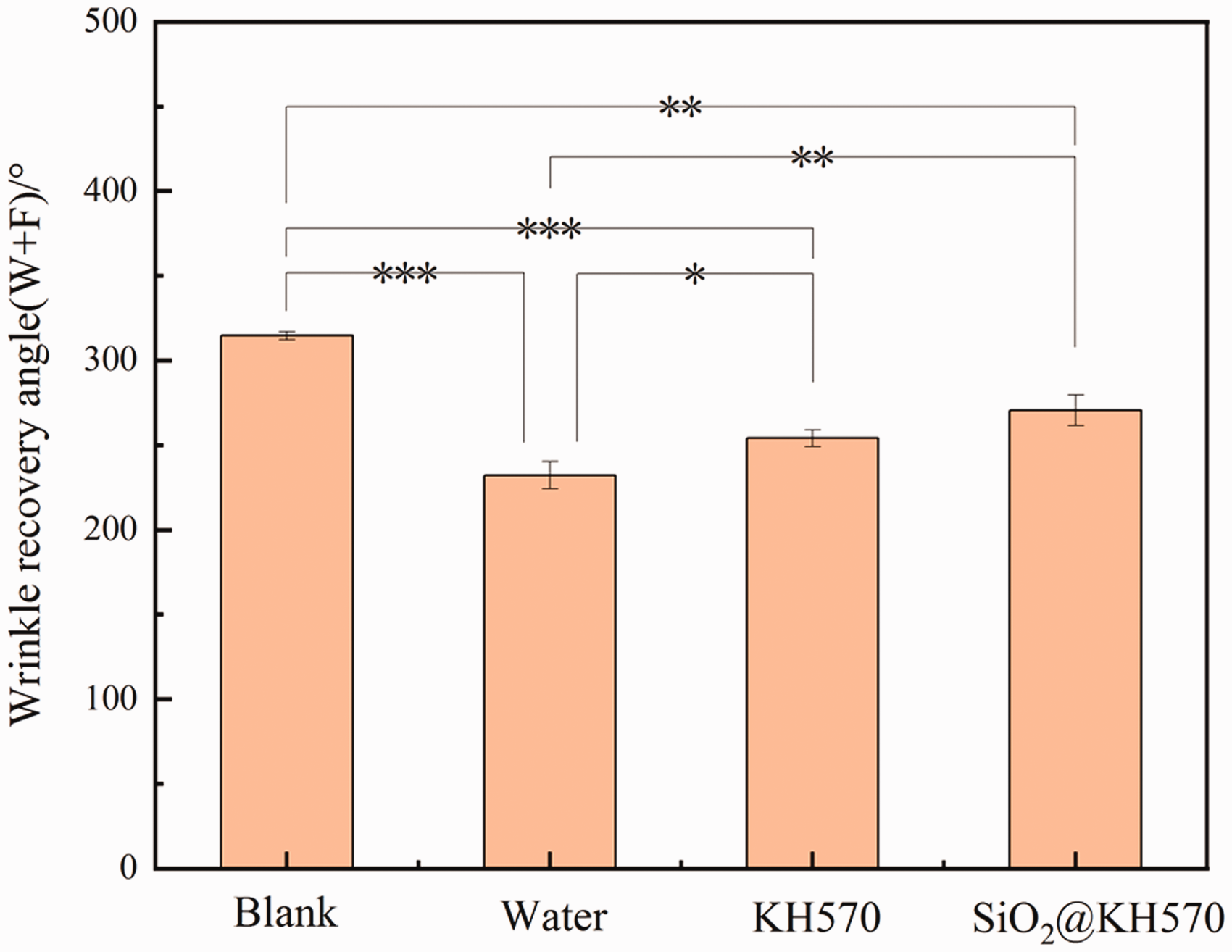
Hydrophobicity of silk fabrics
The contact angle was used to characterize the hydrophilic and hydrophobicity of the finished fabrics. As shown in Figure 7, the contact angle of SiO2@KH570 is 132.7° and this may be influenced by two factors: hydrophobic groups and rough surface (Figure 5). KH570 contains double bonds, ester groups. These hydrophobic groups are grafted onto the surface of the silk fabrics after the crosslinking reaction to improve the hydrophobic property of silk fabrics. It is known also that the hydrophobicity of a solid surface is dependent on hierarchical roughness as well as low surface energy.
38
A rough surface, caused by nanoparticles, leads to a higher contact angle. Although the hydrophobic property is weaker than that of silk fabrics coated with dopamine and Fe2+ (contact angle = 150o),
39
SiO2@KH570 has proven multifunctional properties, which mean it has good prospects for application not only in self-cleaning, oil/water separation and water-repellent fabrics,40–42 but also in protective, non-ironing fabrics.
Hydrophobicity of untreated and treated silk fabrics: (a) Blank, (b) Water, (c) KH570, (d) SiO2@KH570.
Thermostability of silk fabrics
In previous research, nano-SiO2 was often used to improve materials’ thermostability. Thermostability is also an index to evaluate durability. The thermostability of untreated and treated silk fabrics in this study was characterized by TG analysis. The results of TG analysis and its derivative thermogravimetry (DTG) for the silk fabric samples are illustrated in Figure 8. It is found that the Blank and Water samples both underwent two-step degradation processes while SiO2@KH570 and KH570 underwent three-step degradation processes. Small weight loss due to the removal of adsorbed water occurred in the range of 40–200℃. Large weight loss from thermal degradation of the silk fabrics then occurred at temperatures of 310–480℃. For all the treated silk fabrics, particularly KH570 and SiO2@KH570, their decomposition temperature was shifted slightly towards a higher temperature range. The temperature of the onset of decomposition for KH570 and SiO2@KH570 was 323℃ and 319℃ respectively, while that of Blank was 310℃, which could be attributed to the crosslinking action produced by KH570 and nanoparticles to postpone the decomposition of silk fabrics. The residual weight of KH570 and SiO2@KH570 was higher than that of Blank, also illustrating that KH570 and SiO2 had coated the silk fabric surface.
TG and DTG analysis of untreated and treated silk fabrics: (a) TG curves, (b) DTG curves.
Cytotoxicity test
In the study, in-vitro biocompatibility of untreated and treated fabrics was tested, and the results are shown in Figure 9. The cell number gradually increased with the duration of the culture period in all five groups. More specifically, through the three days of cell culture, cell viability for SiO2@KH570 significantly increased, proving its excellent biocompatibility by cell growth and proliferation. The live/dead cell staining illustrated that seldom were dead cells found and most of the cells were in good condition after being co-cultured with these samples, indicating that the untreated and treated samples, including SiO2@KH570, have good biocompatibility.
The proliferation and live/dead staining of L929 cells: (a) proliferation of L929 cells in liquid extracts of untreated and treated silk fabrics. *P < = 0.05, **P < = 0.01, ***P < = 0.001, (b) live/dead staining of L929 cells at second day of culture periods for all samples. (Control, L929 mouse fibroblasts were cultured with MEM; Blank, L929 mouse fibroblasts were cultured with liquid extracts from untreated silk fabrics.)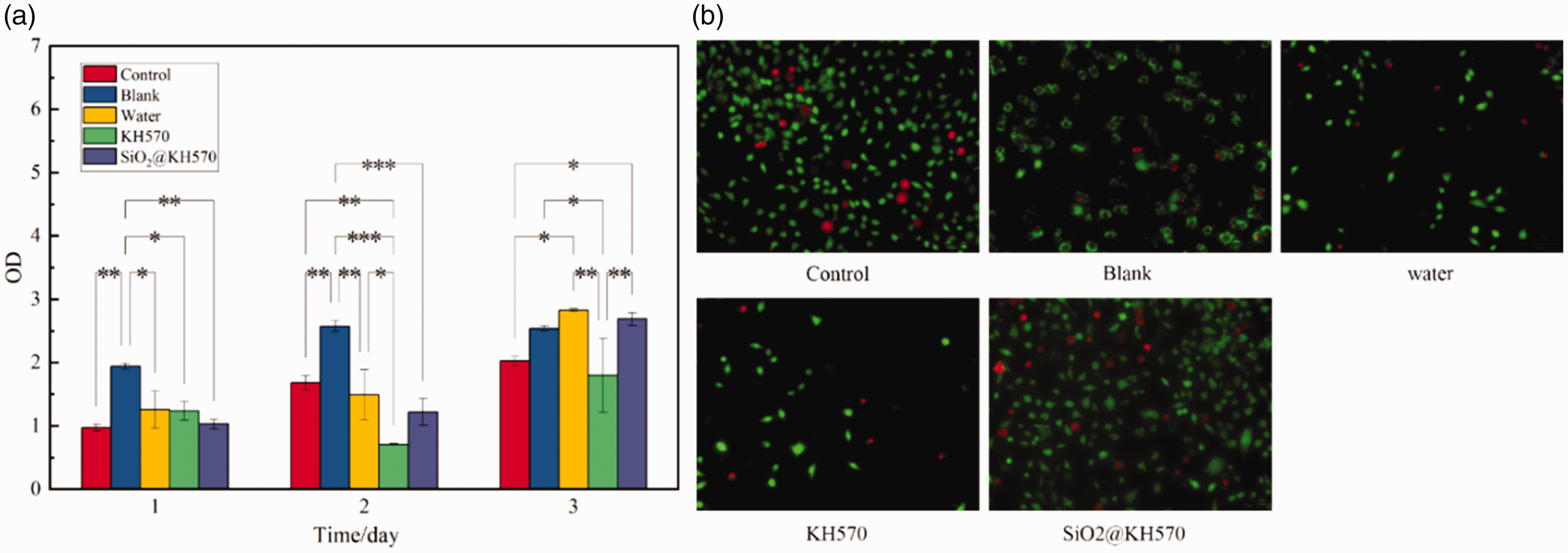
Conclusion
In summary, silk fabrics with excellent UV resistance, wrinkle resistance and hydrophobicity were obtained by repeatedly coating them with nano-SiO2. The optimum finishing conditions for silk fabrics are 10 g/L SiO2 and 20 g/L KH570 and 80℃ in a water bath. After five periods of repeated oscillation (30 minutes each time), the UPF value of SiO2@KH570 reached 84.52, the WAR increased by 16.5 %, and the contact angle was 132.7°. Through this economic, favorable and non-polluting technology, silk fabrics with excellent UV and wrinkle resistance can be produced on a large scale, indicating good prospects for their application in self-cleaning, water-repellent, protective and non-ironing clothes.
Footnotes
Declaration of conflicting interests
The authors declared no potential conflicts of interest with respect to the research, authorship and/or publication of this article.
Funding
The authors disclosed receipt of the following financial support for the research, authorship, and/or publication of this article: This research was funded by grants from the National Natural Science Foundation of China (No. 31830094), the Hi-Tech Research and Development 863 Program of China (Grant No. 2013AA102507), the Fundamental Research Funds for the Central Universities (XDJK2018C029, XDJK2018B015) and Funds of China Agriculture Research System (No. CARS-18-ZJ0102).
