



Abstract
In this study, inorganic and organic UV absorbers, as well as reducing agents, were employed to treat cotton fabrics that were pre-dyed with two natural dyes (sodium copper chlorophyllin and gardenia yellow) to improve light fastness. The performance of UV absorbers and reducing agents was evaluated by comparing ΔE (CIELAB) of the treated samples caused by their exposure to simulated sunlight irradiation. Results show that both inorganic and organic UV absorbers present unsatisfactory effects on inhibiting the photo-fading of dyes, while the reducing agents (i.e. sodium citrate and glucose) exhibit distinctive effects on improving their light fastness. The protection was enhanced when the amount of the two reducing agents was increased from 1% to 5% o.w.f. Sodium citrate was found to be more efficient than glucose in this regard. Change in shade of gardenia yellow and sodium copper chlorophyllin pre-dyed fabrics with a treatment of 5% o.w.f. sodium citrate after 10 h exposure to simulated sunlight were ΔE 3.95 and 2.46, while for the controls were ΔE 10.34 and 8.11, respectively.
Keywords
Natural dyes have been used to color manmade textiles since ancient times; however, their dominance in the textile dyeing industry has been gradually lost to synthetic dyes over the last decades. 1 Natural dyes in general are more biodegradable,2,3 renewable,4,5 and less harmful to the human body than their synthetic counterparts. 6 These advantages have redrawn research attention 7 owing to the urgent need for and pressure on alleviating the environmental pollution derived from massive exploitation of synthetic dyes in the modern textile industry. 8 To improve the confidence in using natural dyes, a number of primary drawbacks of natural dyes9,10 should be tackled, such as poor color fastness—that is, rapid color fading. 11
Treating the dyed fabrics with functional additives such as UV absorbers and antioxidants in the finishing process is a prevalent strategy for improving the light fastness of natural dyes. 12 Cristea and Vilarem 13 investigated the effects of antioxidants (cafeic acid, gallic acid, vitamin C, and vitamin E) and organic UV absorbers (phenyl salicylate, benzophenone, and benzophenone 6) on the light fastness of cotton yarns dyed with three natural dyes: weld, woad, and madder. The results show that neither the UV absorbers nor the antioxidants are effective additives for inhibiting the photo-fading rates of weld and madder on cotton yarn. However, all the antioxidants and one UV absorber (benzophenone 6) show dramatic contributions to protecting the cotton yarn dyed with woad from photo-fading. Oda carried out a series of studies14–17 on the inhibitory feasibility of organic UV absorbers on photo-fading of two natural dyes: red carthamin and gardenia blue. The results show that UV absorbers 2-hydroxybenzophenone (HBP), 2-(2′-hydroxy-5′-methylphenyl) benzotriazol (HMBT) and 2,2′,4,4′-tetrahydroxybenzophenone (TBP) have a minor effect on protecting red carthamin from photo-fading, while other additives like nickel p-toluenesulphonic acid, derivatives of 5-(2H-benzotriazole-2-yl)2,2′,4,4′ tetrahydroxybenzophenone, dibenzotriazolylbenzophenone derivatives, and dibenzotriazolylbenzophenonesulphonic acid derivatives are significantly effective against the photo-fading of red carthamin. Regarding gardenia blue, UV absorbers also show poor inhibition on photo-fading rate. Similarly, nickel salts-based UV absorbers display better performance in preventing the photo-fading than that of each corresponding UV absorber.
Results from Cristea and Vilarem and Oda show that organic UV absorbers may exhibit limited effects on inhibiting photo-fading of some natural dyes, as such an ability of organic UV absorbers varies from one natural dye to another. Besides, some organic UV absorbers are highly likely to cause environmental issues 18 if the wastewater generated in the dyeing process is directly poured into natural water systems. Other effective additives like antioxidants, which are commonly used as medicines to scavenge reactive oxygen species (ROS)—the oxygen-containing free radicals such as singlet oxygen, hydroxyl radical, and superoxide, generated in living organisms 19 —are too expensive to be widely applied in the textile dyeing industry. More importantly, progressive degradation of organic UV absorbers during exposure to sunlight will shorten the durability of UV-blocking finishes and thus affect light fastness properties of treated fabrics. Therefore, seeking alternative economical and environment-friendly ways to improve the light fastness of textiles dyed with natural dyes is still necessary.
Since the first report of photo-activity of semiconductors in the 1970s, inorganic semiconductors like TiO2 and ZnO have dramatically developed in the last decades. One of the major applications of these inorganic semiconductors is as a UV-blocking finish on textiles due to their ability to absorb UV rays. 20 Among these UV absorbers, ZnO is a semiconductor with a broad UV absorption spectrum. It is safe for the human body 21 and stable under UV irradiation. 22
Although ZnO has been proved to be an efficient UV absorber that can improve light fastness of fabrics dyed with reactive dyes, there are still chances that semiconductors like ZnO and TiO2 will cause degradation of the dye molecules due to the interactions between intermedia generated during photocatalysis of semiconductors and the chromophores of dyes. 23 Apart from ZnO, reducing agents, which also have antioxidant properties and are much cheaper than antioxidants, can be a promising alternative to antioxidants in inhibiting the photo-fading of natural dyes.
Previous research on inhibiting the photo-fading of natural dyes has focused mainly on the ability of organic UV absorbers to block UV rays24–26 and the ability of antioxidants27,28 to prevent photo-oxidation in dyes. Neither inorganic UV absorbers nor common reducing agents have been used in the studies of inhibiting photo-fading of natural dyes. In this study, fabrics pre-dyed with two natural dyes, sodium copper chlorophyllin (green dye) and gardenia yellow (yellow dye), were treated with an inorganic absorber (ZnO), a commercial organic absorber (UV FAST®), and four kinds of reducing agents, respectively. Figure 1 illustrates the preparation processes of ZnO nanoparticles (NPs) (a) and the pre-dyed fabrics treated with ZnO NPs via in-situ synthesis (b), the direct dip-coating and electrostatic adsorption (c) methods, and the pre-dyed fabrics treated with reducing agents/UV FAST® via the dipping and padding method. Effects of UV absorbers and reducing agents on inhibiting photo-fading of the dyes were evaluated by measuring color differences of the treated fabrics as a function of their exposure to simulated sunlight irradiation.
Diagram for preparation of ZnO nanoparticles (a), the pre-dyed fabrics coated with ZnO nanoparticles via in-situ synthesis (b), the direct dip-coating and electrostatic adsorption methods (c), and the pre-dyed fabrics treated with reducing agents/UV FAST® via the dipping and padding method (d).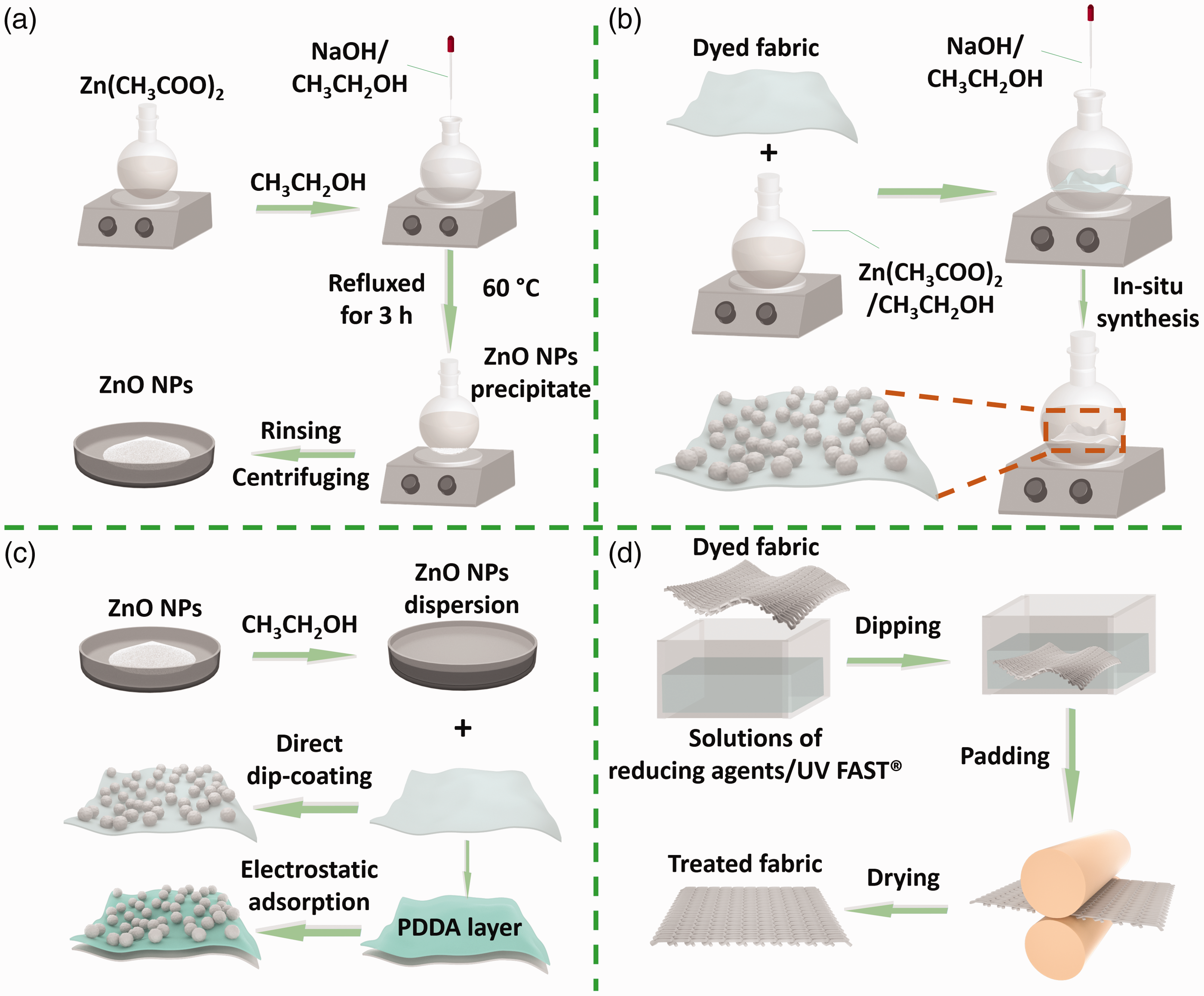
Experimental
Materials
Two single jersey 100% cotton fabrics pre-dyed with sodium copper chlorophyllin and gardenia yellow with the same density of 270 g/m2 (kindly supplied by the Esquel Group, Foshan, China) were used without further processing prior to any treatment. Sodium sulfite was obtained from BDH Chemicals Ltd (Dorset, UK). Citric acid monohydrate, ethanol, and sodium hydroxide were purchased from Chem-Supply Pty Ltd (SA, Australia). Zinc acetate dihydrate and D-glucose anhydrous were purchased from AJAX Chemicals Ltd (NSW, Australia). UV FAST® was purchased from Huntsman Corporation (Texas, USA). The 20% w/v poly(diallyldimethylammonium chloride) (PDDA) solution, sodium citrate dehydrate, and sulfurous acid were purchased from Sigma-Aldrich (NSW, Australia). The UV FAST® was of commercial grade. Other chemicals were all of analytical grade. All the chemicals were used as received. Filters with the capability to absorb UV rays and visible light within different wavelength ranges were purchased from Purshee Optical Elements Co., Ltd (Yixing, China).
Effects of light within different wavelength ranges on photo-fading
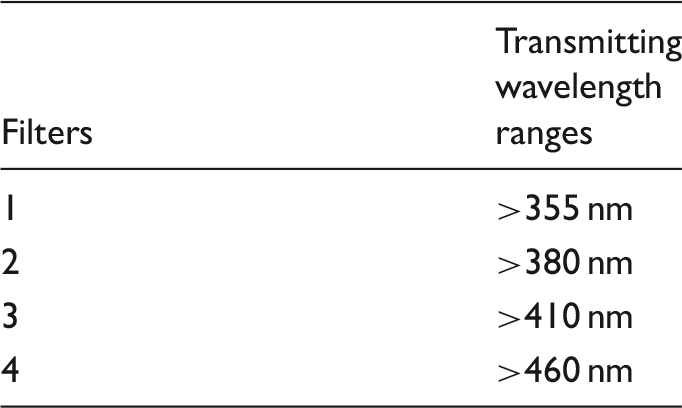
To investigate the effects of light irradiation with different wavelength ranges on the photo-fading of the two pre-dyed fabrics, the simulated sunlight irradiation was filtered by covering the fabrics with four different filters made from transparent glass plates with different colors during their exposure to the irradiation. The color change of the two fabrics caused by simulated sunlight irradiation filtered by four filters, which can shield the light within different wavelength ranges, was measured and compared to investigate the contribution rate of each wavelength on the photo-fading of the two dyes. The transmittance spectra of the four filters are presented in Figure 2. The specific wavelength ranges of the filters are listed in Table 1.
Transmittance spectra of the filters. Wavelength range of the filters
Treatments of ZnO nanoparticles to the pre-dyed fabrics
ZnO NPs were applied to 1.35 g green and yellow fabrics in dimensions of 5 × 10 cm via three different methods: dip-coating, electrostatic adsorption, and in-situ synthesis on fabric. In the first two methods, ZnO NPs were prepared by dispersing Zn(CH3COO)2∙2H2O in NaOH ethanol solution under continuous stirring as reported previously. 29 The ZnO NPs precipitated from the NaOH ethanol solution were first collected via repeated rinse with ethanol and centrifugation to remove residual NaOH (illustrated in Figure 1(a)). Finally, ZnO NPs dispersions were prepared by dispersing the prepared ZnO NPs in ethanol. In the third method, in-situ hydrolysis of Zn(CH3COO)2∙2H2O was carried out upon the surface of pre-dyed fabrics (illustrated in Figure 1(b)) via the same method with minor modification.
Direct dip-coating of ZnO NPs
In the dip-coating method, the green and yellow fabrics were dipped into 4 mg/ml ZnO ethanol dispersions, respectively. The excess liquor contained by the soaked fabrics was squeezed out by a Rapid PA0 pad mangle (Rapid Labortex Co. Ltd.) to maintain a pickup rate of 100% and a 5% o.w.f. of ZnO NPs. Treated samples were dried in darkness at room temperature overnight and designated as Fabrics #1.
Electrostatic adsorption of ZnO NPs
In the electrostatic adsorption method, the green and yellow fabrics were first immersed in 1% w/v PDDA aqueous solution at a liquor ratio of 1:20 for 30 min. Then, the soaked fabrics were thoroughly rinsed with distilled water and dried at room temperature. After the drying process, the fabrics were submerged in the ZnO aqueous dispersion (1 mg/ml) at a liquor ratio of 1:50 to allow for the deposition of ZnO NPs onto the fabrics. The fabrics were immersed in the dispersion under slow stirring for 2 h. Subsequently, the soaked fabrics were retrieved, gently rinsed with distilled water, and dried in darkness at room temperature. Treated fabrics obtained via this method were designated as Fabrics #2.
In-situ synthesis of ZnO NPs on cotton fabrics
The green and yellow fabrics were submerged in the prepared Zn(CH3COO)2∙2H2O ethanol solution at a liquor ratio of 1:30 for 30 min. Then, 0.04 mol/L NaOH ethanol solution was added to the zinc acetate solution drop by drop with constant stirring to prepare a transparent sol-gel. The whole suspension in which the fabric was immersed was heated at 80℃ for 3 h. After the heating process, the fabrics were taken out, thoroughly rinsed with distilled water to remove residual NaOH, and dried at room temperature overnight. The fabrics treated by this method were designated as Fabrics #3.
Characterization of ZnO NPs
The crystal properties, UV absorbance ability, and particle size of ZnO NPs were investigated via XRD test, UV–vis spectrophotometry, and particle size analysis, respectively. The X-ray diffraction spectrum of ZnO NPs was obtained by scanning the ZnO NPs with Cu Kα radiation generated by an Ultima IV X-ray diffractometer (Rigaku Corporation). The UV–vis absorbance spectrum (within the wavelength range 250–600 nm) of ZnO NPs was recorded by scanning its ethanol dispersion with a UV–vis spectrophotometer (Varian Cary 300, Agilent). Particle size distribution of ZnO NPs was obtained by scanning the ZnO ethanol dispersion (4 mg/mL) with a particle size analyzer (Nanotrac Wave II, Microtrac).
Thermogravimetric analysis
The final amount of ZnO NPs deposited on the two fabrics via the three methods were determined by measuring the residual weight percentage obtained from thermogravimetric analysis. The samples were ground into powder and subjected to a thermogravimetric analyzer (Mettler Toledo TGA/DSC 1). The weight percentage of the samples was recorded from the initial temperature of 50℃ and the recording process was terminated at 800℃. The heating rate was 10℃/min. Oxidization of the samples occurred under continuous oxygen flow.
Treatments of UV FAST®
UV FAST® is a commercial UV absorber, and the typical usage is recommended at 1–2% o.w.f. for fabrics that will be facing high exposure to light. First, 1.35 g green and yellow fabrics of 5 × 10 cm were immersed in the UV FAST® aqueous solution (2 wt.%) at a solid/liquid ratio of 1:10 for 2 min. The excess liquid retained in the fabrics was removed by the padding mangle. The final pickups of the fabrics were maintained at 100 ± 5% w/w via padding to ensure the loading amount of UV FAST® was 2 ± 0.1% o.w.f. The blank control sample was soaked with deionized water. Finally, the treated fabric samples were cured in the dark at room temperature overnight. The fabrics treated by this method were designated as Fabrics #4.
Treatments of reducing agent to pre-dyed fabrics
Protective effects of reducing agents
Four types of reducing agents—sodium sulfite (Na2SO3), citric acid, sodium citrate, and glucose—were applied in this study. Aqueous solutions of the reducing agents were prepared: 3 wt.% Na2SO3 (designated as S-3), 3 wt.% Na2SO3 neutralized by H2SO3 (designated as SN-3), 3 wt.% citric acid (designated as C-3), 3 wt.% sodium citrate, neutralized by citric acid (designated as CN-3), and 3 wt.% glucose (designated as G-3). Then, 1.35 g pre-dyed fabrics of 5 × 10 cm were treated with these aqueous solutions of reducing agents, following the same procedures as the treatment of UV FAST®. The processes of treating the pre-dyed fabrics with reducing agents/UV FAST® are presented in Figure 1(d).
Protective effects of reducing agents with different usages
The effects of loading amount of sodium citrate and glucose were further investigated. A series of samples were prepared by treating 1.35 g green and yellow fabrics of 5 × 10 cm with 1 wt.%, 3 wt.%, and 5 wt.% sodium citrate and glucose solutions following the same steps described above. The pre-dyed fabrics treated with 1 wt.%, 3 wt.%, and 5 wt.% sodium citrate and glucose solutions were designated as CN-1, CN-3, CN-5, G-1, G-3, and G-5.
Treatments of reducing agents and commercial UV absorber
Combinations of both reducing agents and commercial UV absorber at different concentrations, including 5% o.w.f. neutralized sodium citrate with 2% o.w.f. UV FAST® (designated as CN-UV), as well as 5% o.w.f. glucose with 2% o.w.f. UV FAST® (designated as G-UV), were applied to 1.35 g two pre-dyed fabrics of 5 × 10 cm.
Evaluation of photo-fading rates
Light fastness of the pre-dyed fabrics treated with different additives (reducing agents, organic and inorganic UV absorbers) was evaluated by measuring the ΔE of the fabric under simulated sunlight irradiation and the standard irradiation at certain time intervals. All the samples were exposed to standard irradiation unless otherwise specified.
Photo-fading under simulated sunlight irradiation
Fabrics were directly subjected to simulated sunlight irradiation generated by a solar radiometer (Atlas Suntest CPS1) equipped with a 1500 W air-cooled xenon arc lamp (light wavelength range 300∼800 nm). The temperature inside the chamber was maintained at 35℃. The intensity of the irradiation was 400 W/m2. The discoloration level of the fabric sample was measured at a 1-h interval, and the total irradiation time was 10 h. Untreated green and yellow fabrics were exposed to the simulated sunlight under the same conditions as control ones.
Photo-fading under standard irradiation
The fabrics were directly exposed to the standard irradiation conditions following ISO 105-B02, over a total irradiation time length of 72 h. An untreated fabric sample was exposed under the same conditions as a control.
Color difference measurement
The level of color fading during the exposure process was evaluated by the ΔE value to compare the color difference between the treated samples and the control in a numeric manner. ΔE values were both recorded under D65 light source emitted by a spectrophotometer (Datacolor SF 600 Plus-CT Spectraflash) at a measurement angle of 10°. The CIE L*, a*, b* of ZnO NPs/UV FAST® treated fabrics and the ΔE between the untreated fabric and each treated fabric were also recorded with the spectrophotometer to investigate the effect of ZnO NPs treatment via the three methods and UV FAST® on the color of pre-dyed fabrics.
SEM images of fabrics treated with ZnO NPs
Morphology of the green fabrics treated with ZnO NPs via the three methods and the three reducing agents was investigated by scanning electron microscopy (ZEISS Supra 55 SEM VP).
Color fastness
Color fastness to laundering, color fastness to perspiration, color fastness to water, and color fastness to light of the two fabrics treated with 5% o.w.f. neutralized sodium citrate was evaluated according to the AATCC Test Method 61 (2013), AATCC Test Method 15 (2013), AATCC Test Method 107 (2013), and AATCC Test Method 16 (2012) respectively. Untreated green fabric and untreated yellow fabric were subjected to the same fastness tests as a control.
Results and discussion
Effects of filters on the photo-fading of pre-dyed fabrics
The surface absorbance spectra of both sides of the fabrics are presented in Figure 3. It can be seen from Figure 3 that in the visible light range, the absorption peaks of green dye appeared at around 630 nm and 406 nm, and the absorption region of the yellow dye mainly ranges from 430 nm to 470 nm. In the UV light range (200–400 nm), strong absorption is also observed in yellow and green fabrics.
Surface UV–vis absorbance spectra of the fabrics pre-dyed with gardenia yellow and sodium copper chlorophyllin.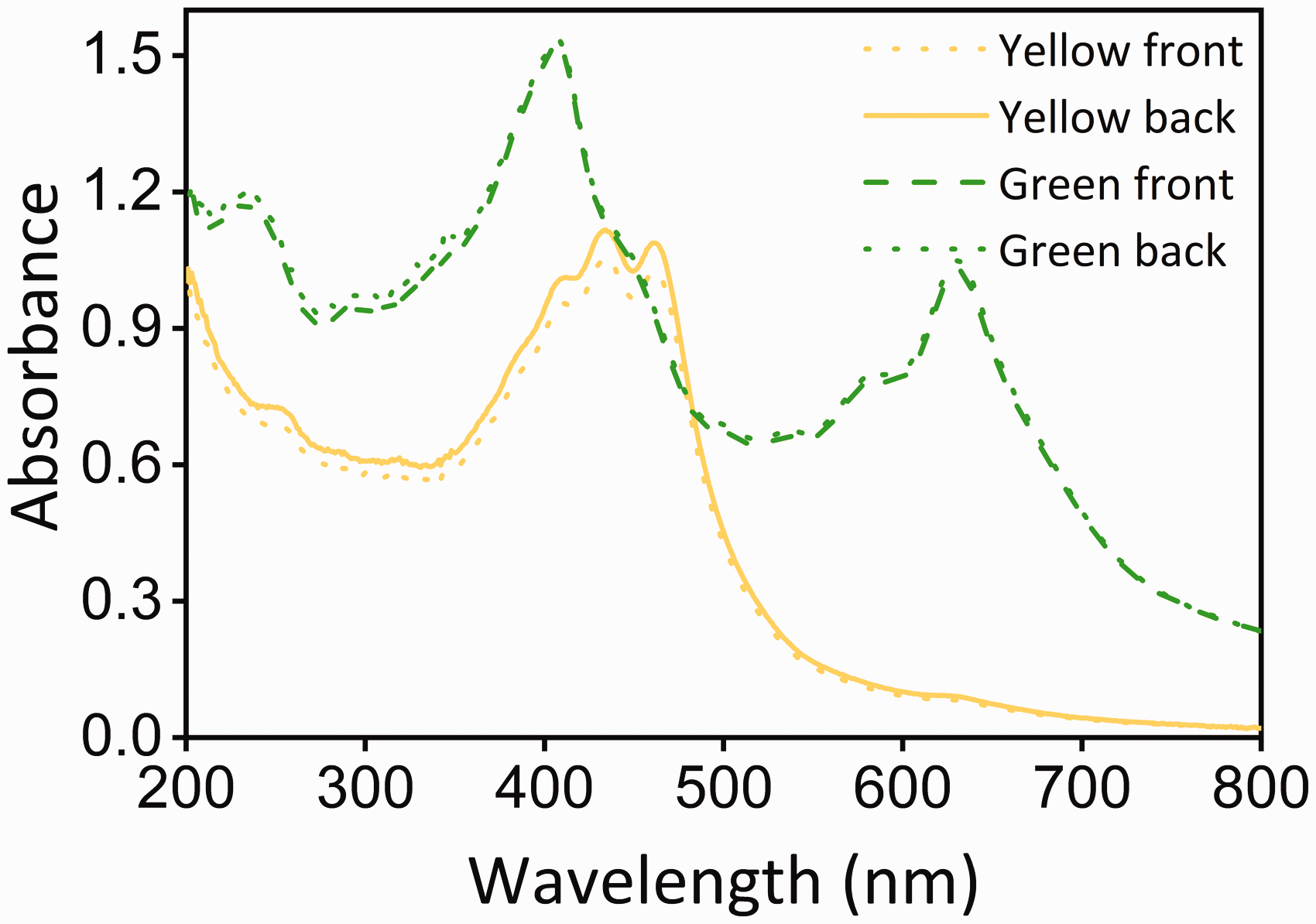
Results of the effects of the four filters on photo-fading of the two pre-dyed fabrics are shown in Figure 4.
Discoloration of (a) yellow fabric and (b) green fabric caused by filtered simulated sunlight radiation generated by a xenon light source with an intensity at 400 W/m2. Transmittance wavelength ranges of filters 1–4 are >355 nm, >380 nm, >410 nm, and >460 nm, respectively.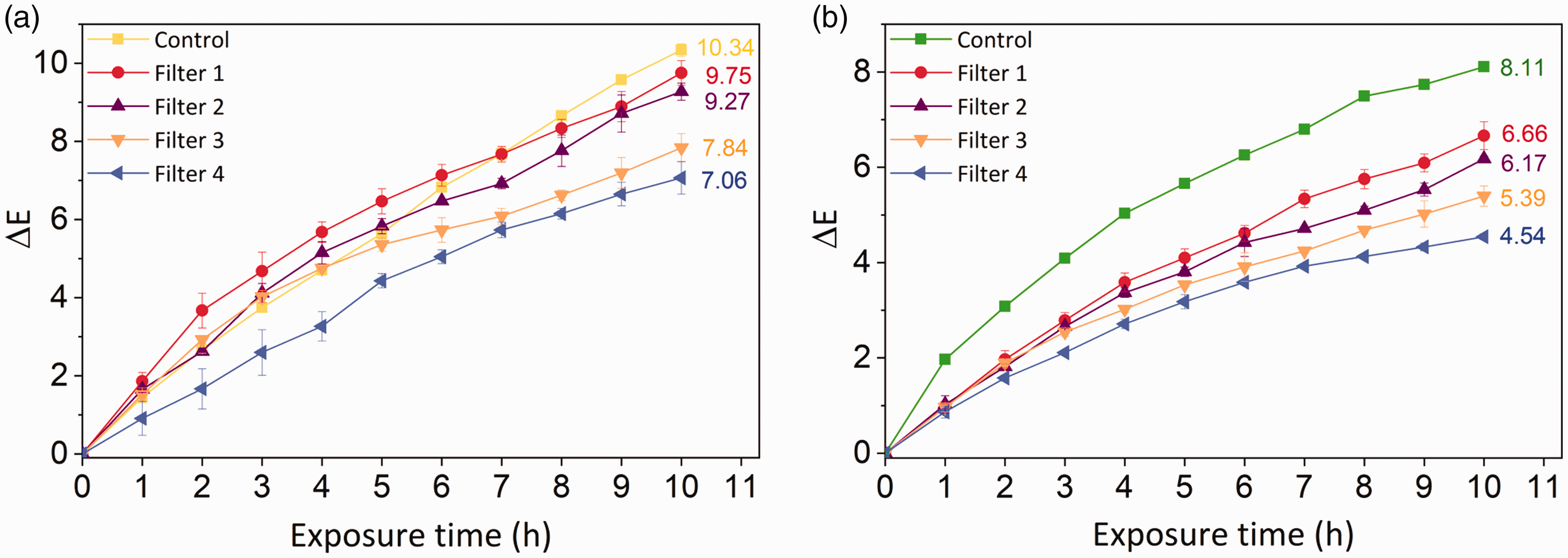
It can be seen from Figure 4 that the filters have moderate effects on inhibiting photo-fading of the two dyes. The color change differences between the control samples and the filter-covered samples after 10 h of simulated sunlight irradiation were ΔE 10.34 (control, yellow), ΔE 9.75 (filter 1, yellow), ΔE 9.27 (filter 2, yellow), ΔE 7.84 (filter 3, yellow), ΔE 7.06 (filter 4, yellow), ΔE 8.11 (control, green), ΔE 6.66 (filter 1, green), ΔE 6.17 (filter 2, green), ΔE 5.39 (filter 3, green), and ΔE 4.54 (filter 4, green). The inhibiting effect of the filters can be sorted in the order filter 4 > filter 3 > filter 2 > filter 1.
Therefore, the protection level of discoloration improved with the increasing absorbent region of the filters. However, the best protection against color fading for yellow and green fabrics increased by only 31.7% and 44.0% respectively, even after 85% of UV light and part of the visible light (below 460 nm) spectrum have been shielded by filter 4. It is also notable that filters 1 and 2, which block UV and allow the transmittance of visible light, exhibited minor effects on decreasing the color difference of yellow fabric caused by simulated sunlight irradiation. Different color difference results were recorded for the green fabric under the same conditions as lower ΔE values were recorded in the presence of filters 1 and 2.
Results from this test are consistent with those from UV absorbers and further prove that UV rays are not the only root cause of photo-fading of the two dyes. Specifically, the yellow fabric is more sensitive to visible light while UV irradiation plays a more important role in the photo-fading of green fabric. One possible reason why UV and visible light behave differently in the photo-fading of the two fabrics is that as a carotenoid, the yellow dye is more prone to photo-oxidation caused by visible light, while the porphyrin structures in the molecules of green dye will be activated to triplet states under UV irradiation.
Effects of organic and inorganic UV absorbers on inhibiting photo-fading
XRD spectrum featuring characteristic diffraction peaks of ZnO can be observed from Figure 5(a), indicating the successful synthesis of ZnO NPs with high purity. The diffraction peaks match the crystal parameters of hexagonal wurtzite ZnO, a common crystal structure of ZnO which has been reported previously.30,31 The UV–vis spectrum (Figure 5(b)) confirmed that the ZnO NPs exhibit distinctive UV absorbance within the wavelength range 250–370 nm. The ability of ZnO NPs to absorb UV light can be attributed to its energy band gap (3.37 eV
32
), a prominent characteristic that enables metal oxide semiconductors to absorb photons and release electrons.
33
Minor absorbance of light in the blue light region by ZnO NPs can also be observed from the UV–vis spectrum, indicating that ZnO NPs will not affect the original color properties of the substrate (dyed fabric in this case) with a low o.w.f. of ZnO NPs coatings. The channel (%) bar chart and passing (%) curve in Figure 5(c) jointly show a particle size distribution featuring a diameter range from 36.1 to 72.3 nm and an average diameter of 47.5 nm. This indicates that the ZnO NPs in the ethanol dispersion are mainly nanoscale, with minor aggregation behavior.
XRD spectrum (a), UV–vis spectrum (b), and particle size distribution of ZnO NPs prepared via hydrolysis of Zn(CH3COOH)2 under alkaline conditions in ethanol (c).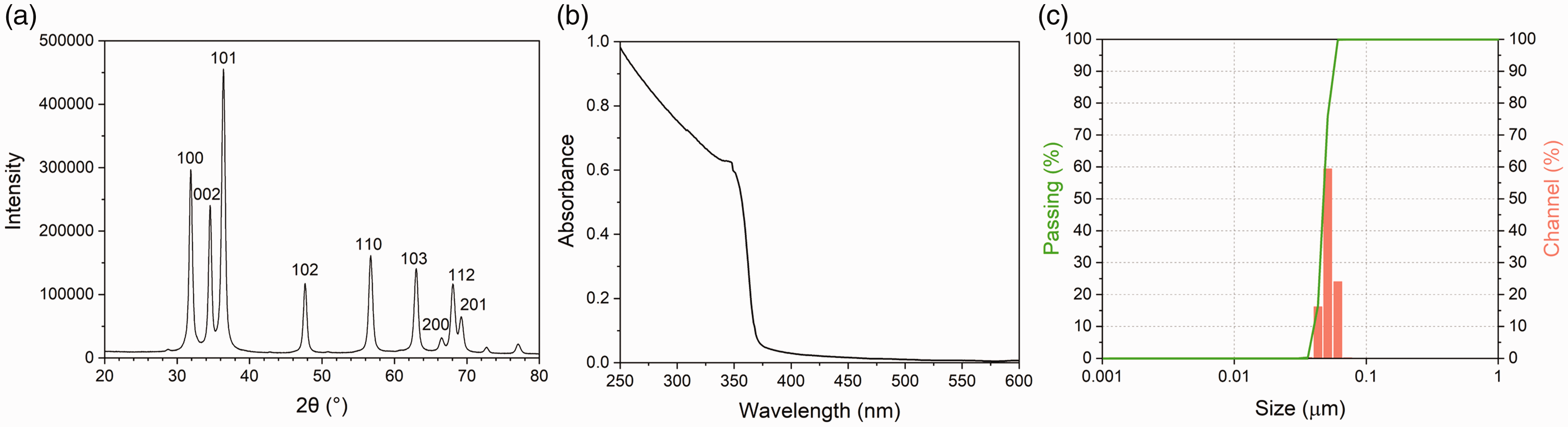
Effect of ZnO treatments via the three methods on the color of pre-dyed fabrics
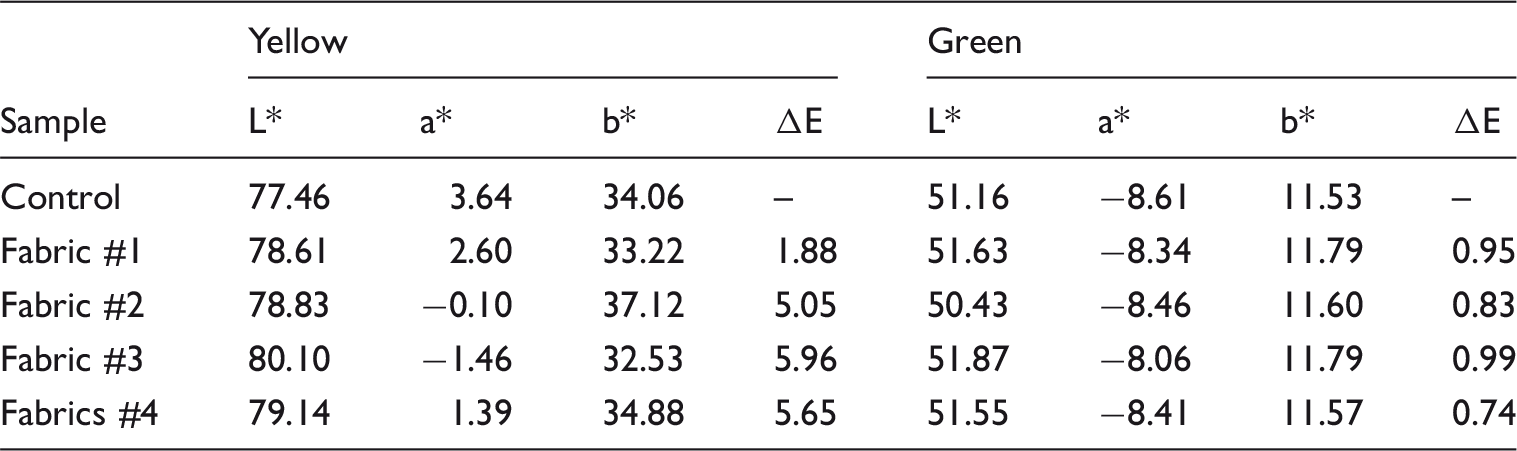
Distinct color changes resulted mainly from the decrease in the value of a* of yellow fabrics coated with ZnO NPs via the three methods or treated with UV FAST®. However, minor color change of the green fabrics was recorded as the ΔE between the control and each treated sample is lower than 1, indicating that treatments have a minor effect on the color of pre-dyed green fabric. As the amount of ZnO NPs coated on the dyed fabrics is maintained at a low level (5%) and the ZnO NPs have minor absorbance of visible light (Figure 5(b)), they are not likely to cause severe color change after the treatments. Similarly, UV FAST® has very limited effect on the color of treated fabrics as it is a colorless and transparent liquid and its usage in the treatment was at a low o.w.f. (2%). The difference in the color change between the green fabric and the yellow fabric was mainly caused by the solubility of the dyes in ethanol and water. Generally, a proportion of the dye molecules of gardenia yellow were dissolved in ethanol or water during the treatment processes, therefore, resulting in an obvious color change of the treated yellow fabrics.
The actual amount of ZnO NPs loaded on the fabrics was determined by determining the weight percentage of the final inorganic material left on the sample after continuous heating in the TGA tests. TGA curves for the two fabrics are presented in Figure 6. Y1, Y2, Y3, and YC represent the yellow fabrics treated via direct dip-coating, electrostatic adsorption, and in-situ synthesis, as well as the blank control, respectively (Figure 6(a)). The mass of the four samples all decreased quickly within the temperature range 200–450℃ due to the oxidization of cellulose, and then gradually reached stable stages when the temperature was further increased. Due to the existence of metal ions contained in the dye molecules and the mordants introduced during the dyeing process, the final weight percentage of YC was above zero (2.01%) as the metal elements remained stable even after reaching the highest temperature (800℃). The final residual weight percentages of Y1, Y2, and Y3 at 800℃ were 6.68%, 6.87%, and 7.12%. The difference of final weight percentages between the treated sample and the blank control indicated the existence of a ZnO NPs coating, as the inorganic material also remains stable. Therefore, the effective loading of ZnO NPs on Y1, Y2, and Y3 was 4.67%, 4.86%, and 5.11% o.w.f., respectively.
TGA curves of (a) yellow samples and (b) green samples. The number 1–3 and the letter C after Y and G represent the yellow/green fabrics treated via direct dip-coating, electrostatic adsorption, in-situ synthesis, and the blank control, respectively.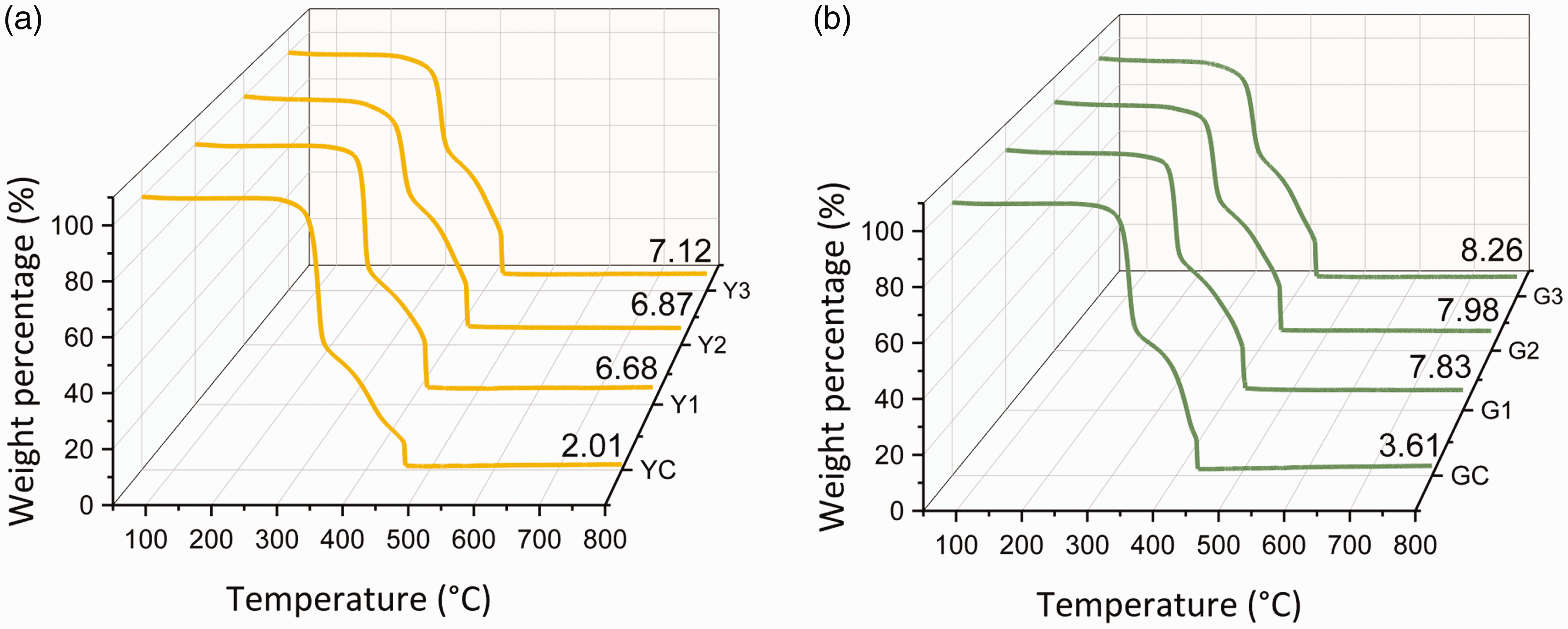
Similar trends are observed in Figure 6(b). G1, G2, G3, and GC represent the green fabrics treated via direct dip-coating, electrostatic adsorption, and in-situ synthesis, as well as the blank control, respectively. The final weight percentages of G1, G2, G3, and GC at 800℃ were 7.83%, 7.98%, 8.26%, and 3.61%, which indicates the effective loading of ZnO NPs on G1, G2, and G3 are 4.22%, 4.37%, and 4.65% o.w.f., respectively. These percentages were similar in pickup rate and trend to those seen for the yellow fabric.
ΔE of yellow and green fabrics treated with ZnO nanoparticles via direct dip-coating (Fabric #1), electrostatic adsorption (Fabric #2), in-situ synthesis (Fabric #3), and UV FAST® (Fabric #4)
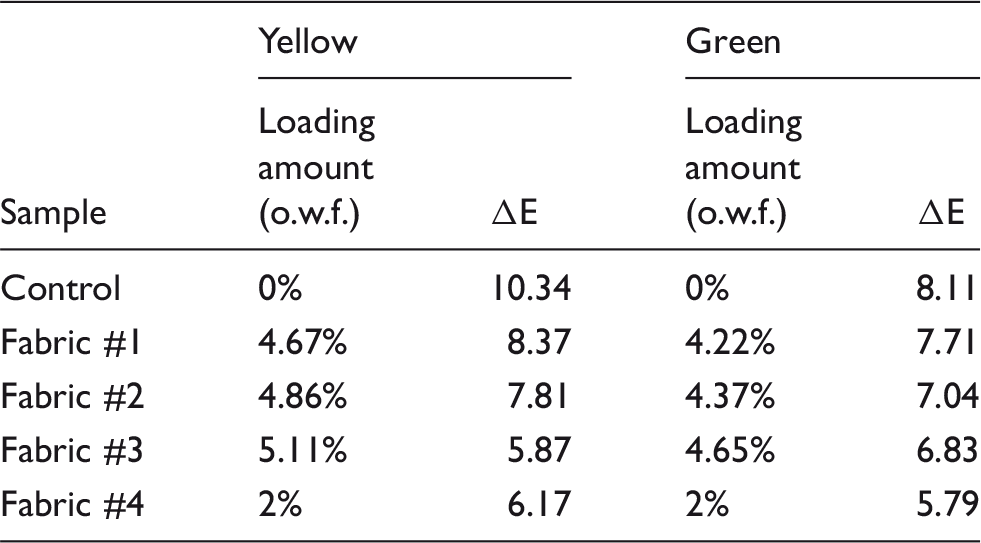
It can be seen from Table 3 that ZnO NPs and UV FAST® showed different effects on inhibiting the discoloration of the pre-dyed fabrics caused by simulated sunlight irradiation. For the yellow fabrics, the discoloration of the control sample was ΔE 10.34 after 10 h of irradiation, which was very severe. Four types of treated samples indicated reduced discoloration to different degrees. Particularly, the discoloration of ZnO NPs coated through direct dip-coating, electrostatic adsorption, and in-situ synthesis around 5% o.w.f. were ΔE 8.37, 7.81, and 5.87, respectively, while the UV FAST® was ΔE 6.17 at 2% o.w.f. For the green fabrics, a similar color change trend was observed: the ΔE of the control sample was 8.11 after 10 h of irradiation, while color change of fabrics with ZnO NPs coated through direct dip-coating, electrostatic adsorption, and in-situ synthesis around 5% o.w.f. were ΔE 7.71, 7.04, and 6.83, respectively, and UV FAST® was ΔE 5.79 at 2% o.w.f.
Owing to the much lower usage of UV FAST®, organic UV absorber was more effective compared with ZnO NPs in the protection against photodegradation. In addition, the in-situ synthesis method provided a better protective effect than direct dip-coating and electrostatic adsorption methods, which may be attributed to a higher coverage of ZnO NPs. However, both inorganic and organic UV absorbers were not satisfactory for effective UV protection of either of the two natural dyes evaluated. One possible reason is that photo-fading of the two dyes was caused by photo-oxidation from both UV and visible irradiation. This reinforces the degradation levels observed using filters to block the UV portion of the irradiated light.
Overall, despite the ZnO NPs having prominent UV absorbance, their photocatalytic activity will also cause photo-fading of the two natural dyes as a proportion of energy of the absorbed UV rays will be delivered to the dye molecules. However, the organic UV absorber (UV FAST®) molecules degrade and “sacrifice” themselves to protect the dye molecules from photo-fading, thus generating a better inhibiting effect than the inorganic counterparts.
Effects of reducing agent
Protective effects of reducing agents
A number of different strength-reducing agents were trialed to see if they could reduce the photo-oxidation of the natural dye. The glucose and neutralized sodium citrate were the most effective of the reducing agents used for inhibiting light-induced discoloration of the two pre-dyed fabrics (Figure 7). For both the yellow and the green fabrics, the neutralized sodium citrate exhibited the lowest color change during light exposure of each of the reducing agents tested (yellow: ΔE 5.03; green: ΔE 3.64). The glucose-treated samples also performed similarly (yellow: ΔE 5.26; green: ΔE 4.47).
ΔE of control and (a) yellow and (b) green fabrics treated with various types of reducing agents (3% o.w.f.) under simulated sunlight irradiation generated by a xenon light source at an intensity of 400 W/m2.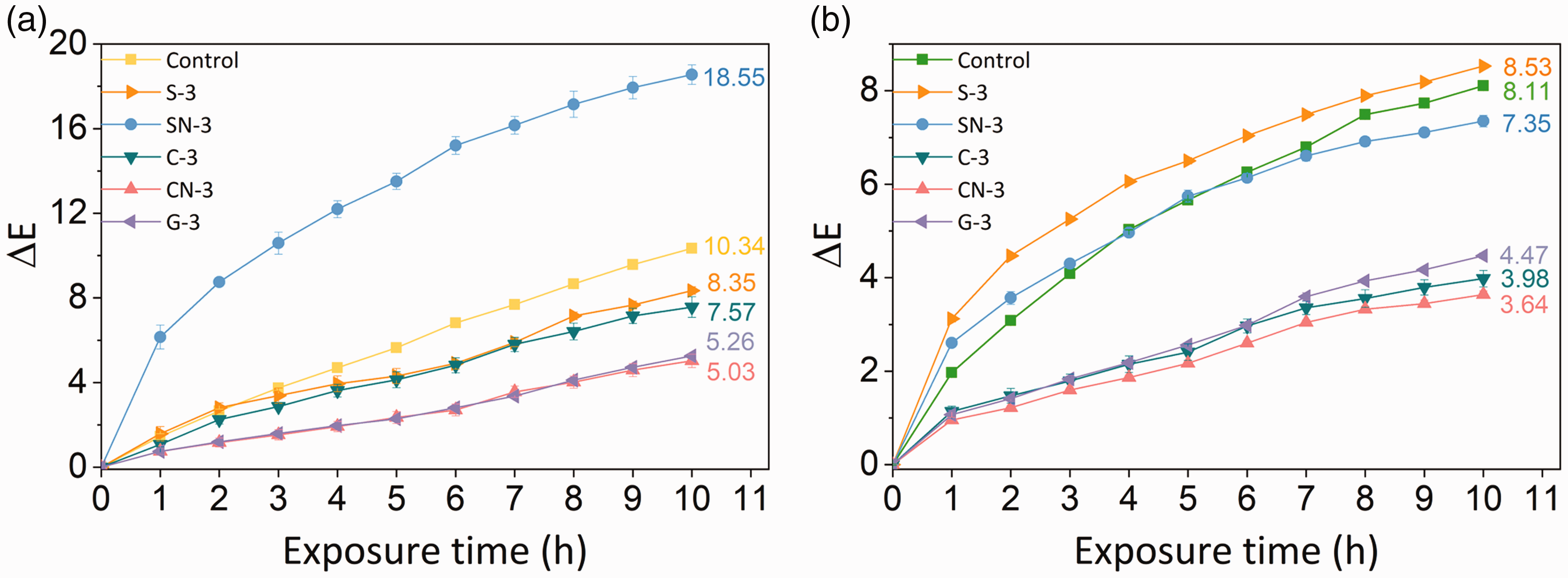
Apart from protecting the dyed fabrics from photo-fading, the additives themselves can also cause fading of the dye molecules. Due to the occurrence of damage and ring-opening of the unstable porphyrin structures in the two major components of the green dye (whose molecular structures are presented in Figure 8(a) and (b)), and the reduction of conjugated carbon chains in the two major components of the yellow dye (whose molecular structures are presented in Figure 8(c) and (d)), the two dyes are extremely sensitive to the reducibility and pH value of the additives. After the treatment with the reducing agents, the acidity of citric acid caused rapid color change of the yellow fabric (from light yellow to orange) and the desorption of the molecules of green dye from cotton. A chemical reduction of the dye was evident with each of the reducing agents trialed, to varying levels. Na2SO3 had the largest effect with a significant bleaching reduction of intensity of both dyes. For the weaker reducing agents (sodium citrate and glucose) this effect was still apparent but at a reduced rate. The pH state of the fabric had a large effect on the reducing effect during coating. With the citric acid treatment, the yellow dye was more sensitive to this effect than the green (yellow: ΔE 14.92; green: ΔE 3.33). Control of the pH to neutral conditions during the coating minimized this change in color (yellow: ΔE 2.27; green: ΔE 0.87).
Molecular structure of the major components (a) sodium copper chlorin e6 and (b) sodium copper chlorin e4 in the green dye, and (c) crocin and (d) crocetin in the yellow dye.
Protective effects of reducing agents at different usages
As the neutralized sodium citrate and glucose treatments showed the best protection levels of the reducing agents trialed, further experiments were conducted to examine the optimum concentrations for treatment (Figure 9). The neutralized sodium citrate treatment showed increased light fastness protection for both fabrics as its concentration was increased: 5% neutralized sodium citrate provided the highest protection for both dyes. The glucose also provided an improvement in light fastness proportional to the amount of treatment material used; however, optimum protection was already achieved at 1% for the yellow dye. As seen in earlier work, the photo-fading mechanism was different for each dye, so reducing agents exhibit better effects on inhibiting the photo-fading of yellow fabric as it is more sensitive to photo-oxidation caused by visible light, which can be relieved by the treatment of reducing agents.
ΔE of control, neutralized sodium citrate, and glucose treated (a) yellow and (b) green fabrics with various dosages under simulated sunlight irradiation generated by a xenon light source at an intensity of 400 W/m2.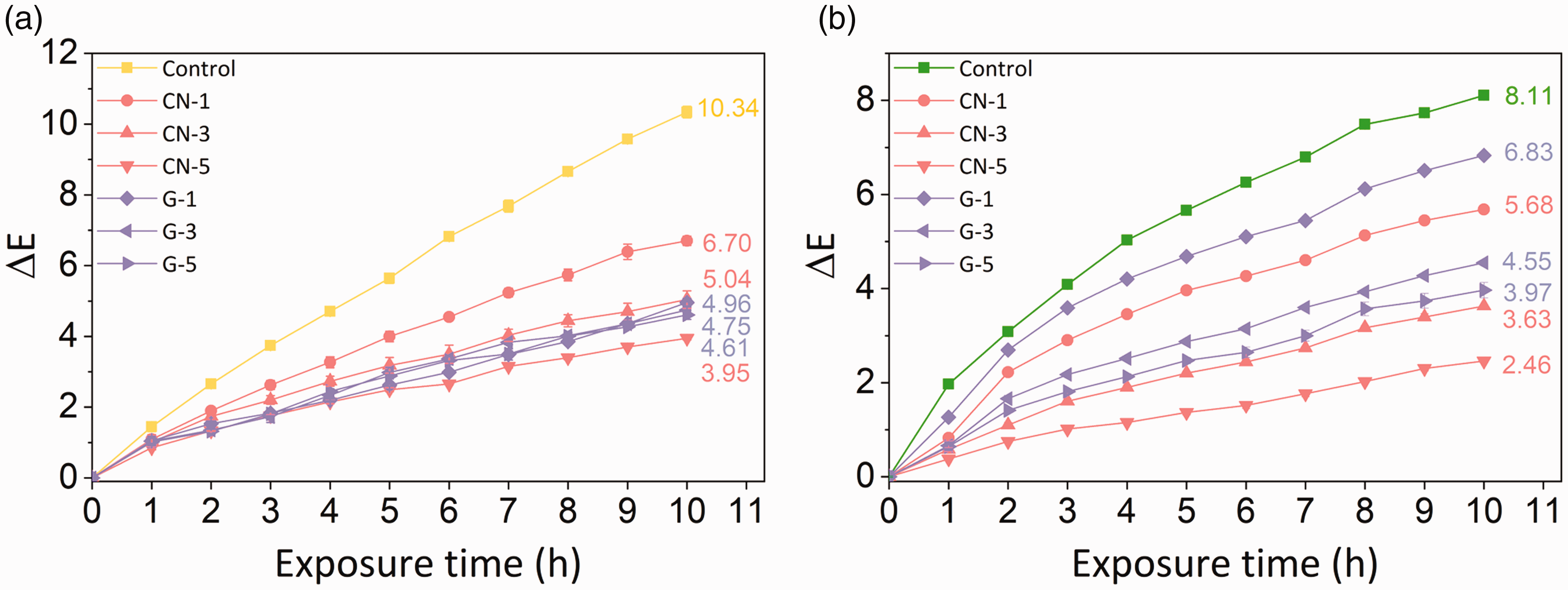
Effects of reducing agents together with a commercial UV absorber
Yellow and green fabrics were treated with glucose with 2% o.w.f. UV FAST® (UV fast/G-5) and subjected to standard irradiation. Earlier experiments showed that the commercial light fastness protecting agent UV FAST® had limited protection of the two dyes. This section examines if the inclusion of the reducing agent with the commercial protecting agent would improve protection levels. Each of the reducing agents alone performed better than the combined reducing agent/UV FAST® treatments (Figure 10). The neutralized sodium citrate treatment was the best performer for both dyes, but in combination glucose/UV FAST® was the best performer of the treatments including UV FAST®. The difference between the glucose/UV FAST® and the neutralized sodium citrate/ UV FAST® may be due to the interaction between the sodium citrate and the commercial protecting agent allowing electron transfer and hence photocatalytic oxidation.
ΔE of control and fabrics treated with 5 % o.w.f. neutralized sodium citrate (CN-5), 5 % o.w.f. glucose (G-5), 2 % o.w.f. UV FAST®, 5 % o.w.f. neutralized sodium citrate with 2 % o.w.f. UV FAST® (UV fast/CN-5), and 5 % o.w.f. glucose with 2 % o.w.f. UV FAST® (UV fast/G-5) caused by their exposure to standard radiation for 72 h following ISO 105–B02.
SEM images of the treated samples
Morphology of ZnO NPs and reducing agents deposited on the green fabrics are shown in Figure 11. It can be seen from Figure 11 that among the three different treatment methods, both direct dip-coating and in-situ synthesis methods resulted in severe aggregation of ZnO NPs, while the electrostatic adsorption method provided a more even dispersion of ZnO NPs. The in-situ synthesis method showed the highest coverage of ZnO NPs, and dip-coating indicated the lowest one. In addition, the lowest amount of ZnO NPs deposited on the green fabric can be observed from Figure 11(a). Layers formed by the reducing agents recrystallized during the drying process after the dipping and padding treatment, which can also be observed on the cotton fiber of the green fabrics (Figure 11(d)–(f)).
SEM images of the green fabrics treated with ZnO NPs via (a) direct dip-coating, (b) electrostatic adsorption, and (c) in-situ synthesis, and green fabrics treated with 5% o.w.f. (d) neutralized sodium citrate, (e) glucose, and (f) neutralized Na2SO3, respectively.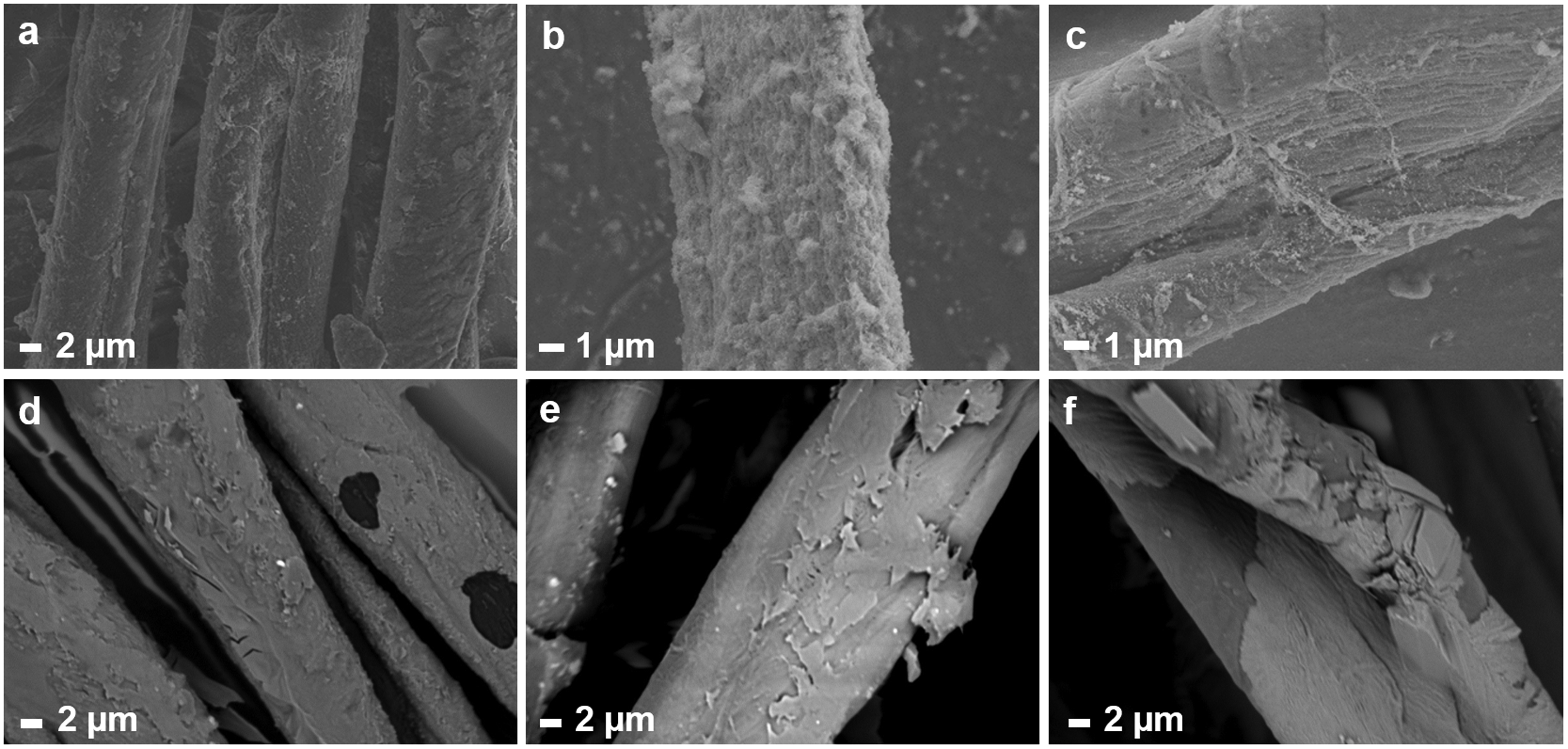
Color fastness
Color fastness properties of the fabrics treated with 5% o.w.f. neutralized sodium citrate

The results of color fastness to light are consistent with the photo-fading curves presented in Figure 8 and further confirm the effects of sodium citrate on inhibiting the photo-fading of the two fabrics.
Overall, wash fastness results of the fabrics treated with 5% o.w.f. neutralized sodium citrate suggest that treating the dyed fabrics with reducing agent via the dipping and padding method has minor effects on the wash fastness of treated samples as no further fixation of the dye molecules or the fixation of reducing agents occurred during the treatment.
Conclusions
Organic and inorganic UV absorbers are not efficient in inhibiting the photo-fading rate of the dyed fabrics (in green and yellow) as the former may cause degradation of the dye molecules due to its photocatalytic activity while the latter will be degraded and gradually lose its inhibiting effect after absorbing the energy of UV rays. In addition, filtering UV rays in simulated sunlight with UV filters was also an ineffective inhibitor in terms of photo-fading. Those findings indicate that photo-fading was caused by both UV rays and visible light. Photo-oxidation and energy transition may be involved in the photo-fading process of the two natural dyes. Neutralized sodium citrate and glucose can efficiently slow down the fading process, and the protection level of discoloration was improved with the concentration of the reducing agents. It is notable that dipping the yellow fabric in the aqueous solution of neutralized sodium citrate caused minor color change of the treated yellow fabric as a portion of molecules of yellow dye were dissolved in the solution. Compared with controls, application of 5% o.w.f. glucose and neutralized sodium citrate reduced the photo-fading rates of the green dye by 51.1% and 69.7%, respectively. For yellow fabrics, the reduction percentage in photo-fading rates is 55.4% and 61.8% respectively. The application of reducing agents can improve the photo-stabilities of both yellow and green dyes so that they have a better usability in textile garments; however, further work needs to be conducted to understand how to retain them in the fabric. Treating the dyed fabrics with reducing agents has minor effects on the wash fastness properties of the treated samples, as no further fixation of dye molecules occurred in the treatment.
Footnotes
Declaration of conflicting interests
The authors declared no potential conflicts of interest with respect to the research, authorship, and/or publication of this article.
Funding
The authors disclosed receipt of the following financial support for the research, authorship, and/or publication of this article: This work was supported by a commercial fund provided by the Guangdong Esquel Textiles Co. Ltd (No. 230701-3029999).
