



Abstract
Genuine leather has numerous applications, such as car interiors and clothing, owing to its excellent quality. However, due to the high cost of genuine leather, animal rights issues, and environmental effects of leather processing, artificial leather has increasingly replaced genuine leather. The materials and processing methods used for artificial and genuine leathers are different, resulting in a variety of impressions and shitsukan, that is, the sense of quality of the object. In this study, we focused on the perceptual “authenticity,” “luxury,” and “quaintness,” which are important components needed to achieve the shitsukan of leather used in various products and examined the quantification of qualitative shitsukan using a perception model. We hypothesized that shitsukan can be recognized from the common potential impressions perceived from the properties of a material. Therefore, we developed a method for evaluating shitsukan using representative words for impressions that we perceive in objects and measured their image properties. The physical and psychophysical properties were obtained using several measurements. Multi-angle measuring devices were developed for the measurement experiments. Moreover, several subjective evaluation experiments were conducted to estimate the representative impressions that were potentially perceived in leather. Subsequently, we estimated two independent impressions, “surface shape” and “impression of stateliness” from the properties of leather. In addition, “authenticity,” “luxury,” and “quaintness,” were quantified using simple equations basis the impressions.
Keywords
Introduction
We perceive shitsukan, which means the sense of object quality from various stimuli, through visual information. 1 The word is used to address topics related to material perception and object recognition.2,3 For example, we perceive the appearance of luxuriousness from surface properties. Using shitsukan information, we decide whether to purchase a specific product.4,5 In addition, based on visual input, we can determine if an object is fragile, and thus how carefully it should be handled. If we judge that an object is heavy, we lift it slowly and carefully after adopting a suitable stance. 6 The perception of shitsukan is thus an important function in our daily lives. In recent years, different studies have attempted to understand the perception mechanisms of shitsukan.7,8 Moreover, shitsukan design is important for developing more attractive products, which is why product development companies have been qualitatively designing the shitsukan of products. To efficiently design shitsukan, it is important to quantify it. Studies have reported methods for quantifying the perceived impression of materials in terms of the appearance and touch in relation to shitsukan.9,12
In this study, we focused on the visual shitsukan of leather used in various products. While product designers want to use genuine leather for products such as car interiors and clothing due to their superior quality, the high costs and concerns relating to animal rights compel them to use artificial leather as an alternative. Artificial leather is made of either polyurethane or vinyl chloride. In addition, it is low maintenance, and therefore it is widely used. Furthermore, artificial and genuine leathers use different raw materials and processing methods, which can give a variety of impressions and shitsukan.
Identifying the shitsukan perception flow of leather can help in developing artificial leather that is very similar to genuine leather. Specifically, the aim of this study is to identify representative impressions that we perceive from leather and quantify shitsukan based on the properties of these impressions. At the same time, we perceive some components of shitsukan. We hypothesize that we perceive the components from identifiable common representative impressions. Thus we focused on some important components of the shitsukan of leather used in various products. As mentioned above, we focused on perceptual “authenticity” (not a segmentation of genuine and artificial leather) because of the presence of genuine and artificial leathers. We also focused on perceptual “luxury” (not the actual price) because leather is mainly used for high-end products. Finally, consumers prefer leather products whose appearance changes over time. Therefore, we focused on perceptual “quaintness” (not physical old but vintage-like appearance).
The process from stimuli to perception is not a single step. For example, Schiffman (2001) and Hui and Sherratt (2017) described the chain of sensory perception as follows: 1) stimulus, 2) sensory, and 3) perception.13,14 Based on these studies, we designed a shitsukan perception model, as shown in Figure 1. In the model, the “Stimulus properties” step corresponds to the image properties obtained from the measurement experiments. Additionally, the “Sensory attributes” step corresponds to the representative impressions we mainly perceived from leather. The impressions were extracted in several subjective experiments. Finally, the “Shitsukan perception” step is responsible for recognition based on the information from the previous steps, that is, “authenticity,” “luxury,” and “quaintness.” This model can help designers understand the impression of objects and determine properties that can be controlled to improve shitsukan.
The proposed model.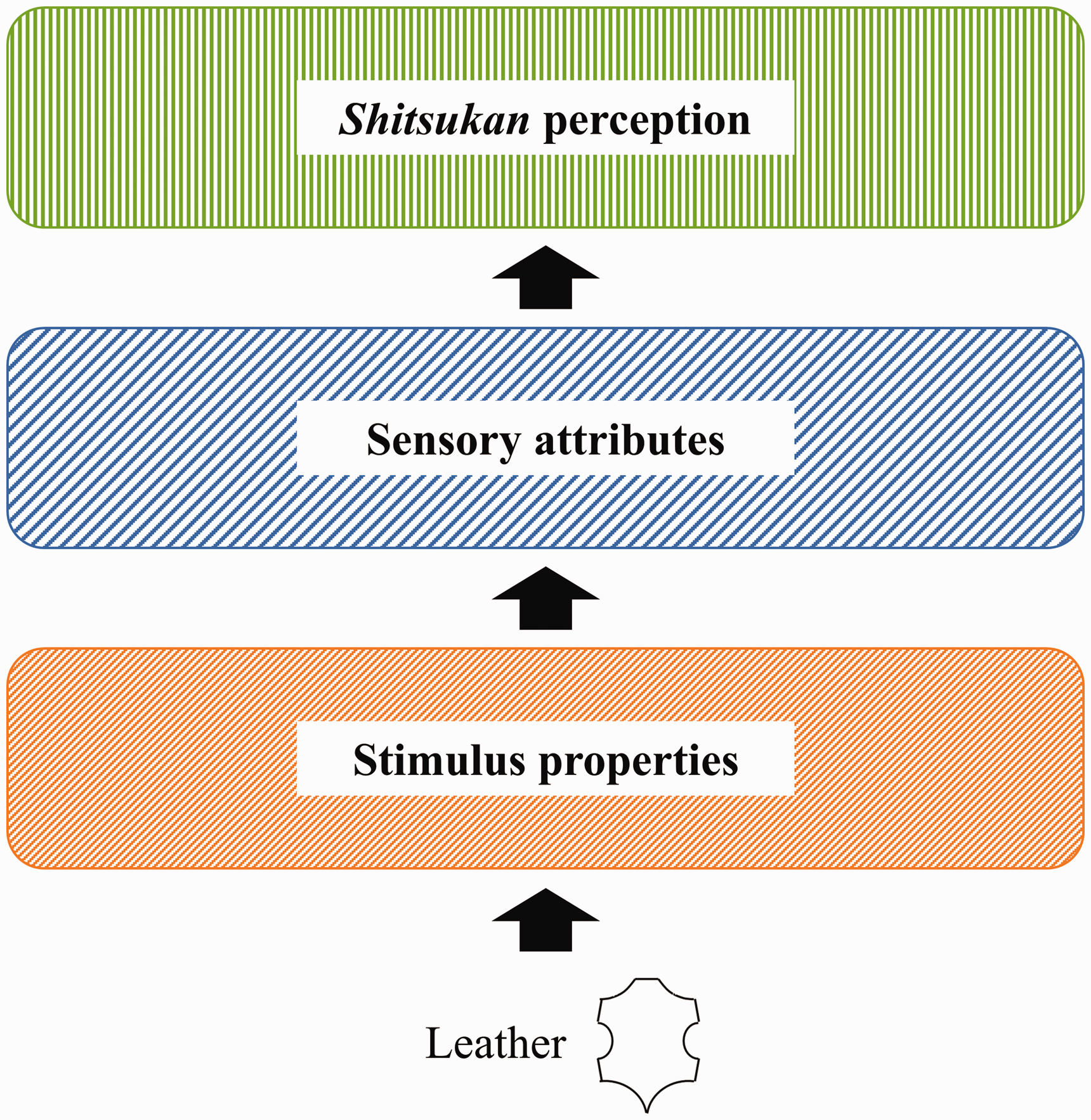
Related studies that express the perception mechanism using a multi-step model have been reported.15–21 However, they prepared, in advance, impression words of the intermediate step; this step plays an important role in a multi-step model. It is possible that there is a low correlation between each step because it is unclear whether the prepared impression words are appropriate for the shitsukan of the object. In addition, most of these studies have shown results of a single regression analysis among the words included in each step. However, human perception is complex, and some words or stimuli in the previous step were integrated as a single word in the following step. Therefore, in this study, we used a multiple regression analysis to account for complex human perception. Additionally, previous studies have reported a method for obtaining words related to perception through subjective evaluation experiments. Hollins et al. (1993) and Picard et al. (2003) obtained words from participants in a subjective experiment and selected them according to their frequency and order.22,23 However, this method may not account for words with low frequencies, such as onomatopoeias, despite being important in perception. To address complex human perceptions, such as impressions and shitsukan, we need more words that express perceptions. Therefore, we collected impression words from the participants and extracted representative impressions that were perceived from leather in several subjective evaluation experiments. A high correlation can therefore be expected between steps.
In this paper, we describe the methodology of the image measurement experiments for obtaining physical and psychophysical properties. Next, we describe the procedure and results of the subjective evaluation experiment that was conducted to identify the representative impressions that were perceived from leather and obtained shitsukan scores. We then confirmed the correlation among the properties, impressions, and shitsukan using the proposed model. We also confirmed the accuracy of the proposed model through a verification experiment. Finally, we presented the discussion and conclusions of this study.
Measurement experiments
The impressions and shitsukan that we perceive are related to the physical and psychophysical properties of objects. Therefore, it is necessary to obtain the images of actual leather surfaces and calculate their properties using image processing. In this study, leather samples were prepared, and their images were captured via two image measurement experiments using a constructed goniophotometer. The value of each property was the average of the three measurements.
Samples
We prepared 10 leather test samples as shown in Figure 2. The samples were prepared with different appearances for objectivity.
Test samples. The images in the insets are the enlarged images of each sample.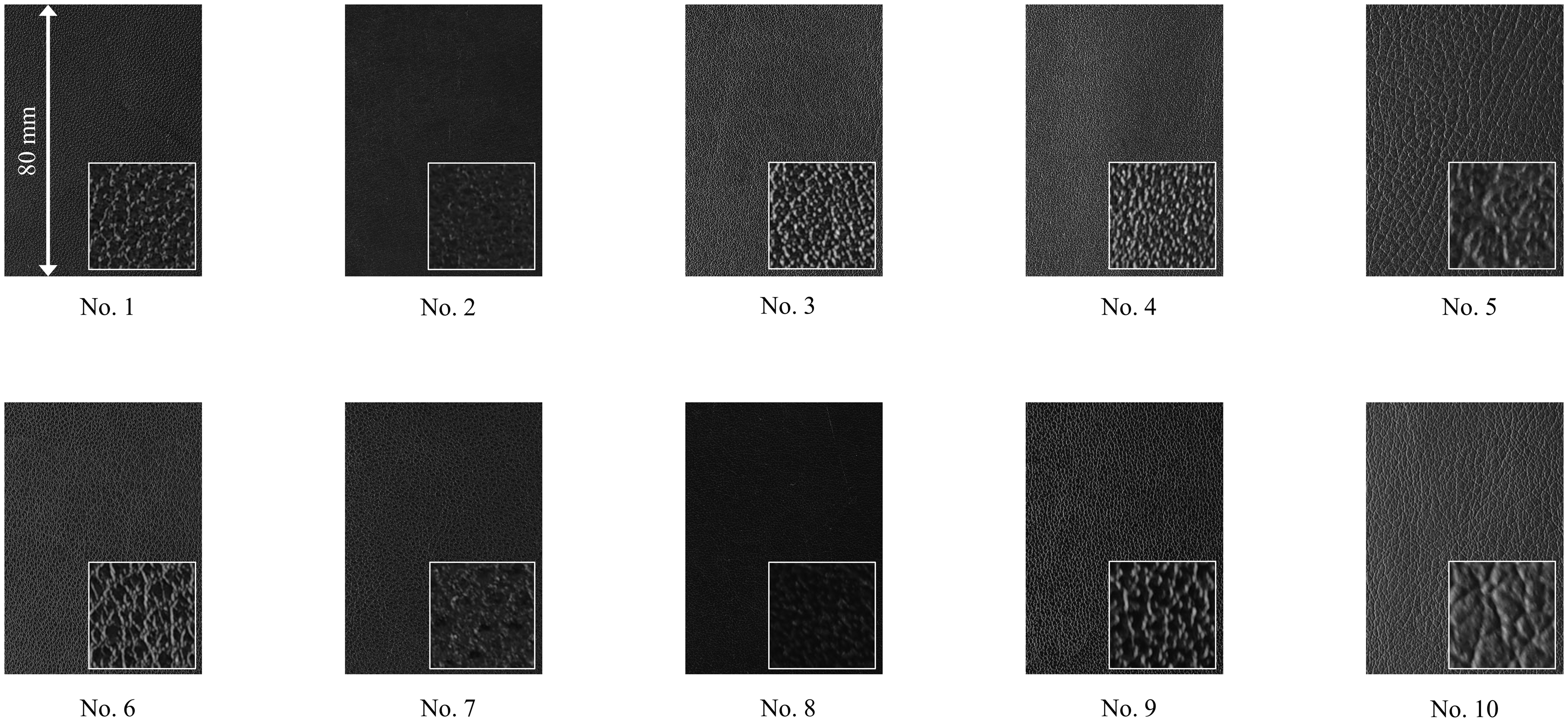
Samples 1–4 were genuine cow leather, while samples 5–10 were artificial leather. The samples were black and their approximate dimensions were 300 mm ×210 mm. The RGB images were captured under D65 diffuse lighting conditions. Sample thicknesses were in the range of 0.1–2 mm, and the thin samples were attached to a 2 mm stretchable plate.
Measurement of color
The measurement system was composed of a spectral camera and a light source. Figure 3 shows the color measurement system.
Color measurement system; (a) system configuration. The light source was attached to a rotating stage, and measurements were obtained for various angle conditions. (b) schematic illustration of the measurement angle conditions.
The spectral camera obtained images of 31 bands (at 10 nm steps between 400 and 700 nm) at a depth of 10 bits. The size of the obtained image was 600 × 600 pixels. The image resolution of the system was approximately 1000 dpi (25 µm/pixel). The spectral images were normalized using the spectral images of a standard white target. The normalized spectral images were converted into a CIEXYZ color space with a spectral distribution of D65 illuminant and 10-degree color-matching function, which was then converted into an L*a*b* color space. 24 The color space is a device-independent perceptual uniform color space. L* represents the lightness from black (0) to white (100) and a* and b* represent the vividness from green to red and blue to yellow, respectively. The light source was xenon, and it was corrected to collimated light using a telecentric lens. The measurement and illumination angles were 45° and −15°, 0°, −20°, −30°, and 45°, respectively, toward the normal direction (i.e., a geometry of −15°/45°, 0°/45°, 20°/45°, 30°/45°, and 45°/45°). Thus, the L*, a*, and b* values were obtained under five angle conditions. These angle conditions were set based on the commonly used color measurement angles.25,26 In addition, kurtosis and skewness were classified as properties.
Measurement of texture
Figure 4 shows the texture measurement system.
Texture measurement system; (a) system configuration. The light source was attached to a rotating stage, and measurements were obtained for various angle conditions. (b) schematic illustration of the measurement angle conditions.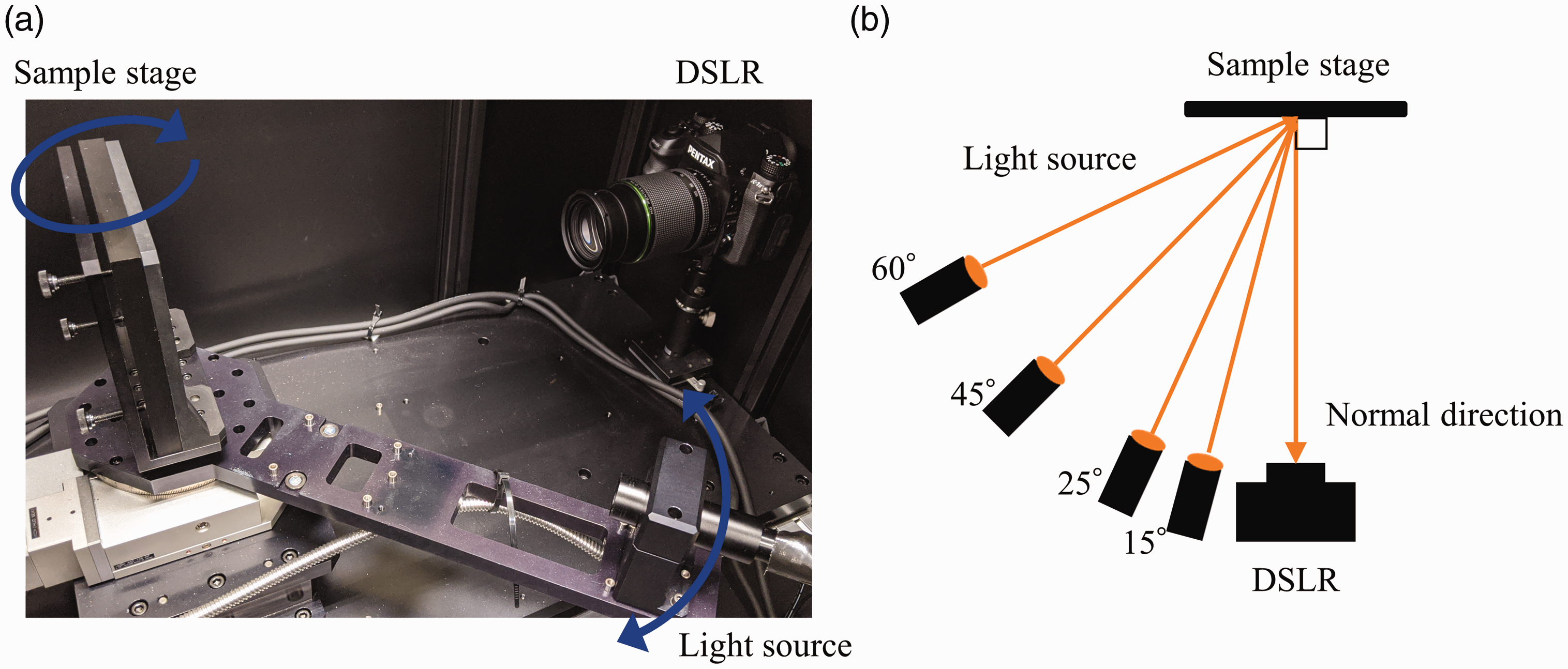
The system was composed of a digital single-lens reflex camera (Pentax K3-II, Ricoh Imaging Company, Ltd., Ota-ku, Tokyo, Japan) and a light source. The raw images had a depth of 14 bits and were converted into L* images. The raw images were then normalized using the raw images of a standard white target. The captured images were reduced to 3000 × 3000 pixels. The image resolution was approximately 1000 dpi (25 µm/pixel). The light source was xenon, and it was converted into uniform light with less irradiation unevenness using a rod lens. The measurement and illumination angles were 0° and 15°, 25°, 45°, and 60°, respectively, toward the normal direction (i.e., geometry of 15°/0°, 25°/0°, 45°/0°, and 60°/0°). We set these angles based on the commonly used surface graininess measurement angles. 26
To obtain the texture, the spatial frequency characteristics of the deviation L* image were calculated using a Fourier transform. For the conversion into 1D characteristics of the spatial frequency, the cyclic averages for each spatial frequency (cycles/mm) were calculated, as shown in Figure 5.
Image processing details.
List of measurement properties

Subjective evaluation experiments
The representative impressions and shitsukan scores were obtained in the different subjective evaluation experiments using actual leather samples and statistical analysis. In this study, JMP 13 (SAS Institute, Cary, NC, USA) was used for the statistical analysis. This section explains the method of estimating the representative impressions that were perceive from leather and describes how to obtain subjective scores for shitsukan.
Description of experimental conditions
The stepwise experiments were conducted using a light booth with a D65 light source (Spectra Light QC; X-rite, Grand Rapids, MI, USA). The illuminance of the light booth was approximately 1270 lx. The appearance of the leather surface changed depending on the observation angle. We set the leather samples on a bending jig (having a curvature radius of approximately 190 mm) in the light booth. The jig allowed the participants to observe various leather surface appearances from a fixed observation position, which was 300 mm from the sample, by steadying their forehead. Figure 6 shows the experimental conditions.
Experimental conditions:(a) experimental environment and (b) observation scene.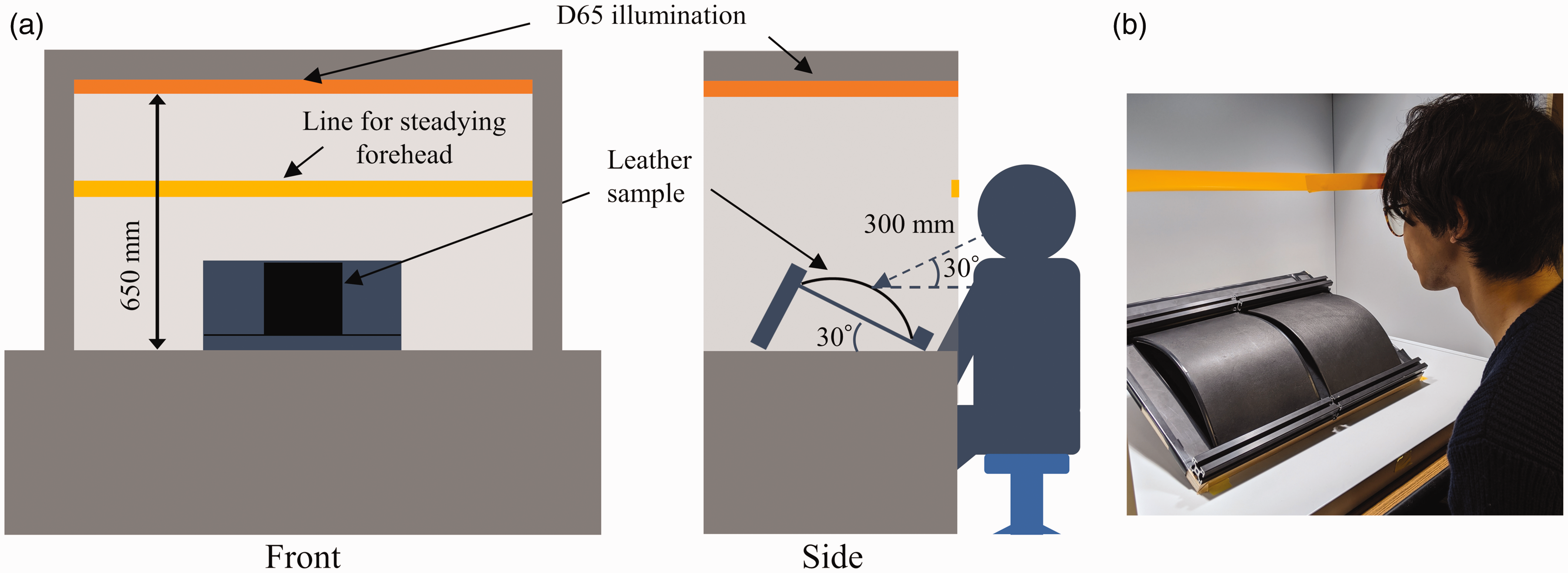
Estimation of representative impressions
The representative impression words were obtained using the factor analysis. Additionally, although the impression words used in the factor analysis were not prepared in advance, they were determined using different stepwise subjective evaluation experiments.
First, an evaluation word extraction test was conducted. Ten male participants, aged 20–40, observed the leather samples in the above environments and wrote down as many words that they could think of to describe their impressions. The participants were common leather consumers, and their average eyesight, including correction, was approximately 1.0. As a result, 232 words were obtained, and 92 words were extracted. A word was removed if there was duplication. We estimated that general impression words for leather had been largely extracted because the duplication rate of the words written down by the last participant was 84%.
Next, an appropriateness test was conducted using these words. In this test, eight participants, including four participants who were part of a subset of the evaluation word extraction test participants, and an additional four male participants aged 20–40 who were common leather consumers, selected words that expressed an impression perceived for leather among the 92 words. Their average eyesight was about 1.1 including a correction. They evaluated the appropriateness of the words on a scale of 1 (very inappropriate) to 7 (very appropriate). The words were extracted by calculating the average and standard deviations of the scores for each word. The participants judged the word appropriateness with respect to all the samples at once (92 ratings) while observing the samples. We determined that the words with high scores and low variabilities among participants were more appropriate for evaluation. In this study, we extracted the words that satisfied two conditions: 1) an average score of more than five (appropriate) and 2) a standard deviation of lower than the average standard deviation of the scores of the appropriate word group + 1σ. As a result, 24 words appropriate for the impressions of leather were extracted.
A semantic distance test was conducted to select words more carefully. The participants evaluated the semantic similarity of all the word pairs. Specifically, they expressed similar and dissimilar word pairs as having a “short distance” and “long distance,” respectively. Afterwards, the ratio of participants answering that the distance was long was defined as the distance of each word pair. Specifically, the word pair was independent if the ratio was “one” and “zero” if it had the same meaning. In this test, the samples were not presented because the participants judged only the similarity of the words. Additionally, the test was conducted using an Excel sheet that randomly listed the 24C2 and 28C2 word pairs. The words were then plotted using multidimensional scaling for the distance of each word pair. The words were plotted in a space with a dimensional number of words minus one.
The words plotted in multiple dimensions were categorized into several clusters using the hierarchical cluster analysis with Ward’s method. In general, words that are nearer could be combined as a cluster. There are various ways to reduce the total number of clusters. In this study, clusters were defined by words that were closer than the average distance of all words. As a result, the words were divided into eight clusters based on the average distance among the clusters (Figure 7).
Results of the cluster analysis using Ward’s method. The dotted line is the threshold, indicating the average distance of all the words.
Each cluster was grouped based on the representative word with the highest appropriate score. These words were then evaluated using a Likert method. The participants observed the 10 samples independently and evaluated the eight words on a seven-point scale from −3 (not perceived at all) to 3 (strongly perceive) for each sample (80 trials). The samples were presented randomly to each participant. The average score for each word was then calculated. Figure 8 shows the results obtained using the Likert method.
Results obtained using the Likert method. The error bars indicate the standard error.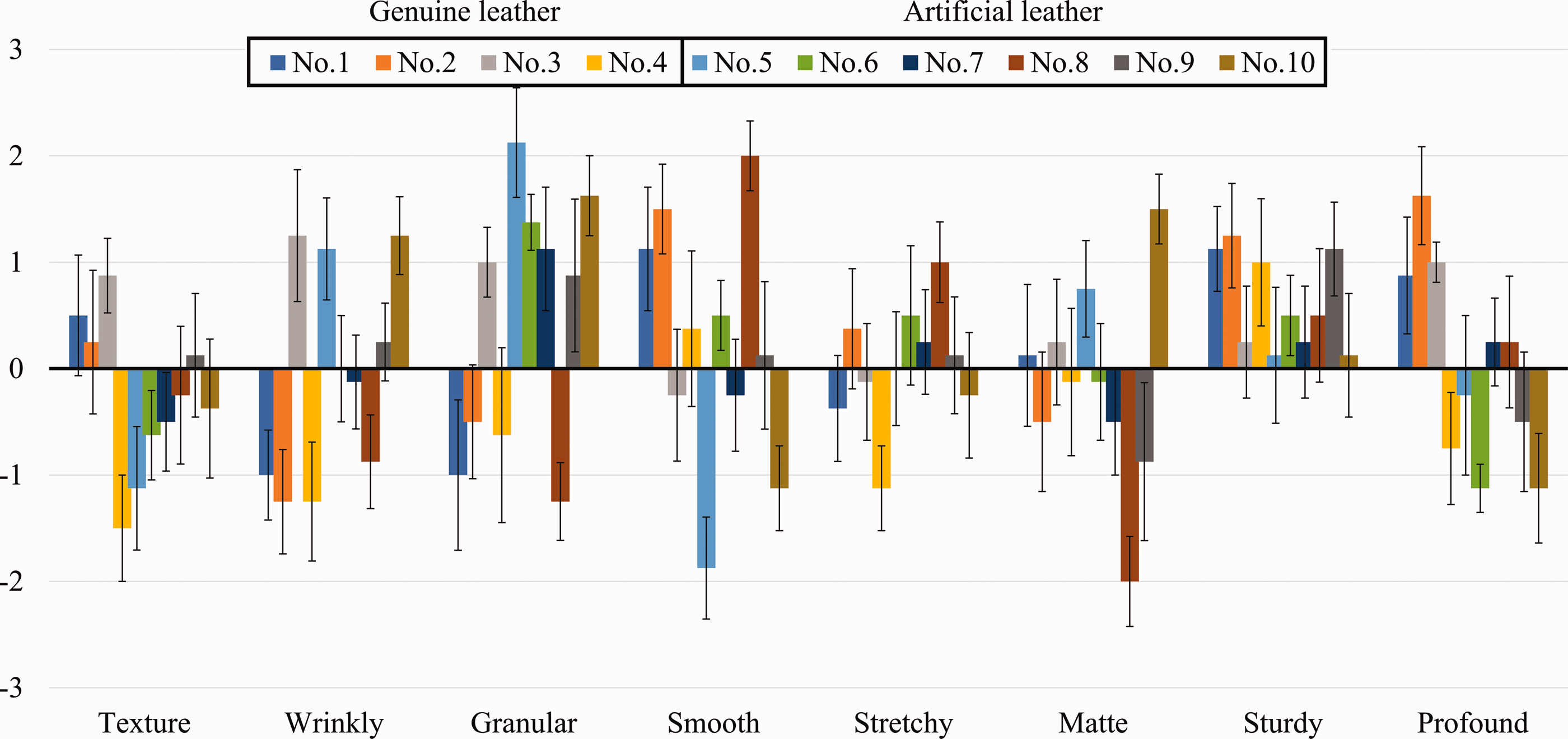
In this figure, the error bars indicate the standard error. After performing a t-test on the scores of the genuine and artificial leathers of each word, there was no significant difference among the words (p > 0.05). Specifically, there were no words that were exclusive to either genuine or artificial leather. Moreover, were able to prepare the samples using various impressions.
Estimation results of representative impressions
Results of factor analysis
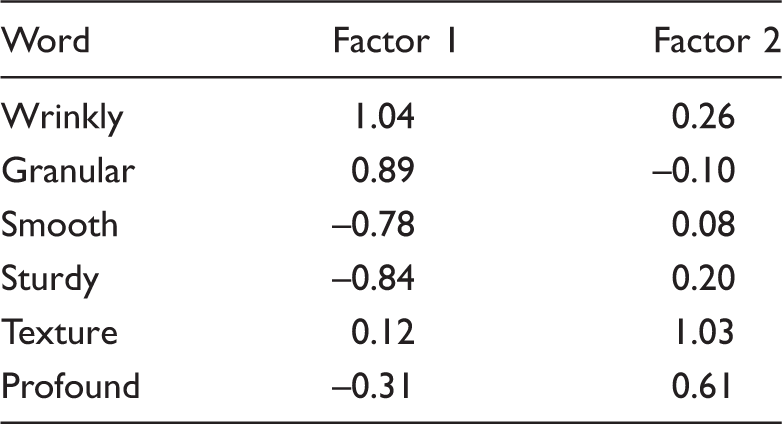
“Matte” was disregarded because of double loading, a phenomenon where there are large loading values for multiple factors. In the subsequent analyses, “Stretchy” was disregarded because no factors had large loading values. The cumulative contribution rate was 0.89. The first factor contained “Wrinkly,” “Granular,” “Sturdy,” and “Smooth.” The second factor contained “Texture,” which refers to the impressive appearance of the surface and “Profound,” showing perceptual depth and heaviness. The first factor was determined to be “surface shape” because it corresponded to words relating to the surface roughness and grain. The second factor was defined as “impression of stateliness,” which meant impressive and dignified appearances because it corresponded to words relating to impressive and perceptual depths.
Estimation results of shitsukan
A subjective evaluation experiment was conducted using a paired comparison method to obtain subjective scores for shitsukan (“authenticity,” “luxury,” and “quaintness”). Scheffe’s method was also conducted to identify small differences among the samples. The participants compared and evaluated a pair of samples according to seven levels from −3 (not perceived at all) to 3 (strongly perceive). The above comparison was conducted for the 10C2 pairs. The results of the paired comparison method were scaled using correspondence analysis. 28
Figure 9 shows the results of correspondence analysis between dimensions 1 and 2.
Results of the correspondence analysis.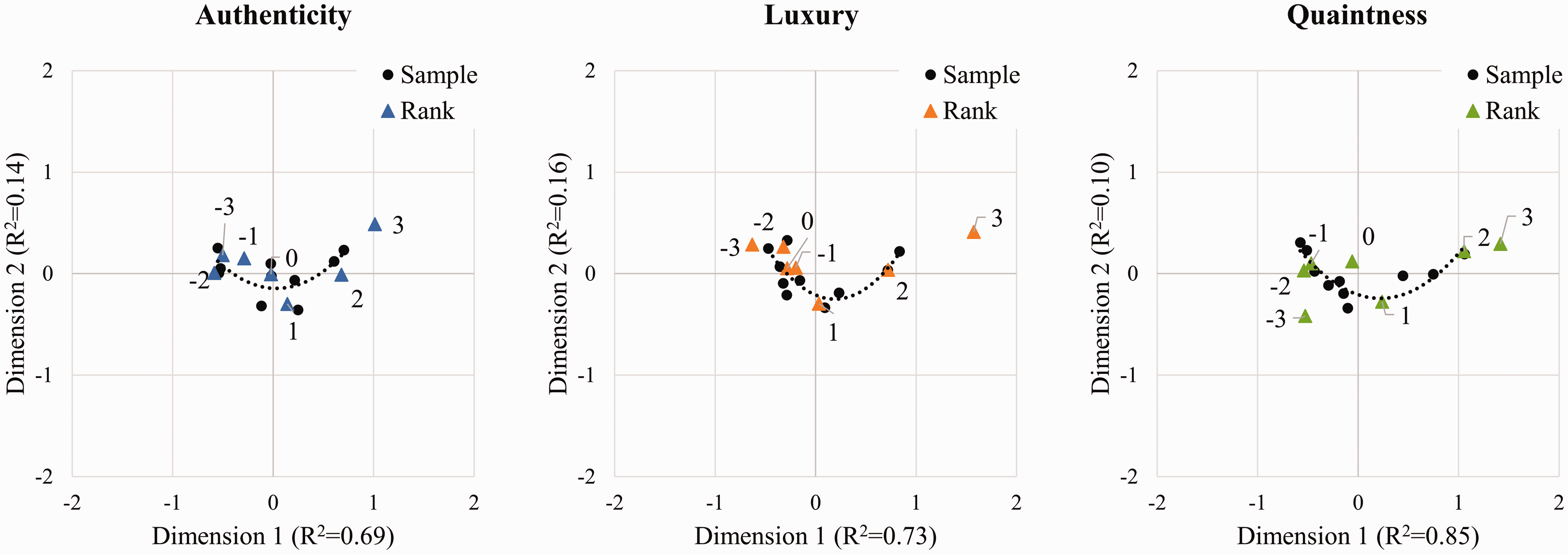
In this study, 6D (7 ranks -1) results were obtained. However, the cumulative contribution rate of dimension 1 was dominant for the three components of shitsukan, which were 0.69, 0.73, and 0.85. The figure also confirmed that dimension 1 is related to the plot of the rating rank score. In addition, we observed that the subjective sample scores were plotted in a horseshoe shape. It suggests that the data had a 1D structure. 29 The score of dimension 1 was defined as the subjective value of shitsukan.
Figure 10 shows the subjective shitsukan score.
Results of the paired comparison.
The vertical axis is the subjective score, while the horizontal axis is the sample number. The Tukey–Kramer method was conducted to investigate whether there were significant differences (*p < 0.05). In the figure, the sample pairs connected with black frames have a significant difference. Meanwhile, we were not able to determine whether the samples inside the black frames had a significant difference. It was confirmed that sample 4 had low scores of “authenticity” and “quaintness” despite being genuine leather. Meanwhile, samples 6 and 8 had high scores in “quaintness” and “luxury” and “authenticity,” respectively, despite being artificial leathers. It was suggested that, depending on the type of shitsukan, the artificial leather may have given the same perception as that of the genuine leather.
Construction of quantification models
The three components of shitsukan were evaluated using the proposed model based on the visual perception mechanism. We confirmed two types of correlation: 1) the correlation between the image properties and impressions, and 2) the correlation between the impressions and shitsukan. Therefore, shitsukan can be evaluated based on the image properties.
Image properties and impressions
The equations used to estimate the two representative impressions were derived using multiple regression analyses with a forward stepwise method. For the equations, we selected the explanatory variables by reducing the Akaike information criteria corrected (AICc) value. A smaller AICc value indicates a better estimation model in terms of robustness and correlation with data. In this study, we considered the explanatory variables with smaller AICc values as the variables relevant to the perception of leather. However, there is a strong correlation between image properties, and subjective impressions may also be estimated using properties different from the selected properties. Considering the above, we discussed whether the selected properties were important for the perception of the impressions. The values of the image properties had dissimilar ranges. Therefore, their standardized Z-scores were used as explanatory variables.
“Surface shape” was estimated as:
Estimation results of “surface shape.”

In this figure, the horizontal and vertical axes are the subjective and estimated scores for the impression, respectively. A strong positive correlation (p < 0.001) and R-squared value of 0.91 was obtained. In addition, we found that “large grain under the 60°/0° condition” and “L* value under the 45°/45° condition” were highly correlated with “large grain under the 45°/0° condition” (R2 = 0.91) and “surface irregularity under the 15°/0° condition” (R2 = 0.67), respectively. These results show that “surface shape” was perceived mainly by large grains in the region of the shade angle (i.e., the angle in the direction of diffuse reflection). In addition, the large grains could not be observed when the specular L* and low-frequency values in the region of the highlight angle (i.e., the angle near the specular condition), which is related to L*, were large. Therefore, we determined that that the L* value negatively affected the impression.
The “impression of stateliness” was estimated as:
Estimation results of “impression of stateliness.”
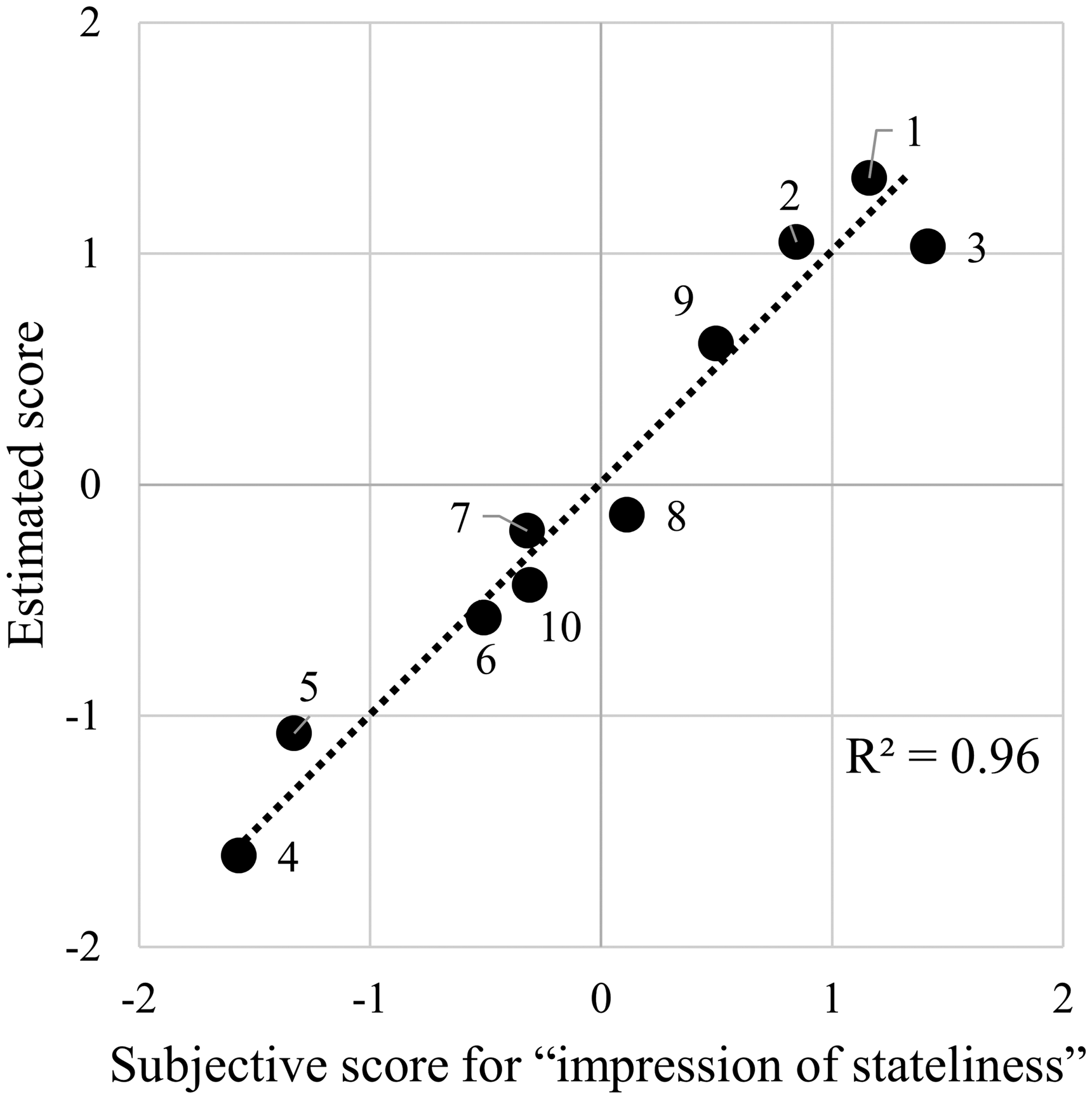
In this figure, the horizontal and vertical axes are the subjective and estimated scores for the impression, respectively. A strong positive correlation (p < 0.001) and R-squared value of 0.96 was obtained. In addition, we found that the “surface irregularity under the 15°/0° condition” and “kurtosis value under the −15°/45° condition” were highly correlated to “surface irregularity under the 25°/0° condition” and “kurtosis value under the 0°/45° condition” (R2 = 0.84), respectively. We did not find properties that had high correlation with the “surface irregularity under the 60°/0° condition.” These results showed that “impression of stateliness” was mainly perceived by the surface irregularity under multiple-observation angle conditions. The large kurtosis value at the shade angle indicated that the surface L* value was uniform; that is, there was no irregularity on the surface. Therefore, the kurtosis value had a negative effect on impression. Additionally, we speculated that there were no properties highly correlated to the “surface irregularity under the 60°/0° condition” because the surface irregularity for the shade angle condition was particularly important.
Impressions and shitsukan
Using the proposed model, the relationship between the three components of shitsukan and representative impressions was investigated. Next, a regression analysis was performed to estimate shitsukan using two representative impressions as explanatory variables.
Figure 13 shows the relationship between the three components of shitsukan and representative impressions.
Relationship between the three components of shitsukan and the representative impressions.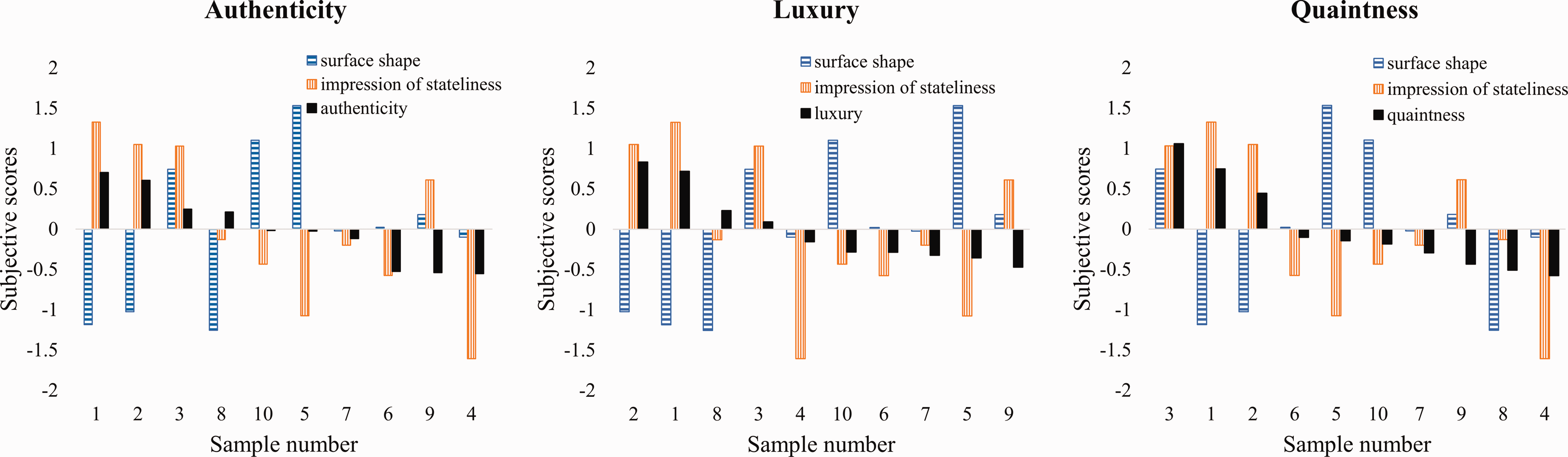
In this figure, the blue, orange, and black bars represent “surface shape,” “impression of stateliness,” and shitsukan, respectively. For “authenticity,” we confirmed that the absolute value of “surface shape” had a correlation (R2 = 0.50). The evaluation of the participants was presumed to reflect their experience in observing genuine leather having both smooth and rough surfaces. It was also confirmed that “authenticity” had a positive correlation with “impression of stateliness” (R2 = 0.46). The participants perceived the shitsukan when the sample surface had a low-frequency irregularity. For “luxury,” we confirmed that “surface shape” and “impression of stateliness” had positive (R2 = 0.52) and negative correlations (R2 = 0.41), respectively. In addition, “impression of stateliness” was mainly correlated with “quaintness” (R2 = 0.55).
Based on the above results, the estimation equations were derived using a multiple regression analysis. The standardized Z-scores of the impression values were used as explanatory variables. “authenticity,” “luxury,” and “quaintness” were estimated using Equations (3)–(5).



In Equation (3), “surface shape” was converted into its absolute value based on the results presented in Figure 12. As a result, the two impressions approximately had equal values for “authenticity” and “luxury.” Additionally, for “quaintness,” “impression of stateliness” particularly contributed to the perception. Figure 14 shows the correlation between the values estimated in Equations (3)–(5) and subjective scores for “authenticity,” “luxury,” and “quaintness.”
Estimation results of “authenticity,” “luxury,” and “quaintness.”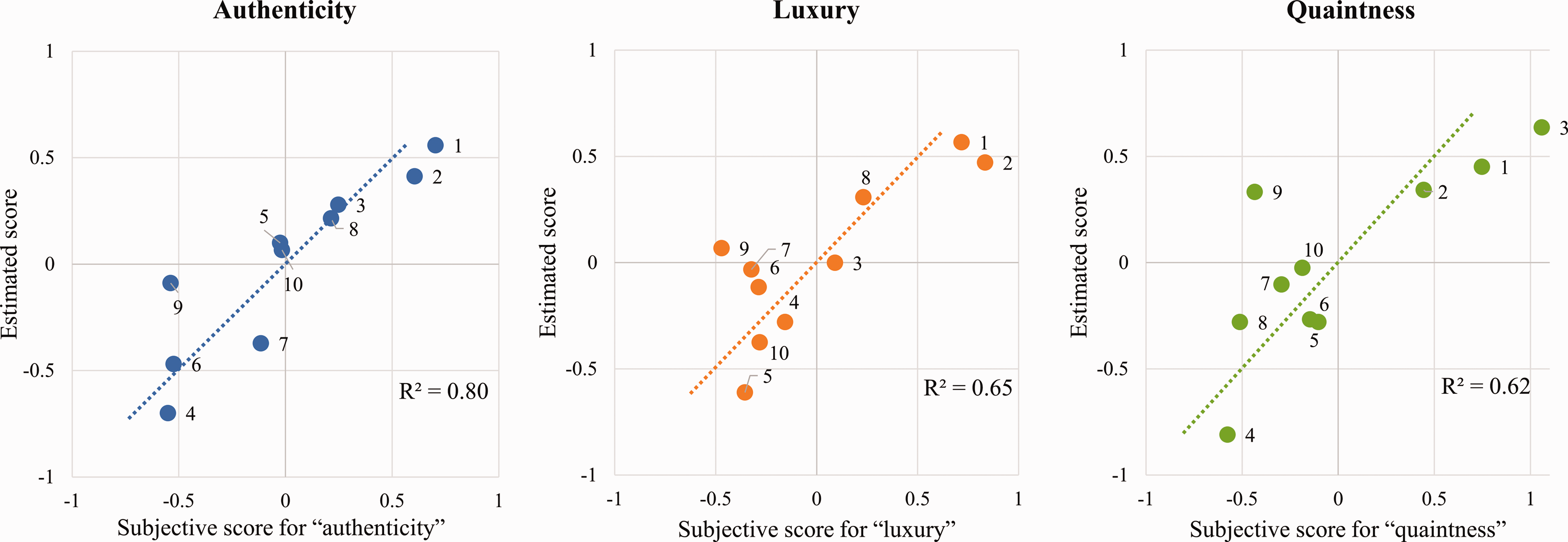
In this figure, the horizontal and vertical axes represent the subjective and estimated scores for shitsukan, respectively. Strong positive correlations (p < 0.01) and R-squared values of 0.80, 0.65, and 0.62 were obtained. For all three components of shitsukan, “impression of stateliness” had positive correlations, and the perceived shitsukan changed based on the sign (plus or minus) of “surface shape.” However, it was determined that there were shitsukan that changed depending on the sign of “impression of stateliness,” although an additional experiment needs to be conducted to confirm this hypothesis.
Discussion
Finally, the proposed model can be expressed as Figure 15 using the subjective impressions and shitsukan and measured leather properties.
Results of the model.
The image properties were statistically obtained to estimate the representative impressions. Additionally, the representative impressions were determined based on the results of the factor analysis. As a result, the three components of shitsukan were estimated using simple equations that used only “surface shape” and “impression of stateliness.”
The representative impressions in this study may not be estimated by conventional methods,15–21 in which the adjectives are prepared in advance, depending on the set of prepared words. Because the words used for perception and sensory may differ depending on various factors such as the age and gender of the participants, we considered that it is ideal to collect words from diverse participants. In addition, this study collected a wide range of words, which was different from previous studies that performed subsequent experiments using duplicate words.22,23 We determined that it is possible to obtain more precise results by integrating words through continuous subjective experiments for a wide range of word sets.
Verification experiment
Although the estimated model of shitsukan obtained favorable correlations with the subjective scores, the models based on the 10 samples and eight participants may not be generalizable. Therefore, in a verification experiment, we used additional samples and subjective scores to confirm the robustness of the estimated model. We believed that it could be regarded as a general conclusion on leather if the robustness of the models for unknown samples can be confirmed. Figure 16 shows 12 additional leather samples.
Additional leather samples. The images in the insets are the enlarged images of each sample.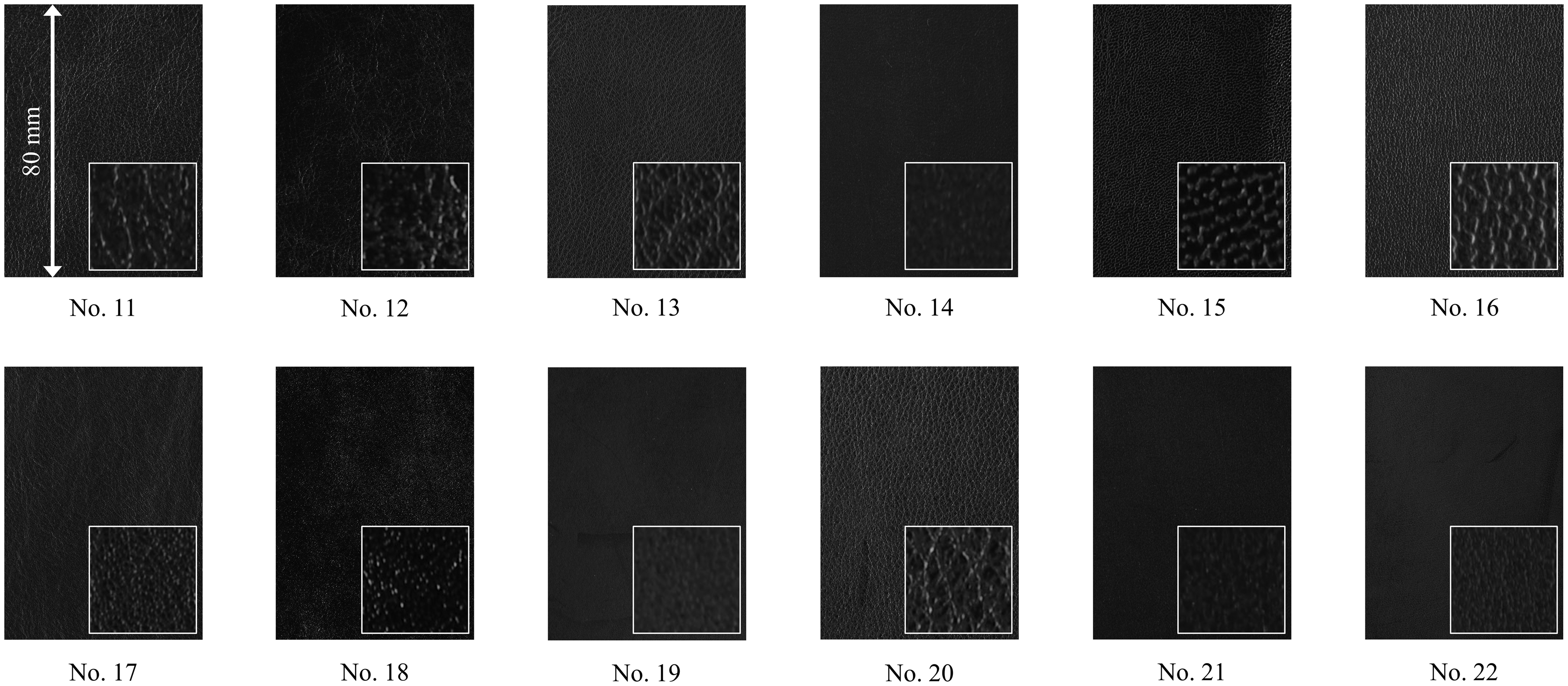
Samples 11–16 and 17–22 were artificial and genuine cow leathers, respectively. The samples were black and had dimensions of 210 mm × 300 mm. The RGB images were captured under D65 diffuse illumination conditions. In the verification experiment, the measurement experiments were conducted to obtain the image properties of the additional samples using the constructed measurement systems (Figures 3 and 4). Fifteen participants, including a woman and six men aged 20–50 years, and the original eight participants participated. Their scores were then compared with the test samples, whose subjective scores were known, for the evaluation of the scores of the additional samples. The samples were presented randomly to each participant, and the experiment was conducted under the same previously used observation conditions. The estimation values were calculated using the above Equations (3)–(5).
Figure 17 shows the correlation between the values of shitsukan estimated using Equations (3)–(5) and subjective scores for “authenticity,” “luxury,” and “quaintness.”
Additional estimation results for “authenticity,” “luxury,” and “quaintness.”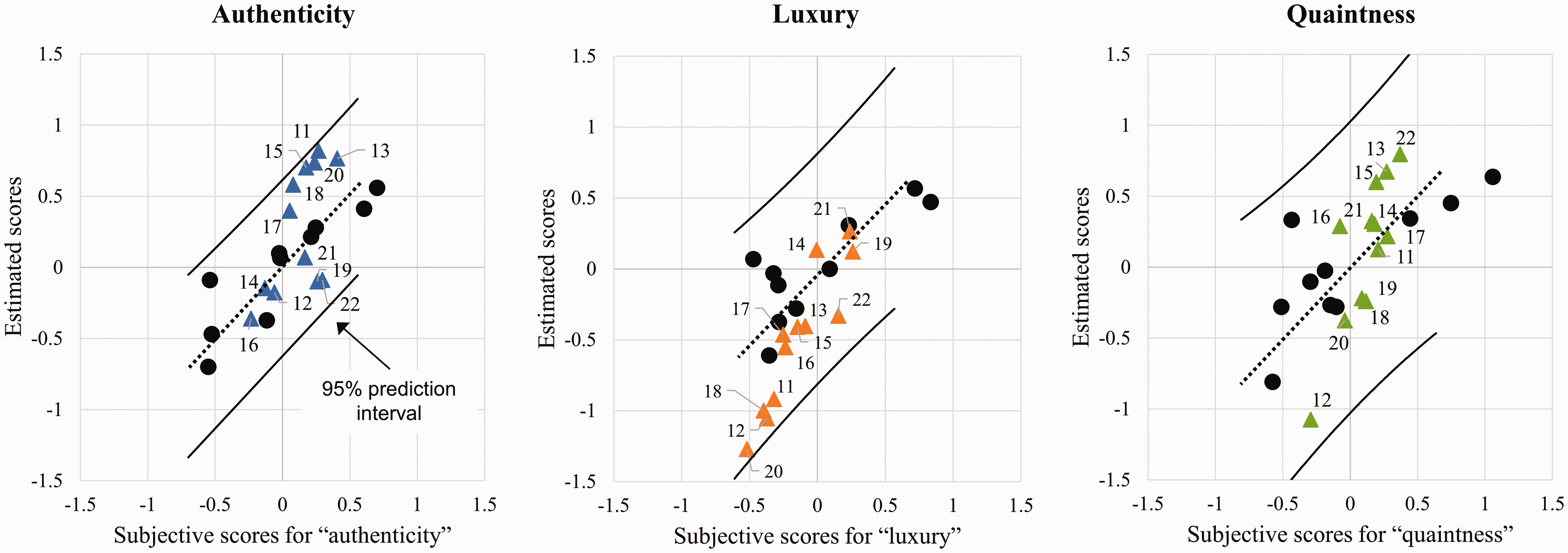
In this figure, the black plots indicate the 10 test samples used in the estimated model, and the color plots indicate the 12 leather samples used in the verification experiments. Additionally, the black lines show the 95% prediction interval of Equations (3)–(5). The estimated values were within the prediction intervals. The robustness of the estimation model for the additional samples was confirmed. We therefore concluded that the proposed models can estimate “authenticity,” “luxury,” and “quaintness.”
Conclusions
This study focused on the shitsukan perceived for leather and proposed a model based on the human perception mechanism to quantify it. The novel findings from this study are summarized as follows: 1) the representative impressions perceived from leather were “surface shape” and “impression of stateliness.” According to the related image properties, “surface shape” was related to specular L* and large grains under the condition of diffuse reflection. Meanwhile, “impression of stateliness” was related to surface irregularities and kurtosis values under the condition of diffuse reflection; 2) Using only “surface shape” and “impression of stateliness,” we could express the three components of shitsukan using the equations. Their R-squared values were 0.80, 0.65, and 0.62, respectively; 3) The three components of shitsukan could be identified by the difference in the plus or minus signs of “surface shape” and “impression of stateliness.” We also confirmed the robustness of the models through verification experiments.
The results of this study can contribute to the development of attractive artificial leather while considering animal rights. Moreover, it provides a deeper understanding of human perception mechanisms for leather. In this study, only black cowhide samples were used. However, different animal hides may have different visual properties and representative impressions. Color is also an important factor that can affect the perception of people. Hence, we must continue investigating the perceptual influences of these concerns.
Footnotes
Declaration of conflicting interests
The authors declared no potential conflicts of interest with respect to the research, authorship, and/or publication of this article.
Funding
The authors received no financial support for the research, authorship, and/or publication of this article.
