



Abstract
Perforated materials in the traditional sense are rigid, usually dense, costly and inflexible. For this study, polyester/cotton blended woven fabric as the base fabric, nano-SiO2 (silicon dioxide) as the functional particles and PU (polyurethane) as the matrix were selected. Accordingly, flexible PU/SiO2 perforated coating composites with different process parameters were developed. The influence of the nano-SiO2 content, perforation diameter, perforation rate, number of fiber felt layers and cavity depth on the sound absorption coefficient were investigated. The resonant frequencies of materials with different cavity depths were evaluated by both theoretical calculation and experimental method. It was found that the flexible perforated composite has good sound absorption and mechanical properties, and has great potential for applications requiring soft and lightweight sound absorption materials.
With the continuous development of modern industry, noise pollution has become an increasingly significant problem.1–4 Research shows that people perceive greater than 60 dB as noise and greater than 90 dB will impair hearing. Excessive noise reduces productivity, impedes hearing and causes cardiovascular disorders and the potential for many other diseases.5,6 Owing to the effects of noise, noise pollution is been regarded as the second most significant killer in human public health, after air pollution. Finding ways to reduce noise pollution has become an important issue. 7
Therefore, ways to effectively control noise pollution and develop noise reduction materials with excellent performance, safety and environmental protection has become an important topic for researchers. An example of an important method for noise reduction is through the use of a perforated plate.
At present, there are two main types of sound absorption structures in engineering applications: 8 one is the resonant sound absorption structure, which uses incident sound waves to generate resonance in the structure so that a large amount of energy is dissipated; the other is a porous sound-absorbing material, 9 which uses its strong sound absorption ability to gradually consume the sound waves entering the material in the process of propagation. These two methods of sound absorption have their own advantages and disadvantages. The resonance sound absorption structure, which utilizes the resonance principle so that the sound absorption frequency band is narrow, can only be used for low-frequency sound absorption in a certain frequency band; the sound-absorbing band of the porous sound-absorbing material is relatively wide, and the sound absorption effect is better for high frequency than for low frequency, so it is usually difficult to absorb the low-frequency sound by relying only on the porous material.
Perforated sound-absorbing material is a resonance sound-absorbing structure to reduce the sound in the propagation path. It has the advantages of a simple structure, good sound absorption effect on low-frequency sound and can be used in series with a porous material. The idea of using a perforated plate resonance structure as a sound-absorbing material was proposed by Bolt 10 in 1947. Since 1975, Maa11–14 has published a series of articles on sound absorption performance and theoretical calculation methods of micro-perforated materials. Yoo 15 presented the Maa-Flex model based on the classical Maa-MPP model (MPP is a perforated panel that reduces the perforation to less than a millimeter), considering the influence of the elastic vibration of the material on the sound absorption performance of materials.
Lee and Kwon 16 estimated the acoustic performance of multilayer perforated panel systems using the transfer matrix method. They studied the effect of the size and arrangement of perforated plates on acoustic performance, and verified the method with experimental results. Atlla and Sgard 17 performed an equivalent simulation of the sound absorption structure of micro-perforated plates based on the Johnson–Allard theoretical model of rigid porous sound-absorbing materials. Lee et al. 18 used an improved test method to measure the acoustic impedance of four perforation rates and obtain the corresponding correction coefficient. Bansod et al. 19 evaluated the sound absorption properties of a multilayer sound absorber composed of MPP, jute felt and air gap by using the transfer matrix and experimental methods, and studied the influence of the arrangement of micro-perforated plates on the sound absorption performance of multilayer sound absorbers.
At present, common perforating materials can be divided into traditional perforated and micro-perforated plates. The traditional perforated plates currently studied are usually metal or wooden perforated plates, which are normally thick, costly, inflexible and are inconvenient for the processes of installation and use. The micro-perforated material makes up for this drawback of traditional perforated plates. The material is mostly metal with low thickness and good sound absorption effect. However, because the aperture and thickness of the typical micro-perforated plate are controlled to within millimeters, 13 its intensity is relatively low, and it is extremely easily blocked by dust, such that the sound absorption performance of the material is reduced. Therefore, this kind of material is not usually suitable for civilian use. Also, this kind of perforated material is usually not flexible, which makes it limited in use.
For this study, in order to improve its mechanical properties and dimensional stability while maintaining its flexibility, polyester/cotton blended woven fabric was used as the base fabric, and inorganic nano-SiO2 was added to enhance its comprehensive properties and dimensional stability. By changing the porosity, aperture of the perforated composite material, fiber felt thickness20,21 and cavity depth, a kind of flexible perforated composite material with inherent safety, environmental protection, easy installation, high strength and adjustable sound absorption performance was prepared.
Perforated resonance structure
The common structure of the perforated plate, 8 with an air back and rigid backing, is shown in Figure 1. The perforated structure is usually a plate, with many holes, at a certain distance in front of the rigid wall. If the holes are evenly distributed and the plates have a certain thickness, these perforated plates, together with the space behind the plates, will form many parallel resonators. Perforation corresponds to sound quality, and the space behind the perforated plate is divided into many small spaces by the number of holes. Each pore occupies a small space, forming an equivalent volume of sound.
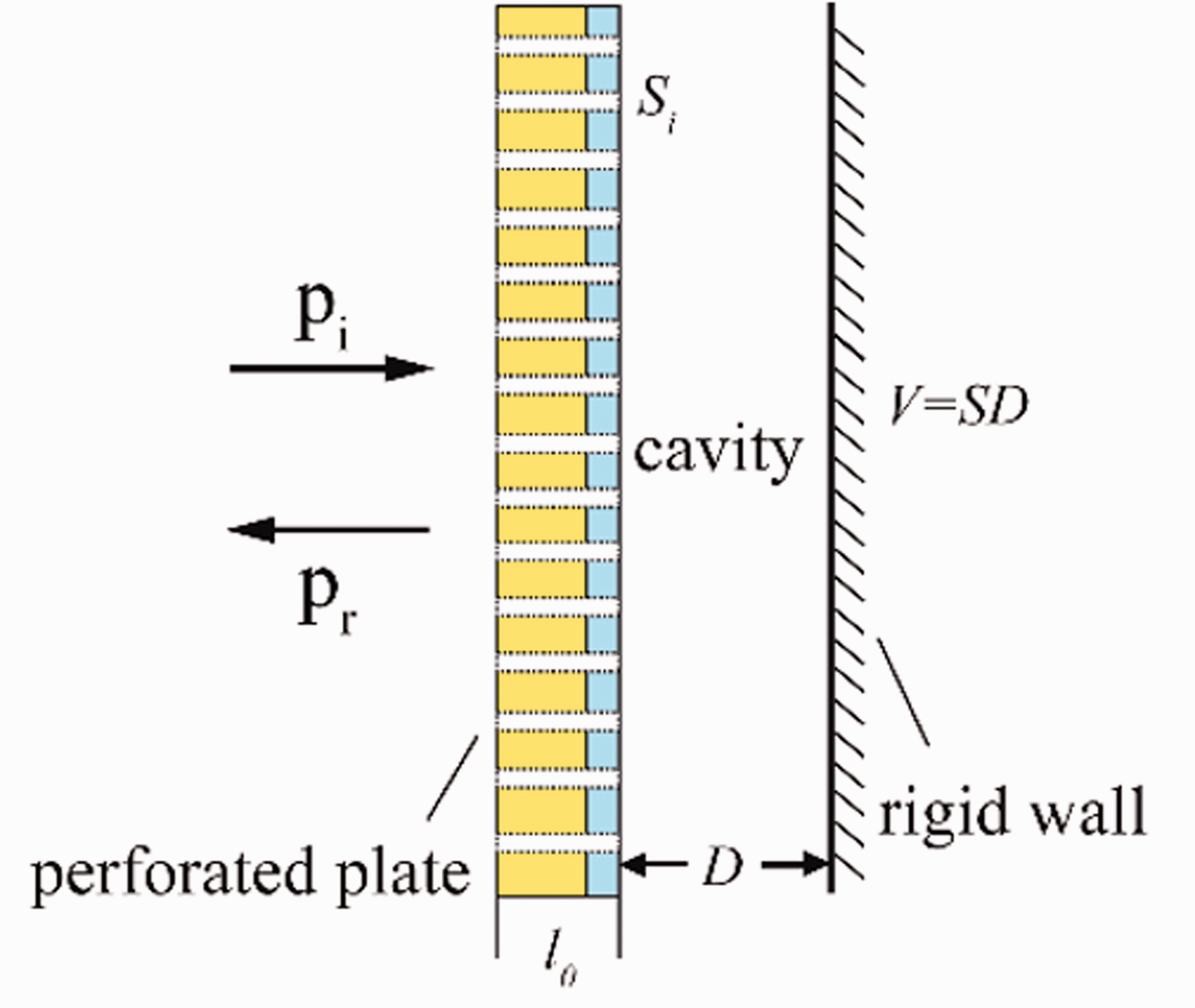
Flexible perforated material sound absorption structure.
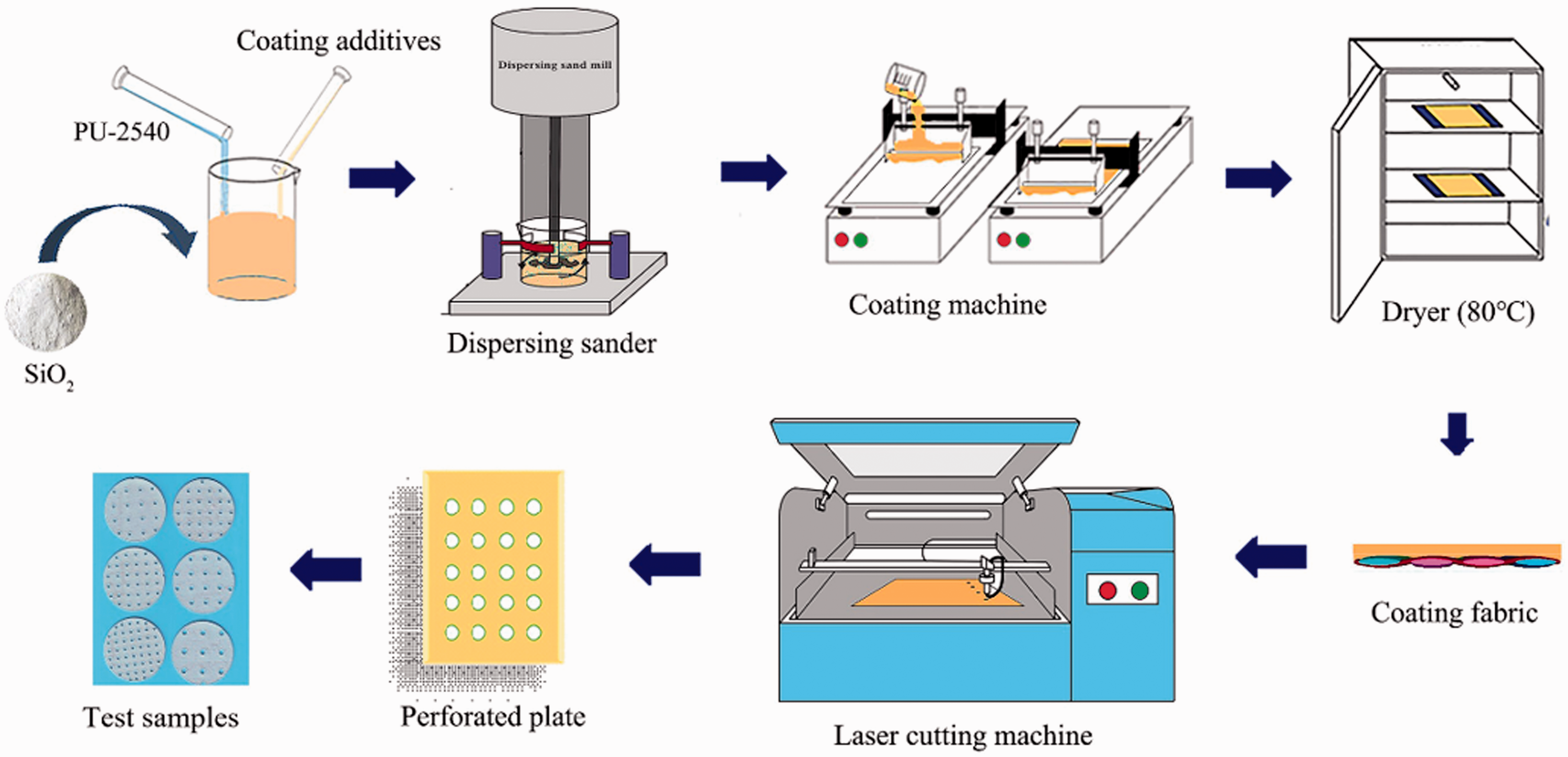
The preparation of flexible polyurethane (PU)/SiO2 perforated composites.
Assuming that all holes have the same area, the total acoustic impedance at the surface of the perforated structure can be expressed as

According to Equation (1), the ratios of acoustic resistivity and acoustic reactance of the perforated structure are


If

In the case of perforated plates, the effective length is generally larger than the perforated length, and end correction should be applied to the perforated length. It is an additional mass radiated outward by the vibration of the medium point with the tube end. The effective length of the perforation can be expressed as


Experimental details
Materials
The polyester/cotton blended woven fabrics used in this work were provided by Baoji Changyuan Industry and Trade Co., Ltd (Shanxi, China). Nano-SiO2 (the basic properties of nano-SiO2 are described in Table 1) was obtained from Shanghai Macklin Biochemical Co., Ltd (Shanghai, China). Waterborne polyurethane (PU-2540) was purchased from Guangzhou Yuheng Environmental Protection Material Co., Ltd (Guangdong, China). Dispersant HTK-5040 was purchased from Shanghai Hongtu Industrial Co., Ltd (Shanghai, China). Defoamer NXZ was purchased from Shandong Yousuo Chemical Technology Co., Ltd (Shandong, China). Leveling agent RM-2020 was provided by Guangzhou Hengyu Chemical Co., Ltd (Guangdong, China). Thickener S-7011 was purchased from Guangzhou Dianmu Composite Materials Sales Department.
Basic characteristics of the nano-SiO2 particles

Basic characteristics of the polyurethane/SiO2 perforated composites

Activated carbon fiber felt, thickness 2 mm and surface mass 155 g/m2, was purchased from Suzhou Yifang Environmental Protection Technology Co., Ltd (Anhui, China).
Experimental instruments
An LMS impedance tube (LMS International, Belgium), FA2004 electronic balance (Shanghai Hengping Scientific Instrument Co., Ltd), DTC-300 sample coating machine (Foshan Yanuo Precision Machinery Manufacturing Co. Ltd), SF dispersing sand mill (Shanghai Maple Mechanical & Electrical Equipment Co., Ltd), S-4800 Cold Field Scanning Electron Microscope (SEM) (Hitachi), TM3030 Desktop SEM (Hitachi), Phenom XL Desktop SEM (Phenom-World), DZF-6020 vacuum drying oven (Gongyi Yuhua Instrument Co., Ltd), DGG-9148A high temperature air blast drying box (Shanghai Aozhen Instrument Manufacturing Co., Ltd), laser engraving machine (Anhui Jiasu Technology Co., Ltd) and Instron 3369 Universal testing machine (Instron, USA) were used.
Preparation of flexible polyurethane/SiO2 coating composites
A certain proportion of nano-SiO2, leveling agent (2%), dispersant (3%) and antifoaming agent (2%) were put in a beaker with polyurethane (PU). The mixture was stirred using a dispersing sand mill for 30 minutes at 1500 r/min speed, until the mixture was uniformly mixed. A certain amount of thickener was added in the beaker according to the particular experiment. Then the mixture was stirred for 5 minutes at 1500 r/min speed. The beaker was placed in the vacuum drying oven and a vacuum was applied to eliminate bubbles until the coating was bubble-free. Thus, the coating solution was successfully prepared. The polyester/cotton blended woven fabric was fixed on the coating machine, the thickness of the coating agent was adjusted and the prepared coating liquid was poured on the fabric to make the surface layer.22 The coating composite was placed in the oven and it was dried at 80°C to obtain the flexible PU/SiO2 coating composite. The designed structure parameters were introduced into the laser cutter, and the flexible PU/SiO2 perforated composites with different structures were prepared. The preparation process is shown in Figure 2. Table 2 and Figure 3 show the basic characteristics and images of the PU/SiO2 perforated composites. As shown in Figure 3, the composite material is soft, flexible and bendable.
Images of flexible polyurethane/SiO2 composites.

The testing scheme and methods
Impedance tube method for sound absorption testing
Sound absorption performance tests use the 2-microphone (2-mic) transfer-function method, in accordance with ISO 10534-2 and ASTM E1050. The sound absorption coefficient of the flexible PU/SiO2 perforated composite was tested with the LMS impedance tube, with R = 34.9 mm and a measurable frequency of 50–5400 Hz. The configuration of the sound absorption measuring system is shown in Figure 4.

Configuration of the sound absorption measuring system.
Microstructure testing
The morphologies of flexible PU/SiO2 perforated composites with SiO2 were studied using a SEM. The samples were coated with gold before scanning.
Tensile performance testing
The samples were tested in accordance with standard HG/T 2580-2008. Sample size was 170 mm × 50 mm, the clamping distance was 100 mm and the loading speed was 100 mm/min.
Results and discussion
The influence of the content of nano-SiO2 particles on the morphology of the samples
Morphological analysis of the PU/SiO2 coating composites was performed by means of scanning electron microscopy. The micrographs of PU/SiO2 coatings with different contents of nano-SiO2 are shown in Figure 5.

Micrographs of the materials with different SiO2 contents: (a) 0% SiO2 content; (b) 6% SiO2 content; (c) 12% SiO2 content. Scanning electron microscopy cross-section of the materials with different SiO2 contents: (d) 0% SiO2 content; (e) 6% SiO2 content; (f) 12% SiO2 content.
It can be seen from Figure 5 that with an increase of SiO2 content, SiO2 particles will gradually increase and partially agglomerate in the PU coating, but with increasing SiO2 content, the bubbles in the material showed a downward trend, which may be because the addition of nano-SiO2 filled with PU increased the viscosity of the coating and broke the stability between the bubbles and the solution, making the bubbles burst and affecting the rate of the bubbles entering the solution.23,24 So, the addition of nano-SiO2 can make the morphology of the material more stable. Due to gaps between the yarns in the fabric, some of the coating will penetrate into the yarn so that the fabric and the coating are tightly bonded.
The mechanical properties of PU/SiO2 coating composite materials
Waterborne PU products have low strength, high elongation at break and poor dimensional stability. To compensate for this defect, base fabric and nano-SiO2 were added to the materials to enhance their mechanical properties and mechanical stability. Figures 6(a) and (b) represent the stress–strain curves of the coated composite and the perforated composite, respectively. Results demonstrate that in the process of stretching, with the increase of the load, the material extends until it breaks, and the stress and strain in this process are proportional to each other. With the increase of SiO2 content, the breaking strength of coating composites and perforating composites tend to rise. For the coating materials, when the content of SiO2 is 12%, the breaking strength is 21.37 MPa; compared with the coating composite with no nano-SiO2, the breaking strength is increased by 44.3%. For the perforated materials, when the content of SiO2 is 12%, the breaking strength is 15.57 MPa; compared with the coating composite with no nano-SiO2, the breaking strength is increased by 68.83%. The breaking strength is significantly improved compared with that without the addition of nano-SiO2. After perforation, the strength of the material decreases, but the strength of the material with nano-SiO2 is still higher than that with no nanoparticles. When the content of SiO2 is 0%, the breaking strength of the perforated material is decreased by 37.74% compared with before perforation, and elongation at break decreases by 26.88%. When the SiO2 content is 12%, the breaking strength of the material after perforation decreases by 27.13% compared with before perforation, and elongation at break decreases by 16.04%. It can be seen that the addition of nanoparticles slows down the weakening of the breaking strength and elongation of the material and improves the mechanical properties of the material.
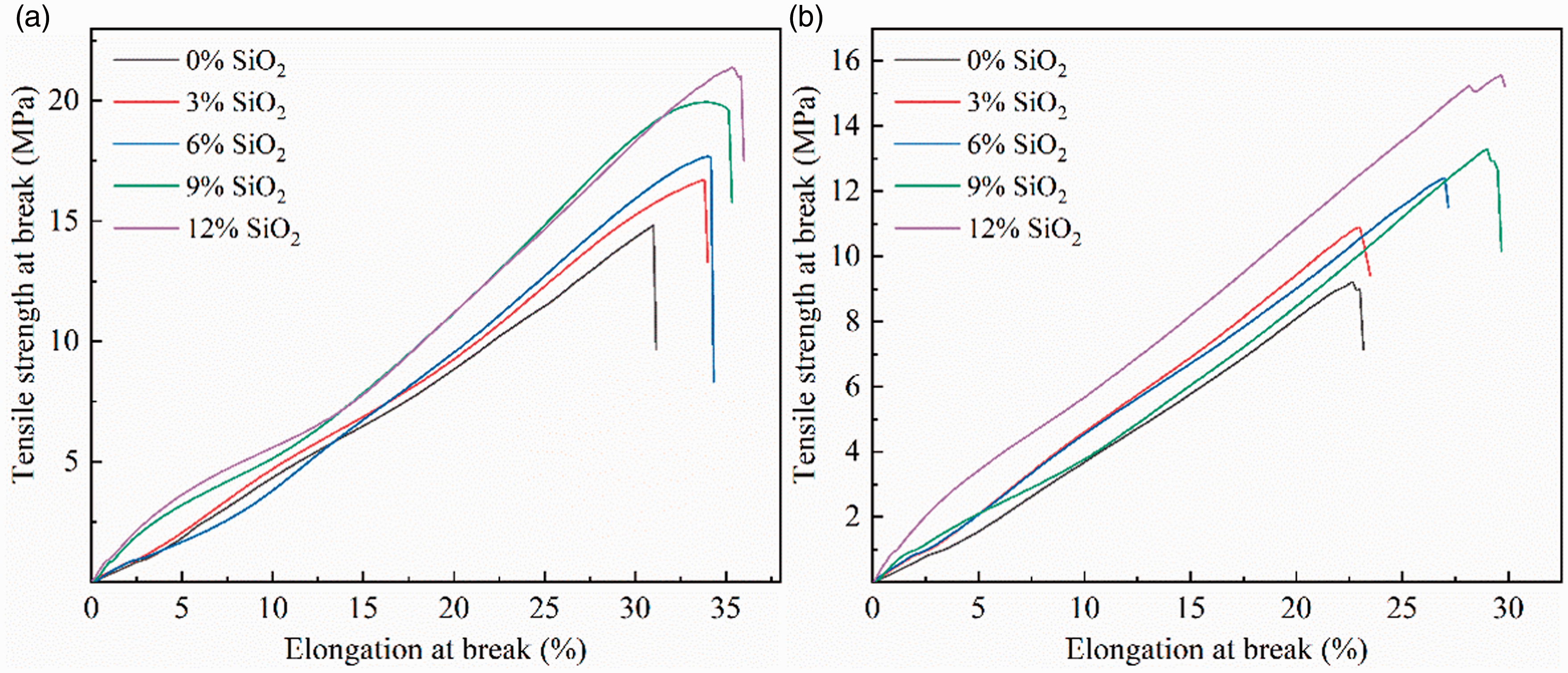
Mechanical properties of coating and perforated composites with different SiO2 contents: (a) coating material; (b) perforated material.
The addition of SiO2 nanoparticles has a certain strengthening and toughening effect on the polymer matrix. When the content of nano-SiO2 is low, the nanoparticles have good dispersion in the coating composite material. With an increase in the content of nano-SiO2, there is more interaction between the nano-SiO2 particles and the PU matrix, which leads to the formation of more interactive network structures. When subjected to external stress, the particles transfer stress to other molecular chains via network structures, dispersing stress and improving the tensile strength of the composite materials. 25 In addition, during the coating process the PU penetrates into the yarn, the fibers are consolidated by the resin and mutual slippage is reduced. 26
At the same time, as shown in Figure 5, with an increase of SiO2 the number of bubbles in the material gradually decreases, which makes the material distribution more uniform and reduces the possibility of material breakage due to defects. Therefore, in a certain range and with an increase of SiO2, the strength of the material shows an increasing trend.
The influence of the flexible perforated material and fiber felt composite on sound absorption
Figure 7 shows the sound absorption coefficient curve and the integral sound absorption coefficient curve for three activated carbon fiber felt layers, flexible perforated/felt material and flexible perforated/cavity material. The perforation rate of the flexible perforated material is 5%, and the depth of the cavity is the same as the thickness of the fiber felt.
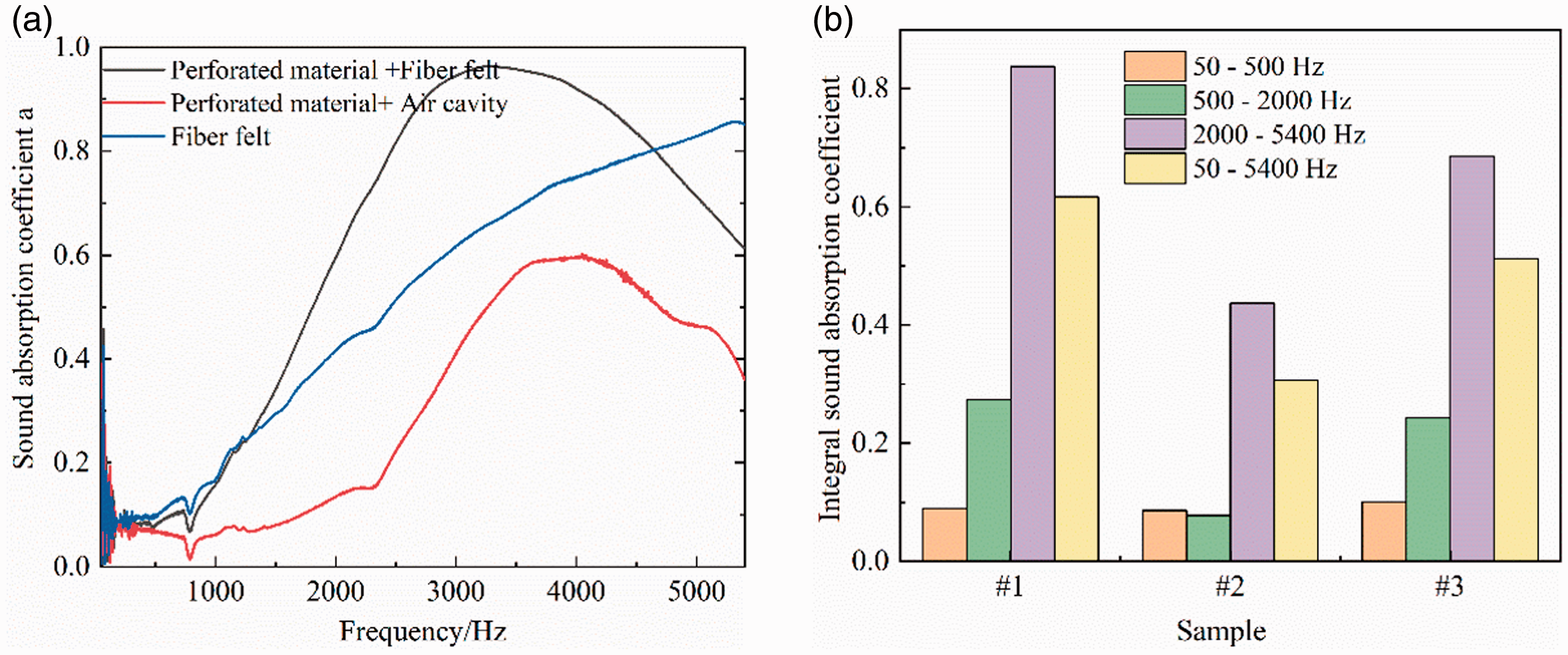
Absorption coefficient of the single-layer material and composite: (a) sound absorption coefficient; (b) integral sound absorption coefficient. #1: perforated material + fiber felt; #2: perforated material + air cavity; #3: fiber felt.
It can be seen from Figure 7(a) that the sound absorption performance of the perforated sound absorption structure is better than for the cavity with the same thickness of backing, with a wider absorption band. The resonance frequency is shifted to a lower frequency, and the maximum sound absorption coefficient greatly increases. Also, by integrating the sound absorption performance of the material, it is found that in the low frequency band, the sound absorption coefficient for the three materials is basically the same. In the middle frequency band, high frequency band and the whole test band, the sound absorption performance of the material is, in decreasing order, flexible perforated/felt material > fiber felt material > flexible perforated/cavity material. The integrated average sound absorption coefficients in the frequency 50–5400 Hz are 0.62, 0.51 and 0.31, respectively. Compared with the single fiber material and the flexible perforated material composite cavity, the sound absorption coefficients for the flexible perforated composite fiber material increase by 22% and 100%, respectively.
It is clear that the composite of the flexible perforated material and fiber felt helps to improve sound absorption performance in the mid to high frequency region. This is because after the perforated material backs up the acoustic absorbing material, the medium affecting the modified acoustic impedance at the perforated end is no longer air, but rather the acoustic absorbing material. At this time, the radiation impedance and cavity impedance at the end of the perforated plate change, and the additional relative acoustic impedance r1 and relative acoustic impedance x1 can be expressed as


Due to the influence of the sound-absorbing material, the particle vibration velocity near the holes of the perforated material increases significantly, while the flow resistance of the sound-absorbing material is large. The perforated end can provide additional sound resistance, thus improving the sound-absorbing performance of the perforated material. At the same time, when the cavity is filled with porous materials, the radiation situation of the hole into the cavity changes and the radiation impedance is generated, which increases the effective length of the hole and reduces the resonance frequency.
After recombination, the sound wave enters into the flexible perforated material and generates resonance. At the same time, it interacts repeatedly with the fiber felt and consumes more sound energy. The composite of the perforated material and fiber material benefits from the advantages of both materials and greatly improves the sound absorption performance of the composite material. Moreover, the resonant frequency and the maximum sound absorption coefficient of the perforated material can be adjusted according to the change of its structure, with adjustable sound absorption performance.
The influence of nano-SiO2 content on sound absorption
In order to explore the influence of the content of nano-SiO2 on sound absorption performance, optimized polyester/cotton blended woven fabrics were selected as the fundamental fabrics, and a series of flexible PU/SiO2 coating perforation composites with different nano-SiO2 content were prepared with a perforation rate for the composite of 5%, thickness of 1 mm, and three activated carbon fiber felt layers. The results are shown in Figure 8.
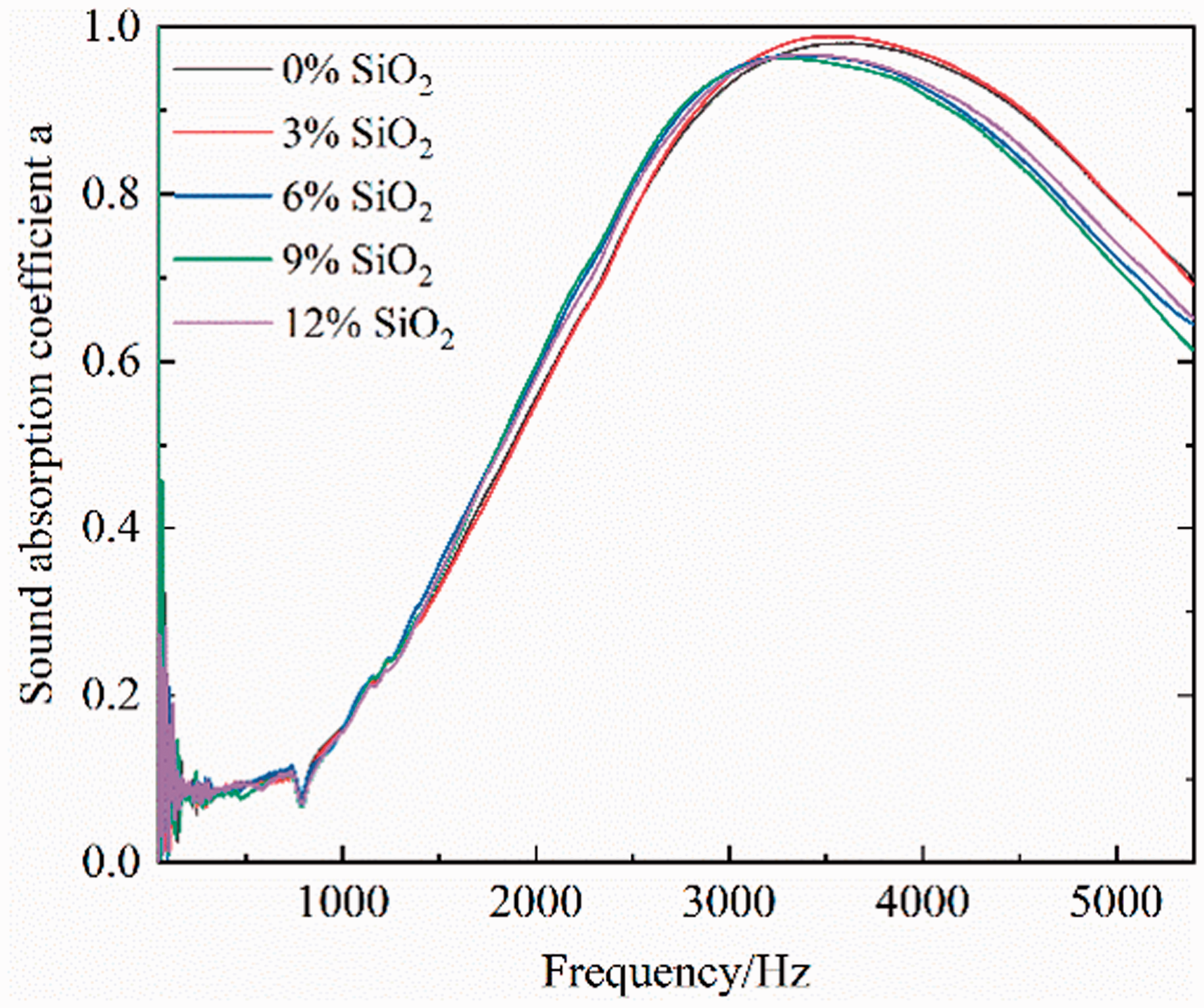
Variations of the sound absorption coefficient versus frequency for different contents of SiO2.
Figure 8 shows the curves of the sound absorption coefficient for different contents of nano-SiO2 against changing sound frequency. By integrating the sound absorption coefficient of the 50–5000 Hz full test frequency band, it is found that the difference between the average sound absorption coefficients is not more than 3%, and thus it can be seen that the addition of nano-SiO2 improves the comprehensive performance of the material without reducing the sound absorption performance.
As shown in Table 3, with an increase in SiO2, the resonant frequency of the material decreases at first and then increases. This is due to multiple factors affecting the sound absorption performance of the flexible perforated materials. As shown in Figure 9, the sound absorption performance is affected by the perforated structure, bubbles in the material and functional particles in the material. The first acoustic absorption peak is affected mainly by the Helmholtz resonance principle. 27 Therefore, when the perforated parameters of the material are consistent, the sound absorption characteristics of the materials with different SiO2 contents will be similar, with resonance frequency around 3300 Hz and maximum sound absorption coefficient around 0.98. In addition, when there is no SiO2 added, there will be a certain number of bubbles in the material. When sound waves enter the material, due to the difference between the acoustic impedance of the material itself and the bubbles, the attenuation coefficient of the sound waves will increase and the sound velocity will decrease, which is conducive to the absorption of sound energy. After the addition of nano-SiO2, the multi-phase, multi-interface structure formed by the nanoparticle and PU composite coating and its ultrafine particles and numerous capillary pores results in an increase in inner friction and energy dissipation at the interface of the particles, which leads to an increase in sound energy dissipation and sound absorption performance. Due to the difference in density between the resin matrix and the solid particles, when the sound waves encounter solid inorganic particles, scattering will occur, which will increase the propagation path and acoustic energy consumption. Therefore, the resonant frequency of the material will shift to a lower frequency. As the content of SiO2 continues to increase, the number of bubble holes in the material gradually decreases and the bubbles’ influence on the dissipation of sound energy is abated. The SiO2 is equivalent to a rigid sphere; when sound waves meet a large number of particles, they will reflect back, making it impossible for some of the sound energy to pass through the material, so its acoustic absorption coefficient starts to decrease. When the content of SiO2 is very high, SiO2 tends to agglomerate in the matrix, which makes the factors affecting the sound absorption performance of the composite more complex. The absorption coefficient will fluctuate.
The influence of SiO2 content on sound absorption performance of the materials

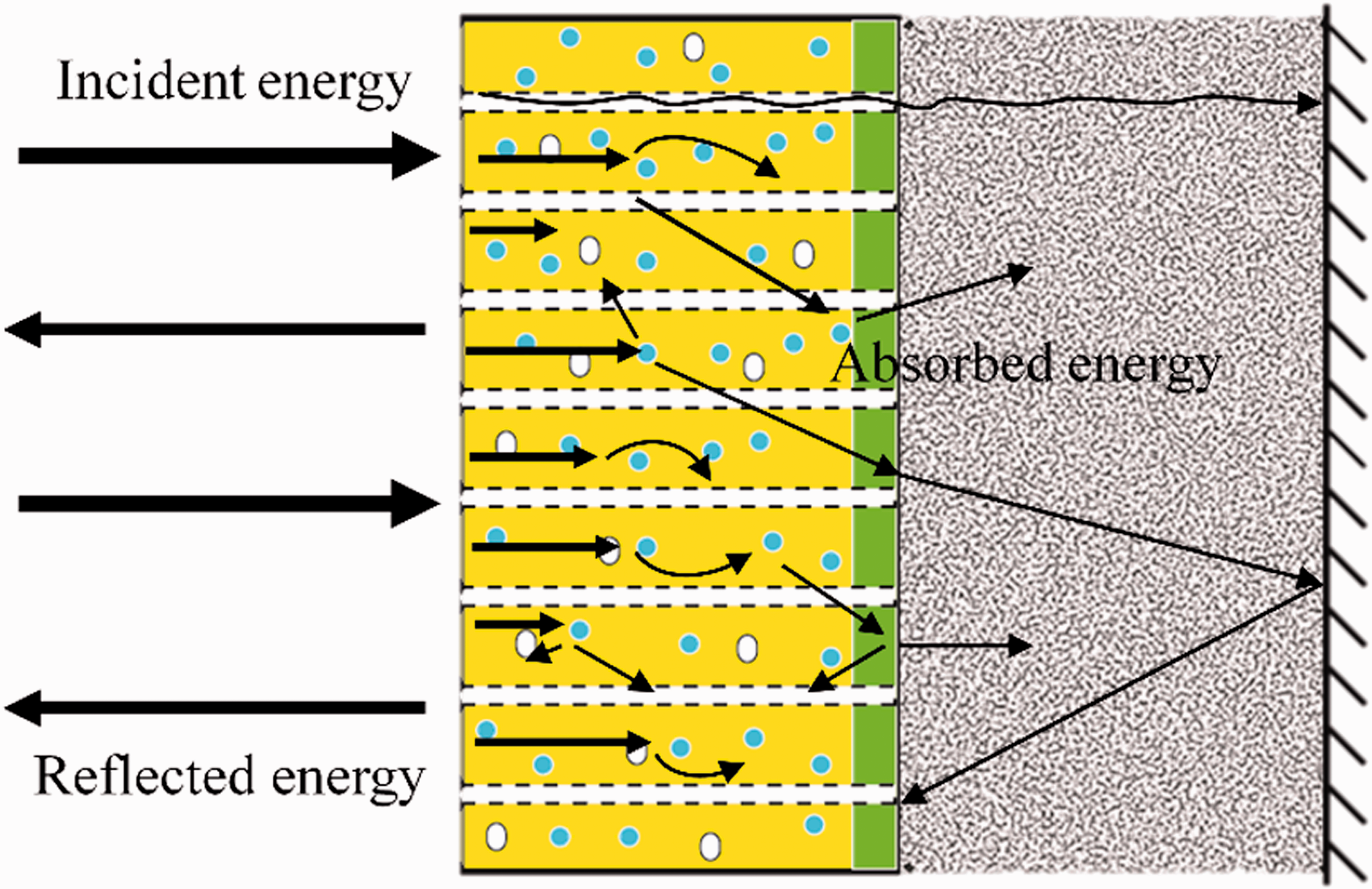
Schematic diagram of the sound absorption mechanism of flexible composite materials.
The influence of perforation diameter on sound absorption
Figure 10 shows the sound absorption coefficients of four flexible PU/SiO2 perforated composites with three fiber felt layers. The perforation rate of each composite is 5%, the SiO2 content is 9% and the thickness is 1 mm, but the perforation diameters are different (1, 1.5, 2, 2.5 and 3 mm).
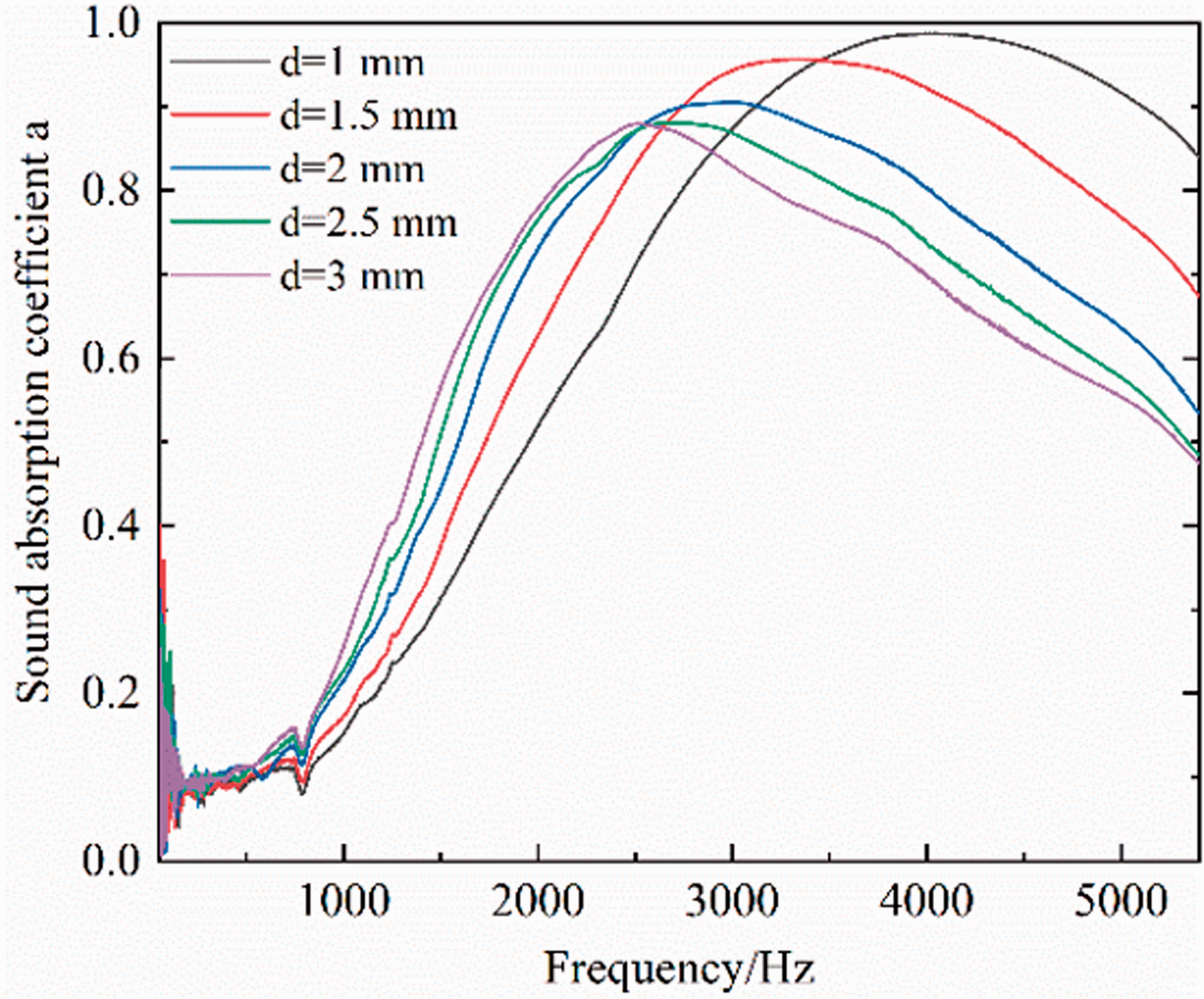
Variations of the sound absorption coefficient versus frequency for different perforation diameters.
It can be seen from Figure 10 that within the range of 50–5400 Hz, the material shows good sound absorption performance, which first increases and then decreases with increasing frequency. With an increase of the perforation diameter, the resonant frequency of the material decreases, the acoustic band narrows and the peak value of the acoustic absorption coefficient decreases slightly. This may be because when the aperture increases, at the same perforation rate, the number of holes decreases and the total friction area decreases, resulting in a reduction in frictional attenuation sound energy, and the peak value of the sound absorption coefficient decreases. 28 In addition, Equations (4) and (5) show that the perforation diameter of the material will affect the effective length of the material, thus affecting the resonance frequency of the material. As the diameter of the perforations increase, the effective length of the material increases and the resonant frequency decreases.
The influence of perforation rate on sound absorption
To explore the influence of the perforation rate on the sound absorption coefficient, a range of samples with different perforation rates were prepared while keeping the SiO2 content at 9%, the thickness at 1 mm and the number of fiber felt layers at three.
As shown in Figure 11, there are obvious effects on the sound absorption performance for perforation rate of the flexible perforated composite. In the range of 0–5400 Hz, with increasing frequency, the sound absorption performance of the materials tends to increase first before then decreasing. When the frequency reaches a certain point, peaks appear at the first resonance frequency for the four samples. The sound absorption coefficients of the first resonance frequency decrease slightly with decreasing perforation rate and their relative first resonance frequencies and sound absorption bands move markedly toward the lower frequency. Also, the width of the sound absorption band shows an obvious increase. Lower perforation rates can effectively increase the sound absorption effect of the material at low and medium frequencies, but will reduce the sound absorption effect at high frequencies. However, if the perforation rate is too large, although the sound absorption band can be widened, the overall sound absorption effect of the material is too poor, and the comprehensive performance of the material, especially the strength, will be greatly reduced, which is not conducive to the actual application. Therefore, to achieve the desired properties, the perforation rate can be appropriately increased, and the sound absorption band width can be increased.

Variations of the sound absorption coefficient versus frequency for different perforation rates.
The influence of the number of fiber felt layers and cavity depths on sound absorption
Samples with different numbers of fiber felt layers and cavity depths were prepared for testing. Figures 12 shows the sound absorption coefficient diagram of four flexible PU/SiO2 perforated composites with SiO2 content of 9%, thickness of 1 mm and perforation rate of 3%, but with different felt layers. With an increase in the number of fiber felt layers, the resonant sound absorption peak position and sound absorption band shift to a lower frequency and the sound absorption effect of the materials in the low and medium frequency ranges is significantly improved, but the sound absorption bandwidth does not change significantly. At the same time, the peak value of the sound absorption coefficient increases, but the change is not significant. This is expected, because the lower the frequency, the longer the wavelength and the shorter the propagation path of the sound waves. Therefore, there will be less dissipation of sound energy at lower frequencies and more dissipation at higher frequencies. Increasing the thickness of the fiber felt means that the sound will have to pass through more material, resulting in greater frictional losses that serve to dampen the sound energy.
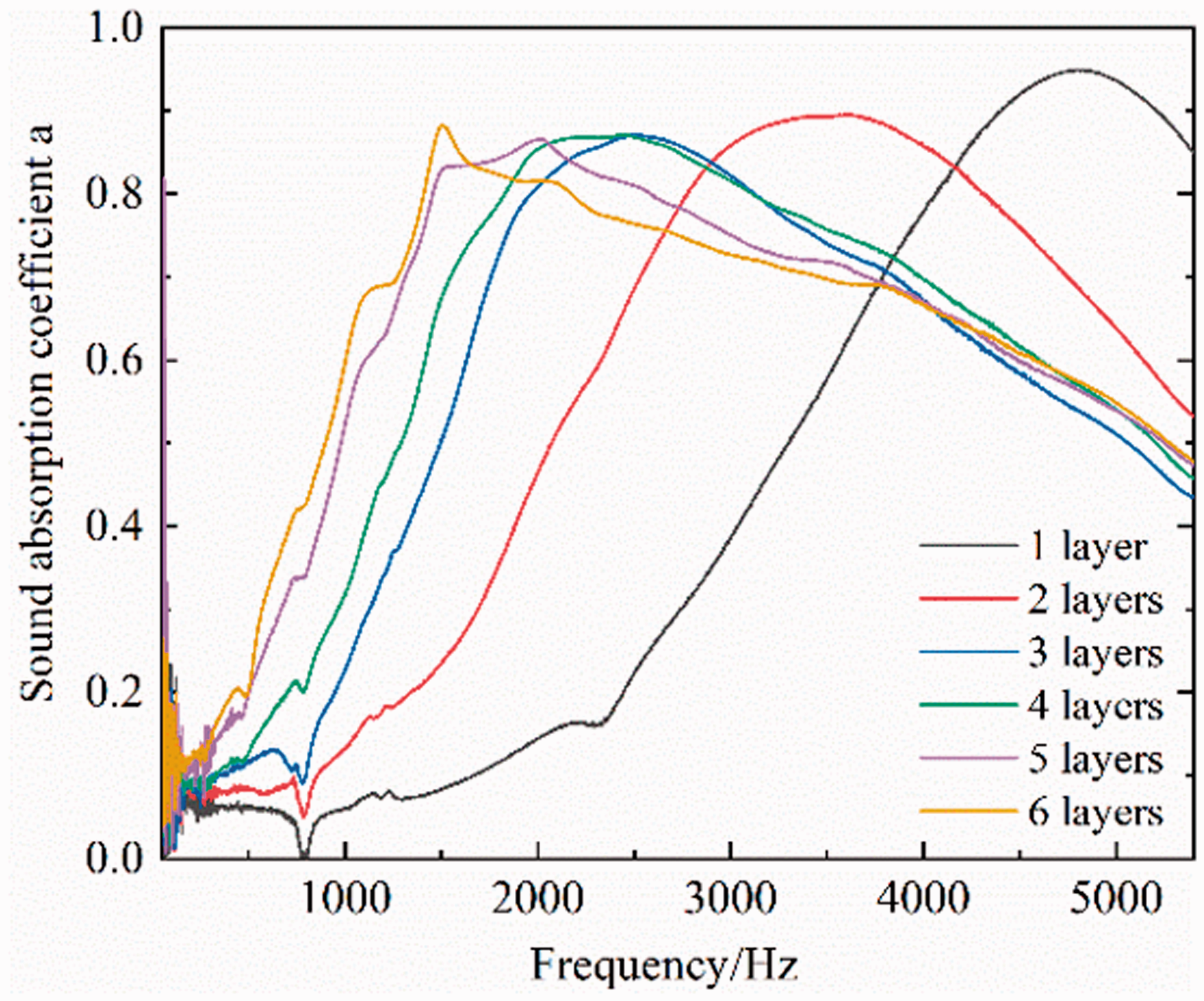
Variations of the sound absorption coefficient versus frequency for different fiber felt layers.
As shown in Figure 13, the depth of the cavity is controlled by adjusting the position of the piston. When the other parameters are fixed (SiO2 content of 9%, thickness of 1 mm and perforation rate of 5%), and only the cavity depth of the perforated sound-absorbing structure is changed, it was found that when increasing the cavity depth and fiber mat thickness, the change rule of the sound absorption coefficient of the material is the same. With an increase in the depth of the cavity, the resonance peak moves to the lower frequency, and the maximum absorption coefficient tends to decrease. This may be because as the cavity depth increases, the volume of the individual Helmholtz resonator increases and the sound capacity increases. The resonance frequency is inversely proportional to the acoustic capacitance, so the resonant frequency of the perforated plate decreases as the cavity depth increases. 28
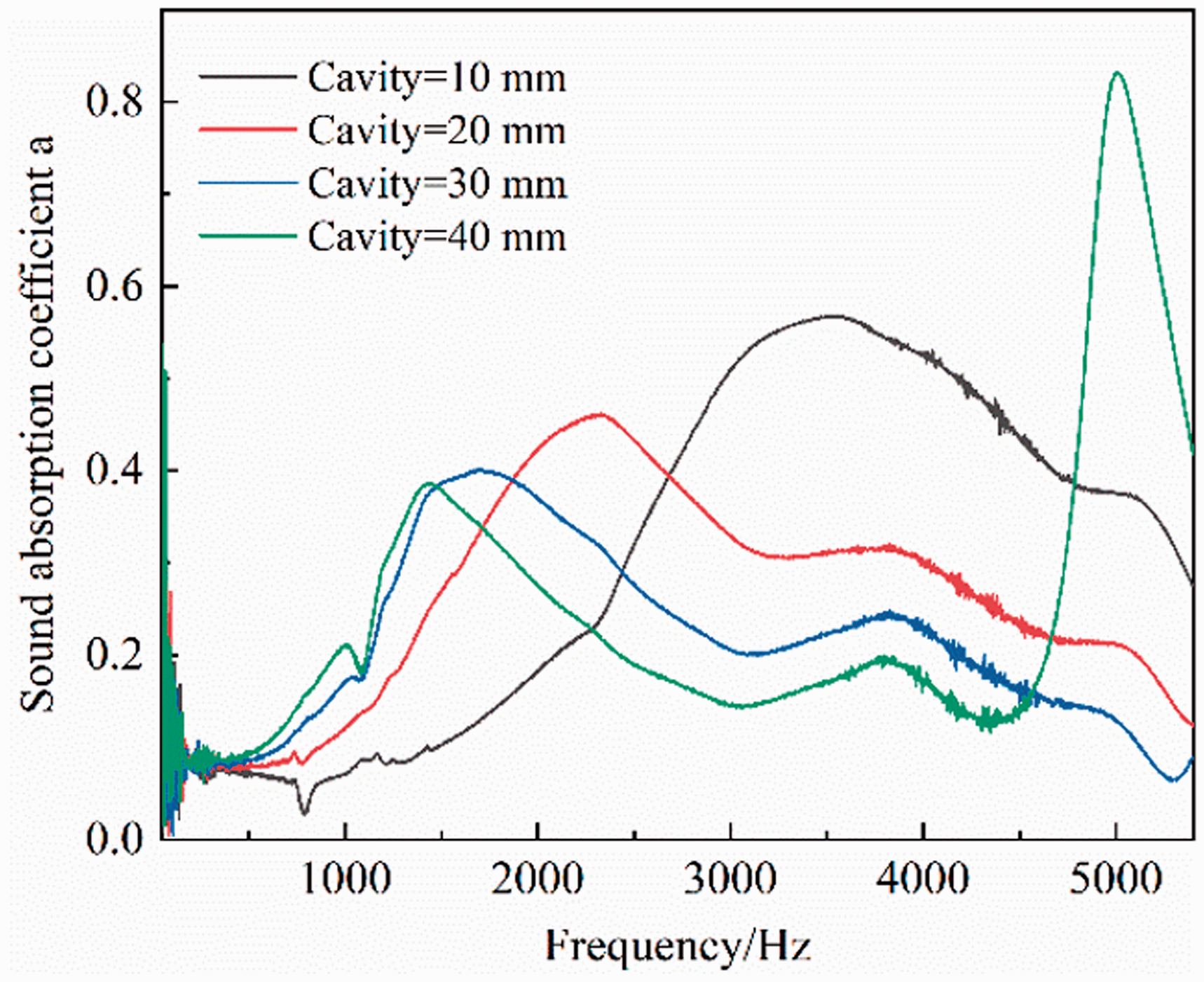
Variations of the sound absorption coefficient versus frequency for different cavity depths.
Therefore, within a certain range, increasing the number of layers of fiber felt or the cavity depth can effectively improve the low-frequency sound absorption performance of the material, so that it has a better sound absorption effect for both low- and medium-frequency sound waves, which has special significance for the sound absorption performance of the material.
Theoretical and experimental resonance frequencies
According to Equations (1)–(6), the resonant frequency of the materials can be predicted, as shown in the comparison diagram between the experimental and theoretical values of the resonant frequency for the material at different cavity depths (Figure 14). With increasing cavity depth, the PU/SiO2 flexible perforated composite (SiO2 content of 9%, perforation diameter of 1.5 mm and perforation rate of 5%) has the same change trend as the traditional perforated material. It was also found that with an increase in the cavity depth, the resonant frequency of the material shifts to a lower frequency, the difference between the experimental value and the theoretical value decreases and the decreasing trend of the resonance frequency begins to weaken.
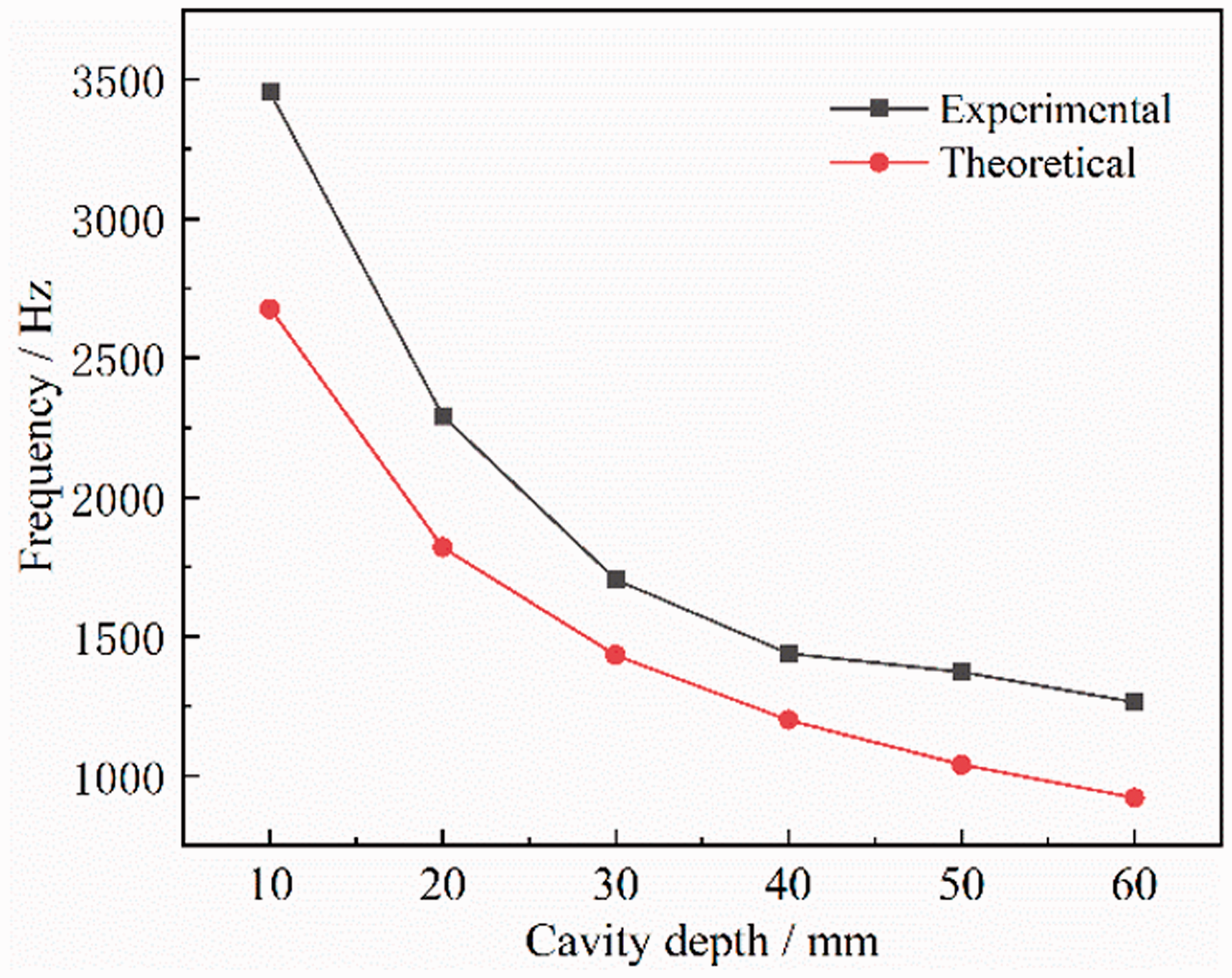
Comparison of the experimental and theoretical resonant frequencies at different cavity depths.
This may be because the effect of the porosity and density of the material itself on the acoustic energy absorption is not considered in the theoretical model. As shown in Figure 9, the porosity of the perforated material is increased due to the pores in both the coating material and the fabric. Therefore, the resonant frequency of the material moves to high frequencies compared with the theoretical value. At the same time, the flexible perforated material has not only a perforated sound absorption effect, but also vibration sound absorption effect and the effect of functional particles and bubbles in the coating on sound energy. Material resonance sound absorption can be divided into mass–spring vibration absorption and intrinsic mode resonance sound absorption, because the damping property of the material itself will lose acoustic energy when vibrating, and the material vibration has a certain sound quality. With the material modal resonance sound absorption and the perforated Helmholtz resonator absorber in the same vibration system, the acoustic impedance of the whole perforated structure system can be seen as an acoustic impedance caused by the plate itself in parallel with the acoustic impedance of the perforation, thus playing a role in widening the bandwidth of the sound absorption frequency.29,30 Therefore, as shown in Figures 7, 8 and 10–13, the semi-absorbing sound bandwidths for these materials are generally greater than 1000 Hz, with a wide acoustic band.
Conclusions
The purpose of this study was to explore the effects of perforation diameter, nano-SiO2 content, perforation rate, the number of fiber felt layers and cavity depth on the sound absorption properties of flexible PU/SiO2 perforated composites.
This paper presents the following conclusions.
The addition of nano-SiO2 will not reduce the sound absorption performance of materials, and also significantly improve the mechanical properties and stability of materials. When the SiO2 content is 12%, the breaking strength is 21.37 MPa. Within the frequency range of 0–5400 Hz, with an increase of perforation rate, the resonant sound absorption peak and frequency band of the material move toward a higher frequency, and the width of the sound absorption band increases markedly. With an increase of the perforation diameter, the resonant frequency of the material decreases, the acoustic band narrows and the peak value for the acoustic absorption coefficient decreases slightly. With an increase in the number of fiber felt layers and cavity depth, the resonant sound absorption peak position and sound absorption band move to the low frequency range. The sound absorption effect of the material in the low and medium frequency ranges is significantly improved, but the sound absorption bandwidth does not change significantly. At the same thickness, the fiber felt has better sound absorption performance than the air cavity. At different cavity depths, the experimental value of the resonant frequency for the composite material has the same change tendency as the theoretical value, but the experimental value shifts to a higher frequency than the corresponding theoretical value. By employing sound absorption tests, morphology tests and tensile property tests, the selected composite materials are suitable to be used as flexible sound-absorbing materials and can be applied within engineering.
Footnotes
Declaration of conflicting interests
The authors declared no potential conflicts of interest with respect to the research, authorship, and/or publication of this article.
Funding
The author(s) disclosed receipt of the following financial support for the research, authorship, and/or publication of this article: We acknowledge the funding support from Tianjin Municipal Natural Science Foundation. Item number: 18JCZDJC99900.
