




Abstract
This rich, arts- and spatial-thinking-integrated project examined the effects of making three-dimensional dioramas of traditional African cultures on Black fifth graders at an urban school on students’ racial identities, knowledge of cultural universals, and spatial thinking skills. Pretest and posttest attitudes measured with the Multidimensional Inventory of Black Identity–Teen evidenced an increase in sense of belonging to other Black people. Students learned social studies content and recognized many cultural universals, allowing them to feel connected to the African groups. Student essays showed admiration for African cultures, connections through similar foods, and links through appreciation of animals.
Keywords
Urban Education
Urban public schools serve low socioeconomic students and have more students of color than suburban or rural schools (Baum-Snow & Lutz, 2011; Biddle, 2014). Although the U.S. population has experienced growth, the aggregate populations in the largest cities have declined, with Whites moving to suburbs and the percentage of urban Blacks increasing (Collins & Margo, 2007). In fact, many urban public schools have become de facto segregated schools.
The combination of poverty and disadvantaged minority populations concentrated in urban areas has affected student achievement. Urban school districts disproportionately have had difficulty meeting No Child Left Behind achievement standards and have therefore often resorted to more direct instruction and drill (Rentner et al., 2006). Narrowing of the curriculum to emphasize subjects that are crucial to student performance on the tests, such as literacy and mathematics, has occurred (Phelps, 2011) and resources for social studies and the arts have been cut from many schools (Dee & Jacob, 2010). This situation has resulted in marginalization of social studies (Fitchett & Heafner, 2010), addressing little of multiculturalism and racial identity necessary for students to have a balanced view of the world and academic achievement (Chavous et al., 2003). For example, researchers found that a stronger sense of racial group affiliation promoted academic motivation for Black secondary students (Perry, Steele, & Hilliard, 2003). Development of positive self-esteem and regard for one’s race is necessary considering the negative historical impact that educational inequities has had on students of color. These inequities include officially and unofficially segregated schools, less-experienced and less-prepared teachers, poorer facilities and materials, and fewer opportunities for an enriched curriculum (Darling-Hammond, 2004; Milner, 2013b).
This article describes a successful arts- and spatial-thinking-integrated multicultural project conducted with African American elementary students at an urban public school in the Midwest. The purposes of this project were threefold: (a) to enrich African American students’ racial identities at this mixed-race urban school, thereby contributing to a positive school climate; (b) to instill social studies concepts of cultural universals through rich, arts-integrated activities; and (c) to teach spatial thinking skills through the construction and furnishing of three-dimensional dioramas of traditional African cultures.
The Intersection of Poverty, Race, and Schooling in Urban Schools
Schools educating impoverished youth have unique problems compared with those serving middle-class students: challenges related to the poverty of the students and their frequent concentration into urban areas, underfunding of schools that serve the poor, and discriminatory procedures that form additional hurdles for impoverished youth, particularly students of color who often make up this population (Biddle, 2014). As compared with mostly White schools, predominantly minority schools tend to have more overcrowded classrooms, fewer up-to-date texts and resources, offer fewer advanced placement courses, and utilize less qualified teachers (Darling-Hammond, 2004). It is the intersection of multiple oppressive factors that presents the greatest challenges. Garbato’s (2009) definition: Intersectionality holds that the classical models of oppression within society, such as those based on race/ethnicity, gender, religion, nationality, sexual orientation, class, species or disability do not act independently of one another; instead, these forms of oppression interrelate creating a system of oppression that reflects the “intersection” of multiple forms of discrimination. (p. 1)
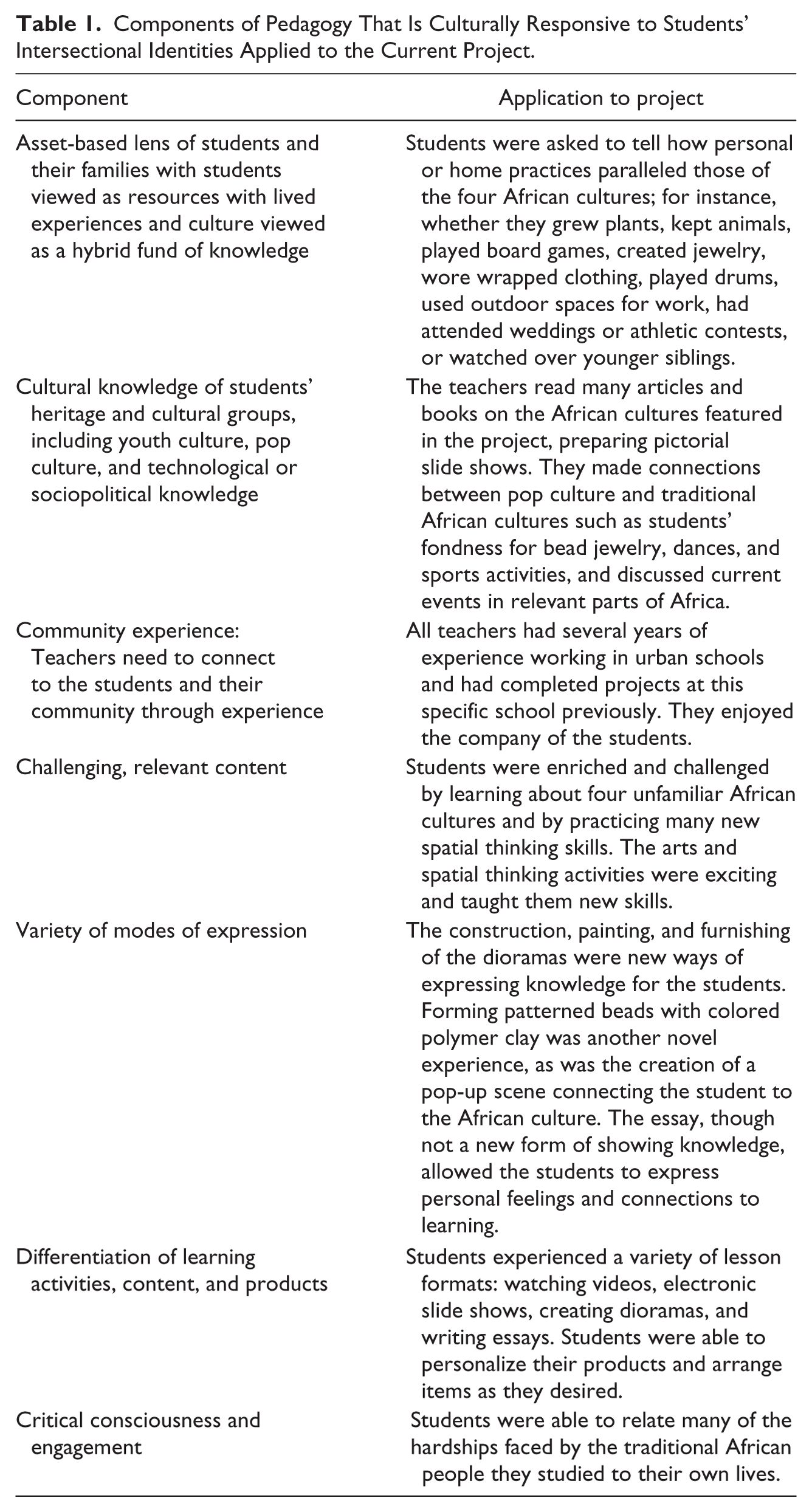
Using intersectionality as a framework for differentiating curriculum and instruction to support students’ academic and social/emotional needs better supports opportunity and equity in the learning environment (Grant & Zwier, 2011). Grant and Zwier identified seven components of pedagogy that is culturally responsive to students’ intersectional identities: (a) teachers’ lenses of student assets; (b) knowledge of different aspects of culture; (c) experience in students’ community; (d) challenging, relevant content; (e) multiple modes of expression; (f) differentiation; and (g) critical consciousness and engagement. The ways these criteria can be applied to the current project are shown in Table 1. The first component, recognizing students’ cultural assets, is particularly important for White teachers in urban schools to engage students in relevant curricula and to show they value students’ culture (Goldenberg, 2013). Other investigators studying the preparation and implementation of an ethnic studies program in California (Tintiangco-Cubales et al., 2014) identified three aspects of culturally responsive pedagogy important to effective teaching of ethnic topics: building upon students’ experiences and perspectives, developing students’ critical consciousness, and creating caring academic environments. The first two of these appear as two of Grant and Zwier’s components; the final idea of creating a caring environment was evidenced through the teachers’ involvement in the students’ community, their efforts in preparing example models and slide shows of information, and their caring and respectful attitudes toward the students’ lived experiences and toward the people of the featured traditional African cultures. Shevalier and McKenzie (2012) echoed ethics, inquiry, and caring as forming a theoretical foundation for culturally responsive teaching in urban education. In a similar manner, Milner (2013a) discussed 11 skills teachers need in working with students in urban schools. Among these were to develop relationships with students, family members, and colleagues; provide culturally relevant materials and pedagogy with appropriate assessments and management skills; build on interests and assets of students, community, and self; transform standards to be relevant; and build on historical and sociopolitical contexts.
Components of Pedagogy That Is Culturally Responsive to Students’ Intersectional Identities Applied to the Current Project.
Schools are a strong socializing force with school climate affecting the social and emotional lives of students. Researchers (Walsemann, Bell, & Maitra, 2011) conducted a study analyzing Wave I data from the U.S. National Longitudinal Study of Adolescent Health for over 18,000 students, finding that with increasing percentages of White students at the school, Black students experienced more depressive and somatic symptoms. However, this relationship disappeared when students’ perceptions of discrimination and school attachment were included in the data, indicating that primarily Black schools may buffer Black students from discrimination and increase their school attachment and that integrated schools promoting an environment in which all students feel valued and respected have healthier students. Other support for school climate having a strong effect on students comes from a measure of school climate developed and tested by Bear, Yang, Pell, and Gaskins (2014). These investigators found that school climate was most affected by teacher–student and student–student relationships, communication with parents, respect for diversity, safety, fairness, and clear expectations. The idea of promoting appreciation of racial heritage differences motivated the researchers from the university partnering with the school to conduct the current enrichment project for students to further advance the school’s positive climate.
The urban school at which the current study took place has a high-poverty enrollment. Partnerships with several businesses and the local university have provided resources, such as new books for the school library and the enrichment opportunity reported here. The partnership team that conducted this study consisted of the White gifted education/enrichment teacher at the school, a White education professor from the university in partnership with the school, and an African American doctoral student from the university. All three team members had strong preparation, years of experience teaching at urban schools, and collaborated well together. They all worked to develop caring relationships with students. Perhaps most important in this district under pressure to improve test scores, the school principal supported the project, seeing it as a significant part of the school’s valuing of diversity. When the investigators encountered research approval resistance from the district, the principal signaled her support of the project, indicating that it uniquely supported the mandated school curriculum.
Racial Identity
Early racial identity models were developed in response to the assumption that societal oppression negatively affected African Americans resulting in low self-esteem (Cross, 1991). Racial Identity Theory (Cross & Vandiver, 2001) suggests that members of racially different groups need to have a positive racial identity to have an effective self-perception. Investigators (Perry et al., 2003) found that stronger racial group affiliation and connectedness leads to greater academic motivation for African American adolescents. Minority students, such as African Americans, can develop positive racial identities through affirmative experiences with Whites who view African American culture positively and who recognize the social capital students of color bring to school (Brown-Jeffy & Cooper, 2011). Racial identity is supported by African American role models who show effective ways of coping with negative emotions (Black & Krishnakumar, 1998), as angry rumination over perceived ethnic discrimination is associated with increased risky behavior (Borders & Hennebry, 2015). School programs demonstrating commitment to social justice and multiculturalism also enhance positive racial identities. Milner (2012) noted, What teachers cover, how much time they spend on aspects of the curriculum, whether the curriculum materials and information included are appropriate and accurate representations of the people and their experiences from various racial and ethnic backgrounds are all essential in developing a race-conscious curriculum. (p. 869)
Cultural Universals Addressed Through the Project
Children’s ideas about cultural universals, basic categories of human experience that have existed in all current and past human cultures such as shelter, food, clothing, and family structure, have been documented and analyzed (Brophy & Alleman, 2006), revealing multicultural concepts important to understanding how and why the expression of these universals differs from culture to culture. For example, according to Brophy and Alleman (2006), in addition to recognizing that shelter varies among cultures, children should understand that climate and geographical features help determine housing, along with locally available natural materials. The form of housing often reflects cultural, economic, or environmental conditions such as skyscrapers being built in urban areas because of a lack of horizontal space and portable tents being used by nomadic groups. The goal of discussing cultural universals is to provide a foundation for understanding history, geography, political science, economics, sociology, and anthropology so that students will comprehend how social systems work, how they are developed, and why they differ across cultures (Alleman, Knighton, & Brophy, 2007).
These universals were the foundation for the current project in which students learned about, and recreated with a papier-mâché cereal box diorama, aspects of a traditional African culture. A model of a typical dwelling (cultural universal of shelter) was made by students and attached to the front of the cereal box. Before constructing the homes, students viewed slide shows of photographs of people, their shelters, and the environment, accompanied by discussions of lifestyle and available natural materials. As the box was opened like a book, the furnished interior of the dwelling became visible, often with acrylic polymer clay models of vegetables and fruit (cultural universal of food), folded cloth for sleeping or clothing (both cultural universals), simple furniture, or a model Mancala-type game (cultural universals of family living and leisure activities). A ceremonial scene was portrayed on the opposite interior area of the cereal box depicting a traditional wedding, a festival, an athletic contest, or planting ritual. These scenes were related to family and community living. The back of the box had an additional flap attached so that when it was pulled downward to open, a pop-up scene featuring images of the traditional culture and parallel items from the student’s life appeared, accompanied by an essay connecting the student’s life to the lives of those in the traditional culture. Other panels of the box showed additional foods, crafts, market scenes, artwork, and student-created beadwork. Models of animals that were important to the culture as food, transportation, labor, or wildlife were also attached to the box.
Arts Integration
Many studies have indicated correlations between student participation in the arts and improved academic skills and achievement (e.g., Nathan, 2008; Posner & Patoine, 2009). Catterall (2009) found that for students from socioeconomically disadvantaged school districts in particular, arts instruction had a positive effect on standardized test scores even when the tests did not address arts-related material. In addition, arts involvement improves science productivity, as Root-Bernstein and Root-Bernstein (2013) showed that the more arts and crafts scientists participated in throughout their lives, the greater the likelihood of these scientists producing important results in their fields.
Unfortunately, schools with high levels of poverty are more likely to eliminate untested subjects like the arts or social studies entirely, in favor of mathematics and literacy instruction, while schools serving the middle class offer a larger range of subjects (McGuire, 2007). This means that although the arts offer substantial benefits to learners of developing creativity and skills in other areas (Milner, 2013b), students in urban schools tend not to access those advantages.
Learning through the arts can assist students in developing inquiry skills. Authors of an article espousing an art-based research model assert, “[A]rt making is a form of inquiry, a kind of open-ended, artist/researcher driven learning process in which new knowledge is discovered or constructed” (Marshall & D’Adamo, 2011, p. 12). The idea that art practice can produce new knowledge, making it a legitimate form of research, was first introduced by Elliot Eisner (Cahnmann-Taylor, 2008). The artwork engaged in by our students during the diorama-making process allowed them to explore “creative, non-verbal ways of understanding a subject” (Marshall & D’Adamo, 2011, p. 12) as they encountered ambiguity or complexity in the traditional African cultures. Students used their emotions, intuition, or lived experiences to interpret and celebrate the events and cultural aspects they depicted. A qualitative researcher who analyzed the classroom practices of a secondary art teacher implementing art as research with his public school students (Walker, 2014) found that prolonged in-depth inquiry allowed students to grow in critical thinking, artistic skills, and sense of self.
Spatial Thinking Skills
Spatial thinking includes knowledge of orientation in space, scale, distance, site, association, and other elements involved in a spatial reference frame (Tversky, 1996). Spatial thinking also involves cognitive perspectives such as understanding change over space versus change over time and recognizing patterns in data (Schultz, Kerski, & Patterson, 2008), along with problem-solving and decision-making strategies.
The American education system lacks student preparation in critical spatial thinking (Goodchild & Janelle, 2010). A report by the National Research Council (2006) described the lack of attention to spatial thinking in formal school curricula, despite assertions that it is a primary intelligence area (Eliot, 1987; Gardner, 1983), requesting a national initiative to integrate spatial thinking into standards-based instruction. The lack of attention to spatial thinking skills is particularly noticeable in urban schools focusing on basic reading and mathematics skills because of the neglect of other areas in which spatial skills are taught such as the arts and social studies.
Spatial abilities have been shown important to success in science, technology, engineering, and mathematics (STEM) careers (Shea, Lubinski, & Benbow, 2001; Wai, Lubinski, & Benbow, 2009) and in academic achievement in those areas (Erbas & Yenmez, 2011; St. Clair-Thompson & Gathercole, 2006). In a recent study, researchers (Mayer, Sodian, Koerber, & Schwippert, 2014) compared the scientific reasoning abilities of 155 fourth graders with other skill areas, finding that spatial abilities and problem-solving abilities predicted scientific reasoning performance.
In a study of urban eighth grader’s spatial thinking skills, Bodzin (2011) demonstrated that new spatial thinking skills can be acquired by students of diverse ability levels through formal teaching supported by appropriately designed tools, technologies, and curriculum. The results of these investigations indicate that many students lack spatial thinking skills, but are able to acquire them through appropriate instruction.
Research Questions
The arts- and spatial-thinking-integrated project on dioramas of four traditional African cultures was rich and student centered. Students learned about several traditional African cultures combined with making a three-dimensional diorama of a traditional home of one of those cultures. The four cultures examined were the Maasai, Ndebele, Yoruba, and Bamana: groups that live in a variety of geographic environments and who exhibit a range of cultural differences. The researchers aimed to (a) enrich the African American students’ racial identities, (b) highlight social studies concepts of cultural universals, and (c) teach spatial thinking skills.
The research questions addressed by this mixed methods study included:
Method
Participants
Eight African American fifth-grade students (four males, four females) at a low socioeconomic public school in the Midwestern United States with 72.8% of the school population receiving free and reduced-cost lunches participated in the study. The racial makeup of the school was 55% White, 34% African American, 9% Hispanic, 1% Native American, and 1% Asian. Approval to conduct the study was obtained from the university, the district, and the principal. All students and parents provided written consent for student participation. Participants were selected by the school principal because they needed motivation and enrichment.
Researchers’ Positionality
Milner (2007) noted that few teacher education programs are designed for Black students, dangerously overemphasizing education for the White majority. The lead researcher in this study, a Black doctoral student, and her White doctoral advisor, the second author, planned the study to address the doctoral student’s interests in providing instruction related to Black students’ heritage. In the first author’s elementary school years, she encountered few lessons that focused on positive contributions and heritage of Black people, which led the researcher to want to provide these for urban Black students. The second author’s undergraduate degree was in anthropology; she has a long-standing respect for indigenous cultures. She wanted to explore traditional cultures of Africa to inspire elementary Black students to recognize their rich heritage. The third author, the White teacher hosting this special enrichment project, has chosen to teach in an urban district because of her positive professional commitment (Aragon, Culpepper, McKee, & Perkins, 2014) to recognizing and supporting students of color in enrichment and gifted programs.
Study Design: Mixed Methods
Quantitative data were gathered via a pretest–posttest addressing racial identity and social studies content. Qualitative data included teacher observations of students, student dioramas, and student essays. Essays were analyzed for major themes.
Instrumentation
The main three subscales of centrality, private regard, and public regard of the Multidimensional Inventory of Black Identity–Teen (Scottham, Sellers, & Nguyen, 2008) were used as a pretest–posttest instrument. The scale consists of three subscales of three statements each to which students respond by marking really disagree (scored as “1”), kind of disagree (scored as “2”), neutral (scored as “3”), kind of agree (scored as “4”), and really agree (scored as “5”). The Centrality subscale measures the extent that an individual considers race to be important to the person’s identity. The Private Regard subscale determines the degree of positive feeling an individual has toward being an African American and toward other African Americans. The Public Regard subscale measures the individual’s perception of the magnitude of positive or negative regard that other groups have toward African Americans. Higher scores on all scales indicate more positive feelings.
An open-ended questionnaire was also administered as a pretest and posttest to measure previous content knowledge and the knowledge obtained by the participants through the study activities. This survey consisted of the following questions: (a) Name as many traditional African cultural groups as you can. (b) Tell some unique aspects or interesting facts about these traditional African cultures. (c) Name some African animals that are important to traditional African cultures and tell why. (d) Tell how traditional African people interact with and make use of their environment. (e) How are homes of people who are part of a traditional African culture similar to your home? (f) How are homes of people who are part of a traditional African culture different from your home?
Lessons
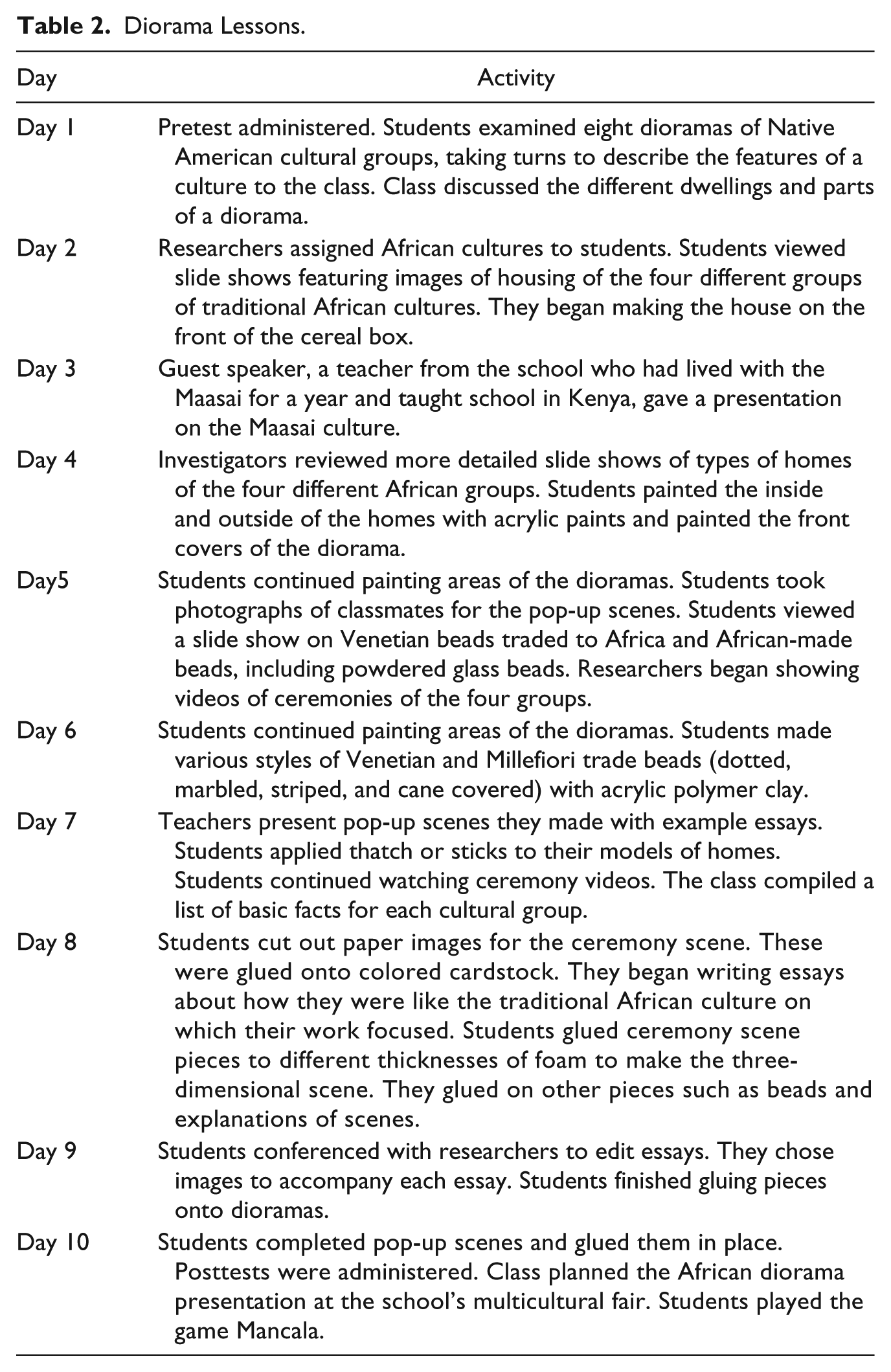
Table 2 provides the sequence of diorama lessons. Teachers took an inquiry approach to the project and honored student choice as much as possible while maintaining authenticity.
Diorama Lessons.
Results and Discussion
Racial Identity
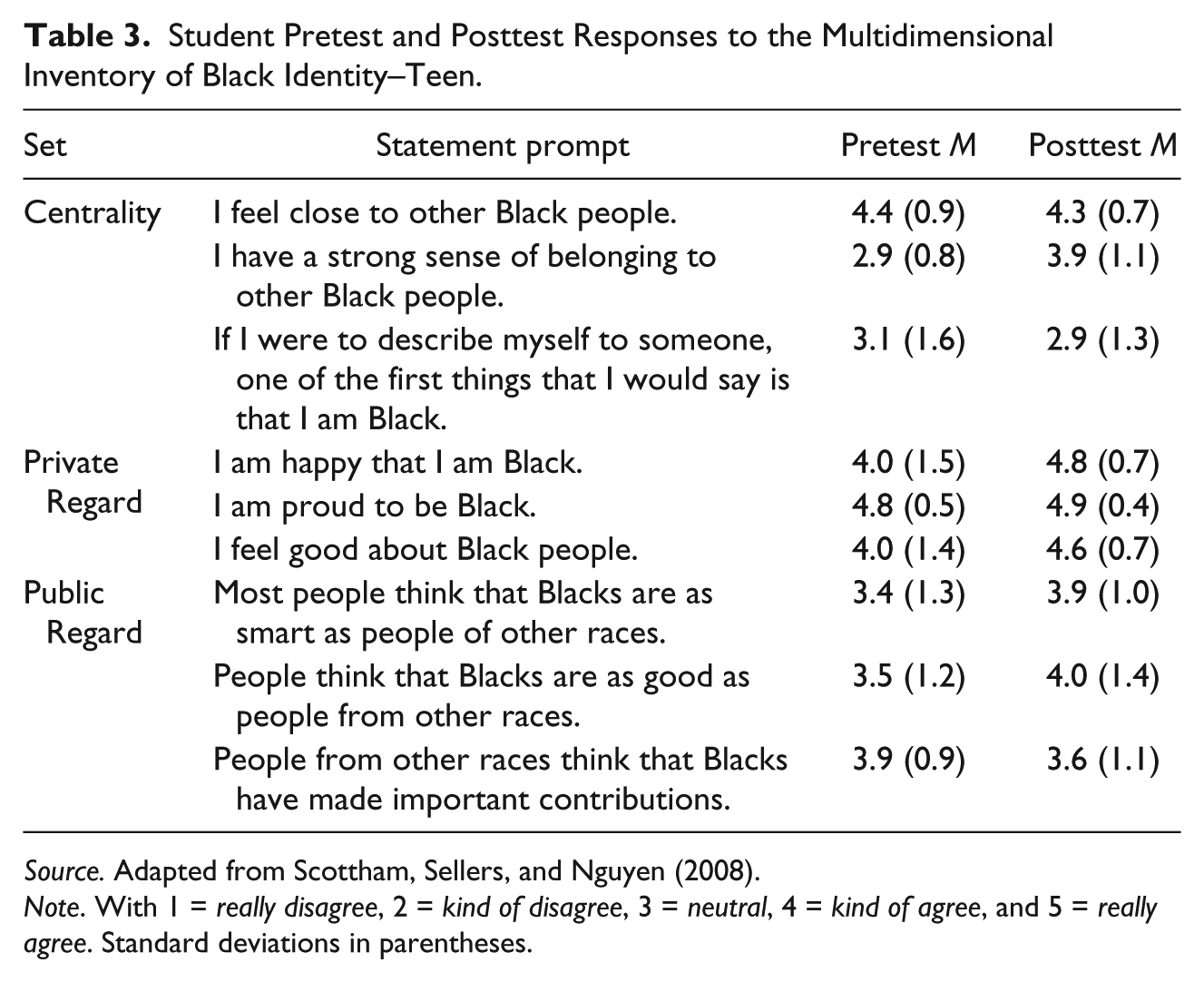
Table 3 shows pretest and posttest student responses to the Multidimensional Inventory of Black Identity–Teen (Scottham et al., 2008). Although many student responses trended toward more agreement with the statements during the posttest, the only statistically significant difference was found in the centrality statement: “I have a strong sense of belonging to other Black people” (p = .02; Cohen’s d = 1.01, interpreted as a large effect size). This is likely due to a greater appreciation of African cultures occurring as a consequence of the African diorama project with many mental connections being made between students’ lives and those of traditional Africans. Students averaged a gain of an entire point from pretest to posttest on this prompt, showing more centrality of their identification with the Black race. A sense of community with other Black people has been found important in other studies: for example, among Black youth in urban neighborhoods (Reynolds, 2013), among gay Black adults (George et al., 2012), and for Black women at mostly White universities (Wilkins, 2012).
Student Pretest and Posttest Responses to the Multidimensional Inventory of Black Identity–Teen.
Source. Adapted from Scottham, Sellers, and Nguyen (2008).
Note. With 1 = really disagree, 2 = kind of disagree, 3 = neutral, 4 = kind of agree, and 5 = really agree. Standard deviations in parentheses.
Students expressed more consistent agreement with the three private regard statements than the other two subscales, but because they scored high on the pretest, there was little room for improvement on the posttest (a ceiling effect). Students expressed greater agreement resulting in increases of 0.8 and 0.6 points on two of the private regard statements. This indicates that, as a result of the diorama project intervention, students tended to improve their positive racial identities. Learning more about their heritage and the creativity and work ethics of traditional African cultures helped them feel greater connection to other Blacks and pride in the accomplishments of Black people. If the number of students participating in the study had been greater, these changes may have been statistically significant. This study contributes to the professional literature on racial identity baseline data on the racial identity scores of young Black teens (fifth-grade students) before and after a special intervention. Previously, only racial identity data scores have been reported for older teens. Therefore, in response to the first research question, racial identity improved significantly in the area of sense of connection to other Black people, but gains in other areas were likely masked by ceiling effects.
Cultural Universals
Table 4 shows students’ posttest responses of ways they perceived they were similar to or different from the four studied African traditional cultures. As described by Brophy and Alleman (2006), students recognized the cultural universals of basic needs of food, clothing, and shelter for themselves and for the traditional African cultures. Several categories of human need were identified from student responses including housing, craft activities, and food containers. This appreciation of similarities allowed students to feel a stronger sense of belonging with members of African groups, contributing to this aspect of positive racial identity.
Student Posttest Responses to How Homes of Traditional African Cultures Are Similar to and Different From Their Homes.

Most student-identified differences between their lives and those of people of traditional African cultures were related to modern technology such as electronics, electricity, and cars. The only difference noted by students not related to technology was the limited number of clothing items owned by most of the traditional African people. This is most likely connected to the relative wealth (compared with people of traditional African cultures) of American students, even those who live in low socioeconomic neighborhoods. This finding of student focus on computer or electronic technology ownership and use is a sign of the current rapidly changing world in which technological advances are made daily.
Overall, in response to the second research question, students were successful in identifying many cultural universals that they had in common with traditional African peoples, such as food, shelter, and clothing. Students also mentioned some less commonly recognized universals such as the need for containers to store food and belongings.
Student Social Studies Learning Through the Diorama Project
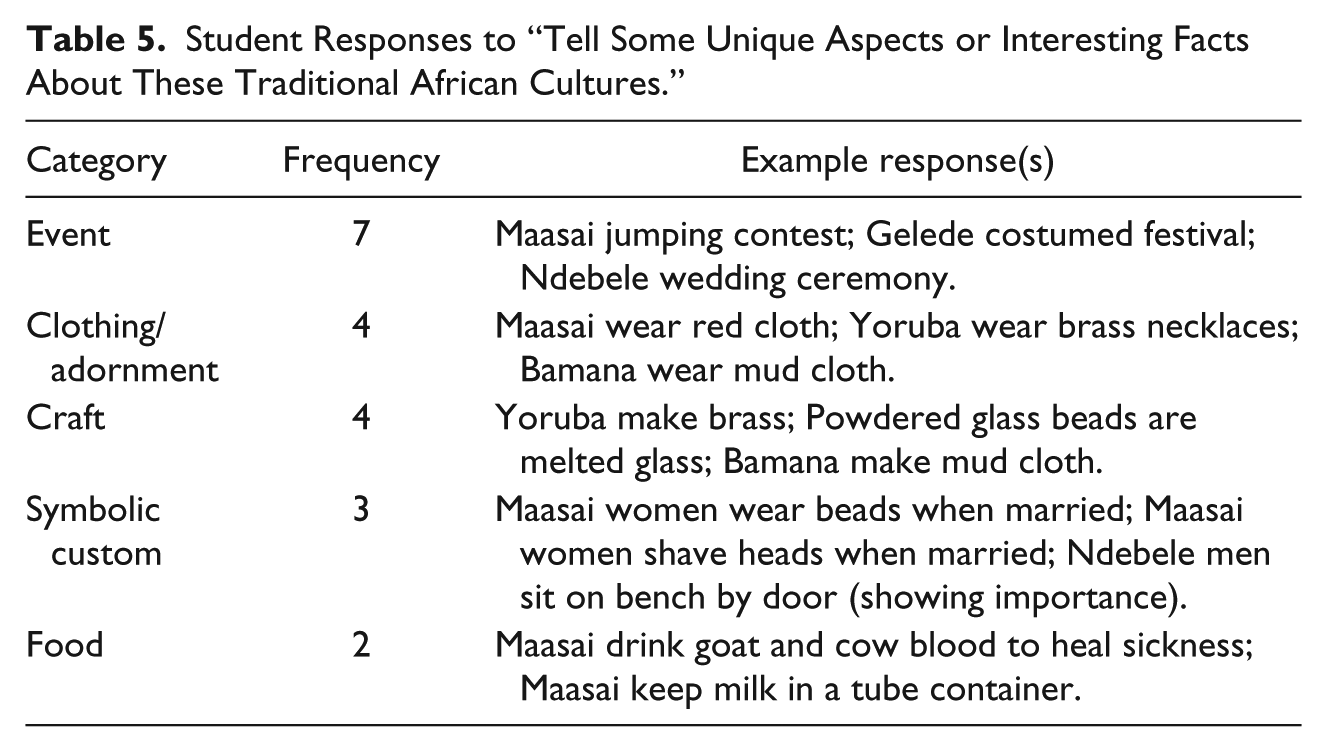
In addition to recognizing cultural universals, students acquired much social studies content knowledge of traditional African cultures. Students expressed no knowledge of traditional African people on the pretest. On the posttest, most students could name the four featured cultures and reported factual information related to those cultures learned through the project. Tables 5, 6, and 7 analyze posttest responses. Table 5 shows seven participants remembered the ceremony that was highlighted in each student’s diorama. Three students explained the symbolism of some African cultural practices (see symbolic custom category).
Student Responses to “Tell Some Unique Aspects or Interesting Facts About These Traditional African Cultures.”
Student Responses to “Name Some African Animals That Are Important to Traditional African Cultures and Tell Why.”
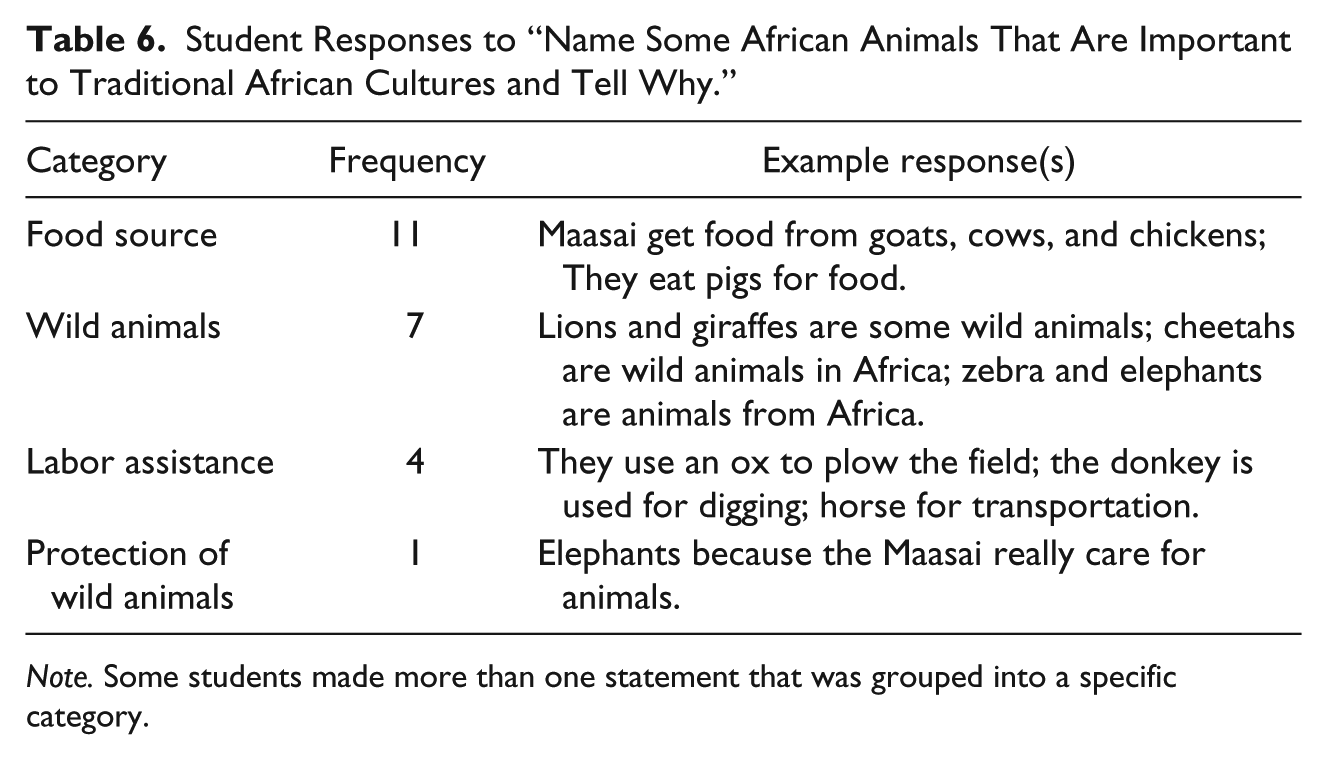
Note. Some students made more than one statement that was grouped into a specific category.
Student Responses to “Tell How Traditional African People Interact With and Make Use of Their Environment.”
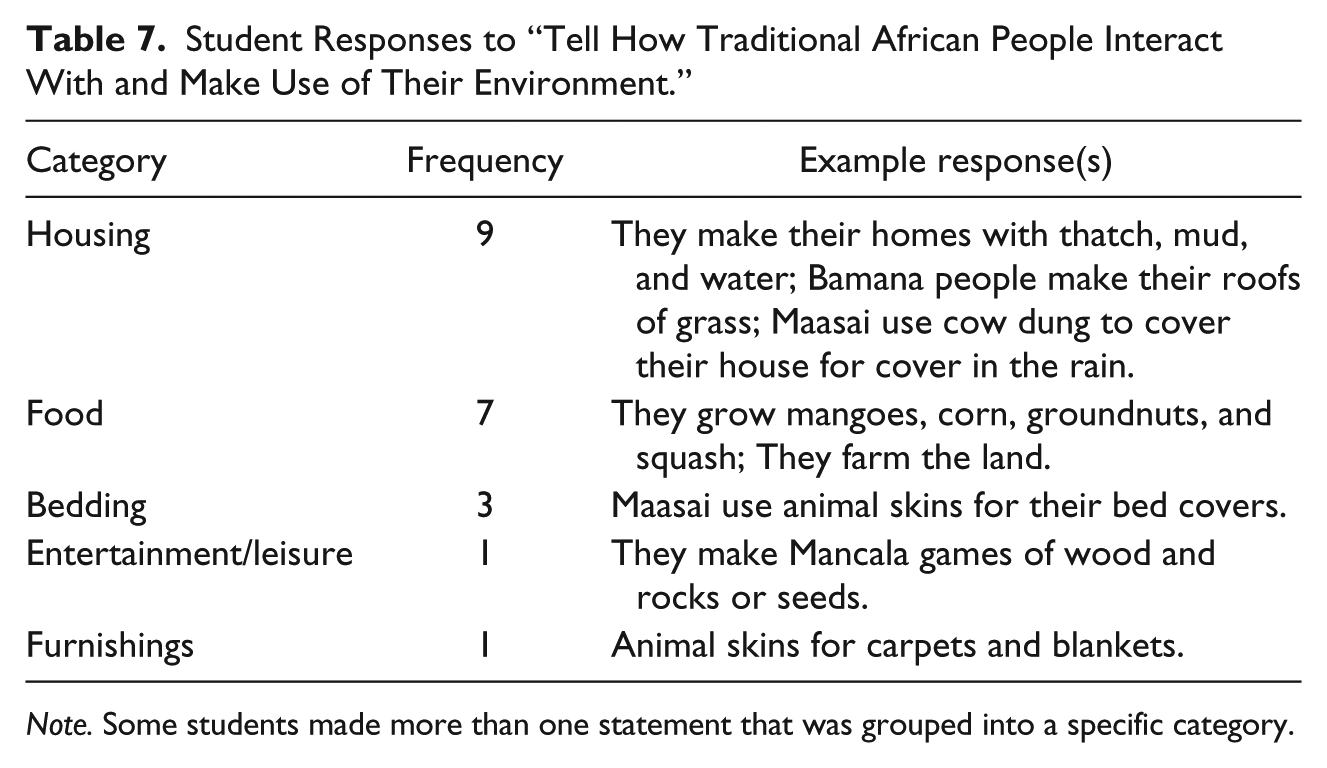
Note. Some students made more than one statement that was grouped into a specific category.
Table 6 shows that students recalled different ways traditional Africans interacted with animals. The most frequently cited use was food, which may be related to the low socioeconomic status of the participants. Surprisingly, students were not able to initially identify wild African animals, as elephants, lions, and zebras are highlighted so often in children’s literature, media, and zoos. Seven students on the posttest mentioned wild animals, most with multiple animals in their responses.
Table 7 reveals many universal human needs such as housing, food, and leisure activities. Frequent responses related to house construction may be a result of students replicating these types of construction on their dioramas. Again, food was often mentioned by students; they connected with African farmers because many of the students had family gardens. These results indicate students acquired considerable social studies content knowledge.
Student Dioramas
Student work in making the three-dimensional dioramas shows additional social studies content acquired during this project. Figures 1 to 4 show different views of the student-created cereal box dioramas. All images show the front of the box with the exterior of a home at the top left. As the box is opened, the interior of the home with some furnishings can be seen at bottom left. The students’ pop-up scenes are shown at top right in all of the figures. Finally, ceremony scenes are shown at bottom right. A three-dimensional effect was produced in the ceremony scenes by mounting the figures on varying thicknesses of stiff packing foam.
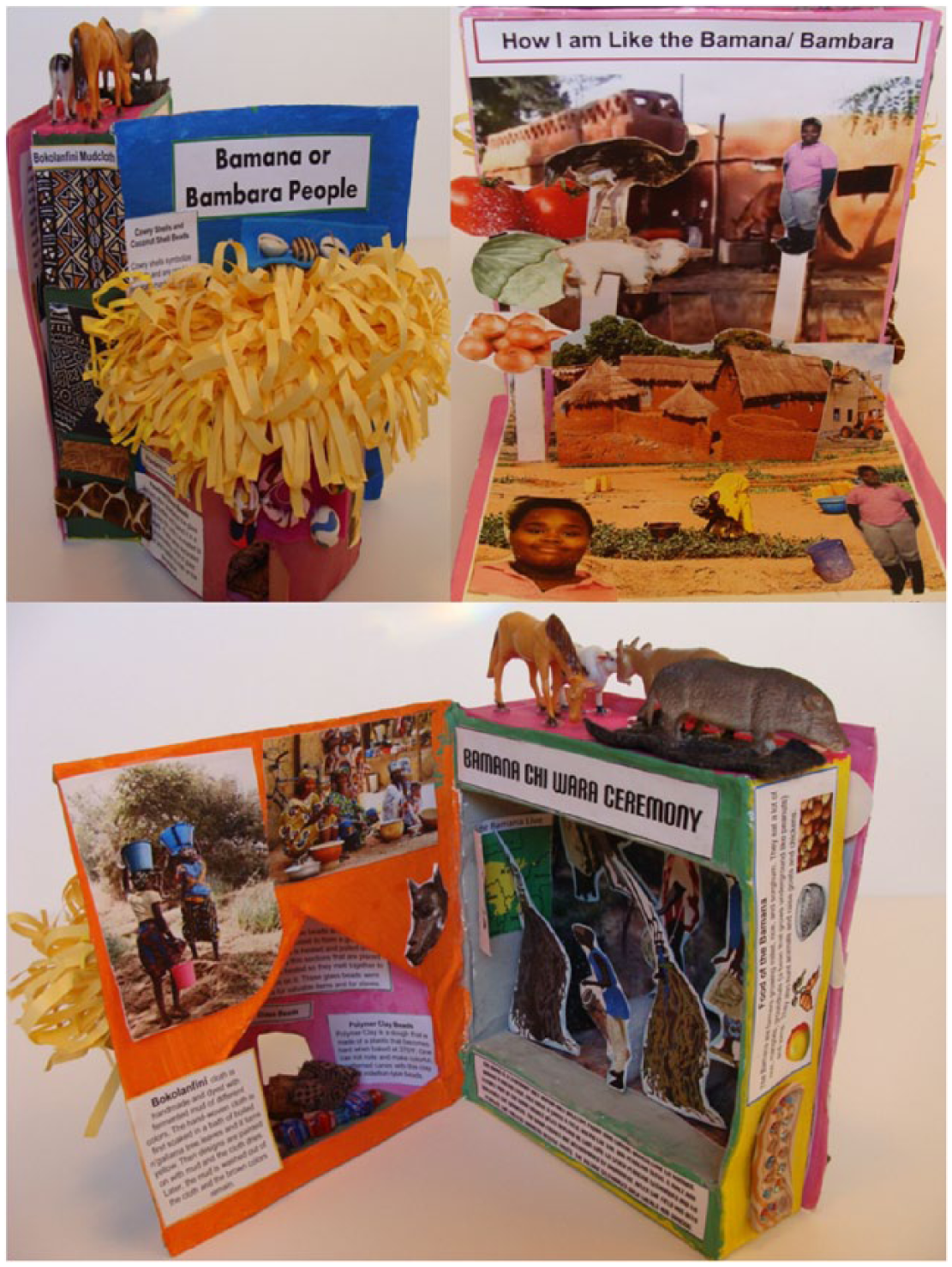
Several views of a student’s diorama depicting the Bamana culture.

Different aspects of a student’s diorama of the Maasai culture.
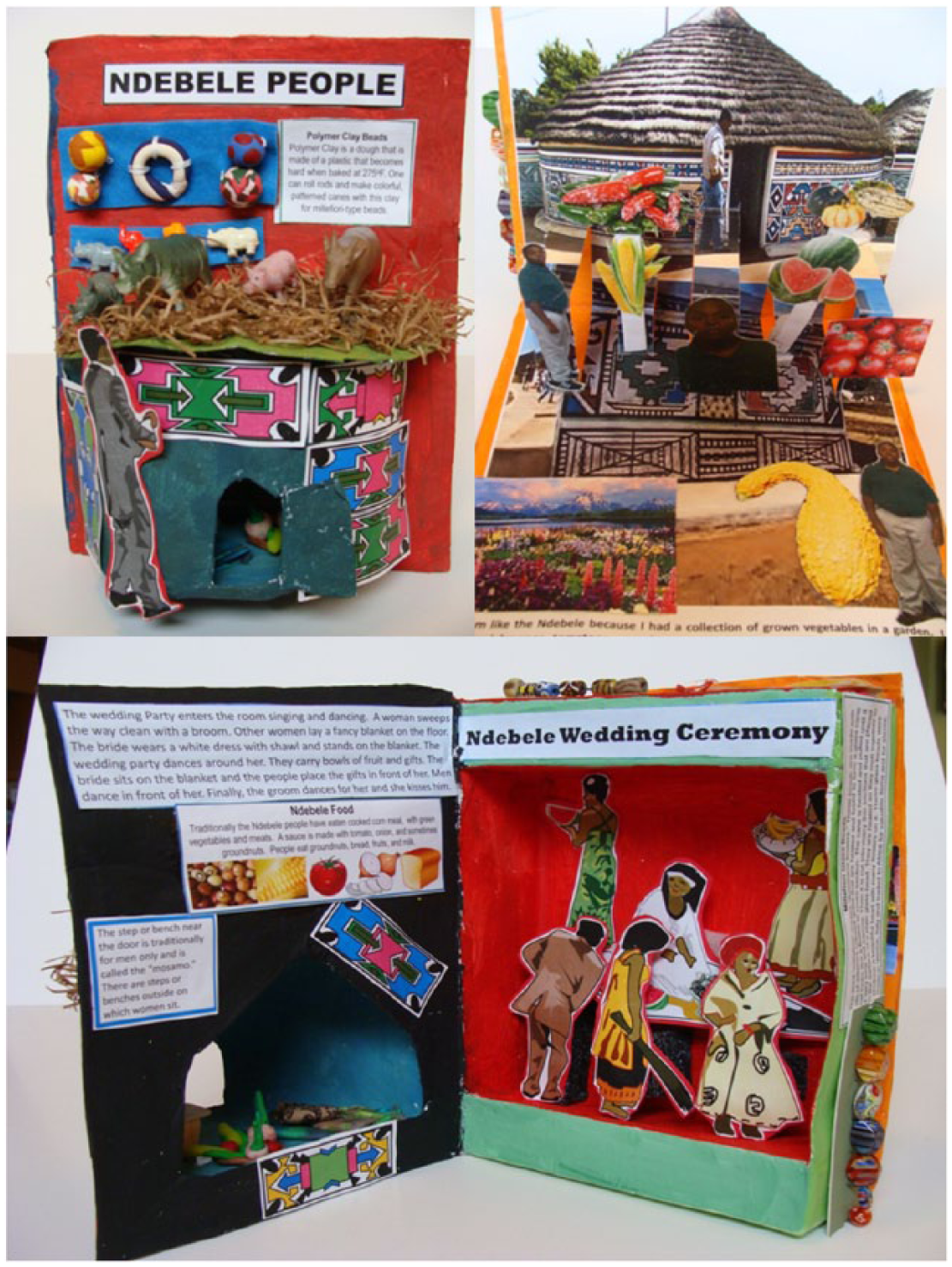
Views of the exterior and interior of a student’s diorama of the Ndebele culture.

Various parts of a student’s diorama of the Yoruba culture.
Figure 1 shows the Bamana/Bambara culture, traditional farmers who live in mud brick homes with thatched roofs in a dry, hilly, part of Mali. The lower part of Figure 1 shows a Chi Wara ceremony that celebrates the gift of agriculture from a legendary half-human, half-antelope figure. The student’s pop-up scene is shown at the top right of the figure. The student chose Bamana village and garden images, making connections to her own love of caring for plants and taste for vegetables.
The Maasai culture is depicted in Figure 2. These tall, lean people live on the semiarid grasslands of Kenya and Tanzania in homes constructed of mud and dung-covered brush, often serving as wildlife guardians of the national parks. A jumping contest is featured at the bottom right of the figure. Young village men standing in a line sing, sway, and then jump to see who can leap the highest to attract the attention of young women. The student’s pop-up scene shows his favorite sports teams, connecting them and himself to the athleticism of the Maasai.
Figure 3 shows a painted home in the style of the Ndebele people of South Africa and Zimbabwe who incorporate personally meaningful images into house decoration. The lower right scene depicts a wedding ceremony in which people bearing gifts of food dance around the bride. The student’s pop-up shows a traditionally painted building and a mix of favorite foods of the Ndebele culture and the student’s family.
A diorama featuring the Yoruba culture of Nigeria and southern Benin is shown in Figure 4. A mud brick and thatch-covered home occupies the front of the diorama, while the colorful, humorous masked dancers of the Gelede festival honoring women as life-givers are illustrated in the lower half of the figure. The student has put herself beside the Yoruba women in their colorful hand-loomed aso oke fabric clothing.
Student Essays
Writing the essays allowed students to reflect, to express their opinions about themselves, and about the African cultures they had studied. Several themes appeared that explained how students were similar to the studied cultural groups: admiration, shared food and gardening experiences, and animal connections. The first theme of appreciation for the traditional group being studied appeared in seven of the eight essays. For example, one male student wrote, “I admire the Ndebele because they are good at gardening and have cool fashion sense and have cool beads.” A female student who always wore bright clothing commented, “I admire the Yoruba people’s clothing patterns. Their clothing is cool because it is unique and colorful.” Another female student expressed, I admire the Bamana people because they don’t have house builders—they have to do it on their own. They can create things out of mud. We use wood, but they use mud. It is cool how they are creative!
Another male student stated, “I admire how hard the Maasai work and make what they need to survive.” Finally, a female student expressed, I admire the Maasai. I like their lifestyle. It shows you could be successful without electronics. Some people think that they couldn’t live without electronics like computers and MP3 players. I would like to live like the Maasai for one summer so I can experience how they feel.
The second identified theme, shown by six of the eight participants, consisted of food connections students made with the people they had studied. Many students chose images of vegetables or fruit that were common to both cultures as illustrations in their pop-ups. Several students recognized ties between the cultures due to a shared interest in gardening. A female student remarked, “I do like mangoes, yams, and sweet potatoes, like the Bamana people . . . I helped my neighbor with her garden. She grew tomatoes and cabbages, but the rabbits ate the cabbages before she could pick them.” A male student observed, “The groundnuts they grow are different from peanuts, but they are sort of in the peanut family. My grandpa had a garden and so did my stepdad’s auntie. She grew cabbage, corn, and green tomatoes.” Another student wrote, “I am like the Ndebele because I had a collection of grown vegetables in a garden. I grew jalapenos, tomatoes, squash, corn, watermelon, and flowers.” A female student who knew that the Ndebele people use onions and tomatoes to make sauces for their foods wrote, “I love to eat foods with tomato sauce including pizza and spaghetti. I am impressed that all the Ndebele women do everything by hand.”
A third emerging essay theme was making connections through animals. As can be seen by the presence of many animals on most dioramas, native and domesticated animals were of keen interest. For example, a student wrote, The Bamana keep animals like goats. I have been to a marketplace that has animals. My mom goes to a place to pay her bills and nearby we went to a farm. The farmer had horses, chickens, and piglets. I only petted the horse.
Another student wrote, I don’t have any pets, but my friend around the block from my house has a dog I love and I care for him. It is a pit bull mix and he has never bitten anybody. Me [sic] and my friend take him on walks and in the summer, we give him a bath. The Yoruba people have goats and they care for them.
Another student disclosed, “I really love animals like the Maasai. I got my own dog for my ninth birthday. It was a brown, black, and white Chihuahua.” Animals were mentioned in six of the eight student essays.
The essays and the images students chose to represent these ideas were part of students’ art inquiry (Marshall & D’Adamo, 2011). Their arrangement of images in the pop-ups allowed them to emphasize the aspects they found most salient. Students enjoyed showing their pop-up to classmates and explaining their reasons for inclusion and placement of images. This finding suggests that art inquiry be used as a method of teaching social studies content.
Spatial Thinking Skills
Table 8 shows the spatial thinking skills identified for the K-12 curriculum in the Learning to think spatially report (National Research Council, 2006). Each spatial thinking skill is named and illustrated with an everyday use, and then, in the next column, the skill is applied to the diorama construction project. The last column in the table contains observed student behaviors and verbalized insights related to the spatial thinking skill. Table 8 provides an in-depth example for other researchers of how a complex project may be broken down into more discrete spatial thinking skills. Overall, in response to the third research question, students evidenced marked growth in spatial thinking skills as a result of the project.
Spatial Thinking Skills Related to the Dioramas With Observed Student Behaviors.
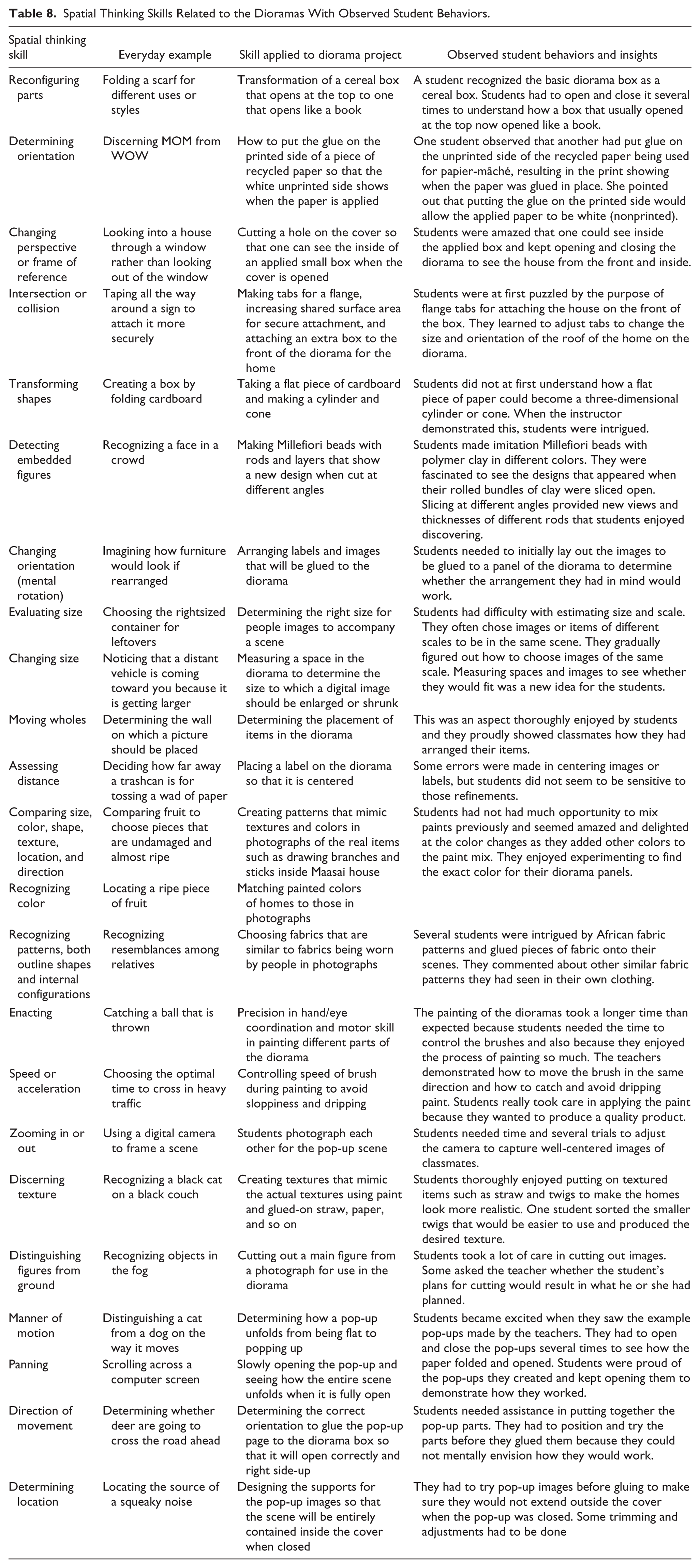
At the start of the project, most of the students’ spatial thinking skills were underdeveloped, as they reported they had never before made a three-dimensional diorama or other three-dimensional construction, mixed paint, rolled and combined pieces of colored clay to make patterned beads or other items, created a pop-up scene, or cut, arranged, and glued images as part of their schooling. This finding is in congruence with conclusions of other investigations into spatial thinking of K-12 students, such as Goodchild and Janelle (2010), and Bodzin (2011).
Students, although initially puzzled by the way one could open the diorama and see inside the dwelling on the front or create a folded pop-up scene that stood erect as the flap was moved downward, approached these tasks with enthusiasm and curiosity. They expressed a great sense of pride in their accomplishments and the desire to show their friends and family members their exciting constructions. The care they took in painting and decorating their dioramas attests to the value they put on the cultural and spatial knowledge they obtained. Students visibly enjoyed the project work and put much effort into creating neat, complete dioramas. Although students continually asked for assistance in making various parts of this complex artwork, their skills improved noticeably as the project ensued. For example, on the second day of painting, students took more initiative in choosing colors for mixing and worked more independently in applying paint, checking that all areas had been covered, and removing drips. Another example of student growth in spatial skills was placement of glued-on images on the diorama. Many students, at first, placed images at angles or upside-down, with little awareness of the needs of an audience. As the project unfolded, students were able to better plan and execute placement of images.
Conclusion
Summary
Student enthusiasm, attentiveness, and care in making the dioramas with accompanying essays and pop-up scenes are evidence of the positive regard they had for the activities. Rich arts- and spatial-skill-integrated projects such as this African diorama work can expand the marginalized social studies curriculum for students, expose them to motivating, hands-on craftwork, and improve their problem-solving and innovation abilities. Through this project, students were able to identify several cultural universals common to human experience and to better understand how the expression of these universals varied from culture to culture depending upon factors such as history, geography, economics, and anthropology (Brophy & Alleman, 2006).
Student writings supported the change that was seen in students’ sense of belonging to other Black people from pretest to posttest. Students identified with several elements of these initially “foreign” cultures, in particular, with each group’s food sources and with their connections to caring for animals. Student responses to the open-ended posttest questions showed they had learned much about the housing, foods, animals, environment, and ceremonies of the studied cultures. Students expressed much admiration for the traditional lives of the people, valuing them in spite of the differences between the traditional African cultures and their own. These findings indicate that complex, arts-integrated projects like this African diorama project can support positive racial identities for urban African American students, teach students about cultural universals, and improve students’ spatial thinking skills.
Implications
The study has several implications. First, there were racial identity benefits from this exploration of four traditional African cultures. Students took great interest in learning how these groups of people survived in their diverse natural environments and their cleverness in making use of available resources. Social studies instruction has been marginalized from the urban school curriculum, but the findings of this study indicate it requires a larger presence.
Second, students appreciated expressing themselves through the diorama art medium. The pop-up that depicted each student’s personal connections to one of the traditional African cultures was an opulent display of the enthusiasm with which students greeted the project. Students’ positive regard for their race and strong sense of connection to other Black people was developed through the arts-integrated lessons that allowed them to explore their cultural heritage through diorama-making art inquiry. Although writing was often viewed by students as an arduous task, composing the essay that connected their own lives with those of the traditional African cultures went smoothly. Students were able to generate many ideas and compose them into a coherent essay. Therefore, combining rich, meaningful art projects with writing prompts seems to be a way to motivate students to write.
Third, spatial thinking skills are important skills that support logical thinking, problem solving, and innovation. They are also necessary for success in the STEM fields, an area underrepresented by minorities in school achievement and careers due to real and perceived barriers (Grossman & Porche, 2013). The diorama construction allowed students to practice many areas of spatial thinking not generally included in the school curriculum. Incorporation of arts-integrated spatial thinking projects into the school curriculum may improve urban students’ test scores and interest in STEM areas.
Finally, the level of detail evidenced in student work and the care with which they painted, decorated, cut, arranged, and glued items indicates their tremendous investment in the project. Too often, urban students are bored with their rote schoolwork and participate at a minimal level. Students involved in this project hurried into the classroom at the start of the period, anxious to begin work. The enrichment teacher remarked on the fact that there was a lack of student conflict and absence of failure to follow directions that occurred during the project, an unusual situation for the group of students involved. Students often had to be pried reluctantly from their projects at the end of the work period, as they wanted to use every available minute to advance their work.
These benefits—racial heritage, social studies concepts, spatial thinking skills, and a high level of student investment—indicate that complex, long-term, arts- and spatial-thinking-skill-integrated projects that address racial heritage have much to contribute to urban education. Struggling urban schools could adopt this approach to strengthen minority identity development along with motivating students to write and participate more fully in their education.
Future Studies
Future studies might compare the writing skills, problem-solving skills, and school motivation of students involved in heritage-, arts-, and spatial-thinking-integrated social studies projects with those who are involved in the typical urban school curriculum. Such comparison studies might reveal additional benefits of these projects. Future work might also document the art inquiry process of urban students involved in a complex heritage-, arts-, and spatial-thinking-integrated social studies project in which students delve further into the topic and self-exploration.
The current study had limitations, such as small sample size, that might be resolved by future, more extensive studies. The eight students began the current study with fairly high racial identity scores causing a ceiling effect. Therefore, it would be more effective in future studies to screen students for racial identity prior to selecting students for the study and to engage a greater number of students in the study. Then, the possible maximum effects of this intervention might be documented. In addition, a control condition focused on students making a diorama unrelated to their cultural heritage with support from several teachers may assist researchers in separating the effects of the racial heritage diorama project from the effects of multiple, caring adults working closely with students.
Footnotes
Declaration of Conflicting Interests
The author(s) declared no potential conflicts of interest with respect to the research, authorship, and/or publication of this article.
Funding
The author(s) disclosed receipt of the following financial support for the research, authorship, and/or publication of this article: This research was supported by the Center for Educational Transformation at the University of Northern Iowa.