



Abstract
The purpose of this study was to examine the impact of racial microaggressions, racial/ethnic identity, and coping, as they relate to job satisfaction. We found that the experiencing of racial microaggressions negatively affects job satisfaction and that educators in higher education contexts often engage in detachment coping. Job satisfaction was also affected by marital status and gender. This study is important because it helps to better understand how African American educators cope with the experiencing of racial microaggressions and how this affects their experiences in and perceptions of the workplace.
In the groundbreaking conceptual work of Ladson-Billings and Tate (1995), the field of education was challenged to take a new approach to the examination of racism in schools and its impact on People of Color. They posited that to fully understand the persistence of racism, scholars needed to “theorize race” (p. 60). Specifically, they called for the critique of the status quo as well as the need for the “radical critique” of educational reforms (p. 62). In a continuing effort to address the impact of racism on People of Color, their call to “theorize race” and engage in “radical critique” can be extended and applied to various other contexts, including the workplace. Research has demonstrated that the workplace can be a hostile environment for People of Color, particularly African Americans, in that they often experience racial prejudice and discrimination (Emerson & Murphy, 2014; Nkomo, 1992; Offermann et al., 2014). Thus, critical race theory (CRT) can be used theoretically to help explain and critique the persistent and prevalent instances of racism that People of Color experience in the workplace.
The purpose of this article was to enhance and extend the work of Ladson-Billings and Tate (1995) by empirically exploring various tenets of CRT (the permanence of racism, Whiteness as property, and color blindness) through the examination of African American educators’ experiences with racial microaggressions in the work context. We engage in composite counterstorytelling (Solórzano & Yosso, 2002) through the critical use of quantitative data (Carter & Hurtado, 2007), derived from African American educators’ responses from Likert-type scales that explored the constructs of racial microaggressions, coping with discrimination, racial identity, and job satisfaction. Also, in discussing our findings as well as implications, we provide a multidisciplinary perspective, drawing from education, counseling, and management.
CRT
CRT was developed mainly as a critique of critical legal studies’ (CLS) inadequate treatment of issues of race and racism in the U.S. legal system (Delgado & Stefancic, 2012). Although CLS attempted to question the existence of a true “meritocracy,” CRT extends the mission of CLS by not only challenging the notion of “meritocracy” but also by focusing on the effects of race and racism, while addressing the hegemonic system of White supremacy and demanding social justice (Crenshaw, 1989; Haney Lopez, 2006). CRT views race as the center of focus for analysis and explores the relationships among race, racism, and power (Bell, 1992). Central to our discussion is CRT’s examination of the permanence of racism, Whiteness as property, and color-blind racism.
Permanence of Racism
The permanence of racism, a core and basic premise of CRT, suggests that racism is an “integral, permanent and indestructible component of this society” (Bell, 1992, p. ix). CRT presupposes a racial realist perspective, in that there is an ever-present reality of racism that is systemic in nature and institutionalized throughout all economic, social, and political systems of the United States (Bell, 1980, 1992). This institutionalized system of racism serves as a burden of racial subordination on People of Color due to the hegemonic practices and slow pace of racial justice litigation. In addition to acknowledging the institutionalization of racism, the permanence of racism examines racism within individual belief systems, including both conscious and unconscious ideas, attitudes, and beliefs regarding race (Lawrence, 1987). These individual belief systems can lead to the perpetuation of White privilege and the devaluing of those who are not White.
Whiteness as Property
Another tenet of CRT, Whiteness as property, discusses how Whiteness can be compared with that of property, in that Whiteness is reified and has value (see Harris, 1993). Associated with Whiteness as property are the rights to possession of Whiteness, the use of Whiteness for personal gain, and the power to dispose of/exchange Whiteness. In addition, like property, with Whiteness there is the ability to transfer (allocate Whiteness and associated privileges from one generation to another); the right to use and enjoyment (White identity is readily enjoyed by its members); reputation rights (there is a level of status associated with having a White identity), and the right to exclude others (White entitlement allows for the exclusion of others). Whiteness as property allows for the systematic maintenance of White privilege.
Color Blindness
The last component of CRT to be explored in this article, color blindness, utilizes race-neutral assumptions, suggesting that race is not important (Bonilla-Silva, 2009; Lewis, 2001). Individuals who take a color-blind perspective engage in the “nonrecognition” of race, which is the “recognition of racial affiliation followed by the deliberate suppression of racial considerations” (Gotanda, 1991, p. 6). By engaging in the nonrecognition of race or denying race, one still has to acknowledge racial differences before they can be ignored. Thus, people who are “racially color-blind” perceive race, and then pretend to ignore it. They engage in the practice of “noticing but not considering race” (p. 16). This approach is problematic because ignoring or denying racial differences implies that race does not have any social or cultural meaning.
Extending CRT
Although CRT has roots in the legal arena and is often used to examine larger structural issues (e.g., policy), it is helpful in examining issues of race on the individual level. This is the case, because as described by Lawrence (1987), Americans’ common historical experience with racism allows us to “share many ideas, attitudes, and beliefs that attach significance to an individual’s race and induce negative feelings and opinions about nonwhites” (p. 322). Thus, we postulate that exploring racial microaggressions, a covert form of racism that are enacted on the interpersonal level, will allow us to better understand the impact of racism on individuals. In doing so, we posit that racial microaggressions can be seen as a manifestation or an operationalization of the permanence of racism, Whiteness as property, and color blindness.
Racial Microaggressions Within the Workplace
Although not a new form of racism, in that they have been documented by psychiatrist Chester Pierce as early as the 1970s, racial microaggressions represent a more subtle or aversive racism where the racist intentions are covert (DeAngelis, 2009). According to Sue et al. (2007), racial microaggressions are “brief, everyday exchanges that send denigrating messages to People of Color because they belong to a racial minority group” (p. 273). Racial microaggressions can also be described as “subtle snubs or dismissive looks, gestures, and tones” (p. 273). There are three types of transgressions, including microassaults, microinsults, and microinvalidations.
Microassaults are the direct and explicit verbal or nonverbal attacks that are intended to hurt or offend someone. Examples of microassaults include using racial slurs or displaying a racially charged symbol such as noose. Microassaults are considered “traditional” hate speech and symbols, in that they are overtly racist. These are symbolic of the permanence of racism. Microinsults and microinvalidations, however, are covert and aversive ways of communicating racist beliefs. Microinsults are used to indirectly insult a person’s racial heritage or racial identity by offering a negative compliment. An example of a microinsult is telling an African American man, “You are so well spoken and articulate.” The comment is intended to compliment the man’s oratory skills but it actually suggests that he is a good speaker despite being African American. Microinsults are rooted in beliefs of White superiority. Similarly, microinvalidations are statements that belittle, challenge, or negate the experiences of People of Color. An example of microinvalidations would be to say to an African American woman that “You don’t look like most African American women,” suggesting that she does not share the same racialized experience as other African Americans because of the way she looks. Microinvalidations are often reflections of color-blind beliefs.
As suggested by CRT’s tenet of the permanence of racism, racial microaggressions are pervasive and present in all aspects of society, particularly education. There have been numerous studies on the impact of racial microaggressions on students within the high school context (Allen, 2010) as well as the college context (Smith, Hung, & Franklin, 2011; Wang, Leu, & Shoda, 2011; Yosso, Smith, Ceja, & Solórzano, 2009). However, there has been a paucity of studies examining the experiences of racial microaggressions by faculty of color (Constantine, Smith, Redington, & Owens, 2008; Pittman, 2012), demonstrating that the educational context as a place of employment can serve as a strong source of racial microaggressions. Because of this, it is important to better understand how educators, as employees, cope with experiencing racial microaggressions and how this affects their racial identity and job satisfaction.
Coping
Coping is the process of minimizing stress or conflict, often involving the regulation of emotions (Lazarus & Folkman, 1984). According to Suls and Fletcher (1985), there are two types of coping: approach and avoidance coping. In approach coping, the individual engages in a problem-solving approach where he or she actively attempts to solve a problem. For example, after experiencing a racial microaggression, an educator would join a forum on how to discuss race in the classroom. Avoidance coping, however, is a passive or maladaptive approach where the individual addresses the issue by using avoidance strategies. An example would include an individual pretending that he or she did not experience a racial microaggression. However, the approach to coping can be affected by the individual, the context, and the nature of the emotional experience. This is particularly the case for coping with racial microaggressions.
As suggested by Mellor (2004), coping with racial microaggressions or racism requires coping skills beyond those needed for dealing with everyday emotions or situations. Specifically, he suggests that coping with racism requires protecting the self, engaging in self-control, and confronting the racism that was experienced. Protecting the self requires focusing on one’s individual psychological and physical safety after experiencing a racist event. For example, if an African American educator experiences a racial microaggression in the workplace, he or she will need to find a safe space to collect his or her thoughts or even debrief with a friend. This process is necessary to make sure that the individual is emotionally supported. The second approach is engaging in self-control, which requires that the individual not respond to the racial microaggression in a manner that could place him or her in danger or jeopardize his or her physical or economic well-being. For instance, if an educator experiences a racial microaggression in the classroom, it is imperative that he or she not react in a way that could be detrimental to the students in the class and could potentially be considered a dismissible offense (e.g., punching a student because of offensive comments). Because experiencing racial microaggressions elicits strong emotions, it requires the victim to be cognizant about how he or she reacts as well as how others may perceive that reaction. Confronting the racism, the last suggested skill, suggests that the victim should both confront and educate the perpetrator about his or her actions shortly after the incident occurs. For example, if an educator experiences a racial microaggression from a colleague in a meeting, he or she should confront the faculty member and educate him or her about why what he said/did was inappropriate. This approach helps empower the victim, attempts to thwart future instances of racial microaggressions, as well as enables the victim to more positively cope with emotions that are associated with the experiencing of racial microaggressions. It allows for a more active (and emotionally positive) approach to addressing racial microaggressions and is complementary to the activist nature of CRT. Although developing active coping skills is essential to addressing racial microaggressions, having a strong sense of racial identity is another way to cope, in that racial identity serves as a sense of support and community.
Racial Identity
Racial identity concerns the attitudes and beliefs that one has about belonging to his or her racial group (Helms, 1990). According to Sellers, Smith, Shelton, Rowley, and Chavous (1998), racial identity is composed of four components: racial salience (relevancy), racial centrality (importance), racial regard (positive of negative perceptions from self and others), and racial ideology (beliefs about the way one’s race should act). These four components help serve as a sense of support for the experiencing of racial microaggressions. For example, research indicates that positive racial identity itself can be used as a strategy or means of coping with racism (Brondolo, ver Halen, Pencille, Beatty, & Contrada, 2009). Specifically, racial pride, a core component of racial identity, can serve as a buffer or protective factor against racism (Forsyth & Carter, 2012; Harper, 2007; Thomas, Caldwell, Faison, & Jackson, 2009). In addition, racial identity plays an important and complex role for African Americans within the workplace, particularly within predominately White contexts. For African Americans, having a strong racial identity can be viewed both positively and negatively within the workplace, in that workers are expected to conform to a unified, generally “White” identity. In many cases, African Americans have to engage in a working or performance identity where they mask their racial identity (Carbado & Gulati, 1999, 2013). For instance, it is common for African Americans to contemplate the repercussions or negative consequences associated with wearing ethnic clothing or hairstyles (reflections of racial identity) in the workplace (Ainsworth, 2014; Rosette & Dumas, 2007). In some cases, African Americans have been punished for asserting their racial identity through dress or hairstyle in the workplace (Rosette & Dumas, 2007). Such negative repercussions can themselves be considered forms of racial microaggressions. Thus, it is important to understand the role that racial identity plays, particularly how racial identity assists with the coping with racial microaggressions within the workplace and helps affect job satisfaction.
Job Satisfaction
Job satisfaction is an individual’s feelings about his or her job situation (Hackman & Oldham, 1976) and is the positive emotional response to a job situation resulting from attaining what the employee wants and values from the job (Busch, Fallan, & Pettersen, 1998). The organizational environment and workplace attributes also affect the degree to which workers are satisfied with their employment. Dissatisfaction with workplace attributes has been associated with “treatment discrimination” where African Americans may receive fewer rewards, resources, or opportunities on the job than they legitimately deserve on the basis of job-related criteria. This discrimination represents a situation in which the treatment of employees is based more on their subgroup membership than on their merit or achievements (Greenhaus, Parasuraman, & Wormley, 1990; Levitin, Quinn, & Staines, 1971) and is a direct example of the CRT’s critique of meritocracy. Cox and Nkomo (1991) have characterized this discrimination and differential treatments in the workplace that result in lower job satisfaction as products of experiencing racism. By examining the relationship between the job satisfaction of African Americans and the degree to which they experience racial microaggressions, we can apply and extend the inferences from CRT with respect to the racial identity and coping mechanism enactment strategies that are employed by African American educators in their workplaces.
Racial Microaggressions, Coping, Racial Identity, and Job Satisfaction: A Working Model
As demonstrated throughout our discussion, racial microaggressions are pervasive in all contexts, including the workplace. Constantly experiencing racial microaggressions within the workplace can have a negative impact on job satisfaction. However, the ability to cope with racial microaggressions and/or having a positive racial identity can potentially buffer that experience, helping lessen feelings of job dissatisfaction. See Figure 1 for the proposed relationships between the aforementioned constructs.
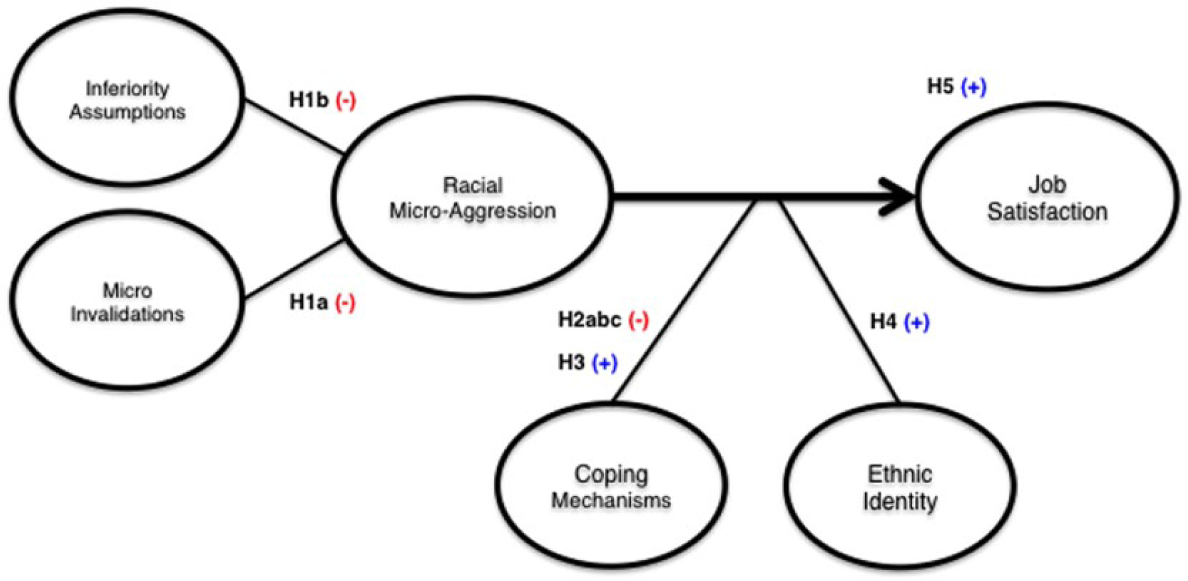
Full model: The hypothesized effects of racial microaggressions and job satisfaction in a variety of job contexts—The effects of discrimination coping mechanisms and ethnic identity formation.
To examine this model, we tested the following hypotheses:
Method
To test our hypotheses, we took a critical quantitative analysis approach where we placed issues of race at the center of analysis (Gillborn, 2010; Teranishi, 2007). Specifically, we used Critical Race Quantitative Intersectionality (CRQI), “an explanatory framework and methodological approach that utilizes quantitative methods to account for the material impact of race and racism at its intersection with other forms of subordination” (Covarrubias & Velez, 2013, p. 276). We focused on CRQI’s components of (a) quantifying the material impact of racism at its intersections and (b) originating from the experiential and material experiences of People of Color. In doing so, we used quantitative data to reveal the composite counterstories of African American educators’ experiences with racial microaggressions in the workplace (DeCuir-Gunby & Walker-DeVose, 2013; Solórzano & Yosso, 2002).
Participants
The sample for this study consisted of 75 African American educators who worked in primary/secondary education (22 participants: 4 men and 18 women) or higher education (53 participants: 9 men and 44 women). 1 The average age of the participants was 39.4 (range = 23-77) and 56% were married/partnered. The participants had worked in the field of education with an average of 10.8 years (range = 1-42 years) and had been employed in their current workplaces for 6.1 years (range = less than 1-23 years). The majority of the participants were employed in predominately White settings, where organizations averaged 25.9% People of Color.
Instruments
The instruments for this study included a demographics questionnaire and four Likert-type format surveys:
Demographics questionnaire
The demographics questionnaire included questions regarding personal characteristics and issues such as age, gender, marital status, educational background, and income. Additional questions addressed the characteristics of the workplace. Such questions included the size of the workplace, the location of the workplace, and the racial composition of the workplace, among others.
Racial and Ethnic Microaggressions scale
The Racial and Ethnic Microaggressions Scale (Nadal, 2011) assesses various types of racial microaggressions in multiple contexts. It consists of six subscales featuring a total of 131 items. The scale uses a 5-point Likert-type format with anchors asking how many times racial microaggressions were experienced within the last 6 months (no experiences to 10 or more times). However, to simplify the scale, for this study we asked about participants’ experiences within the last 6 months using the 5-point range of never to always. In addition, we focused on two of the subscales and a small subset of the items: Assumptions of Inferiority (seven items; α = .943) and Microinvalidations (five items; α = .910). A sample item for Assumptions of Inferiority includes the following: Someone assumed that I would not be educated because of my race. An item from the Microinvalidations scale is the following: Someone told me that they do not see race.
Coping With Discrimination Scale
The Coping With Discrimination Scale (Wei, Alvarez, Russell, & Bonett, 2010) consists of 25 items with five subscales, using a 6-point Likert-type scale (never like me to always like me), and addresses the various ways People of Color cope with the experiencing of racial discrimination. The items and subscales used in this study consist of the following: Education/Advocacy (five items; α = .885), Internalization (four items; α = .877), Drug and Alcohol Use (three items; α = .761), Resistance (four items; α = .695), and Detachment (three items; α = .742). Sample items include the following: I educate others about the negative impact of discrimination (Education/Advocacy); I wonder if I did something wrong (Internalization); I use drugs or alcohol to take my mind off things (Drug and Alcohol Use); I respond by attacking others’ ignorant beliefs (Resistance); I do not talk with others about my feelings (Detachment).
Multigroup Ethnic Identity Measure–Revised
The Multigroup Ethnic Identity Measure–Revised (Phinney & Ong, 2007) consists of two subscales with six items using a 5-point Likert-type scale (strongly disagree to strongly agree): Commitment (three items; α = .907) and Exploration (three items; α = .871). The Commitment subscale addresses issues of racial/ethnic pride and belonging, while the Exploration subscale addresses how actively people have been involved with their racial/ethnic group. For this study, the scale was revised to include a reference for “racial/ethnic” group membership instead of just “ethnic” groups membership. As such, a sample item from the Commitment subscale is the following: I have a strong sense of belonging to my own racial/ethnic group. A sample item for the Exploration subscale is the following: I have often done things that will help me understand my racial/ethnic background better.
Overall Job Satisfaction Scale
The Overall Job Satisfaction Scale (Hackman & Oldham, 1976) measures an individual’s feelings about his or her job. The scale consists of three items (α = .926), using a 5-point Likert-type scale (strongly disagree to strongly agree): Generally speaking, I am very satisfied with my job; I am generally satisfied with the feeling of worthwhile accomplishment I get from doing this job; and I am generally satisfied with the kind of work I do in this job. The literature is fairly replete with various measures of job satisfaction, yet few are as parsimonious and widely used as the original Hackman and Oldham measure.
Data Collection Procedures
Participants were recruited using email, Facebook, and various academic listservs. After consenting to participate in the study, participants were asked to complete the study instruments using Qualtrics, an online survey software. The data were collected anonymously, including no collection of Internet Protocol (IP) addresses. At the end of the survey, participants were given an option to enter a drawing for one of five US $50 gift cards to a national vendor.
Data Analysis Procedures
The data were analyzed using SPSS. We began by conducting descriptive statistics, analyzing Pearson’s correlations, and testing for violations of the assumptions for ordinary least squares regression. Next, we performed exploratory factor analyses on each scale as a means of engaging in item reduction and establishing construct validity. We then conducted reliability analyses (Cronbach’s α) on each scale. Last, we conducted several hierarchical regressions and ANCOVAs. The most appropriate statistical technique given our proposed model was path analysis. This procedure would have allowed us to determine if the observed pattern of relationships among the variables were consistent with the full model that we presented in Figure 1. However, we were not able to use path analysis because of inadequate sample size. Therefore, we analyzed the data using a three-step approach. First, we applied the full model to our data set, both K-12 and higher education participants. We then analyzed the data set using a reduced model and split the data set between K-12 and higher education. Last, we conducted a series of analyses focusing on the higher education participants.
Primary analysis to determine model fit
Upon analyzing the full model, we conducted a hierarchical multiple regression with all control variables (age, years of education beyond high school, years of work in field, years in current position, organizational diversity, gender, and marital status) and independent predictors (All Racial Identity, Coping, and Racial Microaggression subscales). We found support for three of the original eight hypotheses (Hypotheses 1b, 2c, and 3) in the full model, which included only one Racial Microaggression scale (Inferiority) and one Coping scale (Detachment Coping). Variance inflation factors indicated that statistically the full model was overfit. This result informed our choice to reduce the full model. Three hypotheses (Hypotheses 1b, 2c, and 3) were then evaluated in the reduced model (shown in Figure 2) with two control variables (gender and marital status), one measure of racial microaggression (inferiority), and one measure of coping (detachment).
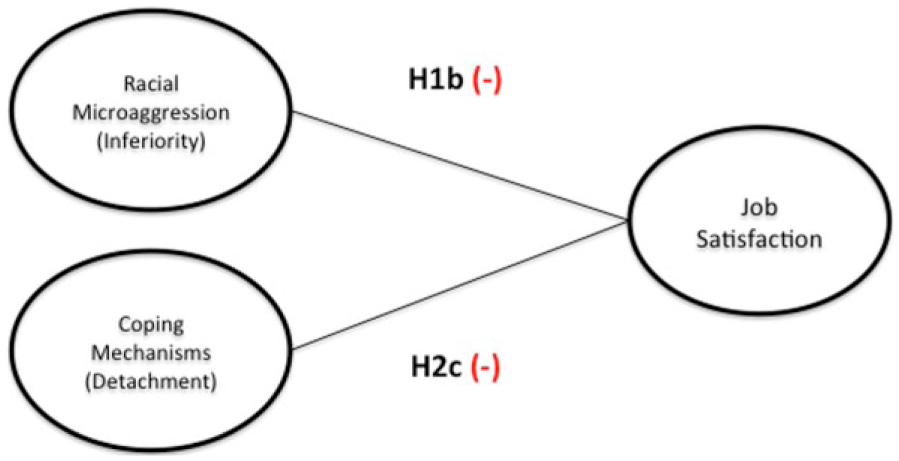
Reduced model: The hypothesized effects of inferiority racial microaggressions and coping mechanisms on job satisfaction in higher education workplaces.
Results and Discussion
One of our initial objectives had been to use our data analysis to engage in the fundamental technique in CRT of counter storytelling. Specifically, we wanted to create composite counterstories that made distinctions between the experiences of the educators in K-12 and higher education settings. While our preliminary analyses showed the settings to be distinctively different with respect to the experiencing of racial microaggressions, these differences were not statistically significant. The reduced model (see Figure 2) did not fit our available data with the K-12 educators. The one-way ANOVA was not significant (F = 2.58, p = .11). We attribute the lack of significance to a small sample size. Therefore, the remaining analyses only include participants from higher education settings.
Testing the Reduced Model with the Higher Education Participants
In taking a CRQI approach to data analysis, we attempted to quantify the intersectional impact of racism by testing the reduced model with the higher education participants. There were significant relationships between various variables that were explored in the study. Table 1 presents the means, standard deviations, and correlations among the variables examined in the final reduced model. The mean job satisfaction score was 3.6 on a 5-point Likert-type scale, average age was 40.1, and on average participants had 7.6 years of formal education beyond high school, an equivalent greater than a master’s degree. In the higher education sample, 57% were married or partnered and 83% were female. Respondents described their organizations as 20.4% People of Color, while having worked with their current employer for 6.3 years and been employed in the field of higher education for 10.2 years. One-tailed Pearson’s correlations confirmed that variables of interest were statistically significantly correlated. Being married/partnered (r = .39, p = .00) was positively associated with job satisfaction, whereas being male (r = −.26, p = .03) was negatively associated with job satisfaction. In addition, the experiencing of inferiority-based racial microaggressions (r = −.31, p = .01) and the use of detachment coping mechanisms (r = −.34, p = .00) were both negatively associated with job satisfaction.
Reduced Model Variables: African American Participants in Higher Education.
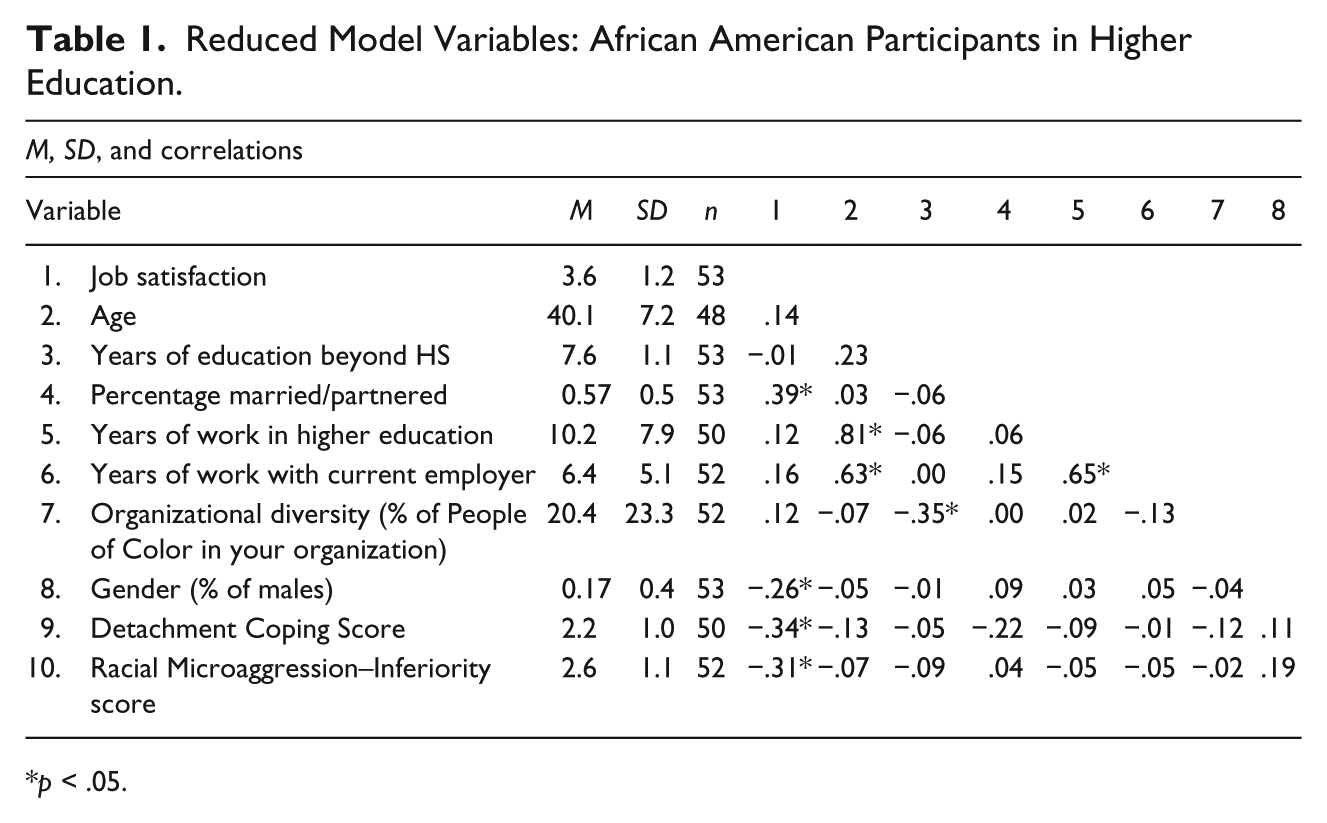
p < .05.
Two ANCOVAs were conducted—one with inferiority racial microaggressions as the dependent variable and another with detachment coping as the dependent variable. Both included the original seven control variables as covariates (age, years of education beyond high school, years of work in field, years in current position, organizational diversity, gender, and marital status). These analyses were conducted to ascertain the means and to describe the effect size of any significant covariates. However, there were no interpretable results as the test statistics were not significant. In addition, none of the pairwise comparisons were significant, but there were between-subjects effects that were significant at p < .05 with the measures of detachment coping and age (F = 6.5,
Univariate Analysis of Covariance—Between-Subjects Effects: Full Model.
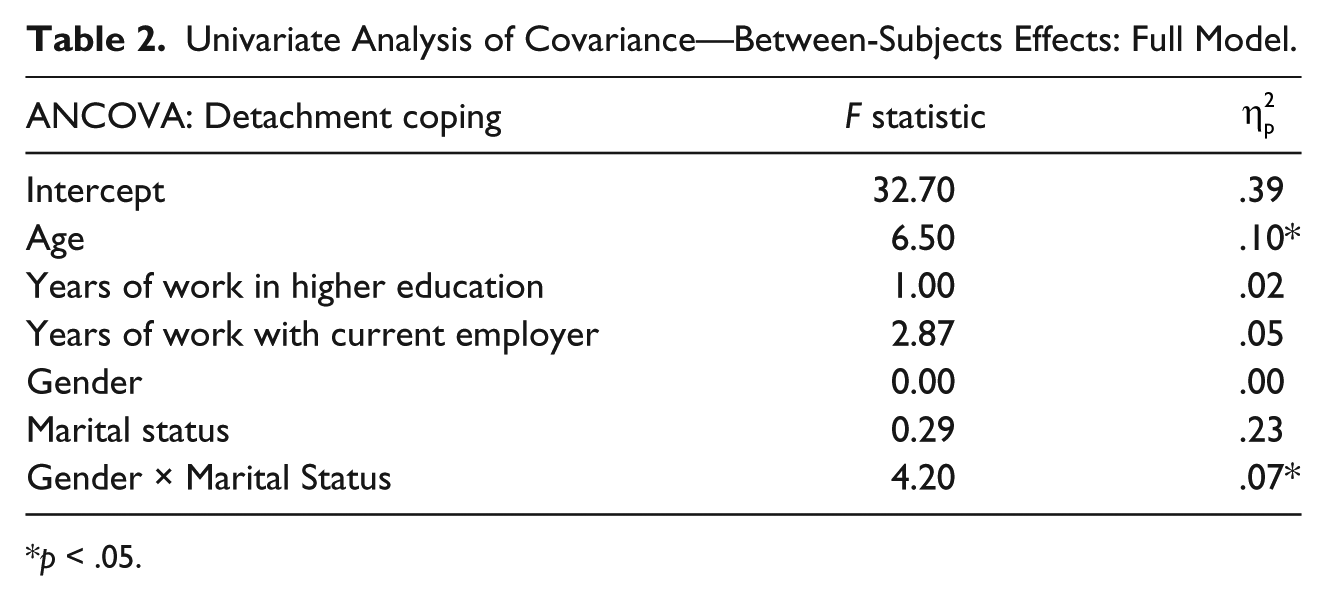
p < .05.
The reduced model, as shown in Figure 2, focusing on the higher education participants, was evaluated with a hierarchical multiple regression. The control variables and predictor variables were regressed on job satisfaction. The two control variables, marital status (married/partnered) and gender, were added as the first hierarchical block. The two independent predictors, racial microaggression (inferiority) and coping (detachment), were added individually as Hierarchical Blocks 2 and 3. Each successively added block of predictors generated models that had statistically significantly better fit than the previous steps. The adjusted R2 statistically significantly increased with each added block at .20, .23, and .31, respectively (see Table 3).
Results of Hierarchical Multiple Regression.
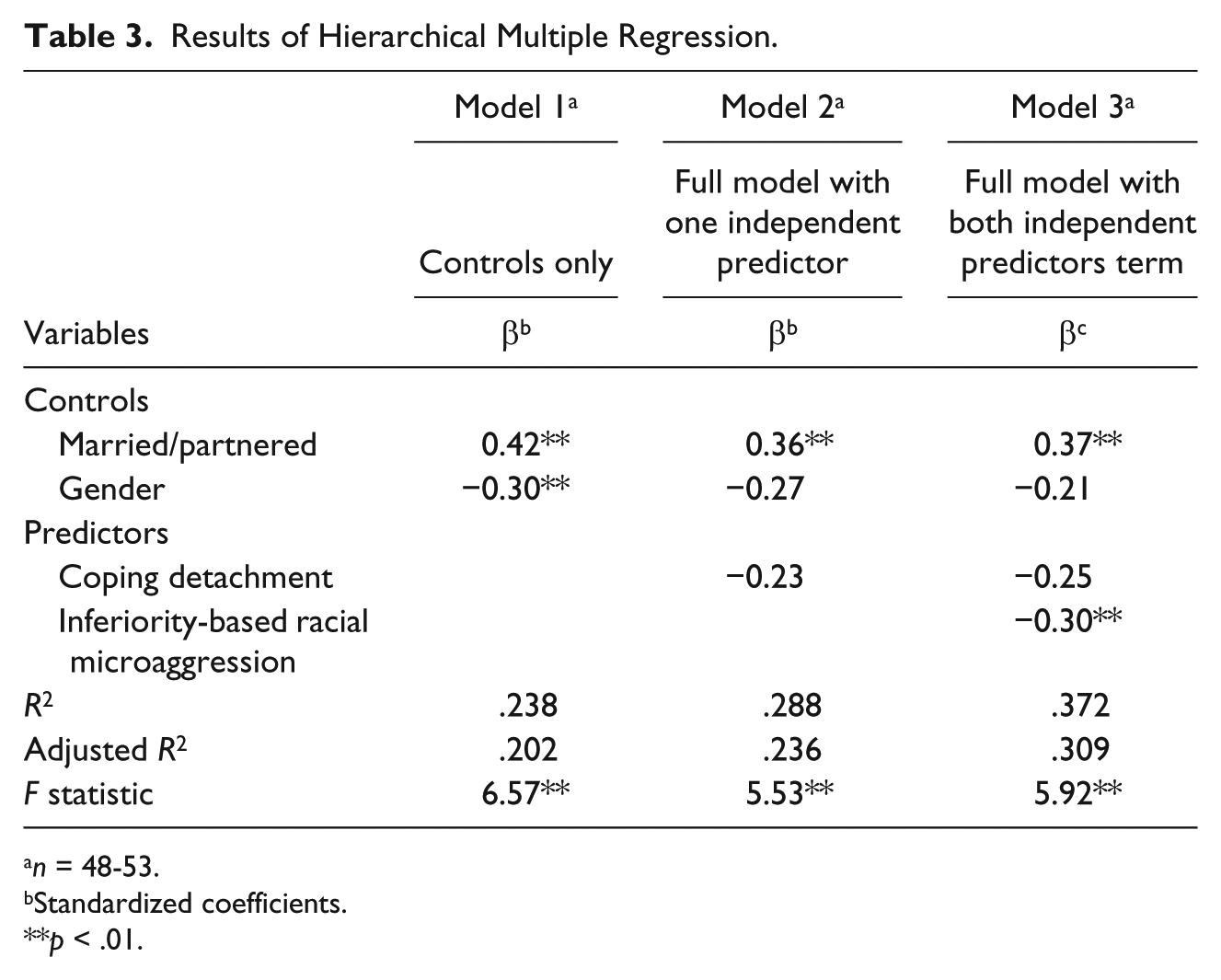
n = 48-53.
Standardized coefficients.
p < .01.
In summary, the final reduced model with two controls, marital status and gender, and two independent predictors, inferiority-based racial microaggressions and detachment coping, was regressed on the dependent variable, job satisfaction. We were able to infer both primary and secondary conclusions from the analysis of the reduced model. Hypothesis 1b (negative relationship between assumptions of inferiority and job satisfaction) was supported (standardized β = −.30, p = .03), whereas Hypothesis 2c (negative relationship between detachment and job satisfaction) was not supported (standardized β = −.25, p = .07). An additional unhypothesized finding was significant as well. A participant’s marital status had a positive effect on job satisfaction as married/partnered individuals were 36.5% more satisfied with their jobs (standardized β = −0.37, p = .01) than unmarried or divorced participants. Research suggests that African Americans who are married have more emotional and social support than those who are unmarried or divorced (Bryant et al., 2010). Having an extra source of support at home is helpful in addressing workplace stressors and could be particularly beneficial when experiencing racial microaggressions in the workplace. In Hierarchical Block 1 where only control variables were added, men were statistically significantly less satisfied with their jobs (standardized β = −.30, p = .05) than women. African American men tend to have more negative experiences in higher education context, which may explain they being less satisfied in the workplace (Hooker & Johnson, 2011; Solórzano, Ceja, & Yosso, 2000). However in the final hierarchical block, with the addition of inferiority racial microaggressions, the significance waned (standardized β = −.21, p = .12) and was thus not included as a statistically significant result.
Understanding the Experiences of African American Educators Within a CRT Framework
Continuing with the CRQI approach, while using these statistically significant results, we are able to generate composite counterstories of African American educators in higher education by focusing on their material experiences. By illuminating their experiences with racial microaggressions, their counterstories helped enhance and extend the aforementioned tenets of CRT. In the following section, we summarize our central findings within a CRT framework.
An important inference from our study indicates that there is a different experience for higher education participants with regard to the experiencing of racial microaggressions and the choice of coping mechanisms than those of their K-12 counterparts. In our sample, the higher education work context was half as racially diverse as the K-12 work context (20.4% vs. 40.9%) and the participants experienced more racial microaggressions. Work contexts that are less racially/ethnically diverse have People of Color who experience more racial microaggressions. As inferred from CRT, racism is systemic, unconscious, and historical; thus, racist behaviors are more likely to occur in a population where there are more members of the majority race.
Following a similar argument we just presented, the return on the investment of additional education as well as working in professional positions within institutions of higher education should confer substantial benefits to those who possess these characteristics. Research indicates that higher levels of education, higher income, and marriage are associated with positive health outcomes (Miller, Hollist, Olsen, & Law, 2013). However, we show indirectly that additional education, higher incomes, and even marriage are not associated with experiencing fewer racial microaggressions. This contrast is exactly one posited by the tenet of Whiteness as property. Someone who is White and married with higher education and income would not have as much emotional labor within the work context in that these characteristics would serve as support mechanisms, unlike in the case of African Americans.
In addition, a common rejoinder to CRT scholars in today’s environment is that the experience that we describe of prevalent racial microaggressions regardless of other significant personal characteristics is actually associated with our social class instead of our race. The societal claims of “post-racial” and that our society has moved beyond governmental and private sector affirmative action further attempt to challenge the notion of the permanence of racism. The belief that as People of Color attain social status, more education, and higher incomes, the prevalence of racial microaggressions will decrease is anecdotally false. We approached this directly in our study; however, our model did not find statistically significant evidence for an effect of income on job satisfaction. Indirectly, we found a statistically significant and moderate negative correlation between age and the percentage of People of Color in the organization as well as a large statistically significant correlation between years of education and percentage of People of Color working in an organization. More education and higher incomes are markers of social class, yet they do not seem to confer its benefits on People of Color. Therefore, we infer that even when People of Color enhance their complement of skills with more education in a field that has higher salaries than the national median, they are still likely to experience racial microaggressions. This directly and indirectly contradicts the liberal idea that more education will decrease the level of racism (Sniderman, Piazza, Tetlock, & Kendrick, 1991). Also, this is another example of the benefits of Whiteness.
Last, the intent of diversity education efforts in both corporate and educational settings typically endeavors to raise awareness of cultural differences. This recognition by the organizational body then gives impetus and credence to address issues for the good of its diverse members and the organization as a whole. Inferiority-based racial microaggressions can leave People of Color feeling subordinate to their White counterparts, and our statistically significant result indicates that they engage in a passive and potentially destructive form of coping where their plight remains hidden. Detachment coping mechanisms are characterized by not discussing issues and discontinuation of efforts to diminish the racial microaggressions. By detaching, African Americans are in essence being forced to ignore race in the workplace, which could inadvertently lead to the development of color-blind perspectives. Because detachment coping is strongly associated with less job satisfaction, this most likely relegates the racist experiences of People of Color as nonexistent, thus allowing their White colleagues to continue their racist behaviors and remaining color blind while ignoring its effects. These effects, a direct result of racism, are integral to the origins and organizational practices that perpetuate White privilege. As such, it is imperative that African Americans remain engaged in their workplaces, choose healthier forms of coping, and actively confront issues of racism, thereby holding their White colleagues accountable.
Conclusion
Drawing from our research findings, we end this article by providing important implications, including how to prepare future educators, the need for diversity training in the workplace, and the continued recruitment and retention of African Americans into education. In addition, we examine our study’s limitations as well as provide a discussion regarding future research.
Implications
Educating future educators
Our study findings indicated that African American educators from both K-12 and higher education settings experienced racial microaggressions in the workplace. Because of this, we suggest that it is necessary to prepare all future educators to better understand racial microaggressions and how they are manifested within the workplace. Teacher education programs should incorporate race within the curriculum to help K-12 teachers better understand and change the racial dynamics within the school system. Also, all graduate students of color who plan on having careers in academia should be educated on the role of race in higher education. For instance, if an African American is receiving a doctorate in electrical engineering, he or she should not only be trained to teach and conduct research in his or her discipline. He or she should also be trained to understand issues of race and racism with the workplace, particularly higher education. This could be done through a series of workshops conducted through the university’s diversity office. Such training would include having candid conversations about race, teaching how to cope with racism while actively working for change, and helping students on how to deal with racial microaggressions while in the workplace. Also, graduate students should be encouraged to develop a network of White allies (Reason, 2005; Tatum, 1994). It is important to find allies throughout your department and the university, as well as other people throughout the profession at other institutions. Such a network will help with the navigation of the higher education workplace.
Diversity training in organizations
Although some research has questioned the value of diversity training in organizations (Nemetz & Christensen, 1996), the findings from this study support a continued need for diversity training. However, the manner in which diversity training is designed and implemented needs to be changed. Diversity training must be mandatory rather than voluntary. When diversity training is voluntary, typically, only those interested in diversity issues attend, generally White women and People of Color (Kulik, Pepper, Roberson, & Parker, 2007; Kulik & Roberson, 2008). White women are generally interested in diversity training as it pertains to gender in the workplace (Holladay, Knight, Paige, & Quiñones, 2003). Also, most diversity training programs include a broad series of activities and discussions regarding a variety of diversity issues (Bezrukova, Jehn, & Spell, 2012). However, very few, if any, focus exclusively on race and include frameworks such as CRT. Diversity training programs should include a CRT framework to provide an extensive understanding of race in organizations. For instance, it is important to discuss Whiteness as property, the manner in which Whiteness has value in terms of networking and promotions, and how organizations can effectively address instances of White privilege and racial microaggressions. As CRT is incorporated into diversity training programs, research will be needed to examine (a) the effectiveness of including CRT in the training programs versus not including it, (b) the willingness of employers to implement such programs, (c) the reliability and validity of any instruments developed to assess competency in CRT knowledge, and (d) the long-term impact of the programs on organizations.
Recruiting and retaining African American educators
One of our most salient research findings was that there was a significant difference between the number of People of Color who worked in the K-12 and higher education settings. Educators in higher education were more likely to work in predominately White settings. We postulate that the racial composition of the workplace may have contributed to the participants in higher education having experienced more racial microaggressions, which affected their job satisfaction. As such, there is more evidence to support the need to continue to increase efforts to recruit and retain African American educators. However, recruiting more African American educators is not sufficient. Organizations also need to address organizational climate (McKay & Avery, 2005). Changing organizations to be more welcoming to diverse perspectives, approaches, and cultures is necessary to effectively recruiting and retaining a diverse workforce.
Limitations
Although our study yielded interesting and relevant findings, there were several research limitations. First, we did not have a large enough sample size. It is possible that we may have confirmed our hypotheses and model with a larger sample. Similarly, we did not have enough variation in our sample. Most of our participants had backgrounds from higher education and were women. Having more participants from primary and secondary education, as well as having more men, would have allowed for more relevant between-group analyses. Last, we did not have substantial variation in the responses to some of the various scales. More variation would have increased the possibility of confirming our model as we had numerous variables that approached statistical significance.
Future Research
Despite our study’s shortcomings, there is more we can do to build upon our work. First, we can expand our quantitative data collection to consider using different measures that may allow more variation in the participants’ responses. For instance, the Multidimensional Inventory of Black Identity (Sellers et al., 1998) may be a better choice to measure racial identity as it looks at various components of racial identity (e.g., salience, centrality, regard, and ideology). Also, it is necessary for us to add a qualitative component. To really understand the experiences of African American educators, it is important to hear their stories in their own words. A qualitative approach would enable us to ask educators about where and how they experienced racial microaggressions, as well as feel the many emotions that are associated with such experiences. We especially would like to know how participants’ multiple identities are affected when they experience racial microaggressions. Taking such an approach would allow us to focus on other components of CRT, such as intersectionality, that focuses on the relationship between race and gender (Crenshaw, 1989). Last, racial microaggressions have the potential to affect African American educators’ physical and emotional health and health-related behaviors. Thus, racial microaggressions should be seen as both public health and mental health issues, in that racism has been linked to both negative health outcomes such as hypertension and obesity (Brondolo et al., 2009; Paradies, 2006) and emotional issues such as racism-related stress (Franklin, Boyd-Franklin, & Kelly, 2006; Pieterse, Todd, Neville, & Carter, 2012). Because of this, it is necessary to help African American educators to more effectively cope with racial microaggressions by teaching them to focus on more positive forms of coping and ways to minimize stress. It is imperative to know how to cope with racial microaggressions on an individual level to maintain the ability to effectively combat the larger issue of systemic racism, which is a long-term battle.
Because racism is permanent and pervasive, African American educators will continue to experience racial microaggressions in the workplace. By understanding the education workplace context as a source of racial microaggressions, we will be better able to help lessen the impact that racial microaggressions have on African American educators’ experiences. This influences how African American educators feel about their workplaces and subsequently help reduce any negative impacts that are associated with racial microaggressions.
Footnotes
Declaration of Conflicting Interests
The author(s) declared no potential conflicts of interest with respect to the research, authorship, and/or publication of this article.
Funding
The author(s) received no financial support for the research, authorship, and/or publication of this article.