



Abstract
There is an emerging literature on social interaction and neighbourhood attachment of various social groups in China. However, few have directly addressed the interaction between the locals and migrants at the neighbourhood level. This paper examines the variation of intergroup neighbouring in the city of Nanjing and how housing characteristics and hukou status may affect this process. Measured by intergroup communication and mutual support, this study reveals that migrants are more likely to interact with their urban neighbours, which suggests that migrants might not only interact with each other but also are willing to interact and help with local neighbours. Furthermore, compared with modern commodity housing neighbourhoods developed through the real estate market, older and physically more deprived neighbourhoods characterised by courtyard housing and provisional shelters have higher levels of this intergroup bridging social interaction. This implies that the government’s extensive redevelopment schemes of older neighbourhoods will likely impede on the social integration of migrants and reduce the habitat of intergroup social ties.
Introduction
With more than 225 million rural migrants living in Chinese cities (Xu et al., 2011), the integration of rural migrants into the urban society of China has become a key policy focus for the government (Wang and Fan, 2012). Unlike American and European countries, most migrants in China are of the same ethnicity but differentiate through their rural or non-local household registration status, which is directly linked to their welfare entitlements and access to public facilities. Due to hukou limitations, many migrants struggle to integrate into the host society and are often described as ‘floating’ (Goodkind and West, 2002; Yue et al., 2010). As part of the government’s policy, the aim is to ‘urbanise’ migrants and integrate them into the local community (Wang et al., 2008). The new emphasis on the local community greatly resembles the neighbourhood discourse in the UK (Forrest and Kearns, 2001) and triggers the interest in social interaction and social capital at the local level.
Social interaction at the neighbourhood level has always been an important means for marginalised social groups to acquire social networks (Logan and Spitze, 1994) and to attain an improved sense of security and belonging (Kearns and Parkinson, 2001). Especially neighbourly interaction between different social groups is attributed with improving an individual’s socio-economic opportunities (Henning and Lieberg, 1996) as well as fostering the relationship between different social groups and thus improving societal cohesion (Buonfino and Hilder, 2006; Guest et al., 2008; Putnam, 2007). Migrants in particular can benefit from increased social interactions with members of the host society and gain better chances to integrate into the host society (Vervoort, 2012).
Neighbourhood social interaction, however, is a relatively new topic in China and has only gained interest in recent years (Forrest and Yip, 2007; Liu et al., 2012; Wu, 2012). The limited amount of research to date suggests that neighbouring activities are declining whereby characteristics of the residential neighbourhood play a significant role in how frequently residents interact with each other (Forrest and Yip, 2007). Generally, older neighbourhoods such as traditional courtyard housing have higher levels of neighbouring activities compared to new neighbourhoods characterised by high quality commodity housing and physical gates (Forrest and Yip, 2007). Furthermore, the socio-economic status of individuals is also a determining factor, whereby especially the burgeoning middle class prefer to live in gated commodity neighbourhoods and have fewer neighbourly contacts (Pow, 2007; Zhu et al., 2011). Migrants on the other hand are keener to establish social contacts in the city; however, their local social interactions remain shallow (Liu et al., 2012).
Despite the increasing focus on the social networks of various social groups, existing studies have only looked at general neighbouring trends without regards as to who is neighbouring with whom. In social capital terms, one could say that the bridging side of local social interactions which are beneficial for both the individual as well as the host society (Nannestad et al., 2008; Putnam, 2001) have not been examined yet in the Chinese context. Moreover, the limited evidences so far often only document the one-sided responses of migrants whilst leaving out the opinions of local urban residents who play an equally important role. Since neighbouring represents one of the few means of social networking available to migrants, examining how much their social contacts are embedded in the local community can also assist the Chinese government’s effort to integrate migrants.
This study seeks to explore the current trend and the underlying dynamic of intergroup neighbouring activities between local urbanites and migrants from different social backgrounds and living in different neighbourhood settings. Furthermore, it aims to find out whether there is any necessity to differentiate between general neighbouring and intergroup neighbouring activities in a largely ethnically homogeneous society such as China. In order to do so this study will attempt to answer two research questions: Are local hukou and non-local hukou residents equally willing to interact with each other? Is there any significant difference between the dynamics of intergroup neighbouring and general neighbouring? Using a city wide 1370 questionnaire survey from Nanjing, this paper analyses the intergroup neighbouring behaviour of local urban residents and migrant residents.
The paper will be structured as follows: the next section will review existing literature on the importance of neighbouring and its implications for the relationship between social groups. Moreover, the section will report on the current state of research on neighbouring in China. What follows will be a description of the research method and the survey data and then the findings will be reported. The final part will discuss the context of the findings and how they can contribute to the understanding of migrant integration.
Literature review: Dynamics of intergroup neighbouring
Neighbouring can be defined as ‘social interaction between people living in close residential proximity’ whereby ‘neighbourliness … refers primarily to positive and “good” neighbouring’ (Buonfino and Hilder, 2006: 12). The popularity of neighbourhood social interaction is rooted in the argument that social cohesion at the societal level may be dependent on the forms and quality of social interaction at the neighbourhood level (Forrest and Kearns, 2001). In this ‘bottom-up’ model of social cohesion, local social network is regarded as the foundation of social cohesion (Forrest and Kearns, 2001: 2137). In relation to social networks, compared to family or kin ties, Granovetter (1973) asserts that weak ties (i.e. indirect social ties) have different benefits. Subsequent research from Henning and Lieberg (1996) identified neighbours as a major source of weak ties, which are especially relevant to low-income groups. Their research found that in neighbourhoods the frequency of interacting with neighbours were three times higher than strong ties with family and kin. Positive attributes of such weak ties include fostering the sense of belonging and security (Henning and Lieberg, 1996) and creating bridges between different strong tie groups (Greenbaum, 1982). Migration studies also found that weak ties are beneficial for the integration of migrants as more contacts with natives often lead to better employment opportunities due to better access to local knowledge and resources (Kanas et al., 2011; Vervoort, 2012). The social capital theory advocates similar arguments and emphasises that social capital can improve democratic as well as civic development of communities as personal networks and high levels of trust towards fellow residents can have productive and positive effects towards the wellbeing of the community (Putnam 2001: 19). Especially the differentiation between bonding (in-group) and bridging (out-group) social networks is crucial as according to Putnam (2001: 23) bonding social capital helps individuals to ‘get by’ whilst it is ultimately bridging social capital that enables individuals to ‘get ahead’. Many studies also interpreted bridging social capital as a migrant’s out-group ties with natives and found it to be beneficial for the integration of migrants (Middleton et al., 2005; Nannestad et al., 2008; Patulny and Morris, 2012).
Decades of research have identified numerous factors that affect general neighbouring patterns. Household composition and the socioeconomic status of individuals are important drivers as for example young families with dependent children are better integrated into the local community, since they require more support, such as from their neighbours (Buonfino and Hilder, 2006). Homeowners and long term residents also have frequent neighbourly interactions as they have already invested either time or money into the neighbourhood (Guest and Wierzbicki, 1999). Furthermore, low income and marginalised groups tend to have more local social ties due to the necessity of mutual support and their relatively constrained social mobility (Logan and Spitze, 1994).
The studies of intergroup neighbouring have also adopted the factors of general neighbouring but in addition, intergroup studies often emphasise the importance of ethnicity (Letki, 2008; Putnam, 2007; Vervoort, 2012). According to Putnam (2007: 159), people tend to feel closer to one another if their social distance is small. Social distance in turn is determined by one’s own socially constructed identity. In multi-ethnic societies, ethnicity thus becomes a significant determinant of an individual’s social identity. Ethnic minority groups would often limit their social interaction to in-group members as a means to protect against out-group discrimination (Van Kempen and şule Özüekren, 1998). Lee et al. (1991) found that marginalised minority groups such as black residents tend to have more localised social networks compared to white residents who are more socially mobile and less locally involved. The concentration of minority groups in an area is another determinant of intergroup neighbouring but there is no consensus on its effects. Results from the US imply that both in-group and out-group social interactions are low in ethnically more diverse neighbourhoods (Putnam, 2007) whilst racial diversity of a neighbourhood has no effect in the UK (Letki, 2008). Evidence from the Netherlands, however, suggests that neighbourhoods with more migrants have high levels of intergroup social ties (Vervoort, 2012).
Another contextual factor that has only recently gained interest in relation to intergroup neighbouring is the housing characteristics of a neighbourhood. The argument is that the physical arrangement of housing space as well as issues of self-selection can influence the social interaction behaviours of individuals though no clear consensus exists (Bramley et al., 2009; Glaeser and Sacerdote, 2000; King, 2013; Petermann, 2014; Talen, 1999). For instance, Petermann (2014) found that large apartment complexes encourage interethnic neighbouring as the provision of transitional zones in larger building complexes can enable more encounter chances. Another reason for frequent neighbourly contacts is that large building complexes use public spaces of building blocks as a substitute for community institutions such as churches (Glaeser and Sacerdote, 2000). On the other hand, Bramley et al. (2009) found that social interaction is higher in semi-detached and low-rise buildings compared to multi-storey apartment complexes. This is because terraced housing provides more outdoor spaces and thus creates more chances for encountering each other. The age of housing is another determinant whereby areas with more diverse housing ages are more socially connected since the gradual redevelopment preserves community ties that take decades to form (King, 2013). The potential effect of self-selection also needs to be taken into account as people with similar preferences and social class could choose to live in the same locality for their shared preference of housing type and may thus increase the likelihood of interacting with each other. Consequently, a neighbourhood’s housing type can act as an ‘intermediate’ variable that has a catalytic effect on neighbouring (Talen, 1999).
In China the interest in neighbouring is relatively recent, as the continued influx of migrants to Chinese cities has urged Chinese authorities to pay more attention towards the social interactions of its citizens. Recent studies have started to focus on the benefits of intergroup ties and evidence suggests that migrant–local ties enable better housing opportunities (Liu et al., 2013) and higher chances of social integration (Yue et al., 2013). In addition, demolition of older neighbourhoods to make space for high rise high density commodity housing has also led to great changes of social relations and urban governance at the grassroots level (Friedmann, 2006; Logan, 2011). Consequently much of the neighbourhood research conducted in Chinese cities aims to understand firstly how much the social networks of individuals have changed since China underwent urbanisation (Forrest and Yip, 2007; Li et al., 2012; Liu et al., 2012; Wissink et al., 2013; Zhu et al., 2011) and secondly how diverse social ties can benefit migrant workers (Du and Li, 2010; Liu et al., 2013; Yue et al., 2013).
One major determinant of neighbouring is the hukou status of an individual. Those who do not own a local hukou and work in the cities possess small amounts of social connections indicating marginalisation of migrants (Liu et al., 2013). The key reason why non-local citizens have fewer social contacts is due to stigmatisation, which increases social distance between locals and migrants. Especially migrants from rural areas are often perceived as dangerous, unhygienic and uneducated as well as their stronger likelihood to be poor (Chen et al., 2011; Li and Wu, 2013a). Other studies suggest that compared to old-generation migrants (born before 1980) whose social ties remain tightly knit with people from their own hometown, young generation migrants (born after 1980) tend to have a more heterogeneous social network, spanning across various classes and territories (Liu et al., 2012). Despite the willingness of younger migrants to have more diverse social ties, both old and young migrants living in migrant enclaves have few interactions with locals but instead rely more on people with similar socio-spatial backgrounds. Furthermore, higher income, better employment and house ownership also help migrants better integrate into the host society (Li and Wu, 2013b).
Some studies assert that declining neighbourhood interaction is also related to contextual factors. Wu and He (2005) suggest that large-scale redevelopments to the physical context of the neighbourhood significantly disrupt existing social relations between residents. Additionally, Forrest and Yip (2007) found that the level of localised social interaction diminishes as they move from older more established neighbourhoods to work-unit housing and commodity housing. Social relations become weaker and more fluid in newer neighbourhoods partly due to the separation of working and living that was omnipresent in the work-unit era of China. The increasing homogeneity and commodification of residential neighbourhoods further reduces neighbourly interactions and local involvement (Forrest and Yip, 2007). Recent studies found that the primary functions of commodity neighbourhoods are to provide privacy, security and comfort (Zhu et al., 2011) and serve as a sign of social status (Pow, 2007), mainly catering to the burgeoning middle class.
Whilst studies so far have paid great attention to the benefits of diverse social ties and general neighbourhood level social activities, little attention is given as to who is neighbouring with whom. The consequence is that neighbouring in China is being interpreted as homogeneous without any concerns as to whether neighbouring occurs within or between natives and migrants. Although studies have examined the social networks of migrants, data are often limited to certain migrant groups living in enclaves and do not include migrants who are living in more affluent areas. Furthermore, in terms of migrants and local social interaction, local residents have often been left out of the research, despite them being a crucial factor for the integration of migrants. Overall, little is known about the dynamics of the neighbouring relationship between migrants and urban residents and whether it differs significantly from general neighbouring mechanisms.
Based on the review of the literature, our study hypothesises that:
there is a significant difference between locals and migrants in terms of their willingness to interact with out-group members; and
the frequency and pattern of intergroup neighbouring activities are significantly influenced by the neighbourhood housing type and age.
Data and methods
The data for this study come from a city wide survey conducted in Nanjing city in 2005. With an administrative area of around 6500 km2 and a total population of six million, Nanjing is the capital city of Jiangsu province and is undergoing tremendous economic restructuring (Liu et al., 2008). Concurrently Nanjing serves as one of the political, economic, and cultural centres in the Yangtze River Delta, thus exposing the city to processes of globalisation (Liu and Wu, 2006). With Nanjing being the provincial capital, the city has also attracted a large number of rural migrants, dating back to as early as the 1980s, and there was an approximate population of 750,000 rural migrants living in the city in 2005, which is 17% of the entire Nanjing population (Liu and Wu, 2006). Most of these rural migrants resided in the urban fringe and inner suburbs of the city, largely owing to the employment opportunities from the construction of industrial areas and large-scale wholesale markets (Liu and Wu, 2006). With the clustering of rural migrants in these areas, urban villages and migrant enclaves have also emerged in these urban fringes of Nanjing.
Regarding the questionnaire survey, a trained team of undergraduate students from Nanjing University conducted face-to-face interviews in 2005 and collected 1370 valid questionnaires whereby 1161 cases are urban respondents and 209 cases were migrant households. The survey used a multistage stratification scheme, specifically making use of the Proportional to Size (PPS) sampling method. Firstly, the survey strived to ensure that the number of selected neighbourhoods in each district was roughly proportional to the total population within that district. For a selected district, neighbourhoods were randomly chosen and in total 56 neighbourhoods were selected in 11 urban districts in Nanjing. Secondly, for each chosen neighbourhood, the number of questionnaires was roughly proportional to the number of residents in that given neighbourhood. For a given neighbourhood, the selection of households was based on random sampling. The reason for adopting a PPS sampling frame is because the aim of this survey was to ensure that different types of households concentrated in various areas of Nanjing have an equal probability to be chosen in an unbiased way. For this purpose the PPS method is most useful compared to, for instance, the Simple Random Sampling (SRS) method. Additionally, with random selection included at every stage, we aimed to keep the selection bias to a minimum. The aim of the survey questionnaire was to collect demographic and socioeconomic data about household heads and the whole household, so in this sense the data offer information about 1370 households rather than individuals.
To test the validity of our data, we compared several attributes between official figures and our data (Table 1). The comparison shows that there is great similarity between our survey data and official figures in terms of the percentage of local hukou holders who went through higher education and of the average housing construction area. On the basis of Table 1, we therefore have no reason to believe that the survey is not representative of Nanjing. The unemployment rate seems higher than the general official level. This is not a surprise as other studies on urban poverty in China (Liu and Wu, 2006) suggest that the official figures generally underestimated the size of the economically non-active population.
Comparison of survey data and official statistics.
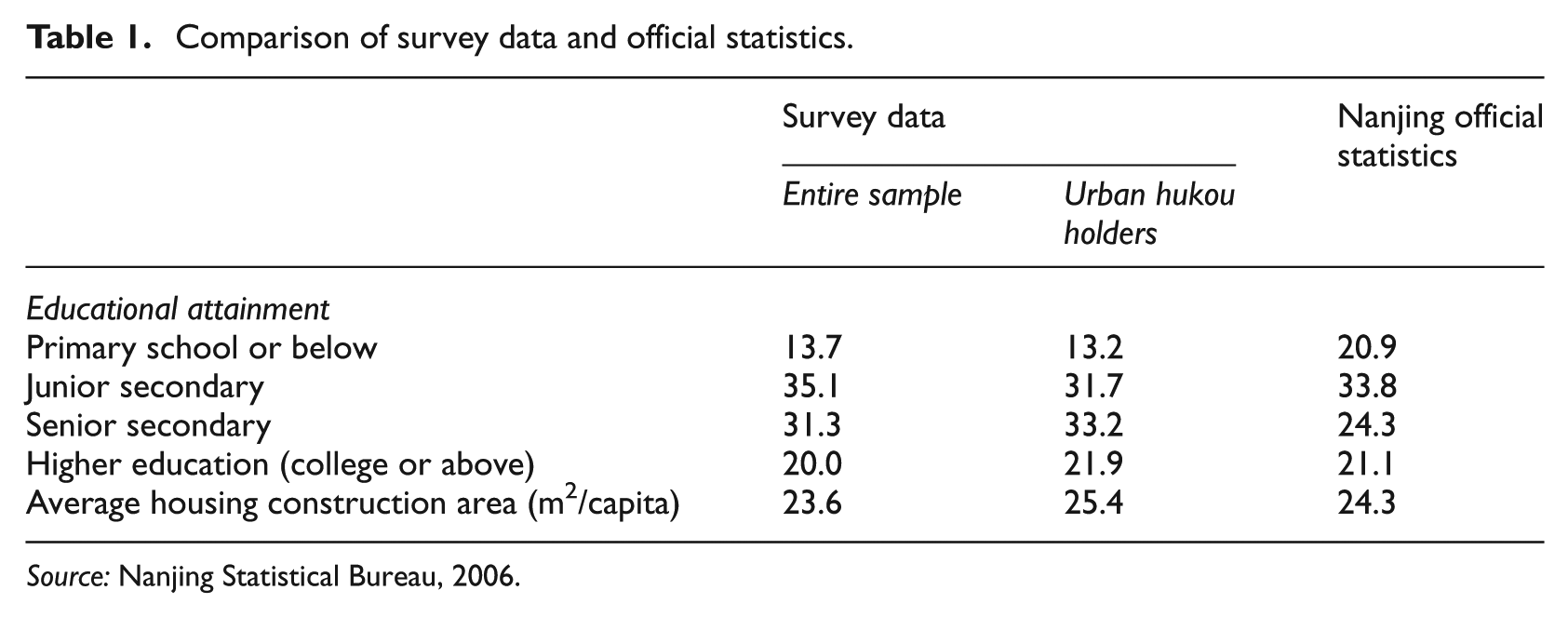
Source: Nanjing Statistical Bureau, 2006.
Furthermore, only survey respondents who reported that they lived in an area where the presence of migrant neighbours is either ‘quite high’ or ‘very high’ were asked about their intergroup neighbouring patterns. The purpose of doing so was to reduce any biased interpretation caused by lack of migrant presence. Unfortunately, the drawback is that only neighbourhoods with considerable migrant density were assessed in their intergroup neighbouring activities. Nevertheless, we believe that the results can provide some useful insights as it still addresses the majority of migrants living in Nanjing.
Working definition of neighbouring and migrant status
Two variables were chosen to represent general neighbouring activities where we asked respondents how often their household visited their neighbours (without regards for their hukou status) and how often they helped or received help from neighbours. We did not clearly define what could be considered as helping, although during the survey, examples such as helping neighbours take care of or pick up children were stated. In terms of intergroup neighbouring, we chose two variables as indicators. Firstly, we asked local and migrant respondents how often their household communicated and helped (or received help) from their counterparts. In order to establish an easier benchmark for comparing the intergroup neighbouring patterns of locals and migrants, the two questions were then combined into one. For all neighbouring questions, respondents could choose from five answers: frequently, sometimes, seldom, never or not applicable. The final model collapsed the categories of ‘never’ and ‘n/a’ due to low representation of the latter.
The definition of migrant status was based on the respondent’s hukou status being either ‘local hukou’ or ‘non-local hukou’ and did not differentiate between urban or rural migrant status. This is a shortcoming of our household survey. In theory, the distinction between rural migrants and urban migrants (migrants from other cities) should be significant. 1 Urban migrants are a cohort of ‘elite’ migrants (Fan, 2002), whose migration is often channelled through formal processes of job relocation or official hukou alternation. Through the increasing length of residence, they are more likely to be integrated into the cities, similar to other urban residents who came earlier from other cities. The survey does not explicitly record whether the migrants are from urban or rural areas, although the geographical locations of their hometowns (the names) were recorded. In theory, it is possible to infer their urban and rural status. However, it is still not easy to distinguish between their ‘urban’ and ‘rural’ status, because some might come from smaller towns in the counties. Although officially non-agricultural population is classified as urban in the designated towns, their difference with other rural migrants is not significant. In terms of the actual survey, the majority was drawn from rural migrants, partially because the size of urban elite migrants is small, as Nanjing is not a city that easily attracts ‘migrants’ from large cities such as Shanghai and Beijing. The chance of enumerating such a case was minimal. Moreover, the interviewees were asked to answer a series of questions about the relationship with ‘fellow countryside man’ (laoxiang), which elite migrants would find difficult to answer. In practice these questions were easily answered, indicating that the survey was recording rural migrants and that it did not enumerate the urban elite migrants (including those overseas returnees). Consequently, we believe that this will not significantly impede on this study’s main research objective, which is to understand whether there is a need to differentiate between general and intergroup neighbouring in an ethnically homogeneous society.
Demographic profile of survey respondents
The survey shows that most household heads are married and only 5% are not married. A comparison of the age groups between locals and migrants reveals that migrant household heads (40 years) are considerably younger than locals (50 years). Moreover, migrant household heads have lower education levels compared to local family heads. Overall, the general education level of all survey respondents is low and only a small portion of locals and migrants achieve a post-secondary degree. The effect of lower level of education is also reflected in other socio-economic attributes. The income level of 80% of migrant households is below 2000 Yuan per month whilst a significant share of local households is also within this bracket. Although the income level may not differ too much, local residents enjoy better work related benefits since around 40% of local residents are employed by the state or working in state owned enterprises. In comparison, a majority of migrant households are self-employed, mostly in the informal sector, or owners of private companies such as small businesses. Despite less favourable working conditions, only 5% of migrants are unemployed, which is only a third of local respondents’ unemployment rate. The high unemployment rate for the locals reflects that the city of Nanjing still suffered from economic restructuring in the mid-2000s.
The housing conditions are also remarkably different between migrants and locals. With respect to length of residence, migrants on average have lived seven years in the same address whilst locals amount to 17 years. Additionally, whilst most migrants are renting, the majority of local households own their property. More than half of the migrant respondents live in traditional courtyard housing or informal settlements although a sizeable share (22.3%) also live in commodity housing. In comparison a large percentage of local respondents live in commodity housing and work unit housing, suggesting less informality and better maintained housing conditions. Nonetheless still 16% of locals live in courtyard housing implying that there is a considerable number of local hukou residents who cannot afford to move to better quality housing. With regards to housing age, both groups are very similar with around 30% living in properties built in the 1990s followed by 1980s (migrants 22.2%; locals 26.6%) and year 2000 or after (migrants 20.2%; locals 12.2%).
Results and findings
A comparison of neighbouring activities of locals and migrants in different neighbourhood settings
When it comes to socially interacting with neighbours, hukou status does not seem to play an important role. The neighbouring patterns of locals and non-locals are almost identical and the evidence suggests that neighbouring is widely practised amongst the survey respondents (Table 2).
Frequency of neighbouring.
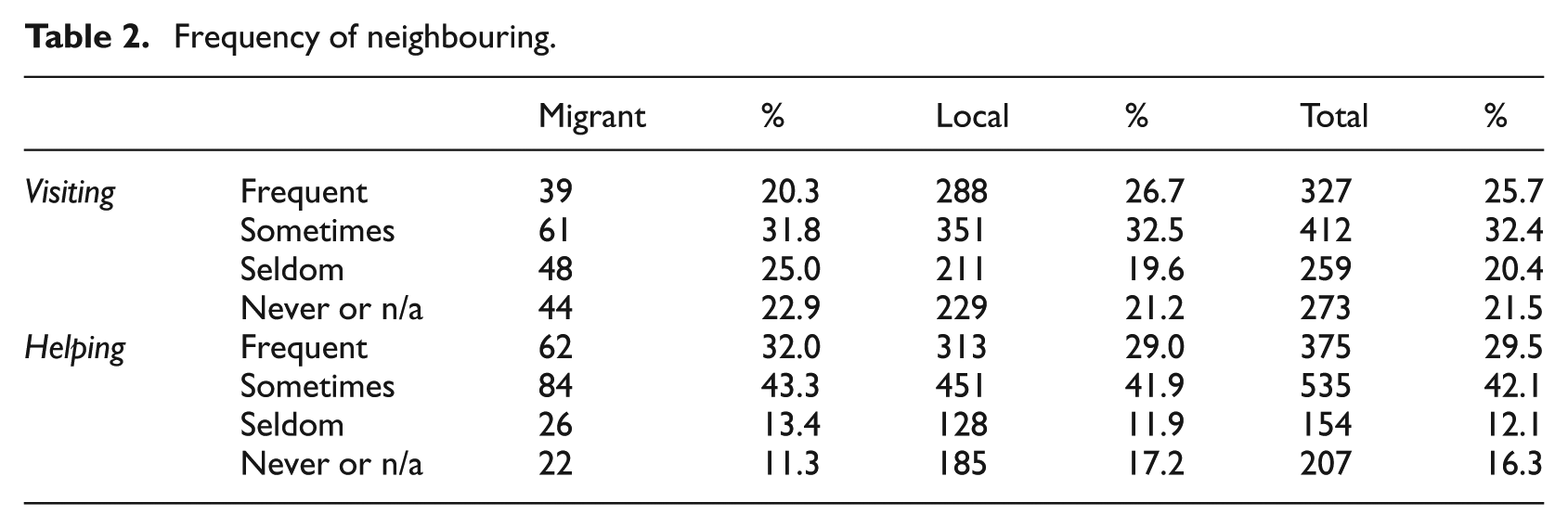
Table 3 shows the frequency of neighbouring activities across different housing types. It is necessary to note that the neighbourhood sampling of our survey was conducted at the lowest level of residential blocks, which are usually homogeneous in terms of housing type and age. Thus the housing type here also refers to the immediate neighbourhood housing type. Our finding suggests that against the common belief that neighbouring has largely vanished from our daily lives; it is in fact the opposite. Across all forms of housing types investigated, almost 70% of residents are engaged with their neighbours whereby nearly 50% state that they do it on a regular basis. Ranked at the top are villas closely followed by courtyard housing as almost 80% of the residents in these housing forms help and communicate with their neighbours on a regular basis. Whilst villas are recent developments built to very high physical standard and priced significantly higher than courtyard houses, which are often characterised by old building age and poor housing conditions, their residents display remarkably similar neighbouring patterns. This result suggests that neighbourhoods with low storey housing have more frequent social interactions due to the provision of shared spaces where residents have more chances to meet and chat with each other. Villas are often equipped with gardens and green spaces where residents have the chance to interact with neighbours and in courtyard housing neighbourhoods certain facilities are often located outside (i.e. water taps) and due to the proximity of buildings residents are more exposed to their neighbours.
Frequency of neighbouring by housing type.

Surprisingly, even commodity housing residents are still considerably well connected in the locality. Although compared to other forms of housing, commodity housing has the lowest level of neighbourhood social interaction, still more than half of the residents are regularly neighbouring. This implies that although the primary concerns of commodity housing residents are comfort and safety, they are not entirely opposed to neighbouring but instead are selective in respect to whom they interact with. Indeed, studies only found that gated neighbourhood residents are unwilling to communicate with outsiders deemed as of ‘inferior quality’ such as migrants (Pow, 2007), but little evidence to date suggests that they do not interact with neighbours, who can afford to live in the same neighbourhood.
Evidence so far indicates that local social interaction is not restricted to the poor and marginalised groups but, in fact, provided with the necessary opportunities, all spectrums of the society are willing to interact locally. However, this changes quite dramatically when we look at neighbouring with someone who is of a different hukou status than oneself.
Determinants of intergroup communication
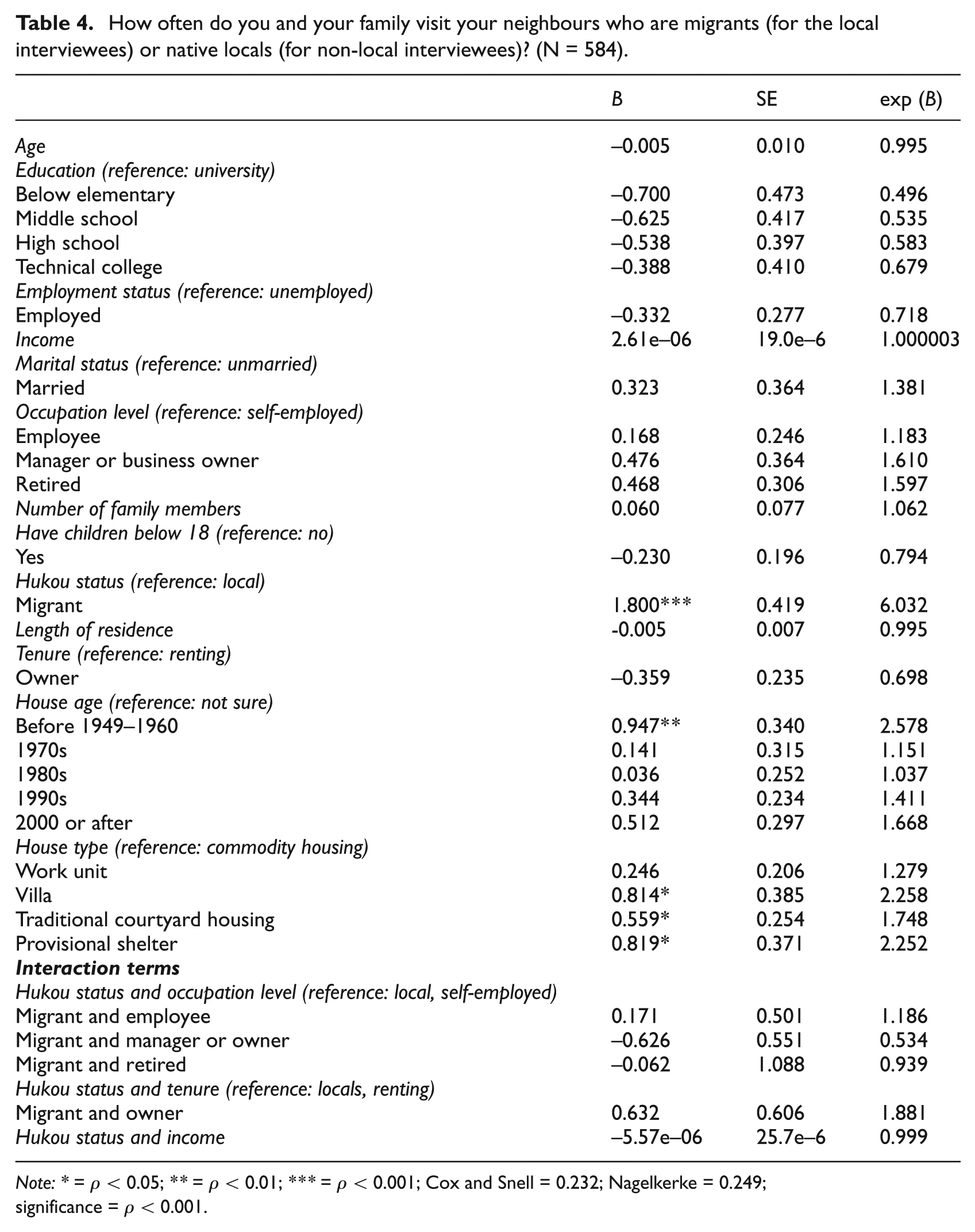
An ordered logistic regression model was used to analyse the determinants of intergroup communication and support as the outcome variables of the data are ordinal (Fullerton, 2009). Moreover, we have conducted a multinomial logistic regression to cross validate the robustness of the models and included four interaction terms between hukou status, education level, occupation level, income and tenure. The difference in terms of the socioeconomic status between migrants and locals gives rise to the assumption that migrants and locals may have different reasons for choosing to interact with their counterparts. The results of intergroup communication can be found in Table 4.
How often do you and your family visit your neighbours who are migrants (for the local interviewees) or native locals (for non-local interviewees)? (N = 584).
Note: * = ρ < 0.05; ** = ρ < 0.01; *** = ρ < 0.001; Cox and Snell = 0.232; Nagelkerke = 0.249; significance = ρ < 0.001.
In stark contrast with the general neighbouring analysis outcomes and previous neighbourhood studies (Buonfino and Hilder, 2006), intergroup communication has far fewer determinants and does not appear to be bound by any socio-economic or demographic characteristics. Moreover, previously significant drivers of neighbouring such as length of residency or having underage children in the household do not have the same positive effect on intergroup neighbouring. Instead, a resident’s hukou status exerts the strongest influence on how often Nanjing natives and migrants communicate with each other.
The model reveals that migrant residents are 1.8 times more likely to communicate with a local then the other way around. A key reason for this disproportionate outcome is due to the existing stigma attached to migrants since migrant workers in China are often associated with crime, poor education and other forms of prejudices (Wang et al., 2010). Media coverage of crime ridden migrant enclaves further solidifies the stigma and locals are thus discouraged from having any interactions with migrants. Indeed, one of the key problems facing contemporary urban China is that migrants still face difficulties in being fully accepted by their local counterparts. Aside from stigmatisation, locals often do not communicate with migrants as many come from rural areas and thus have very different behaviours and lifestyle patterns. This indicates that local hukou residents are much more likely to have in-group social relations and due to poor perception of migrants often withdraw from out-group communications.
Apart from hukou status, both housing age and housing type also have significant effects on how often its residents communicate with out-group members. Residents living in properties that were built from before 1949 to the 1960s are much more likely to interact with out-group members. We speculate that practices of neighbourly contacts are much more embedded in older neighbourhoods and that residents are thus well accustomed to frequent communication. This result also conforms to the findings of Forrest and Yip (2007) and King (2013) that older neighbourhoods have more established community ties, which in China’s case largely owes to the work-unit based system introduced in the Mao era. Furthermore, due to their cheaper accommodation costs older neighbourhoods are also the first destination for newly arrived migrants who are more eager to quickly establish social networks in the host society.
In addition to housing age, the type of housing also plays an important role in determining the frequency of intergroup neighbouring. Compared to commodity housing neighbourhoods, residents living in traditional courtyards and provisional shelters as well as villas are significantly related with higher levels of intergroup neighbouring. The reasons why traditional courtyards and provisional shelters are significant may be because the physical environment of both types of housing is characterised by many shared outdoor facilities. The survey data show that the lack of internal living space required many residents to complete a majority of everyday chores outside their property (i.e. laundry, food preparation, etc.). Almost 45% of courtyard housing and around 77% of provisional shelters have a living space of under 10 m2 per person and only 35% of courtyard housing and 54.5% of provisional shelters are equipped with an in-door kitchen. This lack of space leads to increased usages of outdoor spaces and exposes residents to more encounters with neighbours. The significance of villas also supports this assumption since the availability of more green space and gardens, which are usually present in villas, also increases the chance for neighbours to encounter each other.
Determinants of intergroup support
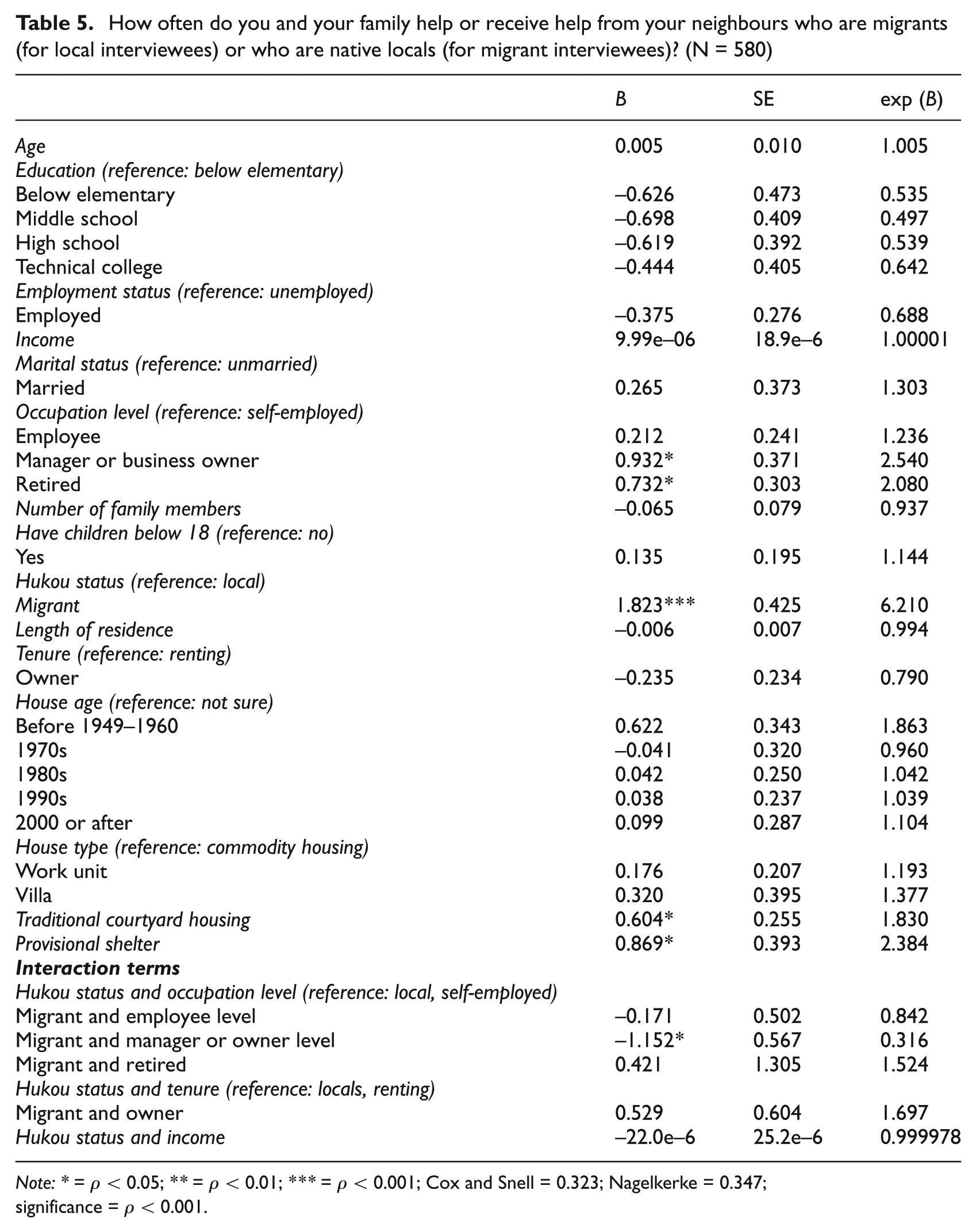
Table 5 shows the ordered logistic modelling results for the determinants of intergroup support. Similar to intergroup communication, there are only a few factors that influence the intergroup neighbouring behaviour pattern of residents. The occupation level of an individual is a determining factor whereby those who have retired and those who have climbed further up the career ladder are more likely to connect to out-group members. For retired residents it is understandable since they spend more time in the neighbourhood compared to those still working and thus may also engage more with their neighbours. Manager level residents or company owners (including small businesses) tend to have more inter-group support, suggesting that a better career prospective is related to more out-group bridging behaviour. Individuals who have acquired a higher career status may also recognise the need for diverse social relationships and are thus keener to keep a good relationship with neighbours.
How often do you and your family help or receive help from your neighbours who are migrants (for local interviewees) or who are native locals (for migrant interviewees)? (N = 580)
Note: * = ρ < 0.05; ** = ρ < 0.01; *** = ρ < 0.001; Cox and Snell = 0.323; Nagelkerke = 0.347; significance = ρ < 0.001.
Hukou status is again the strongest determinant of intergroup support whereby migrants are 1.8 times more likely to help or receive help from locals than vice versa. This asymmetric relation between migrants and locals may appear strange as migrants have disproportionately more interactions with locals despite the fact that only areas with considerable migrant presence were chosen. Based on our fieldwork experience we speculate that a small portion of local hukou residents serve as the source of local social network to a majority of migrants within a neighbourhood. We believe this assumption may be warranted since the demand for out-group social ties is different between local and non-local hukou holders, whereby out-group social ties serve a much more crucial function for migrants. This is because most migrants are aware that having social ties with locals increases one’s chances for better survival and integration into the city. For locals on the other hand, since there are no tangible benefits or losses, their motivation to interact with migrants is thus also lower. Moreover, negative stigma would further discourage locals from reaching out to migrant neighbours.
However, this survival driven motivation of migrants to establish social ties with locals is considerably lower if they are already assimilated to the city since the interaction term of hukou and occupation level shows that migrant managers or business owners are far less likely to interact with local neighbours compared to their local counterparts. This may be because migrant owners already possess a breadth of social capital across the city and do not need to rely on the support of local neighbours anymore.
Finally, traditional courtyard housing and provisional shelters are again significantly related to positive out-group interactions compared to commodity housing neighbourhoods. In addition to more shared outdoor spaces, traditional courtyards and provisional shelters also share the commonality that its residents are poorer than commodity housing residents. Consequently, they may require more localised forms of social networks and it is especially evident for residents living in provisional shelters where mutual support can be considered a vital means for survival and is practised by both locals and migrants.
Conclusion
Neighbourhood social interaction has gained significant attention in recent years in urban China due to the need to socially integrate increasingly larger numbers of migrant citizens. Whilst there are scholarly accounts of general neighbouring activities (Forrest and Yip, 2007; Liu et al., 2012; Wu, 2012; Wu and He, 2005) little is known about the neighbouring patterns between local urbanites and migrants and their underlying dynamics. This paper has examined the intergroup social interaction between local and migrant residents living in different spatial contexts using the case of Nanjing.
The analysis shows that hukou status is the single most significant determinant of neighbouring with out-group members whereby migrants are more likely to interact with locals. This is largely due to their understanding that a diverse social network can help them develop further in the host society. Especially with the limitations of the hukou system and other institutional obstacles, local urbanites represent an important source of support and information (Liu et al., 2013; Yue et al., 2013). However, despite being of the same Han ethnicity, local citizens often avoid contact with migrant neighbours owing largely to two reasons. Firstly, whilst the strong willingness of migrants to interact is partially driven by the necessity of surviving in a foreign environment, for local hukou holders there are no imminent losses or threats to their survival in the city even if they do not have any connections with migrants. Compared to migrants, the reasons of local hukou holders for interacting with migrants may be more of a benevolent and voluntary nature, which also explains why fewer locals are practising it. Secondly, the stigma attached to migrants may further discourage many local residents from having any relation with their migrant neighbours as reported by other studies such as Wu (2012) and Liu et al. (2012). This reasoning would also explain why so many traditionally important factors of general neighbouring are non-responsive to intergroup neighbouring. Whilst general neighbouring reflects one’s willingness and likelihood to invest time into one’s neighbourhood, intergroup neighbouring much more relates to one’s preferred choice of people to interact with. In other words, intergroup neighbouring can be considered much more dispensable. For instance for elderly local hukou holders, neighbourly activities form an important part of their daily life but this does not necessarily mean that they have to interact with migrants. Similarly, people who have lived longer in the area or have underage children in their household may develop closer relations with neighbours but again they can be selective about whom they want to interact with. As mentioned before, stigmatisation renders migrants a less desirable group to interact with.
Housing age and type are also significant determinants of intergroup neighbouring, whereby residents living in older and more informal forms of housing are more likely to have out-group social interaction. There are several assumptions for this outcome. Firstly, the age and type of housing here can be considered as an intermediate factor that attracts people with similar backgrounds and thus has a catalytic effect on intergroup neighbouring (Talen, 1999). The Nanjing case showed that residents living in older, traditional courtyard housing and provisional shelters have significantly more intergroup neighbouring ties compared to residents living in newly developed commodity housing. One commonality amongst residents of these older forms of housing is that they are of a lower income and socio-economic status. This would also confirm previous arguments that households constrained by their lower socio-economic status tend to have more localised social networks as a form of self-help (Logan and Spitze, 1994) and that residents of older Chinese neighbourhoods have more neighbours as friends or co-workers due to lower residential and social mobility (Forrest and Yip, 2007: 62). On the other hand, commodity-housing neighbourhoods have the least amount of intergroup neighbourly activities, confirming that the prioritisation of privacy, security and comfort (Zhu et al., 2011) lead to more local social isolation. In addition to the notion of marginalisation and self-help, there is also evidence suggesting that the physical environment plays a significant role. Residents living in villas, traditional courtyards and provisional shelters all have a considerable amount of general and intergroup neighbouring activities, despite their socio-economic differences. One commonality between these housing forms is the provision of shared and semi-public spaces that increase the chance for interaction (Bramley et al., 2009). Whilst residents living in courtyard housing and shelters are more exposed to their neighbours due to shortage of space, residents in villas enjoy the availability of individual gardens where they can converse with neighbours over their garden fences. In comparison, commodity housing and work-unit housing have considerably fewer general and intergroup neighbourly activities as both forms often comprise of multi-storey apartment complexes where residents have fewer chances for encounters.
This paper contributes to the current understanding of neighbouring activities in urban China by providing empirical evidence on the dynamics of intergroup neighbouring between migrants and locals. Our findings warrant the need to distinguish between general and intergroup neighbouring in Chinese cities, as the underlying dynamic of intergroup neighbouring is much more hukou and neighbourhood dependent. Overall, our analysis findings draw a much darker picture of the integration of migrants. Although in recent years younger migrants acquired a more diverse social network (Liu et al., 2012; Yue et al., 2013), the bridging social capital of migrants with local urban residents is still lacking due to stigmatisation and distrust. One ray of hope is the positive effect of older neighbourhoods where local residents are much more likely to interact with migrants. However, the current modernist approach of urban regeneration is likely to impede on the integration of migrants into the urban society. Many older and informal neighbourhoods such as traditional courtyards are gradually being demolished to make space for commodity neighbourhoods due to the increasing pressure for local authorities to generate revenues through land sales and the regeneration of physically deprived areas.
There are two policy implications from this study. Firstly, in terms of the design of new apartments, the focus should not be limited to privacy and comfort alone but instead also include elements of public space and shared activities that can increase the likelihood of interaction. More importantly, it is necessary to go beyond the current policy focus of simply improving working conditions of migrants and removing institutional barriers, which is useful but not sufficient. It is necessary to consider the importance of neighbourhoods in breaking the stigmatisation of migrants and fostering the bridging relations between local citizens and migrants. The study finds that contemporary Chinese urban planning policies that encourage the demolition of older and more affordable housing in fact push migrants further out of the urban society (Wu et al., 2013) and significantly impedes on their ability to acquire bridging social capital. It is necessary to combine social policies with existing urban redevelopment policies in order to ensure that migrants are able to find affordable housing and develop their bridging social capital to allow them to integrate into the cities.
Footnotes
Acknowledgements
We would like to thank the anonymous referees for their valuable comments on earlier drafts of this article.
Funding
This research is supported by the UK Economic and Social Research Council (ESRC)/Department for International Development (DFID) project (RES-167-25-0448) and the Ministry of Education of PRC project at Modern City Research Centre at East China Normal University (11JJD840015).