



Abstract
Building on insights from critical luxury studies, this paper examines how developers produce ‘luxury’ in Hong Kong’s high-priced housing by using textual analysis on a sample of newspaper advertisements for private housing from 1961 to 2011. Findings show how advertisers and developers actively injected new elements of luxury to maximise profits. We argue that Hong Kong’s property oligarchy has successfully created luxury housing in previously unremarkable locations by producing various exclusivist aspirations, thus promoting excess and reinforcing housing and socio-spatial inequalities. Our discussion deepens understanding of Hong Kong’s housing hierarchy by looking beyond location-based exclusivity and contributes to critical luxury studies by underscoring the strategies of property conglomerates in the production of luxury housing.
Introduction
According to the Demographia International Housing Affordability Survey (2018), Hong Kong has the least affordable housing market in the world. A previously clear distinction between luxury and ordinary private housing has become increasingly blurred amongst Hong Kong’s recent newly built properties. How is ‘luxury’ represented in high-priced property advertisements? How is ‘luxury’ housing with escalating prices produced in Hong Kong, including those in previously unremarkable locations? In this paper, we examine housing advertisements from 1961 to 2011 and reveal the strategies of developers in creating ‘luxury’ housing.
Advertisements are important cultural texts that can shape values and behaviours. Housing advertisements mediate what constitutes ideal/classy domestic life (Cheung and Ma, 2005), create locality and identity (Eyles, 1987; Pow and Kong, 2007), constitute consumers’ understanding of place and space (Cheng, 2001) and reproduce social and spatial differentiation (Collins and Kearns, 2008). A longitudinal study of housing advertisements can help reveal the variable representations of luxury amidst changing socio-political contexts (Walters and Carr, 2017). Yet, few studies have examined how ‘luxury’ housing advertisements reveal the changing strategies of developer conglomerates.
Using a sample of 647 newspaper advertisements for private housing from 1961 to 2011 (including a sub-sample of 73 for high-priced housing), we examine how meanings of ‘luxury’ are produced at different times, how developers create new localities for ‘luxury’ housing that sells at high prices and how modestly priced housing mimics these strategies. We find that the expressions of ‘luxury’ housing have evolved according to changing socio-political and economic contexts. We argue that developers’ creation of exclusivist and excessive ‘luxury’ representations promotes aspirations of excess and results in socio-spatial inequalities. By revealing the socially constructed and unstable nature of luxury housing in corresponding socio-political contexts over time, we are able to deepen current discussions of housing hierarchy/inequalities in Hong Kong. Moreover, by revealing the marketing strategies used in housing advertisements, we contribute to critical luxury studies by underscoring the important role of developer conglomerates in constructing ‘luxury’ housing and escalating its price.
Luxury, luxury production and housing advertisements
Luxury is often associated with the expensive, elegant (Veblen, 1970 [1899]), exotic, spectacular (Faiers, 2014) and that which is beyond necessity (Roberts and Armitage, 2016). In Western languages, ‘luxury’ is associated with ‘lust’ and ‘excess’. However, Berry (1994, 2016) argues that luxury’s nature has changed over time. Plato conceives luxury as corrupting the soul and degenerating civil society, and therefore needing to be regulated (Berry, 1994: 50). Aristotle condemns luxury for its excessive prices, wastefulness and vulgarity, saying that it endangers social virtues and should therefore be limited to serve the common good. Modern philosophers such as Hume and Barbon, however, see luxury more positively; it can help employment, cultural refinement and wellbeing and it also supports people’s sense of entitlement to aspirational incentives. Luxury is variable across time and space, rendering a coherent definition difficult (Ferguson, 1995), but it also contains some key characteristics. In this paper, we conceptualise luxury as both object and sign, materiality and representation (Appadurai, 1986). Its material aspects include physical comfort, how spectacular it is, quality, rarity, how expensive it is; and immaterial aspects include pleasure, enjoyment, exclusivity, identity confirmation, as well as the emotive and sensual elements (Berry, 1994; Walters and Carr, 2017: 296). Luxury can be individually experienced (e.g. sensual enjoyment) as well as socially enacted – connotations of social distinction are a vital aspect of luxury; it is ‘the product of wealth and the representation of its usage’ (Saglia, 2011: 874).
Recently, critical luxury scholars have remoralised the production and consumption of luxury in ethical (i.e. by fostering illusionist happiness and private pleasure at the expense of public good and inequality), social (i.e. by promoting selfishness and egocentrism) and green (i.e. by promoting wastefulness as a communal standard) aspects (Berry, 2016). These critiques sometimes target the superfluity of specific social groups (e.g. the nouveau riche), but these practices, as social symbols, also establish the communal norm (Berry, 2016: 60). Nevertheless, such ‘trickle-down effects’ cannot lead to the democratisation of luxury taste because some illusive characteristics of luxury are always evolving (Mortelmans, 2005: 516–517). Critical luxury scholars found that present-day multinational luxury conglomerates, in defining luxury via codified advertising messages and consumers’ understanding of luxury status, are ‘aligned to the authority of political and social institutions’ (Armitage and Roberts, 2016: 25). The ‘desirability of luxury commodities is not only formed in classed habitus, but also by . . . the state, media, marketing, advertising and retailing industries’ (Mansvelt et al., 2016: 90).
Scholars of luxury housing advertising analyse the relationship amongst housing representations, identity and landscape creation, concluding with three major insights. First, characteristics of luxury housing keep changing. Walters and Carr’s (2017) longitudinal study (1930–2000) of media representations of luxury in New Zealand’s second homes found that their foci changed from views and spaciousness to ‘distinction, individuality, quality, American styling’, treating conspicuous consumption as ‘anathema’ during recession times, subtle representations of privacy, and then to tasteful, smaller properties after the global financial crisis in 2007. Second, luxury housing advertising creates new localities, reinforces exclusivist housing aspirations, constitutes individual and group identities and shapes social differentiation (Cheng, 2001; Collins and Kearns, 2008; Pow and Kong, 2007; Searle, 2013). Third, studies find that Singapore’s (Hiramoto and Teo, 2015) and Hong Kong’s (Cheng, 2001) luxury housing representations have spread to mass private housing, where romanticised, Westernised, privatised, leisurely and exclusivist lifestyles are emphasised. Cheng (2001) compares advertisements for Hong Kong private housing estates in 1998 and 1999 that differ in locations, unit sizes and prices, and finds that modestly priced housing emulates high-priced housing’s representations of ideal domestic living. In short, critical luxury studies highlight luxury’s socially and culturally constructed nature, the importance of luxury in creating prestige and social differentiation and the power of conglomerates in shaping, emulating and recreating the desire for and characteristics of luxury. However, no study has yet examined the representations of luxury in the world’s most unaffordable housing market – Hong Kong. This paper builds on insights from critical luxury studies to examine how luxury is produced in Hong Kong’s high-priced housing and the implications for the housing hierarchy and social inequalities.
‘Luxury’ housing in Hong Kong
Hong Kong may not have ‘sharp socio-spatial divisions and stigmatised enclaves of poor people’ (Forrest et al., 2004: 224) but its housing hierarchy is unmistakably characterised by location and housing type (private versus public) (Forrest et al., 2004: 222–223). Hong Kong’s urban residential areas are on Hong Kong Island and Kowloon Peninsula, while the New Territories and Lantau Island are considered suburban or rural. On Hong Kong Island, because of the colonial settlement and special zoning legislation (Lai, 2011), the prestigious areas are the Peak, Mid-levels and Southern District; in Kowloon these are Kowloon Tong and Ho Man Tin. Since the 1980s, newly developed middle-class residential areas include Hong Kong Island’s Eastern District, and are also scattered throughout Kowloon and the New Territories. Housing type is certainly central to Hong Kong’s housing hierarchy, but it does not adequately capture the effects of the oligopoly of developers and the dominance of ‘luxury’ housing in the current property market. An overview of the political economy of Hong Kong housing provides the context.
The Hong Kong government’s monopoly over land supply and its heavy reliance on land-related incomes explain its high land price policy (Poon, 2011). This policy results in the government–business nexus (Goodstadt, 2005; Poon, 2011) and a win-win pro-development urban regime (Wissink et al., 2017) for both government (which receives consistent support from developers) and property conglomerates (which are guaranteed low taxation and high profits). The oligopoly of developers (e.g. Sun Hung Kai, Henderson, Cheung Kong and New World) emerged in the 1960s, when they began systematically building up landholdings. This contributed to the reduction of land supply, exacerbated by a stipulation in the Sino-British Joint Declaration in 1984 which limited land sales to 50 ha per year. The Consumer Council (1996) revealed that between 1991 and 1994, 55% of Hong Kong’s housing stock was supplied by four developers and 25% by one developer. The situation has worsened in more recent times, with three-quarters of private housing being supplied by three developers (Wissink et al., 2017). Their stock of agricultural land cheaply acquired in the past enabled them to enjoy profit margins as high as 300% in the 1990s. The higher profit yields from upscale housing have resulted in overproduction. In all but three years between 2002 and 2018, over 10% of the largest apartments were unoccupied compared with 2.3%–4.7% of the smallest ones (Rating and Valuation Department, 2019b), while the price index for private residential units has risen more than 3.7 times between 1999 and 2018 (Rating and Valuation Department, 2019a). Like luxury conglomerates, this oligopoly of developers are motivated by huge profit margins to define and manufacture ‘luxury housing’. What are their strategies and how successful are they? We address these questions by examining how developers create ‘luxury’ via codified advertising messages.
Methodology
Selecting the overall sample
Our sample is selected from private housing advertisements from four local Chinese newspapers – Wah Kiu Yat Po, Sing Tao Daily, Ming Pao and Oriental Daily – in the years 1961, 1971, 1981, 1991, 2001 and 2011, based on a sampling interval of every 13 days. These newspapers are chosen because of the history of the publications, their inclusion of residential property advertisements, popularity and readership, and availability in archives and libraries. Wah Kiu Yat Po was Hong Kong’s earliest Chinese newspaper. Sing Tao has a dedicated section for property news and market information and a weekly booklet called ‘Property King’. Between 1990 and 2016, Sing Tao, Ming Pao and Oriental were the top-ranked paid-for local newspapers in terms of readership (Guo et al., 2008: 6; Liu, 2008: 52–53; RTHK, 2016: 2). Sing Tao’s and Ming Pao’s readers are mainly middle class, while Oriental is popular amongst the working-class population (Lai, 2012: 5–7). We selected Wah Kiu Yat Po for the years 1961 and 1971, Ming Pao for 1981 and 1991, Oriental for 2001 and 2011 and Sing Tao for all six years for consistency, resulting in a total sample of 647 advertisements. If a property was advertised several times in the same year, or appeared as different versions, we treated these as distinct samples.
Operationalising ‘luxury’
Operationalising ‘luxury’ is not straightforward given its socially constructive and multiple aspects. Definitions of luxury in the housing literature, except Walters and Carr (2017), are implicit rather than explicit. Walters and Carr (2017) studied representations of second homes in magazines, such homes being beyond necessity and therefore self-evidently the epitome of luxury (Berry, 1994). As our study focuses on general private housing (second homes are extremely rare in Hong Kong), we need an operational definition to identify luxury housing advertisements. After careful consideration, we decided to focus on advertisements for high-priced housing to examine how developers represent ‘luxury’ in different historical periods. Price is a necessary but insufficient condition for luxury and does not always reliably indicate luxury status; luxury goods have to be seen and used by wider society as such for them to have luxury status (Mortelmans, 2005). While we acknowledge the limitation of using high price as a proxy for luxury status, price is undoubtedly an accurate indicator for luxury housing in Hong Kong. The Cantonese term ‘豪宅’ (hou4 zaak6 1 ) literally means ‘luxury home’ and always refers to high-priced housing in the local context. Local media use hou4 zaak6 to refer to ‘prime properties’, a term associated with high-priced units in the global property market (Apple Daily, 2019; Etnet, 2019; HK01, 2019). While using high price to select a subsample for analysis, our conceptualisation of luxury closely follows Appadurai (1986), Berry (1994) and Walters and Carr (2017) in regarding luxury as both sign and object, and as constituted by physical, emotive and sensual, and representational elements. Luxury goods rely on the presumed quality, scarcity and high cost (material aspect), the enjoyment of pleasure, desire, exclusivity and status distinction (immaterial aspect) and signs and languages to mark them as more prestigious than ordinary (and less expensive) goods (representational aspect).
Selecting the high-priced subsample
Because of data limitations, we developed two price-based criteria to select a subsample of high-priced housing from within the overall sample with which to conduct textual analysis. 2 These criteria are based on two assumptions. First, properties with high initial sale prices are intended to be perceived as luxury housing. This results in criterion one – the price (per unit or per ft2) of the property advertised must be in the top 10% of all sampled properties advertised in that year. Second, properties that are currently able to command high prices are more likely to be regarded as luxury housing. This results in criterion two – properties must have cost over HKD20,000/ft2 between May and October 2018 – when the property market reached a historical peak (Rating and Valuation Department, 2019a); HKD20,000/ft2 is around 1.5 times the average price/ft2 of residential properties during this period (i.e. HKD13,493) (Midland Realty, 2018). Seventy-three advertisements (11.3% of the total sample) fit either one of the two criteria and they form our high-priced subsample (Table 1). We do not aim at analysing ‘super-rich’ or ultra-luxury housing (Forrest et al., 2017); our threshold is considerably lower than properties aiming at the super-rich. Knight Frank Research’s (2019) The Wealth Report finds that luxury property costs around HKD33,107/ft2; ultra-luxury housing in the Peak can cost a staggering HKD300,000/ft2 (Leung, 2018). Nevertheless, we find that sampled advertisements in 2011 increasingly emphasised ultra-luxury units within luxury developments. This will be discussed in a later section.
Information on properties in the high-priced subsample a .
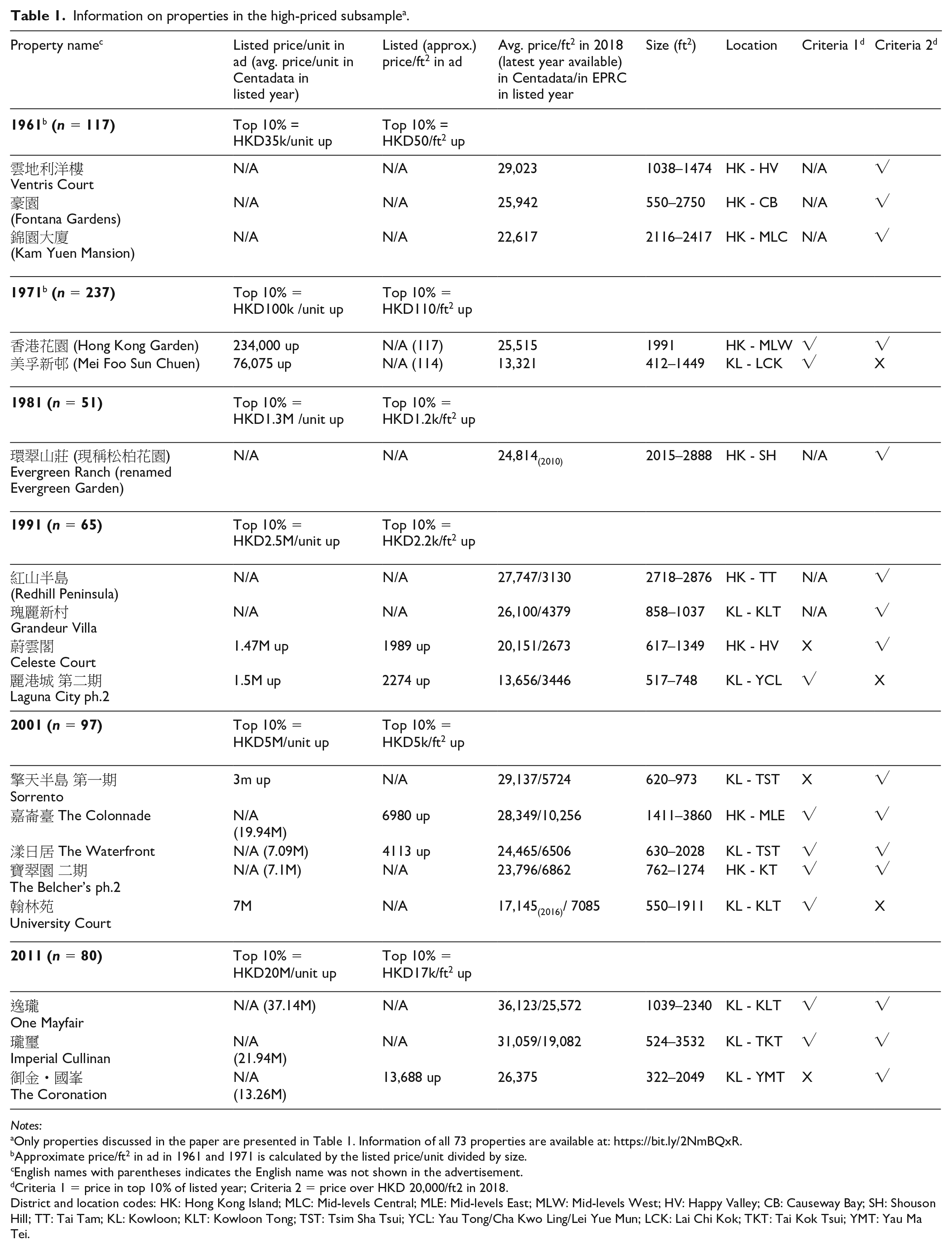
Notes:
Only properties discussed in the paper are presented in Table 1. Information of all 73 properties are available at: https://bit.ly/2NmBQxR.
Approximate price/ft2 in ad in 1961 and 1971 is calculated by the listed price/unit divided by size.
English names with parentheses indicates the English name was not shown in the advertisement.
Criteria 1 = price in top 10% of listed year; Criteria 2 = price over HKD 20,000/ft2 in 2018.
District and location codes: HK: Hong Kong Island; MLC: Mid-levels Central; MLE: Mid-levels East; MLW: Mid-levels West; HV: Happy Valley; CB: Causeway Bay; SH: Shouson Hill; TT: Tai Tam; KL: Kowloon; KLT: Kowloon Tong; TST: Tsim Sha Tsui; YCL: Yau Tong/Cha Kwo Ling/Lei Yue Mun; LCK: Lai Chi Kok; TKT: Tai Kok Tsui; YMT: Yau Ma Tei.
Textual analysis
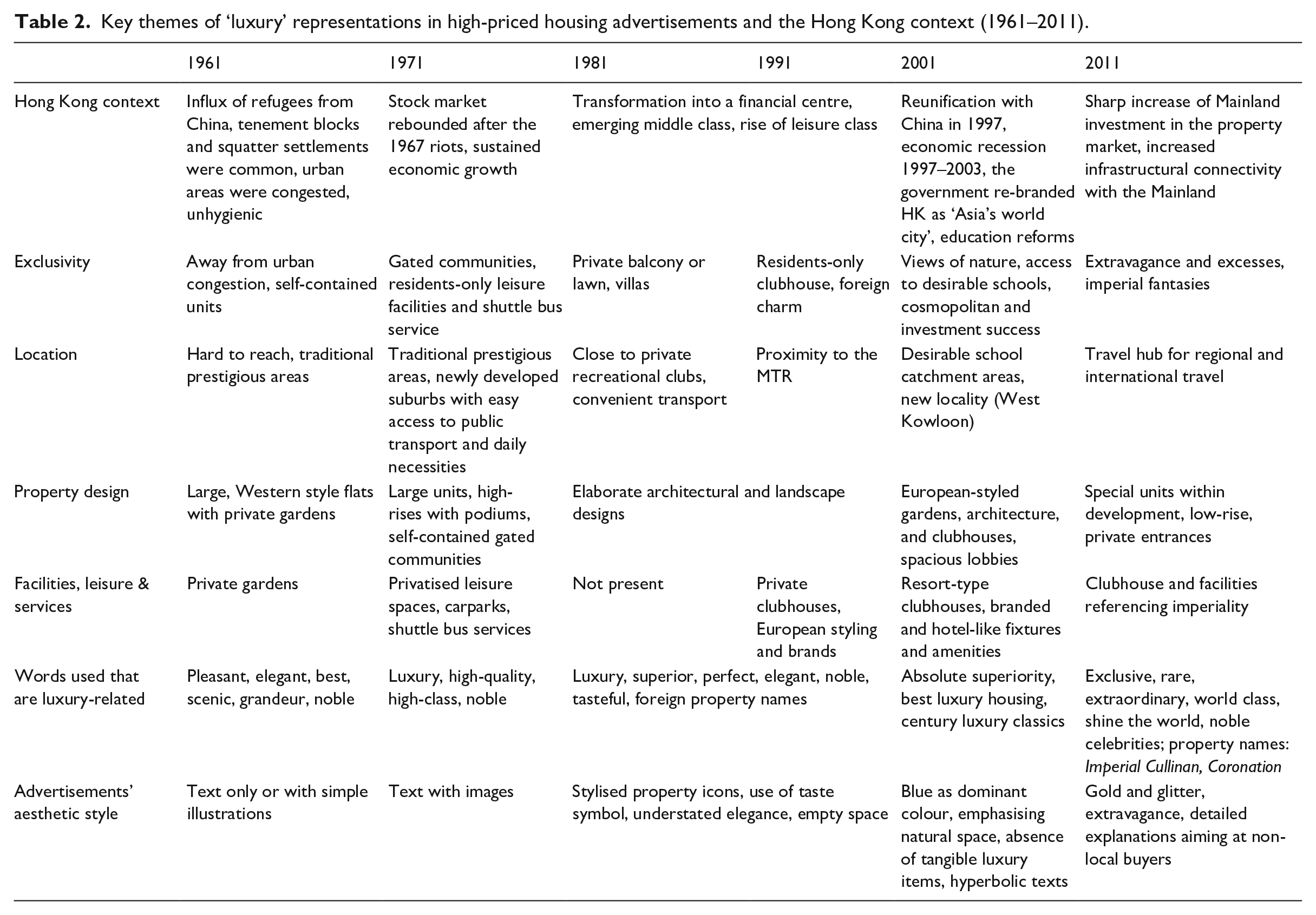
Data analysis consists of three parts. First, we closely examined each advertisement in the high-priced subsample in detail, guided by our literature review on conceptualisations of luxury. We wrote detailed notes on the textual descriptions of the material aspects, such as locations, property design (e.g. building materials, interior, mention of architect company, awards and branded appliances) and facilities and services (e.g. gardens, clubhouses and amenities), as well as representations of the immaterial, including exclusivity, status distinction and desire. We closely examined language of luxury (e.g. ‘elegant’, ‘noble’) and recorded the advertisements’ aesthetic styles, including layout, compositions, use of empty space, colour and mise-en-scene, and models’ costumes, expressions and posture. Extensive and detailed notes were made on the visual representation of the property, such as property appearances (e.g. featuring of podiums, use of ground floor as shops or otherwise, colours, reflective surfaces, style), surroundings (e.g. featuring of roads, relations with other buildings, private vehicles or public transport outside) and perspective portrayed. When reading the advertisements, we were conscious of the broader context and the nature of ‘luxury’ as expressed in that year. Second, we selected the three most prominent slogans in each advertisement in the subsample, based on font size, followed by positioning (higher over lower). We analysed the frequency of descriptors in these slogans for the property’s type (e.g. ‘western flats’, ‘high-rise’) and terms that are explicitly or implicitly associated with luxury (e.g. ‘exclusive’). The same treatment was used on property names. We then compared these frequently appearing terms with other qualities (material, immaterial and representational) identified in the subsample. By means of constant comparison of advertisements between different years, we developed a set of codes and themes (see Table 2). Third, we applied these codes and themes to compare the subsample with the rest of the full sample (i.e. non-high-priced housing) to identify similarities and differences, patterns and exceptions. When analysing these findings, we refer to corresponding socio-political and economic context of Hong Kong and the literature.
Key themes of ‘luxury’ representations in high-priced housing advertisements and the Hong Kong context (1961–2011).
Findings
1961: Subtle luxury, scenic landscapes and views, segregation from the masses
As refugees continued to arrive in Hong Kong because of political turmoil in China, Hong Kong’s population increased from 840,473 in 1931 to 3.1 million in 1961 (Census and Statistics Department, 1969: 13). Inadequate housing led to squatter settlements and overcrowded tenements (Smart, 2006); urban areas were congested and full of street hawkers and public hygiene was poor (Castells, 1986: 25). In 1960, most classified advertisements for housing were for sublet rooms, where tenants shared communal bathrooms and kitchens (Cheung and Ma, 2005), and ‘fixed [independent and solid] rooms with good lighting . . . and having a telephone close by’ (p. 72) were selling points. Although the government started to provide public housing in 1954, by 1961 it was still the case that less than 10% of the population were housed there (Census and Statistics Department, 1969: 173).
In 1961, most people lived in crowded, multi-household tenements (Shelton et al., 2011: 33); only the middle class could afford individual apartments and only the rich would live far from urban centres. Indeed, the 1961 subsample indicates exclusivity through locations in scenic residential areas with pleasant views. Ostentatious representations and the term ‘luxury’ itself were absent, except in Fontana Gardens, whose Chinese name ‘豪園’ literally translates as ‘Luxury Garden’ (Figure 1). 3 Words such as ‘pleasant’, ‘elegant’, ‘best’, ‘scenic’, ‘grandeur’ and ‘noble’ suggest subtle aspects of luxury. Exclusivity is evoked through representations of location, building type and views. For example, Kam Yuen Mansion (Figure 2) is described as ‘Western flats with garden’ located in ‘Hong Kong’s most scenic area’, 4 and its exact location is given in smaller font, ‘7 Old Peak Road, close to Robinson Road and behind the Botanical Garden’. It states that there are two flats per floor with separate lifts for servants. The visuals show that Kam Yuen contains several blocks, with hills behind and private gardens in front. Only private vehicles are depicted on the road. The image suggests that Kam Yuen is spacious, far from urban centres and unreachable by public transport. Although the garden is walled, the main entrance is not gated – the property remains unsegregated from the neighbourhood.
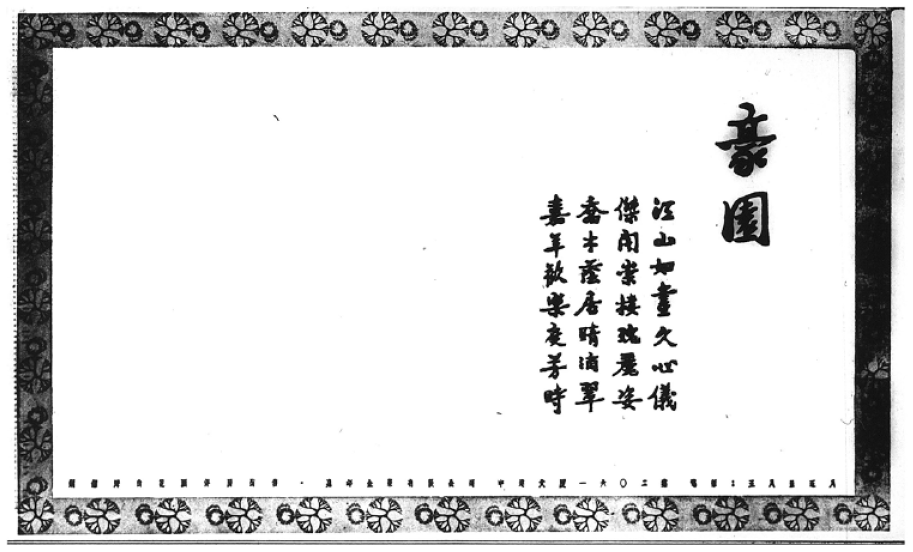
Fontana Gardens
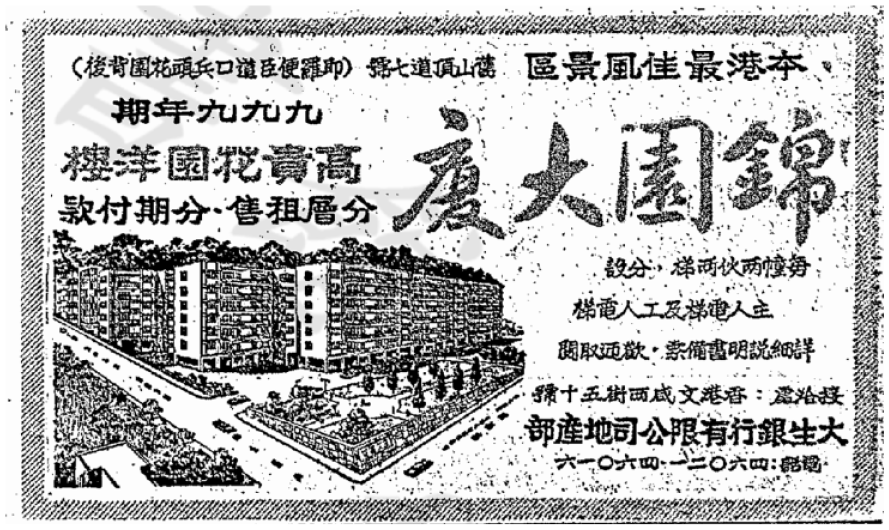
Kam Yuen Mansion
The non-high-priced housing advertisements of 1961 emphasise affordability (‘cheap’) and convenient public transport. For example, Kam Ping Mansion (Figure 3), in North Point of Hong Kong Island, imitated Kam Yuen Mansion’s name and its advertisement copy: ‘Face the sea with hills behind, beautiful landscape and scenic gardens bring you joy’; its unit price starts at HKD10,000 only. Kam Ping’s advertisement states that it is close to a cinema; the image shows shops on the ground level, with buses and private vehicles outside the property.
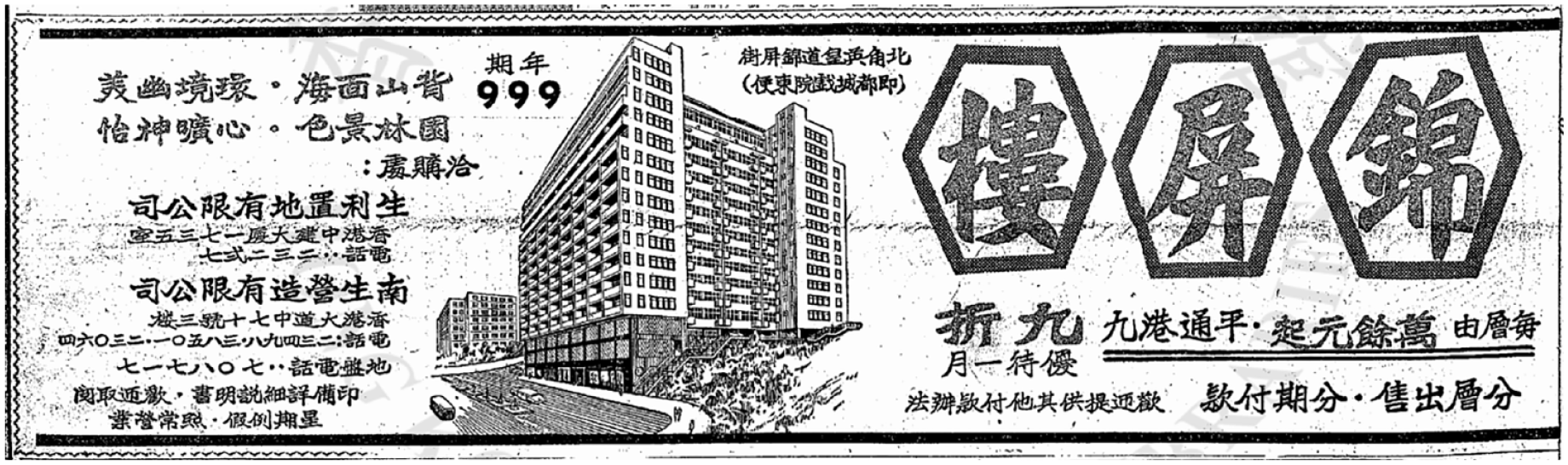
Kam Ping Mansion
1971: Modern high-rises with podiums and self-contained gated communities in new localities
Hong Kong’s stock market rebounded after the riots of 1967. The Hang Seng index rose from 58.61 in August 1967 to 1774.96 in 1973, and GDP rose from USD1.384 billion in 1961 to USD4.476 billion in 1971. Property prices also rose quickly. Square footage prices in prestigious locations such as the Mid-levels, Repulse Bay and Kowloon Tong increased from HKD60–80 in 1969 to HKD160–200 in the late 1970s (Fung, 2001: 109). Properties in the 1971 high-priced subsample are more than HKD150K/unit (HKD110/ft2). Sustained economic growth nurtured optimism and fuelled conspicuous consumption.
Advertisements in 1971 continue to emphasise high-priced housing’s purely residential locations and distance from urbanity but superlatives such as ‘luxurious high-rise’ and ‘built with the best materials’ became common. Newly appearing explicit descriptions for locations include ‘high-quality’, ‘luxury’ and ‘high-class’. Besides size (e.g. three-quarters of the 1971 subsample are at least 1000 ft2 whereas average living quarter size was 572.3 ft2 [Census and Statistics Department, 1972: 225]), ‘expansive views’ and ‘noble’ living environment, the 1971 subsample also showcased new features of exclusivity – private children’s playgrounds, residents’-only shuttle bus services and carparks, which are only useful for car owners. In 1971 only 5% of all households owned a car (Census and Statistics Department, 1972: 206).
Two property designs dominate the 1971 subsample – high-rises with podiums and self-contained gated communities. Only one-third of the properties in the 1971 subsample are over 20 storeys high but over half used a low-angle viewpoint to exaggerate stature. Hong Kong Garden’s advertisement (Figure 4) is an example. The most prominent texts in its advertisement are ‘luxury residential housing’, ‘6–8 Seymour Road’ and ‘Sun Hung Kai’ (developer’s name). The size of the units (2200 ft2) appears in bigger font. The illustration portrays the estate as big and tall with a huge elevated podium and at least five storeys of carparks. The podium separates the road from the property, raises the lower floors, provides space for private parking and leisure amenities, and restricts non-residents’ access.
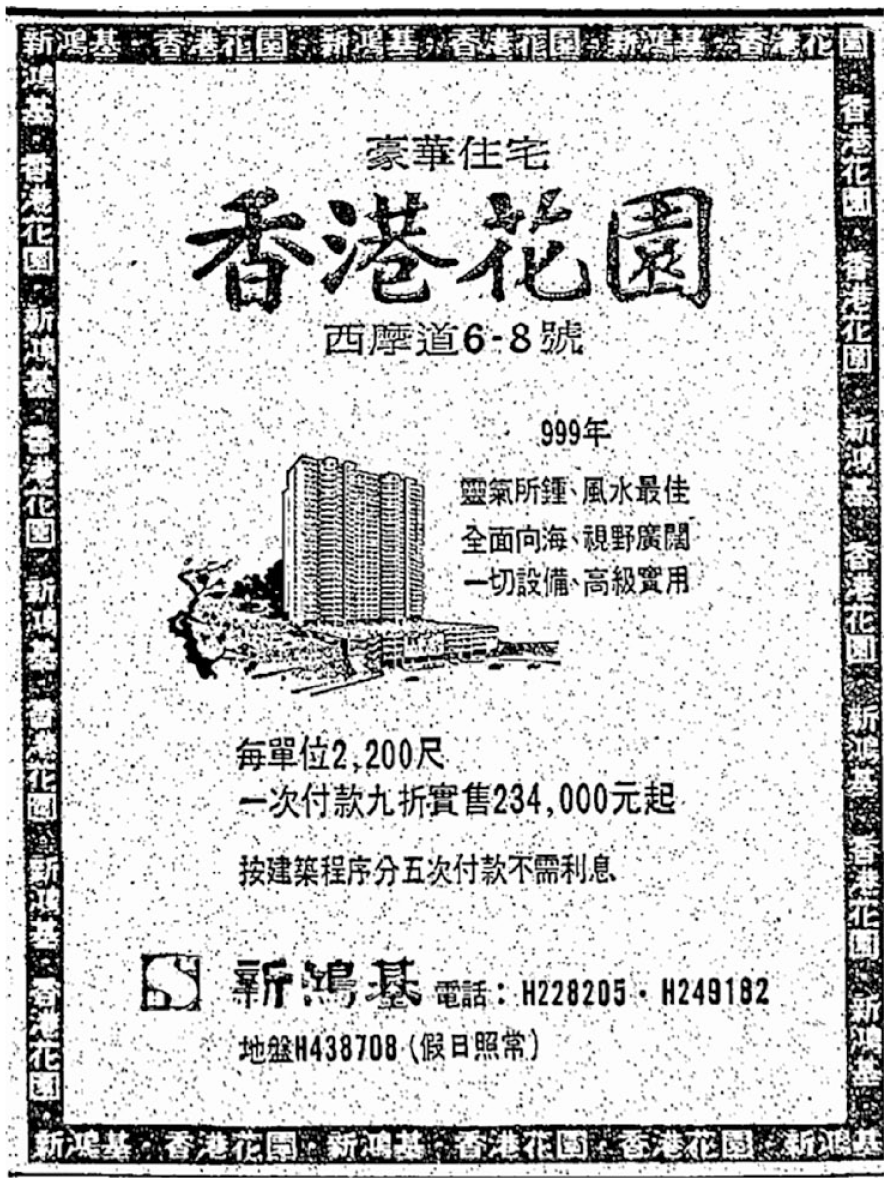
Hong Kong Garden
High-rises with podiums became symbols of modernity and prosperity in the 1970s and were no longer limited to high-priced housing. But, when ordinary housing imitates this format, important differences remain. Tak Po Building (Figure 5), for example, was sold at around HKD20,000/unit compared with over HKD100,000 for those in the high-priced subsample. It is a high-rise, but the podium is only elevated by two storeys of shops. This shop–house set-up, like traditional tenements, does not segregate housing from everyday life activities as high-priced properties do. The abandonment of this set-up and the spread of elevated podiums for private uses in later years, however, helps to normalise socio-spatial exclusivity.
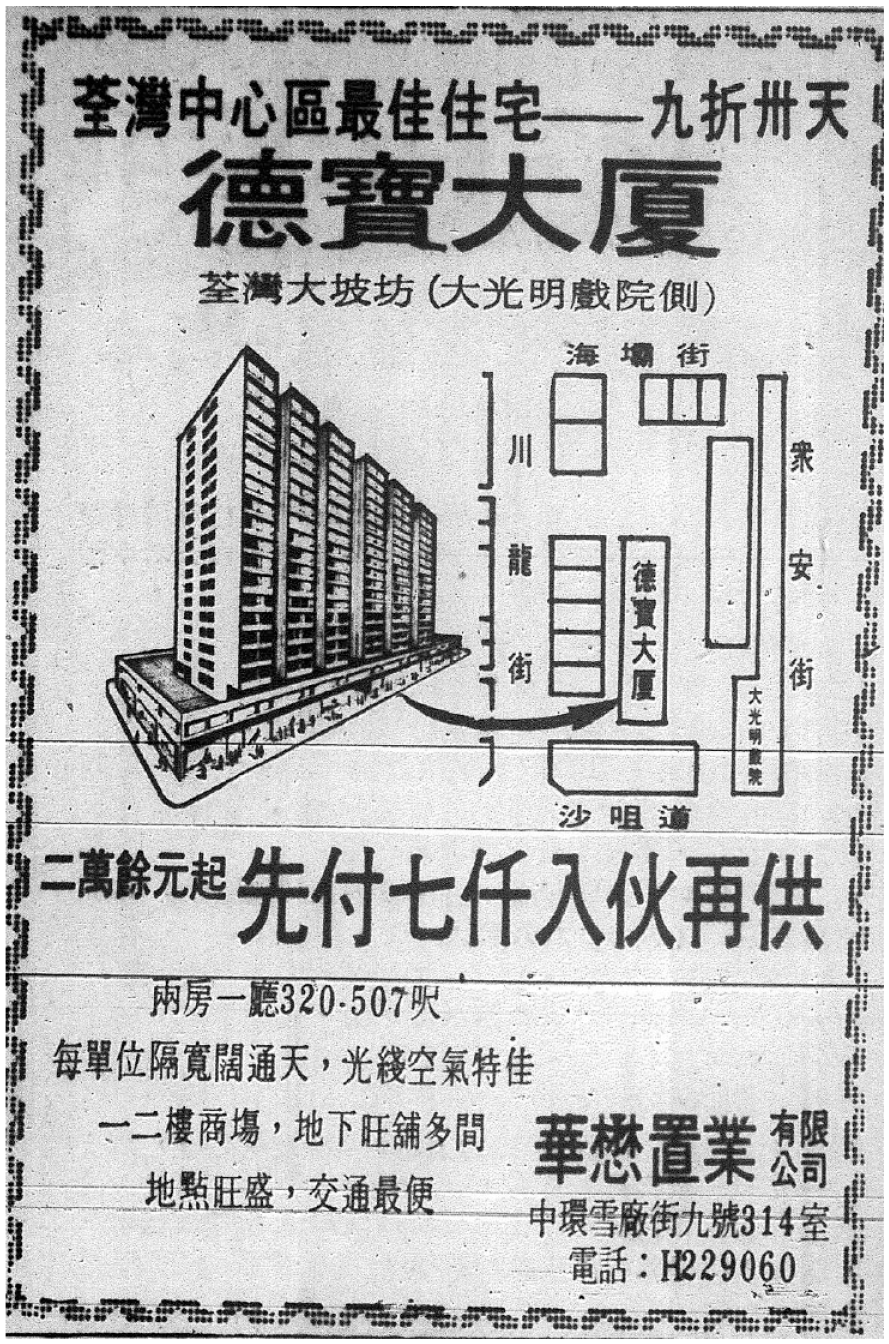
Tak Po Building
The second type of high-priced housing in 1971 is self-contained gated communities in new residential areas. Mei Foo Sun Chuen is the first of such large-scale (99 blocks) private developments built on reclaimed land, in the then-outskirts of Kowloon. To market Mei Foo as a high-priced property, the advertisements described it as a suburb with views of the sea and hills, equipped with modern facilities and management services.
There are eight advertisements for Mei Foo in 1971; we chose one (Figure 6) for a closer analysis. The text is a checklist for the ‘ideal home’: suburb with sea view and hills behind; shopping mall and fresh produce market; podium gardens; leisure amenities (cinema, bowling alley, restaurants); management services; child-friendly environment; close to schools, libraries and public transport. Mei Foo shares important exclusivities with traditional high-priced housing, especially its distance from urbanity and spacious podium gardens which provide private leisure space for residents. But Mei Foo’s targeted buyers were emerging middle classes who might not have private vehicles and servants, hence the focus is on its proximity to everyday amenities such as public transport and shopping.
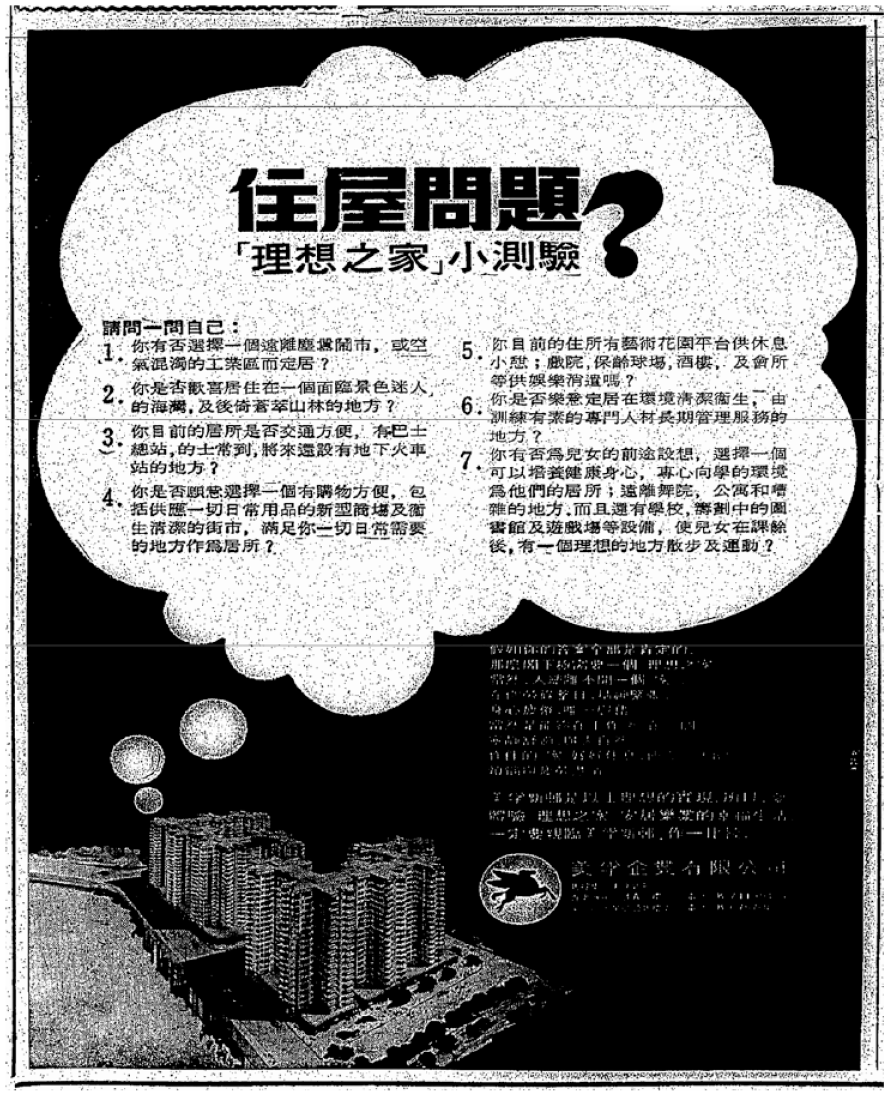
Mei Foo Sun Chuen
The strategy to produce ‘luxury’ for an emerging middle class by associating it with convenience and accessibility proved successful. In 1971, the price/ft2 of Mei Foo (HKD114) was within the top 10% of the sample, comparable with properties in traditional prestigious districts, including Hong Kong Garden (HKD117). Other mid- to high-priced large-scale housing estates soon followed this model, such as Taikoo Shing (1977–1987, 63 blocks), Telford Gardens (1980, 41 blocks), City One Shatin (1981–1987, 52 blocks) and Laguna City (1991, 38 blocks).
1981, 1991: Foreign charm, clubhouses and privatised leisure, proximity to the mass transit railway (MTR)
Hong Kong’s transformation into a financial centre began in the late 1970s. Improvements in education, expansion of tertiary industries and substantial GDP growth contributed to the rise of the leisure class (Ng, 1995) and homeownership – the mortgage rate reached a historic high in 1991 at 21% (Yip et al., 2007). China’s Open Door Policy and the Sino-British Joint Declaration of 1984 on Hong Kong’s future sustained economic growth during this period. Despite the market drop following the 1989 Tiananmen Square crackdown, the property market rebounded and prices superseded pre-Tiananmen levels by the mid-1990s (Fung, 2001: 227–229). Economic growth and expansion of the middle class during this period furthered demands for leisurely lifestyles. The restrictions on land supply stipulated in the 1984 Joint Declaration supported the oligopoly of developers, further ‘standardising’ Hong Kong housing, blurring boundaries between ‘luxury’ and ‘ordinary’ housing. Developers began injecting new representational elements in 1981 by envisioning buyers of high-priced housing as sophisticated yet pragmatic consumers who wanted both stylish leisurely experiences and proximity to mass transit as markers of social status.
Evergreen Ranch (renamed Evergreen Garden) (Figure 7) consists of individual houses in the Peak and is the epitome of luxury housing in 1981. Its main slogan, ‘this luxury housing is found in this scenic environment away from the secular world’, resembles that found in the 1961 and 1971 subsamples, but the textual emphasis on foreign charm, famous designers and exclusive private leisure spaces is a new strategy, referencing taste rather than simply experiential (e.g. views) or material aspects (e.g. carparks) of exclusivity: ‘Spanish styled exterior, white walls and colourful tiles, full of European charm . . . The garden is designed by famous landscape designers, exuding style and natural charm.’ Other advertisements in the subsamples from these two years also relied on European brands (e.g. Kohler), ‘lavish’ fixtures/appliances (e.g. hotel-styled concierge and 24-carat-gold faucets), taste symbols (e.g. well-dressed models in expensive cars, paintings/sculptures as decorations), European names (e.g. Grandeur Villa and Villa Castell) and stylised property icons to evoke foreign charm and distinction. Foreignness inserts ‘intertextual links to other places, imagined and real’, which become ‘linguistic performances of distinction and prestige’ (Jaworski and Yeung, 2010: 172–173).
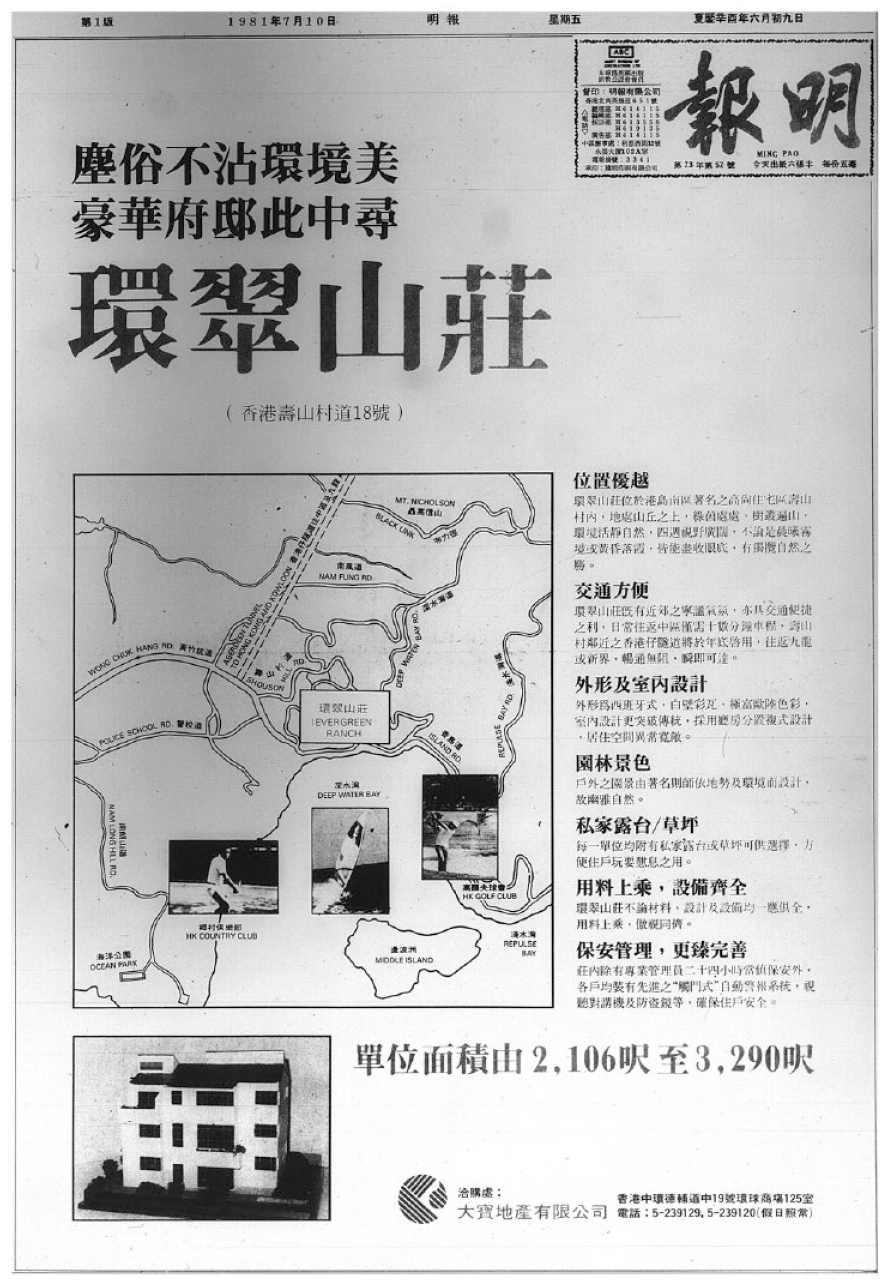
Evergreen Garden
Evergreen Ranch’s advertisement highlights its proximity to exclusive recreational clubs (the Hong Kong Golf, Country and Cricket Clubs), all of which have colonial origins. In the 1990s, developers capitalised on ‘membership exclusivity’ as a selling point by building private clubhouses within housing estates. Exclusive leisurely lifestyles became more prevalent and stylised in the 1991 subsample, and housing was commodified into a site for privatised leisure consumption – ‘luxurious’, ‘elegant and noble style’ private clubhouses associate the ‘majestic’ and ‘imposing’ properties with ‘superiority’ and ‘the most sublime status’. ‘Bon chic, bon genre’, for instance, is used in the advertisement of Redhill Peninsula (Figure 8). The main image is a swimming pool in one vanishing-point perspective, centring the clubhouse tower, portraying grandness and suggesting exclusive access. Palm trees surround the pool, with low-rises on the right, framing the clubhouse and the landscaped nature. The slogan ‘Ripples to be appreciated only by honourable individuals’ sits below the image, with concise sales information, including the property name, further below. The lower half of the advertisement is left largely empty, directing attention to the image and communicating understated elegance. In 1991, only advertisements in the high-priced subsample contain empty space.
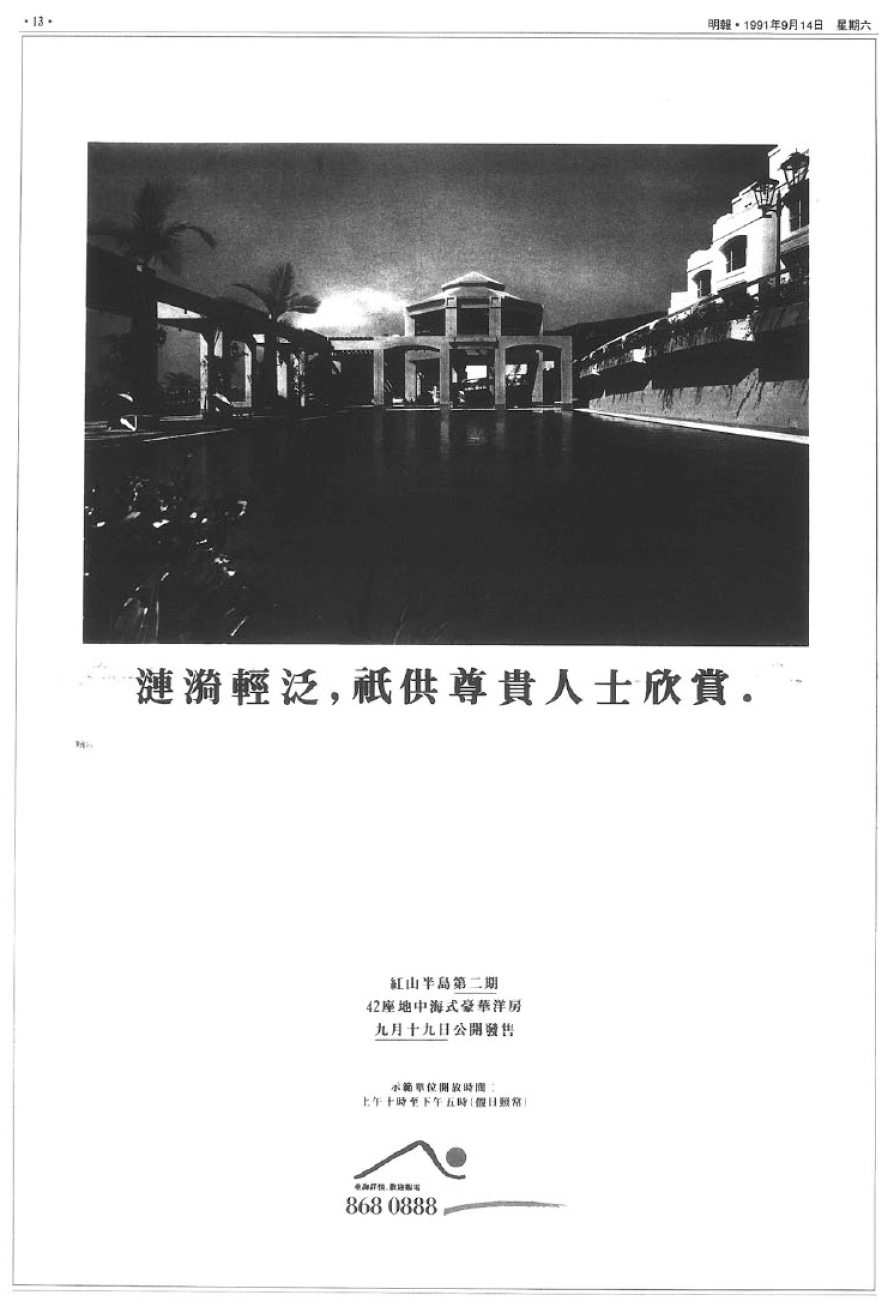
Redhill Peninsula
Another new strategy to upscale properties in the 1991 subsample is associating proximity to the MTR with prestige. Public transport has played a crucial role in improving connectivity and stimulating property prices (Cervero and Murakami, 2009). Beginning operation in 1979, the MTR has continued to expand and properties gain locational advantage by virtue of proximity to stations (He et al., 2018).
Laguna City’s 1991 advertisement (Figure 9) illustrates this new development where convenient transportation plus a privatised clubhouse signal exclusivity. The visual centres on the MTR and the text describes its 320,000 ft2 greenery park, 40,000 ft2 clubhouse with karaoke, sauna and snooker rooms, gym, swimming pools, tennis courts and more. In 1991, Laguna City’s advertised price/ft2 (HKD2724) and average transaction price/ft2 (HKD3446) were both higher than those of Celeste Court (HKD1989 and HKD2673, respectively), located in the traditionally prestigious Happy Valley district, which is not near the MTR. Judging from prices alone, developers have succeeded in creating, packaging and marketing newly built housing in industrial localities such as Kwun Tong (where Laguna is situated) as prestigious.
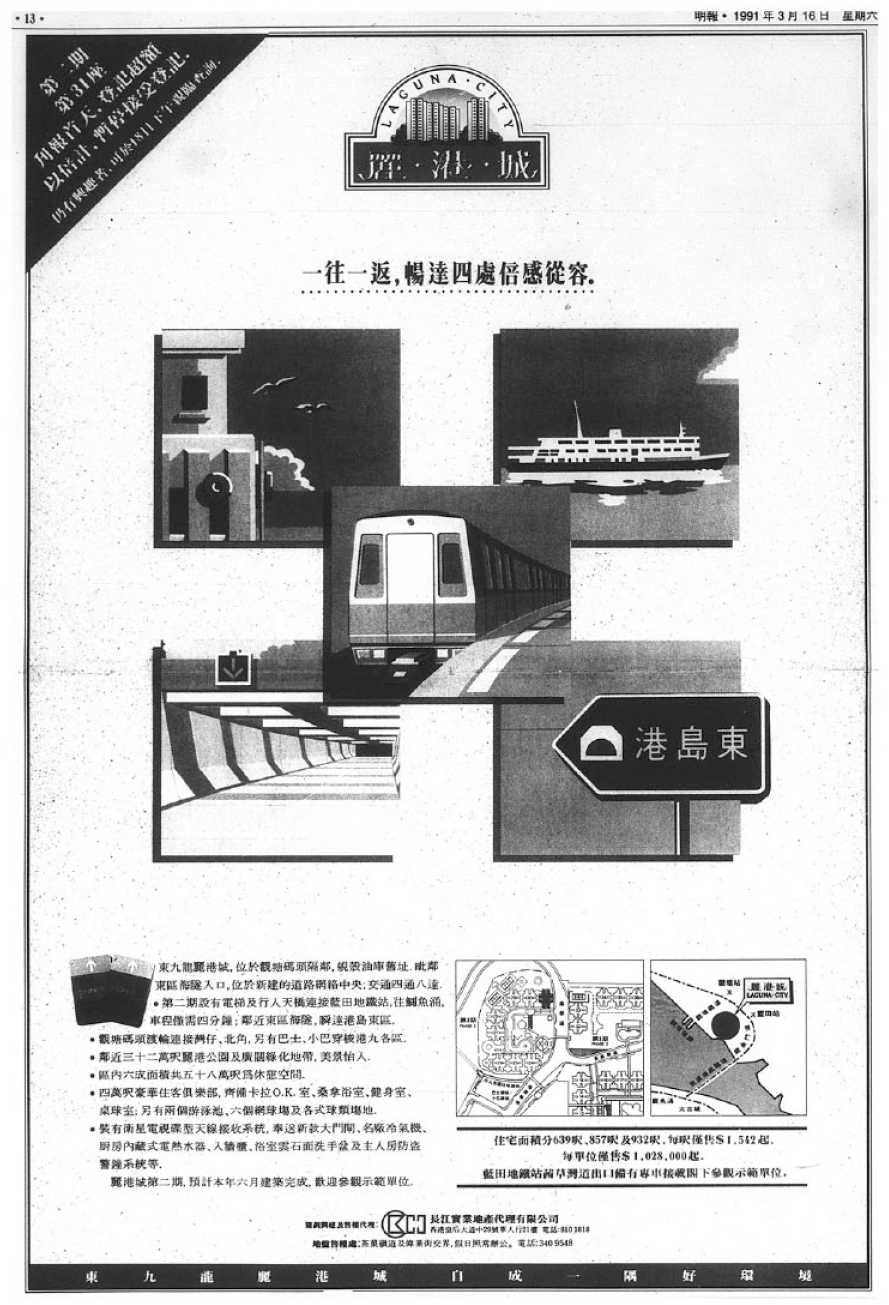
Laguna City
Numerous non-high-priced properties from 1991 have private clubhouses, including Regency Park, Miami Beach Towers, Dragon Inn Court, Sea Crest Villa, Serenity Park and Repulse Bay. But they do not refer to foreignness or designer brands. Also, they are scattered throughout the New Territories and are not near any MTR stations (Serenity Park is an exception). Distinguishable representational and actual differences between high- and non-high-priced properties still exist in the 1981 and 1991 subsamples.
2001: Aspirational superiority, school catchment areas, cosmopolitanism, regional and global connectivity
Hong Kong experienced structural political and economic changes after the handover to China in July 1997. The property market plunged during the Asian financial crisis that year, the subsequent ‘dot-com bubble’ crisis, and again in 2003 as a result of the Severe Acute Respiratory Syndrome (SARS) outbreak. In 2000, the newly established HKSAR government tried to ‘re-brand’ Hong Kong as ‘Asia’s world city’ to attract foreign and Mainland investment. Since 1997, it has also launched numerous educational reforms (Education Commission, 1999, 2001), including the mandatory use of Chinese as medium of instruction in public schools, and establishing ‘through-train’ options for elite secondary schools with feeder primary schools to be exempted from the central secondary school place allocation mechanism. These changes are reflected in the 2001 subsample.
In 2001, tangible luxury items disappeared visually and over half of the advertisements used azure blue as the dominant colour (as sky, sea, swimming pool and background), and panoramic views are common. Texts used in the copy, however, are hyperbolic: ‘Endless sea view and sky view, prominent prospect’, ‘270° views of fireworks over the harbour ‘location location location 360° absolute superiority’ and ‘advantages converge, the best of luxury housing’, etc. The language of ‘luxury’ is more prominent than in 1991: ‘European-styled gardens and architecture’, ‘Versailles-styled clubhouse’, ‘marble-top work tops’, ‘German-made Poggenpohl kitchen’ and ‘jet-steam bath and jacuzzi’, etc. Hong Kong was in the middle of a recession in 2001 and advertisements’ appeals are aspirational – offering a ‘through-train’ to educational, cosmopolitan and investment success.
The five most dominant themes in 2001 are views, clubhouses, schools, location and transport, with schools appearing for the first time. New educational policies, such as allowing limited ‘qualified’ secondary schools to retain English as the medium of instruction (EMI) and the ‘through-train’ policy, made addresses in school catchment areas with more EMI or feeder schools attractive. These policies have directly created desirable housing localities with prices to match (Jayantha and Lam, 2015), as illustrated by these aspirational slogans: ‘Just pay around HKD6000 and your children can get into the top-tier school net 41’ in University Court (Figure 10), ‘A top famous school net; through-train to success’ in The Belcher’s (Figure 11).
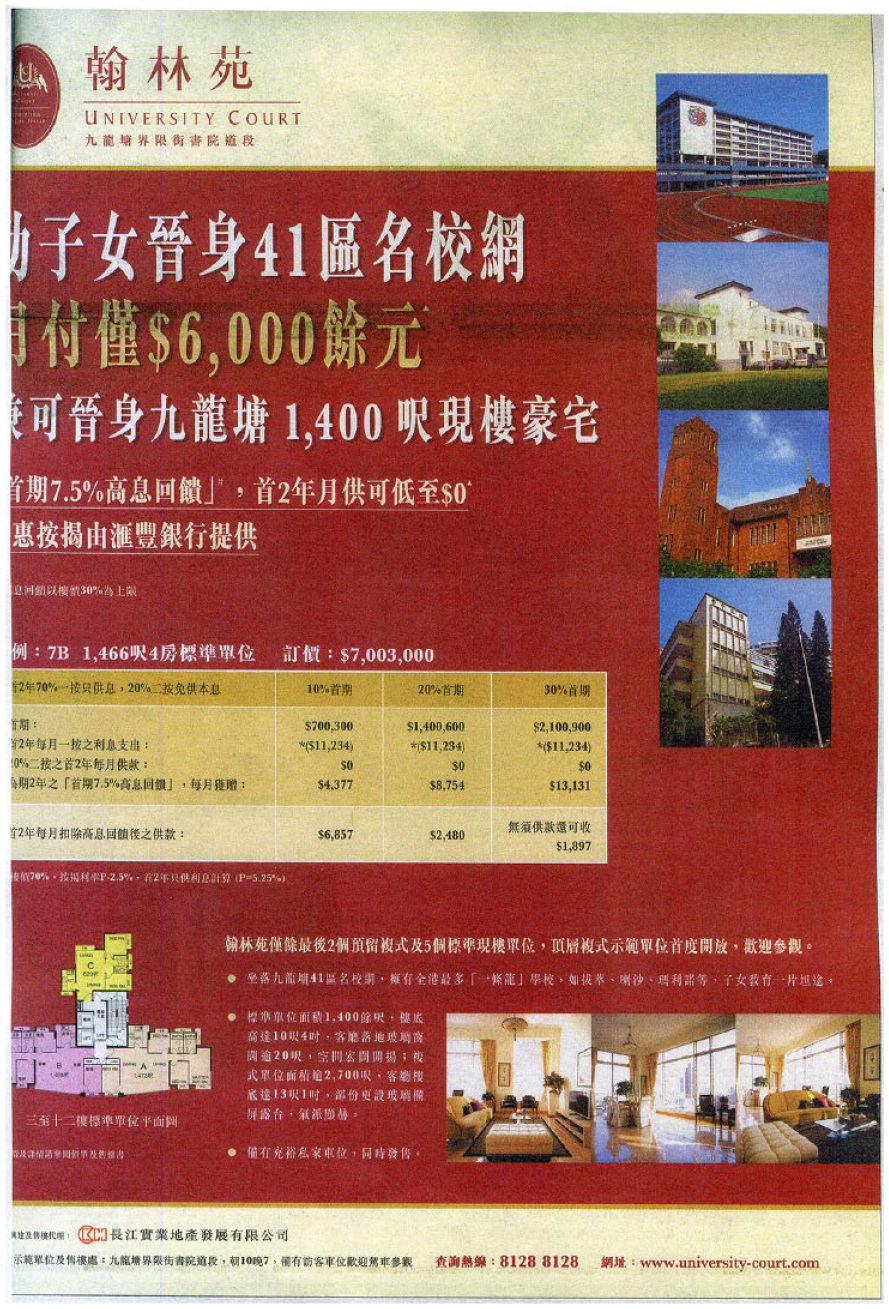
University Court
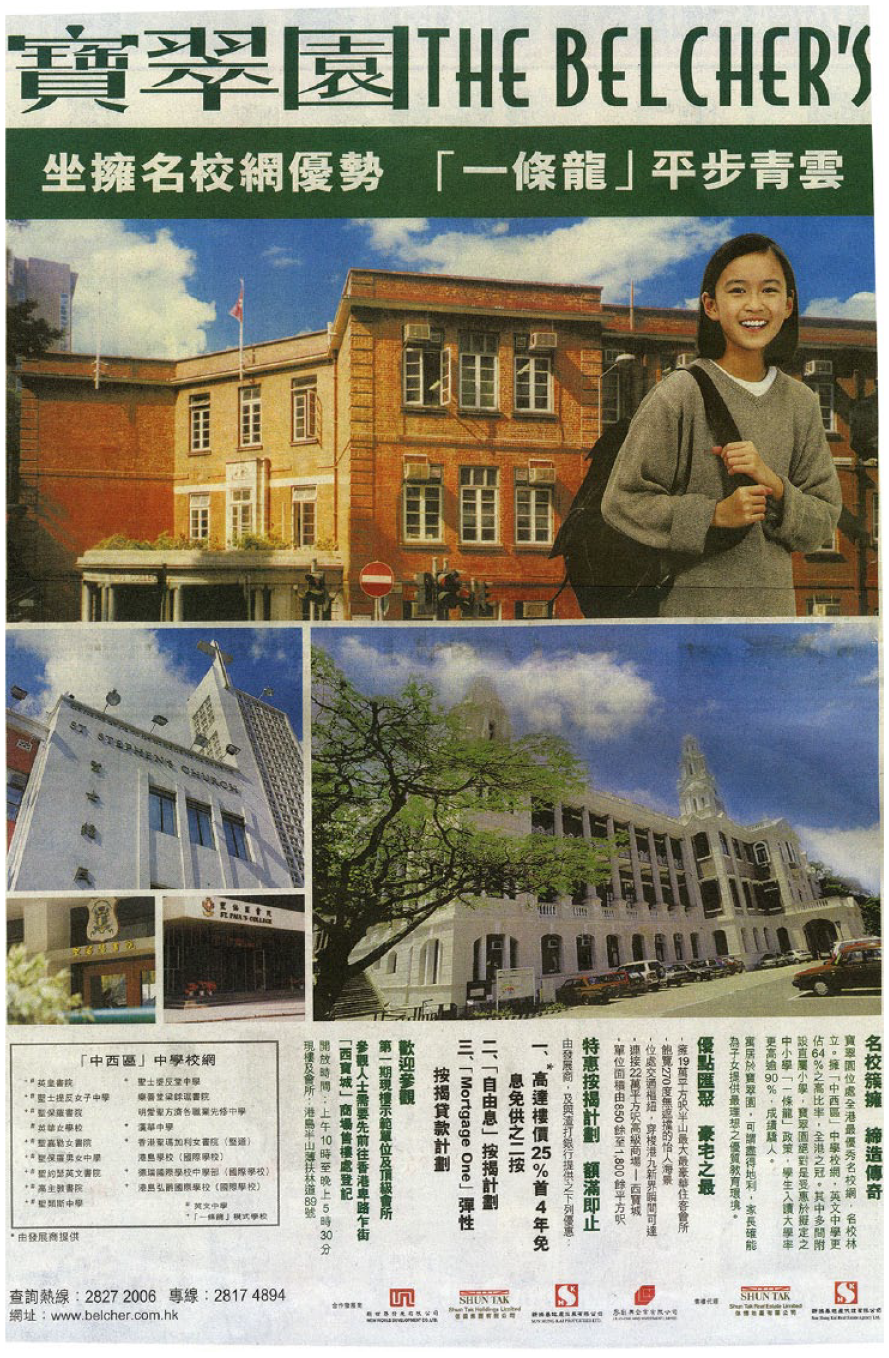
The Belcher’s
Earlier advertisements have successfully associated proximity to the MTR as a prestigious feature. In 2001, this is re-packaged as nodes to regional and global travel. As new land supply is extremely scarce, the government-led newly developed West Kowloon Reclamation area in the otherwise run-down Yau Tsim Mong District became an important opportunity for luxury property development. The site is branded as the West Kowloon Cultural District (WKCD) (Homes Affairs Bureau, 2008), with airport railway (opened in 1998) and highway links to Mainland China, office buildings, upscale hotels, malls, art and cultural centres, and of course luxury housing. The Waterfront and Sorrento are the second-phase development projects advertised in 2001.
One advertisement for The Waterfront (Figure 12) presents the WKCD as ‘prime property’ by referencing global cities. The dominant image is the iconic Victoria harbour; others are of Manhattan, Canary Wharf and Sydney Harbour. The slogan proclaims: ‘locational advantage guarantees appreciation’. Sorrento’s (Figure 13) advertisement prioritises cosmopolitan lifestyle and ‘superior location; good prospects’. The top images emphasise its convenient access to regional and global travel, featuring highways, bridges and aircraft interiors. The bottom images include a swimming pool, gym, Louis Vuitton store, housing interior and exterior. The visuals present the discourse of a global lifestyle, portraying the property as a site for the internationally privileged, where cosmopolitans can easily access Mainland China (via the High-speed Rail) and the world (via the Airport Express Railway). Non-high-priced properties imitate high-priced properties’ luxury representations by using the colour blue, sea views (e.g. Island Resort, Royal Peninsula, Park Avenue and Noble Hill), and referencing school catchment areas (Vision Court, Nelson Court and Hilary Court).
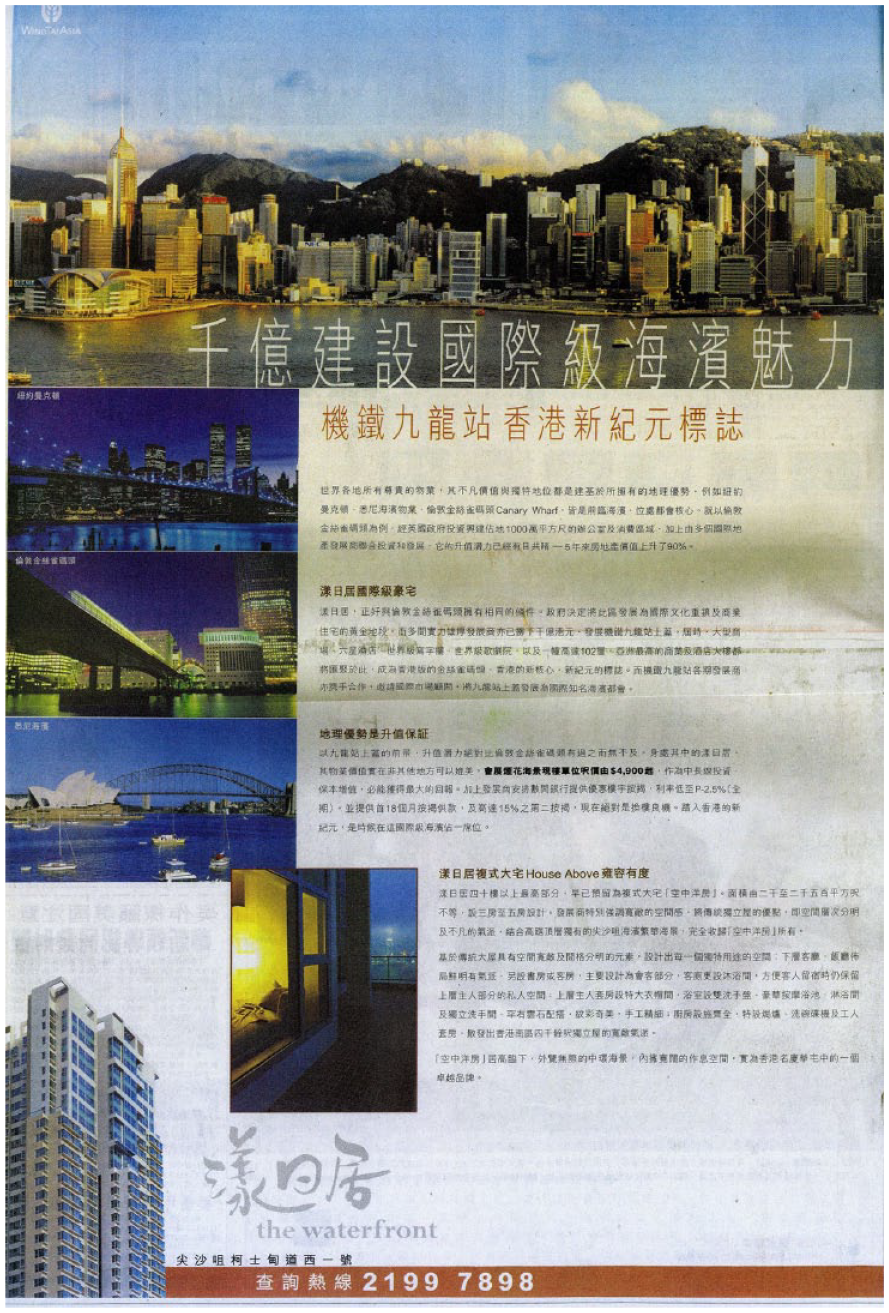
The Waterfront
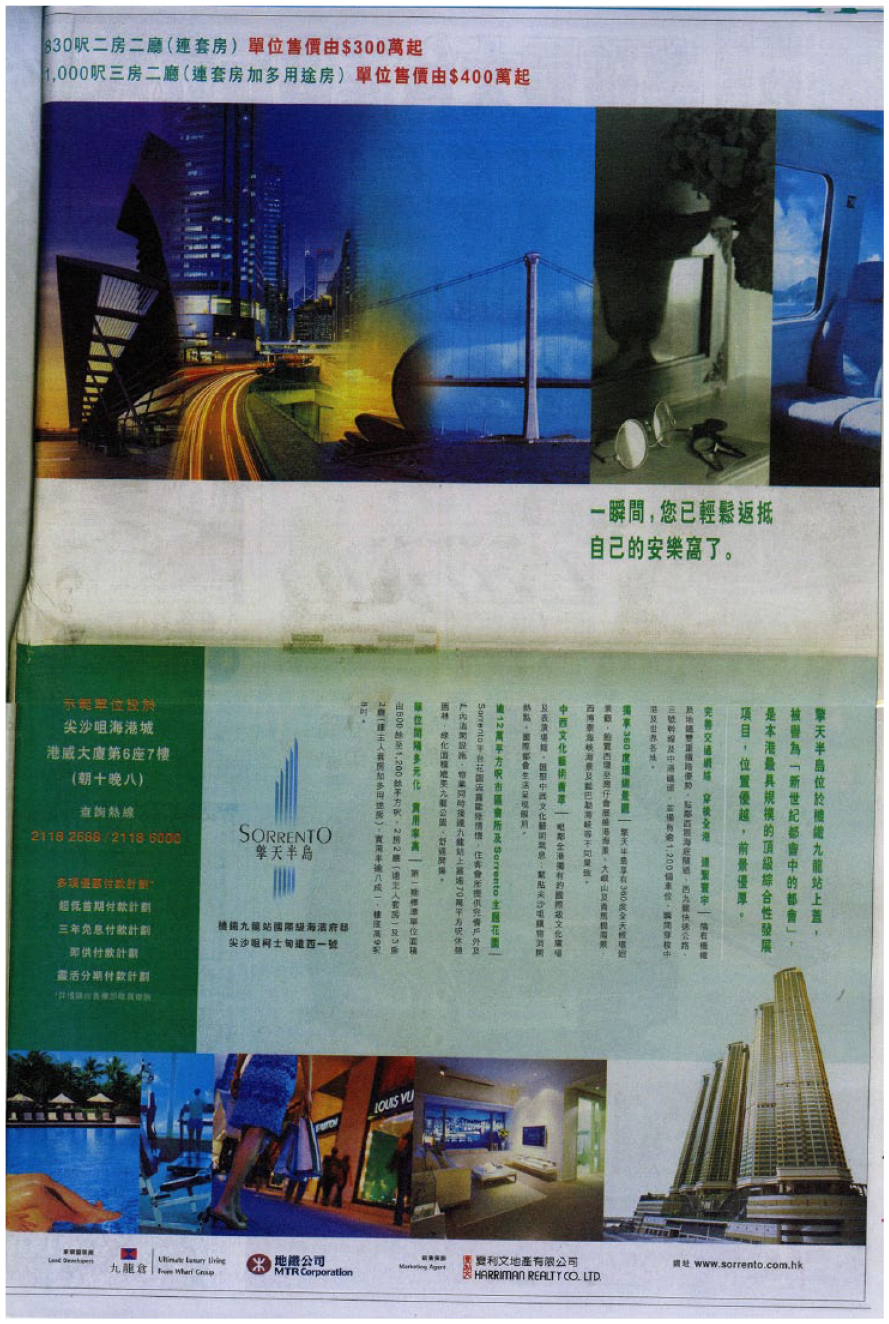
Sorrento
In 2001, Sorrento’s listed price and average first-hand sale price were both lower than Colonnade’s (located in the traditional prestigious Mid-levels East), suggesting that traditional luxury housing in prestigious areas still had an edge over those in newly developed areas. However, in 2018, the price/ft2 of Sorrento had surpassed Colonnade’s. WKCD has become the only high-priced district created after 1997 that commands prices comparable with (or higher than) traditional prestigious locations.
2011: Gold and glitter, status-conscious extravagance and ‘imperial’ power
Since the mid-2000s, Chinese investment in Hong Kong’s residential property market has increased sharply. The Closer Economic Partnership Arrangement (CEPA) was launched in 2003 to ease cross-border economic activities and the inflow of capital. In 2004, Hong Kong became the first and is currently the largest offshore renminbi (Chinese currency) investment hub. Mainland property buyers rose from constituting 8.5% of all transactions in 2008 to 28.3% in 2011; their corresponding shares in value are 10.6–36.9% (Centaline Property, 2014). This sharp increase ‘caused a shift in housing production towards the exclusive end of the market’ (Wissink et al., 2017: 246). Evocative use of languages of luxury, such as ‘exclusive’, ‘rare’, ‘extraordinary’, ‘world class’, ‘shine the world’, ‘noble celebrities’ were used to attract Mainland buyers. Advertisements use gold and imperiality to associate conspicuous housing consumption with fantasies of prestige and power.
Gold has replaced blue and gone are the white spaces of understated elegance; 2011’s sub-sample is crammed with text that elaborates interior details (such as ceiling height, 24-carat-gold kitchen and Miele appliances), lists clubhouse facilities (spa, cigar room, limousine service, etc.), and awards received (‘Great China 2011 luxury housing brand’). Texts also detail the districts and their transportation, seemingly addressing buyers who are unfamiliar with Hong Kong. Another new characteristic in 2011 is the prioritising of special units within top-end developments.
Imperial Cullinan (Figure 14) and Coronation (Figure 15) are in two traditional working-class districts (Tai Kok Tsui and Yau Ma Tei, respectively). Imperial Cullinan is near Olympic Station but its advertisement referenced WKCD instead (‘the last waterfront housing estate in West Kowloon’). Both advertisements are dominated by gold and glittery reflections. Slogans and texts for Coronation include: ‘Close to Guangzhou-Shenzhen-Hong Kong Express Rail Link (XRL) West Kowloon station; connect to China, stay close to the world’, ‘European royal and noble presence’ and ‘Golden location, golden opportunity, start from Coronation’. The emphasis on transport to China and the dominance of gold – popular in Mainland China – suggests the advertisement targets Mainland buyers. In 2011, property names (Imperial Cullinan, The Coronation, Westminster Terrace) are noticeably loaded with ‘imperial’ connotations, encouraging potential buyers to fantasise themselves as royalty or emperors, despite not being familiar with the land in which they reign. Coronation was able to maintain its high-priced status despite its modest location, selling in 2018 at around HKD26,000/ft2.
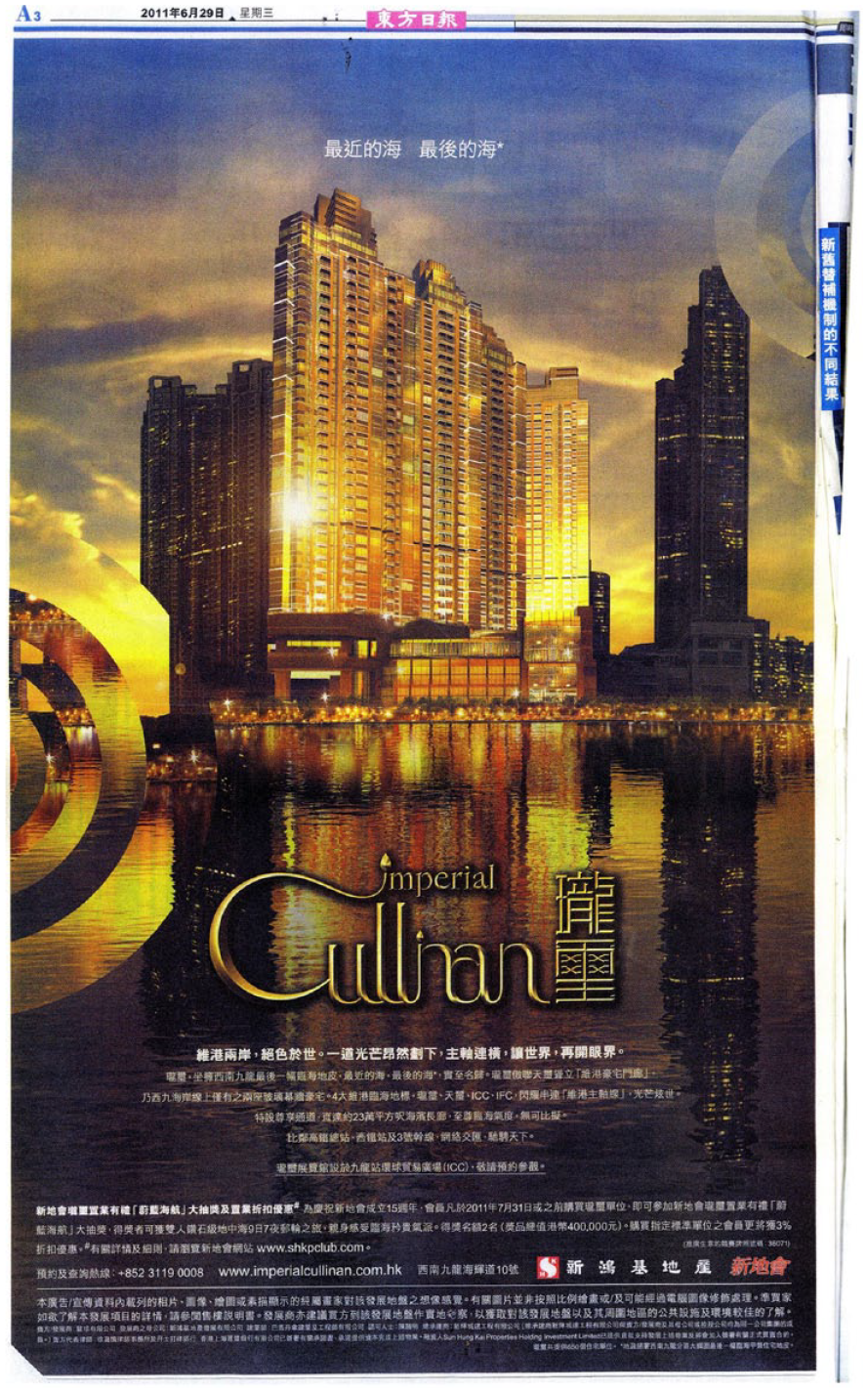
Imperial Cullinan
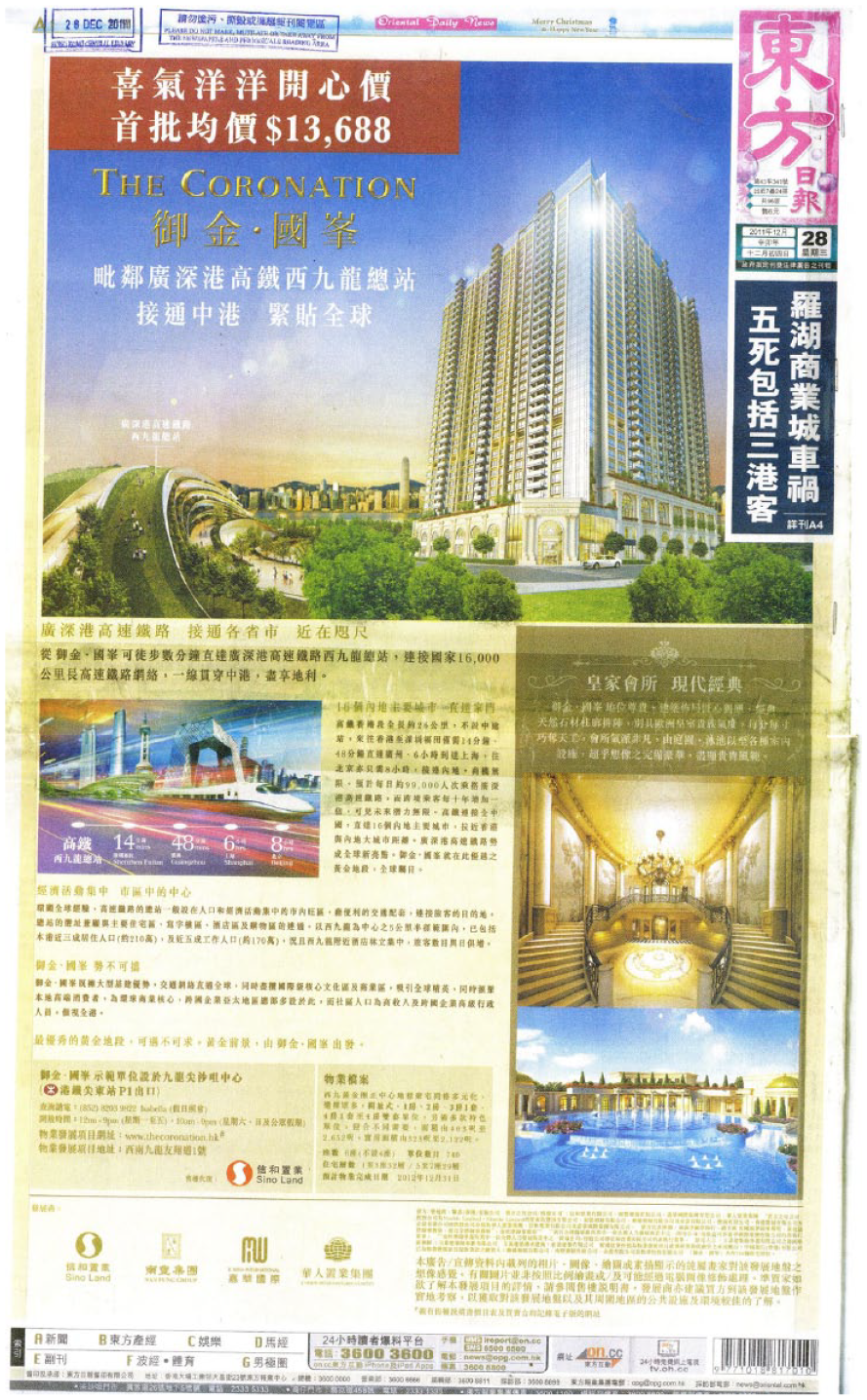
Coronation
One Mayfair (Figure 16), unlike Imperial Cullinan or Coronation, is in a traditional prestigious district (Kowloon Tong). Its advertisement uses almond and beige to communicate understated stylishness. The main image presents the property as situated in green hills with blue sky and clouds as background, similar to the 2001 subsamples. But unlike advertisements for high-priced property in traditionally prestigious areas in earlier decades, One Mayfair highlights two houses within the development, named ‘Palace Mayfair’ and ‘Peak Mayfair’. The text explains that they have ‘private entrances, presenting the style of renowned households’ and that Kowloon Tong is a ‘traditional luxury housing area’, again perhaps for the benefit of those unfamiliar with Hong Kong.
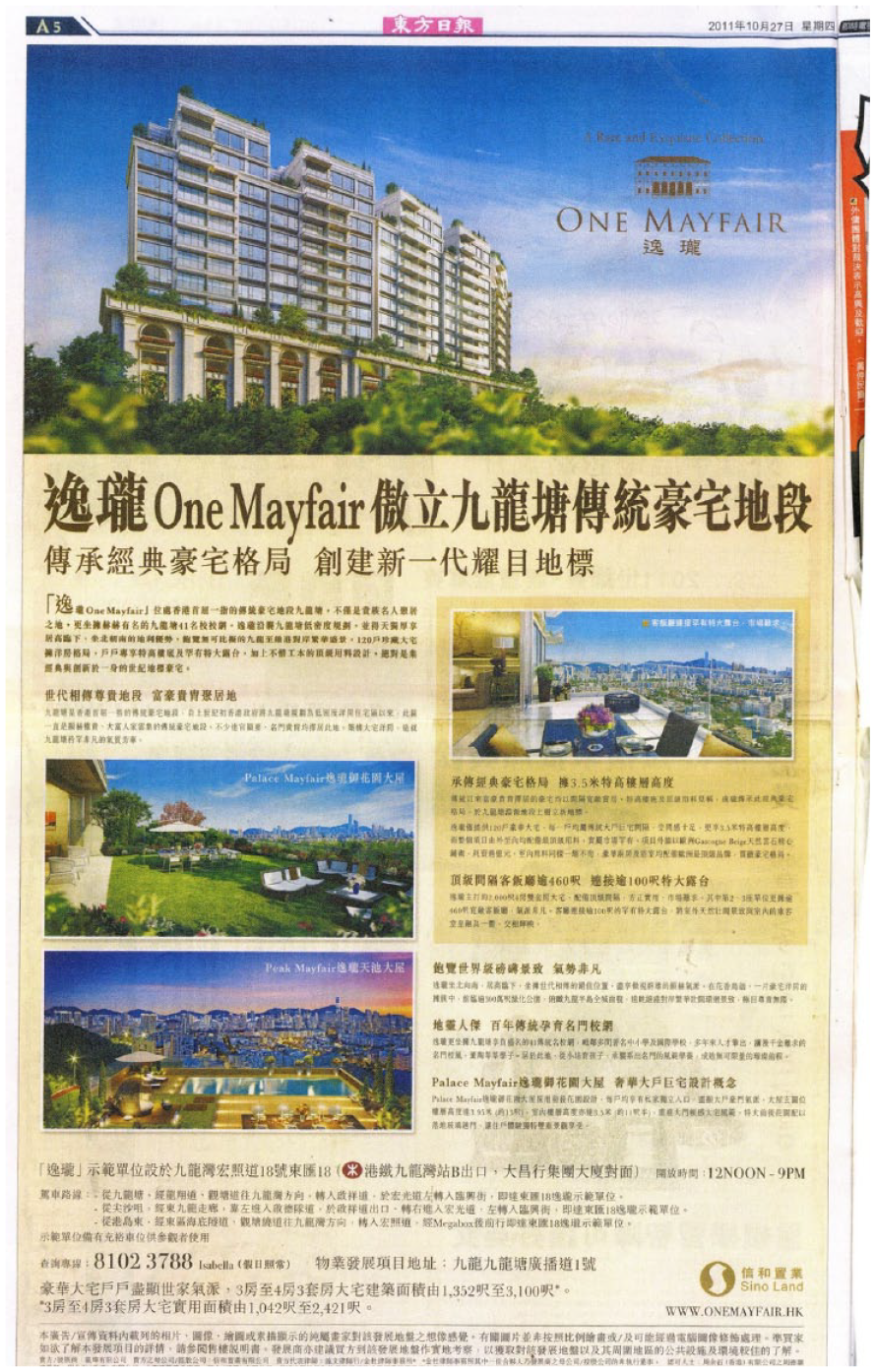
One Mayfair
Non-high-priced properties used similar strategies also. The advertisement for Festival City Tower Phase 3 (Figure 17), located in Tai Wai (New Territories), is similarly golden and glittery. The Westminster Terrace (Figure 18), located in Castle Peak Road (Tsuen Wan), also features ‘individual duplex villas above other apartments’ with private lift and lift lobby.
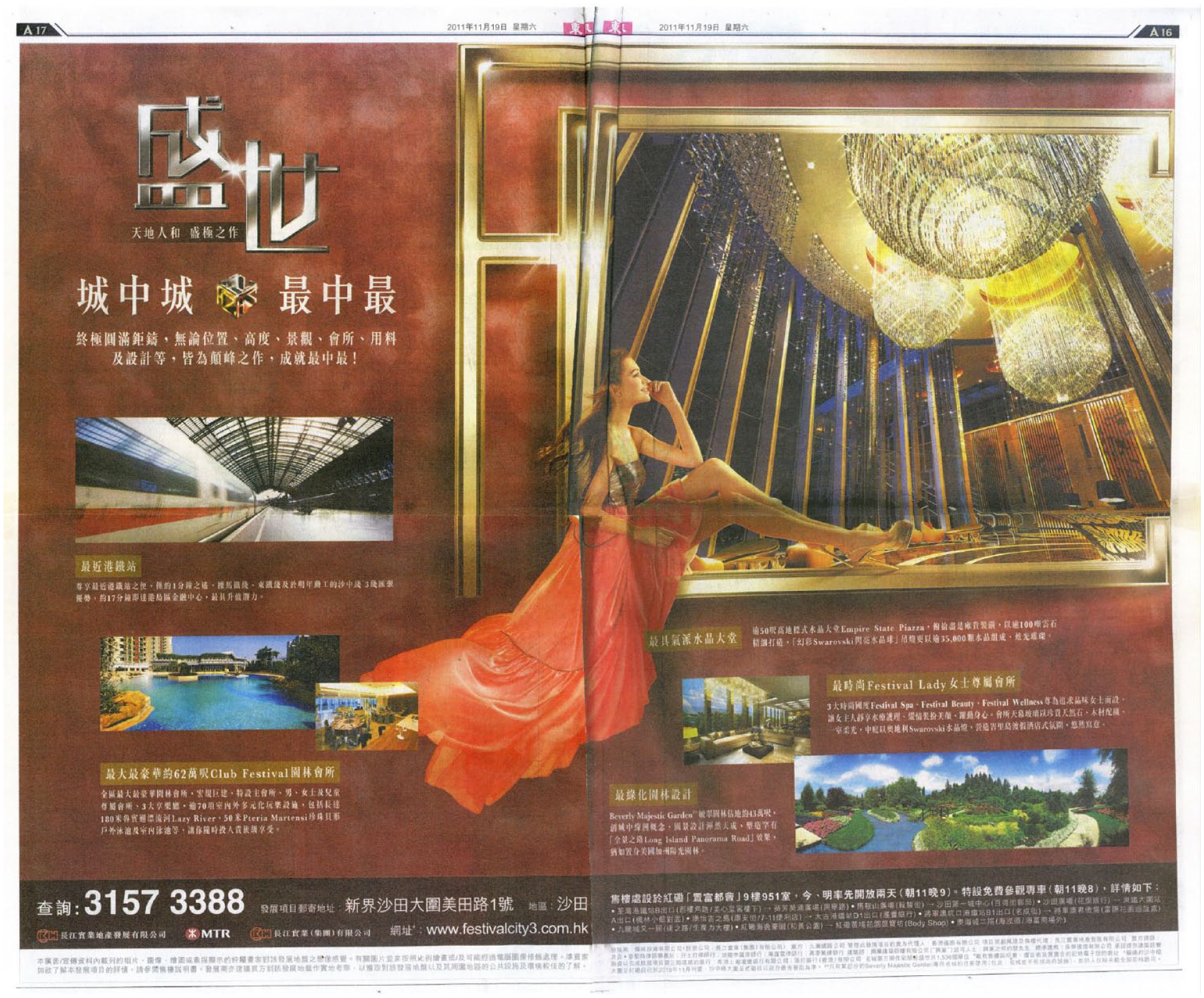
Festival City Phase 3
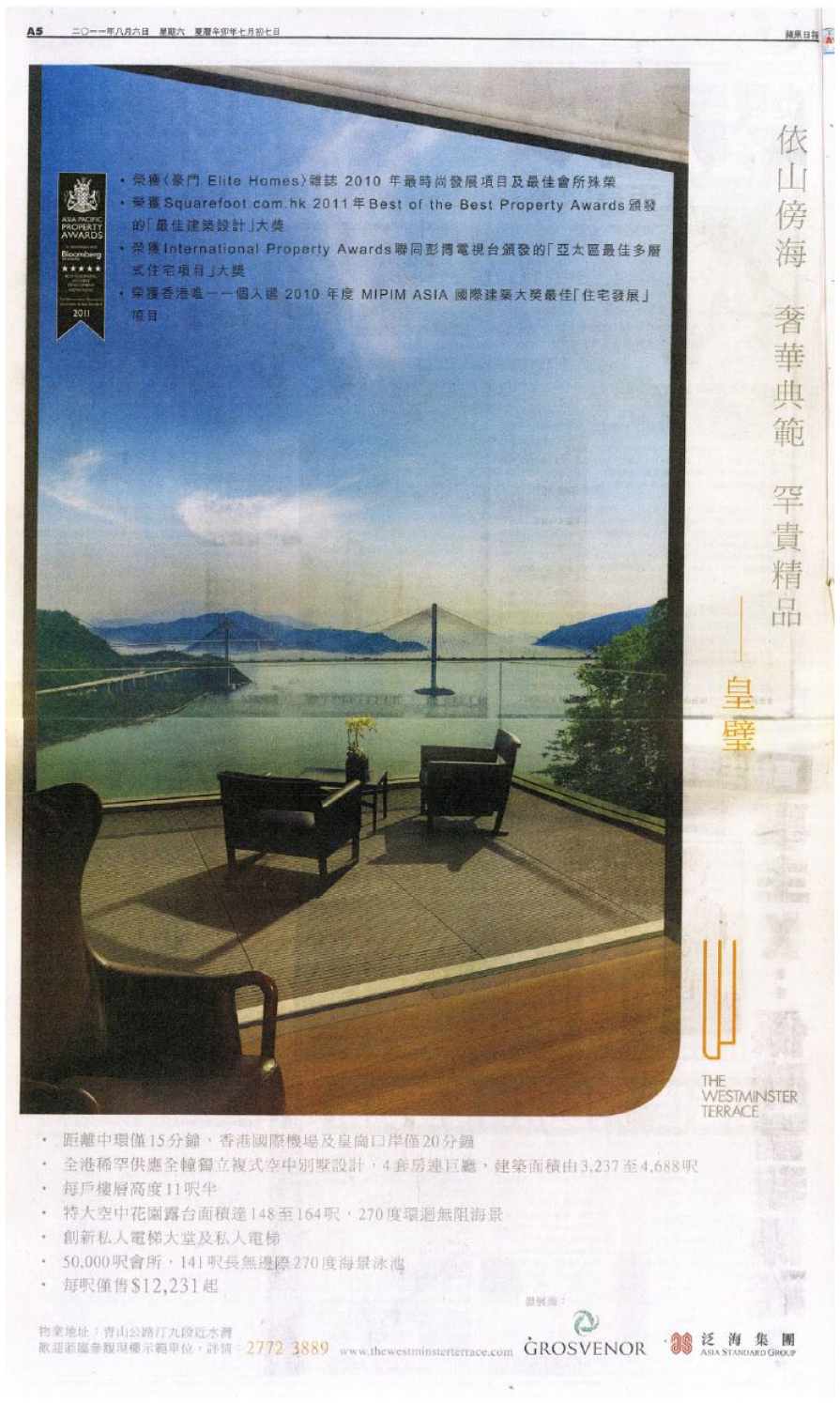
The Westminster Terrace
Conclusion: Producing luxury housing and urban socio-spatial inequalities
This paper, based on a longitudinal study of private housing advertisements from 1961 to 2011, reveals the strategies of developers in creating and injecting variable expressions of ‘luxury’ housing. For instance, although luxury in Hong Kong’s high-priced housing has remained centred upon exclusivity, it has changed from scenic areas far from urbanity (1961), to high-rises, elevated podiums and gated communities (1971), to foreign charm and privatised leisurely lifestyles (1981 and 1991), aspirational exclusivity (2001), and arrived at the vulgar, imperial fantasies of excess in 2011. Luxury elements have extended beyond property-oriented material and immaterial qualities to include convenient transport, private clubhouses and elite school catchment areas. Presently high-priced housing has even converged upon representing unrestrained, excessive and wasteful vulgarity as desirable, for which Plato and Aristotle’s criticisms remain relevant – such celebrations of luxury do not serve the common good.
We argue that Hong Kong’s oligopoly of developers use these various constructions of ‘luxury’ to maximise profit. Prestigious location, a prime determinant of housing price (Yip et al., 2009), is no longer restricted to traditionally privileged areas. Developers have successfully used proximity to the MTR and desirable school catchment areas to justify high prices in otherwise unremarkable locations. Impressive clubhouse facilities can only be built on large lots, which only big developers with considerable capital could bid for. This effectively squeezes smaller developers out of competition and explains why the buoyant market period between 1985 and 1991 saw ‘already-powerful leading developers (turn) into unrivalled giants’ (Poon, 2011: 64). This oligopoly of developers has increasingly standardised Hong Kong’s housing market by injecting elements of ‘luxury’ housing, with ‘more artificially inflated prices, fewer product choices and less bargaining power for consumers’ (Poon, 2011: 27). Facing little market competition, they use similar advertising strategies on properties at different prices in different areas– that is, the creation of exclusivist aspirations. Although such aspirations progressively represent as hyperbolic fantasy, their effects on the intensification of socio-spatial inequalities are not illusionary. The normalisation of luxury representations such as excess and exclusivity exacerbates alienation in an already dense urban environment, where differences are easily visible and felt. The erosion of location-bound exclusivity means that ‘luxury’ housing has geographically spread but not democratised. Its production remains controlled by a handful of developers, its consumption increasingly by Mainland Chinese investors.
Our findings contribute to the critical luxury studies and housing literature by highlighting how the production of luxury in housing turns a necessity into an unaffordable commodity, constructs exclusivity as desirable, promotes excess, consolidates developers’ oligarchy, and intensifies urban socio-spatial and housing inequalities. Our discussion deepens the understanding of Hong Kong’s housing hierarchy by looking beyond location-based exclusivity.
At the time of writing, Hong Kong was experiencing probably the longest political and social protests in its history. Although pro-establishment politicians have attributed recent anti-government protests to young people’s lack of homeownership opportunities, survey findings do not support this conjecture (Forrest and Xian, 2018). It is young people’s identification with universal values (democracy and freedom) that results in their distrust towards the HKSAR government and the Beijing government and not homeownership. Nevertheless, the government’s unbalanced favouring of developers’ control of housing production does reinforce citizens’ discontent and alienation over the unaccountable governance.
Supplemental Material
USJ896711_supplemental_material – Supplemental material for Producing ‘luxury’ housing: Developers’ strategies and housing advertisements in Hong Kong (1961–2011)
Supplemental material, USJ896711_supplemental_material for Producing ‘luxury’ housing: Developers’ strategies and housing advertisements in Hong Kong (1961–2011) by Wing Yee Kimburley Choi, Annie HN Chan and Anita KW Chan in Urban Studies
Footnotes
Acknowledgements
We would like to thank the three anonymous reviewers and the Managing Editor of Urban Studies, Professor Phil Hubbard, for their helpful and supportive feedback.
Funding
The work described in this paper was fully supported by a grant from the Research Grants Council of the Hong Kong Special Administrative Region, China (CityU 11616216).

Supplementary material
Notes
References
Supplementary Material
Please find the following supplemental material available below.
For Open Access articles published under a Creative Commons License, all supplemental material carries the same license as the article it is associated with.
For non-Open Access articles published, all supplemental material carries a non-exclusive license, and permission requests for re-use of supplemental material or any part of supplemental material shall be sent directly to the copyright owner as specified in the copyright notice associated with the article.
