



Abstract
Perceived tenure security is recognised to affect the socioeconomic behaviours and wellbeing of informal settlement dwellers. The provision of perceived tenure security is centred on the developmental agenda as a key policy alternative of tenure legalisation. Despite the consensus about its importance, the reason perceived tenure security is different amongst dwellers remains unclear. To fill this gap, we introduce social capital theory to understand the formation of and disparity in perceived tenure security. The hypotheses are that dwellers living in informal settlements with higher collective social capital and having higher individual social capital tend to feel more secure on their tenure because of higher backing power attained to deter the threats of eviction. We examine the hypotheses using a structural equation model approach to a dataset collected from three small property rights housing communities, which are emerging informal settlements in urban China. Modelling results support our hypotheses and suggest that female, low-income and migrant dwellers tend to feel less secure on their tenure because of the lack of social capital to deter the threats to their tenure. This study contributes to a new sociological explanation for the disparity in perceived tenure security other than the established psychological explanation. Empirically, this study contributes to the understanding of the rapid development of small property rights housing developments in China from the perspective of how dwellers develop security on informal tenure.
Introduction
Informal housing/tenure has been an ongoing topic at the intersection of development studies (Kim, 2004), economic research (De Soto, 2000), housing studies (Nakamura, 2016), planning studies (Fawaz, 2009) and human geography research (McGee, 1991). The first wave of informal housing studies focused on the urbanisation in Latin America in the 1970s and 1980s (Varley, 1987). Central to these earlier studies was a dispute between neoliberal economists who advocate the informal tenure legalisation for poverty alleviation (De Soto, 2000) and anthropologists who defend informal tenure as a way of self-helping/enabling (Payne, 1997; Varley, 1987). The second wave of informal housing studies drew on the concept of ‘desakota’ (McGee, 1991), focusing on the rapid urbanisation in Asian countries since the 1990s. The emerging informal settlements has been argued to be the result of the tension between the shortage of affordable houses and the sharp concentration of rural labours in megacities during the rapid industrialisation process (McGee, 1991; Shatkin, 2004). Because Asian industrialisation is characterised by the Washington-Consensus-backed ‘accumulation by dispossession’ for serving the offshored manufacturing industries from the Global North (Walker, 2006), the state-sponsored tenure legalisation is criticised for being the ‘legalisation of dispossession’ (Levien, 2012). In defence of tenure pluralism, scholars have argued that informalities and informal housing are approaches of defending the rights to the city against the pro-growth coalition of the developmental state and the capitalist class (Assies, 2009; Roy, 2005).
However, since the 2008 financial crisis, the rise of ‘austerity urbanism’ (Peck, 2012) or the deepening of ‘neoliberal urbanism’ (Peck et al., 2013) have engendered worldwide housing and unemployment crises, leading to the (re)emergence of squatting and informal subdivisions of land/houses in advanced Western cities (Durst and Wegmann, 2017; Gurran et al., 2021; Pruijt, 2013; Sullivan and Olmedo, 2014). Thus, informal tenure/housing is no longer unique to the Global South but a common issue for contemporary human society embedded in late capitalism (Vasudevan, 2015).
In addition to the structural drivers of the formation of informal housing/tenure in a geographically-temporally specific context, the formation of perceived tenure security has been recently a key topic within informal housing/tenure studies (Broegaard et al., 2017; Muchomba, 2017; Nakamura, 2016; Van Gelder, 2009, 2010; Zhang and He, 2020b). A key conclusion from the first and second waves of informal housing studies is the limited role of tenure legalisation in improving the wellbeing of informal settlement dwellers (Fitzpatrick, 2010). Many empirical investigations have revealed that tenure legalisation invites overwhelming market forces and thus induces gentrification (Doebele, 1987), leading to the disruption of community life (Payne, 1997), social exclusion (Fitzpatrick, 2010) and aggravation of gender inequality (Varley, 2002). Conversely, socially constructed informal institutions secure property exchanges, motivate house upgrades and protect the tenure from the negative effects of market forces (Fitzpatrick, 2010; Kim, 2004). Numerous empirical investigations support the account that perceived tenure security determines the socioeconomic behaviours (e.g. upgrade the house and participate in community management) and wellbeing of informal settlement dwellers (Gilbert, 2002; Razzaz, 1993; Van Gelder, 2013). The provision of perceived tenure security is thus centred in the developmental agenda as a key policy alternative of tenure legalisation (Van Gelder and Luciano, 2015).
Despite the continuous efforts made to examine the effect of perceived tenure security on dwellers’ socioeconomic behaviours, the formation of perceived tenure security remains poorly understood. Although Van Gelder’s (2009) seminal work has clarified the difference amongst de jure tenure, de facto tenure and perceived tenure security, the factors that determine perceived tenure security are understudied. Many studies have found the individual variations in perceived tenure security within and across informal settlements. Such a research perspective is inspired by the empirical finding from many studies that informal settlement dwellers commonly look for backing/bargaining power to deter the potential threats to their tenure (Fawaz, 2009; Musembi, 2007; Van Gelder, 2009; Varley, 1987; Zhang and Zhao, 2018).
We substantiate the arguments by qualifying the relationship amongst individual social capital, community social capital and perceived tenure security. Three informal settlements (small property rights housing [SPRH] communities) in Beijing, China, are taken as cases in which questionnaire surveys are conducted. A structural equation model (SEM) approach is used to perform the quantitative analysis. Theoretically, this study contributes to a new perspective of understanding the heterogeneous perceived tenure security. Empirically, by unpacking how dwellers develop a perception of the security of their informal tenure, this study deepens the understanding of the formation of SPRH communities, emerging informal settlements that accommodate the disadvantaged low-income migrant workers and the elderly who are suffering as a result of China’s recent housing affordability crisis (He et al., 2019; Zhang and He, 2020a; Zhang and Zhao, 2018).
The remainder of this paper starts with a review on the existing studies on informal tenure and perceived tenure security. Attention is paid to the nexus of threats to informal tenure, protection of informal tenure and perceived tenure security. We then introduce social capital theory to reinterpret and strengthen the nexus and propose a conceptual/analytical framework for linking social capital to perceived tenure security. We elaborate our methodology in the third section. We present and discuss the modelling results in the fourth section. This paper ends with our key conclusions.
Linking social capital and perceived tenure security
Threats, protection and informal tenure
Central to understanding perceived tenure security is the uncertain nature of informal tenure (Van Gelder, 2009; Zhang and Zhao, 2018). Given that an informal settlement violates laws and other formal institutions, informal tenure gives homeowners no protection by the state and they are under threat of demolition of the property and eviction by the state (Musembi, 2007). Moreover, in many cases, informal settlements are not self-built by dwellers through the invasion of public land (Roy, 2005). Instead, professional developers are involved in building informal houses on suburban rural land to sell through illegally leasing rural land from or collaborating with villages/individual villagers (Fawaz, 2009; He et al., 2019; Kim, 2004). However, given that no exogenous enforcement (e.g. law and court) exists on the agreement amongst developers, villages and homebuyers, their socioeconomic behaviours related to informal property/tenure are not disciplined (Zhang and Zhao, 2018). Defaults, eviction, demolition and land reclaim threats made by developers and villages exist to undermine the tenure of informal homeowners (Fawaz, 2009; Musembi, 2007). Besides, the conflicts between village elites and ordinary villagers on the distribution of interest gained from informal land developments also disturb the informal tenure (Zhang and He, 2020a). Thus, the state, villages and developers are the major sources of threats to informal tenure, making informal tenure full of uncertainties and threats (Fawaz, 2009; Zhang and Zhao, 2018). Perceived tenure security is thus an individual psychological variable that consists of cognitive (thought-related) as well as affect-based (emotional) elements towards a subjective estimation of the probability of threats (Van Gelder, 2009).
Nevertheless, informal settlements gain protection from the state in many cases. As Jessop (1990) indicated, the state is not a fully constituted, internally coherent, organisationally pure and operationally closed system. Instead, the state is a contradictory system relatively and unequally open to different actors and thus a site of power struggling amongst different social forces who have their own interests and specific strategies to re-regulate the society (Jessop, 1990). Hence, different state apparatuses may have conflicting interests related to informal settlements and have different and even contradictory strategies to regulate informal tenure (Zhang and He, 2020a). For instance, in China, conflicts of interest related to informal rural land developments exist amongst central authorities (Zhao and Zhang, 2016). Such inconsistencies have caused the decentralisation of discretionary power on governing informal settlements built on rural land. Given that the local authorities benefit from informal land development in the context of urban entrepreneurialism, informal settlements are selectively demolished and patronised (Zhang and He, 2020a).
In addition, the institution of a state is subject to transformation because the institution is the result of power struggle towards a power redistribution (Jessop, 1990). Accordingly, the governmental attitudes towards and institutions on governing informal settlements vary with time and so does the political patronage of informal settlements. A vivid case for the temporality of state protection of informal tenure is the slum in Latin America. Despite established reciprocal relations between squatter groups and specific politicians, the reciprocal relation and political patronage of informal tenure are sensitive to political change and election results (Baker and Velasco-Guachalla, 2018). Thus, external threats to informal tenure are mitigated by time-varying protection (Rakowski, 1994). Perceived tenure security is the result of the tension between the threats to and the protection of informal tenure.
However, the exogenous protection of informal tenure is not equally distributed amongst informal settlements. Despite the condition of discretionary power, whether an informal settlement obtains the political patronage, and the extent of the protection, depend on the agency and actions of its dwellers and other stakeholders (e.g. developers and villagers; Varley, 1987; Zhang and He, 2020a). In China, village elites and developers have proactively sought patronage from local politicians for their informal real estate projects (Zhao and Zhang, 2018). In India, the community leaders of slums play a vital role in striving for development resources and protection from local politicians for their settlements (Auerbach, 2019). Many studies have also found that community cohesion and a strong internal social network determine the ability of an informal settlement to seek protection, address invasions/evictions and deter potential threats (Doebele, 1987; Payne, 1997; Varley, 1987). Also, individual dwellers may have different strategies to address and deter the threats from villages and developers. Generally, dwellers proactively seek backing power from their relatives, employers and other (in)formal social organisations, including religious groups, local gangs and clans, to deter the threats to informal tenure (Fawaz, 2009; Varley, 1987; Zhang and He, 2020b).
In conclusion, perceived tenure security is the subjective estimation of the probability of threats/evictions with regard to informal tenure (Van Gelder, 2009), which is mitigated by the protection of informal tenure (Varley, 1987). Given the variations in the ability to seek the protection of informal tenure amongst dwellers and communities, perceived tenure security varies amongst individuals and across communities.
Social capital and disparity in perceived tenure security
Although the fragmented empirical evidence from different contexts suggest the causality amongst the threats to protection of informal tenure and perceived tenure security, their nexus has yet to be theorised in a coherent framework. We fill this gap by introducing social capital theory to clarify and strengthen the nexus. Briefly, inspired by the seminal discussion on the important role of social interaction in individual development and social prosperity by Hanifan (1916), Jacobs (1961) and Loury (1977), growing numbers of scholars have made efforts to systematically conceptualise social capital to describe the relational nature of society (e.g. Bourdieu, 1985; Coleman, 1990; Putnam, 1993). For Coleman (1990), individuals in human society are not taking actions in isolation, rather, individuals achieve their goals by developing interpersonal relationships and gaining support from others. Following Coleman, sociologists have developed a two-dimensional concept of social capital. One is the organisation-level social capital, which refers to internal relational networks, social trust and norms that encourage coordinated actions within a group (Coleman, 1990). Such homogeneity among the group members decides the performance of social organisation in social activities towards a common goal (Putnam, 1993). The other is the individual-level social capital, which refers to potential supports individuals gain from supportive formal and informal networks (Astone et al., 1999; Harpham, 2008).
Scholars have made continual efforts to deepen their understanding of the multi-dimensional nature of social capital and develop a typology of social capital. Coffé and Geys (2007) extend the concept of organisational/collective social capital by making a distinction between bonding and bridging social capital. The former refers to the homogeneity of membership within the group that decides the coordination of the organisation; while the latter refers to reciprocal connections with other organisations (Coffé and Geys, 2007). Individual social capital can be further divided into cognitive social capital and structural social capital (Harpham, 2008). Cognitive social capital refers to the individual’s subjective perceptions of accessible social resources whereas structural social capital refers to actual engagements with formal or informal networks (Harpham, 2008). The table in Figure 1 summarises the four major dimensions of social capital.
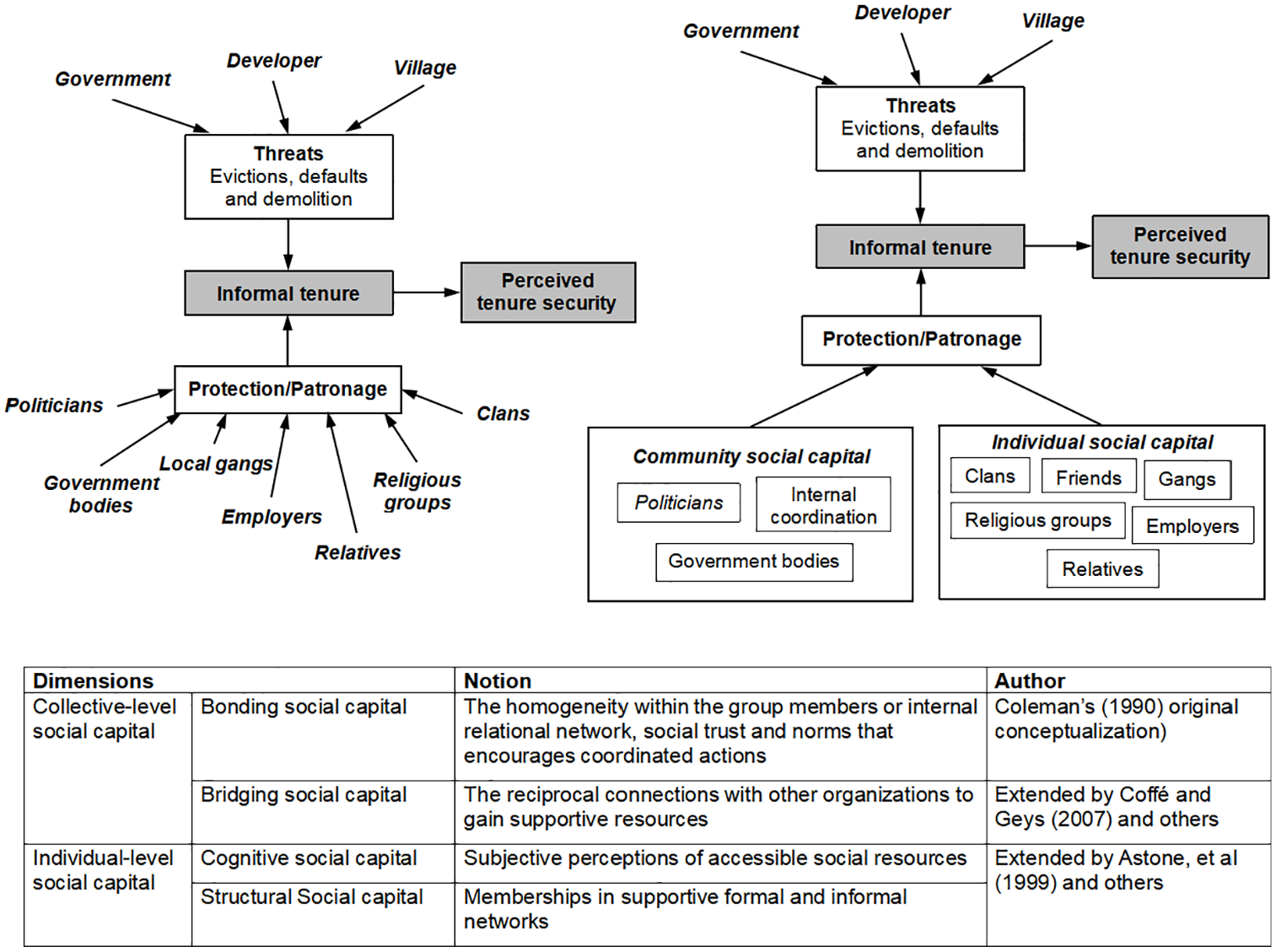
Nexus of threats to tenure, protection of tenure and perceived tenure security (upper left: the nexus drawing from the existing literature; upper right: the strengthened and realigned nexus by social capital theory; lower table: four major dimensions of social capital).
By applying social capital theory to informal tenure, we can know that the accumulation of social capital determines the ability of individuals and informal communities to seek support to deter threats. Figures 1 and 2 show how social capital theory operates to clarify and strengthen the nexus of threats to and protection of informal tenure, and perception of tenure security. As illustrated in Figure 1, community social capital decides the coordination of internal dwellers’ actions towards an attainment of patronage for their community or towards a counteraction of an eviction. Individual social capital decides the support a dweller gains for a counteraction of an eviction or potential threats. Notably, the selective treatment of informal tenure within a settlement is common (Rakowski, 1994; Varley, 1987). In many cases when the authority decides to demolish an informal settlement, personal bargaining/backing power is effective in persuading the staff not to take real action on one’s home and instead to turn to other dwellers’ houses in the same community (Doebele, 1987). Furthermore, defaults and evictions made by developers and villages are often targeted on individual dwellers/homebuyers rather than the entire community (Fawaz, 2009); thus, individual social capital is important for securing informal tenure.
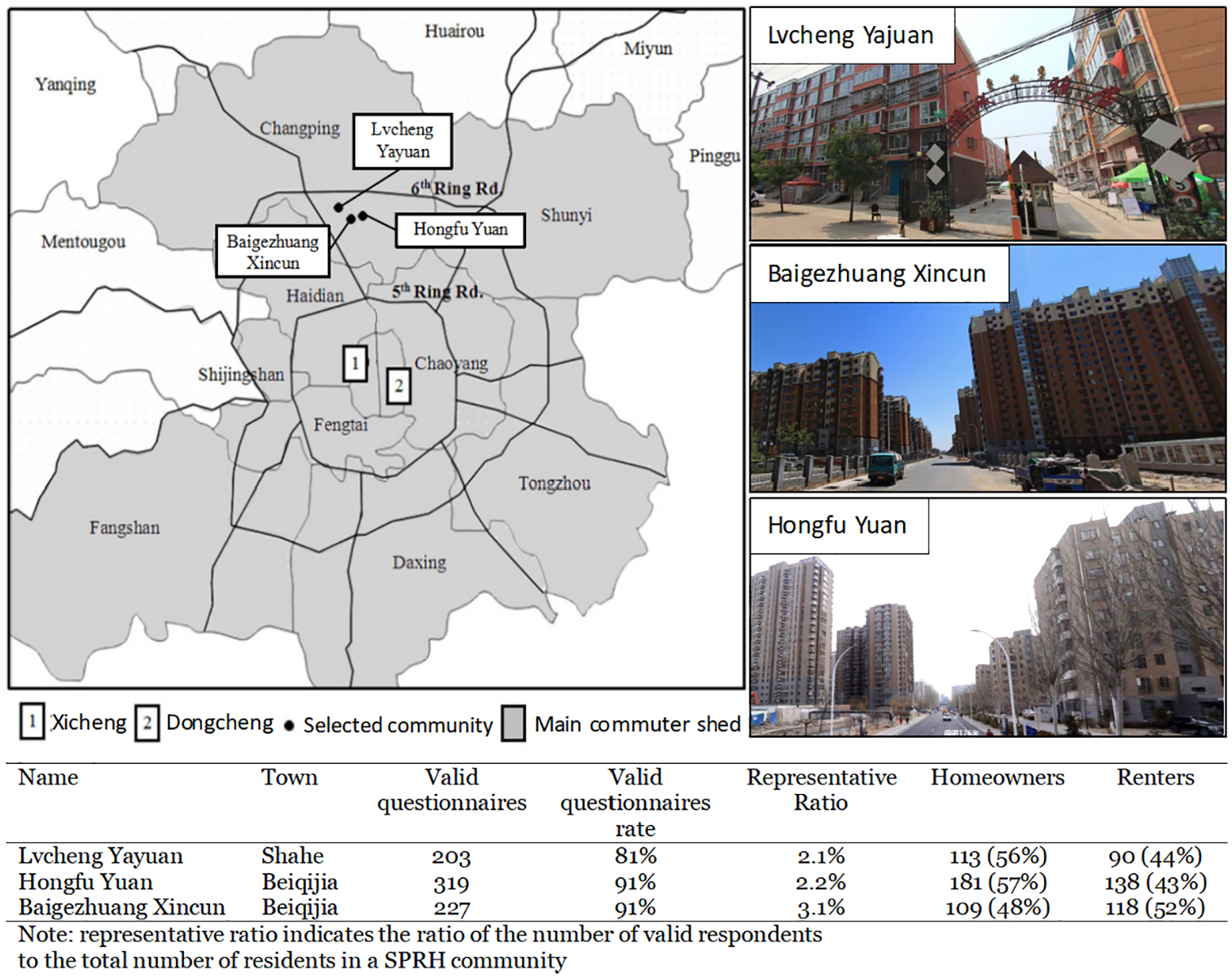
Built environment and location of sampled SPRH communities.
In this vein, community social capital determines the collectively perceived tenure security of informal settlements. Individual ability to address evictions and deter threats is heterogeneous amongst dwellers; thus, individual perceived tenure security is different and determined by both the community and individual social capital. We then use a quantitative analysis of a questionnaire survey collected from three informal settlements in China to examine the conceptual framework proposed in Figure 2. Specifically, we examine two key hypotheses.
Despite the multi-dimensional nature of social capital, this study focuses on bonding social capital at the collective level and structural social capital at the individual level. Thus, in this paper the community social capital refers to bonding social capital, and individual social capital refers to structural social capital.
Of note, although social capital theory has been widely employed to understand the individual and organisational inequalities in various economic, social and political activities, the attention paid to housing and neighbourhood-related issues is inadequate. Among the existing studies, most effort has been made to examine the impact of tenure types (e.g. ownership versus rentership) on accumulation of social capital and developing social network within and beyond neighbourhoods (Aguda, 2019; Leviten-Reid and Matthew, 2018; Ziersch and Arthurson, 2007). Studies on the link between social capital and informal housing remain scarce. This research thus also contributes to the bridging of social capital research and informal housing studies.
Methodology
SPRH in China
Three SPRH communities in Beijing, China, are taken as cases for a questionnaire survey. SPRH is an emerging and major type of informal housing in China (Zhang and He, 2020a; Zhao, 2017). Generally, two types of informal settlement/housing exist in urban China (Zhao, 2017). One is the urban village, which has been extensively studied as a form of slums and low-cost housing accommodating peasant migrant workers (Zhang et al., 2010). In the 1990s and 2000s, China experienced a rapid industrialisation process, characterised by the inflow of excess rural labourers from the inland rural areas to the coastal megacities for work in the shifted low-end manufacturing industries from the advanced economies. Under the neoliberal globalisation, Chinese municipalities favoured the improvement of supply conditions for attracting industrial capital while denying the citizenship of peasant migrant workers (Wu and Webster, 2010). Excluded from the urban formal housing system, peasant migrant workers were forced to seek accommodation from the informal sector, creating the demand for cheap rental houses illegally built on suburban rural lands. This low-end housing demand, coupled with the ambiguity in rural land management, contributed to the formation of urban villages in costal megacities (Zhang et al., 2010). These urban villages were characterised by disordered, messy, crowded and slum-like living conditions (Zhao, 2017).
However, the global financial crisis in 2008 interrupted the export-oriented, production-based accumulation regime of China (Zhang and He, 2021). In response to the global trade recession, Chinese central authorities took measures to channel the excess industrial capital to land (re)development and the production of built environment (Tsui, 2011). This capital switch has engendered the financialisation of land and assetisation of houses (Wu et al., 2020), leading to unprecedented property inflation nationwide. To stimulate the economy, Chinese central authorities started the industrial upgrading programme in 2012. Thus, the municipalities of the developed cities have utilised the exclusive social policy to expel undesirable labourers to facilitate the formation of a new spatial division of labour/industries (Zhang et al., 2018). The joint effect of the property inflation and the exclusive social policies caused a housing affordability crisis, forcing the middle-income and skilled migrant workers to seek a permanent home from the informal sector. The ‘sandwich class’ migrant workers, referring to the well-educated, formally-employed and moderately-paid migrant workers who are excluded from the host city’s social welfare system, have become the new ‘floaters’ in megacities. In response to their needs for affordable and decent homes, the suburban villages have illegally developed quality and amenity-equipped apartment houses in gated communities, for sale (Zhao, 2017). These houses have no legal titles and are informally exchanged and are thus called SPRH.
Beijing, the most-developed Chinese city, as well as the frontier of practising the industrial upgrade policies, thus experienced the fastest development of SPRHs. In Beijing, over 300,000 people live in SPRH communities (Zhang and Zhao, 2018). In this regard, Beijing is a good case for examining the formation of perceived tenure security because of its mature and robust SPRH markets and the sheer numbers of SPRH dwellers for conducting large-scale questionnaire surveys.
Study area and data collection
We used a two-stage sampling approach for data collection. During the first stage of community selection, we contacted officials from the Beijing municipality to understand the general condition of SPRH developments in Beijing. Through the interviews with local officials, we identified that Changping District has the largest concentrated number of SPRHs in Beijing. We then contacted a realtor specialising in SPRH exchanges in Changping District to identify three SPRH communities that have the most active SPRH exchanges and the largest number of residents to ensure the representativeness of the selected communities. Figure 2 shows the built environment and location of selected communities.
The second stage of respondent selection for conducting the questionnaire survey was on a random basis. Thirty-five investigators were employed to conduct a door-to-door questionnaire survey in the sampled communities. During the respondent selection process, the investigators ensured that the respondents clearly understood each question asked in the questionnaire. Also, the investigator ensured that the respondent was a household head who knew the socioeconomic condition of the household well. That means that an investigator would not launch a questionnaire survey if the household head was unavailable. A probability proportionate to size sampling method was used to decide the number of questionnaires to be performed in each community. Figure 2 shows the return rate of the questionnaire survey in each community. Given the high housing quality and rentals that are nearly the same as formal commodity houses, SPRHs have also been bought for renting as an investment (Zhao, 2017). However, most renters do not know or care about the informality of their rented houses (Zhao and Zhang, 2018). Thus, we only considered owner-occupiers. A total of 403 questionnaires were from owner-occupiers and were therefore used for the final analysis.
Measuring social capital
The measurement of social capital is a key topic across social science because social capital is accepted as affecting every aspect of social life and economic activities. Scholars from various disciplines have measured the collective social capital of various types of social organisation, including firms (Carr et al., 2011), neighbourhoods (Temkin and Rohe, 1998) and schools (Goddard, 2003). Scholars have also measured individual social capital related to various social activities, including financial decision making (Karlan, 2005), job search (Lin, 1999), labour market participation (Brook, 2005) and outcome (Brady, 2015), and healthcare search (Derose and Varda, 2009). Despite different measurements, a consensus is reached that the measurement of social capital should be contextually constructed, subject to the research object and the question ‘what part of social capital is productive for what’ (Van der Gaag, 2005). The objects of our study are communities and their residents who mainly are migrant workers. Thus, we followed the study of Harpham (2008) to measure community social capital and the study of Van der Gaag (2005) to measure individual social capital. These two studies are the most cited on examining community and individual social capital, respectively.
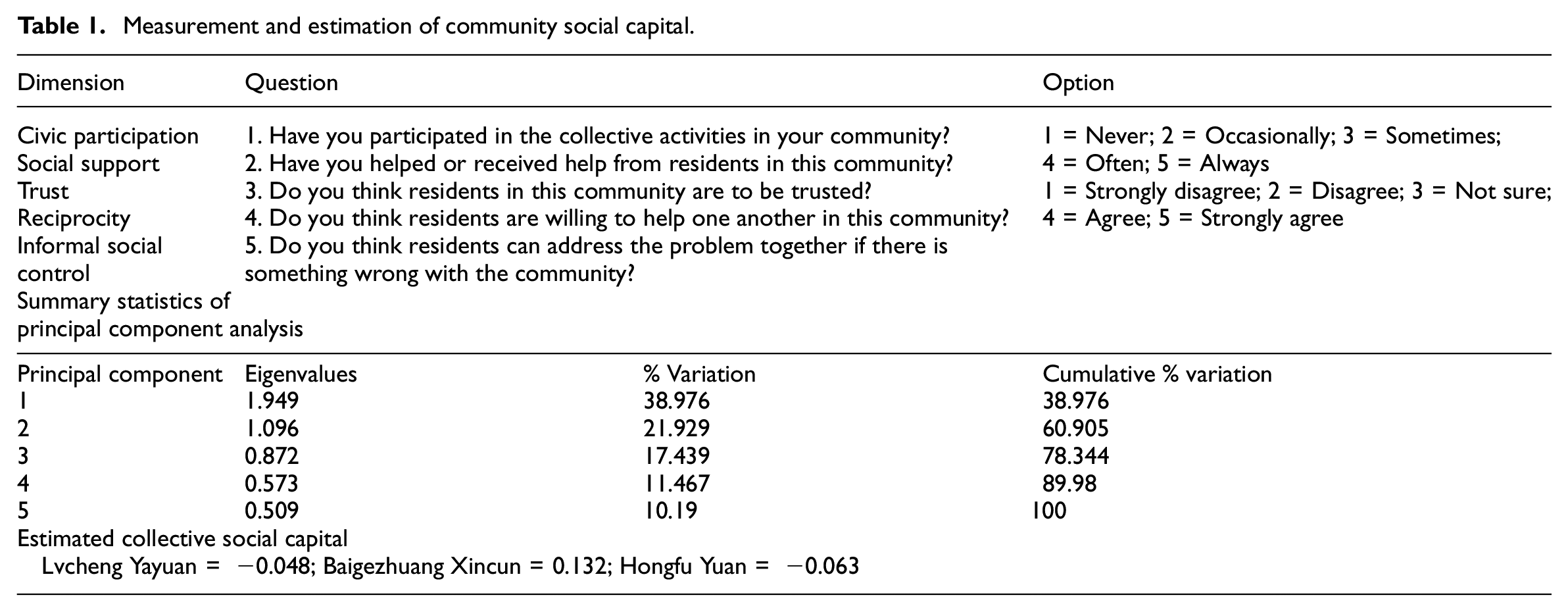
According to Harpham (2008), community social capital has five key dimensions: civic participation, social support, trust, reciprocity and informal social control. Each dimension can be measured using a survey-based method (Harpham, 2008). In the questionnaire survey, we used questions in Table 1 to measure community social capital. A major way of estimating collective social capital is the principal component analysis (Harpham, 2008). We therefore used the principal component analysis to estimate collective social capital. Table 1 illustrates the results of the principal component analysis and the estimated collective social capital of the selected SPRH communities.
Measurement and estimation of community social capital.
According to Van der Gaag (2005), an individual-centred social network analysis should be used to measure individual social capital. In the questionnaire survey, we used Matrix (2), as illustrated in Table 2, to measure individual social capital. Van der Gaag (2005) stressed that social ties being counted as a supportive resource depended on the specific goal attainment. In our case, informal settlement dwellers need the social capital to deter the threats from the government, developers and villages. Thus, seven types of social tie should be useful in the situation of eviction, including the officials in central/provincial authorities, local authority leaders, lawyers, judges, policemen, journalists and civic rights activists.
Measurement of individual social capital
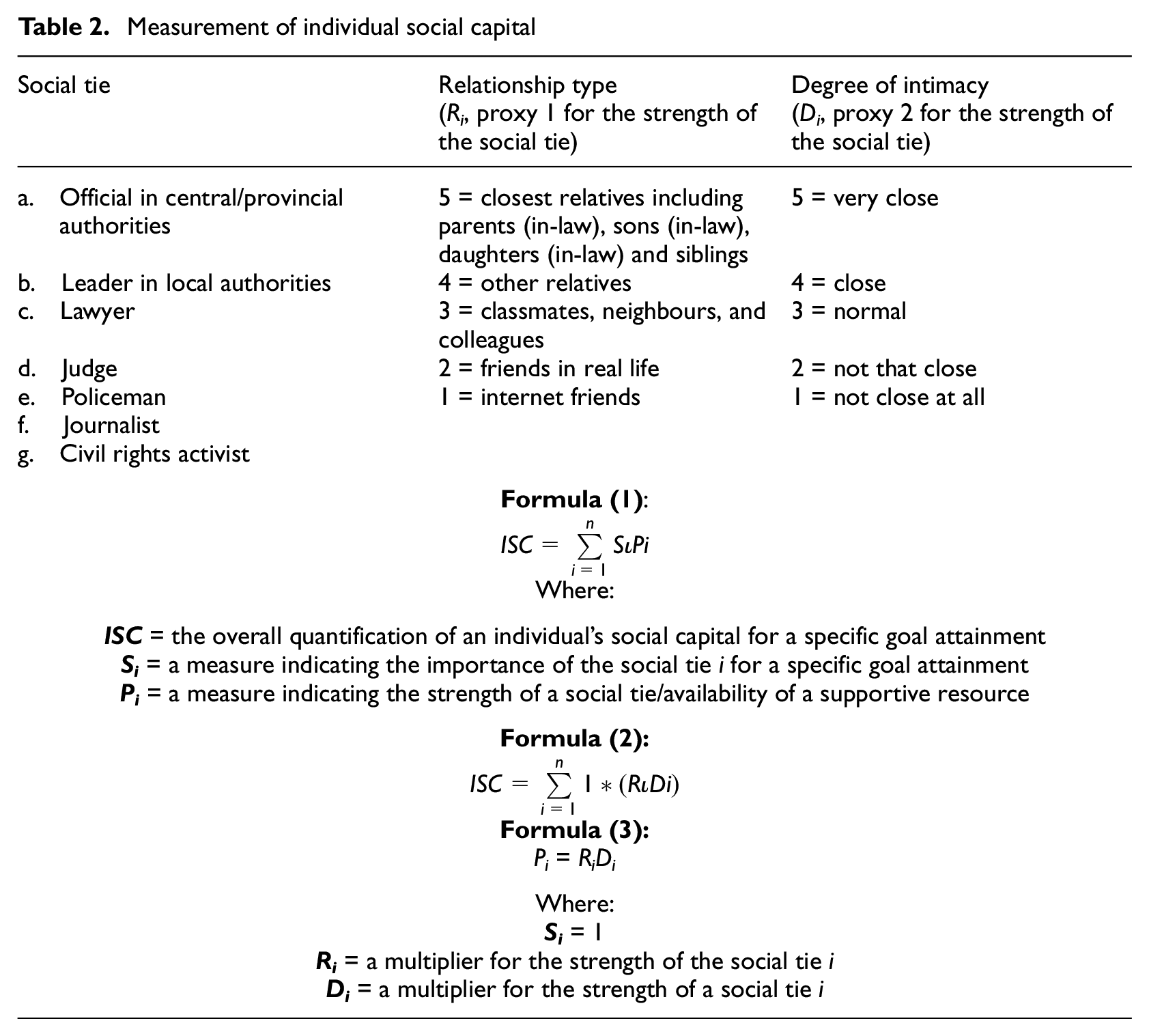
In the questionnaire survey, the respondents were asked whether they have a relationship with someone with the aforementioned social status. The relationship type and the degree of intimacy of each social tie are also asked. Van der Gaag (2005) constructed Formula (1), as illustrated in Table 2, to measure individual social capital. Which type of supportive resource is more effective than others in the situation of eviction cannot be known. We set
Model and variable specification
The dependent variable is perceived tenure security, which is measured by the estimated odds of evictions as judged by dwellers (Ferreira and Ávila, 2018; Van Gelder, 2009; Van Gelder and Luciano, 2015; Varley, 1987). In our case, an SPRH is under the dual threat from the government and the village/developer (Zhang and Zhao, 2018). Thus, in the questionnaire survey, the respondents were asked to indicate the possibility of eviction by (a) the government, and (b) the village/developer, they estimate, with optional answers offered ranging from ‘very unlikely’, ‘unlikely’ and ‘neutral’ to ‘likely’ and ‘very likely’. The answer ‘very unlikely’ is taken as indicating a high perceived tenure security, given by ‘5’, and the answer ‘very likely’ is taken as meaning a low perceived tenure security, given by ‘1’. Therefore, a higher score indicates higher perceived tenure security.
Figure 3 illustrates the hypothesised model of the relationships amongst individual social capital, community social capital and perceived tenure security. Notably, the effectiveness of social capital in mitigating the threats from different sources varies (Zhang and He, 2020b). Thus, perceived tenure security regarding threats from different sources should be different. The variances in the effect of social capital on different types of perceived tenure security must be distinguished. Thus, we make a distinction between (a) perceived tenure security regarding threats from the government, and (b) perceived tenure security regarding threats from villages/developers, treating them separately in the model.

Hypothesised and estimated models (upper: hypothesised model; lower: estimated model).
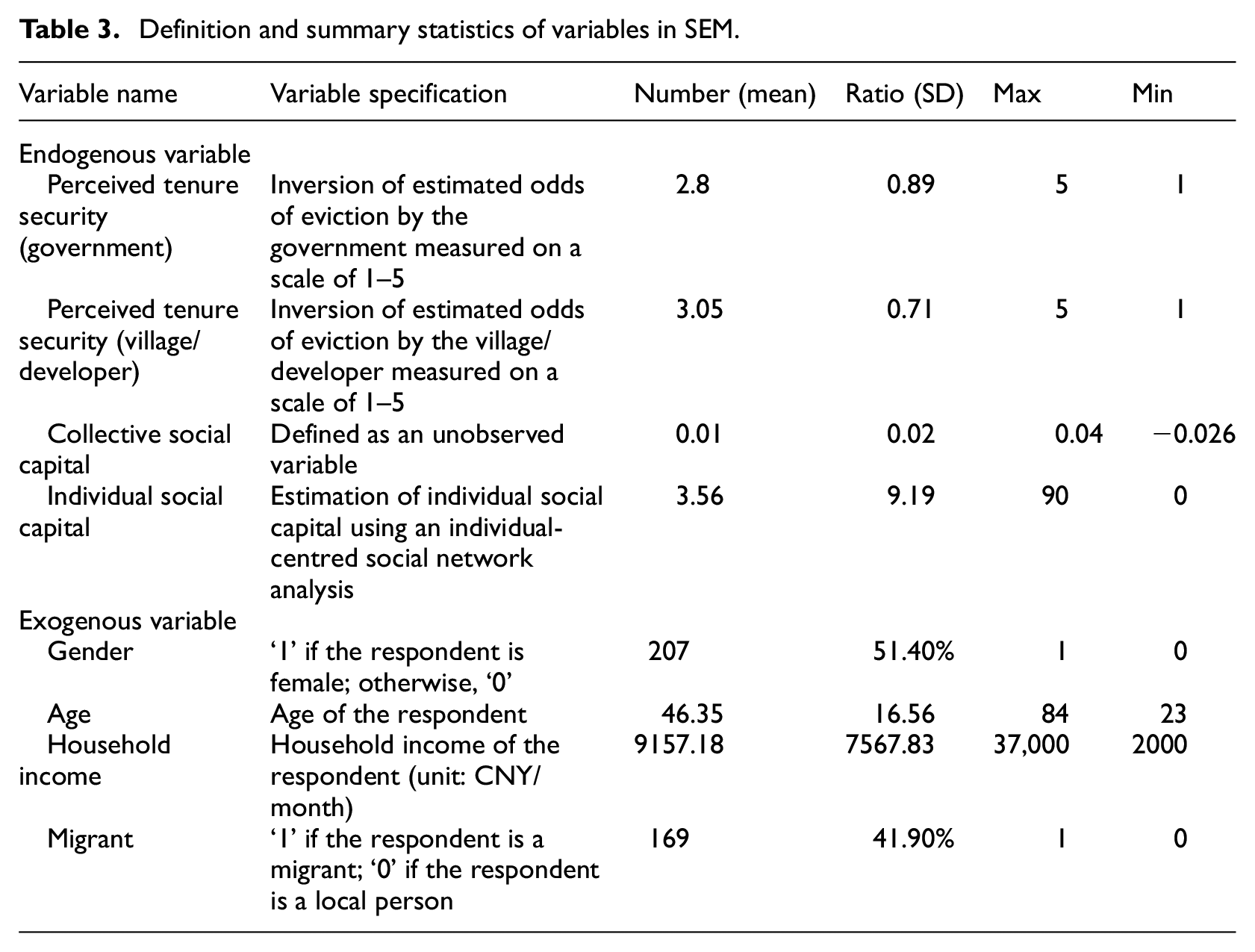
Moreover, perceived tenure security is affected by individual factors (Ferreira and Ávila, 2018; Van Gelder, 2009). Van Gelder (2009) examined the way individual differences in psychological state or fear of eviction affect perceived tenure security, and such difference is subject to individual demographic and socioeconomic factors. Controlling these factors is necessary. We thus put age, gender, migrant status and household income as exogenous variables in the model; the four variables have been widely found to determine perceived tenure security (Ferreira and Ávila, 2018; Van Gelder and Luciano, 2015). However, we cannot predefine how the four factors affect the perceived tenure security, with social capital or psychological state and others as mediators. Our questionnaire survey does not include a psychological investigation because of the lack of funding and professional support from psychologists. We thus assume that the four exogenous variables have both direct and indirect effects on perceived tenure security (see Figure 3). It is worth noting that although several studies have found that, compared with men, women tended to feel less secure on tenure in the absence of legal land/house titles, the authors have largely ascribed this tendency to women’s psychological vulnerability to uncertainties (e.g. Ghebru and Lambrecht, 2017); while many studies have found that women tend to have less social capital compared with men (e.g. Van Emmerik, 2006). One reason for women’s disadvantage in accumulating social capital is the gender division of labour. That is, women have to spend more time in the private realm to undertake heavy household duties, at the expense of time and efforts paid to develop social networks in the public realm (Moore, 1990). Given the gendered accumulation of social capital, it is necessary to determine whether women’s tendency to feel less secure on informal tenure, if it exists, comes from a psychological quality or from the lack of social capital to deter threats. That is why we examine both gender’s direct and indirect effect with social capital as a mediator on perceived tenure security. We assume that the direct effect reflects the mediating effect of psychological quality after controlling for the mediating effect of social capital. Finally, we use the SEM approach to examine the hypothesised model. Table 3 illustrates the forms and summary statistics of variables that are operated in the SEM.
Definition and summary statistics of variables in SEM.
Modelling results
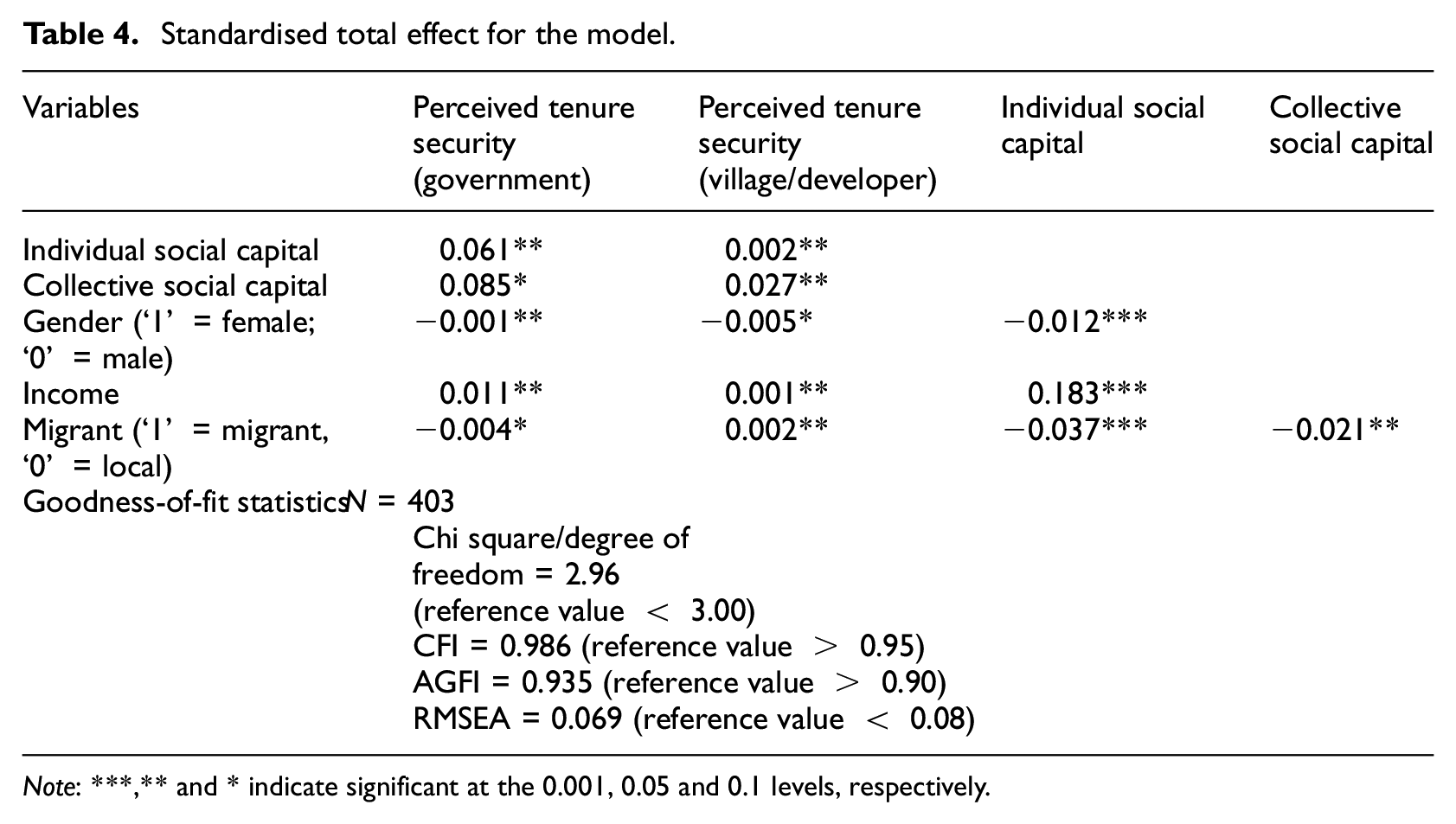
Table 4 presents the goodness-of-fit statistics of the estimated SEM. This model has a ratio between chi square and degree of freedom of 2.96, a comparative fit index (CFI) of 0.986, a root mean square error of approximation (RMSEA) of 0.069 and an adjusted goodness-of-fit index (AGFI) of 0.935. For the RMSEA, values equal to or smaller than 0.08 indicate a reasonable modal-data fit and the model does not reject the hypothesis at the 0.01 confidence level. For the CFI, values close to 0.95 indicate good fit, whereas for the AGFI, values equal to or larger than 0.90 indicate good fit. For the ratio between chi square and degree of freedom, values smaller than 3.00 indicate good fit. Clearly, the estimated SEM has good fit.
Standardised total effect for the model.
Note: ***,** and * indicate significant at the 0.001, 0.05 and 0.1 levels, respectively.
Hypothesis substantiation
We draw Figure 3 (lower) to summarise the modelling results presented in Table 4. Only the significant effect path is illustrated by marking the standardised path coefficient. Consistent with our expectations, dwellers with a higher individual social capital tend to have a higher perceived tenure security, either regarding the threats from the government (0.061*) or regarding the threats from the village/developer (0.002**). The modelling results also support Hypothesis 2. Collective social capital is significantly and positively associated with the perceived tenure security, either regarding the threats from the government (0.085*) or regarding the threats from the village/developer (0.027**). The substantiation of the two hypotheses supports our account of the explanatory power of social capital theory in explaining the heterogeneity in perceived tenure security.
It is worth noting that the effect of both individual social capital and collective social capital on improving perceived tenure security regarding threats from the government is much stronger than that on improving perceived tenure security regarding threats from village/developer. This difference suggests that SPRH residents feel that social capital is much more effective in deterring threats from government than in deterring threats from village/developer. One possible explanation for this difference is that the Chinese state has concerned itself with the reduction of social conflicts and struggles in order to strengthen state legitimacy since the late 2000s (He, 2019). Studies have found that the post-political condition of Chinese cities that activists and policy entrepreneurs have employed the media to shape public opinion about, so as to gain support from civic society, affects government decisions on local affairs (e.g. Mertha, 2009). Wu (2018, 2020) conceptualises ‘state entrepreneurialism’ as referring to how the Chinese central state has kept the institutional ambiguity at the central level to leave space for institutional innovation and informality to thrive at the local level in order to promote economic development. Because of the social protection and affordable nature of SPRH, SPRH dwellers can easily gain support from civic society by mobilising the social capital to organise and disseminate resistance movements. Also, some SPRH settlements have developed a strong patron–client relation with some influential government members to deter the threats from the government (Zhang and He, 2020a). In contrast, the village/developer cares less about the negative opinion of them from civic society and about the wellbeing of disadvantaged dwellers, being interested more in the immediate benefits from eviction. SPRH dwellers may recognise that the organisation of resistance movements will not be that effective in shaping the decisions of a village/developer.
Socioeconomic variations in perceived tenure security
The modelling results also suggest that compared with males, female dwellers tend to feel insecure when living in an informal settlement, either regarding the threats from the government (−0.001**) or from the village/developer (−0.005**). The lack of individual social capital (−0.012***) is a contributor to women’s tendency to have low tenure security, as indicated by the significance of the indirect effect of gender on perceived tenure security. A direct effect of being female on perceived tenure security regarding the threat from a village/developer (−0.005**) is also found to exist. Van Gelder’s (2010) psychological understanding of perceived tenure security may provide an explanation for this direct effect. That is, females may be more sensitive to uncertainties and fear the devastating consequences of eviction. Van Gelder (2010) stressed not only that perceived tenure security an objective estimation of threats and protection but that the internalisation of external threats is also subject to individually different psychological states. Overall, the significance of both the direct and indirect effects of gender on perceived tenure security suggests that women dwellers tend to have a lower perceived tenure security compared with men dwellers due to both the psychological vulnerability to uncertainties and the lack of social capital to deter threats.
Income level is found to be positively associated with perceived tenure security, with individual social capital as the mediator regarding the threats either from the government (0.011**) or from the village/developer (0.001**). This estimation suggests thatlow-income dwellers tend to have a lower perceived tenure security compared with higher-income dwellers because of the lack of individual social capital (0.183***) to deter exogenous threats. Lastly, migrant dwellers tend to have a lower perceived tenure security regarding the threats either from the government (0.004*) or from the developer/village (0.002**) compared with the local dwellers. The lack of individual social capital (−0.037**) and collective social capital (−0.021**) contributes to migrant dwellers’ tendency to have a low perceived tenure security.
Interestingly, the positive association between the collective social capital and migrants suggests that migrants tend to geographically concentrate in the SPRH community with a low collective social capital. A possible explanation for this association is that compared with local dwellers, migrant dwellers are less likely to participate in the public affairs of their communities because of the lack of a sense of belonging or other reasons. In Beijing, amongst other megacities, migrant workers are floating instead of permanently settling down in a community or in a city, and their employment in host city is subject to the changing national and urban policies (Zhang et al., 2018). Such an unstable situation makes migrant workers develop less sense of belonging to their communities and participate less in local affairs (He, 2015). Thus, the SPRH communities with more migrants tend to have a low collective social capital, leading to the migrant dwellers’ tendency to have a low perceived tenure security. Migrants are also directly associated with lower perceived tenure security (−0.002* and −0.001**). This direct effect can also be explained by migrant dwellers’ vulnerability to the occurrence of eviction. In Beijing, most local dwellers bought SPRH as a second home for enjoying a spacious housing condition in a tranquil suburb (Zhao and Zhang, 2018). By contrast, SPRH is usually the only residence for migrant dwellers; if an eviction occurs, they will have no place to live, and thus they will fear eviction more. This fear of eviction can intensify perceived tenure insecurity (Van Gelder and Luciano, 2015).
Conclusion
The present study constitutes an in-depth look into how individually varying social capital and varying collective community social capital affect the perceived tenure security of informal settlement dwellers in Beijing, China. Since the 1970s, informal housing/tenure has been a key research topic across social science, with scholars concerned about the manner in which the wellbeing and socioeconomic condition of informal settlement dwellers can be improved, particularly the manner in which the uncertainty of their housing tenure can be mitigated. Many empirical studies have found the failure of title legalisation in improving the tenure security of informal settlement dwellers and the vital role of perceived tenure security in affecting the socioeconomic behaviours and wellbeing of informal settlement dwellers. Thus, many scholars have advocated the improvement of perceived tenure security. However, the formation of perceived tenure security remains poorly understood. Although Van Gelder’s (2009, 2010, 2013) serial works have clarified the difference of perceived tenure security from de jure tenure and de facto tenure security, the factors affecting the heterogeneity in perceived tenure security are insufficiently researched. Van Gelder’s (2021) psychological thesis has provided an explanation for the heterogeneous perceived tenure security. However, this thesis has downplayed the fact that informal settlement dwellers commonly seek backing power to deter external threats to their tenure and how these processes affect the formation of perceived tenure security.
In response to this insufficiency, this study introduces social capital theory to deepen the understanding of the formation of perceived tenure security. We highlight the agency of informal settlement dwellers in seeking supportive resources to protect their tenure and the temporally-geographically specific political economy that decides the heterogeneous political patronage of tenure amongst informal settlements. Drawing on social capital theory and the fragmented empirical evidence from various contexts, we hypothesise that dwellers with a high individual social capital and dwellers living in a community with a high collective social capital tend to have a high perceived tenure security. The hypotheses are substantiated by using the SEM approach to examine a dataset collected from three informal settlements in Beijing, China. The modelling results support the account of social capital theory in explaining the formation and heterogeneity of perceived tenure security. The results further suggest that female, low-income and migrant dwellers tend to feel insecure in their tenure because of the lack of social capital to deter the threats to their tenure.
This study also contributes a new perspective to understand recent decades’ rapid development of SPRH settlements in Chinese cities. The existing literature on SPRHs has focused on the degraded nature of property rights and the pricing mechanism of SPRHs (He et al., 2019; Zhang and Zhao, 2018), the urban–rural duality of land ownership and the injustice in urban land planning processes that drive farmers to informally develop SPRHs (Liu et al., 2012; Zhao, 2016), the housing affordability crisis that pushes low-income groups to the informal sector for a permanent home (Zhao, 2017), the formation of socially constructed informal institutions that secure SPRH exchange (Zhang and He, 2020a) and the inconsistencies amongst governmental institutions that cause the selective demolition of or acquiescence towards SPRH settlements (Zhao and Zhang, 2016). These studies have helped us understand the rapid SPRH growth from different perspectives. However, a critical question remains unaddressed: how SPRH dwellers develop their perceived tenure security, which is crucial for the stabilisation of SPRH tenure. The present study has answered this question from the perspective of social capital. In sum, the present study has found that the groups with less social capital to deter external threats to informal tenure tend to feel less secure on tenure. Female, low-income and migrant dwellers tend to be such disadvantaged groups.
Footnotes
Acknowledgements
This study is sponsored by the National Natural Science Foundation of China (Project No.: 41871165 & 41671153).
Declaration of Conflicting Interests
The author(s) declared no potential conflicts of interest with respect to the research, authorship, and/or publication of this article.
Funding
The author(s) disclosed receipt of the following financial support for the research, authorship, and/or publication of this article: this study is sponsored by the National Natural Science Foundation of China (Project No.: 41871165 & 41671153).
