



Abstract
This article investigates whether residents have been able to regain their sense of belonging and neighbourliness after being resettled in urban China and what factors have prevented or enabled them to do so. There is a growing body of work examining the post-resettlement community relations of residents. However, this process of community rebuilding is mostly understood as resident-led and little is known about the role and influence of state actions such as state-led community building and changing resettlement policies. Our study addresses this gap by drawing on the case of Hesha Hangcheng which is one of Shanghai’s major relocation settlements. Our findings, from analysing a household survey and interviews, show that the sense of belonging and neighbourly relations of residents are poorer compared to before they were resettled. The analysis further reveals that residents who are more satisfied with their new housing and neighbourhood tend to have better neighbourly relations and sense of belonging compared to those who are not satisfied and feel they have lost out from the resettlement. Additionally, the state’s efforts in rebuilding communities by providing more community organisations and activities have given residents a platform to encounter each other and help facilitate neighbourliness and a sense of belonging. Theoretically, our study contributes by revealing the interplay between residents and state-led community rebuilding efforts and how they have affected post-resettlement community relations.
Introduction
In many cities across the world, development-induced resettlement has become commonplace (Leitner et al., 2022; Lombard et al., 2021; Meth et al., 2022; Roast et al., 2022; Rogers and Wilmsen, 2020; Wu and He, 2005). Through the optics of displacement, studies have uncovered many problems residents encounter during resettlement, including forced evictions, loss of livelihood and income sources, poor compensation and the dismantlement of community relations (Huang et al., 2020; Lelevrier, 2013; Liu et al., 2017; Wu and He, 2005; Zhang, 2004). Although the framework of displacement has been critical in understanding the negative impacts of resettlement, a growing number of studies argue that the struggles of residents continue well beyond the singular moment of physical uprooting (Leitner et al., 2022; Lombard et al., 2021; Meth et al., 2022; Wallace, 2020; Wang, 2020, 2022; Watt, 2022). However, research on the post-resettlement life of residents and especially whether residents are able to rebuild their community relations are relatively scarce and inconclusive, with often contrasting views about whether and how resettlement has affected the community life of residents (Goetz, 2013; Kleinhans and Kearns, 2013; Wallace, 2020; Watt, 2022).
This study selects the case of urban China to explore the neighbourly relations and sense of belonging of residents after their resettlement. In China, over the last three decades, millions of residents have been resettled. Resettlement is mostly large-scale and state-led, an approach which is also practised in many other countries, especially in the Global South (Kleinhans and Kearns, 2013; Leitner et al., 2022; Meth et al., 2022; Williams et al., 2022). In China, the state continues to be significantly involved in the lives of resettled residents and plays a leading role in their reterritorialisation although it is unclear what impact the state’s actions have on the sense of community of resettled residents (Rogers and Wilmsen, 2020; Wang, 2022). If resettlement results in a ‘rupture’ in the connection between people and place (Brickell et al., 2017; Elliot-Cooper et al., 2020), then this paper questions whether resettled residents are able to rekindle this connection, regain their lost neighbourly relations and develop a sense of belonging to their new neighbourhood. To do so, this study adopts a mixed methods approach including the analysis of a household survey and semi-structured interviews with residents and neighbourhood officials in one of Shanghai’s major relocation settlements named Hesha Hangcheng.
Resettlement and the destruction of communities
There is a rich body of work concerned with the negative effects of resettlement whereby the optic of displacement highlights the often-involuntary physical uprooting of residents, which in turn leads to the loss of a stable source of income and access to secure and affordable housing (Watt, 2013; Wilmsen, 2018). Studies further criticise the destruction of local community ties and place attachment that can occur through displacement (Atkinson, 2015; Davidson, 2009; Elliott-Cooper et al., 2020). Before their physical displacement, residents often gradually lose their sense of belonging and community relations due to gentrification-induced displacement pressure (also known as symbolic displacement) that price out neighbours and familiar local amenities and alienate existing residents from their neighbourhood (Atkinson, 2015; Davidson, 2009). Despite disagreement over whether all forms of resettlement should be conceptualised as displacement (Kearns and Mason, 2013; Kleinhans and Kearns, 2013; Lombard et al., 2021; Meth et al., 2022; Rogers and Wilmsen, 2020; Wang, 2022), there is consensus that resettlement always brings about the destruction of neighbourly relations and sense of belonging (Atkinson, 2015; Liu et al., 2017; Wallace, 2020; Watt, 2022; Wu and He, 2005). In this study, we will use the terms ‘resettlement’ and ‘relocation’ interchangeably to refer to the physical removal of residents in China due to urban (re)development.
In China, rather than gentrification-induced displacement, resettlements are often large-scale and state-led and carried out for the purposes of freeing up land for speculative urban development schemes or large infrastructure projects, but also to restore the state-dominated social order (Rogers and Wilmsen, 2020; Shen et al., 2020; Wang, 2022). In most cases, the Chinese state completely demolishes neighbourhoods earmarked for redevelopment and resettles residents en masse (Jiang et al., 2018; Li et al., 2019; Zhang, 2022) although there are some exceptional in-situ resettlement schemes (Liu et al., 2017; Wang et al., 2022; Wu et al., 2022). Resettlement will sometimes involve forced evictions (Zhang, 2004). Residents are resettled to the outskirts of cities and rehoused into so-called relocation settlements (dongqian anzhi fang) specifically developed by the state to compensate and accommodate resettled residents (Li et al., 2019; Shen and Wu, 2013; Wu and He, 2005). Resettlement in China affects a wide spectrum of population groups including urban residents living in older traditional courtyards and work-unit housing in inner cities, migrant tenants and rural landlords in informal settlements and rural farmers living in suburban areas (Jiang et al., 2018; Li et al., 2019; Shen and Wu, 2017). Resettlement practices also vary geographically in China, but in most cases, residents are allowed to choose between in-kind (relocation settlement) or monetary compensation. Apart from the choice of compensation however, residents have little influence over the process of resettlement (Li et al., 2019; Zhang, 2022).
Post-resettlement and the struggles of community (re)building
Compared to research on the process of resettlement, significantly less is known about the post-resettlement life of residents. The reason for this scarcity is due to the difficulty in measuring displacement and in tracing residents who have been covertly displaced over time through gentrification (Easton et al., 2020). Nevertheless, growing evidence shows that resettled residents face a myriad of both challenges and opportunities that are triggered by their resettlement, ranging from improved living conditions (Kearns and Mason, 2013; Wang and Wang, 2020), gaining formal homeownership (Leitner et al., 2022; Meth et al., 2022) to decreased spatial and social mobility (Williams et al., 2022) and loss of income and employment (He et al., 2009; Jiang et al., 2018; Wilmsen, 2018). Furthermore, drawing on the concept of reterritorialisation, studies highlight the importance of researching who is in control over the ways the lives of residents ‘were being constructed and lived’ in the new territory in which residents are resettled (Clare et al., 2018: 314; see also: Lombard et al., 2021; Rogers and Wilmsen, 2020; Wang, 2022). In relation to resettled residents in China, Wang (2022: 427) defines reterritorialisation as a ‘process of rebuilding the social norms and relations of resettled residents in a way that benefits the state’ by rendering them more governable. Wang (2022) posits that residents are reterritorialised through a process of state-led community building. This process involves creating grassroots state organisations in the form of residential committees and communist party branches which support residents to rebuild their community. Resident committees do so by creating new community interest groups and organising community activities in order to increase the chance for residents to meet and get to know each other through participating in community activities. Residential committees hope that more frequent community participation will increase neighbourly interactions and facilitate a sense of belonging. The state’s expectation is that improved neighbourliness (i.e. positive neighbourly relations) and sense of belonging will in turn encourage residents to become neighbourhood volunteers to help residential committees to enforce government mandates such as waste separation or monitoring COVID-19 outbreaks.
From Wang’s (2022) research it becomes apparent that community participation, neighbourly relations and sense of belonging play important roles in the reterritorialisation of resettled residents. Examining the sense of belonging and neighbourliness of resettled residents helps reveal whether residents can recover from the disruption of resettlement in the long-term. However, evidence so far is mixed as post-resettlement community relations vary considerably depending on the socio-political context and specific resettlement practices. Kearns and Mason (2013) researched public housing tenants who were rehoused by Glasgow council and found that relocated residents reported more positive neighbourly relations in their new neighbourhood compared to those who have not been resettled. In France, Lelevrier (2013) discovered that relocation does not significantly alter the social networks of residents. This is because in their case study, residents were allowed to be rehoused together and in-situ (Lelevrier, 2013: 266). In contrast, in London’s public housing estates, Watt (2022) reveals that public tenants rehoused into housing association rental properties do not feel any place attachment and have little interaction with their new neighbours despite being resettled in-situ. Reasons for the decreased sense of community is due to fewer neighbourly interactions after resettlement, the loss of their local facilities (shops, restaurants, etc., green space), some of the original neighbours not returning to the redeveloped area and the influx of more affluent private homeowners. Likewise, Wallace (2020) finds that public estate residents in London rehoused into a mixed tenure neighbourhood struggled to establish a sense of belonging amongst other problems. In Jakarta, resettled residents lose their social relationships and sense of belonging in their new neighbourhood but actively work to re-create their sense of community by developing and joining social activities and groups in their new residence (Leitner et al., 2022).
In urban China, research on the post-resettlement life of residents is mostly concerned with their physical living conditions and residential satisfaction whereby the great majority of resettled residents are satisfied with their new housing because of increased living space and improved housing quality (Huang et al., 2020; Wang and Wang, 2020). Residential satisfaction, however, should not automatically be equated with positive outcomes in other aspects of their relocation (see e.g. Goetz, 2013). There is also growing interest in the community life of resettled residents (Du et al., 2021; Liu et al., 2017; Wu et al., 2019; Zhang et al., 2017, 2018). Du et al. (2021) posits that indigenous residents avoid interacting with resettled rural residents due to prejudice and stigmatisation whilst Zhang et al. (2018) find that many resettled rural villagers avoid interacting with urban residents and only engage with fellow rural neighbours. Drawing on the case of resettled villagers in Suzhou, Wu et al. (2019) show that relations with neighbours have become more superficial and mutual neighbourly support has decreased after resettlement. Residents with higher income and more family members tend to have better neighbourly relations while living in apartments with smaller living space has impeded neighbourly relations.
Studies further argue that post-resettlement residents who willingly resettled achieve far better outcomes than those who resettled involuntarily (Kearns and Mason, 2013; Kleinhans and Kearns, 2013). However, using the binary of voluntary versus involuntary can be problematic as attitudes towards resettlement changes over time (Goetz, 2013). In urban China, the debate may be even more complicated due to the residential experience prior to resettlement. The comparatively generous compensation offered to resettled residents plays a significant role in convincing residents to relocate willingly (Shih, 2010; Wang and Wu, 2019). Many residents voluntarily resettle because they believe resettlement will improve their life chances, such as through improved housing conditions and moving to a prospering neighbourhood (Li et al., 2019; Lo and Wang, 2018; Zhang, 2022). Moreover, some residents actively demand the state to resettle them because they are suffering from in-situ marginalisation by being trapped in a neighbourhood that has been undergoing physical and social decline (Wang and Wu, 2019; Zhang, 2022). Additionally, studies point out the importance of residents’ individual characteristics including their social class (Lelevrier, 2013), economic status (Wu et al., 2019; Zhang et al., 2017), demographic characteristics (Liu et al., 2017), personality traits including preparedness for change and attitude towards resettlement (Kearns and Mason, 2013; Kleinhans, 2003) as determinants of their post-resettlement experience.
Current research signals that residents are not passive victims of resettlement and reveals the agency of resettled residents in rebuilding their livelihood and community relations (Kleinhans and Kearns, 2013; Leitner et al., 2022). The process of adapting to their new living environment largely depends on resettled residents themselves and is determined by their demographic profile, socio-economic status, agency and willingness to change. From this perspective, the process of community rebuilding can be understood as an organic process led by residents (Lelevrier, 2013; Wu et al., 2019; Zhang et al., 2017, 2018). Increasingly, studies assert that the post-resettlement outcomes of residents depend on the level of support from the state (Jiang et al., 2018; Kearns and Mason, 2013; Lu et al., 2020; Meth et al., 2022; Wang, 2022). The state can improve the post-resettlement life of residents by allowing them to choose the destination of resettlement, resettling residents collectively and providing jobs, infrastructure and public amenities (Jiang et al., 2018; Meth et al., 2022; Wu et al., 2019). Currently in China, residents are very rarely given the choice to be resettled in-situ but are allowed to choose from several relocation settlements located in different peri-urban parts of the city (Li et al., 2019). Moreover, the Chinese state’s community building activities (Wang, 2022) show the state’s ability to influence the post-resettlement life of residents. In light of the literature, this study will examine both the individual level factors and the impact of state interventions on the neighbourly relations and sense of belonging of resettled residents.
Data and methods
This study adopts a mixed methods case study approach to examine the post-resettlement life of residents. We draw on fieldwork conducted in one major relocation settlement in Shanghai named Hesha Hangcheng (Hesha from here on). Fieldwork was conducted over one year including multiple site visits in June 2018 and July and August 2019. Our study conducted a questionnaire survey with over 500 households in Hesha with the aim of understanding the living conditions and community relations of residents. Households surveyed include urban and rural resettled residents, public (Cheap Rental Housing (CRH) and Public Rental Housing (PRH)) and private tenants as well as Economic and Comfortable Housing (ECH) residents . The survey adopted a multi-stage stratified sampling method. First, five types of housing accommodating different groups of residents were identified (see Table 1). According to the composition of housing types, all residential committees (RCs) were sorted into three categories, including three Huiqian Housing community, six Dongqian Housing communities and seven communities with a mix of ECH, PRH and CRH. Two from each category were randomly sampled. At this stage, disproportionate stratification was used in order to include multiple subgroups of different sizes. Secondly, we collected a random sample of residents from within each RC. Households were stratified by both place of origin (central areas, local township and outside Shanghai) and types of housing. Proportionate stratification was then adopted to ensure the statistical representativeness of each neighbourhood, and households were randomly selected from the list of housing units. Overall, the sampling strategy aimed to generate a sample optimal for making comparisons among the strata, rather than a sample representative of the whole population in Hesha. With the help of the selected RCs, the survey was administered through face-to-face interviews. In total, the study yielded 503 valid questionnaires including urban (97) and rural resettled residents (94), PRH and CRH tenants (102), private tenants living in urban and rural resettlement housing (96) and ECH residents (114).
Types of housing in Hesha.
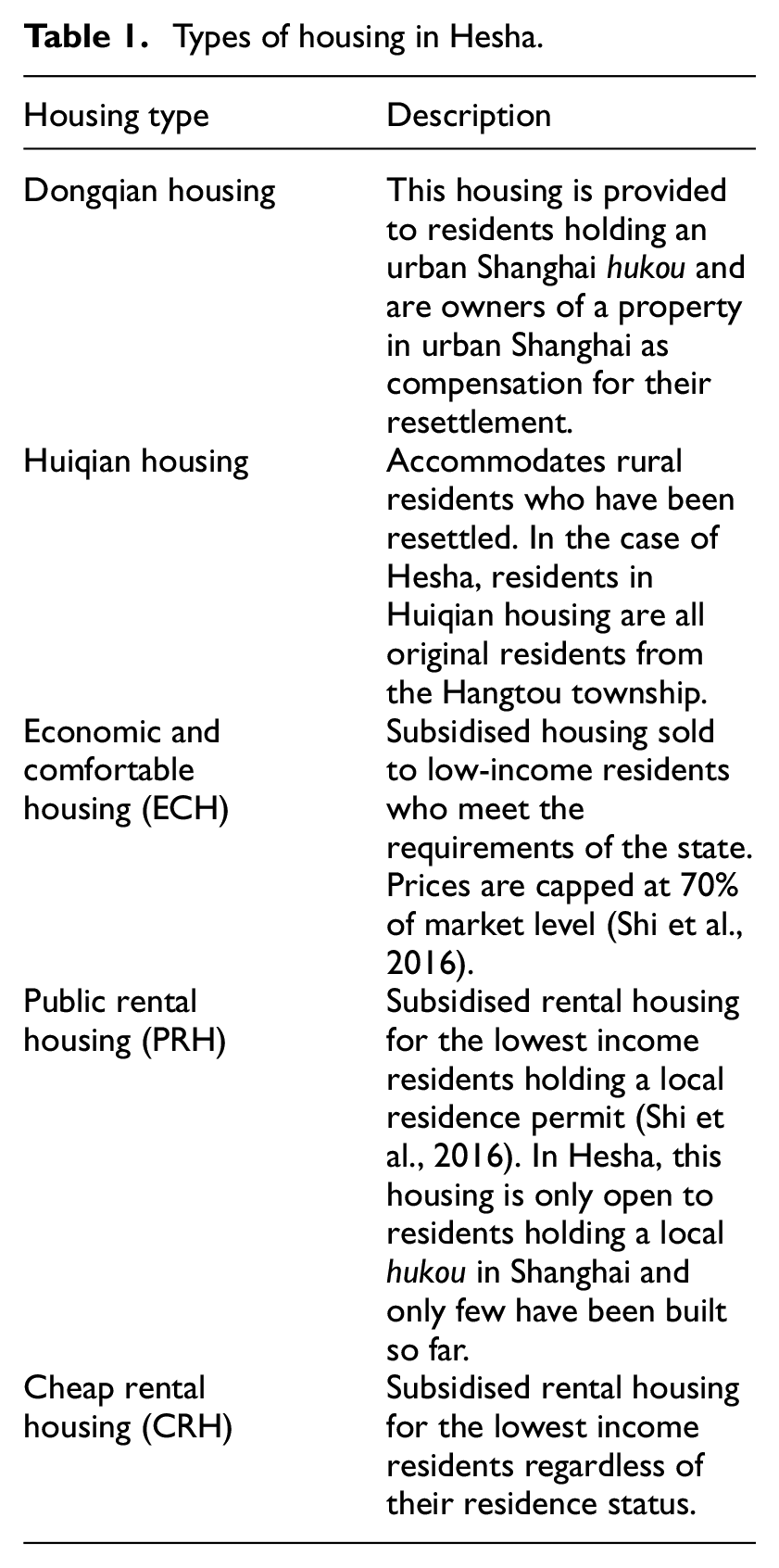
We also conducted 35 semi-structured interviews lasting between one and two hours. We visited seven residential neighbourhoods within Hesha and conducted 19 interviews with urban and rural resettled residents and residents living in PRH, CRH and ECH housing. Additionally, we interviewed 16 government officials involved in Hesha including senior officials of the Hesha Hangcheng Neighbourhood government (Hesha Hangcheng Shequ Zhengfu) and leaders and staff members of seven RCs and communist party branches. The study further collected qualitative data including official and internal reports, government directives on the Hesha settlement, government and scholarly publications on Shanghai’s large-scale social settlements. The study uses ordered logistics regression (logit) model to analyse the factors affecting the neighbourly relations and sense of belonging of residents. We chose the logit model because the dependent variables are measured by a 5-point Likert scale.
Measuring neighbourly relations and sense of belonging
The study examines the neighbourly relations and sense of belonging of resettled residents since these two aspects have often been singled out as examples of the detrimental effects of resettlement (Atkinson, 2015; Elliott-Cooper et al., 2020; Liu et al., 2017). They were also selected because studies have highlighted them as important indicators as to whether residents have been able to socially adapt to their post-resettlement lives (Wallace, 2020; Wang, 2022; Watt, 2022; Wu et al., 2019). We included three variables to measure neighbourly relations, which have all been tested and used as indicators of neighbouring by existing studies (Wang et al., 2017, 2022). They are (i) socialising amongst neighbours to explore the frequency of informal neighbourly interactions, (ii) knowing many neighbours to explore the size of one’s local social network and (iii) feeling one can receive support from neighbours to explore the solidarity amongst neighbours. In the survey, on a scale from 1 to 5, we asked how much residents agree with the following statements: (i) My family and I often meet with our neighbours for leisurely purposes (e.g. playing mah-jong, eating together), (ii) I know many neighbours and (iii) I can receive help from my neighbours. Regarding sense of belonging, we asked respondents how much they agreed with the following statement: (iv) I believe I belong to this place (1, lowest; 5, highest). The logit model examines a range of potential determinants including the respondent’s age, length of residence, gender, employment status (economically active, inactive and retired), household income and number of family members living in the same household. Drawing on the experience from previous studies (Lelevrier, 2013), we examine whether living in the proximity of friends and family has any significant effect on the community relations of residents. Furthermore, we investigate whether improved residential satisfaction is related to better neighbourly relations and sense of belonging (Huang et al., 2020; Wang and Wang, 2020). We use two variables to represent residential satisfaction (1, lowest; 5, highest): satisfaction with the housing quality and overall satisfaction with their new residential neighbourhood. Finally, we test whether the efforts of the state to facilitate neighbourly relations and sense of belonging through encouraging residents to participate in community organisations and activities have been effective (Wang, 2022). The aim is to find out whether residents who participate more frequently in community organisations created by RCs have better neighbourly relations and sense of belonging than those who rarely or do not participate. In Hesha, all community organisations have been created by RCs who also oversee their day-to-day running. We do so by including a variable measuring the level of participation of residents in community organisations (1, lowest; 5, highest).
State-led community building and sense of community in Hesha
The Hesha settlement is located in the Hangtou township, which is under the administration of Shanghai’s Pudong New District (see Figure 1). Hesha is a social housing settlement (social settlement from hereon) which the Shanghai municipality refers to as ‘large-scale residential communities’ (daxing juzhu shequ). These ‘communities’ are state-developed settlements providing various forms of state subsidised housing. Hesha was developed by the Shanghai municipality in 2010 to accommodate Shanghai’s growing number of residents resettled by urban redevelopment projects and low-income residents living in dilapidated and overcrowded properties. The development of Hesha was entirely state driven. The land for the settlements was provided by the Shanghai municipality and the development was co-financed by the municipality and the respective district governments in which the settlements are located. The settlements were cross-subsidised by the proceeds of profit-driven urban developments owned by the municipality. The Shanghai municipal planning bureau developed the masterplans for the settlements and construction was carried out by several state-owned development corporations that work directly under the municipality (Xu, 2011). The Hesha settlement covers an area of 5.03 km2 and is primarily developed as a high-density peri-urban residential settlement that consists of high-rise gated housing and essential public infrastructure (e.g. shops, schools, post offices). The settlement has one underground station connected to underground line 16 (see Figure 2).
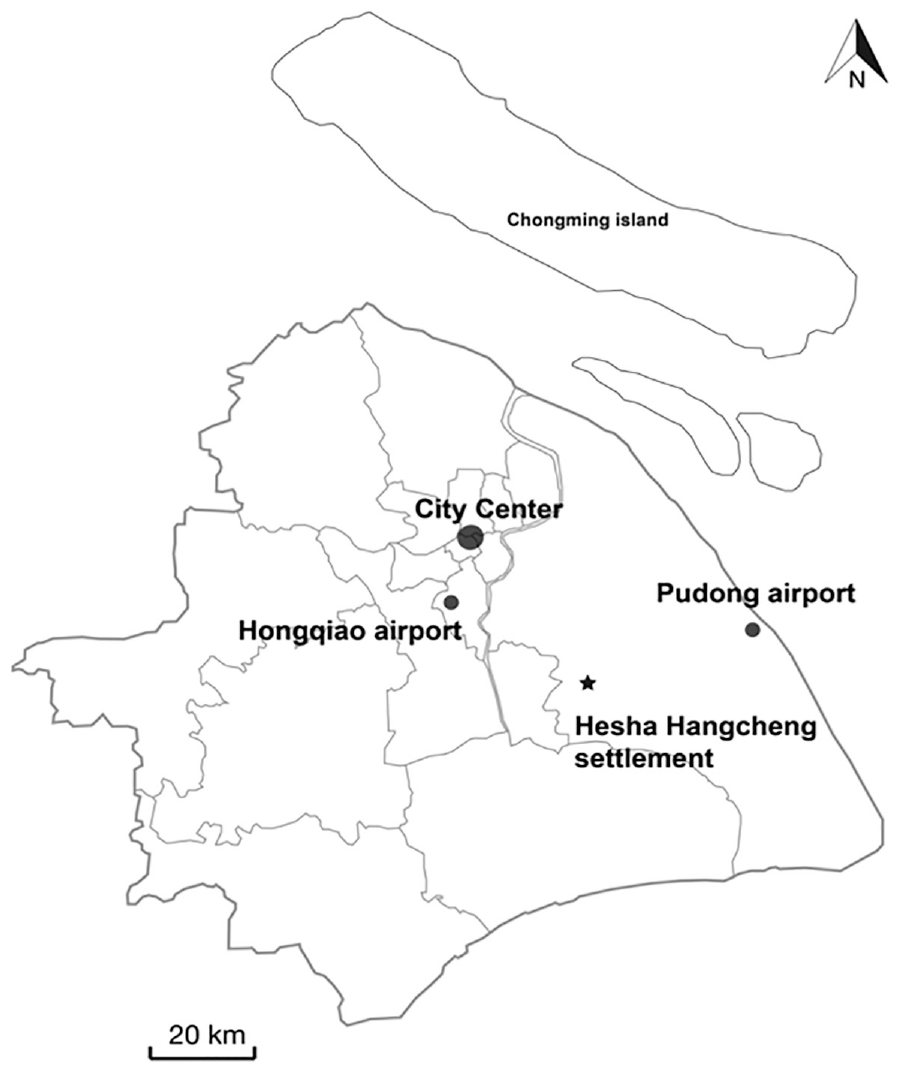
Location of Hesha Hangcheng settlement in Shanghai.
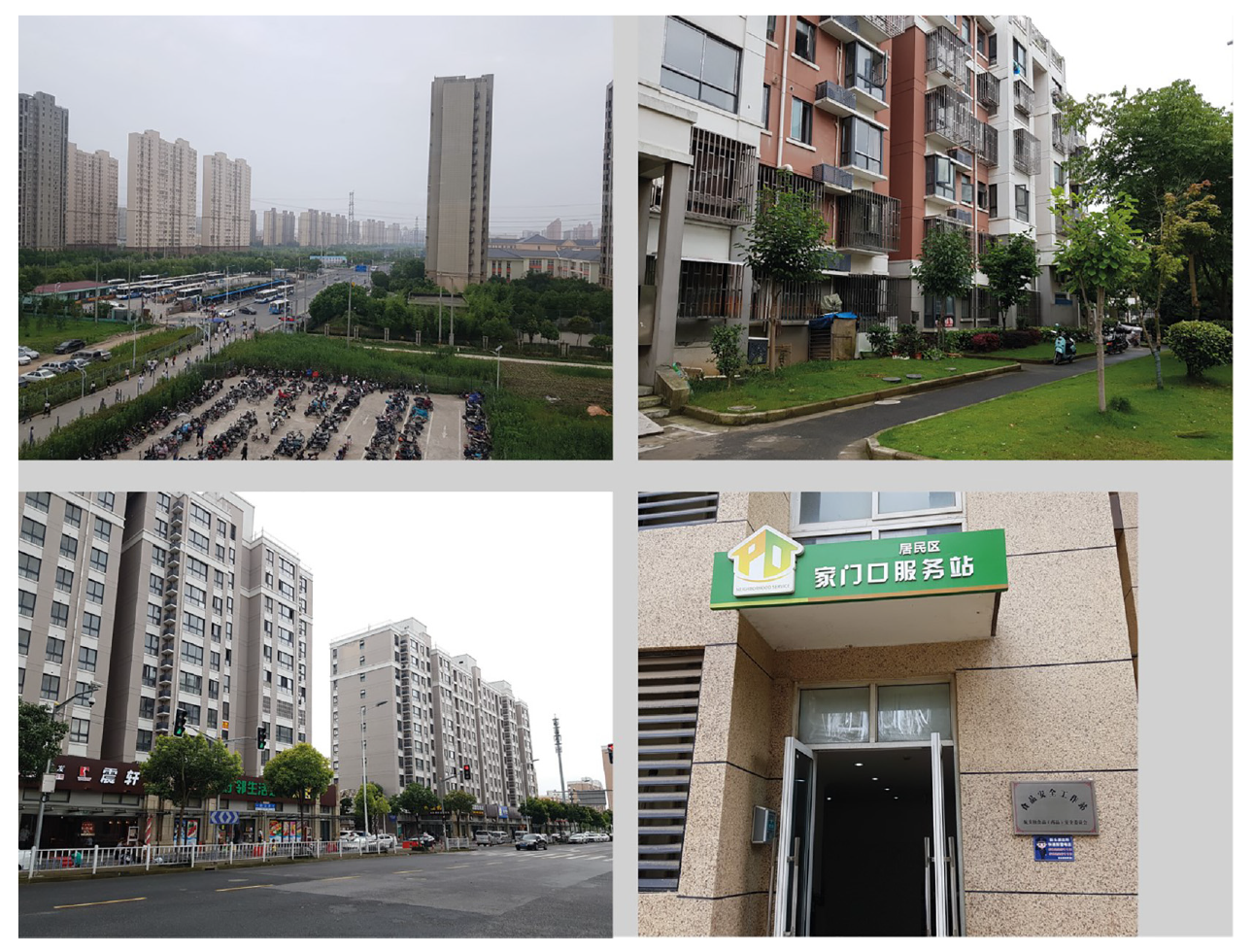
Photos of Hesha Hangcheng settlement. Top left: view of Hesha settlement from the underground station. Top right: a typical relocation settlement in Hesha. Bottom left: shops in Hesha. Bottom right: entrance to a residential committee in Hesha.
Hesha currently has a population of over 70,000 residents with a planned population of 150,000 residents. Around 60% of the housing in Hesha was developed for resettled residents who live in 22,600 resettlement housing units spread across 11 gated residential neighbourhoods (xiaoqu). Affordable housing for low-income residents includes ECH housing (28%) and CRH housing (5.2%) amongst others and private commodity housing accounts for 5%. The settlement has attracted large numbers of tenants who account for more than 30% of the total population in Hesha and mostly rent privately from the resettled residents (Internal document). Residential neighbourhoods in Hesha are mostly segregated by tenure. Residents resettled from rural Shanghai are rehoused into separate neighbourhoods from residents resettled from urban areas of Shanghai. Resettled rural residents all come from the Hangtou township and were resettled collectively. In many cases, their original homes are only a few kilometres away from their current home. In comparison, resettled urban residents were not relocated collectively and come from across Shanghai and in many cases are far removed from their original neighbourhoods. One resettled urban resident for example complained that it now takes them two hours to visit their original home (Interview, July 2019). However, our interviews with resettled urban residents further revealed that urban residents were allowed to choose from different relocation settlements, and some chose to move to a neighbourhood with many of their former neighbours. To better govern the 70,000 residents in Hesha, a new layer of government named the Hesha neighbourhood government was created. The Hesha neighbourhood government is administratively ranked below the township government and has been significantly involved in community building. One core element of state-led community building involves creating RCs in every new residential neighbourhood in Hesha with the aim of helping resettled residents adapt to their new environment. As a standard repertoire for community building, all RCs in Hesha created new interest groups, such as dancing or singing groups, where residents can join on a weekly or bi-weekly basis. Additionally, RCs have come up with different community activities to mobilise community engagement. Several RCs organise a weekly neighbourhood cleaning scheme, while another RC came up with the idea of organising a monthly charity kitchen that cooks meals for older residents with mobility issues and who live by themselves. The aim of introducing these community groups and activities is to strengthen ‘cohesion between our residents and create a sense of belonging’ (RC staff member A, July 2019). RCs use community interest groups and activities as instruments to foster neighbourly relations and a sense of belonging. RCs also hope that a stronger sense of belonging to the neighbourhood will encourage residents to participate as resident volunteers and help the RCs fulfil mandates from the government such as enforcing Shanghai’s waste separation scheme that was introduced in 2019 (RC party secretary, July 2019).
Table 2 shows the neighbourly relations and sense of belonging of the four resident groups in Hesha. Regarding neighbourly relations, the results present a mixed picture. There are more resettled residents who do not engage in leisurely activities with neighbours than those who do. Nearly 30% of urban resettled residents and around 23% of rural resettled residents socialise with their neighbours while more than 35% of resettled urban residents and nearly 32% of resettled rural residents do not interact with their neighbours. However, more than 54% of resettled rural residents and 41% of resettled urban residents state they know many of their neighbours while around 60% of resettled rural residents and nearly 49% of resettled urban residents state that they can receive help from their neighbours if needed. This trend is broadly consistent with tenants and ECH residents. It is also noteworthy that only 16.67% of ECH residents state that they often meet with neighbours while around 57% of ECH residents do not often meet with their neighbours for leisurely purposes.
Neighbourly relations and sense of belonging by resident group (n = 505).
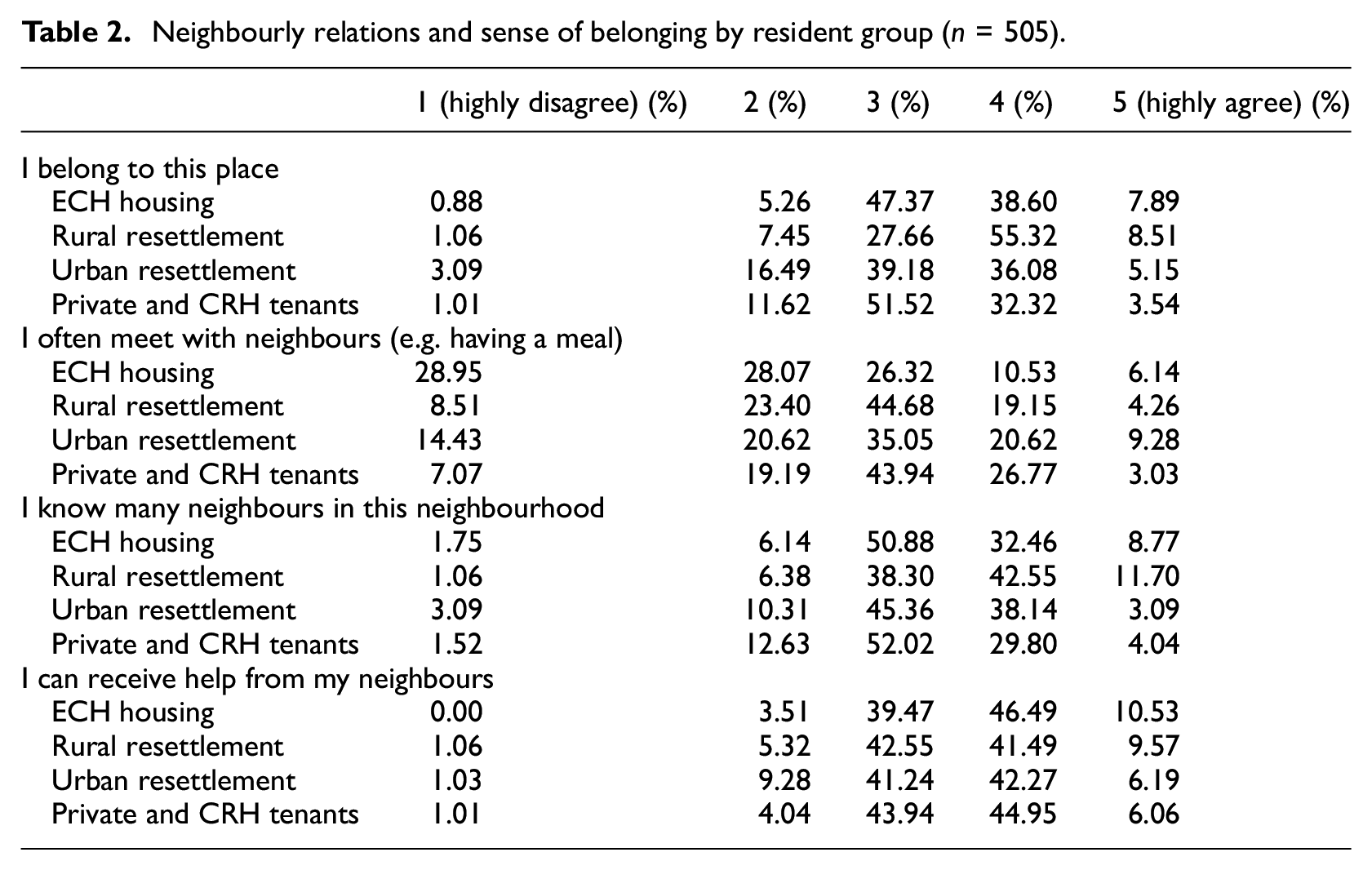
Furthermore, Table 2 shows that rural resettled residents are by far the largest group to feel a sense of belonging in their new neighbourhood (63.83%), followed by ECH residents (46.49%), resettled urban residents (41.24%) and lastly tenants (35.86%). Also noteworthy is that more than 19% of resettled urban residents disagree or strongly disagree that they feel a sense of belonging to their new neighbourhood, which is even more than tenant residents (12.63%). Nevertheless, the share of resettled urban and rural residents who feel they belong to their new neighbourhood is in fact higher than residents who have lived for many years in low-income neighbourhoods (Wu, 2012: 554) and comparable to the place attachment felt by commodity housing estate residents (Zhu et al., 2012: 2447). Rural resettled residents may feel a strong sense of belonging to Hesha because their original homes have always been in the Hangtou township. The opposite may be true for urban resettled residents who were resettled from several inner-city districts across Shanghai and are thus not familiar with the locality and are more isolated from their family and friends who may still be living in inner-city Shanghai.
Determinants of neighbourly relations and sense of belonging
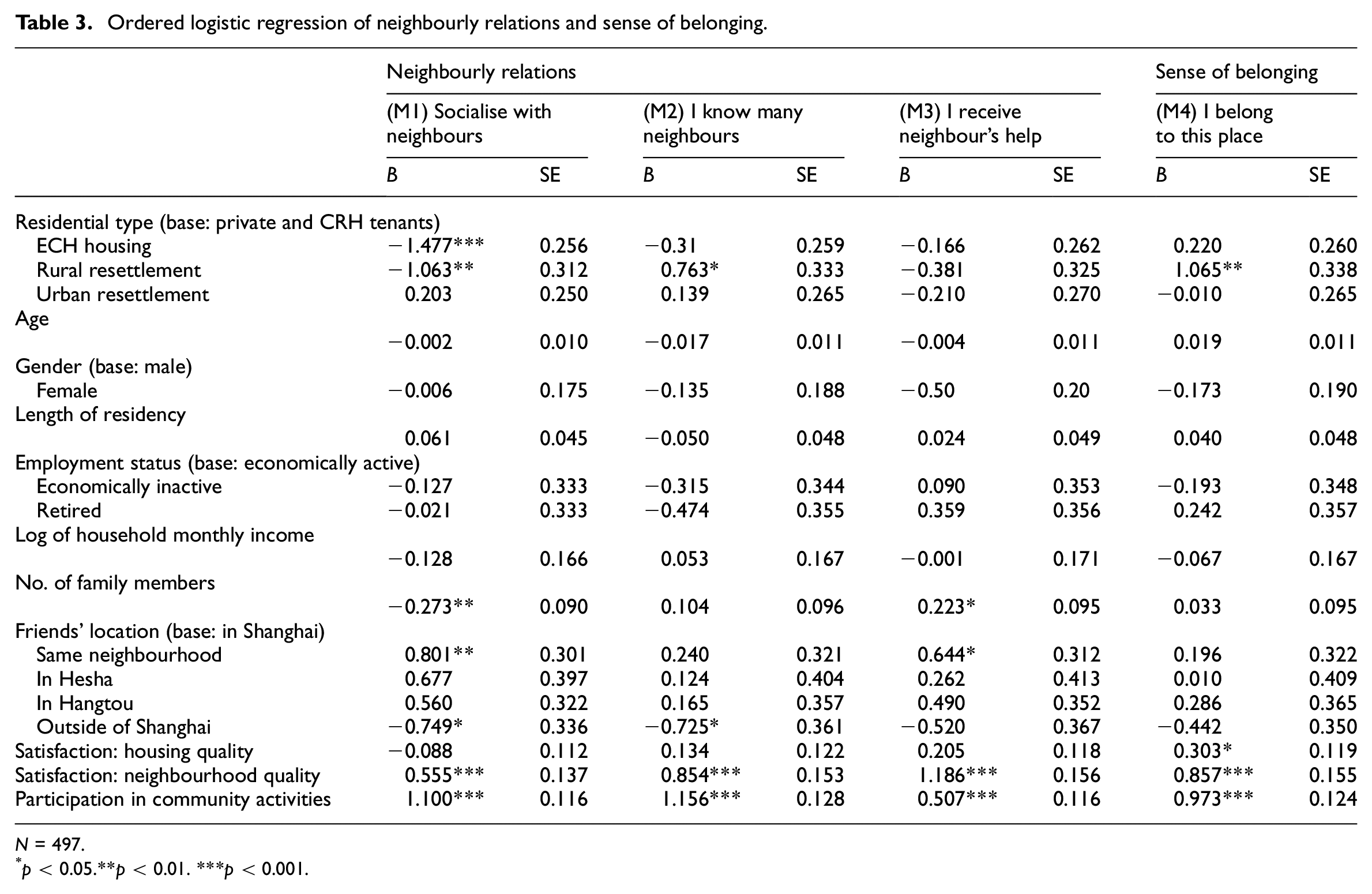
Table 3 presents the results of the ordered logistics regression. The regression reveals that higher residential satisfaction is positively associated with improved neighbourly relations and sense of belonging. Residents who are more satisfied with the overall quality of their residential neighbourhood are more likely to meet with neighbours for leisurely purposes (p < 0.001, M1), tend to know more neighbours (p < 0.001, M2) and feel that their neighbours are supportive (p < 0.001, M3) and are more likely to feel a stronger sense of belonging (p < 0.001, M4). Similarly, residents who are more satisfied with their housing quality feel a stronger sense of belonging (p < 0.05, M4). We tested whether the positive effect of residential satisfaction applies to all residents living in Hesha or only to a particular tenure type by including interaction terms for residential satisfaction and tenure type. Both interaction terms were not significant, which indicates that this positive correlation applies to all resident types. The positive effect of residential satisfaction may be because residents feel their lives have improved rather than worsened from the resettlement and are therefore more likely and willing to engage with their surroundings and residents.
1
Our interviews reveal that residents who reported more positive neighbourly relations also feel they benefited from resettlement. For example, one resident who frequently interacts with his neighbours and participates in community activities notes that he is very satisfied with his current home and that his post-resettlement housing condition improved dramatically: My old property was a Shikumen (traditional courtyard) housing. The size of the property was only 12–13 square meters…it was an old property, so it did not have much sunshine. It was a ground floor property, and it was very humid. Sanitation was poor too, and we at first were using gas canisters for cooking. You cannot compare it to my current property. The difference between the two properties is like heaven and earth…It [resettlement] is about a change to your living environment. This is the biggest benefit. (Male retired resident B resettled from inner Shanghai, July 2019)
Ordered logistic regression of neighbourly relations and sense of belonging.
N = 497.
p < 0.05.**p < 0.01. ***p < 0.001.
Secondly, the models show that community participation is positively associated with neighbourly relations and sense of belonging. Those who participate more often in community activities are 1.1 times more likely to socialise with their neighbours (p < 0.001, M1), 1.15 times more likely to know many of their neighbours (p < 0.001, M2), 0.5 times more likely to feel that they can receive help from neighbours (p < 0.001, M3) and 0.9 times more likely to feel a stronger sense of belonging (p < 0.001, M4). As before, we included an interaction term to test whether the positive effect of community participation only applied to one particular group. None of the interaction terms were statistically significant, suggesting that the positive effect applies to all resident groups. This positive association between community participation, neighbourly relations and sense of belonging may be because residents get more chances to meet new neighbours through the activities and organisations created by RCs, as an interviewee reveals: I meet many residents in the singing and dancing classes…I am a volunteer…in the evenings I go and participate in the square dancing…I got to know other residents through these activities. (Retired resident A resettled from inner city Shanghai in 2015, July 2019)
Additionally, having the majority of friends live in the same neighbourhood is positively related to residents’ neighbourly relations. Model 1 (M1) shows that compared to those residents whose majority of friends live outside of Hesha, having friends who live in the same neighbourhood increases the likelihood of socialising with your neighbours by 0.8 times (p < 0.001) and increases the likelihood of neighbourly support (p < 005, M3). Our interviews reveal that during resettlement, residents would consciously choose a property that is close to their original neighbours: This is a big neighbourhood so there will be many people you do not know, but there will still be a few households that you know from before the relocation…When we were choosing the compensation properties, we could see who chose which property already, so if I know that neighbour, I would try to choose a property that is close or next to the old neighbour. We would always try to find old neighbours, that would be optimal…This neighbourhood has residents resettled from several districts, so it feels as if there are a lot of people and very chaotic but actually if you look closely, you will notice that they still choose to live close to each other… It is not like we are living in a completely alien place; we still know some people. (Male retired resident C resettled from inner Shanghai, July 2019)
Furthermore, model 1 reveals that compared to tenants, ECH (p < 0.001) and resettled rural residents (p < 0.001) are less likely to meet their neighbours for leisurely purposes. In contrast, model 2 shows that compared to tenant residents, resettled rural residents are more likely to know many of their neighbours (p < 0.05). Being resettled collectively explains why rural resettled residents know many of their neighbours so not engaging in leisurely purposes with neighbours may be a lifestyle preference rather than aversion to neighbours. Our interviews further reveal that ECH residents are comparatively more committed to participating in formal community activities and therefore have less time to engage in leisurely activities with neighbours.
Additionally, the longer residents have lived in the neighbourhood, the more likely they are to meet with neighbours (p < 0.05) while interestingly, the more family members a household has, the less likely they are to meet with neighbours for leisure purposes (p < 0.01). From our field observations and interviews, we find that households with more family members tend to consist of parents who are busy with work and grandparents who are busy with taking care of their underage grandchildren. Commitments to work and childcare leave large households with little time to socialise with neighbours and is not an indication of poor neighbourly relations. This is evident as model 3 shows that those with more family members feel a stronger sense of solidarity with their neighbours, presumably because they can receive help from neighbours when taking care of their children.
Regarding sense of belonging (M4), the analysis shows that resettled rural residents are more likely to feel a strong sense of belonging to their neighbourhood (p < 0.05). It is also noteworthy that there are comparatively fewer factors that are significantly associated with sense of belonging. This may be because, compared to socialising with neighbours, residents have much less control over their feelings of belonging. Residential satisfaction, frequent community participation and eagerness to socially adapt to their new life may encourage residents to actively interact with new neighbours, but it is not possible to force themselves to feel a sense of belonging. One resident resettled from a traditional courtyard neighbourhood in inner Shanghai laments that despite frequently interacting with his new neighbours, the quality of neighbourly relations has changed: In our old housing, neighbourly relations were very good since everyone lived there for many decades. Neighbourly relations here is different after all. The neighbours here are not bad either, but it just feels different from the neighbourly relations we had in the Shikumen property, it had a Shikumen flavour back then (Male retired resident B resettled from inner Shanghai, July 2019).
Another resident feels the same and believes the different architectural style of the relocation properties plays a significant role when asked whether her relationship with her neighbours has changed since resettlement: Very different from before. In our old neighbourhood, we knew everybody, and we had a very good relationship with everyone. But now living here, everyone just closes their doors, and nobody knows anyone. These days, I am only meeting some of the neighbours who lived in the same place as me. But even so, our relationship has changed. For instance, in our previous neighbourhood, we dry our clothes outside in the common area. When it rains, my neighbours would remind me or vice versa to bring our beds or clothes in. Now in this place, I have seen the bed sheets from my neighbour getting wet twice already. Since we moved here, our relationship got weaker, in our old neighbourhood, our doors were all open and we would visit each other but this is obviously not possible now. Now, if you want to visit your neighbours, you need to contact them in advance. Once your doors are closed, you won’t know what is going on… If the doors are closed here, how would I be able to get in? Even my brother who lives here, if his door is closed, I can’t even go in. Also, the entrance door of each building is closed too. It is much more inconvenient now so why would you visit each other? (Retired resident A resettled from inner city Shanghai in 2015, July 2019)
Many resettled urban residents used to live in traditional courtyards, which had shared communal facilities and narrow alleyways that increased more natural encounters between residents (Wang et al., 2016). Keeping doors open is also common practice in order to increase the limited living and activity space in traditional courtyards. But many resettled residents we interviewed felt that keeping their doors open in Hesha is no longer safe. Finally, whilst the community building efforts by the RCs have managed to increase neighbourly interactions, residents remark that neighbourly interactions are more formal, distant and focused on organising activities or enforcing government mandates rather than sharing personal stories and creating close personal relationships (Retired resident A resettled from inner city Shanghai in 2015, July 2019).
Conclusion
Through the optics of displacement, studies have uncovered the detrimental effects of resettlement (Atkinson, 2015; Elliott-Cooper et al., 2020; Watt, 2013). However, the lives of resettled residents continue beyond the singular moment of physical uprooting and there is growing interest in the post-resettlement life of residents and the possibility for residents to reterritorialise and rebuild their community (Meth et al., 2022; Roast et al., 2022; Wang, 2022; Watt, 2022; Williams et al., 2022). This study has sought to contribute to this body of work by uncovering whether and how resettled residents have been able to regain their lost neighbourly relations and sense of belonging through a case in China. Our analysis supports the argument that the agency of resettled residents matters in the rebuilding of their communities (Kearns and Mason, 2013; Leitner et al., 2022). In addition, we advance the debate by showing that the reterritorialisation of resettled residents is not a purely resident-driven process but instead is also determined by the state’s practices during and after resettlement. We find that higher residential satisfaction is associated with better neighbourly relations and a stronger sense of belonging. Although residential satisfaction depends on the subjective feelings of residents, it is also determined by state decisions during the resettlement process such as the transparency of the compensation and resettlement procedures and protocols, adequate compensation levels and the physical quality of relocation settlements (Jiang et al., 2018; Wang and Wang, 2020). More generous compensation, more living space and good quality housing all help residents feel that they have benefited, rather than lost out, from resettlement, which in turn motivates them to engage with their new neighbours and new place. Furthermore, our analysis shows that having friends who live in the same residential neighbourhood or even in the wider Hesha settlement is a positive determinant. Yet, this factor is also determined by the state. Compared to the 1990s, when resettled residents either received monetary compensation or were scattered throughout the city (Shih, 2010; Zhang, 2004), in some major Chinese cities, the state now allows the collective resettlement of villagers and urban residents to choose from a wider selection of relocation settlements. This change further assists resettled urban residents in socially adapting to their new environment.
The state is also actively involved in the post-resettlement life of residents. Compared to other contexts where the state is relatively absent in rebuilding the sense of community of resettled residents (Leitner et al., 2022; Meth et al., 2022; Watt, 2022), the Chinese state has invested significant efforts in community rebuilding to ensure social stability and political legitimacy (Wang, 2022). Similar to other contexts (Leitner et al., 2022; Wallace, 2020; Watt, 2022), resettled residents in Shanghai struggle to connect with their new neighbours through their own efforts alone. Living in high-rise buildings offers few chances for residents to naturally encounter and familiarise with each other. Additionally, urban resettled residents feel little sense of belonging to the new area as they are being moved from inner Shanghai to the outskirts of the city. The community events and interest groups organised by residential committees provide an important platform for resettled residents to encounter and interact with their new neighbours, which in turn improves their sense of belonging. High levels of neighbourliness and sense of belonging also benefit the state since more residents are willing to help residential committees fulfil government mandated tasks (Wang, 2022). State-led community building however, is not straightforward and has its limitations and downsides. Despite frequent community participation and interactions, resettled residents in Hesha do not feel the same quality of neighbourliness and sense of belonging compared to their original neighbourhood. This is because state-led community building efforts are too focused on fulfilling formal tasks such as organising events and carrying out government mandates. Prior to their resettlement, neighbourly relations were characterised by face-to-face encounters and more intimate relationships. After resettlement, despite high levels of solidarity and familiarity, residents note that their current neighbourly relations are much more formal, distant and reliant on messaging applications. Decades of neighbourly relations and sense of belonging cannot be rebuilt through the state’s community building efforts alone and will require more time. It will also require more state actions that are genuinely aimed at helping residents regain their neighbourliness and sense of belonging, such as providing more space and opportunities for residents to interact with each other. Finally, this study joins recent studies in highlighting the potential for the state to improve the post-resettlement outcomes of residents (Meth et al., 2022; Williams et al., 2022). We call for a more transparent and fair compensation and resettlement process and more state investment into social infrastructure that can support the post-resettlement livelihood and sense of community of residents.
Footnotes
Declaration of conflicting interests
The author(s) declared no potential conflicts of interest with respect to the research, authorship, and/or publication of this article.
Funding
The author(s) disclosed receipt of the following financial support for the research, authorship, and/or publication of this article: This work was supported by the British Academy [SRG18R1\180249]; the UK Economic and Social Research Council (ESRC) [ ES/W003104/1]; the National Natural Science Foundation of China [42171222]; as well as by Fudan University’s ‘Double First Class’ initiative key project ‘Sociological Theory and Method Innovation Platform for Social Transformation and Governance’.
