



Abstract
The link between residential and school segregation is widely recognised as a key to explaining urban inequalities. However, most studies have focused on countries of the Global North. This paper attempts to identify to what extent socio-economic residential segregation explains secondary school segregation in Buenos Aires (Argentina). Based on a linear programming method, the study proposes a hypothetical pupil allocation model that takes into account the capacity of schools and is used as an ideal typus to compare with the real socio-economic school composition. Using a ‘decompose method’ of segregation differences to analyse the differences in segregation indices and a local segregation analysis, this paper finds that in a residential context with low segregation but high social inequalities, school segregation is a social mechanism that allows maintaining spaces of differentiation and distancing between groups. In discussion with the idea of a ‘vicious circle of segregation’, this article argues for the potential of a multi-domain approach to segregation, to understand how different domains work in articulated and complex ways to reinforce urban segregation.
Introduction
Segregation studies have traditionally focused on residence (Musterd, 2020; Van Ham et al., 2021; Van Kempen and Murie, 2009). Housing works as the reference axis of the ‘activity space’ for households (Atkinson and Flint, 2004; Musterd, 2020; Wang et al., 2012), so its location is critical to understanding their access to urban infrastructure and, in particular, to educational services. Studies also argue that the ‘neighbourhood effect’ impacts educational outcomes and schools’ composition (Nieuwenhuis and Hooimeijer, 2016), so diverse schools would be expected in diverse neighbourhood contexts. On the other hand, there is a debate on the effects of school segregation on educational results (see Domina et al., 2021; Reardon and Owens, 2014; Wodtke and Parbst, 2017). However, diverse schools are generally considered to allow the formation of heterogeneous networks, which promote social cohesion, social equality, and upward mobility (Mickelson, 2018; Owens, 2020).
Concerned with the study of urban segregation (Musterd, 2020), understood as a reality that exceeds the residential domain and encompasses different domains of social life (residential, commuting, workplaces, education, etc.), many articles have explored the relationship between residential and school segregation (see, e.g. Boterman et al., 2019; Farley, 1975; Lareau and Goyette, 2014; Owens, 2020; Taylor, 2009). In this context, the Argentine case offers an interesting and unexplored opportunity to study the relationship between both forms of socio-economic segregation. 1 Throughout the 20th century, Argentine public schools were associated with the imaginary of social integration directed by the state, becoming a meeting place between different social groups and imposing a ‘national’ common culture for these groups (Dussel, 2004; Pineau, 2019). During this period, the school was linked to the expansion of a broad rising urban middle class (Adamovsky, 2010; Dalle, 2021; Gvirtz et al., 2008) and represented a symbol of the social mixture, after the migratory waves that the country experienced between 1870 and the middle of the 20th century (Beech and Bravo-Moreno, 2014). With the increase in social and spatial inequalities since the mid-1970s (Di Virgilio, 2017, 2021), the inclusive school model fell into crisis, leading to differentiated ‘educational circuits’ for social classes (Braslavsky, 2019) and a ‘fragmented’ perception of the school experience (Kessler, 2002). In this context, Veleda (2012) suggests that the increase in educational segregation is linked to increasing social inequality and residential segregation.
This article aims to identify to what extent residential segregation explains secondary school segregation in Buenos Aires (Argentina). Its purpose is to compare the actual school composition with the hypothetical composition resulting from a centrally planned allocation model. Using integer linear programming, this model minimises the total distance travelled by students, incorporating the constraints of educational supply and demand. The contribution of this work is threefold. It is the first work that measures the relationship between residential and school segregation in an Argentinian city. In a context with low residential segregation and high social inequalities, our results indicate that school segregation plays an important role in reproducing multi-domain segregation as a whole. Second, recovering these empirical results, we propose to analyse, at a conceptual level, the potentialities of a multi-domain approach (see Boterman and Musterd, 2016; Musterd, 2020; Tammaru et al., 2021; Van Ham and Tammaru, 2016). Specifically, we discuss the idea that the relationship between domains should necessarily be understood as a ‘vicious circle’ (Tammaru et al., 2021). Third, methodologically, the work proposes two novel elements. Although linear programming methods have already been explored in many fields, their use to generate a student assignment model that works as an ‘ideal type’ is a novel proposal. Moreover, I propose an unexplored use of Elbers’ methodology (Elbers, 2023) to compare the real and the modelled situation.
The next section provides a literature review regarding the relationship between school segregation and residential segregation. In addition, we point out the advantages of the multi-domain segregation approach for addressing the relationship between residential and school segregation. Thereafter, we describe the data and the methodology used. The following section reports the results of the analysis. Finally, the conclusion section discusses the main findings from a theoretical perspective.
The relationship between residential and educational segregation
Since the Coleman Report was published in 1966 in the United States, different authors have analysed the link between residential and school segregation. Initially focused on the United States, these studies highlight the strong correlation between both domains of segregation (Farley, 1975; Frankenberg, 2013; Reardon and Yun, 2003; Reardon et al., 2000; Rivkin, 1994), for which ‘the vast majority of the variation in school segregation at the metropolitan area level is explained by residential segregation’ (Frankenberg, 2013: 558). Similarly, in the United Kingdom, Taylor and Gorard (2001: 1835) identify a ‘two-way process of mutual determination’ between the real estate market and the education market, which reinforces both forms of segregation (Burgess et al., 2005; Johnston et al., 2017; Taylor and Gorard, 2001). In these countries, the correlation between the two domains leads to closely linked residential and educational options (Kauppinen et al., 2022; Kimberly, 2014; Lareau, 2014) and leads Tammaru et al. (2021) to identify a ‘joint residential-school choice’. Housing choice, therefore, reinforces residential segregation within school districts, deepening de facto school segregation (Candipan, 2019; Frankenberg, 2013). In brief, these studies support the idea that school and residential segregation follow the same trend, leading to a ‘vicious circle of segregation’ between different domains of social life (Tammaru et al., 2021; Van Ham et al., 2018).
Based on the situation in continental European countries, Boterman et al. (2019: 3062) dispute the idea that there is a direct relationship between residential segregation and school segregation. Thus, they point out that in those places where the educational landscapes grant greater freedom in the choice of school and where the private sector is more developed, it is possible to corroborate a trend that ‘schools are more segregated than neighbourhoods’. This hypothesis questions a possible linear relationship between both types of segregation, as observed in countries with a public system based on ‘catchment areas’. Reinforcing this alternative hypothesis, Dignum et al. (2022) propose an agent-based model that explores the mechanisms by which school segregation can exceed residential segregation, even with low levels of ‘tolerance’.
Consistent with this approach, some studies emphasise the importance of school choice and private schooling in promoting school segregation, even in low-segregated residential environments. On the one hand, the promotion of school choice policies tends to favour higher levels of school segregation (Rich et al., 2021; Saporito and Hanley, 2014; Serbulo, 2019), although the specific mechanism that produces this association varies according to the institutional context (Wilson and Bridge, 2019). In turn, ‘educational mobilities’ are a key factor in understanding how these school choices are made effective based on the spatial capital of families (Barthon and Monfroy, 2011; Bonal et al., 2021). On the other hand, private education plays a crucial role in educational systems that restrict school choice (e.g. through catchment areas), allowing privileged groups residing in mixed neighbourhoods to avoid children from other groups (Bonal and Zancajo, 2020; Jähnen and Helbig, 2023; Lankford and Wyckoff, 2006; Putnam, 2007; Saporito and Hanley, 2014; Saporito and Sohoni, 2007). Even where school choice is allowed in public schools, state funding for private schools – which makes this option affordable and, therefore, accessible – deepens school segregation by implicitly allowing institutions to select their students (Bonal et al., 2019, 2021; Boterman et al., 2019; Courtioux and Maury, 2020; Elacqua, 2012). In summary, these studies support the idea that the development and affordability of the private option, and the promotion of school choice policies increases school segregation, especially in diverse neighbourhood contexts.
The link between residential and school segregation shows the complexity of ‘urban segregation’, defined as a complex mechanism in which different aspects of social life are articulated (Musterd, 2020). Related to this, the concept of multi-domain segregation (Boterman and Musterd, 2016; Van Ham and Tammaru, 2016) addresses how the different domains of social life (residential, employment, education, transport, etc.) are connected. From this approach, it is pointed out that interdependence between domains (Atkinson and Flint, 2004; Schnell and Yoav, 2001; Wang et al., 2012) configures ‘vicious circles’ (Van Ham et al., 2018) that allow for a ‘multi-domain reproduction’ of segregation (Boterman and Musterd, 2016). However, domains can operate in different directions (Boterman and Musterd, 2016; Boterman et al., 2019), although how those different directions are actually articulated has not yet been explored. Reclaiming this issue, this paper explores to what extent residential segregation explains school segregation in the Buenos Aires case and thus verifies (or not) the hypothesis of a vicious circle of multi-domain segregation.
Data and methods
This work uses two data sources for analysis. The first one is data from the TESBA evaluation, carried out on all third-year secondary students in the City of Buenos Aires – their tenth year of compulsory schooling. The evaluation identifies characteristics of the students’ homes, such as the level of studies of responsible adults – which we use for the calculation of segregation. Second, to know the demographic composition of the city, we use the 2010 Argentinian Census data. This source gives us on a micro-spatial scale the level of study of households. 2
In this article, we measure segregation using household educational attainment as a proxy for household socio-economic status. We identify three social groups: (a) up to complete primary education, including incomplete secondary education (pri); (b) complete secondary education, including incomplete higher education (sec); and (c) complete higher education, either university or non-university studies (hig).
Based on the extensive development regarding segregation measures (see Tivadar, 2019; Wong, 2016; Yao et al., 2019 for a review), this work uses the Mutual Information Index (
First, the methodological strategy was to construct a hypothetical allocation model to assign pupils in schools. This model allows assessment of the relationship between residential and school segregation under some assumptions, performing as an ‘Ideal Type’ (Idealtypus) scenario compared to real situations. In short, the model solves an integer linear programming problem with constraints, 4 that minimise the distance travelled by all pupils in the city taking into account the supply and demand features. The number of pupils assigned is based on the number of school-age people in each ‘radio’ and the absorption capacities of each school. The model describes how the allocation mechanism would behave if it only depended on the spatial proximity between schools and students’ residences, but was also constrained by schools’ capacity. 5 It represents the behaviour of a hypothetical centrally planned education system based on ‘catchment areas’. Likewise, if we assume that each residential area contributes to each school, a proportional amount of a pupil type based on its social composition, it is possible to assume a ‘theoretical’ social composition of schools (see Figure 1).

Allocation model scheme.
Taking the results of the model assignment, we propose three comparative strategies. First, we compare the real school segregation index and the one resulting from the model. According to Boterman (2019), this measure is an estimator of how much residential segregation can explain school segregation (
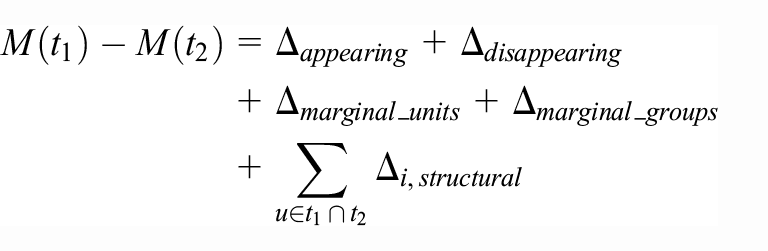
Last, retaining the structural part of the change in segregation (the last term in the equation), we carry out an analysis of local segregation (
Empirical findings
Residential and school segregation in Buenos Aires
In Latin America, few studies have addressed the relationship between residential and school segregation. Most of these focus either on educational or residential aspects, but forget the relationship between both. In articles that cover this association, one of the main concerns is how residential segregation increases the segmentation of the labour and educational market, increasing the isolation of the ‘urban poor’ (Kaztman, 2001). Considering the ‘territorial recruitment’ of schools, the growth of residential segregation and poverty enclaves appear as possible causes of the increase in educational segregation (Fornazaric Aranda, 2012; Rossetti, 2014; Veleda, 2012). In this context, residential segregation is linked to differences in access to educational services (Koslinski and de Queiroz Ribeiro, 2017; Mayorga Henao, 2017) and allows for a ‘neighbourhood effect’ on the structuring of educational opportunities (Flores, 2008).
In the residential domain, Buenos Aires presents a residential segregation pattern defined by four elements (Groisman and Suárez, 2009; Sabatini, 2006; Suárez, 2011). The first is the concentration of upper and middle ascending groups in specific areas of the city (north of the city) and some sectors of the centre. The second is large areas where most low-income sectors and informal groups reside (located not only in the southern periphery but also in the deteriorated areas of the centre). 6 Third, we find extremely poor enclaves associated with the informal housing market (called ‘villas’) and social housing, located mainly in residential areas of low-income sectors, in the south (see Figure 2, left). Fourth, in high-income neighbourhoods, we see great social diversity, where, in addition to almost all the privileged people, middle-income and even low-income sectors may coexist. The diversity in high-income areas is supported by the expulsion of the informal poor, excluded from the formal market for land and labour. Consequently, the residential areas where the poor people live are more homogeneous than those where the highest groups live (see the local segregation index in Figure 2, right). In turn, this diversity in the middle and high residential areas leads to relatively low global levels of residential segregation – compared to other countries. Figure 2 shows that segregation is considerably higher in the poorest areas (located in the south), where most of the informal origin and social housing neighbourhoods are found. Conversely, in most of the city, a low level of segregation is observed, although in some high-income areas (in the north) medium-high segregation is also observed. According to Molinatti (2021), in recent decades, Buenos Aires has experienced a contradictory process. On the one hand, there is a reduction in residential segregation levels on a global scale. On the other, there is an increase in the segregation of the ‘new urban poor’ in peripheric areas.
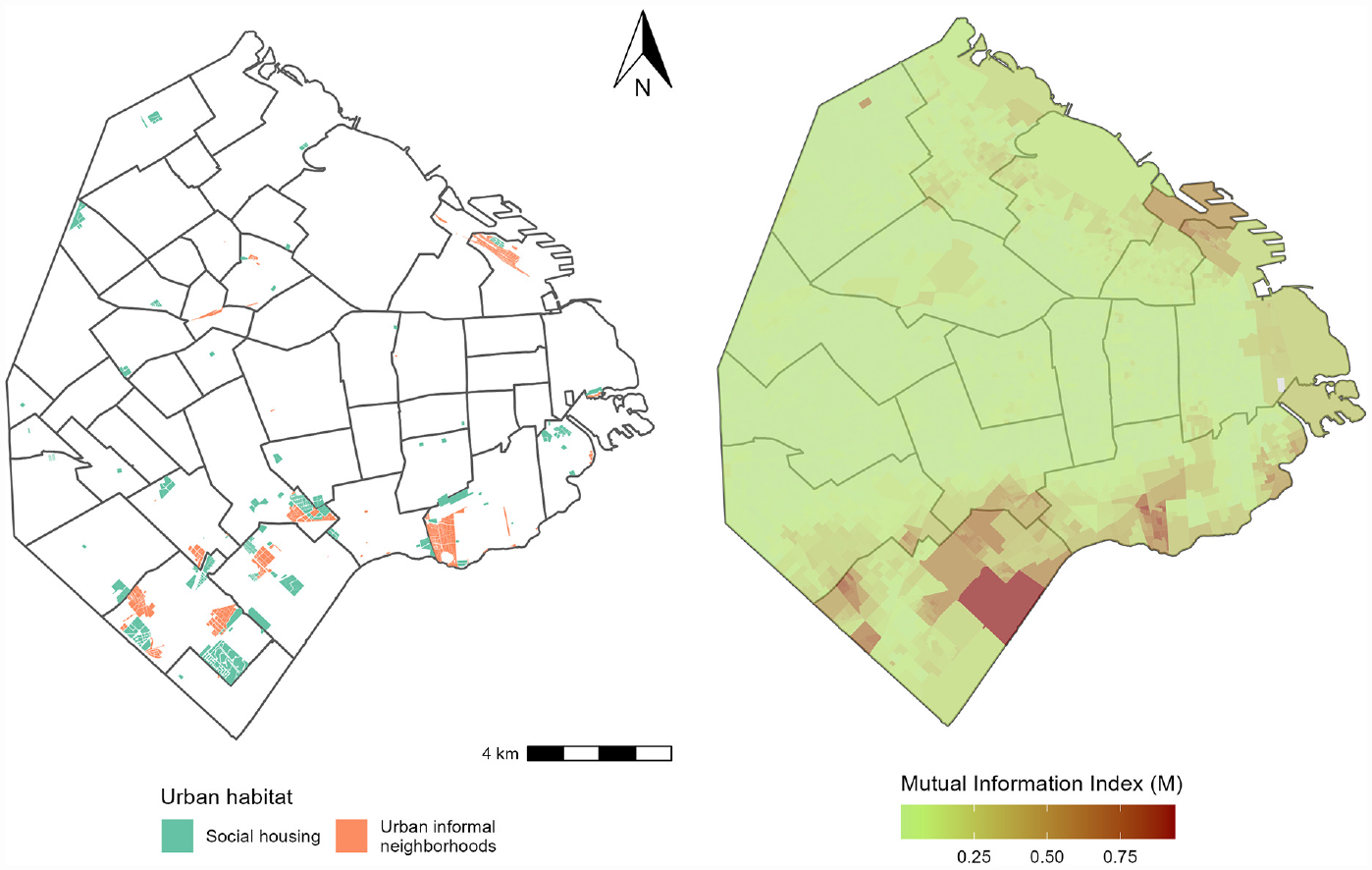
Social housing and neighbourhoods of informal origin (left) and local M index (right).
In constrast, we can briefly describe the Buenos Aires educational system based on: (a) its extensive development of state-funded private education; (b) the existence of a ‘restricted school choice’ system; and (c) the presence of a non-selective and non-stratified admission system. First, approximately half of students at the secondary level (51.9%) attend private schools. 7 To guarantee access to education, the state promoted the development of private education by subsidising supply, rather than demand, as in other countries in the region. Thus, the development of private schools is based on a state-funded system that allows not only high- and middle-income sectors, but also low-income groups, to attend private schools – although they attend different private schools (Moschetti and Verger, 2020).
Second, school choice is allowed both in the state and private systems. In the private system, families are not restricted in their school choice – beyond economic limits or hidden mechanisms from schools to select their students. In the public system, families choose a set of schools, and then the educational authority assigns students considering the vacancies and multiple criteria. However, regulations give families a wide margin of choice since there are mechanisms that allow parents to improve their chances of obtaining vacancies in selected schools. Although the area of residence is (supposedly) one of the assignment criteria, in practice families can choose almost any school, and their success depends largely on implicit strategies to exploit the interstices of the system. Considering the importance of state-funded private schools (that make them affordable) and the implicit mechanisms that allow parents’ free choice in the state system without the constrictions of catchment areas, we can identify this system as a ‘restricted choice system’ (Alegre and Ferrer, 2010).
Finally, the secondary level in Argentina is strongly integrated, so secondary education is considered ‘basic’ and ‘common’. In almost all schools, admission is not related to exams or test abilities. Although a few specialised schools have admission exams, the school allocation criteria do not include a stratified ranking of students (by general exams). This does not mean that schools teach the same contents, however formally there are no differentiations between schools and there are no stratification criteria for selecting students.
In the Argentine educational literature, only a few studies have measured school segregation (exception are: Gasparini et al., 2011; Krüger, 2012, 2013). Krüger (2012) has shown that most school segregation is explained by differences within the private–public subsystems, rather than by differences between these subsystems. Beyond the high levels of global segregation, local segregation shows great heterogeneity between schools (see Figure 3, left). Although some schools have high levels of segregation, many schools present low levels of segregation, both in the private and public subsectors. Furthermore, unlike what happens with residential segregation, there is no territorial pattern in the distribution of school segregation. The local segregation value is independent of the distance between schools. The sample semivariogram in Figure 3 (right) presents the 95% envelope (grey) for the null hypothesis (H0: local school segregation is spatially independent). Since the points of the semivariogram fall into the grey area, this shows that the distance between schools is not explanatory of the local segregation of schools. Schools close to each other do not have more similar local segregation values than schools far from each other.

Local school segregation dispersion (left); sample variogram (right).
The effect of residential segregation over school segregation
In the previous section we described residential and school segregation in Buenos Aires. Based on this general characterisation, Table 1 presents the real segregation indices in both the residential and school domains. As we expected, real school segregation is higher than residential segregation. 8 Furthermore, Table 1 presents the segregation indices that would result if we use the proposed allocation model. This model represents what the school assignment would be like with a centrally planned catchment area system; consequently, the comparison between the hypothetical situation (model) and the actual (real) situation is a rough measure of how much school segregation is explained by residential segregation through the model (see column ‘% explained’). As said, using the allocation model (instead of actual residential segregation) allows for retaining the residential segregation effect, removing the influence of institutional distribution and school capacity. In Buenos Aires, we obtain that 41.3% of school segregation is explained by residential segregation, a relatively low percentage compared to the results of Frankenberg (2013) in US cities, and Boterman (2019) in the Netherlands (see Supplemental Appendix C for an index comparison).
Residential and school segregation index; and decomposition of the difference between modelled and real segregation.
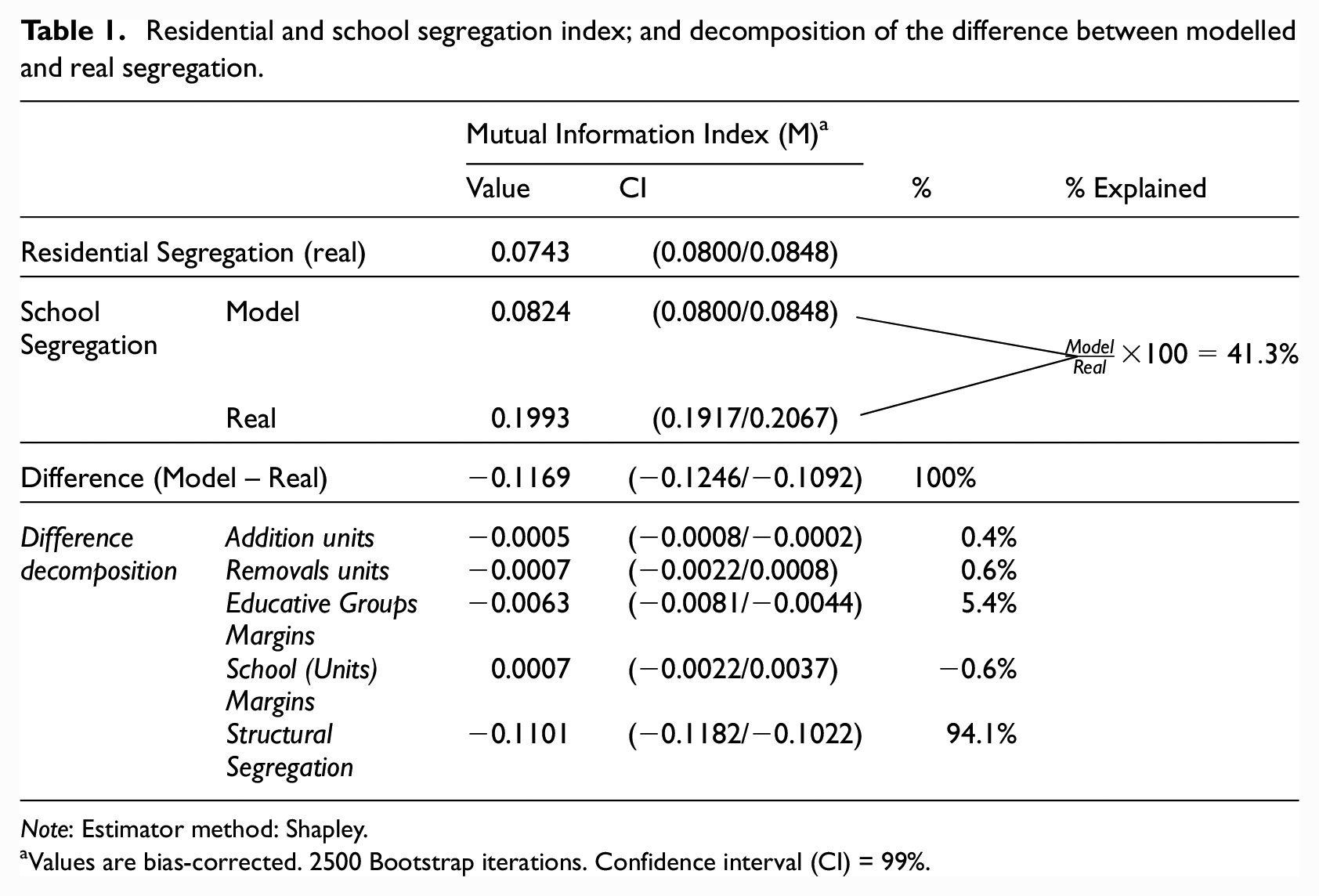
Note: Estimator method: Shapley.
Values are bias-corrected. 2500 Bootstrap iterations. Confidence interval (CI) = 99%.
The real school segregation is 0.1169 points higher than the modelled school segregation (see row ‘Difference (Model − Real)’). However, although the allocation model eliminates the effect of spatial distribution and school capacity, the comparison between the model and the real situation may be imprecise, given that the M index has a margin-dependency in both directions (Charles and Grusky, 1995). Therefore, depending on the outcome of the allocation model, the comparison between the actual and the modelled situation can be misleading – if there is a significant difference between margins in the model and the real situation. To address this problem, Elbers proposes a method to compare segregation indices by separating the ‘pure’ (or structural) effect from those arising from changes in the marginals and from the addition/removal of units. If the structural component is close to zero, the difference between the indices will be explained by changes in the marginals or by the elimination/addition of units. The bottom of Table 1 shows the result of this decomposition for the difference between the real and modelled segregation: in Buenos Aires, most of the difference between the model and reality is due to structural changes. In other words, the differences between real school segregation and the modelled are not due to a composition effect (marginal), but rather express a difference in the segregation structure.
Following Elbers, we can deepen the analysis and decompose structural (‘pure’) segregation at the local level using the average change in local school segregation scores (

Relationship between real and estimated segregation of each school (left); and location of schools according to the difference in local segregation (right).
Also, the coefficient of determination (
The right side of Figure 4 presents the placement of schools and their local segregation difference (
Discussion and conclusions
In this article, we have analysed the role of residential segregation to explain school segregation in Buenos Aires. Our results show robust evidence to conclude that in Buenos Aires residential segregation is insufficient to explain school segregation, since school segregation values are higher than those that could be expected from the residential distribution of socio-economic groups. As Boterman et al. (2019) point out, this lag is characteristic of educational landscapes in which, as in the present case, families have options for school choice and where private education is widely extended – supported by state funding – that makes this option affordable and allows its territorial expansion.
Our results show that, in the studied case, school segregation is a differentiation and stratification mechanism that acts with a certain independence from the conditions imposed by territorial constraints. Rather than a ‘vicious circle of segregation’ (Tammaru et al., 2021; Van Ham et al., 2018), in Buenos Aires, the residential and school domains of segregation exhibit relative independence from each other. However, this does not mean that both segregation domains act disjointedly. On the contrary, they act reinforcing ‘urban segregation’ (Musterd, 2020) as a whole: in a residential context with low segregation but high social inequalities, school segregation is a social mechanism that allows maintaining spaces of differentiation and distancing between groups.
The potential of a multi-domain approach to segregation lies in the fact that it allows us to understand how these domains work in an articulated and complex way. The advantage of this approach is that it enables one to identify the contribution of each of these domains to the constitution of separate spaces between groups. In cities where different domains repeat the same segregation trend, the multi-domain study of segregation is redundant, since each one contributes with a small amount of information to the phenomenon through which the spatial separation between social groups is generated. From this perspective, urban segregation exceeds its particular manifestations in the different domains. In summary, we propose to address urban segregation as a complex process that is constituted by the articulation of different domains, levels, and dimensions, each of which contributes by generating its own differentiation mechanisms.
In this paper, we have analysed a particular case (Buenos Aires), so it is important to recognise the generalisability limitations of its conclusions. Acknowledging this limitation, we believe that it would be valuable for future work to analyse which factors moderate (at macro- and meso- levels) the links between residential segregation and educational segregation – and other segregation domains. Further similar studies in other cities and institutional contexts could be useful in the development of a theoretical framework to explore this relationship. Systematic analysis of different educational landscapes may be beneficial (as demonstrated by Boterman et al., 2019), but it would be useful to incorporate other aspects such as, for example, housing market dynamics or mixing housing policies.
To the extent that we understand segregation as ‘the geographical dimension of social inequality, polarization and exclusion’ (Wang et al., 2012: 257), it is expected that the analysis of unequal societies will confront us with the segregation problem. In highly stratified societies, social differences will seek to express themselves in spatial configurations through segregation; that is, the concentration of social groups in places where it is possible to avoid contact with other groups. Our empirical results for Buenos Aires show that in societies with high social inequalities, the development of mixed residential areas is not enough, since inequalities will seek other domains to express themselves spatially. 9 Although the development of exchange and exposure spaces is desirable, as long as socio-economic inequalities are maintained, it is presumable that individuals will seek other ways to express their differences. Therefore, the promotion of more integrated and less segregated cities must consider the importance of generating economically egalitarian societies (Tammaru et al., 2021: 70).
Supplemental Material
sj-docx-1-usj-10.1177_00420980231178401 – Supplemental material for School and residential segregation in the reproduction of urban segregation: A case study in Buenos Aires
Supplemental material, sj-docx-1-usj-10.1177_00420980231178401 for School and residential segregation in the reproduction of urban segregation: A case study in Buenos Aires by Pablo Santiago Serrati in Urban Studies
Supplemental Material
sj-html-2-usj-10.1177_00420980231178401 – Supplemental material for School and residential segregation in the reproduction of urban segregation: A case study in Buenos Aires
Supplemental material, sj-html-2-usj-10.1177_00420980231178401 for School and residential segregation in the reproduction of urban segregation: A case study in Buenos Aires by Pablo Santiago Serrati in Urban Studies
Footnotes
Acknowledgements
I would like to thank Dr. Mercedes Di Virgilio, Agustina Frisch, Sofía Arroñade and Ivana Smolar for their reading and comments at different stages of the writing of this article. I would also like to thank the three anonymous reviewers for their feedback and suggestions.
Declaration of conflicting interests
The author declared no potential conflicts of interest with respect to the research, authorship, and/or publication of this article.
Funding
The author disclosed receipt of the following financial support for the research, authorship, and/or publication of this article: Consejo Nacional de Investigaciones Científicas y Técnicas [CONICET].

Supplemental material
Supplemental material for this article is available online.
Notes
References
Supplementary Material
Please find the following supplemental material available below.
For Open Access articles published under a Creative Commons License, all supplemental material carries the same license as the article it is associated with.
For non-Open Access articles published, all supplemental material carries a non-exclusive license, and permission requests for re-use of supplemental material or any part of supplemental material shall be sent directly to the copyright owner as specified in the copyright notice associated with the article.
