




Abstract
Although research has been increasing on agritourism, many questions remain. Studies have indicated that agritourism can bring both economic and noneconomic benefits to farmers and that sustainably raised agriculture products can lead to both health and environmental benefits. The current study explores the relationship between preferred meat attributes of the consumer (PMA), interest in visiting an agritourism farm (AI), and increased loyalty to a meat product or farm, termed the food system bond (FSB), among consumers in North Carolina, United States. Results indicate that (1) a preference for sustainable meat products has a positive influence on both interest in visiting a farm that raises livestock sustainably and on the food system bond and that (2) agritourism has a positive impact on the food system bond. This suggests the potential for agritourism to connect specialty consumers with niche farmers, increasing farm revenues, supporting sustainably raised agriculture, and fostering overall rural sustainability.
Introduction
Agritourism has long been used as a means to educate consumers and establish an emotional connection and relationship with farms (Bondoc 2009; Nickerson et al. 2001 ; Rich, Tomas, and Xu 2011). It has also been shown to serve as a catalyst that enables farmers to continue farming, enhance their personal and familial quality of life, increase and diversify their market, better respond to market opportunities, and increase on-farm sales (Bondoc 2009; Ollenburg and Buckley 2007 ; Tew and Barbieri 2012). As agritourism matures by providing more diversified offerings and gains a wider acceptance among visitors, research on this phenomenon must also move out of its descriptive infancy. It must expand to address ontological issues and employ innovative approaches to uncover the complexities and nuances of agritourism, not yet examined (Ainley and Kline 2012; Gil Arroyo, Barbieri, and Rozier Rich 2013). These investigations should consider perspectives within the farming community as well as address the multiplicity of their consumers. It is important to explore not only the agritourism experience, but also how the purchase of food crops and livestock raised on the farm can further influence the relationship between the agritourism farm and the consumer. In response to the need for more research of this nature, this study delves further into the relationships between preferences for sustainable meats, interest in agritourism, and the potential bond with locally produced food and food/farmer branding (i.e., customer loyalty).
We place this investigation within the context of the sustainable meat industry in North Carolina (NC) in the southeastern United States for a number of reasons. Sustainable meat is currently enjoying a rise in popularity in the United States (Gwin 2009); in North Carolina in particular, considerable attention and resources are being devoted to locally grown and organic methods of food production (Curtis, Creamer, and Thraves 2010; Kirby, Jackson, and Perrett 2007). For example, in 2006 the North Carolina land-grant university system developed a program known as “NC Choices” that promotes local, niche, and pasture-based meat supplies (NC Choices, http://www.ncchoices.com/). Its efforts include providing training and technical assistance, fostering networks, improving marketing, and assisting in regulatory reform for niche meat production and processing. Additionally, the national certification organization known as Animal Welfare Approved (AWA) that focuses on humanely raised livestock has a strong presence in North Carolina: more than 100 farms carry the AWA label, and both the Lead Auditor and the Lead Farmer and Market Outreach Coordinator are based in the state.
The terminology used in niche meat production is broad and varied (e.g., local, pasture raised, grass fed, hormone free, humanely raised). For example, Food Labeling for Dummies (AWA 2011) lists more than 80 terms that appear on consumer labels for meat and animal products. One unfortunate by-product of this ambiguity has been vulnerability to issues of greenwashing, that is, the “practice of making unwarranted or overblown claims of sustainability or environmental friendliness in an attempt to gain market share” (Dahl 2010, p. 247) as well as unscrupulous certification programs similar those that have occurred within the tourism industry (Dahl 2010; Francis et al. 2007; Honey 2002; Hunt and Stronza 2011).
Despite the prevalence of sustainable meat operations in North Carolina, challenges for these small producers remain. In a 2012 statewide survey, 41% of respondents cited lack of direct-to-consumer market outlets as a challenge to growing their meat business, with another 66% identifying lack of capital as a challenge (NC Choices 2012). Agritourism, however, can help to mitigate some of these challenges, specifically by bringing potential customers to the agritourism farm, reducing farmers’ need to sell at outside venues, and supplementing their income from offering agritourism products in addition to on-site meat sales. In fact, in a survey of large animal meat producers in the Appalachian region of North Carolina, producers noted that they sell 43% of their meats at on-farm stores (Local Food Research Center 2012). Agritourism farmers in North Carolina have also reported that agritourism has been important in accomplishing farm operations goals, including capturing new customers, educating the public about agriculture, increasing direct sale of products, providing additional revenues to keep farming, generating off-season revenue, and providing jobs for family members (Xu and Rich 2012). Additionally, research has shown that visitors desire to have more opportunities to have interactions or hands-on experiences with the animals (Rich, Tomas, and Xu 2011).
Previous studies have clearly shown that agritourism can bring both economic and noneconomic benefits to farmers. Similarly, sustainably raised agriculture, particularly meat, can lead to both health and environmental benefits (Duchin 2005; Pew Commission 2008; Pimentel and Pimentel 2003). With growing trends in the United States toward sustainably and locally produced food, it is timely to explore the interactions between agritourism, sustainably raised meat, and customer loyalty. However, many questions remain as to the motivations of visitors, their willingness to bear the cost of visiting the farm, willingness to purchase on-farm products, and the emotional and purchasing decision impacts on visitors after visiting the farm. The current study explores these issues among a purposive sample of “farm and food-minded” customers to determine the relationship between preferred meat attributes, interest in visiting an agritourism farm, and increased loyalty to a meat product or farm.
Implications of Agritourism
Visiting farms has been a recreation choice among the leisure classes in Europe and the United States since the early part of the last century (Giudici and Dessi 2011); however, scholarly research in this area is still in its very early stages (Ainley and Kline 2012). There are a number of definitions of agritourism (sometimes called agrotourism, farm tourism, or farm-based tourism), utilized by scholars and practitioners, but most definitions include some sort of service, tourism, educational or leisure activity that takes place on a working farm (McGehee and Kim 2004; Tew and Barbieri 2012). Phillip, Hunter, and Blackstock (2010) proposed a typology of agritourism that helps to illuminate the array of activities that take place within this form of travel. The five typologies include nonworking farm, working farm passive contact, working farm indirect contact, working farm direct contact (staged), and working farm direct contact (authentic) agritourism. Utilizing the Phillip, Hunter, and Blackstock (2010) typology, Gil Arroyo, Barbieri, and Rozier Rich (2013) conducted a survey among residents, farmers, and extension faculty in Missouri and North Carolina to develop a shared definition of agritourism. Based on study results, they propose a working definition of agritourism as “farming-related activities carried out on a working farm or other agricultural settings for entertainment or education purposes” (p. 45).
Agritourism is often one part of a diversified income structure on the farm (Barbieri and Mahoney 2009). In studies of agritourism, scholars have found that incorporating agritourism activities into the overall profit structure can bring a number of economic and noneconomic benefits to farmers. These include direct revenues, increased marketing, enhanced quality of life for the farmer, and education of the public (Tew and Barbieri 2012). Farmers also choose to engage in agritourism for a range of motivations, including the opportunity to obtain external revenue that can smooth income fluctuations, educate the consumer, pursue farming as a hobby, or obtain friendship and companionship from guests (McGehee and Kim 2004). Agritourism could be particularly significant for smaller farms. Che, Veeck, and Veeck (2005) argue that agricultural restructuring (i.e., price-costs squeezes, global competition, and the need to adopt capital intensive technologies) has had a disproportionately negative impact on small farms . They suggest that diversification through agritourism might be able to help them better cope with economic challenges. Although some farms continue to practice monoculture cropping, many are moving to specialty crops, with a noticeable percentage now raising rare or nontraditional animals (Tew and Barbieri 2012). For operators involved in sustainably raising meats, agritourism offers an opportunity to enhance marketing, educate the consumer, and build customer loyalty for their product.
Sustainable Meat Production
For most of human history, people were connected to their food sources, initially through hunting or foraging and later through family-run agricultural operations (Auld, Thilmany, and Jones 2009). However, as the United States grew economically, agricultural operations were centralized, thus leading to a decrease in family farms and an increase in factory farming (Pluhar 2010). Similar growth trajectories in developing countries have contributed to an increase in meat consumption worldwide. Currently, it is estimated that two billion people worldwide live primarily on a meat-based diet, while four billion live on a plant-based diet (Pimentel and Pimentel 2003). Pimentel and Pimentel (2003) suggest that the amount of livestock maintained in the United States to support the food supply outweighs the U.S. human population by five times. Additionally, the U.S. livestock population consumes more than seven times as much grain as is consumed directly by the U.S. population. They indicate that the amount of grains that are fed to U.S. livestock would be sufficient to feed about 840 million people on a plant-based diet.
Duchin (2005) offers a framework for analyzing changes in diets, and discusses the many health and environmental benefits that can be gained by shifting to a more sustainable diet. She argues that studies conducted by the United States Department of Agriculture (USDA) in the late 1990s showed that even a modest shift in consumer diets could have a profound impact in land use and health outcomes, but that these adjustments would run counter to U.S. farm policy and were therefore never advocated. Duchin (2005) makes the case that shifts in diet are particularly necessary for affluent countries, who receive most of their caloric intake from sugar, processed foods, and meat. Research shows that the switch to more sustainably raised meats (e.g., from grain-fed to grass-fed beef) can have health benefits, including lower levels of fat and cholesterol and higher levels of vitamins A and E (Daley et al. 2010). Horrigan, Lawrence, and Walker (2002) argue that prevailing agricultural production methods in the United States also result in a number of environmental harms, including the erosion of plant and animal biodiversity as a result of cultivating monocultures, the pollution of soil, water, and air due to synthetic chemical fertilizers, soil erosion, and unsustainable levels of water consumption. Their research does not apply merely to meat production, but since such high levels of grains in the United States are devoted to feeding livestock, this overall impact cannot be ignored.
While rising meat consumption has led to an overall increase in factory farming, some communities have continually maintained a focus on locally sourced food products, and others have seen a recent return to this method of production in response to the observed drawbacks of current agricultural practices. Today, more than any time in the past half-century, consumers are paying greater attention to where their food comes from and how it is processed. For example, the Appalachian Sustainable Agriculture Project found that the number of consumers in Western North Carolina who indicated that local food is a significant factor in determining where they eat or shop increased from 42% to 70% between 2004 and 2011 (Local Food Research Center 2012). There are many reasons that people choose to eat sustainably produced products, particularly meat. These motivations include concerns over the humane treatment of animals, environmental impacts associated with concentrated production areas and shipping food thousands of miles for consumption (Auld, Thilmany, and Jones 2009), and food security and food sovereignty (Gregory and Gregory 2010). The trend in vegetarianism seems to have flatlined over the past 14 years; Gallup, Inc. notes that in 2012, only 5% of the U.S. population consider themselves a vegetarian, down slightly from 6% in 2001 (Newport 2012).
The growing trend of seeking locally produced food applies specifically to the hospitality and tourism industry, including agritourism, which rely heavily on local identity to attract visitors. Alonso and O’Neill argue that the use of locally sourced foods can allow hospitality operators to create an authentic “blueprint” of a destination, which represents the essence of local cuisine (2010). The U.S. National Restaurant Association (NRA) listed locally sourced meats and seafood as the top trend for 2013 and 2014. The results of this survey of more than 1,800 chefs around the country also showed locally grown produce and environmental sustainability among the top five emerging trends. Despite trends toward farm consolidation and factory farming, a parallel trend toward locally produced and sustainably sourced food has created the space for dialogue regarding how agritourism at sustainable livestock farms can enhance customer loyalty and grow this sector.
Behavior Change and Environmental Sustainability: The Role of Tourism
Scientists agree that a number of human practices are unsustainable for the planet (Doran and Zimmerman 2011 ; Pearce 2014), yet widespread changes to human behavior have not been realized. According to Gifford (2008), these kinds of resource conundrums translate into social dilemmas in the consumption decision-making process when consumers’ personal interest conflicts with the collective interest. Still, individual consumption decisions are critical to promoting sustainability. McKenzie-Mohr and Schultz (2014) go so far as to claim that, “Behavior change is central to the quest for a sustainable future” (p. 35). Gifford suggests that for individuals to engage in decision-making strategies, they must first have a level of “dilemma awareness,” that is, they must be aware of the resource/social dilemma. However, McKenzie-Mohr and Schultz (2014) argue that awareness alone is not sufficient to spur changes in behavior and instead suggest that a targeted set of behavior-change tools are necessary (e.g., commitment, prompts, norms, goal setting, convenience) to address the behavior in question.
Gifford (2008)proposes that once an individual has become aware of the social dilemma, he/she can respond in a variety of ways including taking no action, making assurances for equitable outcomes, or “straight greed” “, where the individual is solely concerned with their own well-being. These decision-maker strategies will result in outcomes for both the decision-maker (e.g., satisfaction, regret, reprobation, admiration) as well as the environment (e.g., resource depletion, extinction, sustainability). According to McKenzie-Mohr and Schultz (2014), however, one of the most common reasons for the adoption of a new sustainable behavior is through social diffusion. They suggest that once someone adopts a sustainable behavior, they share this with their social networks, which prompts their acquaintances to also engage in the pro-environmental behavior. This may have certain implications for sustainably focused tourism, as tourism is often considered a social phenomenon (Ap 1992), and indeed even consumption within tourism can itself be a social process (Urry 1990).
Several researchers have explored how tourism as a process can transform the tourist both during and after the travel experience (Jafari 1987 ; McKercher and Lui 2014). A number of researchers have also studied how consumer behavior influences tourism purchases (Gnoth, Andreu, and Kozak 2009 ; Leslie 2012 ; Mattila 2004 ; Moutinho 1999). Still, there are few investigations on how tourism experiences might influence consumer behavior. In tourism, most research on consumption patterns have stemmed from the theory of reasoned action (TRA; Ajzen 1991 ; Fishbein, and Ajzen 1975) and subsequent theory of planned behavior (TPB; Ajzen 1991). These theories suggest that behavioral intention could be predicted based on attitudes, subjective norms, and perceived behavioral control. Ajzen suggested that the stronger a person’s intention to perform a behavior, the more likely he or she would be to engage in that behavior. Others, however, have argued the importance of impulse purchases and spontaneous consumption (Stern 1962 ; Kollat and Willett 1967). Further, experiential learning theory suggests that behavior can be modified based on informal learning opportunities and tangible experiences (Kolb 1984). Newer applications of TRA and TPB have shown that behavioral intentions can lead to actions, particularly in terms of green initiatives (Chen and Tung 2014; Coleman et al. 2011; Mishra, Akman and Mishra 2014). Meng and Xu (2012) suggest, however, that tourism consumption is influenced by a combination of planned, impulsive, and experiential behaviors. As a unique process that resides in this nexus, tourism is well positioned to spur changes in consumer behavior.
Change in the behavior of tourists (both during and after the travel experience) has been investigated in a number of tourism areas delineated by various terms: critical tourism studies (Ateljevic 2011), sustainable tourism (Barr et al. 2010), educational tourism (Stone and Petrick 2013), ethical or moral tourism (Caton 2012), reconciliation tourism (Higgins-Desbiolles 2003; Yu and Hyung Chung 2001), hopeful tourism (Pritchard, Morgan, and Ateljevic 2011), peace tourism (Scott 2012; Vinay and Suvidha 2009), voluntourism (Alexander 2012; Brown 2005; McGehee 2002; McGehee, and Santos 2005; Mustonen 2005), ecotourism (Won Hee and Moscardo2005), social tourism (Minnaert 2012), climate change adaptation (Higham, Cohen, and Cavaliere 2014), protected area management (Stanford 2014), zoo tourism (Olukole and Gbadebo 2008), wildlife tourism (Ballantyne, Packer, and Falk 2011; Hughes 2003), and agritourism (Amsden and McEntee 2011). The latter three topics, among others, delve into the construct of “animals and ethics” and specifically the consumption of animal-based experiences in tourism. Consumption in this regard includes both ingestion of animals as food as well as employing animals for entertainment, recreational, or educational purposes (for an extended look at this subject, see Fennell 2012). This study explores agritourism experiences as a means to change tourist behavior, particularly the consumption of meat products, after their farm experience.
Green Marketing, Purchasing Behavior, and Customer Brand Loyalty
It is evident from the literature that marketing is essential for agritourism operators. One component that pertains to sustainable meat is effective labeling (Ilbery and Maye 2006). Ilbery and Maye suggest that by using product marketing, labeling, and accreditation schemes, farmers can help to reconnect farming, food, the countryside, the environment, and consumers. They explain, “This link between agriculture, landscape, biodiversity and identity, conceptualized here as a process of ecological localization, partly stems from and is aided by branding-based activities, an unexplored aspect of economic geography more generally” (p. 508). However, in the United States there is confusion over the meanings behind meat labels, the associated federally regulated terms such as free-range, natural, organic, and hormone and/or antibiotic free (USDA 2011), as well as unregulated terms including humane, locally grown, and sustainable (AWA 2011). Furthermore, the terms sanctioned by USDA are highly regulated and can be burdensome for small farmers to acquire these labels. One successful strategy Youngs (2003) found was to employ slogans such as “Support local, think local, buy local” (p. 540). The challenge lies in offering a clear way to understand labels that are consistent yet allow farmers to connect with their consumers in meaningful ways.
Previous studies have demonstrated changing consumer behaviors, particularly at the household level, as a response to increasing environmental issues. In the past few decades, there has been a shift from global collective action to a focus on local and personalized responses to prevailing environmental issues, resulting in a range of behavioral responses such as turning off the tap when brushing teeth, increasing recycling habits, and change of purchasing habits such as buying locally produced foods (Gilg, Barr, and Ford 2005). They found that the consumers that they classified as committed environmentalists were most likely to engage in green purchasing behavior than mainstream environmentalists, occasional environmentalists, and nonenvironmentalists who may have still engaged in pro-environmental behaviors.
Although it has been shown that favorable attitudes toward sustainable behaviors does not necessarily predict purchasing behavior, certain indicators can increase sustainable and ethical food consumption (Mainieri et al. 1997; Vermeir and Verbeke 2006). These can include involvement with sustainability on the part of the consumer, certainty with respect to sustainability claims, and perceived consumer effectiveness in terms of the extent to which the consumer believes that his/her personal efforts can contribute to the solution of a problem (Vermeir and Verbeke 2006). Koller and Floh (2011) have suggested that several factors can influence customer loyalty in green consumerism, including perceived economic and social value of the purchase. Chen (2013) has further argued that in addition to perceived value, “green satisfaction” (i.e., a customer’s satisfaction of the products and fulfillment of their environmental desires, expectations and needs) and “green trust” (i.e., belief that the product keeps commitments toward environmental protection) can also directly influence customer loyalty in a positive manner. Despite the strong relationship these researchers have found between environmental attitudes, behaviors, and the intention to purchase sustainable goods, certain barriers still exist. According to Vermeir and Verbeke (2006), while attitudes were positive, low perceived availability of sustainable products resulted in low intention to buy. Agritourism is well positioned to fill this gap by bringing tourist consumers directly to the product, making them easily available for purchase.
Linking Agritourism with Customer Loyalty in Sustainable Meat Purchases
Hurst and Niehm (2012) argue that shopping is an essential leisurely activity of tourists, with nearly one-third of travel expenditures in the United States being dedicated to this pursuit. They suggest that there is a largely untapped market in rural areas for both vacationers and locals, with buyers in both categories expressing neutral satisfaction in shopping selection. If agritourism operators are able to convert this deficiency to on-farm purchases, including sustainable meat products, they will not only increase their income but also further diversify their revenue streams. Russo (2012) found that formerly tobacco-dependent regions in the Southern United States adopting direct-marketing local food initiatives did not experience the catastrophic decline in agricultural sales expected with the substantial decline in tobacco farming in the region.
With its distinct roots in rural agricultural production, agritourism is uniquely positioned to serve as a nexus where conscientious consumers can merge travel and tourism with a commitment to locally sourced, sustainable food products. Giudici and Dessi (2011) argue that speed has become a central aspect of Western culture since the end of World War II. They suggest that several movements have emerged in response to this change of pace, including the slow food movement, which has a strong focus on sustainably sourced foods. They call for a philosophical approach to traveling via agritourism. They write of their research that
the survey outcomes highlight that farm tourism experiences allowed people to (re)discover traditional and natural food, really savor and appreciate everything around them, slow down their rhythms, and thus, learn about the speed required to regain contact with their lives. In addition, agri-tourism permits tourists to break away from urban rhythms and relax in preparation for upcoming work-weeks and teaches them about traditional cooking and the slow life, lessons which farm tourists can integrate into their everyday lives. (p. 92)
Learning about sustainable raising and slaughtering processes of livestock can be one step in moving toward a more integrated slow philosophy that spans both food consumption and agritourism activities.
Preliminary research has shown the nature of visitor relationships with agritourism farms can impact customer loyalty as well as profits. The implications of retaining customers for the agritourism business can be significant. Reichheld and Sasser (1990) found across a number of industries that a 5% increase in customer retention translated into a 25% to 85% increase in profits. To effectively enhance customer loyalty among agritourism businesses, it is especially important that both the experiences and products offered match the expectations of visitors (Ho and Tsai 2010; Lui, Lin, and Wang 2012). For example, farms offering sustainable meat products should clearly showcase the humane treatment of animals. Focusing on positive relationship marketing (i.e., interactions between agritourism staff and tourists as well as intergroup interaction among visitors) can also lead to an increase customer loyalty (Choo and Petrick 2012). Providing opportunities for visitors to enjoy positive experiences with their companions is particularly important because it has a positive effect on both first-time and repeat visitors. Additionally, Youngs (2003) found that integrated marketing with nearby farms could be beneficial for farm outlets (e.g., farmers markets, produce stands) since a large number of visitors were likely to also visit neighboring farms. Therefore, it is essential that agritourism farmers understand their clientele’s preferences to improve customer loyalty and visitor retention.
Conceptual Framework
The current study explores the relationship between preferred attributes of meat products, interest in visiting an agritourism farm, and increased loyalty to a meat product or farm. In particular, this study explores the influence that agritourism can have on a consumer’s food purchasing behavior as well as his or her brand loyalty to the farm itself. Meat was selected as the targeted agricultural product to study for several reasons. First, within the United States, meat consumption is at an all-time high (USDA 2003); therefore, insight into behavior-changing programs could cause a transformative shift in the market. Second, the price point of meat is higher than that of vegetables, fruits, or grains, requiring greater investment on the part of the consumer. Logic follows that if consumers’ purchasing can be successfully influenced to buy a higher-quality, “more environmentally sound” meat product, less expensive agricultural products should follow. And finally, the rate of meat consumption and methods of meat production are not considered to be sustainable (Hoogland, de Boer, and Boersema 2005). Based on this rationale, and the aforementioned literature on agritourism, green consumption, and brand loyalty, the current study evaluates desired meat attributes, and interest in agritourism as they relate to the connection felt with the food system, termed here as food system bond (FSB).
Measures and Data Collection
The survey was constructed in partnership with AWA, a national nonprofit organization that “audits and certifies family farms raising their animals humanely, outdoors on pasture or range” (AWA, n.d.). The purpose of the survey was to understand preferences regarding the purchase of conventionally and sustainably raised animal products. There was no budget allocated to the project; therefore, the solicitation and data collection methods were carried out online. Data were collected through an online survey platform from February to April 2011. Solicitation to participate in the survey was done in several ways: AWA announced the survey in their electronic and social media outlets (website, electronic newsletter, Facebook page, Twitter feed) and through an e-mail to their member farms; solicitation announcements were also e-mailed to statewide list servers in California, Missouri, and North Carolina (representing west coast, east coast, and midnation states), and to various food media outlets, as well as posted on various food-related Facebook pages, and “tweeted” to food-related Twitter feeds. Additionally, printed postcards advertising the study were distributed to attendees of an AWA-sponsored food and music event held in North Carolina. The use of a purposive sampling method was deemed appropriate because of the limited budget, and especially to gain a broad coverage of the United States to fulfill the study purpose. Each participant was entered into a drawing for a $100 gift certificate to use at an AWA farm of the winner’s choice as incentive to complete the survey.
Survey questions were developed from literature in food science, agricultural marketing and economics, hospitality management, culinary tourism, and agritourism, as well as consumer reports originating from USDA, Appalachian Sustainable Agriculture Project, and Animal Welfare Institute (AWA 2011; Andersen, Oksbjerg, and Therkildsen 2005; de Boer, Boersema, and Aiking 2009; Bondoc 2009; Hoogland, de Boer, and Boersema 2005; Kirby, Jackson, and Perrett 2007; Roeger and Leibtag 2011; Verhoef 2005). Five staff members of AWA reviewed the questionnaire, which led to revisions in both question content and format prior to its national launch. The final survey instrument was very comprehensive in nature, querying about general consumption of animal products; importance of attributes to purchase meat products in grocery stores and restaurants; perceptions of food product labels, animal welfare practices, and sustainable agriculture; the role of the food offer in their tourism behavior; awareness of sustainable tourism practices, agritourism-related perceptions and behaviors; and sociodemographic indicators.
To portray the wide variety of terminology used in “niche” meat production (e.g., local, pasture raised, grass fed, hormone free, humanely raised), the term sustainably raised was used and a definition was provided to the respondents. To capture the variety of outputs from the farms, the term animal products was used to include eggs, dairy, fish, and fiber products in addition to meats. The following statement was included throughout the survey: “For the purposes of this study, ‘sustainably raised animal products’ refers to products from animals that are raised outdoors, on pasture or range land, without the use of hormones or unnecessary antibiotics, and with a high standard of animal welfare and minimal environmental impact.” “Unnecessary antibiotics” are those used when the animal is not sick, injured, or in need of them.
Three constructs were developed to explore the relationship of preferred meat attributes, agritourism, and food system bond. The Preferred Meat Attributes (PMA) construct was derived from the survey question “Please indicate the importance of the following attributes when you buy animal products (meat, dairy, eggs) in the grocery store,” followed by a list of 15 food attributes such as taste, price, local origin, organic, grass-fed, natural, no added hormones, and high standards of animal welfare. Respondents were asked to note the level of importance of each attribute, using a four-point scale of very important, important, somewhat important, and not important.
The Agritourism Interest (AI) construct included three variables, Visiting Interest, Willingness to Drive, and Willingness to Pay. They were operationalized with the following questions: “How interested would you be in visiting a farm that raises animals sustainably?” “What is the most you would be willing to pay per person for a two-hour tour of such a farm, including samples of products raised on the farm?” and “How far would you travel from your home (on a day trip) to visit a farm that raises animals sustainably?” Each question provided response options that the respondents would select.
The Food System Bond (FSB) construct was developed from a three-part question that measured the likelihood of an agritourism experience to influence farm loyalty, meat purchasing, and a feeling of connectedness with one’s food, “Do you think that a visit to a farm that raises animals sustainably would . . . Increase your loyalty to that farmer/brand? Increase your likelihood of purchasing similar products in the future? and Strengthen a connection between you and your food?” The response options for each was the same: yes definitely, probably would, probably would not, definitely not, and not sure. Data were analyzed in SPSS 19 and AMOS 20.
Model and Hypotheses
This study modeled the role of agritourism in the consumption of sustainable meats by exploring three paths: (1) Preferred Meat Attributes and Agritourism Interest; (2) Preferred Meat Attributes and Food System Bond; and (3) Agritourism Interest and Food System Bond. The hypothetical model was constructed based on the extant literature; each path represents a hypothesized positive (+) or negative (–) relationship (Figure 1). Additionally, it was hypothesized that respondents who were primarily raised in an urban, suburban, and rural environment would vary in their AI–FSB path. In sum, the following four hypotheses frame this study:
Hypothesis 1: Preferred Meat Attributes has a positive impact on Agritourism Interest.
Hypothesis 2: Preferred Meat Attributes has a positive impact on Food System Bond.
Hypothesis 3: Agritourism Interest has a positive impact on Food System Bond.
Hypothesis 4: The Agritourism Interest impact on Food System Bond varies across respondents raised in urban, suburban, and rural settings.
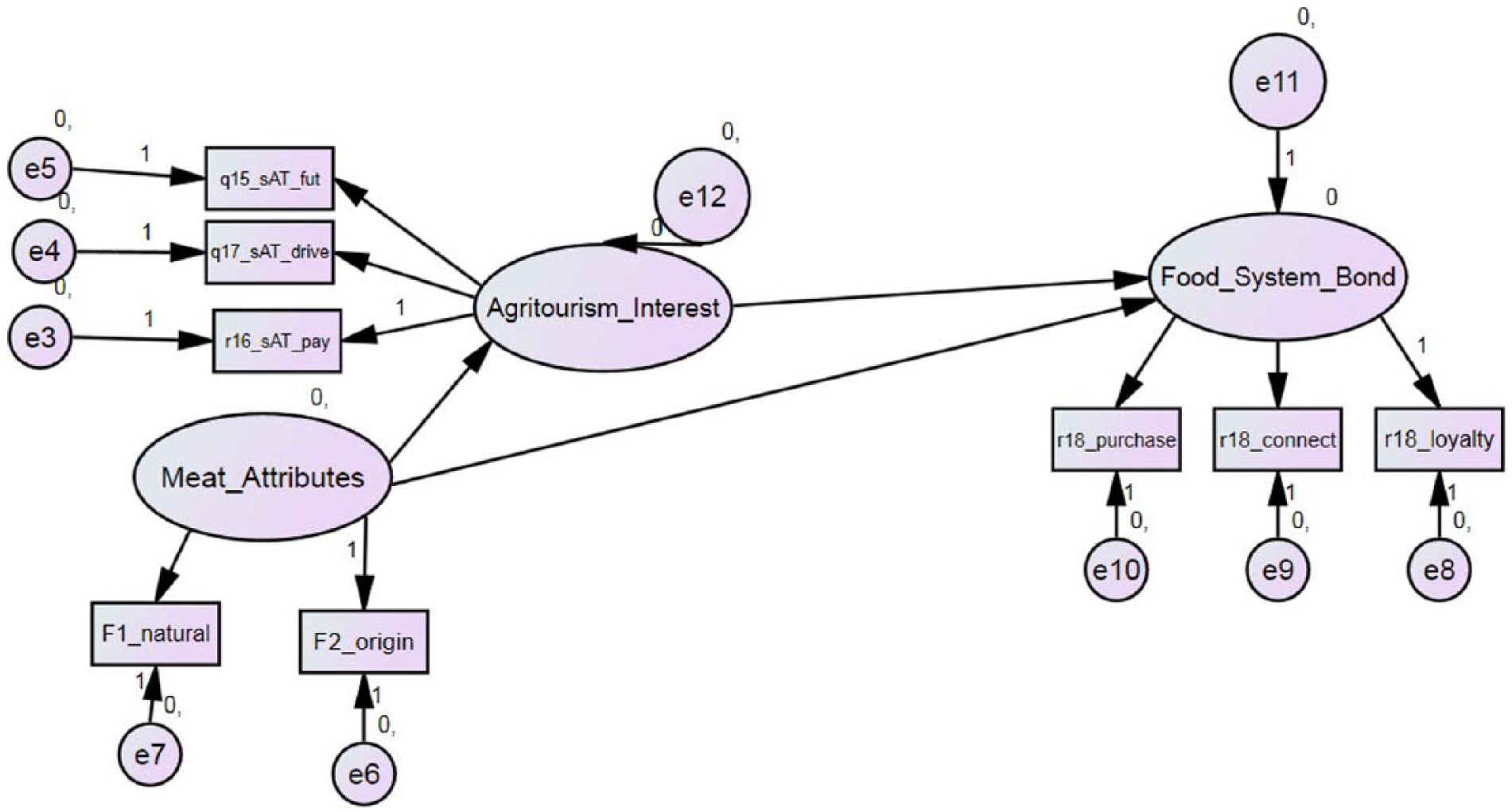
Proposed relationship between agritourism interest, preferred meat interest, and food system bond.
Statistical tests conducted included descriptive statistics, exploratory factor analysis, Cronbach’s alpha reliability tests, and structural equation modeling. Descriptive statistics were performed to profile the sociodemographic characteristics of respondents, their behavior and interest in agritourism, and their consumption behavior of animal products. An exploratory principal components factor analysis with Varimax rotation was used to reduce the 15 food attributes examined to their underlying dimensions; listwise deletion was used for handling missing data. Examination of the scree-plot, eigenvalues more than 1, and factor loadings more than 0.5 were used as thresholds for factor identification. Cronbach’s alphas were computed to test for internal reliability of the factors identified, as well as for the Agritourism Interest and Food System Bond constructs; α ≥0.6 was the minimum value expected to retain items as suggested by Nunnally and Bernstein (1994).
Results
Respondents were predominantly female (77.1%) which is consistent with the larger proportion of female respondents reported in other studies conducting online surveys (Gao, Barbieri, and Valdivia 2013). The survey captured respondents from all age groups (M = 44.4 years old); in thirds, they represented young adults between 18 and 35 (32.4%), middle-aged between 36 and 50 (29.9%), and matured respondents 51 and older (37.7%). Our sample was highly educated; 40.8% had a four-year college or university degree and 45.2% an advanced degree. Consistently, the vast majority were employed (80.1%), primarily in the public sector (38.7%) or worked independently (17.0%). Half (51.2%) grew up in suburban areas, 34.2% in rural areas, and the remaining 14.6% in urban areas. They resided in the mountain region (17.6%), the coastal plains region (12.9%), and the urban Piedmont region (69.6%) that lies within the center of the state. On average, respondents’ households were composed of 2.4 people, with an average of 0.5 children. At the time of the study, 36.0% of respondents earned less than $50,000, and 42.7% between $50,000 and $99,999. Just more than half of the respondents (51.2%) were raised in a suburban environment, 34.2% in rural, and 14.6% in an urban environment.
Agritourism Behavior and Perceptions
Only a quarter of respondents (25.5%) have never visited a farm raising animals in a sustainable manner; the remaining have either visited one in the past (39.4%) or in multiple occasions (35.1%), results that are consistent with the increased popularity of agritourism in the country and in North Carolina in the last decade (Table 1). Even more important for the future growth of this industry and especially for the development of specialized agritourism opportunities, the majority (75.3%) were interested or very interested to visit a farm raising animals sustainably. Ten dollars (US$10) seems to be the most accepted price tag that respondents (34.9%) would be willing to pay for a two-hour tour of these facilities, although US$5 (27.0%) and US$15 (16.4%) also resulted as well-accepted fares. In terms of distance willing to travel to visit a sustainable farm, the vast majority (89.3%) were willing to drive up to two hours.
Past Behavior, Interest, Willingness to Participate in, and Perceived Effects of Agritourism on Food.
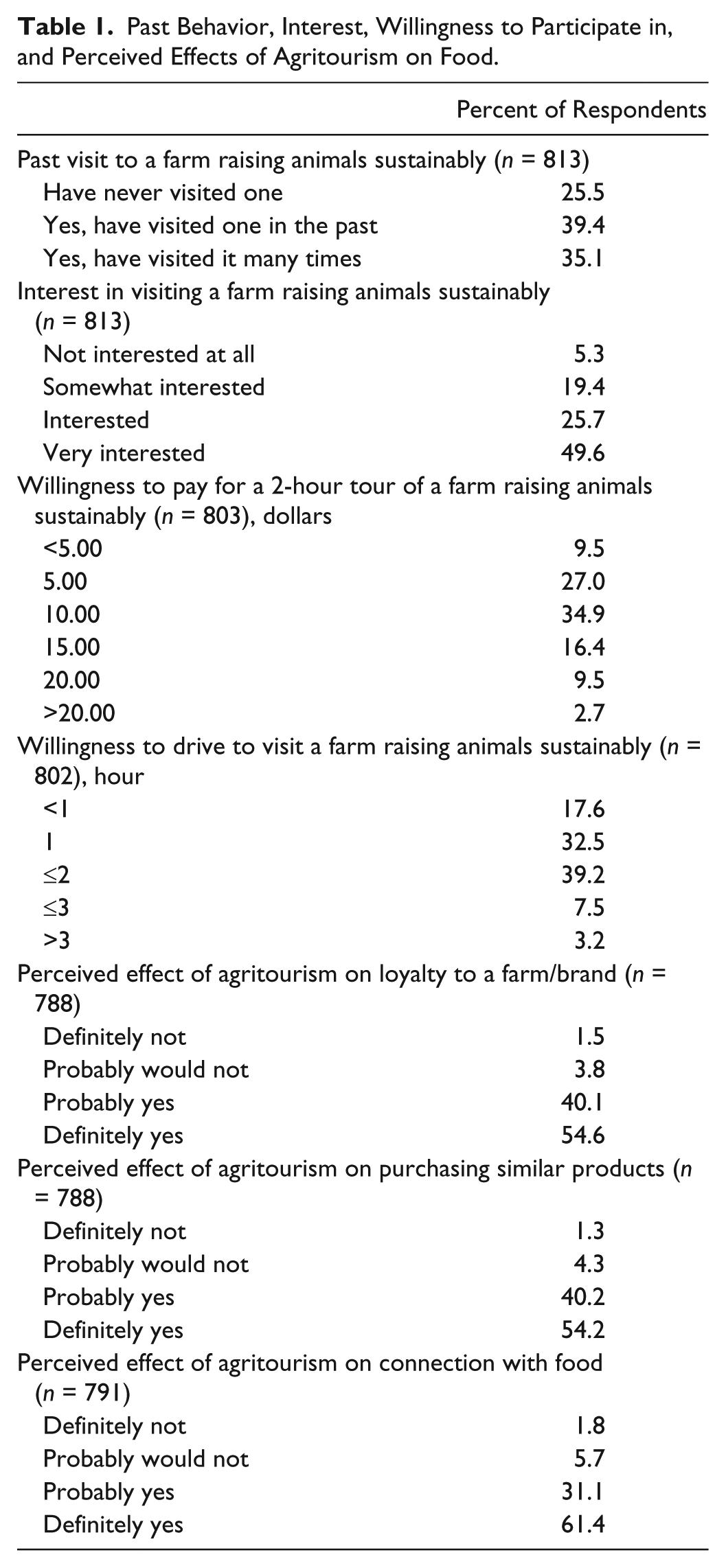
Respondents had very strong perceptions of the potential role of agritourism as a catalyst for both branding specific agricultural products and overall creating a bond with local food production. The majority reported that agritourism would definitively increase their loyalty with a specific farm or brand (54.6%), increase their likelihood of purchasing similar products in the future (54.2%), and strengthen their bond with their food (61.4%). Such potential impact of agritourism was even higher when accounting for those who perceived some probable effect on those categories (94.7%, 94.4%, and 92.5%, respectively).
Respondents’ Food Consumption Behavior
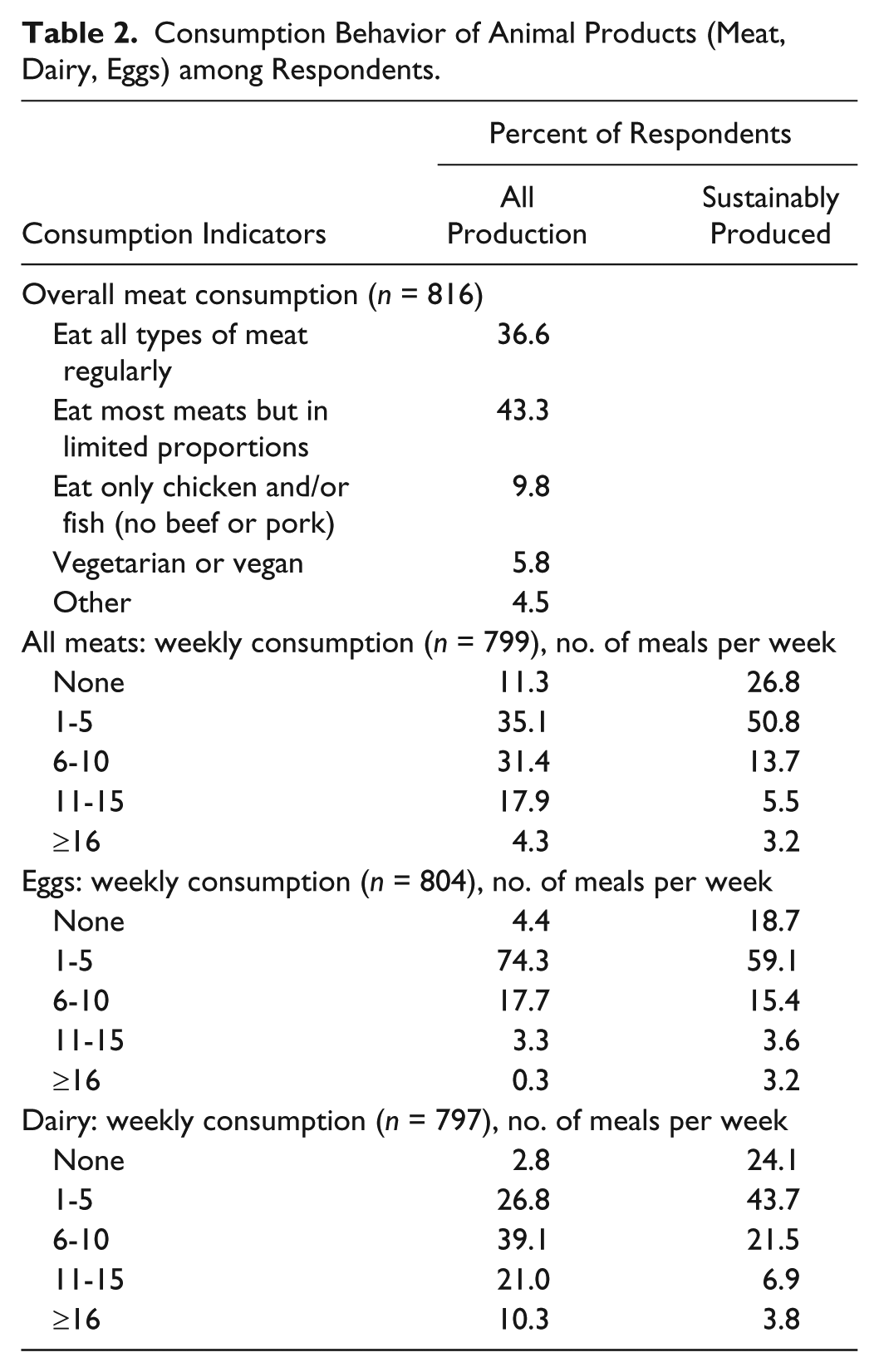
Most respondents reported consuming meat on a regular basis (36.6%) or in limited proportions (43.3%); a smaller proportion had some meat-dietary restrictions either for eating red meats (9.8%), being vegetarian or vegan (5.8%) or any other type of diet (4.5%; Table 2). Half of respondents recorded eating at least six meals with meat weekly (53.6%), and only between one and five if raised sustainably. Most respondents consumed meals that include eggs between one to five times per week, either using regular eggs (74.3%) or sustainably produced (59.1%) ones. About one third (31.3%) reported ingesting dairy products at least 11 times per week; such proportion is (10.7%) for sustainably produced dairy products.
Consumption Behavior of Animal Products (Meat, Dairy, Eggs) among Respondents.
The most important attributes that respondents considered when purchasing animal products (meat, dairy, eggs) in grocery stores were quality (M = 3.7), taste (M = 3.6), food safety (M = 3.6), and how it affects their health (M = 3.5; Table 3). The exploratory factor analysis conducted on the 15 attributes influencing animal products purchase resulted in three dimensions accounting for 63.9% of variance. Price (M = 3.1) did not load in any factor and thus was removed from further analysis. Reliability tests (Cronbach’s alpha) produced coefficients greater than .60 indicating strong internal consistency. The resulting factors were labeled based on their underlying themes. The first factor was labeled “Health and Low Input” (α = .918; eigenvalue = 4.473; variance = 29.819; M = 3.1) as it comprised eight attributes associated with health concerns and reduced production inputs, such as no added hormones and pasture-raised animals. “Local Production Concern” (α = .774; eigenvalue = 3.131; variance = 20.874; M = 3.0) was the second emerging factor and included three attributes associated with reconnecting with local farmers, and origin of production. “Standard Attributes” that most people seek when purchasing food products (i.e., quality, taste, food safety), loaded into a third factor, which although had the lowest value scores (α = .691; eigenvalue = 1.984; variance = 13.225), appeared as the strongest desired purchasing factor (M = 3.6). The first two factors were retained as constructs for the SEM model; “Standard Attributes” was dropped because their comprising variables (quality, taste, safety) tend to be important for every consumer and its relative low reliability score.
Rotated Factor Matrix of the Importance of Attributes When Buying Animal Products (Meat, Dairy, Eggs) in Grocery Stores.
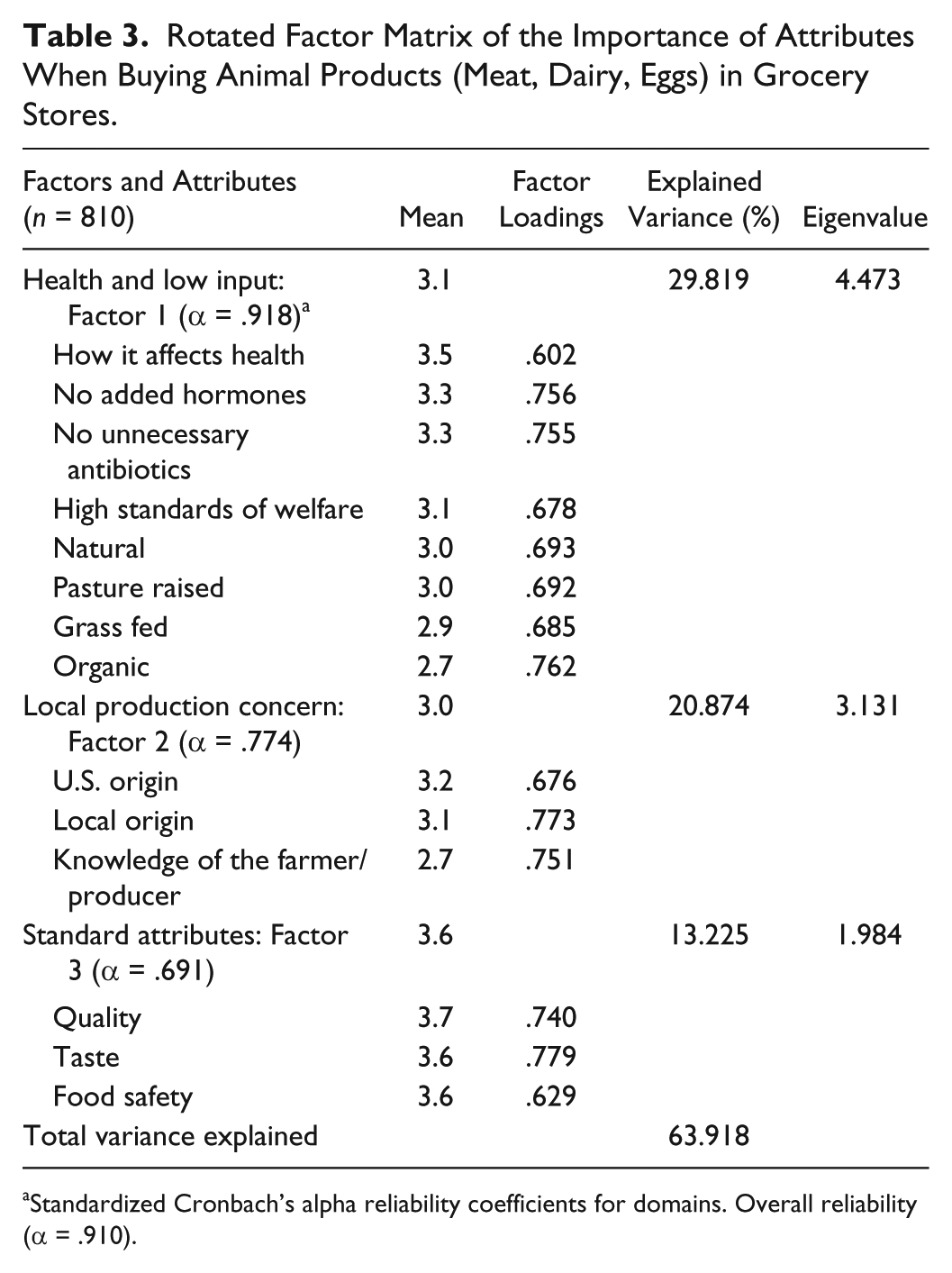
Standardized Cronbach’s alpha reliability coefficients for domains. Overall reliability (α = .910).
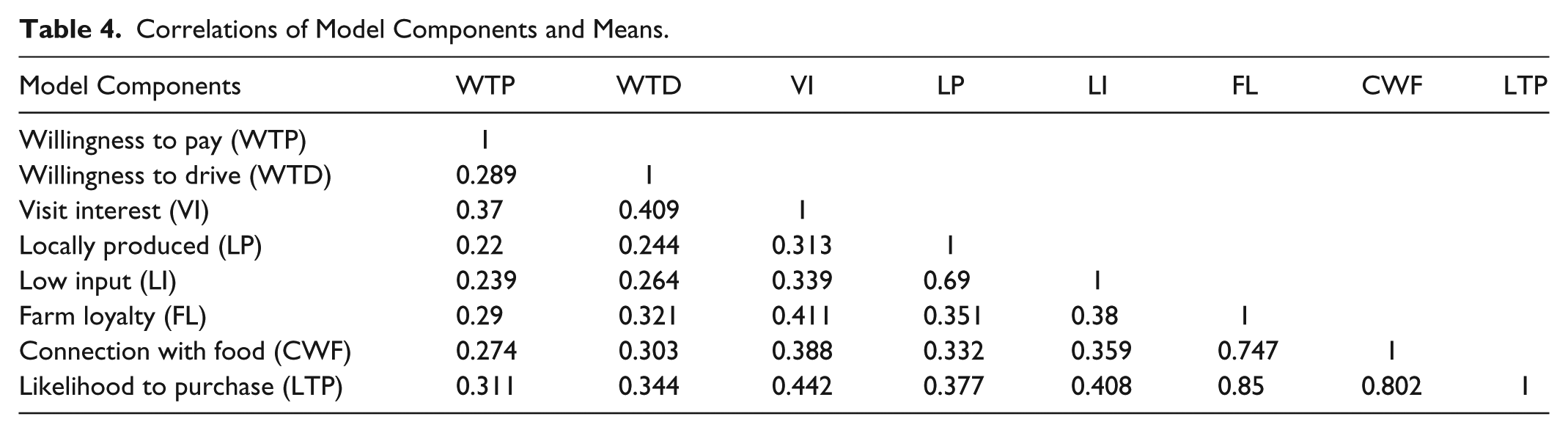
The three constructs included in the SEM met criteria for internal reliability. PMA (α = .925) is composed by the two factors: “Health and Low Input” (M = 3.1, SD = 0.74) and “Local Production Concern” (M = 3.0, SD = 0.77) as aforementioned. AI showed the lowest alpha although above the acceptable range (α = .632); it is composed of three observed variables: interest in visiting a farm raising animals sustainably input (M = 3.2, SD = 0.90), willingness to drive (M = 2.5, SD = 0.97), and willingness to pay (M = 3.0, SD = 1.20). The last model construct, FSB (α = 0.926), is defined by three observed variables explaining the perceived effect of agritourism on: loyalty with a farm brand (M = 2.5, SD = 0.97), likelihood to purchase similar products (M = 2.5, SD = 0.97), and connecting with food (M = 2.5, SD = 0.97). Table 4 indicates appropriate correlations of model components.
Correlations of Model Components and Means.
Original Measurement Model
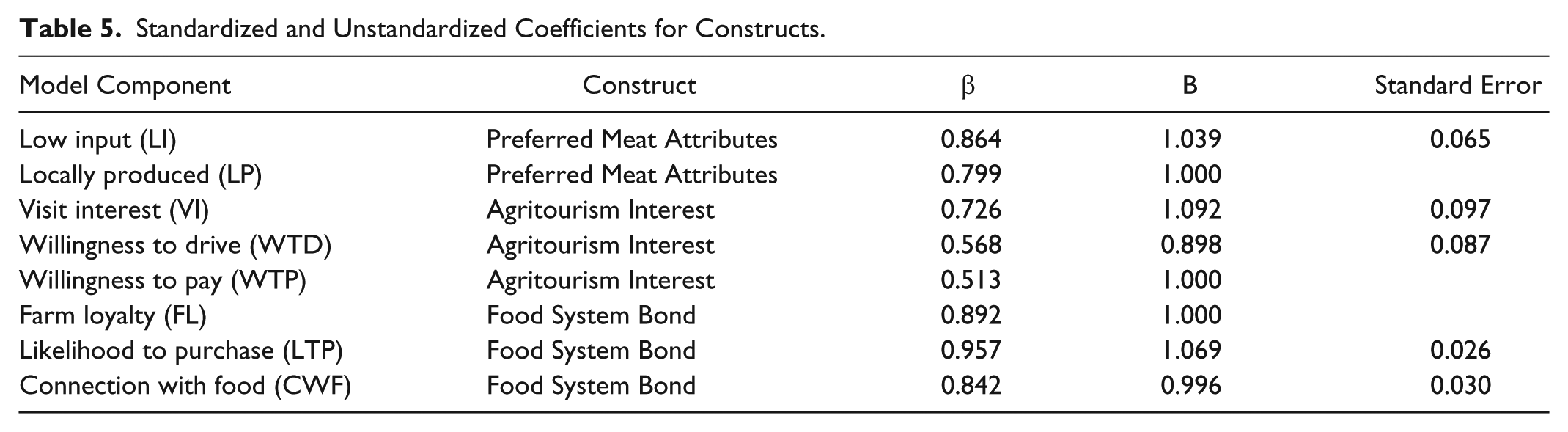
The measurement model specifies how constructs should be assessed in terms of the observed variables, and represented the validity and reliability of the responses of observed variables to the constructs. While the chi-square test could not determine the model’s goodness of fit (χ2 = 56.301, df = 17, p < .001), other statistics showed a well-fitting model as they fell within the acceptable cut-off criteria (Hooper, Coughlan, and Mullen 2008). Root mean square error of approximation was less than 0.6 (RMSEA = 0.053), the normed chi-square index was between 3 and 5 (NCI = 3.312), and both incremental indices were greater than the strict 0.95 threshold (NFI = 0.982, CIF = 0.987). The standardized and unstandardized coefficients for constructs are listed in Table 5 and the results from SEM are listed in Table 6.
Standardized and Unstandardized Coefficients for Constructs.
Results from Structural Equation Modeling.
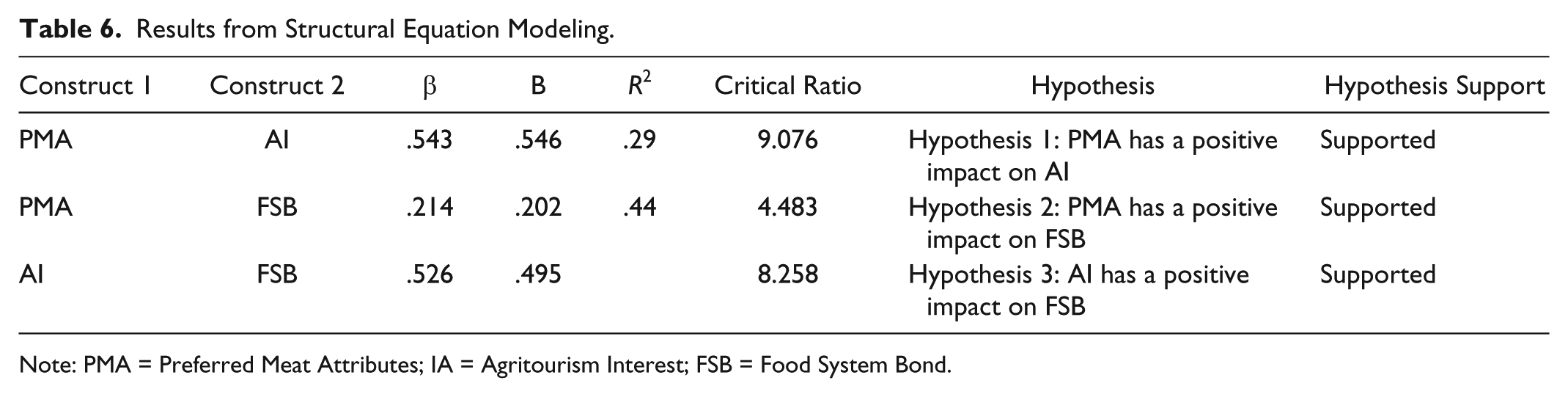
Note: PMA = Preferred Meat Attributes; IA = Agritourism Interest; FSB = Food System Bond.
The first three hypotheses are supported as PMA has a positive impact on AI (hypothesis 1), PMA has a positive impact on FSB (hypothesis 2), and AI has a positive impact on FSB (hypothesis 3) (Figure 2).
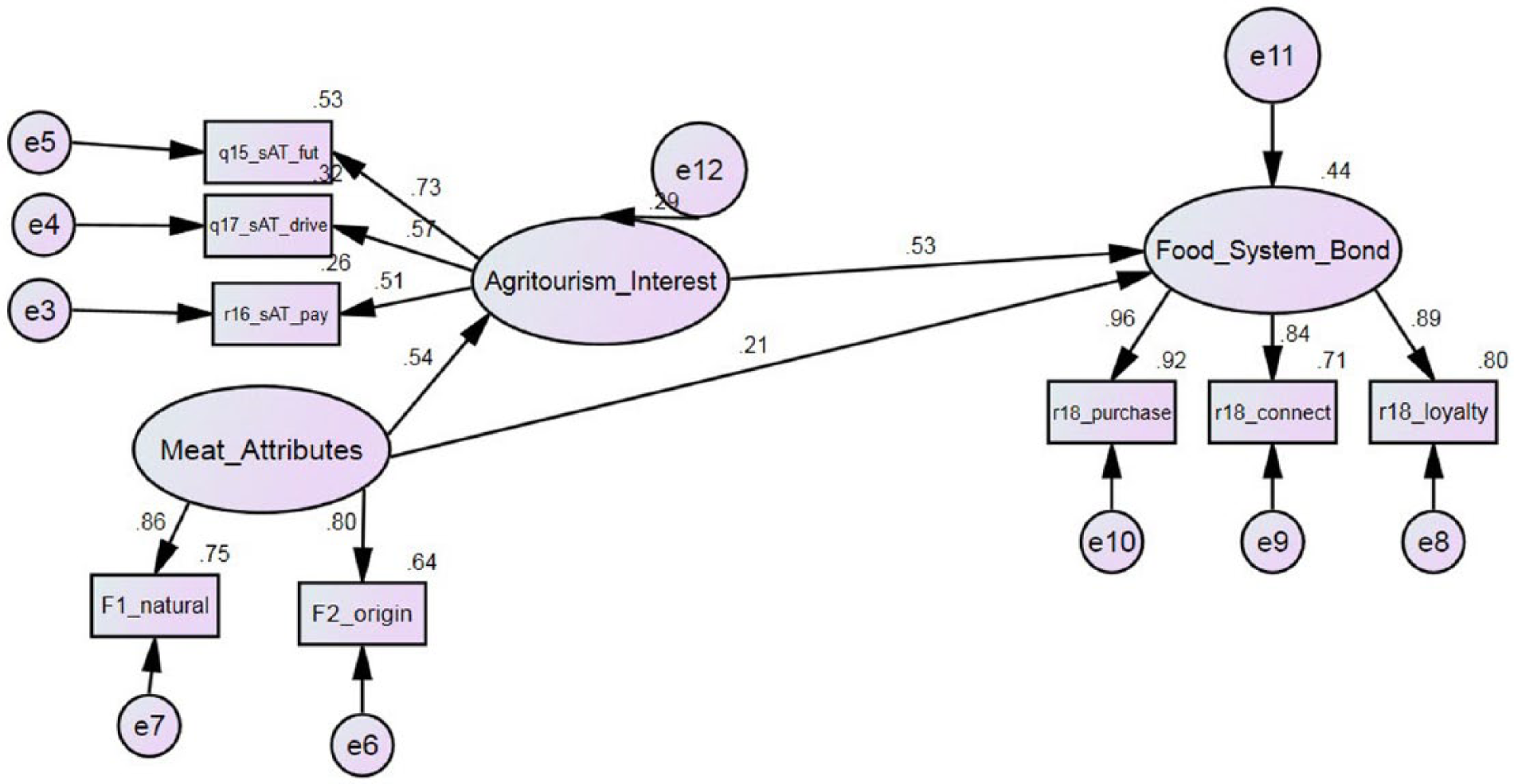
Model test results.
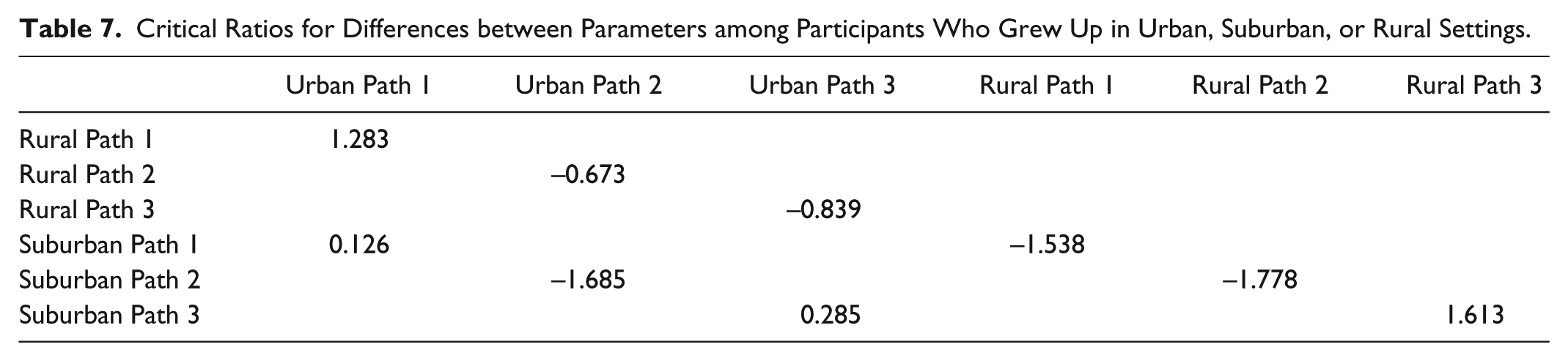
In comparing respondents who primarily grew up in urban (n = 118), suburban (n = 415), and rural (n = 277) environments, the critical ratios for differences between parameters were smaller than the minimum expected (1.96); hence, they were deemed not significant (Table 7). Therefore the fourth hypothesis, hypothesis 4—“The AI impact on FSB varies across respondents raised in urban, suburban and rural settings”—was not supported (Figure 3).
Critical Ratios for Differences between Parameters among Participants Who Grew Up in Urban, Suburban, or Rural Settings.
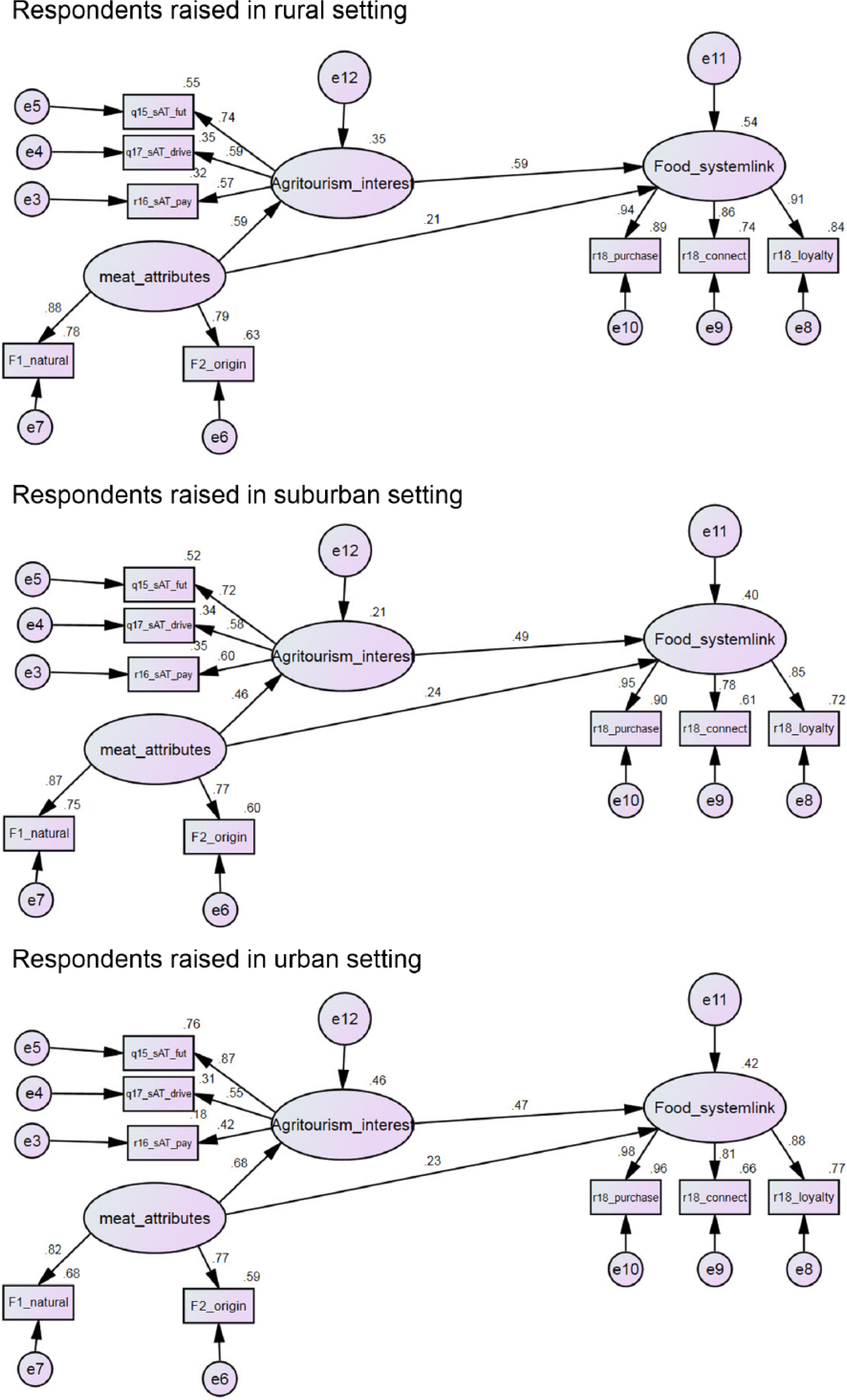
Comparison of respondents.
Discussion of Key Results
Given the purpose of this study and its originality, the sample of this study was drawn to capture a large proportion of participants with awareness and knowledge of sustainable food production, mainly related to animal products. As a result, the study sample was predominantly highly educated and tended to consume a relatively large proportion of sustainable animal products, although the proportion of vegetarians was comparable to the U.S. statistics (Newport 2012). Even if it may be considered a limitation of the study sample, the sample was purposively drawn to explore agritourism as a catalyst to increase public awareness of sustainable agricultural practices and their connection with local food production.
Respondents were motivated to visit a farm showcasing sustainable meat production practices, and to invest some time and money on that effort. The vast majority of respondents considered that agritourism would foster loyalty with local farmers and their brands, encourage the purchase of similar food products, and increase their connection with foods. Thus, results suggest that farmers raising specialty niche products, such as sustainable meats, should capitalize on agritourism as an education tool to increase the awareness of the importance of their practices, as well as to increase the marketing of their products as previously as it has been suggested (Ho and Tsai 2010; Lui, Lin, and Wang 2012; Youngs 2003). This is especially important if farmers raising livestock who tend to sell their meats on-farm (Local Food Research Center 2012), and even more to those wishing to capture a specialized niche market, for example, those predominantly consuming sustainably raised meats. In brief, these farmers can take advantage of a philosophical shift in traveling in which tourists and locals see agritourism as a means to reconnect with the source of their food (Giudici and Dessi 2011).
Consumers evaluate different factors when purchasing a product, particularly in terms of environmental impact and perceived sustainability (Gilg, Barr, and Ford 2005; Koller and Floh 2011; Mainieri et al. 1997; Sirakaya-Turk, Baloglu, and Uecker Mercado 2014; Vermeir and Verbeke 2006), even paying a premium for these products (Jayawardena et al. 2013). This tendency is especially relevant for consumers when choosing food (Duchin 2005). Three major factors appeared to influence meat products purchasing: overall standard factors (quality, taste, and safety of the product), health and low input factors (e.g., how it affects health, no added hormones), and concern with local production (e.g., produced in the United States). Standard factors were the most important across the sample and appear to be critical decision-making factors across different types of food and nonfood-related products. However, the other two identified factors are very important in that the U.S. society is suffering from health-related issues mostly associated with their dietary intake (e.g., diabetes, obesity) and lack of physical activity. Thus, some consumers are seeking healthier dietary habits, on which farmers could capitalize. The current results suggest that farmers need to better advertise the positive effects of their food on consumers’ health as compared to other types of meats, particularly if they do not add hormones or unnecessary antibiotics. Including such information in the food labels, for example, has been suggested as a way to reconnect consumers with local farming (Ilbery and Maye 2006). Farmers might also clearly identify if/that their products were entirely produced in the United States.
The results from the SEM support hypotheses 1 to 3, indicating that a preference for sustainable meat products has a positive influence on both the interest in visiting a farm that raises livestock accordingly and on the bond felt with the food system. Interestingly, the relationship is strongest between PMA and AI, and between AI and FSB, indicating that agritourism is a mediating influence between PMA and FSB, reinforcing the potential role of agritourism in reconnecting specialty consumers with local niche farmers (Giudici and Dessi 2011; Ilbery and Maye 2006). Additional investigation into this phenomenon is warranted in future research.
The results failed to support the fourth hypothesis. This is overall a positive finding because it means that the influence of agritourism may be applicable to those who have been exposed to rural/farming environments during their childhood as well as those who did not have that opportunity. The finding contrasts to Carpio, Wohlgenant, and Boonsaeng (2008) who found that rural residents were actually slightly more likely than urban residents to visit agritourism farms, but they suggested that might be due to a lack of entertainment options in rural areas. Clearly, this suggests more research is needed. The model should be tested with other samples, particularly in different geographic and cultural contexts. While the Carpio, Wohlgenant, and Boonsaeng (2008) study did include a larger population, it did not specifically look at the role of sustainable meat production in influencing agritourism interest. It would be valuable to replicate the current study among a larger and randomized population of consumers to capture those who are not predisposed to purchasing niche meats. Additionally, it would be interesting to explore the differences of on-farm meat purchases (Hurst and Niehm 2012) among respondents with varying meat preferences, and differing self-reported connection with the food system.
Conclusion
This study examined the relationship between preferred meat attributes of the consumer, interest in visiting a livestock farm, and increased loyalty to a meat product or farm. In doing so, this study moved beyond profiling agritourism to examining its impact on greater society—the food system—specifically its mediating role pertaining sustainable meats. We conclude that agritourism experiences are a means to change consumer behavior after their farm experience, particularly the consumption of various food products.
Given recent concerns regarding the negative environmental and health impacts of our food system, it is important to better understand how small-scale operations can contribute to positive outcomes in both of these areas; one area of major concern is meat consumption. In the face of current environmental crises, including climate change and global warming, spurring changes in human behavior is one of our only recourses to reverse these effects (McKenzie-Mohr and Schultz 2014). Social change occurs partly through social diffusion (McKenzie-Mohr and Schultz 2014), which agritourism is well positioned to encourage.
Additionally, small farming operations, including family farms, have struggled to stay competitive in the face of widespread agricultural consolidation. Research has shown that agritourism has been successful in mitigating negative economic effects for farmers. This study was a first step to furthering the economic impacts of agritourism by exploring how agritourism may also contribute to supporting sustainably raised meat products. The results edge toward the noble aspirations of critical tourism studies, ethical or moral tourism, hopeful tourism, voluntourism, and ecotourism by demonstrating potential for behavior change through tourism activity, and contributes to the growing discussion of animals and ethics in tourism.
Yet, there is still much about the influence of travel experience on behavior change we do not understand. Future research should explore customers’ motivations for green purchasing in a general sense as well as how it relates to food purchases and travel and hospitality (including agritourism) purchases. While it was beyond the scope of the current study to examine respondents’ motivations and values behind the meat attributes they prefer, this would be a critical element to understand. Frameworks such as Perceived Consumer Effectiveness (Vermeir and Verbeke 2006) or green satisfaction (Chen 2013) might frame additional investigation into agritourism’s role in connecting consumers with the food system toward the end of making healthier and sustainable food choices.
Footnotes
Acknowledgements
The authors would like to express their gratitude to Animal Welfare Approved for their collaboration.
Declaration of Conflicting Interests
The author(s) declared no potential conflicts of interest with respect to the research, authorship, and/or publication of this article.
Funding
The author(s) received no financial support for the research, authorship, and/or publication of this article.