



Abstract
Phygital experiences are becoming prominent in tourism, yet their impact on visitor engagement, particularly in relation to multisensory stimulation, remains underexplored. Grounded in dual-process and optimum stimulation level theories, this study aims to understand how hedonic and functional aspects of phygital experiences influence visitor engagement, satisfaction, and visit intentions and assesses how varying combinations of sensory stimuli moderate these relationships. Data was collected through scenario-based experiments with 413 participants, each exposed to one of six videos representing distinct levels of sensory richness. SEM-based results indicated that both emotional and technological dimensions significantly enhance visitor engagement, which positively influences satisfaction and intention. Multi-group analysis revealed that the strengths of these relationships vary according to the degree of sensory stimulation. Specifying sensory synergy as the coordinated, congruence-based integration of modalities, the study advances dual-process and optimum stimulation level theories in phygital tourism and offers practical guidelines for designing sensory-balanced, human-centered experiences.
Keywords
Introduction
The tourism industry is increasingly recognized for its willingness and proactive stance toward adopting cutting-edge technology (Abou-Shouk et al., 2024). Recent advancements in immersive technologies, such as avatars, virtual models, augmented reality (AR), virtual reality (VR), and mixed reality (MR), have gained significant popularity due to their capacity to enhance and transform traditional tourism experiences into more engaging and interactive encounters (Fan et al., 2022). The accelerated technological advancement driven by the COVID-19 pandemic has profoundly reshaped travel behaviors, transforming not only how tourists engage with destinations but also how tourism stakeholders design and deliver tourist experiences (Weber-Sabil & Han, 2021). Consequently, destinations worldwide are increasingly integrating immersive technology into their tourism attractions and marketing strategies, aiming to upgrade their offerings and foster higher visitor engagement (tom Dieck et al., 2018; Yung & Khoo-Lattimore, 2017).
Immersive technologies have significantly reshaped human–technology interactions within the physical–virtual continuum, creating hybrid environments where advanced digital tools seamlessly blend with physical spaces (Trunfio et al., 2022). Within this innovative intersection, the concept of “phygital” emerged prominently (Clemente et al., 2024; Nofal et al., 2017). Coined initially in the marketing field, “phygital” describes the seamless integration and coexistence of physical and digital realms to deliver a continuum of consumer value (Belghiti et al., 2017). Characterized by a holistic and consumer-centric approach, phygital experiences integrate digital, physical, and human elements with a strong emphasis on maintaining the consumer perspective at their core (Batat, 2022). Technologies such as AR and interactive 3D platforms exemplify essential tools within phygital experiences, emphasizing an imperative need for perpetual innovation in customer engagement strategies (Greco et al., 2024).
Phygital experiences hold particular promise for tourism and other service sectors by fostering deeper engagement through simultaneous emotional (hedonic) and practical (utilitarian) benefits to customers (Batat, 2022). Through multisensory technology, phygital approaches provide immersive environments that actively involve tourists, thus enhancing both their sensory experience and emotional connection (Batat, 2024; Mkedder & Bakır, 2026). While the phygital experience “formula” has rapidly expanded in retail (Banik & Gao, 2023; Guzzetti et al., 2024) and luxury branding (Hyun et al., 2022), research in tourism remains limited, mostly concentrating on niche areas such as cultural heritage (Çiftçi & Çizel, 2024; Deng et al., 2026; Lo Turco & Giovannini, 2020), smart tourism (Ballina et al., 2019), and information search contexts (Neuburger et al., 2018), leaving several knowledge gaps. First, despite the growing integration of phygital solutions in tourism (Deng et al., 2026), empirical research on their impact on visitor engagement remains scarce, especially on how engagement emerges through both hedonic and utilitarian pathways. Second, although phygital tourism experiences are increasingly recognized for delivering multisensorial experiences via immersive solutions, the holistic and human-centered integration of multiple sensory modalities remains underexplored (Stankov et al., 2024). Prior research predominantly concentrates on visual and auditory stimuli, paying scant attention to secondary sensory modalities, such as tactile, olfactory, and gustatory, and their potential synergies in tourism settings (Spence, 2022). Third, the role of sensory congruence in phygital tourism has been relatively neglected. In particular, little is known about how multiple sensory stimuli can be strategically combined and coordinated to enhance engagement while preventing sensory overload, underscoring the need for more informed and meaningful multisensory design approaches (Obrist et al., 2016; Petit et al., 2019).
To bridge these gaps, this study leverages dual-process theory (Epstein, 1994; Evans, 2008) and Optimum Stimulation Level (OSL) theory (Raju, 1980; Steenkamp & Baumgartner, 1992) as primary theoretical frameworks to advance the conceptual understanding of phygital tourism experiences. Specifically, it aims to investigate the interplay between cognitive–affective engagement mechanisms and multisensory stimulation in phygital tourism experiences. Dual-process theory provides a foundation for examining visitor engagement in phygital tourism while elucidating how emotional and cognitive processes reflect hedonic and utilitarian benefits that interactively influence visitor engagement. OSL theory further complements this approach by addressing how varying sensory stimuli levels influence visitors’ engagement, thereby providing insights into sensory-based moderation effects. Although our model primarily rests on these two theories, we acknowledge the complementary perspective of the Dual Mediation Model (DMM; MacKenzie et al., 1986), widely used in marketing and consumer behavior, to support our conceptualization of dual emotional-cognitive routes influencing attitudes and visit intentions.
Using an online survey with scenario-based video experiments, the study pursued two interlinked objectives: (1) to examine how hedonic (pleasure-based) and functional (practical) aspects of phygital experiences influence visitor engagement, satisfaction, and visit intentions, and (2) to assess how different combinations of sensory stimuli can moderate these relationships.
The present research has several theoretical and practical implications. First, it extends the dual-process theory (Evans, 2008) to the context of phygital tourism experiences, elucidating how emotional and technological dimensions distinctly and jointly drive visitors’ engagement with phygital experiences. Second, the study presents novel insights into how phygital experiences influence visitor engagement during the pre-experience stage, as well as their downstream effects on perceived satisfaction and intention to visit, suggesting that immersive phygital experiences hold the potential to serve as compelling attractions (He et al., 2018). Third, the study advances the conceptualization of sensory synergy in phygital tourism, defined here as the coordinated, congruence-based integration of two or more modalities whose joint effect on engagement exceeds their additive contributions. Drawing on multisensory integration and crossmodal correspondence research (Gallace & Spence, 2014; Spence, 2011, 2022), the study moves beyond cumulative views of multisensory stimulation to specify when sensory configurations amplify versus dampen the dual cognitive-affective pathways to engagement, and provides practical guidance for the strategic, holistic integration of primary and secondary sensory modalities (e.g., touch, smell, taste) in phygital tourism experiences. Thus, by implementing balanced, user-friendly, and emotionally resonant phygital designs, tourism practitioners can potentially capture visitor attention, satisfaction, and intentions through multisensory stimuli. The following section outlines the theoretical rationales underlying our arguments and presents the development of the hypotheses.
Literature Review
Theoretical Foundations of Visitor Engagement in Phygital Tourism
The theoretical foundation underpinning this study combines dual-process theory (Epstein, 1994; Evans, 2008) and OSL theory (Raju, 1980; Steenkamp & Baumgartner, 1992) to understand visitor engagement within phygital tourism experiences. Dual-process theory, originally developed by Epstein (1994) and elaborated by Evans (2008), posits that human decision-making and engagement involve two distinct processing systems: cognitive (System 2) and affective (System 1). System 2 is rational, deliberate, and analytical, processing information logically to evaluate practical or utilitarian attributes such as efficiency, functionality, and usability. In contrast, System 1 is intuitive, fast, emotionally driven, and associated with hedonic aspects such as enjoyment, aesthetics, and emotional involvement (Evans, 2008). In the context of phygital tourism, this theory is particularly relevant as phygital experiences inherently blend emotional (hedonic) and technological (functional) attributes, thereby influencing how tourists engage with the experience (Batat, 2022). Using this theory, the present study investigates how these dual pathways jointly shape visitors’ cognitive and emotional responses to immersive technology-based tourism experiences and their subsequent behavioral outcomes, including satisfaction and visit intention.
Complementing the dual-process perspective, the OSL theory, proposed by Raju (1980) and further developed by Steenkamp and Baumgartner (1992), provides an insightful explanation of individuals’ varying preferences for sensory stimulation. This theory suggests that consumers possess an optimal threshold for sensory stimuli, seeking increased stimulation when under-stimulated and reducing it when experiencing sensory overload. In tourism, such theory has explanatory power, as visitors are drawn to experiences that offer optimal sensory stimulation, enhancing enjoyment, memory formation, and engagement (Agapito et al., 2017). Applying OSL theory to phygital tourism is especially appropriate due to the inherent multisensory nature of phygital environments, which utilize visual, auditory, tactile, olfactory, and gustatory cues to create immersive and engaging experiences (Spence, 2021). Thus, this study uses optimum stimulation level theory to investigate how sensory stimuli combinations moderate visitor engagement, influencing satisfaction and intention to visit.
While dual-process and OSL theories provide a robust conceptual foundation for this research, the Dual Mediation Model (DMM; MacKenzie et al., 1986) offers additional contributions to visitor engagement. This model from marketing studies reinforces the notion of affective and cognitive pathways in shaping consumer attitudes and intentions, providing further empirical support for the dual pathway conceptualization used here. However, this study primarily focuses on dual-process and OSL theories, as they directly and succinctly address the interplay of functional and emotional drivers of engagement alongside the moderating effects of sensory inputs. The Dual Mediation Model is acknowledged as a complementary lens, further enriching the theoretical landscape without diverting from the study’s primary theoretical integration.
Enhancing Visitors’ Engagement Through Multisensory Technology
In recent years, the introduction and growth of immersive technologies in destinations have revolutionized human-technology interaction by integrating the human senses with sensory enabling technologies (Petit et al., 2019), such as vision (AR wearable glasses), touch (mid-air haptics), hearing (soundscapes), smell (digital scent solutions), and taste (electronic tongue; Santoso et al., 2022). The sensory dimension is integral to tourism experiences, with research indicating that tourism is inherently multisensory and embodied, engaging the five senses to foster a fully immersive experience (Agapito et al., 2017). Building on this, recent technological advancements are opening new avenues for innovative and engaging tourism experiences, allowing visitors to “immerse themselves fully through a multisensorial technologically mediated experience” (Scarles et al., 2020, p. 787).
The concept of visitor engagement through technology-driven solutions is extensively explored in the literature, with numerous studies empirically examining their effectiveness in enhancing visitor experiences (Flavián et al., 2021; tom Dieck et al., 2018). Tourism scholars advocate the advantages of adopting solutions like smartphones or Internet of Things (IoT) in a destination context to deliver a sensory-rich, aesthetic, and visually appealing interactive environment to stimulate visitors’ perceived visual and emotional appeals (Fan et al., 2022), and thereby enhance the holistic experience (Guo et al., 2022). Indeed, the richer the multisensory experiences are, the longer tourists’ memory of such experiences lasts, which in turn triggers their positive emotional, attitudinal, and behavioral intentions toward visiting the destination (Agapito et al., 2017). Furthermore, multisensory stimuli can enhance visitor learning while improving physical and intellectual accessibility (Guedes et al., 2023).
Nevertheless, despite their advantages, the integration of advanced technological solutions in tourism settings does not automatically translate into enhanced visitor engagement. Some tourists perceive technological solutions as disruptive or overwhelming, leading to disengagement and a sense of dissatisfaction (Dickinson et al., 2016). Previous investigations have shown that new immersive technologies, in particular, wearable devices like VR headsets and haptic vests, can cause adverse effects such as cybersickness (Mittelstaedt et al., 2018) and eye fatigue (Souchet et al., 2021). Moreover, integrating multiple senses into an experience represents a challenging task. Simply incorporating various sensory stimuli independently may fail to create genuine immersion or engagement (Marks, 2014). Effective sensory integration requires careful consideration of synergy and congruence among stimuli to optimize engagement (Spence, 2021, 2022).
It is on this point that the construct of sensory synergy requires conceptual sharpening, since it is too often used loosely to denote any combination of senses. Drawing on multisensory integration and cross modal correspondence research (Gallace & Spence, 2014; Spence, 2011, 2022), we define sensory synergy in phygital tourism as a coordinated integration of two or more sensory modalities such that their joint effect on visitor engagement exceeds the additive contribution of the modalities considered separately. Synergy is therefore not a function of the number of senses recruited but of their congruence, which is the semantic, temporal, and spatial alignment between modalities (Spence, 2011), and of whether their combined intensity falls within the visitor’s optimum stimulation range. This re-specification has two implications. Conceptually, it differentiates synergy from mere multisensory accumulation and from sensory overload (Petit et al., 2019), thereby connecting the multisensory marketing literature to the homeostatic logic of OSL theory. Empirically, it predicts a non-monotonic relationship in which sensory configurations enhance engagement when modalities are congruent and within the optimum range, but plateau or attenuate it when modalities are incongruent or push visitors beyond that range. The present study operationalizes this logic through six experimentally varied sensory configurations, providing one of the first empirical tests of when phygital sensory combinations amplify versus when they dampen the emotional and technological pathways to visitor engagement.
This balance stresses the significance of the OSL theory, which posits that individuals strive to maintain an optimal level of environmental stimulation; they seek stimulation when it is insufficient and reduce it when excessive (Raju, 1980; Steenkamp & Baumgartner, 1992). This adaptive behavior involves stimulation-seeking or avoidance, depending on individual sensory thresholds and environmental inputs (Raju, 1980). Thus, in tourism contexts, achieving a balance of optimum stimulation is crucial for maintaining visitor engagement and preventing overload or disengagement (Helmefalk & Berndt, 2018). However, current experiences still heavily rely on audiovisual stimulation (Petit et al., 2019). Although studies have begun to explore integrating secondary senses, such as tactile (Vi et al., 2017), olfactory (Flavián et al., 2021), and gustatory stimuli (Kerruish, 2019), holistic combinations of these sensory modalities from a human-centered perspective remain underexplored (Stankov et al., 2024). This gap has led to a call for scholars and practitioners to broaden the multisensory scope effectively, utilizing the full spectrum of sensory modalities to design meaningful and interactive visitor experiences in tourism destinations (Obrist et al., 2016). Addressing this gap can significantly advance the theoretical understanding of multisensory engagement in phygital tourism and provide practical guidelines for optimizing visitor interactions through technology-enhanced environments.
Phygital Tourism Experiences
The term “phygital” was first coined by the Australian marketing agency Momentum in 2013 (Belghiti et al., 2017). It is generally defined as a comprehensive framework that bridges the gap between physical and digital environments, aiming to provide a seamless continuum of consumer value throughout the customer journey. Phygital tourism, in particular, is an emerging academic research field gaining momentum due to its potential to enrich visitors’ experiences through innovative integrations of digital technologies and physical spaces (Deng et al., 2026). Central to the concept, Batat (2022, 2024) characterizes phygital environments as holistic ecosystems that integrate physical, digital, human, and media elements to deliver experiences consistently aligned with consumer expectations. This integrative approach ensures that experiences are not only engaging and immersive but also human-centric, responsive, and coherent in the delivery process of consumer value from digital to physical, and vice versa (Batat, 2024).
A distinctive characteristic of phygital tourism experiences is their simultaneous fulfillment of both hedonic and utilitarian visitor needs (Guzzetti et al., 2024). Hedonic benefits incorporate aspects such as entertainment, aesthetics, mental imagery, and enjoyment, whereas utilitarian benefits address practical visitor needs such as convenience, immediacy, and ease of use (Banik & Gao, 2023; Boudkouss & Djelassi, 2021). Through the integration of emotional and functional attributes, phygital experiences thus align closely with dual-process theory, enhancing visitor engagement through complementary cognitive and emotional pathways. Such dual-benefit offerings ensure that visitors not only enjoy immersive and memorable emotional experiences but also benefit practically from efficiency, personalization, and informational enrichment enabled by technological innovations (Greco et al., 2024).
The concept of phygital experiences is already well-established in sectors such as retail and marketing and luxury branding, where technological solutions are effectively utilized to enhance consumer engagement, deliver immersive storytelling, and encourage interactive customer relationships (Hyun et al., 2022). Although phygital strategies have rapidly expanded in the retail and luxury sectors, applications in the tourism contexts are relatively new and remain predominantly focused in niche areas such as cultural heritage tourism (Çiftçi & Çizel, 2024; Deng et al., 2026; Lo Turco & Giovannini, 2020), food tourism (Monaco & Sacchi, 2023), smart tourism initiatives (Ballina et al., 2019), or tourism information search (Liu et al., 2022). For instance, Çiftçi and Çizel’s (2024) field experiment in Turkish museums revealed that MR technology significantly enhanced visitors’ perceptions by providing authentic and interactive experiences during museum tours. Similarly, Monaco and Sacchi (2023) highlighted how digital tools in food tourism facilitate personalized storytelling and enrich both affective and cognitive visitor engagement.
Nevertheless, current phygital tourism experiences often prioritize visual and auditory dimensions, neglecting opportunities to strategically integrate secondary senses, such as touch, smell, and taste, which could significantly enrich visitor experiences (Spence, 2021, 2022). Research in tourism geography and smart tourism has begun exploring these secondary senses, recognizing their potential to create richer, more memorable experiences (Mieli et al., 2024). Yet, the holistic, coordinated integration of multiple sensory modalities remains underexplored, presenting a notable gap in the literature. Further complicating this is the challenge of sensory congruence, which requires precise management of different sensory stimuli to avoid negative outcomes such as sensory overload or disorientation (Petit et al., 2019). This reinforces the importance of the OSL theory, emphasizing the need for tourism stakeholders to balance sensory inputs strategically to optimize engagement and minimize negative effects like sensory overload (Malhotra, 1984; Raju, 1980). Given this theoretical backdrop, a significant gap remains in empirical evidence explicitly demonstrating how phygital elements enhance visitor engagement in tourism. Further research is needed to better understand visitor engagement in phygital tourism, particularly the role of multisensory stimuli in shaping these experiences (Batat, 2024; Santoso et al., 2022).
Hypotheses Development
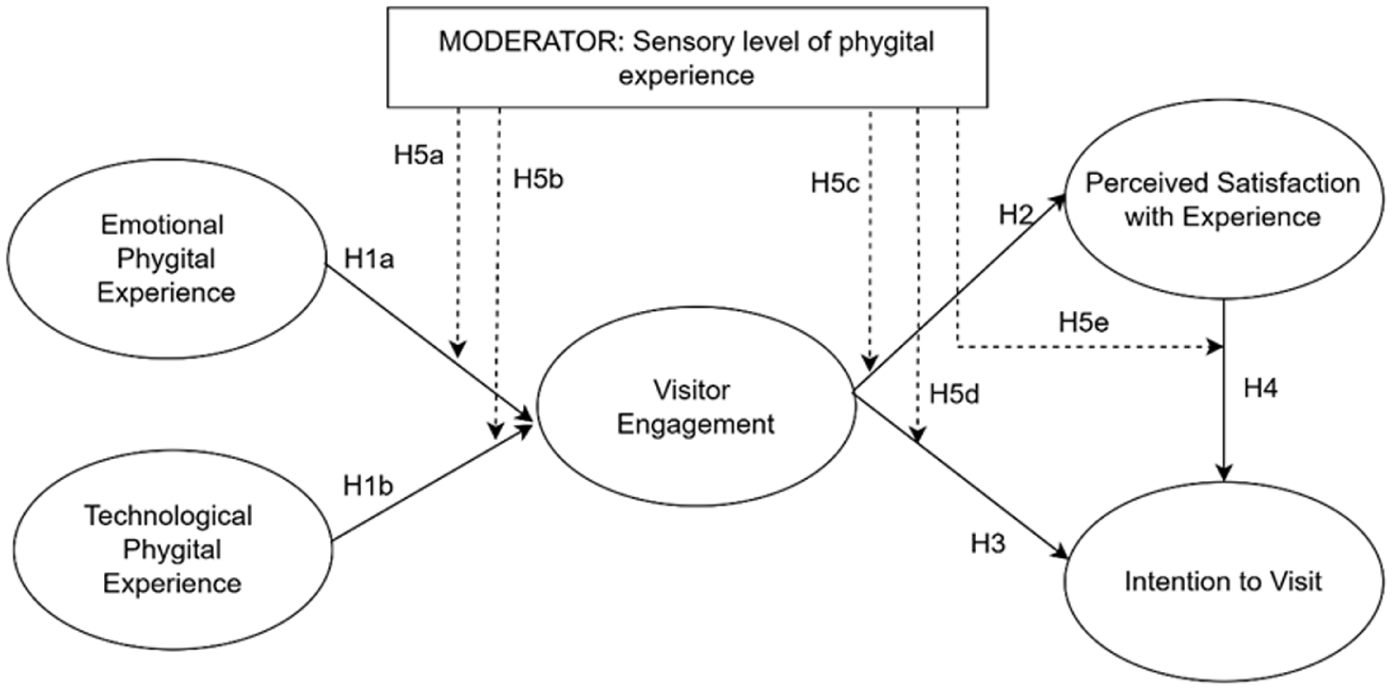
Figure 1 depicts the proposed conceptual model of this study, which draws on the dual-process theory (Evans, 2008) and OSL theory (Raju, 1980) as guiding theoretical frameworks. First, we posit that phygital engagement has two primary dimensions: emotional and technological. Specifically, the emotional dimension reflects the immersive, affective, and hedonic qualities of phygital experiences that appeal to aesthetic and entertaining needs. In contrast, the technological dimension focuses on convenience and utilitarian attributes. These dimensions are hypothesized to positively influence visitor engagement, perceived satisfaction with the experience, and intention to visit. Second, drawing on the OSL theory (Raju, 1980), this study investigates the moderating role of sensory stimuli in shaping these relationships, proposing that optimal levels and intensity of sensory stimulation can enhance or attenuate visitor engagement. Our hypotheses, grounded in these theoretical frameworks, are discussed below.
Proposed conceptual model.
Phygital Experience and Perceived Emotional and Cognitive Visitor Engagement
As highlighted previously, a fundamental characteristic of phygital tourism experiences is their ability to concurrently deliver hedonic (emotional) and utilitarian (functional) benefits, thereby influencing visitor engagement multidimensionally. Visitor engagement, as defined in this study, refers to “a state of being involved with and committed to a specific market offering” (Taheri et al., 2014, p. 322), serving as a crucial component in immersive tourism experiences shaped by technological innovations (Fan et al., 2022). The integration of emotional and functional values enables phygital tourism experiences to simultaneously fulfill visitors’ emotional needs, such as pleasure, aesthetics, and entertainment, alongside practical needs, including convenience, immediacy, and usability (Boudkouss & Djelassi, 2021).
Dual-process theory (Epstein, 1994; Evans, 2008) provides a robust theoretical foundation for explaining how these combined benefits influence visitor engagement by activating two distinct yet interconnected cognitive pathways. Specifically, the emotional dimension of phygital experiences aligns with the intuitive, hedonic processing route (System 1), emphasizing affective responses and experiential pleasure derived from interactions with immersive technologies (Batat, 2022). Prior research in human-computer interaction and immersive tourism demonstrates that technologies like extended reality (XR) solutions can strengthen emotional connections to destinations by enhancing tourists’ experiential enjoyment, imagination, and aesthetic appreciation, thereby driving deeper engagement (Fan et al., 2022; Pantic & Rothkrantz, 2003).
Conversely, the technological dimension reflects the rational, utilitarian processing route (System 2) by emphasizing practical functionalities such as interactive interfaces, sensory integration, digital usability, convenience, and efficiency (Jessen et al., 2020). Functional attributes such as ease of use and practical time-saving features are expected to contribute to visitor engagement by reducing effort and enhancing the practicality of the experience (Boudkouss & Djelassi, 2021). Thus, phygital experiences effectively engage tourists cognitively by facilitating seamless interactions, practical benefits, and efficient information delivery (Banik & Gao, 2023). Despite increasing scholarly interest, the literature remains limited in empirically exploring how emotional and technological dimensions separately and collectively shape visitor engagement within phygital environments. Addressing this gap and grounded explicitly in dual-process theory, this study conceptualizes phygital engagement as comprising emotional and technological dimensions, capturing how tourists engage with phygital experiences across affective and practical domains. Consequently, the following hypotheses are proposed:
Visitor Engagement and Perceived Satisfaction With the Experience and Intention to Visit
Visitor engagement is widely recognized as a crucial driver of tourists’ immersive experiences, which, in turn, significantly impacts perceived satisfaction (Abou-Shouk et al., 2024). Extensive tourism literature emphasizes that engagement is fundamental for shaping tourists’ emotional responses, positively influencing their overall perceptions of destinations and enhancing satisfaction levels (Bryce et al., 2015). Immersive technologies, such as haptic solutions and spatial audio, provide tourists with interactive and sensorially rich experiences, facilitating deeper engagement through embodiment and heightened senses of presence (Scarles et al., 2020). Such technologically mediated engagement significantly enriches the experiential quality, and emotional connection tourists feel toward a destination, ultimately elevating their overall satisfaction (Sung et al., 2021). Empirical studies consistently support that immersive technological engagements lead to enhanced satisfaction by facilitating more personalized, interactive, and meaningful visitor experiences. For instance, Jessen et al. (2020) demonstrated that tourists who engaged deeply with immersive technologies expressed significantly greater satisfaction with their tourism choices and experiences. Similarly, Abou-Shouk et al. (2024) underscored that visitor engagement acts as a potent behavioral mechanism that directly enhances satisfaction across various tourism contexts. Therefore, we propose that phygital tourism is expected to amplify satisfaction derived from engagements as hypothesized below.
Furthermore, visitor engagement is known to strongly influence behavioral outcomes, particularly intentions to visit (Kumar & Kaushik, 2020). Tourism studies demonstrate that emotional, cognitive, and behavioral engagement, fostered through rich multimedia content such as promotional videos and immersive storytelling (e.g., travel vlogs) positively affect tourists’ attitudes and motivate their visit intentions (Cao et al., 2021). According to Green and Brock’s (2000) narrative transportation theory, when individuals become deeply immersed in storytelling or promotional content, they cognitively and emotionally experience events similar to actual travel, subsequently shaping positive attitudes and behaviors toward the destination (Appel & Richter, 2010). In the context of phygital experiences, the dual emotional and technological engagement facilitated by multisensory and immersive interactions is likely to amplify tourists’ emotional bonds and reinforce their behavioral intentions to visit destinations. Therefore, this study hypothesizes:
Additionally, perceived satisfaction with pre-visit experiences significantly predicts intention to visit. Tourism research consistently shows that heightened satisfaction during pre-travel phases, particularly experiences mediated by immersive technologies like AR, positively influences tourists’ subsequent visit intentions (Yuce et al., 2020). Positive emotional responses and satisfaction derived from immersive technological interactions can significantly stimulate tourists’ desire to physically visit the featured destinations (An et al., 2021). Ahmad et al. (2026) highlight that satisfaction arising from pre-travel experiences aligning with tourists’ preferences and expectations plays a crucial role in solidifying future visitation intentions. Specifically, phygital technologies offer rich sensory stimulation and emotional engagement that heighten tourists’ pre-travel satisfaction, making future visits more appealing and anticipated (Jessen et al., 2020). Consequently, higher levels of perceived satisfaction with phygital tourism experiences are expected to translate into stronger visit intentions. Thus, the following hypothesis is proposed:
The Moderating Role of Sensory Stimuli Combination in Phygital Experiences
In an increasingly competitive tourism landscape, sensory stimulation has emerged as a critical differentiator for destinations striving to deliver memorable and engaging experiences. Phygital experiences uniquely facilitate the integration of multiple sensory inputs (sight, sound, touch, smell, and taste), enriching visitor interactions and enhancing emotional connectivity with tourism experiences (Neuburger et al., 2018). According to the Dual Mediation Model (DMM; MacKenzie et al., 1986), sensory stimuli simultaneously enhance affective (emotional) and cognitive (rational) responses, reinforcing both hedonic appeal and perceived functional benefits. Thus, such sensory integration can significantly amplify emotional and cognitive engagement, influencing attitudes, satisfaction, and ultimately, intentions to visit.
However, sensory stimulation levels can substantially differ across phygital tourism experiences, potentially influencing visitors’ optimal stimulation thresholds and subsequent engagement (Spence, 2022). This mechanism aligns with the OSL theory, which posits that visitors seek an optimal level of sensory stimulation and respond negatively when stimulation falls below or exceeds this range (Raju, 1980; Steenkamp & Baumgartner, 1992). Applied to phygital tourism, this theory suggests that carefully designed multisensory combinations can moderate how visitors process phygital experiences attributes, thereby shaping engagement and downstream outcomes such as satisfaction and intention to visit.
Empirical evidence supports this perspective by demonstrating that variations in sensory intensity and combinations distinctly affect cognitive and emotional visitor responses. For instance, Alyahya and McLean (2021) showed that VR experiences with higher sensory intensity enhanced visitors’ mental imagery, sense of presence, and positive attitudes toward destinations. Similarly, Batat (2024) found varying preferences for sensory replication in virtual environments, highlighting challenges in integrating senses such as taste due to practical constraints. Collectively, these findings underscore the importance of carefully balancing sensory inputs to optimize visitor engagement without causing sensory overload. Based on this theoretical background, we propose that sensory stimulation levels moderate the relationships among emotional and technological phygital experiences, visitor engagement, perceived satisfaction, and intention to visit. Thus, we proposed the following hypotheses:
Methods
Research Context
This study examines the impact of these experiences on visitor engagement, satisfaction, and visit intention, with particular emphasis on the role of different sensory stimulation combinations. To explore these dynamics, the study draws on scenario-based video stimuli based on two phygital tourism experiences: one in a world-famous UNESCO heritage site in Barcelona and the second in a tourist information and cultural center in Seoul.
Three considerations specifically informed the choice of these two destinations. First, both cities are recognized internationally as leading smart-tourism destinations and have publicly invested in immersive and digital infrastructure, which makes phygital experiences a credible and salient feature of their visitor offer (Ballina et al., 2019; Femenía-Serra & Neuhofer, 2018). Second, the two settings represent contrasting yet complementary configurations of the phygital continuum: a UNESCO heritage attraction in Barcelona, where digital layers are superimposed onto a physically dense and culturally laden environment, and a tourist information and cultural center in Seoul, where digital affordances and futuristic interaction design are foregrounded as the primary attraction. This contrast allows the experimental conditions to span the spectrum from heritage-anchored to technology-anchored phygital experiences, thereby strengthening the external relevance of manipulation. Third, the two cities span different cultural and regional contexts (Southern Europe and East Asia), reducing the risk that findings reflect idiosyncrasies of a single destination or cultural setting. Importantly, the city is not treated as a moderator in the analysis; rather, the two settings serve as substantively meaningful, ecologically valid backdrops within which the six sensory configurations are tested.
Survey Design
An online self-administered survey, paired with a classical, scenario-based experiment, was developed to capture engagement with phygital tourism experiences. Scenario-based video experiments are well-suited to elicit emotional responses and behavioral intentions by presenting realistic representations of phygital tourism experiences, thereby enhancing the relevance and generalizability of findings (Morales et al., 2017). Furthermore, this approach enables tangible, practice-oriented insights for experience design in tourism (Viglia & Dolnicar, 2020). The survey comprised five parts. The questionnaire started with the purpose of the study and asked for the respondents’ consent. The second section included screening questions (i.e., age 18 or above; domestic or international travel with at least a one-night stay between 2021 and 2024). The third section assessed respondents’ prior experience with technological solutions, including self-service kiosks, XR technologies, and QR codes to capture general familiarity with technological solutions. Those who indicated no prior experience were directed to a follow-up question about their willingness to participate in such experiences and were excluded from the study if they answered negatively. Subsequently, participants who reported experience were then asked whether these interactions had occurred within a tourism or hospitality context or to specify an alternative context (e.g., retail, grocery shopping, or gaming).
The Experiment
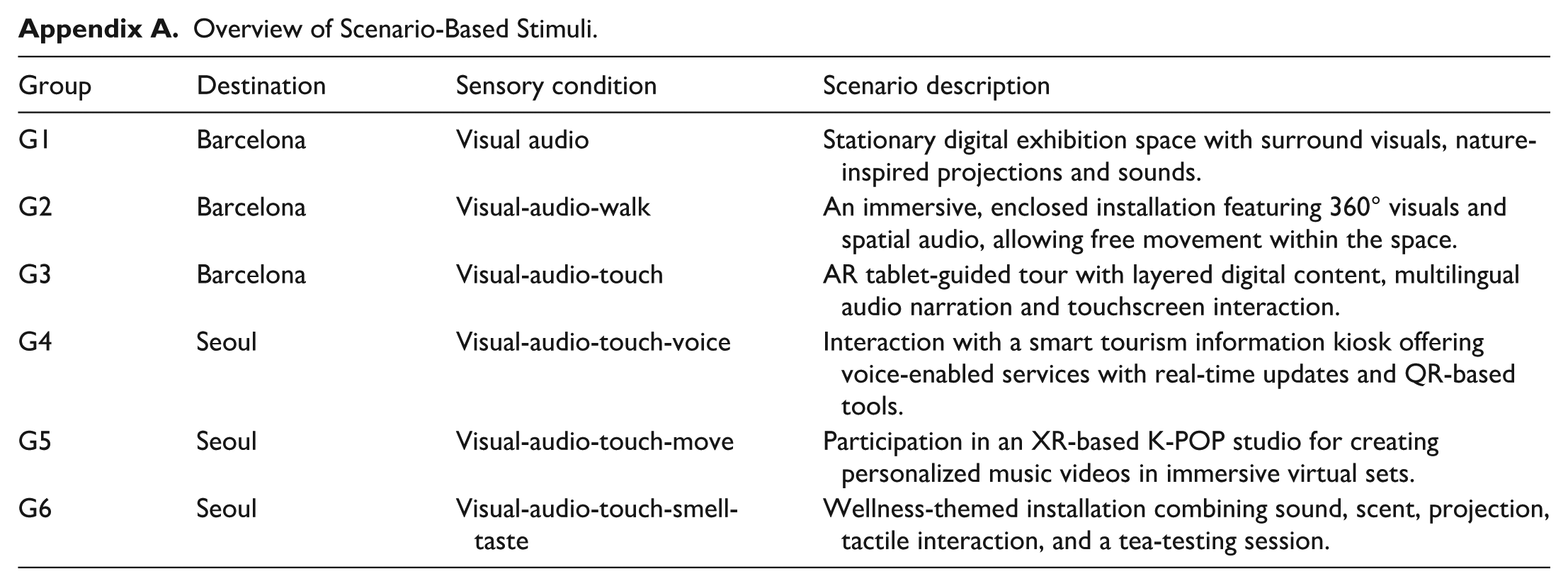
In the fourth section, participants were randomly assigned to view one of six short video scenarios, each presenting a phygital tourism experience. Each video presented a single phygital tourism experience from either Barcelona or Seoul, with three conditions developed for each site, characterized by a specific combination of sensory stimulation and action affordances. In total, six conditions were developed: (1) visual-audio; (2) visual-audio-walk; (3) visual-audio-touch; (4) visual-audio-touch-voice; (5) visual-audio-touch-move; and (6) visual-audio-touch-smell-taste. These conditions were designed to test incremental levels of perceived sensory immersion, from basic audiovisual engagement (G1) to full multisensory integration (G6), aligning with prior research on sensory marketing (Spence, 2021). For stimulus development purposes, three of the six sensory conditions were implemented within each scenario setting. This allocation was driven by practical considerations in scenario and video development and does not imply differences in sensory intensity across settings. A detailed description of the six scenarios and their corresponding condition is provided in Appendix A.
In each scenario, participants were instructed to envision themselves walking the streets of Barcelona or Seoul and decide to visit the tourist attractions showcased as if they were experiencing it firsthand. The video portrayed the experience from a first-person point of view, accompanied by sensory descriptions to facilitate mental simulation of multisensory cues, including tactile, olfactory, and gustatory elements. This approach aligns with prior research showing that dynamic visual stimuli can evoke anticipated non-visual sensory responses relevant to destination image and behavioral intentions (Li et al., 2021; Sun et al., 2025). Relatedly, video stimuli in surveys are commonly adopted in tourism research (Stepchenkova et al., 2018) and were deemed suitable to stimulate curiosity and emotional involvement, leading to deeper and more authentic responses (Chen et al., 2021). Thereafter, participants reported their familiarity with the presented scenario and indicated prior participation in similar experiences, providing context regarding their exposure.
To assess participants’ comprehension of the distinct sensory configurations in each scenario, an open-ended manipulation check was incorporated. This approach reduces the risk of response bias due to guessing and offers richer diagnostic information about how participants interpreted the experimental manipulation (Ziegler, 2021). Responses were coded in ATLAS.ti to identify mentions of sensory attributes (i.e., visual, auditory, tactile, movement, olfactory, gustatory). Results indicated a general alignment between participants’ perceptions and the intended manipulation. For instance, in the visual-audio condition, frequently cited elements included “colors” (17%), “lights” (15%), “sounds” (14%), and “music” (12%). In the visual-audio-touch-smell-taste condition, participants most often mentioned “plants” (13%), “touch” (10%), and “tea test” (5%).
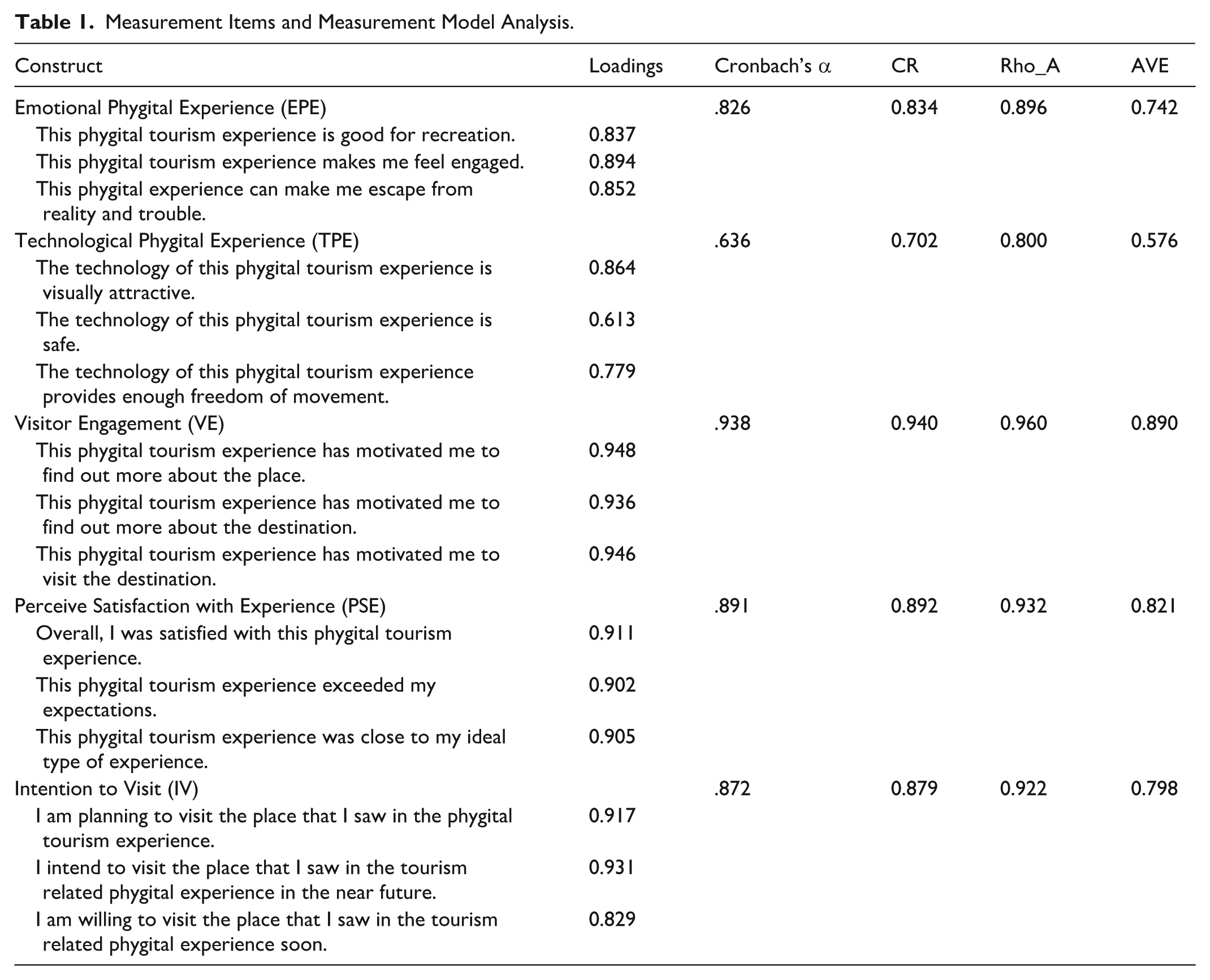
To conclude, demographic data was collected. The measurement items for each construct were borrowed from the literature and amended as needed to fit the context of phygital tourism experiences (full constructs and items appear in Table 1). All items were measured using a 6-point Likert-type scale (from 1 = Strongly Disagree to 6 = Strongly Agree) to push respondents to choose a non-neutral point on the scale as suggested by Rasch modeling studies evaluating the quality of Likert scales (Yamashita, 2022). Emotional phygital experience (EPE, three items) and technological phygital experience (TPE, three items) were adapted from Wang et al. (2012) and Banik and Gao (2023). Visitor engagement (VE, three items) was adopted from tom Dieck et al. (2018). Perceived satisfaction with the experience (PSE, three items) was employed by modifying the scale from Shin et al. (2022). Finally, the intention to visit (IV, three items) was adopted from Kim et al. (2018).
Measurement Items and Measurement Model Analysis.
Sample and Data Collection
Respondent recruitment was conducted via Prolific. The survey was pretested with 11 participants, and small adjustments to language and the survey flow were made to clarify and condense the questions (Fayers & Machin, 2013). A purposive sampling technique with specific screening criteria was employed to ensure the collection of valid and reliable responses from prospective visitors with relevant travel experience and digital readiness. Specifically, eligible participants were aged 18 or above, had traveled domestically and/or internationally with at least a one-night stay between 2021 and 2024, and had previous experience with or interest in interacting with technological solutions. The criteria were designed to identify potential travelers for whom phygital tourism stimuli would be psychologically meaningful in the pre-experience phase, rather than to recruit visitors of the specific Barcelona or Seoul attractions; consistent with this design, participants engaged with the experimental scenarios as prospective rather than in-situ visitors. Only respondents who fulfilled these criteria were qualified to participate in this study. Moreover, we only examined responses that passed two attention checks. After data cleaning, 413 valid questionnaires were available for analysis.
Analytical Approach
Descriptive analysis was first conducted in Excel to evaluate the sample’s characteristics, followed by the application of the Partial Least-Squares Structural Equation Modeling (PLS-SEM) method to test the theoretical model and hypotheses by using SmartPLS 4 version 4.1.8 software (Ringle et al., 2022). A multi-group analysis was performed to compare each sensory condition. The PLS method was deemed appropriate given its capacity to test non-normal, complex models’ structures and explore new relations with robust prediction capabilities (Hair et al., 2019). It allows for a nuanced examination of the relationships between variables without requiring the confirmation of prior hypotheses. Guided by the two-stage approach suggested by Hair et al. (2019), the measurement model assessment was conducted first, followed by the structural model testing.
Results
Sample Description
The average age of participants was 36.2 (STD = 12.07). Female respondents (n = 258; 63%) outnumbered the male (n = 152; 37%) and non-binary gender respondents (n = 3; 1%). Regarding their education level, the respondents predominantly had a graduate or professional degree (39%), followed by those with a bachelor’s degree (30%) and completed secondary school (14%). The largest proportion of respondents works full-time (58%). When asked about their previous experience with technology, participants reported familiarity with various technological solutions, particularly 16% had experience using QR codes, 16% with self-service kiosk technology, and 12% with artificial intelligence (AI). In contrast, fewer participants reported experience with more immersive technologies, such as VR (7%), AR (4%), and MR (2%).
Assessment of the Measurement Model
The reliability and validity of the outer model were inspected first (Chin, 2010). The results of the measurement model assessment are presented in Table 1. Item reliability was assessed by examining factor loadings, revealing that one item from the Technological Phygital Experience construct had an outer loading of 0.613, falling below the recommended threshold of 0.708 (Hair et al., 2019). In line with guidance for exploratory PLS-SEM research, indicators exhibiting loadings between 0.40 and 0.70 may be retained when they contribute to content validity and do not adversely affect composite reliability (Hair et al., 2017; Hulland, 1999). Accordingly, the item was retained since it captures a critical aspect of the construct, contributing to the model’s overall conceptual robustness. Afterward, all internal consistency values, composite reliability (Jöreskog, 1971) values, were above the minimum of 0.70 and below the suggested maximum of 0.95 (Diamantopoulos et al., 2012), indicating good levels of reliability (Hair et al., 2019). Cronbach’s alphas (α) values were above or greater than the .60 cutoff for all measurement scales, which indicates sufficient reliability (Hair et al., 2019). Subsequently, ρA coefficients were employed to assess construct reliability, with all values within the acceptable thresholds of 0.80 and 0.95. Lastly, convergent validity was evaluated through the Average Variance Extracted (AVE), and all values exceed the 0.500 cutoff proposed by Fornell and Larcker (1981), ranging from 0.576 to 0.890.
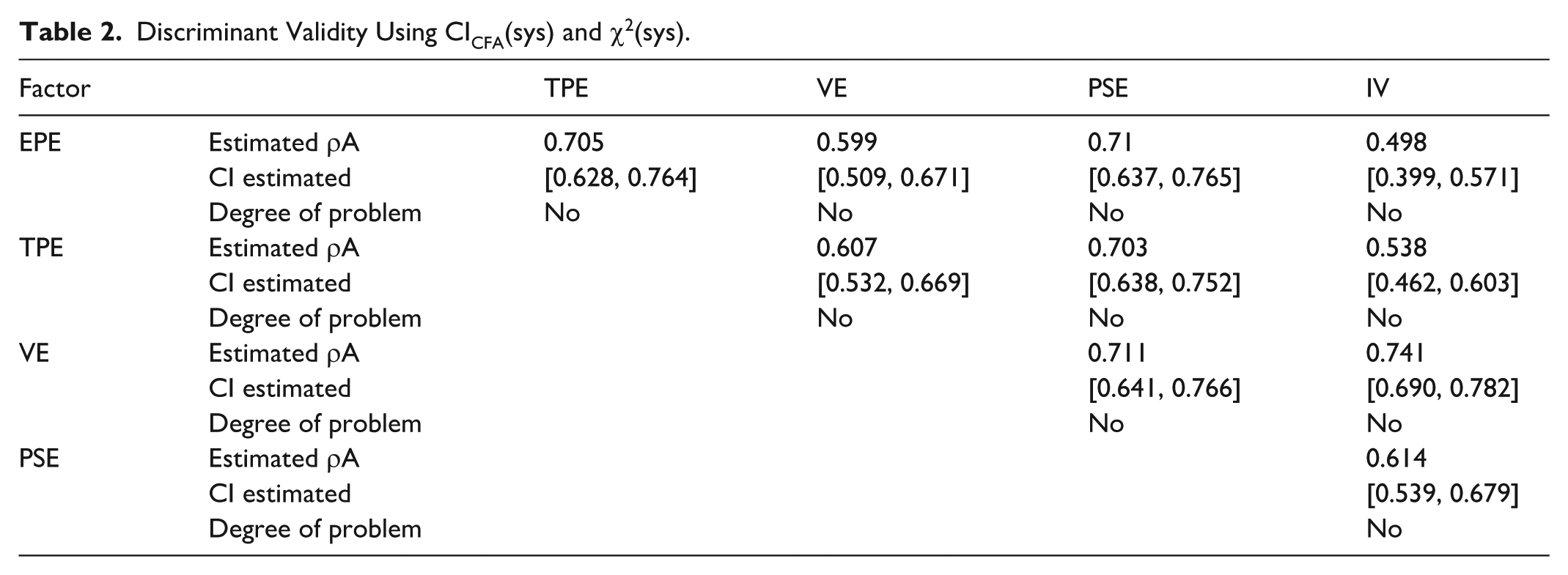
To evaluate the discriminant validity among factors, the 0.9 cutoff criterion of CICFA(sys) and χ2(sys) proposed by Rönkkö and Cho (2020) were selected over the conventional heterotrait–monotrait (HTMT) ratio since the former avoids the parallel assumption of HTMT, which requires verifying equal variances and covariances among indicators. This approach has been adopted in previous tourism investigations (Asante, 2023; Manosuthi et al., 2022), supporting its applicability within the field. As depicted in Table 2, all 95% confidence intervals for the latent correlations remained below the critical value of 1.0, providing a solid indication of the existence of discriminant validity (Rönkkö & Cho, 2020). Furthermore, the variance inflation factor (VIF) was employed to evaluate the potential for collinearity issues (Hair et al., 2017). All values fell below the critical threshold VIF ≤ 5, with the maximum value of VIF = 4.552, indicating no collinearity issues (Hair et al., 2019). Collectively, results demonstrate acceptable convergent and discriminant validity.
Discriminant Validity Using CICFA(sys) and χ2(sys).
Assessment of the Structural Model and Hypothesis Testing
Following the confirmation of reliability and validity for all model constructs, the model’s explanatory power was assessed using the R2 value (Sarstedt et al., 2014). This examination revealed R2 values for perceived satisfaction with the experience, visitor engagement, and intention to visit were .51, .43, and .57, respectively, all well above the minimum threshold of .10 (Hair et al., 2019). These values indicate moderate levels of explained variance, which are regarded as meaningful in social science research (Hair et al., 2019). Subsequently, the explanatory power and predictive accuracy of the model were assessed using Stone-Geisser’s Q2 (Hair et al., 2019) following the blindfold procedure, and all results were greater than the required threshold of >0 and therefore meaningful (Chin, 2010). The Q2 values for perceived satisfaction with the experience (0.49), visitor engagement (0.42), and intention to visit (0.30) all exceed 0.25, indicating medium predictive relevance of the model (Hair et al., 2019). Moreover, FIMIX-PLS was used to detect any unobserved heterogeneity and found no critical levels, confirming that the aggregated data were appropriate to use (Sarstedt et al., 2019).
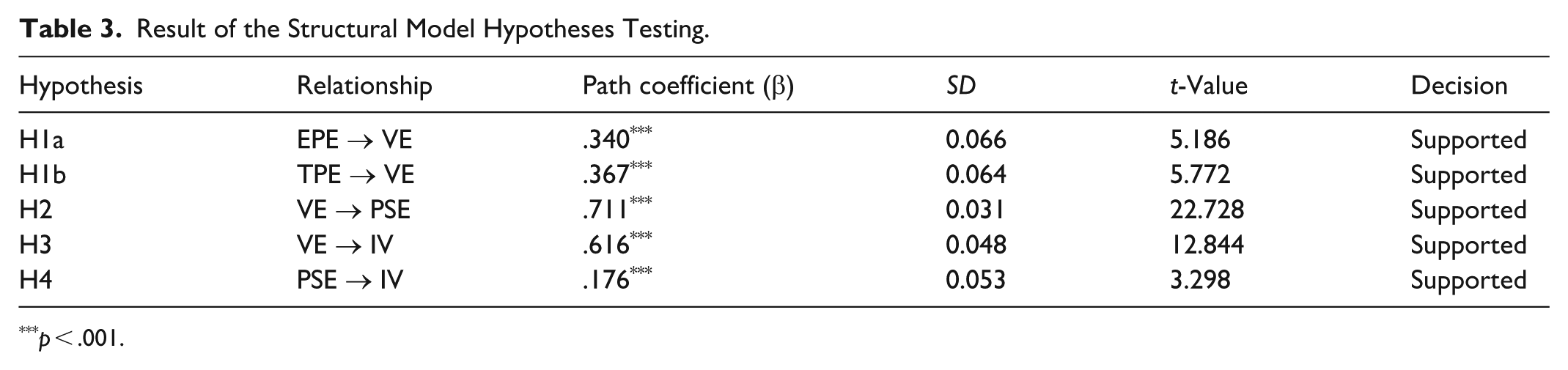
The significance of estimated path coefficients was tested using the bootstrapping method with 5,000 resamples. Table 3 presents the main results of the model, indicating that each of the proposed hypotheses was supported empirically. Specifically, both emotional phygital experience (β = .340, p < .001) and technological phygital experience (β = .367, p < .001) positively impacted visitor engagement, supporting H1a and H1b. Notably, while both dimensions contribute to engagement, the technological phygital experience demonstrated a slightly stronger effect compared to the emotional dimension. H2 and H3, which proposed that visitor engagement has a positive effect on perceived satisfaction with the experience (β = .711, p < .001) and visit intention (β = .616, p < .001), were all significant, supporting these hypotheses. Finally, perceived satisfaction with experience was positively associated with the intention to visit (β = .176, p < .001). Hence, H4 was supported.
Result of the Structural Model Hypotheses Testing.
p < .001.
Assessing Multi-Group Analysis (MGA)
To examine the moderating role of sensory stimuli combination, a multi-group analysis was conducted across six experimental conditions, ranging from basic audiovisual engagement (G1) to full multisensory integration (G6). Results show that out of the 75 group path comparisons, only 11 were statistically significant, indicating that the configuration of sensory stimuli moderated several key relationships in the model.
More specifically, as shown in Table 4, the relationship between emotional phygital experience and visitor engagement varied significantly across sensory conditions. This relationship was particularly strong in groups with higher immersive sensory levels, including visual-audio-walk (G2), visual-audio-touch-voice (G4), and visual-audio-touch-smell-taste (G6). In contrast, it was not significant in groups with fewer sensory inputs, such as visual-audio (G1) or visual-audio-touch (G3). These findings suggest that emotional engagement is reinforced when more immersive and embodied senses are included (Simmonds et al., 2020). Conversely, the technological phygital experience and visitor engagement relationship showed stronger effects in lower or mid-level sensory groups, visual-audio (G1), visual-audio-touch (G3), and visual-audio-touch-move (G5), while its effect diminished in the most complex multisensory settings (G6). Additionally, the relationship between engagement and perceived satisfaction remained significant across all groups, with higher path coefficients observed in the visual-audio-walk (G2), visual-audio-touch-move (G5), and visual-audio-touch-smell-taste (G6).
Standardized Path Estimates and Significances.
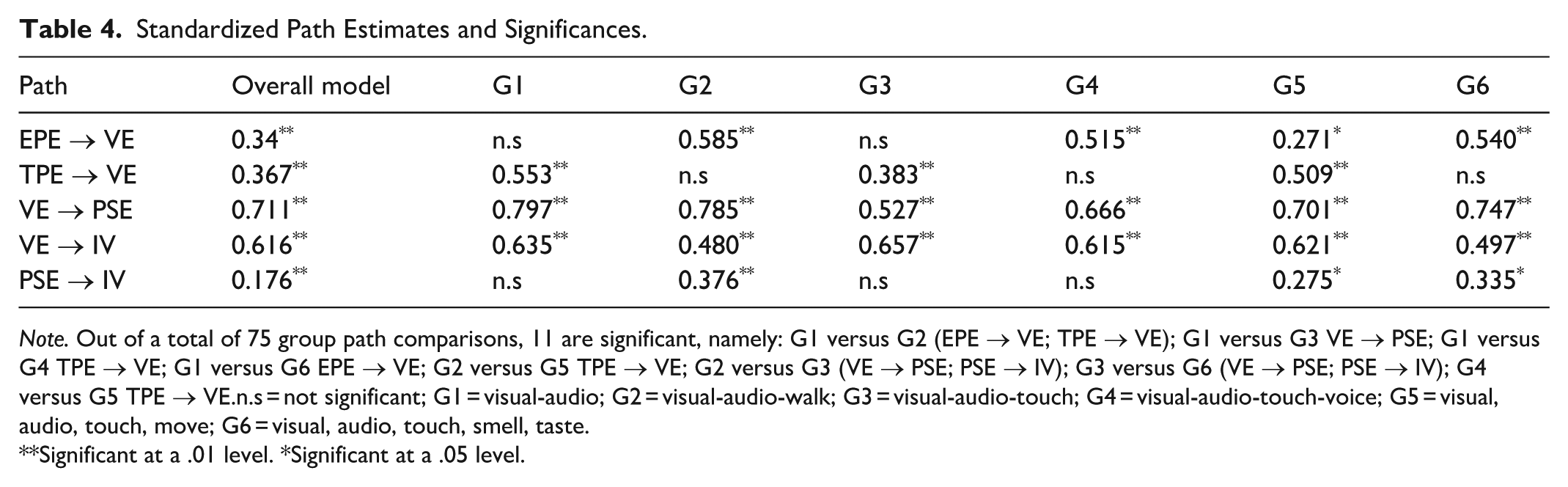
Note. Out of a total of 75 group path comparisons, 11 are significant, namely: G1 versus G2 (EPE → VE; TPE → VE); G1 versus G3 VE → PSE; G1 versus G4 TPE → VE; G1 versus G6 EPE → VE; G2 versus G5 TPE → VE; G2 versus G3 (VE → PSE; PSE → IV); G3 versus G6 (VE → PSE; PSE → IV); G4 versus G5 TPE → VE.n.s = not significant; G1 = visual-audio; G2 = visual-audio-walk; G3 = visual-audio-touch; G4 = visual-audio-touch-voice; G5 = visual, audio, touch, move; G6 = visual, audio, touch, smell, taste.
Significant at a .01 level. * Significant at a .05 level.
The path from visitor engagement to intention to visit was consistently significant across all six groups, with coefficients ranging from 0.480 to 0.747. Surprisingly, no group differences were found for this relationship. Although the relationship between visitor engagement and intention to visit remained significant across all groups, its strength differed by sensory condition, reinforcing that not all sensory configurations exert equal experiential impact. Notably, the highest effects were observed in visual-audio (G1) and visual-audio-touch-smell-taste (G6), indicating that both high and low sensory stimulation can drive intention. Lastly, the path from perceived satisfaction to intention was only significant in visual-audio-walk (G2), visual-audio-touch-move (G5), and visual-audio-touch-smell-taste (G6), suggesting that satisfaction may not always translate into intention unless the sensory experience is particularly dynamic or immersive. Collectively, these results suggest that the influence of the emotional and technological dimension on visitor engagement and related outcomes varies depending on the sensory configuration presented.
Discussion and Implications
Recent technological advancements have led to the emergence of phygital experiences, which combine physical and digital elements to create immersive environments (Çiftçi & Çizel, 2024). Although the topic has garnered increasing attention in recent years, research on phygital tourism is still limited, leaving gaps in understanding how these experiences affect visitor engagement. Relatedly, the multisensory aspect needs further exploration, as there is a lack of insight into effectively integrating sensory stimuli and how different combinations impact the overall experience (Spence, 2022). Drawing on the dual-process theory (Epstein, 1994; Evans, 2008) and OSL theory (Raju, 1980), this study extends our understanding of phygital tourism by examining how hedonic and functional aspects of phygital experiences influence visitor engagement, satisfaction, and visit intentions and assessing how different combinations of sensory stimuli moderate these relationships.
Findings revealed that both emotional phygital experience and technological phygital experience positively influence visitor engagement. This aligns with previous research, which has advanced that phygital experiences have to provide both hedonic and utilitarian value to the experiences (Batat, 2022; Johnson & Barlow, 2023). Notably, compared to previous studies, our findings offer quantitative evidence to support these dual emotional-cognitive routes. Interestingly, the technological dimension exerts a slightly stronger effect compared to the emotional side. This result could be attributed to the critical role of usability and familiarity in shaping users’ responses to technology. Prior investigations have demonstrated that users’ engagement tends to diminish when technology solutions are perceived as overly complex or unfamiliar (Dickinson et al., 2016). In phygital tourism contexts, where visitors seamlessly interact with multiple digital and physical touchpoints, the utilitarian benefit of technology (e.g., ease of use and accessible design) becomes paramount. Consequently, if technology is perceived as complex, it may detract from the overall experience and lead to disengagement, highlighting the importance of its functionality value (Boudkouss & Djelassi, 2021).
Results established the positive relationship between visitor engagement and perceived satisfaction with the experience. These findings further validate the positive association between engagement and satisfaction, highlighting that engaged individuals tend to evaluate experiences with technology more positively due to heightened involvement and the fulfillment of hedonic and functional needs (Sung et al., 2021). The study also revealed that visitor engagement positively affected the intention to visit. This result is promising since it indicates that phygital experiences could potentially serve to enhance destination appeal and influence future visitors (He et al., 2018). As such, tourist destinations could leverage phygital experiences to stimulate initial engagement and interest in actual visits (Fan et al., 2022). Moreover, the analysis found that perceived satisfaction with the experience directly affected the intention to visit. These results are consistent with the work of Yuce et al. (2020) and An et al. (2021). Collectively, these findings support the idea that physical tourism experiences could positively influence potential visitors’ perceptions of tourist attractions and destinations.
Finally, findings demonstrated the moderating role of various sensory combination levels in the above effects. Multi-group analysis results revealed insights into the different effects of various sensory combinations in phygital experiences on visitor engagement, satisfaction, and intention to visit. Notably, the observed variation in results across sensory groups underscores that greater sensory complexity does not invariably result in superior experiences (Marks, 2014). Although increased sensory input heightened emotional engagement in several cases, there were also instances where excessive or complex multisensory designs appeared to reduce the impact of technological engagement. Thus, for phygital experiences to be effective, the multiple sensory components must be holistically coordinated rather than simply maximized in number or intensity (Spence, 2021).
Theoretical Contribution
This study makes several important theoretical contributions in the emerging field of phygital tourism. First, we extend dual‑process theory by explicitly modeling phygital engagement as a dual‑route phenomenon in which System 1 (affective/hedonic) and System 2 (cognitive/utilitarian) channels operate simultaneously yet differentially. Prior phygital work has treated engagement as a single latent factor (Batat, 2022), leaving unanswered whether emotional allure or technological utility dominates visitor response. Our structural model shows that each route contributes unique variance to engagement, confirming that the two systems act in parallel rather than hierarchically. By nesting the sensory‑optimization logic of optimum stimulation level inside this dual‑route architecture, we introduce a diagnostic lens capable of predicting when additional hedonic layers shift from enhancing to damping engagement, something earlier virtual/augmented reality studies could not empirically quantify.
Second, this study contributes to the engagement literature by uncovering the role of phygital experiences in driving visitor engagement during the pre-experience stage (Neuburger et al., 2018). Previous investigations have examined the relationship between engagement and satisfaction in technological-mediated contexts (Abou-Shouk et al., 2024; Jessen et al., 2020). We moved a step further by empirically analyzing the phenomenon in a phygital tourism context, which turns out to positively influence perceived satisfaction and intention to visit. Building on Mkedder and Bakır (2026), this study deepens the phygital discussion by investigating how phygital experiences shape intention to visit, thereby presenting novel insights into the early stages of the decision-making process (Hollebeek et al., 2019). Prior investigations have promoted technological solutions as powerful marketing tools for enhancing visit intention (Yung & Khoo-Lattimore, 2017). Our findings extend this understanding by advancing that immersive phygital experiences hold the potential to serve as compelling attractions (He et al., 2018). This further reinforces the dual role of technology in both promoting destinations and crafting immersive, engaging experiences that captivate potential visitors (Neuburger et al., 2018).
Finally, this study reveals the moderating effect of sensory levels in phygital tourism experiences. Grounded in the OSL theory, it shows that varying combinations of sensory stimuli can strengthen or attenuate the effects of emotional and technological experience aspects on visitor engagement, influencing satisfaction and intentions to visit. By focusing on sensory congruence, this study addresses an important gap in the literature concerning the holistic integration of secondary sensory modalities, such as touch, smell, and taste (Petit et al., 2019). The findings provide a more nuanced understanding of how sensory-enabling technologies can be strategically combined rather than cumulatively intensified, enriching perspectives on OSL theory (Batat, 2024; Flavián et al., 2021; Santoso et al., 2022; Spence, 2021). Notably, findings emphasize the importance of accounting for individual sensory preferences when developing phygital tourism experiences (Galloso et al., 2016). Building on this, we contribute a working definition of sensory synergy in phygital tourism as the coordinated, congruence-based integration of two or more modalities whose joint effect on engagement exceeds their additive contributions. The multi-group results, in which the emotional pathway is strengthened in immersive, embodied configurations (e.g., G2, G4, G6) while the technological pathway is most effective at lower or mid-level configurations (G1, G3, G5) and attenuates at the most complex multisensory level, provide one of the first empirical demonstrations of this non-monotonic synergy logic. Theoretically, this re-specification connects the multisensory marketing tradition (Gallace & Spence, 2014; Spence, 2011, 2022) to optimum stimulation level’s homeostatic mechanism, advancing both literatures by clarifying when phygital sensory combinations amplify versus dampen the dual cognitive-affective pathways to visitor engagement.
Practical Implications
This research offers several practical implications for phygital adoption and experience design within the tourism sector. First, the findings highlight the importance of adopting a utilitarian-hedonic approach to phygital experience design. To generate emotionally resonant experiences, tourism practitioners should ensure that technological components are user-friendly, emotionally resonant, and seamlessly integrated with physical touchpoints to enhance visitor engagement. Technologies such as QR codes and 3D projectors can be implemented to support emotional narrative while considering spatial context and operational feasibility. Significantly, this implies that phygital experience design is not solely technology-driven; rather, technologies should be selected to recede into the background, allowing visitors to focus on the experience rather than the technological interface (Stankov & Filimonau, 2018).
Second, this research provides valuable insights into delivering sensory-rich experiences by demonstrating that different combinations of sensory stimuli shape visitor engagement in distinct ways. Rather than maximizing sensory input indiscriminately, site managers are encouraged to adopt a selective and integrative approach that considers the synergy and balance among sensory modalities, particularly secondary senses such as touch, smell, and taste, to enhance experiential value. By aligning with human-centered design principles (Inversini, 2024), tourism practitioners can craft appealing and accessible experiences (Obrist et al., 2016) while also avoiding sensory saturation or disengagement (Spence, 2021). This may involve testing different sensory combinations, modulating intensity levels, introducing stimuli sequentially rather than simultaneously, or designing sensory zoning areas that allow visitors to decompress from sensory stimulation. Plus, to promote accessibility and inclusivity, site managers should accommodate varying visitors’ preferences by offering personalization options or alternative sensory formats, including subtitles, tactile signage, or lighting adjustments. Such strategies support a more conscious and articulated management of sensory inputs (Bender et al., 2023) while accommodating heterogeneous sensory preferences among visitors.
Relatedly, previous research has emphasized the value of multidisciplinary collaboration to develop effective and feasible phygital content (Vosinakis et al., 2020). Given the challenges of achieving sensory congruence, tourism practitioners may benefit from seeking expertise and collaborating with professionals from various fields (e.g., technology developers and historians) to facilitate the coherent integration of multisensory elements into visitor experiences.
Lastly, the findings offer substantial guidance for destination marketers seeking to leverage technology-mediated experiences to develop competitive advantages and attract potential visitors. Specifically, marketing communication should clearly emphasize the distinctive characteristics of phygital experiences to balance both hedonic and utilitarian benefits to appeal to different visitors’ needs. For instance, hedonic components (e.g., aesthetics and emotional involvement) could be effectively communicated through customer testimonials and user-generated content to convey authentic reactions. In parallel, utilitarian aspects (e.g., digital usability and convenience), destination marketers could use informational infographics and short-form video tutorials (e.g., TikTok and Instagram Reels). Such communication strategies can lower perceived effort and uncertainty, especially among first-time and hesitant visitors, thereby facilitating engagement. Overall, by aligning emotional resonance with practical reassurance, destination marketers can more effectively translate the multisensory and immersive attributes of phygital experiences into compelling market propositions.
Limitations and Future Research
Although the results of this study have useful implications for research and practice, several limitations must be acknowledged that provide avenues for future inquiry. First, the sensory stimuli were presented via video as part of an online survey, which is appropriate in the context of information search/before traveling. Nonetheless, they may limit the realism of the experiment and its embodied and immersive qualities, particularly for secondary sensory modalities like smell. Similarly, using specific phygital experiences case studies for the scenario-based experiment may constrain the generalizability of the findings due to their context-specific nature.
A second, related limitation concerns the nature of the sample. Although participants met our screening criteria for travel experience and digital readiness, they were not actual visitors to the Barcelona or Seoul attractions; rather, they engaged with these phygital experiences as potential visitors during the pre-experience phase of the tourist journey. The findings should therefore be interpreted as evidence of anticipatory, mediated multisensory engagement rather than in situ sensory perception, and the magnitudes of the path coefficients may differ in field settings where embodied stimuli (e.g., physical touch and ambient scent) are present in their full sensory richness. Future research should replicate the model in field experiments and quasi-experiments at the studied attractions and across additional sites and could productively pair pre-experience and on-site measures within the same participant pool to disentangle anticipatory from in-situ engagement (Stepchenkova et al., 2018; Yuce et al., 2020).
Lastly, the study focuses on the pre-experience travel stage, which provides valuable insights into anticipatory engagement, perceived satisfaction, and intention to visit, but does not account for engagement during the experiential phase or post-travel stage. Accordingly, future research is advised to investigate how phygital tourism experiences influence engagement in the different travel stages to capture the experience of actual visitors. Moreover, demographic and cross-cultural differences were not examined across groups. Indeed, previous research has noted that socio-demographic characteristics (e.g., age and educational level) may influence attitudes toward and perceptions of technology (Clark et al., 2021). Therefore, future investigations should perform studies with larger samples and different target groups to enable comparative analyses across cultural variation, gender, and generational groups (e.g., Gen Z and Millennials) of individuals and increase external validity. Finally, future research could extend this work by differentiating among specific types of prior technological experience and examining how varying levels of familiarity with low- versus high-immersion technologies can shape engagement in phygital tourism contexts.
Footnotes
Appendix
Overview of Scenario-Based Stimuli.
| Group | Destination | Sensory condition | Scenario description |
|---|---|---|---|
| G1 | Barcelona | Visual audio | Stationary digital exhibition space with surround visuals, nature-inspired projections and sounds. |
| G2 | Barcelona | Visual-audio-walk | An immersive, enclosed installation featuring 360° visuals and spatial audio, allowing free movement within the space. |
| G3 | Barcelona | Visual-audio-touch | AR tablet-guided tour with layered digital content, multilingual audio narration and touchscreen interaction. |
| G4 | Seoul | Visual-audio-touch-voice | Interaction with a smart tourism information kiosk offering voice-enabled services with real-time updates and QR-based tools. |
| G5 | Seoul | Visual-audio-touch-move | Participation in an XR-based K-POP studio for creating personalized music videos in immersive virtual sets. |
| G6 | Seoul | Visual-audio-touch-smell-taste | Wellness-themed installation combining sound, scent, projection, tactile interaction, and a tea-testing session. |
Acknowledgements
We would like to thank the editors and anonymous reviewers for taking the time and effort necessary to review the manuscript.
Ethical Considerations
This research received a favorable ethics opinion from the University of Surrey Ethics Committee.
Consent to Participate
All participants provided written informed consent prior to the commencement of data collection.
Author Contributions
Funding
The authors disclosed receipt of the following financial support for the research, authorship, and/or publication of this article: This paper forms part of a wider PhD study recognized and funded (ES/P00072X/1) by the ESRC (Economic Social Research Council) Southeast Network for Social Sciences (SeNSS). This work and PhD study are also supported by SimpleView Europe. Manuel Alector Ribeiro is financed by National Funds provided by FCT – Foundation for Science and Technology through project UID/04020/2025 (CinTurs) with DOI  .
.
Declaration of Conflicting Interests
The authors declared no potential conflicts of interest with respect to the research, authorship, and/or publication of this article.
Data Availability Statement
Data can be made available upon request.*