




Abstract
Models are used in a variety of arguments such as explanatory, critical, and policy arguments. However, there does not seem to be a framework within which to analyze their diverse argumentative uses. This article focuses on the argumentative uses of economic models and proposes a four-layered framework (from scientific model to policy argument) to analyze the role of such models as argumentative devices, and to make explicit the gap between model results and real-world policy claims. The case in focus is the supply and demand model and its role in explanatory and policy arguments during the COVID-19 pandemic.
Keywords
Introduction
Scientific models have immense power. A simple curve drawn by an economist could justify policies that reshape economies and affect millions of lives. As the story goes, Arthur Laffer drew a curve on a napkin during a dinner to discuss U.S. President Gerald Ford’s proposal to increase taxes (Laffer 2004). The curve represented the theoretical relationship between a government’s tax revenues and tax rates, illustrating that, after a certain point, higher taxes could decrease revenue. The Laffer curve cast doubt on the benefits of higher taxes, and it has been used to justify major tax cuts (Berman and Milanes-Reyes 2013; Laffer 2004). Similarly, highly idealized models of efficient markets justified the financial deregulation that precipitated the 2008 crisis. Currently, as the world faces major environmental and societal challenges, economic models remain at the heart of arguments that will define our collective future. Yet, despite their profound influence, the way these models are used in policy arguments often goes unexamined. This article offers a framework for analyzing how idealized models 1 in economics that employ simplifying and unrealistic assumptions are used to support policy claims. These idealizations make the gap between a model’s results and real-world policy claims both interesting and consequential. The proposed four-layered framework explicates the inferential steps involved in bridging this gap.
Consider the use of the supply and demand (SD) model during the Covid-19 pandemic, for example. It was invoked to explain the sudden disappearance of toilet paper, to warn against the dangers of price-gouging laws, and to argue that the market, left alone, would resolve the crisis in markets for personal protective equipment (PPE, such as masks). Herein lies the puzzle, however: the same SD model was also used to support contradictory conclusions. For some, it showed that price controls or trade restrictions would lead to disastrous outcomes. For others, the model made it clear that intervention was necessary. The SD model is not the only example. As Dani Rodrik argues more generally, one and the same economic model could be used to justify a variety of policies (Rodrik 2007, 2015). How, then, could idealized models that employ a variety of unrealistic assumptions justify real-world policies? How can a single, highly idealized model support divergent claims about the real world? How do economists and commentators leap from the neat, frictionless world of a model to the messy, high-stakes reality of policy making?
These questions concern what I call the puzzle of model-based policy, which is closely related to the puzzle of model-based explanation (Aydinonat 2024b; Bokulich 2011, 2017; Verreault-Julien 2021). The issue in both cases concerns how idealized models can say anything true or reliable about the real world. Although philosophers of science have devoted considerable attention to the explanatory puzzle in scientific contexts, they have rather neglected the question of how models are used in real-world contexts to explain phenomena, justify policy proposals, or criticize policies. My aim here is to draw attention to this interesting and fruitful area of research, namely the uses of economic models in the wild.
“In the wild” here refers to the use of these models outside of pure academic contexts for advancing arguments in practice, in real-world policy contexts. Models are used in the wild in a wide variety of ways. They are used to provide explanations and justify policy proposals that guide real policy interventions. Models are also used to explain and discuss policies or policy proposals in publicly accessible outlets such as newspapers, blogs, websites, and podcasts. My primary focus in this article is on the publicly circulating views and claims that made use of the SD model during the Covid-19 pandemic. As I will make clear, and as implied in the proposed framework, the way in which models are used to justify real policy interventions is complex, with several stages involving many and various premises. The ultimate aim is to facilitate analysis of all the above, but for current purposes the use of the SD model during the pandemic provides a cleaner and more relatable case to support the framework. Moreover, publicly circulating arguments are not trivial. They often influence policy arguments and choices as well as public support for policies. Hence, the case of the SD model during the pandemic is a good starting point from which to advance the discussion.
I propose that conceiving of models as argumentative devices (Aydinonat 2024a; Aydinonat et al. 2021) will help to solve the puzzles mentioned above. In model-based explanation, the model is cited in the premises of an explanatory argument (cf. Bokulich 2011, 2017). In the case of a model-based policy proposal, it is cited in the premises of an argument that supports a policy conclusion. In both cases, the model plays a role in supporting a claim. To understand this role, I argue, one should pay attention to the steps and additional premises involved in moving from the model to the real-world claim.
My proposal has four steps. The first is to introduce and explain what I call a “model argument,” meaning the deductive derivation of results from the model’s assumptions. The second step is to distinguish this from the “model-based argument,” which is broader and often non-deductive: the model is used together with additional premises (e.g., concerning its applicability, available evidence, and normative commitments) to support a claim about the real world. This distinction reveals the inference gap between a model’s internal logic and model-based statements about the real world, and helps to explain how the same model could support contradictory conclusions. The third step is where I propose a four-layered framework that distinguishes between “model argument,” “model interpretation,” “policy interpretation,” and “policy argument.” The point here is to identify how and where values, empirical assumptions, and interpretive choices enter such arguments, and to make it possible to see which assumptions and premises support claims about the real world. The fourth and final step is to discuss the usefulness of the framework in the context of the literature on the philosophy of science. I conclude with a discussion about its relevance in the analysis of science-informed policy more broadly.
The SD Model
I will use the SD model as an example in my argument, and therefore start by giving an overview of it. The textbook SD model depicts two things: supply (S) and demand (D), as shown in Figure 1. The demand curve (D) shows that price and quantity demanded move in opposite directions (Law of Demand) ceteris paribus, that is, assuming there are no changes other than in price—that is, no changes in consumers’ preferences, income, or the prices of related goods. Changes in these assumptions imply a shift in the demand curve. For example, if there is an increase in consumers’ income, the demand curve shifts to the right as shown in Figure 2. The supply curve (S) shows that price and the quantity supplied move in the same direction (Law of Supply) ceteris paribus, that is, assuming that things other than the price do not change—that is, assuming no changes in input prices, supply of inputs, number of sellers, or production technology. When ceteris paribus conditions change, the supply curve shifts. For example, if production technology improves, it shifts to the right. Among other things the SD model shows that the market is in equilibrium when supply and demand are equal. It is also assumed that when the market is not in equilibrium, the market mechanism will take care of the excess demand or supply and bring it to an equilibrium. The SD Model (P: price, Q: quantity, D: Demand, S: Supply, e: equilibrium, P1: equilibrium price, Q1: equilibrium quantity). Equilibrium in the SD Model after an increase in demand (D1: old demand, D2: new demand, e: equilibrium, P2: equilibrium price, Q2: equilibrium quantity).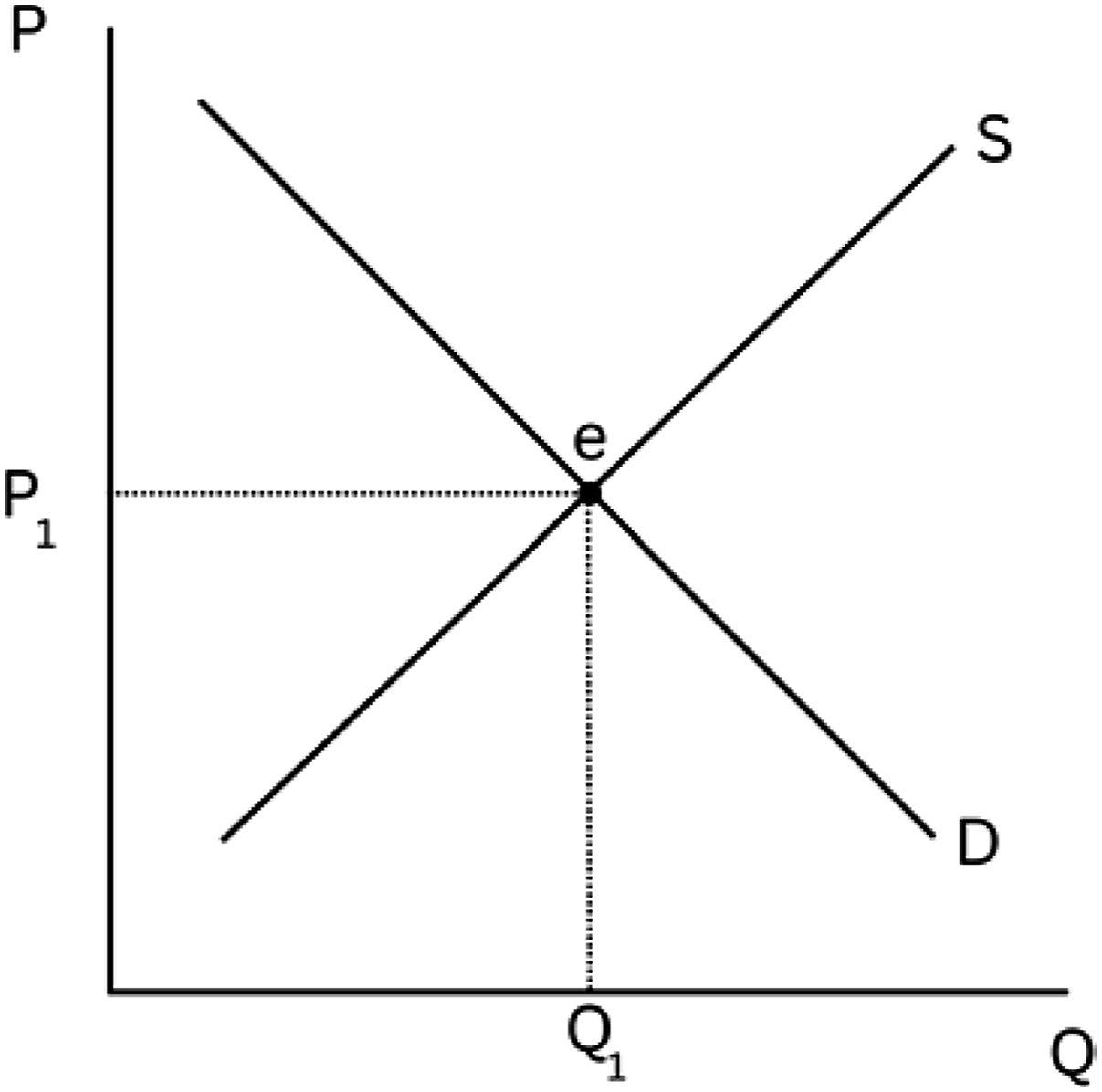

The SD model is deceivingly simple because it is built on a long list of assumptions: agents are rational; there is perfect information; there are many buyers and sellers, none of which have any power to influence market outcomes; the goods sold on the market are homogenous; and there are no externalities (prices reflect all costs and benefits), for example. In the background are also other implicit assumptions concerning the institutional environment, such as well-defined property rights. To be added to this are the so-called ceteris paribus assumptions mentioned above: everything else is held constant when drawing supply and demand curves. One could usefully think of the SD model as describing a world, a model world, in which all of these assumptions hold.
The SD model facilitates analysis of this model world, particularly regarding what happens when there are changes in ceteris paribus conditions, such as in preferences, income, or technology. The model thus provides a framework for studying the influence of these changes on price and quantity.
One could ask, for example: What happens if the demand curve shifts due to an increase in income (Figure 2). The model indicates that this will lead to an increase in price and the market will move to a new equilibrium where supply equals demand. In the new equilibrium, everyone who is able and willing to buy the product at this new higher price will buy it. Others who find the price too high will not demand the product. Thus, there will be no shortage.
There would be a shortage if there was a price ceiling at the old equilibrium price, however (Pc in Figure 3). The price remains fixed due to the price ceiling, therefore the amount the producers supply would not change (Qs). However, due to the increase in demand, the quantity demanded (Qd) at this price would be higher. In other words, the quantity demanded would be higher than the quantity supplied, resulting in a shortage. The effect of a price ceiling after an increase in demand (D1: old demand, D2: new demand, e: equilibrium, P*: equilibrium price, Q*: equilibrium quantity, Pc: ceiling price, Qs: quantity supplied, Qd: quantity demanded).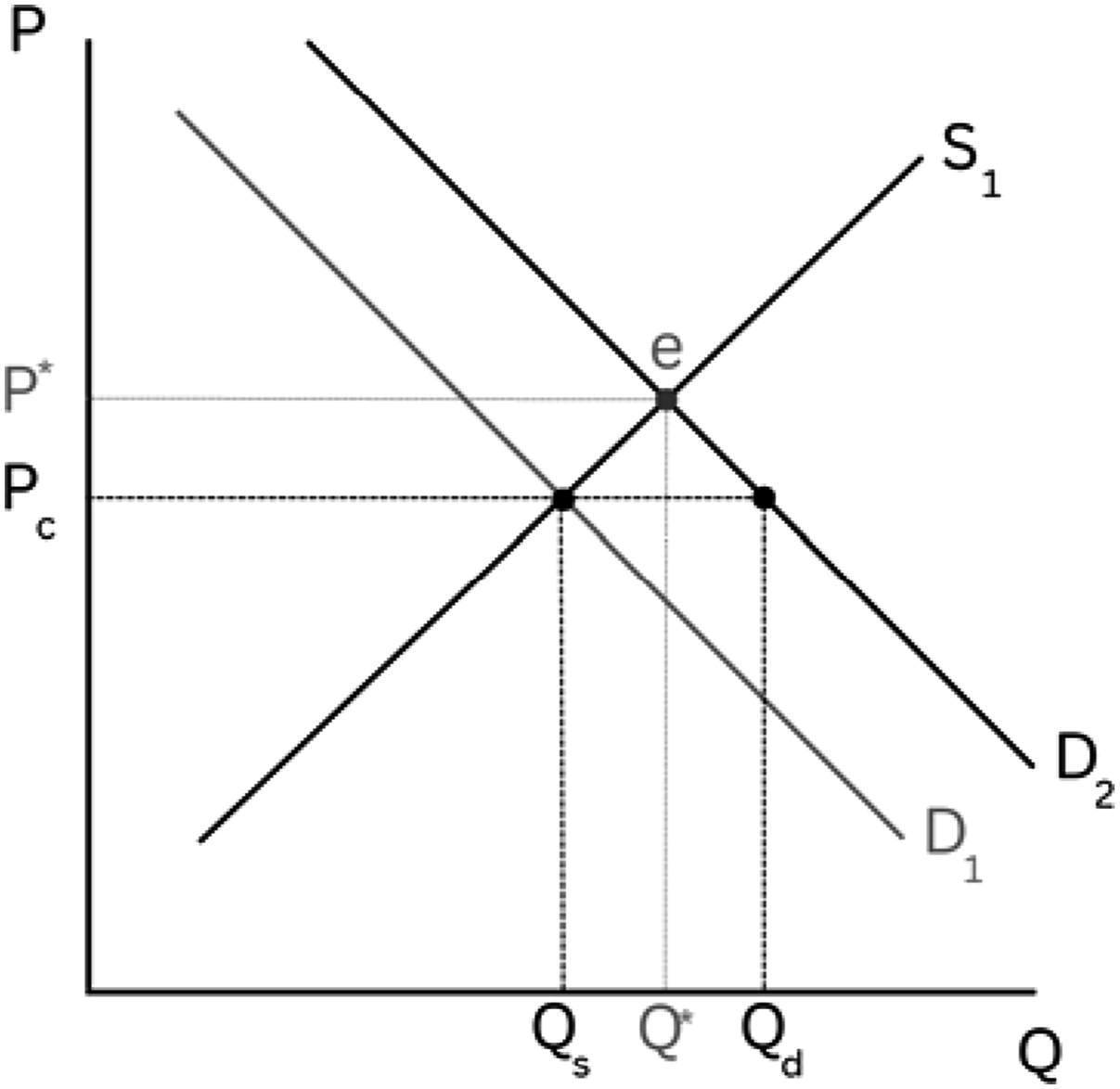
Model Argument
Having covered the basics of the SD model, I will now introduce the first step of my proposal: conceiving of models as arguments. What I mean by this is that we can represent a model’s result as the conclusion of an argument. 2 In economics, the derivation of a model’s result in mathematical and computational models can be represented as a deductive argument. Given that economists themselves see their models in this way (Aydinonat 2024a; Gilboa et al. 2022), this should not be controversial.
The derivation of a model’s result can be represented in the following form: A(1-n): Assumptions of the model
3
—— C: Model result(s) (theorems).
This makes it clear that whether or not the model result holds is purely a logical question, and that it is derived from the model’s assumptions (see Aydinonat 2024a for a more detailed discussion). Perceiving the model result in this way also serves as a reminder that model results are valid in their respective model worlds, and their applicability to any other world needs to be checked.
Let us now outline how a SD model result concerning the effect of a price ceiling could be represented as an argument: A1. Law of Demand. Quantity demanded, A2. Law of Supply. Quantity supplied, A3. Definition of equilibrium. At the equilibrium price ( A4. Definition of a binding price ceiling. A price ceiling —— C: At the ceiling price, the quantity demanded strictly exceeds the quantity supplied. The market exhibits a shortage (excess demand) of magnitude
Note that this is a simplified illustration. A fully rigorous version would require additional mathematical premises concerning the shape of the supply and demand functions, and the assumption that the price ceiling is being perfectly enforced. Moreover, the laws of supply and demand are themselves conclusions derived from a larger set of assumptions, including assumptions concerning utility and profit maximization, perfect competition, etc. Nevertheless, the point remains the same: the model’s result is derived deductively from its premises.
Note, also, that seeing a model’s results this way makes it clear that the SD model, by itself, cannot explain any particular real-world case. As I will show below, for example, if a model is used to explain why toilet paper was missing from shop shelves during the pandemic it needs to be interpreted and supplemented with additional information. This is often the case when models are used for the purpose of explanation, criticism, or policy advice. It is thus useful to keep the model distinct from how it is used together with other sources of information.
Model-Based Arguments
The second step in my proposal is to distinguish between “model arguments” and “model-based arguments.” Both are called “arguments” but there is a crucial difference between them. Whereas the former are deductive as understood in logic and mathematics, many model-based arguments in the wild are arguments in the ordinary sense of the term: they provide reasons to support a claim with the aim of convincing an audience. In other words, whereas the internal logic of a model is deductive, its use in the wild is often not. A model-based argument in the wild will have the following form.
Premises: (1) Premise citing the model or model result(s). (2) Premise concerning the applicability of the model (often about its similarity to its target). (3) Other premises.
Claim: (4) Claim about the real world.
Figure 4 presents the model argument and the model-based argument side by side. Whereas the conclusion of a model argument is about what happens in the model (the “model world”) given its assumptions, the concluding claim of a model-based argument is about the real world. Such claims take different forms, including explanatory claims and policy suggestions about real-world cases, as well as criticisms of both explanations and policy proposals. As should be clear by now, understanding the model argument is simply a matter of understanding how the model’s results are derived logically from its assumptions. Understanding the model-based argument, on the other hand, requires an understanding of why and how the model was cited to support a real-world claim, what additional premises were introduced, and whether the premises really do support the claim. With this framework in mind, I will now show how the SD model was used to explain the case of the missing toilet paper. The model argument and the model-based argument.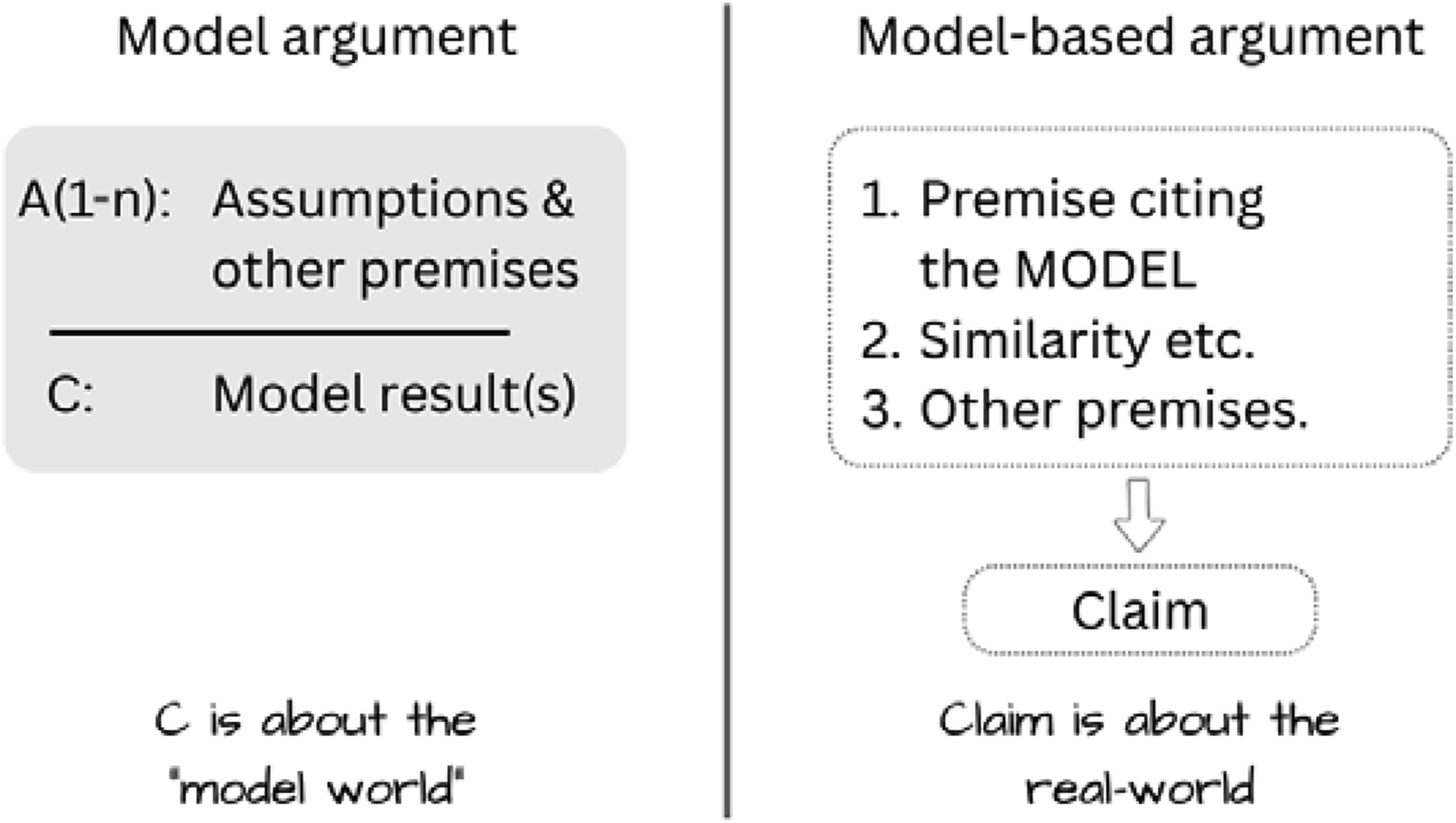
Explanations in the Wild
Consumers across the globe were greeted by empty shelves in the early months of the Covid-19 pandemic. A particularly curious case was that of the missing toilet paper. Why were consumers unable to find toilet paper in supermarkets during the pandemic? Some economists interpreted the empty shelves as a shortage and addressed the issue using the SD model as a benchmark. Under the model’s ideal conditions, an increased demand for toilet paper should not have caused a shortage, and the prices should have been higher (see Figure 2). However, there appeared to be a shortage in the real world. This comparison became the basis of an explanation: it was inferred that something must have interfered with the market mechanism. According to many, that something was the anti-gouging laws. For example, as economist Sandra Klein argued in a representative opinion piece, “anti-gouging laws are the reason there is a toilet paper shortage” (Klein 2020; also see Snell 2020). In an article that explained how to teach the economics behind the pandemic to students, Zhang and Ramse (2021) provided a similar explanation for the shortage: the existence of a price ceiling.
Let us now present this explanation as a model-based argument.
Premises: (1) (Model Result) The SD model shows that preventing price adjustments after an increase in demand causes a shortage. (2) There was a spike in demand for toilet paper early during the pandemic. (3) Toilet-paper shelves in supermarkets were empty; there was a shortage. (4) Existing anti-gouging laws prevented prices from increasing. (5) (Similarity Judgment). The real-world market for toilet paper is sufficiently similar to the SD model (e.g., there is sufficient competition, economic agents are rational, etc.).
Claim: (6) Therefore, anti-gouging laws caused the shortage of toilet paper.
This is a model-based explanation 5 in the wild. Note, first, that in contrast to the model argument, this is not a valid deductive argument. It is simply an argument that provides its audience with some reasons (premises) for believing that the final claim is correct. It lacks the precision of the model argument. It also supplements the model argument with additional assumptions and empirical claims that may or may not be correct.
One could indeed ask: this explanation sounds reasonable, but is it correct? There are reasons to doubt it. First, those who proposed this explanation did not present any evidence to support the claim that anti-gouging laws actually prevented prices from rising. Moreover, no evidence or information was provided about the nature and scope of the shifts in demand and supply. Thus, the proposed explanation was at best a potential explanation in Hempelian terms (Hempel 1965, 338). This was the case with the explanations offered by economists and economics-informed commentators in non-academic publications. One could also ask whether there was any evidence more generally. Chakraborti and Roberts (2020) used a more systematic approach, comparing Google search trends between US states with and without anti-gouging laws. They found that there was a higher increase in online searches for products such as toilet paper and hand sanitizers in states with these laws, which they took to be evidence for the claim that anti-gouging laws could explain the shortages: the more acute the shortage, the more will search online. However, although their empirical test supported this claim for sanitizers, the authors admitted that the results in the case of toilet paper were mixed (Chakraborti and Roberts 2020, 15). Thus, the evidential support for the SD-model explanation of the toilet paper shortage is not clear.
Second, the SD model is silent about the process of adjustment. Hence, the absence of an immediate price increase is not always a good indicator of the existence of an intervention preventing it. Real markets need time to adjust. Instead, the proposed explanation assumed that they could react instantaneously.
Third, there were alternative, competing explanations. Consider the following, for example: this was a temporary spike in demand because individuals were trying to build up a buffer stock even though there was no increase in consumption. Simply put, supermarkets could not fill the shelves as quickly as customers bought toilet paper; shelves were empty only temporarily (e.g., see Luke 2020). One reason for this was that the toilet paper took a lot of storage space and was produced on order (Corkery and Maheshwari 2020). Hence, the inventory was limited and could not adjust immediately. However, the product was back in stores after the initial rush (Gans 2020). Thus, in this account, it was not anti-gouging laws but the peculiarities of the market for toilet paper that explained the empty shelves.
In short, there are reasons to believe that this explanation was not correct because some of its premises were questionable: (2) the spike in demand was temporary; (3) empty shelves do not necessarily imply actual shortage; (4) no evidence was presented for the effect of anti-gouging laws on toilet-paper prices (and available evidence elsewhere was weak); and (5) the applicability of the SD model to the market for toilet paper during a pandemic is an open question, and different answers could motivate alternative explanations. It is worth noting that, although the claim “a price ceiling causes a shortage” is true for the model world, turning it into a claim about the real world requires additional assumptions. Thus, its truth also critically relies on the truth of these additional assumptions.
The SD model is often interpreted as identifying the relevant causal factors that influence supply and demand in the philosophy of economics (Hausman 1990; Kincaid 2004). It is also sometimes interpreted as a benchmark or a diagnostic tool, again helping identify relevant causal factors (Jhun 2018). Although useful, these interpretations do not explicitly distinguish between the model argument and the model-based argument. Let us briefly consider how this distinction helps.
First, by manipulating the model, we learn about what happens in the model world: it is a means of generating model results. What happens if there is an increase in demand in the model? Price increases. Why did the price increase in the model? Because demand shifted. This is simply explaining the model’s own results, and it stays entirely within the model argument.
Second, the model could be used to answer questions about real-world markets. When asked “why do prices increase in real-world markets?” the model helps to generate a menu of possible explanations (Ylikoski and Aydinonat 2014): (i) a shift in demand, which could be caused by a rise in income, a rise in the price of a substitute, a change in preferences, etc.; (ii) a decrease in supply, which could be caused by an increase in resource prices, decrease in the number of sellers, decrease in the supply of inputs, etc.; or (iii) both. Note that this step already moves beyond the model argument. We are interpreting the model as being applicable to real-world markets, and claiming that the factors it identifies are potentially responsible for real-world price changes, hence introducing additional premises. The result is a generic potential explanation: generic, because no specific market event is explained; and potential because the model itself contains no evidence that these factors are actually at work.
Third, the model could also help to explain particular real-world cases, such as the increase in the price of face masks during the pandemic. The menu of possible explanations provided by the model guides the search for the true explanation. Ideally, the inquirer should check all potential causes (including those offered by other models) against available facts, and eliminate those that are not consistent with the facts. As Aydinonat (2018) shows, this process may involve multiple research projects, multiple models, and sometimes decades of empirical work. The point is that moving from the SD model (model argument) to the correct explanation (model-based argument) is no simple matter, and involves additional premises that are not present in the model.
The benefit of representing both the model and model-based explanation as an argument is that it makes it easier to see the gap between the model and the explanatory claim it is used to support. The model-based explanatory argument requires bridging the gap between the model and the real world. It requires additional premises asserting that the model is similar to the target system in relevant respects, and that the facts about the case warrant the conclusion.
Model-Based Policy Claims in the Wild
The policy discussion concerning the case of the missing toilet paper was short lived. However, similar SD-model-based arguments were made about the reduced availability of hand sanitizers, face masks, and other personal protective equipment (PPE), which were then followed by policy claims. Unlike the price of toilet paper, PPE prices spiked dramatically, by over 1,000 percent in some cases (Diaz et al. 2020). These price increases and perceived shortages were explained as consequences of surging demand, amplified by mask mandates (Goel and Haruna 2021; OECD 2020). Yet, despite the rising prices, many who needed PPE could not obtain it. Market adjustment was slower than the model suggested, which was attributed to panic buying (Lacina 2020) and the difficulty of quickly scaling PPE production (Feng and Cheng 2020; OECD 2020).
In the case of PPE, the SD model not only helped in explaining the price increases but was also used to support policy claims. Commentators posited that, without interference, higher prices would have given a signal to existing producers to increase their production and make the market more attractive for new entrants. With producers ramping up production and new firms entering the market, supply would have shifted in the longer term and prices would have decreased. Hence, according to these accounts, anti-price gouging laws also prevented this beneficial outcome. […] by deterring major price increases through anti-price-gouging laws during emergencies, politicians ensured that there were prolonged shortages of important products and that they ended up in places where they were not most highly valued. (Bourne 2021, 163; emphasis added)
This criticism was followed by a policy suggestion: allow the price mechanism to function freely. As in the case of model-based explanation, it was not only the SD model that drove this argument, there being additional premises that needed to be made explicit. Let us then look at Bourne’s (2021, ch. 10) model-based policy argument more closely.
Premises: (1) (Model Results) The SD model shows that when markets operate freely, a demand increase will cause an increase in prices, bringing the market to a new equilibrium where there is no shortage: everyone who is willing and has the ability to pay will be able to buy the good. The model also shows that if prices are kept artificially low (e.g., via anti-gouging laws), there will be shortages. (2) (Similarity Judgment) The markets for hand sanitizer and similar goods during the pandemic are sufficiently similar to the SD model for its logic to apply. (3) Higher prices serve as signals of relative scarcity and provide incentives: they encourage existing producers to expand output, attract new entrants to the market, and ration demand by discouraging hoarding and directing goods to those with the highest willingness to pay. (4) Anti-price-gouging laws and reputational concerns prevented prices from adjusting to reflect the new demand conditions. (5) (Value Judgment) Allocating goods to those with the highest willingness to pay is efficient and desirable; efficiency is the appropriate policy goal.
Claim: (6) Therefore, anti-price-gouging laws caused persistent shortages and misallocation, and the price mechanism should be allowed to function freely during emergencies.
This is an example of a model-based policy argument in the wild, where a set of premises support a policy suggestion (claim).
6
Interestingly, the SD model has also been used in suggesting other allocation mechanisms and price controls. For example, economist Joshua Gans argued that the reason why price controls might be a good idea “in times of crises” is that “it may well do a better job at resource allocation” because “whom we want to get hand sanitizers can be different from whom the market will allocate it to. In that case, the social value of who has sanitizer is unrelated to wealth” (Gans 2020, ch. 3). He added: There is a need for price controls on products that have a role in reducing the spread of the infection, as market prices will not allocate those products where there are shortages in an optimal manner. (Gans 2020, ch. 3)
Let us now have a closer look at Gans’s argument: (1) (Model Results) The SD model shows that when markets operate freely, a demand increase will cause an increase in prices, bringing the market to a new equilibrium where there is no shortage: everyone who is willing and has the ability to pay will be able to buy the good. The SD model also shows that if prices are kept artificially low (e.g., via anti-gouging laws), there will be shortages. (2) During the pandemic, there was a surge in demand for products such as hand sanitizer that have a role in reducing the spread of infection. (3) (Dissimilarity Judgment) The social value of who gets hand sanitizer is unrelated to wealth: those who benefit most from access (e.g., poorer communities, health workers) are not those to whom the market would allocate it. (4) The SD model assumes that the willingness and ability to pay is a good proxy for where goods are most valued. In this case, it is not. (5) (Value Judgment) During a crisis, allocating essential goods according to social need and impact on public health is more important than allocating them according to willingness to pay; equity and infection reduction should take priority over market efficiency.
Claim: (6) Therefore, price controls are needed for products that have a role in reducing the spread of infection, as market prices will not allocate them in a socially optimal manner.
Both arguments share the same model results (premise 1) and accept the internal logic of the SD model. Nor is there any disagreement concerning its usefulness in understanding markets. Gans’s argument is even consistent with Bourne’s premise that higher prices serve as signals. However, they reach different conclusions concerning policy. First, they disagree about the applicability of the policy inferences to pandemic conditions. Bourne’s view is that there is nothing special about pandemics or other crises that should lead to the abandonment of basic lessons from the SD model. Gans, on the other hand, believes that pandemic conditions are sufficiently different to justify abandoning some of the policy lessons. Relatedly, they differ in their value judgments: whereas Bourne treats efficiency as the appropriate policy goal, Gans prioritizes equity and public health over market efficiency. It is thus the additional premises, particularly the similarity and value judgments, that determine which policy conclusion the model is made to support. Simply distinguishing between the model argument and the model-based argument already enables us to see where the differences in opinion are coming from.
Similar SD-model-based arguments are to be found in the literature. Debates among law scholars concerning anti-gouging laws show a similar pattern. For example, after clarifying the basic logic of the SD model, Rapp (2006) argues that several of its assumptions do not apply during disasters and crises: payment systems might fail to work, there might be negative externalities, consumers might not have access to information, transactions costs might be higher, and behavioral biases might lead individuals to act irrationally. According to Rapp (2006), all of these will prevent markets from allocating goods and resources efficiently, hence an intervention may be required. Skarbek (2008), on the other hand, argues that even if it were true that real markets diverged from the perfectly competitive market represented by the SD model, leaving the allocation to markets would still be preferable. In support of this argument, he uses the SD model to demonstrate that keeping prices lower than the market equilibrium price would lead to inefficiencies.
The debate concerning price-gouging in the literature on business ethics is another example. 7 Although the SD model is not always explicitly mentioned, its logic constitutes the background of the debate. Scholars interpret the representational adequacy of the model differently. Those who think that real-world markets are sufficiently different from the one pictured by the SD model find price controls more agreeable and more ethical, whereas those who think that the model is a good guide to what would happen in real-world markets believe that price controls cannot be fair. For example, Schmidtz (2015, 232) argues that, as a rule, preventing price signals from functioning is a tragic mistake. Snyder (2009, 278), on the other hand, maintains that disaster-driven price increases reflect natural market dynamics, but also acknowledges that post-disaster equilibria could leave essential goods “out of reach for the poorest members of the affected community” (2009, 281).
What is striking in these debates is that both sides essentially accept the internal logic of the SD model, but they reach different real-world conclusions because of (i) different interpretations of the model and its representational adequacy, and (ii) differences of opinion about a diverse set of considerations including policy implications of the model, policy goals, and the weights of efficiency and equity in shaping the goals. The model thus functions as a shared tool, an inference engine, if you like, but it yields contradictory outputs depending on the other premises fed into the argument. Simple distinction between the model argument and the model-based argument not only facilitates analysis of these debates, but could also help the respective authors to clarify their arguments and their premises.
The Layers of Model-Based Policy Arguments
Having explained the benefits of distinguishing between the model argument and the model-based argument, I will move to the third step of my proposal: introducing a more detailed, yet still simple, framework to advance the analysis. Model-based policy arguments tend to be layered: additional premises and assumptions enter at different stages and serve different functions. It is useful to distinguish between the different layers, which are typically hidden when model-based policy arguments in the wild are encountered.
Different layers of model-based policy arguments
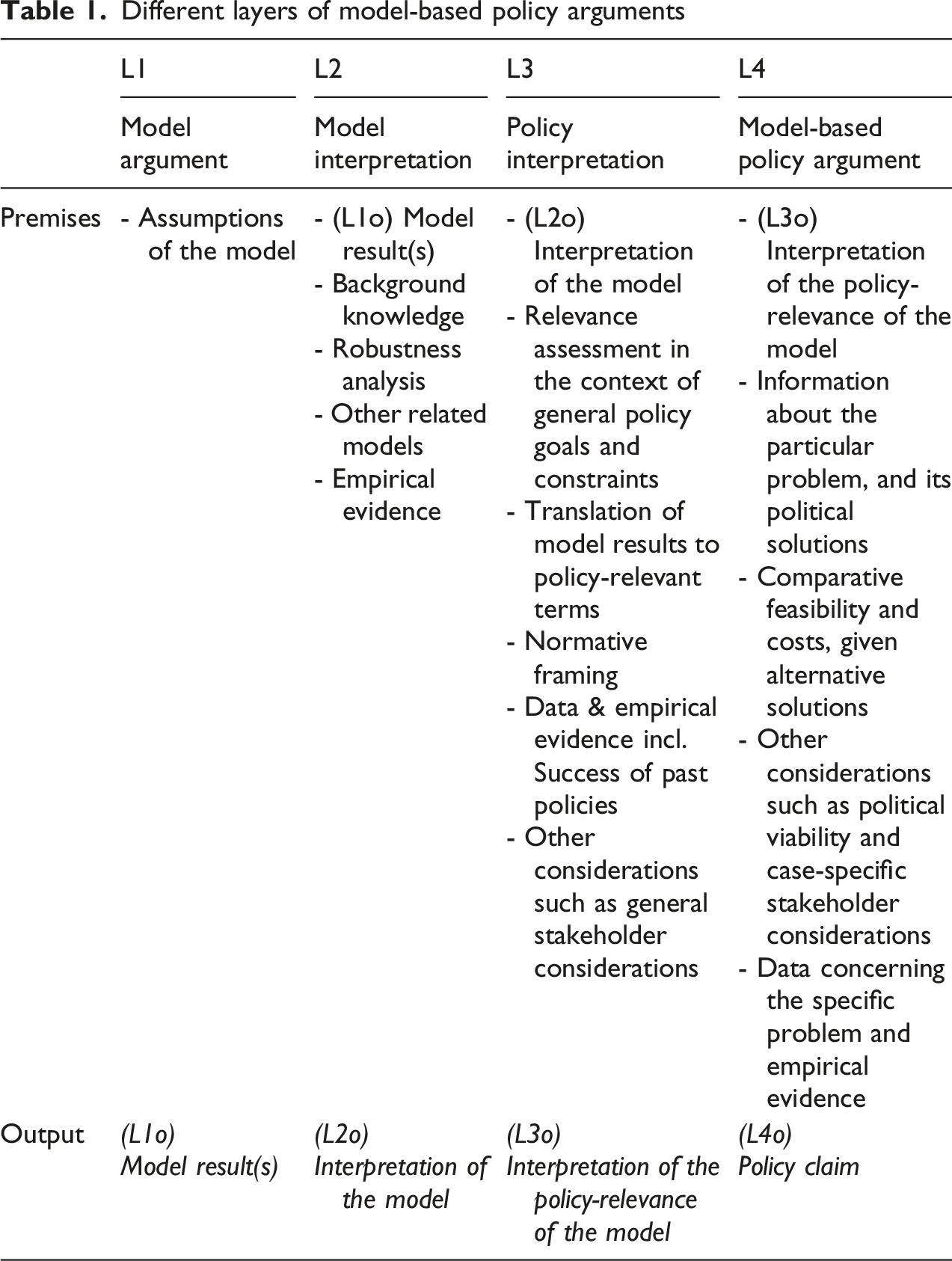
We have already discussed the first layer, namely the model argument (L1). It became clear during the discussion covering how the model is used in the wild that moving from its internal logic to a claim about the real world required supplementing it with additional premises, some of which concerned its interpretation. It would thus be useful to consider this interpretation when identifying and tracking differences in model-based arguments. “Interpretation of the model” (L2) is thus the second layer in my proposed framework. The relevant question concerns how the model results are understood in light of background knowledge, robustness analyses, related models, and empirical evidence. Although the scientific literature shows some degree of consensus about how a model’s results should be interpreted, there are also disagreements. Our example, namely the SD model, has been around for a long time and there is ample empirical work about it. Hence, there is considerable consensus about its ability to represent the effects of changes in market conditions, as well as its limitations. As a result, there was no disagreement on the model’s interpretation in the Bourne-Gans case. However, in other cases, there may be differences of opinion regarding how the model should be interpreted.
When the goal is explanation, as in SD-model-based explanations, the model-based argument follows the first two layers (i.e., L1→ L2 → model-based explanation). We have already seen how this works. However, in the case of a model-based policy argument it would be useful to conceptualize the transition from the model to the model-based policy claim with an additional step, which I call “policy interpretation” (L3). The difference between the model-based policy argument (L4) and policy interpretation (L3) is that L3 concerns the general policy interpretation of the model, whereas L4 is about the policy claim for the particular case at hand. Allow me to explain.
When economists, policymakers, or commentators argue for or against a policy on the basis of a model, the general policy interpretation of the model and the specific argument for a particular policy are typically entangled. Those who discuss or propose policies tend not to distinguish between the two. Nevertheless, separating L3 and L4 analytically is useful. It helps to distinguish between (i) premises that reflect general normative and interpretive commitments and (ii) premises that are specific to the case at hand. It makes it possible to diagnose whether a given disagreement is primarily about the specifics of the case at hand (L4) or about the policy implications of the model in general (L3). It could also help in detecting tensions within a single author’s argument whereby general commitments and case-specific claims pull in different directions. Last but not least, keeping L3 separate from the final model-based policy (L4) claim facilitates investigation of the sources of differences in the general approach to policy. For example, one could ask to what extent the premises of the general policy interpretation (L3) come from external sources, consensus among policymakers, or the author’s own evaluation.
The third layer (L3), then, is the policy interpretation: the stage at which interpretation of the model is translated into policy-relevant terms. Potential translators include academic economists, as well as policymakers, think-tank economists, columnists, and a variety of other actors and organizations. Indeed, explicit cases of general policy interpretation frequently originate in policy papers, reports, and guidelines produced by organizations such as the OECD, the World Bank, and the IMF, rather than in academic publications. These institutions routinely translate economic research and models into policy-relevant frameworks, embedding them with particular normative commitments and policy goals that then shape downstream arguments. The model interpretation could be supplemented in several ways during this policy-interpretation stage: a relevance assessment in light of general policy goals (e.g., reducing carbon emissions) and constraints (e.g., difficulty of international coordination), a translation of model results into policy-relevant terms highlighting policy levers, a normative framing of the problem, empirical evidence including the success of past policies, and other considerations such as how to deal with stakeholder interests. This general policy interpretation, and not merely the model, forms the basis of the model-based policy argument.
Let us consider the Bourne-Gans case. There is nothing in the SD model stipulating that the goal of policy should be efficiency. Given how efficiency is defined in the model and its assumptions, the model simply shows that a price mechanism is superior to price controls. It appears from Bourne’s discussion that, in light of his understanding of the model’s logic (L1) and his background knowledge (L2), his interpretation of the model’s general policy lesson is “price controls are bad; they should be removed,” given that economic policies should target efficiency (L3). This interpretation feeds into the specific policy claim, which disregards pandemic conditions as an exception. Note that Bourne follows many other economists here: the majority disagree with anti-price-gouging regulations and price controls as a general principle (L3) (e.g., Kent A. Clark Center for Global Markets 2012, 2022). During the pandemic there was even a petition to “repeal the anti-price gouging laws to ensure our health and safety,” signed by 191 people many of whom were economists with PhDs (Niles 2020).
Gans’s policy interpretation (L3), on the other hand, appears to be conditional: he seems to believe that although market allocation is superior to other allocation mechanisms most of the time, there are exceptions, especially when other policy goals have priority. This feeds into his final argument (L4) that takes the specific conditions of the pandemic into account.
As should be obvious by now, the fourth and final layer is the model-based policy argument, which takes in the policy interpretation (L3) to reach a conclusion concerning a specific problem. At this stage, the general policy interpretation is supplemented with information about the particular problem, its potential solutions, their feasibility and costs, political viability, and relevant empirical data and evidence. In the Bourne-Gans case, this is where the general commitments from L3 meet the specific features of the pandemic. Bourne introduces claims about the actual effects of anti-gouging laws during the pandemic and assumes that supply-side adjustment would have been sufficiently rapid. Gans introduces claims about the externalities of PPE use and the distributional consequences of price spikes for specific populations. These are case-specific premises that could, in principle, be assessed independently of the general normative commitments at L3—which is precisely why the analytical separation is useful.
Needless to say, these different layers of the model-based policy argument may well be hidden in encounters with model-based policy arguments in the wild. This is exactly the point of distinguishing between these layers: it facilitates detection of when and where additional premises enter and how normative considerations, values, and policy goals influence model-based policy claims.
Discussion
The value to philosophers of science of distinguishing between model argument and model-based arguments, and between the different layers of model-based policy arguments, should be clear. Seeing models as argumentative devices in this way helps in moving beyond the traditional focus on the internal validity of models and the dyadic relationship between a model and its target. By explicitly distinguishing the model argument from model interpretation, policy interpretation, and model-based argument this framework allows the precise pinpointing of where normative assumptions and values enter the argumentative chain. It shows that policy relevance is not an inherent property of the model, it is rather a constructed interpretation that relies on specific goals, constraints, and additional premises. This framework also facilitates the more granular analysis of how models and scientific knowledge are used in policy contexts.
How can models that employ idealizing, unrealistic assumptions teach us anything about the real world? How can they explain or guide policy despite their “false” assumptions? Within the philosophy of science these questions are usually addressed by appealing to the representational adequacy or accuracy of the model in comparison to its real-world target (Knuuttila 2010, 2011). In other words, the representational adequacy of a model is often the key question addressed (e.g., see Frigg and Nguyen 2020; Nguyen 2022; Nguyen and Frigg 2022). Indeed, philosophers working on the epistemic value of models have not ignored the question of how models connect to the real world. Various proposals have been offered for bridging the gap between an idealized model and its target. Morgan (2012) argues that narratives play a crucial role. Sugden (2000) suggests that models function as “credible worlds” that warrant inductive inferences about the real world. Mäki (2009, 2010) introduces the notion of model commentary, a set of interpretative claims about what a model represents and how it relates to its target. Strevens (2008) agrees that some interpretation might be required to determine explanatory relevance, and assigns a role to an explanatory framework. Bokulich (2011, 2017) points out that model-based explanations require a “justificatory step” that specifies the model’s domain of applicability and ensures that it adequately captures the relevant features of the world. According to Frigg and Nguyen (2020), models require an “appropriate interpretation” and a “key” that translates their properties into claims about the target. Each of these proposals, in its own way, acknowledges that something more than the model is needed to make claims about the real world.
The aim in this literature is to provide a general account of how models can inform us about the real world, not to study how any particular model is used to support a specific claim. As a result, the additional steps, premises, and interpretive choices involved in moving from a model to a real-world conclusion are rarely unpacked in sufficient detail. What does the narrative really convey when is it used, and is it supported by evidence? What specific claims constitute the model commentary, and are they warranted? What is the justificatory step like in practice, and does it succeed? What interpretation and key are being employed, and are they appropriate? These questions remain largely unanswered because they require the devoting of attention to the concrete argumentative work that model users do when they use a model in a specific context. Not only does the framework proposed in this article address these questions, but it also makes it possible to analyze the use of models in the wild using insights from the philosophy of science.
Cartwright raises a specific challenge about economic models. Given that economics has few reliable and uncontroversial principles to work with, she argues, model results rely heavily on assumptions made. Hence, she says, “[a]ny inductive leap to a real situation seems a bad bet” (Cartwright 2009, 45). If this is correct, the starting point of model-based argumentation, which is the model (L1), may be fragile. The four-layered framework helps to make this fragility and its consequences for policy analytically tractable. For example, it allows one to ask whether the premises introduced on subsequent layers compensate for, or amplify, the sensitivity of the original model result. It also makes it possible to evaluate the model result (L1) in light of model interpretation (L2) adopted by the policy proposer, as well as the available alternative interpretations that might challenge it.
An alternative approach shifts focus and views models as tools that are built and manipulated to foster learning about the world (e.g., Carrillo and Knuuttila 2022; Jebeile and Kennedy 2015; Knuuttila 2005; Morgan 2012; Morrison and Morgan 1999). Proponents of this view characterize models as mediators (Morrison and Morgan 1999), epistemic artefacts (Knuuttila 2005), and erotetic devices (Carrillo and Knuuttila 2022; Knuuttila 2021). Rather than starting from questions of representation and model-target relations, this approach focuses on how models are built, used, and manipulated to allow epistemic access to the world. However, this literature does not provide detailed guidance on how to systematically analyze the argumentative steps involved in moving from building and manipulating a model to making a real-world claim. This is exactly what the proposed four-layered framework is designed to do.
Related to this, philosophers have recognized that models are not typically explanations in themselves, but rather help to explain (Marchionni 2017), that some interpretation of a model is required for explanation (Rohwer and Rice 2016), and that models are best conceived as templates or schemata for explanatory claims rather than explanations proper (Alexandrova 2008). Lawler and Sullivan (2021) distinguish between model explanations and model-induced explanations, emphasizing that models contribute to the process of explaining rather than constituting the finished explanatory product. What is missing, however, is a framework that makes explicit the full chain of reasoning, from the model’s internal logic to the real-world claim it is used to support, and that tracks where additional premises, interpretations, and value judgments make their entrance along the way.
In sum, despite the disagreements in the literature, most philosophers agree that the interpretation, commentary, context of inquiry and goals of those who use models are important elements in evaluating how they are used in making inferences about the real world (Aydinonat 2024b). However, available accounts do not provide the tools to analyze how they influence model-based arguments in practice. The framework proposed in this article offers precisely this. By breaking model-based argumentation into layers (L1–L4), it offers a structured way of making explicit whatever additional steps are taken when moving from the model to claims about the real world. The narratives, commentaries, justificatory steps, interpretive keys, and other bridging concepts that philosophers have identified can all be located within this framework, and their adequacy can be assessed in specific cases. In this sense, the framework helps to make these philosophical insights explicit in studies of model use in practice.
There is also a growing literature on values in science, and how science is used in the public sphere (Douglas 2016, 2023; Longino 1990; Potochnik 2017, 2024). It has been established that values enter science at multiple points, from problem selection to evidential reasoning. The framework proposed here could serve as a concrete tool for tracing where and how values shape model-based inferences in specific cases. As the Bourne-Gans case illustrates, two economists may share the same model and the same understanding of its internal logic, yet arrive at opposite policy conclusions because their value judgments differ at L3 and L4. The framework is helpful in terms of locating and making visible the value disagreements that shape model-based policy.
Cartwright’s concerns about the model-world gap, which are discussed above, extend to form a broader argument about evidence-based policy. Cartwright and Hardie (2012, I.B.2.1) show that a policy conclusion does not rest on a single piece of evidence, but relies on what they call an “argument pyramid,” meaning a layered structure of supporting claims. The policy claim (the conclusion) sits on top, supported by a set of main premises that are, in turn, supported by sub-premises, which are supported by sub-sub-premises, and so on. Naturally, the strength of such an argument critically depends on the strength of its premises (Cartwright and Hardie 2012, 16). Although their central question is different and concerns the empirical backing of a policy claim, they also approach science-based policy from an argumentation perspective. The present framework shares their diagnostic ambition, but extends it to model-based reasoning, where the inferential challenge is arguably greater, and introduces a layered structure designed to be more useful as an analytical tool, particularly for the analysis of model-based policy arguments. Moreover, whereas Cartwright’s approach is primarily oriented toward causal and evidential reasoning, the framework proposed here also helps to locate and explicate the normative premises that shape model-based policy claims. In sum, the two approaches are complementary: the present framework makes visible the several argumentative layers as well as the full range of premises (theoretical, empirical, interpretive, and normative) that determine which policy conclusion a model is made to support.
More recent work on how scientific models are used in decision-making is also close to the concerns addressed in the present article. Harvard and Winsberg (2024) and Winsberg and Harvard (2024) discuss how to analyze and manage epistemic risks when using models in decision contexts. They also argue that models may be used rhetorically to advance argumentative goals. Their work reinforces the call for a closer look at how models are used in practice, although their focus is not on the structure of the arguments in which the models are embedded. The framework proposed here complements their approach: the layered analysis makes it possible to diagnose where in the argumentative chain epistemic risks are located, and what kind of additional premises or evidence would be needed to address them.
Conclusion
Models are powerful argumentative devices. They shape explanations, policy proposals, and their criticism. They shape policies that affect our lives. Yet the chain of reasoning that connects a model’s internal logic to a real-world claim is often left implicit. This article proposes a framework to make it visible, which should be useful not only for analyzing model-based policy arguments in economics but also for studying science-informed policy in general. There is a widespread and understandable aspiration toward evidence-based policy. However, the reality of policy making is far messier than this ideal suggests. The world’s problems do not wait for conclusive evidence from perfect experiments. Most policy discussions, proposals, and actual policies are built on a combination of theoretical models, scattered and imperfect evidence, contested interpretations, and normative commitments. As Cartwright and Hardie (2012) argue in the context of evidence-based policy, substantial inferential work is required to move from available scientific knowledge to a warranted conclusion about what to do in a specific case. They show that this is true even for RCTs, that is, the so-called gold standard of evidence-based policy. When models are the starting point, the inferential gap becomes enormous in comparison. The four-layered framework proposed here offers one way of making that inferential work visible and subject to scrutiny. The pandemic case discussed above was an illustration: policy claims about PPE markets were advanced on the basis of a highly idealized model, limited and mixed empirical evidence, and strong but often implicit value judgments.
Understanding and evaluating such policy arguments requires the tracing of how the policy claim is supported at every step along the way: from the model’s internal logic, through its interpretation and policy translation, to the final argument for a specific intervention. The four-layered framework provides a tool for doing precisely this. It helps make the premises on each layer explicit so that their strengths and weaknesses can be assessed. Wherever scientific models, theories, or findings are invoked to support a policy conclusion, whether in climate policy, public health, or technology regulation, the same basic structure applies: there is a gap between what the science says and what the policy claim asserts, and that gap is filled by additional premises that deserve scrutiny. In this respect, the framework also provides a bridge between the specialized literatures in the philosophy of science, which tend to abstract away from the messy details of the practice of model use, especially in policy contexts, and the case-based analyses in the STS (science and technology studies) literature, which examine how scientific knowledge is actually used in policy contexts, but often lack the analytical tools for assessing the inferential structure of the arguments involved. By aligning attention to inferential structure with attention to context and practice, the proposed framework has the potential to help in connecting insights from these separate research streams.
Footnotes
Acknowledgments
I would like to thank two anonymous reviewers, whose comments and suggestions significantly improved this article. I am also grateful to the participants of the TINT—Centre for Philosophy of Social Science Brown Bag seminar and the ENPOSS 2025 conference in Venice for their valuable feedback. I am particularly grateful to Petri Ylikoski, Uskali Mäki, Luis Mireles-Flores, Jaakko Kuorikoski, Samuli Reijula, Inkeri Koskinen, Aki Lehtinen, Säde Hormio, and María Jiménez Buedo for their comments and suggestions. I further thank Joan Nordlund for her help with the English language. All remaining errors are my own.
Funding
The author disclosed receipt of the following financial support for the research, authorship, and/or publication of this article: This work was supported by the Research Council of Finland (formerly Academy of Finland) under Grant 343010, Economics as Serviceable Social Knowledge (ESSK): Philosophical Investigations on the Policy Relevance of Economics in Post-Pandemic Society (1 September 2021–31 August 2025).
Declaration of Conflicting Interests
The author declared no potential conflicts of interest with respect to the research, authorship, and/or publication of this article.
Notes
Author Biography
 .
.