



Abstract
The COVID-19 pandemic has brought critical changes to job demands and resources, which in turn affect employee motivation and outcomes. This study explores how COVID-19–induced work intensity and COVID-19–related organizational support influence public service motivation (PSM) and job satisfaction. Using survey data from a nationally representative sample of 1,430 South Korean central government employees collected during the pandemic (May–June 2020), we find that COVID-19–induced work intensity is positively associated with PSM, which in turn has a positive association with job satisfaction. We also find that COVID-19–related organizational support has both direct and indirect associations with job satisfaction through PSM. These findings underscore the importance of organizational support in times of widespread crisis and invite further investigation of PSM during the COVID-19 pandemic using an institutional approach to PSM.
Introduction
The COVID-19 pandemic has presented unprecedented challenges to the public workforce. In the face of complex, turbulent policy problems, government employees have experienced a surge in demand for public services and have faced heightened societal expectations for public services. At the same time, individual public servants have experienced significant disruptions to their workplace structure and practices, including new work routines (e.g., working from home) and separation from coworkers and beneficiaries, which have created a need for greater organizational support and flexible, resilience-enhancing human resource management (HRM) practices (Allgood et al., 2022; P. Kim et al., 2022; Schuster et al., 2020). These changes to the work environment can have significant impacts on employee motivation and outcomes. Recent evidence has shown that public servants have experienced increases in job demands, emotional labor, psychological distress, burnout, and compassion fatigue during the COVID-19 pandemic (Berry et al., 2022; Castro et al., 2022; Sciepura & Linos, 2022).
The ongoing crisis across the world has raised a serious question for public sector HRM researchers and professionals (Hall et al., 2020; Holzer & Newbold, 2020; OECD, 2020): in what ways does a critical external shock to the public sector, namely the COVID-19 pandemic, influence public employees’ work motivation and outcomes? What kinds of demands have a negative impact on employee outcomes? What kinds of resources counterbalance those impacts and promote motivation and positive outcomes? While the existing literature has identified certain effects of job demands and resources, a new analytical lens may be needed to explore whether these effects remain the same in times of crisis. As one of the early attempts to answer these questions, this study examines how changes to the work environment during the pandemic have influenced public service motivation and job satisfaction. Public service motivation (PSM) has long been studied as a distinct characteristic of public sector workers (Christensen et al., 2017). Job satisfaction, one of the widely studied employee attitudinal outcomes, has significant implications for the quality of public service and HRM in the public sector.
Drawing on Job demands–resources (JD–R) theory, this study specifically focuses on COVID-19–induced work intensity and COVID-19–related organizational support as important aspects of job demands and resources, respectively. These are two critical types of changes to the public sector work environment that took place during the COVID-19 pandemic. Based on JD–R theory and the literature on PSM and job satisfaction, this study expects that COVID-19–induced work intensity to be negatively associated with PSM and job satisfaction, and COVID-19–related organizational support to be positively associated with both. The study also hypothesizes that PSM is positively associated with job satisfaction.
This research tests the above theoretical expectations using survey data from a nationally representative sample of 1,430 South Korean central government employees. The data were collected during the COVID-19 pandemic, between May and June 2020. The results from a series of hierarchical linear model (HLM) analyses show that COVID-19–related organizational support has both a direct and an indirect association with job satisfaction through PSM, while COVID-19–induced work intensity is not statistically associated with job satisfaction. Interestingly, the findings show that COVID-19–induced work intensity is positively associated with PSM, which in turn has a positive association with job satisfaction. This research interprets these findings considering the broader societal context, which is influenced by the institutional perspective on PSM theory (Taylor et al., 2022; Vandenabeele, 2007, 2011). Further theoretical contributions and practical implications are discussed once the theoretical background, methods, and findings of this study are described.
Theoretical Background
Changes to Job Demands and Resources During the Pandemic
Crisis situations heavily impact the public workforce, transforming workers’ responsibilities and work environments. For example, based on a large sample survey of public servants in the United States (n = 3,341) during the pandemic, Sciepura and Linos (2022) reported high rates of burnout (33%) and compassion fatigue (21%). The abrupt, critical shock to the public sector may influence employees’ attitudinal outcomes (e.g., job satisfaction and commitment) and behavioral outcomes (e.g., turnover intention). To better understand the impact of COVID-19 on public employees’ outcomes, this study focuses on job satisfaction as an important attitudinal outcome that in turn influences behavioral outcomes and individual performance. Job satisfaction refers to “a pleasurable or positive emotional state resulting from the appraisal of one’s job or job experiences” (Locke, 1976, 1304). It has been widely studied as an important aspect of work attitudes that are associated with organizational citizenship behavior, individual performance, employee well-being, and turnover (Cantarelli et al., 2016).
Job demands–resources (JD–R) theory provides a theoretical framework to explain the predictors of employee outcomes. JD–R theory categorizes work environment characteristics into job demands and job resources, which exert different effects on employees’ attitudes and behaviors (Bakker & Demerouti, 2014; Demerouti et al., 2001). Job demands refer to the aspects of the work environment that require physical or mental effort and produce psychological burdens and constraints. Examples of job demands include work intensity and overload, role conflict, role ambiguity, and red tape (Bakker, 2015; Shim et al., 2017). Job resources are aspects of the work context that allow employees to meet their needs and deal with job demands, and include social support, autonomy, feedback, and intrinsic or extrinsic rewards (Bakker, 2015). The theory suggests that job resources improve employee outcomes, while job demands have deleterious effects on them.
The COVID-19 pandemic has induced changes to both job demands and resources. In terms of job demands, increases in workload and work intensity represent critical changes to the public workforce that occur during crises (OECD 2020; Sciepura & Linos, 2022). Public employees may have experienced increased workload and work intensity due to the increasing demand for public services during the pandemic. Workload refers to the amount of work respondents have to accomplish, whereas work intensity refers to the level of difficulty the work entails, reflecting both quantitative and qualitative aspects of a job demand (Boekhorst et al., 2017). During the pandemic, workloads and work intensity may have increased for certain organizations or employees. The work intensity induced by COVID-19 could also vary substantially across individuals within the same organization or unit. For example, employees of a health authority or social service organization may have faced backlogs due to increased demand for new policy initiatives and calls for their prompt implementation. However, others in the same unit may have experienced the opposite: their workload and work intensity may have decreased due to remote working and social distancing. Programs and services provided in-person may have been halted, just as some onsite tasks may have been put on hold. To this end, this research focuses on changes in work intensity due to COVID-19 (hereafter referred to as COVID-19–induced work intensity) at both individual and organizational levels.
Research on JD–R theory has reported that job demands undermine desirable employee outcomes such as job satisfaction and organizational commitment and lead to negative outcomes such as job stress, turnover intention, and burnout (Bakker & Demerouti, 2014; Hakanen et al., 2008; Shim et al., 2017). Previous studies have found that work overload and exhaustion reduce job satisfaction (Gould-Williams et al., 2014; Quratulain & Khan, 2015). It is thus expected that the increased workload and work intensity induced by external circumstances like COVID-19 will function as job demands that reduce job satisfaction. This leads to the hypothesis as follows:
The heightened job demands brought about by the pandemic underscore the importance of providing job resources to offset these demands and enhance employee outcomes. In times of crisis, organizations need to demonstrate heightened sensitivity to employees’ changing value system and their evolving needs and expectations by introducing or expanding organizational support to address them. Over the last three years, organizations have developed new work arrangements that have improved temporal and spatial flexibility (e.g., telework, flexible work schedules) and provided programs to help employees cope with new job demands (Allgood et al., 2022; OECD, 2020). These changes can be conceptualized as COVID-related organizational support. These forms of organizational support can produce desirable employee outcomes in two ways. First, on a practical level, they can help employees perform their roles and empower them by promoting flexibility and autonomy. Second, they can change how employees perceive and respond to the organization via cognitive and affective processes. Organizational support allows employees to believe that “their organizations value their contributions and care about their well-being” (Gillet et al., 2013, 452). This view is supported by social exchange theory, which suggests that employees develop desirable work attitudes when organizations put managerial effort into improving employee welfare (Rousseau, 1995). Research has found that organizational support such as flexible work arrangements leads to higher work–life balance satisfaction, perceived performance, and lower turnover (Choi, 2020; Metselaar et al., 2022). The present study hypothesizes that organizational support provided to help employees deal with workplace challenges during the pandemic has a positive relationship with job satisfaction.
PSM: Antecedents and Outcomes
PSM is “a particular form of altruism or prosocial motivation that is animated by specific dispositions and values arising from public institutions and missions” (Perry et al., 2010, 682). PSM has received increasing attention over the last three decades in the field of public administration (Harari et al., 2017; Ritz et al., 2016). Previous research has developed several definitions and measures of PSM (e.g., S. Kim et al., 2013) and examined its impact on individuals and organizations, including on job satisfaction, turnover intention, and performance (Awan et al., 2020; Harari et al., 2017; Homberg et al., 2015).
While the nature of PSM is still a topic of debate, emerging evidence has shed light on the trait–state issue. Researchers have identified various HRM strategies and management practices that can cultivate PSM (Gould-Williams et al., 2014; Quratulain & Khan, 2015). For example, connecting employees to the prosocial impact of their work and providing opportunities to interact with program beneficiaries has been found to increase the motivation of public sector workers (Bellé, 2013; Grant, 2008). Such experiences lead individuals to recognize the significance of their work and satisfy their public service motivational needs. Likewise, Moynihan and Pandey (2007) found organizational reform efforts to be positively related to PSM. In addition to PSM cultivation, the activation of PSM with low-intensity efforts has been studied (Nicholson-Crotty et al., 2021; Pedersen, 2015). This line of research indicates that PSM is dynamic and fluid and can be influenced by external situational factors.
Still, relatively little scholarly attention has been paid to the antecedents of PSM (S. Kim, 2021; Ritz et al., 2016; Wright & Grant, 2010). Bozeman and Su (2015) have noted that “PSM remains woefully underdeveloped as a dependent variable” (706). In light of the mixed evidence on PSM’s nature and its antecedents, the institutional perspective on PSM theory provides important insights. Perry (2000) provided a process theory of PSM, suggesting that PSM is institutionally embedded and cultivated through socialization within institutions. Institutions broadly refer to “[. . .] formal or informal, structural, societal, or political phenomena that transcend the individual level, that [are] based on more or less common values, [have] a certain degree of stability and influence behavior” (Peters, 2000, 18). Institutions, with their own norms, values, and beliefs, communicate the logic of appropriateness (March & Olsen, 1989) and shape individuals’ motives and behaviors (Vandenabeele, 2007). Empirical research has found that PSM is related to family socialization (Perry et al., 2008), educational institutions (S. Kim, 2021), political affiliations (Vandenabeele, 2011), and professional associations (Moynihan & Pandey, 2007).
Vandenabeele et al. (2018) have categorized various institutions that can nurture PSM into three different levels: micro, meso, and macro. Interactions at the micro-level, such as hierarchical work relationships or volunteering experiences, involve direct contact with others and influence individuals’ levels of PSM (Perry et al., 2008; Vandenabeele, 2011). Meso-level institutions, which provide both direct and indirect interactions, include organizations and religious and professional associations to which individuals belong. The PSM literature has particularly focused on organizational institutions that can shape PSM, examining organizational culture and structure, training, red tape, and job characteristics (Moynihan & Pandey, 2007; Oberfield, 2014). Macro-level institutions, which have been relatively less explored in the PSM literature, refer to the broader, societal-level context in which interactions among members are mainly indirect (e.g., country, culture, and the public sector; see Ritz & Brewer, 2013). Moreover, the interaction between institutional factors across different levels has not been fully understood. These insights from the literature suggest that PSM is developed and fostered through socialization processes in various institutions at different levels.
Focusing on meso-level organizational institutions, this study explores if job demands and resources influence PSM. It also takes into account the macro-level institutions, specifically the context of the public sector during the COVID-19 pandemic by focusing on COVID-19–induced work intensity and COVID-19–related organizational support. Studying job demands and resources is particularly significant during times of crisis because of critical changes in job demands and the increased need for job resources. More importantly, the pandemic has the potential to reshape the broader societal context and macro-level governance strategies, which in turn affects meso-level organizational practices and micro-level personal values and priority structures (Moss, 2022; Roberts, 2020), indicating that employees’ expectations and desires from their workplace may also undergo transformation. This study can improve our understanding of how the meso-level institutions embedded in the broader macro-level institutional changes shape individuals’ PSM. This is an important research avenue given the institutional perspective on PSM, an area in which scholars have called for more attention to institutions and “social phenomena that transcend the individual level” (Vandenabeele, 2007, 547).
JD–R theory suggests that any increase in work intensity serves as a job stressor and negatively influences employees’ attitudes (Bakker, 2015). In the PSM literature, several studies have examined whether job demands undermine PSM. Moynihan and Pandey (2007) found that red tape is negatively associated with PSM based on a survey of public employees (see also Scott & Pandey, 2005). Wright (2001) has explained that unrealistic workloads may undermine employees’ motivation including their PSM. The amount of work induced by external circumstances such as a pandemic might lead to an unusual work intensity, which could cause employees to become overwhelmed and lose their motivation. This proposes the following hypothesis:
As discussed above, JD–R theory suggests that job resources have a positive effect on employee motivation and outcomes. 1 This suggests that COVID-related organizational support would be positively related to PSM. This view is also supported by organizational support theory, which suggests that supportive work environments boost employees’ work engagement (Rhoades & Eisenberger, 2002). When organizations provide preferable working conditions and benefits, employees can better fulfill their basic psychological needs for autonomy, competence, relatedness, and beneficence, and thus internalize public service values (Deci & Ryan, 2002; Homberg et al., 2015; Martela & Ryan, 2016). Crucke et al. (2022) report that organizational support is positively associated with public service motivation, based on a survey among Flemish local government employees. This leads to the following hypothesis:
The hypotheses of this study are presented in Figure 1.

Research model for PSM and job satisfaction.
Data and Method
Sample
The data for this study were drawn from a survey of a nationally representative sample of South Korean central government officials, conducted by the Center for Government Competitiveness of the Graduate School of Public Administration at Seoul National University. 4 This center has administered an annual survey among government officials since 2011 to inform practitioners of scientifically based policies and programs that can improve government competitiveness. The survey measures respondents’ perceptions and attitudes toward their work conditions, organizational characteristics, major issues in public policy, and basic demographics. The 2020 survey, conducted between May 15 and June 17, 2020, included additional context-specific variables to measure the changes in work conditions that the officials experienced during the COVID-19 pandemic, which enabled us to test our hypotheses. Stratified cluster sampling was used to draw a representative sample from 29 major organizations (ministries). The final sample included 1,430 public employees from the South Korean central government. The demographic characteristics of the sample are presented in the findings.
Measures
This study examines two aspects of work environment changes induced by COVID-19. First, COVID-19–induced work intensity. While existing studies examining work intensity have measured perceptions of the current workload or work intensity (Gould-Williams et al., 2014), this investigation focuses on the changed levels (%) of work intensity induced by COVID-19 (Δ work intensity). To this end, this study measured COVID-19–induced work intensity using the following two items: perceived changed levels in workload and work intensity caused by COVID-19. The respondents were asked to compare workload/intensity before and after the COVID-19 outbreak and report the changed levels (%) (i.e., 100% indicates no changes in the workload/intensity before and after the COVID-19 outbreak; 200% indicates twice workload/intensity after COVID-19; see Bellé & Cantarelli, 2015). This study used the average of the two item scores to represent within-individual variation in workload/intensity caused by COVID-19 (Cronbach’s alpha = .964). Because COVID-induced work intensity should also vary depending on the nature of work performed at the organizational level, this index was aggregated to measure the organizational level variation and used as a level-2 predictor. The total variance (2000.15) was decomposed into individual (1895.90) and organizational (104.251) levels with an intraclass correlation (ICC) value of .05.
Second, this study measured COVID-19–related organizational support by focusing on organizational support generated in response to COVID-19. Drawing items from conventional approaches to organizational support (Eisenberger et al., 1986), it adapted several items to reflect new HRM practices advanced or called for during COVID-19 (Allgood et al., 2022; OECD, 2020; Sciepura & Linos, 2022; World Health Organization [WHO], 2020). This study measured COVID-19–related organizational support by using the following five items: (a) our organization introduced a “flexible work schedule policy” effectively in response to the chaotic situations within the workplace and family caused by the COVID-19 pandemic; (b) our organization provided counseling programs to address the low job performance issues caused by the COVID-19 pandemic; (c) our organization respected the employees’ opinions regarding the modified work conditions and environment during the COVID-19 pandemic; (d) our organization has run programs designed to address mental health issues and maintain the work–life balance of employees during the COVID-19 pandemic; and (e) our organization has offered support programs, such as a special leave of absence for those experiencing personal hardships, during the COVID-19 pandemic. Response categories ranged from 1 (“strongly disagree”) to 7 (“strongly agree”), with higher scores representing higher levels of organizational support related to COVID-19. It is worth noting that this study measured perceived organizational support by relying on employee perceptions. It created a composite scale by averaging the five items (Cronbach’s alpha = .851). As individuals’ perception of organizational support can vary at both individual and organizational levels, this scale was also aggregated to measure the organizational level variation and used as a level-2 predictor. The total variance (1.38) was decomposed into individual (1.20) and organizational (.18) levels with an ICC value of .13.
Drawing on the PSM measures developed by Perry (1996) and S. Kim et al. (2013), this study assessed the current level of respondents’ PSM based on the following five items: (a) I feel a strong responsibility for society; (b) it is my duty to serve the public; (c) public service is more meaningful than pursuing my own interests; (d) I am willing to make sacrifices to help others; and (e) making a difference in society means more to me than personal achievements. Our measure of PSM is consistent with a global measure approach, which renders the benefits of parsimony and addresses the limitations of a multidimensional approach (Piatak & Holt, 2021). For each item, response categories ranged from 1 (“strongly disagree”) to 7 (“strongly agree”), with higher scores representing higher levels of PSM. This study created a composite scale of PSM by averaging the individual scores obtained from each respondent (Cronbach’s alpha = .899). Because the level of PSM also varies at both individual and organizational levels, this scale was aggregated to create an organizational level factor and used as a level-2 predictor. The total variance (1.01) was decomposed into individual (.99) and organizational (.02) levels with an ICC value of .02.
Our dependent variable is job satisfaction. Respondents reported their current level of job satisfaction based on the seven items, including measures of a general feeling about one’s job (“all in all, I am satisfied with my job”; “I am satisfied with the work/duty that I am currently in charge of”) and attitudes about specific aspects of one’s work conditions, such as salary, promotion, job stability, occupational training, and relationships with colleagues. Response categories ranged from 1 (“strongly disagree”) to 7 (“strongly agree”), with higher scores representing higher levels of job satisfaction. These items are similar to (and a subset of) the most widely adopted multi-item job satisfaction measurement in current literature, the Job Satisfaction Survey (JSS: Spector 1997). This study created a composite scale by averaging each item score (Cronbach’s alpha = .848). The total variance (.77) was decomposed into individual (.72) and organizational (.05) levels with an ICC value of .067.
This study included several control variables in the analysis that could be closely related to our independent, mediating, and dependent variables. It included important respondent characteristics commonly adopted in the literature as potential confounders. The study gauged sociodemographic features, including age, years of job experience, gender (female = 0, male = 1), education level (high school, college, master’s degree, and doctoral degree), and income level (10k-20k, 20k-30k, 30k-40k, 40k-50k, and over 50k, measured in USD). Since South Korea is a racially homogeneous country, information on race and ethnicity was not collected in the survey.
Study Context
The Korean context provides a useful empirical setting for exploring the relationship between work environment changes, PSM, and job satisfaction. In South Korea, as in many other countries, public employees have engaged in significant tasks to manage the COVID-19 pandemic and received public recognition for the value of their work. The South Korean government’s initial response to COVID-19 received considerable attention from a wide range of international and domestic media outlets (Bicker, 2020; Normile, 2020) and was rated highly effective and successful (Lee et al., 2020; Moon, 2020). Compared to other OECD countries, the Korean government shows stringent policy reactions in containment and closure, health system, vaccination, and economic policies, as shown in COVID-19 stringency indices provided by the Oxford Covid-19 Government Response Tracker. 2 Citizens also rated the government’s response to the pandemic highly (Lazarus et al., 2020). A set of public campaigns (accompanied by hashtags such as #ThankYouCampaign, #ThankYouChallenge, and #YouAretheHero) were carried out to bestow a sense of recognition on individuals who have contributed to the containment and treatment of COVID-19 in South Korea. The campaigns were spread across social and mass media, increasing attention to COVID-19–related workers and public servants. Interviews and news releases show that public employees did take pride in their efforts to keep the public safe and manifested strong motivation to serve the public in media reports. 3 The unprecedented pandemic situation, effectively managed by the government, may have changed the public and public employees’ views of public service (Shand et al., 2022).
Analysis and Results
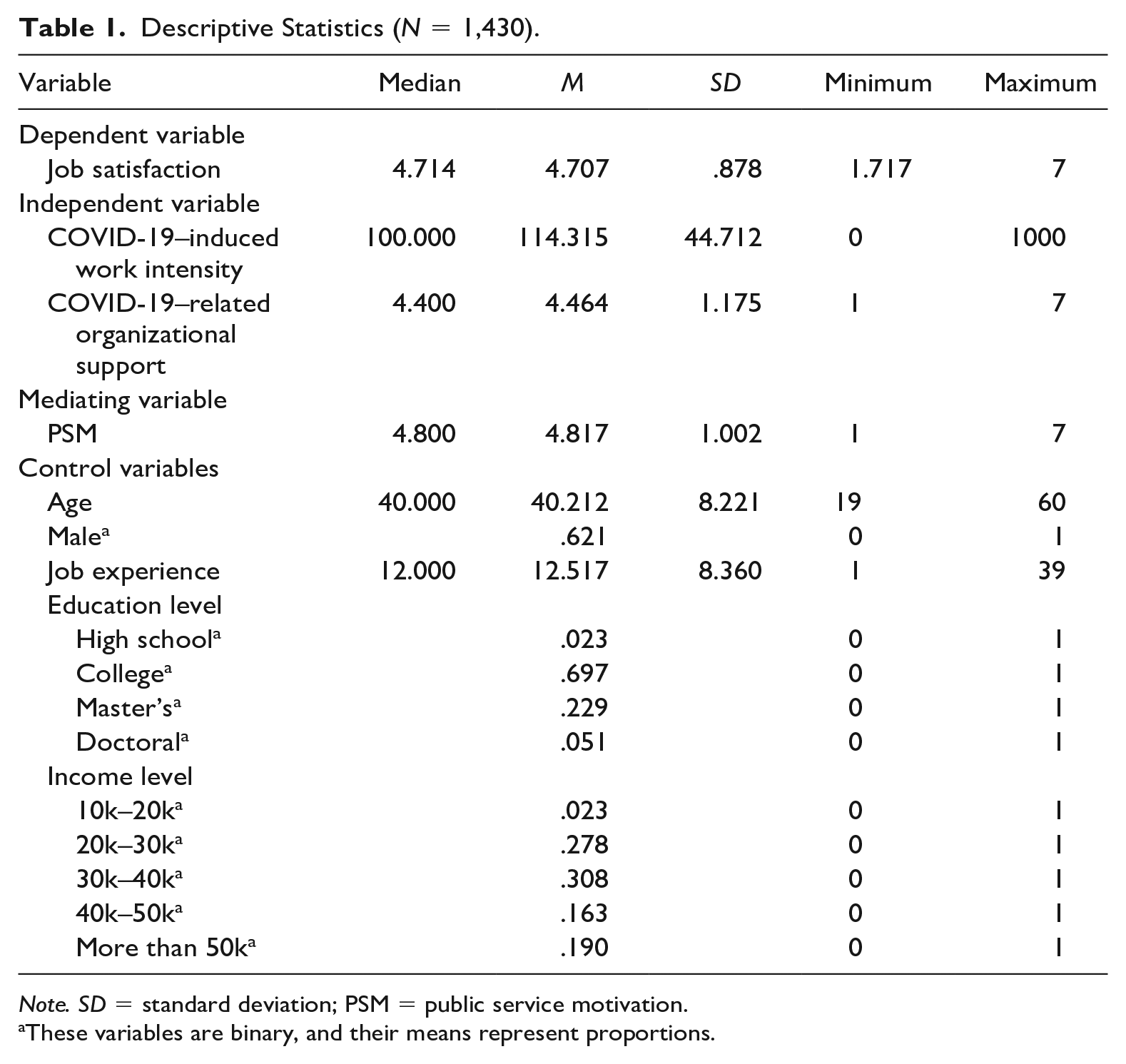
Table 1 summarizes the descriptive statistics of the variables included in subsequent analyses. The sample comprises both male (62.10%) and female (37.90%) employees, with an average age of 40.21. The respondents are relatively well-educated, with college (69.65%), master’s (22.94%), and doctoral (5.10%) degrees. Their income levels are fairly evenly distributed, which is largely explained by rank and pay steps. This is because the central government uses a remuneration basis book that is mainly determined by rank and career length.
Descriptive Statistics (N = 1,430).
Note. SD = standard deviation; PSM = public service motivation.
These variables are binary, and their means represent proportions.
The mean scores of both PSM (4.82) and job satisfaction (4.71) are greater than the midpoint (4) (see Appendix for more details). The distributions of these measures are approximately normal, with the absolute values of skewness and kurtosis (.109 and 3.000 for PSM, and .136 and 3.222 for job satisfaction, respectively) being less than 3 and 10 (Kline, 2005, pp. 49–50). Most respondents reported that their work intensity had increased since the initial COVID-19 outbreak, with an average increase of 14.32%. Approximately 85% of the respondents indicated increased job intensity due to COVID-19% and 4.48% of the respondents perceived that the increase was more than two times (Figure 2). Figure 3 shows that some organizations (e.g., the Ministry of Food and Drug Safety, the Ministry of Health and Welfare, the Ministry of Education, and the Ministry of Economy and Finance) were more prone to increased work intensity than others due to the nature of their work, although there is substantial variation across individuals within the same organizations. COVID-19–related organizational support shows a mean value of 4.40, higher than the mid-point.
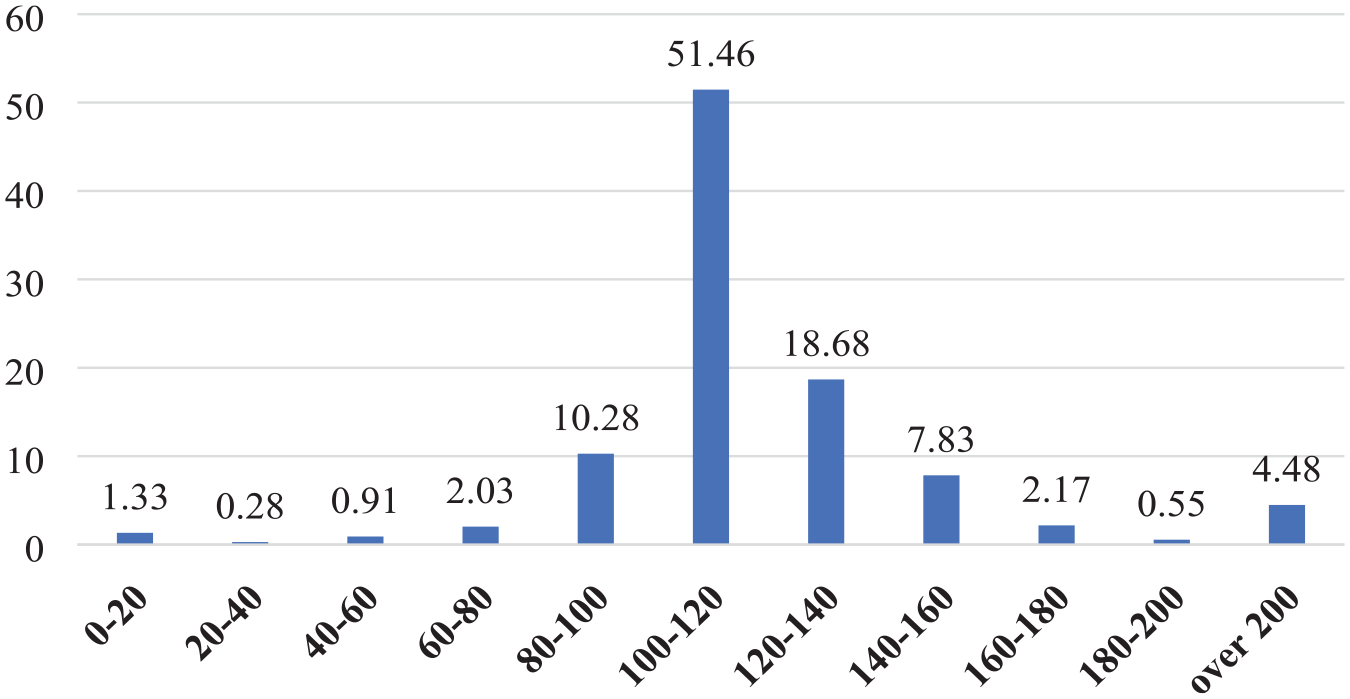
Percent change of work intensity induced by COVID-19.
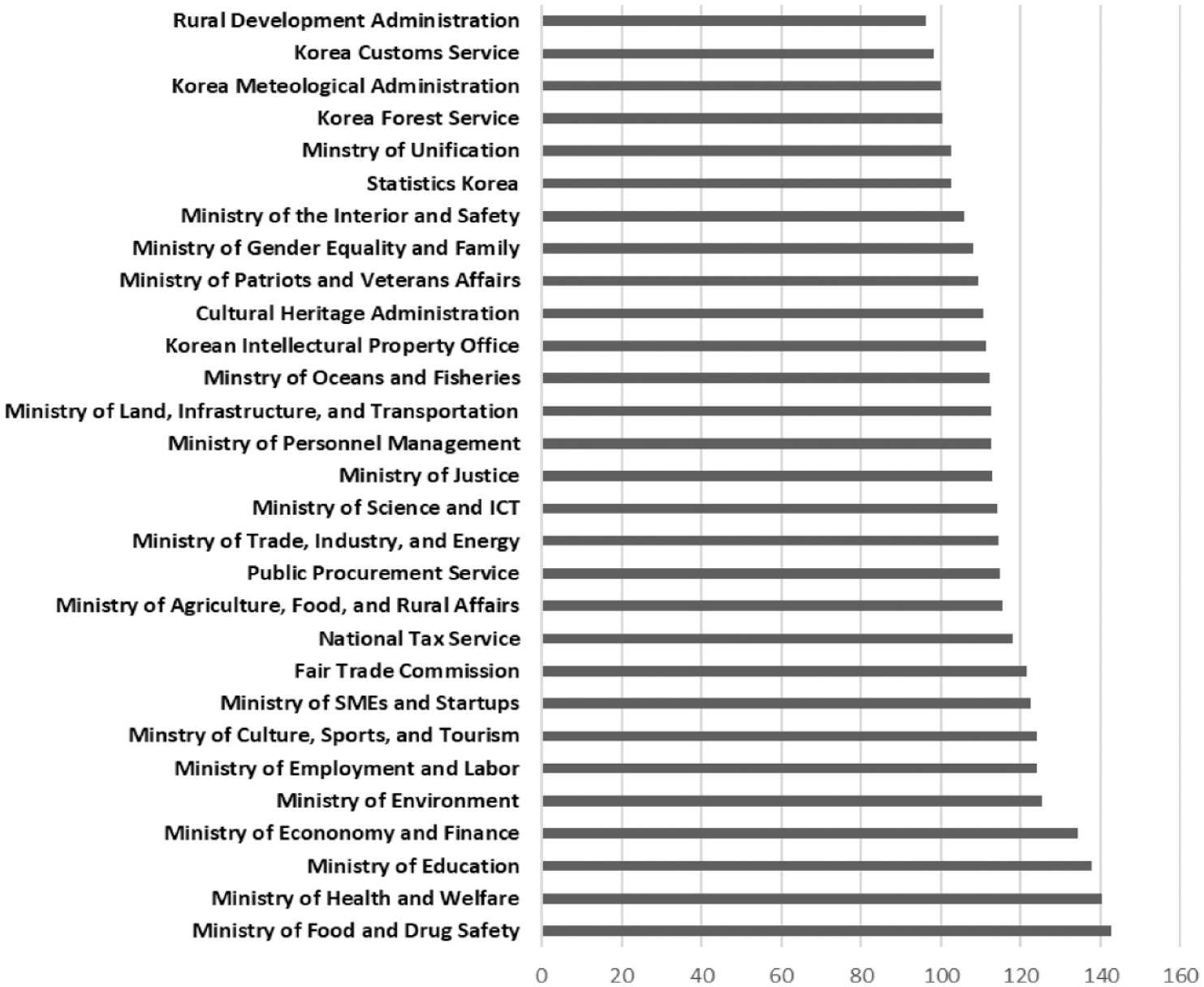
Average percent change of work intensity after COVID-19, by organizations.
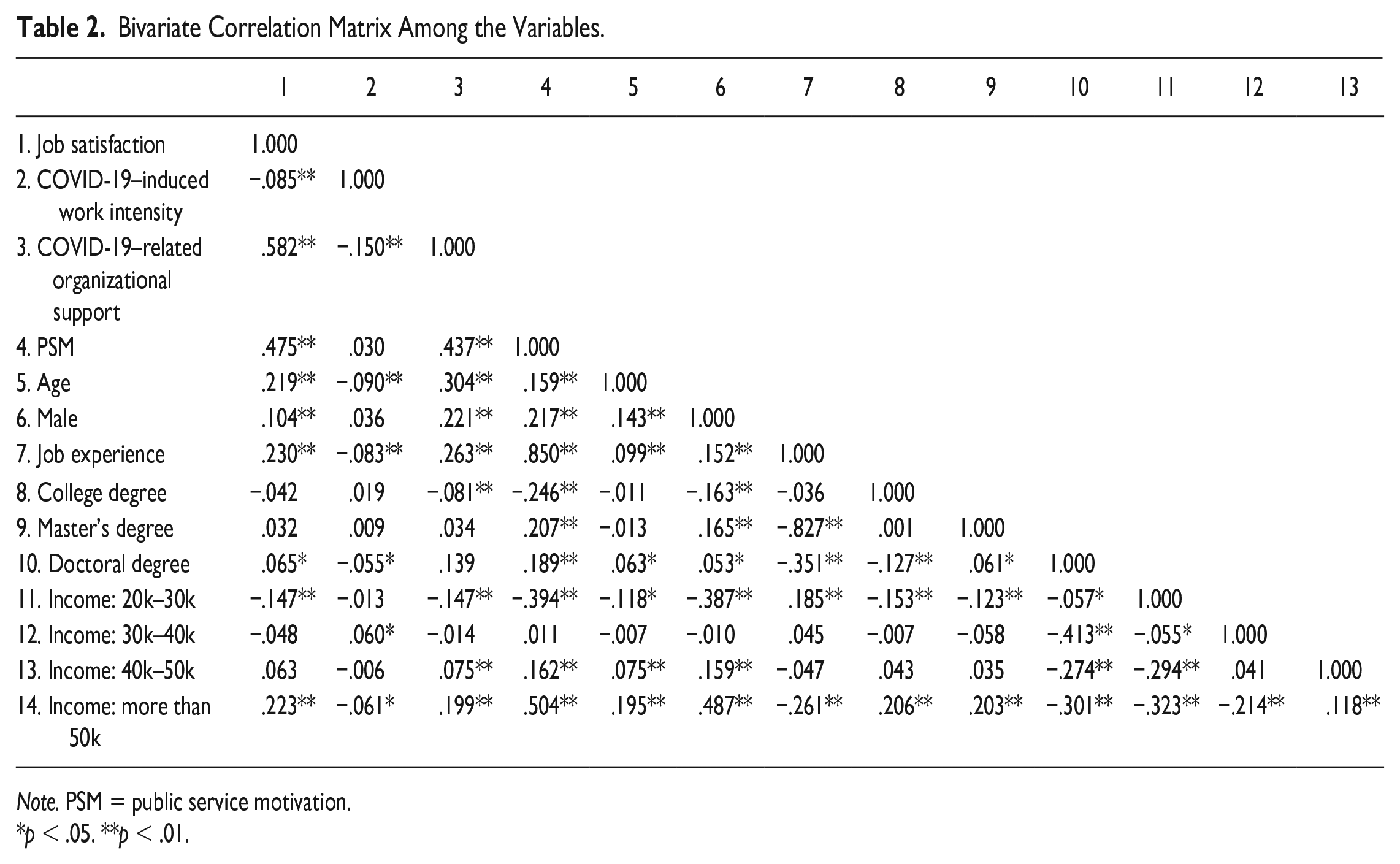
The bivariate correlation matrix in Table 2 implies that PSM is significantly and positively correlated with job satisfaction (.475, p < .01), which is consistent with the extant literature. The table shows that COVID-19–induced work intensity is not significantly related to PSM (.030, p > .05), and is significantly but negatively related to job satisfaction (−.085, p < .01). COVID-19–related organizational support is positively correlated to both PSM (.437, p < .01) and job satisfaction (.582, p < .01).
Bivariate Correlation Matrix Among the Variables.
Note. PSM = public service motivation.
p < .05. **p < .01.
Our dataset has a hierarchical structure where individual-level data (level 1, n = 1,470) are nested within organizations (level 2, n = 29). Instead of conventional ordinary least squares (OLS) regression, multilevel analysis is appropriate because it allows for the estimation of regression coefficients at level 1 (= typical regression model with individual-level predictors) and level 2 (= “intercepts-as-outcomes” model) as well as cross-level interactions (= “slopes-as-outcomes” model; Raudenbush & Bryk, 2002).
Using Stata version 16.0 (StataCorp, 2019), this research first estimated the null model of the HLM with job satisfaction as an outcome with no predictors to estimate the total variance explained by the organizational-level variance. The value of intraclass correlation is .067, which suggests that 6.7% of the overall variance of job satisfaction can be attributed to organizational-level variance. However, in the subsequent intercepts-as-outcomes models, the analysis found that none of our independent and mediating variables measured at the organizational level is significantly associated with job satisfaction. The slope-as-outcomes models also suggest that organizational factors do not condition the effects of our primary predictors observed at level 1. For the interest of parsimony, we thus decided to remove the level 2 variables and instead added organization dummies in the main analyses below to fully account for the unobserved organization-specific heterogeneity when estimating the individual-level coefficients of our primary interest. After adding these dummies, the ICC value of job satisfaction was reduced to near zero as expected.
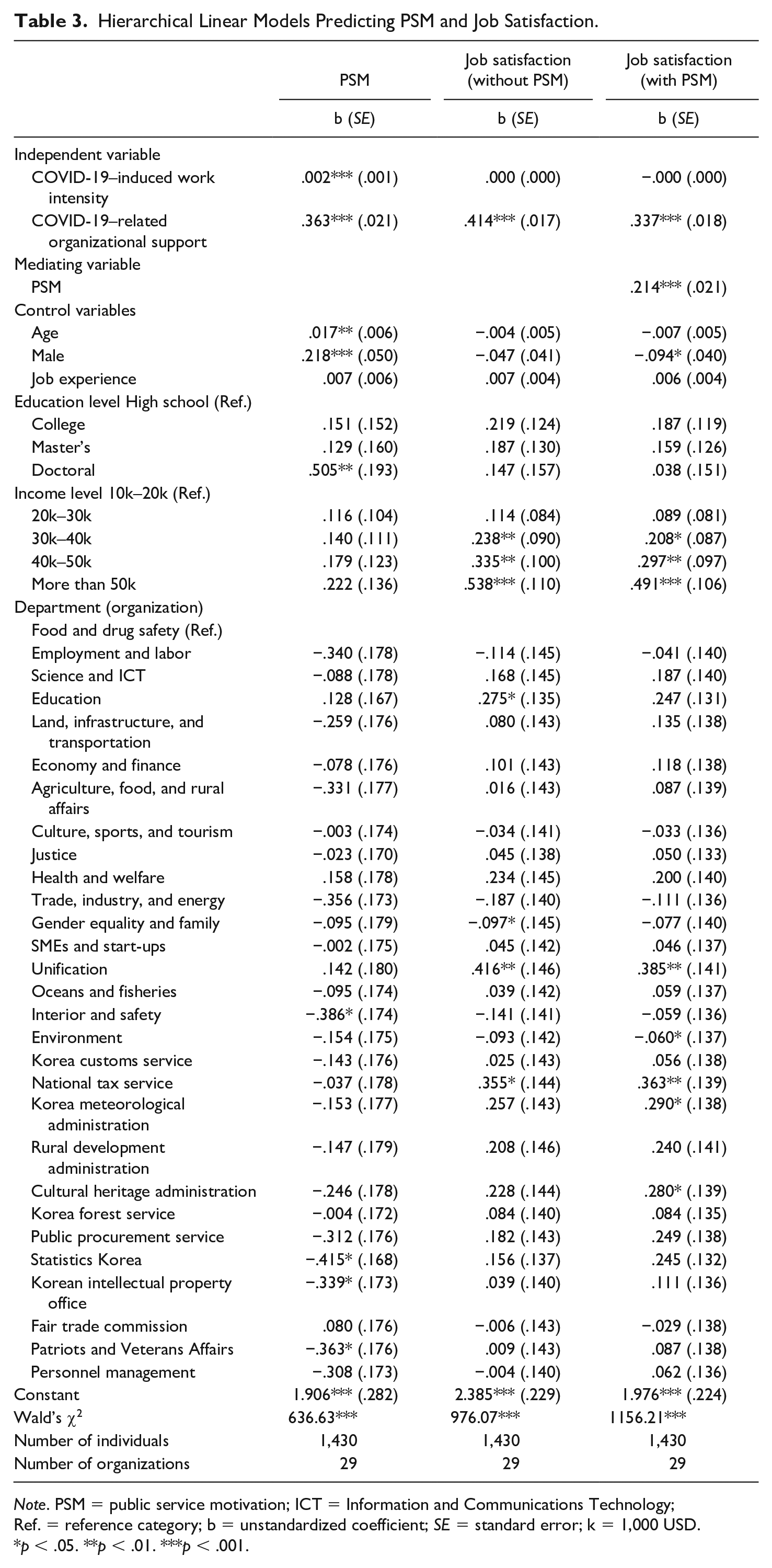
Table 3 presents analysis results, estimating the association between COVID-induced work intensity and COVID-related organizational support on one hand and PSM and job satisfaction on the other hand. Robust standard errors for the coefficients were estimated to test the statistical significance of the estimators because individuals were not independent of each other but nested within organizations. Before conducting a series of regression and path analyses, we first checked the possibility of “common method bias (CMB)” because our key variables were measured from the same individuals at the same time using the same survey method (Podsakoff et al., 2003). The results of principal component analyses suggest that the variables included in our analytic models load on to six latent factors with eigenvalues greater than 1—although there are no strict rules to determine how serious CMB is based on this result (Chang et al., 2010). Because the largest factor accounted for only 23.34% of the total covariance among these variables, we can presume that the validity of our findings is not seriously compromised although it is possible that the coefficient estimates might be somewhat inflated artificially due to the nature of the survey method adopted in the data collection.
Hierarchical Linear Models Predicting PSM and Job Satisfaction.
Note. PSM = public service motivation; ICT = Information and Communications Technology; Ref. = reference category; b = unstandardized coefficient; SE = standard error; k = 1,000 USD.
p < .05. **p < .01. ***p < .001.
Table 3 shows that COVID-19–induced work intensity is positively and significantly associated with PSM, but not with job satisfaction before and after controlling for PSM. While this study expected that COVID-19–induced work intensity is negatively associated with both job satisfaction (Hypothesis 1) and PSM (Hypothesis 4), our hypotheses are not supported by our data. Conversely, the relationship between COVID-19–induced work intensity and PSM was significant and positive. The findings show that PSM is positively associated with job satisfaction, consistent with Hypothesis 3. Considering these patterns together, it is suggested that COVID-19–induced work intensity could still affect job satisfaction indirectly via PSM. That is, work intensity due to COVID-19 is positively related to PSM, which in turn increases job satisfaction; however, it does not have a direct effect on job satisfaction after controlling for PSM and other control variables.
Our data support our hypotheses on COVID-19–related organizational support, specifically Hypothesis 2 and Hypothesis 5. COVID-19–related organizational support is positively associated with both job satisfaction and PSM. This significant relationship between COVID-19–related organizational support and job satisfaction remains the same regardless of whether we control for PSM or not. It suggests that COVID-19–related organizational support has both direct and indirect effects on job satisfaction. 5 In addition, we compared the effects of each of the five COVID-related organization support measures. We found the items of COVID-19–related organization support show similar patterns in their significant and positive relationships with PSM, except for the item (c), while the items of (a) and (b) appear to matter the most according to the Beta coefficient estimates (the coefficients of item [a]–[e] respectively: 0.111***, 0.106***, 0.040, 0.065**, and 0.059**). It suggests that (a) flexible work arrangements and (b) counseling programs focused on job performance can be particularly effective in cultivating PSM.
This study gains additional insights by looking at the effects of control variables. Respondents’ age and education level are also significantly related to PSM, as found in the literature (e.g., Ritz et al., 2016). Interestingly, male respondents display higher PSM, which is inconsistent with the literature (Piatak & Holt, 2021; Riccucci, 2018). Regarding job satisfaction as an outcome model (with PSM), being male and having a higher income level are significant predictors.
In the next analysis, we further estimated these total, direct, and indirect effects more precisely using a path model to better understand the mechanisms underlying the patterns observed in these analyses. We conducted a path analysis using the “model indirect” command in Mplus version 7.11 (Muthén & Muthén, 2013). We decomposed the total effect into direct and indirect effects and tested the statistical significance of each effect using the confidence intervals, generated empirically through bootstrapping methods. Given that the sampling distribution of the coefficient for an indirect effect is not necessarily normal or even symmetrical (which is assumed in many analyses based on the central limit theorem), a conventional statistical test of mediation under the assumption of the standard normal distribution of the estimated standard error tends to be underpowered to detect an indirect effect that exists in the population. This is especially true when the distribution is positively skewed (Preacher & Hayes, 2004, 2008). To address this issue, it is recommended that confidence intervals of the indirect effect estimators be created empirically, by a nonparametric resampling approach that makes no assumption about the normality of the distribution, instead of relying on p values estimated from the t-distribution.
Figure 4 summarizes the outcomes of the path analysis with all the variables considered in the previous HLM models. The model fit indices suggest that the data fit the model perfectly because it is a saturated (just-identified) model with zero degrees of freedom. Since we have already observed that the effect of COVID-19–induced work intensity on PSM and the effect of PSM on job satisfaction are statistically significant, as portrayed in Table 3 (reproduced in Figure 4), it is not surprising that the specific indirect effect estimated by Mplus is significantly different from zero (b = .001, p < .001). We tested the statistical significance of this indirect effect via the bias-corrected and accelerated confidence interval, generated empirically by a bootstrapping procedure of 5,000 resamples with replacement (Preacher & Hayes, 2008). It is plausible to assume that there are many indirect paths other than the one this study specifically considered in this analysis. If this assumption holds, the potential unknown indirect effects, with both positive and negative signs, might cancel each other out to produce a total effect of zero, as seen in the third column of Table 3. This research encourages future research to explore additional critical links to better understand the mechanisms underlying the impact of COVID-19–induced work intensity on job satisfaction. As for COVID-related organizational support, this study finds its significant direct (b = .337, p < .001) and indirect (b = .078, p < .001; via PSM) effects on job satisfaction.
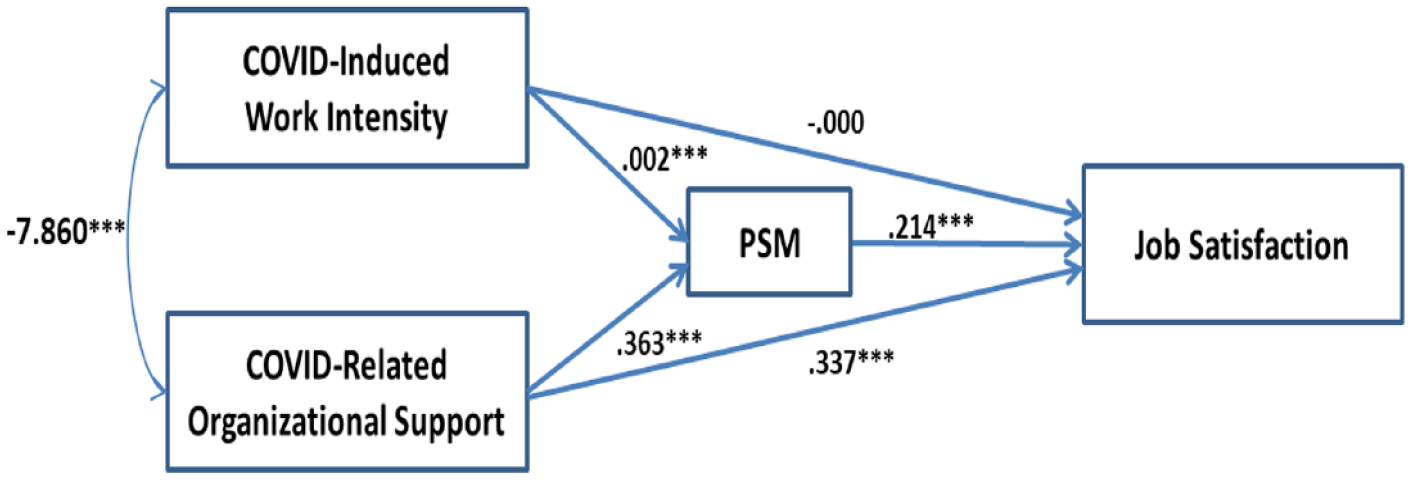
Total, direct, and indirect effects of both COVID-19–induced work intensity and organizational support on job satisfaction.
Discussion and Conclusion
Since the outbreak of COVID-19, researchers have examined effective governmental responses to COVID-19 and the factors that have contributed to these responses. Far less attention has been paid to how public employees have made sense of their jobs in the time of COVID-19, what changes to their job characteristics and work environment have occurred, and in what ways those changes have affected employee motivation and outcomes. To that end, this study provides important and timely insights into our understanding of public service during an unprecedented pandemic by testing the direct and indirect effects (via public service motivation) of two key workplace changes that have occurred during the COVID-19 pandemic, COVID-19–induced work intensity and COVID-19–related organizational support, on job satisfaction. The findings based on the analysis of a survey of South Korean central government employees show that COVID-19–related organizational support is positively associated with both PSM and job satisfaction, while PSM is positively associated with job satisfaction. This supports our hypotheses, indicating that COVID-19–related organizational support has direct and indirect effects on job satisfaction. While this study does not find a significant direct effect of COVID-19–induced work intensity on job satisfaction, it does find a positive association between COVID-19–induced work intensity and PSM, suggesting an indirect effect on job satisfaction.
The observed relationship between COVID-19–induced work intensity and PSM is somewhat counter-intuitive and invites further interpretation. Previous research has examined work intensity and workload as job demands or work-related stressors that may undermine individual motivation (Bakker, 2015). However, this study focused on work intensity associated with COVID-19, which may differ from work intensity and overload under normal circumstances. This study suggests that the COVID-19 pandemic has altered the macro-level institutions by highlighting the social significance of the distinctive social contribution of public service, transforming the general public’s perception of public service, and fostering socialization in public institutions (Taylor et al., 2022). This may have been further strengthened by media attention that recognizes the role of public service and expresses appreciation for the sacrifices of public servants. Shand et al. (2022), in a case analysis of local government responses to COVID-19 in England, found that among public managers, increased media support and public appreciation for public services led to a renewal of a public service ethos and ideas about civic duty and vocation. An implication of this is the possibility that increased work intensity associated with COVID-19 may have provided opportunities for public employees to recognize the value of public service and better understand their jobs’ impact and meaning, thereby boosting their PSM, at least temporarily during the initial stage of the pandemic. Our view is in line with Gould-Williams et al. (2014), who identified a positive association between work overload and civic duty, suggesting that PSM can be heightened when workloads increase if employees believe they are serving the community’s needs. This is also supported by Brewer et al. (2000), who found that some public employees wish to serve the public interest, even at their own personal cost.
While exploratory, our study offers important theoretical insights that contribute to PSM theory. First, it supports the perspective that PSM is a dynamic concept that is malleable in nature (Bellé, 2013; Grant, 2008; Moynihan & Pandey, 2007). PSM can be conceptualized as a psychological state that responds to external and contextual factors and causes individuals to perform acts that contribute to the public good as a way of satisfying their personal needs (Houston, 2011; Wise, 2004). While previous studies on the antecedents of PSM have focused on job resources such as autonomy and supportive HRM practices (Gould-Williams et al., 2014; Moynihan & Pandey, 2007), our study provides a novel insight that workplace challenges and job demands can also stimulate PSM; however, this stimulation depends on the institutional context. Taylor et al. (2022) provide a useful framework to conceptualize and measure the impact of different levels of institutions on individual PSM. They specify four pillars of institutional PSM—public service orientation, legitimacy, merit, and support—and argue that public institutions with high levels across these pillars foster PSM among members of the institutions. Future research can measure the levels of the above pillars of institutional PSM (e.g., mission/goal clarity, responsive administrative culture, ethical standards, transparency procedures, and open communication channels) and empirically test their effects on individual PSM.
Second, this study provides evidence that supports the institutional perspective on PSM theory (Perry, 2000; Vandenabeele, 2007). In particular, our results emphasize the importance of meso- and macro-level institutions in shaping PSM (Houston, 2011; Vandenabeele et al., 2018), an underexplored topic in the existing literature (Ritz et al., 2016). Workload and work intensity, which have traditionally been considered job demands that produce negative outcomes, may have different effects when societal beliefs and norms are altered. Given the unprecedented and exceptional circumstances of the COVID-19 pandemic, traditional job demands and resources may have different impacts on the public workforce than they would during normal times. It suggests that the influence of job demands (meso-level institutions) on PSM can be better understood when macro-level institutional features are taken into account. To better explore macro-level institutional impacts on PSM, future research may perform cross-national comparative research (Houston, 2011) or longitudinal analyses. For example, future studies may replicate the analysis to determine whether the results hold true in other national contexts (e.g., where governmental responses to COVID-19 are perceived as a failure; and where the goals of public institutions during the pandemic were more or less clearly communicated) or may scrutinize the role of broader societal contexts in shaping the antecedents or consequences of PSM.
Our empirical findings provide evidence that organizational support enhances PSM and job satisfaction, particularly during the COVID-19 pandemic. Crises bring serious disruptions to public workplaces, leading to lower job satisfaction and higher psychological distress and burnout. A handful of studies have explored public workplace challenges resulting from COVID-19, such as greater job demands and disruption (Berry et al., 2022) or emotional labor (Castro et al., 2022), and have called for new measures to counteract them. Our finding provides a partial answer: organizations need to develop organizational support that helps employees cope with emerging challenges and enhance employee resilience in times of crisis (P. Kim et al., 2022). This research calls for further research that explores what kinds of organizational support and resources can alleviate deleterious effects on employee outcomes, particularly during crises.
As one of the early attempts to probe how work environment changes induced by COVID-19 affect work attitudes and outcomes, our study has limitations. First, this study uses cross-sectional survey data and thus has constraints in establishing the internal validity of findings, like previous PSM studies that have largely relied on surveys (Ritz et al., 2016). This research is exploratory in nature aiming to stimulate this line of research with more rigorous data and methodology. Also, this study could not investigate whether the effects of COVID-19-induced work intensity and COVID-19–related organizational support on PSM persist or fade over time. Our analysis was based on a survey conducted in May and June of 2020, an early phase of the ongoing pandemic situation. While the findings of this study support the view that PSM is a dynamic concept and can be either enhanced or depleted by externally derived situational factors, it’s not yet studied how long the observed effects of COVID-19–induced work intensity and COVID-19–related organizational support on PSM are likely to last. Longitudinal analyses can better inform us of what changes have occurred due to COVID-19 in the public sector and how these changes have causal impacts on employee motivation and outcomes over time. Second, while the present study identified the mediating role of PSM in the relationship between COVID-19–related work environment changes and job satisfaction, there could be other mechanisms through which COVID-19–induced work intensity or COVID-19–related organizational support increases or decreases job satisfaction. Understanding such mechanisms would help practitioners to lever employee outcomes, even in crisis situations loaded with strain and challenges. Finally, while we are confident that the theoretical mechanisms explained in the study provide important insights into understanding other contexts, we cannot guarantee that our results are generalizable to other national contexts or other types of public employees, such as street-level bureaucrats or local government workers. As stated above, contextualized investigation from the institutional angle of PSM theory can contribute to a more complete understanding of PSM and employee outcomes broadly.
This study concludes with several implications for practice. First, government human resources managers must prioritize the development and expansion of measures aimed at providing organizational support to assist employees in managing job-related stress and navigating challenges arising from crises. In particular, our research underscores the efficacy of flexible work arrangements and counseling programs in bolstering employees’ work attitudes and outcomes. Second, public organizations need to publicize their contribution to addressing public challenges such as COVID-19, to develop more positive views of public service among the public and their employees. Finally, PSM can be cultivated by recognition of the significance of employees’ work and public service, which can be heightened during a pandemic situation. Public institutions can engage in open and effective communication to translate their mission and values and convey their relevance to employees and the public (Taylor et al., 2022).
Footnotes
Appendix
Declaration of Conflicting Interests
The author(s) declared no potential conflicts of interest with respect to the research, authorship, and/or publication of this article.
Funding
The author(s) received no financial support for the research, authorship, and/or publication of this article.
1.
JD–R theory implies that job resources can help employees cope with job demands and stressors as well as buffer the negative effect of job demands on employee outcomes (Bakker &Demerouti, 2014). In his JD–R approach to PSM,  assumed that PSM would be a relatively stable construct, arguing that PSM acts as a buffer against the negative impact of job demands. This indicates that individuals with high PSM can better deal with job demands, such as work overload and intensity because they believe their work serves the public interest. However, this study posits that PSM is a more dynamic concept and can be either enhanced or depleted by externally derived situational factors. It thus would be more appropriate to incorporate it as a mediator in our research model. This is further discussed in the concluding section.
4.
The authors express their gratitude to the Center for Government Competitiveness at the Graduate School of Public Administration, Seoul National University, for generously providing the data essential for this research.
5.
Several additional analyses were conducted. First, we tested for non-linear effects of COVID-19–induced work intensity and COVID-19–related organizational support by adding quadratic terms for the two variables in the regression analysis. Neither achieved significance, and thus we have no evidence of non-linear effects of COVID-19–induced work intensity and COVID-19–related organizational support. Second, we have further analyzed our results by truncating those who reported the top 1% and bottom 1% of the COVID-19–induced work intensity score to check whether our findings were affected by some extreme outliers (Median: 100, M: 112.353, Min: 1, Max: 225). We found the patterns of relationships remain unchanged. Third, we have tested for the moderating effect of COVID-19 support. No significant moderating effect was found in the supplementary analysis.