



Abstract
Infants and children experience an intense form of intellectual engagement associated with learning a variety of new skills. A recent theory proposes that such broad learning experiences may be the key to maximal cognitive development not just during infancy and childhood but also during adulthood. To begin investigating this possibility, the present questionnaire on broad learning in adulthood builds on prior research on need for cognition, intellectual engagement, personal growth, and leisure activities. After several rounds with preliminary versions of the questionnaire, the final version consists of 28 items. Responses were gathered from two mTurk samples to measure scale reliability and to assess model fit. In the end, we obtained a satisfactory measure of broad learning that consists of six separate reliable scales. Once this questionnaire is validated in future studies, perhaps it could be used as a predictor for cognitive development during adulthood and for interventions inducing broad learning.
Keywords
In the past two decades, there has been a surge of interest in improving cognitive abilities during adulthood, especially older adulthood, when many experience cognitive decline (see Hertzog, Kramer, Wilson, & Lindenberger, 2009). Many studies measuring the level of intellectual engagement with a variety of leisure activities, ranging from watching TV to learning new skills, have demonstrated a positive association between engaging in intellectually challenging activities and levels of cognitive abilities (Carlson et al., 2012; Scarmeas, Levy, Tang, Manly, & Stern, 2001; Stern, 2009; Stern & Munn, 2010; Wilson Scherr, Schneider, Tang, & Bennett, 2007; although see Salthouse, 2006; for a review, see Hertzog et al., 2009). Cognitive engagement interventions have provided evidence that learning new skills leads to increased cognitive abilities. For example, the Synapse Project showed that older adults who learned new, cognitively demanding skills, such as digital photography, quilting, or how to use an iPad, displayed improved episodic memory (Chan, Haber, Drew, & Park, 2016; Park et al., 2014). These studies and others have led to recommendations for maintaining cognitive abilities by engaging in challenging cognitive activities, such as learning a new skill (Antoniou & Wright, 2017; Park et al., 2014) and cognitive training (Rebok et al., 2014). However, it is still debated which specific activities lead to maintenance or maximal increases in various cognitive abilities (e.g., working memory, inhibition) during adulthood, and in particular older adulthood, over the long-term (e.g., Bielak, 2010; Simons et al., 2016).
Building on current recommendations, Wu, Rebok, and Lin (2017) proposed that broad learning (an intense form of intellectual engagement associated with learning multiple skills typical of learning experiences in infancy and early childhood) fosters maximal increases in a variety of cognitive abilities during adulthood, as well as throughout the rest of the lifespan. Instead of focusing on the activities themselves (e.g., learning a new language, sport, or artistic skill), Wu et al. focus on six factors that any activity and learner should have to foster maximal cognitive development from learning any new skills: open-minded input-driven learning (learning completely unfamiliar ideas, tasks, and skills), individualized scaffolding (having a responsive teacher increasing difficulty at a tolerable rate), growth mindset (the belief that abilities can develop with effort, rather than being fixed or innate), forgiving environment (being allowed to make and learn from mistakes without consequences), serious commitment to learning (high motivation for learning, such as learning for survival), and learning multiple skills simultaneously.
The main tenet of the theory is that these six factors from learning experiences typical of infancy and childhood may foster cognitive development, and the lack of which may promote cognitive decline. According to the theory, these six factors promote long-term adaptability at the cost of reducing short-term efficiency and therefore naturally decrease as the learner transitions from being an infant to a capable adult, who is required to be productive. The theory posits that prioritizing short-term efficiency over decades (from young adulthood to older adulthood) by reducing broad learning factors may lead to cognitive decline first in novel situations, and eventually in familiar situations. This argument is based on the idea that prioritizing short-term efficiency requires prioritizing existing knowledge, rather than learning new information. Prioritizing existing knowledge over learning new information for extended periods may lead to difficulty adapting first to unfamiliar situations, and then eventually functioning in familiar situations.
The six factors of broad learning were selected based on over five decades of infant and child development and pedagogy research, as well as research with older adults on factors that may promote steeper rates of cognitive decline. For example, individualized scaffolding, tailoring the to-be-learned information by a responsive teacher, is one of the most well-known ways of increasing various cognitive abilities during infancy and childhood (Obradović, Yousafzai, Finch, & Rasheed, 2016; Vygotsky, 1978). When learning a language, most infants have access to (and prefer) expert language teachers (i.e., parents or caregivers), who, for years, provide infant-directed speech, including elongated vowels, an emphasis on word endings, slower speech, reduced vocabulary, and exaggerated facial expressions with eye contact (e.g., Cooper & Aslin, 1990). Adult language learning, by contrast, typically does not include such extensive scaffolding (e.g., Ehrman & Oxford, 1990). Recently, cognitive development research with infants and children has been revealing the benefits of open-minded input-driven learning (e.g., Aslin & Newport, 2012; Gopnik, Griffiths, & Lucas, 2015; Thompson-Schill, Ramscar, & Chrysikou, 2009), and more recently in cognitive aging research as well (Amer, Campbell, & Hasher, 2016). For example, observing patterns in the environment may allow one to learn previously irrelevant but currently relevant information, rather than dismissing it due to prior knowledge indicating that such information is irrelevant (e.g., Campbell, Zimerman, Healey, Lee, & Hasher, 2012). This ability may be important for second language acquisition, for example, especially when rules from the already acquired language conflict with the rules from the to-be-learned language. Infants and children may engage in more open-minded input-driven learning compared with adults (e.g., Gopnik et al., 2017), and engaging in routines and relying on prior knowledge too much may foster cognitive decline (e.g., Tournier, Mathey, & Postal, 2012).
Although this novel theory is based on decades of research from infant and child development and cognitive aging, it is still only conceptual in nature. Therefore, the theory requires direct tests. A broad learning questionnaire would provide the first step in testing the novel theory proposing that broad learning leads to maximal cognitive development during adulthood. There is currently no questionnaire that assesses broad learning during adulthood, as defined by Wu et al. (2017). There are two main contributions that a broad learning questionnaire would have for research on cognitive aging. First, once this questionnaire is validated in future studies, it may be used as a predictor for cognitive development during adulthood. Second, this questionnaire also may be used as a measure of broad learning for cognitive engagement interventions at pre- and posttest.
Existing Questionnaires on Need for Cognition, Intellectual Engagement, Personal Growth, and Leisure Activities
The existing questionnaires that are most closely related to aspects of broad learning relate to need for cognition, intellectual engagement, personal growth, and leisure activities. The first three types often relate to personality traits, and therefore, questionnaires on these topics contain more general questions about tendencies, as opposed to specific activities. The general questions from these assessments inspired more specific questions in our new questionnaire. The questionnaires for Need for Cognition (Cacioppo & Petty, 1982) and Typical Intellectual Engagement (Maynard & Ackerman, 1992) contain items largely related to enjoyment of expending cognitive effort in terms of problem-solving and thinking, and they tend to be highly correlated with each other, as well as with the openness personality trait (Mussel, 2010). Although expending cognitive effort often occurs in novel situations that require at least some degree of learning, one also could expend cognitive effort in challenging situations that are familiar. Moreover, the majority of the items in these questionnaires do not directly ask questions related to specific learning activities, although these traits have been shown to be related to engagement in leisure activities and academic performance (Mussel, 2013). Questionnaires related to personal growth and productivity (e.g., Friedman, Kern, & Reynolds, 2010) also are somewhat related to broad learning in a general sense. Items from these types of questionnaires center on continuous achievements, generativity, and continuing to develop oneself.
There are also questionnaires that generally assess the frequency of one’s involvement in specific everyday leisure activities (see Bielak, 2017), and these questions about specific challenging leisure activities inspired more general questions about learning new skills in the present questionnaire. In the questionnaire used by the Victoria Longitudinal Study, daily activities included physical exercise, self-maintenance, and hobbies (Bielak, Hughes, Small, & Dixon, 2007; Hultsch, Hertzog, Small, & Dixon, 1999; see also Jopp & Hertzog, 2010). Wilson et al. (2002, 2007) employed self-reported questionnaires to assess the frequency of participation in cognitively demanding activities, such as watching television, listening to the radio, reading newspapers or magazines or books, playing card or board games, completing puzzles, and visiting libraries and museums. Another study used the Leisure Activity Questionnaire, which included activities, such as playing chess and completing crossword puzzles (Mella, Grob, Döll, Ghisletta, & de Ribaupierre, 2017). Finally, Carlson et al. (2012) and Parisi et al. (2012) used the Lifestyle Activities Questionnaire, which ranged from high (e.g., reading) to low (e.g., watching TV) cognitively demanding activities (see also Martin & Park, 2003 for a questionnaire developed to assess busyness and cognitive demand).
Bridging the existing studies and questionnaires on attitudes and traits related to learning and leisure activities (see also Parisi, Stine-Morrow, Noh, & Morrow, 2009), the questionnaire developed in this study includes items related to traits, attitudes, behaviors, and situations, which all are hypothesized to work together to promote adult learning. Based on the theory developed by Wu et al. (2017), this questionnaire draws on six theoretical factors often studied in isolation. These factors may inform subsequent theorizing about the structure of constructs used to understand the conditions that promote adult learning.
Goal of This Study
This study bridges and builds on prior research on need for cognition, intellectual engagement, personal growth, and leisure activities, as well as the research on the proposed six factors of broad learning. Developing the Broad Learning Adult Questionnaire (BLAQ) via assessing scale psychometrics was the first step in our research program investigating broad learning in adulthood, starting from 18 years of age. In developing this questionnaire for a wide age range in adulthood, we also investigated potential differences in the scale psychometrics among three age-groups (young, middle, and older adulthood). After developing this questionnaire, we anticipated that it could be validated in future studies to be used eventually as a standalone measure, and perhaps as a pre- and posttest measure in intervention studies to predict cognitive development in adulthood.
Method
Development of the Questionnaire Prior to Samples 1 and 2
During four initial waves in the development of the BLAQ, we developed items for the BLAQ by reflecting on our theory and reviewing existing questionnaires for inspiration, such as the aforementioned questionnaires, as well as the growth mindset scale (Dweck, 2000) and the Grit Scale (Duckworth & Quinn, 2009). During Wave 1, we created 31 items. After collecting data from 60 mTurk participants (18+ years of age) on this preliminary questionnaire and running several statistical analyses identical to the confirmatory factor analyses (CFAs) described later (Samples 1 and 2), we revised 9 items for Wave 2 to better align the questions within each factor. For example, we revised, “When learning difficult things and I get stuck, I find it easier to work things out by myself than seek out someone more expert than me to teach me new skills.” to “When learning difficult things and I get stuck, I prefer to work things out by myself than seek out someone more experienced than me to help me through the learning problem.” to emphasize the notion of preference in the individualized scaffolding factor. Analyses on the Wave 2 data with another set of 100 mTurk participants (18+ years of age) revealed unfavorable results in terms of scale psychometrics, prompting us to amend the questionnaire extensively for clarity. In Wave 3, we added 11 items and revised 21, mostly for the problematic constructs—open-minded input-driven learning, serious commitment to learning, and learning multiple skills simultaneously. For example, we added, “If I had to spend 6 months in a country where people speak a language I don’t understand, I would try to learn that language rather than find people who speak English.” to the open-minded input-driven learning factor to highlight the type of novel learning the questionnaire refers to. Further statistical analyses (CFAs) were conducted on another mTurk sample consisting of 200 participants (18+ years of age), revealing moderate improvements in the reliability and structure of the questionnaire. To obtain better statistical results and to confirm that these items accurately reflected the constructs from our theory (e.g., open-minded input-driven learning, growth mindset, etc.), in Wave 4, we conducted a focus group with a convenience sample consisting of nine adults (M = 40.44 years, SD = 16.30, range = 22–67, median age: 38). We asked these participants questions pertaining to their understanding of each item and item set, as well as how they would respond to them. We then revised the items that consistently biased participants’ responses, were ambiguous, and were interpreted as representing a different construct. We also incorporated participants’ feedback regarding the wording of certain items to improve clarity. Specifically, participants’ feedback included, but was not limited to, changing the wording of items so that they all matched stylistically, positively rewording some of the negatively worded items, and using different skills as examples. After incorporating their feedback, removing 14 problematic items, and revising 22 unclear items, we arrived at the two final waves of developing the BLAQ, which included Samples 1 and 2 (detailed later).
Sample 1
Participants
For Sample 1, the final sample consisted of three groups of adults (N = 300): 103 young adults (M = 26.06 years, SD = 2.83, range = 18–30, median age: 26 years, 44 women and 59 men), 96 middle-aged adults (M = 38.50, SD = 5.94, range = 31–50, median age: 37 years, 50 women and 46 men), and 101 older adults (M = 58.67, SD = 6.06, range = 51–77, median age: 57 years, 58 women and 43 men). All participants were recruited on mTurk.com, a website hosted by Amazon where participants can complete surveys for money. Six additional participants with missing data were excluded. Participants self-selected to participate in a one-time session from a location of their choice. We compensated participants $1 for completing the 10- to 15-minute survey. The typical mTurk rate, which does not follow minimal wage regulations, is approximately $0.10-$0.50 for a medium-length 10- to 15-minute survey, and compensation amount does not seem to affect data quality (Buhrmester, Kwang, & Gosling, 2011). We doubled the higher amount in the range to include more older adult participants, who may require larger incentives to be willing to participate. At the beginning of the study, participants were first asked to fill out a screening questionnaire to determine eligibility for the study. Participants were included in the study if they were at least 18 years of age, their first language was English or if they started learning English between birth and 10 years of age, had not been diagnosed with Alzheimer’s disease, dementia, or mild cognitive impairment, had not been diagnosed with a mental health disorder, and if they had normal or corrected-to-normal vision. If interested individuals were deemed eligible to participate, a text presentation of informed consent was displayed. If individuals consented to participate, they would click the “next” arrow to begin participating; verbal or written consent was not obtained. The demographic information for Sample 1 is presented in Table 1.
Demographic Information for Participants in Samples 1 and 2.

Note. Standard deviations are shown in parentheses.
Design and procedure
Participants were asked to complete the BLAQ, hosted by Qualtrics. If participants self-selected to participate, they were instructed to accept the HIT and click on the questionnaire link. Items assessing the same factor were grouped and simultaneously presented on the computer screen to prevent confusion about the content and framing of the questions. The presentation order of the questions within each factor was randomized. The order of the factors was pseudorandomized. The open-minded input-driven learning questions always were presented prior to those from the other five factors due to the additional instructions that applied to only the questions for the other five factors. The presentation order of the other five factors was randomized. Once participants completed the study, they were presented with a debriefing form on the screen containing a randomly generated completion code, which participants used to receive payment. After we received approximately 100 submissions in each age-group, the survey was closed.
Materials and Analysis Plan
After several phases of development (see the above section on earlier development phases), we settled on 27 items for Sample 1, which consisted of items relating to the six factors (three to seven questions for each factor using a six-factor simple structure CFA solution with maximum likelihood). Due to the nature of this project, evaluating a set of items that are reflective of an underlying theory regarding each of the latent constructs proposed by Wu et al. (2017), a CFA was first conducted. The results from the CFA led us to explore the relationship between the variables regardless of the theory that we were testing. In addition, 27 questions on general health and lifestyle were adapted from the Quality of Life questionnaire (Logsdon, Gibbons, McCurry, & Teri, 2002) and the Personality in Intellectual Aging Contexts Inventory Control Scales-short form (Lachman, 1986) and were included so that the aim of the questionnaire would not be as apparent. Finally, eight open-ended questions were included to elicit more detailed responses for potential future directions in our research program. These questions were not coded or included in our analyses. Some items for the six factors were adapted from existing questionnaires to be age-appropriate and specific to learning new skills: A few “growth mindset” items were adapted from Dweck’s Theory of Intelligence Scale (Dweck, 2000; Dweck & Sorich, 1999), and a few “serious commitment to learning” items were adapted from Duckworth’s Grit Scale (Duckworth & Quinn, 2009). All items were either measured on a 6-point Likert-type scale, ranging from strongly agree to strongly disagree, or as open-ended responses.
Sample 2
Participants
Sample 2 was collected 1 month after Sample 1. For Sample 2, the final sample consisted of three groups of adults (N = 299): 100 young adults (M = 26.23 years, SD = 2.83, range = 18–30, median age: 27 years, 39 women and 61 men), 101 middle-aged adults (M = 38.04, SD = 5.43, range = 31–50, median age: 37 years, 50 women and 51 men), and 98 older adults (M = 60.13, SD = 7.00, range = 51–85, median age: 58.5 years, 54 women and 43 men; one participant did not report his or her gender). There was no overlap between the participants from Samples 1 and 2 that we are aware of because every participant had a unique mTurk account. However, it is possible that a participant from Sample 1 used a different mTurk account to complete the questionnaire for Sample 2. As with Sample 1, all participants were recruited on mTurk.com. Sixteen additional participants were excluded from the study due to missing data. All other procedures followed Sample 1. The demographic information for Sample 2 is presented in Table 1.
Materials
For Sample 2, the BLAQ increased to 28 items (Online Appendix). Two Forgiving Environment items were revised and one Individualized Scaffolding item was added. All else was identical to Sample 1.
Results
Scale Psychometrics
Sample 1 results: Scale psychometrics
Means and standard deviations for each item for Sample 1 are included in Table 2. Items within each scale were averaged to create a scale score for the analyses. Scale descriptive information, both scale Cronbach’s alphas (α) and McDonald’s omegas (ω), and interscale correlations for Sample 1 are presented in Table 3. Scales were moderately correlated with each other on average (Mcorr = .38). The individual scale Cronbach’s alphas were somewhat low, ranging from .57 to .70 (Malpha = .64), and therefore, a better lower bound estimate of reliability was obtained with McDonald’s omega (Revelle & Zinbarg, 2009). The individual scale McDonald’s omega totals ranged from .68 to .80 (Momega = .74).
Item Means and Standard Deviations for Samples 1 and 2.
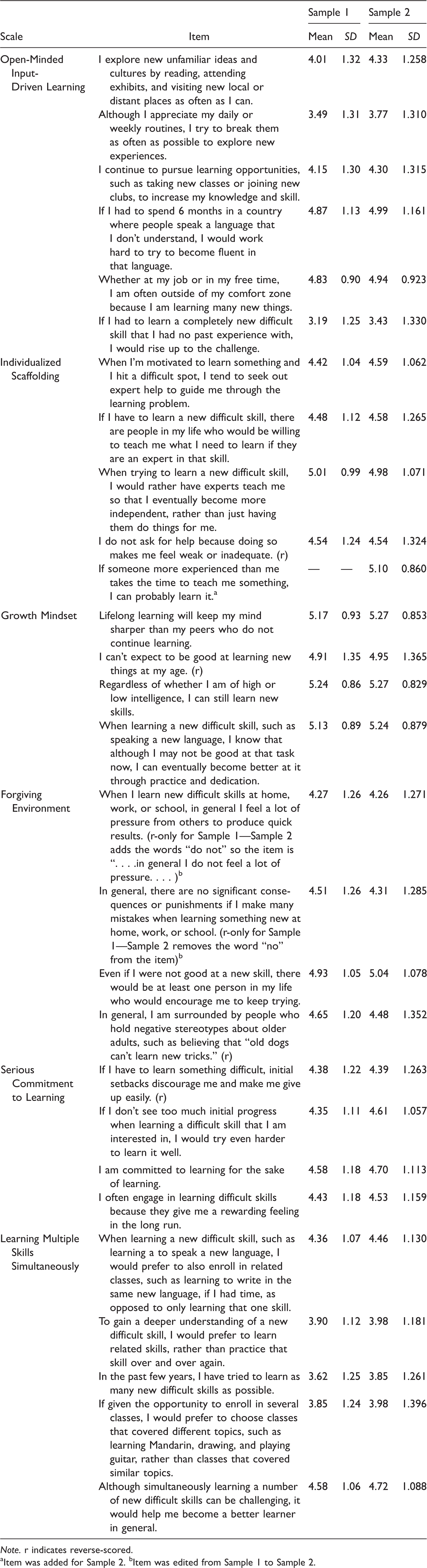
Note. r indicates reverse-scored.
aItem was added for Sample 2. bItem was edited from Sample 1 to Sample 2.
Descriptive Statistics, Scale Correlations, and Reliability Estimates for Sample 1.
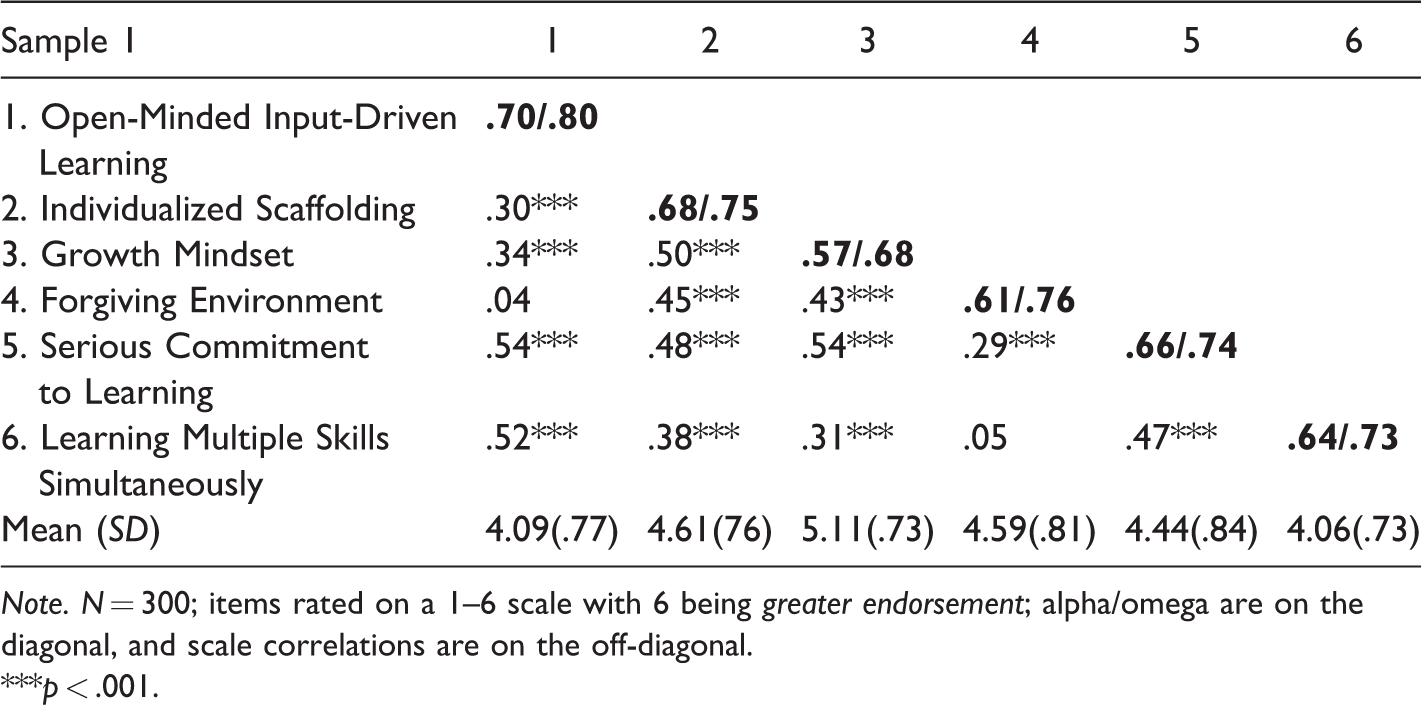
Note. N = 300; items rated on a 1–6 scale with 6 being greater endorsement; alpha/omega are on the diagonal, and scale correlations are on the off-diagonal.
***p < .001.
Sample 2 results: Scale psychometrics
Of the 27 original items, 2 items were edited (from negative to positive wording), and 1 item was added for assessment in a second sample. As with Sample 1, means and standard deviations for each item for Sample 2 are presented in Table 2, and each item within its respective scale was averaged to create a scale score. Scale descriptive statistics, both scale Cronbach’s alphas and McDonald’s omegas, and interscale correlations for Sample 2 are presented in Table 4. Scales were more strongly related on average in Sample 2 (Mcorr = .45). The individual scale Cronbach’s alphas were similar, ranging from .56 to .75 (Malpha = .69), as were the individual scale McDonald’s omega totals ranging from .71 to .84 (Momega = .78) in Sample 2, although the high end of these ranges was slightly higher in Sample 2.
Descriptive Statistics, Scale Correlations, and Reliability Estimates for Sample 2.
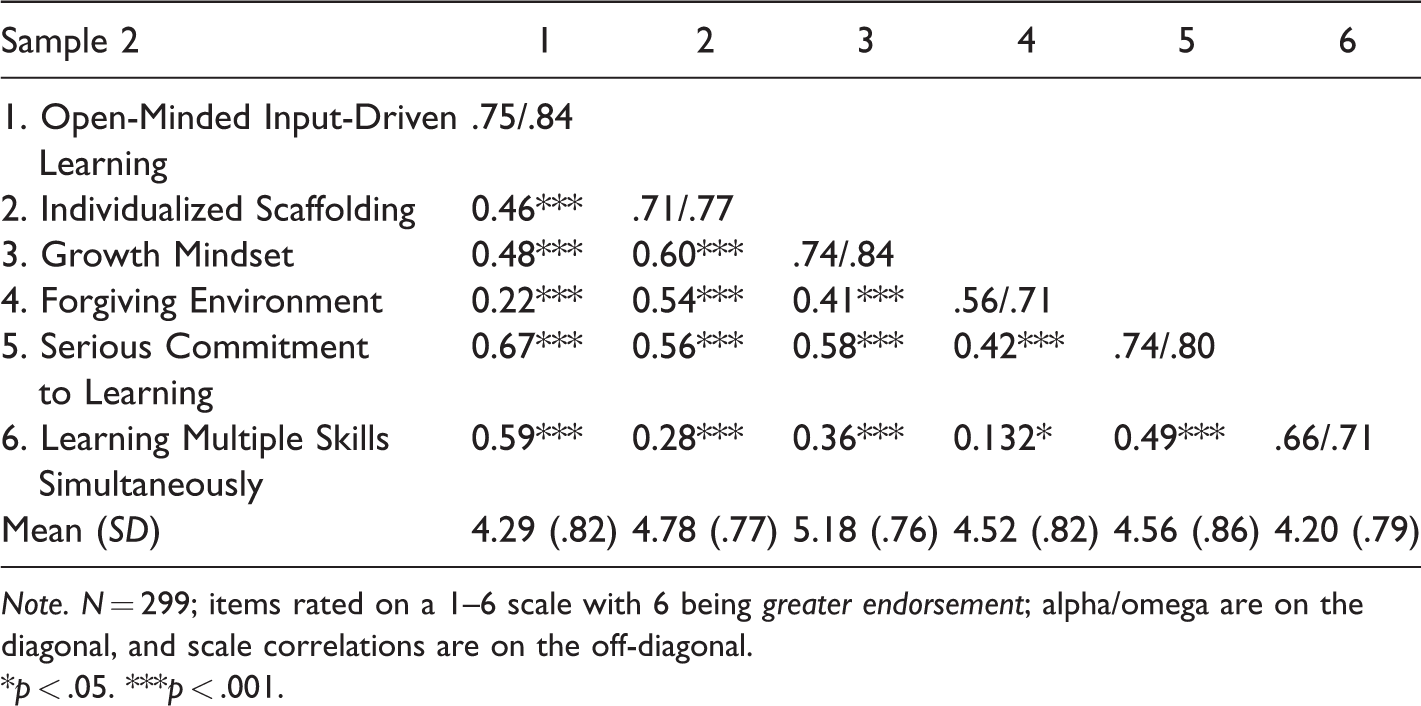
Note. N = 299; items rated on a 1–6 scale with 6 being greater endorsement; alpha/omega are on the diagonal, and scale correlations are on the off-diagonal.
*p < .05. ***p < .001.
Age-Group Comparisons
To investigate potential differences in the scale psychometrics among the three age-groups, one-way analyses of variance were conducted to compare mean differences between age-groups for each of the six critical factors for each sample. Higher values represent “more or better” on the scale. For Sample 1, one-way analyses of variance revealed significant differences between age-groups regarding individualized scaffolding, growth mindset, and serious commitment to learning. For individualized scaffolding, Tukey’s honestly significant difference (HSD), F(2, 297) = 5.44, p = .005, revealed a significant mean difference between middle-aged adults (M = 4.79, SD = .82) and young adults (M = 4.44, SD = .72; p = .003), but not between older adults (M = 4.61, SD = .69) and young or middle-aged adults. For growth mindset, Tukey’s HSD, F(2, 297) = 5.38, p = .005, revealed a significant mean difference between middle-aged adults (M = 5.30, SD = .65) and older adults (M = 4.98, SD = .78, p = .005) but not between young adults (M = 5.06, SD = .72) and middle-aged or older adults. Finally, for serious commitment to learning, Tukey’s HSD, F(2, 297) = 4.63, p = .010, revealed a significant mean difference between middle-aged adults (M = 4.65, SD = .87) and older adults (M = 4.34, SD = .79, p = .026) and middle-aged adults and young adults (M = 4.33, SD = .82, p = .020) but not between young adults and older adults. However, when comparing adults from Sample 1 who were older versus younger than 60 years of age, no significant mean differences existed between these two groups. The largest value observed was for forgiving environment: t(297) = 1.65, p = .100.
No mean differences in item responses were observed for Sample 2 among the three age-groups. One-way analyses of variance for each of the six critical factors comparing age-groups revealed no significant mean differences. The largest value observed was for learning multiple skills: F(2, 296) = 1.58, p = .209. In addition, evaluating the age-groups in terms of older versus younger than 60 years of age (given that older adulthood is typically defined as older than 60 or 65 years of age) also revealed no significant mean differences, and the largest value observed was for growth mindset: t(297) = 1.65, p = .251.
Comparisons regarding reliability for each age group also were conducted using the cocron package in R (Diedenhofen & Musch, 2016). For Sample 1, there were no significant differences between age-groups for reliability except for growth mindset, χ2 (2) = 8.51, p = .0142. The reliability estimates for growth mindset were significantly different between young adults and older adults, χ2 (1) = 7.33, p = .0068, and middle-aged adults and older adults, χ2 (1) = 4.42, p = .036, but not between younger adults and middle-aged adults, χ2 (1) = .339, p = .561. In Sample 1, reliability generally increased with age. For Sample 2, there were no significant differences between age-groups for reliability. Further analyses revealed that for Sample 1 there was only one significant difference (for open-minded input-driven learning) when comparing the 59 years and younger to the 60 years and older with regard to alpha, but this difference was not present in Sample 2 (see Tables 5 and 6 for all comparisons in each sample).
Coefficient Alpha Comparisons Across Age-Groups.

Note. All comparisons were conducted with the cocron package in R (Diedenhofen & Musch, 2016) with 2 degrees of freedom.
Coefficient Alpha Comparisons Between 59 and Younger and 60 and Older Participants.
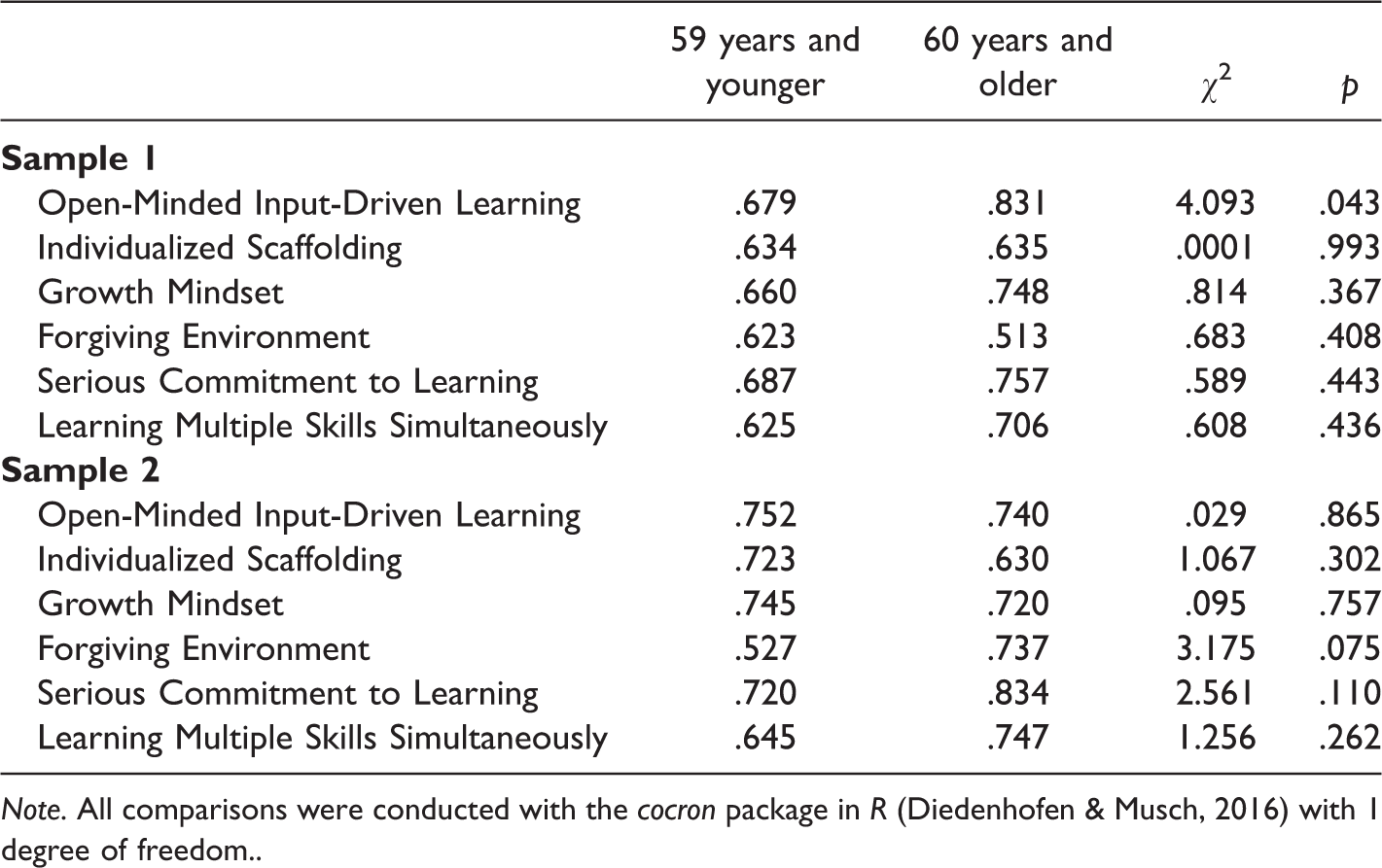
Note. All comparisons were conducted with the cocron package in R (Diedenhofen & Musch, 2016) with 1 degree of freedom..
Factor Analyses
Sample 1 results: CFA
All scale items were entered into a CFA utilizing the lavaan package in R. A six-factor simple structure solution was estimated using maximum likelihood. The variances of the latent factors thought to represent the theoretical scales were set to 1.0, so that all item factor loadings could be freely estimated. The resulting CFA model did not fit the data well, χ2(309) = 852.23, p < .001, comparative fit index (CFI) = .76, Tucker Lewis index (TLI) = .72, root mean square error of approximation (RMSEA) = .077 (90% confidence interval [CI] = [.071, .083]), standardized root mean square residual (SRMR) = .086. Most participants endorsed the items at the higher end of the scale with low variability in responses. Therefore, a second CFA model was estimated using the weighted least squares means and variances (WLSMV) estimator in lavaan (weighted least squares means and variances or diagonally weighted least squares (DWLS)), which treats the data as categorical or ordinal (Beauducel & Herzberg, 2006; Muthén, 1993). The resulting CFA with DWLS estimation resulted in better fit, χ2(309) = 592.47, p < .001, CFI = .93, TLI = .92, RMSEA = .055, (90% CI [.049, .062]), SRMR = .093. Table 7 provides the factor loadings of the scale items on their respective factors using the DWLS estimation method, whereas Table 8 (below the diagonal) provides the correlation among factors from the CFA.
CFA Factor Loadings for Samples 1 and 2.
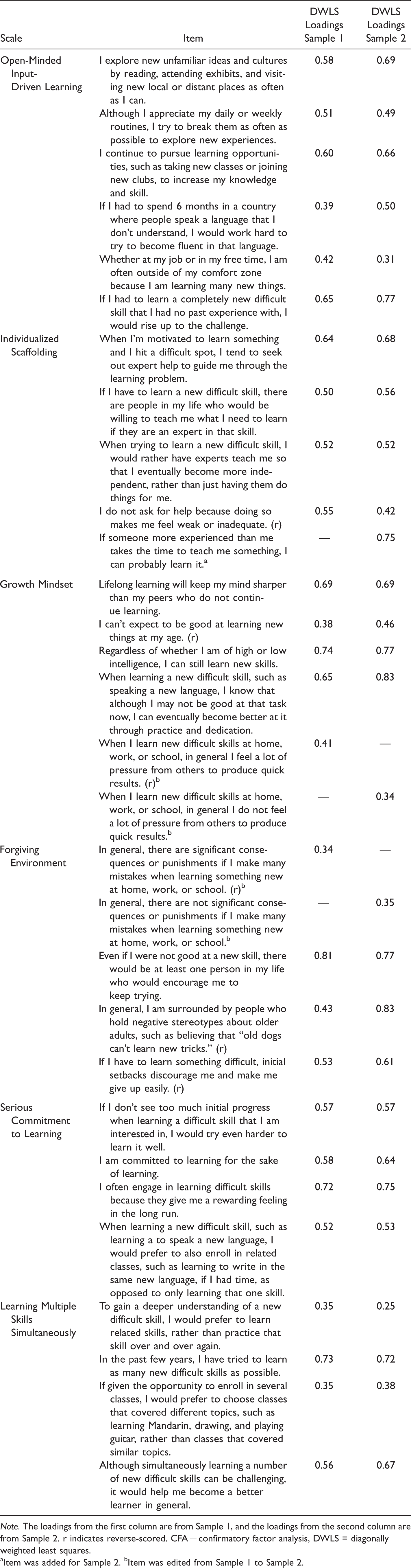
Note. The loadings from the first column are from Sample 1, and the loadings from the second column are from Sample 2. r indicates reverse-scored. CFA = confirmatory factor analysis, DWLS = diagonally weighted least squares.
aItem was added for Sample 2. bItem was edited from Sample 1 to Sample 2.
Correlations Among Scales From the CFA With DWLS Estimation.
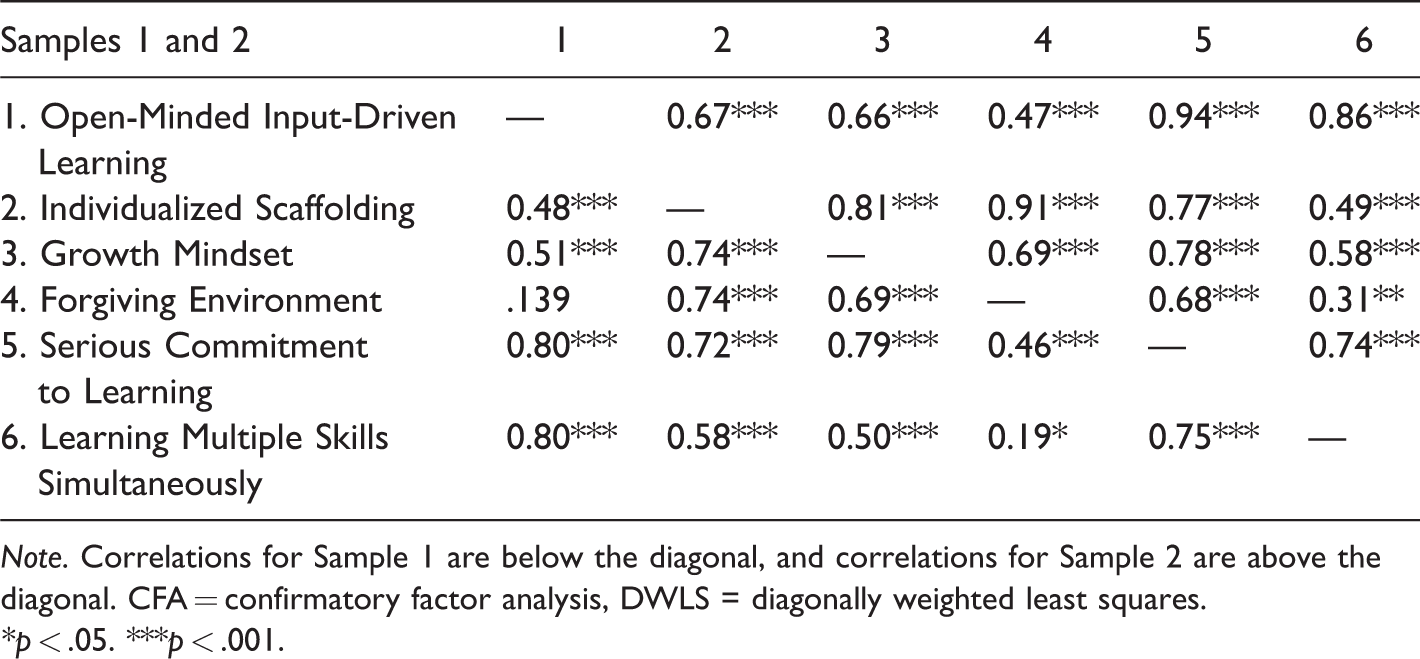
Note. Correlations for Sample 1 are below the diagonal, and correlations for Sample 2 are above the diagonal. CFA = confirmatory factor analysis, DWLS = diagonally weighted least squares.
*p < .05. ***p < .001.
Sample 2 results: CFA
As with the Sample 1 data, the Sample 2 data (with the edited and additional items) were entered into a CFA utilizing the maximum likelihood estimator to fit a six-factor simple structure model using the lavaan package in R. Similar to Sample 1, the resulting CFA model did not fit the data well, χ2(335) = 888.54, p < .001, CFI = .81, TLI = .79, RMSEA = .074 (90% CI [.068, .080]), SRMR = .086. Therefore, the alternative estimation method, WLSMV or DWLS was used with Sample 2 data. As with Sample 1, the second CFA model using the DWLS estimation procedure resulted in better fit, χ2(335) = 499.82, p < .001, CFI = .97, TLI = .97, RMSEA = .041, (90% CI [.033, .048]), SRMR = .078. Table 7 provides the factor loadings of the scale items on their respective factors using the DWLS estimation method, and Table 8 (above the diagonal) provides the correlations among the factors from the CFA.
Alternative model with two factors
Although the six scales were developed based on the theory put forth by Wu et al. (2017), the empirical relations among these scales suggested that the correlational structure of the scales should be examined. This analysis was purely exploratory and data-driven (i.e., without a theoretical rationale). Using unit-weighted composites of the items, scores for the six scales were created in each sample, and the correlations among these scales were analyzed using principal axis factor analysis with oblimin rotation. For both Samples 1 and 2, the scree plot clearly indicated a two-factor solution (the first four eigenvalues in each sample were 2.925, 1.219, .576, .467, and 3.303, 1.081, .527, and .437, respectively). In both samples, open-minded input-driven learning, serious commitment to learning, and learning multiple skills loaded on Factor 1 (learning behaviors) and individualized scaffolding, growth mindset, and forgiving environment loaded on Factor 2 (environment/attitude fostering learning). These analyses suggest that two correlated (r = .363 and .495) factors describe the structure of the scales (see Table 9 for the factor pattern matrix of item loadings for each of the samples).
Pattern Matrix Values for Samples 1 and 2 With Unit-Weighted Scale Scores.
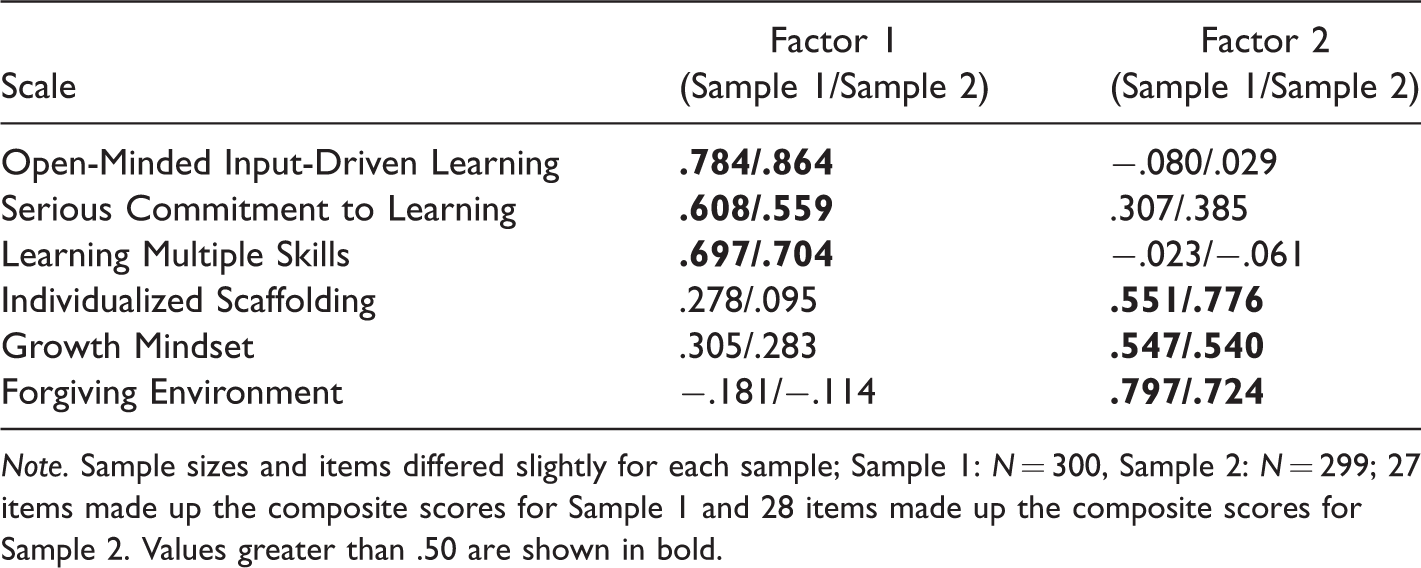
Note. Sample sizes and items differed slightly for each sample; Sample 1: N = 300, Sample 2: N = 299; 27 items made up the composite scores for Sample 1 and 28 items made up the composite scores for Sample 2. Values greater than .50 are shown in bold.
Discussion
This study developed a new measure to assess broad learning in adulthood because our new theory (Wu et al., 2017) hypothesizes that broad learning, which fosters cognitive development during infancy and childhood, also may do so in adulthood. Our theory outlines six constructs of broad learning: Open-minded input-driven learning, individualized scaffolding, growth mindset, forgiving environment, serious commitment to learning, and learning multiple skills simultaneously. Building on existing questionnaires on intellectual engagement, leisure activities, personal growth, and need for cognition, we created a new questionnaire to capture the ideas from the six constructs. After several rounds with preliminary versions of the questionnaire, a version tested with Sample 1 consisted of items for each of the six constructs that were either created new or adapted from other previously validated questionnaires. After data collection with Sample 1, our results showed that while reliability scores for each scale using the alpha coefficient were low, reliability scores ranged from moderate to high when measured by the omega coefficient, a more appropriate estimate of reliability when items lack unidimensionality. Moreover, a CFA revealed that the model fit the data moderately well. Due to these findings, the questionnaire was revised slightly to increase clarity. The final version of the questionnaire (Online Appendix), tested with Sample 2, consisted of the same items that were used in Sample 1, except that 1 item was added and 2 items were revised to be positively worded. Sample 2 yielded more favorable results with regard to scale reliability and model fit. After the second round of data collection with Sample 2, we obtained a satisfactory measure that consists of six separate reliable scales for each factor of broad learning. Finally, there were no meaningful differences in the scale psychometrics among the three different adult age-groups, especially for Sample 2, suggesting that this questionnaire may be used by adults from a wide age range.
Furthermore, in conducting a principal axis factor analysis of the six scales, our results revealed a higher order two-factor model compared with the six-factor model of the items. In the two-factor model, the first factor was related to learning behaviors, and the second factor included environmental resources and attitudes related to learning. Open-mindedness, serious commitment to learning, and learning multiple skills clustered together for the first factor, whereas individualized scaffolding, growth mindset, and forgiving environment clustered together for the latter factor. The six-factor structure provided a model of the items from the BLAQ, whereas the two-factor structure provided a model of the scales. Future research could integrate the six-factor item model based on the theory presented by Wu et al. (2017) and the scale model suggested by the data as a way to further organize the theoretical structure.
Prior to this study, there was no measure that assessed broad learning during adulthood, especially based on the definition from Wu et al. (2017). Building on a great deal of research investigating intellectual engagement, lifestyle activities, personal growth, and need for cognition, the items in our questionnaire provide a “middle ground” for existing questionnaires related to general personality traits and specific daily activities. Because investigating the conditions that promote learning new skills in adulthood requires a multifaceted approach, the present questionnaire focuses on traits, attitudes, behaviors, and situations. Future work could further investigate the structure of the constructs used to better understand the conditions that promote adult learning.
Creating this questionnaire allows us eventually to conduct research investigating whether and how broad learning may foster increased cognitive abilities. The relationship between broad learning and increased cognitive abilities still has to be empirically determined. The next step would be to validate this questionnaire to determine if it is correlated with cognitive measures, such as executive function and working memory. In terms of convergent and discriminant validity, future studies could administer our questionnaire alongside questionnaires related to openness and personal growth to investigate convergent validity, and mood, stress, and anxiety, and perceived physical health for discriminant validity. Interventions could use the questionnaire alongside pre- and posttest measures of changes in cognitive abilities. Demonstrating that broad learning leads to increased cognitive abilities would provide evidence that broad learning is critical for cognitive development during adulthood, not just during infancy and childhood.
One important limitation of this study is that both data sets were collected using Amazon’s Mechanical Turk (mTurk). Participants on mTurk typically over represent traits that are found in computer users (e.g., Paolacci & Chandler, 2014), especially in relation to older adults who may not use computers as regularly on average. In addition, as with many online studies, we could not verify the responses they entered, such as age or demographics. However, using mTurk has many advantages, especially with respect to including a more diverse sample compared with in-person samples (Casler, Bickel, & Hackett, 2013). In a pilot study with 42 participants who visited our lab to complete the questionnaire, the sample consisted of 74% non-Hispanic Whites compared with 75% and 78% non-Hispanic Whites in the mTurk Samples 1 and 2, respectively. Although the in-person sample was similarly diverse compared with the mTurk sample, the in-person sample responses did not consistently display high variability across all six scales of the BLAQ. Rather, variability in responses ranged from moderate to high (SD=.53–.90). On the contrary, mTurk responses consistently displayed higher levels of variability for all six scales in both Sample 1 (SD=.73–.84) and Sample 2 (SD=.76–.86). Future studies could confirm the validity of collecting such data related to broad learning on mTurk with a larger in-person sample, especially since older adults on mTurk (vs. those not on mTurk) may be more technologically skilled, suggesting that they may be more prone to learning new skills on average. However, the same argument could potentially be made for people who are willing and able to participate in research studies. Moving beyond assessing scale psychometrics in this study, the next step in this line of research is to validate the questionnaire and constructs by gathering BLAQ responses from diverse aging groups and correlating the responses on the questionnaire with a variety of measures, including cognitive abilities, personality, and health.
This study developed the Broad Learning Adult Questionnaire (BLAQ) to begin research on the effects of broad learning during adulthood. Wu et al. (2017) argue that broad learning may be the key to fostering cognitive development throughout the lifespan. Future research could determine whether this new measure may be a strong predictor of long-term cognitive development in adults, especially older adults. A better understanding of maximal cognitive development in older adults may lead to research that will promote functional independence and productive longevity in later life. Furthermore, a deeper understanding of cognitive development during adulthood would inform theories on neuroplasticity and critical periods for learning. Such research also could help combat ageist stereotypes by encouraging supportive and enriching environments for cognitive development in aging adults.
Supplemental Material
Supplemental material for Development of the Broad Learning Adult Questionnaire
Supplemental material for Development of the Broad Learning Adult Questionnaire by Shirley Leanos, Jennifer Coons, George W. Rebok, Daniel J. Ozer and Rachel Wu in The International Journal of Aging and Human Development
Footnotes
Acknowledgments
The authors thank Feng Vankee Lin and Alden Gross for useful discussions on this study.
Declaration of Conflicting Interests
The authors declared no potential conflicts of interest with respect to the research, authorship, and/or publication of this article.
Funding
The authors received no financial support for the research, authorship, and/or publication of this article.
Author Biographies
References
Supplementary Material
Please find the following supplemental material available below.
For Open Access articles published under a Creative Commons License, all supplemental material carries the same license as the article it is associated with.
For non-Open Access articles published, all supplemental material carries a non-exclusive license, and permission requests for re-use of supplemental material or any part of supplemental material shall be sent directly to the copyright owner as specified in the copyright notice associated with the article.
