



Abstract
Literature indicates that mental health, time spent on mission, and reverse culture shock are all factors in Christian missionaries successful repatriation. The present study explored the effect of time since return, social support, and reverse culture shock on levels of depression, anxiety, and stress in long-term adult Christian missionaries during the repatriation process. I all, 31 Christian missionaries completed self-report measures of social support, reverse culture shock, depression, anxiety, and stress. Results showed that the longer an individual had been back in their passport country significantly correlated with lower levels of depression. In addition, higher levels of reverse culture shock correlated with higher levels of depression and stress. Although social support did not moderate the relationship between reentry shock and well-being, in open-ended questions, respondents indicated how valuable social support was to them in the repatriation process. Implications for sending agencies and clinicians working with repatriating adult Christian missionaries are discussed.
Over the past few decades, there has been increasingly more research done on the psychological well-being and care of missionaries and other cross-cultural workers (Davis et al., 2013; Keckler et al., 2008; Strand et al., 2015). As companies and organizations continue to send individuals overseas to work, serve, and return, there has become an increasing need for their specialized care. Much of the research has examined the type of obstacles these individuals face during the move and adjustment to another country as well as during the duration of their stay. A smaller body of research has focused on the type of obstacles faced when these individuals repatriate. As reviewed subsequently, these repatriation studies have found that mental health, time spent on mission, social support, and reverse culture shock play a large role in the successful repatriation of these international workers. Of note, previous research has largely focused on the factors of social support and reverse culture shock, minimally focusing on mental health and time spent on mission.
Contributing Factors
Mental health
Research regarding the repatriation process often indicates that individuals experience higher levels of psychological distress and lower overall well-being. Cockburn (2002) found that when individuals transition between cultures, as is in the repatriation process, they experience increased depression, anxiety, and stress. Similarly, Şahin (1990) found that students repatriating into their passport country reported higher levels of depression and anxiety than their resident peers. Davis et al. (2013) and Klemens and Bikos (2009) found that missionary kids had elevated levels of depression, anxiety, and stress as well as decreased psychological well-being during the repatriation process. This research indicates that individuals are likely to have increased psychological distress and lower psychological well-being during repatriation.
Time spent on assignment
Christian missionaries can go on service trips as short as a few days to assignments that last decades. According to Strand et al. (2015), the longer a healthcare professional worked outside their country of origin, the less role satisfaction they felt, which often led to increased anxiety and depression. Moore et al. (1987) found that North American Church of Christ missionaries experienced higher levels of reverse culture shock the longer they were on assignment.
However, not all research on the topic has found that time was a significant factor in well-being during repatriation. According to Martin (2017), it was inconclusive whether time spent on mission significantly impacted psychological distress during the repatriation process. Knell’s (2006) research regarding missionary repatriation found that the more time a missionary had to prepare for the repatriation process, the higher the chance of successful repatriation to their passport country. Although inconclusive, evidence may suggest that the longer a missionary serves internationally, the greater likelihood that they will experience distress during the repatriation process.
Support during repatriation
Support from family and friends
Social support is another crucial component to the well-being and successful repatriation of Christian missionaries (Bjorck & Kim, 2009; Davis et al., 2013; Huff, 2001; Kimber, 2012; Moore et al., 1987; Selby et al., 2009, 2011; Walling et al., 2006). For example, Selby and colleagues’ (2009, 2011) studies indicate that missionaries experienced greater distress during reentry when they did not feel understood by friends and family. Social support was also found to be an important factor for missionary kids adjusting back to their home country due to their often higher levels of depression, anxiety, and stress (Davis et al., 2013). Interestingly, Huff (2001) found that missionary kids of families with balanced cohesion and adaptability, in combination with high familial satisfaction, had less distress during reentry. Likewise, Wrobble and Plueddemann (1990) found that familial support was the main factor for success during repatriation. In addition, researchers found that missionaries often returned home to the reality that their family members and friends had continued with their lives without them (Moore et al., 1987; Selby et al., 2009). This may be further compounded by the fact that missionaries reported experiencing a loss of the community they had created overseas and a sense of grief over the fact that they would likely never return to that community again (Selby et al., 2009).
Other specific aspects and types of social support from friends and family have also been shown to be beneficial during the repatriation process. The results of one qualitative study that researched what missionary care members reported to be most helpful for missionaries during repatriation indicated that relational health with friends and family had a positive impact on the repatriation process (Keckler et al., 2008). Martin (2017) and Van Gorp et al. (2017) found that individuals who maintained friendships with people from their passport country throughout time in their host country had increased success during their repatriation experiences. The results of one study on third culture kids returning to their passport country indicated that social support received from other third culture kids during the repatriation process was crucial for a sense of support and belonging (Walters & Auton-Cuff, 2009 ). Overall, the results of the preceding studies indicate an immense need for social support during the missionary repatriation process.
Religious support
In addition to friends and family, previous research showed that religious support from the church community, church leaders, and God are another integral part of the repatriation process for missionaries (Bjorck & Kim, 2009; Kimber, 2012; Selby et al., 2009, 2011) Similar to the identity gap experienced by lack of social support, there was also an identity gap experienced by reentering missionaries due to low perceived support from their church (Selby et al., 2011). Missionaries reported feeling as though their church either did not see them as special or different enough and did not properly acknowledge them for their work or that the church overemphasized their work and they were then unable to return to church as part of the congregation. Both of these extremes caused distress for repatriating missionaries because they felt a sense of being misunderstood by their church.
Correspondingly, Selby et al. (2009) found that adult interdenominational Christian missionaries experienced a loss of actual church community, such as moving churches upon return. Similar to the findings on social support, the results of this study found that missionaries returned to find that their church had continued without them and were often experiencing other important or significant things at the time of their return, leaving the missionary feeling as though the church did not have time to care for him or her. This suggests a need for churches to commemorate the return of their missionaries to make them feel seen and appreciated as well as to celebrate the beginning of their new stage of life back in their home country (Kimber, 2012). Stringham (1993) also found that increased support from church members resulted in a decrease in psychological distress during repatriation. Equally, this suggests a need for missionaries to receive spiritual direction, pastoral counseling, and pastoral nurture during the repatriation process. Interestingly, individuals in the field of missionary member care reported social involvement with other Christians as highly positively influential in their repatriation process (Keckler et al., 2008). The results of the previous studies highlight the importance of religious support during the missionary repatriation process.
Reverse culture shock
Reverse culture shock is defined as culture shock experienced during the readjustment to one’s home country after living in another country for a significant amount of time, as opposed to culture shock, which is defined as the emotional experience of the loss of one’s home culture (Gaw, 2000). A key difference between culture shock and reverse culture shock is expectations. Individuals are often expected to have difficulty adjusting to another country but expect to return home and for everything to have remained the same. This disconnect between expectation and reality is what Gaw (2000) found to be the main cause of reverse culture shock. For example, missionary kids who had realistic expectations of reentry experienced lower levels of a reverse culture shock when compared to those who expected home to be the same as when they had left (Huff, 2001). In addition, missionary kids who identified as American experienced significantly less reverse culture shock than those who identified as a national of their host country, indicating that connection to their home country positively affected the repatriation process. Similarly, Dykhouse and Bikos (2019) found that the more an individual adjusts to the culture of their host country, the higher levels of reverse culture shock experienced and the time of adjustment back to passport country increased.
The effects of reverse culture shock can also be found in the literature regarding the missionary repatriation process. Knell (2006) found that missionaries experienced loss, grief, bereavement, depression, loneliness, and anger upon repatriation to their passport country. The results of one study found that levels of reverse culture shock were increased when the individual was also experiencing another major life change during reentry (Stringham, 1993). This is especially pertinent for the missionary community, as repatriation often means another major life change as well, whether it is a change in career, change in relationships, or an emergency life-changing experience. It could be surmised that missionary repatriation is always experienced with one or more major life change. Previous research indicates that high levels of reverse culture shock can negatively affect the missionary repatriation process.
The previously discussed literature found that mental health (Davis et al., 2013; Strand et al., 2015), time spent on the mission (Black & Gregersen, 1991; Martin, 2017; Şahin, 1990), social support (Bjorck & Kim, 2009; Selby et al., 2009, 2011), and reverse culture shock (Clark et al., 2018; Dykhouse & Bikos, 2019; Gaw, 2000) were all factors in the successful repatriation of long-term adult Christian missionaries. Existing literature has explored each of these factors’ effects on the repatriation process individually but is yet to explore the interactions between these factors. The purpose of the present study was to quantitatively explore how the amount of time spent on the assignment, social support, and reverse culture shock affect general well-being (levels of depression, anxiety, and stress) experienced by long-term adult Christian missionaries, in the repatriation process. It was predicted that: The more time missionaries spent on assignment would negatively affect well-being during the repatriation process (H1). Social support would positively affect well-being during the repatriation process (H2). Reverse culture shock would negatively affect well-being during the repatriation process (H3). Finally, social support would moderate reverse culture shock’s effect on well-being during the repatriation process (H4).
Method
Participants
Participants for this study were 31 long-term adult missionaries who had permanently returned to their passport country and were recruited through snowball sampling. The response rate is unknown, given the method of recruitment precludes such calculations from being made. Participants were between the ages of 28 and 72 (M = 52.1, SD = 12.0), majority Caucasian/White (96.8%), female (74.2%), were sent on a mission through a traditional mission organization (93.5%), and had returned to North America (their passport country) within the past 2 years (54.8%). The countries in which participants served varied, but all participants’ passport country was North America. Participants spent an average of 12.5 years (SD = 8.4) on assignment. As an incentive for participating, participants were offered an entry to win one of four $25 Amazon gift cards. Winners of the gift cards were randomly selected and notified via email. This study received approval from the Protection of Human Rights in Research Committee at Biola University.
Materials
This study used Survey Monkey to gather data. The survey included 12 demographic questions, 4 semi-randomized questionnaires, and 5 open-ended questions. Demographic information included age, gender, ethnicity, time in host country, type of sending agency, time since return to passport country, religious participation, number of trips back to passport country, and social media use questions. The open-ended questions asked about what helped during the repatriation process, what was missing during that time, if a reentry program was attended, what helped during that program, what was missing from the program, and what participants wish they would have known before returning to North America. The survey also included the Depression Anxiety Stress Scale 21 (DASS-21; Lovibond & Lovibond, 1996), Multidimensional Survey of Perceived Social Support (MSPSS Zimet et al., 1988), Emotional Support From Church and Clergy Measure (Krause, 2010a), and Reentry Shock Scale (RSS; Seiter & Waddell, 1989).
The DASS-21 (Lovibond & Lovibond, 1996) measures the frequency and severity of an individual’s stress, depression, and anxiety within a predetermined period of time. There are three subscales: Depression, Anxiety, and Stress, with 7 −items each. The DASS-21 utilizes a 4-point Likert-type scale ranging from 0 (did not apply to me at all) to 3 (applied to me very much). Responses of individual items are summed, and scores can be calculated for each subscale as well as a total score with higher scores indicating higher levels of stress, depression, and anxiety. The reliability of the DASS-21 yields a Cronbach’s α of .96, .89, and .93 for Depression, Anxiety, and Stress, respectively, indicating good reliability (Brown et al., 1997).
The MSPSS (Zimet et al., 1988) measures perceived social support broken down into three subscales: Significant Other, Family, and Friends, with 4-items each. The MSPSS utilizes a 7-point Likert-type scale with 1 being very strongly disagree and 7 being very strongly agree. Three subscale scores and a total score are calculated by summing items on the MSPSS with higher scores indicating higher levels of perceived social support. The internal reliability of the MSPSS yields coefficient alphas ranging from 0.85 to 0.91 and test–retest reliability ranging from 0.72 to 0.85, indicating good reliability (Zimet et al., 1988).
The Emotional Support From Church and Clergy Measure (Krause, 2010b) measures perceived support from the church, church community, and church leadership/staff. This scale includes sample items like, “How often does someone in your congregation talk with you about your private problems and concerns?” and “When talking with your minister, pastor, or priest on an individual basis, how often does he or she express interest and concern in your well-being?.” Time-based questions utilize a 7- or 8-point Likert-type scale spanning from never (1) to several times a week (7) or day (8). Frequency-based questions utilize a 4-point Likert-type scale ranging from never (1) to very often (4). All items of the Emotional Support From Church and Clergy Measure are summed with higher scores showing higher levels of perceived church support. The validity of the Emotional Support From Church and Clergy Measure was measured and analyzed in the current sample and found that the internal reliability yields an α coefficient of .77 for Clergy and .85 for Church (church and church community), indicating good reliability.
The RSS (Seiter & Waddell, 1989) measures the amount of reentry, or reverse culture, shock experienced by an individual when returning to their passport country. The RSS utilizes a 7-point Likert-type scale ranging from strongly disagree (1) to strongly agree (7). All items of the RSS are summed such that higher scores on the RSS are indicative of higher levels of reentry, or reverse culture, shock. The internal reliability of the RSS yields an α coefficient of .83, indicating good reliability (Gaw, 2000). The internal reliability of the Reentry Shock Scale was also measured and analyzed in the current sample and resulted in a Cronbach’s α of .90, also indicating good reliability.
Procedures
Participants were recruited through personal and professional connections as well as snowball sampling. Once recruited, participants were sent the survey via Survey Monkey, electronically signed an informed consent form, and completed the survey. The survey began with the demographic questionnaire, followed in random order DASS-21 (Lovibond & Lovibond, 1996), MSPSS (Zimet et al., 1988), Emotional Support From Church and Clergy Measure (Krause, 2010a), and RSS (Seiter & Waddell, 1989), ended with the 5 open-ended questions. The entire survey took most participants approximately 30 minutes to complete. The survey was closed after 9 months, and the data were analyzed.
Data Analysis
This study used Statistical Package for the Social Sciences—Version 25 (SPSS—Version 25) to run bivariate correlations and hierarchical regression analyses on the predictor and outcome variables (see Table 1 for r values and significance). The control variables were the demographics of age, gender, and time since repatriation. The predictor variables were time spent on the mission field, social support, and levels of reverse culture shock. The outcome variable was successful repatriation, defined as the general well-being (low levels of depression, anxiety, and stress) of the individual during the process of re-acculturating to their passport country. Social support was considered as a moderating variable between reverse culture shock and successful repatriation. First, all variables were standardized to avoid multicollinearity and for interpretation purposes. Next, the following blocks were fitted into a hierarchical regression model: B 1—control variables: age, gender, and time since repatriation, Block 2—time in host country, reverse culture shock, and social support, Block 3—interaction variable: reverse culture shock × social support. Moderation is indicated by a significant change in R2 and a significant regression coefficient for the interaction variable at Block 3.
Bivariate Correlations Between Well-Being, Social Support, and Reentry Shock.
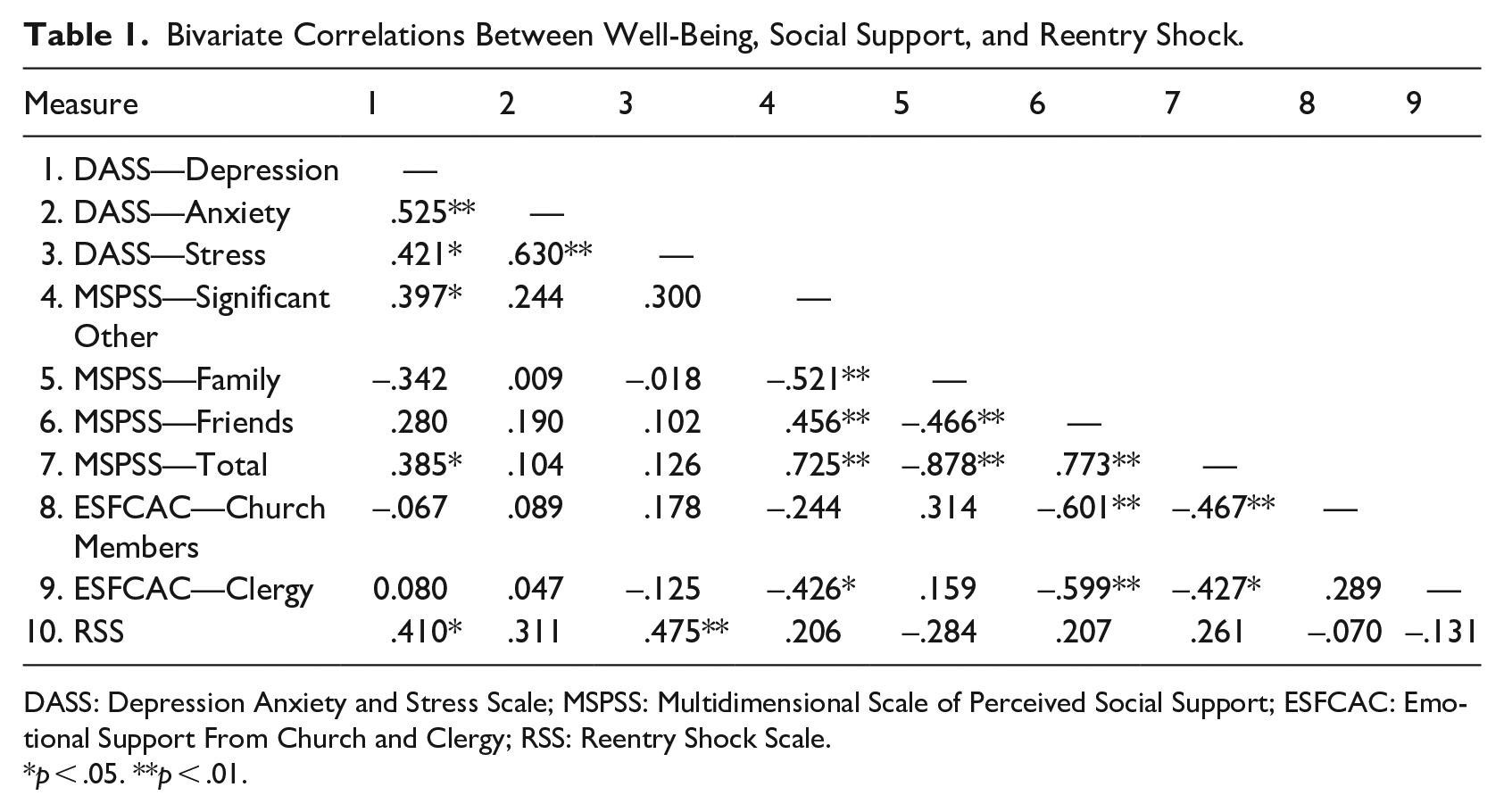
DASS: Depression Anxiety and Stress Scale; MSPSS: Multidimensional Scale of Perceived Social Support; ESFCAC: Emotional Support From Church and Clergy; RSS: Reentry Shock Scale.
p < .05. **p < .01.
All data were assessed for normality. Four subscale variables and one demographic variable showed positive skewness and kurtosis: MSPSS Significant Other, MSPSS Friends, MSPSS Total, DASS Anxiety, Emotional Support from Clergy, and age. Thus, a reflect and then log transformation was used on the MSPSS Significant Other, MSPSS Friends, and MSPSS Total subscale variables. Given this transformation, high scores on these subscales now represent participant endorsement of low levels of social support. A square root transformation was used on the DASS Anxiety subscale variable and the age demographic variable. A square root, log 10, and reflect and then log transformation were run on the Emotional Support from Clergy subscale variable; however, the data were ultimately dichotomized due to the aforementioned transformations being unsuccessful.
All responses to the open-ended questions were reviewed for themes and coded by two researchers (S.Z-B. and N.C.). Following this process, the two researchers met, compared coding of responses, and came to an agreement on the codes used in this study. Prior to deciding on mutual codes, the coders were at 76.7% agreement. After meeting, the coders were able to come to 100% agreement on the codes used in this study. Codes were imputed into SPSS and frequency statistics were run for each of the open-ended questions to explore the most and least frequent responses.
Results
The results showed that the amount of time a missionary had been back in their passport country since repatriation statistically predicted the depression component of well-being. Age was positively correlated with and a significant predictor of depression while gender was not. Time in host country, reentry shock, and emotional support from significant other, friends, family, and church members accounted for unique variance in missionaries’ depression; however, only the reentry shock scale was a significant predictor of depression. Contrary to what was hypothesized, emotional support from one’s significant other, friends, family, and church members did not moderate the relationship between reentry shock and depression (see, Tables 2 to 4 for all hierarchal regression analyses).
Hierarchical Multiple Regression Analysis for Moderating Effect of Support of Church Member between Reentry Shock and Well-Being.
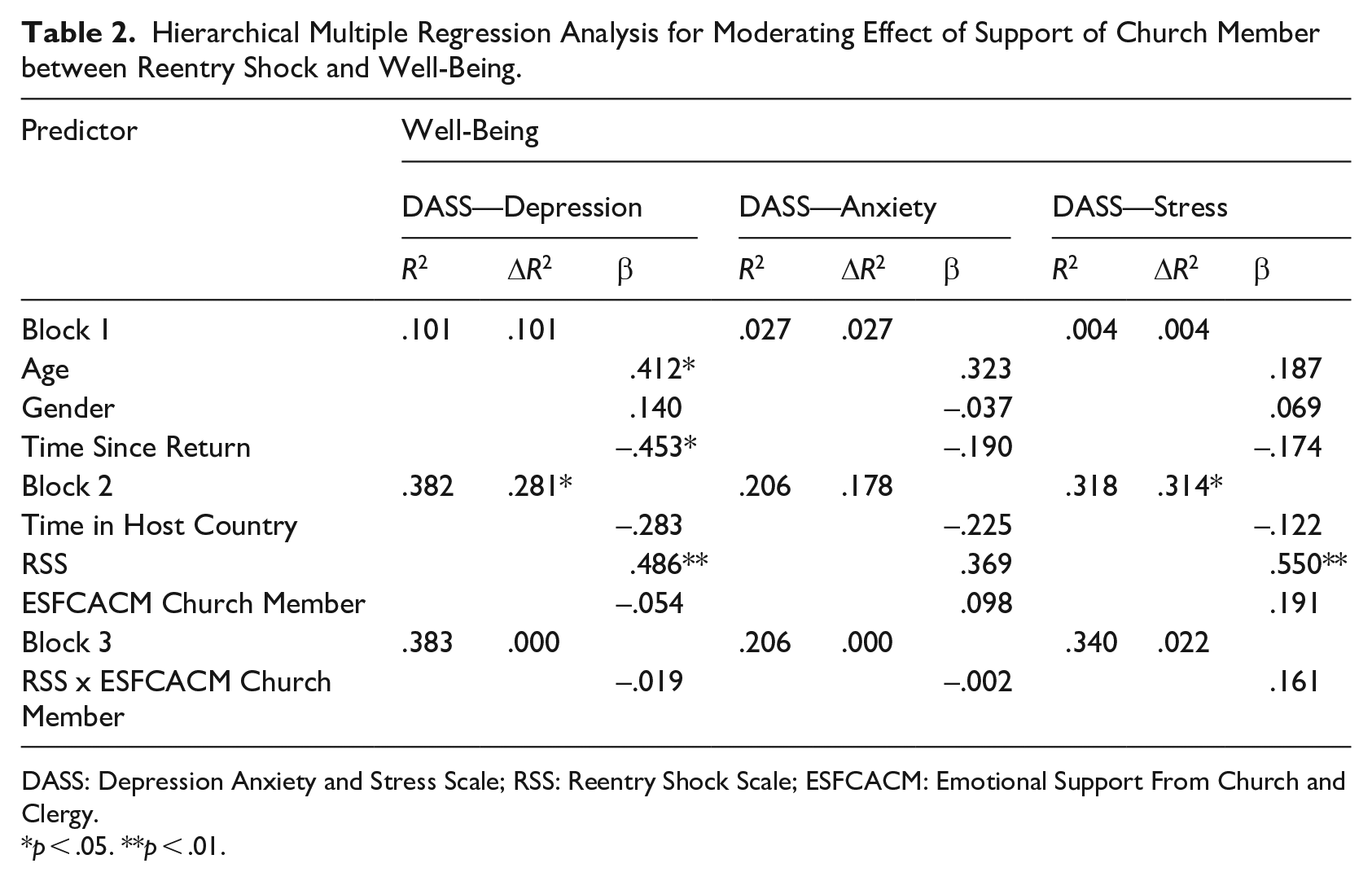
DASS: Depression Anxiety and Stress Scale; RSS: Reentry Shock Scale; ESFCACM: Emotional Support From Church and Clergy.
p < .05. **p < .01.
Hierarchical Multiple Regression Analysis for Moderating Effect of Support Significant Other, Friends, and Family between Reentry Shock and Well-Being.
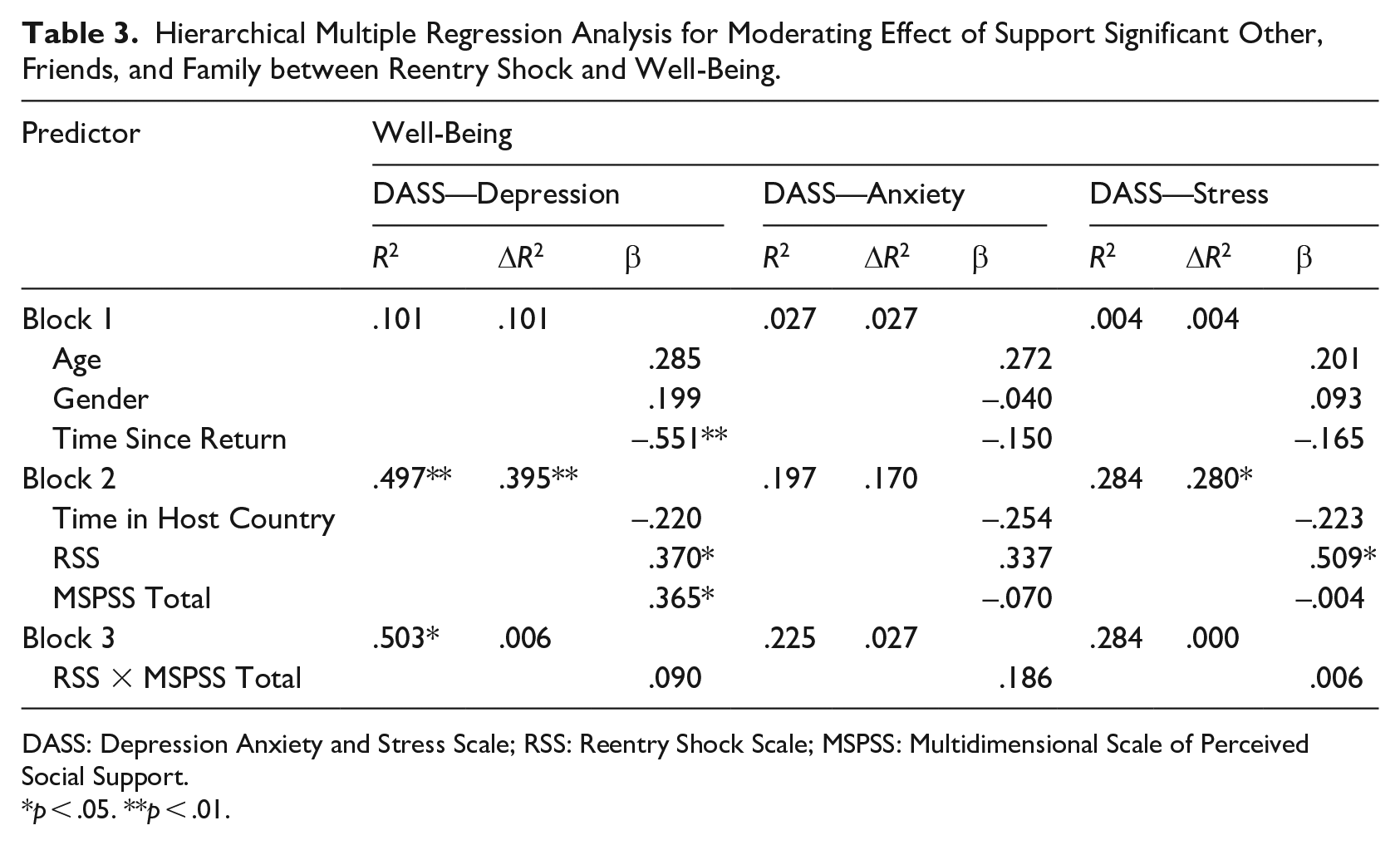
DASS: Depression Anxiety and Stress Scale; RSS: Reentry Shock Scale; MSPSS: Multidimensional Scale of Perceived Social Support.
p < .05. **p < .01.
Hierarchical Multiple Regression Analysis for Moderating Effect of Support of Clergy Between Reentry Shock and Well-Being.
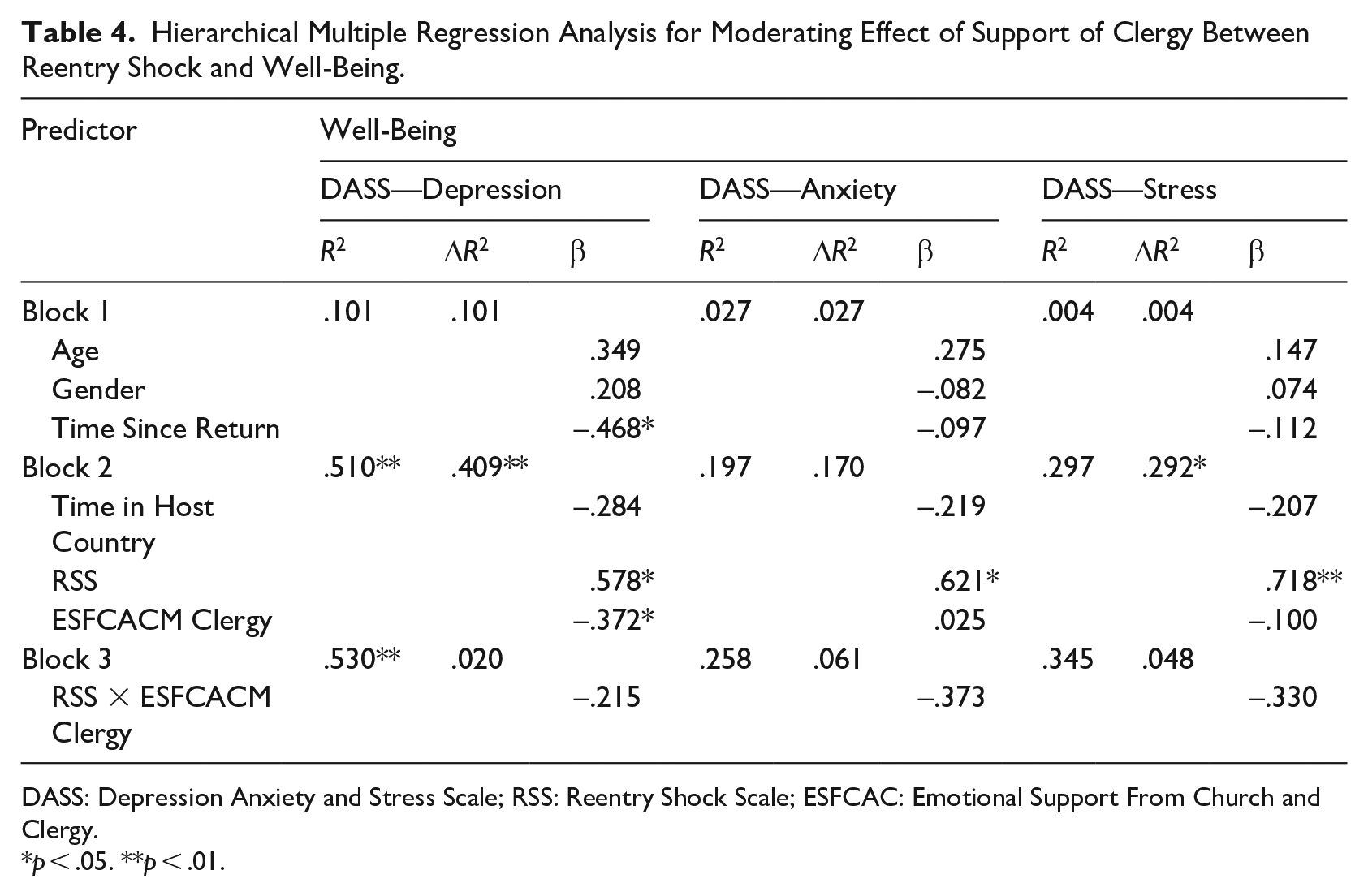
DASS: Depression Anxiety and Stress Scale; RSS: Reentry Shock Scale; ESFCAC: Emotional Support From Church and Clergy.
p < .05. **p < .01.
When age, gender, and time since return were accounted for, time in host country, reentry shock, and all types of social support explained unique variance in missionaries’ stress. However, only the reentry shock scale was a significant predictor. Contrary to what was hypothesized, but similar to the findings for the depression subscale, all types of social support did not moderate the relationship between reentry shock and stress.
After accounting for age, gender, and time since return, time in host country, reentry shock, nor any type of social support explained unique variance in missionaries’ anxiety. However, reentry shock was a significant predictor of variance in missionaries’ anxiety for emotional support from the clergy. Contrary to what was hypothesized, all types of social support did not moderate the relationship between reentry shock and anxiety.
Open-ended questions
Thirteen themes emerged from the coding of responses to “What was most helpful during the repatriation process?” and “What was missing for you during the repatriation process?” (see Table 5). The largest percentage of respondents found that social support from missionaries and friends were the two most helpful tools during the repatriation process. The highest number of participants indicated that social support from friends and purpose/direction were what was missing for them during the repatriation process.
Frequency Analysis for Qualitative Responses to: What Was Most Helpful During the Repatriation Process? What Was Missing for You During the Repatriation Process?
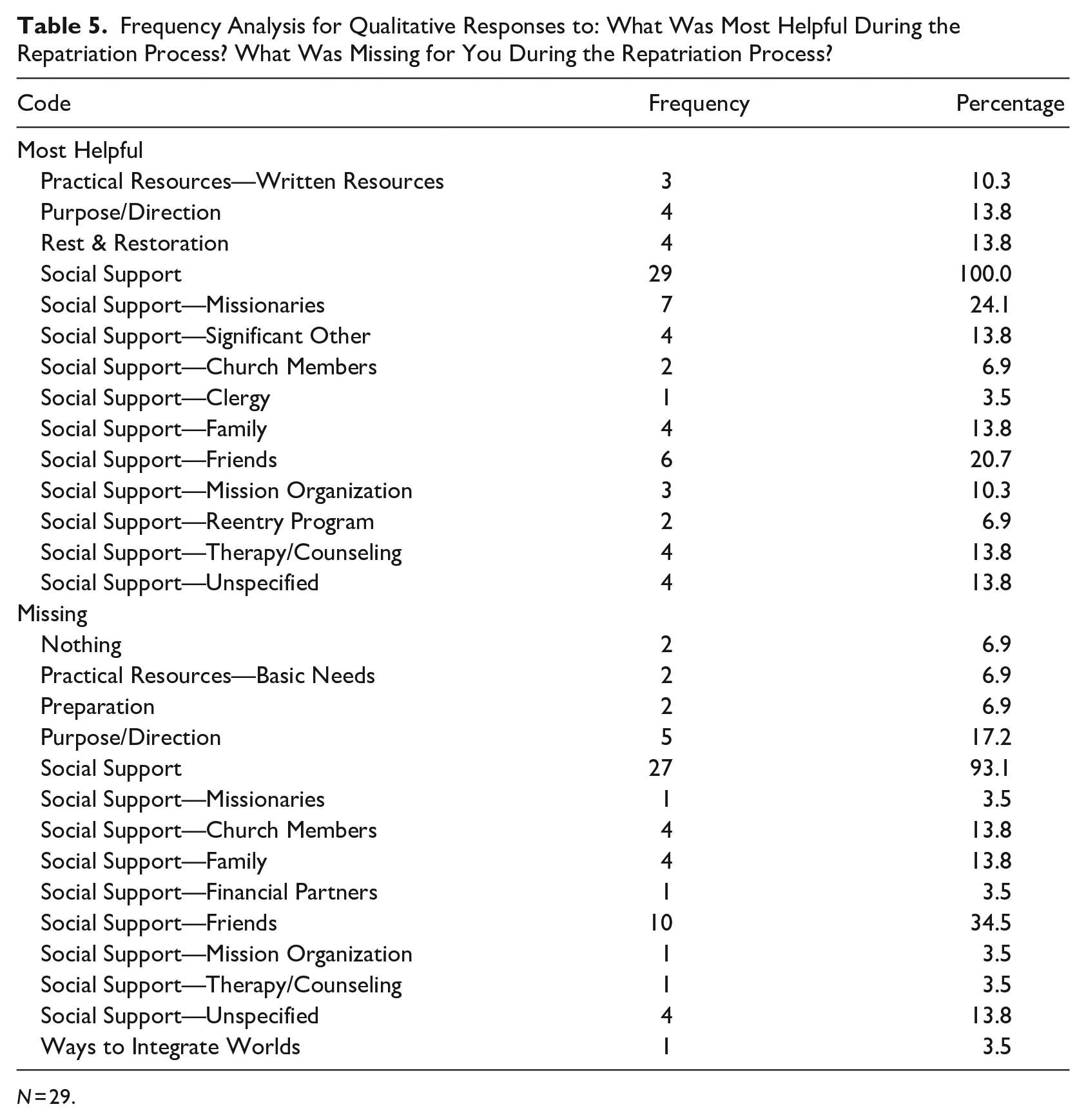
N = 29.
Nine participants responded yes to Questions 3 and 4: “Did you attend a reentry program upon return?” and “What was most helpful about the program? What was missing from the program?” Four themes emerged for the first part of the question, what was most helpful: Social support from missionaries (66.7%), social support from therapy/counseling (22.2%), social support from mission organization (11.1%), and practical resources regarding retirement (11.1%). Two themes emerged for the second part of the question, what was missing: Social support from therapy/counseling (11.1%) and over-emphasis on partner development (22.2%).
Sixteen themes emerged from the coding of responses to “Before returning to North America, what you wish you would have known?” (see Table 6). The largest percentage of respondents reported that they wish they would have known about the changes they would face, namely psychologically and unspecified changes. In addition, respondents indicated that they wish they would have been aware of their need for unspecified social support prior to returning to North America.
Frequency Analysis for Qualitative Responses to: Before returning to North America, What Do You Wish You Would Have Known?

N = 23.
Discussion
The purpose of the present study was to explore how the general well-being (low levels of depression, anxiety, and stress) of long-term adult Christian missionaries was affected by the amount of time spent on the assignment, social support, and reverse culture shock during the repatriation process. The results of this study do not support the first hypothesis in that individuals who spent more time on assignment did not report lower levels of general well-being during the repatriation process when compared to those who spend less time on assignment. This finding is inconsistent with Şahin’s (1990) findings, that individuals who spent more time abroad reported higher levels of anxiety and depression than their resident peers. One plausible explanation for the differing results is that the majority of Sabin’s participants had returned to their passport country within the same year as the research study; whereas, almost half of the participants in the current study had returned to their passport country more than 2 years prior to participation. It is possible that longer time since return could decrease the impact of time on assignment on general well-being. It is important to note, that this lack of a significant relationship between time since return and well-being found in the current study is similar to the inconclusive findings reported by Martin (2017).
The second hypothesis that high social support would be related to higher levels of well-being was partially supported. None of the social support measures significantly predicted stress and anxiety; however, higher levels of social support from clergy, one’s significant other, and total social support were associated with lower levels of depression. This finding mirrors previous literature in which social support from family and friends, as well as religious support, has consistently been linked to higher levels of well-being during repatriation (Bjorck & Kim, 2009; Davis et al., 2010; Stringham, 1993). It is possible that depression was significantly predicted by social support from one’s significant other due to the likelihood that individuals who were married went on assignment together, creating built-in social support who had been through the same or similar process of repatriation. In addition, social support from clergy may have been a significant predictor due to missionaries’ respect for and reliance on their clergy members for strength and guidance during the repatriation process. In addition, members of the clergy may have previously been on assignment themselves, providing another layer of social support and understanding during repatriation.
It is important to note that although the responses to the open questions of the current study only partially supported this hypothesis, they highlight the importance of social support during the repatriation process. Social support made up a majority of responses when participants were asked what was most helpful and what was missing during the repatriation process and reentry programs. Responses to these open-ended questions indicated that all aspects of social support were impactful during the repatriation process, including: spouses, children, family, friends, pastors, church community, other missionaries, reentry programs, and counselors. One participant said the following in reference to a reentry program they attended, “They let me cry. They told me God sees me and my grief and it's normal. They didn’t try to convince me that ‘God has a plan’ or that ‘I should be happy’ or that if I was grieving my host country, it meant I wasn't ‘anchored enough in my identity in Christ’.” By hearing other women’s testimonies, I was able to finally start processing my transition.” These responses support previous quantitative research on the importance of social support during the repatriation process (Huff, 2001; Keckler et al., 2008; Wrobble & Plueddemann, 1990) and mirror the findings of previous qualitative research (Bjorck & Kim, 2009; Davis et al., 2010; Stringham, 1993), indicating that social support is an important factor in the successful repatriation of adult Christian missionaries.
Partial support was also found for the third hypothesis which predicted that reverse culture shock would be associated with lower levels of well-being. While high levels of depression and stress were associated with high levels of reverse culture shock for all types of support; reverse culture shock only predicted anxiety for the analyses involving social support from the clergy. Overall, these findings support those of previous research, which have demonstrated a connection between levels of reverse culture shock and general well-being (Clark et al., 2018; Gaw, 2000). One possible explanation for why reverse culture shock was not a consistent significant predictor of anxiety may be due to the fact that the DASS Anxiety subscale (Lovibond & Lovibond, 1996) measures physiological symptoms of anxiety (i.e., dry mouth, difficulty breathing, trembling, and increased heart rate), whereas the DASS Depression and DASS Stress subscales measure the psychological symptoms of depression and anxiety.
The fourth and final hypothesis was that social support would moderate reverse culture shock’s effect on well-being was not supported. Surprisingly, the current study found that no aspect of social support moderated the relationship between reverse culture shock and general well-being. More specifically, although the current findings supported previous research findings that indicate lower levels of well-being correlate with lower levels of social support (Kimber, 2012) and that higher levels of social support correlate with higher levels of well-being during repatriation (Bjorck & Kim, 2009; Davis et al., 2010; Stringham, 1993), the results of the current study did not find that social support moderates the strength of the relationship between reentry shock and general well-being. It is possible that the various aspects of reverse culture shock so heavily influence well-being that social support was not a strong enough variable to moderate the relationship. Of note, this study is the first to consider social support as a moderator between reverse culture shock and general well-being, so future research could benefit from continued exploration of this moderating factor.
Limitations
The results of this study should be interpreted with some limitations in mind. The present study had a small sample size thus many of the non-significant findings may simply be due to a lack of statistical power. In addition, the majority of individuals self-identifying as Caucasian/White, female, and all participants in this study identified North America as their passport country. Thus, findings may not generalize to adult Christian Missionaries that differ along with these characteristics. In addition, the current study did not ask about marital status as part of the demographic questions. It would be important to gather this information as it is likely that individuals who were married and went on assignment together would report different experiences during repatriation than those who were single and went on assignment on their own. Another important limitation is the utilization of surveys for the current study’s methodology. Any time there is self-report research, there is a risk that participants may, intentionally or unintentionally, over or underreport. Similarly, due to the Hawthorn effect, participants may have altered their responses due to the knowledge that they were participating in a research study. In addition, due to the sequence of questions throughout the survey (i.e., self-report measures administered prior to open-ended questions), there may have been a threat of test sensitization. That is, participants of this study may have been primed to respond to the open-ended questions with social support in mind due to the questions asked in the previous self-report measures.
Future research
This study examined how impactful the amount of time spent on the assignment, social support, and reverse culture shock is on the general well-being (low levels of depression, anxiety, and stress) of long-term adult Christian missionaries during the repatriation process. Future research could benefit from adaptations of the current study. Generally, continued research would benefit from a larger sample size as well as a more diverse group of participants.
The current study was comprised of individuals who had returned to their passport country anywhere from less than 6 months to more than 2 years ago. In addition, the RSS (Seiter & Waddell, 1989) asked participants to recall their experience of a reverse culture shock when they first returned to their passport country, whereas the DASS - 21 (Lovibond & Lovibond, 1996), MSPSS (Zimet et al., 1988) and Emotional Support From Church and Clergy Measure (Krause, 2010a) all asked questions regarding they currently feel. It is possible that those who were asked to recall their experience of reverse culture shock from a number of years prior responded differently than those who were reporting on their current experience, due to the difference between current and recalled experiences. Given this, future studies could limit participants to those who have been back in their passport country for 2 or less years, which may offer more accurate reporting of experiences during repatriation. The current study inadvertently omitted to ask about participants’ marital status. Given previous research, as well as results of the current study, that indicate how social support from a significant other impacts general well-being during repatriation, it would be important for future research to include marital status in their demographic information.
Finally, future research would benefit from the utilization of a longitudinal study throughout the first 2 years of the repatriation process. By repeating the measures of reverse culture shock, social support, and general well-being upon reentry, at 6 months, 1 year, and 2 years into the repatriation process, researchers would gain a greater understanding of the complex nature of repatriation. It is possible that researchers would also gain insight into possible phases of repatriation, including the needs of long-term adult Christian missionaries throughout these different periods of time. Regardless of the direction that future research takes, it is important for continued research surrounding long-term adult Christian missionaries during repatriation to their passport country to continue providing this specialized population with quality care.
Practical considerations
The current study has added to a continually growing understanding of the repatriation experience. This area of research is especially important due to the need for dedicated care of long-term adult Christian missionaries. Previous research regarding other specialized populations such as active military, veterans, international businessmen, and international sojourners have highlighted the need for focused care of these types of specific populations (Freedman, 2018; Kostohryz et al., 2014). This care is important for churches, sending agencies, doctors, and mental health providers to be aware of when providing services and support to long-term adult Christian missionaries during repatriation.
Findings of the current study indicate how increased assessment of long-term adult Christian missionaries during repatriation could improve care. Results show that social support sometimes predicted levels of depression. Upon reentry, it may be beneficial to assess a missionary’s level of expected social support in their passport country. This could include whether the missionary has a spouse, children, other family, a trusted church leader, a therapist or counselor, other missionaries, and/or friends, as well as whether the missionary plans to attend a reentry program. If social support appears to be something that the missionary does not already have in place, it would be beneficial to connect that missionary with some type of social support early in the repatriation process. The current study also found that reverse culture shock was consistently a significant predictor of depression and stress. Throughout repatriation, churches, sending agencies, doctors, or mental health professions could utilize this, or another similar measure to better understand the level of difficulty the missionary may be experiencing. By utilizing this type of measure, providers may be able to better understand the missionary’s level of support needed at different times throughout the repatriation process.
Something that was highlighted both in previous research and in the current study was the need for space and time for missionaries to debrief, regardless of how long they were on assignment (Bjorck & Kim, 2009; Huff, 2001; Kimber, 2012; Selby et al., 2009; Walling et al., 2006). Whether the missionary attends a reentry program or not, it would likely be beneficial to provide them with a similar type of debriefing experience to process the time they spent on the assignment as well as provide additional psychoeducation and support. The current study found a negative correlation between time since return and levels of depression, which may indicate that the longer a missionary is back in their passport country, the less depression they might experience. This could be helpful information to relay to missionaries during repatriation, especially if they are finding the process challenging during the early stages (e.g., first few weeks to months) of reentry. In addition, the qualitative findings of the current study indicate the additional need for preparation, practical resources, purpose and direction, rest and restoration during the repatriation process. It would be beneficial for churches, sending organizations, doctors, and mental health professionals to have outside resources related to these matters available to refer missionaries to, as needed. Overall, the results of the current study emphasize the need for additional support, whether it be social, practical, or directional, to be provided to long-term adult Christian missionaries during repatriation.
Footnotes
Declaration of Conflicting Interests
The author(s) declared no potential conflicts of interest with respect to the research, authorship, and/or publication of this article.
Funding
The author(s) received no financial support for the research, authorship, and/or publication of this article.
